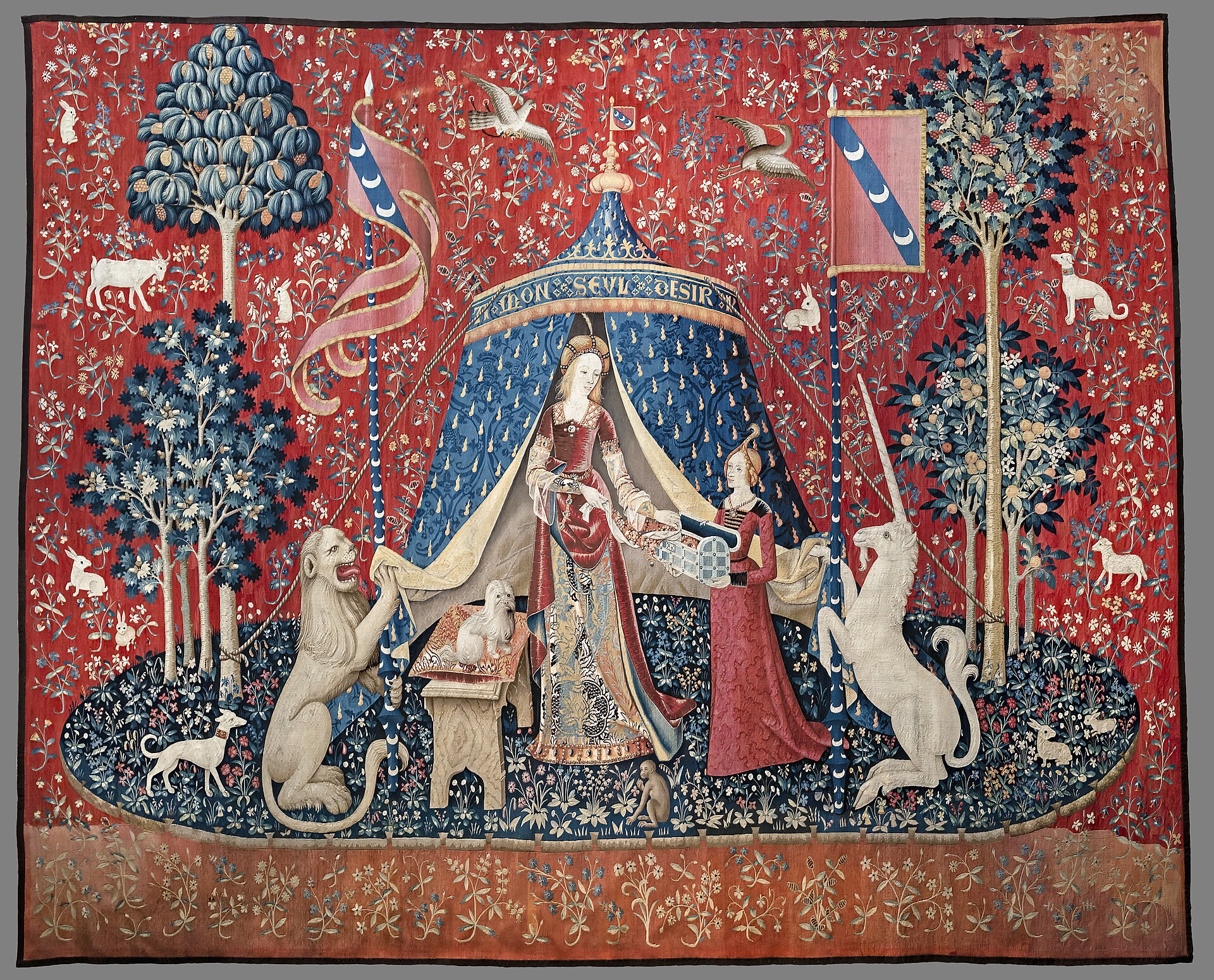
The Lady and the Unicorn
c. 1480-1500 · Tapestry weave
Musee de Cluny - musee national du Moyen Age
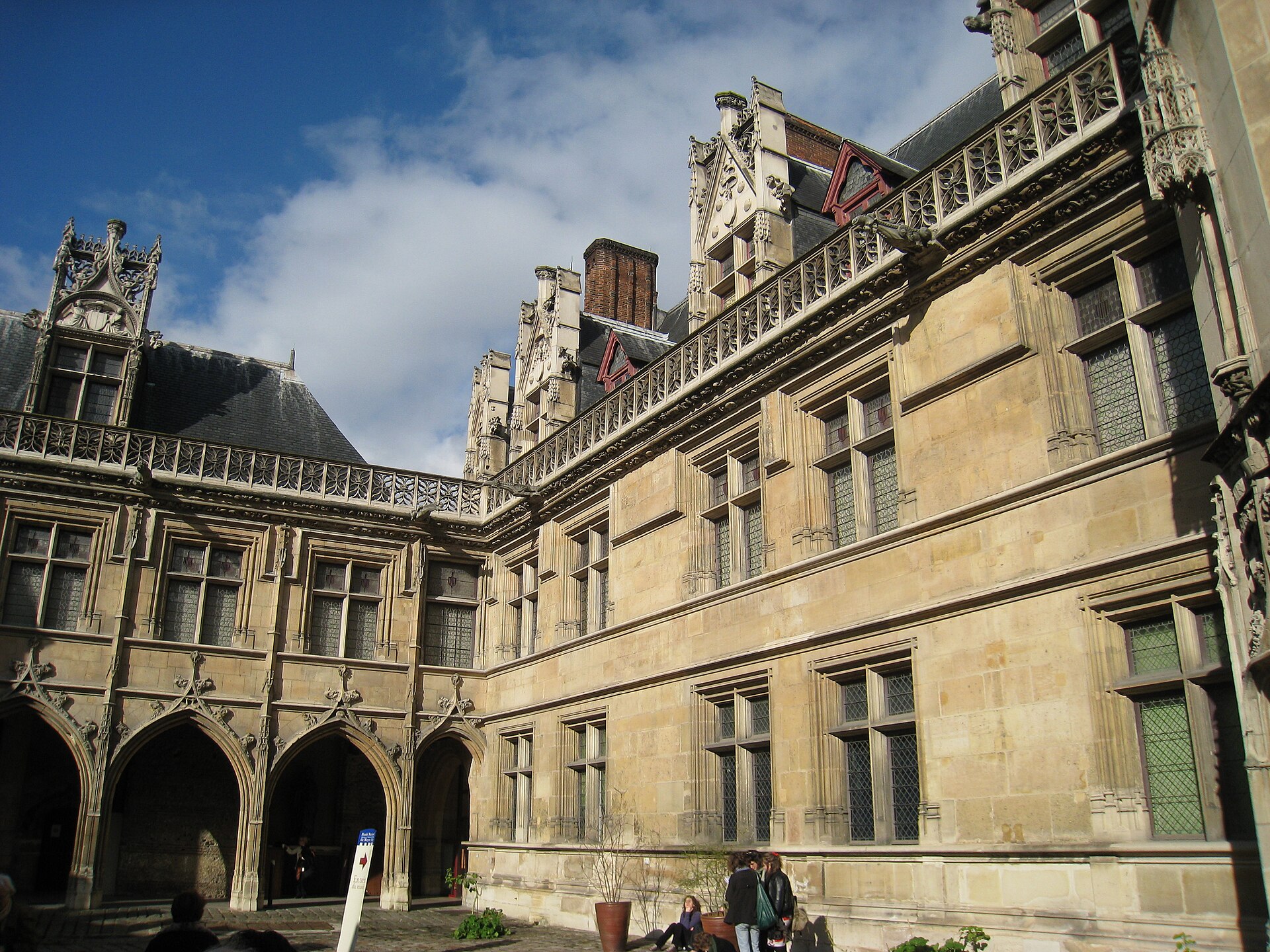
The Hotel de Cluny, the late-Gothic mansion rebuilt under Abbot Jacques d'Amboise between 1485 and 1510 that now forms the core of the museum.
Daderot · CC BY-SA 4.0Museum · Musée de Cluny — musée national du Moyen Âge · Founded 1843
Open, admission and hours confirmed 19 August 2026 · 11 sources
The collection's strength is a single period held with real depth rather than medieval art shown as one gallery inside a bigger encyclopaedic museum: Gallo-Roman remains, Merovingian metalwork, Gothic sculpture salvaged from Paris's own damaged churches, and the Lady and the Unicorn tapestries are all treated as the main subject rather than a stop on the way to the Renaissance, which is the trade a visitor makes for choosing this museum over the medieval rooms at the Louvre.
| Local name | Musée de Cluny — musée national du Moyen Âge |
|---|---|
| Kind | Museum |
| Founded | 1843 |
| City and country |  Paris, France Paris, France |
| Address | 28 rue Du Sommerard, 75005 Paris, France |
| Website | musee-moyenage.fr/en |
| Status | Open, confirmed |
| Record last verified |
Prices and hours change. We take them from the institution's own pages and print the day we read them, and you can check the current position at the source we used. Confirm before you travel.
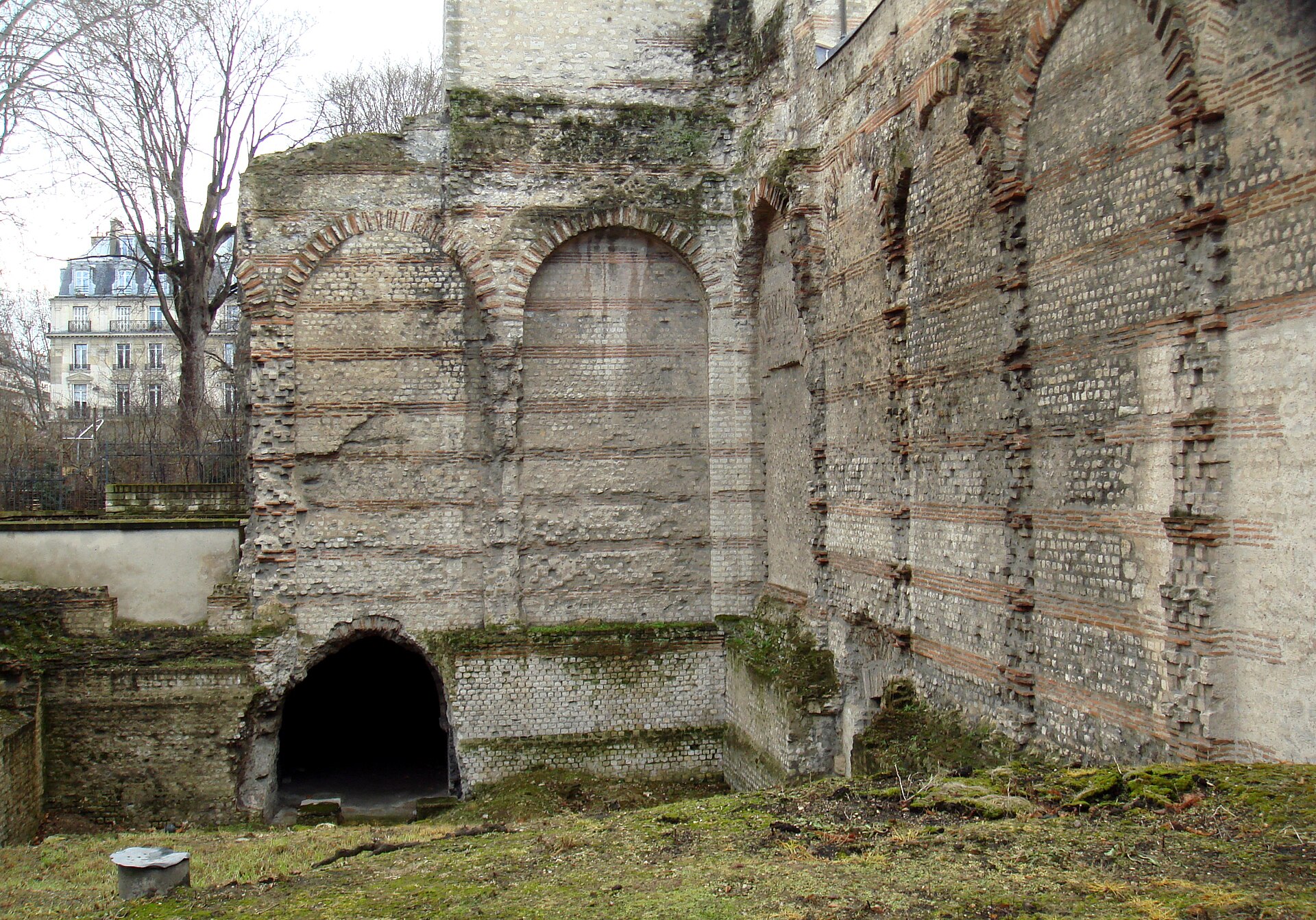
The Thermes de Cluny, the surviving frigidarium and adjoining rooms of a 1st- to 3rd-century Roman bathing complex, incorporated directly into the museum building since the Middle Ages and cleaned and restored as part of the Cluny 4 renovation.
The first stage of the chronological route added in 2022, covering Merovingian metalwork and the earliest objects in the collection, opening the 21-room sequence that now runs first century to sixteenth.
Twenty-eight stone heads from the Gallery of Kings on the west facade of Notre-Dame cathedral, decapitated during the Revolution when mobs mistook the biblical Kings of Judah for French monarchs, buried nearby and rediscovered in 1977 during construction work; now displayed at Cluny rather than at Notre-Dame itself.
A dedicated circular room built to display the six Lady and the Unicorn tapestries as a single set, rather than as six items shown in sequence, so a visitor can see all six at once as they were designed to be seen.
The private chapel of the Hotel de Cluny, built under Abbot Jacques d'Amboise between 1485 and 1510 with a single central pillar fanning into star vaulting, one of the few complete late-Gothic private chapel interiors surviving in Paris.
Limoges enamels, goldsmith work including the Golden Rose of Basel, given BY Pope John XXII in 1330 to the Count of Neuchatel and the oldest golden rose to survive, and stained glass removed from the Sainte-Chapelle and other Paris churches during 19th-century restorations.
Six tapestries representing the five senses plus a sixth, debated panel inscribed A Mon Seul Desir (To My Only Desire), whose meaning is still argued over; the set the museum itself calls its indisputable centrepiece.5
Twenty-eight heads knocked from Notre-Dame's facade in the Revolution on the mistaken belief they showed French kings, buried, and not rediscovered until a 1977 construction dig in the 9th arrondissement, a gap of nearly two centuries between destruction and recovery.5
Given BY Pope John XXII, not to him: he commissioned it in 1330 and presented it to Rudolf of Nidau, Count of Neuchatel, who had backed him against Emperor Louis of Bavaria. Popes gave a golden rose each year on the fourth Sunday of Lent; this is the oldest one to survive and the type is otherwise known only from written records. Room 11.11
Part of the actual Roman bathing complex the medieval mansion was later built onto, cleaned and reopened to visitors in the 2022 renovation rather than a reconstruction or a display about Roman Paris.5
A single central pillar fans into star vaulting across the whole ceiling, a structural showpiece as much as a devotional space.7
Part of the decorative-arts holdings the 2022 rehang regrouped for legibility rather than density, according to the museum's own director.5
Panels removed from Paris's own Gothic churches during 19th-century restoration campaigns, shown here rather than in the buildings they were made for.4
A dedicated room, added in the renovation, that explains how Alexandre du Sommerard's private collection became a state museum, treating the museum's own formation as a subject worth a room in its own right.6
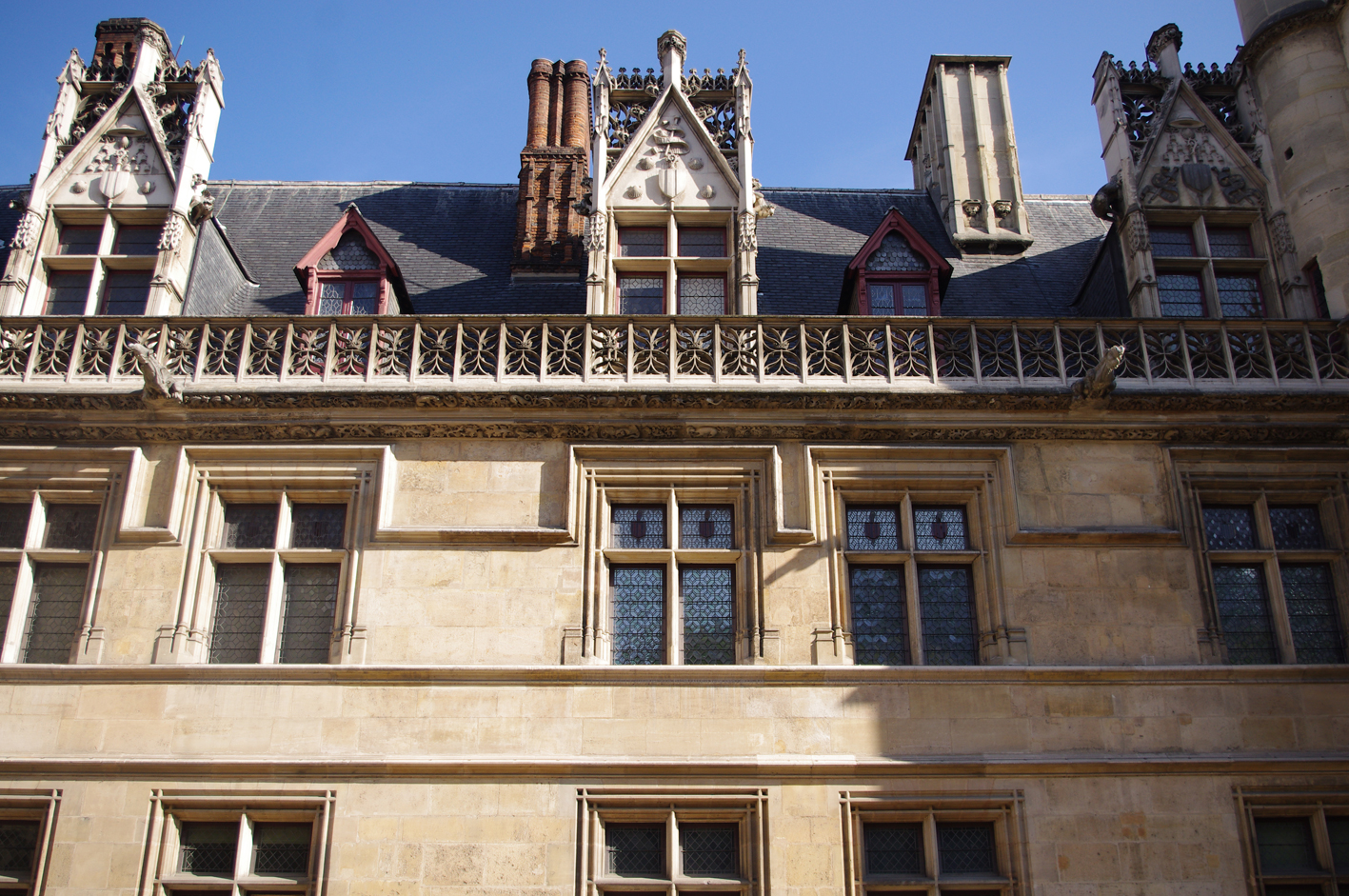
The Musee de Cluny sits on the remains of two structures built more than a thousand years apart. The oldest is the Thermes de Cluny, a Gallo-Roman bathing complex from the first to third century whose frigidarium survives with its vaulting largely intact, one of the best-preserved Roman civil structures anywhere north of the Alps. The Abbey of Cluny in Burgundy acquired the site in 1340 and began using it as a Paris residence for its abbots. The mansion a visitor actually enters today, the Hotel de Cluny, was rebuilt in its present form under Abbot Jacques d'Amboise between 1485 and 1510, a late-Gothic townhouse with a private chapel whose single central pillar fans into star vaulting across the whole ceiling. The building housed Mary Tudor, briefly queen of France, among other notable residents before the Revolution confiscated it from the Church in 1789. So the museum a visitor walks through today is, structurally, two buildings from two empires standing on the same plot three centuries apart, joined by nothing except a shared address.
The museum exists because one antiquarian bought the building to house his own collection and the French state chose not to break it up after he died. Alexandre du Sommerard, an archaeologist and collector of medieval and Renaissance objects, purchased the Hotel de Cluny in December 1832 specifically to display what he owned. When he died in 1842 the state acquired both the building and the collection together rather than dispersing it, and the museum opened to the public the following year, with his son Edmond serving as its first director. That founding decision, keep the collector's house and the collection intact as a single unit rather than absorbing the objects into the Louvre, is why the Musee de Cluny still reads as a house with things in it rather than a purpose-built gallery, more than 180 years later.
The six Lady and the Unicorn tapestries, woven around 1500 from a design made in Paris, are the museum's best-known holding and the reason many visitors come at all. Five panels represent the five senses in turn; the sixth, inscribed A Mon Seul Desir, To My Only Desire, has no settled reading. The museum's own material and outside criticism both describe the sixth panel's meaning as genuinely disputed rather than a solved puzzle with an accepted answer that visitors simply have not been told, variously read as a sixth sense, as free will, or as a renunciation of the passions the first five panels depict. This record states that the reading is disputed rather than picking one, in keeping with the house rule against bridging a real gap with a smooth invented answer. The 2022 renovation built the tapestries a dedicated circular room specifically so all six could be seen together rather than filed past in a corridor, a display change reviewers single out more consistently than almost anything else about the rehang.
The museum closed for a renovation project known internally as Cluny 4, which ran from roughly 2018 to 2022 and is reported at a cost of either 23.1 million euros, per one tertiary account, or approximately 26 million euros, per The Art Newspaper's contemporaneous coverage; this record gives both rather than picking one, since neither source is the museum's own confirmed final figure as read for this record. The architect Bernard Desmoulin won a 2014 design competition to add a new street-level entrance, working alongside the interior designer Adrien Gardere and the state conservation architect Paul Barnoud to redesign how 1,600 objects, roughly 500 of them newly restored, are shown across 21 chronological rooms running from the first century to the sixteenth. The museum's director, Severine Lepape, described the result as bringing the museum into the 21st century while remaining part of a long history, and specifically credited the renovation with making the building fully accessible for the first time, with lifts and ramps added throughout a structure that had none. The museum reopened on 12 May 2022.
Coverage read directly for this record, rather than summarised secondhand, converges on the same handful of points. The Art Newspaper's contemporaneous review called the tapestry room and the reopened Roman baths the two unmissable elements of the new route. A named travel guide, The Geographical Cure, praised the brighter, less cluttered galleries and the free lockers and on-site cafe added in 2022, both new to a museum that previously had neither. The more candid, unedited source available, a public visitor forum thread, adds the two complaints that a polished review tends to leave out: the entrance on rue du Sommerard is genuinely easy to miss from the nearest metro exit, and the online booking platform has shown maintenance-mode messages to at least some visitors trying to buy a ticket in advance, treated by forum participants as an intermittent glitch rather than evidence that a timed reservation is actually required.
What a named art-world review, a travel guide and a visitor forum thread converge on, all read directly for this record: the 2018-2022 renovation is treated as a genuine improvement in legibility and accessibility rather than a cosmetic refresh, with the Lady and the Unicorn tapestries and the Roman baths singled out repeatedly as the two things a visitor should not skip, while practical friction, mainly around finding the entrance and an online booking system that has shown maintenance messages, is the recurring minor complaint.
28 rue Du Sommerard, 75005 Paris, France.
Full price: EUR 14; Reduced: EUR 10; Under 18, and EU residents under 26: free; First Sunday of the month: free. As confirmed 19 August 2026.
Tuesday-Sunday 09:30-18:15; 1st and 3rd Thursday of the month 09:30-21:00; Monday closed. Closed: Monday. 1 January. As confirmed 19 August 2026.
Metro: Line 10, Cluny-La Sorbonne (immediately adjacent); Metro: Line 10, Maubert-Mutualite, a short walk east; Metro: Line 4, Saint-Michel, a short walk west.
The Lady and the Unicorn (Unknown, designed in Paris, woven in the southern Netherlands, circa 1500); Heads from the Gallery of Kings, Notre-Dame (13th-century Paris workshops); The Golden Rose of Basel (Minucchio of Siena, 1330); The Roman frigidarium (Unknown, 1st-3rd century); The flamboyant Gothic chapel ceiling (Commissioned by Abbot Jacques d'Amboise, 1485-1510); Limoges enamels (Limoges workshops).
One artwork and its story every Tuesday, with the picture: who owned it, what it made, and what closes soon in the exhibition calendar. No promotion, and nothing we cannot cite.
We send one email to confirm the address and keep nothing else. Every letter carries a one-click unsubscribe. How we handle your data.