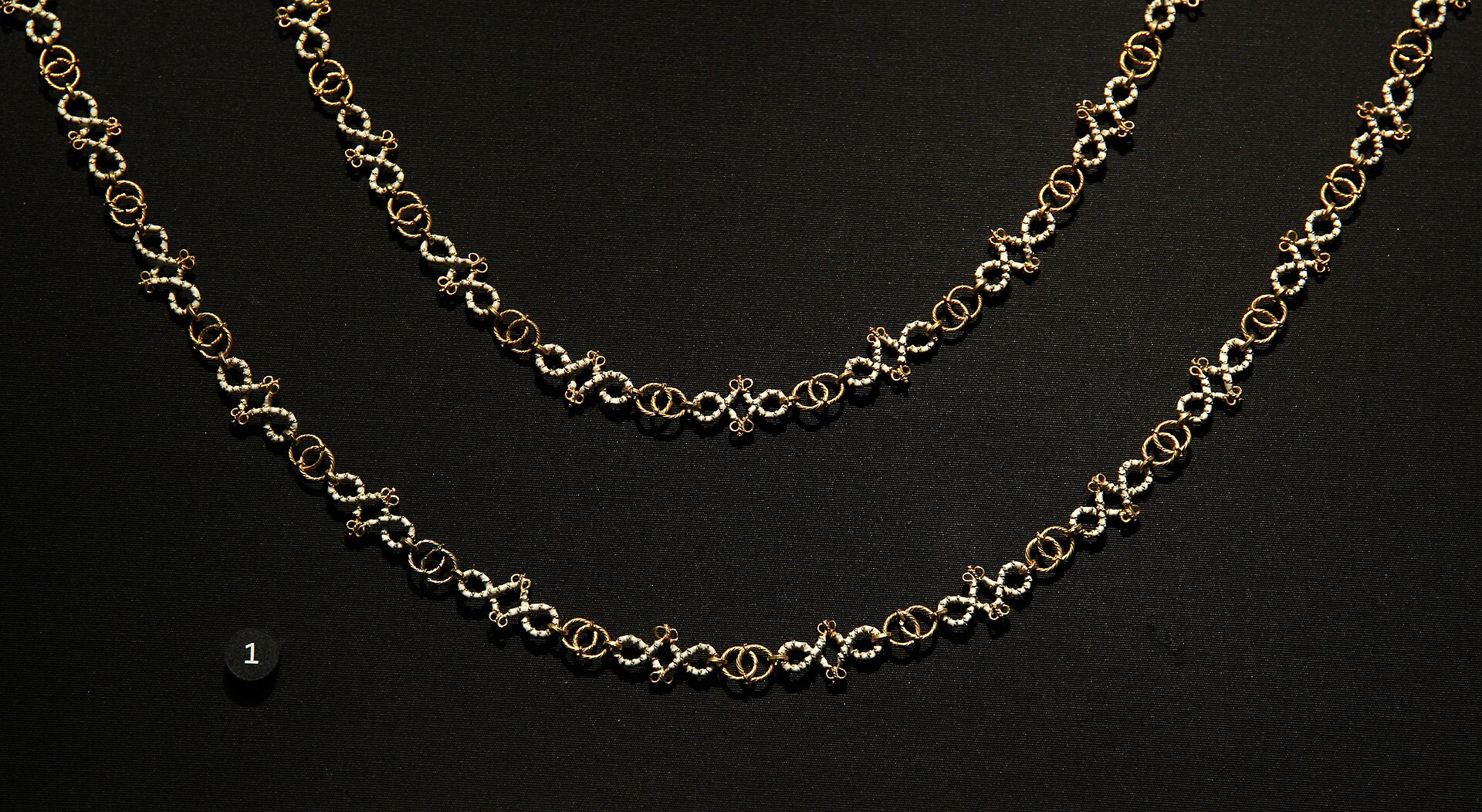
The Cheapside Hoard
First century BC · Enamelled gold
London Museum
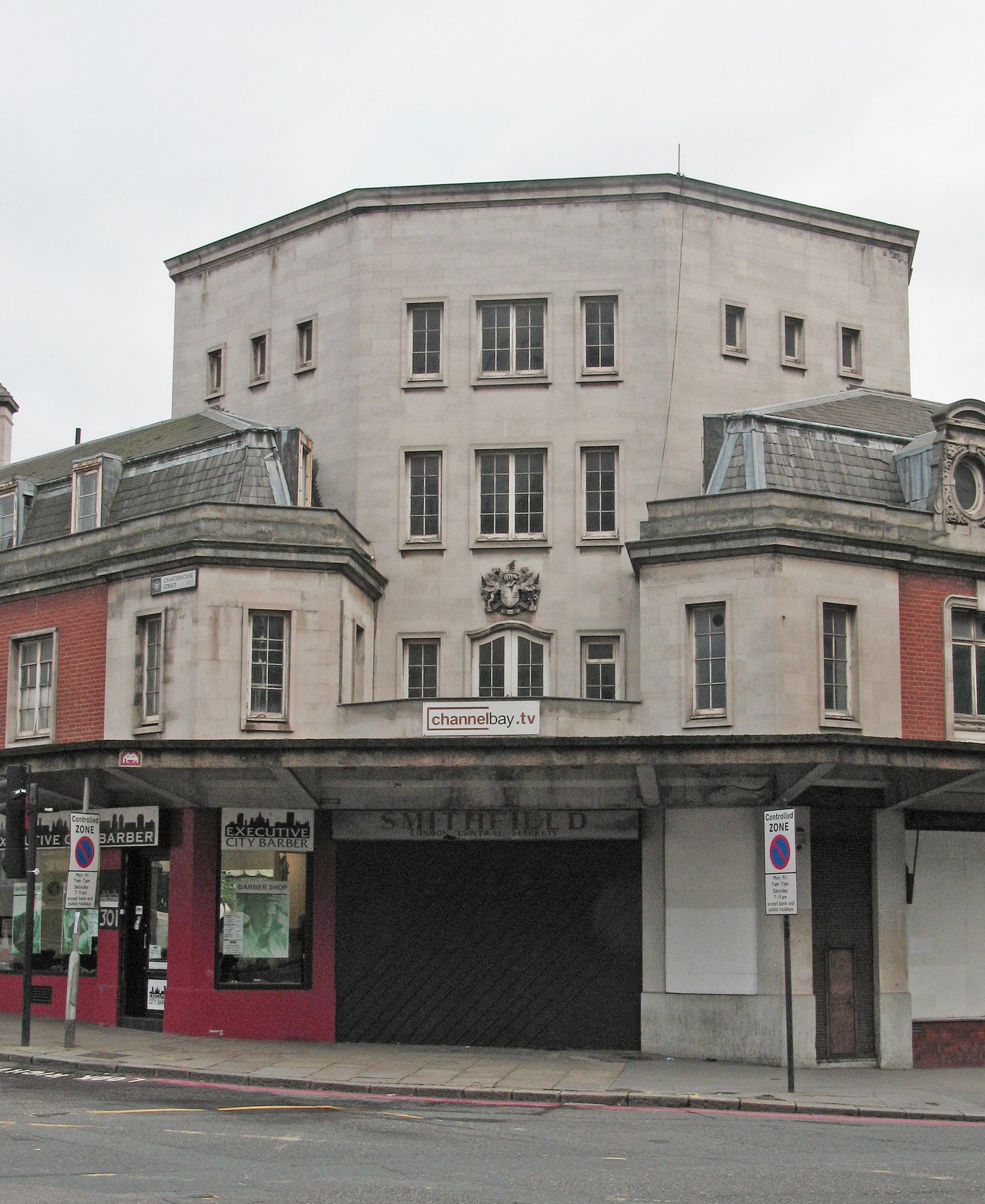
The Victorian General Market at Smithfield, photographed in 2014, the building now being converted into the new London Museum, due to open 28 November 2026.
Jim Osley, CC BY-SA 2.0London Museum is currently closed, on the evidence sourced below.
Expected to reopen: 28 November 2026 · a target, not yet confirmed
Closure confirmed from the institution's own page. We re-check this page on a schedule and will update it, from the institution's own announcement, the moment it reopens.
The collection runs to about 7 million objects, described by the museum itself as the largest urban history collection in the world, spanning prehistoric London through Roman, medieval, Tudor, Georgian, Victorian and twentieth-century material to contemporary collecting. Its Roman holdings alone run past 47,000 objects, from tableware to sculpture; its medieval holdings include more than 1,350 pewter pilgrim badges. The institution has also collected deliberately unconventional recent objects, including the Whitechapel fatberg sample and a giant balloon flown over a 2018 protest against a visiting head of state, on the view that the ordinary and the absurd belong in an urban history collection alongside treasure such as the Cheapside Hoard.
| Kind | Museum |
|---|---|
| Founded | 1976 (as the Museum of London, merging the 1826 Guildhall Museum and the 1912 London Museum); renamed London Museum in 2024 |
| City and country |  London, United Kingdom London, United Kingdom |
| Address | General Market, Smithfield, London EC1 9AG, United Kingdom |
| Website | londonmuseum.org.uk |
| Status | Closed temporarily, confirmed |
| Record last verified |
The museum is closed (see above). These are the figures published before the closure, kept here for a visitor planning ahead rather than presented as bookable today, and you can check the current position at the source we used. We will re-confirm them once it reopens.
The entrance gallery of the new Smithfield museum, planned around large animated screens that use the city's own live data to tell the stories of London and Londoners today. Opens 28 November 2026.
A social hub set beneath the General Market's restored Victorian dome, built around 13 large installations covering London in living memory. Opens 28 November 2026.
Below-ground galleries set at Roman street level, giving a chronological and thematic history of London from prehistory onward, including the below-ground vaults found during conversion work and not shown on any surviving plan of the building. Opens 28 November 2026.
A dedicated gallery for the Cheapside Hoard, built with a 10 million pound gift from the Goldsmiths' Company pledged in 2017, showing the hoard's fullest-ever display alongside metalwork from the Goldsmiths' Company's own collection. Opens 28 November 2026.
The museum's second Smithfield building, a 1960s structure next to the General Market, planned to hold a learning centre, temporary exhibition galleries and the collection stores. Not due to open until 2028.
Nearly 500 pieces of loose gemstones and finished jewellery, buried beneath a City cellar on Cheapside some time before the Great Fire and rediscovered by builders in 1912. It goes on permanent public display for the first time from 28 November 2026, in the new Goldsmiths' Gallery.13
Full record in this archive453 bronze objects and fragments, mostly axes, deliberately buried in four separate spots near Wennington in east London and dug up in 2018. The largest Bronze Age hoard ever found in London, and currently on display at London Museum Docklands.14
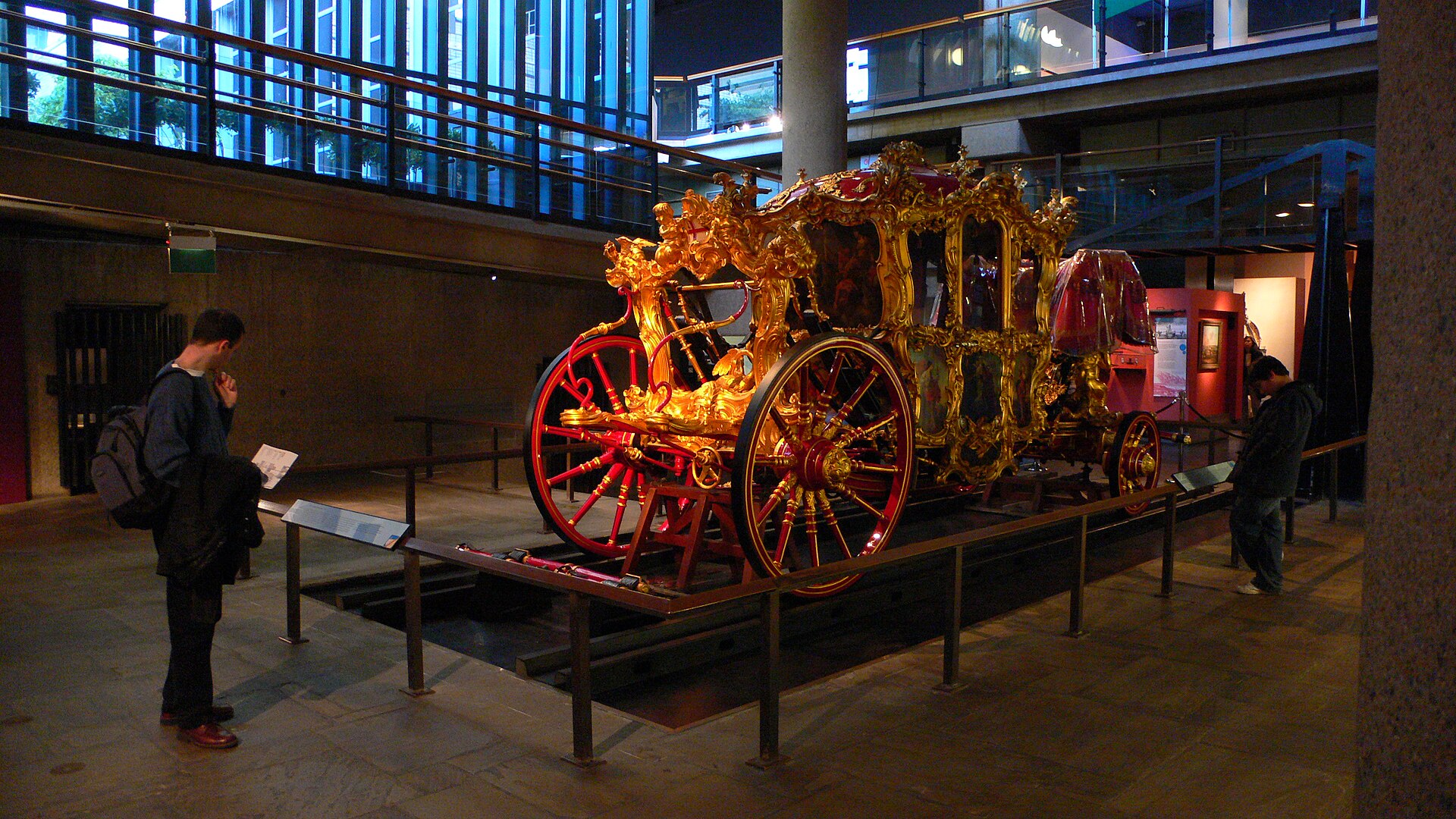
Built for 850 pounds and first used for the Lord Mayor's inauguration in November 1757, it is described as the oldest ceremonial vehicle still in regular use anywhere in the world, still carrying each new Lord Mayor through the City every November. Its regular home is this museum; where it is kept during the current closure is not confirmed by any source checked.16
A preserved sample of the 130-tonne, 250-metre mass removed from a Whitechapel sewer in 2017, the first fatberg ever exhibited by a museum anywhere. Kept in a sealed, monitored case as a specimen of the city's own waste rather than a conventional display object.15
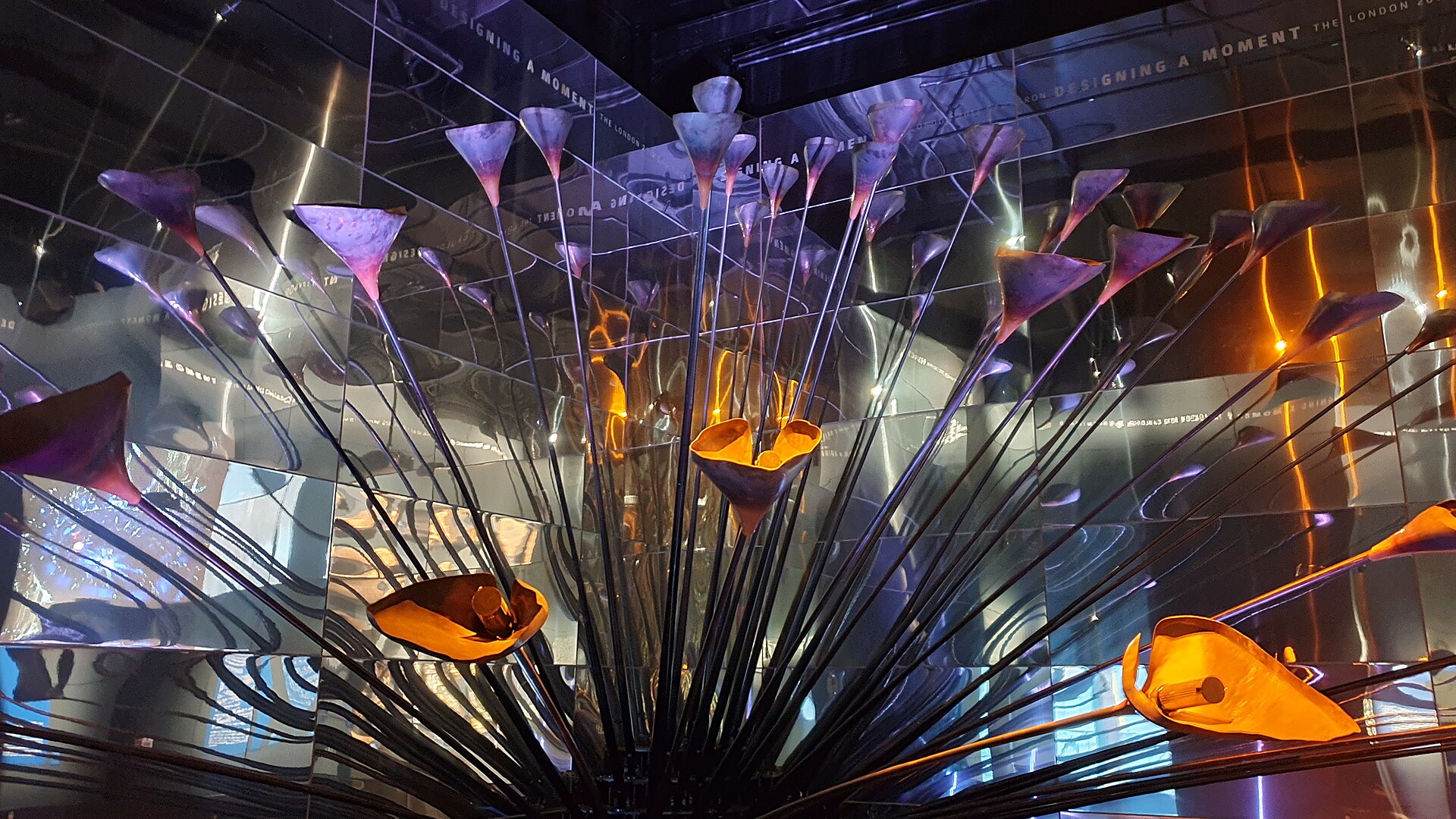
One of the 204 copper petals that formed the cauldron lit at the opening ceremony of the London 2012 Olympic Games, acquired for the collection after the Games and shown at the former London Wall site until its December 2022 closure.10
More than 47,000 objects, from tableware to sculpture, making this one of the largest collections of finds from a single Roman city anywhere.10
The story of this institution begins with two separate collections a century apart. The City of London Corporation opened the Guildhall Museum in 1826, built around Roman and medieval finds turned up during building work in the City. A separate London Museum opened in 1912, first at Kensington Palace and then at Lancaster House, collecting later costume, painting and social history rather than archaeology. Both closed during the Second World War and reopened afterward on a smaller scale: the London Museum at Kensington Palace again from 1951, the Guildhall Museum at the Royal Exchange from 1955.
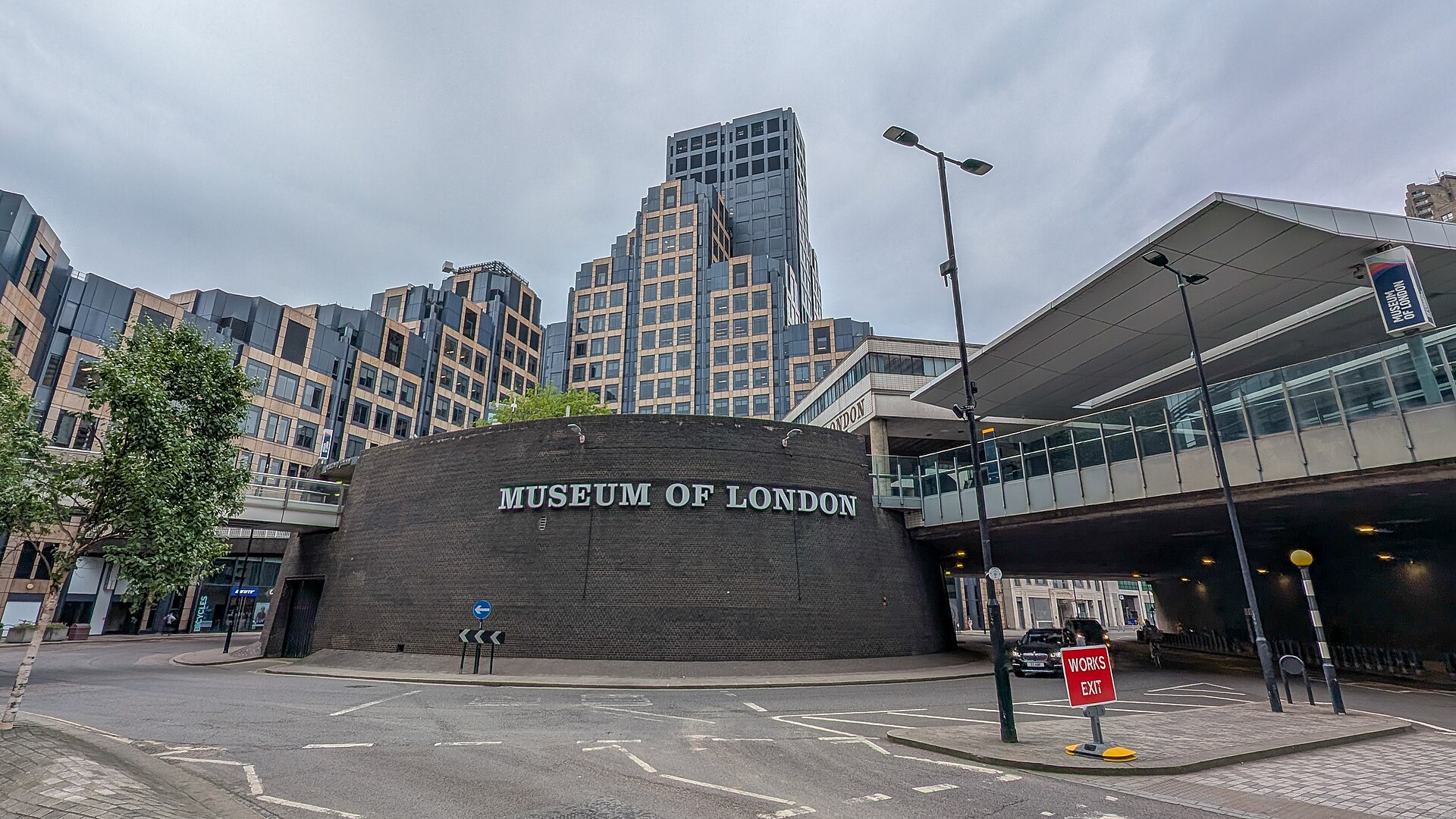
The Museum of London Act 1965 merged the two collections under one board, and the combined institution opened to the public in December 1976 at 150 London Wall, in a purpose-built block designed by Powell and Moya as part of the postwar Barbican development. Queen Elizabeth II opened it. The building's single design idea, one continuous route from prehistoric London to the present day, shaped how three generations of visitors experienced the collection over the next 46 years.
This record was flagged on the research queue as unconfirmed: the most linked of three name-similar candidates for the Cheapside Hoard, to be checked before writing. Wikidata entity Q917820 carries the label London Museum, the former name Museum of London, and the charity registration number 1139250. That same number, 1139250, appears in the current londonmuseum.org.uk website's own footer as its registered charity number, and the same website's own history pages describe the 1826 Guildhall Museum and 1912 London Museum merger recounted above.
The Cheapside Hoard's own record in this archive already names London Museum, formerly the Museum of London, as its current holder, and the Goldsmiths' Company, the City livery company funding the hoard's new gallery, names the same institution as its partner for the display opening in November 2026. None of this describes the separate London Museum Docklands satellite site, which is a branch of the same organisation rather than a different one, nor the British Museum, the Victoria and Albert Museum, or any other London institution with a similar name. Q917820 is the correct entity for this venue.
The London Wall building closed to the public on 4 December 2022, ahead of the move to Smithfield that had already been under discussion for close to a decade. The building itself was not demolished: a photograph taken in June 2025 shows it still standing, out of public use, while the wider London Wall site awaits redevelopment once the museum's collection and staff have moved out.
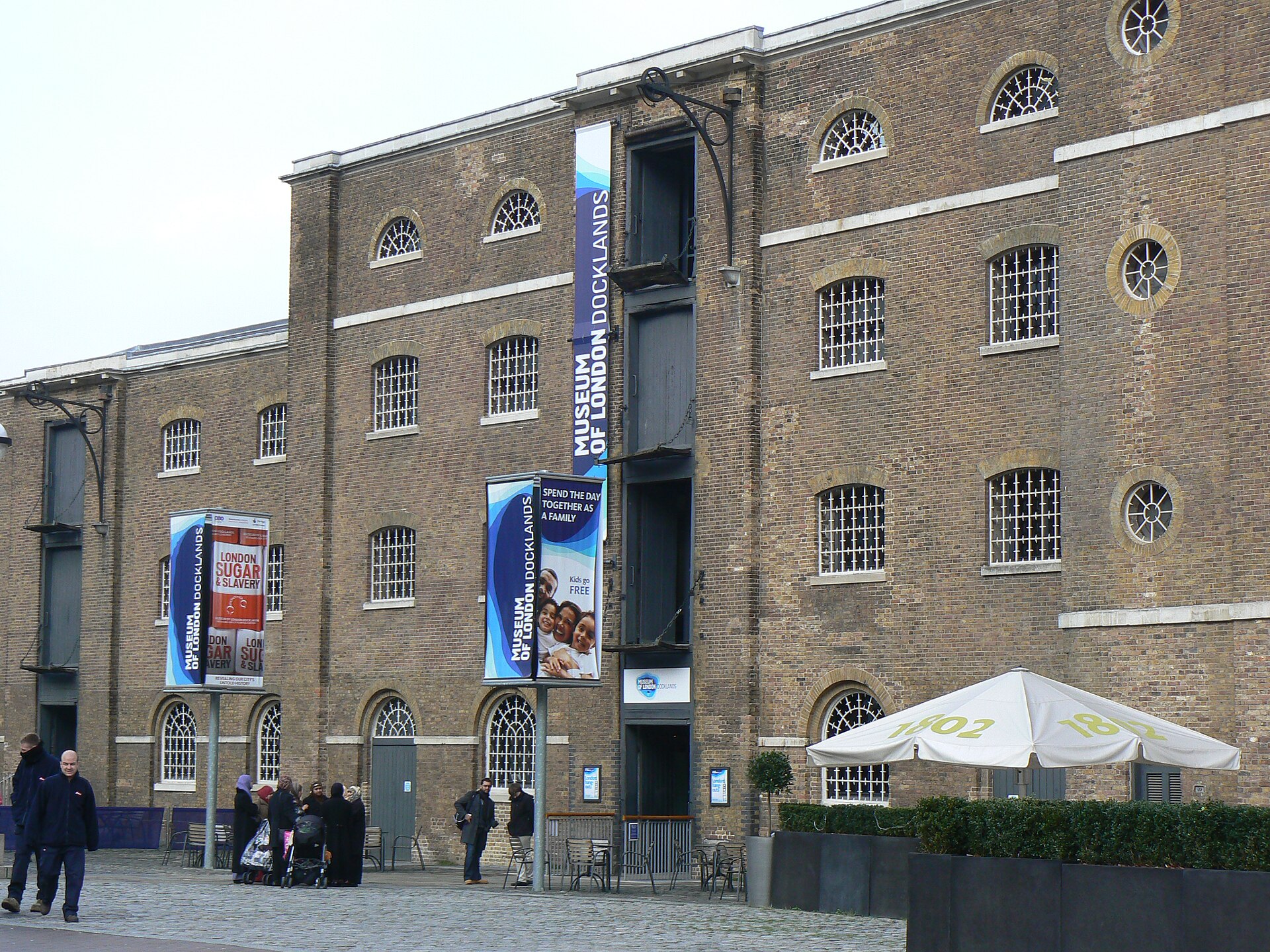
For visitors today that leaves one place to go: London Museum Docklands, a former West India Quay sugar warehouse the institution has run since 2003, which has stayed open throughout the London Wall closure and remains free to enter.
The new site occupies two adjoining former market buildings at Smithfield: the General Market, a domed Victorian hall dating from the 1880s, and the Poultry Market, a 1960s concrete and glass structure next door. The General Market, converted to hold the permanent galleries, opens on 28 November 2026; the Poultry Market, which is to house a learning centre, temporary exhibition galleries and the collection stores, is not due to open until 2028. During conversion work, builders found a set of vaulted spaces beneath the General Market that appeared on no surviving plan of the building; these are being opened up as part of the museum's below-ground galleries rather than filled back in.
The project has grown more expensive as it has gone on. An early costing put the conversion at 337 million pounds; the total is now put at 437 million pounds, met by the City of London Corporation (222 million pounds), the Mayor of London (95 million pounds), and a group of private and charitable funders that includes Bloomberg Philanthropies, the Goldsmiths' Foundation, the Linbury Trust and the National Lottery Heritage Fund.
The institution took the name London Museum in July 2024, restoring the name the pre-1976 London Museum had used, ahead of the Smithfield move. The rebrand, designed by Uncommon Creative Studio after consultation with about 500 Londoners and visitors, introduced a new logo: a white pigeon trailing a gold splat. Director Sharon Ament described it as a metaphor for a city where grit and glitter sit side by side.
Public reaction was largely unkind. Commentary at the time called the design crude, embarrassing and a waste of money, and two Manchester-based designers separately argued the pigeon resembled their own earlier design closely enough to raise a plagiarism complaint. A Cambridge academic writing later in The Conversation defended the choice as a considered metaphor for London's own dualities and its history of migration, rather than the throwaway joke critics took it for.
The Cheapside Hoard is a group of nearly 500 pieces of Elizabethan and Jacobean jewellery and loose gemstones, buried beneath a City cellar on Cheapside some time before the Great Fire and rediscovered by builders in 1912. It has been part of this institution's collection, in one form or another, since the London Museum first acquired it that year.
At Smithfield it will have a dedicated space for the first time: the Goldsmiths' Gallery, built with a 10 million pound gift pledged by the Goldsmiths' Company in 2017, one of the largest single donations to the project. The gallery opens alongside the rest of the General Market on 28 November 2026 and will show, according to both the museum and the Goldsmiths' Company, the fullest display of the hoard ever assembled, alongside objects from the Goldsmiths' Company's own collection of London-made metalwork.
Everything above describes a museum a reader cannot yet walk into. What is open today is London Museum Docklands at West India Quay, free, unticketed, and open every day except 24 to 26 December. Its current highlight is the Havering Hoard, 453 late Bronze Age objects, mostly axes, deliberately buried near Wennington in east London around 900 to 800 BCE and dug up in 2018, the largest hoard of its kind ever found in London.
The Docklands site also holds, in a sealed and monitored case rather than open display, a sample of the Whitechapel fatberg, the 130-tonne mass of fat and wet wipes removed from an east London sewer in 2017, kept as a specimen of the city's own waste rather than a conventional museum object. Other centrepieces of the collection, among them the Lord Mayor of London's 1757 State Coach and the petal-shaped cauldron from the 2012 Olympic opening ceremony, were on display at London Wall until December 2022; where they are being kept during the closure is not stated in any source this record could confirm.
Across its decades at London Wall, this was consistently rated one of London's best free museums: deep, well presented, and an easy half-day out. The single most common frustration for visitors now is that the main site has been closed since December 2022, and the 2024 rebrand's pigeon-and-splat logo drew public mockery on its own terms, separate from anything said about the collection.
Tripadvisor: 4.5 from 5,822 ratings, read 12 August 2026
A platform average is a tertiary source: it moves, it is not audited, and we quote no visitor's words.
General Market, Smithfield, London EC1 9AG, United Kingdom.
General admission, permanent galleries: free. As confirmed 11 September 2026.
Every day 10:00-17:00. Closed: 24-26 December. As confirmed 11 September 2026.
Underground/rail: Farringdon station (Elizabeth line, Thameslink, Circle, Hammersmith and City and Metropolitan lines), about 5 minutes on foot from the Smithfield site; Underground: Barbican station (Circle, Hammersmith and City and Metropolitan lines), about 5 minutes east of the Smithfield site; DLR: West India Quay or Canary Wharf serve London Museum Docklands, the only site currently open to the public.
The Cheapside Hoard (Unknown Elizabethan and Jacobean goldsmiths and jewellers); The Havering Hoard (Late Bronze Age metalworkers, about 900-800 BCE); The Lord Mayor of London's State Coach (Joseph Berry, coachbuilder, commissioned 1757); The Whitechapel Fatberg (Formed from fat, oil and non-biodegradable waste in a Victorian sewer); The London 2012 Olympic Cauldron (Designed by Thomas Heatherwick); The Roman London collection (Roman-era Londoners, 1st-5th century AD).
1 record in this archive names London Museum as the current location.
One artwork and its story every Tuesday, with the picture: who owned it, what it made, and what closes soon in the exhibition calendar. No promotion, and nothing we cannot cite.
We send one email to confirm the address and keep nothing else. Every letter carries a one-click unsubscribe. How we handle your data.