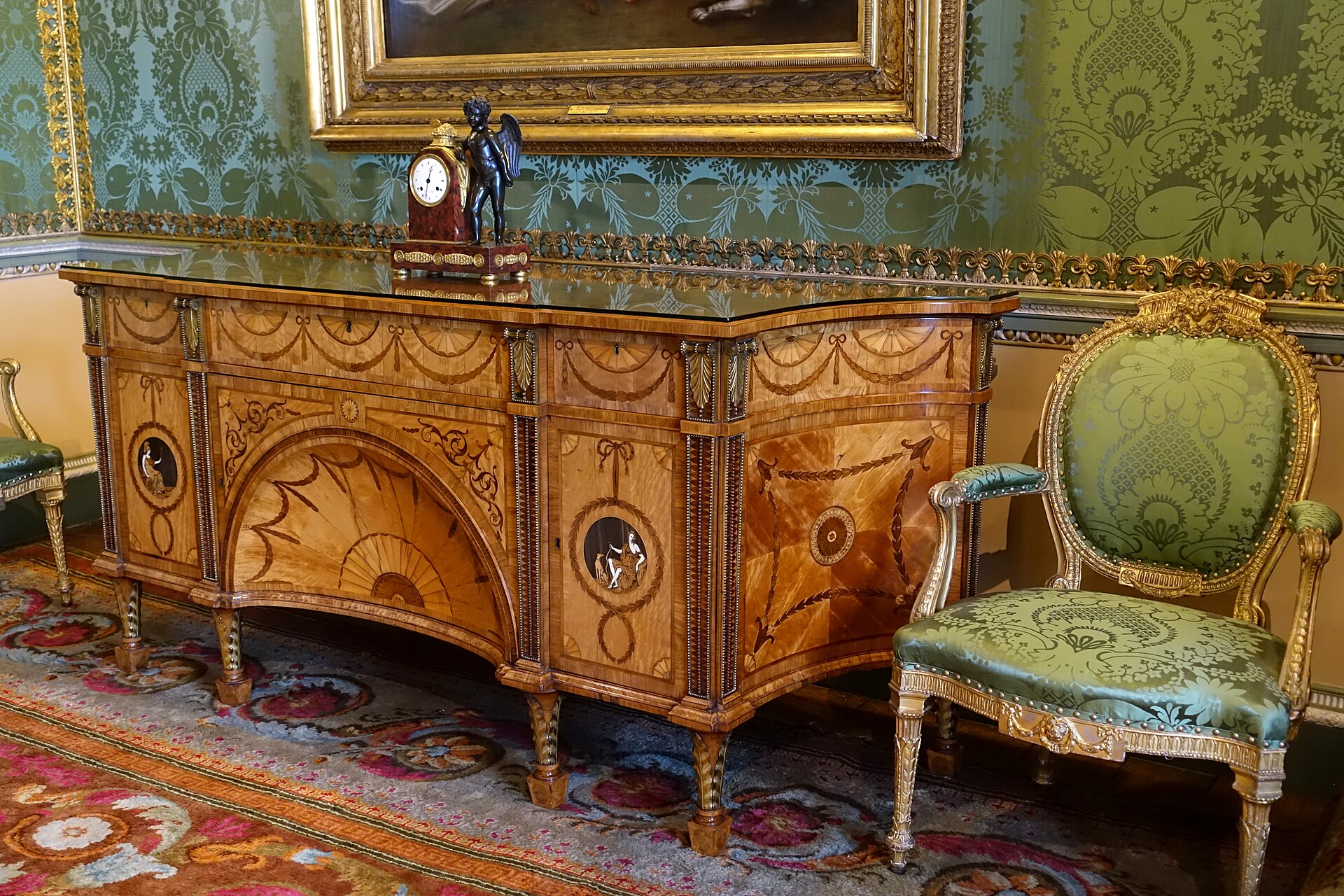
The Diana and Minerva Commode
1773 · Marquetry of satinwood
Harewood House, West Yorkshire
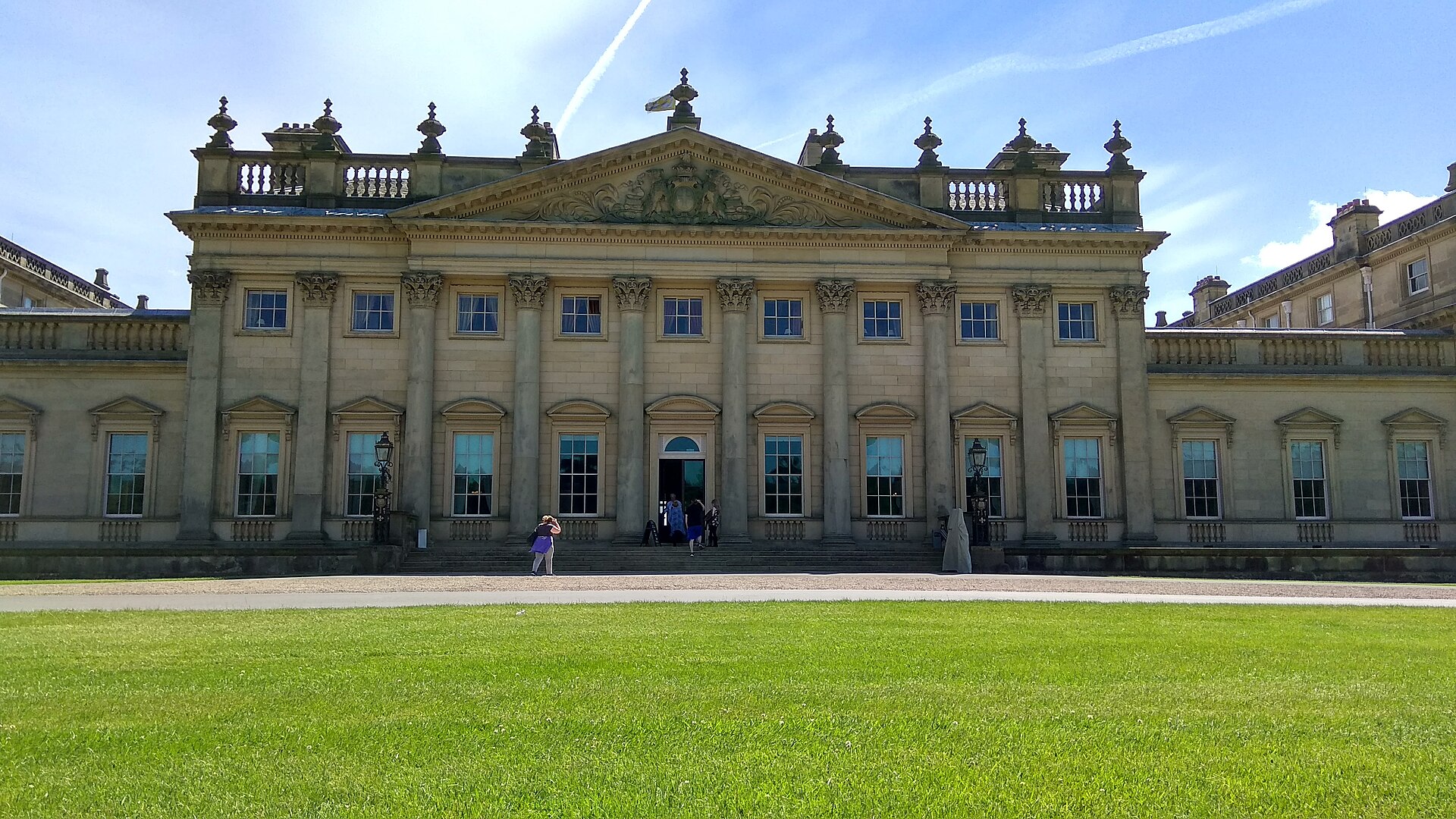
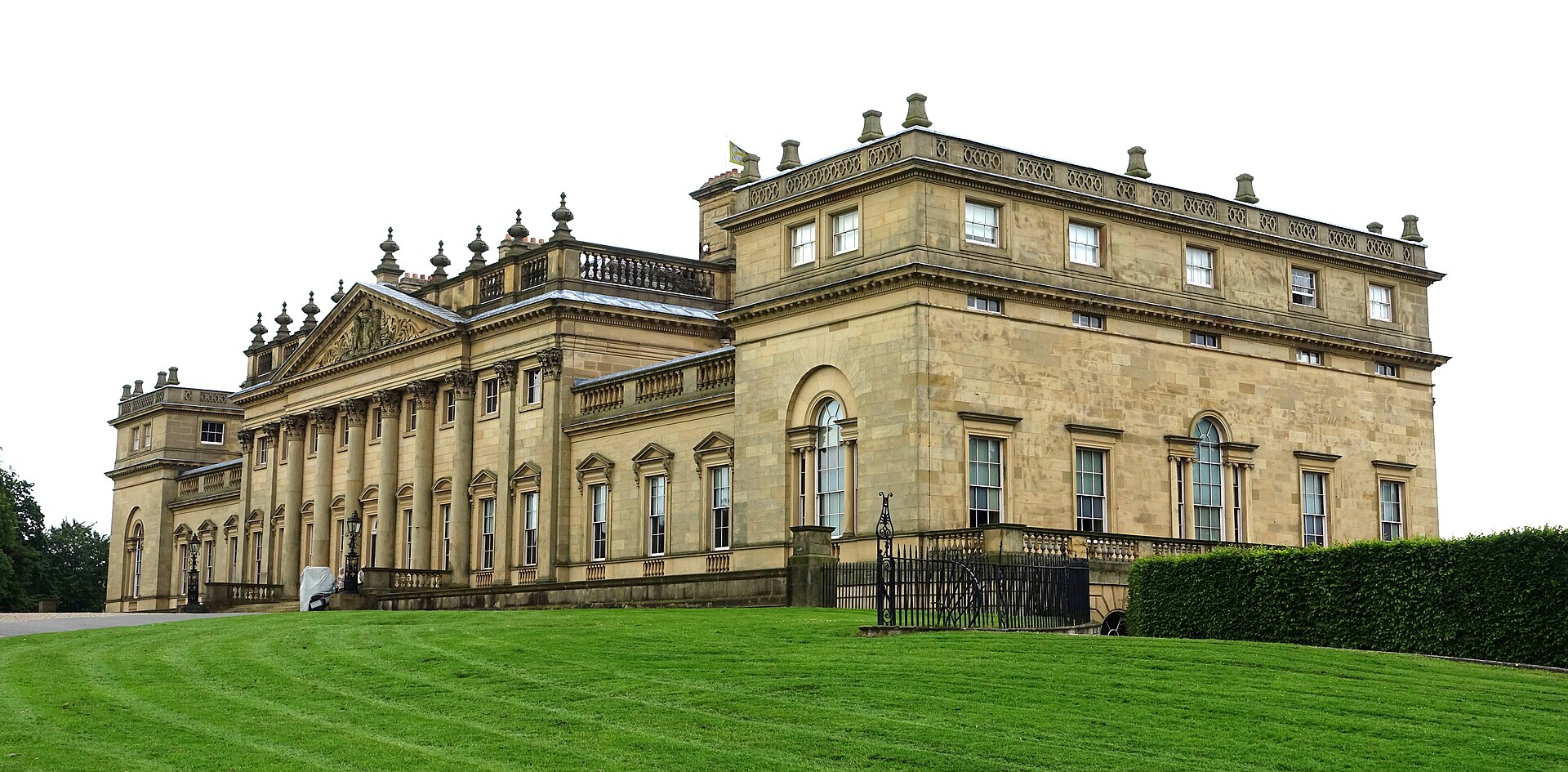
Harewood House seen from the south lawn, June 2017.
TwinTails, CC BY-SA 4.0Museum · Founded 1759
Open, admission and hours confirmed 6 September 2026 · 15 sources
Harewood's strength is a single continuous commission rather than an assembled collection. Thomas Chippendale's largest job for any client survives substantially in the rooms it was made for: the State Bed, the Diana and Minerva Commode and the State Dining Room's dining suite are among the most complete groups of his furniture anywhere, still standing in the interiors they were designed alongside. The Robert Adam rooms, especially the Music Room, sit with them largely intact even where later owners rebuilt around them. The picture collection is a family and dynastic record rather than an encyclopaedic one: portraits by Reynolds, Hoppner and Lawrence, Turner's watercolours of the estate, and the 20th-century modern art collected by the 7th Earl and Countess. The result reads as one house furnished once, at exceptional expense, and largely left where it was put.
| Kind | Museum |
|---|---|
| Founded | 1759 |
| City and country |  Harewood, United Kingdom Harewood, United Kingdom |
| Address | Harewood House, Harewood, Leeds LS17 9LG, England |
| Website | harewood.org |
| Status | Open, confirmed |
| Record last verified |
Prices and hours change. We take them from the institution's own pages and print the day we read them, and you can check the current position at the source we used. Confirm before you travel.
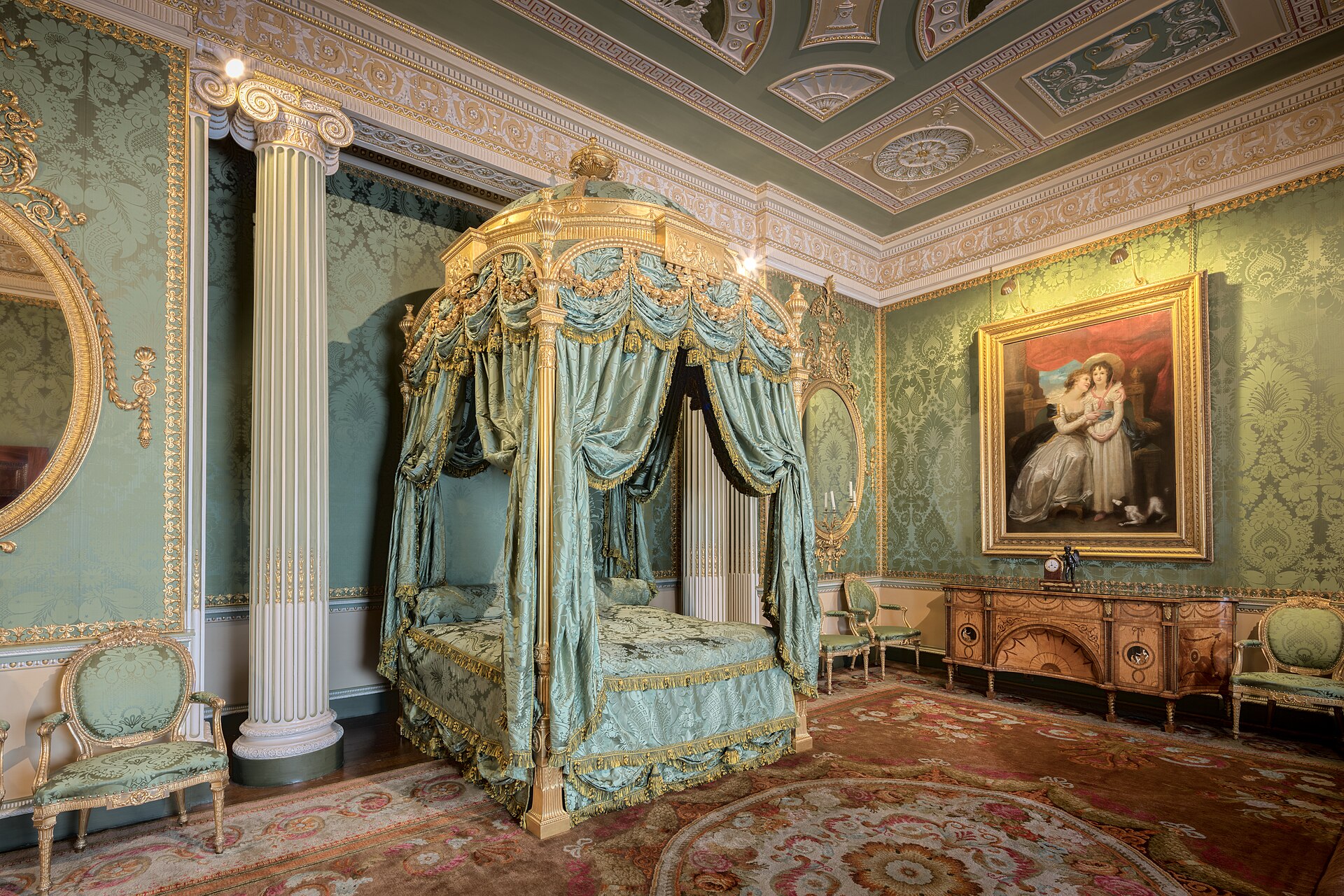
Built to receive royal visitors and decorated in green damask, gilded wood and black lacquer furniture. Holds Thomas Chippendale's State Bed, the most expensive single piece of furniture he ever made, and the Diana and Minerva Commode, one of the best-known pieces of Chippendale furniture anywhere. Converted into the Countess' Sitting Room in the Victorian period, with the bed dismantled; restored to its original function in 2000.
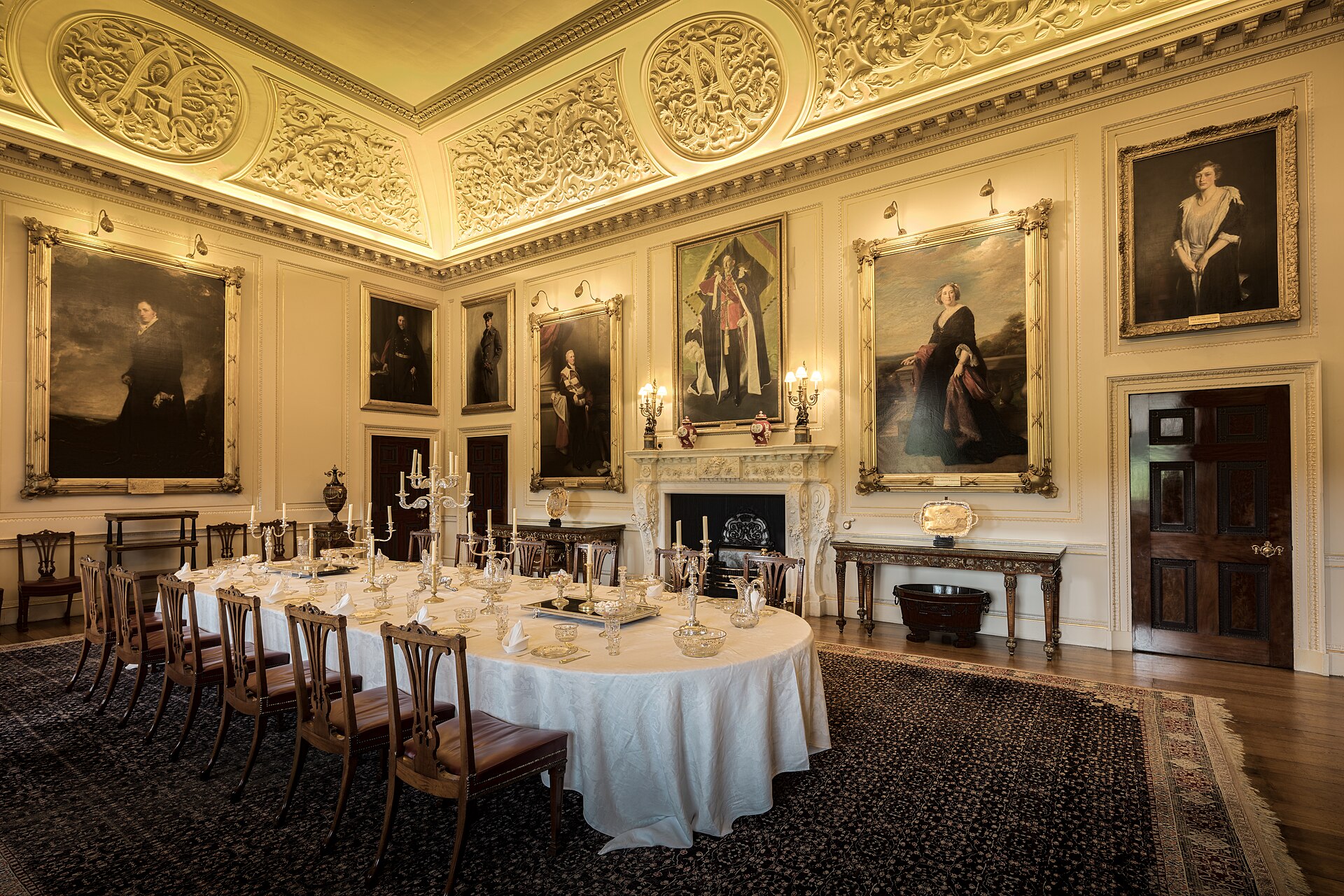
Robert Adam's original scheme was entirely redeveloped by Sir Charles Barry, architect of the Houses of Parliament, in the Victorian period, who removed Adam's ceiling and plasterwork for Classical panelling with interlocked 'H' motifs and added a service passage. The room keeps its original Chippendale dining suite of twenty chairs around a mahogany table, and portraits including Henry Lascelles, 2nd Earl, and Louisa, 3rd Countess.
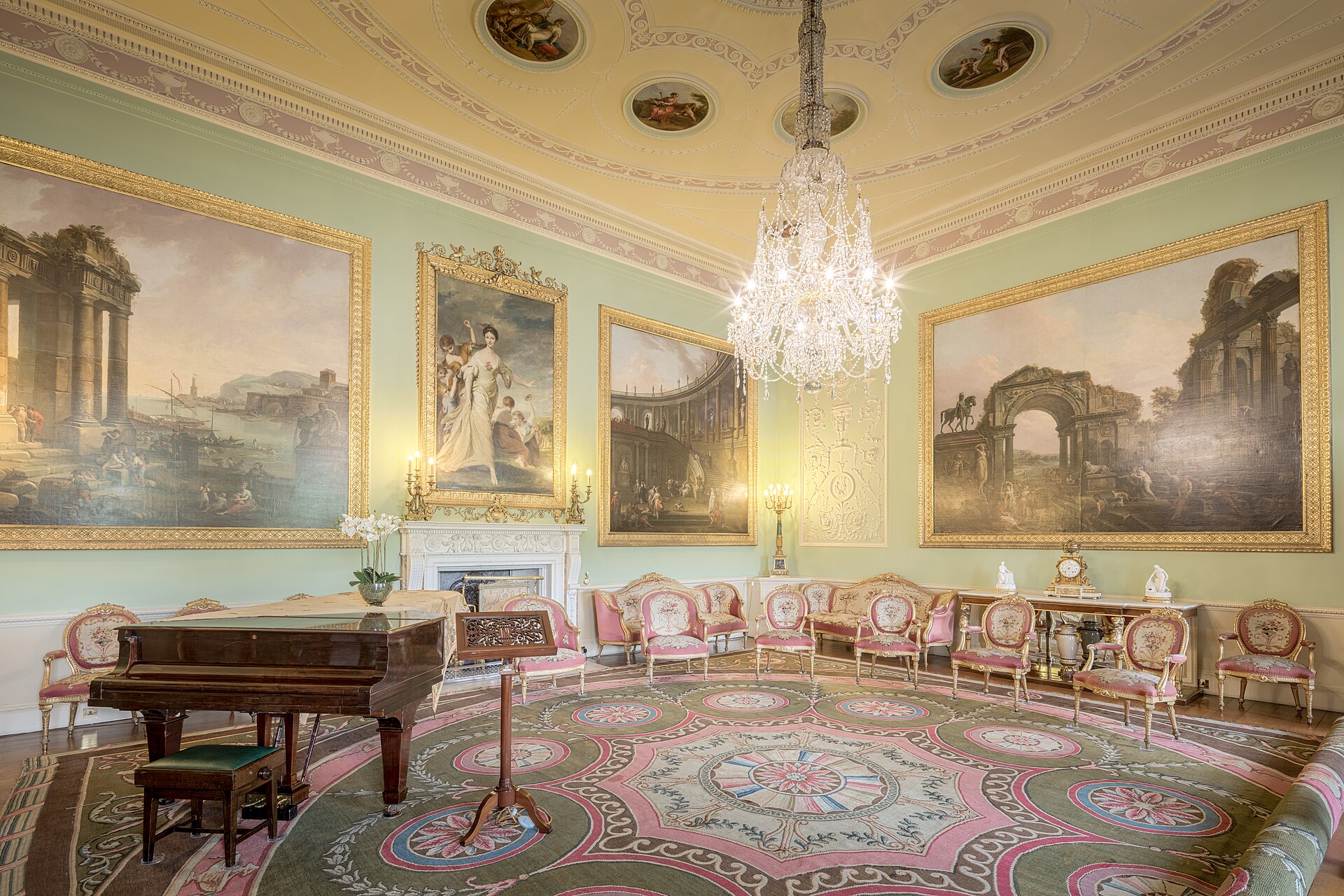
The most complete surviving Robert Adam interior in the house. The ceiling carries ten painted roundels, once attributed to Angelica Kauffman and now thought to be by her husband Antonio Zucchi, showing the musical contest of Apollo and Marsyas judged by Minerva and the nine muses, with four corner roundels personifying the four continents. The original Axminster carpet is woven to match the ceiling; the room also holds Chippendale armchairs made for the State Bedroom and Sevres porcelain.
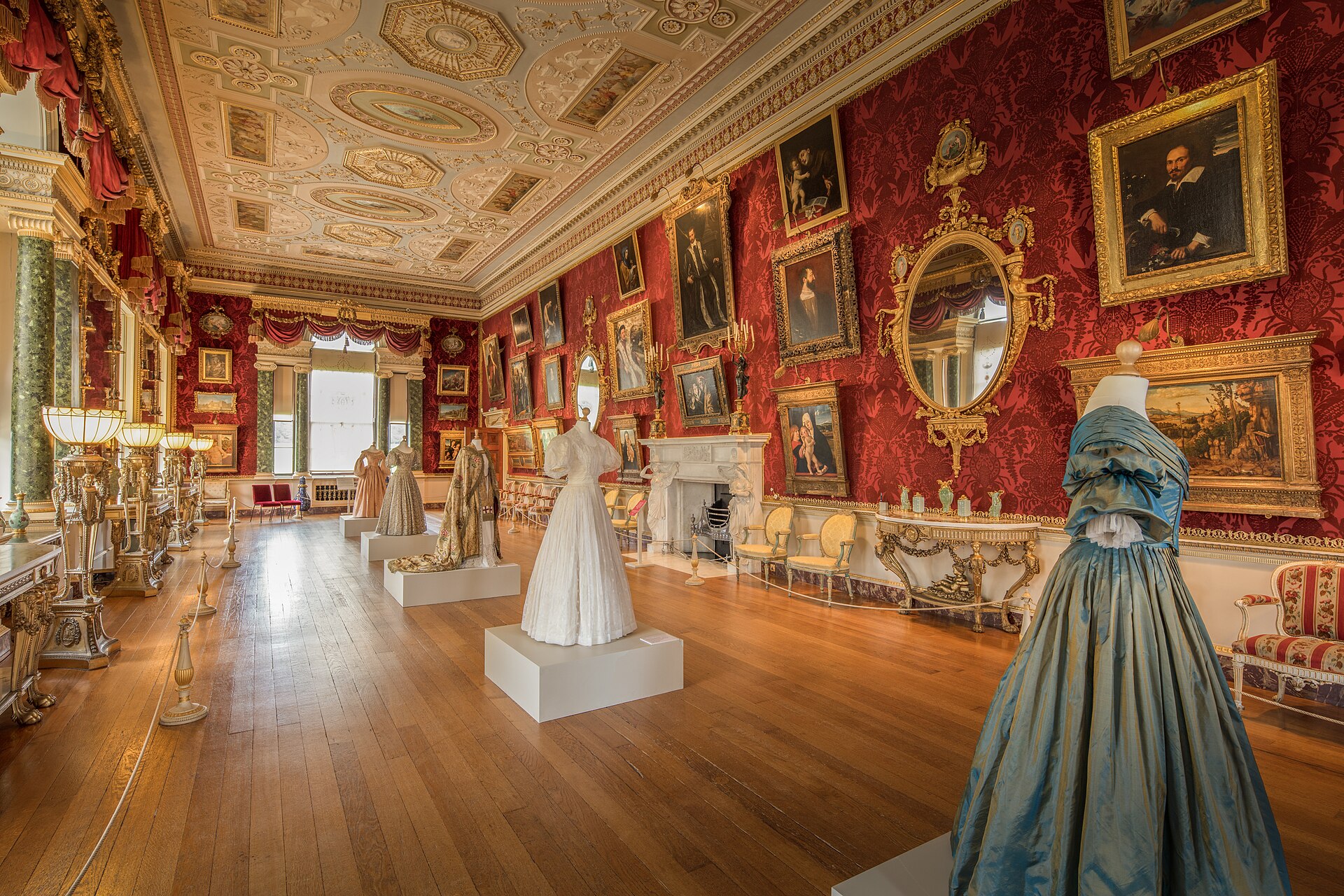
The largest room in the house, built for banquets and balls, now hung with portraits and used for rotating collection and costume displays.
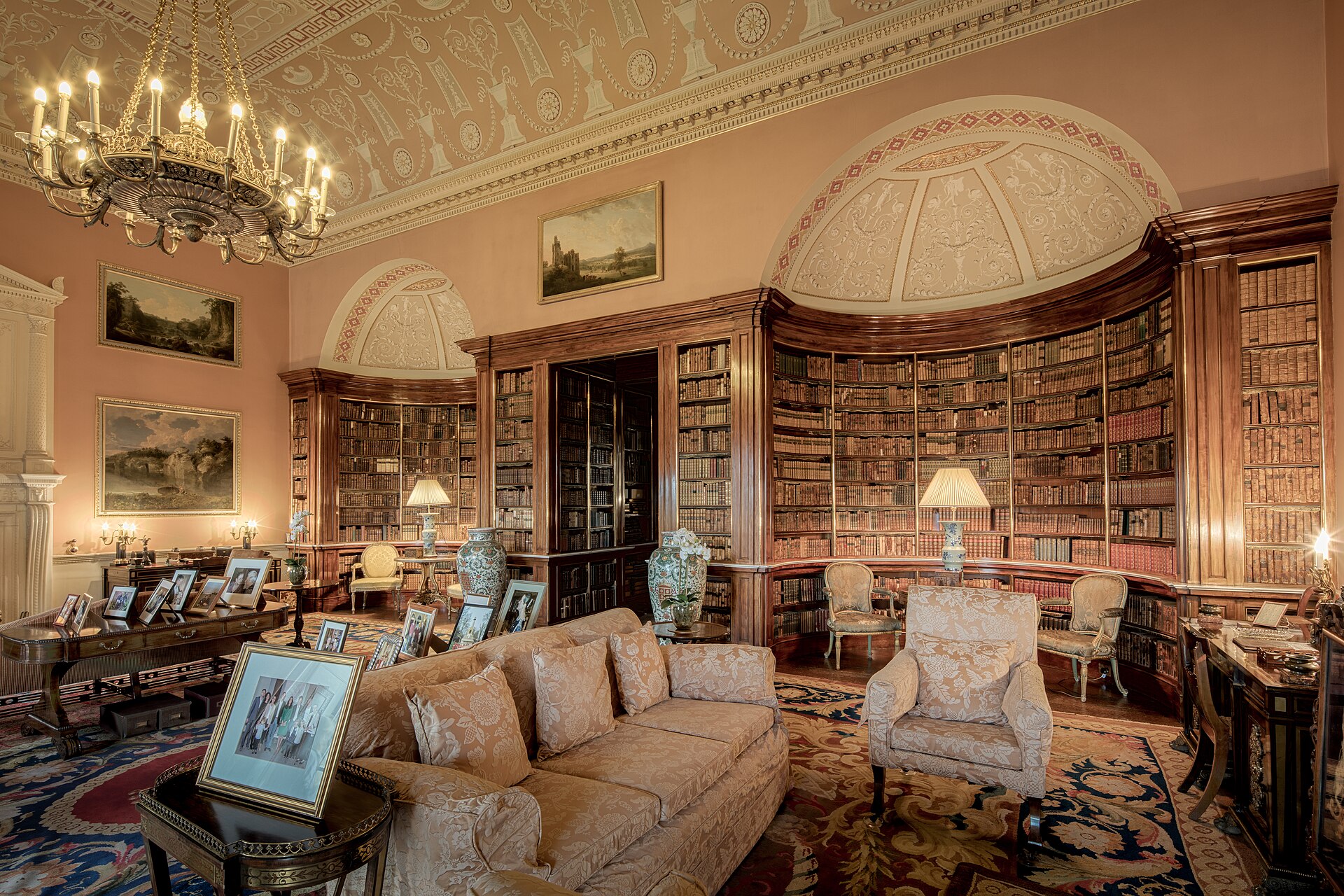
One of three libraries in the house, at its historic centre, originally called the Saloon and used to receive guests.
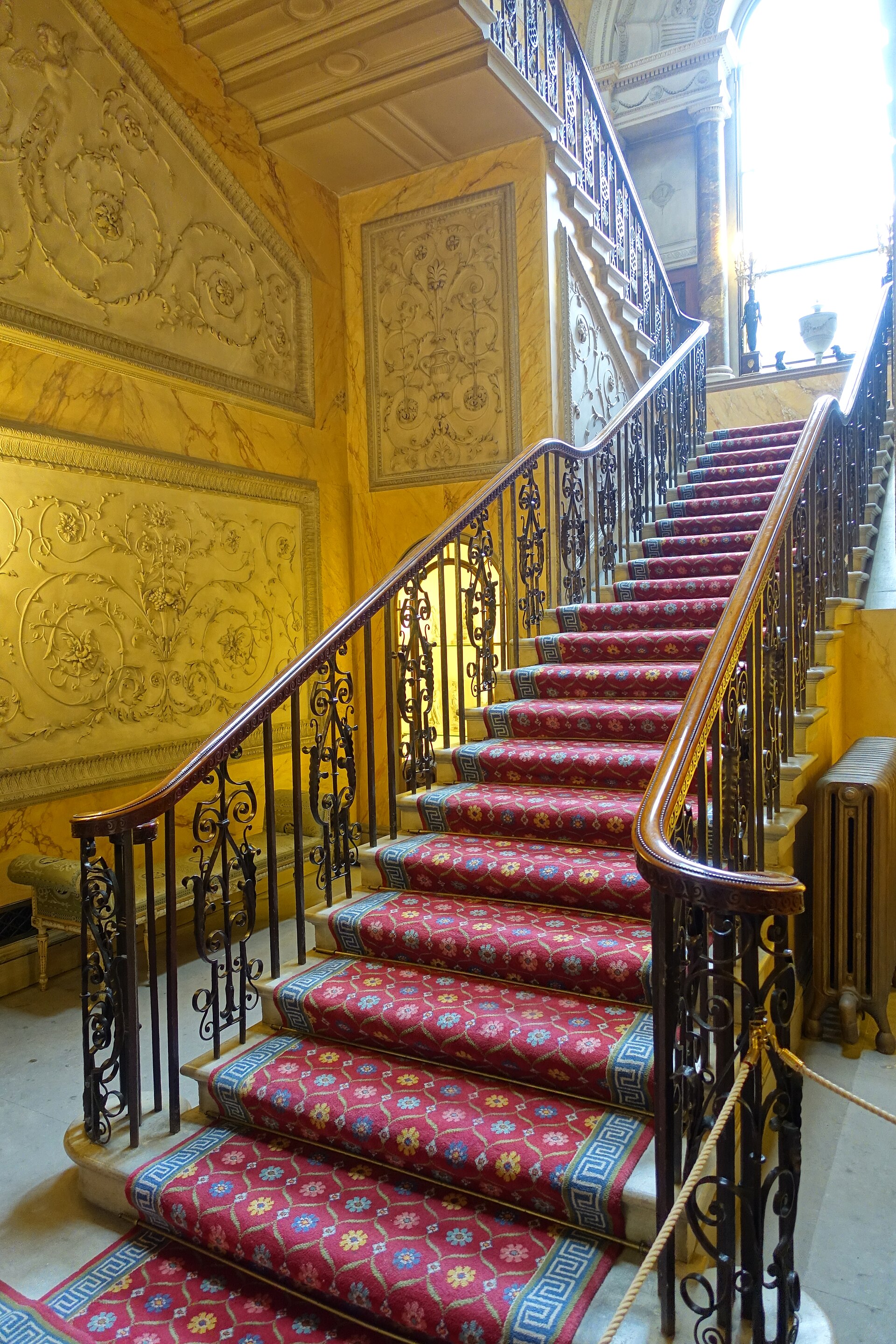
The Victorian staircase hall added under Barry's remodelling, connecting the State Floor, with wrought-iron balustrades and painted plasterwork.
The Victorian service wing - kitchens and servants' quarters - open to visitors alongside the State Floor. No verifiably identified free-licence photograph of this space was found on Commons at time of writing, so none is attached here.
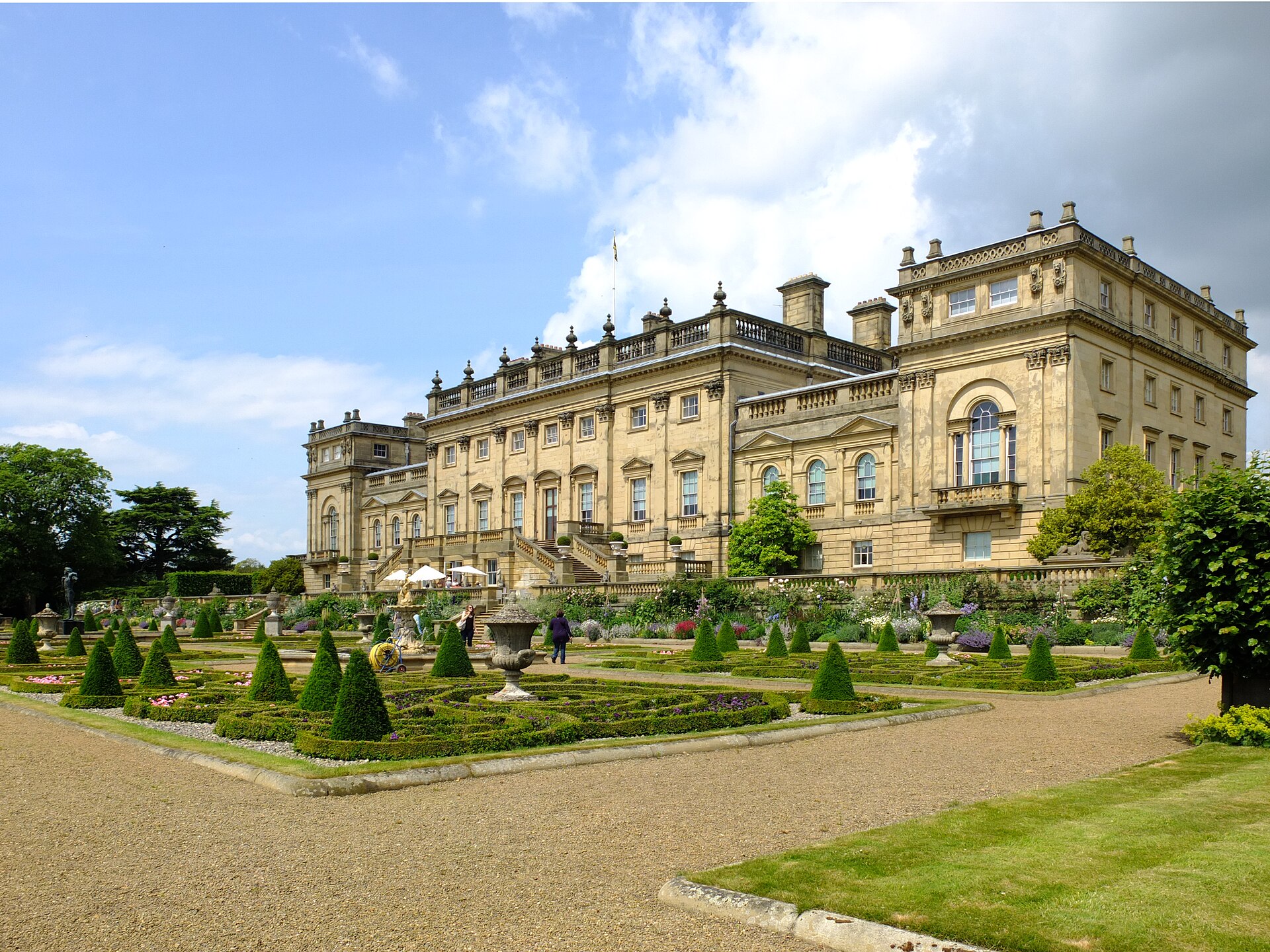
Roughly 1,000 acres of parkland laid out by Lancelot 'Capability' Brown, with the formal Victorian terrace and parterres added by Charles Barry in the 1840s for Louisa, 3rd Countess of Harewood.
One of the best-known pieces of Chippendale furniture in the world, made for the State Dressing Room (now the Spanish Library) and today displayed in the State Bedroom; a full researched provenance record for this object already exists in this archive.10
Full record in this archiveThe single most expensive piece of furniture Chippendale ever made, and the centrepiece of the room built to receive royal guests.10
Twenty chairs and a mahogany table, in situ in the room made for them since the 1770s, surviving Barry's Victorian rebuild of the room around it.9
Ten painted roundels on the theme of Apollo and Marsyas, in the room the Trust itself calls the most complete Robert Adam interior at Harewood.11
Turner visited and painted the house and its landscape in watercolour around 1797-98.8
Three generations of leading British portraitists recorded the Lascelles family across the house's State Rooms.8
18th-century French porcelain displayed alongside the Chippendale armchairs originally made for the State Bedroom.11
A leather frieze long described as Spanish and now understood to be Netherlandish work; one of three libraries in the house.12
Harewood House was built between 1759 and 1771 for Edwin Lascelles, later 1st Baron Harewood, on an estate his father Henry Lascelles had bought in 1738. The York architect John Carr designed the structure and its Palladian exterior; Robert Adam's interior designs were approved in 1765 and Adam made a number of further minor alterations to Carr's plan, including changes to the internal courtyards. The house was Grade I listed in 1960 and belongs today to the Treasure Houses of England, a consortium of ten historic homes.
The wealth that paid for it did not come from land. Henry Lascelles's fortune, and the title his son used to commission the house, were built on sugar plantations in Barbados, Jamaica, Grenada and Tobago worked by enslaved people, and on investment in ships that carried people into slavery. That history is addressed directly further down this page and is addressed directly by Harewood House Trust itself, on its own site.
Thomas Chippendale furnished Harewood House in what was, by value, his largest and most lucrative single commission, worth more than 10,000 pounds in the money of the time. A substantial part of it survives in the rooms it was made for rather than dispersed to sale or storage. The State Bed in the State Bedroom is the single most expensive piece of furniture Chippendale ever made. The Diana and Minerva Commode, displayed in the same room today though made for the State Dressing Room, is one of the best-known individual pieces of Chippendale furniture anywhere; a full researched provenance record for this specific object already exists elsewhere in this archive. The State Dining Room keeps its original Chippendale dining suite of twenty chairs around a mahogany table, made to be both decorative and practical, and still in daily use by the family into the 20th century.
Much of this furniture was made from mahogany and rosewood, fashionable non-native timbers of the period that were frequently logged by enslaved labour in the Caribbean and Central America. The furnishing of the house is, in that sense, connected to the same economy that paid for building it, not a separate and cleaner chapter of the story.
The Music Room is the most complete surviving Robert Adam interior at Harewood. Its ceiling carries ten hand-painted roundels, for a long time attributed to Angelica Kauffman and now thought to be the work of her husband, Antonio Zucchi. The central scenes show the musical contest between Apollo and the satyr Marsyas, judged by Minerva and the nine muses; four corner roundels personify the four continents, in the allegorical convention of the period, intended to suggest music's universal reach. The room's original Axminster carpet was woven to the same design as the ceiling, and it holds Chippendale armchairs made originally for the State Bedroom and Sevres porcelain vases.
Not every Adam room survived intact. The State Dining Room's original Adam scheme was entirely replaced in the Victorian period by Sir Charles Barry, the architect of the Houses of Parliament, who removed Adam's ceiling and plasterwork in favour of Classical panelling carrying interlocked 'H' motifs, and added a service passage behind the room. The Chippendale furniture in the room, unlike Adam's decorative scheme, was kept.
The landscape around the house, roughly 1,000 acres of it, was laid out by Lancelot 'Capability' Brown. In the 1840s Charles Barry added a second storey to the flanking wings of the house and built the formal Terrace and parterres for Henry Lascelles, 3rd Earl of Harewood, and his wife Louisa, 3rd Countess. Louisa's portrait hangs today in the State Dining Room, showing her in a black dress pointing to the Terrace as her proudest achievement. The Terrace and gardens have won awards in their own right, and visitor accounts of the estate consistently rate the grounds as highly as the house.
Henry Lascelles built the family's fortune on Caribbean plantations and on investment in the slave trade from the early to mid 18th century; his son Edwin used that wealth to commission Harewood House from John Carr in 1759. The Trust's own published account of this history states plainly that Edwin Lascelles profited directly from the labour of thousands of enslaved African people on the family's plantations, and does not present the house's construction and the plantation economy as separate stories.
In a 2005 television documentary, and in further public interviews since, David Lascelles, the 8th Earl of Harewood, has spoken about his ancestors' involvement in the slave trade. Harewood House Trust now runs education programmes on the transatlantic slave trade for primary-age pupils, publishes Black History content on its own site, and worked with a local primary school on a Missing Portraits project to add works celebrating Black role models to the collection. In 2023 a portrait of the actor David Harewood, whose Barbadian ancestors were enslaved by the Lascelles family, was commissioned for the house.
Princess Mary, the only daughter of King George V, married Henry Lascelles, Viscount Lascelles, in 1922; the couple moved permanently to Harewood after his father's death in 1929, and Princess Mary died on the grounds in 1965. The 7th Earl and Countess of Harewood later assembled a collection of modern art, now shown in what was their sitting room, alongside the house's 18th- and 19th-century portraits by Reynolds, Hoppner and Lawrence and the watercolours J.M.W. Turner made of the estate around 1797-98.
Not everything a returning visitor remembers is still there. The Harewood Bird Garden, opened in 1970 and run for more than 50 years as a member of the British and Irish Association of Zoos and Aquariums, closed in February 2023 after trustees identified around 4 million pounds of infrastructure work the buildings needed; the birds were relocated and the site is being redeveloped as a woodland garden. The house has also been used as a filming location, including the 1991 film King Ralph, the ITV soap Emmerdale since 1996, and the 2019 Downton Abbey film, and has hosted outdoor concerts on the grounds, including Elton John.
The Tripadvisor aggregate (3.9 of 5 from 1,829 ratings, read 10 August 2026) is the only visitor-sentiment evidence this record could gather: the review page itself returned a bot block to every fetch method tried, so no individual review was read. That score sits below the 4.3-4.5 range more typical of comparable National Trust and English Heritage houses, which this record reports as a signal worth flagging rather than resolves into specific complaints it cannot verify. What is praised below is grounded in the confirmed factual content of the house and gardens rather than in review text actually read.
Tripadvisor: 3.9 from 1,829 ratings, read 10 August 2026
A platform average is a tertiary source: it moves, it is not audited, and we quote no visitor's words.
Harewood House, Harewood, Leeds LS17 9LG, England.
Adult (Best Value rate, online, no donation): GBP 20.5; Child (Best Value rate, online, no donation): GBP 9.09; Concession (Best Value rate, online, no donation): GBP 18.64; Family, 2 adults + 3 children (Best Value rate, online, no donation): GBP 58.91; Family, 1 adult + 3 children (Best Value rate, online, no donation): GBP 38.64. As confirmed 6 September 2026.
Daily, Main Season from 20 March 10:00-18:00; Daily, Main Season from 20 March 11:00-15:30. Closed: State Floor only: Monday 19 October to Friday 6 November 2026, closed for the Christmas installation. Gardens, Grounds, Below Stairs and the Terrace Cafe and Christmas Shop remain open through the closure. As confirmed 6 September 2026.
Bus: Route 36 (Harrogate and District) runs from Leeds and Harrogate city centres, every 15 minutes Monday to Saturday and every 30 minutes on Sunday; route 923 runs daily except Sunday from Otley to Tadcaster via Wetherby. Visitors arriving by bus get 50 percent off general entry; Car: 7 miles north of Leeds off the A61, 5 miles from Wetherby and the A1(M), 22 miles from York. Satnav postcode LS17 9LQ for the main archway entrance. Free on-site parking; Bicycle: About an hour's ride from Leeds or Harrogate city centre; cyclists get 50 percent off general entry.
The Diana and Minerva Commode (Thomas Chippendale); The State Bed (Thomas Chippendale); The State Dining Room dining suite (Thomas Chippendale); The Music Room ceiling roundels (Antonio Zucchi (formerly attributed to Angelica Kauffman)); Turner's Harewood watercolours (J.M.W. Turner); Family portraits by Reynolds, Hoppner and Lawrence (Sir Joshua Reynolds, John Hoppner, Sir Thomas Lawrence).
One artwork and its story every Tuesday, with the picture: who owned it, what it made, and what closes soon in the exhibition calendar. No promotion, and nothing we cannot cite.
We send one email to confirm the address and keep nothing else. Every letter carries a one-click unsubscribe. How we handle your data.
