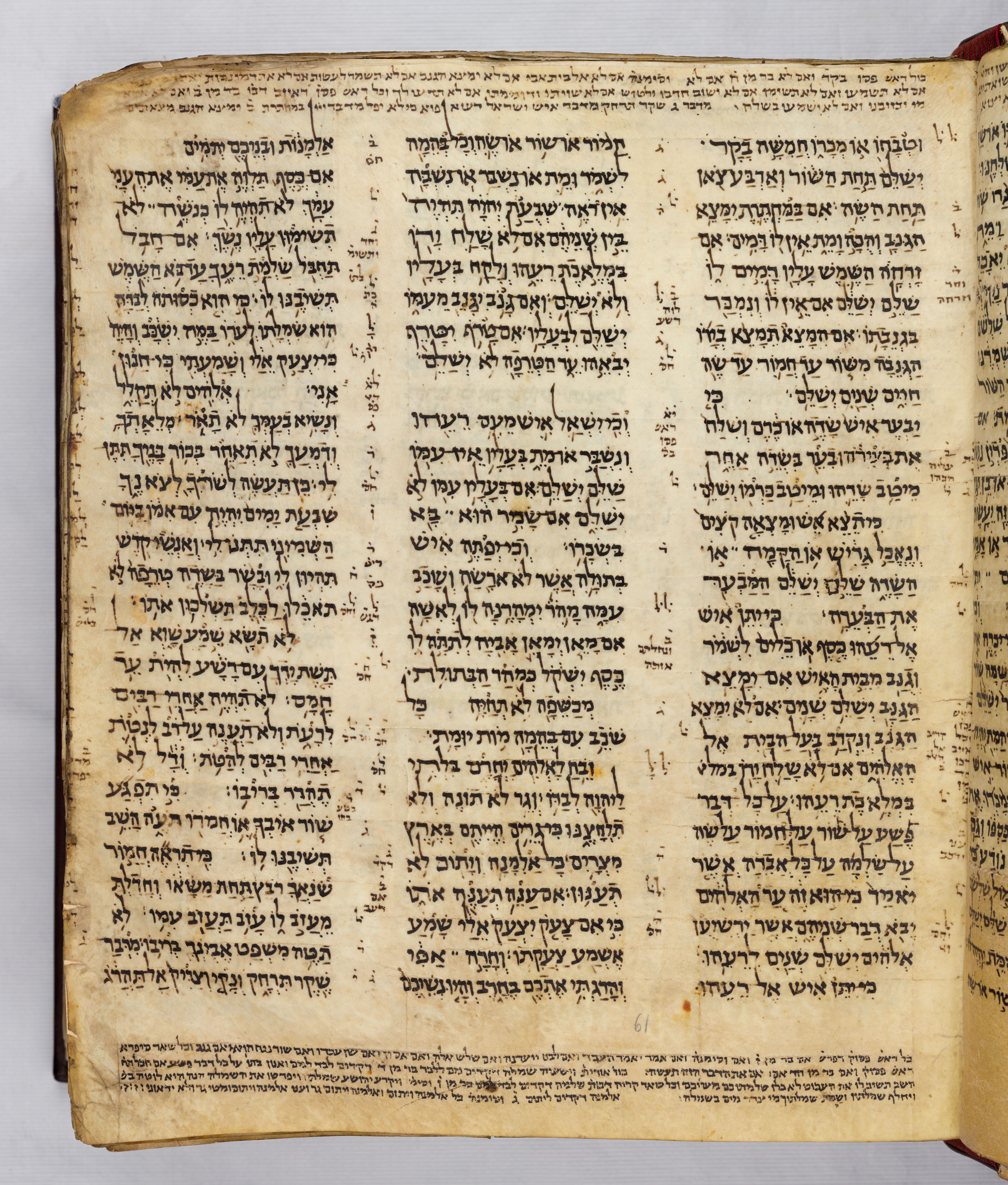
Codex Sassoon
c. 900 · Iron-gall ink on parchment
ANU - Museum of the Jewish People, Tel Aviv
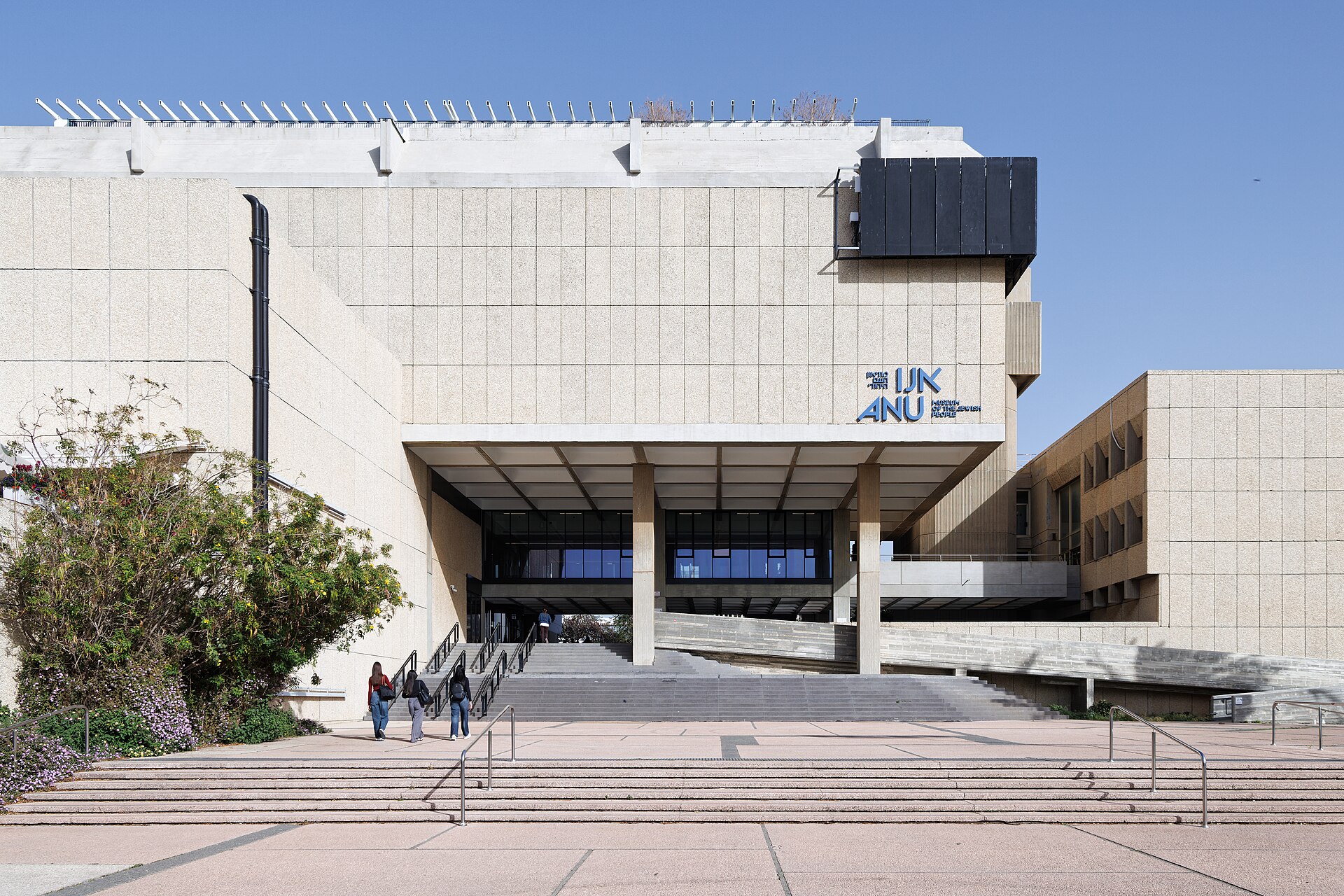
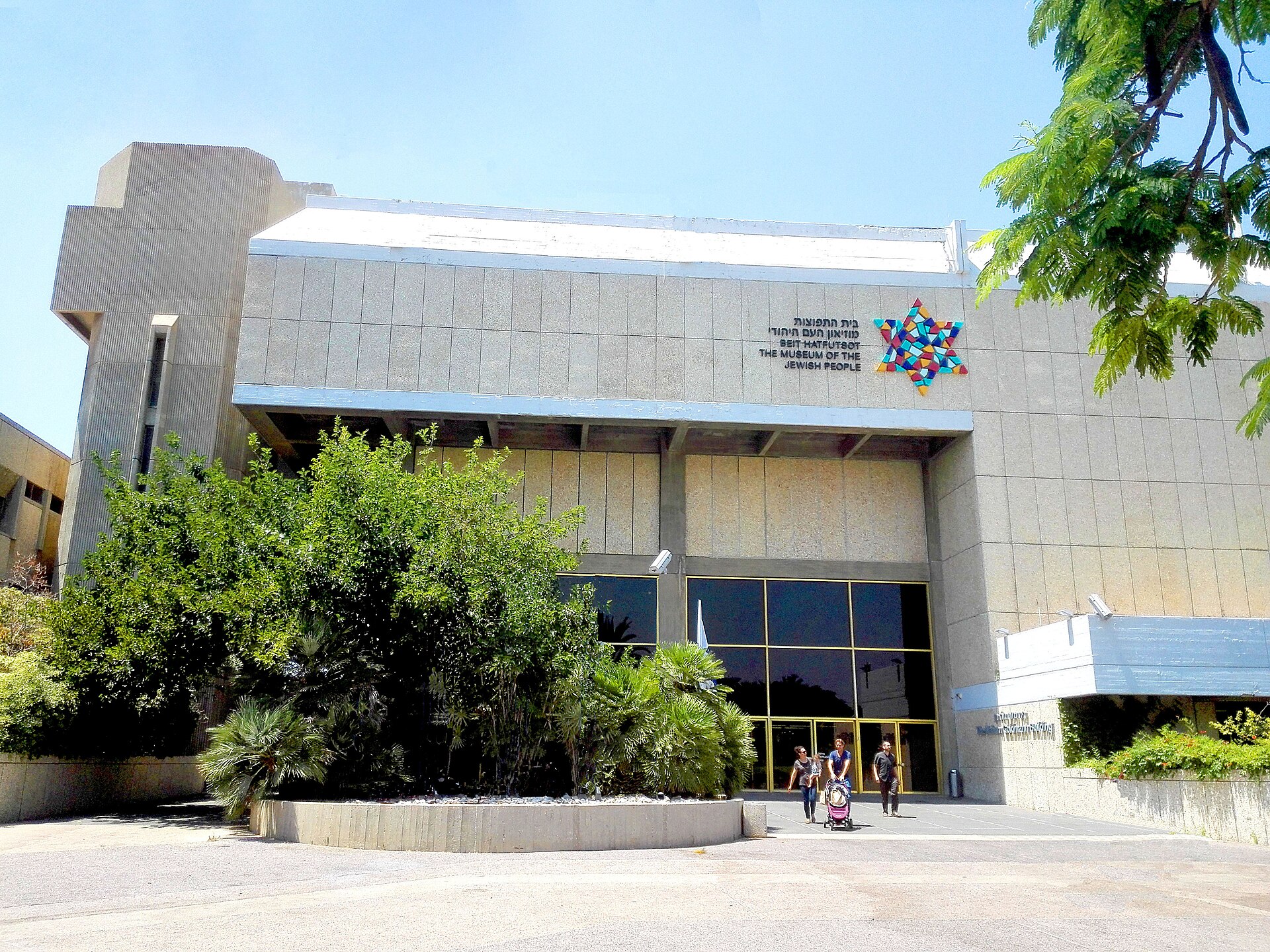
The museum building on the Tel Aviv University campus, photographed 15 February 2026, with the ANU signage visible above the entrance.
CC0Museum · Beit Hatfutsot · Founded 1978
Open, admission and hours confirmed 18 August 2026 · 18 sources
ANU's core holdings are reconstructions, models and digitised archives rather than an encyclopaedic object collection: 21 synagogue scale models, some representing buildings that no longer exist in any other form; genealogical, photographic, film and music databases built up over nearly four decades and searchable both on site and online; and, since 2023, one object of major independent market and scholarly value, Codex Sassoon. Museum management describes ANU as the largest Jewish museum in the world by floor area, at roughly 72,000 square feet across three main exhibition levels plus the Synagogue Hall and children's gallery.
| Local name | Beit Hatfutsot |
|---|---|
| Kind | Museum |
| Founded | Opened 15 May 1978 as the Museum of the Jewish Diaspora, known for most of its life as Beit Hatfutsot; reopened on 10 March 2021 as ANU - Museum of the Jewish People after a ten-year, 100 million dollar renovation |
| City and country |  Tel Aviv, Israel Tel Aviv, Israel |
| Address | Klausner Street 15, Tel Aviv University campus, Ramat Aviv, Tel Aviv 6139202, Israel. Entrance through Gates 2 and 7 |
| Website | anumuseum.org.il |
| Status | Open, confirmed |
| Record last verified |
Prices and hours change. We take them from the institution's own pages and print the day we read them, and you can check the current position at the source we used. Confirm before you travel.
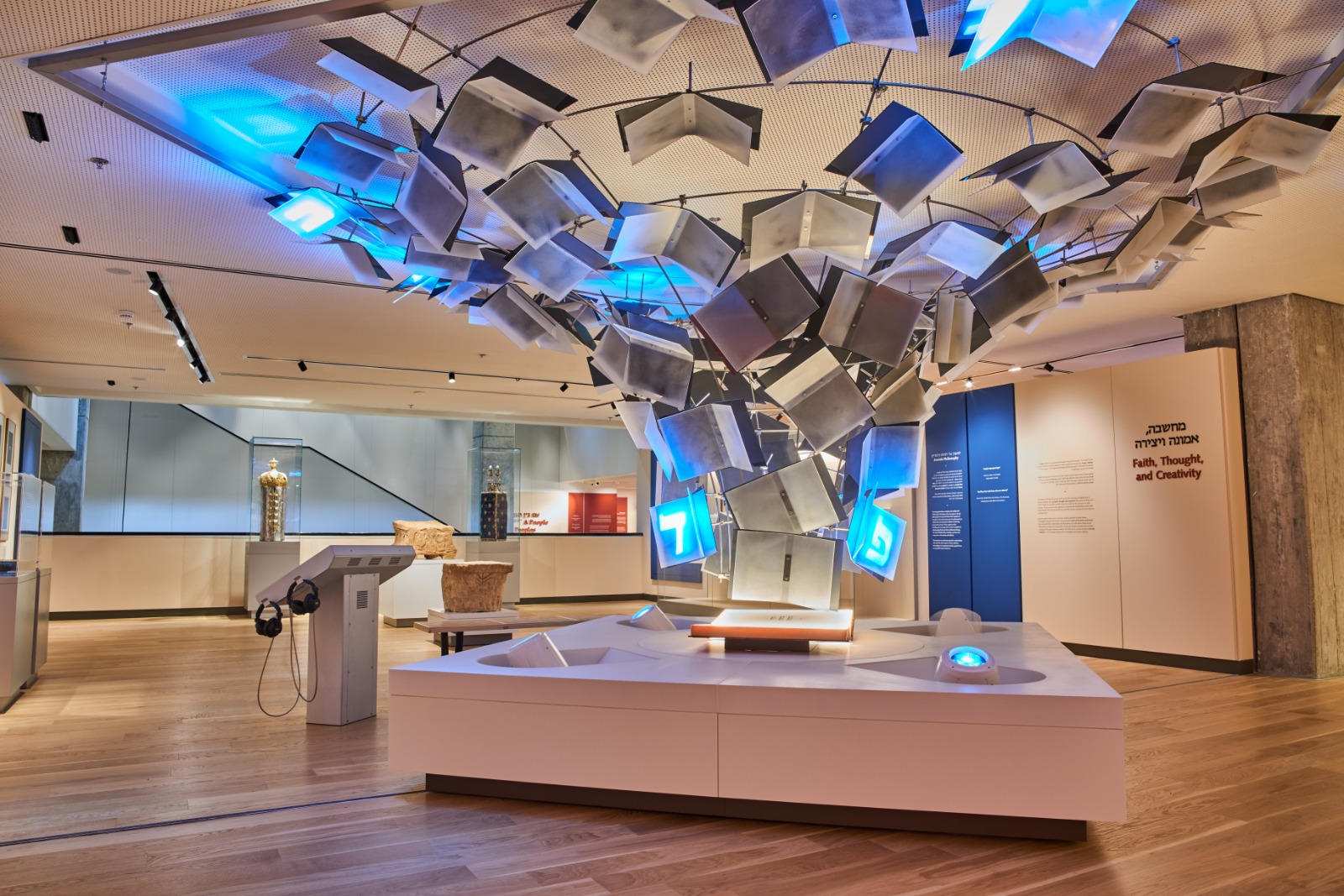
The floor the visit finishes on rather than starts on: the ideas the museum treats as common ground across Jewish life, among them the Sabbath, the covenant, the yearly cycle and life-cycle milestones, alongside the Hebrew Bible's afterlife in world culture generally. This is also where Codex Sassoon, the earliest known nearly-complete Hebrew Bible, has been on permanent display since May 2025.
The chronological core: Jewish migration, the major historical centers of Jewish life and scholarship, community and persecution, and the strand that runs from the Holocaust and the birth of the State of Israel to Jewish communities as they exist today. No free-licence photograph of this floor's interior has been located; it is described here from the museum's own account and from published visitor reviews only.
Where the visit begins: contemporary Jewish identity and culture, opened by a room of life-size video portraits of Jews from different countries and streams of practice speaking about what being Jewish means to them. Further in, the floor turns to Jewish contribution to film, music, theatre, comedy and public life, illustrated with objects including Leonard Cohen's guitar, Ruth Bader Ginsburg's judicial collar, the actor Solomon Mikhoels' King Lear cloak and a gown by the couturier Alber Elbaz. No free-licence interior photograph of this floor has been located.
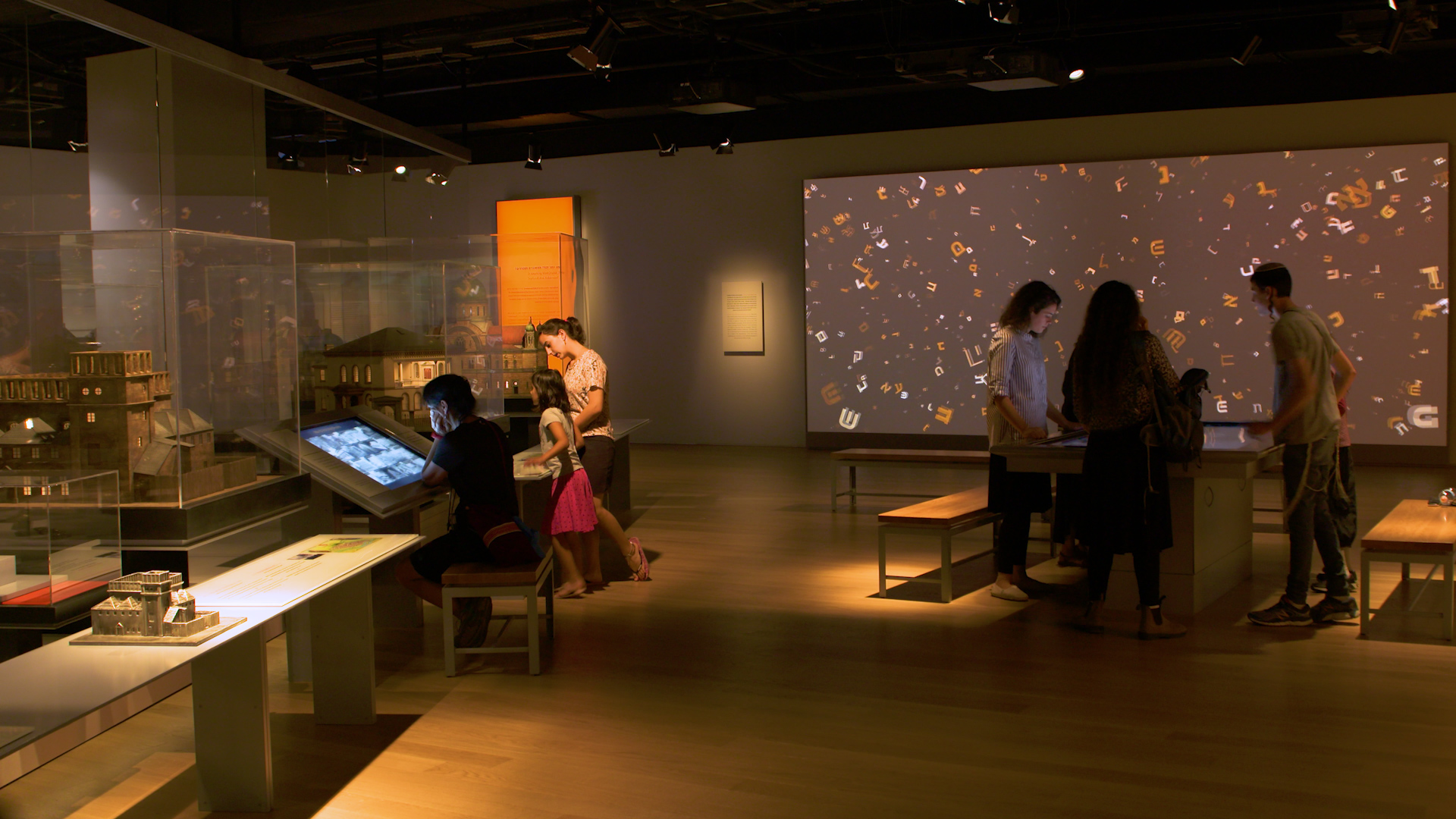
A dedicated gallery, opened in 2016 as the first stage of the museum's renewal, built around 21 scale models of synagogues from different eras and communities: Warsaw, Florence, Cochin, Aleppo, Amsterdam's Portuguese Synagogue and the Beth Sholom Synagogue in Pennsylvania designed by Frank Lloyd Wright among them. Each model is paired with an original ritual object from its community, and the room includes a 1919 stained-glass window by the German artist Friedrich Adler.
A hands-on children's gallery, aimed at ages 6 to 12, built around Jewish scientists, athletes, revolutionaries and cultural figures presented as a broader idea of who counts as a hero. It runs on fixed Saturday time slots rather than being open on demand.
Opened 23 February 2024, a curated display of work by 25 Israeli artists responding to the 7 October 2023 attacks and the war that followed, several of the artists killed on that day or during the war, others residents of the communities directly affected. It includes a 23-minute film of news photography from the Gaza border region, a soundtrack of songs performed at improvised gatherings for evacuees and mourners in the war's first weeks, and a lobby installation built around the graffiti artist Inbar Hayman, who was killed in Hamas captivity.
The earliest known nearly-complete manuscript of the Hebrew Bible, radiocarbon-dated to 880-960 CE. Bought at Sotheby's New York in May 2023 for about 38.1 million dollars, funded by Alfred H. Moses, and on permanent display at ANU since May 2025 on the Foundations floor. Already researched in this archive.2
Full record in this archiveOne of only two synagogues Wright ever built, reproduced at scale in the Synagogue Hall alongside models of buildings that in several cases no longer exist.8
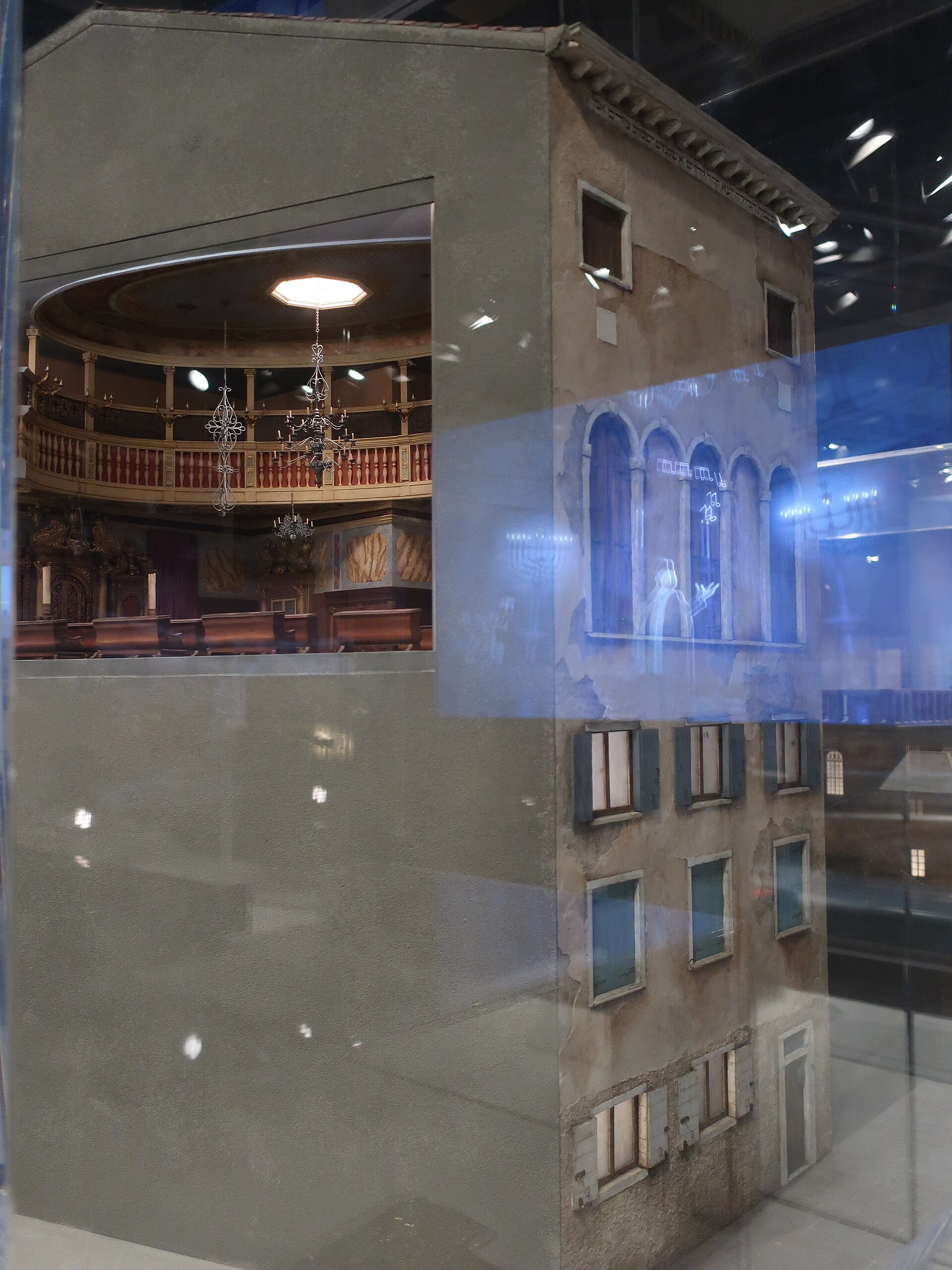
A scale reproduction of one of the five historic synagogues of the Venice Ghetto, the oldest enclosed Jewish quarter in Europe, photographed in the collection in 2023.17
A record, in miniature, of a synagogue from a Syrian Jewish community that had emptied by the early 2000s, standing alongside models of buildings in Cochin, Amsterdam and Warsaw in the same hall.8
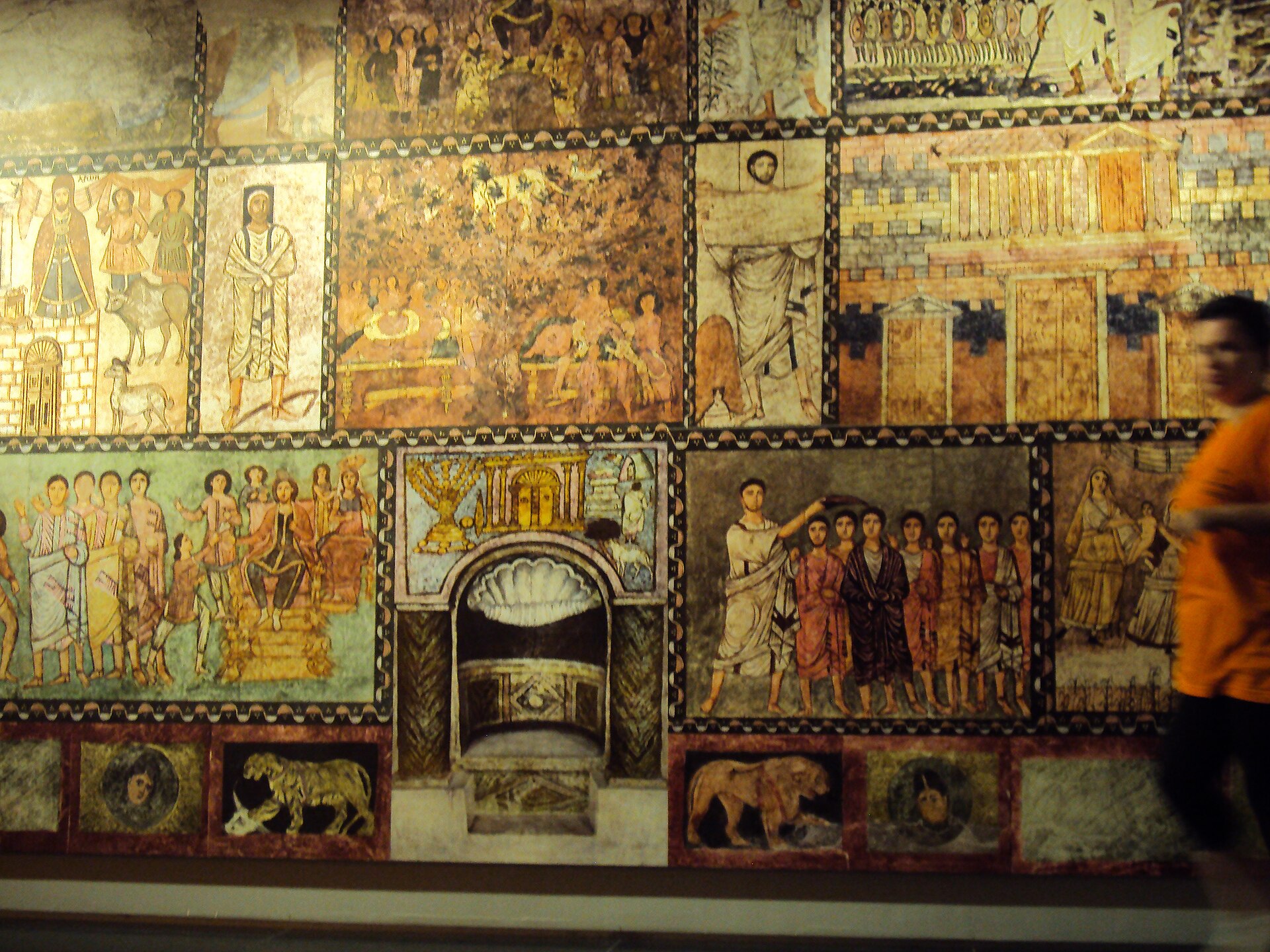
A large-scale reproduction of the painted panels from one of the oldest surviving decorated synagogues anywhere, on display in the Synagogue Hall since it opened in 2016.16
Among the personal objects used on the Mosaic floor to anchor the museum's account of Jewish contribution to twentieth-century music and popular culture.11
One of the lace collars the US Supreme Court justice wore over her robes, displayed on the Mosaic floor among objects tracing Jewish figures in American public life.10
A costume piece belonging to a Soviet Yiddish actor murdered on Stalin's orders in 1948, used to represent Jewish theatre under Soviet rule.11
A gown by the Moroccan-Israeli couturier who led Lanvin and later Yves Saint Laurent, who died in April 2021 shortly before the renovated museum opened.11
ANU - Museum of the Jewish People occupies the same building, on the same corner of the Tel Aviv University campus, that has held a museum about Jewish life since 15 May 1978. It opened then as the Museum of the Jewish Diaspora, the idea of Nahum Goldmann, president of the World Jewish Congress, who had proposed in 1959 that young Israelis and diaspora Jews alike needed an institution telling the long, mostly ordinary history of Jewish communities abroad, not only the history of persecution. Abba Kovner, the poet and former partisan commander, wrote the concept for its first core exhibition around six recurring themes of Jewish existence: family, community, faith, culture, existence and return. Jeshajahu Weinberg was its first director.
The museum, which came to be known by its Hebrew name Beit Hatfutsot, the Diaspora House, survived a serious budget crisis in the 1980s and 1990s driven by government cuts and falling tourism, rescued in part by the former Tel Aviv mayor Shlomo Lahat and the former prime minister Ariel Sharon, and stabilised financially through a partnership between the Israeli government and the businessman Leonid Nevzlin's Nadav Foundation. In 2005 the Knesset passed a law naming it the National Center for Jewish Communities in Israel and around the world.
A first renewal opened in 2016: a new wing holding the Alfred H. Moses and Family Synagogue Hall and the Heroes children's gallery. The larger rebuild followed, a ten-year, roughly 100 million dollar project funded by the state, the Nadav Foundation and private donors, that closed the original core exhibition, tripled the museum's exhibition space to about 72,000 square feet, and reopened the whole building on 10 March 2021 under a new name and identity, ANU, Hebrew for we. Board chair Irina Nevzlin described the rebrand as intended to embrace inclusion and reflect the diversity and collective spirit of the Jewish people everywhere.
A visit starts on the third floor rather than the ground floor. Level 3, the Mosaic, opens with a room of life-size video portraits: a Hasidic woman judge from New York, a secular kibbutznik from the Negev, a Reform rabbi from Tel Aviv, a teacher from Brazil, each speaking for about a minute about what being Jewish means to them, their voices overlapping rather than in sequence. The rest of the floor moves through Jewish contribution to film, music, theatre, dance, comedy and public life, anchored by objects rather than only text: Leonard Cohen's guitar, Ruth Bader Ginsburg's judicial collar, a King Lear costume worn by the Soviet Yiddish actor Solomon Mikhoels, and a gown by the designer Alber Elbaz.
Level 2, the Journey, is the historical spine, moving from ancient migration through the great centres of Jewish scholarship and community, through pogrom and persecution, to the aftermath of the Holocaust and the establishment of the State of Israel. Level 1, the Foundations, steps back from chronology to the ideas the museum treats as shared ground across Jewish practice: the Sabbath, the covenant, the yearly and life cycles, and the reach of the Hebrew Bible into cultures well outside Judaism. This is also where Codex Sassoon has stood since May 2025.
Outside the three main floors sit the Synagogue Hall, the ground-floor Heroes gallery for children, and a program of temporary exhibitions that in 2026 include a photography survey called 20&20: A Lens of Her Own and, since February 2024, an exhibition responding directly to the 7 October 2023 attacks and the war that followed.
Codex Sassoon is the earliest known nearly-complete manuscript of the Hebrew Bible, radiocarbon-dated to between 880 and 960 CE and containing almost all 24 books of the Tanakh across 792 parchment leaves. Its ownership over the following centuries is documented in inscriptions added to the manuscript itself, including a dedication consecrating it to a synagogue in Makisin, in what is now northeastern Syria, and a note from the late 14th century entrusting it to a private keeper on condition it be returned once the synagogue was rebuilt. What happened to it between then and the early 20th century is not known from any source the museum or prior scholarship has produced.
The manuscript reappeared in 1929 in private hands in Ankara, was bought by the collector David Solomon Sassoon, and passed afterward through the British Rail Pension Fund's art-investment portfolio, a 1982 exhibition at the British Library, and the collection of the Geneva-based banker Jacqui Safra, before Sotheby's sold it in New York in May 2023 for about 38.1 million dollars, bought by former US ambassador Alfred H. Moses on behalf of the American Friends of ANU and donated to the museum. It went on permanent display on the Foundations floor in May 2025, where visitors can view the original manuscript at close range, work through interactive stations built around its text, and watch two short films, one on the manuscript's history and one an animated piece on the Ten Commandments set to an original score by Yoni Rechter. The museum's own exhibition page states plainly that the object on view is permanent, not a loan or a temporary showing, and that a facsimile only stands in for it occasionally, for stated conservation and security reasons.
The Alfred H. Moses and Family Synagogue Hall, the first piece of the museum's renewal to open, in 2016, holds 21 scale models of synagogues drawn from the museum's long-running collection of architectural reconstructions, first assembled for the 1978 museum and expanded since. The models on view include the Great Sephardi Synagogue in Florence, the Portuguese Synagogue in Amsterdam, the Paradesi Synagogue in Cochin in southwestern India, the Eliahu Hanavi Synagogue, the Central Synagogue of Aleppo in Syria, the Great German Synagogue in Venice's Ghetto, and the Beth Sholom Synagogue in Elkins Park, Pennsylvania, one of only two synagogues Frank Lloyd Wright built. Alongside each model sits at least one original ritual object drawn from that community, and the hall also holds a stained-glass window made in Germany in 1919 by the artist Friedrich Adler, plus a large-scale reproduction of the third-century painted panels excavated at the ancient synagogue of Dura-Europos in Syria.
For several of these buildings the model is now the closest a visitor can get to the original: the Aleppo synagogue's community had effectively emptied by the early 2000s, and other buildings represented in the hall have been destroyed, converted or altered beyond recognition since they were built. The hall pairs this with interactive touchscreens for building a synagogue from its component parts and a listening station of recorded liturgical music from Jewish communities across the Middle East, Africa and Asia.
The renovated museum drew serious critical attention from Jewish literary and review publications when it reopened in 2021, and the critics broadly agree on what changed. Sarah Rindner, writing in the Jewish Review of Books, contrasted the old Beit Hatfutsot's 1970s-era comic family-tree illustrations, its realistic synagogue reconstructions and its dramatic multi-floor Yizkor memorial to victims of antisemitism, all now gone or repositioned, with a museum that begins in the present and moves backward, downplaying oppression in favour of Jewish agency and cultural contribution. She called it a cheery, inclusive vision of Jewish peoplehood, more lighthearted than its predecessor, though she wondered whether some of its very contemporary references would age the way the old building's decor eventually had.
Izabella Tabarovsky, writing for Tablet Magazine, described a museum proposing a vision of togetherness she called fresh, bold and inclusive at what she characterised as a moment of unusual division in the Jewish world, pointing to the interactive kitchen exhibit and the video-portrait installation as evidence of a curatorial approach built around personal representation before shared narrative.
Yaniv Feller, writing in the Tel Aviv Review of Books, took the most critical line without disputing the quality of the execution. He argued that a museum built around a pluralistic, multi-denominational, explicitly inclusive account of what it means to be Jewish sits uneasily inside an Israeli political environment where religious-nationalist parties holding a substantial bloc of Knesset seats reject the legitimacy of the non-Orthodox streams the museum treats as equally valid, and he suggested the museum's vision reads as aspirational rather than descriptive of the society actually surrounding it.
The renewed museum was funded jointly by the State of Israel, the Nadav Foundation established by the businessman Leonid Nevzlin, and private philanthropy, a structure that dates back to the recovery plan that saved the institution from its 1990s budget crisis. Irina Nevzlin, Leonid Nevzlin's daughter, chairs the museum's board; Alfred H. Moses, who funded the Codex Sassoon purchase, and the retired general Eitan Ben Eliyahu serve as co-chairs of its Board of Governors. None of this is hidden. The museum's own about page names its funders and leadership plainly, and the Codex Sassoon exhibition page states the acquisition price and the donor's name without qualification.
What remains an open argument, made by critics rather than resolved by the museum, is whether an institution funded substantially by the Israeli state and describing itself as the National Center for Jewish Communities can also present, without friction, a version of Jewish identity that includes streams of practice a meaningful share of Israel's own political establishment does not recognise as fully legitimate. The museum's design answers this by inclusion rather than argument, placing a Haredi man and a lesbian Reform rabbi in the same room of video portraits without ranking them. Whether that constitutes an answer or a postponement of the question is exactly where the published criticism of the museum, cited above, divides.
Visitors consistently describe the design and production values of the renovated museum as unusually high for the genre, praising how much of the four thousand year story it manages to cover through interactive stations, film and object display rather than text panels alone, and several describe an unexpected personal or emotional connection to family history. The most common practical complaints are that the museum shop is expensive and only loosely tied to the exhibitions, that guided-tour quality varies because some tours are run by volunteers rather than staff guides, and that two to three hours, the museum's own estimate, is not enough time to see the three main floors, the Synagogue Hall and any temporary exhibition properly. Critics writing for Jewish literary and review publications in 2021, when the renovated museum opened, largely agree on what ANU is trying to do: replace the old Beit Hatfutsot's chronological, tragedy-inclusive account of Diaspora history with a lighter, more pluralistic and more contemporary-facing story centred on identity. Where they differ is on whether that trade avoids something, and on whether a museum built around inclusion sits easily inside Israel's own religious and political arguments about who counts as Jewish.
Tripadvisor: 4.5 from 1,070 ratings, read 18 August 2026
A platform average is a tertiary source: it moves, it is not audited, and we quote no visitor's words.
Klausner Street 15, Tel Aviv University campus, Ramat Aviv, Tel Aviv 6139202, Israel. Entrance through Gates 2 and 7.
Regular: ILS 54; Israeli senior citizens: ILS 27; Persons with disabilities, college/university students, new immigrants (olim): ILS 44; Children under 5: free; Soldiers in uniform: free. As confirmed 18 August 2026.
Sun-Thu 10:00-17:00; Fri 10:00-14:00; Sat 10:00-17:00. Closed: A published list of specific irregular closure dates runs through 2027 on the museum's own visit page, including 6.9.26, 10.9.26, 11.10.26, 22.11.26 and 27.12.26. Closed on Rosh Hashanah eve and the first day of Rosh Hashanah, Yom Kippur eve and Yom Kippur, and Sukkot eve and the first day of Sukkot; open on shortened or normal hours on the intervening days. As confirmed 18 August 2026.
Bus: Egged lines 271, 222 and 572; Dan lines 7, 25, 289 and 45 serve the Tel Aviv University campus stops nearest the museum; Train: Tel-Aviv University railway station is the closest stop on the Israel Railways network, with a connection into campus via Dan bus lines 7 and 45; Car: Paid museum parking lot on Klausner Street, opposite Gate 2; visitors show ID, passport or a driving licence at the campus gate.
Codex Sassoon (An unnamed scribe, with two later Masoretes); Model of the Beth Sholom Synagogue (Original building by Frank Lloyd Wright, 1959, Elkins Park, Pennsylvania); Model of the Great German Synagogue, the New Ghetto, Venice (Original building, Venetian Ghetto, 16th century; model in the museum's synagogue collection); Model of the Central Synagogue of Aleppo (Original building, Aleppo, Syria); Reproduction of the Dura-Europos synagogue paintings (After the third-century original excavated at Dura-Europos, Syria); Leonard Cohen's guitar (Leonard Cohen).
One artwork and its story every Tuesday, with the picture: who owned it, what it made, and what closes soon in the exhibition calendar. No promotion, and nothing we cannot cite.
We send one email to confirm the address and keep nothing else. Every letter carries a one-click unsubscribe. How we handle your data.


