Raphael: Sublime Poetry
The Metropolitan Museum of Art ·  New York, United States · 29 Mar to 28 Jun 2026
This exhibition has closed
It closed on 28 June 2026. The page stays because an exhibition history is evidence: where a work was shown, and when, is part of its provenance and this archive cites it.
On now at The Metropolitan Museum of Art: Musical Bodies, Costume Art, The Genesis Facade Commission: Liu Wei, Speculation.
The first comprehensive international loan exhibition on Raphael in the United States: more than 200 works, over 170 of them drawings, seven years in preparation. Closed 28 June 2026.
Images
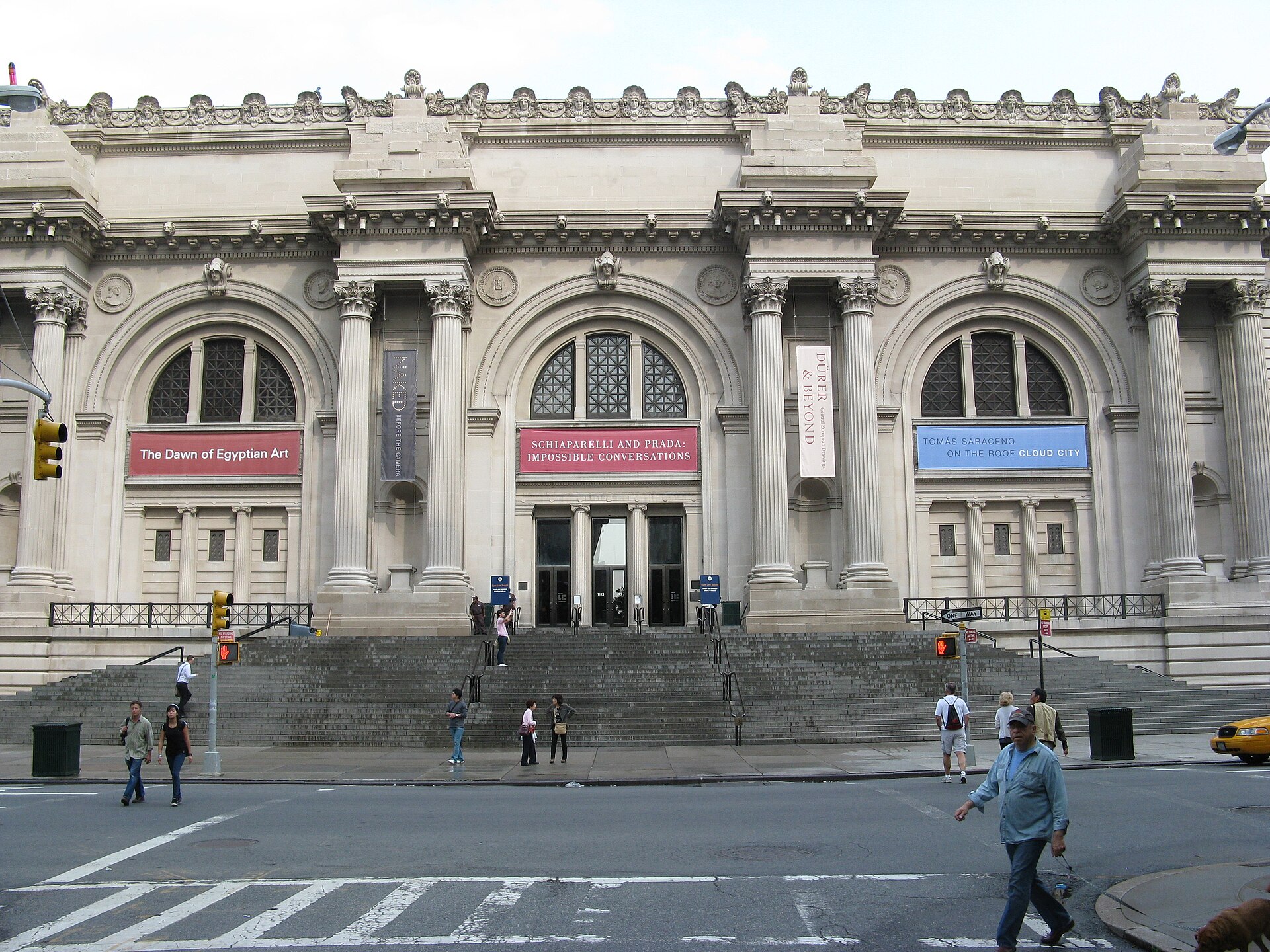 Shown: The Metropolitan Museum of Art - not the exhibition
What it took to assemble, and why that matters
This was the first comprehensive international loan exhibition on Raphael ever staged in the United States, and it ran for thirteen weeks. Carmen Bambach, the Marica F. and Jan T. Vilcek Curator in the Met's Department of Drawings and Prints, spent seven years assembling it. More than 200 works were brought together, of which over 170 were drawings.
That ratio is the exhibition's real argument and it is easy to miss behind the famous paintings. A show that is five-sixths works on paper is not a parade of altarpieces; it is an argument about how Raphael thought, made visible by putting finished paintings next to the sheets that produced them. The Alba Madonna came from the National Gallery of Art in Washington and was reunited with its preparatory drawings from Lille - the object and the thinking behind it in one room, which is precisely the material this archive exists to record and which is almost never assembled.
The lender list is the other measure. The Vatican Museums, the Louvre, the Uffizi, the Prado, the National Gallery in London, the Albertina, the Ashmolean, the British Museum, the Galleria Borghese, the Berlin Kupferstichkabinett, the Stadel, Capodimonte, Budapest, Chatsworth, Urbino, Perugia, Bologna, Bergamo, Brescia, Lille, Madrid's Patrimonio Nacional and more. An exhibition on this scale needed a federal indemnity from the Council on the Arts and the Humanities to be insurable at all.
A life, told roughly in order
The hang was broadly chronological with thematic sections inside it. It opened in Urbino, where Raphael was born on 6 April 1483, and where his father Giovanni Santi was a court painter and a prolific poet working in a duchy that Federico da Montefeltro had turned into a centre of humanist learning. Santi's own work was shown, which is unusual - he is an obscure figure outside this context - and so was that of Pietro Perugino, to whom Santi sent his son.
The Met made a specific claim in this opening stretch: it gathered paintings and studies made for confraternities by Perugino and by the young Raphael, including what it describes as the first painting entirely in Raphael's own hand, an attribution it says recent conservation work confirms. Then Florence, from 1504 to 1508, where he absorbed Leonardo and began to be spoken of alongside him and Michelangelo, and finally Rome, where the architect Bramante brought him in at twenty-five to work for Julius II and then Leo X.
He was a master painter at seventeen and dead at thirty-seven. The exhibition's most interesting effect, as one reviewer put it, was that the whole arc of an ideal of beauty - born, perfected, then mutating into something else - is visible inside one short career.
The women, and the museum's decision to foreground them
The Met stated in advance that the exhibition would pay particular attention to Raphael's depiction of women, from his pioneering use of nude female models to the Madonnas. That is a curatorial choice with consequences, and the show did not entirely soften them.
The Portrait of a Lady with a Unicorn came from the Galleria Borghese: a betrothal portrait, advertising its sitter as a marriage prospect, holding a small unicorn that reads both as a symbol of chastity and, if the Met's identification of her as Laura Orsini is right, as her family's crest. On that identification the sitter is thirteen. The Madonnas are mostly blonde, which follows poetic convention rather than Italian fact - the ideal was literary before it was observed. Late in the show the ingratiating surface breaks: studies for the Transfiguration, and the small Ezekiel's Vision, where a tiny prophet is overwhelmed by cherubs and beasts writhing overhead.
A caution on reading that shift. It is tempting to treat the late style as psychological, and one reviewer warned specifically against it: individual expression was not what art in this period was for, and Raphael was selling sophistication to patrons. The change tracks a change in what Rome wanted, from luxurious harmony towards voluptuous drama, more than a change in the man.
The workshop problem the labels could not settle
Raphael's late career ran on delegation at a scale nobody had attempted: dozens of painters and assistants across scores of decorative commissions. Michelangelo thought it distasteful. It is also the reason Raphael sits awkwardly inside the modern idea that value flows from the hand of the artist - a nineteenth-century notion of connoisseurship that the Gilded Age collectors who built American museums took as given.
Artnet's reviewer noted that the Met's own labels visibly wrestle with this, and it is the honest observation to take away: telling a modern visitor what separates an autograph Raphael from a Giulio Romano is a live problem, not a settled one, and a show five-sixths made of drawings is where the problem is at its sharpest. The School of Athens, his best-known work, could not travel at all - it is a fresco in the papal apartments - and was present only through sketches and an immersive room, which is its own comment on what a loan exhibition can and cannot do.
What is in the show
The opening: Urbino, the father, the master
Raphael; Giovanni Santi; Pietro PeruginoA pencil self-portrait of the young Raphael from the Ashmolean Museum opened the show, followed by work by his father Giovanni Santi, a court painter and poet, and by Pietro Perugino, his first master - including Perugino's seated Saint Augustine of about 1500, which still scales figures to their symbolic importance in the medieval manner Raphael abandoned.3
The Alba Madonna, reunited with its own drawings
RaphaelThe Virgin and Child with Infant Saint John the Baptist in a Landscape, about 1509 to 1511, lent by the National Gallery of Art in Washington and shown with its preparatory drawings from the Museum of Fine Arts in Lille. Painting and preparatory sheets in one room is the exhibition's method stated in a single object.2
Two portraits, from the Louvre and the Borghese
RaphaelThe Portrait of Baldassarre Castiglione from the Louvre, of about 1514 to 1516, the sitter dressed in the dark velvet and furs his own Book of the Courtier would recommend. Beside it, the Portrait of a Lady with a Unicorn from the Galleria Borghese, a betrothal portrait of a sitter the Met identifies as Laura Orsini, who on that identification was thirteen.3
The late work, and the fresco that could not come
RaphaelStudies for the Transfiguration of 1516 to 1520 and the small Ezekiel's Vision of about 1518, where the style turns darker and more crowded. The School of Athens, painted into the wall of the papal apartments and unmovable, was represented only by sketches and by an immersive projection room.3
The scale of the borrowing
Lenders included the Vatican Museums, the Louvre, the Uffizi, the Prado, the National Gallery in London, the Albertina, the Ashmolean, the British Museum, the Galleria Borghese, the Berlin Kupferstichkabinett, the Stadel, Capodimonte, the Museum of Fine Arts Budapest, Chatsworth, and the national galleries of the Marche and Umbria. The show carried a federal indemnity to be insurable.2
Who made it
- Curated by Carmen Bambach, Marica F. and Jan T. Vilcek Curator, Department of Drawings and Prints, The Met - conceived and organised the exhibition over seven years
- Organised by The Metropolitan Museum of Art
Tickets for this show
- Tickets
- AdultUSD 30the Met charges no separate exhibition ticket; all tickets include exhibitions
- Senior, 65 and overUSD 22
- StudentUSD 17
- Child, 12 and underFreefree
- New York State residents, and students of New York, New Jersey and ConnecticutFreepay what you wish, minimum one cent
- Members and PatronsFreefree and unlimited
- Timed entry
- None. The Met does not require advance booking and did not ticket this exhibition separately, so an exhibition of this scale was seen on ordinary museum admission - unusual for a loan show of this size, most of which carry a surcharge elsewhere.
- Hours
- This show closed on 28 June 2026 and cannot now be seen; the prices above are the museum's standing admission, confirmed on the date below, and are recorded so the cost of visiting while it ran is on the record. Museum hours are Sunday to Tuesday and Thursday 10am to 5pm, Friday and Saturday 10am to 9pm, closed Wednesdays.
Prices and timing change. We take them from the page we used and print the day we read it: the source we used. Confirm before you travel.
What critics said
Critics treated the exhibition as an event that needed no defending and largely got out of its way, while several picked at the framing rather than the contents - the recurring complaint being that the Met marketed a show which did not require marketing.
What is praised, what is criticised
- Praised: the reunion of finished paintings with their own preparatory drawings, above all the Alba Madonna with the Lille sheets
- Praised: the opening sequence through Urbino, Giovanni Santi and Perugino, which makes Raphael's synthesis of other people's innovations legible rather than treating him as spontaneously gifted
- Praised: the late rooms, where the Transfiguration studies and Ezekiel's Vision show the style turning darker, so a single short career contains a whole cycle of an ideal of beauty
- Criticised: the opening gallery text, which introduced Raphael in its first line as one of the greatest influencers of all time - Artnet's reviewer could not see why a Raphael show would feel the need, and read it as insecurity about the art's relevance
- Criticised: that the Met's labels visibly struggle with the workshop problem: Raphael delegated on an unprecedented scale, which does not fit the connoisseurial idea that value comes from the artist's own hand, and the show does not resolve what separates an autograph Raphael from a Giulio Romano
- Criticised: that the best-known work, the School of Athens, is a fresco that cannot travel and was present only through sketches and an immersive projection room
Sources
- 1The Metropolitan Museum of Art, exhibition page for Raphael: Sublime Poetry - run dates and the exhibition's own summary. metmuseum.org/exhibitions/raphael-sublime-poetry
- 2The Metropolitan Museum of Art, press release, 23 March 2026: the claim to be the first comprehensive international loan exhibition on Raphael in the United States, the count of more than 200 works including over 170 drawings, Carmen Bambach and the seven-year preparation, the Alba Madonna reunited with the Lille drawings, the Castiglione portrait from the Louvre, the full lender list, the federal indemnity, the sponsors, the Urbino and Perugino opening, and the stated focus on his depiction of women. metmuseum.org/press-releases/raphael-sublime-poetry
- 3Ben Davis, 'At the Met, Raphael's Beauty Has a Dark Side', Artnet News, 30 March 2026: the review, the objection to the opening wall text, the Ashmolean self-portrait, Perugino's Saint Augustine, the Lady with a Unicorn and the Laura Orsini identification, the Castiglione portrait and sprezzatura, the Transfiguration studies and Ezekiel's Vision, the School of Athens shown via sketches and an immersive room, and the observation about the workshop and connoisseurship. news.artnet.com/art-world/raphael-sublime-poetry-review-2759051
- 4The Metropolitan Museum of Art, Plan Your Visit: the admission table, the statement that all tickets include exhibitions, and that advance tickets are not required. Read 7 August 2026. metmuseum.org/plan-your-visit