Martin Puryear: Nexus
The Cleveland Museum of Art ·  Cleveland, United States · 12 Apr to 9 Aug 2026
This exhibition has closed
It closed on 9 August 2026. The page stays because an exhibition history is evidence: where a work was shown, and when, is part of its provenance and this archive cites it.
On now at The Cleveland Museum of Art: The Renaissance Engraver at Work, American Printed Silks, 1927-1947, Spectacular Freedom: Andrew Wyeth and the Modern American Watercolor.
Puryear's sculpture from the early 1960s on, set with prints, drawings and documentation of the outdoor commissions, including work not publicly shown for decades. Made with the Museum of Fine Arts, Boston; travels on to the High Museum in Atlanta.
Images
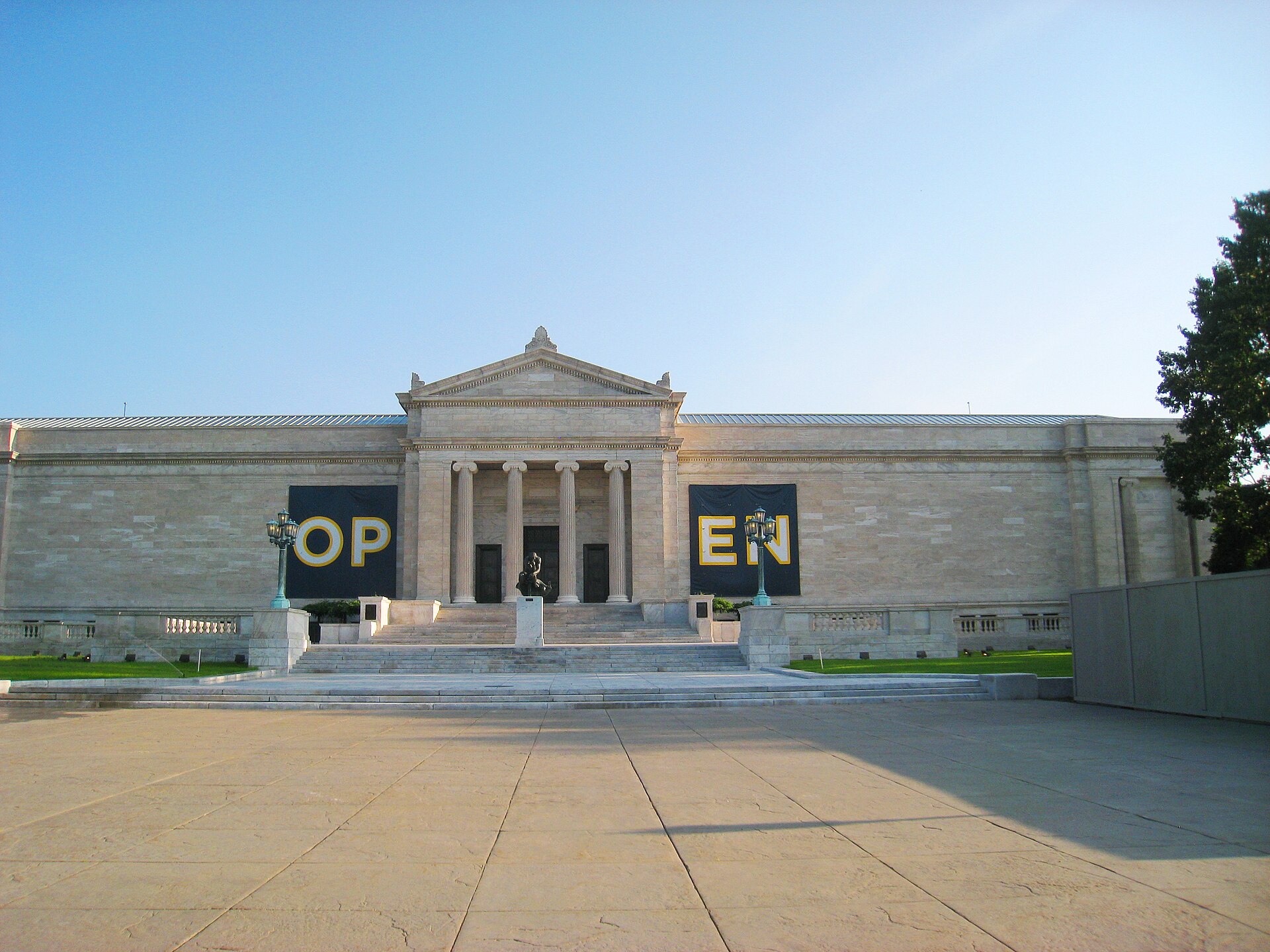 Shown: The Cleveland Museum of Art - not the exhibition
Twenty years since the last one
This is the first substantial survey of Martin Puryear in nearly two decades, and it gathers around fifty works spanning a career that begins in the early 1960s. A twenty-year gap between surveys of a living artist of this standing is itself worth recording, and the show's own scope explains part of it: to assemble fifty works it reaches back to the early 1960s and brings out sculptures that have not been publicly exhibited in decades.
It was co-organised by the Museum of Fine Arts, Boston and the Cleveland Museum of Art, with a curatorial team spread across three institutions - Emily Liebert and Gabriella Shypula in Cleveland, Ian Alteveer and Daisy Alejandre at the MFA, Reto Thuring, formerly of the MFA and now in Winterthur, and Michael Rooks at the High Museum, where the show finishes. The catalogue is published by Cleveland and distributed by Yale University Press, with essays by Rizvana Bradley, Joan Kee, Emily Liebert, Michelle Millar Fisher and Ugochukwu-Smooth Nzewi, and previously unpublished archival material.
One practical note that overrides everything else on this page: the Cleveland showing closes on 9 August 2026. If you are reading this when it was written, that is two days.
Materials that carry their own histories
The show is organised around material rather than chronology alone: sculpture in wood, leather, glass, marble and metal, alongside drawings and prints that are rarely shown. Puryear uses a wide range of materials and keeps returning to wood, and the survey format lets a visitor watch what he does with cedar and poplar change across sixty years.
What the materials carry is the point. The MFA's Ian Alteveer described the range of traditions Puryear draws on - African architecture and artefacts, Scandinavian woodworking, basket weaving, shipbuilding, barrel making - and all of those are techniques for bending and joining, which is exactly what the sculptures do. The curves and the latticework are not stylistic preferences; they are what those crafts produce.
The clearest case is Some Lines for Jim Beckwourth, a row of worked rawhide strips set out like a line of music or a paragraph of text. Beckwourth was born into slavery in Virginia in 1798 and became a trapper, rancher and entrepreneur in the American West. Puryear cleaned, dried and worked the rawhide himself, by the methods Beckwourth would have used on the move. The material is the biography.
Birds, and one Mughal painting
The natural world runs through the exhibition and birds run through it in particular. Falcons recur across the works, and there is a specific source: Puryear has long been drawn to the gyrfalcon, and keeps in his studio a reproduction of a Mughal miniature of 1619 - in the MFA's own collection - showing a falcon being presented to a Mughal emperor.
In Boston that let the museum hang a living artist against its own holdings and show the line running between them, which the MFA's contemporary department has said it wants to keep doing. Cleveland cannot make the same connection with the same object, and that is a real difference between the two showings of what is nominally the same exhibition - a touring survey is not identical from city to city, and the local collection it is read against is part of what a visitor sees.
Why the photographs will not do
The exhibition includes works on paper deliberately: preparatory drawings hung with the finished sculptures, and more abstract etchings and aquatints, including Karintha of 2000, a woodcut on Kitakata paper from the suite made for Jean Toomer's Cane. Seeing the loop drawn on a sheet next to the same loop bent in cedar is the argument for putting them together.
The reviewer's and the curator's shared warning is worth repeating on a page like this one, which is mostly words. Alteveer put it plainly: viewing Puryear's work is physical, you have to walk around it and see the forms and textures in person, and reproductions do not do the objects justice. This is a survey whose central claim - that craftsmanship in a specific material carries specific history - is not fully legible in a photograph. Which is also why our own page carries a picture of the museum rather than of the sculpture: we do not publish an exhibition's press photographs, and no free-licensed photograph of this installation exists that we could verify.
What is in the show
Across the career, roughly fifty works
Martin PuryearSculpture from the early 1960s onward in wood, leather, glass, marble and metal. Named works in the touring show include Self of 1978, Night and Day of 1984, On the Tundra of 1986, Confessional of 1996 to 2000, Big Phrygian of 2010 to 2014, Hibernian Testosterone of 2018, Aso Oke of 2019, A Column for Sally Hemings of 2021 and Lookout of 2023.2
Some Lines for Jim Beckwourth
Martin PuryearWorked rawhide strips laid out like a line of music or a paragraph of text, named for a man born into slavery in Virginia in 1798 who became a trapper, rancher and entrepreneur in the West. Puryear cleaned, dried and worked the rawhide himself, by the methods Beckwourth would have used.3
Works on paper, shown with the sculpture
Martin PuryearPreparatory drawings hung against the finished pieces, plus etchings and aquatints, among them Karintha of 2000, a woodcut on Kitakata paper from the suite of prints made for Jean Toomer's Cane. The drawings show the same curves and loops the sculptures achieve in bent wood.3
Falcons, and the painting behind them
Martin PuryearBirds, and falcons especially, recur through the exhibition. Puryear's interest in the gyrfalcon connects to a Mughal miniature of 1619 in the collection of the Museum of Fine Arts, Boston, showing a falcon presented to a Mughal emperor, of which he keeps a reproduction in his studio.3
Work not shown publicly in decades
Martin PuryearThe survey brings out sculptures that have not been exhibited publicly for decades alongside pieces making their first appearance, which is the substance of the claim that this is the most comprehensive account of the artist in nearly twenty years.1
Who made it
- Curated by Emily Liebert, Lauren Rich Fine Curator of Contemporary Art, Cleveland Museum of Art
- Curated by Ian Alteveer, Beal Family Chair, Department of Contemporary Art, Museum of Fine Arts, Boston
- Curated by Reto Thuring, Head of Culture, Foundation for Art, Culture and History, Winterthur; formerly Beal Family Chair at the MFA
- Curated by Gabriella Shypula, Leigh and Mary Carter Director's Research Fellow, Cleveland Museum of Art
- Curated by Daisy Alejandre, Curatorial Assistant, Contemporary Art, Museum of Fine Arts, Boston
- Curated by Michael Rooks, Wieland Family Senior Curator of Modern and Contemporary Art, High Museum of Art
- Organised by Cleveland Museum of Art
- Organised by Museum of Fine Arts, Boston
- Also showing at Museum of Fine Arts, Boston, Boston, United States, 27 Sep 2025 to 8 Feb 2026
- Also showing at High Museum of Art, Atlanta, United States, 25 Sep 2026 to 17 Jan 2027
Tickets for this show
- Tickets
- General admission to the museumFreethe permanent collection is always free; this exhibition is NOT covered by it and needs a separate paid ticket
- MembersFreefree exhibition tickets throughout the run
- Active and retired military with IDFreeup to four complimentary exhibition tickets per ticketed show per visit
- Timed entry
- Tickets are sold by date through the museum's own ticketing site or by telephone on 216-421-7350. The museum sells five categories for this exhibition - General Admission full price, Senior 65 and up, Child 6 to 17, College Student with ID, and Child 5 and under - but it does not display the prices on the ticket page until checkout, and we do not enter a purchase flow to find out. We therefore print no figure for the paid tiers rather than repeat a range from a third-party site.
- Hours
- Closed Mondays. Tuesday, Thursday, Saturday and Sunday 10am to 5pm; Wednesday and Friday 10am to 9pm. Closed 1 January, Presidents Day, 4 July, Thanksgiving and 25 December, and closing at 4pm on 24 and 31 December. This showing ends on 9 August 2026, after which the exhibition moves to Atlanta.
Prices and timing change. We take them from the page we used and print the day we read it: the source we used. Confirm before you travel.
What critics said
Coverage of the tour has been admiring and has concentrated on craftsmanship and on the histories carried by Puryear's materials rather than on the curating, with reviewers and curators alike insisting that the work cannot be judged from reproductions.
What is praised, what is criticised
- Praised: the handling of material across wood, glass, marble, metal and leather, and the chance to watch six decades of work with cedar and poplar in one room
- Praised: the inclusion of rarely shown drawings and prints beside the sculptures they relate to
- Praised: the specificity of the historical references, in particular Some Lines for Jim Beckwourth, where the artist worked the rawhide himself by the methods the subject would have used
No published criticism found
Searched for a published reservation about this exhibition at either of its first two venues across the American art press and the Boston and Cleveland papers - the Boston Globe, the Plain Dealer and cleveland.com, plus Hyperallergic, ARTnews, Artforum, The Art Newspaper and Artnet were searched by name. Everything we located was descriptive or admiring; as at 7 August 2026, with the Cleveland showing two days from closing, we found no reviewer who published a criticism of it.
Recorded as a gap rather than left blank: an absence of criticism is itself a fact about how a show was received, and it is only worth reading if we say where we looked.
Sources
- 1Cleveland Museum of Art, exhibition page for Martin Puryear: Nexus: the run dates of 12 April to 9 August 2026, the co-organisation with the Museum of Fine Arts, Boston, the onward showing at the High Museum of Art, the presence of new works alongside sculptures not publicly exhibited in decades, that a ticket is required, and the catalogue from Yale University Press. clevelandart.org/exhibitions/martin-puryear-nexus
- 2Museum of Fine Arts, Boston, press release for Martin Puryear: Nexus: approximately fifty works, the full six-person curatorial team across three institutions, the three tour venues with their dates, the named works from Self of 1978 to Lookout of 2023, and the catalogue contributors. mfa.org/press-release/martin-puryear-nexus
- 3Celina Colby, 'Martin Puryear: Nexus at MFA Boston', The Bay State Banner, 8 October 2025: the review of the first showing, the materials and the craft traditions behind them as described by curator Ian Alteveer, Some Lines for Jim Beckwourth and the Beckwourth biography, the gyrfalcon and the 1619 Mughal miniature in the MFA collection, the Karintha woodcut from the Cane suite, and the warning that reproductions cannot convey the work. baystatebanner.com/?p=336198
- 4Cleveland Museum of Art, Visit: the standing policy that general admission to the permanent collection is always free while some exhibitions are ticketed, the military complimentary-ticket policy, opening hours and holiday closures. Read 7 August 2026. clevelandart.org/visit
- 5Cleveland Museum of Art ticketing site, item page for Martin Puryear: Nexus: the five ticket categories sold for this exhibition and the note that members see discounted prices at checkout. Prices are not displayed before checkout. Read 7 August 2026. ticketing.clevelandart.org/17862/18051