Marianne von Werefkin
 1860-1938
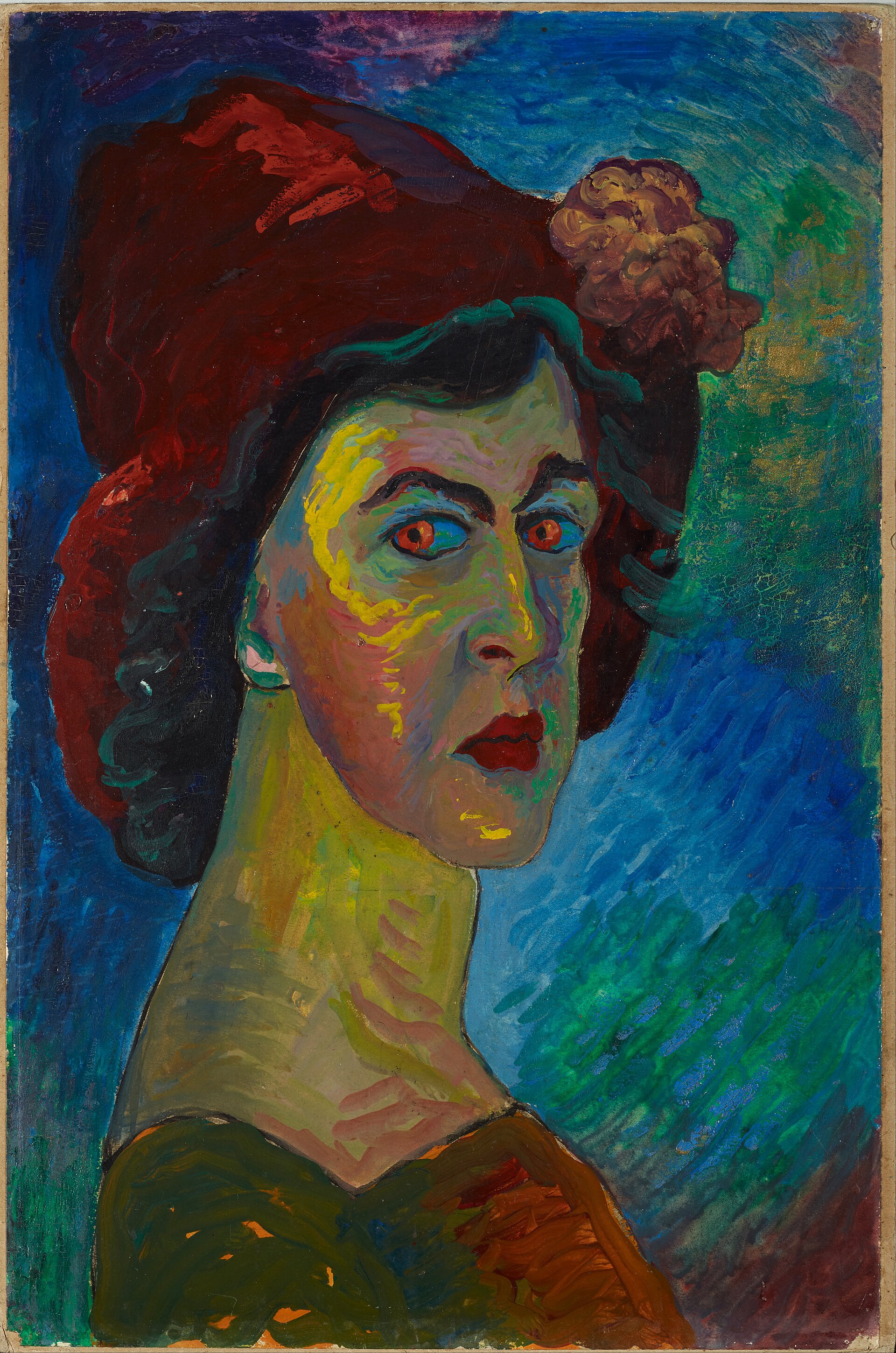
Selbstbildnis I, 1910, a self-portrait by the artist, held at the Lenbachhaus per the Commons sort key. Title and subject are the artist's own, so the sitter is not in doubt; the dating of 1910 is the Commons record's.
Lenbachhaus, via Google Art Project, Wikimedia Commons (public domain)| Full name | Marianna Vladimirovna Werefkina (Verevkina) |
|---|---|
| Worked as | Painter, Draughtswoman, Diarist and art theorist, Salon host |
| Born | 29 August 1860 (Julian), 10 September 1860 (Gregorian) · Tula, Russian Empire |
| Died | 6 February 1938 · Ascona, Ticino, Switzerland |
| Nationality | Russian-born |
| Movement | German Expressionism |
| Sources | 21 cited |
| Last verified |
About this page Last verified · 21 sources cited
On this page 13 sections
ContentsClose
Marianne von Werefkin is filed as Alexej von Jawlensky's companion and as a minor member of the Blue Rider circle. The record does not support either label. She was a general's daughter trained by Ilya Repin, she held a Tsarist pension of 7,000 roubles a year that paid for the Munich household in which the Neue Kunstlervereinigung Munchen was talked into being, she wrote a French-language diary that the Swiss historical lexicon credits with feeding Kandinsky's route to abstraction, and from 1906 she painted small, flat, hard-coloured pictures in tempera and gouache. Then in 1914 she lost the flat and the country, the war halved the pension and the 1917 Revolution ended it, and she spent the rest of her life in exile in Switzerland, mostly in Ascona (she arrived in 1918 or 1919, the sources differ).
The thing a reader probably does not know is that no catalogue raisonne turned up in the sources opened for this page, and Masterworks says none is confirmed. Ketterer's 2021 lot for Freitag Abend lists a written expertise by Dr Bernd Fathke dated 20 October 2021, the 1958 memorial exhibition (catalogue no. 28, with a lender label of Alexander Werefkin) and a surviving photograph in the Archiv Marianne von Werefkin. The largest body of her work sits in a foundation attached to a small municipal museum. What a buyer, a lender or a student has is a 1988 monograph with a work survey, exhibition catalogues and the foundation's own files.
This page sets out what is documented about her, where the sources disagree on dates that look settled, who holds the pictures, and what the market has paid. The much-repeated story that she gave up painting for ten years is treated as she told it, as a sacrifice she describes in her own words, and tested against what survives in the sketchbooks.
Images
Chronology
- 1860
Born in Tula on 29 August (Julian), 10 September (Gregorian); the Kunsthaus Zurich records 11 September.2312
- 1880
Becomes a private pupil of Ilya Repin, per the Swiss lexicon; Ketterer's biography has the private lessons begin with the family's move to St Petersburg in 1886.26
- 1883-1885
Studies painting at the Moscow academy with Illarion Pryanishnikov.2
- 1888
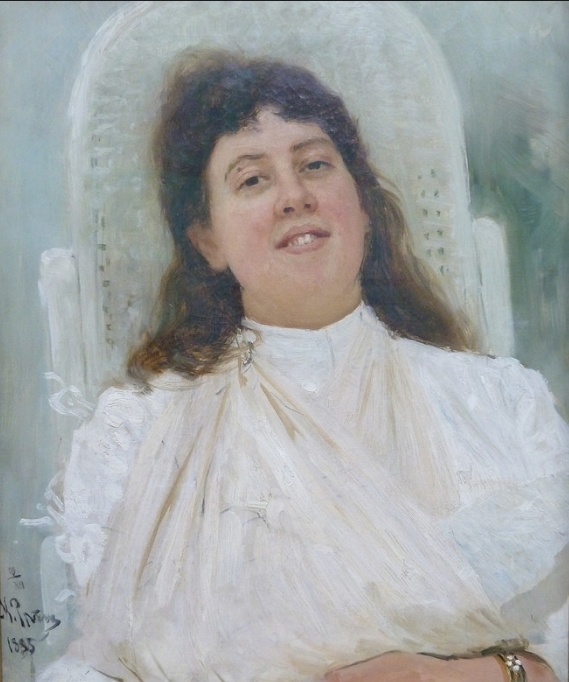
Shoots her right hand in a hunting accident; Repin paints her portrait with the arm in a sling the same year.146
- about 1890
Spends two and a half months in Berlin visiting the museum daily, as she recalled in a letter to Igor Grabar of 10 August 1895.1
- 1896
After her father's death moves to Munich with Jawlensky and the maid Helene Nesnakomoff; a Tsarist pension of 7,000 roubles a year follows.134
- 1897
- 1901-1906
Writes Lettres a un inconnu; the sources give 1901-1905, 1901-1906 or November 1902-1906.123
- 1906
Takes up the brush again after about ten years and works in tempera and distemper.14
- 1907
- 1909
Neue Kunstlervereinigung Munchen opens its first exhibition on 1 December; she shows six paintings. Paints the dancer Alexander Sacharoff. Visits her brother in Kaunas in December.45
- 1911-1913
Leaves the Neue Kunstlervereinigung with Jawlensky in 1912; shows with the Neue Secession and at Der Sturm, Berlin.34
- 1914
Back in Munich on 26 July; flees to Switzerland in August; lives first in Saint-Prex.34
- 1917-1919
Moves to Zurich in autumn 1917; settles in Ascona in 1918 (German Wikipedia) or 1919 (Tretyakov article).14
- 1921
Jawlensky leaves her; he marries Helene Nesnakomoff in 1922.13
- 1922
With Ernst Kempter organises a small museum of modern art in Ascona (Tretyakov); the Swiss lexicon also dates the Museo comunale to 1922. Nansen passport the same year.123
- 1924
- 1925
- 1928
Meets Diego and Carmen Hagmann, her collectors and later supporters.13
- 1938
Dies in Ascona on 6 February; buried by the Russian Orthodox rite.124
- 1958
Memorial exhibition begins its tour; Freitag Abend is lent by Alexander Werefkin. The German Wikipedia dates the Munich showing 1959.45
- 1988-1990
Fathke's monograph (Prestel, 1988) and the touring exhibition Leben und Werk.27
- 2008
Styx sells at Christie's London on 25 June at GBP 337,250 as reported by Art.Salon.11
- 2021
Ketterer sells Freitag Abend on 11 December at EUR 425,000; a Fathke expertise is dated 20 October 2021. Hagmann loans reach the Kunsthaus Zurich.5612
- 2022
Bahnhof Prerow sells at Sotheby's London in March, GBP 352,800 per Art.Salon, against GBP 200,000-300,000 estimated.79
- 2024-2025
Koller sells Landschaft mit Reitern at CHF 475,000; Museum de Fundatie, Zwolle, shows the survey from 5 October to 16 March.1419
The market
Results run from a few thousand euros to CHF 475,000 for a 1915 panel. Prices are recorded as printed by the houses and aggregators. Sotheby's and Christie's figures are price realised and, by inference, include premium; Ketterer and Koller figures are unconfirmed; no hammer is stated or derived. The aggregator figures are tertiary and should be checked against the houses' own result pages.
Money meant something specific in her lifetime: the pension of 7,000 roubles a year that kept a Munich household is the only period figure found, and no modern equivalent is given because no method-based conversion was sourced.
| Date | Sale | Work | Result | Note |
|---|---|---|---|---|
| 25 Jun 2008 | Christie's, London | Styx | Hammer not published in the source With premium GBP 337,250 price realised, as printed; includes premium (inferred, see summary) GBP | Reported by Art.Salon; the house result page was not opened. |
| 2 Mar 2017 | Sotheby's, London | Rhythmen, Murnau 1910, tempera and gouache, 56.5 x 73.5 cm, lot 162 | Hammer not published in the source With premium GBP 168,750 price realised, as printed; includes premium (inferred: 41 per cent above the GBP 120,000 high estimate) GBP | Estimate GBP 80,000-120,000. By descent from a Swiss private collection acquired by 1962. |
| 25 May 2021 | Christie's, Amsterdam (online) | Eclipse de soleil, about 1930, 17.5 x 13 cm | Hammer not published in the source With premium EUR 8,125 price realised, as printed; includes premium (inferred, see summary) EUR | Estimate EUR 6,000-8,000. |
| 11 Dec 2021 | Ketterer Kunst, Munich | Freitag Abend (Synagoge), 1909/10, gouache and chalk, 30 x 41 cm, lot 410 | Hammer not published in the source With premium EUR 425,000, as printed under 'Sold'; premium status not stated EUR | Estimate EUR 20,000-30,000. Provenance: the artist, Alexander Werefkin in Rome, a private collection in Baden-Wurttemberg. With a written expertise by Dr Bernd Fathke of 20 October 2021. |
| not given in the source | Ketterer Kunst, Munich | Souvenir, 1907, auction 436, lot 201 | Hammer not published in the source With premium EUR 106,250 as printed under 'Sold'; premium status not stated EUR | From Ketterer's artist page; sale date not shown there. |
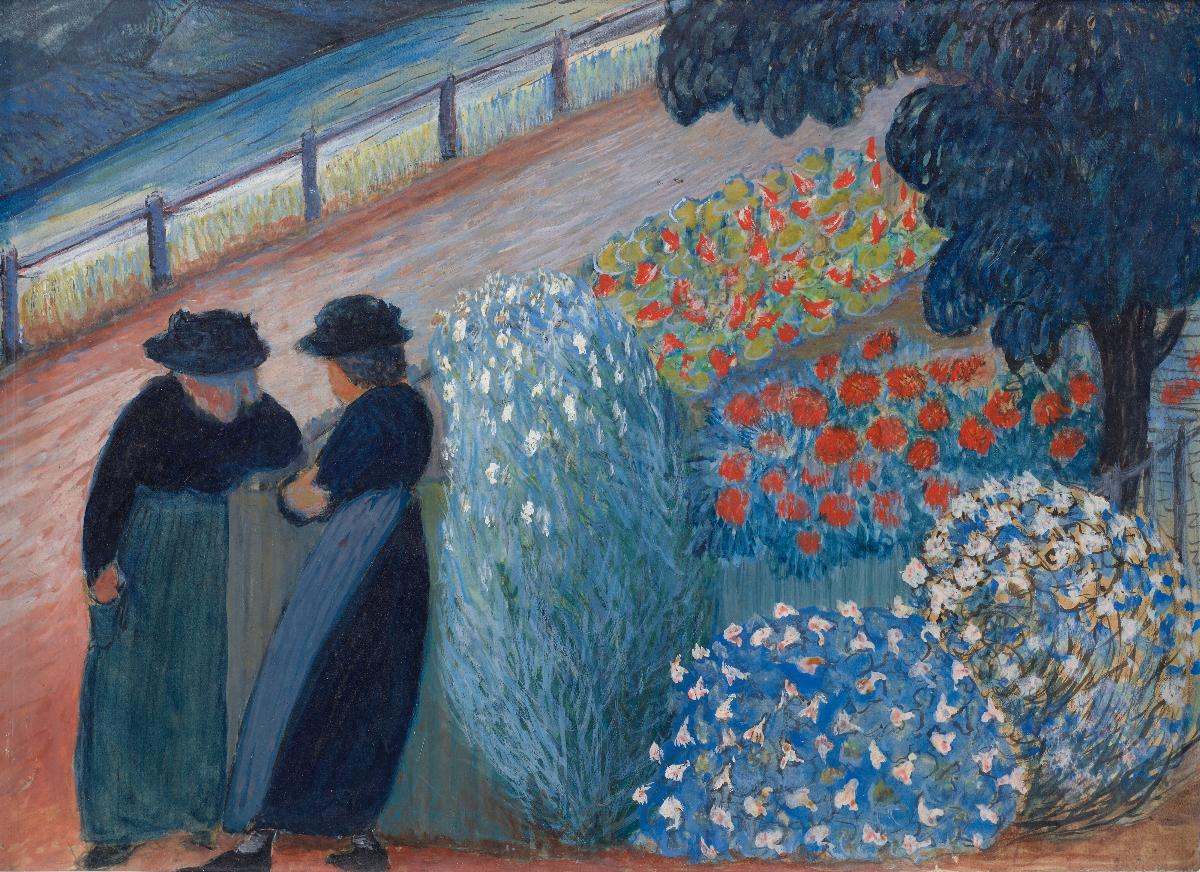
| not given in the source | Ketterer Kunst, Munich | Am Blumenbeet, 1910, auction 590, lot 10 | Hammer not published in the source With premium EUR 95,250 as printed under 'Sold'; premium status not stated EUR | From Ketterer's artist page; sale date not shown there. |
| not given in the source | Ketterer Kunst, Munich | Weihnachtsbaum, 1911, auction 428, lot 218 | Hammer not published in the source With premium EUR 62,500 as printed under 'Sold'; premium status not stated EUR | From Ketterer's artist page; sale date not shown there. |
| not given in the source | Ketterer Kunst, Munich | Landschaft mit Ruine, 1930, auction 357, lot 488 | Hammer not published in the source With premium EUR 3,416 as printed under 'Sold'; premium status not stated EUR | From Ketterer's artist page; sale date not shown there. |
| Mar 2022 | Sotheby's, London | Bahnhof Prerow (Dunenlandschaft), about 1911, lot 26 | Hammer not published in the source With premium GBP 352,800 price realised, as printed by Art.Salon; includes premium (inferred, see summary) GBP | Sotheby's estimate GBP 200,000-300,000; the lot page closes on 23 March but hides the result behind a login. The second public sale of this picture in nine years. |
| Jun 2024 | Koller Auktionen, Zurich | Landschaft mit Reitern, 1915, oil on panel, 56.5 x 74.4 cm | Hammer not published in the source With premium CHF 475,000, as printed ('Sold for'); premium status not stated CHF | Koller's own review calls it among the highest results for the artist. Sale month from the Art.Salon list; the review gives the year only. |
Hammer is the price at which the bidding stopped; with premium adds the fee the house charges the buyer on top. Hammer price and buyer's premium in the glossary.
Recorded without a public price
- 19 Jun 2013 · Bahnhof Prerow (Dunenlandschaft), lot 376 · Christie's, London · not read Sale and lot date known from the Sotheby's provenance line; the price was not opened, though a figure circulates in search results.
- 30 Jun 2022 · Andacht (Devotion), about 1909, gouache, pastel and pencil, 56.1 x 76.4 cm, lot 428 · Sotheby's, London · not read Estimate GBP 100,000-150,000; result not opened. Provenance: Galleria Castelnuovo, Ascona, then a Swiss private collection by descent.
Where to see the work
| Institution | City | Holdings | Note |
|---|---|---|---|
| Museo Comunale d'Arte Moderna and Fondazione Marianne Werefkin | Ascona | Nearly 100 paintings, 170 sketchbooks, hundreds of drawings, the diary manuscript; Herbst (Schule), Der rote Baum and Nachtschicht are labelled as Fondazione holdings by the German Wikipedia, ARTinWORDS and artfritz. | The main collection. Opening status should be checked with the museum; a listing seen in a search result announced a closure for renovation. |
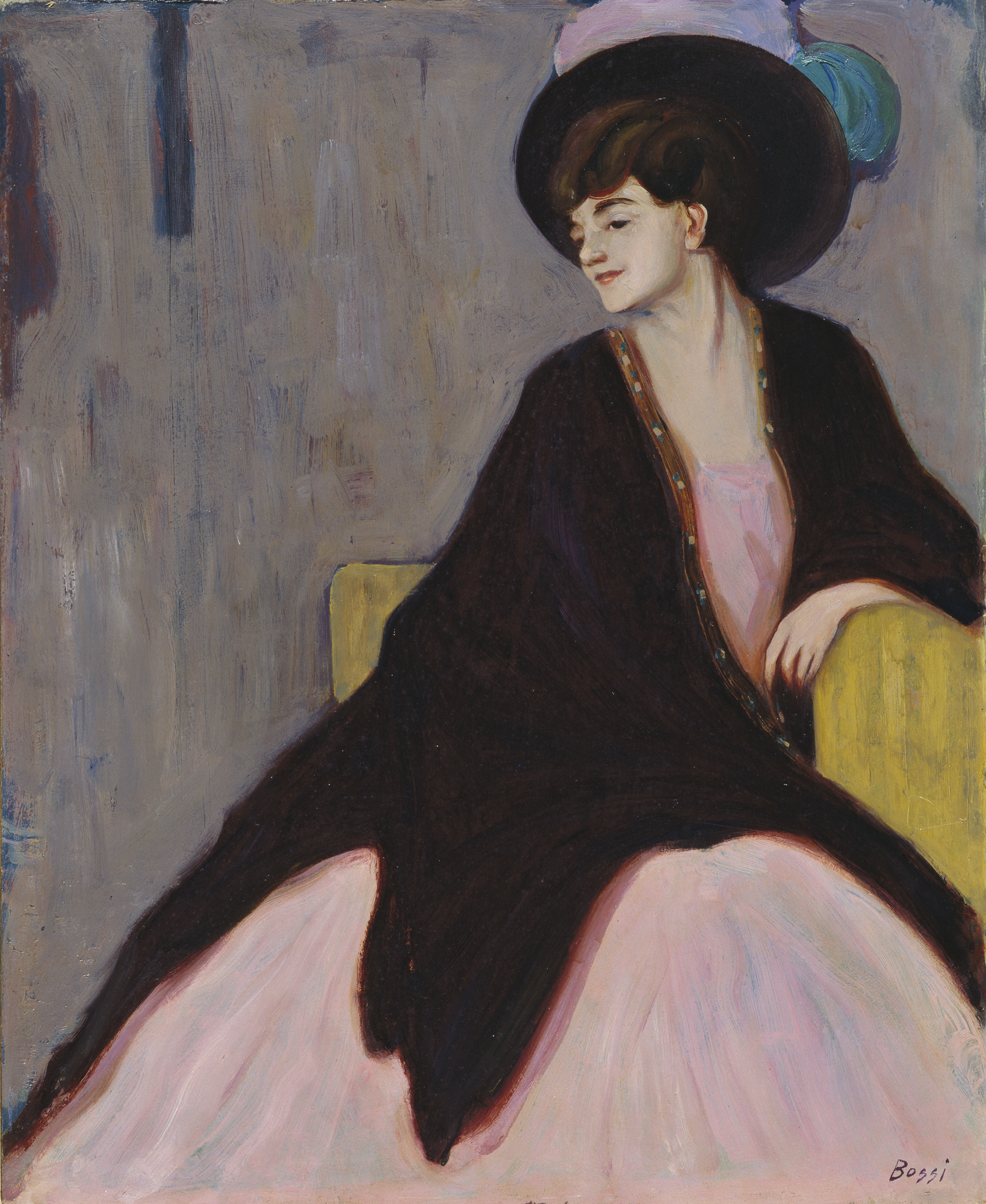
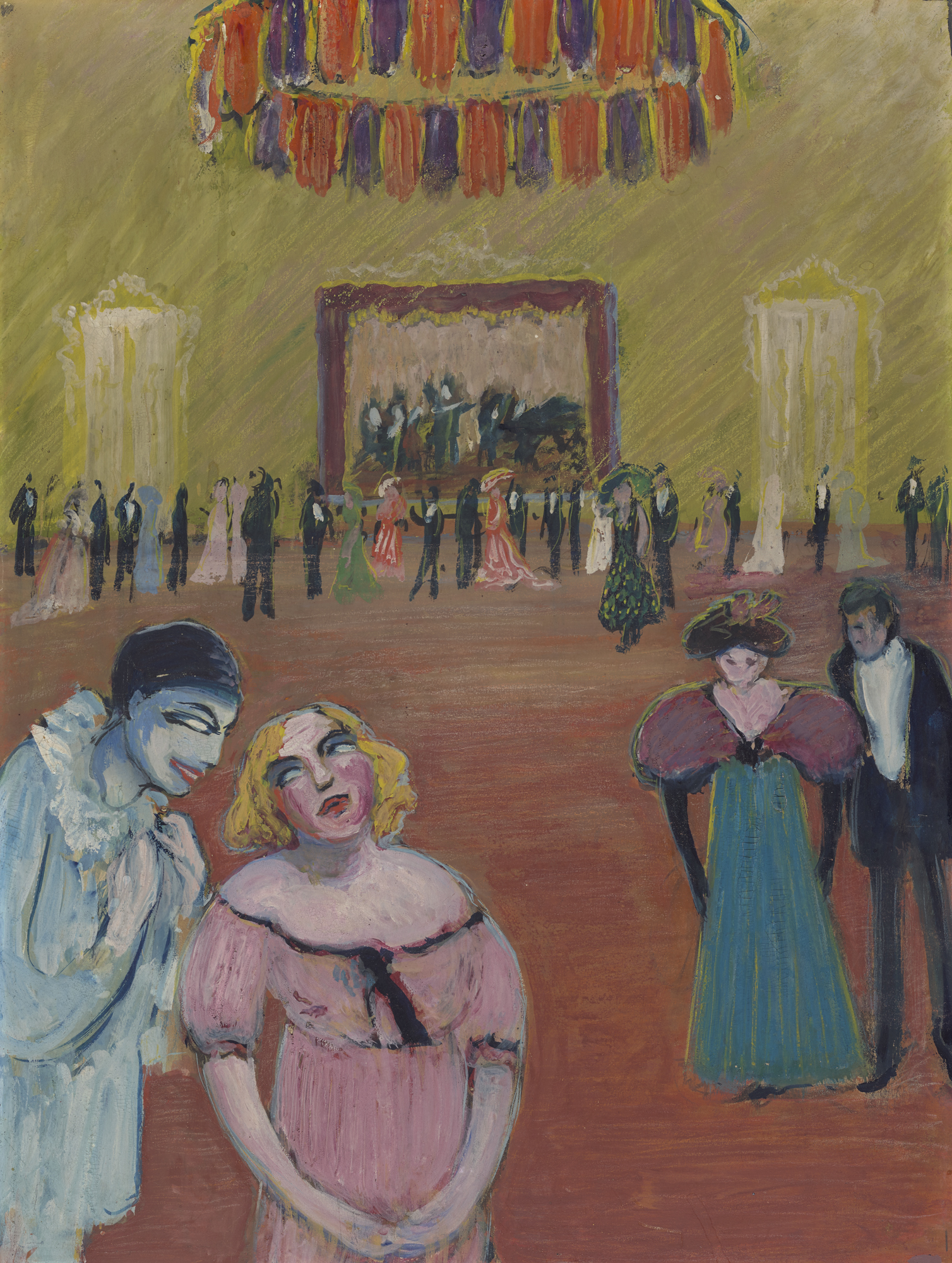
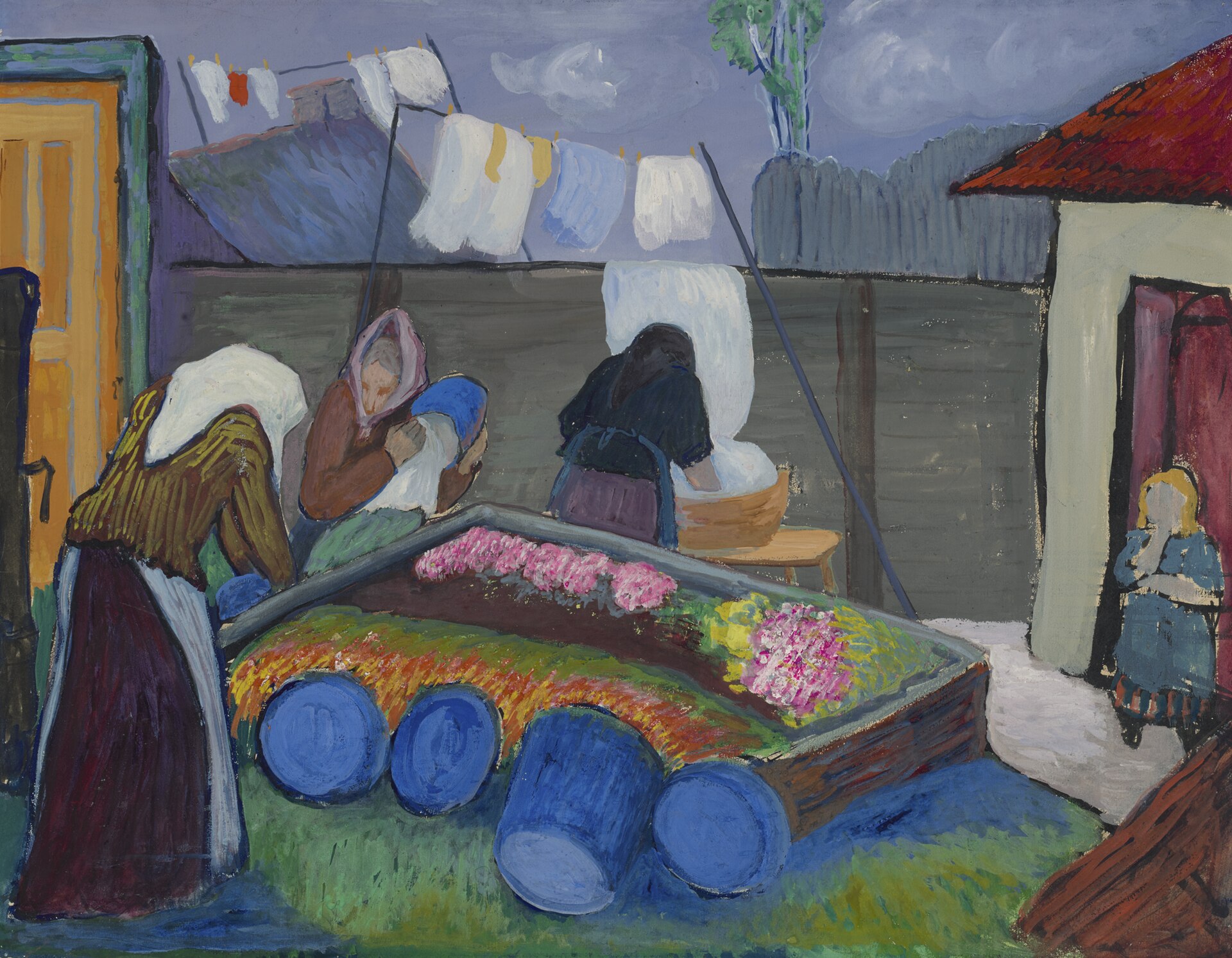
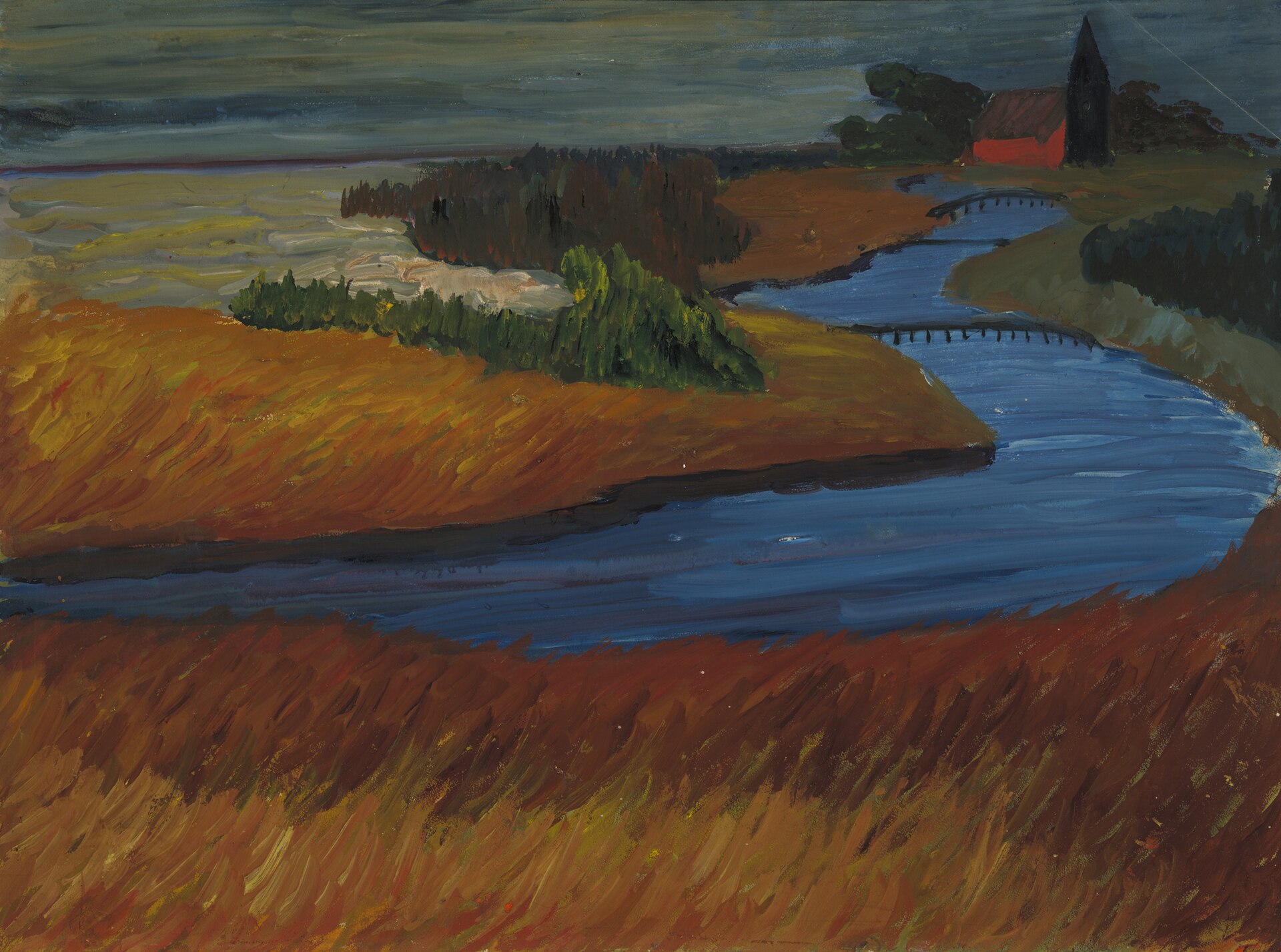
| Staedtische Galerie im Lenbachhaus | Munich | Ballszene, Prerowstrom, Waescherinnen, a portrait of Jawlensky dated 1896, Selbstbildnis I (1910) and a portrait of her by Erma Bossi. | Holdings read from Commons file records (credit lines pointing to the Lenbachhaus online collection); the collection's own page was not opened. |
| Museum Wiesbaden | Wiesbaden | The Repin portrait of 1888 and Schindelfabrik of 1910, per the Wikipedias. | Not confirmed from the museum's own pages. |
| Kunsthaus Zurich | Zurich | Garten der Frauen and Der Berg, long-term loans from Dr Peter Diego Hagmann. | Accessioned 2021; museum records opened. |
| Museum de Fundatie | Zwolle | Landschaft mit roten Wolken, 1911, per ARTinWORDS; the only Werefkin in a Dutch museum, per the museum. | Held the 2024-25 survey. |
| Villa Stuck, Schlossmuseum Murnau and other European museums | Munich and Murnau | Smaller groups, named as holders in the Tretyakov article. | Not checked. |
Forgeries and misattributions
- No documented forgery case was found.
- What the sources show is a practice of private attestation: Ketterer's 2021 lot lists a written expertise by Dr Bernd Fathke and a surviving photograph in the Archiv Marianne von Werefkin, and no published catalogue or list of rejected pictures was found against which to test any of it. Not applicable; absence of a published list means absence of a recorded rejection. A dating error, not a fake, was caught in the Ascona sketchbook: a scene dated 1903 by another hand when she was not in Kaunas.512
The essay
Chapter 1A general's daughter whose pension paid for a movement
She was born in Tula, where her maternal grandfather Pyotr Daragan was governor, the daughter of General Vladimir Werefkin, who ended as commandant of the Peter and Paul Fortress in St Petersburg...
She was born in Tula, where her maternal grandfather Pyotr Daragan was governor, the daughter of General Vladimir Werefkin, who ended as commandant of the Peter and Paul Fortress in St Petersburg, and of Elizaveta Daragan, whom the Swiss lexicon calls an icon painter and the Tretyakov article an amateur painter. The Swiss lexicon gives her birth as 29 August 1860 in the Julian calendar. The English Wikipedia gives 10 September, which is the same day in the Gregorian calendar; the Tretyakov article writes 9 September, and the Kunsthaus Zurich records 11 September. The two-day spread is the sort of thing an auction cataloguer copies without checking.
Money explains her position. After the general's death in 1896 she drew a Tsarist pension of 7,000 roubles a year, which the English Wikipedia puts at about 22,000 German marks. The German Wikipedia adds that she refused marriage in part because a married woman would have lost it. The Tretyakov article says it paid for the travels in Europe, and separately that in Munich she took on financial responsibility for Jawlensky, the household and two servants. The pension ran until the Revolution of 1917. On that article's account the woman remembered as the supporter of a male painter carried the household's finances.
Chapter 2Repin's pupil, a ruined right hand and a library read aloud
The Swiss lexicon dates her private study with Repin to 1880 and her lessons with Illarion Pryanishnikov at the Moscow academy to 1883-1885.
The Swiss lexicon dates her private study with Repin to 1880 and her lessons with Illarion Pryanishnikov at the Moscow academy to 1883-1885. Ketterer's house biography says she took private lessons with Repin when the family moved to St Petersburg in 1886. The Tretyakov article gives the order, Moscow with Pryanishnikov and then Repin in St Petersburg, without dates for the lessons (the 1887 it mentions is her father's appointment as commandant). The two dates are not reconciled. In 1888 she shot her right hand in a hunting accident. The Tretyakov article says she learned to paint with the left hand; Ketterer's biography says the right hand stayed crippled until she trained it back into use. Both agree she carried on, and the German Wikipedia reports that Repin painted her portrait that year with the arm in a sling. The picture is on Commons, and it is the earliest likeness on this page.
The accident sent her to Germany for treatment, and the Tretyakov article quotes her letter of 10 August 1895 to the painter Igor Grabar, which recalls two and a half months in Berlin 'five years ago', about 1890, visiting the museum every day. Grabar's own memoir, as quoted there, records the apartment in the fortress as a meeting place, and says she bought the newest books and magazines on art and read passages aloud to the young painters, naming Manet, Monet, Renoir, Degas and Whistler. That is documentary evidence, from a witness who was in the room, of what she read and what she passed on. The Swiss lexicon adds that in the 1890s she moved toward the Abramtsevo colony and the Mir Iskusstva group, and that she shared the social concerns of the Peredvizhniki.
Chapter 3The ten-year silence, tested
In 1896 she moved to Munich with Jawlensky and her maid, took a double flat in Schwabing and, in 1897, founded the Brotherhood of St Luke in her rose-coloured salon; the German Wikipedia and the...
In 1896 she moved to Munich with Jawlensky and her maid, took a double flat in Schwabing and, in 1897, founded the Brotherhood of St Luke in her rose-coloured salon; the German Wikipedia and the Munchen Wiki both call it the seed of the Neue Kunstlervereinigung and the Blue Rider. The same Munich pages quote her, citing Fathke 1980, page 17, saying she hid her own art from Jawlensky so that he would not be jealous as an artist. The Tretyakov article states that from 1896 to 1906 she did not work as an artist at all.
The surviving record is less absolute. The Tretyakov article itself says she went back to painting in drawing-books before she took up the brush in 1906, and it places those books in Ascona; the foundation holds about 170 sketchbooks according to the German Wikipedia. How many of them date from 1896 to 1906 is not stated in any source opened. The Tretyakov article also offers a second reason for the stoppage, the low standing of women painters in the 1890s. That is the author's inference, not a statement by Werefkin. The statement of the sacrifice is hers; the width of the gap in her output is a dating question that a catalogue would settle and no catalogue exists.
Chapter 4The diary that went to Kandinsky's side of the table
Her diary, Lettres a un inconnu, is written in French and addressed to an unnamed man.
Her diary, Lettres a un inconnu, is written in French and addressed to an unnamed man. Its dates are given three ways. The Tretyakov article gives three notebooks, I 1901-1902, II 1903-1904 and III 1904-1905, and says it was begun in 1901 after she learned that the maid was pregnant by Jawlensky. The Swiss lexicon dates the writing 1901-1906. The English Wikipedia says she began in November 1902 and finished in 1906. The manuscript is at the Fondazione Marianne Werefkin; the French edition is by Gabrielle Dufour-Kowalska (Klincksieck, 1999), and the English Wikipedia records a Russian edition of 2011.
Two claims about its influence need separating. The Swiss lexicon says the diary contributed theoretically to Kandinsky's abstract art. The Tretyakov article reports that a critic called her a midwife of abstraction and that Else Lasker-Schuler named her the Amazon of the Blue Rider, and it describes the third notebook as already containing word-pictures that read like scripts for later paintings, quoting a passage about an orange moon against a blue sky. Those are an argued reading by named writers, not a documented chain from her pages to his canvases; no letter or inventory seen here records Kandinsky reading the notebooks.
Chapter 5Murnau, the Neue Kunstlervereinigung and the Blue Rider, who did what
The German Wikipedia says she painted her first Expressionist pictures in 1907, and ARTinWORDS says she was the first of the circle to do so and that two summers in Murnau, 1908 and 1909, brought...
The German Wikipedia says she painted her first Expressionist pictures in 1907, and ARTinWORDS says she was the first of the circle to do so and that two summers in Murnau, 1908 and 1909, brought Jawlensky, Kandinsky and Munter to the method. The Tretyakov article gives 1909 only for the summer at Munter's house. The founding of the Neue Kunstlervereinigung Munchen is told differently: the Tretyakov article says it was created on her initiative in 1909 and led by Kandinsky; both Wikipedias say the idea came in the winter after the Murnau summer to her, Jawlensky, Adolf Erbsloh and Oscar Wittenstein together; the Swiss lexicon names her as a founder. The first exhibition opened on 1 December 1909 with sixteen artists, six of her paintings among them, according to the German Wikipedia.
On the Blue Rider the sources again differ. The Swiss lexicon says she belonged to the group in 1912. The Tretyakov article says she and Jawlensky did not join but took part in its shows, and Ketterer's biography says she exhibited with the group from 1913. Kandinsky, Munter and Marc left the Neue Kunstlervereinigung in 1911; she and Jawlensky left in 1912, per the English Wikipedia, and showed in Berlin with the Neue Secession in 1911-1912 and at Der Sturm in 1913. Her own 1909 portrait of the dancer Alexander Sacharoff belongs to this moment.
Chapter 6What a Werefkin is made of
From 1906 she used distemper and tempera almost exclusively, and the Tretyakov article says nearly all the works are small.
From 1906 she used distemper and tempera almost exclusively, and the Tretyakov article says nearly all the works are small. That squares with the lots seen here: Ketterer's Freitag Abend is gouache and chalk on paper laid on card, 30 x 41 cm, monogrammed lower left and signed and titled on the back; Sotheby's describes Bahnhof Prerow as gouache and distemper on paper laid down on board, 56 x 74 cm, and records that an earlier catalogue called it tempera on board; the Kunsthaus Zurich's Garten der Frauen is tempera on card, 21 x 29 cm. The first diagnostic is the support, card or paper on board, and the second is the cataloguing habit that moves a work between tempera, gouache and distemper without a technical study behind it. No technical study of her materials was found.
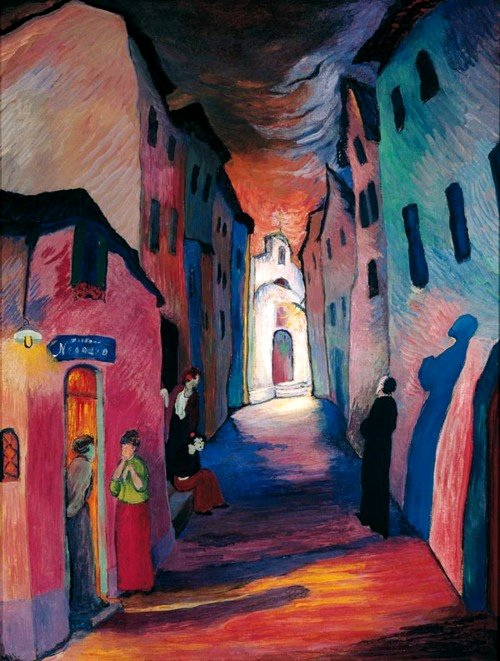
The Tretyakov article names her recurring devices: the road, figures repeated in similar poses, electric light and boats on a lake and says the pictures are hard to confuse with other artists' work. The German Wikipedia argues for a debt to Japanese colour woodcuts, citing a Hiroshige reproduction she could have seen in Mir Iskusstva by 1902, a diary entry of March 1905 on Japanese art and a visit to a Japanese theatre in Munich; it ties later cast shadows in L'equipe de nuit and Ave Maria to the same source. That is a reading by the article's authors, whose notes cite Fathke, not a documented statement of intention, and the footnotes were not opened for this page.
Chapter 7Exile, the Nansen passport and the museum she started
In July 1914 she was in Munich after a stay at her brother's estate in Lithuania; in August she and Jawlensky fled to Switzerland, first to Saint-Prex.
In July 1914 she was in Munich after a stay at her brother's estate in Lithuania; in August she and Jawlensky fled to Switzerland, first to Saint-Prex. The German Wikipedia puts the move to Zurich in September or October 1917 and the move to Ascona in 1918; the Tretyakov article says 1919. She lost the Tsarist pension, which had already been halved in the war, according to the English Wikipedia, and lived as a stateless person; the German and English Wikipedias say she held a Nansen passport from 1922, with a citation-needed tag on the English side. Jawlensky left her in 1921 and married the maid, Helene Nesnakomoff, the next year.
Her own institution-building ran alongside. The Tretyakov article says that in 1922, with the Swiss artist Ernst Kempter, she organised a small museum of modern art in Ascona, asking friends to give a picture each. The Swiss lexicon also dates the Museo comunale to 1922 and adds that in 1924 she founded Der Grosse Bar with Walter Helbig and others. The group's show at the Kunsthalle Bern followed in 1925. In the late 1920s she met the collectors Diego and Carmen Hagmann, who the Tretyakov article says collected her work and supported her when she could no longer paint. She died on 6 February 1938 and was buried by the Russian Orthodox rite.
Chapter 8The estate: foundation, collectors and a family line
The core of the estate is in Ascona. The German Wikipedia says the Fondazione Marianne Werefkin holds nearly 100 paintings, grown by donations, 170 sketchbooks and hundreds of drawings; the Tretyakov...
The core of the estate is in Ascona. The German Wikipedia says the Fondazione Marianne Werefkin holds nearly 100 paintings, grown by donations, 170 sketchbooks and hundreds of drawings; the Tretyakov article says it holds the largest collection of her work, and the diary manuscript. Part is shown in the Museo Comunale d'Arte Moderna. The figure of about 90 paintings found in a Danish encyclopedia was not opened here, so the two numbers stand as unreconciled. The museum's holdings were exhibited abroad as loans for Moscow in 2010 and for Zwolle in 2024.
A second line ran through family and companions. Ketterer's lot records that Freitag Abend was the artist's own property, then passed by inheritance to an Alexander Werefkin in Rome, who lent it to the 1958 memorial exhibition, then to a private collection in Baden-Wurttemberg; the catalogue does not state his relationship to her. The English Wikipedia names her companion Ernst Alfred Aye as administrator and partial heir. A third line is the Hagmann collection: the Kunsthaus Zurich shows two Werefkin temperas there, accessioned in 2021, on long-term loan from Dr Peter Diego Hagmann, and cites a 2025 article by Silvia Volkart on the Hagmann couple. The Tretyakov article says friends got her Munich pictures out of the city in 1937 and that they would otherwise have been destroyed because her work was on the list of degenerate art; no list or inventory was seen, so that is recorded as stated by the author only. By 2010, the same article says, no large Russian museum owned her work.
Chapter 9Reputation: from a supporting role to survey shows
The documented exhibition sequence is thin before 1958 and dense after 2010.
The documented exhibition sequence is thin before 1958 and dense after 2010. The Ketterer lot records a memorial exhibition in 1958 that toured Wiesbaden, Bonn, Frankfurt, Munich, Bremen, Wuppertal, Baden-Baden and Dortmund; the German Wikipedia dates the Lenbachhaus memorial show to 1959, a one-year gap that the sources do not explain. Further shows: Wiesbaden 1980; a touring monograph exhibition, Leben und Werk, 1988-1990, which Sotheby's cites by catalogue number for Bahnhof Prerow and Andacht; Reggio Emilia 2001; Murnau 2002-2003; Moscow and Ascona 2010-2011; Bremen and Bietigheim 2014; the Schirn in Frankfurt 2015; the Lenbachhaus pairing with Jawlensky in 2019; and Zwolle from 5 October 2024 to 16 March 2025, organised, per ARTinWORDS, in collaboration with the Ascona museum and with an exceptionally large loan from the foundation.
The Marianne-Werefkin-Prize of the Verein der Berliner Kunstlerinnen has existed since 1990. The Masterworks profile says that for much of the twentieth century she was treated as a supporting figure and that recent surveys at Tate Modern and the Lenbachhaus place her as a co-founder; that is a commentary by an investment platform, not a scholarly judgment, but it matches the exhibition chronology above. The Tretyakov article also notes that the Swiss public at first misread her Ticino pictures; the German Wikipedia attributes the same to the Swiss viewers of her late work.
Chapter 10What she fetches, and the numbers that contradict each other
The market is thin and the published figures are in different currencies.
The market is thin and the published figures are in different currencies. The Masterworks profile calls Freitag Abend, EUR 425,000 at Ketterer in December 2021, the documented auction high. Koller's 2024 review lists Landschaft mit Reitern of 1915 at CHF 475,000 and says, of a group of results for Werefkin, Loiseau, Seligmann and a Rodin watercolour, that they are among the highest ever achieved for these artists at auction; the sentence is collective and is not a ranking of the Werefkin. The Art.Salon list shows Bahnhof Prerow at GBP 352,800 at Sotheby's London in March 2022, against a Sotheby's estimate of GBP 200,000-300,000, and Styx at GBP 337,250 in 2008. No cross-currency ranking was made here, so no single record is claimed. Lower results exist as well: Ketterer's artist page lists Landschaft mit Ruine, 1930, at EUR 3,416, Portrait eines Mannes, 1907, at EUR 5,000 and Klostergarten, 1926, at EUR 6,201.
No source opened gives a hammer price for a Werefkin lot. Art.Salon prints 'price realised' for the Sotheby's and Christie's lots. Its own statement that Rhythmen exceeded the upper estimate by 41 per cent, with estimates set on the hammer, indicates that those figures include the buyer's premium; that is an inference, and no hammer is derived here because the houses' premium schedules for those dates were not checked. Ketterer's page prints a single figure under 'Sold' and Koller's review prints 'Sold for'; whether either includes premium is not stated. The pattern is a fast rise in the last five years on a small number of 1909 to 1915 tempera-and-gouache pictures with provenance to the artist or to Swiss private collections; Bahnhof Prerow sold at Christie's London on 19 June 2013 and again at Sotheby's in March 2022, which is the only resale pair found, and its 2013 price was not read.
A buyer should also know that databases carry a 1870 birth year for her: Ketterer's own artist page does, and Masterworks says some Christie's lot headings and Artprice do. A search on 1860 misses those lots.
Chapter 11Dates, names and titles that trip people up
The same picture carries several names. Ketterer's catalogue gives Freitag Abend (Synagoge); the Kunsthaus Zurich gives Garten der Frauen with the Italian and English titles Il giardino delle donne...
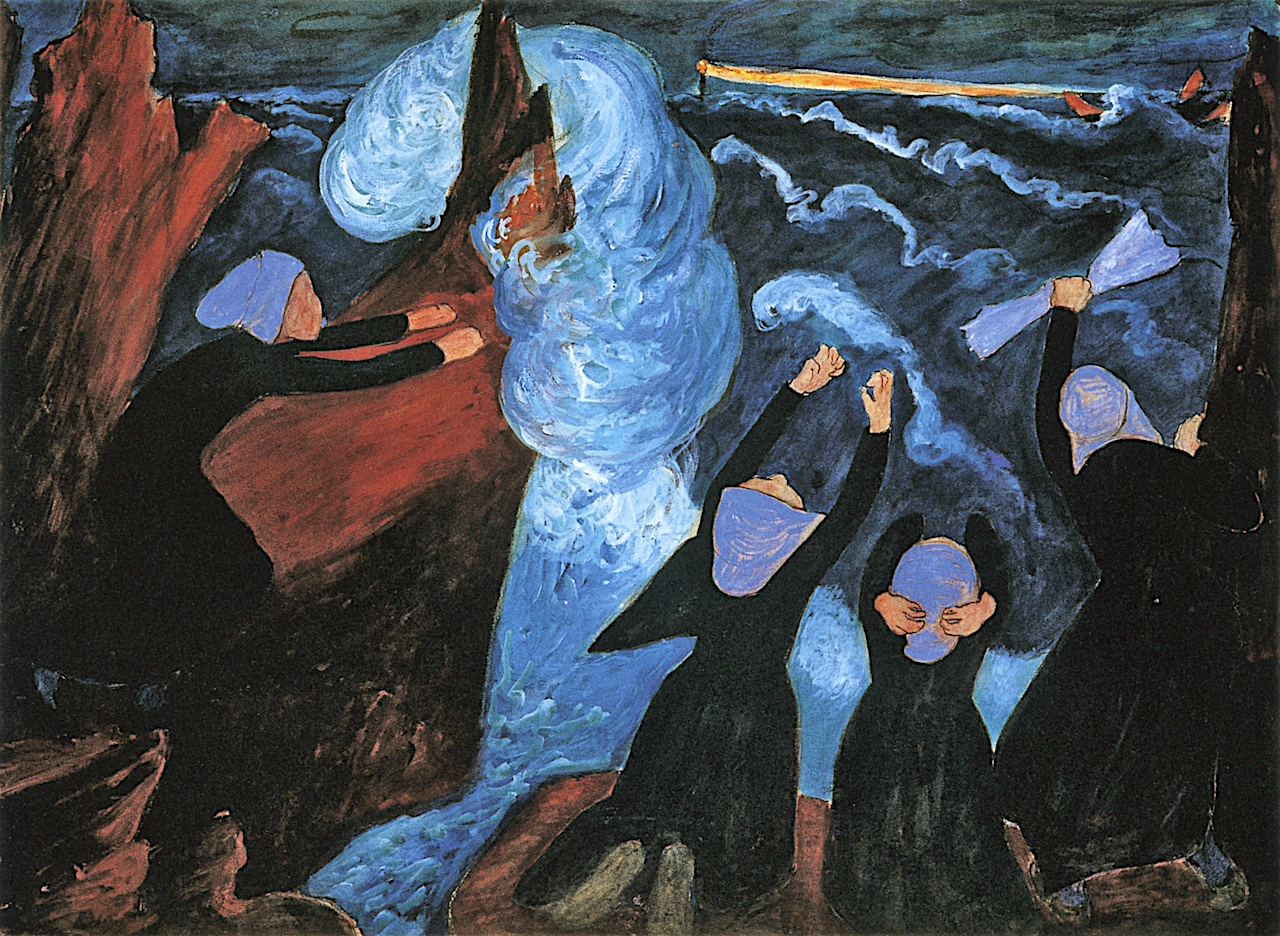
The same picture carries several names. Ketterer's catalogue gives Freitag Abend (Synagoge); the Kunsthaus Zurich gives Garten der Frauen with the Italian and English titles Il giardino delle donne and Women's Garden, and Der Berg, La montagna, The Mountain; the Ascona gallery on artfritz lists La Tempesta 1907, which the Commons file calls Tempete or Sturm; Autumn, School and Herbst (Schule) are one picture. Dates move as well. Ketterer's biography has her meet Jawlensky in 1891; the Wikipedias and the Tretyakov article have her partnership begin 1892 or earlier in Repin's circle, with a joint studio in 1893. ARTinWORDS gives 1886 for the move to Munich, which is a slip for 1896. And the Ketterer lot records a sketchbook in Ascona whose scene is dated 1903 in a stranger's hand although she was not in Kaunas that year; the picture is 1909/10. A caption written from a database entry alone will carry these errors forward.
What is documented
Technique
The surviving work
- What is accepted
- No accepted total could be found. No catalogue raisonne turned up in the sources opened and Masterworks says none is confirmed; the Kunsthaus Zurich's blank Werkverzeichnis field on two records shows only that no number was cited there. Ketterer's 2021 lot lists a written expertise by Dr Bernd Fathke. The foundation's holding of nearly 100 paintings and 170 sketchbooks is a count of one collection, not of her output.
- What is contested
- No published list was found, so no rejection is recorded. What is contested is dating: a sketchbook in Ascona is dated 1903 by another hand against the evidence of her 1909 trip; the width of the 1896-1906 gap is argued; her Munich pictures are said to have been on a degenerate-art list, with no list seen.
- Who rules on attribution
- No attribution board or authority was found. Practice in the lots seen is a written expertise by Dr Bernd Fathke (Ketterer, 20 October 2021), reference to the Archiv Marianne von Werefkin through a surviving photograph, and the Fondazione Marianne Werefkin in Ascona, which Masterworks calls the principal reference point.
Catalogue raisonne
- Bernd Fathke, Marianne Werefkin: Leben und Werk 1860-1938, Munich: Prestel, 1988. A monograph with work survey and the base for the touring exhibition catalogue of 1988-90 that auction houses cite by number. Not described in any source opened as a full catalogue raisonne.247
- Brigitte Rossbeck, Marianne von Werefkin: Die Russin aus dem Kreis des Blauen Reiters, Munich: Siedler, 2010. Biography. Listed beside Fathke in the Swiss lexicon.218
- Artisti russi in Svizzera: Marianne Werefkin, exhibition catalogue, Moscow and Ascona, 2010. Includes her letters to Grabar, published there for the first time per the Tretyakov article.12
- Beatrice von Bormann and others (eds), Marianne von Werefkin. Pioneer of Expressionism, Ascona and Zwolle: Waanders, 2024. Catalogue of the 2024-25 survey, cited by the Kunsthaus Zurich for Garten der Frauen, with contributions by Mara Folini and Roman Zieglgaensberger.1215
- Marianne Werefkin, Lettres a un inconnu, ed. Gabrielle Dufour-Kowalska, Paris: Klincksieck, 1999. The French diary; the manuscript is at the Fondazione.1
Questions about Marianne von Werefkin
Who was Marianne von Werefkin?
Painter; Draughtswoman; Diarist and art theorist; Salon host; Museum founder. 1860-1938.
When did Marianne von Werefkin live?
Born 29 August 1860 (Julian), 10 September 1860 (Gregorian), Tula, Russian Empire; died 6 February 1938, Ascona, Ticino, Switzerland.
How are fakes and misattributions of Marianne von Werefkin detected?
No documented forgery case was found. What the sources show is a practice of private attestation: Ketterer's 2021 lot lists a written expertise by Dr Bernd Fathke and a surviving photograph in the Archiv Marianne von Werefkin, and no published catalogue or list of rejected pictures was found against which to test any of it.
Where can you see work by Marianne von Werefkin?
Museo Comunale d'Arte Moderna and Fondazione Marianne Werefkin (Ascona); Staedtische Galerie im Lenbachhaus (Munich); Museum Wiesbaden (Wiesbaden); Kunsthaus Zurich (Zurich); Museum de Fundatie (Zwolle); Villa Stuck, Schlossmuseum Murnau and other European museums (Munich and Murnau).
What does the market for Marianne von Werefkin look like?
Results run from a few thousand euros to CHF 475,000 for a 1915 panel. Prices are recorded as printed by the houses and aggregators.
What is still unresolved about Marianne von Werefkin?
Is there, or will there be, a published catalogue raisonne of the paintings, and does the Fondazione keep a numbered inventory that auction houses can cite instead of a single scholar's expertise?
Open questions
- Is there, or will there be, a published catalogue raisonne of the paintings, and does the Fondazione keep a numbered inventory that auction houses can cite instead of a single scholar's expertise?
- How many of the 170 sketchbooks and the drawings date from 1896 to 1906, and how long was the silence in practice?
- Which of three dates for the Lettres a un inconnu is right, and does the manuscript's own dating of the notebooks settle it?
- Was her work in Munich placed on a degenerate-art list as the Tretyakov article says, and which institution or inventory records it?
- What was Alexander Werefkin's relationship to her, and how did the 1958 loans pass from his collection to private owners?
- What were the hammer and premium on the 2013, 2021 and 2022 results, and what did the 2013 sale of Bahnhof Prerow really make?
- Does the Fondazione hold about 90 paintings, as one encyclopedia says, or nearly 100, as the German Wikipedia says?
Sources
- 1Natalya Tolstaya, 'Marianne Werefkin: The Woman and the Artist', The Tretyakov Gallery Magazine no. 3 (28), 2010. Secondary, by a Tretyakov curator, written for the 2010 Moscow-Ascona exhibition. tretyakovgallerymagazine.com/node/...
- 2Mara Folini, 'Werefkin, Marianne von', Historisches Lexikon der Schweiz, 2012 (edited 2013). Reference article by Mara Folini, CC BY-SA. hls-dhs-dss.ch/de/...
- 3'Marianne von Werefkin', English Wikipedia. en.wikipedia.org/wiki/...
- 4'Marianne von Werefkin', German Wikipedia. de.wikipedia.org/wiki/...
- 5Ketterer Kunst, auction 522, Munich, 11 December 2021, lot 410, Werefkin, Freitag Abend (Synagoge), 1909/10: catalogue entry with provenance, exhibition history, expertise statement. Primary (house catalogue). kettererkunst.de/downloads/...
- 6Ketterer Kunst, artist page 'Marianne von Werefkin - Biography and Offers': results list (lot 410 'Sold' EUR 425,000) and the house biography. Primary for the result; the page's own header gives the birth year as 1870. kettererkunst.com/bio/...
- 7Sotheby's, (Women) Artists, London, March 2022, lot 26, Werefkin, Bahnhof Prerow (Dunenlandschaft): estimate, provenance, exhibition history. Result hidden behind login. Primary for provenance. sothebys.com/en/...
- 8Sotheby's, Modern and Contemporary Day Auction, 30 June 2022, lot 428, Werefkin, Andacht (Devotion): estimate, provenance, exhibition history. Result hidden behind login. Primary for provenance. sothebys.com/en/...
- 9Art.Salon, 'Rhythmen (Rhythms)', Sotheby's London 2 March 2017 lot 162, with the site's auction history list for the artist. art.salon/artwork/...
- 10Art.Salon, 'Eclipse de soleil', Christie's Amsterdam online, 25 May 2021, lot 38. art.salon/artwork/...
- 11Art.Salon, page for a Dietz Edzard lot in the same Christie's London sale of 25 June 2008, listing Werefkin, Styx, GBP 337,250. art.salon/artwork/...
- 12Kunsthaus Zurich, collection record D.2021/0023, Werefkin, Garten der Frauen, about 1910, tempera on card, 21 x 29 cm, long-term loan Dr Peter Diego Hagmann. Primary (museum record). collection.kunsthaus.ch/multimedia/...
- 13Kunsthaus Zurich, collection record D.2021/0026, Werefkin, Der Berg, 1917-1922, tempera on card, 38 x 43 cm, long-term loan Dr Peter Diego Hagmann. Primary (museum record). collection.kunsthaus.ch/multimedia/...
- 14Museum de Fundatie, Zwolle, exhibition page 'Marianne von Werefkin - Pionier van het expressionisme', 5 October 2024 to 16 March 2025 (hosted on museum.nl). Primary for the exhibition dates. museum.nl/en/...
- 15ARTinWORDS, 'Zwolle | Museum de Fundatie: Marianne von Werefkin Pionierin des Expressionismus', 5 October 2024. Secondary exhibition notice; contains a dating slip (Munich move given as 1886). artinwords.de
- 16artfritz.ch, 'Marianne Werefkin (1860-1938). Werke chronologisch geordnet', picture gallery with holding labels for Museo Comunale and Fondazione Marianne Werefkin, Ascona. artfritz.ch/MUSE/...
- 17Masterworks Academy, artist profile 'Marianne von Werefkin' (data current to 2026-07-11). masterworks.com/academy/...
- 18Munchen Wiki, 'Marianne Werefkin'. muenchenwiki.de/wiki/...
- 19Koller Auktionen, Review 2024, p. 6: Werefkin, Landschaft mit Reitern, 1915, oil on panel, 56.5 x 74.4 cm, 'Sold for CHF 475 000'. Primary (house review). kollerauktionen.auctioneersvault.com/catalogues/...
- 20Wikimedia Commons, Category: Paintings by Marianne von Werefkin, and the file pages of the plates used here (licence tags PD-Art / PD-old, LicenseShortName 'Public domain', read per file 2026-11-19). commons.wikimedia.org/wiki/...
- 21Wikimedia Commons, Category: Portraits of Marianne von Werefkin (Repin 1888, Bossi about 1910, self-portraits). commons.wikimedia.org/wiki/...
Last verified