Zentrum Paul Klee
Museum · Founded 2005
Open, admission and hours confirmed 18 September 2026 · 19 sources
On this page 14 sections
ContentsClose
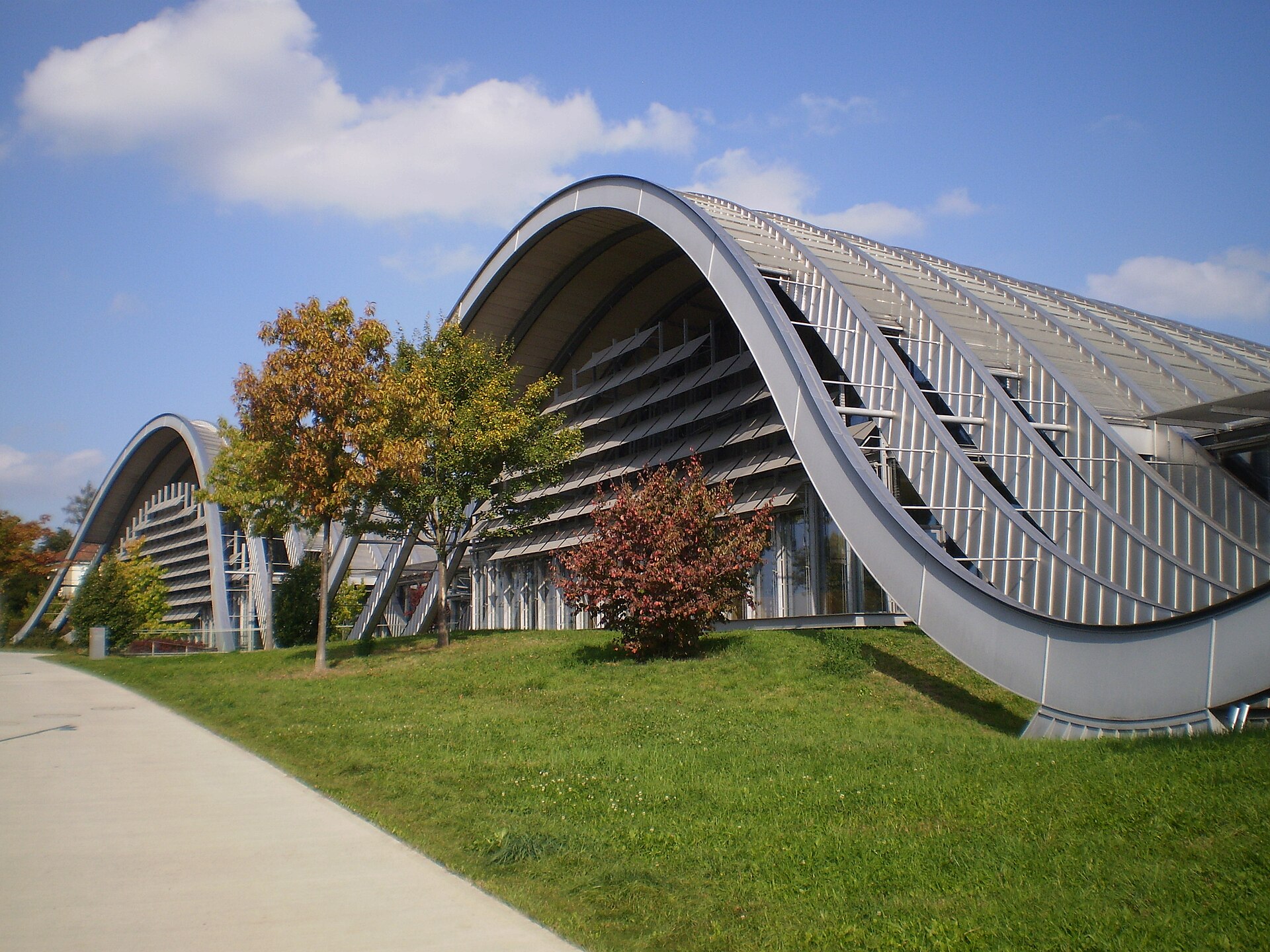
The largest single-artist museum collection in the world by the center's own account: close to 4,000 works by Paul Klee, around 40 percent of his known output, spanning his full career from early graphic work through the Bauhaus years to the late, simplified paintings made in the last years of his life. The Klee family's own gift is documented as fully reconstructable through the Nazi era; provenance work on the smaller body of other artists' works that passed through Klee's own collection is described by the museum as ongoing.
| Kind | Museum |
|---|---|
| Founded | 2005 |
| City and country |  Bern, Switzerland Bern, Switzerland |
| Address | Monument im Fruchtland 3, 3006 Bern, Switzerland |
| Website | zpk.org |
| Status | Open, confirmed 18 September 2026 |
| Record last verified | 18 September 2026 |
Visiting
- Hours
- Tue-Sun10:00 to 17:00
- Closed
- Monday. 24-25 December.
- Admission
- AdultCHF 20General admission
- Senior (65+), groups of 10+, visitors with disabilitiesCHF 18
- Student / apprenticeCHF 10
- Child (6-16)CHF 7
- Family, 1 adult with childrenCHF 27
- Family, 2 adults with childrenCHF 40
- Combined ticketCHF 32Covers both the Zentrum Paul Klee and the Kunstmuseum Bern on the same day
- Child under 6FreeFree
Free entry: Sundays, for children and adolescents under 16. Members of Friends of Zentrum Paul Klee. Swiss Museum Pass and reciprocal museum pass holders- Tickets
- zpk.org/en/information The museum's own ticket page.
- Do I need to book?
- Not required for individual visitors; groups of 10 or more need advance registration and a booked guide
- Address
- Monument im Fruchtland 3, 3006 Bern, Switzerland MapBus Line 12, direction Zentrum Paul Klee, runs to the terminus stop by the Schoengruen restaurant, about 20 minutes from Bern main station
Tram Line 7, direction Ostring, to the terminus, then about a 10 minute walk slightly uphill through a pedestrian crossing, about 20 minutes total from Bern main station
Bus Line 10, direction Ostermundigen, to Schosshaldenfriedhof, then about a 15 minute walk, about 25 minutes from Bern main station
Car Motorway A6, exit Bern-Ostring. 150 parking spaces at CHF 2.50 per hour, convertible to a CHF 8 day ticket at the museum ticket office; two EV charging points; disabled parking near the main entrance - Website
- zpk.org
- Telephone
- +41 31 359 01 01
- [email protected]
Before you go how long, access, photography, bags, eating, shop
- How long to allow
- Two to three hours to see the permanent Kosmos Klee display, a temporary exhibition and Creaviva
- Access
- Guided tours are offered for visitors with disabilities; step-free access to the main entrance and disabled parking are available on request
- Photography
- Not stated on the pages fetched for this record
- Bags
- Not stated on the pages fetched for this record
- Eating
- A cafe operates near the Hill North entrance, also used as a meeting point for guided tours
- Shop
- A museum shop in Hill Center, near the main entrance, sells art prints including reproductions of works in the collection
Prices and hours change. We take them from the institution's own pages and print the day we read them, and you can check the current position at the source we used. Confirm before you travel.
What is inside
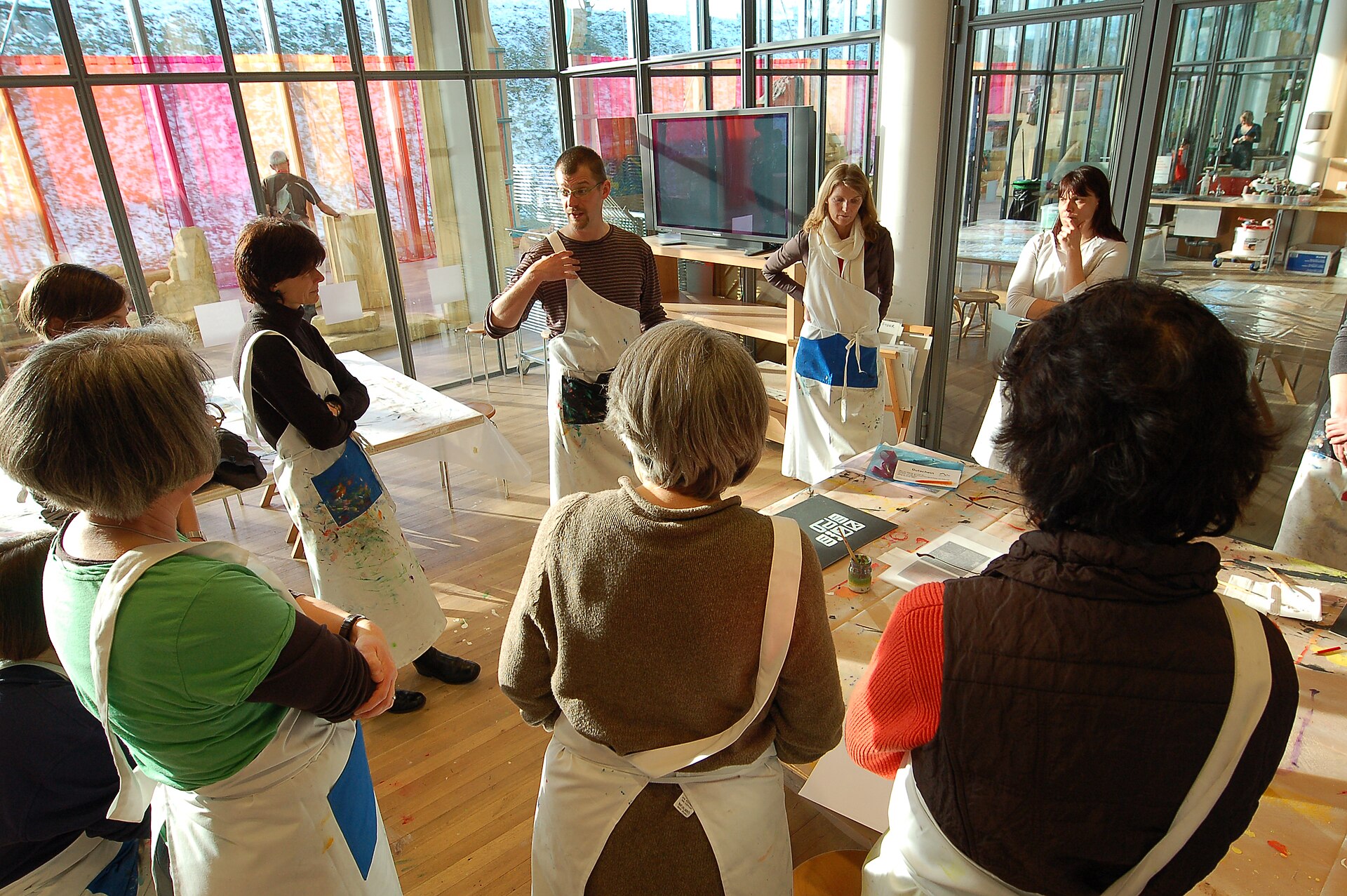
Photograph by Creaviva · CC BY-SA 3.0 Hill North: Creaviva
The center's hands-on studio, open to all ages, where visitors work in a materials-and-methods workshop inspired by Klee's own teaching. The same hill holds an auditorium built for concerts and readings, seminar rooms and a cafe.
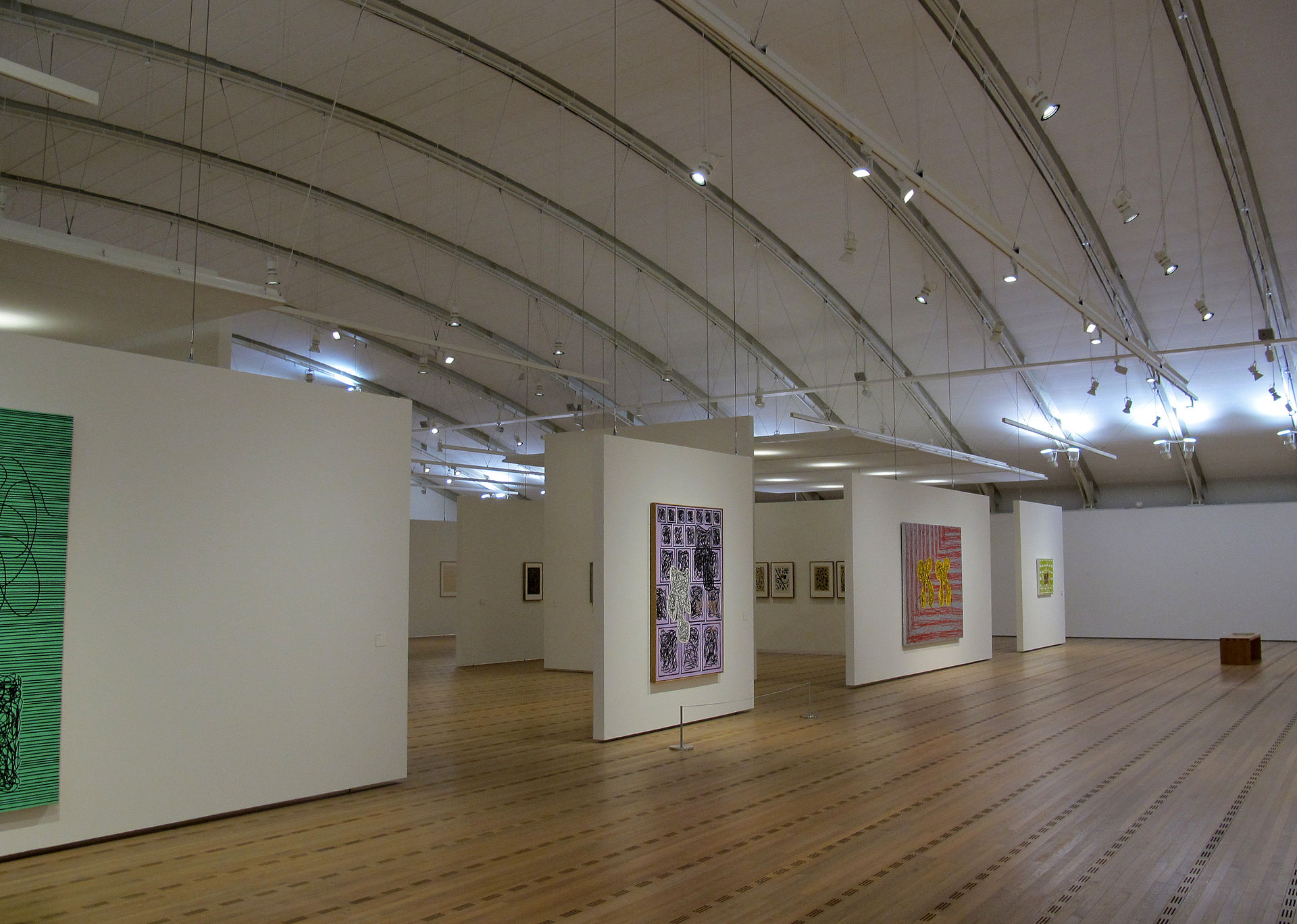
Photograph by Sailko · CC BY 3.0 Hill Center: the exhibition galleries
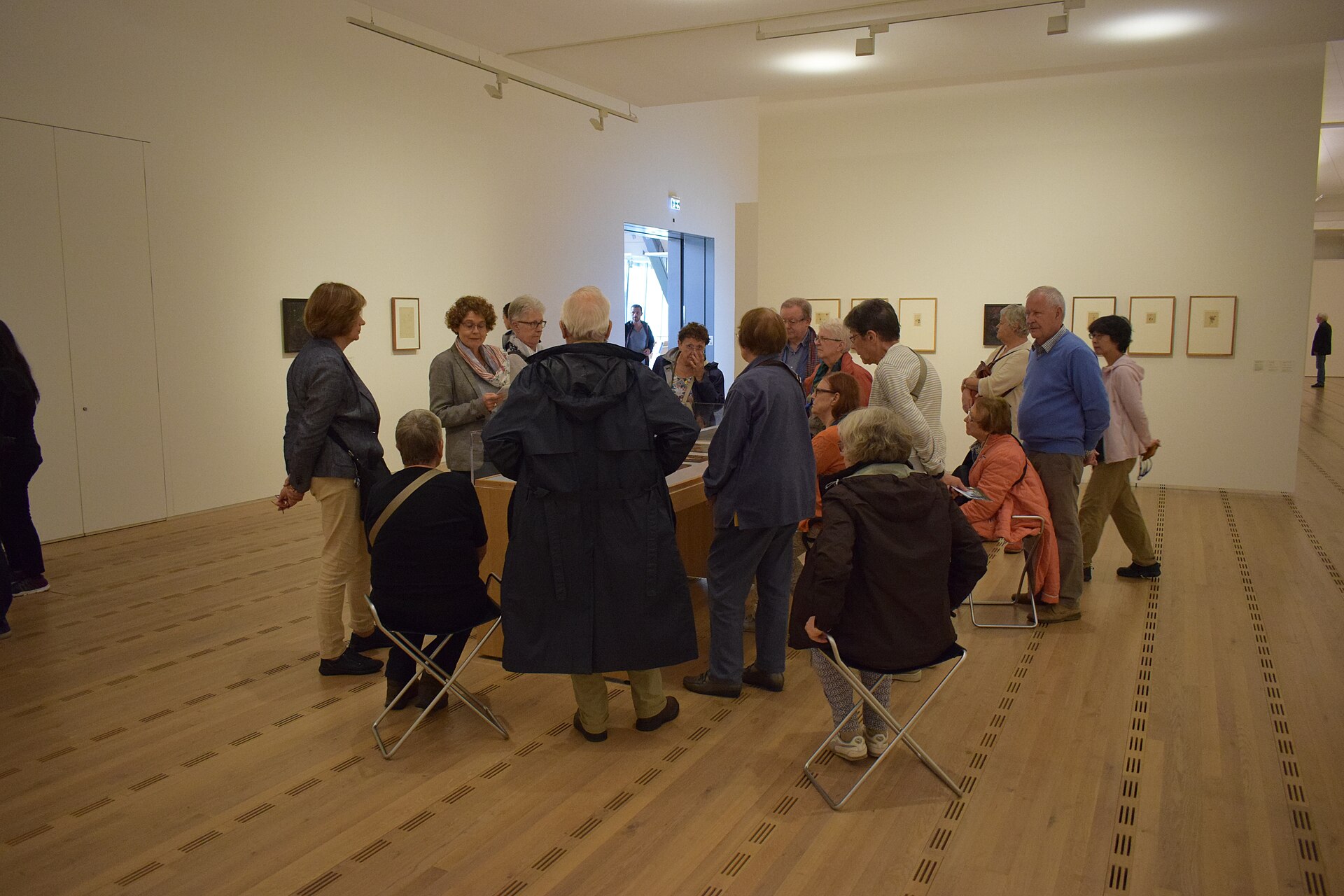
The public art venue, with two exhibition rooms totalling around 2,400 square metres beneath Piano's curved roof structure. The permanent display, Kosmos Klee, sets out a chronological path through Klee's career; a second space in the same hill hosts temporary exhibitions. The main entrance and the museum shop sit here.
Hill South: archive, library and administration
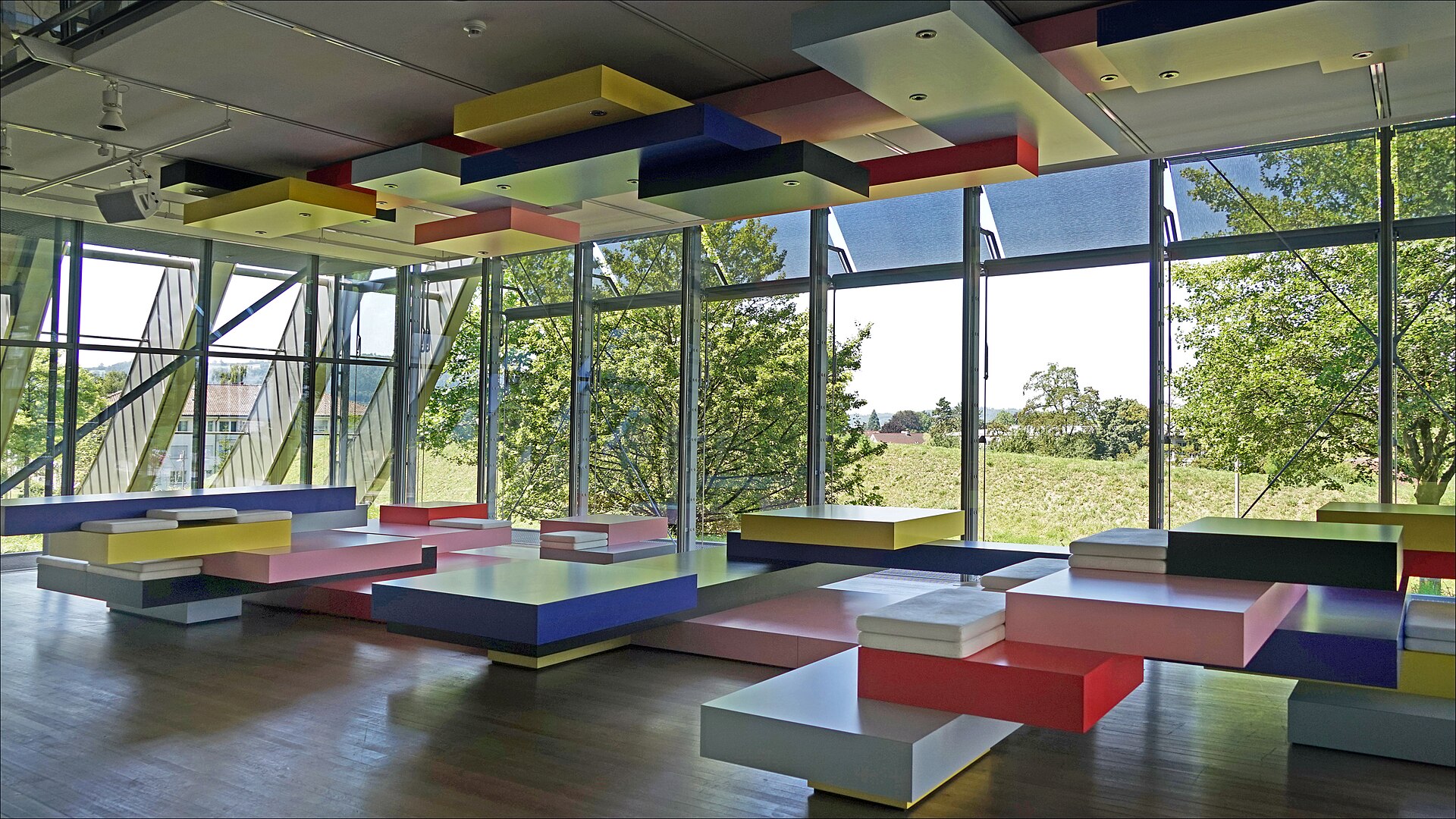
The quiet end of the building. It holds the working archive and library, accessible to researchers by appointment rather than to the public, along with the center's offices. Lang/Baumann's Module No. 4, a large laminated-wood installation of stacked coloured blocks, occupies a glass room here.
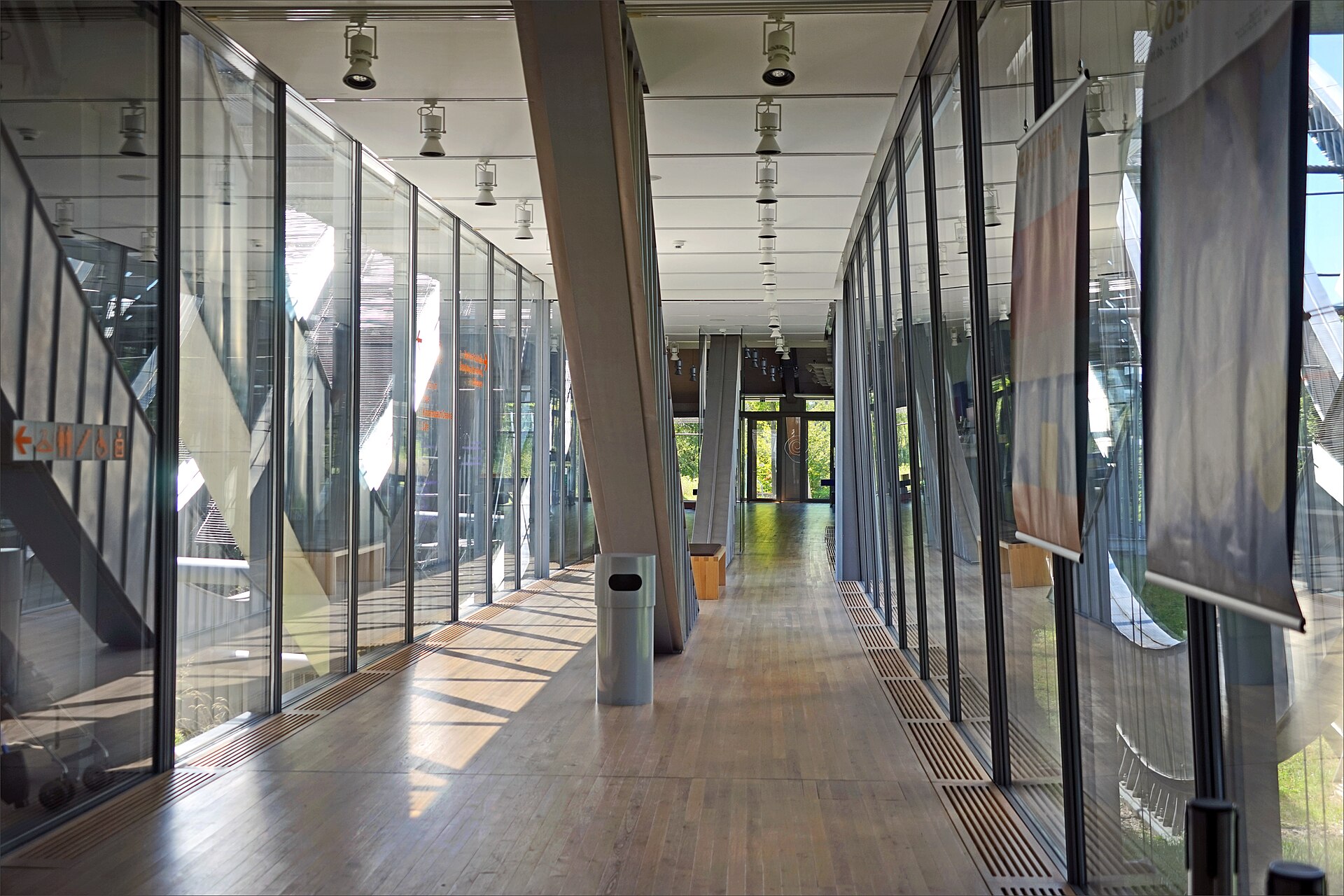
Photograph by Jean-Pierre Dalbéra from Paris, France · CC BY 2.0 The museum street
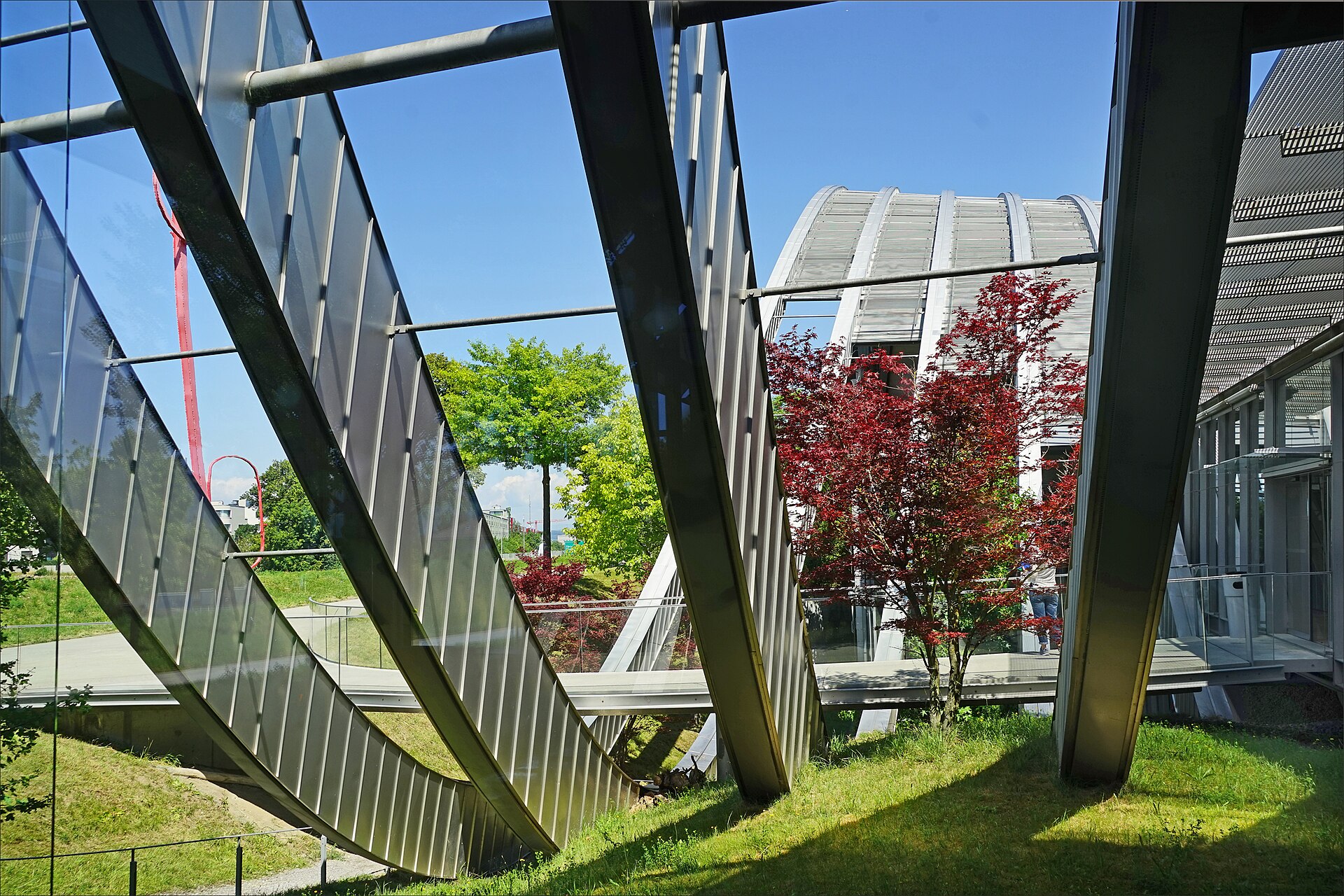
The glass-walled internal corridor that runs the length of the building, parallel to the motorway outside, and physically connects all three hills. Piano designed it as the building's spine rather than a back corridor, with views out to the fields on one side and into the hills on the other.
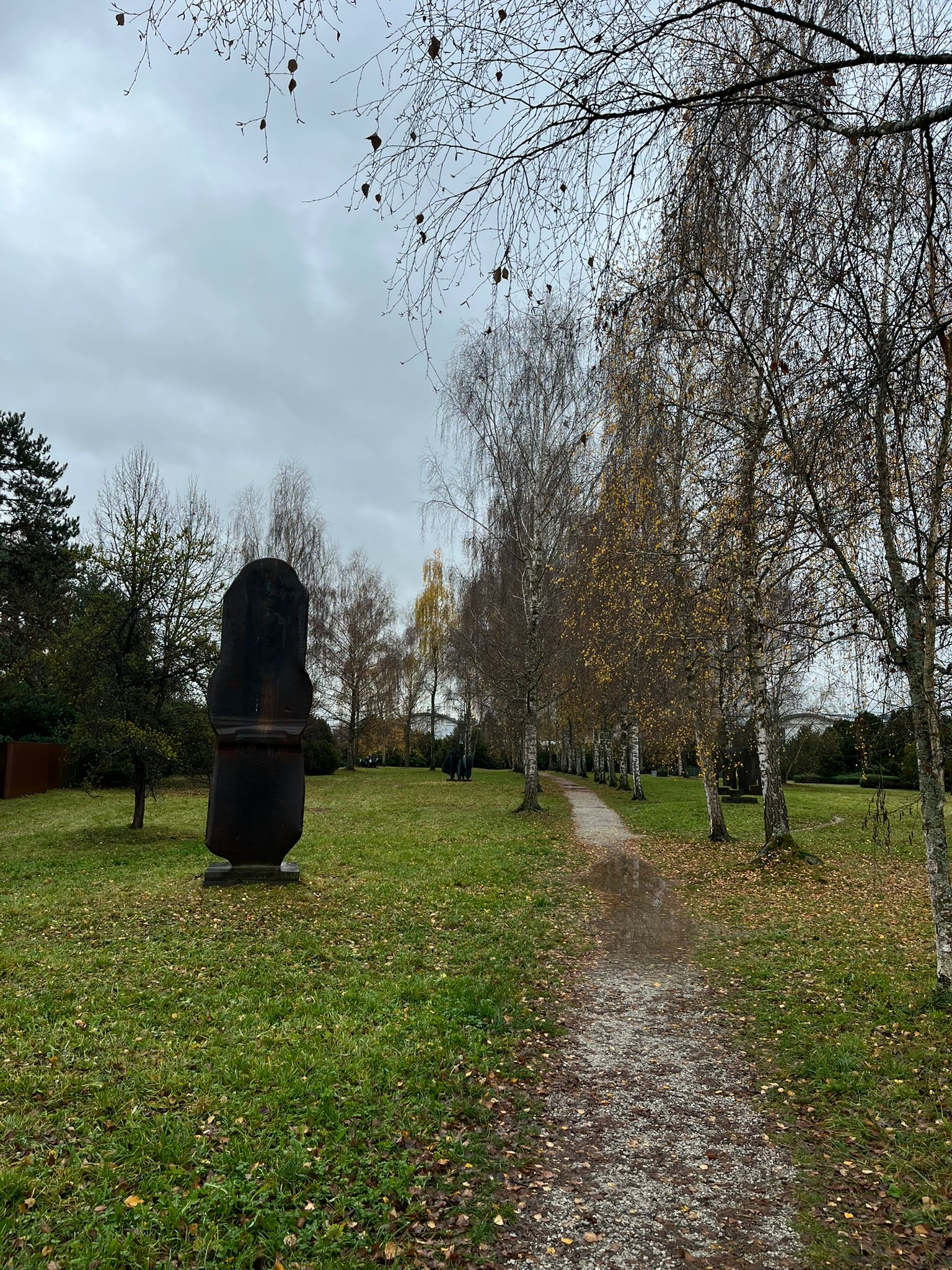
CC0 Sculpture park (Skulpturenpark Martha Mueller-Luethi)
An outdoor sculpture park southeast of the building, on grounds donated by Martha Mueller-Luethi, holding bronze and steel works by Alicia Penalba and Oscar Wiggli among others, open to the public without a ticket. A community garden was added to the grounds in 2021.
What to see first
Insula dulcamara
Paul KleePainted in 1938 in oil on newsprint mounted on burlap, this is Klee's largest single work at 88 by 176 centimetres, made while he was suffering from the scleroderma that would kill him two years later. It reads on the surface as a shoreline scene but has been read since as an encoded self-portrait.13
Death and Fire (Tod und Feuer)
Paul KleePainted in 1940, months before Klee's death, in oil and coloured paste on burlap. The composition hides the German word for death, TOD, in the lines of the face and raised arm, and is treated as one of the clearest statements Klee made about his own mortality.11
Grand Gisant
Alicia PenalbaA 1978 bronze in the outdoor sculpture park, part of the small group of postwar sculpture the museum keeps in the open air rather than under the roof of the three hills.17
Grand Refuge
Alicia PenalbaA 1977 bronze standing in the same sculpture park, one of two Penalba works there.17
Elnac
Oscar WiggliA 1991 Corten steel sculpture in the park, one of three Wiggli works on the grounds alongside Canrac and Loaraden.17
Loaraden
Oscar WiggliA 1993 steel sculpture completing the Wiggli group in the sculpture park.17
Module No. 4
Lang/BaumannA 2016 laminated-wood installation of staggered coloured blocks, one section on the floor and a matching group suspended above it, filling a glass room in Hill South. It is the one work of contemporary art the museum keeps permanently inside the building itself.18
The Klee archive: diaries, teaching notes and the handwritten catalogue raisonne
Paul KleeNot a single object but the primary-source core of the institution: Klee's own diaries, his handwritten catalogue of his own work, his notes from teaching at the Bauhaus between 1921 and 1931, and his correspondence with family, dealers and museums, kept in Hill South and opened to researchers by appointment.5
A building shaped like three hills
Renzo Piano designed the Zentrum Paul Klee as three long, wave-shaped structures that rise and fall along the eastern edge of Bern, following the slope of the Schoengruen fields down toward the A6 motorway. Piano gave each wave, which the center calls a hill, a distinct role drawn from the different sides of Klee's working life as a painter, musician, teacher and researcher. Hill North holds Creaviva, the center's hands-on studio, together with an auditorium built for concerts and readings, seminar rooms and a cafe. Hill Center is the public art venue, with two exhibition rooms totalling around 2,400 square metres, a museum shop and the main entrance. Hill South is the quiet end of the building, holding the sculpture park nearby and the offices, library and archive that the public reaches only by appointment.
The three hills are joined by an internal corridor the center calls the museum street, a glass-walled passage that runs the length of the building parallel to the motorway outside. Piano did not screen the road from view; the center describes it as a deliberate acknowledgement of the motorway as part of the surrounding landscape rather than something to hide the building from. Construction used 1,100 tonnes of steel girders, 1,000 tonnes of reinforcing steel and 10,000 cubic metres of concrete, with a glass front around 150 metres long assembled from panels up to 6 by 1.6 metres and close to 500 kilograms each. The center hill reaches 12 metres and the glass facade rises as high as 19 metres. Ground was broken on 15 October 2001 and the building opened on 20 June 2005, at a construction cost of CHF 125 million, after roughly 180,000 cubic metres of earth had been moved to shape the hills.
The donations that made the museum possible
The museum exists because two families gave it the means to exist. In 1997 Livia Klee-Meyer, the widow of Klee's son Felix and herself the daughter of the Bauhaus director Hannes Meyer, offered the city and canton of Bern her inheritance of almost 700 works by Paul Klee, on condition that the authorities commit to founding and permanently running a Klee museum by the end of 2006. The following year Alexander Klee, another family heir, guaranteed around 850 further loans and a body of family documents, and the Paul Klee Foundation, established in 1947 and until then housed at the Kunstmuseum Bern, announced it would give its own holdings of around 2,600 works and its archive to the new center. That foundation formally merged into the Zentrum Paul Klee Foundation on 1 January 2005.
The building itself came from a different donor. The surgeon Maurice E. Mueller and his wife Martha Mueller-Luethi offered land in Bern's Schoengruen district, where Klee is buried, along with the greater part of their family fortune, on three conditions: the museum had to stand on that site, Renzo Piano had to design it, and it had to operate as a cultural centre rather than a conventional museum. The Schoengruen site sat on the eastern outskirts of the city, away from the Kunstmuseum Bern where officials had originally hoped to keep the Klee collection close to the rest of Bern's art holdings, and the decision to appoint Piano without an architectural competition drew further objection at the time. The dispute did not stop the project: Bern's voters approved it by 78 percent at the end of 2000, and the city and cantonal parliaments passed it with little further opposition.
What the collection holds, and what it does not show at once
Between the Klee family gift, the Paul Klee Foundation's holdings and further works acquired since, the Zentrum Paul Klee holds close to 4,000 works by Paul Klee, which the center describes as around 40 percent of his entire pictorial output, making it the largest single-artist collection held by any museum. Roughly 80 percent of that total is drawings and watercolours rather than paintings, which reflects how much of Klee's actual practice was work on paper rather than canvas. The permanent display, Kosmos Klee, sets out a chronological path through his career in Hill Center, alongside a changing programme of temporary exhibitions; around 200 further works arrive as long-term loans from private collections.
The collection's size is also the reason so little of it is ever on the wall at once. Klee experimented constantly with unstable materials, oil paste on paper, wax emulsion, chalk grounds, and a large share of the collection is light-sensitive to a degree that rules out permanent display. The center rotates its holdings for conservation reasons and keeps the rest in the Hill South archive, open to researchers by appointment rather than to the public. Visitors expecting to see an institution's full collection on the walls sometimes read the resulting galleries as sparse for a museum of this size; the center's own published account of the collection treats the same fact as a conservation obligation rather than a shortfall.
Research, archive and the shared foundation with Kunstmuseum Bern
Beyond its galleries, the Zentrum Paul Klee describes itself as a collection, research and information centre, and its archive is where that description is tested. It holds Klee's diaries, his handwritten catalogue of his own work, his notes from teaching at the Bauhaus between 1921 and 1931, his correspondence with family, dealers and museums, his working library, and his studio materials, alongside a continually updated database of every work the center holds, built as a continuation of the nine-volume printed catalogue raisonne of Klee's work. Four further specialised archives cover music written in response to Klee since 1930, teaching material from his own students, film and broadcast productions about him, and the wider critical reception of his work. The center publishes an open-access research journal, Zwitscher-Maschine, and opens the archive to outside researchers by appointment through its own research office.
Since a 2016 reorganisation the Zentrum Paul Klee has shared its governing structure with the Kunstmuseum Bern, the older museum in Bern's city centre, under a joint foundation and a single artistic director, Nina Zimmer, who has led both institutions since that change. The two remain separate museums with separate buildings and separate collections. The Kunstmuseum Bern, not the Zentrum Paul Klee, is the institution that accepted the Cornelius Gurlitt bequest in November 2014 and has since carried the provenance-research commitments that came with it; the Zentrum Paul Klee's own published position treats its provenance work as a separate undertaking, covering the Klee family's own gift and, separately, the wider body of Klee's work held by others.
Provenance: the family collection, and what is still open
The Zentrum Paul Klee states that the works it received from the Klee family estate can be classed 'green' under the provenance categories used in Bern, meaning ownership of every one of those works through the 1933 to 1945 period can be fully reconstructed. That status covers the core Klee holdings the family itself donated. The museum's own account is more guarded about a second, smaller body of material: works by other artists that passed through Paul Klee's private collection during his lifetime and later entered the center's holdings. The museum states that the provenance of that material is still being recorded to current standards rather than already established, and that its staff separately assist outside researchers and institutions worldwide who are tracing the history of Klee's own works held elsewhere. Neither the museum's own account nor the sources checked for this record describe an unresolved restitution claim against a work currently in the Zentrum Paul Klee's own collection; what remains open concerns the artist-friends' works still under review, not the Klee holdings themselves.
Klee's own late career sits inside a wider history of Nazi persecution of modern art that the center's own collection largely sidesteps rather than escapes. The Gestapo searched Klee's home and the Dusseldorf Academy dismissed him from his teaching post; the Klee family left Germany for Switzerland in late 1933. Back in Germany in 1937 the Nazi regime included seventeen of Klee's pictures in the Entartete Kunst, or Degenerate Art, exhibition and seized 102 of his works from German public collections. Individual Klee paintings taken in that campaign have since been the subject of long-running restitution disputes, most prominently a 1919 painting held by the Lenbachhaus in Munich, a separate institution with no connection to the Zentrum Paul Klee, whose dispute over that specific work was settled after 26 years of litigation.
Reception: the building wins, the display divides
The Zentrum Paul Klee opened to strong public backing in Bern itself, following a 78 percent vote in favour of the project at the end of 2000, after a genuine fight over the Mueller family's insistence on the Schoengruen site rather than a location closer to the Kunstmuseum Bern. That local vote of confidence has been matched since by broad praise for the building: visitors and critics alike single out Piano's three hills as the reason the museum is worth the trip out from the city centre, on a site most describe as unusually well integrated with the landscape around it.
The recurring complaint sits on the other side of the same fact that makes the collection remarkable. A museum holding close to 4,000 works by one artist cannot show most of them at once without damaging light-sensitive paper, and visitor reviews return again and again to the gap between the size of the holding and the size of what is on the wall on any given day, sometimes reading a partly closed gallery during a changeover as a poor use of an already-priced ticket. Both readings are visible in reviews written within the same week: praise for the depth of a single-artist collection, and frustration that so much of that depth is, by design, in storage rather than on view.
What visitors say
Visitors consistently single out Renzo Piano's building itself as the reason to come, and describe the depth of the Klee holdings as unmatched anywhere. The recurring complaint is the gap between that depth and what is actually on the wall: because so much of the collection is light-sensitive work on paper, only a rotating fraction is shown at any time, and some visitors weigh the admission price against how little of a roughly 4,000-work collection they saw.
What is praised, what is criticised
- Praised: The Renzo Piano building and its setting in the fields east of the city
- Praised: The range and depth of the Klee collection, covering his whole career rather than a few well-known pictures
- Praised: Creaviva and the hands-on, family-friendly programming
- Praised: The quiet study room and reading material available to visitors who want to go beyond the wall labels
- Criticised: Only a small fraction of the roughly 4,000-work collection is displayed at any one time, which some visitors read as thin for a museum of this size
- Criticised: Admission is seen as expensive relative to the amount of work on view, particularly when a gallery is partly closed for a changeover
- Criticised: The Schoengruen site is a bus or tram ride from central Bern, longer than a walk from the old town
Ratings on other platforms
Tripadvisor: 4.1 from 752 ratings, read 18 September 2026
A platform average is a tertiary source: it moves, it is not audited, and we quote no visitor's words.
Questions about Zentrum Paul Klee
Where is Zentrum Paul Klee?
Monument im Fruchtland 3, 3006 Bern, Switzerland.
How much does it cost to visit?
Adult: CHF 20; Senior (65+), groups of 10+, visitors with disabilities: CHF 18; Student / apprentice: CHF 10; Child (6-16): CHF 7; Family, 1 adult with children: CHF 27. As confirmed 18 September 2026.
When is it open?
Tue-Sun 10:00-17:00. Closed: Monday. 24-25 December. As confirmed 18 September 2026.
How do you get there?
Bus: Line 12, direction Zentrum Paul Klee, runs to the terminus stop by the Schoengruen restaurant, about 20 minutes from Bern main station; Tram: Line 7, direction Ostring, to the terminus, then about a 10 minute walk slightly uphill through a pedestrian crossing, about 20 minutes total from Bern main station; Bus: Line 10, direction Ostermundigen, to Schosshaldenfriedhof, then about a 15 minute walk, about 25 minutes from Bern main station; Car: Motorway A6, exit Bern-Ostring. 150 parking spaces at CHF 2.50 per hour, convertible to a CHF 8 day ticket at the museum ticket office; two EV charging points; disabled parking near the main entrance.
What should you see first?
Insula dulcamara (Paul Klee); Death and Fire (Tod und Feuer) (Paul Klee); Grand Gisant (Alicia Penalba); Grand Refuge (Alicia Penalba); Elnac (Oscar Wiggli); Loaraden (Oscar Wiggli).
What we could not confirm
- Sources for this record give the collection size as 'around 4,000' or 'close to 4,000' works and 'around 40 percent' of Klee's output; the museum's own collection page does not state a single precise figure, and this record has not resolved that to an exact number.
- The museum states that provenance research on works by other artists held in Klee's own private collection, and later absorbed into the Zentrum Paul Klee's holdings, is still being recorded to current standards; no individual disputed work in that group was identified in the sources checked for this record.
Images
Sources
- 1Zentrum Paul Klee, official website, homepage zpk.org
- 2Zentrum Paul Klee, Tickets and Opening hours zpk.org/en/information
- 3Zentrum Paul Klee, Foundation (about us) zpk.org/en/about-us/foundation
- 4Zentrum Paul Klee, Architecture (about us) zpk.org/en/about-us/architecture
- 5Zentrum Paul Klee, Archive and Research zpk.org/en/research
- 6Zentrum Paul Klee, Collection zpk.org/en/collection
- 7Zentrum Paul Klee, How to get here zpk.org/en/information/arrival
- 8Zentrum Paul Klee, Groups and Schools zpk.org/en/information/groups
- 9Wikipedia, Zentrum Paul Klee (tertiary) en.wikipedia.org/wiki/Zentrum_Paul_Klee
- 10Wikipedia, Ad Parnassum (tertiary; confirms this painting is held at Kunstmuseum Bern, not Zentrum Paul Klee) en.wikipedia.org/wiki/Ad_Parnassum
- 11Wikipedia, Death and Fire (tertiary) en.wikipedia.org/wiki/Death_and_Fire
- 12Wikipedia, Paul Klee (tertiary; Nazi-era persecution and seizures) en.wikipedia.org/wiki/Paul_Klee
- 13Wikipedia, Insula dulcamara (tertiary) en.wikipedia.org/wiki/Insula_dulcamara
- 14Wikimedia Commons, File:Zentrum Paul Klee, Bern.JPG (licence and file data) commons.wikimedia.org/wiki/File:Zentrum_Paul_Klee,_Bern.JPG
- 15swissinfo.ch, 'A centre for Paul Klee', 4 July 2005 swissinfo.ch/eng/culture/a-centre-for-paul-klee/4575606
- 16Tripadvisor, Zentrum Paul Klee reviews (tertiary) tripadvisor.com/Attraction_Review-g188052-d562225-Reviews-Zentrum_Paul_Klee-Bern_Bern_Mittelland_District_Canton_of_Bern.html
- 17Wikimedia Commons, Category:Skulpturenpark (ZPK Bern) commons.wikimedia.org/wiki/Category:Skulpturenpark_(ZPK_Bern)
- 18Finestre Sull'Arte, 'Zentrum Paul Klee, the world's largest collection of the artist in Renzo Piano's Three Hills' finestresullarte.info/en/travelnotebooks/8233vn_zentrum-paul-klee-the-world-s-largest-collection-of-the-artist-in-renzo-piano-s-three-hills.php
- 19Wikimedia Commons, File:La rue interieure du Centre Paul Klee (Berne, Suisse) (43561089452).jpg commons.wikimedia.org/wiki/File:La_rue_int%C3%A9rieure_du_Centre_Paul_Klee_(Berne,_Suisse)_(43561089452).jpg

_(43561089452).jpg)