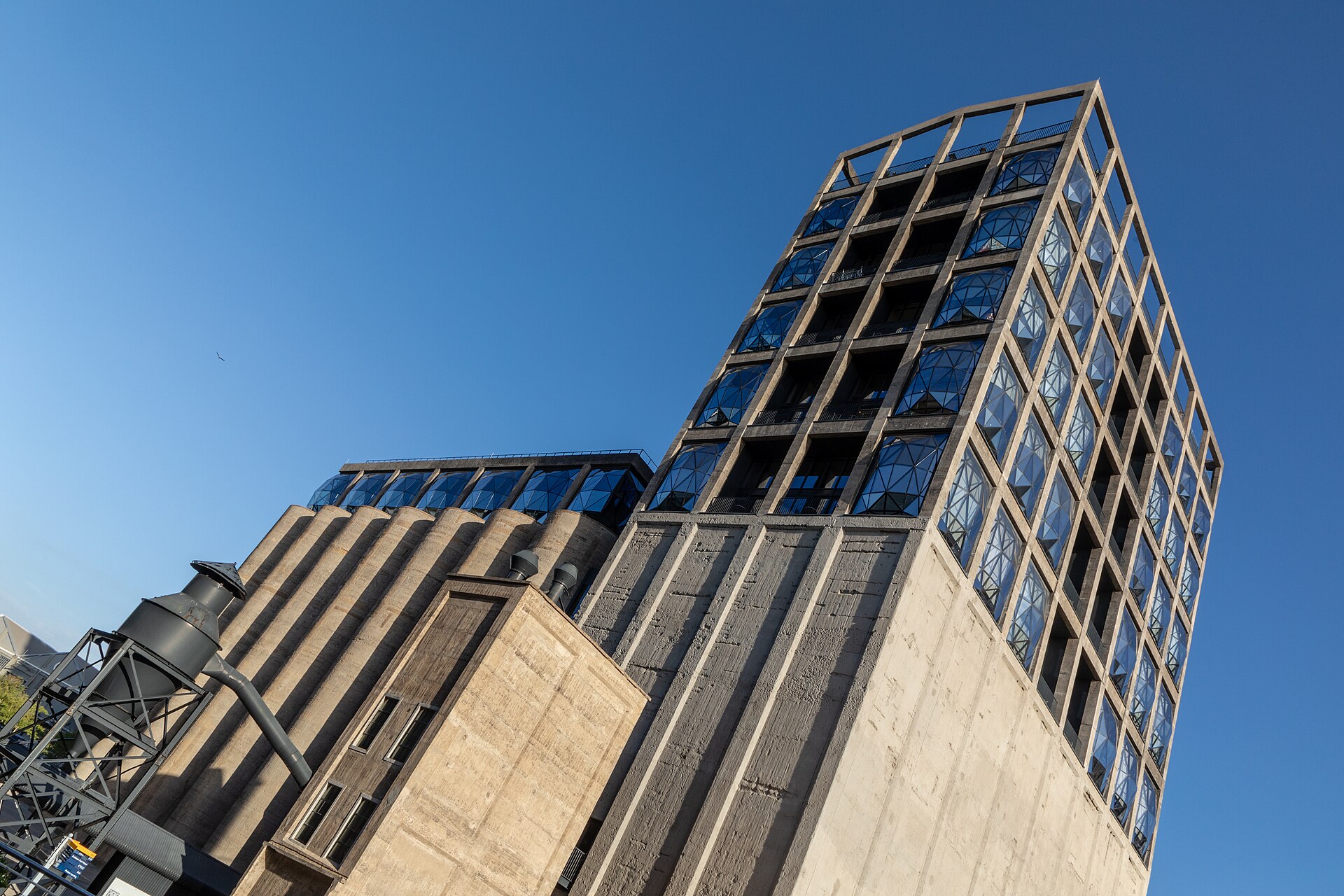
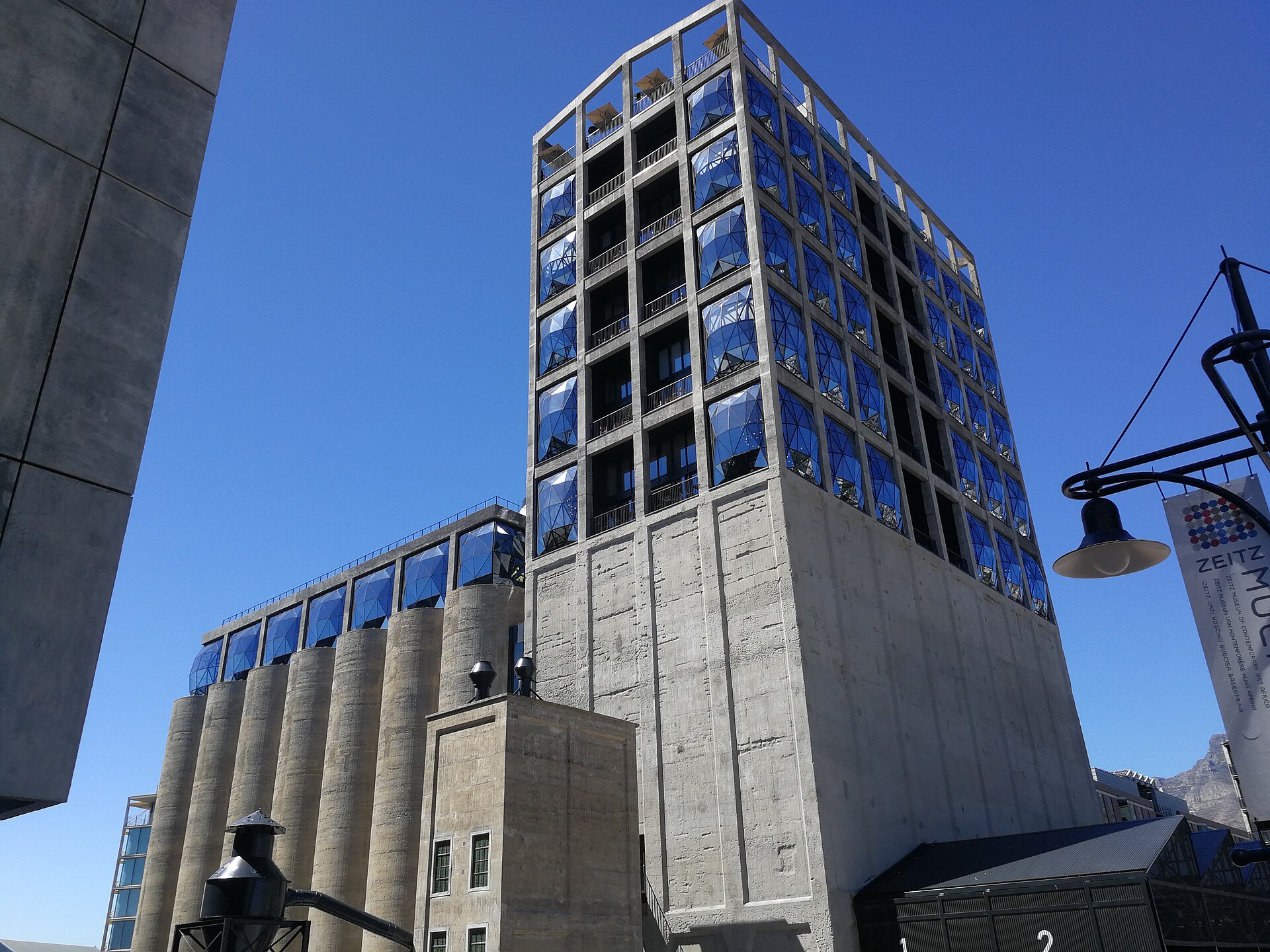
The converted grain silo housing Zeitz Museum of Contemporary Art Africa, seen from the V and A Waterfront, 2024.
Dietmar Rabich, CC BY-SA 4.0Zeitz Museum of Contemporary Art Africa
Museum · Zeitz MOCAA · Founded 2017
Open, admission and hours confirmed 25 August 2026 · 22 sources
On this page 16 sections
ContentsClose
Zeitz MOCAA's collection is strongest exactly where it was built to be: contemporary art made in Africa and its diaspora from the late twentieth century onward, anchored by the founding loan collection of Jochen Zeitz and built out since 2015 into a permanent collection of more than 500 objects. Two areas carry particular depth beyond the general programme - photography, through the Roger Ballen Foundation Centre for Photography and its acquisition of Ballen's complete archive, and dress and textile as artistic material, through the Costume Institute. By its own critics' account the collection is comparatively thin in work acquired outside a small circle of South African commercial galleries, and the museum has not published a full public catalogue of what it owns.
| Local name | Zeitz MOCAA |
|---|---|
| Kind | Museum |
| Founded | 2017 |
| City and country |  Cape Town, South Africa Cape Town, South Africa |
| Address | Silo District, South Arm Road, V&A Waterfront, Cape Town, 8001, South Africa |
| Website | zeitzmocaa.museum |
| Status | Open, confirmed |
| Record last verified |
Visiting
- Hours
- Mon-Sun10:00 to 18:00Last entry 17:30
- Admission
- AdultZAR 265Standard daily admission
- Under 18FreeFree entry; teens should bring identification
Free entry: Every Wednesday, 10am to 1pm: free entry for African citizens on presentation of a South African ID or African passport. Visitor's own birthday month, any day: free entry on presentation of a South African ID or African passport showing the date of birth- Tickets
- zeitzmocaa.museum/buy-tickets The museum's own ticket page.
- Do I need to book?
- No advance booking required for general admission; tickets can be bought online or at the door. Free one-hour guided tours run Monday to Friday at 12.30pm on a first-come, first-served basis at the door.
- Address
- Silo District, South Arm Road, V&A Waterfront, Cape Town, 8001, South Africa MapParking Secure parking at the V and A Waterfront Silo District Parking Garage (P3), with direct access into the museum
- Website
- zeitzmocaa.museum
- Telephone
- +27 (0)87 350 4777
- [email protected]
Before you go how long, access, photography, bags, eating, shop
- How long to allow
- Two to three hours for the galleries and atrium; visitors taking the free guided tour or stopping at the museum restaurant should allow closer to half a day.
- Access
- Wheelchair access is available on every floor; wheelchairs are provided at the Information Desk on a first-come, first-served basis.
- Photography
- Personal photography without flash or a tripod is permitted throughout the galleries. Commercial photo or film shoots must be arranged in advance with the museum's communications office.
- Eating
- OCULAR, a restaurant, wine and cocktail bar operated within the museum.
- Shop
- A museum shop selling art books, prints, design objects, jewellery and stationery drawn from the collection and its programme.
Prices and hours change. We take them from the institution's own pages and print the day we read them, and you can check the current position at the source we used. Confirm before you travel.
What is inside
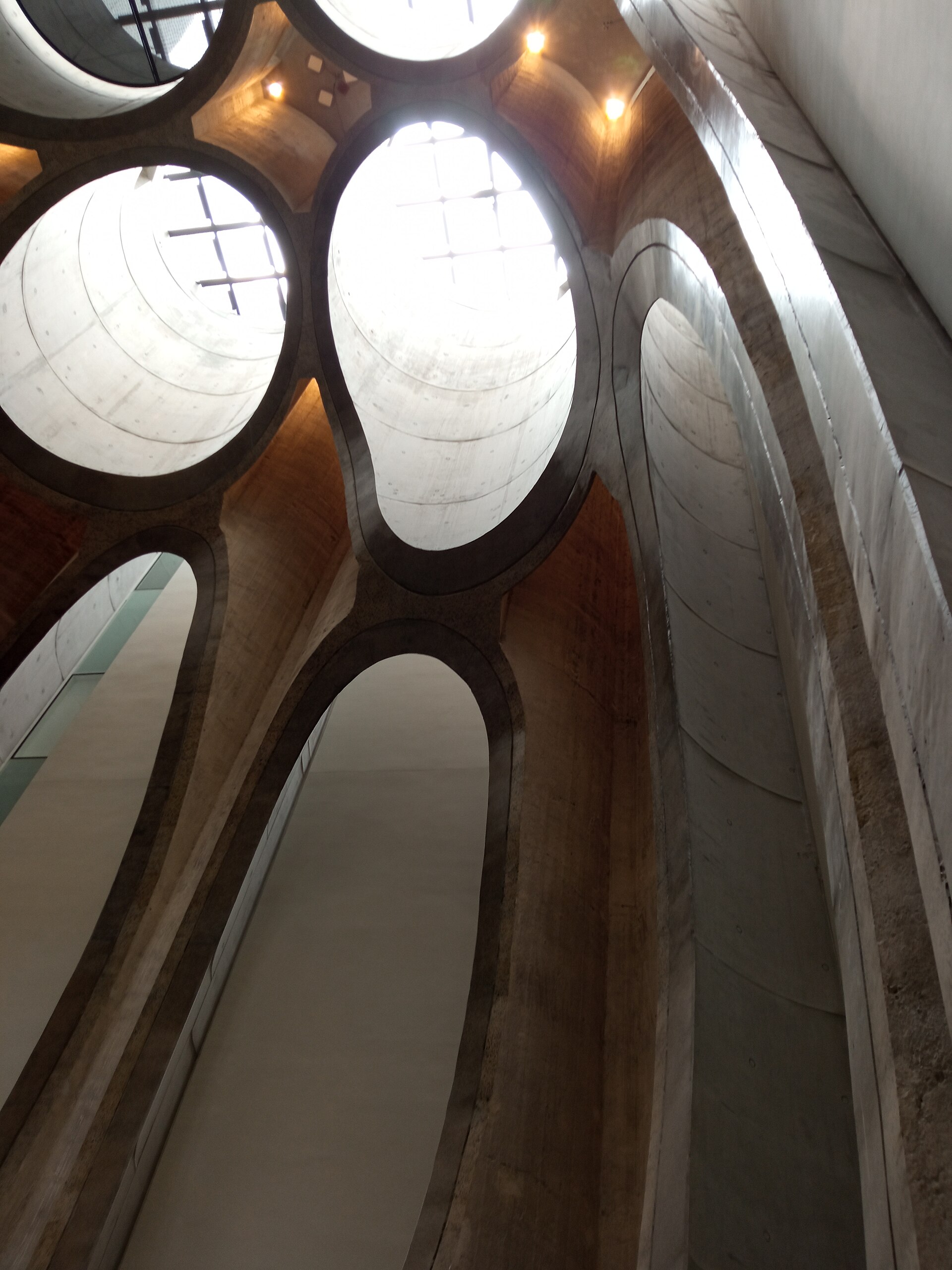
Photograph by Michael Rowe · CC BY-SA 4.0 BMW Atrium
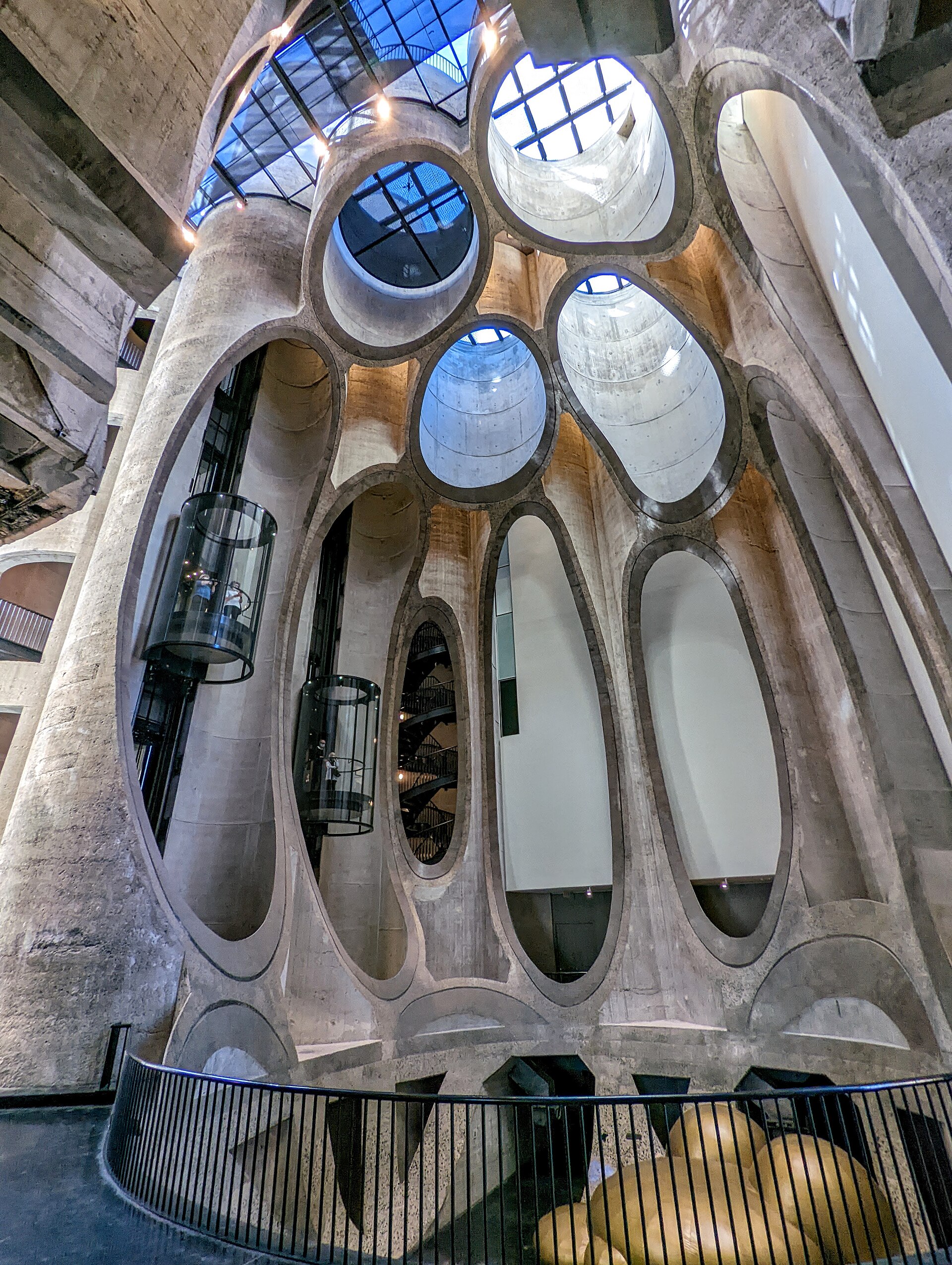
The building's ten-storey central volume, carved diagonally through the original grain-storage shafts into the curved profile of a grain of corn and capped in faceted glass. Large-scale sculpture and installation work is shown here; Nicholas Hlobo's suspended sculpture iimpundulu zonke ziyandilandela has hung in the atrium since the museum opened.
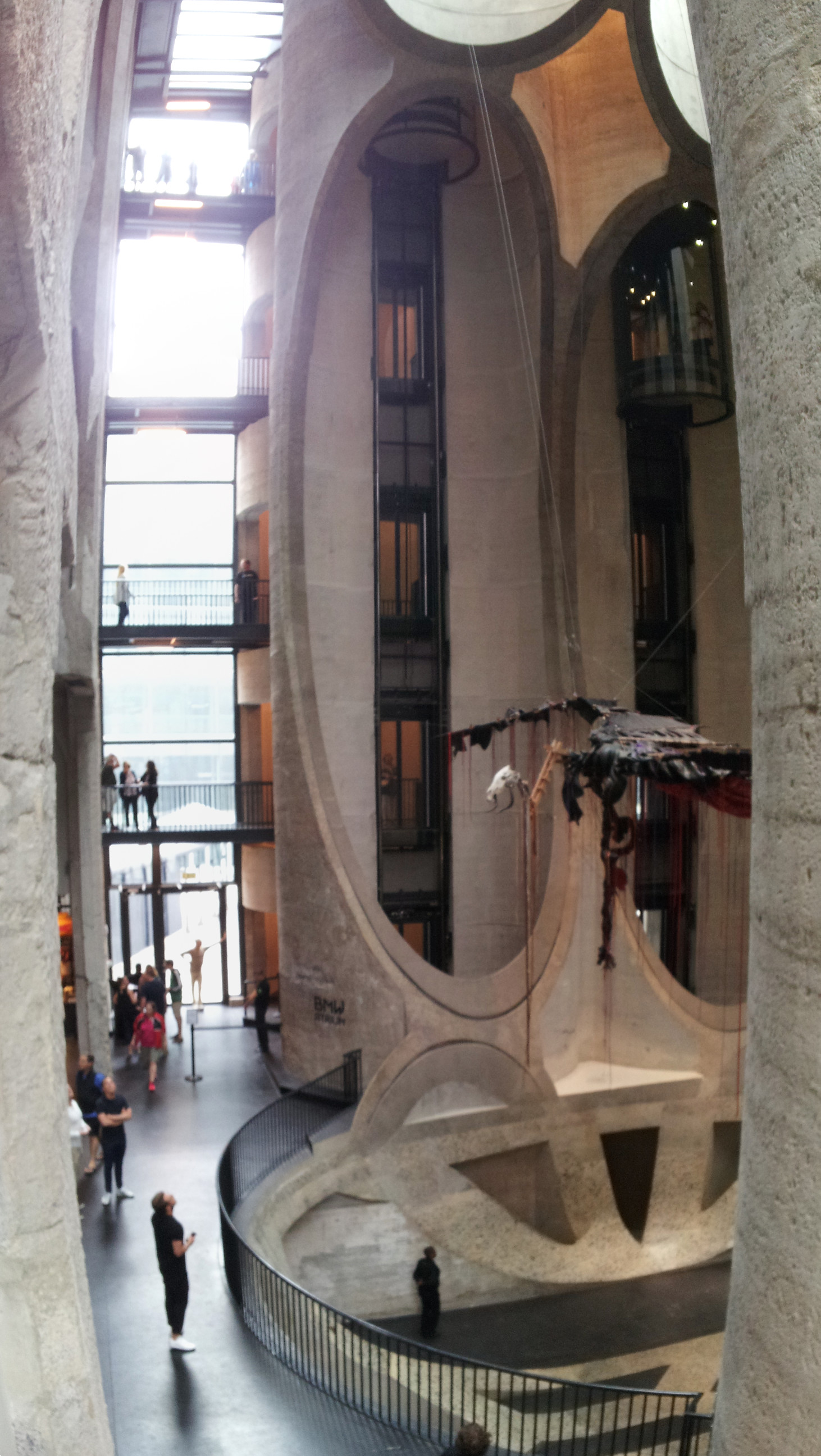
Photograph by Ulysse2031 · CC BY-SA 4.0 Entrance foyer
The ground-floor lobby built into the base of the silo, where the concrete shafts are cut back to show their original cylindrical form before the space opens upward into the atrium; holds the ticketing and information desk.
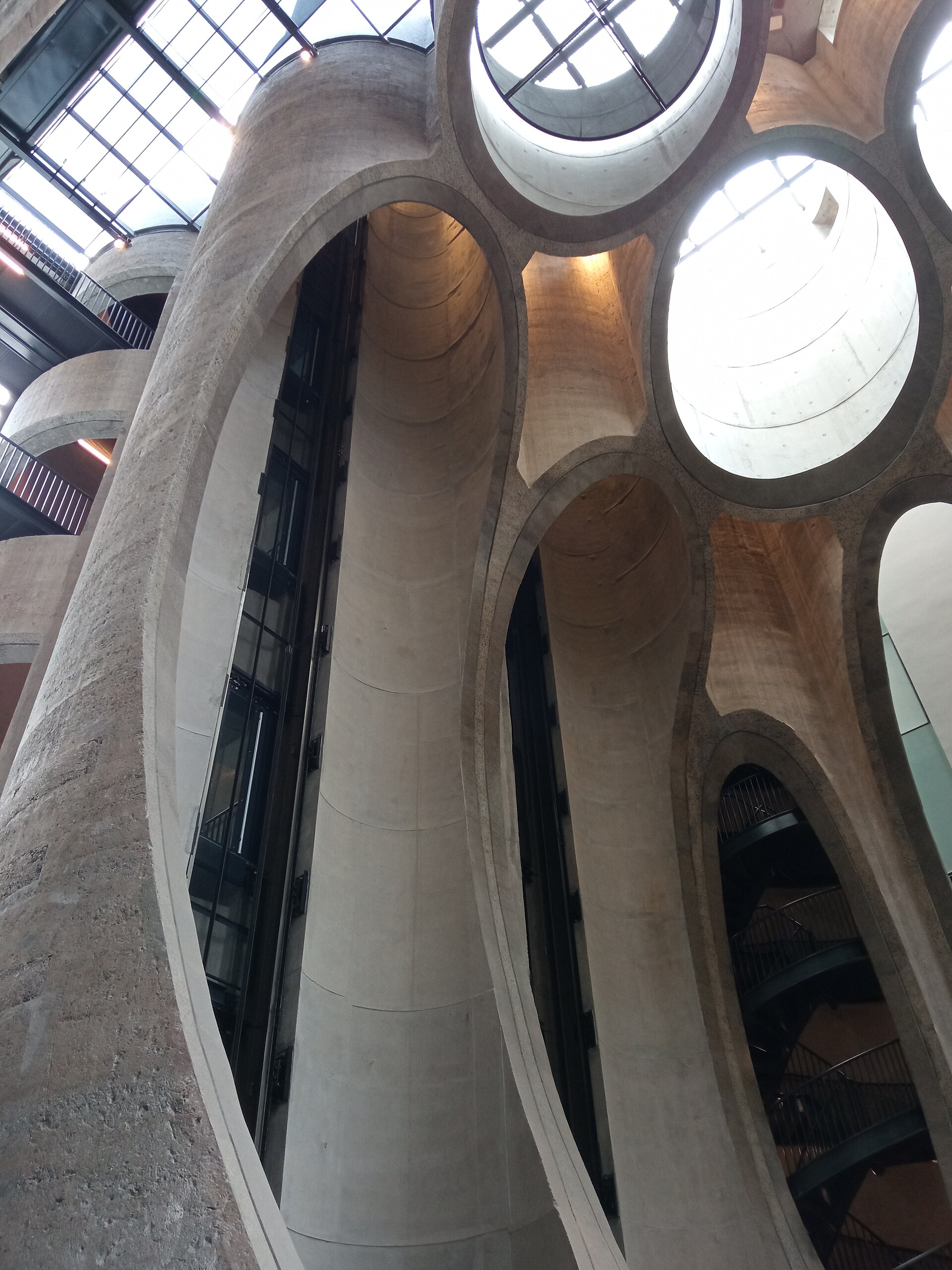
Photograph by Michael Rowe · CC BY-SA 4.0 Gallery floors (converted grain-storage shafts)
Roughly eighty gallery spaces across five floors, converted from the tower's 42 original concrete storage shafts, used for the permanent collection and a rotating programme of temporary exhibitions. At the 2017 opening these included Kudzanai Chiurai's photography and posters on the third floor and Nandipha Mntambo's cowhide sculpture on the fourth; the basement tunnels beneath the atrium have also been used to show photography.
Roger Ballen Foundation Centre for Photography
A dedicated curatorial department and gallery for contemporary African photography, endowed in 2017 by the Roger Ballen Foundation and the Eiger Foundation. Holds Roger Ballen's complete photographic archive, together with signed editions from his Dorps, Platteland, Outland and Shadow Chamber series, and stages rotating photography exhibitions.
Costume Institute
A department examining garments, textiles and dress as subject matter in contemporary African art, led by an AKO Foundation assistant curator. Its tours and displays have featured Athi-Patra Ruga, Yinka Shonibare, Leonce Raphael Agbodjelou and Nandipha Mntambo.
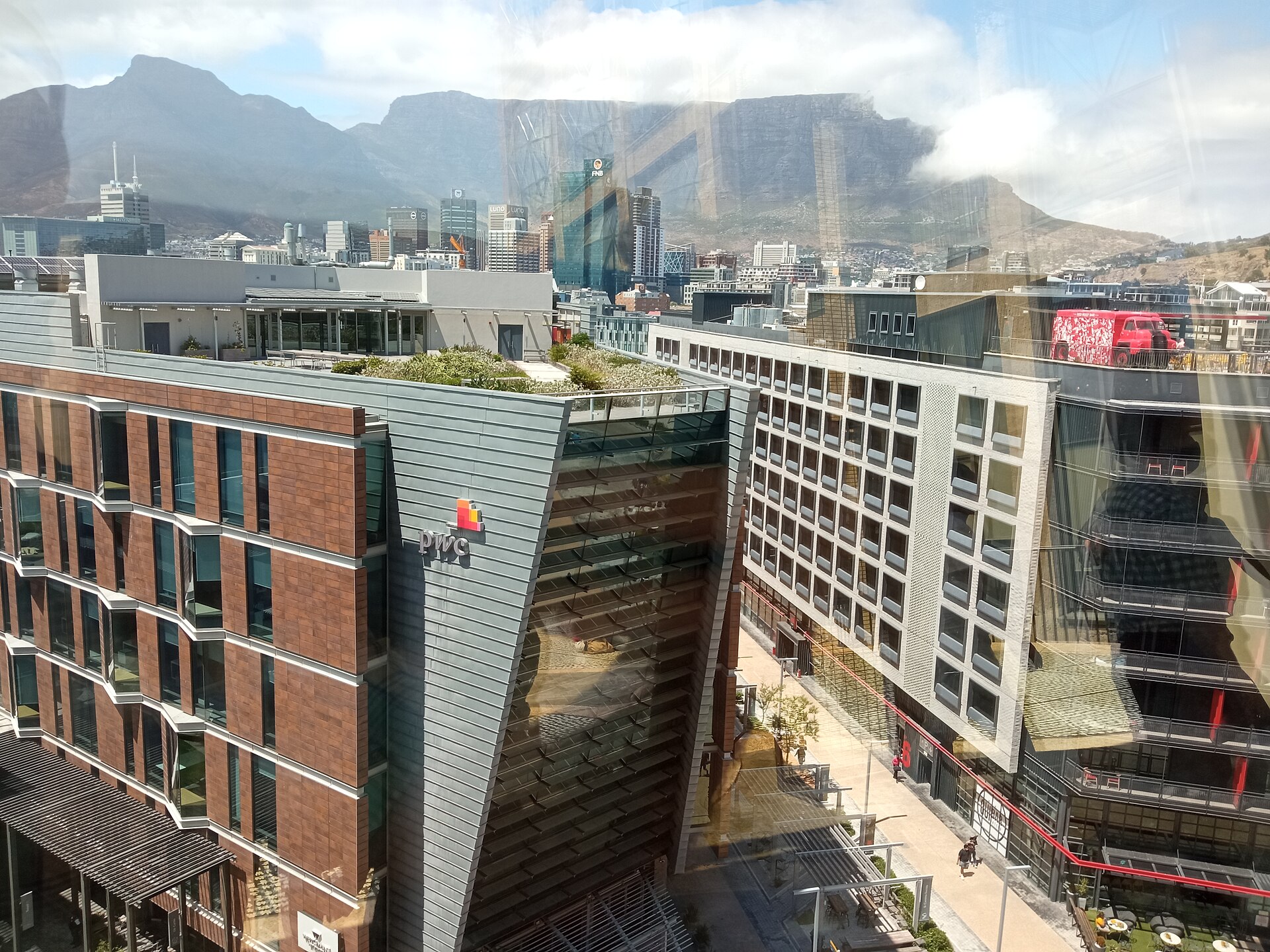
Photograph by Michael Rowe · CC BY-SA 3.0 Rooftop sculpture garden
A walkable roof terrace above the galleries, set over fritted-glass skylights that light the floors below, holding outdoor sculpture and giving views across the working harbour to Table Mountain. Reached separately from the Silo Hotel, which occupies the same tower's upper floors.
What to see first
More Sweetly Play the Dance
William KentridgeAn eight-channel video installation with megaphones and wooden chairs, showing a forty-metre procession of shadow figures marching in silhouette; shown in the museum's galleries since the 2017 opening exhibition All Things Being Equal.14
iimpundulu zonke ziyandilandela
Nicholas HloboA monumental sculpture in rubber inner tubing, ribbon and an animal skull, built for the 2011 Venice Biennale and bought there by Jochen Zeitz; it now hangs in the BMW Atrium beneath the silo's glass cap, its title drawn from a Xhosa myth about a vampiric lightning bird.16
In the World But Don't Know the World (2009)
El AnatsuiA wall hanging built from thousands of flattened aluminium bottle caps stitched together with copper wire, part of the artist's signature reworking of discarded materials into monumental cloth-like forms.15
Faces and Phases (selection)
Zanele MuholiTen photographic portraits from Muholi's ongoing series documenting Black lesbian, transgender and non-binary South Africans, held in the museum's permanent collection.17
Revelations series
Kudzanai ChiuraiStaged photographs restaging Old Master and colonial-era compositions with Black subjects, examining how the African continent has been represented from outside; exhibited on the museum's third floor.6
Cowhide sculptures
Nandipha MntamboFigurative sculptures cast from cured cowhide, drawing on the association between the female body and tauromaquia (bullfighting); a solo exhibition of this work inaugurated the museum's fourth floor in 2017.6
The Roger Ballen photographic archive
Roger BallenThe museum's acquisition of Ballen's complete photographic archive, the largest single gift to its endowment to date, anchors the Roger Ballen Foundation Centre for Photography.9
Exhibitions on now
Past exhibitions here
- Closed11 Sep 2025 to 4 Oct 2026Confirmed · check before you travel
- Closed20 Nov 2025 to 4 Oct 2026Confirmed · check before you travel
A grain silo becomes a museum
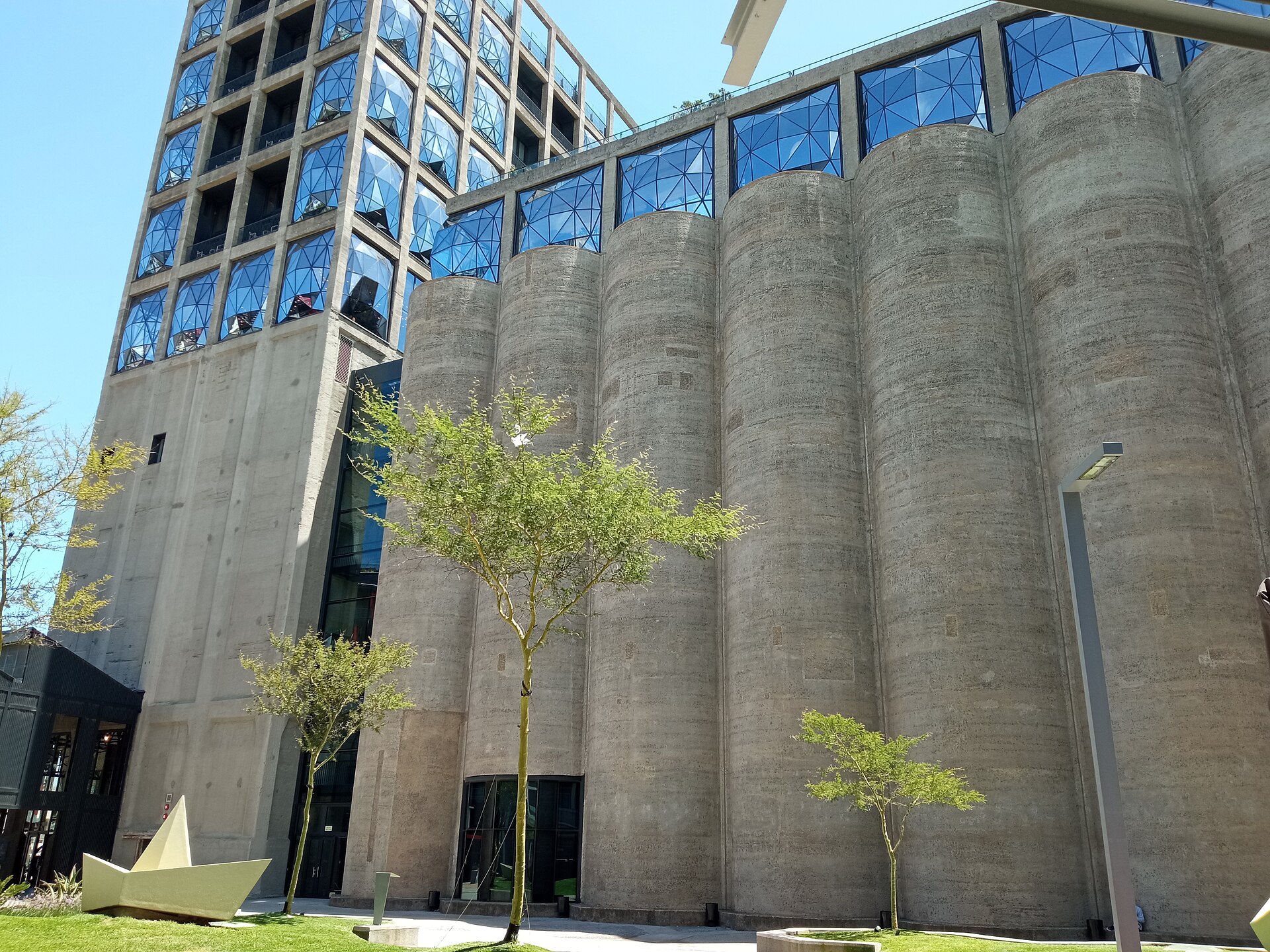
The building at the corner of the Silo District was raised between 1921 and 1924 as the Cape Town municipal grain elevator, a reinforced-concrete tower that stored and graded maize brought in from farms across South Africa. At 57 metres it was for decades the tallest structure on the city's harbour skyline, a working landmark rather than a cultural one. The mill was decommissioned in 2001 and stood derelict for more than a decade while the V and A Waterfront around it filled in with shops, hotels and apartments.
The V and A Waterfront's own redevelopment company took on the conversion, hiring the London firm Heatherwick Studio, led by Thomas Heatherwick, to turn the tower into a museum without demolishing it. The building's structure is a honeycomb of 42 separate concrete cylinders, each once a grain-storage shaft too narrow and too dark to hold art. Heatherwick's solution, worked out from 2014, was to scan the geometry of an actual grain of corn and use its curved surface to decide where to cut: the studio sliced diagonally through a cluster of the tubes to carve out a single ten-storey atrium, capping it in faceted glass so daylight falls through what used to be solid concrete. The remaining tubes around the atrium were converted into roughly eighty gallery spaces across five floors. The museum, formally the Zeitz Museum of Contemporary Art Africa, opened to the public on 22 September 2017 and was named to the Royal Institute of British Architects' International List the following year. The upper floors of the same tower, reached by a separate entrance, hold the Silo Hotel, a five-star hotel unrelated to the museum's own operation.
The founding collection, and whose name is on the door
Zeitz MOCAA takes its name from Jochen Zeitz, a German businessman and the former chief executive of Puma, who built a personal collection of contemporary art from Africa and its diaspora over more than a decade before the museum existed. When the museum opened, that collection - not a gift but a lifetime loan - became its founding holding, and it remains central to what the museum shows today. The distinction between a loan and a gift has followed the institution since 2017: critics, including the Cape Town-based writer Matthew Blackman writing in the Art Newspaper in 2018, have pointed out that Zeitz never transferred ownership outright, so the collection's long-term future depends on arrangements the museum has not made public.
The museum opened with an inaugural exhibition, All Things Being Equal, built substantially from the Zeitz loan and featuring 41 artists including El Anatsui, William Kentridge, Kehinde Wiley and Zanele Muholi. A separate permanent collection was established in 2015, ahead of the opening, specifically to hold work the museum itself acquires rather than borrows; it has since grown past 500 objects across painting, sculpture, photography, installation, video and performance documentation, concentrated on work made in Africa and its diaspora from roughly the second half of the twentieth century to the present. Two curatorial departments give particular depth to two mediums: the Roger Ballen Foundation Centre for Photography, endowed in 2017 with the largest single gift the museum's endowment had then received, and the Costume Institute, which examines garments and dress as subject matter in contemporary African art.
Inside the nine floors
A visitor enters at ground level into a foyer built into the base of the silo, where the shafts have been cut back just enough to show their original cylindrical form before opening upward into the atrium. The BMW Atrium itself is the building's centrepiece: a single carved-out volume rising through the middle of the tower, its walls following the curved cross-sections of the cylinders that used to surround it, capped ten storeys up by a faceted glass roof. Large-scale sculpture and installation work is typically shown here, taking advantage of the height; Nicholas Hlobo's suspended sculpture iimpundulu zonke ziyandilandela has hung in the atrium since the opening.
Around the atrium, the original 42 shafts have been converted into roughly eighty smaller gallery spaces spread across five floors, used for both the permanent collection and a programme of rotating temporary exhibitions; at the museum's opening these included Kudzanai Chiurai's photography and posters on the third floor and Nandipha Mntambo's cowhide sculpture on the fourth, and the basement tunnels beneath the atrium have also been used to show photography. Above the main gallery floors sit the museum's two specialist centres: the Roger Ballen Foundation Centre for Photography, which holds Ballen's complete photographic archive together with a dedicated exhibition gallery, and the Costume Institute, which shows how artists such as Athi-Patra Ruga, Yinka Shonibare and Mntambo herself use clothing and textile as material. At the top of the building, above the galleries and separate from the Silo Hotel, a rooftop sculpture garden gives visitors a walkable terrace over fritted-glass skylights, with views across the working harbour to Table Mountain.
The debate the museum has not settled
Zeitz MOCAA opened to a genuinely mixed reception, and the disagreement has not fully closed. Writing for the Daily Maverick on the day of the opening, Rebecca Davis praised Heatherwick's conversion as a remarkable architectural achievement and welcomed the museum's free-access measures, but noted that the standard entry fee - then R180, since raised to R265 - put the museum beyond the reach of most South Africans, and that some South African artists had declined to take part in the opening programme at all.
The criticism sharpened over the museum's first eighteen months under its founding chief curator, Mark Coetzee. Writing in the Art Newspaper in October 2018, the Cape Town art critic Matthew Blackman described Coetzee's exhibition programme as lacklustre and characterised the Zeitz collection itself as a narrow selection drawn from a handful of South African commercial dealers rather than a considered survey of the continent's art. Blackman reported that the museum had reached only 192 schoolchildren through one of its flagship education programmes, against a Cape Town public school population above 650,000, most of them in under-resourced townships, and that it had declined to publish its finances or an annual report. Separately, the Johannesburg gallerist Liza Essers, owner of Goodman Gallery, has said the museum does not engage closely enough with local artists and galleries. Underneath both complaints sits a harder question about governance: the museum's founding trustees were white, and its advisory board was co-chaired by Zeitz himself alongside the also-white chief executive of the V and A Waterfront, feeding a broader argument, made by critics both inside and outside South Africa, that a museum of African contemporary art founded, funded and initially led from outside the continent risks repeating the pattern it was built to correct.
Loss and succession
Koyo Kouoh, a Cameroonian-Swiss curator, became Zeitz MOCAA's Executive Director and Chief Curator in 2019, and her six years in the role are widely credited with reshaping the museum's programme and its standing among African and diaspora artists. In 2025 she was announced as curator of the 2026 Venice Biennale, the first African woman appointed to that position. She died suddenly on 10 May 2025 in a hospital in Basel, Switzerland, at the age of 57, after a recent cancer diagnosis, days before she was due to announce the Biennale's theme. Tributes followed from across the African art world, and the museum's own staff published a public tribute to her.
The museum conducted a search for her successor over the following fifteen months. In 2026 it announced the appointment of Elvira Dyangani Ose, a Spanish curator who had been one of the jurors Kouoh selected for the Venice Biennale's Golden Lion awards before her death, as incoming artistic director, effective 1 October 2026.
Planning a visit
Zeitz MOCAA is open every day of the week, 10am to 6pm, with last entry at 5.30pm; the museum has its own generator and is not affected by South Africa's periodic power cuts. Standard admission is R265 for an adult, and free for visitors under 18 with identification. Two standing concessions apply beyond that: African citizens are admitted free every Wednesday between 10am and 1pm on presentation of a South African ID or an African passport, and any visitor gets in free during their own birthday month, any day, on the same proof of identity. Free one-hour guided tours run Monday to Friday at 12.30pm, offered on a first-come, first-served basis at the door rather than by advance booking.
The museum provides wheelchair access on every floor, with wheelchairs available at the Information Desk on a first-come, first-served basis. Personal photography without flash or a tripod is permitted throughout the galleries; anyone wanting to film or photograph commercially has to arrange it in advance with the museum's communications office. The building includes OCULAR, a restaurant, wine and cocktail bar run within the museum, and a museum shop selling art books, prints, design objects, jewellery and stationery. Secure parking is available in the V and A Waterfront's Silo District Parking Garage, with direct access into the museum from the garage. Most visitors give the museum two to three hours; anyone taking the free guided tour or stopping at OCULAR should plan on closer to half a day.
What visitors say
Visitors consistently say the building itself is reason enough to come: the carved atrium and the converted grain-storage galleries draw comparisons to few other structures in Africa. Opinion splits harder on the art inside it. Many visitors find the contemporary programme thoughtful and worth a half-day; others describe it as heavy on dark, socially charged subject matter that some find hard to connect with, and note that certain galleries feel sparse or slow to rotate given the ticket price.
What is praised, what is criticised
- Praised: The Heatherwick-designed atrium and the conversion of the historic grain silo, repeatedly singled out as worth the visit on its own even by visitors who did not warm to the exhibitions
- Praised: The rooftop sculpture garden and its views over the V and A Waterfront harbour and Table Mountain
- Praised: The scale and ambition of bringing African and diaspora artists together in one purpose-built museum, described by early visitors as unlike anything else on the continent
- Criticised: Some visitors find the contemporary programming overly dark or abstract and hard to connect with, particularly with children; several recent reviews describe galleries as sparse or repeating works seen on earlier visits despite the ticket price
- Criticised: Admission has repeatedly been criticised as expensive relative to South African incomes, keeping the core audience skewed toward tourists and wealthier locals despite the free-access concessions
- Criticised: Critics including the Johannesburg gallerist Liza Essers have said the museum does not engage closely enough with local artists and galleries, and the Art Newspaper's Matthew Blackman characterised its early collecting under founding curator Mark Coetzee as a narrow selection drawn from a handful of South African dealers
Ratings on other platforms
TripAdvisor: 4.3 from 981 ratings, read 25 August 2026
A platform average is a tertiary source: it moves, it is not audited, and we quote no visitor's words.
Questions about Zeitz Museum of Contemporary Art Africa
Where is Zeitz Museum of Contemporary Art Africa?
Silo District, South Arm Road, V&A Waterfront, Cape Town, 8001, South Africa.
How much does it cost to visit?
Adult: ZAR 265; Under 18: free. As confirmed 25 August 2026.
When is it open?
Mon-Sun 10:00-18:00. As confirmed 25 August 2026.
How do you get there?
Parking: Secure parking at the V and A Waterfront Silo District Parking Garage (P3), with direct access into the museum.
What should you see first?
More Sweetly Play the Dance (William Kentridge); iimpundulu zonke ziyandilandela (Nicholas Hlobo); In the World But Don't Know the World (2009) (El Anatsui); Faces and Phases (selection) (Zanele Muholi); Revelations series (Kudzanai Chiurai); Cowhide sculptures (Nandipha Mntambo).
What we could not confirm
- Whether the founding collection on lifetime loan from Jochen Zeitz will transfer to the museum's own ownership, revert to his estate, or something else once the loan ends is not stated on the museum's own site.
- The museum has not published an itemised, current catalogue of its permanent collection; the works described here are drawn from the museum's own exhibition and artist pages and from press coverage of specific shows, and gallery installations rotate.
Images
Sources
- 1Zeitz MOCAA, official website zeitzmocaa.museum/
- 2Zeitz MOCAA, "Plan Your Visit" zeitzmocaa.museum/visit
- 3Zeitz MOCAA, "Buy Tickets" zeitzmocaa.museum/buy-tickets/
- 4Wikimedia Commons, Category:Zeitz Museum of Contemporary Art Africa commons.wikimedia.org/wiki/Category:Zeitz_Museum_of_Contemporary_Art_Africa
- 5Wikipedia, "Zeitz Museum of Contemporary Art Africa" () en.wikipedia.org/wiki/Zeitz_Museum_of_Contemporary_Art_Africa
- 6The Art Newspaper, "Inside Zeitz Mocaa: our guide to Cape Town's new mega-museum", 15 September 2017 theartnewspaper.com/2017/09/15/inside-zeitz-mocaa-our-guide-to-cape-towns-new-mega-museum
- 7Daily Maverick, Rebecca Davis, "Zeitz Mocaa: Cape Town's new art museum stuns and provokes", 26 September 2017 dailymaverick.co.za/article/2017-09-26-zeitz-mocaa-cape-towns-new-art-museum-stuns-and-provokes/
- 8The Art Newspaper, Matthew Blackman, "Zeitz Mocaa: Africa's private 'Tate Modern' must do more for its public", 31 October 2018 theartnewspaper.com/comment/africa-s-private-tate-modern-must-do-more-for-its-public
- 9Zeitz MOCAA, "Major gifts by Roger Ballen Foundation and Eiger Foundation establish the Centre for Photography at Zeitz MOCAA" zeitzmocaa.museum/centre-for-photography-at-zeitz-mocaa/
- 10Zeitz MOCAA, "Costume Institute Tour" zeitzmocaa.museum/exhibition/thematic-tour-costume-institute/
- 11TripAdvisor, Zeitz MOCAA attraction reviews, read 25 August 2026 () tripadvisor.com/Attraction_Review-g312659-d12926847-Reviews-Zeitz_MOCAA-Cape_Town_Central_Western_Cape.html
- 12Hyperallergic, "Elvira Dyangani Ose to Succeed Koyo Kouoh at Zeitz MOCAA" hyperallergic.com/elvira-dyangani-ose-to-succeed-koyo-kouoh-at-zeitz-mocaa/
- 13Artnet News, "Koyo Kouoh, 2026 Venice Biennale Curator, Dies Suddenly" news.artnet.com/art-world/koyo-kouoh-curating-venice-biennale-died-2642963
- 14Zeitz MOCAA, William Kentridge, "More Sweetly Play the Dance" zeitzmocaa.museum/art/sweetly-play-dance/
- 15El Anatsui, official artist site, "In the World But Don't Know the World", 2009 elanatsui.art/artworks/el-anatsui-in-the-world-but-dont-know-the-world-2009
- 16Universes.art, "Nicholas Hlobo", La Biennale di Venezia 2011 universes.art/en/art-destinations/venice/biennale-di-venezia/arsenale/nicholas-hlobo
- 17Zeitz MOCAA, Zanele Muholi artist page zeitzmocaa.museum/artists/zanele-muholi/
- 18Zeitz MOCAA FAQ, "Am I allowed to take photographs in the museum?" zeitzmocaa.museum/faqs/allowed-take-photographs-museum/
- 19Zeitz MOCAA, Frequently Asked Questions zeitzmocaa.museum/frequently-asked-questions/
- 20Zeitz MOCAA, Kudzanai Chiurai artist page zeitzmocaa.museum/artists/kudzanai-chiurai-zimbabwe/
- 21Zeitz MOCAA, Nandipha Mntambo artist page zeitzmocaa.museum/artists/nandipha-mntambo/
- 22Zeitz MOCAA, "iimpundulu zonke ziyandilandela" / BMW Atrium exhibition page zeitzmocaa.museum/exhibition/the-bmw-atrium/