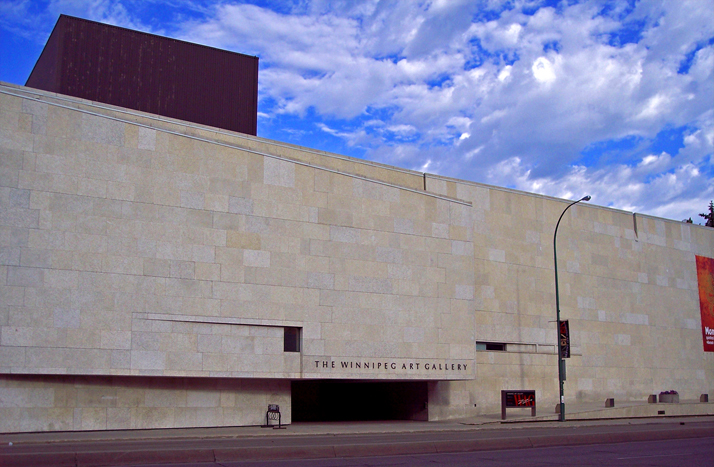
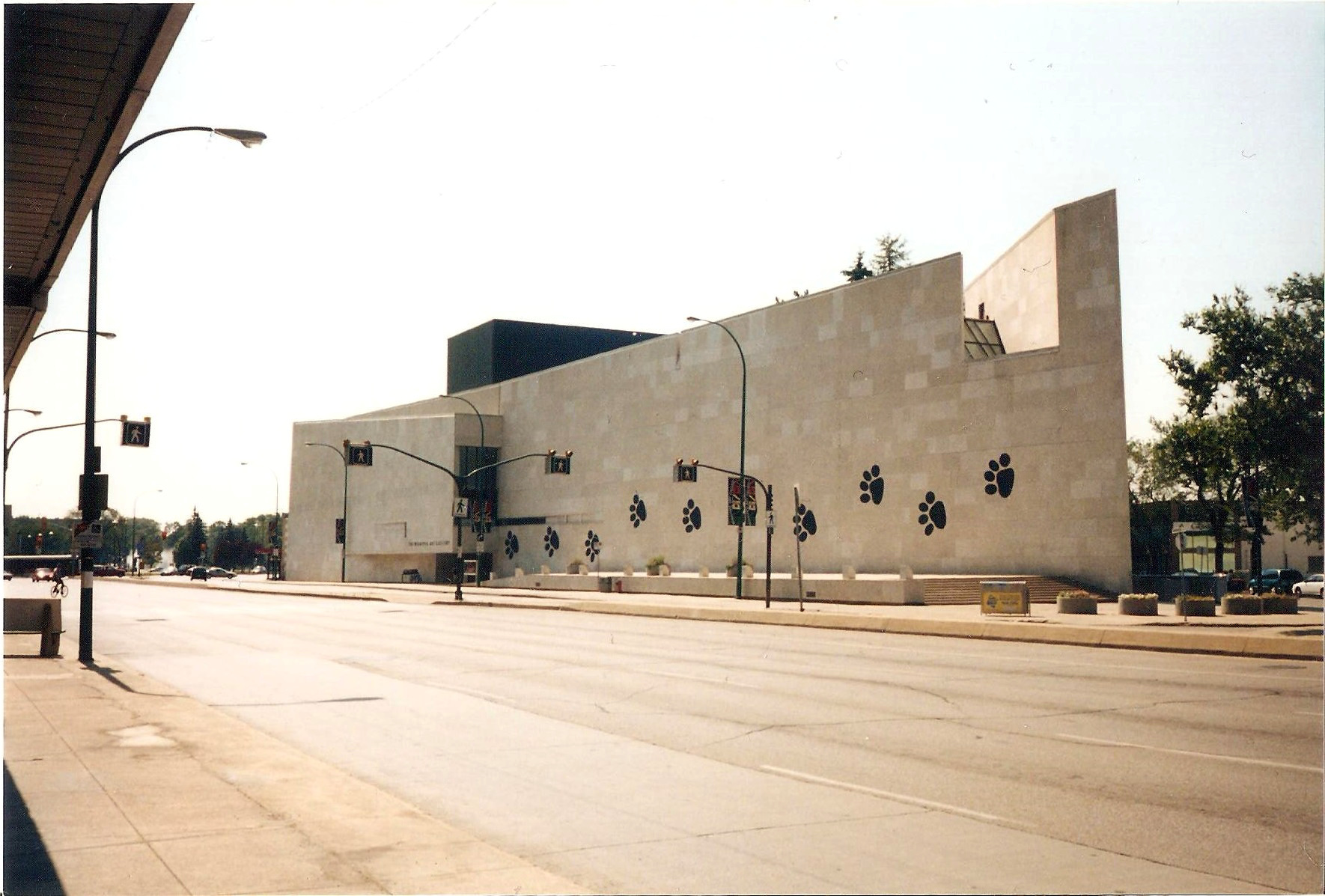
The Winnipeg Art Gallery's 1971 building on Memorial Boulevard, designed by Gustavo da Roza and clad in Tyndall stone.
Cayla · Public domainWinnipeg Art Gallery
Museum · Winnipeg Art Gallery-Qaumajuq · Founded 1912
Open, admission and hours confirmed 24 September 2026 · 22 sources
On this page 14 sections
ContentsClose
WAG-Qaumajuq holds more than 27,000 to 28,000 works across two connected buildings. Its defining strength, by its own account and by scale, is Inuit art: the largest public collection in the world, built from its own holdings of more than 12,000 objects plus a long-term loan of roughly 7,000 more from the Government of Nunavut. Around that sits a smaller but genuinely significant collection of Flemish and German Renaissance painting from a single 1970 gift, a Canadian collection strongest where it documents Manitoba's own artists, and a decorative arts collection whose English ceramics and Art Nouveau and Art Deco glass are considered among the best in the country.
| Local name | Winnipeg Art Gallery-Qaumajuq |
|---|---|
| Kind | Museum |
| Founded | 1912 |
| City and country |  Winnipeg, Canada Winnipeg, Canada |
| Address | 300 Memorial Boulevard, Winnipeg, Manitoba R3C 1V1, Canada |
| Website | wag.ca |
| Status | Open, confirmed |
| Record last verified |
Visiting
- Hours
- Wed11:00 to 21:00Extended for WAG Wednesday Nights; admission is free from 5pm
- Thu-Sun11:00 to 17:00
- Closed
- Monday. Tuesday.
- Admission
- Youth under 18FreeFree, supported by the Canada Strong Pass program
- Ages 18-24CAD 9Supported by the Canada Strong Pass program
- AdultCAD 18
- 65 and overCAD 15
- MemberFreeFree with WAG-Qaumajuq membership
- Indigenous PeoplesFreeFree at all times, introduced in response to the Truth and Reconciliation Commission's Calls to Action
Free entry: Every Wednesday, 5pm to 9pm (WAG Wednesday Nights). The second Sunday of the month, supported by Canada Life (Canada Life Free Sundays). The first floor of WAG-Qaumajuq, including the Visible Vault, ShopWAG and Katita Cafe, is free to enter at all opening hours- Do I need to book?
- No advance booking is required for general admission; groups of 15 or more are asked to book ahead for a 20 percent discount
- Address
- 300 Memorial Boulevard, Winnipeg, Manitoba R3C 1V1, Canada MapOn foot Downtown Winnipeg, on Memorial Boulevard just off Portage Avenue, a short walk from downtown hotels
- Website
- wag.ca
- Telephone
- +1 204-786-6641
- [email protected]
Before you go how long, access, photography, bags, eating, shop
- How long to allow
- The free first floor and Visible Vault can be seen without a ticket; a full visit taking in both the historical WAG building and the Qaumajuq Inuit art levels is the more complete trip
- Access
- The gallery is described by WAG as entirely wheelchair accessible, with wheelchairs available at the front desk, accessible parking on Memorial Boulevard, and a universal washroom on every floor of Qaumajuq; adapted, sense-based tours can be booked in advance by phone or email
- Photography
- Personal, non-flash photography is permitted throughout except where signage says otherwise; visitors are asked to respect the rights of artists and their representatives under Canadian copyright law
- Bags
- Backpacks, large purses, umbrellas and other bulky items are not permitted in the galleries; free baggage check is offered at the front desk, and medically required bags of any size are always allowed
- Eating
- Katita Cafe, on the main level of Qaumajuq, serves coffee, tea and light bites, including options for kids; its mural, Nehiyaw (Swampy Cree), was commissioned from Winnipeg artist Peatr Thomas
- Shop
- ShopWAG, on the main level, sells the gallery's own Guide to the Collections along with other art books and gifts
Prices and hours change. We take them from the institution's own pages and print the day we read them, and you can check the current position at the source we used. Confirm before you travel.
What is inside
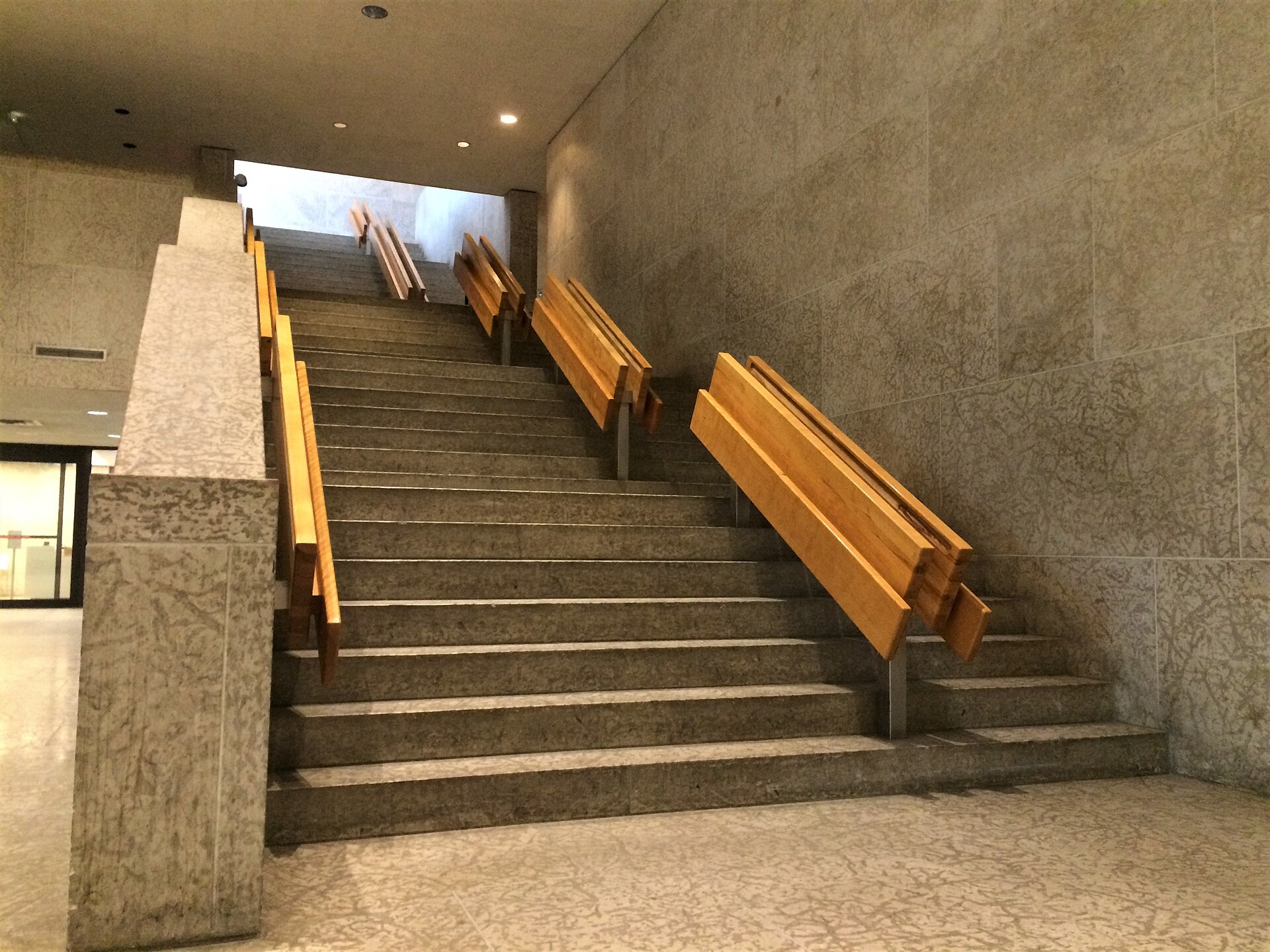
Photograph by Jack Coop · CC BY-SA 4.0 The 1971 building (Biindigin Biwaasaeyaah)
Gustavo da Roza's original 1971 gallery, an angular, near-windowless Tyndall stone structure nicknamed for its iceberg profile. Its four levels of Galleries 1, 2 and 4 rotate the permanent collection: European and Canadian painting, sculpture, furniture and decorative arts from 1500 to 1950, most recently including a loan of five 17th-century Dutch and German paintings by Pieter Brueghel the Younger, Jan Davidsz de Heem and Jan Steen alongside the WAG's own holdings.
Qaumajuq - Ilavut, the Visible Vault
The entrance hall of the 2021 Inuit art centre: a three-storey glass vault holding roughly 5,000 stone carvings from the collection, visible from every side as visitors walk around it, with gallery staff sometimes seen working inside it. This level, including the vault, a shop and a cafe, is free to enter at any time the building is open.
Qaumajuq - Qilak, the Main Inuit Gallery
An 8,000-square-foot gallery on the third level, lit by large skylights, built for major exhibitions drawn from the world's largest public collection of Inuit art; it has hosted a long-running retrospective of Inuvialuit sculptor Abraham Anghik Ruben and the graphic art of Ningiukulu Teevee.
American and European Art
Flemish and German Renaissance painting from a 1970 gift by relatives of Standish Vereker, 7th Viscount Gort, including the Master of the Holy Kinship, Lucas Cranach the Elder and Bartholomaeus Bruyn the Younger; British art from John Everett Millais to Barbara Hepworth; 19th and 20th century French painting (Corot, Boudin, Chagall); one of the most comprehensive collections anywhere of German Expressionist Walter Gramatte; and 20th century American work by Dan Flavin and Sol LeWitt among others.
Canadian Art
Historical and modern Canadian painting spanning the 19th and 20th centuries: the Group of Seven, Tom Thomson and Emily Carr; Manitoba-connected artists Peter Rindisbacher, W.J. Phillips, L.L. FitzGerald, Bertram Brooker, William Kurelek and Ivan Eyre; figurative modernists David Milne and Prudence Heward; and mid-century abstract painters Jean-Paul Riopelle and Jack Bush.
Indigenous Art (First Nations and Metis)
Held on Treaty No. 1 territory, the homeland of the Anishinaabe, Ininiwak, Anishininiwak, Dakota, Dene and Metis peoples, this and the adjoining Inuit galleries make up nearly half of the WAG's total collection. It includes First Nations and Metis artists with ties to Manitoba such as Norval Morrisseau, Daphne Odjig and Robert Houle, and a growing group of younger contemporary Indigenous artists including Kent Monkman, Meryl McMaster and Joi T. Arcand.
Decorative Art
More than 4,000 objects in ceramic, glass, metal and textile from the 17th to 21st centuries, begun in the 1950s. Its 18th and 19th century English ceramics (William de Morgan, Minton) are among the finest in Canada; its Art Nouveau and Art Deco glass includes Galle, Tiffany, Steuben and Lalique; and its British and Canadian silver includes work by Robert Cruickshank, Digby Scott and Benjamin Smith, and Paul Storr.
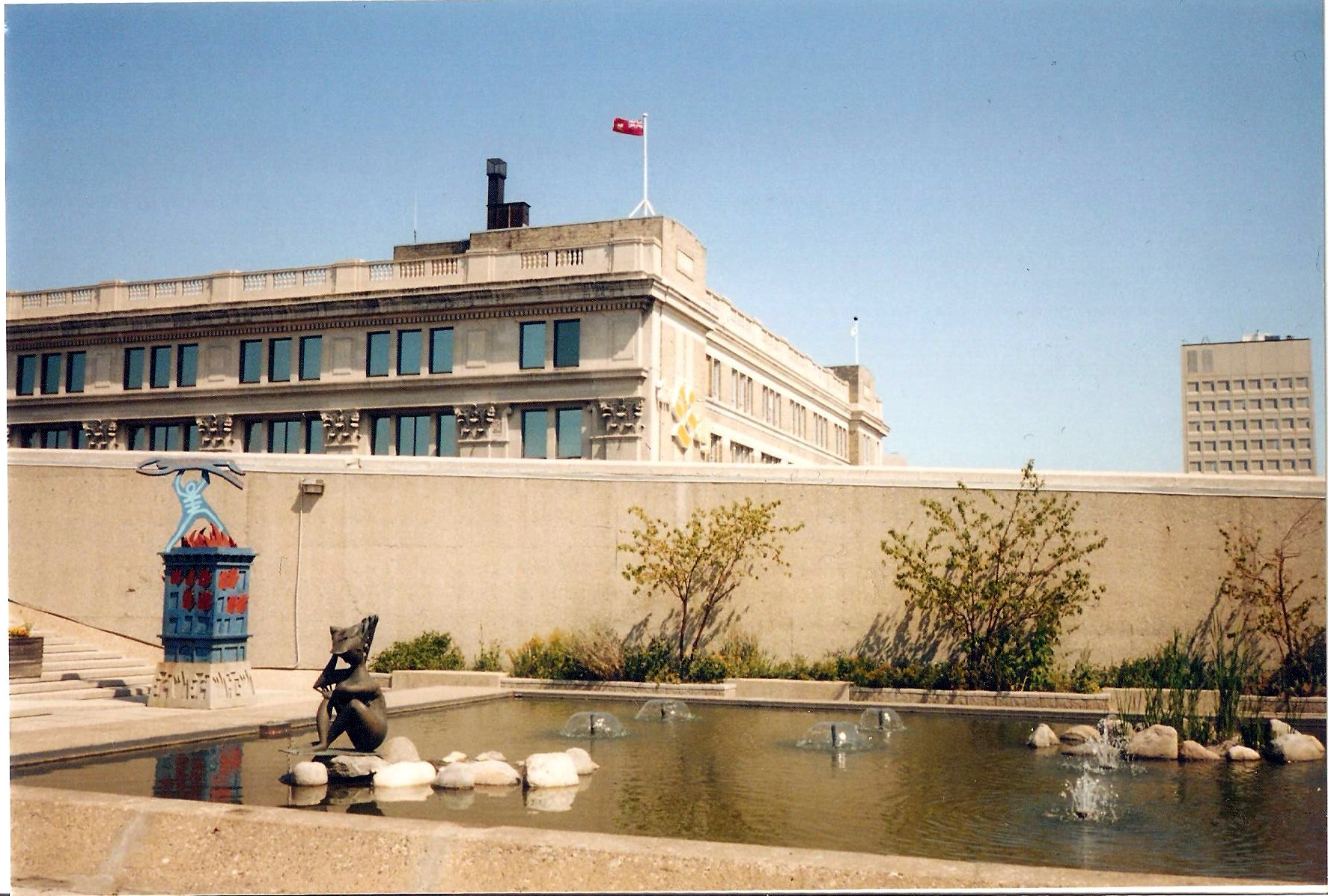
Photograph by Joe Passe · CC BY-SA 2.0 Rooftop Sculpture Garden
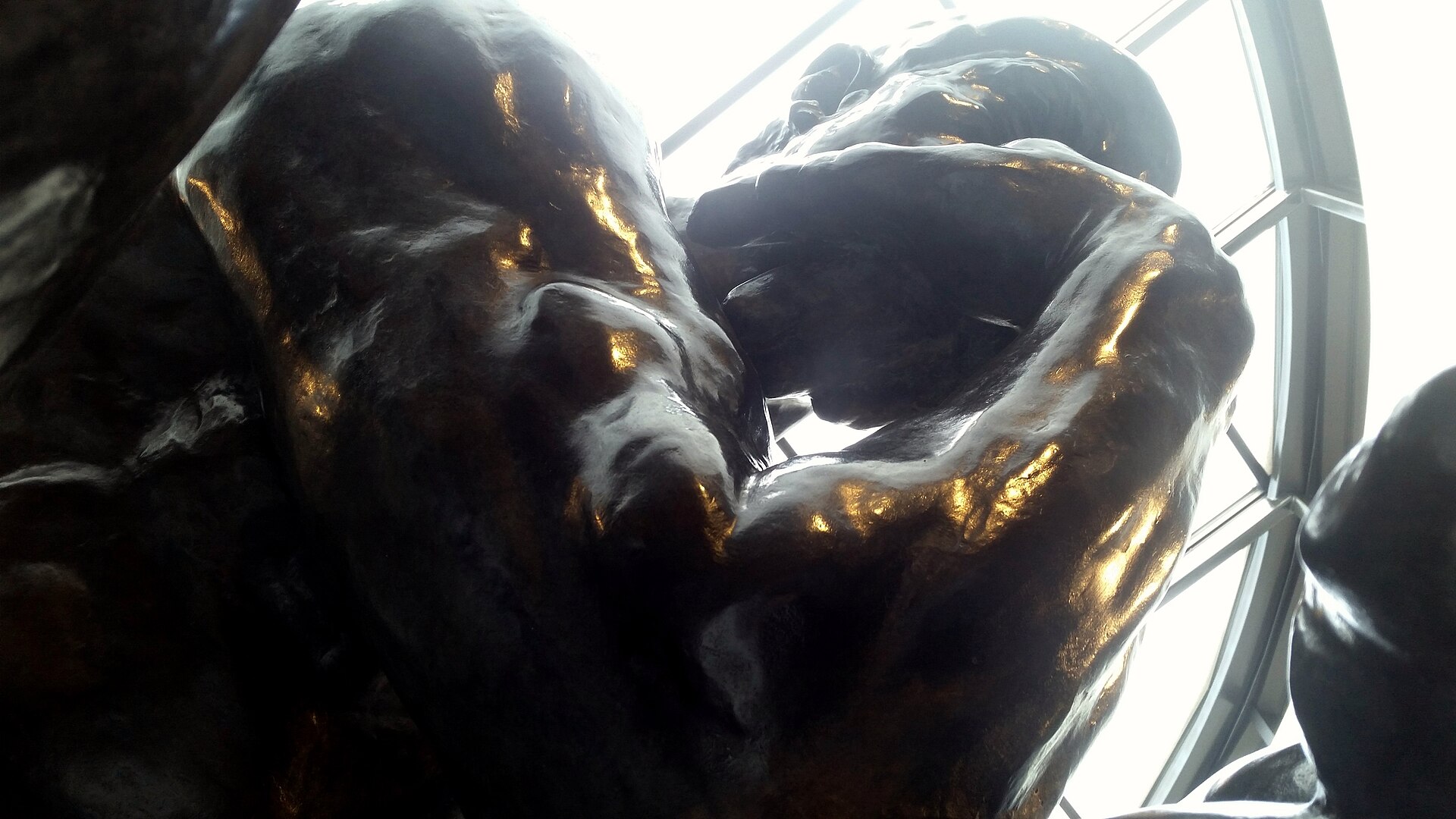
A seasonal outdoor gallery on the roof of the original building, showing 20th and 21st century bronze, steel and stone sculpture by Canadian and European artists, including a cast of Auguste Rodin's The Thinker; visitors can also eat here when it is open.
Niizhwaaso - Collaborative Learning Centre and Clara Lander Library
A second-floor reading room built around the Clara Lander Library, established in 1971 and now holding more than 24,000 volumes of artist files, periodicals and archives, open to WAG staff, the academic community and the public; it overlooks the Learning Steps theatre and has its own outdoor terrace.
What to see first
Adoration of the Magi
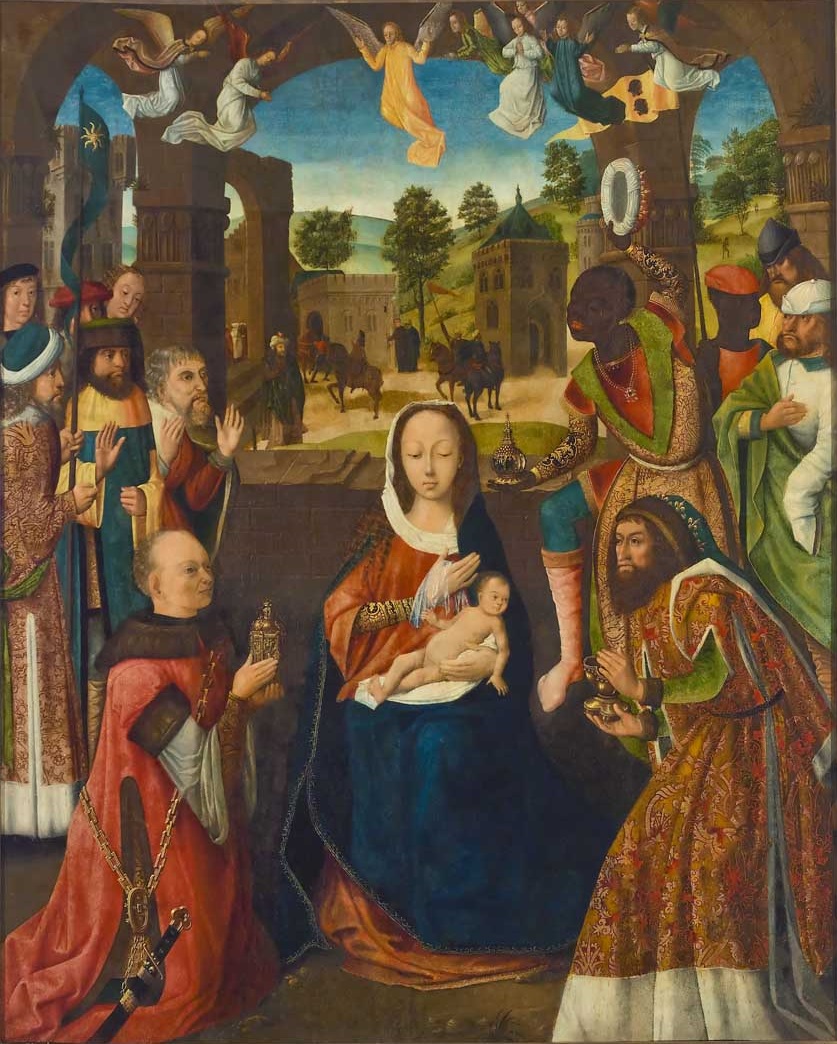
Master of the Holy Kinship (Meister der Heiligen Sippe II)A German Renaissance panel of about 1525, this is the work the WAG itself uses to represent its American and European collection online. It entered the gallery through the 1970 donation from relatives of Standish Vereker, 7th Viscount Gort, the gift that built one of the finest collections of Flemish and German Renaissance art in western Canada.8
Portrait of a Lady (Bildnis einer Dame)
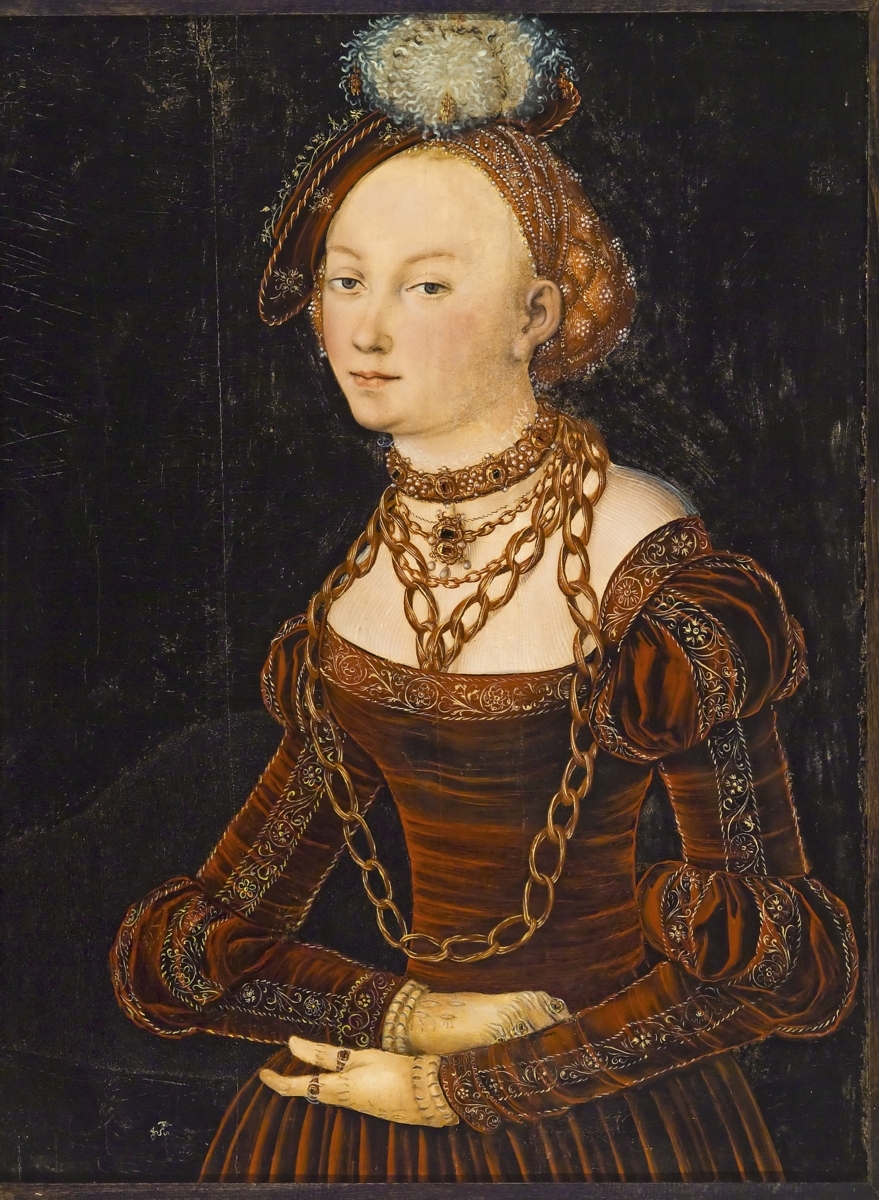
Lucas Cranach the ElderPart of the same Gort gift, this court portrait shows the jewelled, high-status sitters typical of Cranach's Wittenberg workshop, which set the visual template for German Reformation-era portraiture.8
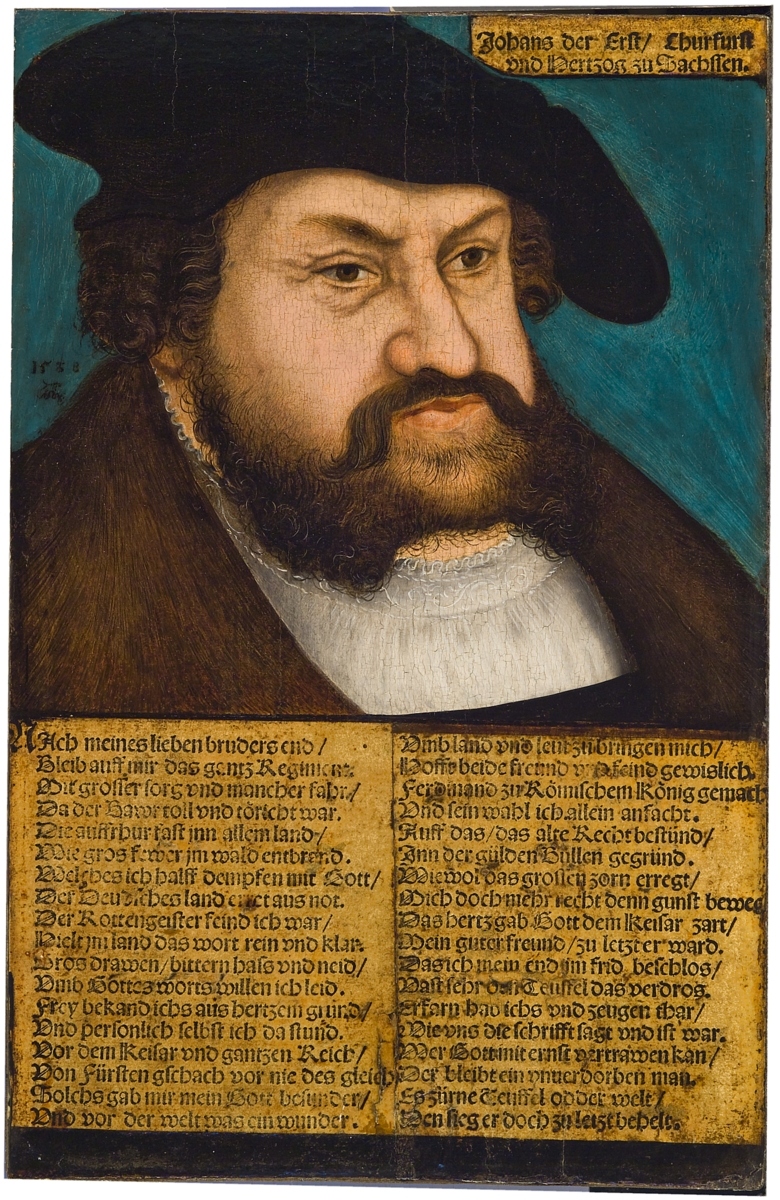
Johann the Steadfast, Elector of Saxony
Lucas Cranach the ElderA portrait of one of Martin Luther's most important political protectors, by the painter who was Luther's own friend and the Electors of Saxony's court artist; the WAG names Cranach specifically among the strengths of its Renaissance holdings.8
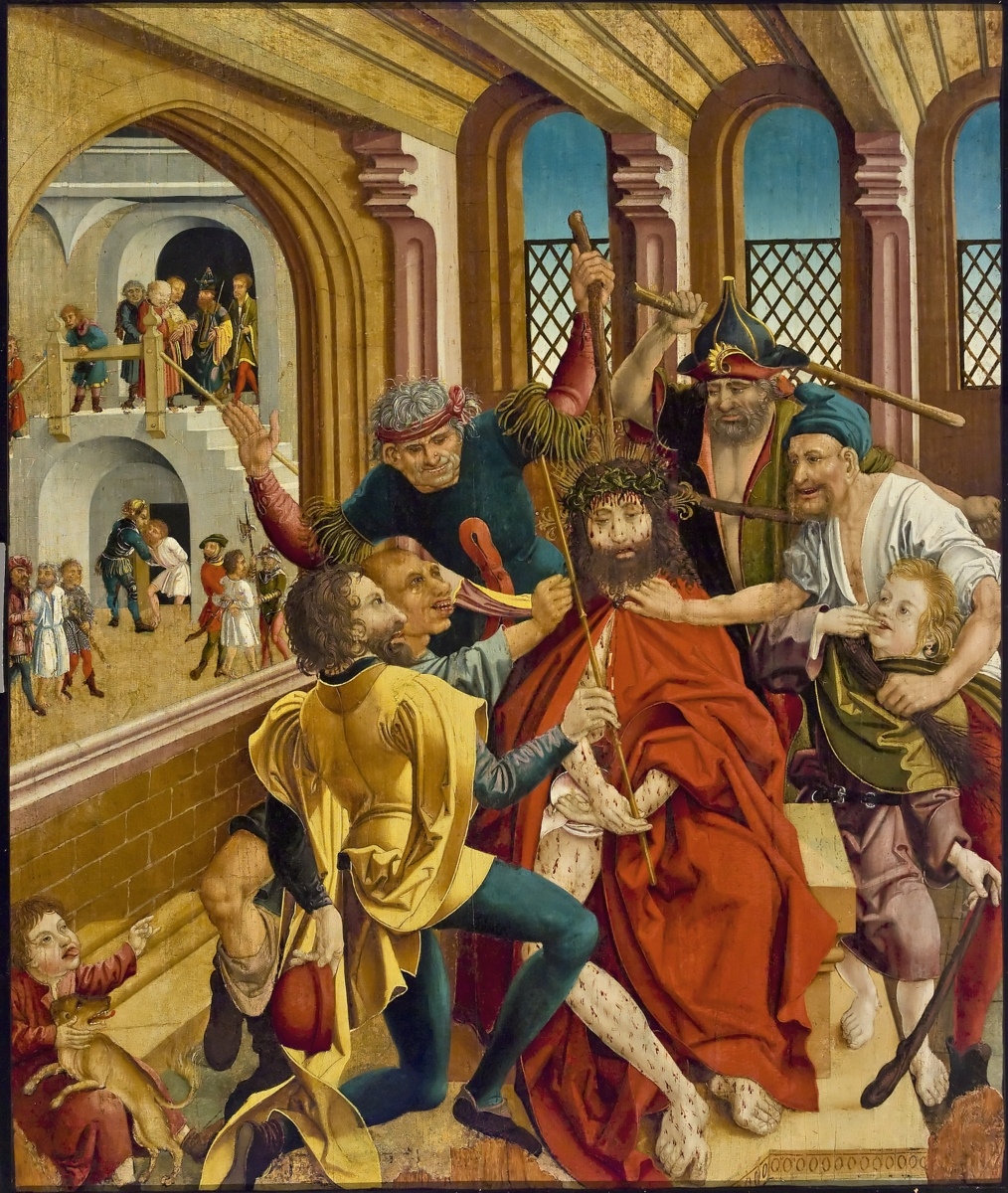
The Mocking of Christ (Verspottung Christi)
Wolfgang Katzheimer the ElderA rare surviving panel by a court painter active in Bamberg around 1480 to 1508, and a further example of the depth of the WAG's Northern Renaissance holdings beyond its better-known Cranachs.8
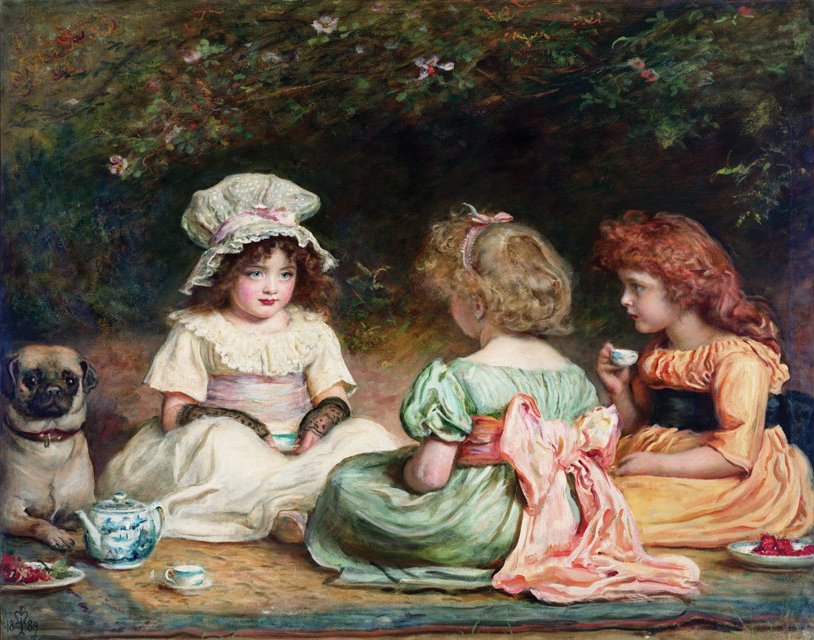
Afternoon Tea (The Gossips)
Sir John Everett MillaisA late genre scene of three girls at tea, painted in 1889 by the former Pre-Raphaelite; the WAG's own director has singled it out in the gallery's public Daily Art series as one of its most asked-about paintings.10
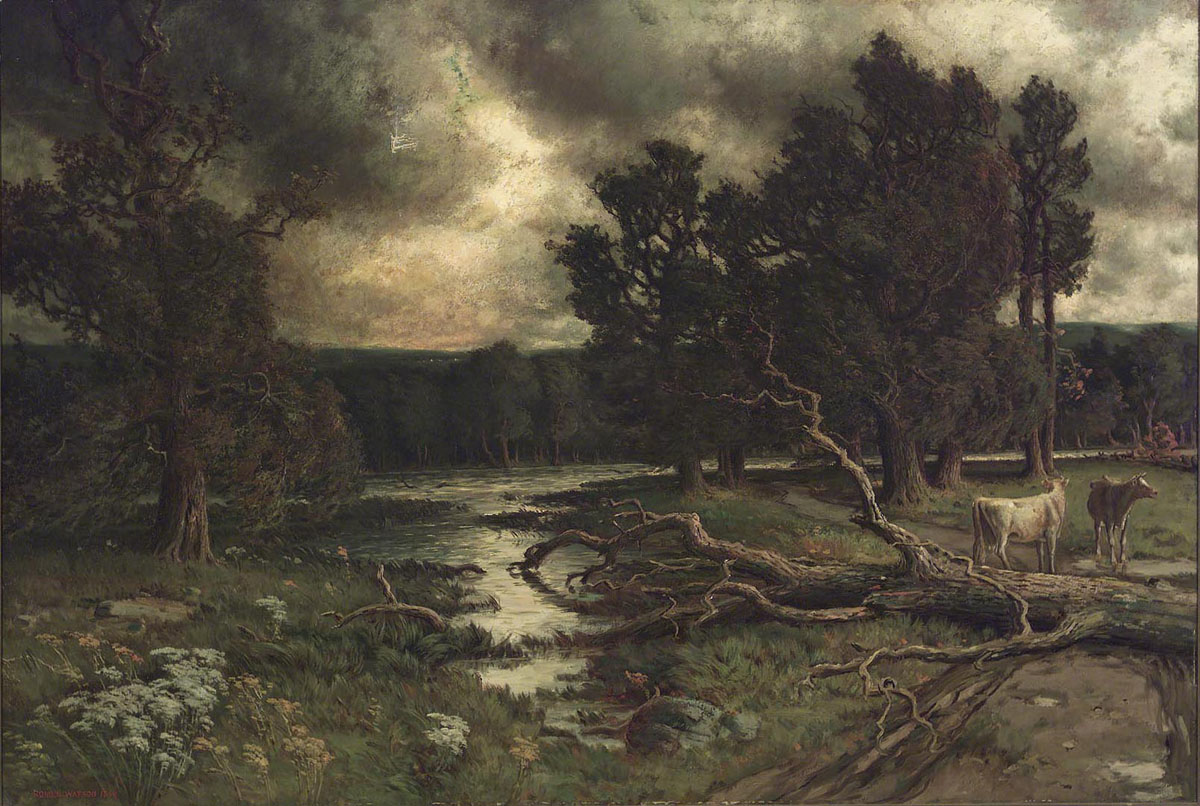
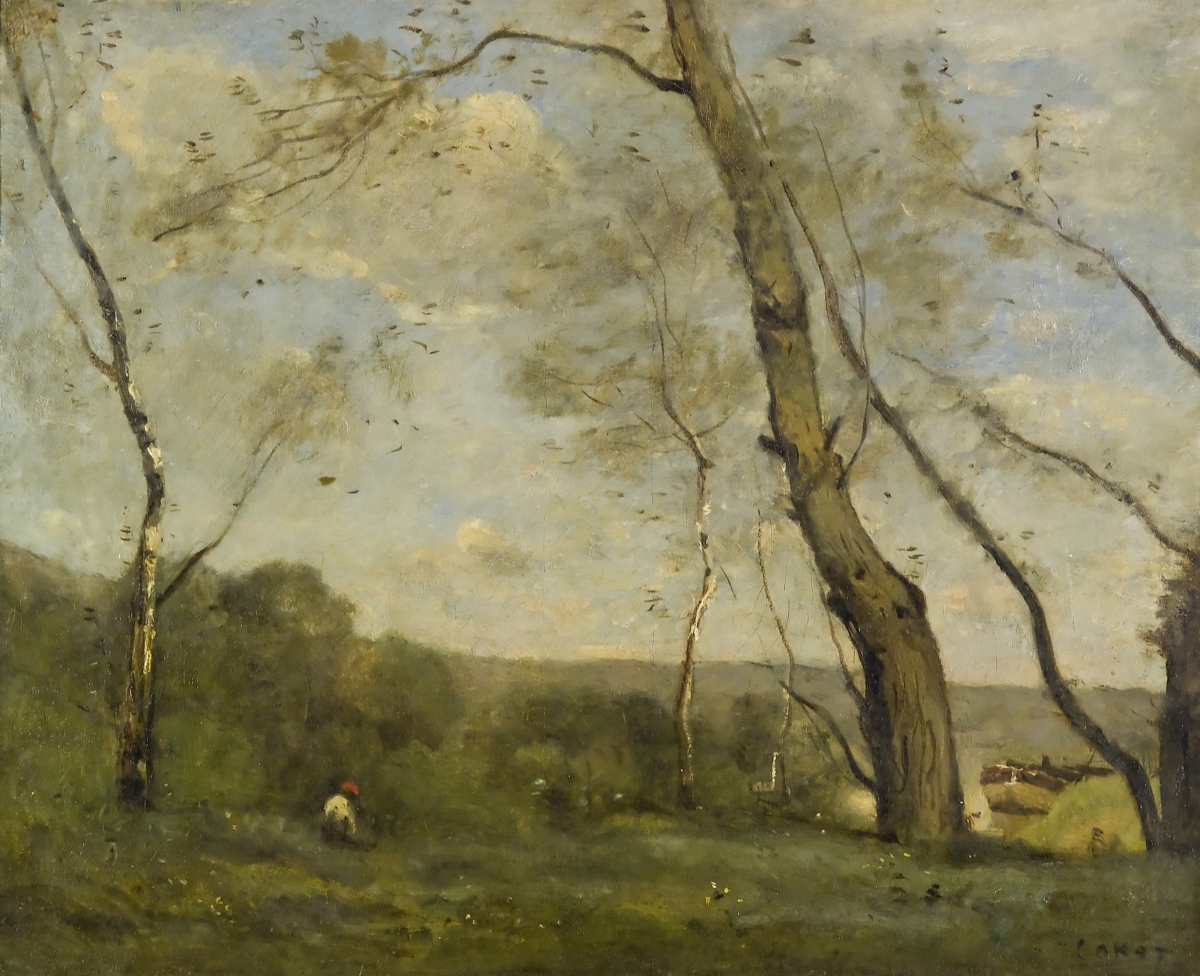
Near the Close of a Stormy Day
Homer WatsonAn 1884 landscape by an artist sometimes called the Canadian Constable; the WAG names Watson among the 19th century painters of national significance represented in its Canadian collection.6
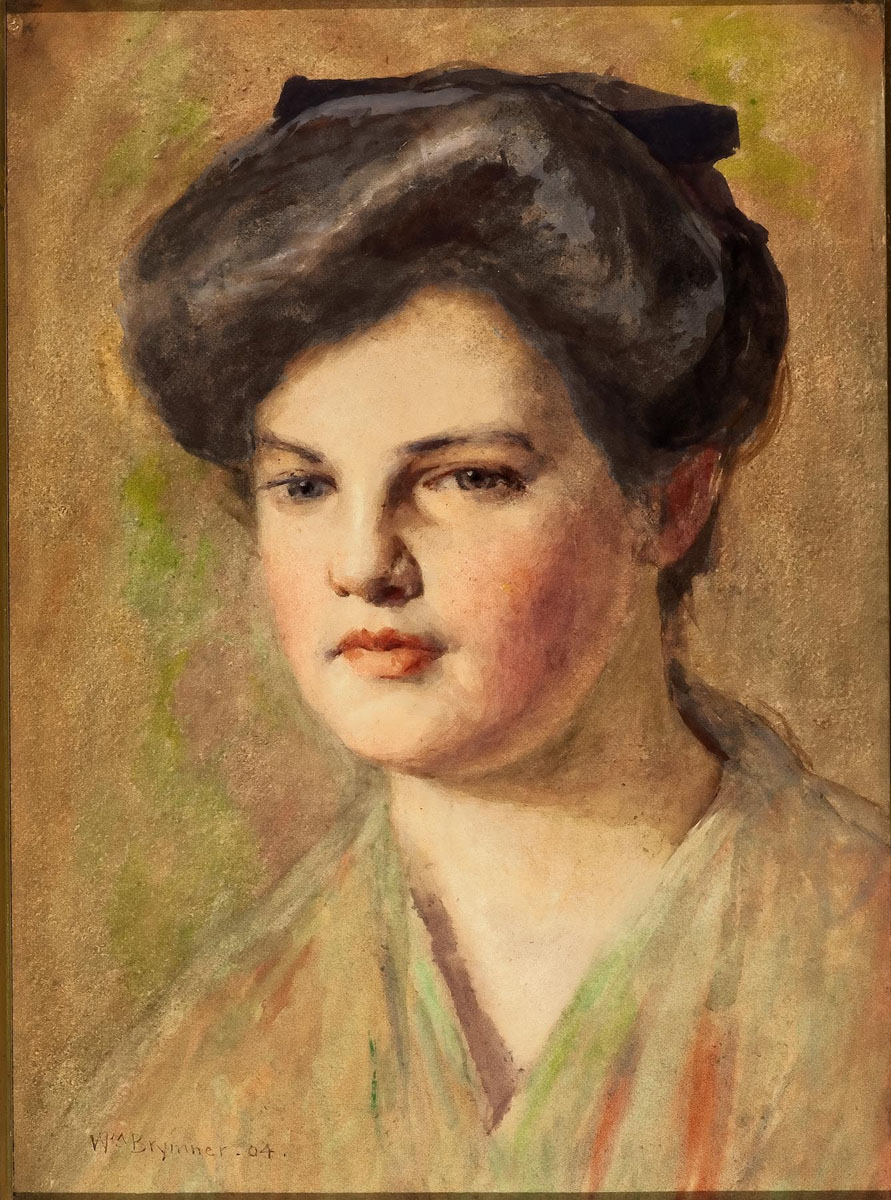
Portrait of a Young Girl
William BrymnerA 1904 figure study by the Montreal teacher whose students went on to found the Group of Seven; part of the WAG's holdings of Canadian figurative modernism.6
Sounds Assembling
Bertram BrookerA 1928 oil on canvas widely credited as one of the first abstract paintings made by a Canadian artist. It is the single image the WAG uses to represent its entire Canadian Art collection page, and one of the strongest holdings by a Manitoba-connected painter.6
The Thinker (cast)
Auguste RodinA bronze cast in the Rooftop Sculpture Garden, one of the 20th century European and Canadian sculptures visitors can see free of charge when the roof garden is open for the season.14
Inuit Odyssey, from Alaska to Greenland
Abraham Anghik RubenA 2013 sculpture by the Inuvialuit artist whose multi-year retrospective (2025 to 2027) anchors Qaumajuq's Main Inuit Gallery; visitor reviews repeatedly single out this exhibition as a highlight of a current visit.22
An iceberg on the prairie: from 1912 civic gallery to the 1971 building
The Winnipeg Art Gallery traces itself to a museum that opened in the Industrial Bureau Exposition Building at Main and Water Streets on 16 December 1912, one of Canada's earliest civic art museums. It passed through several names and shared premises for decades, including a period as the Winnipeg Gallery and School of Art, before it was formally incorporated under its current name in 1963.
The gallery did not get a purpose-built home until 1971. Architect Gustavo da Roza's design, built between 1969 and 1971 on Memorial Boulevard, is a late-modernist wedge clad in Tyndall stone quarried in southern Manitoba, its sloping walls and near-total absence of street-level windows giving the building its long-standing local nickname, the iceberg. Inside, roughly 11,000 square metres hold the WAG's Galleries 1, 2 and 4, where the permanent collection of European and Canadian painting, sculpture, furniture and decorative arts is periodically reinstalled. For close to fifty years this single building, plus a rooftop sculpture garden added later, was the whole of the Winnipeg Art Gallery. It still is the address most visitors think of first, even though it is now only one half of a two-building institution.
Qaumajuq: a museum built around a collection nobody expected in Winnipeg
The other half opened on 27 March 2021 as the world's first museum building dedicated exclusively to Inuit art. Selected through an international competition, Los Angeles-based Michael Maltzan Architecture, working with local associate Cibinel Architecture, designed a 40,000-square-foot addition whose undulating white Bethel granite facade was informed by a research trip the design team made to Nunavut communities and artists' studios. The building was originally referred to simply as the Inuit Art Centre; in the weeks before it opened, a circle of Indigenous language keepers led by Dr. Julie Nagam and Dr. Heather Igloliorte, co-chairs of the WAG's Indigenous advisory circle, gave it the Inuktitut name Qaumajuq, meaning 'it is bright, it is lit,' a reference to the light that floods the glass-fronted lobby. The same group gave the original 1971 building an Anishinaabemowin name, Biindigin Biwaasaeyaah, 'come on in, the dawn of light is here,' so that Indigenous languages are now built into how both structures are named, even though the gallery as a whole is still called the Winnipeg Art Gallery.
At the centre of Qaumajuq is Ilavut, 'our relatives,' the three-storey glass vault that is the first thing most visitors see: several thousand stone carvings, displayed so visitors can walk around and be surrounded by them, with gallery conservators and curators sometimes visible working inside the vault itself. Above it, the gallery Qilak, 'sky,' gives the collection an 8,000-square-foot dedicated exhibition space lit by skylights. The whole ground floor, including the vault, is free to enter at any time the building is open, a deliberate choice the WAG frames as widening access to a collection it holds in trust rather than simply owns.
The Gort gift and the European and Canadian collections
Before Qaumajuq, the WAG's reputation rested on a different kind of surprise: a Winnipeg museum holding one of the finest collections of Flemish and German Renaissance painting in western Canada. That collection exists largely because of a single 1970 donation from relatives of Standish Vereker, the 7th Viscount Gort, an Anglo-Irish peer. It brought panels by the Master of the Holy Kinship, Lucas Cranach the Elder, Bartholomaeus Bruyn the Younger and Wolfgang Katzheimer the Elder into a prairie gallery that, on paper, had no obvious reason to hold them. The same American and European collection extends to British painting from John Everett Millais to Barbara Hepworth, 19th and 20th century French art including Corot and Chagall, one of the most comprehensive public collections anywhere of German Expressionist Walter Gramatte, and 20th century American work.
The Canadian collection is built on different ground: artists with a direct connection to Winnipeg and Manitoba, among them Peter Rindisbacher, W.J. Phillips, L.L. FitzGerald, Bertram Brooker, William Kurelek and Ivan Eyre, alongside national figures such as Tom Thomson, Emily Carr and the Group of Seven. Brooker's 1928 painting Sounds Assembling, an early Canadian venture into pure abstraction, is the single work the WAG chooses to represent this entire side of its holdings online, a fair measure of how the gallery sees its own strength: not encyclopaedic, but genuinely important in specific, well-chosen places.
The largest public collection of Inuit art in the world
Nearly half of everything the WAG holds, more than 12,000 objects, is Inuit work: carvings, drawings, prints and textiles by artists including Kiugak Ashoona, Oviloo Tunnillie and Abraham Anghik Ruben. A further roughly 7,000 to 7,500 pieces are held on long-term loan from the Government of Nunavut's own fine arts collection, dating from the late 1800s to the present. The scale is not simply a curatorial choice; it reflects Winnipeg's position, since the mid-20th century, as a principal Canadian marketplace and institutional home for art coming out of the eastern Arctic, a role few visitors from outside the Prairies expect a Manitoba museum to hold.
What Qaumajuq changed was how that collection is shown. Where earlier generations of the WAG stored the bulk of its Inuit holdings out of public view, the Visible Vault puts several thousand carvings on permanent open display, and the Qilak gallery gives changing exhibitions, such as the long-running Abraham Anghik Ruben retrospective and Ningiukulu Teevee's graphic art, the scale a national collection deserves. The WAG is explicit that it is Inuit-led wherever it can be: Qaumajuq's opening exhibition, INUA, was curated entirely by an Inuit team, and the gallery has continued to develop training and knowledge-exchange partnerships with arts workers based in Nunavut.
A collection under scrutiny
The WAG's own history includes material the gallery has had to answer for rather than only celebrate. In November, the magazine The Walrus published researcher Conrad Sweatman's findings, building on earlier work by German historian Andreas Zeising, that Ferdinand Eckhardt, the gallery's influential mid-20th-century director and a formative figure in prairie modernism, had written for Nazi cultural publications and signed a pledge of loyalty to Hitler while working in Germany in the early 1930s, before he arrived in Canada in 1953. In the Winnipeg Free Press's write-up of that reporting, the WAG's current director and chief executive, Stephen Borys, was reported as characterising Eckhardt's involvement as limited to one article he could not get published elsewhere, a response Sweatman said undersold documented later activity including Eckhardt's role as lead art critic for the Nazi-controlled Reich Chamber of Culture. The WAG removed Eckhardt's name from its entrance hall in 2023 following the renewed scrutiny.
Separately, in June 2024, Thunder Bay police informed the WAG that a painting in its collection, Astral Plain Scouts, attributed to the celebrated Anishinaabe artist Norval Morrisseau, was a forgery connected to the fraud operation of David Voss, who had pleaded guilty earlier that month. The gallery, which had acquired the work through a 2000 donation from a private collector, placed the painting in storage, said it was 'deeply concerned and disappointed,' and stated it had cooperated with the police investigation for more than three years. Fraud investigator Jonathan Sommer has warned that thousands of fake Morrisseau works likely remain undetected across Canadian institutions, a caution that applies to any collection of the artist's scale and not to the WAG alone.
Visiting WAG-Qaumajuq today
The two buildings function as one gallery with a single admissions desk, located between them inside Qaumajuq. The ground floor, the Visible Vault, ShopWAG and Katita Cafe are free to everyone whenever the doors are open; a paid ticket is needed for the upper-floor galleries in both buildings, with youth under 18 and Indigenous visitors admitted free at all times, and free general admission every Wednesday evening and on the second Sunday of each month. Large bags are not allowed in the galleries but can be checked free at the front desk, personal non-flash photography is welcome throughout except where a gallery says otherwise, and the Rooftop Sculpture Garden opens seasonally as a free outdoor extension of the collection. For a first visit, the WAG's own recommendation is simple: start at the Visible Vault, because nothing else in the building prepares a visitor for what several thousand carvings look like seen all at once.
What visitors say
Visitors consistently name the Inuit art collection, and especially the Visible Vault and the Qaumajuq galleries built around it, as the reason to come; many call it worth the admission price on its own. The historical building is repeatedly described as manageable rather than overwhelming, with well-curated rotating exhibitions and a small on-site cafe. The two recurring complaints are structural rather than curatorial: some of the vault's higher carvings are hard to see or catch glare from the glass, and a few visitors find the route between the old building and Qaumajuq confusing to navigate. A smaller number of reviewers consider the adult admission price high for the time it takes to see the collection.
What is praised, what is criticised
- Praised: The scale and quality of the Inuit art collection and the Visible Vault display
- Praised: The architecture, both the 1971 building and the Qaumajuq addition
- Praised: Rotating special exhibitions that feel well-curated rather than crowded
- Praised: Friendly, helpful gallery and security staff
- Criticised: Some of the taller carvings inside the Visible Vault are hard to see clearly, and glass reflections obscure others
- Criticised: A few visitors find the layout confusing when moving between the historical building and Qaumajuq
- Criticised: Some reviewers consider general adult admission expensive relative to the size of the museum
Ratings on other platforms
Google: 4.6 from 2,107 ratings, read 24 September 2026
TripAdvisor: 4.3 from 339 ratings, read 24 September 2026
A platform average is a tertiary source: it moves, it is not audited, and we quote no visitor's words.
Questions about Winnipeg Art Gallery
Where is Winnipeg Art Gallery?
300 Memorial Boulevard, Winnipeg, Manitoba R3C 1V1, Canada.
How much does it cost to visit?
Youth under 18: free; Ages 18-24: CAD 9; Adult: CAD 18; 65 and over: CAD 15; Member: free. As confirmed 24 September 2026.
When is it open?
Wed 11:00-21:00; Thu-Sun 11:00-17:00. Closed: Monday. Tuesday. As confirmed 24 September 2026.
How do you get there?
On foot: Downtown Winnipeg, on Memorial Boulevard just off Portage Avenue, a short walk from downtown hotels.
What should you see first?
Adoration of the Magi (Master of the Holy Kinship (Meister der Heiligen Sippe II)); Portrait of a Lady (Bildnis einer Dame) (Lucas Cranach the Elder); Johann the Steadfast, Elector of Saxony (Lucas Cranach the Elder); The Mocking of Christ (Verspottung Christi) (Wolfgang Katzheimer the Elder); Afternoon Tea (The Gossips) (Sir John Everett Millais); Near the Close of a Stormy Day (Homer Watson).
What we could not confirm
- Whether the WAG will issue a fuller, unprompted acknowledgment of former director Ferdinand Eckhardt's documented Nazi-era journalism and Reich Chamber of Culture role, beyond the characterisation reported by the Winnipeg Free Press in late 2023, which researcher Conrad Sweatman has said understates the record.
- How many further works attributed to Norval Morrisseau in the WAG's collection, if any, might be connected to the forgery operation that produced Astral Plain Scouts, given fraud investigator Jonathan Sommer's warning that thousands of fakes likely remain undetected across Canadian collections.
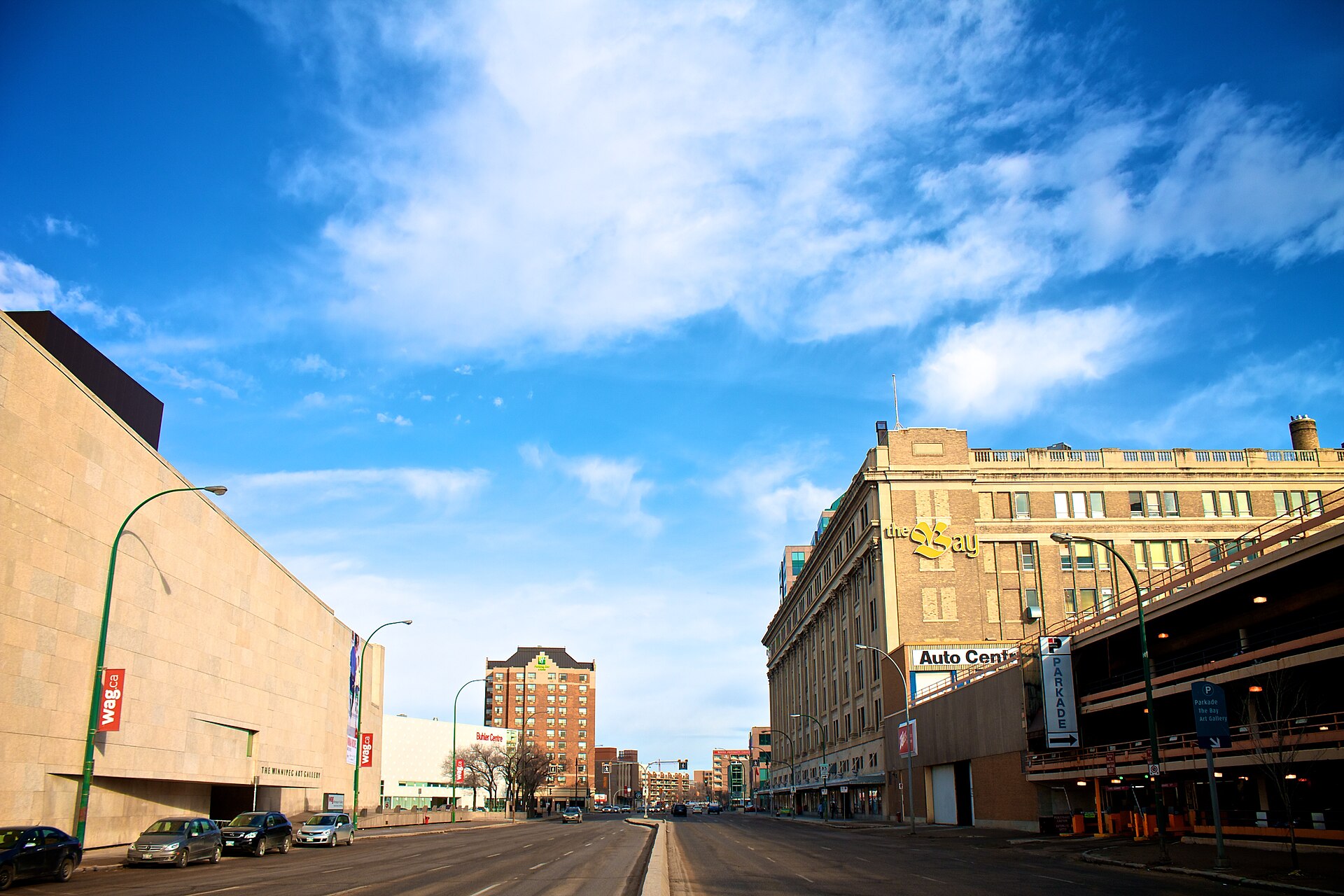
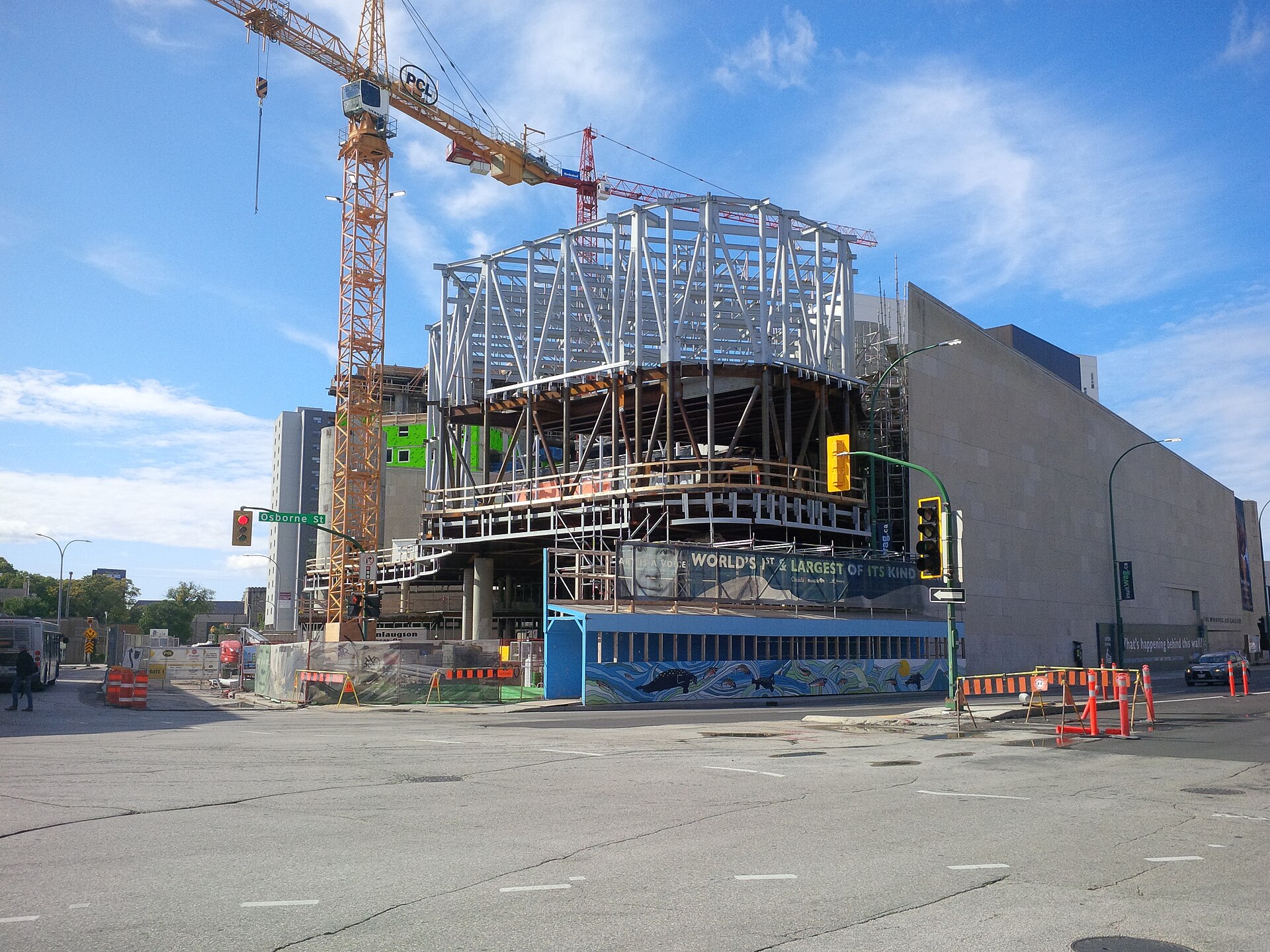
- No free-licence photograph of the completed Qaumajuq exterior or interior has yet appeared on Wikimedia Commons; the two Qaumajuq images available there show the building during its 2019 construction.
- The WAG's online collection search was listed as temporarily unavailable at the time of research, so acquisition numbers and full catalogue records for most works named here could not be independently verified beyond what the gallery's own collection pages state.
Images
Sources
- 1WAG, Hours & Admission wag.ca/visit/hours-admission/
- 2WAG, Getting Here wag.ca/visit/getting-here/
- 3WAG, About / WAG-Qaumajuq (history and strategic plan) wag.ca/about/the-wag/
- 4WAG, New Spaces (Qaumajuq architecture and wings) wag.ca/visit/new-spaces/
- 5WAG, Collections wag.ca/art/collections/
- 6WAG, Canadian Art wag.ca/art/collection/canadian-art/
- 7WAG, Indigenous Art wag.ca/art/collection/indigenous-art/
- 8WAG, American & European Art wag.ca/art/collection/american-and-european-art/
- 9WAG, Decorative Art wag.ca/art/collection/decorative-art/
- 10WAG, Permanent Collection (Select Artworks and Daily Art stories) wag.ca/exhibitions/permanent-collection/
- 11WAG, Food & Drink (Katita Cafe) wag.ca/visit/food-drink/
- 12WAG, Accessibility wag.ca/visit/accessibility/
- 13WAG, Tips for Visiting wag.ca/visit/tips-for-visiting/
- 14WAG, Exhibitions (current and upcoming, including Rooftop Sculpture Garden) wag.ca/art/exhibitions/
- 15Wikipedia, Winnipeg Art Gallery () en.wikipedia.org/wiki/Winnipeg_Art_Gallery
- 16Wikidata, Q3813414 Winnipeg Art Gallery () wikidata.org/wiki/Q3813414
- 17The Globe and Mail, 'Winnipeg Art Gallery renames its Inuit Art Centre as Qaumajuq' theglobeandmail.com/arts/art-and-architecture/article-winnipeg-art-gallery-renames-its-inuit-art-centre-as-qaumajuq/
- 18The Globe and Mail, 'Massive Norval Morrisseau art fraud hits Winnipeg's leading gallery WAG-Qaumajuq' theglobeandmail.com/politics/article-massive-norval-morrisseau-art-fraud-hits-winnipegs-leading-gallery-wag/
- 19The Walrus, 'A Canadian Art Gallery Refuses to Reckon with Former Director's Nazi Ties' thewalrus.ca/art-gallery-accusations-nazi/
- 20CBC News, ''Stunning' Qaumajuq Inuit art centre opens to public acclaim' cbc.ca/lite/story/1.5967183
- 21Google Maps, Winnipeg Art Gallery listing ( rating, read 2026-09-24) google.com/maps/place/Winnipeg+Art+Gallery/@49.8894382,-97.1527795,17z/data=!3m1!4b1!4m5!3m4!1s0x52ea73fce03732e3:0x7d05f2e2a2c1ec26!8m2!3d49.8894989!4d-97.1503405
- 22TripAdvisor, Winnipeg Art Gallery reviews ( rating and visitor consensus, read 2026-09-24) tripadvisor.com/Attraction_Review-g154954-d270331-Reviews-Winnipeg_Art_Gallery-Winnipeg_Manitoba.html