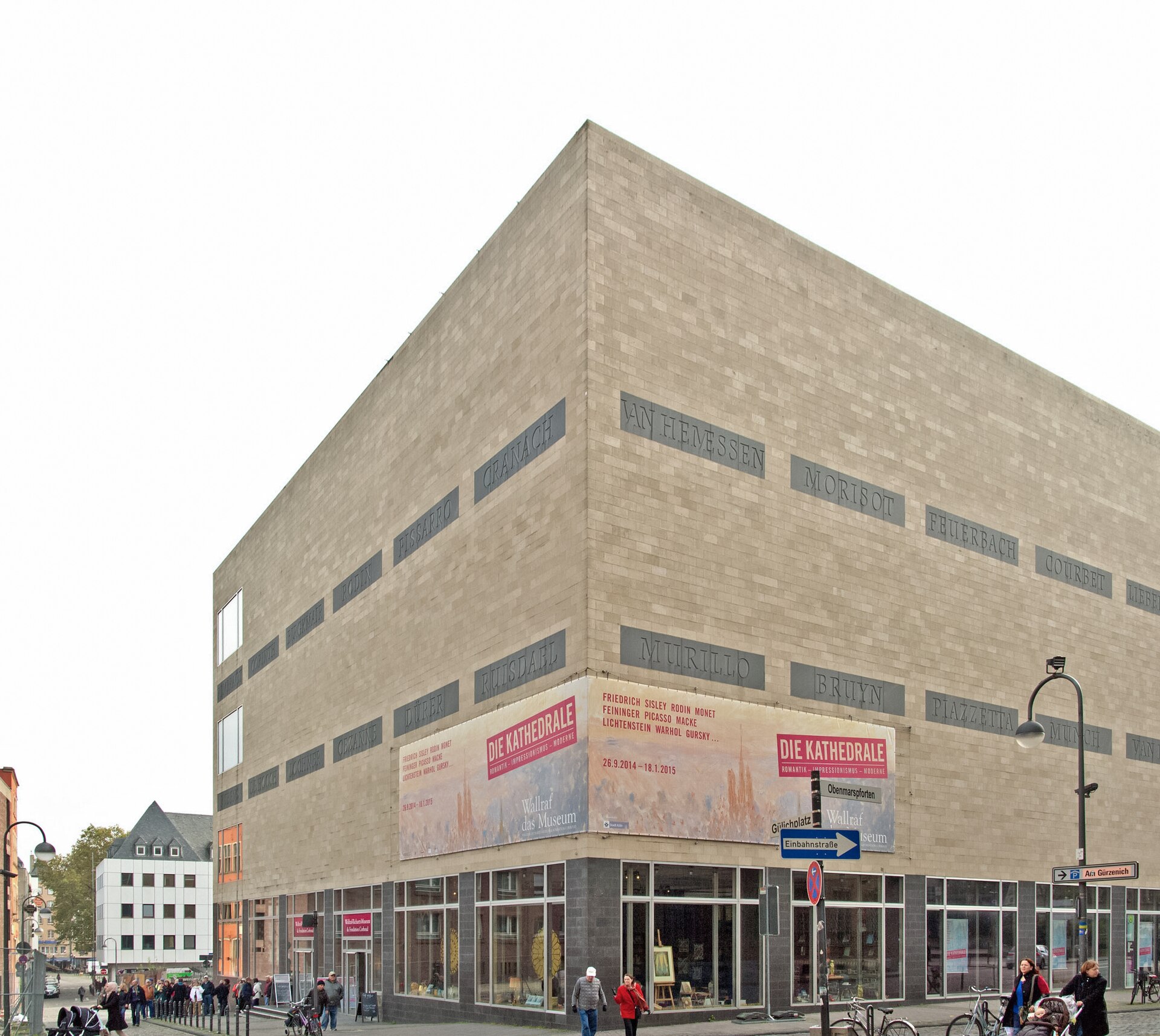
The cube-shaped Ungers building, opened 2001, seen from its corner with artist names - Cranach, Pissarro, Morisot, Feuerbach, Courbet, Liebermann and others - carved into the stone facade. Photographed here during the 2014-2015 exhibition Die Kathedrale.
Photograph uploaded by the museum's own Commons account (User:Wallraf), CC BY-SA 3.0 · Photograph by Laurens Lamberty / Wallraf-Richartz-Museum & Foundation CorboudWallraf-Richartz Museum
Museum · Wallraf-Richartz-Museum & Fondation Corboud · Founded 1861
Closure confirmed 16 September 2026 · 23 sources
Closed to visitors - not permanently
Wallraf-Richartz Museum is currently closed. Re-confirmed 2026-09-16: the museum's own closing-notice page is unchanged in substance since 2026-08-13 - the museum has been closed for a complete refurbishment since 3 August 2026, targeting a combined reopening of the renovated Ungers building and the new Christ & Gantenbein extension in 'late 2028' / 'until the end of 2028'. No artworks are being shown at other locations during the closure. Nothing in sources read today moves this estimate earlier or later than the 2026-08-13 figure, and nothing suggests a rename, merger, or that the closure has become permanent - every source still treats it as a dated, temporary renovation closure. Google's Maps rating was not re-checked today (out of scope for this pass); the 4.6/3,469 figure on file remains last confirmed 2026-08-07, not today.
Expected to reopen: The museum's own current wording, unchanged since the 2026-08-13 check: 'late 2028', stated elsewhere on the same page as 'until the end of 2028' - the renovated Ungers building and the new Christ & Gantenbein extension reopening together as one enlarged museum. This remains the same estimate that has already moved later than at least two earlier public statements (a January 2025 press conference giving 'early 2028', and a December 2024 report giving 'summer 2026 to March 2028'). · a target, not yet confirmed
Closure confirmed from the institution's own page. We re-check this page on a schedule and will update it, from the institution's own announcement, the moment it reopens.
On this page 13 sections
ContentsClose
The museum holds the art Ferdinand Franz Wallraf personally rescued from Cologne's dissolved churches and monasteries in the early nineteenth century, still visible today as one of the deepest concentrations of medieval Cologne School panel painting anywhere, alongside Dutch and Flemish Baroque painting and, since 2001, the Fondation Corboud's more than 170 Impressionist and Post-Impressionist paintings on permanent loan. Read together, the three painting departments cover close to seven centuries with real depth rather than a token example of each period, which is the museum's own claim and is broadly borne out by the named highlights on this page. The graphic collection of drawings and prints, including sheets by Durer and Leonardo, is comparatively little seen because it is not permanently hung. The collection's single largest gap in the twentieth century is not a matter of taste: the museum's own history states that 630 works were sold off by its director from 1941 as 'low-value' or 'worthless', with the proceeds used to acquire art of questionable ownership from the German-occupied East, and the building that then held everything else was destroyed in an air raid in June 1943. What survives today is what could be recovered, stored, or reacquired after 1945, not an unbroken nineteenth-century holding.
| Local name | Wallraf-Richartz-Museum & Fondation Corboud |
|---|---|
| Kind | Museum |
| Founded | 1861 (as a building); the founding collection was bequeathed in 1824 |
| City and country |  Cologne, Germany Cologne, Germany |
| Address | Obenmarspforten, Am Koelner Rathaus, 50667 Koeln, Germany |
| Website | wallraf.museum |
| Status | Closed temporarily, confirmed |
| Record last verified |
Visiting
- Hours (pre-closure)
- Tuesday to Sunday10:00 to 18:00Pre-closure hours, kept for reference. The museum has been closed to visitors since 3 August 2026; do not treat this as a bookable time. Re-confirmed 2026-09-16 against the museum's own 'Auf einen letzten Blick' final-visit page, unchanged.
- First and third Thursday of the month10:00 to 22:00Pre-closure extended hours. Re-confirmed 2026-09-16, unchanged.
- MondayClosed, in ordinary pre-closure operation.
- Closed
- Christmas Eve, New Year's Eve and New Year's Day, in ordinary pre-closure operation. Cologne Carnival days: 11 November, Weiberfastnacht (Women's Carnival Day), Carnival Sunday and Rosenmontag, in ordinary pre-closure operation. Currently: every day, for the full duration of the 2026-2028 renovation and extension works.
- Admission (pre-closure)
- AdultEUR 10Pre-closure standard price, covering the permanent collection and any concurrent special exhibition together. Not a current, payable price while the museum is closed. Re-confirmed 2026-09-16 against the museum's own 'Auf einen letzten Blick' (One Last Look) final-visit page, unchanged since the 2026-08-13 check.
- ReducedEUR 7For trainees, students, Ehrenamtskarte holders, federal-volunteer-service participants and welfare recipients on presentation of valid ID. Pre-closure figure, re-confirmed 2026-09-16, unchanged.
- Children and under 18FreeFree to the permanent collection at all times; free to the permanent collection and special exhibitions as well for under-18s resident in Cologne. Pre-closure figure, re-confirmed 2026-09-16, unchanged.
- MuseumsCard SingleEUR 18Combined ticket valid at every Cologne city museum for two consecutive opening days, and as a public transport ticket in Cologne on the first day. Pre-closure figure. Not independently re-confirmed on the 2026-09-16 check either; the museum's final-visit page again names only the Adult, Reduced and under-18 figures. No source read suggests this has changed.
- MuseumsCard FamilyEUR 30Two adults and two children, same combined-museum and transport terms as the Single card. Pre-closure figure, not independently re-confirmed 2026-09-16; no source read suggests it has changed.
- Annual card, with special exhibitionsEUR 90Reduced rate EUR 68. Valid at all Cologne city museums. Pre-closure figure, not independently re-confirmed 2026-09-16; no source read suggests it has changed.
- Annual card, permanent collections onlyEUR 45Reduced rate EUR 34. Valid at all Cologne city museums. Pre-closure figure, not independently re-confirmed 2026-09-16; no source read suggests it has changed.
Free entry: Pre-closure terms, last confirmed 11 March 2026: free entry to the permanent collection for all under-18s and for art-history and conservation students with a valid student card. Pre-closure terms: free entry to the permanent collection AND special exhibitions for under-18s resident in Cologne, all school groups worldwide (plus two chaperones per class), ICOM members, members of the Deutscher Museumsbund, refugees from Ukraine, KoelnPass holders, and members of the Friends of the Wallraf-Richartz-Museum & Museum Ludwig. Pre-closure terms: on KoelnTag, the first Thursday of every month (public holidays excepted), the City of Cologne admits every Cologne resident free to the permanent collections and special exhibitions of all city museums on production of an ID card- Do I need to book?
- Not applicable. The museum is closed to visitors for renovation; nothing is bookable at the Cologne site until it reopens.
- Address
- Obenmarspforten, Am Koelner Rathaus, 50667 Koeln, Germany MapU-Bahn / Stadtbahn Lines 1 and 9 to Heumarkt; line 5 to Rathaus; lines 16 and 18 to Dom/Hauptbahnhof
S-Bahn Lines 6, 11, 12 and 13 to Dom/Hauptbahnhof, about a five-minute walk
Bus Lines 106, 132, 133, 250, 260, 978 and night line N26 to Heumarkt
Car No museum car park; the museum names two nearby public garages, An Farina (Laurenzplatz 4) and Guerzenich (Quatermarkt 5) - Website
- wallraf.museum
- Telephone
- +49 (0)221 221-21119
- [email protected]
Before you go how long, access, photography, bags, eating, shop
- How long to allow
- Not confirmed from a source read for this page; pre-closure guides are not cited here because the figure would not be meaningfully comparable once the enlarged museum opens with roughly 1,000 square metres of additional gallery space.
- Access
- Pre-closure information: all public areas of the building were step-free, with two lifts serving every exhibition level; visits with trained guide and therapy dogs were possible by prior registration.
- Photography
- Not confirmed from a source read for this page.
- Bags
- Pre-closure rule: bags larger than A4, rucksacks and umbrellas had to be left free of charge at the cloakroom.
- Eating
- Not confirmed from a source read for this page whether a cafe is operating during the closure; none is, since the museum states the entire building is shut.
- Shop
- Not confirmed from a source read for this page whether the museum shop is trading online or elsewhere during the closure.
The museum is closed (see above). These are the figures published before the closure, kept here for a visitor planning ahead rather than presented as bookable today, and you can check the current position at the source we used. We will re-confirm them once it reopens.
What is inside
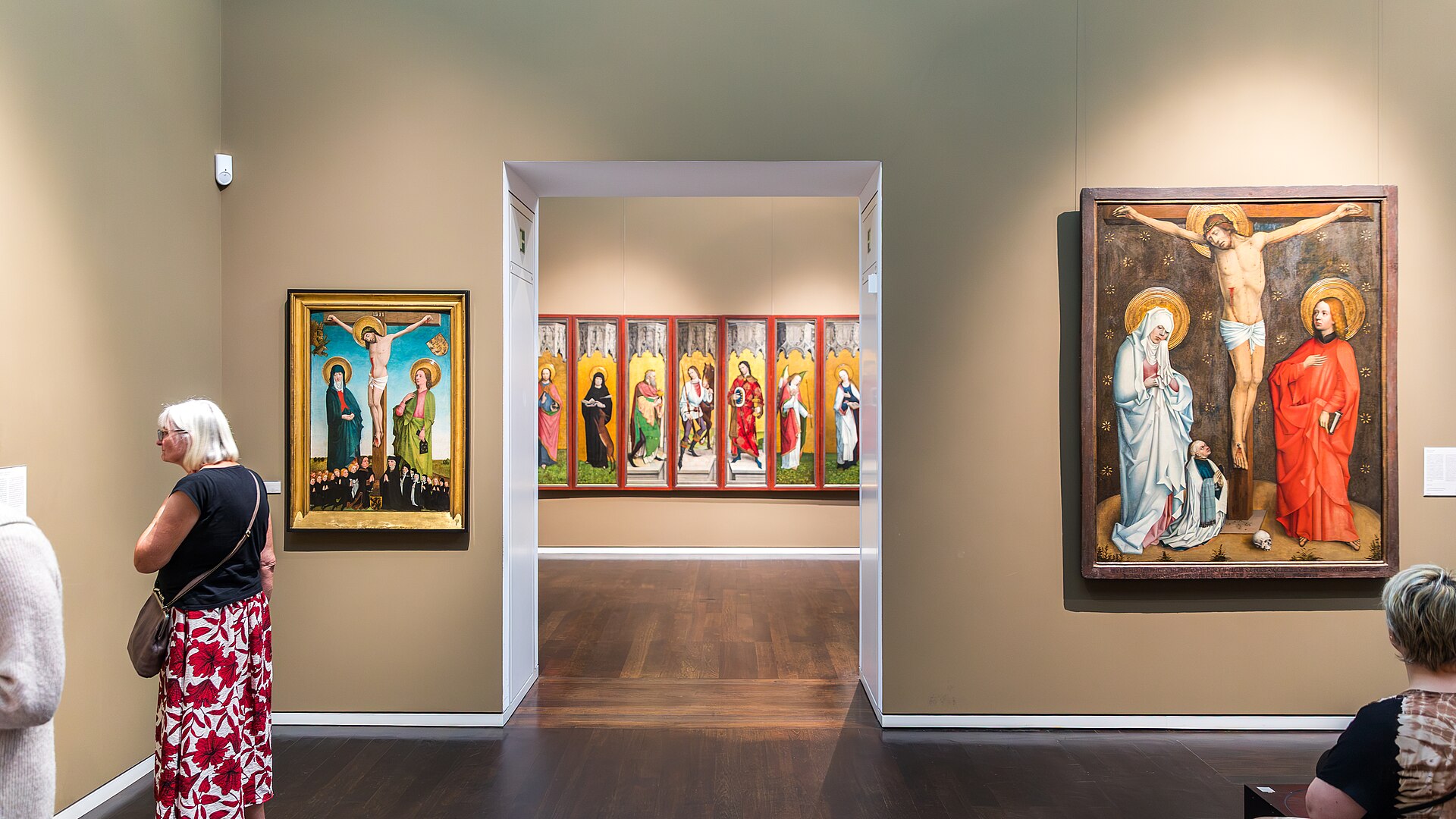
Photograph by Raimond Spekking · CC BY-SA 4.0 Medieval Cologne, Gothic and early Netherlandish painting
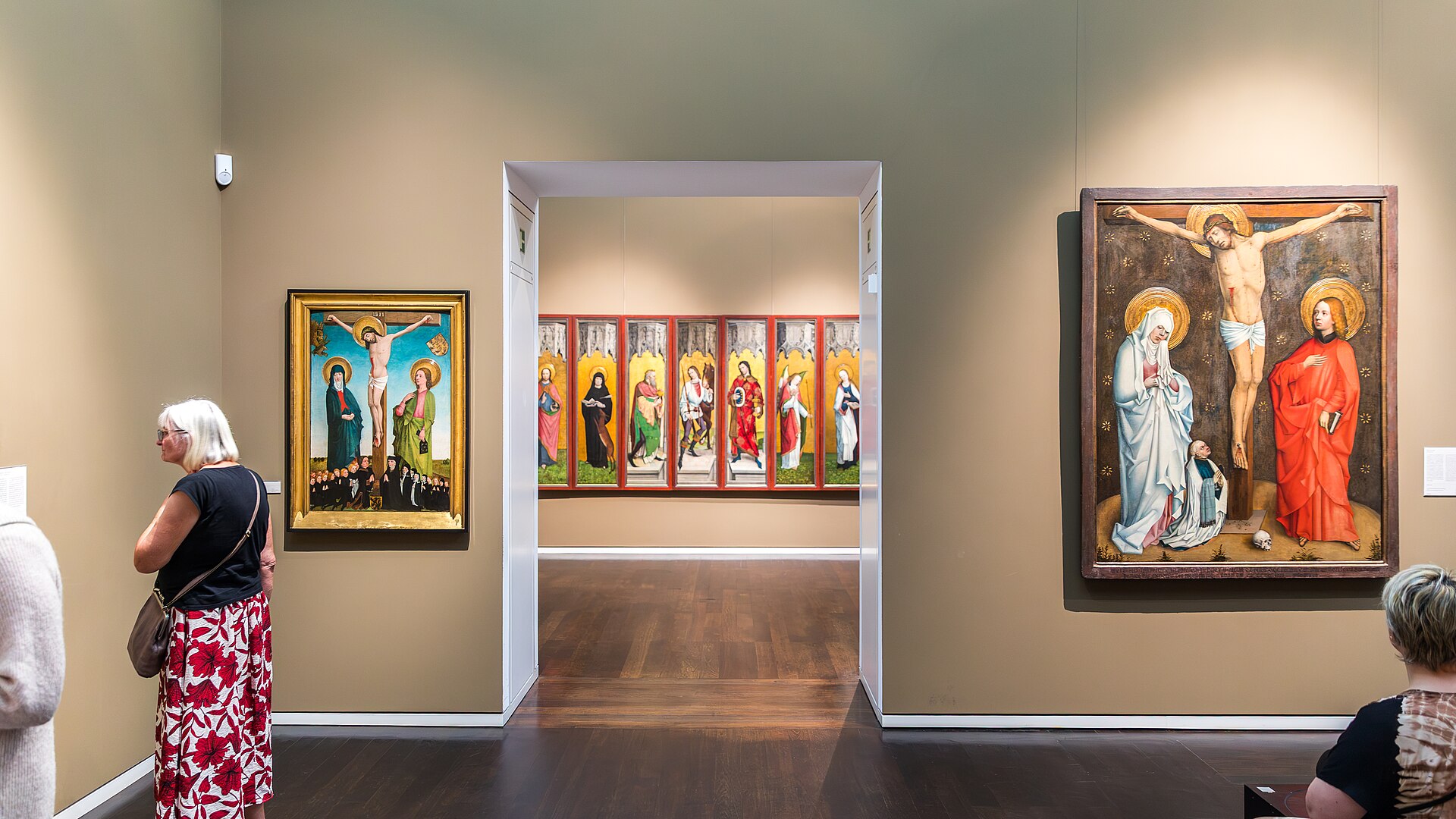
The core of Ferdinand Franz Wallraf's own rescue collection: Cologne School panel painting and altarpieces recovered from churches and monasteries closed during the secularisation of the Napoleonic era, including Stefan Lochner's Madonna of the Rose Bower and the Master of the Bartholomew Altar's Cross Altar.
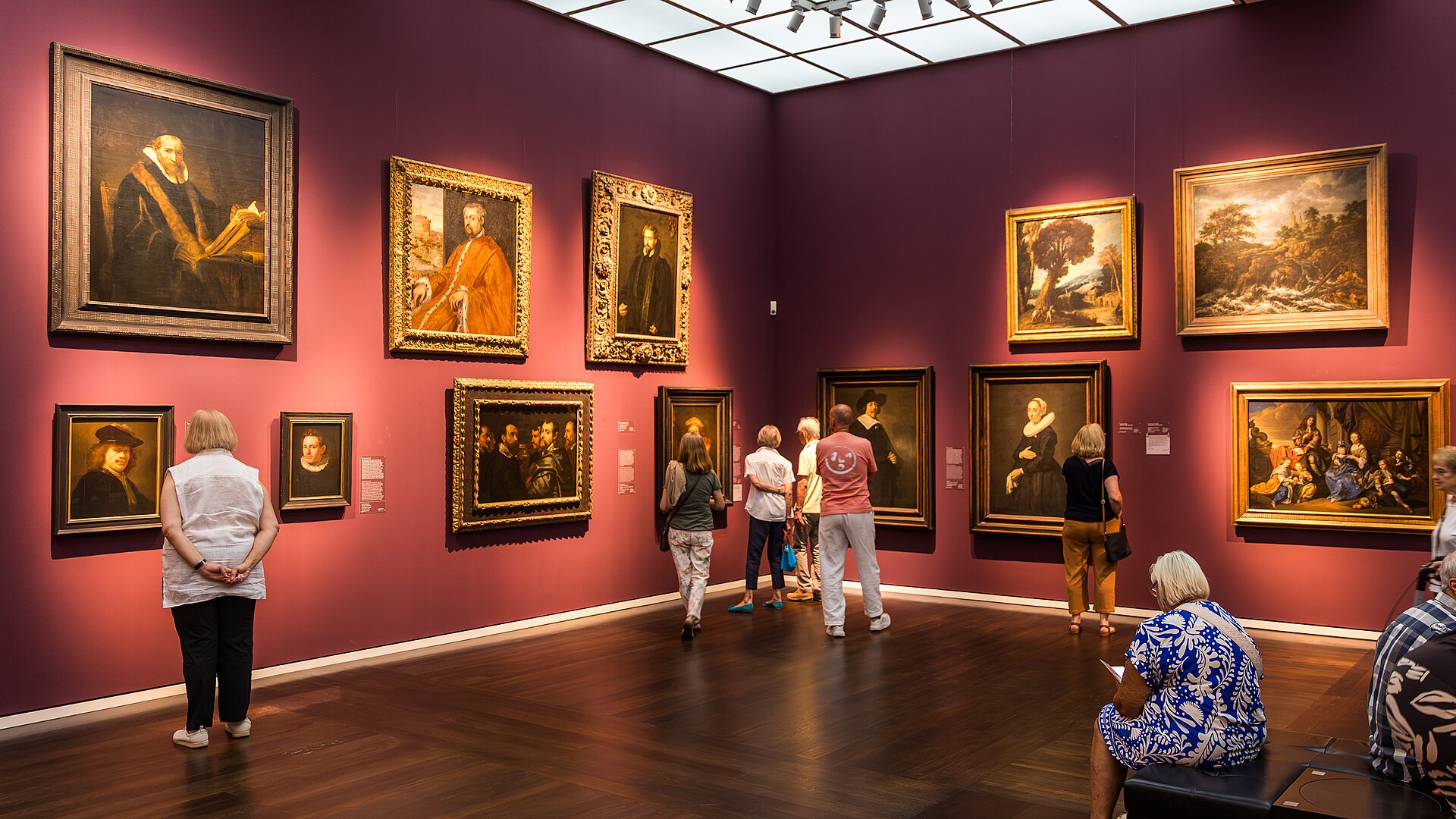
Photograph by Raimond Spekking · CC BY-SA 4.0 Baroque and seventeenth-century Dutch, Flemish and Italian painting
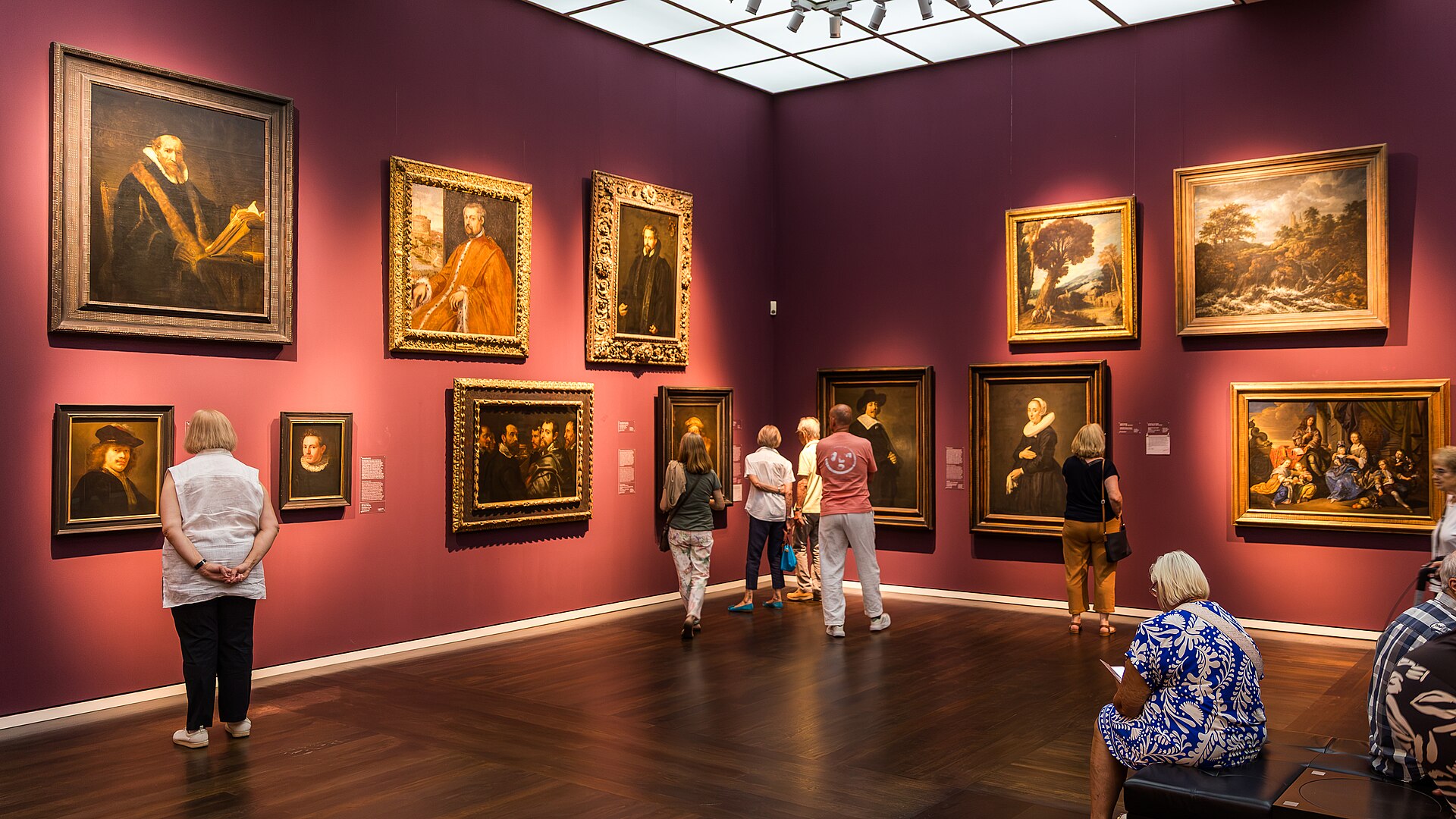
Rubens, Rembrandt, Ribera and their contemporaries, including Rembrandt's own 1668 self-portrait, acquired with the Carstanjen collection in 1936, and Rubens's Juno and Argus, given to the museum by a group of Cologne art patrons in 1894.
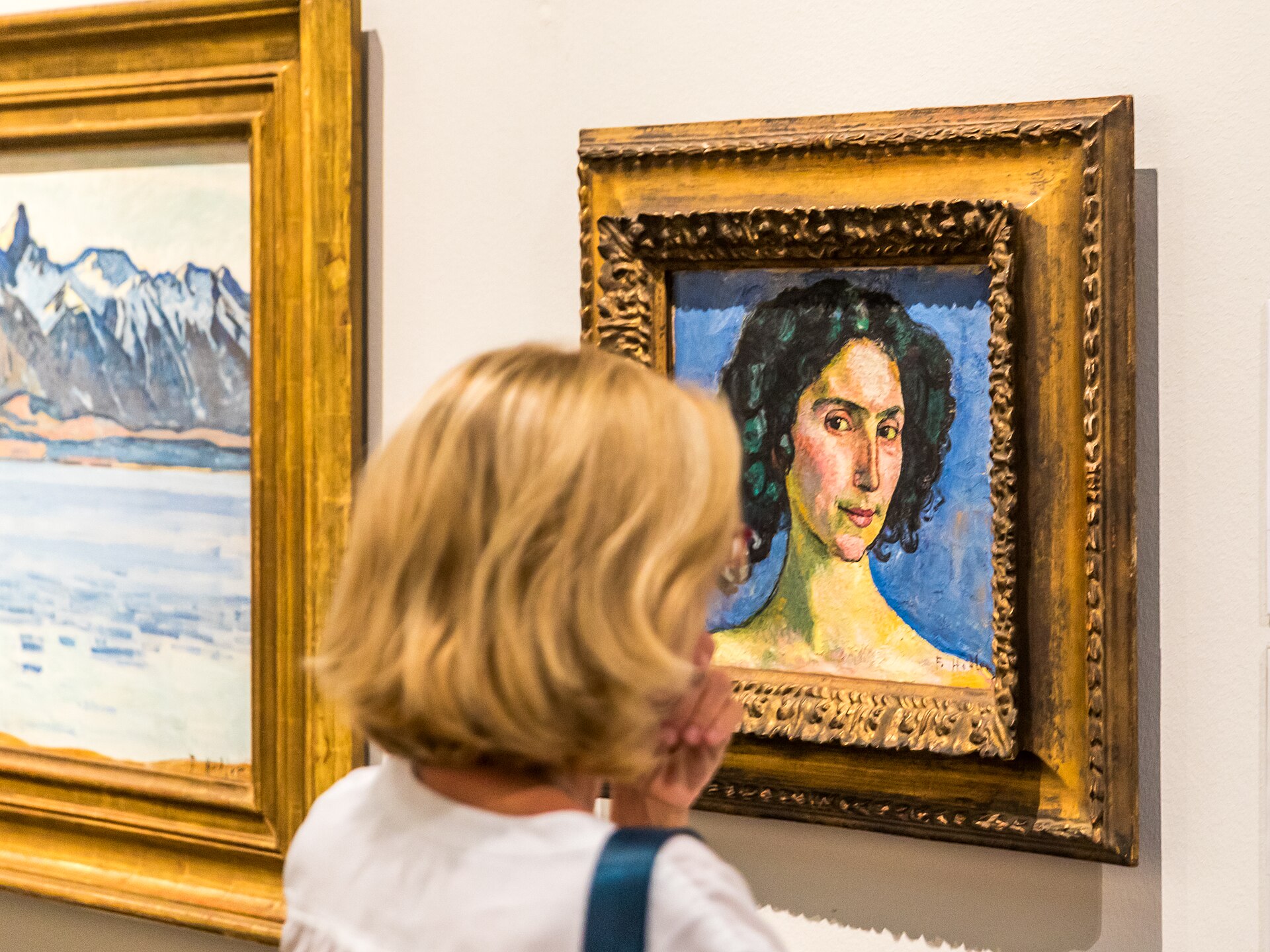
Photograph by Raimond Spekking · CC BY-SA 4.0 Nineteenth-century painting and the Fondation Corboud
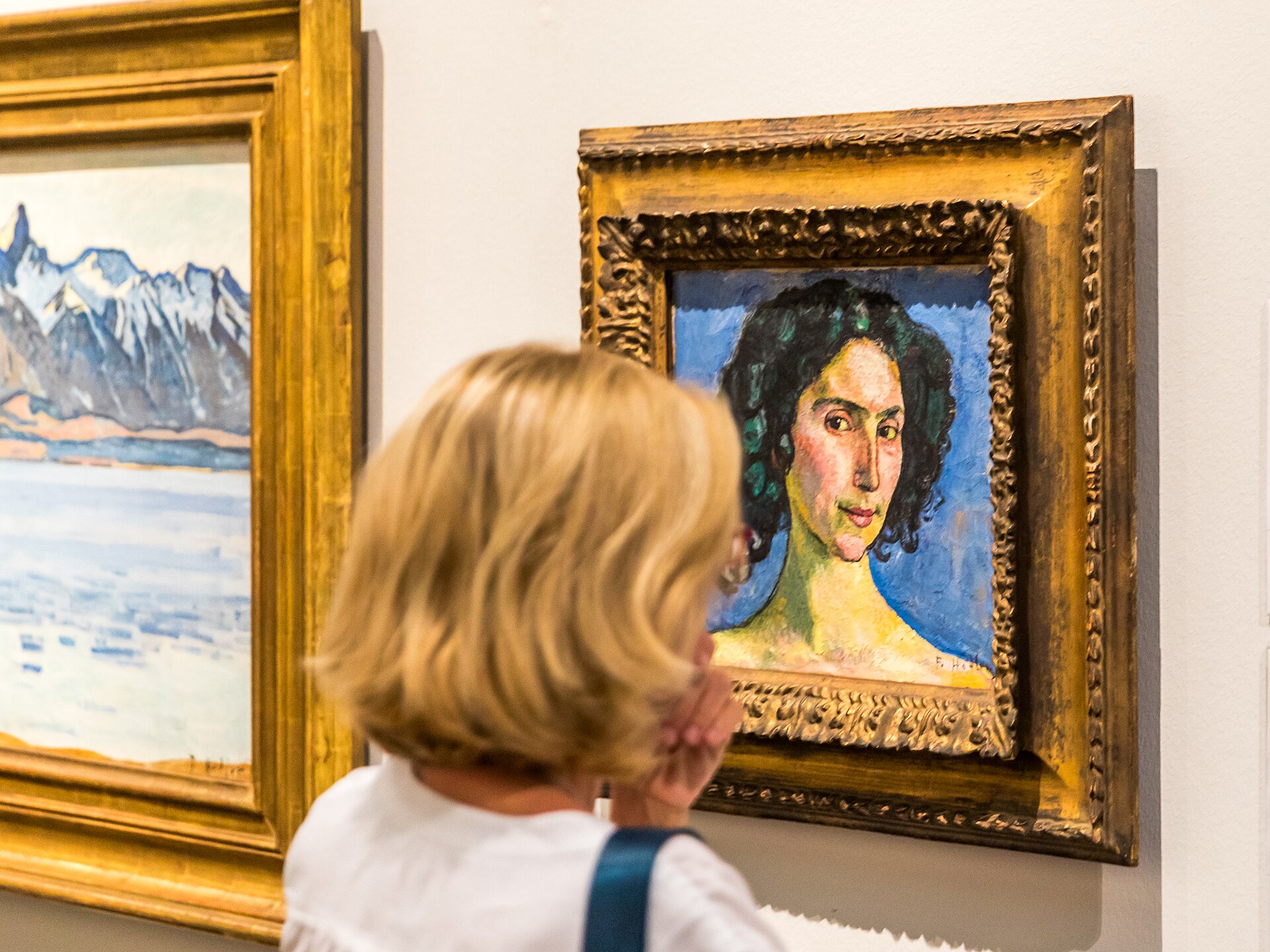
French Impressionism and its precursors, built around the more than 170 paintings given as a permanent loan in 2001 by the Swiss collector Gerard J. Corboud and his Cologne-born wife Marisol, spanning Monet, Renoir, Sisley, Pissarro, Morisot and Caillebotte through to Cezanne, Gauguin and Van Gogh; the museum's own account describes the combined nineteenth-century holding, with its own German material, as a near-continuous survey of painting from 1870 to the eve of the Second World War.
Graphische Sammlung (prints and drawings)
Works on paper are not permanently hung; the department holds drawings by Durer and Leonardo da Vinci and prints including Rembrandt's Three Crosses and Rubens's studies after the Laocoon, shown in rotating exhibitions and accessible through a dedicated study service rather than a fixed gallery.
What to see first
Madonna of the Rose Bower
Stefan Lochner, c. 1440-1442Called the 'Cologne Mona Lisa' by the museum's own text: the single most reproduced work of medieval Cologne painting, acquired in 1848, its densely symbolic detail of astronomy, music and theology only readable in front of the original.14
Self-Portrait
Rembrandt van Rijn, c. 1668Known in the museum's own materials as 'Rembrandt's laughter': art historians still dispute what, if anything, the artist is laughing at, with rival readings involving the god Terminus, a weeping Heraclitus, and the ancient painter Zeuxis laughing himself to death. Acquired 1936 with the Carstanjen collection.15
Juno and Argus
Peter Paul Rubens, c. 1610A rarely depicted, bloody episode from Ovid, Juno removing the hundred eyes of the slain Argus to decorate her peacocks; the museum reads its blue-red-yellow palette and central rainbow as a near-manifesto of the painter's own colour theory. A gift of Cologne art patrons in 1894.16
The Drawbridge
Vincent van Gogh, 1888One of five versions Van Gogh painted of the Langlois bridge near Arles, a motif that reminded him of home; technical study has found the ruled perspective lines and pencil underdrawing he built the composition from, against his reputation as a purely spontaneous painter. Acquired 1911. As of this page's 13 August 2026 check, the painting is not in Cologne: the museum's own tour page confirms it is part of the 'Van Gogh and the Impressionists' Japan tour, on view at the Abeno Harukas Art Museum in Osaka from 4 July to 9 September 2026, before the tour's final venue, the Nagoya City Art Museum, from 19 September to 29 November 2026.17
Water Lilies (Seerosen)
Claude Monet, c. 1915-17Part of the Fondation Corboud gift; the museum's own text reads it as Monet moving toward abstraction, the pond's edge only slowly legible and the picture's unfinished margins left visible as evidence of how fast he worked.18
Four Girls on the Bridge
Edvard Munch, 1905A summer scene at the Norwegian resort of Aasgaardstrand painted into something closer to a nightmare: a pink jetty in steep, distorting perspective, a low pale moon, and four girls standing close together as if for protection.19
Two benefactors who probably never met, buried together
The museum's name joins a collector and a donor who were a generation apart and, on the museum's own account, most likely never met in life; they now share a double grave in Cologne's Melaten cemetery. Ferdinand Franz Wallraf (1748-1824) was a canon and university professor who spent decades rescuing what he could of Cologne's ecclesiastical art during the Napoleonic-era secularisation, when close to forty churches in the city were demolished, their contents thrown into the street, reliquaries melted down and painted panels burned as firewood. When Wallraf died in 1824 he left the city his entire estate: close to 10,000 paintings, drawings and woodcuts, about 13,000 books, more than 3,000 seals, roughly 1,000 manuscripts and documents, antiquities, coins, minerals and fossils. The city then had nowhere adequate to put any of it, and made do with temporary quarters for thirty years.
The building came from Johann Heinrich Richartz (1795-1861), a Cologne merchant who had made his fortune in the wild-hide trade. In 1854 he endowed 100,000 Taler for a purpose-built museum, and kept adding to the sum as costs rose: another 10,000 Taler for the tuff-stone facing, 12,000 for parquet floors, 24,000 for the staircase frescoes. He died shortly before the building opened in 1861 and did not live to see it in use. That first building, by the architects Felten and Raschdorff, does not survive; it stood until the Second World War.
What a director sold in 1941, and what the proceeds bought
Otto H. Foerster became director in 1933. According to the German-language Wikipedia account of the museum's history, a tertiary source not independently verified for this page beyond what is stated there, Foerster sold off a total of 630 works from 1941 onward that he classified as 'geringwertig' or 'wertlos' - low-value or worthless - among them a large landscape by August Weber and a work by Max Liebermann. The proceeds, on the same account, were used to acquire works of questionable ownership ('zweifelhaftem Besitz') from the German-occupied territories in the East. This page has not been able to independently confirm which works were involved, whether any post-war restitution claim has ever been traced to this specific acquisition programme, or how the museum's own current provenance research treats it; it is recorded here as an open question rather than a settled fact, because a claim this serious deserves a primary source this page has not yet located, not a paraphrase of one secondary account.
What is not in dispute is the building's fate. On the night of 28 to 29 June 1943, in the raid Cologne remembers as the Peter-und-Paul-Nacht, the 1861 museum building was completely destroyed. Whatever of the collection had not already been moved into storage for protection went with it, on top of whatever Foerster had already sold or lost track of during the preceding two years.
Three more buildings in fifty years, before the current one
Reconstruction took until 1957, when a new museum by the architects Rudolf Schwarz and Josef Bernard opened on the old site, now addressed An der Rechtschule. It was criticised for its room layout almost as soon as it opened, and judged too small within a decade, a pressure that increased sharply after the city acquired Peter Ludwig's contemporary art collection in 1968. A design competition in 1975-76 produced the Busmann and Haberer building, which opened in 1986 as a shared home for the Wallraf-Richartz collection and the new Museum Ludwig under one roof - not a comfortable arrangement long-term, since the two collections had different audiences and different needs.
The split came in 2001, when the Wallraf-Richartz collection moved into a new building of its own, a cube-shaped structure by the German architect Oswald Mathias Ungers at Obenmarspforten, beside Cologne's town hall. The same year, the Swiss collectors Gerard J. Corboud and his Cologne-born wife Marisol placed their collection of more than 170 Impressionist and Post-Impressionist paintings with the museum as a permanent loan, and the institution added 'Fondation Corboud' to its name in recognition. The artist names carved into the Ungers building's stone facade - Cranach, Durer, Rubens, Rembrandt, Courbet, Pissarro, Morisot, Munch and others among them - read as a index of exactly this combined collection.
Closed since 2026, and every published date has slipped
The Ungers building needs work that goes beyond redecoration: corroded water and waste pipes, a cooling system from 1999 at the end of its working life, fire-alarm systems due for total replacement, and lifts that need replacing, according to the City of Cologne's own January 2025 statement announcing the closure. An adjoining extension building, designed by the Swiss firm Christ & Gantenbein and already under construction since spring 2024, will add roughly 1,000 square metres of new exhibition space and 500 square metres of storage and work space, linked to the renovated Ungers building by an underground tunnel. The museum's own 'Auf einen letzten Blick' (One Last Look) page, inviting a final pre-closure visit, fixes the exact closure date precisely: the museum stayed open to the public through 2 August 2026 at 6pm and has been closed since 3 August 2026, a firmer figure than the September or summer 2026 estimates in the January 2025 press coverage below.
Every account of when this will be finished disagrees with the last one. Kunstforum International, in December 2024, reported the closure running from summer 2026 to March 2028, quoting a critic in the Koelner Stadtanzeiger who called the plan a tragedy. A month later, at the city's own January 2025 press conference, the Baudezernent (buildings deputy) Markus Greitemann gave a maximum of eighteen months from around September 2026, with reopening 'early' in 2028, while the city's own written statement the same month put the extension's opening 'from mid-2028'. The museum's own website, read for this page in August 2026 with the closure notice already live, now says 'late 2028', restated in the same short paragraph as 'until the end of 2028'. No two of these four accounts, all traceable to the museum or the city itself, agree on a single date, which is exactly the pattern this publication's house rules treat as a target rather than a confirmed reopening.
The Japan tour question can now be answered, in part. The museum's own tour page, 'Van Gogh and Co. on tour', read 13 August 2026, confirms that seventy paintings from the collection - including Van Gogh's The Drawbridge and Monet's The Seine at Asnieres, works by Cezanne, Gauguin, Manet, Matisse, Renoir, Cross, Caillebotte and Signac among them - did travel to Japan under the title 'Van Gogh and the Impressionists': the Utsunomiya Museum of Art (19 April to 21 June 2026), the Abeno Harukas Art Museum in Osaka (4 July to 9 September 2026, the leg running as this page was checked) and the Nagoya City Art Museum (19 September to 29 November 2026), presented on the museum's own page as the collection travelling 'as ambassadors for Cologne' while the home building is shut. What is not resolved is the flat contradiction this leaves standing on the museum's own site: the separate closing-notice page still states 'our artworks will not be shown at other locations either', a sentence the tour page directly contradicts, and nothing on the museum's own site reconciles the two. The more likely reading is that the Japan tour was a commitment made before the closure and is being honoured as an exception, while the 'not shown elsewhere' line describes policy on any new loan request going forward - but that reading is this page's inference, not a statement either museum page makes.
A city with a documented pattern on cultural-building renovations
The Wallraf-Richartz closure is not an isolated case in Cologne. At the time it was announced, the city's opera house and Schauspielhaus (playhouse) had already been under renovation for more than thirteen years, with costs still rising; the main buildings of the Roman-Germanic Museum and the Cologne City Museum were also both already closed for extended periods; and Museum Ludwig's own director was reported as unable to envisage finding a suitable interim home in central Cologne when that museum's turn for a comparable renovation comes. None of this proves the Wallraf-Richartz will run over its own current target, but it is the documented context the museum's own site does not mention, and it is the reason this page treats every reopening date read here as a target rather than a commitment.
What visitors say
We publish no visitor review prose and cite no single review as representative. Google's own aggregate, drawn from before and up to the closure, sits at a strong 4.6, and the venue's own listing there is tagged 'Temporarily closed' rather than open, which matches the museum's own site. Visitors consistently single out the concentration of medieval Cologne panel painting and the Rembrandt-to-Impressionism run as reasons to visit, and set the museum apart from its larger neighbour, Museum Ludwig, as the quieter, more classical of Cologne's two big picture collections. The most repeated complaint before the closure was about staff confidence in English rather than about the collection itself.
What is praised, what is criticised
- Praised: the density of medieval Cologne School panel painting in one place, unusual for any single museum
- Praised: the Fondation Corboud Impressionist and Post-Impressionist holding, named on the building's own facade alongside the Old Masters
- Praised: a calmer, less crowded atmosphere than Museum Ludwig next door, on repeated visitor accounts
- Praised: the free first-Thursday-of-the-month KoelnTag admission, opening the whole collection to Cologne residents
- Criticised: staff described by a number of visitors as not confident in English, in a museum whose collection draws an international audience
- Criticised: at least one repeated visitor complaint that the Impressionist rooms felt cramped and would benefit from more space between works
- Criticised: some visitors expecting a larger core Impressionist holding than the museum in fact shows outside the Corboud loan, since much of that material rotates or travels
- Criticised: named art criticism has called the closure itself a failure of planning: Christian Huemmeler, writing in the Koelner Stadtanzeiger and quoted in Kunstforum International, called it 'a tragedy' that a collection of international standing disappears from view for at least eighteen months, in a city where the opera house and playhouse renovation has already run more than thirteen years over its original schedule
Ratings on other platforms
Google: 4.6 from 3,469 ratings, read 7 August 2026
A platform average is a tertiary source: it moves, it is not audited, and we quote no visitor's words.
Questions about Wallraf-Richartz Museum
Where is Wallraf-Richartz Museum?
Obenmarspforten, Am Koelner Rathaus, 50667 Koeln, Germany.
How much does it cost to visit?
Adult: EUR 10; Reduced: EUR 7; Children and under 18: free; MuseumsCard Single: EUR 18; MuseumsCard Family: EUR 30. As confirmed 16 September 2026.
When is it open?
Tuesday to Sunday 10:00-18:00; First and third Thursday of the month 10:00-22:00; Monday closed. Closed: Christmas Eve, New Year's Eve and New Year's Day, in ordinary pre-closure operation. Cologne Carnival days: 11 November, Weiberfastnacht (Women's Carnival Day), Carnival Sunday and Rosenmontag, in ordinary pre-closure operation. As confirmed 16 September 2026.
How do you get there?
U-Bahn / Stadtbahn: Lines 1 and 9 to Heumarkt; line 5 to Rathaus; lines 16 and 18 to Dom/Hauptbahnhof; S-Bahn: Lines 6, 11, 12 and 13 to Dom/Hauptbahnhof, about a five-minute walk; Bus: Lines 106, 132, 133, 250, 260, 978 and night line N26 to Heumarkt; Car: No museum car park; the museum names two nearby public garages, An Farina (Laurenzplatz 4) and Guerzenich (Quatermarkt 5).
What should you see first?
Madonna of the Rose Bower (Stefan Lochner, c. 1440-1442); Self-Portrait (Rembrandt van Rijn, c. 1668); Juno and Argus (Peter Paul Rubens, c. 1610); The Drawbridge (Vincent van Gogh, 1888); Water Lilies (Seerosen) (Claude Monet, c. 1915-17); Four Girls on the Bridge (Edvard Munch, 1905).
What we could not confirm
- The identity and number of works Otto H. Foerster acquired from 1941 with the proceeds of selling 630 deaccessioned works, described in one tertiary source as being of questionable ownership from the German-occupied East, and whether any post-war restitution claim has been traced to this programme, is not established from a primary source read for this page.
- The museum's own site carries two irreconciled statements about loans during the closure: the closing-notice page says artworks 'will not be shown at other locations either', while the tour page confirms seventy paintings, including The Drawbridge, toured three venues in Japan from April to November 2026. Whether the Japan tour was a pre-committed exception made before the closure was announced, or the 'not shown elsewhere' line applies only to new loan requests going forward, is this page's inference and not something either museum page states.
- The reopening date has been given as March 2028, 'early 2028', 'mid-2028' and 'late 2028'/'end of 2028' across four sources between December 2024 and August 2026, each traceable to the museum or the City of Cologne; none has yet proved to be the final figure.
- Whether Rembrandt's 1668 self-portrait, acquired in 1936 with the Carstanjen collection, has been reviewed for Nazi-era acquisition circumstances is not established from a source read for this page.
- Whether the museum's cafe, shop or online sales are operating in any form during the 2026-2028 closure is not confirmed from a source read for this page.
Images
Sources
- 1Wallraf-Richartz-Museum & Fondation Corboud, official site: 'Closing' notice, stating the museum is closed for a two-year general renovation until the end of 2028 and that artworks will not be shown at other locations. Read 7 August 2026. wallraf.museum/en/exhibitions/now/voruebergehend-geschlossen/closing/
- 2Wallraf-Richartz-Museum & Fondation Corboud, official site: Contact page, address, telephone and email. Read 7 August 2026. wallraf.museum/index.php?id=62&L=1
- 3Wallraf-Richartz-Museum, official site, opening hours page, Wayback Machine snapshot captured 22 October 2025 (last pre-closure capture read). web.archive.org/web/20251022031730/https://www.wallraf.museum/das-museum/besucherinformationen/oeffnungszeiten/
- 4Wallraf-Richartz-Museum, official site, admission prices page, Wayback Machine snapshot captured 11 March 2026 (last pre-closure capture read). web.archive.org/web/20260311031418/https://www.wallraf.museum/das-museum/besucherinformationen/eintritt/
- 5Wallraf-Richartz-Museum, official site, how-to-get-here (Anreise) page, Wayback Machine snapshot captured 5 May 2026. web.archive.org/web/20260505134448/https://www.wallraf.museum/das-museum/besucherinformationen/anreise/
- 6Wallraf-Richartz-Museum, official site, 'Wallraf und Richartz' history page, Wayback Machine snapshot captured 10 October 2025. web.archive.org/web/20251010085548/https://www.wallraf.museum/das-museum/geschichte/wallraf-und-richartz/
- 7Wallraf-Richartz-Museum, official site, 'Fondation Corboud' history page, Wayback Machine snapshot captured 8 October 2025. web.archive.org/web/20251008122644/https://www.wallraf.museum/das-museum/geschichte/fondation-corboud/
- 8Stadt Koeln (City of Cologne), press release: 'Wallraf-Richartz-Museum soll instand gesetzt und erweitert werden', 16 January 2025, on the general renovation, the Christ & Gantenbein extension, the closure and the planned Japan tour. stadt-koeln.de/politik-und-verwaltung/presse/mitteilungen/27281/index.html
- 9dpa, via Monopol Magazin: 'Wallraf-Richartz-Museum muss laengere Zeit schliessen', 16 January 2025, quoting Baudezernent Markus Greitemann and museum director Marcus Dekiert on closure length and cost. monopol-magazin.de/wallraf-richartz-museum-muss-laengere-zeit-schliessen
- 10Kunstforum International, news item: 'Wallraf-Richartz-Museum Koeln: laengere Schliessung geplant', 31 December 2024, quoting Christian Huemmeler in the Koelner Stadtanzeiger and citing Museum Ludwig's director on the same renovation pressure. kunstforum.de/nachrichten/wallraf-richartz-museum-koeln-laengere-schliessung-geplant/
- 11German Wikipedia, 'Wallraf-Richartz-Museum & Fondation Corboud': museum history section, including the Foerster-era deaccessioning and 1943 destruction of the building. de.wikipedia.org/wiki/Wallraf-Richartz-Museum
- 12Wikidata, Q700959, Wallraf-Richartz Museum: identity, coordinates, instance-of. wikidata.org/wiki/Q700959
- 13Google Maps listing, Wallraf-Richartz-Museum & Fondation Corboud: aggregate rating 4.6 from 3,469 ratings, listing tagged 'Temporarily closed'. google.com/maps/search/Wallraf-Richartz-Museum+Koeln
- 14Wallraf-Richartz-Museum, official site, Stefan Lochner, 'Die Muttergottes in der Rosenlaube', collection text. Wayback Machine snapshot captured 30 October 2014. web.archive.org/web/20141030185123/http://www.wallraf.museum/sammlungen/mittelalter/meisterwerke/stefan-lochner-die-muttergottes-in-der-rosenlaube/das-meisterwerk/
- 15Wallraf-Richartz-Museum, official site, Rembrandt van Rijn, 'Selbstbildnis um 1668', collection text ('Rembrandts Lachen'). Wayback Machine snapshot captured 8 February 2015. web.archive.org/web/20150208050211/http://www.wallraf.museum:80/sammlungen/barock/meisterwerke/rembrandt-harmenz-van-rijn-selbstbildnis-um-1668/das-meisterwerk/
- 16Wallraf-Richartz-Museum, official site, Peter Paul Rubens, 'Juno und Argus, um 1610', collection text. Wayback Machine snapshot captured 3 May 2015. web.archive.org/web/20150503043008/http://www.wallraf.museum:80/sammlungen/barock/meisterwerke/peter-paul-rubens-juno-und-argus-um-1610/das-meisterwerk/
- 17Wallraf-Richartz-Museum, official site, Vincent van Gogh, 'Die Zugbruecke, 1888', collection text. Wayback Machine snapshot captured 26 November 2014. web.archive.org/web/20141126061359/http://www.wallraf.museum:80/sammlungen/19-jahrhundert/meisterwerke/vincent-van-gogh-die-zugbruecke-1888/das-meisterwerk/
- 18Wallraf-Richartz-Museum, official site, Claude Monet, 'Seerosen, um 1915/17', collection text. Wayback Machine snapshot captured 20 August 2014. web.archive.org/web/20140820181334/http://www.wallraf.museum/sammlungen/19-jahrhundert/meisterwerke/claude-monet-seerosen-nympheas-um-191517/das-meisterwerk/
- 19Wallraf-Richartz-Museum, official site, Edvard Munch, 'Vier Maedchen auf der Bruecke, 1905', collection text. Wayback Machine snapshot captured 25 February 2015. web.archive.org/web/20150225062324/http://www.wallraf.museum:80/sammlungen/19-jahrhundert/meisterwerke/edvard-munch-vier-maedchen-auf-der-bruecke-1905/das-meisterwerk/
- 20Wallraf-Richartz-Museum & Fondation Corboud, official site: 'Auf einen letzten Blick' (One Last Look) final-visit page, giving the exact closure date (open to the public through 2 August 2026, 6pm; closed from 3 August 2026) and restating pre-closure hours (Tuesday-Sunday 10:00-18:00, extended to 22:00 on the first and third Thursday) and admission (Adult EUR 10, Reduced EUR 7, under-18 free). Read 13 August 2026. wallraf.museum/en/exhibitions/now/auf-einen-letzten-blick/information/
- 21Wallraf-Richartz-Museum & Fondation Corboud, official site: 'Van Gogh and Co. on tour' page, confirming the 'Van Gogh and the Impressionists' Japan tour of seventy paintings (including The Drawbridge and The Seine at Asnieres) across the Utsunomiya Museum of Art, the Abeno Harukas Art Museum in Osaka, and the Nagoya City Art Museum, 19 April to 29 November 2026. Read 13 August 2026. wallraf.museum/en/exhibitions/now/2026-02-28-japan/
- 22Wallraf-Richartz-Museum & Fondation Corboud, official site: 'Closing' notice, re-read 13 August 2026 and found unchanged in wording from the 7 August 2026 capture cited above as source 1. wallraf.museum/en/exhibitions/now/voruebergehend-geschlossen/closing/
- 23Wallraf-Richartz-Museum & Fondation Corboud, official site: Contact page, re-read 13 August 2026 and found unchanged (phone, email) from the 7 August 2026 capture cited above as source 2. wallraf.museum/index.php?id=62&L=1