Treasury of National Jewels
Museum · Ganjine-ye Javaherat-e Melli · Founded 1955
Closure confirmed 18 September 2026 · 27 sources
Closed to visitors - not permanently
Treasury of National Jewels is currently closed, on the evidence sourced below.
Expected to reopen: closed until further notice, no reopening date published · a target, not yet confirmed
Closure confirmed 18 September 2026 from the institution's own page. We re-check this page on a schedule and will update it, from the institution's own announcement, the moment it reopens.
On this page 14 sections
ContentsClose
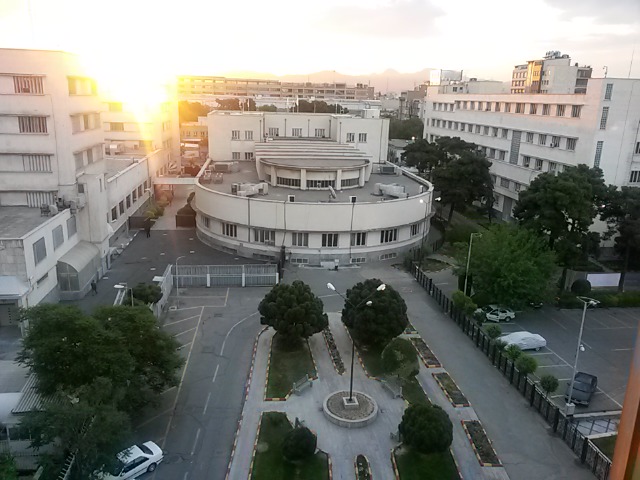
The treasury's strength is depth within an extremely narrow category: state and dynastic regalia and loose stones assembled by two successive Iranian dynasties, almost entirely through 18th-century conquest rather than purchase or gift. It is not encyclopedic and does not attempt to be; there is no comparative jewelry history on display, little context for the Mughal, Safavid or European trade routes the stones passed through before reaching Iran, and almost no English-language interpretation beyond what a guide says aloud. Its case for a visit rests entirely on the concentration and rarity of a small number of objects, most conquered rather than commissioned, in one room.
| Local name | Ganjine-ye Javaherat-e Melli |
|---|---|
| Kind | Museum |
| Founded | 1955 |
| City and country | Tehran, Iran |
| Address | No. 140, Ferdowsi Avenue, at the Istanbul Crossroad near Imam Khomeini Square, District 12, Tehran, Iran |
| Website | cbi.ir/page/1475.aspx |
| Status | Closed temporarily, confirmed 18 September 2026 |
| Record last verified | 18 September 2026 |
Visiting
- Hours (pre-closure)
- Sat-Tue10:00 to 12:00ticket counter closes at 11:30; last-known hours before the current closure
- Closed
- Wednesday. Thursday. Friday. official holidays.
- Admission (pre-closure)
- Foreign visitorsIRR 3,000,000= 300,000 tomans; figure confirmed live on the Central Bank's own Treasury page, last-known price before the current closure
- Iranian nationalsIRR 300,000= 30,000 tomans; from the Central Bank's announcement of the May 2025 reopening, reported by Tehran Times
- Students and schoolchildren, with valid IDIRR 150,000= 15,000 tomans; same announcement
- Do I need to book?
- No online booking exists; tickets were sold only in person at the treasury on visiting days, until the counter closed at 11:30 for the 10:00-12:00 window
- Address
- No. 140, Ferdowsi Avenue, at the Istanbul Crossroad near Imam Khomeini Square, District 12, Tehran, Iran MapMetro Sa'di station, Line 1
Metro Ferdowsi station, Line 4 - Website
- cbi.ir/page/1475.aspx
- Telephone
- +98 21 6446 1270 (also 6446 1251, 6446 1253, 6446 1256, 6446 1250, 6446 1255)
- [email protected]
Before you go how long, access, photography, bags, eating, shop
- How long to allow
- A single guided circuit through the vault halls, in small groups, roughly 30 to 40 minutes with a museum guide
- Access
- Three flights of stairs lead down into the vault with no elevator or escalator, flagged by visitor guides as a real barrier for anyone with limited mobility
- Photography
- None. Cameras, phones, bags and even printed guidebooks must be surrendered at a depository counter before the security gates, and touching a display case is reported to set off an alarm
- Bags
- All personal belongings, including purses, backpacks, smart watches, lighters and cigarettes, must be handed to the Depository Counter and passed through a security inspection gate before entry; nothing but the museum's own Treasury Booklet may be carried inside
- Eating
- None reported by any source consulted for this page
- Shop
- A small shop sells the printed Treasury guidebook, which visitor guides recommend buying because wall labels in English are sparse
The museum is closed (see above). These are the figures published before the closure, kept here for a visitor planning ahead rather than presented as bookable today, and you can check the current position at the source we used. We will re-confirm them once it reopens.
What is inside
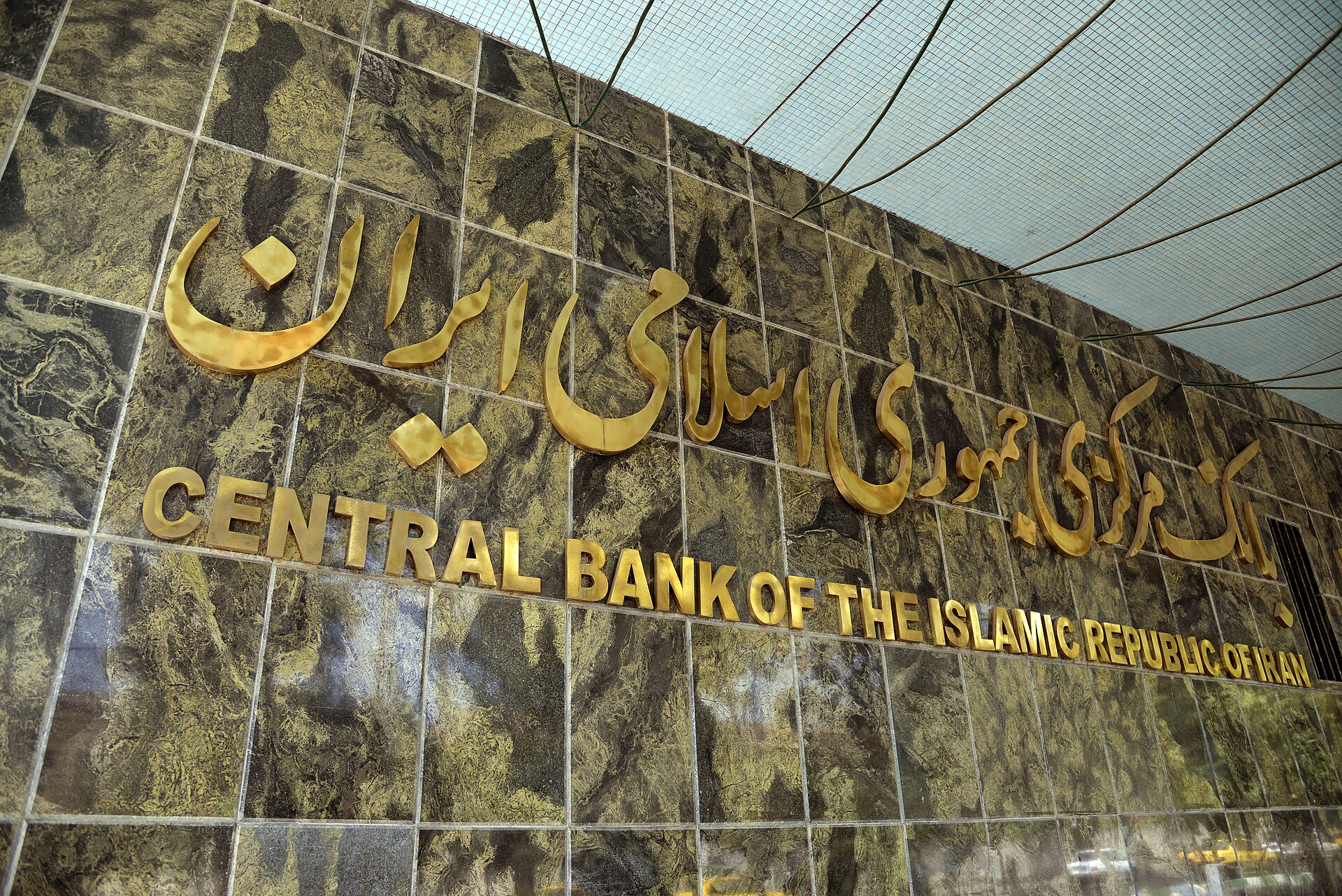
Photograph by Wojciech Kocot · CC BY-SA 4.0 Entrance and security hall
The depository counter and the metal-detector security gate every visitor passes on the way in, after surrendering phones, cameras, bags and even the free guidebook. The vault's public entrance itself carries the Central Bank's own gilt lettering rather than any museum signage, so the first thing a visitor reads on the wall is the bank's name, not the treasury's.
Crowns and regalia hall
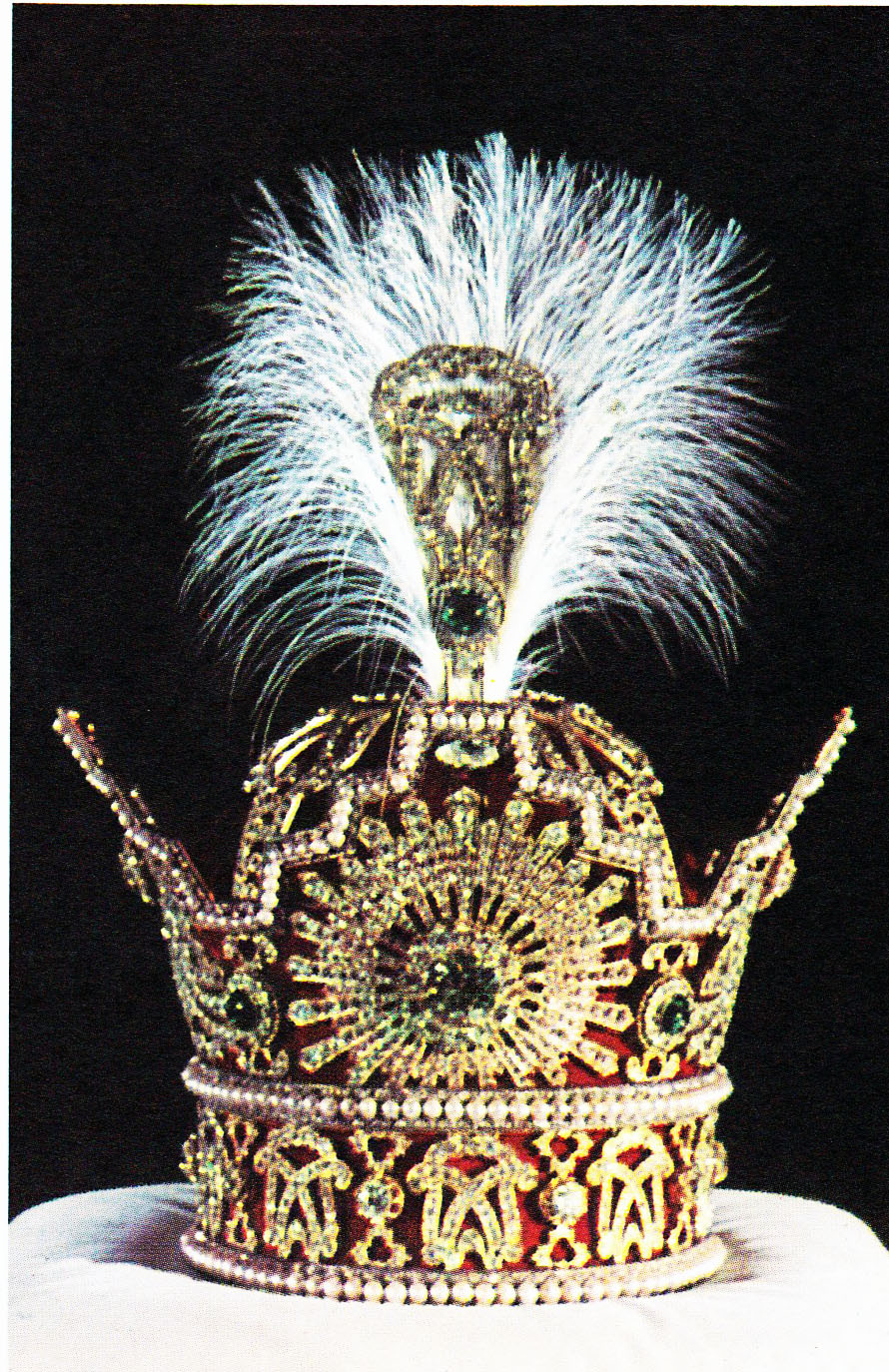
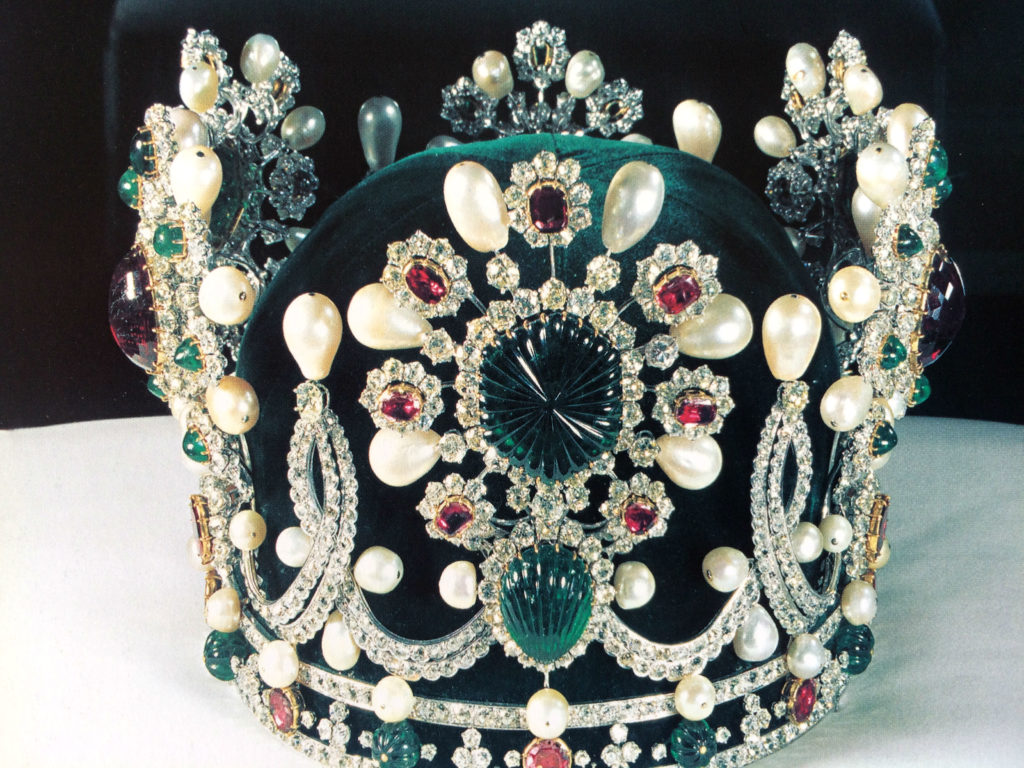
The Kiani Crown, worn by Qajar shahs from 1796 to 1925 and set with about 1,800 pearls, 1,800 rubies and 300 emeralds on a red velvet cap; the Pahlavi Crown, made for Reza Shah's 1926 coronation as the new dynasty's own regalia; and the Empress's Crown, made by Van Cleef and Arpels for Farah Pahlavi's 1967 coronation as Shahbanu, the only Iranian empress to be crowned in the country's history.
Thrones hall
The Naderi Throne, a portable twelve-piece jeweled chair-throne commissioned by Fath-Ali Shah Qajar and set with roughly 26,733 gems, and the Sun Throne, built for the same shah's own coronation and marriage. English-language guiding material almost always calls one or both of these the Peacock Throne, a name this page explains and corrects in the narrative below.
Loose stones and diamonds gallery
The Darya-ye Noor, the largest known pink diamond in the world at an estimated 182 carats; the Noor-ol-Ain, a roughly 60-carat pink diamond mounted by Harry Winston into a platinum tiara for Empress Farah's 1958 wedding; and the Samarian Spinel, a 500-carat unfaceted stone carrying a 17th-century inscription naming the Mughal emperor Jahangir.
The Globe of Jewels room
A single gem-covered globe commissioned by Naser al-Din Shah Qajar in 1869, roughly 110 cm tall on a 66 cm base and set with about 52,000 stones, emeralds forming the oceans and rubies and diamonds marking the continents and major cities. Visitor accounts describe it standing at the far end of the treasury hall as the collection's set-piece object.
Ceremonial objects and tableware
Nader Shah's sword and shield, jeweled swords and shields from later reigns, a gold and emerald ceremonial belt, a jeweled coronation cape, a bejeweled royal mace with a 17-carat diamond and six 40-carat spinels, and jeweled serving dishes and a covered chest from the Qajar court.
What to see first
Darya-ye Noor diamond
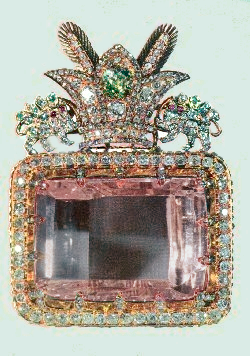
Unknown Mughal-era lapidary, GolcondaAt an estimated 182 carats and a pale pink so rare in diamonds that it remains the largest known stone of its color, cut flat in the old Mughal style rather than faceted. Mined at the Kollur mine in India and brought to Iran after Nader Shah's 1739 sack of Delhi; a 1965 study proposed it was cut, along with the Noor-ol-Ain, from a single larger stone recorded by the 17th-century French jeweler Jean-Baptiste Tavernier.4
Noor-ol-Ain diamond
Harry Winston (tiara mount, 1958)A roughly 60-carat pale pink oval brilliant, set as the centerpiece of a platinum tiara with 324 further pink, yellow and white diamonds, made for Empress Farah's 1958 wedding to Mohammad Reza Pahlavi. Thought by some scholars to be the other half of the same Mughal stone as the Darya-ye Noor.5
Samarian Spinel
Unknown, Mughal court, inscribed 17th centuryA 500-carat unfaceted red-brown spinel, the largest of its kind known, taken from India by Nader Shah alongside a smaller 270-carat companion stone. It carries a carved inscription naming the Mughal emperor Jahangir and a drilled hole that 19th-century court legend, recorded by Naser al-Din Shah's own physician, linked to the biblical golden calf.10
Kiani Crown
Commissioned by Agha Mohammad Khan QajarThe Qajar dynasty's coronation crown from the dynasty's founding in 1796 until 1925, worn in official portraits by Fath-Ali Shah, Mozaffar ad-Din Shah and Mohammad Ali Shah, and still present, though no longer worn, at Reza Shah's 1926 coronation of the successor Pahlavi dynasty.6
Pahlavi Crown
Unknown maker, 1926Made for Reza Shah's 1926 coronation as the first Pahlavi monarch, it replaced the Qajar Kiani Crown as the new dynasty's own regalia even though the older crown was still carried in the same ceremony.24
Sun Throne, popularly called the Peacock Throne
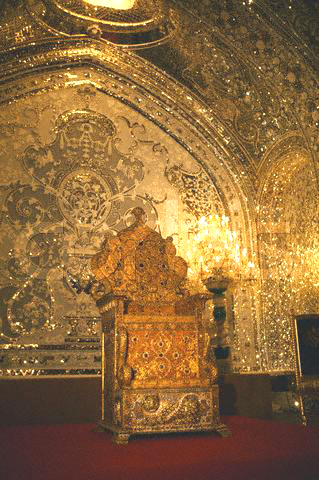
Commissioned by Fath-Ali Shah Qajar, early 19th centuryBuilt as Fath-Ali Shah's coronation throne and used again for his marriage to his consort Tavus Khanum, literally Lady Peacock, whose title gave the throne its popular English nickname. It has no proven connection to the Mughal Peacock Throne that Nader Shah looted from Delhi in 1739, which vanished, most likely dismantled for its stones, after Nader Shah's assassination in 1747 and does not survive in any form. The Sun Throne stood in the Mirror Hall of Golestan Palace until 1980, when it moved to the Central Bank.9
Naderi Throne
Commissioned by Fath-Ali Shah Qajar, early 19th centuryA chair-form throne on a wooden core covered in gold and set with about 26,733 gems, including a 65-carat spinel and a 225-carat emerald, built to disassemble into 12 pieces for travel. Despite the name it has no connection to Nader Shah; it derives from the Persian word nader, meaning rare or unique. It was carried in Mohammad Reza Pahlavi's 1967 coronation, the last time either Qajar throne was used in a state ceremony.7
Globe of Jewels
Commissioned by Naser al-Din Shah Qajar, 1869A gem-set globe roughly 110 cm tall, its oceans rendered in emeralds and its continents and major cities marked out in rubies, spinels and diamonds, built as a display of the reach and wealth of the Qajar court rather than as regalia for a single ruler.27
A vault inside a working central bank, not a palace
The Treasury of National Jewels is not a purpose-built museum. It occupies a vault beneath the Central Bank of Iran's original headquarters on Ferdowsi Street in central Tehran, a modernist building the bank used as its main office until it moved to a new tower in the north of the city in the 2000s. The old Ferdowsi Street building passed to Bank Melli Iran, but the Central Bank kept the vault and the collection inside it, and the treasury still gives its address as No. 140 Ferdowsi Avenue, at the corner of the Istanbul Crossroad near Imam Khomeini Square. A visitor descends three flights of stairs into the vault itself; there is no elevator.
The collection the vault holds was assembled mostly by two dynasties. The Safavids accumulated much of it through the 16th and 17th centuries, until Afghan invaders sacked Isfahan in 1722 and scattered the royal treasury. Nader Shah, who fought his way to the Iranian throne in the 1730s, rebuilt it many times over by conquest, above all his 1739 sack of Delhi, which brought Mughal diamonds, spinels and a fortune in loose stones back to Iran. What Nader Shah brought home, and what later Qajar and Pahlavi rulers commissioned from it, is substantially what is still in the vault today.
Formal state custody dates to 1937, when Reza Shah Pahlavi placed the royal jewels under Bank Melli Iran, then the national bank, partly so their value could back Iran's currency. When the Central Bank of Iran was created in 1960 to take over that role, the jewels and their vault went with it, and the Central Bank has been the treasury's legal custodian and administrator ever since. The museum in its current form, open to paying visitors rather than reserved for the state's own reserve accounting, dates to 1955.
What is actually in the vault, and what is not called what tourists think it is called
English-language guidebooks and tour operators almost universally describe a Peacock Throne on display in Tehran. There is a genuine version-safety problem hiding inside that sentence, and it is worth untangling before anything else, because it runs through the whole collection.
The original Peacock Throne was a Mughal object, built in India in the 17th century and famous for gem-set peacocks on its canopy. Nader Shah's army took it from Delhi in 1739. It did not survive him: when Nader Shah was assassinated by his own officers in 1747, the throne disappeared in the chaos that followed, almost certainly broken up for its stones. No structural part of it is known to survive anywhere, in Iran or elsewhere; only some of its individual gems are thought to have been reworked into later pieces.
What the Central Bank actually holds are two different, later Iranian thrones, both made for the Qajar ruler Fath-Ali Shah in the early 19th century, two generations after Nader Shah. The Sun Throne, a platform throne with a radiant sun disk on its headboard, was built for Fath-Ali Shah's own coronation and was also used for his marriage to a consort named Tavus Khanum, Persian for Lady Peacock; that wedding is very likely the real source of the throne's popular but misleading English name. It carries no peacock imagery at all. The Naderi Throne, a portable, chair-form throne that disassembles into twelve pieces for travel, has an even more direct false etymology: despite its name, it has no connection whatsoever to Nader Shah. It derives instead from the Persian word nader, meaning rare or unique, and was built decades after Nader Shah's death. Both thrones were carried in Mohammad Reza Pahlavi's 1967 coronation, the last time either was used in a state ceremony, and both are now in the treasury rather than at Golestan Palace, where they were kept until 1980.
This is not a pedantic point. A reader planning a visit, or citing this collection in research, who goes looking for the Mughal Peacock Throne in Tehran will not find it, because it no longer exists anywhere. What they will find are two later, genuinely spectacular Qajar thrones that borrowed its reputation along with, in the Naderi Throne's case, some of the same diamonds and spinels Nader Shah brought back from the same campaign.
The stones and the crowns
Two pink diamonds anchor the loose-stone gallery. The Darya-ye Noor, Persian for Sea of Light, is an estimated 182 carats, cut flat in the old Mughal tabiz style rather than faceted, and remains the largest known diamond of its rare pale pink color anywhere in the world. The Noor-ol-Ain, roughly 60 carats and the same pale pink, is mounted as the centerpiece of a platinum tiara that Harry Winston built for Empress Farah Pahlavi's 1958 wedding, ringed by 324 further pink, yellow and white diamonds. Both stones trace back to Nader Shah's 1739 conquests, and a 1965 study proposed that they were once a single larger diamond, the Great Table stone recorded by the French jeweler Jean-Baptiste Tavernier at the Mughal court in 1642, later cut in two.
The Samarian Spinel, a 500-carat unfaceted red-brown stone, is the largest of its kind known and carries a 17th-century inscription naming the Mughal emperor Jahangir, alongside a drilled hole that 19th-century court legend, recorded in the diary of Naser al-Din Shah's own physician, linked to a chain that once hung around the neck of the biblical golden calf. A smaller, 270-carat companion spinel came into Iran the same way, part of the same Delhi haul.
Three crowns anchor the regalia hall. The Kiani Crown, commissioned under the Qajar dynasty's founder Agha Mohammad Khan and set with about 1,800 pearls, 1,800 rubies and 300 emeralds on a red velvet cap, served every Qajar coronation from 1796 to 1925 and was still carried, unworn, at Reza Shah's 1926 coronation. The Pahlavi Crown, made new for that same 1926 ceremony, gave the incoming dynasty its own regalia rather than borrowed Qajar symbols. The Empress's Crown, made by Van Cleef and Arpels for Farah Pahlavi's coronation as Shahbanu in 1967, marks the only time an Iranian empress consort was ever formally crowned.
The Globe of Jewels and the smaller treasures
At the far end of the treasury hall stands the collection's largest set-piece object: a gem-covered globe commissioned by Naser al-Din Shah Qajar in 1869, roughly 110 centimeters tall on a 66 centimeter base and set with about 52,000 stones. Emeralds mark the oceans, and rubies, spinels and diamonds pick out the continents and, in places, individual cities. Unlike the crowns and thrones, the globe was never regalia for a single ruler to wear; visitor accounts and the museum's own presentation treat it as a standalone display of Qajar-era wealth and craft.
The rest of the collection fills out around these set pieces: Nader Shah's own sword and shield, a dozen further jeweled swords and shields from later reigns, a gold and emerald ceremonial belt, a jeweled coronation cape worn at a Pahlavi coronation, a royal mace roughly 73 centimeters long set end to end with spinels and diamonds, its largest stone a 17-carat diamond ringed by six 40-carat spinels, and a run of jeweled serving dishes and a covered ceremonial chest from the Qajar court.
Closed more than open: the museum's recent history
The treasury has spent most of the years since 2019 shut rather than open, and that pattern is itself part of the record. It closed in March 2019 as the coronavirus outbreak reached Iran. The closure ran long enough, and was accompanied by so little public information, that rumors began to circulate online that pieces of the collection, specifically two crowns, had gone missing; Iran's tourism minister publicly called on the treasury to reopen in January 2023, describing the jewels as a chance for the public to see the beauty and craft of a royal lifestyle the 1979 revolution had ended, without directly addressing the rumors. The Ministry of Cultural Heritage eventually sent officials to inspect and photograph the vault before a reopening, specifically to show the disputed crowns were still there.
Tehran Times reported the treasury reopening after 51 months closed in a report dated June 2024, and again reported a fresh reopening, this time dated to 31 May 2025, with admission set at 300,000 tomans for foreign visitors, 30,000 tomans for Iranian nationals and 15,000 tomans for students with valid identification, and visiting hours of 10:00 to 12:00, Saturday to Tuesday. Persian-language reporting from the same period describes the treasury closing again within weeks of that 2025 reopening, citing the security situation in the country, and describes a further closure planned for construction work later the same year. However those individual episodes reconcile, the pattern across five years is consistent: repeated announced reopenings, each followed within months by another closure.
As of the most recent check of the Central Bank's own Treasury page, on 18 September 2026, that page states in plain terms that the Treasury of National Jewels is closed until further notice. No reopening date is published. The hours, admission fees and phone numbers on that same page, reproduced on this record, are the last figures the Central Bank itself has posted, and they are the figures a reader should expect to see restored first if and when the vault reopens, not figures that can be relied on to book a visit today.
Visiting when it is open: security, tours and what past visitors say
On the days the treasury has been open, the process has been consistent across several years of visitor accounts. Tickets are sold only in person, at the treasury itself, until the counter closes half an hour before the viewing window ends; there has never been an online booking system. Before entry, visitors hand over phones, cameras, bags, smart watches, lighters and any other personal items at a Depository Counter and pass through a security inspection gate; nothing goes inside except the body and, if bought at the on-site shop, the museum's own printed guidebook, since wall labelling in English is thin. A museum guide leads small groups through the halls in a single circuit, typically 30 to 40 minutes, delivered in Persian and English on the days multilingual staff are on duty. Visitors are told not to touch the cases; several accounts describe an alarm system that makes the point immediately if anyone forgets.
What comes through most consistently in visitor reviews, aggregating to a 4.6 out of 5 score across more than 1,500 Tripadvisor ratings, is genuine astonishment at the density of the collection: reviewers describe not having seen so much jewelry and so many precious stones assembled in one place anywhere else in the world, and name the Darya-ye Noor, the Globe of Jewels and the two Qajar thrones as the pieces that stay with them afterward. A first-person account published in Tehran Times in October 2020 called the experience jaw-dropping and urged visitors to make it a priority on any trip to the city, while documenting the same strict security routine visitors still describe years later. Set against that, the recurring complaints are just as consistent: no photography allowed at all, a visiting window historically as narrow as two hours on four days a week, three flights of stairs with no elevator or escalator, and, cutting across all of it, a treasury that for long stretches of the past several years has simply not been open to see.
What visitors say
Visitors consistently rank the Treasury among the most extraordinary single-room jewel collections anywhere, comparing it favourably to the British Crown Jewels and the Kremlin's Diamond Fund, while also consistently flagging how restrictive and unpredictable a visit is: no photography, a two-hour opening window on four days a week, no online booking, no elevator down the stairs into the vault, and, since 2019, a pattern of closures that has left the museum shut more often than open.
What is praised, what is criticised
- Praised: The sheer density and rarity of what is in one room: named favourites include the Darya-ye Noor diamond, the Globe of Jewels and the Naderi and Sun thrones
- Praised: The included guided tour, offered in Persian and English (other languages have been offered at times), which visitors say is worth the wait because printed labelling inside is sparse
- Praised: Guides who, after long closures with few visitors, have been described as unusually welcoming and patient with repeated questions
- Criticised: An absolute no-photography rule, enforced with alarms on the cases, which many visitors accept as the price of security but still call out as a letdown given the scale of the collection
- Criticised: A narrow visiting window, historically as little as two hours on four days a week, with hours that have changed more than once and no online way to confirm them before travelling
- Criticised: Three flights of stairs down into the vault with no elevator or escalator, which visitor guides note rules out easy access for anyone with mobility difficulties
- Criticised: A pattern of repeated, unannounced closures since 2019 that has made the museum effectively inaccessible for long stretches, most recently closed again with no published reopening date
Ratings on other platforms
Tripadvisor: 4.6 from 1,564 ratings, read 18 September 2026
A platform average is a tertiary source: it moves, it is not audited, and we quote no visitor's words.
Questions about Treasury of National Jewels
Where is Treasury of National Jewels?
No. 140, Ferdowsi Avenue, at the Istanbul Crossroad near Imam Khomeini Square, District 12, Tehran, Iran.
How much does it cost to visit?
Foreign visitors: IRR 3000000; Iranian nationals: IRR 300000; Students and schoolchildren, with valid ID: IRR 150000. As confirmed 18 September 2026.
When is it open?
Sat-Tue 10:00-12:00. Closed: Wednesday. Thursday. As confirmed 18 September 2026.
How do you get there?
Metro: Sa'di station, Line 1; Metro: Ferdowsi station, Line 4.
What should you see first?
Darya-ye Noor diamond (Unknown Mughal-era lapidary, Golconda); Noor-ol-Ain diamond (Harry Winston (tiara mount, 1958)); Samarian Spinel (Unknown, Mughal court, inscribed 17th century); Kiani Crown (Commissioned by Agha Mohammad Khan Qajar); Pahlavi Crown (Unknown maker, 1926); Sun Throne, popularly called the Peacock Throne (Commissioned by Fath-Ali Shah Qajar, early 19th century).
What we could not confirm
- No source consulted gives a firm date for when the treasury will reopen; the Central Bank's own page says only closed until further notice
- Persian-language reporting describes overlapping and sometimes contradictory closure and reopening dates across 2024 and 2025 (a reopening reported in June 2024, another in May 2025, a further closure reported within weeks of the 2025 reopening, and a construction-related closure reported for later in 2025); this page reports each dated claim individually rather than reconciling them into a single timeline no source actually states
- The rumors that two crowns went missing during the 2019-2023 closure were addressed by an official ministry visit and photographs rather than by any independent inventory or audit that has been published
- No source consulted gives a precise, sourced carat figure for the Darya-ye Noor beyond the widely repeated estimate of about 182 carats, and estimates in circulation range as high as 186 carats
Images
Sources
- 1Central Bank of the Islamic Republic of Iran, The Treasury of National Jewels (official page: hours, admission, contact, security rules, current closure notice), fetched 2026-09-18 cbi.ir/page/1475.aspx
- 2Wikipedia, Treasury of National Jewels en.wikipedia.org/wiki/Treasury_of_National_Jewels
- 3Wikipedia, Iranian National Jewels en.wikipedia.org/wiki/Iranian_National_Jewels
- 4Wikipedia, Daria-i-Noor en.wikipedia.org/wiki/Daria-i-Noor
- 5Wikipedia, Noor-ol-Ain en.wikipedia.org/wiki/Noor-ol-Ain
- 6Wikipedia, Kiani Crown en.wikipedia.org/wiki/Kiani_Crown
- 7Wikipedia, Naderi Throne en.wikipedia.org/wiki/Naderi_Throne
- 8Wikipedia, Sun Throne en.wikipedia.org/wiki/Sun_Throne
- 9Wikipedia, Peacock Throne en.wikipedia.org/wiki/Peacock_Throne
- 10Wikipedia, Samarian spinel en.wikipedia.org/wiki/Samarian_spinel
- 11Wikipedia, Central Bank of Iran (Ferdowsi Street headquarters history) en.wikipedia.org/wiki/Central_Bank_of_Iran
- 12Wikidata, Q5949273, Treasury of National Jewels wikidata.org/wiki/Q5949273
- 13AFM/MG, "Treasury of National Jewels: simply jaw-dropping!", Tehran Times, 26 October 2020 tehrantimes.com/news/453928/Treasury-of-National-Jewels-simply-jaw-dropping
- 14"Tourism minister calls on Treasury of National Jewels to reopen doors to museumgoers", Tehran Times, 25 January 2023 tehrantimes.com/news/481263/Tourism-minister-calls-on-Treasury-of-National-Jewels-to-reopen
- 15"Treasury of National Jewels reopens after 51 months", Tehran Times, 11 June 2024 tehrantimes.com/news/499746/Treasury-of-National-Jewels-reopens-after-51-months
- 16"Treasury of National Jewels to reopen to the public in Tehran", Tehran Times, 28 May 2025 tehrantimes.com/news/513652/Treasury-of-National-Jewels-to-reopen-to-the-public-in-Tehran
- 17Tripadvisor, The National Jewelry Treasury, Tehran (aggregate rating and visitor comments), read 2026-09-18 tripadvisor.com/Attraction_Review-g293999-d319532-Reviews-The_National_Jewelry_Treasury-Tehran_Tehran_Province.html
- 18"Iran's Treasury Of National Jewels: A Visitor's Guide", SurfIran surfiran.com/mag/treasury-of-national-jewels/
- 19"Iran National Jewels Museum", Iran Safar (layout, stairs and accessibility) iransafar.co/iran-national-jewels-museum/
- 20Wikimedia Commons, File:Bank Markazi Ferwosi.jpg (licence CC BY-SA 3.0, author ak ba) commons.wikimedia.org/wiki/File:Bank_Markazi_Ferwosi.jpg
- 21Wikimedia Commons, File:Irnc110a-Teheran-Muzeum Klejnotow.jpg (licence CC BY-SA 4.0, author Wojciech Kocot) commons.wikimedia.org/wiki/File:Irnc110a-Teheran-Muzeum_Klejnot%C3%B3w.jpg
- 22Wikimedia Commons, File:Darya-e Noor Diamond of Iran.png (public domain, Iran, author Siroos777) commons.wikimedia.org/wiki/File:Darya-e_Noor_Diamond_of_Iran.png
- 23Wikimedia Commons, File:Naderi throne.jpg (public domain, author Leo71538) commons.wikimedia.org/wiki/File:Naderi_throne.jpg
- 24Wikimedia Commons, File:PahlaviCrown.jpg (public domain, Iran) commons.wikimedia.org/wiki/File:PahlaviCrown.jpg
- 25Wikimedia Commons, File:Irnc118-Teheran-Muzeum Klejnotow.jpg (licence CC BY-SA 4.0, author Wojciech Kocot) commons.wikimedia.org/wiki/File:Irnc118-Teheran-Muzeum_Klejnot%C3%B3w.jpg
- 26Wikimedia Commons, File:Irnc111-Teheran-Muzeum Klejnotow.jpg (licence CC BY-SA 4.0, author Wojciech Kocot) commons.wikimedia.org/wiki/File:Irnc111-Teheran-Muzeum_Klejnot%C3%B3w.jpg
- 27Wikimedia Commons, Category:Globe of Jewels (dimensions and stone count) commons.wikimedia.org/wiki/Category:Globe_of_Jewels


