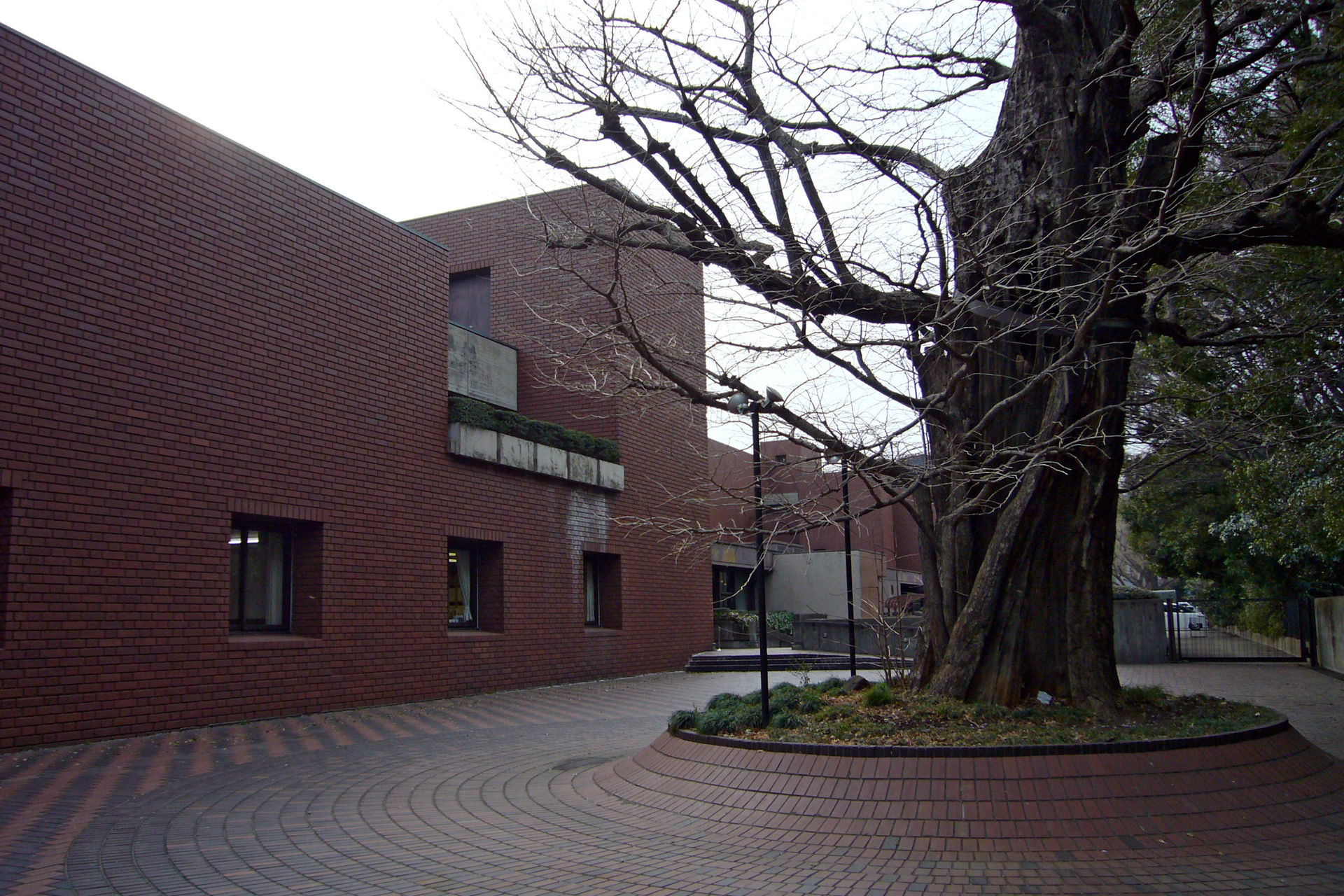
The museum's brick-clad Maekawa-designed exterior and forecourt, photographed in 2006. Verified as this building by file location and by matching the coordinates given for the Tokyo Metropolitan Art Museum, not the neighbouring Tokyo National Museum or National Museum of Western Art in the same park.
663highland, CC BY 2.5Tokyo Metropolitan Art Museum
Museum · Tokyo-to Bijutsukan · Founded 1926
Open, admission and hours confirmed 9 September 2026 · 11 sources
On this page 16 sections
ContentsClose
The museum transferred its collection of artworks and art materials, other than twelve outdoor sculptures, to the Museum of Contemporary Art Tokyo in 1994, and has not rebuilt one since. What is on view is almost entirely programmed: loan exhibitions organised with outside partners and news companies, and rental shows staged by art societies and groups in the Citizens' Galleries. Its own holdings are limited to the twelve sculptures retained on the grounds and a small residual archive; a tertiary count on English Wikipedia puts the object total at 49, a figure the museum's own site does not itself publish. This venue is best understood as an exhibition hall with a permanent building and no permanent collection, not as a gap in an otherwise conventional museum.
| Local name | Tokyo-to Bijutsukan |
|---|---|
| Kind | Museum |
| Founded | 1926 |
| City and country |  Tokyo, Japan Tokyo, Japan |
| Address | 8-36 Ueno Koen, Taito-ku, Tokyo 110-0007, Japan |
| Website | tobikan.jp |
| Status | Open, confirmed |
| Record last verified |
Visiting
- Hours
- Daily except the 1st and 3rd Monday of most months09:30 to 17:30Last admission 30 minutes before closing
- Friday, only while a special exhibition is running09:30 to 20:00Extended hours do not apply outside a special-exhibition run
- Closed
- 1st and 3rd Monday of most months (a fixed closure, not every Monday). Additional Mondays that fall inside a special-exhibition run. Scheduled maintenance closures set year by year (2026: 9-16 July and 21-28 December; also 12 January 2027). New Year holiday, 29 December to 3 January.
- Admission
- General museum admission (building, restaurants, shop, Library and Archives, non-ticketed spaces)FreeThe museum charges no entry fee of its own; a ticket is required only for whichever special exhibition is running
- Special exhibition, adult (example: Edo in Focus, British Museum loan show, 25 Jul-18 Oct 2026)JPY 2,300Advance-ticket price JPY 2,100. Exhibition prices are set per show, not fixed museum-wide
- Special exhibition, college student (same exhibition)JPY 1,300Advance-ticket price JPY 1,100
- Special exhibition, senior 65 and over (same exhibition)JPY 1,600Advance-ticket price JPY 1,400
Free entry: Visitors 18 or younger, and students of high-school grade or below, admitted free to this exhibition at all times. 3rd Saturday and the following Sunday each month (Family Day): an accompanying parent pays half the general admission price. Holders of a disability certificate and one companion, free- Tickets
- tobikan.jp/en/exhibition/index.html The museum's own ticket page.
- Do I need to book?
- No standing booking for the building itself; advance tickets are sold at a discount for special exhibitions and are recommended for popular loan shows
- Address
- 8-36 Ueno Koen, Taito-ku, Tokyo 110-0007, Japan MapRail (JR) About a 7-minute walk from JR Ueno Station's Park Exit
Rail (Metro) About a 10-minute walk from Tokyo Metro Ginza Line or Hibiya Line, Ueno Station Exit 7
Rail (Keisei) About a 10-minute walk from Keisei-Ueno Station
Car No on-site parking; the museum's own guidance asks visitors not to come by car - Website
- tobikan.jp
- Telephone
- +81 3-3823-6921
Before you go how long, access, photography, bags, eating, shop
- How long to allow
- One to two hours for a single special exhibition; longer on a day when more than one Citizens' Gallery rental show is also open
- Access
- Step-free from the main gate: escalators and elevators run down to the lobby. The main entrance is recommended over the east entrance, which is stairs only
- Photography
- Generally not permitted inside special exhibitions; a Tripadvisor visitor to the 2025 Miro exhibition specifically noted photography was not allowed there
- Bags
- Not published on the museum's own site within this research
- Eating
- cafe Art, Central Wing 1F, open without a museum ticket, with views over the outdoor sculptures; RESTAURANT MUSE, Central Wing 2F, a casual Western and Japanese menu
- Shop
- Museum Shop, Lower Basement Floor, open without a ticket
Prices and hours change. We take them from the institution's own pages and print the day we read them, and you can check the current position at the source we used. Confirm before you travel.
What is inside
Galleries A, B and C (the Kikaku wing, B2F-B3F)
The museum's own curated and co-organised special exhibitions run here, the loan shows organised with outside partners and news companies such as the 2026 centennial British Museum exhibition. These are the ticketed galleries; everything else in the building is free to enter.
Citizens' Galleries 1-4 (the Kobo wing, spread across the Lower Basement, 1st and 2nd floors)
Rental exhibition space let to art groups and societies for public-entry shows, the function the museum was built around in 1926. Until 2007 these rooms also hosted the Nitten, Nikaten and Kokuten exhibitions, each drawing on the order of 1.7 million visitors a year, before all three relocated to the newly opened National Art Center, Tokyo.
Library and Archives and the Sato Keitaro Memorial Lounge (1F)
Admission-free reading and reference space, and a lounge named for Keitaro Sato, the Kyushu coal industrialist whose 1921 donation of one million yen paid for the museum's original construction.
Restaurants and Museum Shop
cafe Art (Central Wing 1F) and RESTAURANT MUSE (Central Wing 2F) for casual dining, RESTAURANT salon (Interchange Wing 1F) for reservable French dining with menus that change with the special exhibitions, and the Museum Shop on the Lower Basement Floor. All are reachable without a museum ticket.
Auditorium, Art Study Room, Project Room and Studio
The museum's education and outreach spaces, home to the Tobira Project run jointly with Tokyo University of the Arts, which trains volunteer art communicators to work with visitors, and to Museum Start i-Ueno, a programme linking nine cultural institutions across Ueno Park to give children a structured route into all of them.
Inner Court and Esplanade
Kunio Maekawa's central open-air court and forecourt, the organising space his 1975 design wraps its three functional blocks around, and the setting for the twelve outdoor sculptures that are the only part of the museum's pre-1994 collection still held on site.
What to see first
Built as a permanent museum with no permanent collection, and criticised for it immediately
Critics Shizuka Shikazaki (1926) and Seisui Sakai (1928)On opening in 1926 as the Tokyo Prefectural Art Museum, the institution was designed as a permanent building with no collection of its own behind it, built instead as a venue any artist's group could rent. The critic Shizuka Shikazaki called it a complete failure on exactly this ground, and two years later the critic Seisui Sakai argued a museum could not be called complete without a collection. The museum's own history page records both criticisms rather than smoothing them over.1
A single coal-industry donor made the museum possible
Keitaro Sato, coal industrialist, KitakyushuSato donated one million yen toward construction in 1921, a sum the museum's own history page describes as worth roughly four billion yen today. He is commemorated on the ground floor in the Sato Keitaro Memorial Lounge, a free-entry space named for him.1
The 1975 Maekawa building, sunk below Ueno Park's fifteen-metre limit
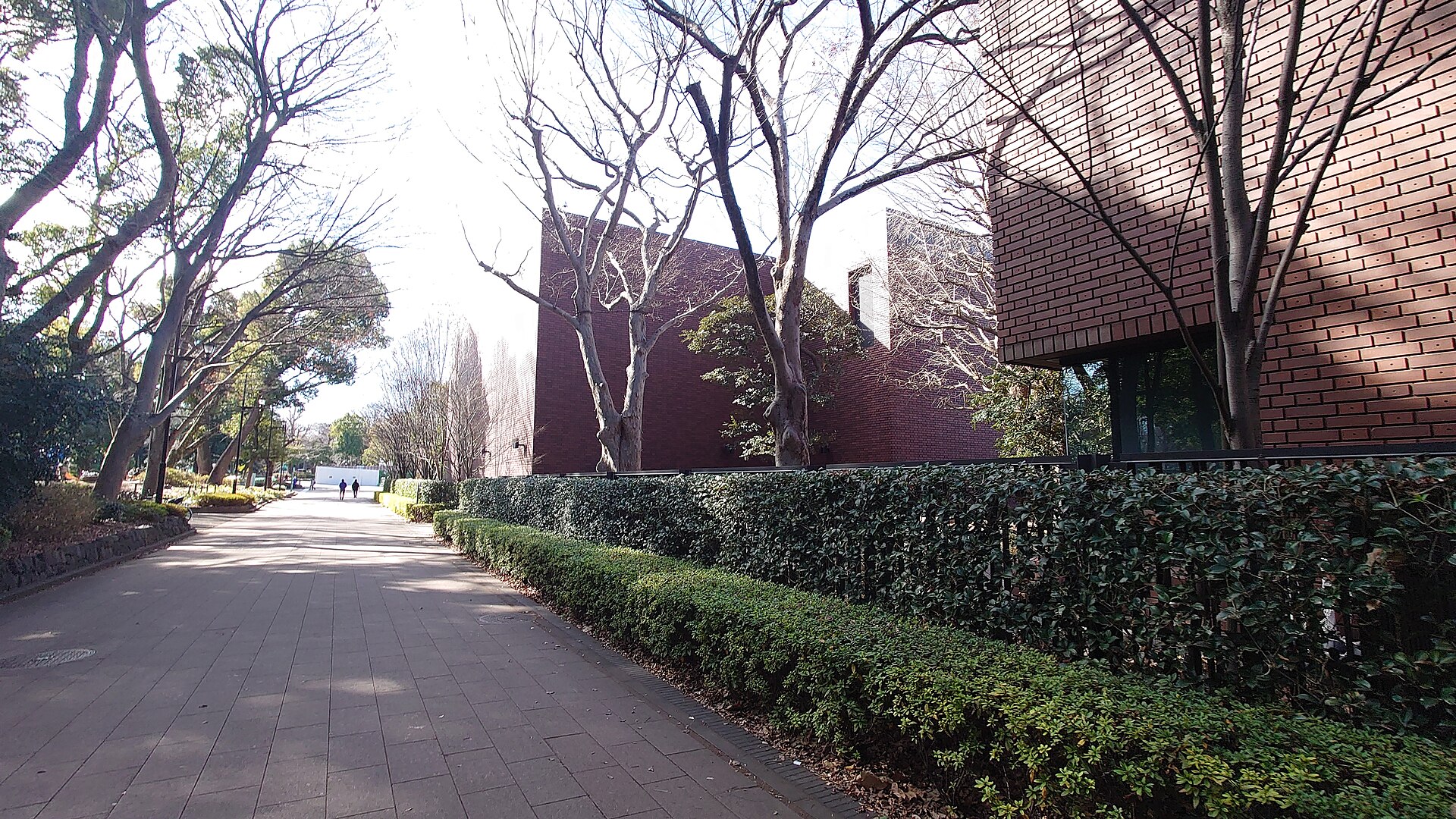
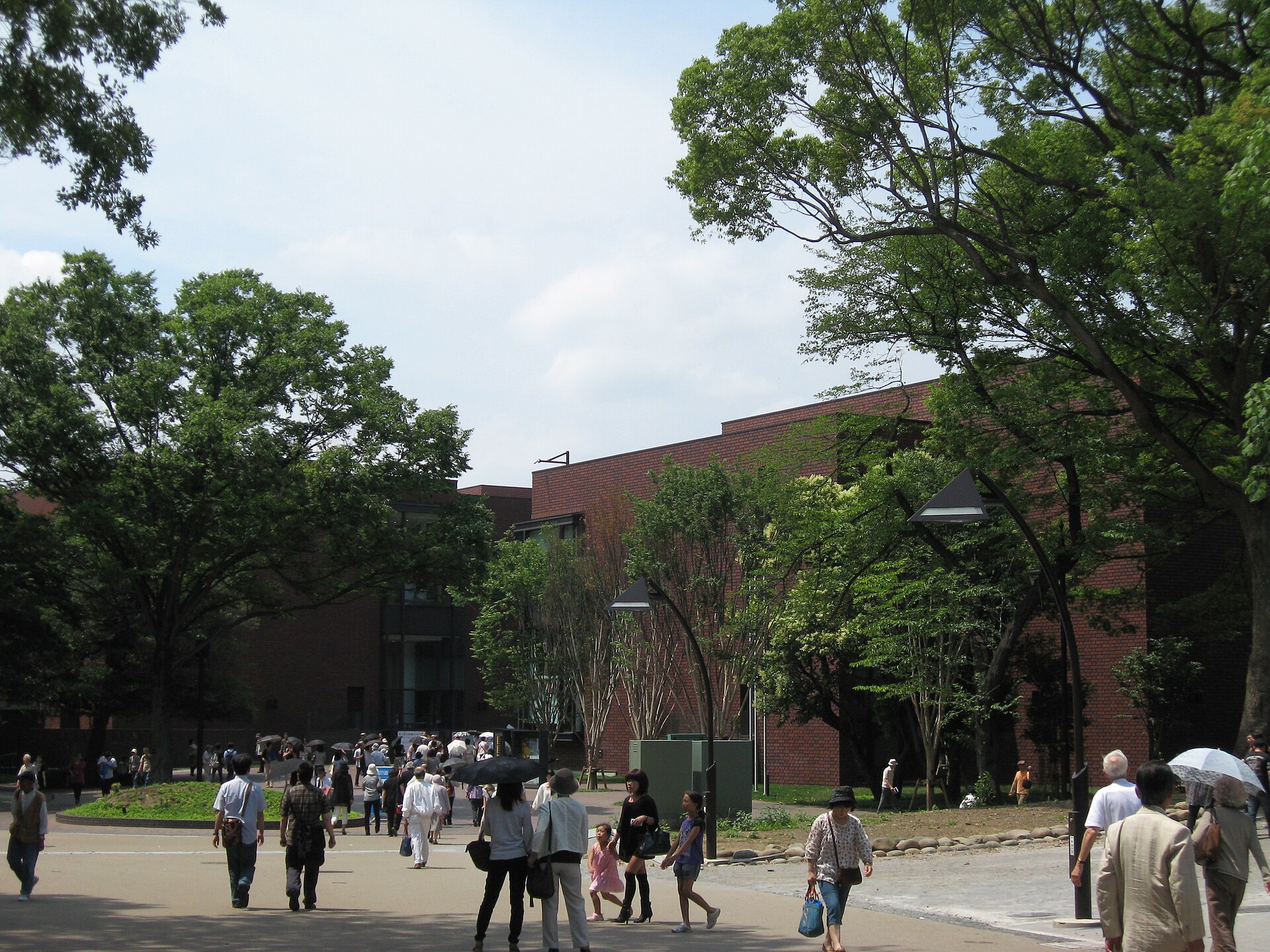
Kunio Maekawa (Mayekawa Kunio Associates)After a 1965-67 survey found the 1926 building deteriorating, the museum was demolished and rebuilt between 1972 and 1975 to Maekawa's design. To meet Ueno Park's fifteen-metre height restriction, around 60 per cent of the building's 31,000 square metres of floor area was placed underground, with the main entrance and lobby at basement level, organised around a central open esplanade and inner court.2
1994: the museum's own collection was moved out
Transfer to the Museum of Contemporary Art TokyoIn 1994 the museum's holdings of artworks and art materials, other than twelve outdoor sculptures, were relocated in full to the newly opened Museum of Contemporary Art Tokyo. This is the clearest evidence in the museum's own account that it now functions as an exhibition hall built around loan and rental shows rather than a museum with a standing collection.1
2007: Nitten, Nikaten and Kokuten all left for the National Art Center, Tokyo
Japan Fine Arts Exhibition (Nitten), Nika Association Exhibition (Nikaten), Kokuga Association Exhibition (Kokuten)These open-entry exhibitions were each drawing on the order of 1.7 million visitors a year while housed in the museum's Citizens' Galleries, by the museum's own account its single biggest recurring draw. All three, plus the graduation shows of Tokyo's art universities, moved to the National Art Center, Tokyo when it opened in Roppongi in 2007.1
A 2010-2012 renewal for universal design
Mayekawa Associates, Architects and EngineersMaekawa's own successor firm carried out a further large-scale renewal of the building between 2010 and 2012, adding step-free access improvements and expanding the restaurant and museum-shop space; the museum reopened in April 2012 in the form it operates in today.1
A hundred-year exhibition calendar built around the 2026 centenary
Edo in Focus: Japanese Treasures from the British Museum, and the museum's wider 2026 programmeTo mark a hundred years since the 1926 opening, the museum's 2026 calendar includes a loan exhibition of British Museum ukiyo-e and Edo-period works by Utamaro, Sharaku, Hokusai and Hiroshige (25 July-18 October 2026), an Andrew Wyeth exhibition earlier in the year, Views of This Place, addressing the museum's own history (23 July-7 October 2026), and Ways of Reading, running into January 2027, alongside an announced archive exhibition and symposiums on the museum's own hundred years.7
Exhibitions on now
- Opening soon14 Nov 2026 to 28 Mar 2027Confirmed , 6 weeks ago
- Opening soon19 Nov 2026 to 11 Jan 2027Confirmed , 6 weeks ago
Past exhibitions here
- Closed25 Jul to 18 Oct 2026Confirmed · check before you travel
- Closed23 Jul to 7 Oct 2026Confirmed · check before you travel
Built to hold no collection
The Tokyo Metropolitan Art Museum opened on 1 May 1926 in Ueno Park as the Tokyo Prefectural Art Museum, Japan's first public art museum. It exists because of a single donor: the Kyushu coal industrialist Keitaro Sato gave one million yen toward its construction in 1921, a sum the museum's own history page states is worth roughly four billion yen today. The original building was designed by the architect Shinichiro Okada.
From the day it opened, the museum was built as a permanent institution with no permanent collection to put inside it. It was designed as a venue where any artist's group could rent space to show its own work, hosting government-backed and independent exhibitions rather than assembling a collection of its own. The contradiction was noticed immediately: the critic Shizuka Shikazaki called the new museum a complete failure for exactly this reason, and two years later the critic Seisui Sakai argued it could not be considered a complete museum without a collection behind it. In October 1943, when Tokyo's administrative status changed from prefecture to metropolis, the institution was renamed Tokyo Metropolitan Art Museum, the name it carries now.
Kunio Maekawa's building, sunk below a fifteen-metre limit
By the mid-1960s the original 1926 building was deteriorating badly enough that the museum commissioned a structural survey, carried out between 1965 and 1967, and a preparatory rebuilding committee was set up in 1968. Construction on a full replacement ran from 1972 to 1975, to a design by the modernist architect Kunio Maekawa's own firm, Mayekawa Kunio Associates. The new building reopened in September 1975 and is the one still standing today.
Maekawa was working under Ueno Park's own regulations, which cap new construction at fifteen metres. His answer was to put around sixty per cent of the building's 31,000 square metres of floor area underground, with the main entrance and lobby sitting at basement level rather than at grade. He organised the museum's three functions, an exhibition programme of its own, the group-rental galleries, and public education spaces, around a central open esplanade and inner court, tying the below-grade circulation back to Ueno Park's ginkgo, elm and zelkova trees at every turn. A further large-scale renewal, carried out by Maekawa's successor firm Mayekawa Associates, Architects and Engineers, added universal-design access and expanded the restaurant and shop spaces; the museum reopened again in April 2012.
1994: the collection itself leaves
The clearest evidence for how this museum actually functions is what it did with its own collection. In 1994, the museum's holdings of artworks and art materials, with the sole exception of twelve outdoor sculptures, were transferred out entirely, to the newly opened Museum of Contemporary Art Tokyo. What stayed behind is a building whose programme runs on exhibitions organised with newspaper companies and other co-organisers, and on the public-entry shows staged by outside art groups and societies renting its Citizens' Galleries, rather than on a standing display of its own. The twelve sculptures that were not moved remain outdoors on the museum grounds, visible today from the ground-floor cafe.
This was not a collection quietly lost to neglect. The 1994 transfer was a deliberate reallocation to a purpose-built contemporary-art institution, and the Tokyo Metropolitan Art Museum has operated since in the role its own history page frames explicitly: a venue for exhibitions rather than a repository, closer to a rental exhibition hall than to the encyclopaedic museums elsewhere in the same park.
2007: losing Nitten, Nikaten and Kokuten
For most of the twentieth century the museum's galleries were also the home of Japan's largest open-entry art exhibitions. The Nitten (Japan Fine Arts Exhibition), the Nikaten (Nika Association Exhibition) and the Kokuten (Kokuga Association Exhibition) were each drawing on the order of 1.7 million visitors a year while housed here, according to the museum's own account, making them by far its biggest recurring draw. When the National Art Center, Tokyo opened in Roppongi in 2007, all three moved there, along with the graduation-show exhibitions of Tokyo's art universities that had also used the building.
The departure did not close any wing outright; the Citizens' Galleries that hosted these shows continue to host other rental exhibitions from art societies and groups. But it removed the single largest, most predictable source of visitors the museum had built its calendar around for decades, leaving the special-exhibition programme organised with outside partners to carry more of the museum's public identity than before.
The centennial programme, 2026
2026 marks a hundred years since the 1926 opening, and the museum has built its exhibition calendar around the anniversary. Edo in Focus: Japanese Treasures from the British Museum, running 25 July to 18 October 2026, brings folding screens, hanging scrolls, narrative handscrolls and ukiyo-e prints by artists including Utamaro, Sharaku, Hokusai and Hiroshige out of the British Museum's own holdings. Views of This Place, Ueno, Omuta and Buenos Aires runs 23 July to 7 October 2026, addressing the museum's own place and history rather than borrowed work. An Andrew Wyeth exhibition ran earlier in the year, and Ways of Reading, How the World Speaks to Us, How We Speak to the World is scheduled for 19 November 2026 to 11 January 2027. The museum has said its centennial programme also includes an archive exhibition and symposiums tied to its own hundred-year history.
Alongside the exhibition calendar, the museum runs the Tobira Project with Tokyo University of the Arts, training volunteer art communicators to work with visitors, and Museum Start i-Ueno, a programme linking nine cultural institutions across Ueno Park to give children a structured route into all of them, not only this one.
Visiting
Entry to the building itself is free: the restaurants, the shop, the Library and Archives and the Sato Keitaro Memorial Lounge can all be visited without a ticket. A ticket is needed only for whichever special exhibition is running, and prices are set per show rather than museum-wide; the British Museum exhibition running through October 2026 charges 2,300 yen for a general adult ticket at the door, 1,300 yen for college students and 1,600 yen for visitors 65 and over, with lower advance-purchase prices for each and free entry for anyone eighteen or younger.
The museum keeps standard hours of 9:30 to 17:30, with last admission thirty minutes before close, and stays open until 20:00 on Fridays only while a special exhibition is running. It closes on the first and third Monday of most months rather than every Monday, plus separate scheduled maintenance closures each summer and winter and the New Year holiday, a calendar visitors specifically flag as easy to get wrong. It is a seven-minute walk from JR Ueno Station's Park Exit and about ten minutes from the Tokyo Metro and Keisei Ueno stations; there is no on-site parking for cars. The main entrance has escalators and elevators to the lobby, and the museum recommends it over the east entrance, which is reached by stairs only.
What visitors say
Visitors consistently treat this as a special-exhibition venue rather than a permanent-collection museum: reviews praise the quality and often Japan-linked framing of its loan shows, and value free general admission and easy access from Ueno's three stations. The recurring complaints are crowding at popular exhibitions, a closing-day calendar that is easy to get wrong, and Japanese-only labelling in some of the rental-gallery displays.
What is praised, what is criticised
- Praised: The special-exhibition programme, particularly loan shows with a Japan connection (Van Gogh, Miro, Klimt, Munch, Andrew Wyeth) and homegrown retrospectives such as the Tanaka Isson show, which one Tripadvisor reviewer compared to discovering Klimt or Munch for the first time
- Praised: Free general admission to the building itself, the restaurants, the shop and the non-ticketed spaces
- Praised: Straightforward access, a 7-to-10-minute walk from any of Ueno's three stations, with clear bilingual labelling inside the special exhibitions
- Criticised: Popular special exhibitions get very crowded, and photography is generally not allowed inside them
- Criticised: The closing-day calendar is unusually complicated: a fixed 1st-and-3rd-Monday closure rather than every Monday, plus separate summer and winter maintenance weeks, which more than one visitor flagged as easy to miss when planning a visit
- Criticised: Some rental-gallery displays of contemporary or modern Japanese work carry no English translation, unlike the ticketed special exhibitions
Ratings on other platforms
Tripadvisor: 4.1 from 554 ratings, read 9 September 2026
A platform average is a tertiary source: it moves, it is not audited, and we quote no visitor's words.
Questions about Tokyo Metropolitan Art Museum
Where is Tokyo Metropolitan Art Museum?
8-36 Ueno Koen, Taito-ku, Tokyo 110-0007, Japan.
How much does it cost to visit?
General museum admission (building, restaurants, shop, Library and Archives, non-ticketed spaces): free; Special exhibition, adult (example: Edo in Focus, British Museum loan show, 25 Jul-18 Oct 2026): JPY 2300; Special exhibition, college student (same exhibition): JPY 1300; Special exhibition, senior 65 and over (same exhibition): JPY 1600. As confirmed 9 September 2026.
When is it open?
Daily except the 1st and 3rd Monday of most months 09:30-17:30; Friday, only while a special exhibition is running 09:30-20:00. Closed: 1st and 3rd Monday of most months (a fixed closure, not every Monday). Additional Mondays that fall inside a special-exhibition run. As confirmed 9 September 2026.
How do you get there?
Rail (JR): About a 7-minute walk from JR Ueno Station's Park Exit; Rail (Metro): About a 10-minute walk from Tokyo Metro Ginza Line or Hibiya Line, Ueno Station Exit 7; Rail (Keisei): About a 10-minute walk from Keisei-Ueno Station; Car: No on-site parking; the museum's own guidance asks visitors not to come by car.
What should you see first?
Built as a permanent museum with no permanent collection, and criticised for it immediately (Critics Shizuka Shikazaki (1926) and Seisui Sakai (1928)); A single coal-industry donor made the museum possible (Keitaro Sato, coal industrialist, Kitakyushu); The 1975 Maekawa building, sunk below Ueno Park's fifteen-metre limit (Kunio Maekawa (Mayekawa Kunio Associates)); 1994: the museum's own collection was moved out (Transfer to the Museum of Contemporary Art Tokyo); 2007: Nitten, Nikaten and Kokuten all left for the National Art Center, Tokyo (Japan Fine Arts Exhibition (Nitten), Nika Association Exhibition (Nikaten), Kokuga Association Exhibition (Kokuten)); A 2010-2012 renewal for universal design (Mayekawa Associates, Architects and Engineers).
What we could not confirm
- The museum's own site does not publish a current object count for its residual holdings (the twelve outdoor sculptures retained after the 1994 transfer, plus any later gifts); the figure of 49 objects on English Wikipedia is unsourced there and is treated here as tertiary only.
- No source read in this research states what became of the fabric of the demolished 1926 Okada building, or whether any part of it survives.
Images
Sources
- 1Tokyo Metropolitan Art Museum, 'Museum History'. Fetched 9 September 2026. States the 1926 opening, Keitaro Sato's 1921 donation, architect Shinichiro Okada, the 1943 renaming, the 1965-67 survey and 1968 committee, 1972-75 rebuilding under Mayekawa Kunio Associates, the 1994 transfer of the collection (other than twelve outdoor sculptures) to the Museum of Contemporary Art Tokyo, the 2007 departure of Nitten, Nikaten and Kokuten to the National Art Center, Tokyo (each previously drawing about 1.7 million visitors), and the 2010-2012 renewal reopening April 2012. tobikan.jp/en/outline/history.html
- 2Tokyo Metropolitan Art Museum, 'New Museum Building by Mayekawa Kunio'. Fetched 9 September 2026. States the building's three design principles, the 31,000 square metre floor area with about 60 per cent underground to meet Ueno Park's 15-metre height limit, and the central esplanade and inner-court layout. tobikan.jp/en/outline/architecture2.html
- 3Tokyo Metropolitan Art Museum, 'Access & Visitor Information'. Fetched 9 September 2026. States opening hours, the 1st-and-3rd-Monday closure pattern, scheduled 2026-27 maintenance closure dates, walking times from JR, Metro and Keisei Ueno stations, no on-site parking, and step-free access via the main entrance. tobikan.jp/en/guide/index.html
- 4Tokyo Metropolitan Art Museum, 'Frequently Asked Questions'. Fetched 9 September 2026. States the museum's general administration telephone number, 03-3823-6921, and confirms free museum entry with per-exhibition ticketing. tobikan.jp/en/support/faq.html
- 5Tokyo Metropolitan Art Museum, 'Floor Map'. Fetched 9 September 2026. Lists Citizens' Galleries 1-4 and an Exhibition Room on the Lower Basement, 1st and 2nd floors, Galleries A, B and C on B3F and B2F, the Library and Archives, Sato Keitaro Memorial Lounge, Inner Court and Esplanade on 1F, the Museum Shop and Auditorium on the Lower Basement, and the Art Study Room, Project Room and Studio on 2F. tobikan.jp/en/guide/floormap.html
- 6Tokyo Metropolitan Art Museum, 'Cafe and Restaurants'. Fetched 9 September 2026. Names and locates cafe Art (Central Wing 1F), RESTAURANT salon (Interchange Wing 1F) and RESTAURANT MUSE (Central Wing 2F), and states all three close on the museum's 1st-and-3rd-Monday closure days. tobikan.jp/en/guide/restaurant.html
- 7Tokyo Metropolitan Art Museum, homepage, listing 2026 centennial exhibitions. Fetched 9 September 2026. States dates for Edo in Focus: Japanese Treasures from the British Museum, Views of This Place, Ueno, Omuta and Buenos Aires, and Ways of Reading, and describes the Tobira Project (with Tokyo University of the Arts) and Museum Start i-Ueno programmes. tobikan.jp/en/
- 8Tokyo Metropolitan Art Museum, exhibition page for 'Edo in Focus: Japanese Treasures from the British Museum'. Fetched 9 September 2026. States exhibition dates 25 July-18 October 2026 and the full admission price table (general, college student, senior, advance and free categories). tobikan.jp/en/exhibition/2026_britishmuseum.html
- 9Tripadvisor, Tokyo Metropolitan Art Museum listing, Uenokoen. Fetched 9 September 2026 via in-app browser after a direct fetch was blocked. Review text on the page (not reproduced here) was read directly to characterise consensus praise (special-exhibition quality, free general admission, Japan-linked framing of loan shows such as Van Gogh, Miro, Klimt, Munch and a Tanaka Isson retrospective) and consensus complaints (crowding, no photography in special exhibitions, and a closing-day calendar visitors describe as complicated). tripadvisor.com/Attraction_Review-g14134278-d1425384-Reviews-Tokyo_Metropolitan_Art_Museum-Uenokoen_Taito_Tokyo_Tokyo_Prefecture_Kanto.html
- 10Wikipedia, 'Tokyo Metropolitan Art Museum'. Fetched 9 September 2026. en.wikipedia.org/wiki/Tokyo_Metropolitan_Art_Museum
- 11Wikimedia Commons, the file pages of the plates shown here (author and licence of each). commons.wikimedia.org/wiki/Category:Tokyo_Metropolitan_Art_Museum