Tikotin Museum of Japanese Art
Museum · Muzeon Tikotin Le-Omanut Yapanit · Founded 1911
Open, admission and hours confirmed 17 September 2026 · 15 sources
On this page 14 sections
ContentsClose
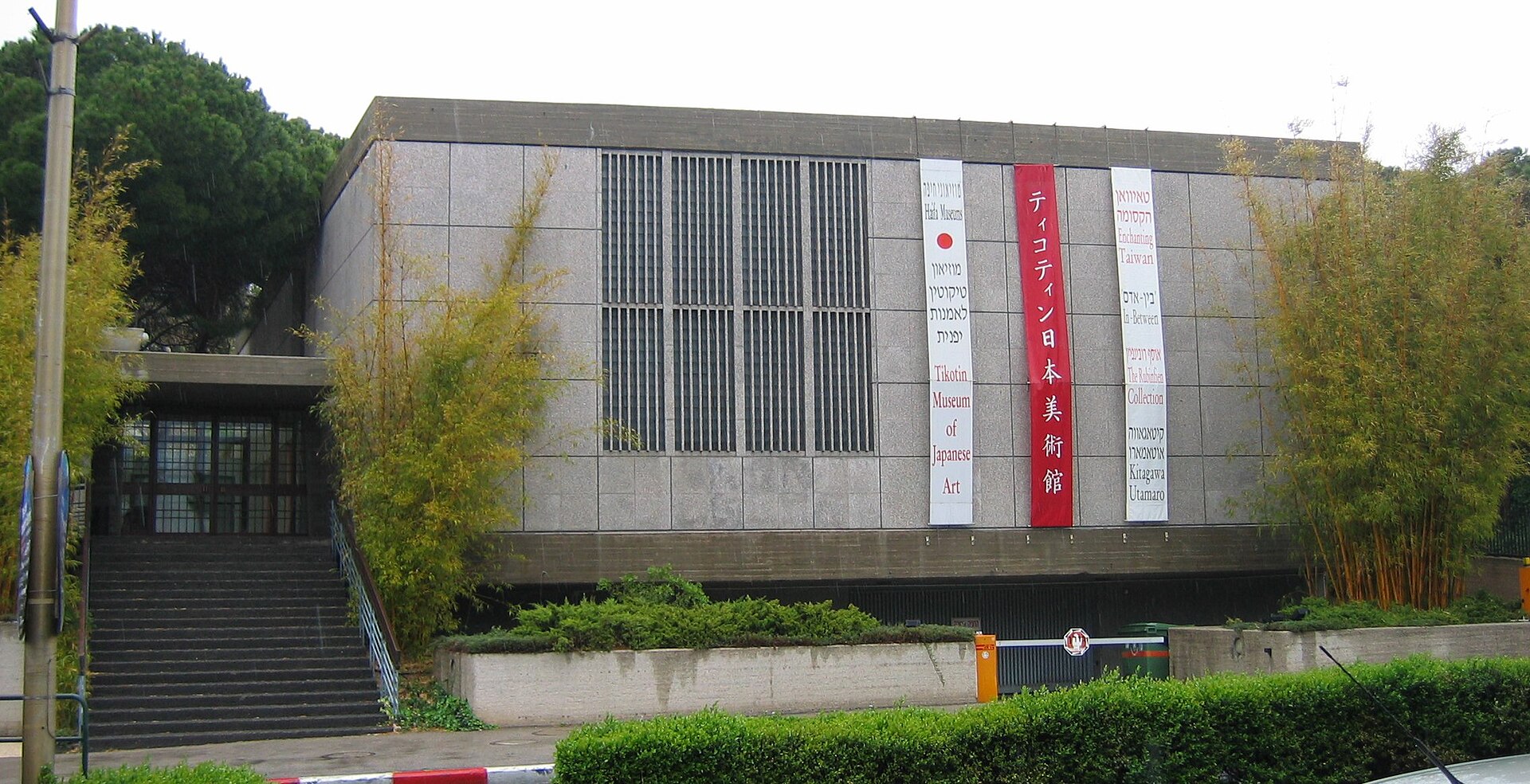
The museum's declared strength is depth in a single national tradition rather than breadth: roughly 7,000 to 8,000 Japanese objects, the only holding of its kind and scale in the Middle East, anchored by Felix Tikotin's own netsuke, inro, print, ceramic, sword and lacquerware collection and extended by later gifts including the Horodisch netsuke collection from Amsterdam. Its comparative advantage against a general encyclopaedic museum is curatorial: exhibitions rotate historical ukiyo-e and decorative arts against contemporary Japanese and Israeli artists on a cycle, most recently in the 2026 show In Praise of Shadows, rather than presenting one fixed permanent hang.
| Local name | Muzeon Tikotin Le-Omanut Yapanit |
|---|---|
| Kind | Museum |
| Founded | Collection assembled by Felix Tikotin from around 1911; the museum opened 25 May 1960 in the Kisch House on Mount Carmel; a 1,800 square metre wing designed by Junzo Yoshimura and Al Mansfeld was added in 1995 |
| City and country |  Haifa, Israel Haifa, Israel |
| Address | Sderot HaNassi 89, Haifa, Israel |
| Website | tmja.org.il |
| Status | Open, confirmed 17 September 2026 |
| Record last verified | 17 September 2026 |
Visiting
- Hours
- Sun, Tue, Wed, Sat10:00 to 16:00
- Thu10:00 to 18:00
- Fri10:00 to 14:00
- Closed
- Monday.
- Admission
- AdultILS 40
- Concession: ages 5-18, soldiers, police, students, people with disabilities, Haifa residentsILS 30
- Senior citizenILS 20
- FamilyILS 100family unit; an additional child beyond the family tier is 17 ILS
- Combined Haifa Museums ticket, adultILS 80admits to the other Haifa Museums venues on the same day
- Combined Haifa Museums ticket, senior citizenILS 40
- Combined Haifa Museums ticket, familyILS 170
Free entry: New immigrants, free of charge within their first year in Israel with valid identification- Do I need to book?
- Not stated as required; the museum's ticketing and events run through the Haifa Museums consortium site
- Address
- Sderot HaNassi 89, Haifa, Israel Map
- Website
- tmja.org.il
- Telephone
- +972-4-603-0800
- [email protected]
Before you go how long, access, photography, bags, eating, shop
- How long to allow
- Visitors consistently describe the museum as small; a single visit to the permanent displays and the current exhibition is short compared with Haifa's larger museums
- Access
- The 2026 exhibition 'In Praise of Shadows' is listed by the museum as accessible, with a complimentary audio guide available on a visitor's own smartphone
- Photography
- Not stated in sources consulted
- Bags
- Not stated in sources consulted
- Eating
- A cafe sits inside the 1995 wing alongside the exhibition halls
- Shop
- A museum shop is on site; visitor reviews single it out as a strong point
Prices and hours change. We take them from the institution's own pages and print the day we read them, and you can check the current position at the source we used. Confirm before you travel.
What is inside
The Kisch House
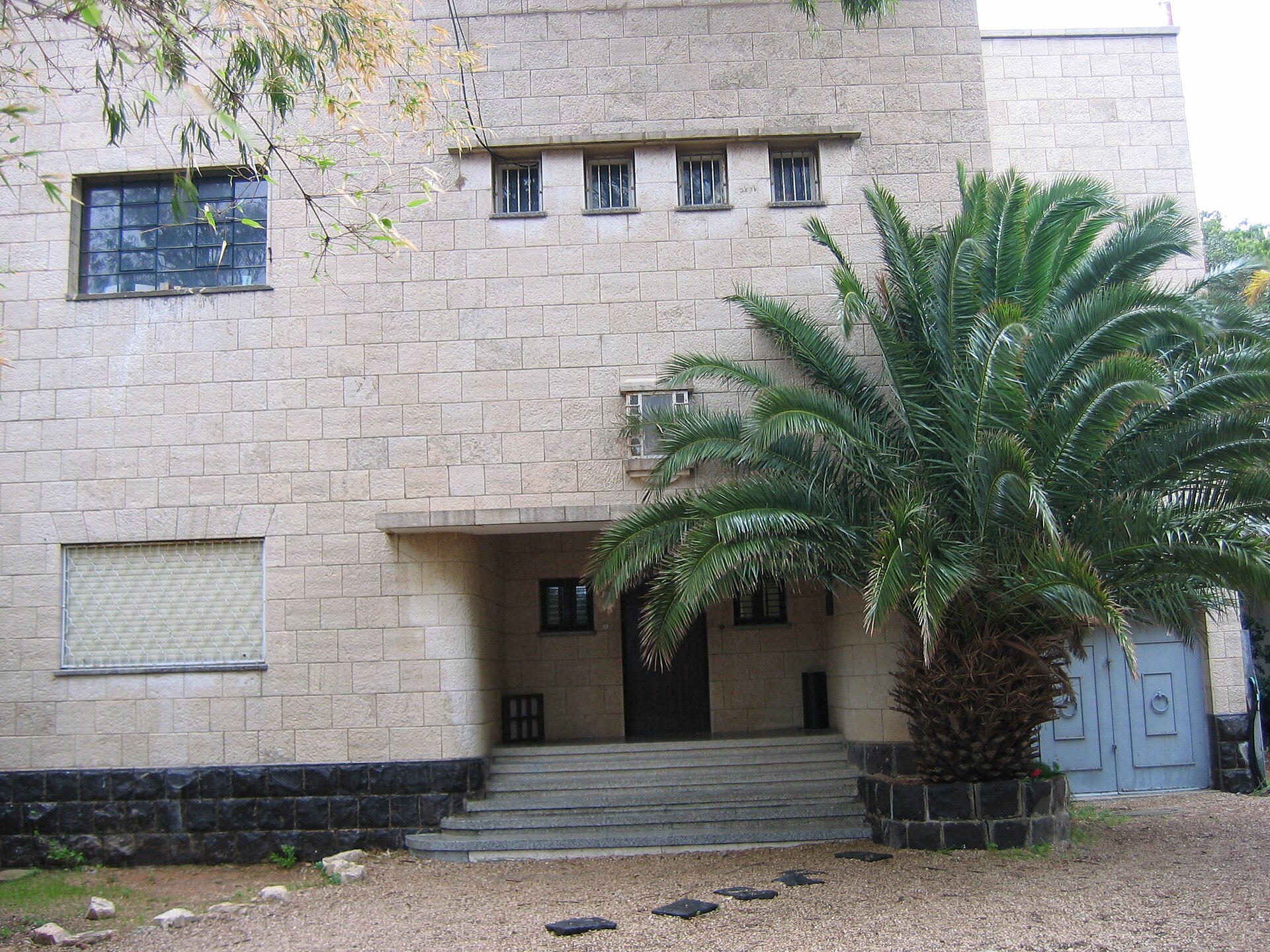
The museum's first home, a Mandate-era stone building put up for Brigadier Frederick Kisch between 1934 and 1939. It housed the original 1960 exhibition space, designed in a Japanese idiom with paper sliding doors onto a Zen garden, and today serves as the museum's education centre with reconstructed Japanese rooms and family workshops.
The 1995 exhibition wing
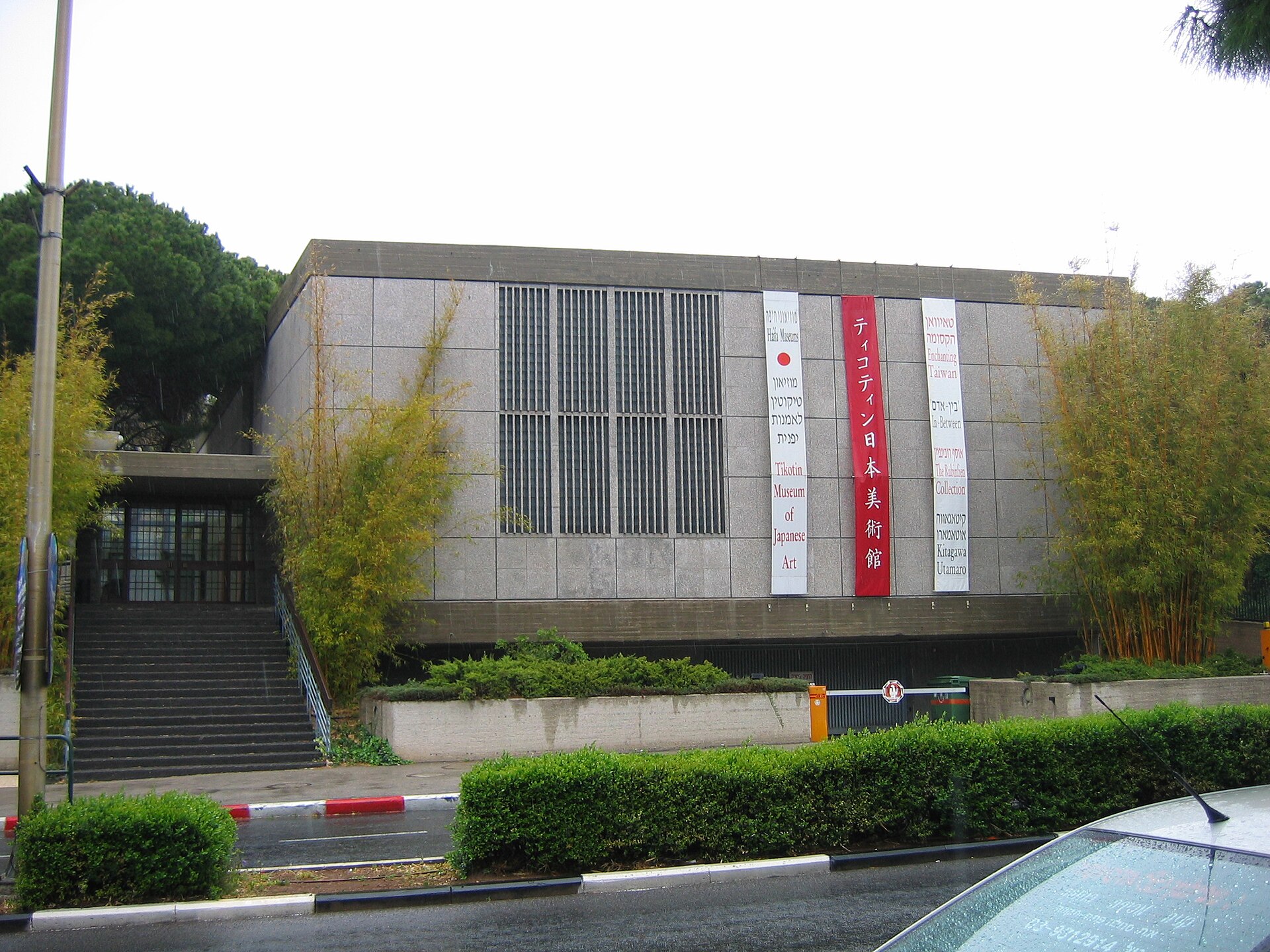
An 1,800 square metre addition designed jointly by the Japanese architect Junzo Yoshimura and the Israeli architect Al Mansfeld, holding the museum's main exhibition halls, including the room now showing 'In Praise of Shadows | Silence in the Time of Light' (28 June to 28 November 2026).
Raphael Angel Auditorium
A 200-seat auditorium completed in 2000, used for lectures, film screenings and cultural programming tied to the museum's exhibitions and its Japanese-language and culture courses.
The netsuke, inro and lacquerware gallery
Holds the core of Felix Tikotin's own gift, cataloged by the International Netsuke Society as 291 netsuke, 127 inro, 5 ojime and 15 related pieces, joined later by the roughly 650-piece Horodisch collection donated from Amsterdam.
The porcelain and ceramics room
Described in a 2018 Jerusalem Post review as the museum's main room at that time, holding blue-and-white porcelain mainly of the Edo period (16th to 19th century), made for shogunal and European royal patrons and decorated with Zen Buddhist and Chinese-derived motifs including tigers and dragons.
Museum cafe and shop
A cafe and a gift shop selling Japanese-themed goods, both built into the 1995 wing; visitor reviews consistently mention both as a highlight of the visit.
What to see first
The netsuke, inro and ojime collection
Various Edo-period Japanese carvers, plus the later Horodisch collection291 netsuke, 127 inro, 5 ojime and 15 related pieces from Felix Tikotin's own gift, joined by a further roughly 650 netsuke from the Horodisch collection of Amsterdam, together forming one of the larger netsuke holdings outside Japan.8
Historical ukiyo-e prints by Hiroshige, Kuniyoshi, Hokusai, Hasui and Kiyochika
Utagawa Hiroshige, Utagawa Kuniyoshi, Katsushika Hokusai, Kawase Hasui, Kobayashi KiyochikaNamed by the museum as the historical printmakers set alongside thirteen contemporary artists in the 2026 exhibition 'In Praise of Shadows', showing the museum draws its ukiyo-e holdings into rotating, curated dialogue with living artists rather than a single static hang.6
Edo-period blue-and-white porcelain
Unattributed Edo-period Japanese kilnsSingled out by a 2018 Jerusalem Post review as the strongest room on that visit: wares made for the shogun and for European royal collectors, carrying Zen Buddhist and Chinese-derived motifs of tigers, dragons and landscape.10
Antique Japanese swords and associated fittings
UnattributedNamed among the museum's core holdings by both the museum's own account and outside reviewers as one of the collection's strongest sections, spanning the 17th to 19th centuries.9
Painted screens and calligraphy scrolls
Unattributed, 17th to 19th centuryPart of the founding Tikotin gift and listed by the museum among its principal object categories alongside paintings and illustrated books.1
Modern Japanese prints, including a 1987 triptych by Yokoyama
YokoyamaSingled out in the 2018 Jerusalem Post review as an example of the museum's modern print room, described as drawing on a fantastical, otherworldly visual language distinct from the Edo-period galleries.10
The Kisch House itself
Built for Brigadier Frederick Kisch, 1934-1939The museum's original home and now its education wing; a Mandate-era building that predates the museum by a quarter century and still stands on the same plot as the 1995 wing.1
The 1995 wing by Junzo Yoshimura and Al Mansfeld
Junzo Yoshimura (Japan) and Al Mansfeld (Israel)An 1,800 square metre expansion co-designed by a Japanese and an Israeli architect together, a rare pairing for a building in Israel and the reason the museum can host large touring and thematic exhibitions such as 'In Praise of Shadows'.1
The Kisch House on the crest of Mount Carmel
The Tikotin Museum of Japanese Art occupies a building older than the museum itself. The Kisch House, a stone structure built between 1934 and 1939 for Brigadier Frederick Kisch, stands on Sderot HaNassi at the top of Mount Carmel, looking down over Haifa and the bay. When Felix Tikotin and Haifa's mayor Abba Hushi agreed to house a museum of Japanese art there, the original exhibition space was fitted out in a Japanese idiom rather than left as a European villa: paper sliding doors opened onto a small garden built in a Japanese style, and the rooms were designed to be walked through the way a Japanese collection is meant to be seen, in daylight and in quiet.
The museum opened its doors on 25 May 1960. It stayed a modest single building for thirty-five years. In 1995 an 1,800 square metre wing was added beside the original house, designed jointly by the Japanese architect Junzo Yoshimura and the Israeli architect Al Mansfeld, the same Mansfeld who had earlier built the Israel Museum in Jerusalem. The new wing gave the museum two proper exhibition halls, a cafe and dedicated storage for a collection that had long since outgrown the Kisch House alone. A further addition followed in 2000: the Raphael Angel Auditorium, a 200-seat hall built for lectures and film screenings, which now anchors much of the museum's public programming beyond the galleries themselves. The Kisch House did not become redundant. It was repurposed as an education centre, with reconstructed Japanese rooms used for the museum's language courses, tea ceremonies and children's workshops, so the oldest part of the site is now the part furthest from a conventional gallery visit and closest to the museum's teaching mission.
Felix Tikotin: a collector who hid his life's work twice
The museum's founder was not a Japanese specialist by training. Felix Tikotin was born in 1893 in a Jewish family and pushed by his parents toward architecture rather than the art career he wanted; one account gives his birthplace as Glogau in Germany, another as a Polish village whose name is rendered as Chikochen, and the family name itself is said to derive from Tikocyn on the old Polish-Russian border. He grew up in Dresden in the years the Die Brucke group of artists was active there, and studied architecture in Munich before working for a time with the architect Erich Mendelsohn. His interest in Japanese art dates to a pre-First World War visit to Paris, where he first encountered serious Japanese collections, and by his own account he began collecting seriously in his teens.
What turned Tikotin from an amateur into a professional, on the museum's own account, was a journey to Japan made by the Trans-Siberian Railway with the scholar Fritz Rumpf. He went on to import Japanese handicrafts into Germany for sale and, in April 1927, opened a gallery in Berlin devoted to Japanese art, building a reputation as an international authority on the subject through the exhibitions he mounted there. As the Nazi party rose to power, a Danish friend arranged for the collection to be moved out of Germany to Holland ahead of Tikotin himself. Some pieces were stolen during the German occupation of the Netherlands, but the bulk of the collection survived, hidden by Dutch neighbours, and Tikotin recovered it after the war with the help of the Dutch police in 1950.
Accounts diverge on exactly why the collection ended up in Israel rather than staying in Europe. The museum's own history page frames it as a decision made after Tikotin visited Israel in 1956 and concluded that his miraculously recovered collection belonged there. A Times of Israel feature on Tikotin adds a second, more prosaic factor: a prolonged tax dispute with the Dutch government, which the article says was a driving reason for the donation. The two accounts are not contradictory, a personal decision and a practical dispute could both have been true at once, but no source consulted for this record reconciles them into a single sequence of events, and that gap is recorded here rather than resolved by guesswork. The same Times of Israel piece reports a rupture the museum's own pages do not mention: that Tikotin was later banned from the institution bearing his name after severe conflicts with its director, and spent his final three decades in Switzerland, where he built a second Japanese art collection before his death there in 1986.
Opening in Haifa and the wider Haifa Museums consortium
The museum was established in 1959 through the joint effort of Tikotin and Abba Hushi, Haifa's socialist mayor, who is credited by the Times of Israel with the belief that Haifa's working population deserved the same access to serious culture as any other city. Tikotin is reported to have brought in a Japanese curator to help set up the collection for display, and the museum that opened in 1960 quickly became, and remains, the only museum in the Middle East devoted entirely to Japanese art. It marked a sixtieth anniversary in the early 2020s with a pair of exhibitions under the title Kanreki, a Japanese term for the rebirth marked at sixty years of age, one drawn from the museum's own holdings and a second built around sixty contemporary Japanese print works contributed through Tokyo's Yoseido Gallery.
Today the museum sits inside the Haifa Museums consortium, which brands itself as six museums in one frame and runs a shared ticketing and hours system through hms.org.il. Alongside the Tikotin, the group's 2026 hours page lists Haifa Museum of Art, the Haifa City Museum and the National Maritime Museum on a common Sunday to Saturday schedule, the Herman Struck Museum on the same weekday hours but closed on Saturdays, and the Mane Katz Museum as closed for renovation. Haifa Museum of Art is a sister institution already covered on this site; the Herman Struck Museum, the Mane Katz Museum and the National Maritime Museum are separate institutions and have not been researched for this archive. A combined Haifa Museums ticket admits to the group's other venues on the same day, and the consortium reports the Tikotin alone draws in the order of 70,000 visitors a year.
What is inside: from netsuke to modern prints
The collection is built around Tikotin's own gift and has grown through later donations, chiefly the Horodisch collection from Amsterdam. Its declared categories, by the museum's own account and by outside tertiary sources, span paintings, prints, drawings, painted screens, textiles, antique illustrated books, ceramics, lacquer and metalwork, antique swords and miniature carvings, mostly dated to the 17th through 19th centuries, alongside a modern and contemporary Japanese art holding. The International Netsuke Society gives precise figures for one part of that collection: 291 netsuke, 127 inro, 5 ojime and 15 related items from Tikotin's own gift, with a further roughly 650 netsuke added later from the Horodisch collection, a combined total that ranks among the larger netsuke holdings outside Japan itself.
A 2018 Jerusalem Post review of a specific visit gives a rare first-hand account of what was on the walls at that time. The museum's main room then held porcelain mainly of the Edo period, from the 16th to the 19th century, much of it made for the shogun and for European royal collectors and decorated with Zen Buddhist and Chinese-influenced motifs, tigers and dragons recurring frequently, in blue and white glazes with line work the reviewer called soft and delicate rather than heavy. A separate room of modern Japanese prints in the same visit included a 1987 triptych by an artist rendered as Yokoyama, titled End of the Battle, which the reviewer read as drawing on a fantastical, otherworldly visual register distinct from the Edo-period galleries next door. Because exhibitions in the 1995 wing rotate on a cycle, what greets a visitor on any given day is not fixed, and the same reviewer noted disappointment that swords, armour and large-scale calligraphy, categories the museum does hold, were not on display during that particular visit.
In Praise of Shadows: the exhibition running through 2026
The exhibition on view for most of 2026, from 28 June to 28 November, is titled In Praise of Shadows: Silence in the Time of Light and is curated by Shoshi Ciechanover. Its starting point is Jun'ichiro Tanizaki's 1933 essay of the same English title, which mourned the aesthetic and spiritual qualities Japan was losing to electric light and Western modernization. The curatorial text frames shadow not as an absence of light but as a place where memory, mystery and imagination exist, and builds the show around three Japanese aesthetic concepts: mono no aware, a sensitivity to the passing of things; wabi, a quiet simplicity; and sabi, the beauty that comes with age and wear.
The exhibition pairs historical ukiyo-e printmakers, Utagawa Hiroshige, Utagawa Kuniyoshi, Katsushika Hokusai, Kawase Hasui and Kobayashi Kiyochika, with thirteen living artists working in printmaking, photography, paper, ink and ceramics: Ohad Tsfati, Takahashi Yo, Tali Benbassat, Yehudit Sasportas, Maya Smira, Meir Moheban, Miriam Cabessa, Noa Yafe, Nishimoto Akio, Zadok Ben David, Suly Bornstein Wolff, Shimada Setsuko and Timna Tsfati Neumann. The museum lists the show as accessible and offers a complimentary audio guide that runs on a visitor's own smartphone, with sponsorship credited to Toyota Israel. The pairing of eighteenth and nineteenth century woodblock artists with living Israeli and Japanese practitioners is consistent with how the museum has staged its anniversary shows in the past, treating its historical holdings as material for a live conversation rather than a fixed permanent hang.
Visiting today: hours, admission and what visitors say
The museum opens Sunday, Tuesday, Wednesday and Saturday from 10:00 to 16:00, Thursday from 10:00 to 18:00 and Friday from 10:00 to 14:00, and is closed on Mondays, according to the Haifa Museums consortium's own 2026 hours page. Standard admission is 40 ILS for adults, 30 ILS for a concession band covering children aged 5 to 18, soldiers, police, students, people with disabilities and Haifa residents, and 20 ILS for senior citizens, with a family ticket at 100 ILS and 17 ILS per additional child. New immigrants are admitted free within their first year in Israel with valid identification. A combined Haifa Museums ticket, covering the consortium's other venues on the same day, costs 80 ILS for an adult, 40 ILS for a senior citizen and 170 ILS for a family.
On Tripadvisor the museum carries a rating of 3.9 out of 5 from 156 reviews, ranking 21st of 94 things to do in Haifa, a tertiary figure read on 17 September 2026. The consensus across visitor reviews is consistent: praise for the garden setting, the sliding-door pavilion architecture, welcoming and knowledgeable staff, and a cafe and gift shop that reviewers single out by name, set against complaints about the lack of regular English-language tours, limited opening hours that catch out Monday visitors, and difficulty finding parking nearby. A recurring split concerns value: some visitors call the entrance fee steep for what they experience as a small permanent display, a complaint echoed in miniature by the 2018 Jerusalem Post review, whose author arrived hoping for more of the museum's sword and calligraphy holdings and instead reviewed the porcelain and modern print rooms that happened to be on view that day. Nothing in the sources consulted suggests either complaint reflects a change in the collection itself, rather than the ordinary fact that a museum built around rotating exhibitions of a fixed core collection will show a different slice of itself to visitors on different dates.
What visitors say
Visitors consistently describe the museum as a small, calm stop on Mount Carmel with a strong garden setting, good staff and a well-liked cafe and shop, and split on whether the size of the display justifies the entrance fee.
What is praised, what is criticised
- Praised: The Zen garden and the Japanese-style pavilion setting, including the original sliding paper doors onto the courtyard
- Praised: Staff described as knowledgeable and welcoming, running tours, film screenings and family activities
- Praised: The museum cafe and gift shop, both called out by name in multiple reviews
- Criticised: No regularly scheduled English-language guided tours
- Criticised: Limited opening hours, with the Monday closure catching some visitors out
- Criticised: Parking near the museum is reported as difficult to find
- Criticised: Some visitors call the entrance fee steep for what they see as a small permanent display, and a 2018 named review reported disappointment that swords, armour and large-scale calligraphy were not on view during that particular visit
Ratings on other platforms
Tripadvisor: 3.9 from 156 ratings, read 17 September 2026
A platform average is a tertiary source: it moves, it is not audited, and we quote no visitor's words.
Questions about Tikotin Museum of Japanese Art
Where is Tikotin Museum of Japanese Art?
Sderot HaNassi 89, Haifa, Israel.
How much does it cost to visit?
Adult: ILS 40; Concession: ages 5-18, soldiers, police, students, people with disabilities, Haifa residents: ILS 30; Senior citizen: ILS 20; Family: ILS 100; Combined Haifa Museums ticket, adult: ILS 80. As confirmed 17 September 2026.
When is it open?
Sun, Tue, Wed, Sat 10:00-16:00; Thu 10:00-18:00; Fri 10:00-14:00. Closed: Monday. As confirmed 17 September 2026.
What should you see first?
The netsuke, inro and ojime collection (Various Edo-period Japanese carvers, plus the later Horodisch collection); Historical ukiyo-e prints by Hiroshige, Kuniyoshi, Hokusai, Hasui and Kiyochika (Utagawa Hiroshige, Utagawa Kuniyoshi, Katsushika Hokusai, Kawase Hasui, Kobayashi Kiyochika); Edo-period blue-and-white porcelain (Unattributed Edo-period Japanese kilns); Antique Japanese swords and associated fittings (Unattributed); Painted screens and calligraphy scrolls (Unattributed, 17th to 19th century); Modern Japanese prints, including a 1987 triptych by Yokoyama (Yokoyama).
What we could not confirm
- Accounts differ on why Felix Tikotin sent his collection to Israel rather than keeping it in Europe: the museum's own history page frames it as a decision made after his 1956 visit and the collection's wartime survival, while a Times of Israel feature adds a prolonged Dutch tax dispute as a driving factor. The two are not mutually exclusive but no source consulted reconciles them into one account.
- The Times of Israel reports that Tikotin was later banned from the museum bearing his name after severe conflicts with its director, and spent his final three decades in Switzerland; the museum's own pages consulted for this record do not mention this rupture at all.
- Total collection size is reported inconsistently across sources, from just over 7,000 to about 8,000 items; no primary museum catalogue figure was located to settle the count.
Images
Sources
- 1Tikotin Museum of Japanese Art, official site, The Museum (history and architecture) tmja.org.il/eng/The_Museum
- 2Tikotin Museum of Japanese Art, official site, Felix Tikotin (founder biography) tmja.org.il/eng/Felix_Tikotin
- 3Tikotin Museum of Japanese Art, official site, Entry Prices tmja.org.il/eng/Entry_Prices
- 4Tikotin Museum of Japanese Art, official site, Contact Us tmja.org.il/eng/Contact_Us
- 5Tikotin Museum of Japanese Art, official site, Exhibitions tmja.org.il/eng/Exhibitions
- 6Tikotin Museum of Japanese Art, official site, In Praise of Shadows | Silence in the Time of Light (exhibition page) tmja.org.il/eng/Exhibitions/12231/In_Praise_of_Shadows_%7C_Silence_in_the_Time_of_Light
- 7Tikotin Museum of Japanese Art, official site, Now on View tmja.org.il/eng/Exhibitions/Now_on_View
- 8International Netsuke Society, museums listing (netsuke, inro and ojime counts) netsuke.org/page-677615
- 9Wikipedia, Tikotin Museum of Japanese Art (tertiary, for identity and collection categories) en.wikipedia.org/wiki/Tikotin_Museum_of_Japanese_Art
- 10Danny Shorkend, Art Review: Tikotin Museum of Japanese Art Haifa, The Jerusalem Post, 5 November 2018 jpost.com/israel-news/art-review-tikotin-museum-of-japanese-art-haifa-571133
- 11The Times of Israel, The yekke who collected Japanese art and brought it to Haifa timesofisrael.com/the-yekke-who-collected-japanese-art-and-brought-it-to-haifa/
- 12Tripadvisor, Tikotin Museum of Japanese Art attraction page (tertiary rating, read 17 September 2026) tripadvisor.com/Attraction_Review-g293982-d320615-Reviews-Tikotin_Museum_of_Japanese_Art-Haifa_Haifa_District.html
- 13Haifa Museums (hms.org.il), Activity Time (consortium opening hours, 2026) hms.org.il/eng/Activity_Time
- 14Ynetnews, Israel's only museum of Japanese art invites you to celebrate its 60th anniversary ynetnews.com/culture/article/HJXwofGnv
- 15Wikimedia Commons, Category:Tikotin Museum of Japanese Art (image source and licence verification) commons.wikimedia.org/wiki/Category:Tikotin_Museum_of_Japanese_Art