The National Libyan Museum
Museum · al-Mathaf al-Watani (Jamahiriya Museum, as-Saraya al-Hamra) · Founded 1919
Open, admission and hours confirmed 18 September 2026 · 20 sources
On this page 14 sections
ContentsClose
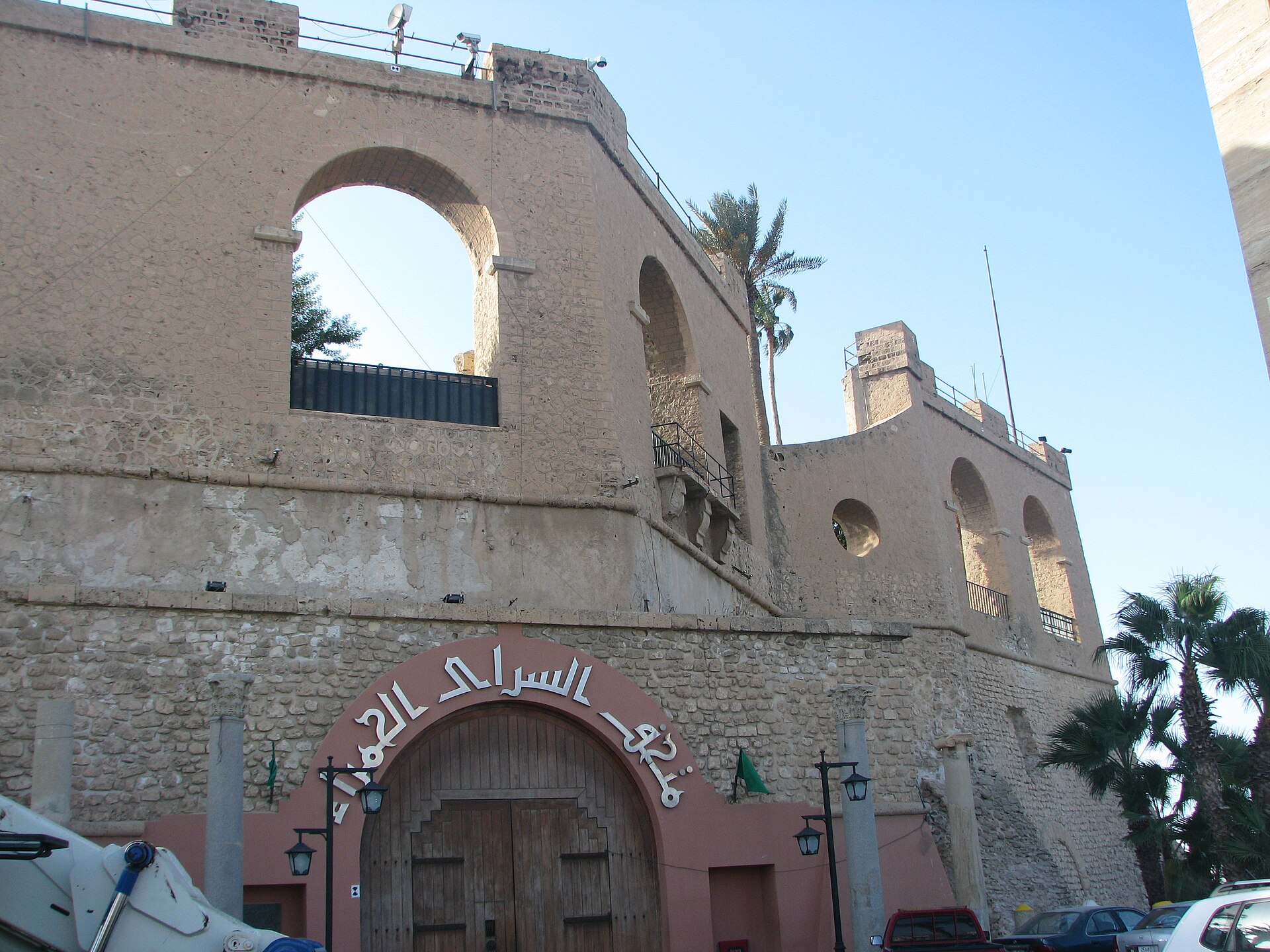
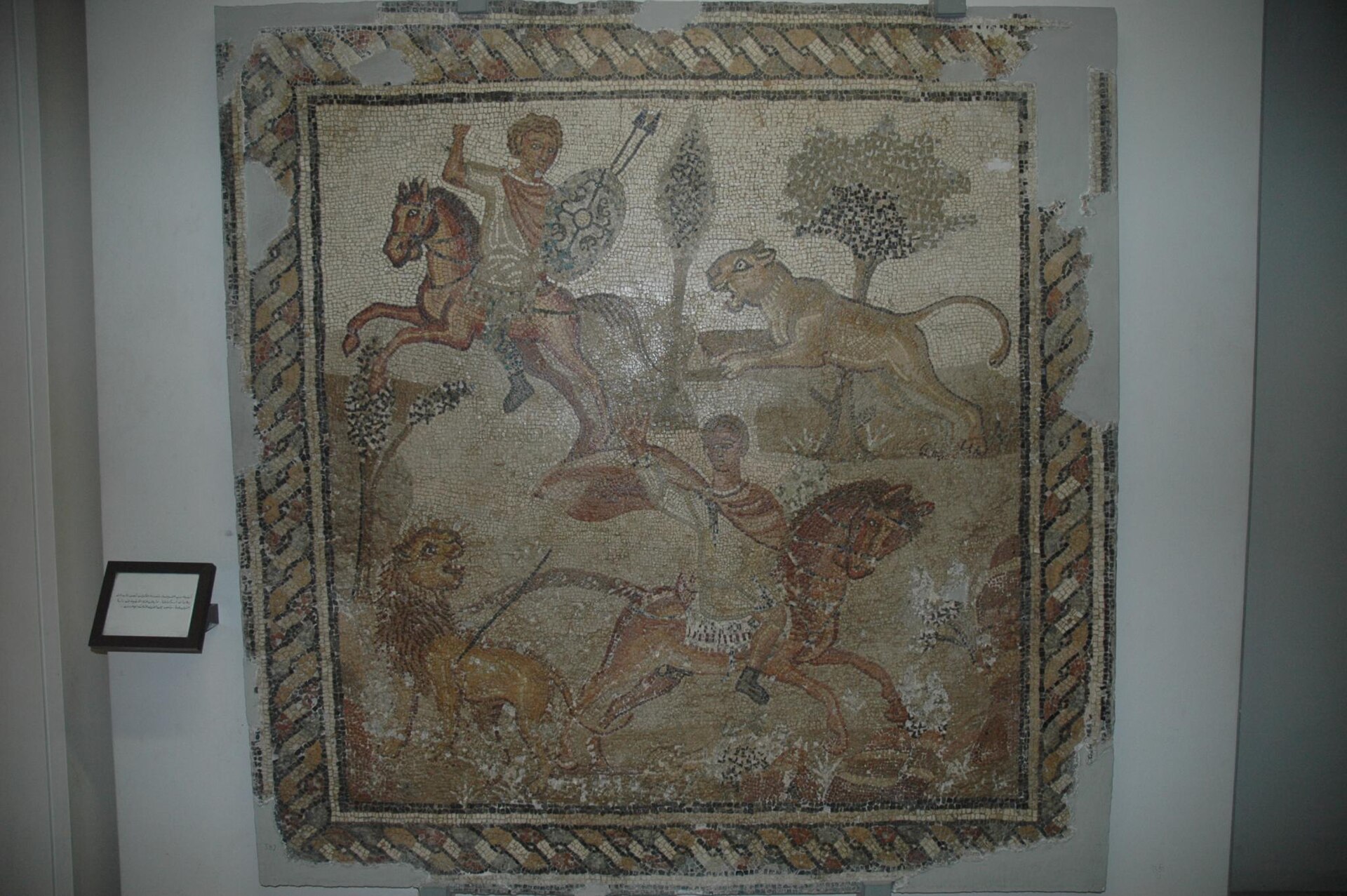
The museum's core strength is classical antiquity drawn from Tripolitania's own Roman cities, above all Leptis Magna, including material connected to the Leptis-born emperor Septimius Severus. Around that sits a genuinely broad span: Stone Age and rock-art material from Libya's deep prehistory, one of the oldest known mummified human remains from Africa, Islamic-era manuscripts, cartography and ceramics, and ethnographic collections from Tuareg, Amazigh and other Libyan communities. A dedicated room of 21 repatriated antiquities makes the museum, unusually, a place that documents its own restitution history rather than only its acquisitions.
| Local name | al-Mathaf al-Watani (Jamahiriya Museum, as-Saraya al-Hamra) |
|---|---|
| Kind | Museum |
| Founded | First converted from part of the Red Castle into Libya's first museum in 1919 under Italian colonial administration; the current museum building within the castle complex was built 1982 and opened 1988; closed 2011, renovated 2023-2025, reopened 12 December 2025 |
| City and country | Tripoli, Libya |
| Address | as-Saraya al-Hamra (Red Castle), Martyrs Square, Tripoli, Libya |
| Website | libyanmuseumtripoli.ly |
| Status | Open, confirmed 18 September 2026 |
| Record last verified | 23 September 2026 |
Visiting
- Hours
- Not confirmedNo source read for this record publishes the museum's current opening days or hours since the December 2025 reopening. Older travel listings, predating the 2011 closure, gave Saturday to Thursday 08:00 to 14:00 and 16:00 to 18:00, but that listing carried no date and no citation to the museum itself, and the museum's operating pattern has since changed (a ticket window replacing whatever system existed before 2011), so it is not repeated here as current.
- Closed
- Not confirmed in any source read for this record.
- Admission
- Libyan citizens, adultLYD 10
- Libyan citizens, childLYD 5
- Foreign visitors, adultLYD 50
- Foreign visitors, childLYD 25
- School group, up to 50 studentsLYD 100Flat group rate, not per student
- School group, 51 to 100 studentsLYD 150Flat group rate, not per student
- Visitors with disabilitiesFreeFree
Free entry: No separate free-admission day is published in the sources read for this record- Do I need to book?
- No advance booking system is confirmed. As of the January 2026 ticket rollout, tickets are sold only at a window at the museum entrance; the museum's own announcement said online sales would follow later, with no date given.
- Address
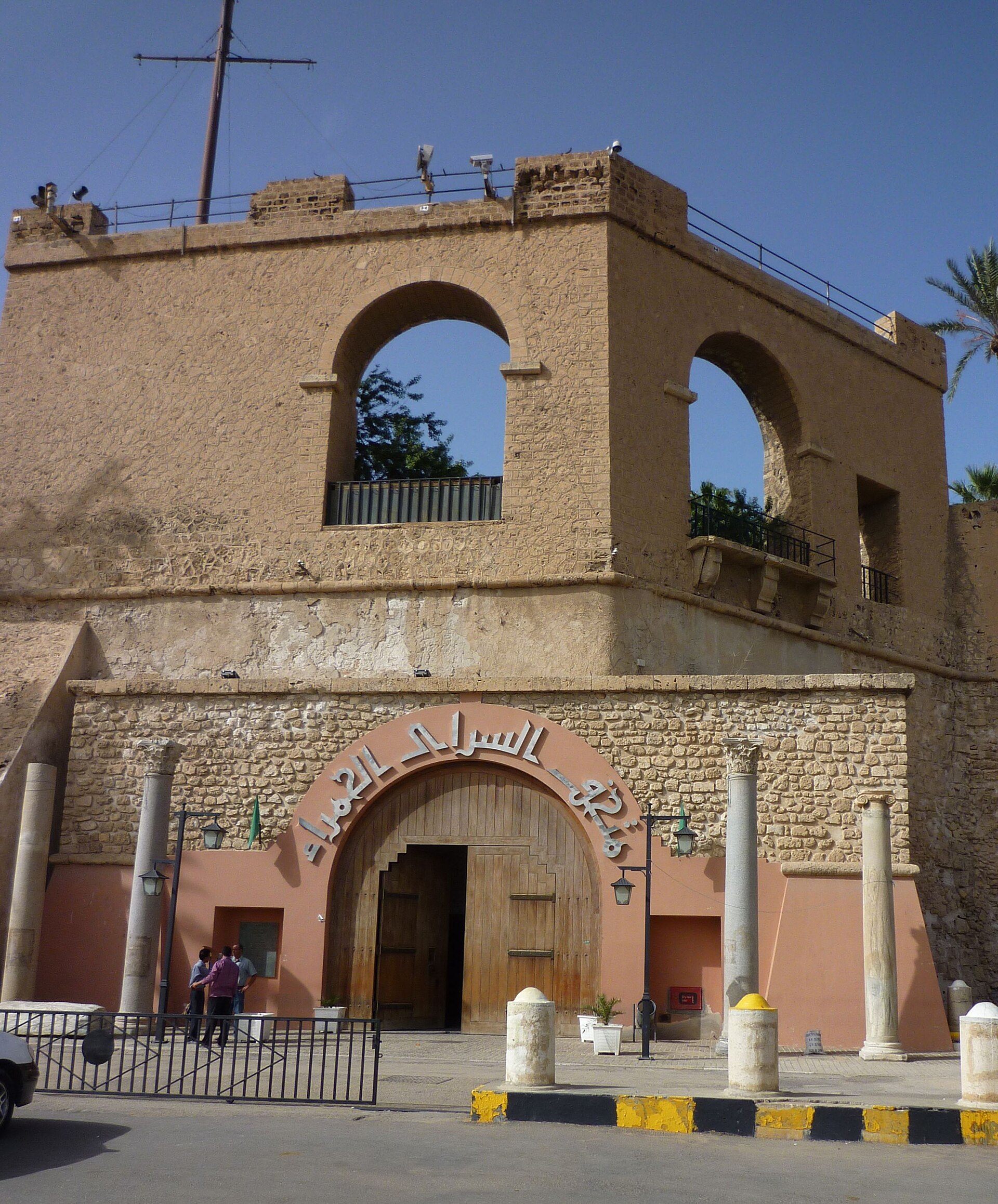
- as-Saraya al-Hamra (Red Castle), Martyrs Square, Tripoli, Libya MapOn foot The museum occupies the Red Castle on a promontory at the edge of Tripoli's old medina, with its entrance on historic Martyrs Square. The square and the approach from the medina are pedestrian, and the castle is the natural landmark to walk toward from the old city, the harbour front or the Italian-era boulevards nearby.
Taxi or private car No source read for this record describes a metro, tram or fixed bus route serving the museum specifically; Tripoli has no metro system, and visitors from outside the old city area are expected to arrive by taxi or private car. - Website
- libyanmuseumtripoli.ly
- [email protected]
Before you go how long, access, photography, bags, eating, shop
- How long to allow
- Not confirmed for the reopened museum. Before the 2011 closure, visitor accounts describe a mandatory guided tour of about 90 minutes despite the size of the collection; whether that format continues in the renovated museum is not stated in any source read here.
- Access
- Not published in the sources read for this record.
- Photography
- Not published in the sources read for this record.
- Bags
- Not published in the sources read for this record.
- Eating
- Not published in the sources read for this record for the renovated museum. A pre-2011 visitor account noted no food or coffee was available on site.
- Shop
- Not published in the sources read for this record.
Prices and hours change. We take them from the institution's own pages and print the day we read them, and you can check the current position at the source we used. Confirm before you travel.
What is inside
Ground floor
The entrance hall and the earliest material in the collection: Stone Age tools and rock-art material, funerary items from ancient Libyan burial sites, the carved Ghirza mausoleum, and a run of Greco-Roman marble statuary including a Venus. The entrance hall itself displays a Volkswagen Beetle that belonged to Muammar Gaddafi, one of the few items connected to the former government to survive the 2011 unrest, during which armed men damaged regime-linked pieces on the mistaken belief the museum concealed a hidden government tunnel.
First floor
The Roman-period galleries, built around material from Leptis Magna: marble reliefs from the Arch of Septimius Severus, miniature pottery, bronzes, oil lamps and coinage. A dedicated room is given to Septimius Severus himself, the Roman emperor born at Leptis Magna.
Second floor
The Islamic and Ottoman-era galleries: an illuminated Quran manuscript, a world map dated 1349, Islamic ceramics including lustreware plates carrying Arabic calligraphy, and ethnographic material from Tuareg, Amazigh (Berber) and other Libyan communities, alongside farming and folklore displays.
Third floor
Galleries on Libya's independence struggle and modern history through 1951, running alongside the museum's natural history collection, which includes a large sperm whale skeleton.
Recovered-artifacts room
A dedicated display of 21 smuggled Libyan antiquities recovered since 2011 from the United States, the United Kingdom, France and Switzerland, plus a Roman-period statue voluntarily returned by an Italian private collector. It sits alongside the museum's most publicised single object, a mummified child of roughly 5,400 years old excavated at Uan Muhuggiag in the Acacus Mountains of southern Libya.
What to see first
The Ghirza mausoleum
Romano-Libyan, Ghirza (Tripolitania)A carved funerary monument from the Roman-era desert settlement of Ghirza, displayed in the ground-floor prehistory and antiquity galleries as one of the museum's largest single architectural pieces.11
Reliefs from the Arch of Septimius Severus
Roman, Leptis MagnaMarble reliefs removed from the triumphal arch built for the Leptis Magna-born emperor Septimius Severus, the centrepiece of the first-floor Roman galleries and of a room dedicated to the emperor.11
The Uan Muhuggiag child mummy
Prehistoric, Acacus Mountains, southern LibyaA naturally mummified child roughly 5,400 years old, among the oldest mummified human remains found in Africa and one of the objects most repeatedly singled out in coverage of the reopened museum.3
The room of 21 recovered antiquities
Various, Libyan originA dedicated gallery for 21 smuggled Libyan artifacts recovered since 2011 from the United States, the United Kingdom, France and Switzerland, plus a Roman statue an Italian private collector returned voluntarily; the museum's clearest statement of the restitution work behind its reopening.4
Gaddafi's Volkswagen Beetle
20th century, manufactured objectA 1960s Beetle belonging to Muammar Gaddafi, kept in the entrance hall; one of the few regime-linked objects to survive intact the 2011 unrest, during which armed men vandalised other items connected to the former government.4
The 1349 world map
Islamic cartography, 14th centuryA medieval world map dated 1349, shown in the second-floor Islamic and Ottoman galleries alongside a large illuminated Quran.11
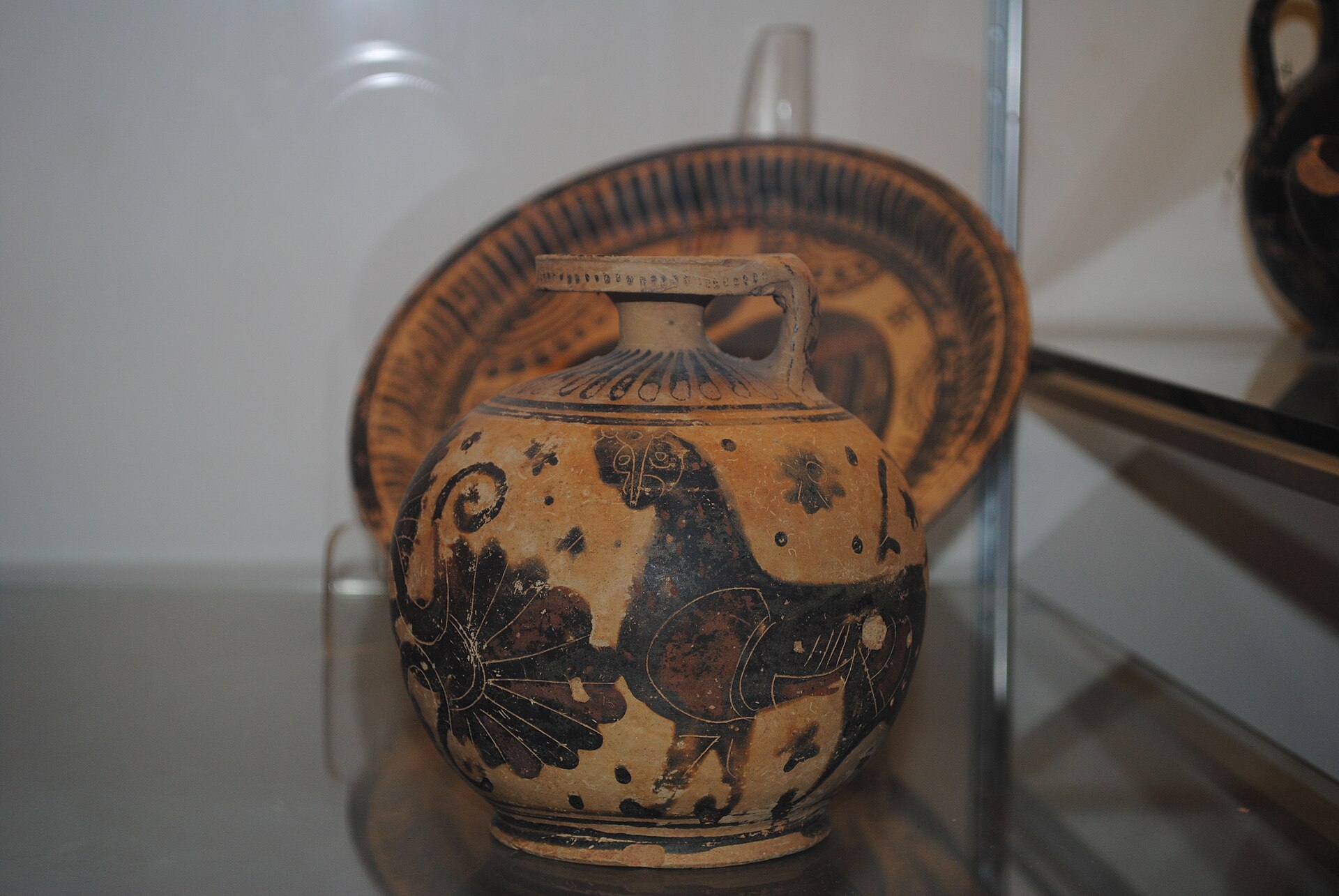
Islamic lustreware plate
Islamic ceramic tradition, maker unrecordedA glazed plate carrying Arabic calligraphy in the Islamic-era galleries, photographed for Wikimedia Commons in 2010 and one of the few individually documented objects from the collection with a free-licence image.16
The sperm whale skeleton
Natural history specimenA full sperm whale skeleton anchoring the museum's natural history galleries on the third floor, alongside the Libyan independence-history displays.11
Statue of Venus
Greco-RomanOne of the Greco-Roman marble statues in the ground-floor galleries, part of a collection TripAdvisor reviewers single out for its Roman and Greek mosaics and sculpture, including pieces associated with the Villa Selene site.12
A castle before it was a museum
The building holding the collection is older than any museum that has occupied it. As-Saraya al-Hamra, the Red Castle, stands on a promontory at the edge of Tripoli's old medina, overlooking the harbour, and its foundations are described in the sources read for this record as reaching back to Roman-era construction with a possible Phoenician layer beneath that. The site changed hands repeatedly over the centuries that followed: Vandal, Byzantine and early Islamic control, a Spanish and then Knights of Malta occupation in the sixteenth century, and Ottoman rule from 1551. The Karamanli dynasty, which ran Tripolitania with effective autonomy from 1711 to 1835, made the castle its seat of government.
Italy's 1911 conquest of Libya turned part of the castle into the country's first museum in 1919, built around archaeological material the colonial administration had begun collecting from sites across the territory. The Italian architect Armando Brasini reworked the structure in 1922 and 1923, adding the arches and bastion modifications that give the building much of its present, deliberately medieval-looking silhouette; Florestano Di Fausto laid out the surrounding square in the 1930s. British forces held and used the site after 1943, and the museum was renamed the Libyan Museum in 1948. The museum in its most recent pre-2011 form was built in 1982 and opened to the public in 1988, under the name Assaraya Alhamra Museum, absorbing the whole castle complex; the Libyan Department of Antiquities has been headquartered there since 1952.
Fourteen years behind a false wall
In spring 2011, as the uprising against Muammar Gaddafi's government intensified and NATO air strikes began, antiquities specialist Ramadan al-Shaibani led a ten-person team in a two-month operation to hide the museum's most valuable holdings. Roughly 350 Greco-Roman sculptures and about 2,000 gold, silver and bronze objects were moved into a narrow maintenance corridor built for the building's air-conditioning system. A team member, Mahmoud al-Shitiwi, bricked up the entrance, plastered and painted it to match the surrounding wall, and set a fake office, complete with desk, computer and filing cabinet, in front of it to disguise the passage entirely.
When armed fighters entered Tripoli on 20 August 2011, some searched the museum on the belief it concealed a hidden government tunnel. They found nothing portable beyond large stone statues too heavy to move; team member Fathi al-Khuwaildi recalled that no one paid the disguised wall any attention. Tripoli's collection survived the war essentially intact as a result. Other Libyan museums were not so fortunate: 149 objects were looted from the museum in Bani Walid, roughly 50 from Misrata, and about 80 from the Sultan Museum in Sirte. Khaled Haddar, then head of Libya's stolen-artifacts office, has estimated hundreds of thousands of objects disappeared from institutions nationwide during and after the 2011 conflict; almost none of that broader loss is specific to the National Museum's own holdings, and only 21 individual pieces are confirmed in the sources read here as having been recovered specifically into this museum's own collection, from the United States, the United Kingdom, France and Switzerland, alongside one Roman statue an Italian private collector chose to return.
What reopened on 12 December 2025
Renovation work did not begin until March 2023, run by the Tripoli-based Government of National Unity, which has controlled western Libya since a UN-backed political process in 2021. The Government of National Unity put more than 5 million US dollars into the rehabilitation of the museum and its surrounding grounds over roughly six years, with support from France's archaeological mission to Libya and from ALIPH, the International Alliance for the Protection of Heritage in Conflict Areas.
The museum held its public reopening ceremony on 12 December 2025, attended by Prime Minister Abdulhamid al-Dbeibah, government ministers, the diplomatic community accredited to Tripoli and invited public figures, with a full orchestra, acrobatic performers and a lighting display across the Red Castle's facade. Libyan diplomatic missions abroad held simultaneous viewing events; the consulate in Istanbul hosted one with substantial attendance. Access in the immediate aftermath of the ceremony was limited to school groups, while the museum finished bringing the rest of its operation online. According to the museum's own Facebook page, relayed by the Tripoli daily Alwasat, walk-up public ticket sales began at a window at the museum's entrance on 1 January 2026, at prices set under Libya's official schedule for museum and archaeological-site admission; the museum said online ticketing would follow in a later phase, without giving a date.
The renovated galleries now cover about 10,000 square metres across four floors, with 47 or 48 exhibition halls depending on the source, holding an estimated 12,000 artifacts spanning some 5,000 years of North African history, from Libya's prehistoric rock-art era through the Roman, Greek and Islamic periods to the country's 1951 independence.
Four floors, one collection
The ground floor carries the entrance hall and the earliest material: Stone Age tools, funerary items and the carved Ghirza mausoleum, alongside a run of Greco-Roman marble statuary. Displayed in that same entrance hall is one of the collection's odder survivors, a 1960s Volkswagen Beetle that belonged to Muammar Gaddafi, one of the few regime-linked objects still intact after armed men damaged others connected to the former government in 2011. The first floor is built around Roman-period material from Leptis Magna: marble reliefs lifted from the Arch of Septimius Severus, coins, bronzes and oil lamps, gathered around a room dedicated to the Leptis Magna-born emperor himself. The second floor holds the Islamic and Ottoman-era galleries, including an illuminated Quran, a world map dated 1349, Islamic ceramics and lustreware, and ethnographic material from Tuareg, Amazigh and other Libyan communities. The third floor pairs displays on Libya's twentieth-century independence struggle with the museum's natural history collection, anchored by a full sperm whale skeleton.
A separate room, singled out in nearly every account of the reopening, holds the 21 recovered antiquities and the Italian collector's returned statue, alongside the museum's most photographed single object: a naturally mummified child of roughly 5,400 years old, excavated at Uan Muhuggiag in the Acacus Mountains of southern Libya, among the oldest mummified human remains known from Africa.
A reopening with a political job to do
Nobody involved in the reopening has been quiet about what it is meant to do beyond housing artifacts. Libya's Minister of State for Communication and Political Affairs, who chaired the international coordination committee around the reopening, told a meeting of ambassadors from Spain, France, Germany, Belgium, Tunisia and Qatar that the reopening was, in his words, not merely a cultural event but a political message through which Libya reintroduces itself to the world. Prime Minister al-Dbeibah made a related claim at the ceremony itself, calling the reopening a live testimony that Libya is building its institutions.
Outside observers have read the same event more skeptically. Hager Ali, a research fellow at the German Institute for Global and Area Studies, described the reopening as evidence the Tripoli-based government wanted to offer of its own stability, particularly with elections planned for 2026 and with the country still split between the Government of National Unity in the west and a rival administration based in the east that has not agreed a unified national budget in more than a decade. Both readings can be true at once: the museum is a real institution holding a real, carefully protected collection, and its reopening was also engineered as a piece of state messaging by a government that said so itself.
The one place that framing runs thin is around the people who actually kept the collection safe. Fathi al-Khuwaildi, one of the ten staff who spent two months in 2011 hiding the museum's most valuable objects behind a false wall, told The New Arab that even the current government had ignored the team, and that none of them had received so much as a symbolic certificate for it. Nothing in the sources read for this record indicates that has changed since.
Visiting now
The practical picture for a visitor in 2026 is thinner than the ceremony coverage suggests. Ticket prices are published and specific: 10 Libyan dinars for a Libyan adult, 5 for a Libyan child, 50 for a foreign adult, 25 for a foreign child, flat group rates of 100 or 150 dinars for school parties depending on size, and free entry for visitors with disabilities. Those tickets, as of the museum's own January 2026 announcement, are sold only at a window at the entrance, with online sales promised for later without a date attached.
Past that, several things a visitor would normally expect are not published anywhere this record could find. No current opening hours or closed days have been confirmed from the museum itself or from any outlet covering the reopening; an older, undated travel listing gives Saturday to Thursday hours from a period before the 2011 closure, but nothing ties that schedule to the renovated museum's current operation, so it is not repeated here as current. No working telephone number for the museum could be found after searching in both English and Arabic and after the museum's own website failed to resolve on a direct fetch and in an in-app browser; its Facebook page, which local press cites directly for the museum's own announcements, could not be read past a login wall. Given Libya's continuing political division and the general security situation, a visitor planning a trip is better served checking the museum's Facebook page and current Libyan travel advisories directly before travelling than relying on any hours or contact details published elsewhere.
What visitors say
Visitor reaction to the December 2025 reopening, reported first-hand by several outlets, is warm and often emotional: people describe a modern, well-lit, interactive museum that reads as a sharp break from the dark, closed building many Libyans remember. That reception sits alongside two things the coverage does not let the story skip past: the reopening was explicitly framed by Libya's own government as a political message aimed at Libya's international partners and at a divided domestic audience, and the ten-person team that hid the collection through the 2011 unrest and the years that followed has received no formal recognition for it. Older, pre-2011 visitor reviews, which still make up most of the museum's published review history, praised the depth of the Greco-Roman collection but criticised a lack of on-site food or drink and guided tours visitors found rushed.
What is praised, what is criticised
- Praised: The renovated galleries themselves: a 22-year-old architecture student, Nirmine Miladi, said she felt transported within minutes of arriving, and her sister Aya credited the careful lighting, the screens and the interactive tools with making the collection easier to take in.
- Praised: The scale and quality of the Greco-Roman holdings specifically: TripAdvisor reviewers, writing mostly before the 2011 closure, called it one of the more impressive museums they had visited and highlighted the Roman and Greek mosaics and sculpture, including material associated with the Villa Selene site.
- Praised: The symbolic weight of the reopening for ordinary visitors: teacher Fatima al-Faqi, who remembered the museum as dark and dusty thirty years ago, brought her students specifically to let them discover Libyan history; Sarah al-Motamid brought her six-year-old daughter so she would grow up knowing Libyan civilisation is not, in her words, worthless.
- Criticised: The ten staff who spent two months in 2011 hiding roughly 350 Greco-Roman sculptures and about 2,000 gold, silver and bronze objects behind a false wall have received no formal acknowledgement since. Team member Fathi al-Khuwaildi told The New Arab, 'Even the current government ignored us,' saying the team was not given so much as a symbolic certificate.
- Criticised: Libya's own Minister of State for Communication and Political Affairs described the reopening in terms the museum's supporters and its critics can both point to: 'The reopening of the National Museum is not merely a cultural event; it is a political message through which we reintroduce Libya to the world.' Analyst Hager Ali of the German Institute for Global and Area Studies characterised the timing, ahead of elections planned for 2026 and amid Libya's continuing split between the Tripoli-based government and a rival eastern administration, as the Tripoli government offering 'proof of concept' of its own stability rather than a purely cultural event.
- Criticised: Older reviews, predating the 2011 closure and still forming most of the museum's published review history, complained there was nowhere on site to get so much as a cup of coffee, and that the standard guided tour felt rushed given the size of the collection.
Ratings on other platforms
TripAdvisor: 4.6 from 20 ratings, read 18 September 2026
A platform average is a tertiary source: it moves, it is not audited, and we quote no visitor's words.
Questions about The National Libyan Museum
Where is The National Libyan Museum?
as-Saraya al-Hamra (Red Castle), Martyrs Square, Tripoli, Libya.
How much does it cost to visit?
Libyan citizens, adult: LYD 10; Libyan citizens, child: LYD 5; Foreign visitors, adult: LYD 50; Foreign visitors, child: LYD 25; School group, up to 50 students: LYD 100. As confirmed 18 September 2026.
When is it open?
Not confirmed closed. Closed: Not confirmed in any source read for this record. As confirmed 18 September 2026.
How do you get there?
On foot: The museum occupies the Red Castle on a promontory at the edge of Tripoli's old medina, with its entrance on historic Martyrs Square. The square and the approach from the medina are pedestrian, and the castle is the natural landmark to walk toward from the old city, the harbour front or the Italian-era boulevards nearby; Taxi or private car: No source read for this record describes a metro, tram or fixed bus route serving the museum specifically; Tripoli has no metro system, and visitors from outside the old city area are expected to arrive by taxi or private car.
What should you see first?
The Ghirza mausoleum (Romano-Libyan, Ghirza (Tripolitania)); Reliefs from the Arch of Septimius Severus (Roman, Leptis Magna); The Uan Muhuggiag child mummy (Prehistoric, Acacus Mountains, southern Libya); The room of 21 recovered antiquities (Various, Libyan origin); Gaddafi's Volkswagen Beetle (20th century, manufactured object); The 1349 world map (Islamic cartography, 14th century).
What we could not confirm
- No source read for this record gives current, confirmed opening hours, closed days or a working telephone number for the museum since its December 2025 reopening; the museum's own website did not resolve when checked here.
- It is not stated in any source read here how much of the roughly 350 Greco-Roman sculptures and 2,000 gold, silver and bronze objects hidden in 2011 are now on permanent display versus still in storage after the renovation.
- Whether the ten-person team that hid the collection in 2011, several of whom are named in The New Arab's account, has received any formal recognition since that report was published is not confirmed.
- Hundreds of thousands of objects are reported missing from Libyan institutions nationwide since 2011, on the estimate of a former head of the country's stolen-artifacts office; only 21 pieces are documented in the sources read here as recovered specifically into this museum.
- Whether online ticket sales, promised by the museum for a later unspecified phase, have since begun is not confirmed.
Images
Sources
- 1Wikidata, Q2498401 (Red Castle Museum) - identity, aliases and coordinates, tertiary wikidata.org/wiki/Q2498401
- 2Wikipedia, 'Red Castle Museum' - building and institutional history, tertiary en.wikipedia.org/wiki/Red_Castle_Museum
- 3Smithsonian Magazine, 'Fourteen Years After Gaddafi's Fall, Libya Reopens Its National Museum to Much Fanfare' smithsonianmag.com/smart-news/fourteen-years-after-gaddafis-fall-libya-reopens-its-national-museum-to-much-fanfare-180987901/
- 4NBC News, 'Museum housing Libya's ancient treasures reopens for first time since 2011 uprising that toppled Gadhafi' nbcnews.com/world/africa/museum-libya-ancient-treasures-reopens-uprising-gadhafi-rcna248984
- 5Alwasat, 'The National Museum in Tripoli reopens to the public, announces ticket prices', 2 January 2026 en.alwasat.ly/news/culture/503335
- 6Asharq News, report on the reopening of the Assaraya Alhamra museum, quoting museum director Fatima Abdullah Ahmad asharq.com/culture/164140/
- 7Anadolu Agency (Arabic), report on the reopening, quoting antiquities expert Faiza al-Saeed and Prime Minister Abdulhamid Dbeibah aa.com.tr/ar/%D8%A7%D9%84%D8%AF%D9%88%D9%84-%D8%A7%D9%84%D8%B9%D8%B1%D8%A8%D9%8A%D8%A9/%D9%84%D9%8A%D8%A8%D9%8A%D8%A7-%D8%A5%D8%B9%D8%A7%D8%AF%D8%A9-%D8%A7%D9%81%D8%AA%D8%AA%D8%A7%D8%AD-%D8%A7%D9%84%D9%85%D8%AA%D8%AD%D9%81-%D8%A7%D9%84%D9%88%D8%B7%D9%86%D9%8A-%D8%A8%D8%B9%D8%AF-%D8%A5%D8%BA%D9%84%D8%A7%D9%82-%D8%AF%D8%A7%D9%85-14-%D8%B9%D8%A7%D9%85%D8%A7/3770405
- 8The New Arab, 'Libya's National Museum: Inside the daring plan to save its past' newarab.com/features/libyas-national-museum-inside-daring-plan-save-its-past
- 9The Libya Observer, 'International plan to support reopening National Museum, strengthen Libya's cultural and diplomatic presence' libyaobserver.ly/news/international-plan-support-reopening-national-museum-strengthen-libyas-cultural-and-diplomatic
- 10Africanews, 'Reopening of Libya's National Museum after 14 years offers hope of return to stability' africanews.com/2025/12/29/reopening-of-libyas-national-museum-after-14-years-offers-hope-of-return-to-stability/
- 11Temehu, 'Assaraya Alhamra (Tripoli's National Museum)' - gallery-by-floor description, tertiary travel guide temehu.com/Cities_sites/museum-of-tripoli.htm
- 12TripAdvisor, 'Tripoli's Jamahiriya Museum' reviews and rating, tertiary, read 2026-09-18 tripadvisor.com/Attraction_Review-g293807-d547233-Reviews-Tripoli_s_Jamahiriya_Museum-Tripoli_Tripoli_District.html
- 13Wikimedia Commons, File:Redcastle_museum.JPG, SashaCoachman, CC BY-SA 3.0, 2009 commons.wikimedia.org/wiki/File:Redcastle_museum.JPG
- 14Wikimedia Commons, File:Tripoli_-_Eingang_zum_Nationalmuseum.jpg, Franzfoto, CC BY-SA 3.0, 2010 commons.wikimedia.org/wiki/File:Tripoli_-_Eingang_zum_Nationalmuseum.jpg
- 15Wikimedia Commons, File:Tripoli_-_Nationalmuseum_Kapitell-Fragment.jpg, Franzfoto, CC BY-SA 3.0, 2010 commons.wikimedia.org/wiki/File:Tripoli_-_Nationalmuseum_Kapitell-Fragment.jpg
- 16Wikimedia Commons, File:Islamic_Libyan_Plate.jpg, Alfred Diem, CC BY 2.0, 2010 commons.wikimedia.org/wiki/File:Islamic_Libyan_Plate.jpg
- 17Wikimedia Commons, File:1010_Kreuzfahrt_G_500_(5129094129).jpg, Tauralbus, CC BY 2.0, 2010 commons.wikimedia.org/wiki/File:1010_Kreuzfahrt_G_500_(5129094129).jpg
- 18Wikimedia Commons, File:Artifact_at_Tripoli_Museum.jpg, Syed Wali Peeran, CC BY-SA 4.0, 2010 commons.wikimedia.org/wiki/File:Artifact_at_Tripoli_Museum.jpg
- 19Wikipedia, 'Museum of Libya' - consulted only to confirm this is a distinct article from a different building (the former Royal/People's Palace) and was not used as a source of fact for this record, tertiary en.wikipedia.org/wiki/Museum_of_Libya
- 20Facebook, official page of the National Museum / al-Mathaf al-Watani al-Libi, Contact and basic info panel: address, email, website and social links, no phone field present. Read without a login wall on a second attempt, 2026-09-23. facebook.com/LibyanNationalMuseum/about_contact_and_basic_info


.jpg)
