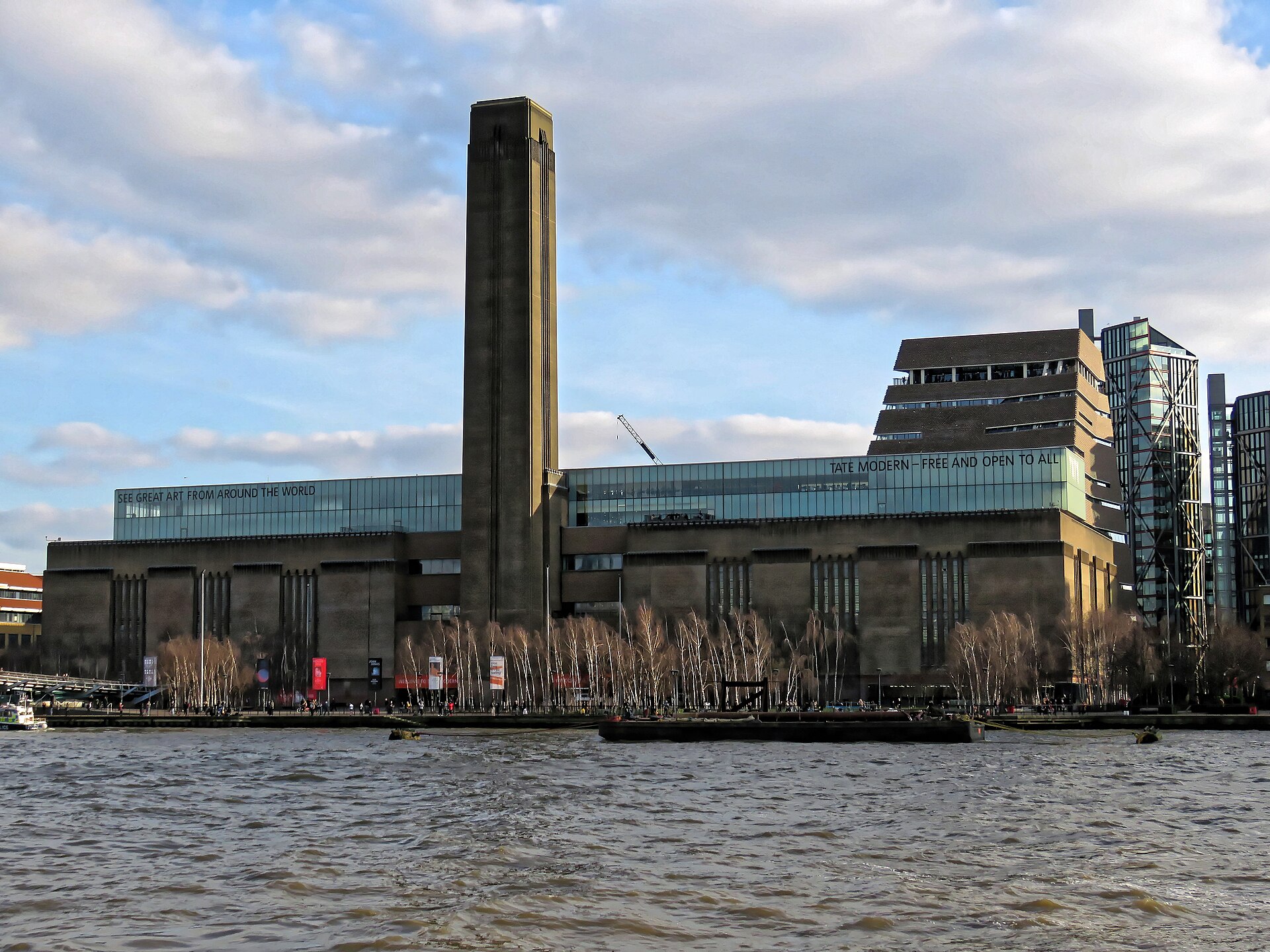
Tate Modern, the converted Bankside Power Station, seen with its chimney and the former turbine hall's roofline.
Acabashi, CC BY-SA 4.0On this page 16 sections
ContentsClose
Tate Modern's deepest holdings are in international painting and sculpture from roughly 1900 to the 1970s, where a small number of major single rooms (the Rothko Seagram Murals chief among them) and iconic single objects (Dali's Lobster Telephone, Matisse's late cut-outs, Warhol's Marilyn Diptych) carry the collection's reputation. Its second, more distinctive strength is scale: the Turbine Hall has, since 2000, been the venue for more large-scale, purpose-made contemporary commissions than any comparably sized room in any other museum in Britain, and several of those works (Eliasson's The Weather Project, Ai Weiwei's Sunflower Seeds) are now better known to the wider public than most objects in the permanent galleries.
| Kind | Museum |
|---|---|
| Founded | 2000 |
| City and country |  London, United Kingdom London, United Kingdom |
| Address | Bankside, London SE1 9TG, United Kingdom |
| Website | tate.org.uk/visit/tate-modern |
| Status | Open, confirmed |
| Record last verified |
Visiting
- Hours
- Sunday-Thursday10:00 to 18:00
- Friday-Saturday10:00 to 21:00
- Closed
- 24-26 December.
- Admission
- General collectionFreeFree entry to the permanent collection displays, every day, no booking required
- Special exhibition, adult (example: Frida: The Making of an Icon, 2026-27)GBP 25Exhibition ticket prices are set per show; this is the current headline exhibition's adult price at time of research
- Special exhibition, Tate Collective (16-25) and reduced 12-18 rateGBP 5Reduced 12-18 rate was time-limited to a summer promotion at time of research; Tate Collective rate is standing
- Under 12FreeFree for children under 12 on exhibition tickets
- MembersFreeFree entry to all exhibitions with a Tate Membership, from GBP 8/month by Direct Debit; paying annually saves GBP 12, which works out to about GBP 84/year
- Tickets
- tate.org.uk/whats-on/tate-modern The museum's own ticket page.
- Do I need to book?
- No for the permanent collection; booking recommended (and required for named, timed slots on some shows) for special exhibitions
- Address
- Bankside, London SE1 9TG, United Kingdom MapUnderground Southwark (Jubilee line), about 600 metres from the museum
Rail and Underground Blackfriars (National Rail, plus Circle and District lines): about 300 metres from the station's south exit, or about 800 metres via the north exit / Underground entrance
Walking Millennium Bridge footbridge connects Bankside directly to St Paul's Cathedral on the north bank - Website
- tate.org.uk/visit/tate-modern
- Telephone
- +44 (0)20 7887 8888
- [email protected]
Before you go how long, access, photography, bags, eating, shop
- How long to allow
- A focused pass through the free collection displays takes about two hours; a visit that adds a ticketed exhibition and the Turbine Hall commission runs closer to half a day
- Access
- Tate publishes a visual story and access information for the building; lift access serves all levels of both the Natalie Bell Building and the Blavatnik Building, though visitor reviews describe periods when only a minority of lifts in the Blavatnik Building were working, which is a real strain on the vertical galleries for anyone who cannot use stairs
- Photography
- Personal, non-flash photography is generally permitted in the collection displays; some loan exhibitions restrict it
- Bags
- Bag checks operate at entry; large bags and luggage are not permitted in the galleries
- Eating
- Cafes and a restaurant and bar with river views operate across the building, including a top-floor offer on Level 10 of the Blavatnik Building
- Shop
- Tate shops sell books, prints and exhibition-specific merchandise on multiple levels
Prices and hours change. We take them from the institution's own pages and print the day we read them, and you can check the current position at the source we used. Confirm before you travel.
What is inside
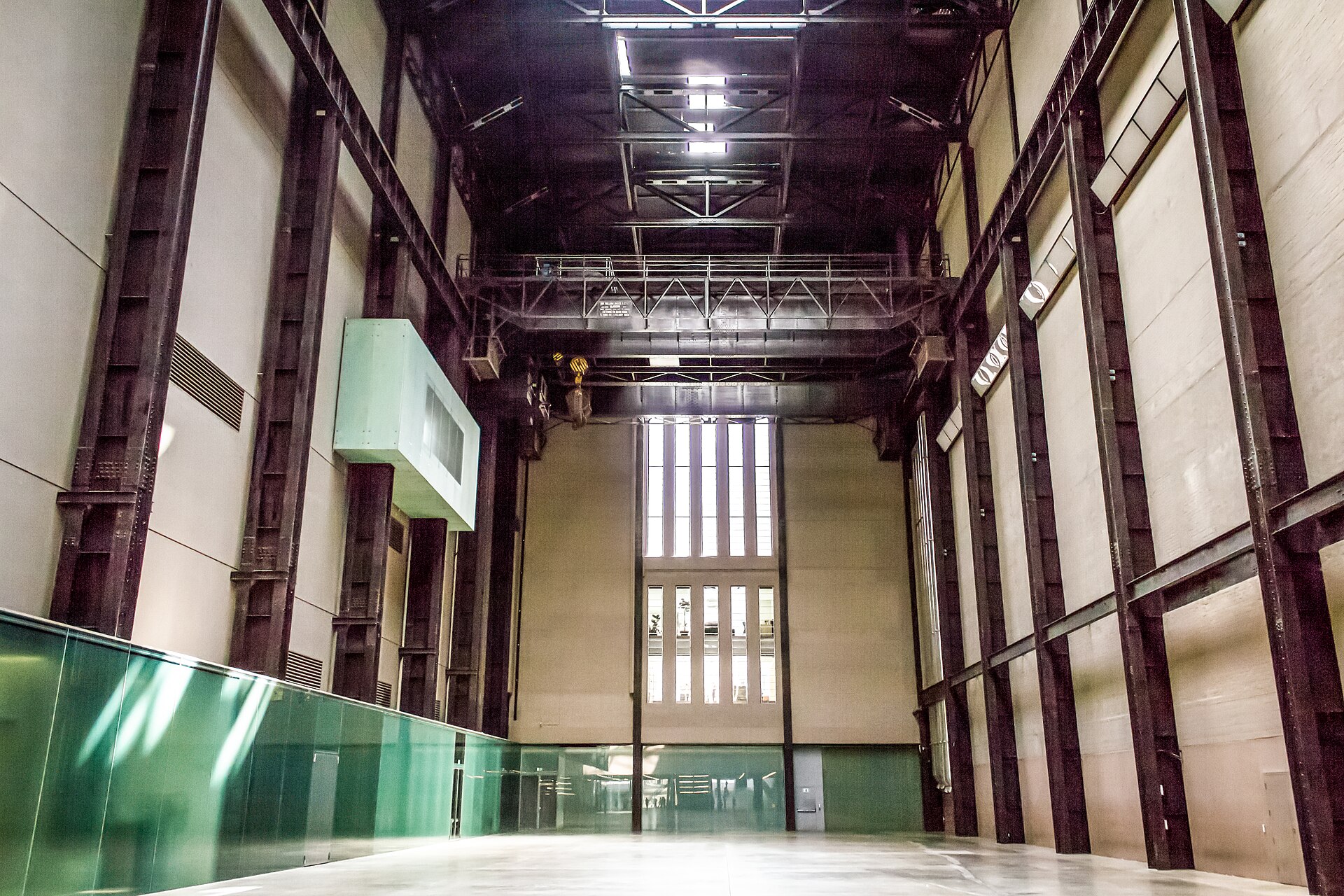
Photograph by Alexander Svensson · CC BY 2.0 Turbine Hall
The vast central hall of the former power station, 155 metres long, 23 metres wide and 35 metres to the roof, retained as the building's entrance and its single largest exhibition space. Since the museum opened in 2000 it has hosted a sequence of large-scale, site-specific commissions, first under the Unilever Series (2000-2012) and since 2015 under the Hyundai Commission.
Natalie Bell Building (former Boiler House), Levels 2-4
The original galleries opened in 2000, occupying the northern part of the power station. This is where the free permanent collection is principally shown, hung thematically rather than by school or chronology, spanning international modern and contemporary art from around 1900 to the present. The building was renamed for local community organiser Natalie Bell in 2018, as part of Tania Bruguera's Turbine Hall commission, and Tate has kept the name since.
Blavatnik Building (former Switch House), Levels 0 and 2-4
The multi-storey extension designed by Herzog & de Meuron, opened in 2016, raised in perforated brick over a folded concrete core and increased Tate Modern's display space by 60 per cent. Its galleries carry more of the collection and temporary exhibitions, including major loan shows such as the 2026 Frida Kahlo exhibition.
The Tanks
Three circular subterranean spaces, each over 30 metres across and 7 metres high, that once held oil for the power station's turbines. Opened in 2012, Tate describes them as the world's first museum galleries permanently dedicated to live art, performance, installation and film, and they continue to programme work in those forms.
Level 10 viewing terrace, Blavatnik Building
A public viewing platform at the top of the Blavatnik Building with panoramic views over the Thames toward St Paul's Cathedral, accessed by lift only from Levels 0-4. It is also the subject of the 2023 UK Supreme Court ruling in Fearn v Board of Trustees of the Tate Gallery (see Reception, below).
What to see first
Seagram Murals
Mark RothkoA suite of dark maroon and black canvases Rothko painted in 1958 for a New York restaurant commission he ultimately withdrew from and instead gave largely to Tate; shown together they read as a single, chapel-like environment rather than individual paintings.15
Lobster Telephone
Salvador DaliOne of the most recognisable single objects of Surrealism in any UK collection, a working telephone fused with a plaster lobster, made for the collector Edward James.15
The Snail
Henri MatisseA nearly three-metre gouache-on-paper cut-out from 1953, made when Matisse, in his eighties and largely confined to a wheelchair, could no longer paint at the easel and worked instead with scissors and assistants pinning coloured paper to the wall.15
Marilyn Diptych
Andy WarholFifty screenprinted images of Marilyn Monroe, made within weeks of her death in August 1962, half in acid colour and half fading into black and white; one of the defining images of Pop Art and recently conserved by Tate.15
I Do, I Undo, I Redo
Louise BourgeoisThree nine-metre steel towers with mirrors and ladders that visitors could climb, the very first Turbine Hall commission and the work that set the scale and ambition of everything that followed there from May 2000.6
Sunflower Seeds
Ai WeiweiAn installation of around 100 million individually hand-sculpted and hand-painted porcelain sunflower seeds, spread across the Turbine Hall floor in 2010 and made in collaboration with 1,600 artisans in Jingdezhen, China; among the most-discussed of the Unilever Series commissions.6
The Weather Project
Olafur EliassonA vast artificial sun and mirrored ceiling that filled the Turbine Hall with an orange half-light in 2003, drawing an estimated two million visitors and becoming the commission most people who have never visited Tate Modern still recognise.6
Marsyas
Anish KapoorA single membrane of stretched PVC on steel rings, running the full 155-metre length of the Turbine Hall in 2002, one of the largest single sculptural works ever made for an interior space in Britain.6
Exhibitions on now
- On now14 Oct 2026 to 21 Feb 2027Confirmed , 8 weeks ago
Past exhibitions here
- Closed12 Oct 2010 to 2 May 2011Confirmed · check before you travel
- Closed9 Oct 2002 to 6 Apr 2003Confirmed · check before you travel
From power station to Turbine Hall
Tate Modern occupies Bankside Power Station, a coal- and later oil-fired station designed by the architect Sir Giles Gilbert Scott (also responsible for the red telephone box and Battersea Power Station) and built in two phases either side of the Second World War, opening fully in 1963 and closing in 1981. The building sat empty on the south bank of the Thames, directly across the river from St Paul's Cathedral, for more than a decade before Tate, needing a home for its modern and contemporary collection separate from Tate Britain's historic British holdings, ran an international competition to convert it. The Swiss firm Herzog & de Meuron won that competition in 1995 and largely kept the building's exterior and its single defining internal volume: the turbine hall where the station's generating equipment once stood, a room 155 metres long and 35 metres to the roof. Tate Modern opened to the public in May 2000, on a GBP 134 million conversion, with the turbine hall serving simultaneously as entrance, circulation route and the museum's largest single exhibition space, a role no other part of the building can match.
The Turbine Hall commissions
From the opening weeks, Tate treated the Turbine Hall not as a lobby but as a annually or seasonally re-made artwork in its own right. Louise Bourgeois had the first commission, three nine-metre steel towers with mirrors and ladders, I Do, I Undo, I Redo, alongside her giant spider Maman, both on show for the museum's opening. Unilever sponsored the series that followed for twelve years, underwriting thirteen commissions between 2000 and 2012, including Olafur Eliasson's The Weather Project in 2003, an artificial sun and mirrored ceiling that drew an estimated two million visitors and is still probably the single most-remembered thing to have happened in the building; Anish Kapoor's Marsyas, a single taut PVC membrane running the hall's full length, in 2002; Rachel Whiteread's EMBANKMENT, fourteen thousand stacked casts of the insides of cardboard boxes, in 2005; and Ai Weiwei's Sunflower Seeds in 2010, around 100 million individually hand-painted porcelain seeds made with artisans in Jingdezhen. Unilever's sponsorship ended after Tino Sehgal's 2012 commission, and the Hyundai Commission has run the series since 2015, opening with Abraham Cruzvillegas filling 240 planters with soil gathered from London parks and gardens and continuing through artists including Philippe Parreno, SUPERFLEX, Kara Walker and, in 2018, Tania Bruguera, whose commission included quietly renaming the museum's original building after the local activist Natalie Bell, a change Tate chose to keep permanently rather than reverse after the commission's run ended.
The Blavatnik Building and a museum that outgrew its first building
Tate Modern's early success (over five million visitors in its first year, well past what the conversion had been designed for) put pressure on the original galleries almost immediately. Herzog & de Meuron returned to design an extension, a multi-storey, faceted, pyramidal tower rising over a folded concrete lattice and clad in perforated brick that filters daylight in and glows from within after dark. It opened in June 2016 as the Switch House and was renamed the Blavatnik Building the following year for its principal donor, the businessman Len Blavatnik. The extension added 60 per cent more display space, gave the museum three underground spaces called the Tanks (former oil-storage tanks, converted into museum galleries Tate describes as the first built permanently for live art, performance and film, opened ahead of the rest of the extension in 2012), and added a public viewing terrace on Level 10. Critics reviewing the new building at the time, among them Rowan Moore at The Guardian, Edwin Heathcote at the Financial Times, Douglas Murphy at Frieze and Robert Bevan at the Evening Standard, broadly approved of what Herzog & de Meuron had done with the extension's public routes and scale, while several raised questions about the brick facade's materiality and how comfortably the tower sits against the surrounding streets and neighbouring buildings, concerns that would resurface in a very concrete form once the terrace opened.
What is inside
Tate Modern shows international modern and contemporary art from roughly 1900 to the present, hung across the Natalie Bell Building's Levels 2 to 4 and the Blavatnik Building's Levels 2 to 4, arranged thematically rather than by nationality or strict chronology, a curatorial approach the museum pioneered at its opening and has kept since. The free displays are where the collection's depth in twentieth-century painting and sculpture is easiest to see: Mark Rothko's Seagram Murals, a suite Rothko painted in 1958 for a New York restaurant commission he later withdrew from and largely gave to Tate instead, hang together as a single sombre room; Salvador Dali's Lobster Telephone and Henri Matisse's late cut-out The Snail sit among the museum's most photographed single objects; and Andy Warhol's Marilyn Diptych, screenprinted within weeks of Marilyn Monroe's death in 1962 and recently cleaned by Tate's conservators, remains one of the most-reproduced works of American Pop Art anywhere. Loan exhibitions, which do carry a ticket, occupy dedicated spaces in both buildings; at the time of this research these included a major Frida Kahlo exhibition running into January 2027, alongside shows on Tracey Emin, the Argentinian artist Julio Le Parc, Ana Mendieta and the history of art photography. The Tanks, a level below the main galleries, carry the museum's programme of live art, performance and moving image, distinct from anything shown on the painting and sculpture floors above.
Funding, protest and a Supreme Court case
Tate Modern's record is not only what hangs on its walls. BP sponsored Tate, including Tate Modern, for 26 years, a relationship that became a sustained target of the activist group Liberate Tate from 2010 onward, with protest actions inside the galleries themselves. BP ended the sponsorship in spring 2016, citing a difficult business environment rather than the campaign against it, though the museum's own description of the partnership as its longest-running corporate sponsorship, set against six years of organised protest that stopped only once the money did, leaves the timing open to more than one reading. In 2019, following a wider reckoning across UK cultural institutions over opioid-linked wealth, Tate said it would stop accepting new donations from the Sackler family's trusts, while leaving existing gifts named after the family, including the Sackler Escalator at Tate Modern, in place. Separately, the Level 10 viewing terrace in the Blavatnik Building became the subject of a six-year legal dispute with the owners of neighbouring flats at Neo Bankside, whose glass-walled homes are visible from the platform. In February 2023 the UK Supreme Court ruled, by a 3-2 majority in Fearn v Board of Trustees of the Tate Gallery, that the constant visual intrusion from hundreds of thousands of visitors a year looking into the flats amounted to an actionable nuisance, rejecting the argument that the platform's public value was itself a defence, and sending the case back to determine a remedy. None of this changes what the collection holds, but a record built to be checked against, rather than simply admired, should carry it.
Visiting today
The collection displays are free and unbooked every day Tate Modern is open, which is every day of the year except 24 to 26 December; hours run 10.00 to 18.00 Sunday to Thursday and 10.00 to 21.00 on Friday and Saturday. Special exhibitions are ticketed and priced per show. A visitor going only for the free collection and the current Turbine Hall commission can reasonably plan on two hours; adding a major loan exhibition, lunch and the Level 10 terrace makes it closer to half a day. Southwark Underground station and Blackfriars station are each about a seven-minute walk away, and the Millennium Bridge gives a direct pedestrian route across the Thames from St Paul's. Reviews in 2026 remain positive overall, with the free collection and the building's own industrial character the most consistently praised things about a visit, and the practical friction points concentrated almost entirely around busy ticketed shows and, for some visitors, lift access in the Blavatnik Building.
What visitors say
Visitors consistently rate Tate Modern highly and consistently cite the same three things: that the whole permanent collection is free with no booking, that the building itself (the retained turbine hall, the chimney, the industrial scale) is as much a draw as anything hung inside it, and that the upper floors and Level 10 give one of the better free river views in London. The recurring complaints cluster the other way, around the ticketed exhibitions rather than the free collection: popular loan shows get crowded fast, especially on weekday mornings and school holidays, and timed-ticket policies are not always clearly signposted at the door. A second, smaller cluster of complaints concerns lift reliability in the Blavatnik Building, which visitors with mobility needs or pushchairs flag more sharply than anyone else.
What is praised, what is criticised
- Praised: Free, unbooked entry to the whole permanent collection, every day it is open
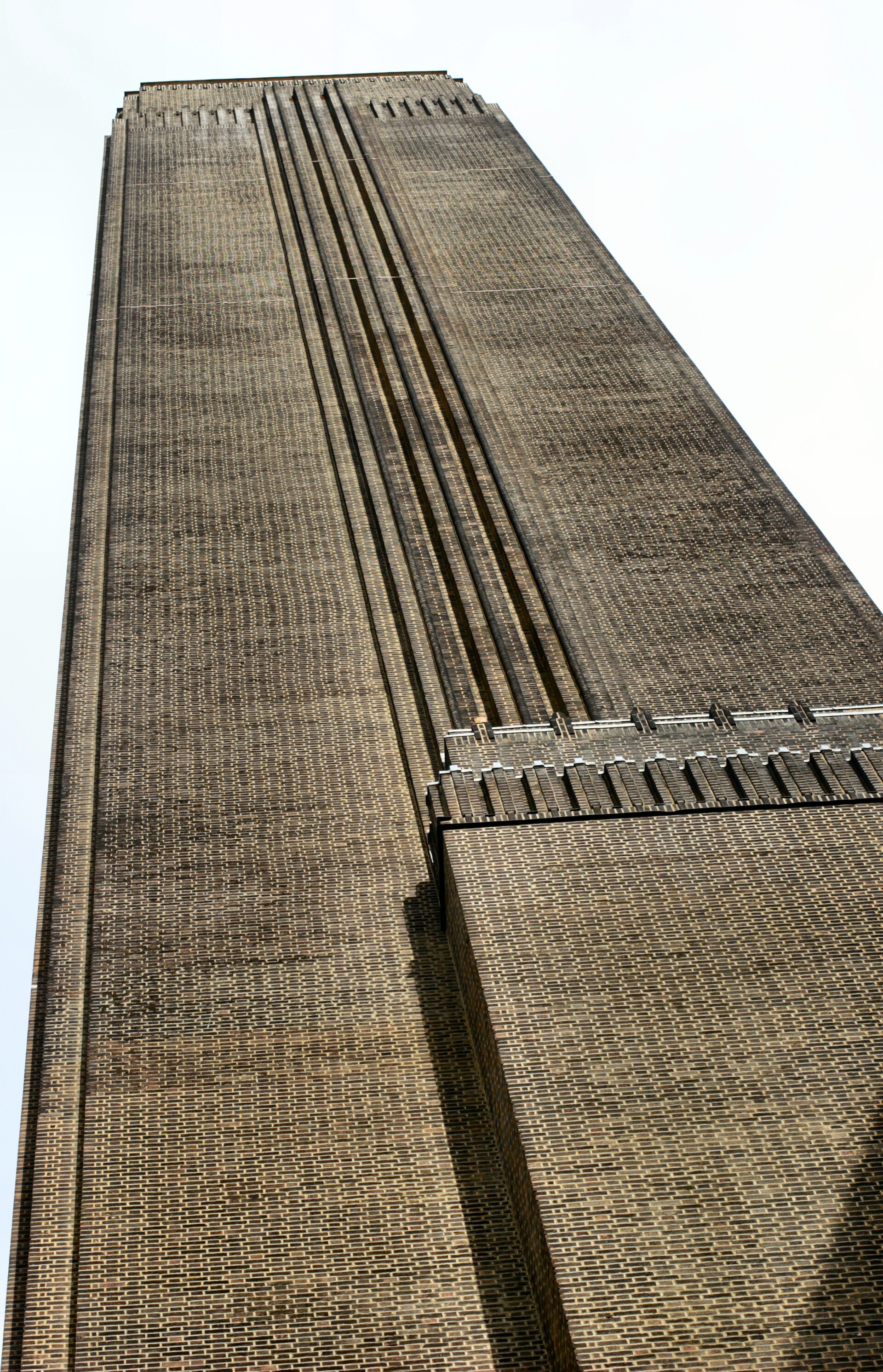
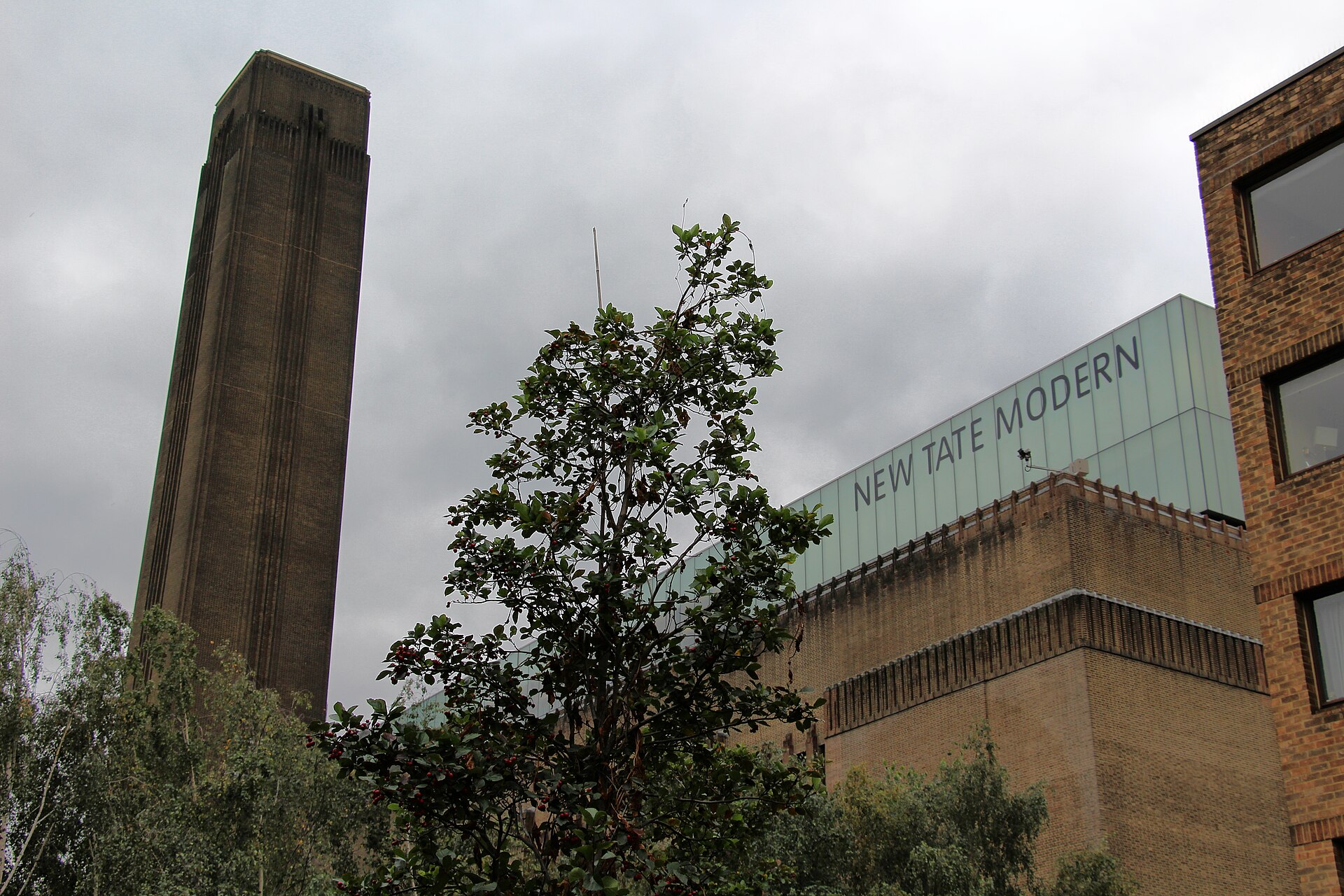
- Praised: The retained industrial architecture of the former power station, especially the Turbine Hall and the chimney
- Praised: The river views from the upper floors and the Level 10 terrace
- Praised: Helpful, patient front-of-house and access staff
- Criticised: Ticketed exhibitions sell out and get very crowded at peak times, especially on weekday mornings and school holidays, and timed-ticket policies are not always clearly signposted at the entrance
- Criticised: Reduced lift capacity in the Blavatnik Building at busy times makes the vertical galleries hard going for wheelchair users, pushchairs and anyone who cannot use the stairs
- Criticised: A minority of visitors object to specific contemporary works on religious or content grounds and feel the museum gives too little warning of what a gallery contains
Ratings on other platforms
Google: 4.5 from 83,338 ratings, read 19 August 2026
TripAdvisor: 4.1 from 10,949 ratings, read 19 August 2026
A platform average is a tertiary source: it moves, it is not audited, and we quote no visitor's words.
Questions about Tate Modern
Where is Tate Modern?
Bankside, London SE1 9TG, United Kingdom.
How much does it cost to visit?
General collection: free; Special exhibition, adult (example: Frida: The Making of an Icon, 2026-27): GBP 25; Special exhibition, Tate Collective (16-25) and reduced 12-18 rate: GBP 5; Under 12: free; Members: free. As confirmed 19 August 2026.
When is it open?
Sunday-Thursday 10:00-18:00; Friday-Saturday 10:00-21:00. Closed: 24-26 December. As confirmed 19 August 2026.
How do you get there?
Underground: Southwark (Jubilee line), about 600 metres from the museum; Rail and Underground: Blackfriars (National Rail, plus Circle and District lines): about 300 metres from the station's south exit, or about 800 metres via the north exit / Underground entrance; Walking: Millennium Bridge footbridge connects Bankside directly to St Paul's Cathedral on the north bank.
What should you see first?
Seagram Murals (Mark Rothko); Lobster Telephone (Salvador Dali); The Snail (Henri Matisse); Marilyn Diptych (Andy Warhol); I Do, I Undo, I Redo (Louise Bourgeois); Sunflower Seeds (Ai Weiwei).
What we could not confirm
- No source found for this record states what physical change, if any, Tate has made to the Level 10 viewing terrace since the Supreme Court's 2023 ruling in Fearn v Tate; the case was remitted on remedy and this record does not resolve what was ultimately implemented.
- Tate's published visitor figures are given for Tate Modern as a whole; no source found here breaks attendance down between the Natalie Bell Building and Blavatnik Building galleries.
Images
Sources
- 1Tate, "Tate Modern" visit page (hours, address, current exhibitions, free collection admission) tate.org.uk/visit/tate-modern
- 2Wikimedia Commons, Category:Tate Modern (image listing) commons.wikimedia.org/wiki/Category:Tate_Modern
- 3Wikimedia Commons API, imageinfo/ for Tate Modern exterior files (licence and author verification) commons.wikimedia.org/w/api.php?action=query&titles=File:Tate%20Modern%20-%20Bankside%20Power%20Station.jpg&prop=imageinfo&iiprop=extmetadata|url&format=json
- 4Tate, "Contact us" tate.org.uk/about-us/contact-us
- 5Tate, "History of Tate Modern" tate.org.uk/about-us/history-tate/history-of-tate-modern
- 6Tate, "Turbine Hall at Tate Modern" tate.org.uk/visit/tate-modern/turbine-hall
- 7Tate, "Frequently asked questions" (free general admission, exhibition price ranges, membership) tate.org.uk/about-us/frequently-asked-questions
- 8The Art Newspaper, "BP ends 26-year sponsorship deal with Tate", 11 March 2016 theartnewspaper.com/2016/03/11/bp-ends-26-year-sponsorship-deal-with-tate
- 9ArchDaily, "Critical Round-Up: Herzog & de Meuron's Tate Modern Switch House" archdaily.com/790092/critical-round-up-herzog-and-de-meurons-tate-modern-switch-house
- 10Google Maps listing for Tate Modern (aggregate rating, read via live browser session) google.com/maps/search/Tate+Modern
- 11TripAdvisor, "Tate Modern" attraction page (aggregate rating and review themes) tripadvisor.com/Attraction_Review-g186338-d187677-Reviews-Tate_Modern-London_England.html
- 12Tate, "Level 10 at Tate Modern" tate.org.uk/visit/tate-modern/level-10
- 13Wikipedia, "Tate Modern" (, visitor numbers and general facts) en.wikipedia.org/wiki/Tate_Modern
- 14UK Supreme Court, case page for Fearn and others v Board of Trustees of the Tate Gallery [2023] UKSC 4 supremecourt.uk/cases/uksc-2020-0056
- 15Tate, "Frida: The Making of an Icon" exhibition page (current exhibition ticket prices, and collection room context) tate.org.uk/whats-on/tate-modern/frida-kahlo-the-making-of-an-icon
- 16Tate, "Tate Modern visual story" (closed days) tate.org.uk/visit/tate-modern/visual-story
- 17The Art Newspaper, "Tania Bruguera renames Tate Modern after local London activist as part of Turbine Hall commission", 1 October 2018 theartnewspaper.com/2018/10/01/tania-bruguera-renames-tate-modern-after-local-london-activist-as-part-of-turbine-hall-commission
- 18Tate, artwork page for Warhol's Marilyn Diptych tate.org.uk/art/artworks/warhol-marilyn-diptych-t03093
- 19Tate, "Constructing Tate Modern" (conversion cost and funding breakdown) tate.org.uk/about-us/projects/constructing-tate-modern
- 20Tate press release, "Tate Modern, May 2000 - May 2001" (first-year visitor figure) tate.org.uk/press/press-releases/tate-modern-may-2000-may-2001
- 21Tate press release, "Hyundai Commission 2015: Abraham Cruzvillegas: Empty Lot" (240 planters, soil sourcing) tate.org.uk/press/press-releases/hyundai-commission-2015-abraham-cruzvillegas-empty-lot
- 22Tate Shop, Tate Membership pricing page shop.tate.org.uk/membership
- 23Tate, "The Tanks" display page (dimensions, "world's first" claim) tate.org.uk/visit/tate-modern/display/tanks
