Suan Pakkad Palace Museum
Museum · Wang Suan Pakkad · Founded 1952
Closure confirmed 18 September 2026 · 17 sources
Closed to visitors - not permanently
Suan Pakkad Palace Museum is currently closed, on the evidence sourced below.
Expected to reopen: no reopening date published · a target, not yet confirmed
Closure confirmed 18 September 2026 from the institution's own page. We re-check this page on a schedule and will update it, from the institution's own announcement, the moment it reopens.
On this page 14 sections
ContentsClose
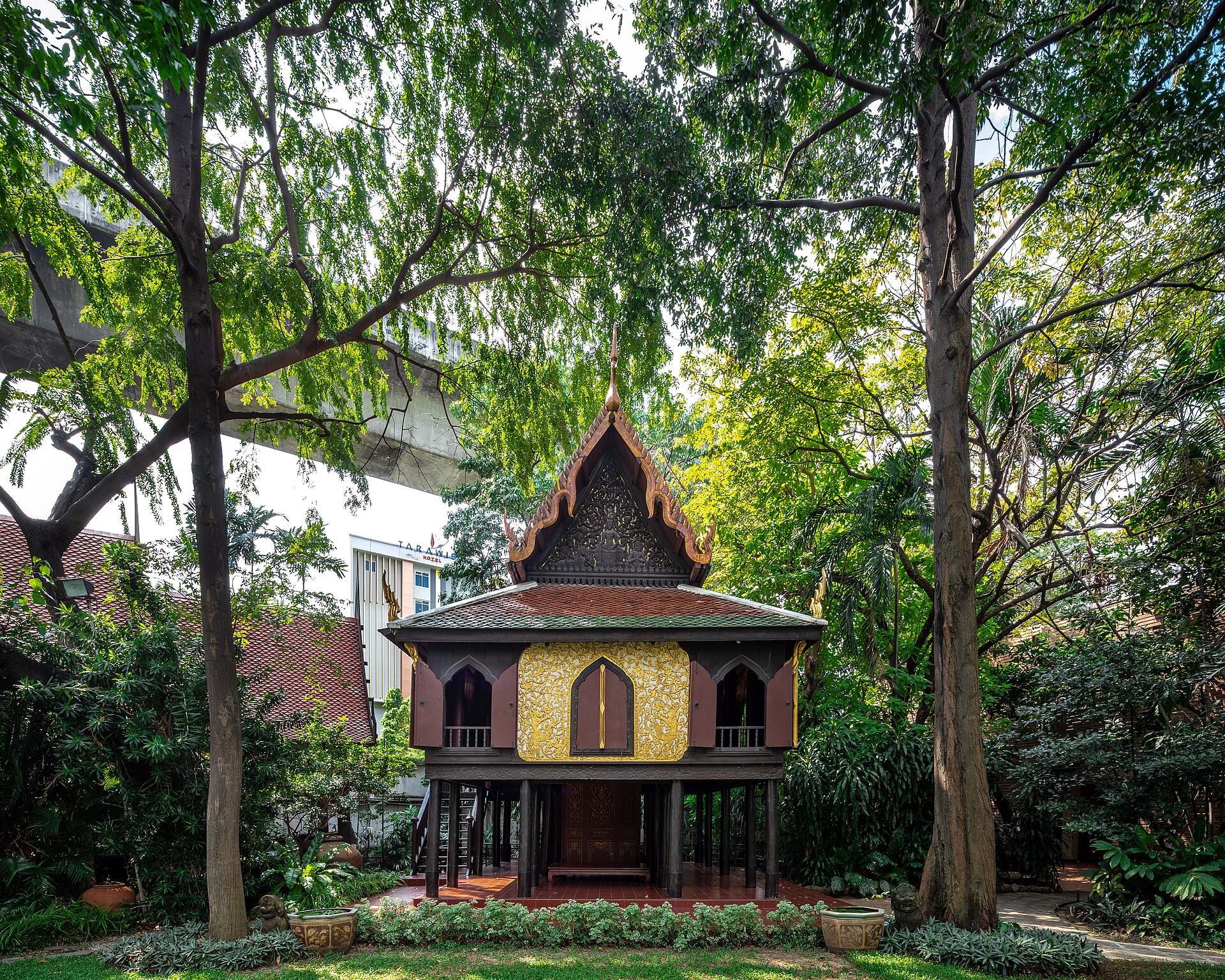
The palace's strength is coherence rather than encyclopaedic range: everything on display passed through one family's collecting over roughly a century, from seventeenth-century Ayutthaya lacquer to prehistoric Ban Chiang pottery to twentieth-century Thai contemporary art, all still shown inside the houses the family actually lived in. It is a stronger record of what a mid-twentieth-century Thai royal collector valued and patronised than it is a systematic survey of any one period or medium.
| Local name | Wang Suan Pakkad |
|---|---|
| Kind | Museum |
| Founded | 1952 |
| City and country |  Bangkok, Thailand Bangkok, Thailand |
| Address | 352 Si Ayutthaya Road, Thanon Phaya Thai, Ratchathewi, Bangkok 10400, Thailand |
| Website | suanpakkad.com |
| Status | Closed temporarily, confirmed 18 September 2026 |
| Record last verified | 18 September 2026 |
Visiting
- Hours (pre-closure)
- Daily (pre-closure)09:00 to 16:00Figure published before the 2026 conservation closure and not bookable today; the museum's own site currently shows only a closure notice.
- Admission (pre-closure)
- Foreign visitors (pre-closure)THB 100Figure published before the 2026 conservation closure. The museum's own site currently shows only a closure notice and no price list; reconfirm on reopening.
- Thai nationals (pre-closure)THB 50Figure published before the 2026 conservation closure. The museum's own site currently shows only a closure notice and no price list; reconfirm on reopening.
- Do I need to book?
- No advance booking was required before the closure; the palace is not currently open to visitors at all.
- Address
- 352 Si Ayutthaya Road, Thanon Phaya Thai, Ratchathewi, Bangkok 10400, Thailand MapBTS Skytrain Phaya Thai station, a short walk from the palace gate
Airport Rail Link Phaya Thai station, on the same interchange as the BTS - Website
- suanpakkad.com
- Telephone
- +66 2 246 1775
Before you go how long, access, photography, bags, eating, shop
- How long to allow
- Two hours, by visitor accounts, to see the eight houses and the Lacquer Pavilion at an unhurried pace
- Access
- Not documented in any source fetched for this page
- Photography
- Permitted in the garden; not allowed inside the houses, where the lacquer and manuscript collections are light-sensitive
- Bags
- Not documented in any source fetched for this page
- Eating
- Not documented in any source fetched for this page
- Shop
- Not documented in any source fetched for this page
The museum is closed (see above). These are the figures published before the closure, kept here for a visitor planning ahead rather than presented as bookable today, and you can check the current position at the source we used. We will re-confirm them once it reopens.
What is inside
Photograph by Hdamm · CC BY 2.0 The Lacquer Pavilion (Ho Trai)
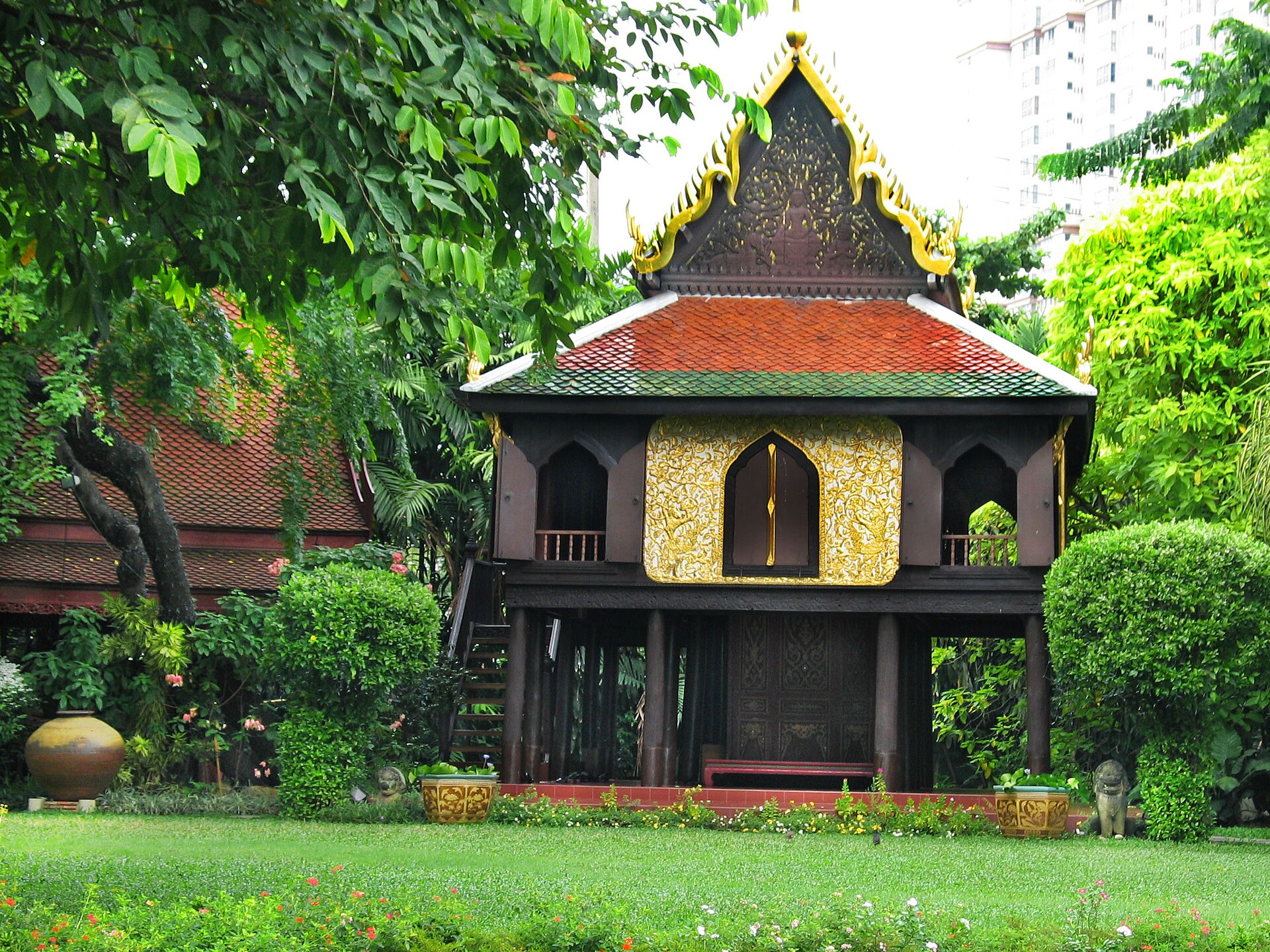
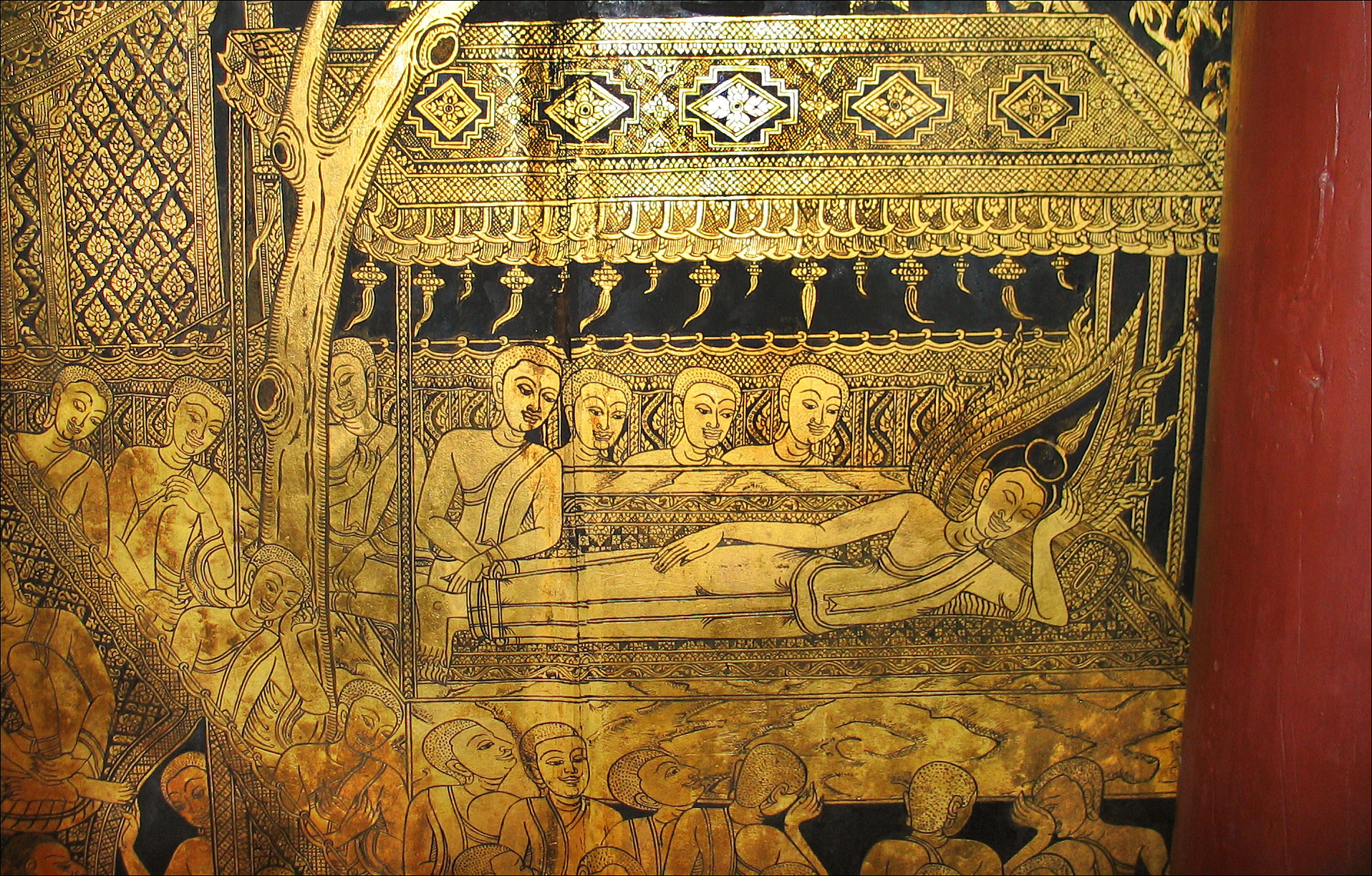
A gilded wooden scripture hall built in the Ayutthaya period, dismantled from a temple compound and re-erected on the palace grounds, then restored. Its walls carry gold-on-black lacquer murals (lai rot nam technique) showing scenes from the life of the Buddha and from the Ramayana. It is the single object every source on this page treats as the palace's defining structure.
Photograph by Hdamm · CC BY 2.0 Eight teak houses (antiques and decorative arts)
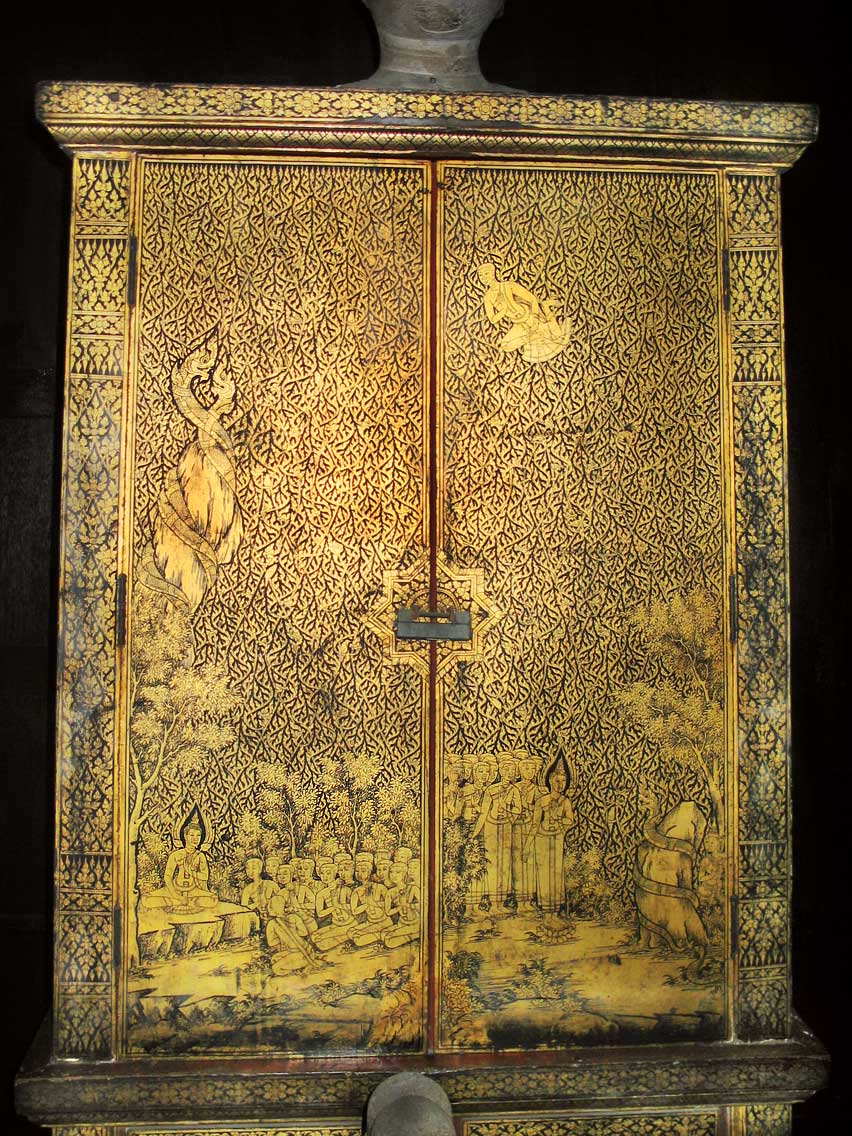
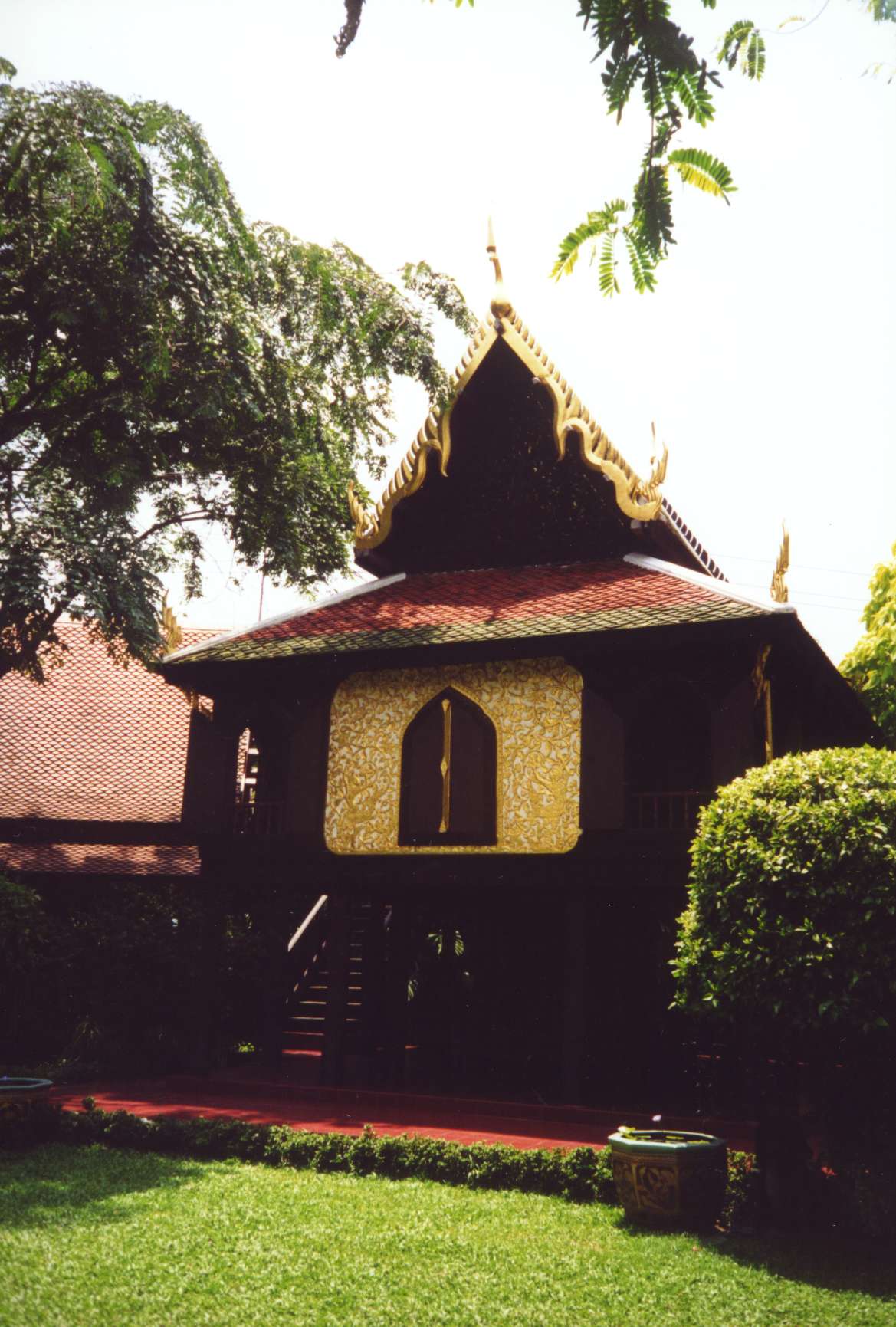
Traditional Thai houses on stilts, moved to the site from family estates outside Bangkok and joined by covered walkways, each holding a themed slice of the family's collecting: lacquer furniture and manuscript cabinets, Chinese export porcelain, minerals and shells, stone and bronze sculpture, and everyday royal household objects.
Chumbhot-Pantip Centre of Arts (Ban Chiang collection)
A purpose-built gallery holding prehistoric pottery, bronze and stone tools from Ban Chiang in Udon Thani province, one of the reference collections for a culture whose painted earthenware and early metalworking reshaped how Southeast Asian prehistory is dated.
Marsi Gallery
A gallery named for Princess Marsi Paribatra, the couple's daughter and a painter in her own right, used for exhibitions and for the family's continuing patronage of contemporary Thai art that Princess Chumbhot began in the 1960s.
Khon mask and puppet house
Masks, hun lakhon lek rod puppets and staging material connected to khon, the masked dance-drama that performs the Ramayana at the Thai court, part of the family's wider collection of performing-arts material.
Royal barge house
A ceremonial river barge from the reign of King Chulalongkorn (Rama V), kept under cover on the grounds as part of the display of royal and courtly objects.
What to see first
The lacquer murals of the Ho Trai
Ayutthaya-period workshop, unattributedGold-on-black lai rot nam murals of the Buddha's life and the Ramayana on a scripture hall moved and restored on the palace grounds; treated by every source consulted as the palace's principal artwork.2
Ban Chiang painted earthenware
Ban Chiang culture, prehistoric Northeast ThailandPart of the reference material for a culture whose swirl-painted pottery and early bronzework, once wrongly dated to a much earlier Bronze Age, triggered one of Southeast Asia's worst antiquities-looting episodes in the 1970s once collectors caught on.16
The royal barge of Rama V
Royal Thai boatbuilders, 19th centuryA ceremonial vessel from Chulalongkorn's reign, kept on the grounds as a rare piece of courtly river culture outside the National Museum's own barge collection.7
Khon masks and puppets
Various Thai court workshopsPerformance objects for khon, the masked Ramayana dance-drama, shown alongside the puppets and props used to stage it.7
The Ho Trai scripture cabinet group
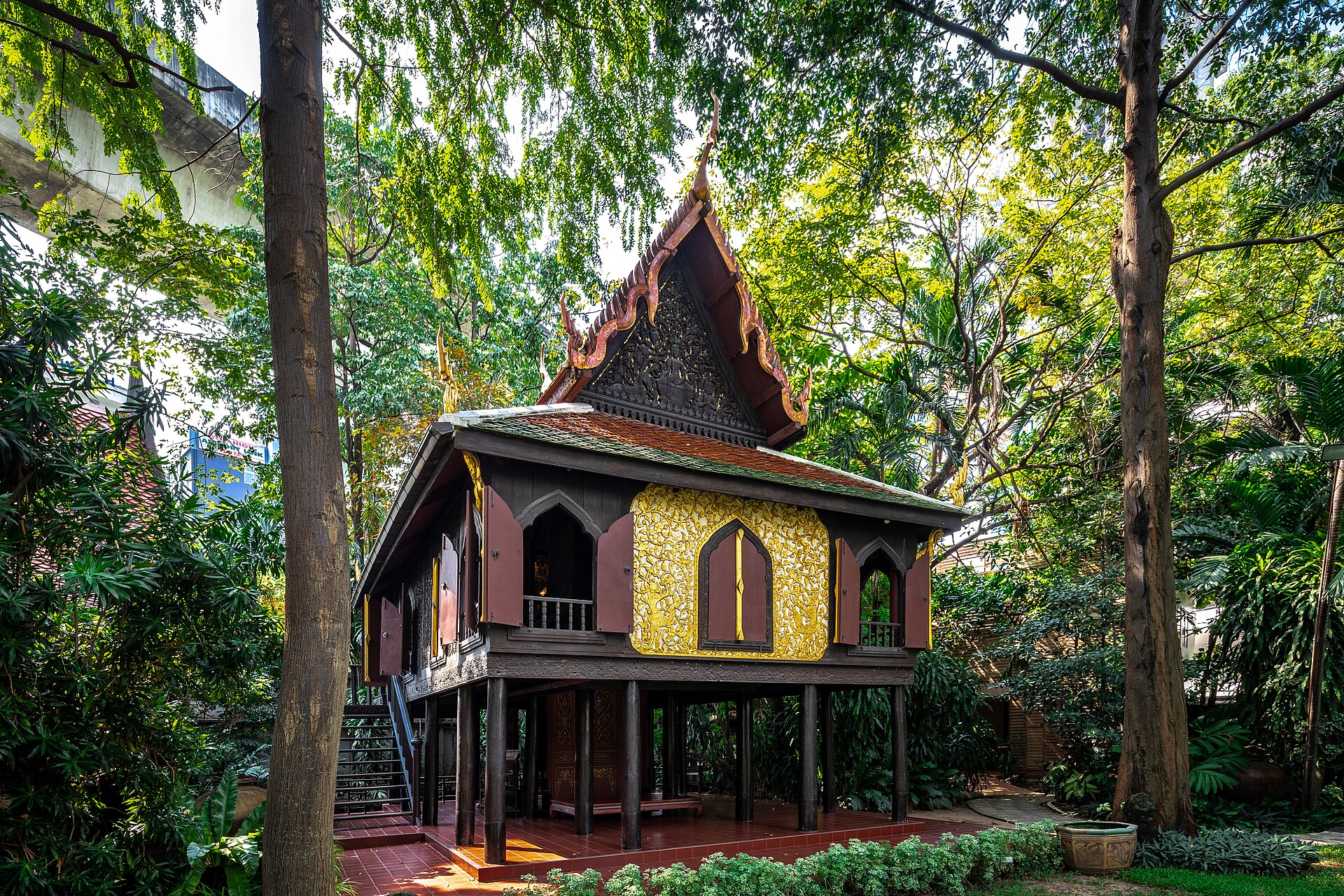
Ayutthaya and early Rattanakosin lacquer workshopsGilt manuscript cabinets in the same lai rot nam technique as the pavilion murals, everyday objects of the same courtly lacquer tradition rather than temple showpieces.3
Torso of Uma
Khmer, precise workshop and date undocumented in sources fetched for this pageA Khmer stone sculpture cited by Google Arts & Culture among the couple's archaeological acquisitions, alongside their documented site visits to Angkor, Phimai and Phanom Rung with the archaeologists Prince Subhadradis Diskul and Jean Boisselier.11
The Marsi Gallery program
Contemporary Thai artists, variousGrew out of Princess Chumbhot's 1961 conversion of part of the palace into Thailand's first private art gallery space, a documented precursor to the Bhirasri Institute of Modern Art.15
The Princess Paribatra musical instrument collection
Various, Thai court musicA dedicated room of traditional Thai instruments assembled by the family, cited by secondary sources as one of the eight houses' themed displays.7
A weekend house that outgrew its garden
Suan Pakkad means cabbage patch, and the name is literal: the six-acre plot on Si Ayutthaya Road had been market-garden land before Prince Chumbhotbongs Paribatra and his wife, Mom Rajawongse Pantip (later Princess Chumbhot), built a residence on it. Rather than build a single grand house, the couple moved eight traditional teak houses to the site from family estates outside Bangkok and joined them with covered walkways around a garden of ponds and lawns. The prince, a great-grandson of King Mongkut and a cousin of King Bhumibol Adulyadej through their fathers, and the princess, a granddaughter of the Bunnag family that had supplied ministers to the Chakri court for generations, filled the houses with what they had collected: lacquerware, porcelain, sculpture, minerals, shells and musical instruments, arranged less like a museum's taxonomy and more like a family's rooms.
They opened the grounds to paying visitors in 1952, while they were still living there, a decision Prince Chumbhot and Princess Chumbhot were consistently credited as the first Thai royals to make. The prince died in 1959, seven years after that opening; his widow spent the following decades expanding the collection and the palace's role in Bangkok's art world, and the museum that exists today is substantially her work, carried on since her own death in 1987 by the Chumbhot-Pantip Foundation she established.
The Lacquer Pavilion
The palace's best-known structure did not start on this site. It began as a scripture hall, a ho trai, inside a temple compound near Ayutthaya, built in the seventeenth century during the reign of King Narai to hold Buddhist manuscripts safely above ground level and away from insects and floodwater. English-language sources place its move to Suan Pakkad and its restoration in 1959, as a gift from Prince Chumbhot to his wife; the Thai-language record of the palace instead dates the move to 1962, after the prince's death, which would make it a project the princess carried out in his memory rather than one he gave her himself. Both dates come from sources this page fetched and neither cites the other, so the discrepancy is recorded here rather than resolved by guessing.
Whichever year it moved, what survives is not in question: a raised wooden pavilion whose interior walls are covered in lai rot nam, a technique that builds up a design in black lacquer and gold leaf. The murals show episodes from the life of the Buddha and from the Ramayana, rendered in the same gilt-on-black idiom used on manuscript cabinets and temple doors elsewhere in the collection. It is the one object every source consulted for this page treats as the palace's signature piece, ahead of the Ban Chiang pottery or the royal barge.
Ban Chiang, and a gap the museum's own materials do not close
A purpose-built gallery, the Chumbhot-Pantip Centre of Arts, houses the palace's holding of Ban Chiang material: painted earthenware, bronze and stone tools from a prehistoric culture excavated in Udon Thani province in the country's northeast. Ban Chiang matters to world prehistory because early thermoluminescence dating in the early 1970s appeared to place its bronzework several thousand years earlier than anyone expected for Southeast Asia, a claim later revised downward once better dating methods were applied. The publicity around that first, overstated claim did real damage: it drove a wave of looting through the mid-1970s, with Bangkok collectors and buyers connected to the American military presence in Thailand competing for material dug out of undocumented sites, until a 1972 government decree made buying, selling or exporting Ban Chiang pottery illegal and archaeological teams took over the site.
None of the sources fetched for this page state when Suan Pakkad's own Ban Chiang pieces entered the collection, or from where. The Chumbhot-Pantip Centre of Arts building itself dates to 1996, nine years after Princess Chumbhot's death, which only fixes when the display gallery was built, not when the objects it holds arrived at the palace. That is a real gap, not a settled fact glossed over: a reader who wants excavation-level provenance for these specific pieces will not find it published by the museum, and this page does not invent it on the museum's behalf.
A palace that became a gallery twice over
Princess Chumbhot's role did not stop at keeping her husband's collection intact. In 1961 she converted part of Suan Pakkad into what a 2025 academic study of her patronage calls Thailand's first private art gallery space of its kind, opening it to young avant-garde artists who found no room in the government-run National Art Exhibition. She went on to back the Bhirasri Institute of Modern Art, founded in 1974 in memory of the sculptor and teacher Silpa Bhirasri, and to support the private-gallery scene that grew up around it through the 1960s and 1970s. The Marsi Gallery on the palace grounds today, named for the couple's daughter and only child, Princess Marsi Sukhumbhand Paribatra, an artist who trained in Paris and Madrid and exhibited at the Musee d'Art Moderne in Paris between 1964 and 1972, is the direct descendant of that 1961 decision.
The effect is a museum with two distinct collecting identities layered on the same six acres: courtly antiques and archaeology from the family's own collecting, and a continuing, deliberately less formal program of contemporary Thai art that the family built specifically to give working artists room the state institutions of the day did not offer them.
Eight houses under the Skytrain
The palace now sits in the shadow of infrastructure that did not exist when it was built: the BTS Skytrain and the Airport Rail Link both run on elevated track close enough to the boundary wall that recent photographs of the Lacquer Pavilion show the concrete guideway rising directly behind its roofline. The eight teak houses, plus the Lacquer Pavilion, a three-story exhibition hall referred to in Thai-language sources as the Silpakorn Building, and the Ban Chiang gallery, sit inside a walled garden of lawns and ponds that visitors consistently describe as a deliberate contrast to that surrounding density: quiet, shaded and comparatively empty next to Bangkok's larger and more heavily marketed heritage houses.
Individual houses are themed rather than chronological. One holds Chinese export porcelain, another minerals and shells, another Khon masks, puppets and the props used to stage the Ramayana as a dance-drama, another everyday objects from the royal household and a fifth the family's musical instruments. A royal barge from the reign of King Chulalongkorn, Rama V, is kept under cover on the grounds as a separate, single-object display.
What is closed, and what a visit meant before it was
As of this page's last check, Suan Pakkad Palace Museum's own website shows nothing but a closure notice: closed for repairs, apologies for the inconvenience, with no price list, no hours and no reopening date behind it. Secondary sources describe the closure as conservation and restoration work on the Thai house complex, and the Thai-language reference record for the palace carries the same status in its infobox, but none of the sources fetched for this page name a start date for the closure or a target date for reopening. That absence is recorded here as what it is: nobody publishing on this palace right now has a date to give a reader.
Before the closure, a visit cost 100 baht for foreign visitors and 50 baht for Thai nationals, with the palace open daily from nine in the morning to four in the afternoon, and visitor accounts consistently budgeted around two hours to see all eight houses and the Lacquer Pavilion without rushing. Those figures are kept on this page because a reader planning a future trip needs them, not because they can be booked against today; anyone planning an actual visit should confirm the museum has reopened before travelling.
What visitors say
Visitors consistently describe Suan Pakkad as a quiet, well-kept alternative to Bangkok's more crowded heritage houses, valued for its garden setting and for guided tours that go deeper into the collection than a self-guided walk would. The most repeated practical complaints are the ban on photography inside the houses and patchy facilities such as toilet supplies, both minor next to the praise for the setting and the guiding.
What is praised, what is criticised
- Praised: Knowledgeable, friendly guides who walk visitors through all eight houses rather than leaving them to read labels alone
- Praised: A garden setting that visitors repeatedly contrast with the crowds at Jim Thompson House, calling it calmer and less commercial
- Praised: The condition of the houses and the Lacquer Pavilion, described as clean and well maintained
- Criticised: Photography is not permitted inside the houses, which frustrates visitors even when they accept the conservation reasoning
- Criticised: Facilities are basic; one long-running visitor account flags a shortage of toilet paper in the restrooms
Ratings on other platforms
Tripadvisor: 4.2 from 363 ratings, read 18 September 2026
A platform average is a tertiary source: it moves, it is not audited, and we quote no visitor's words.
Questions about Suan Pakkad Palace Museum
Where is Suan Pakkad Palace Museum?
352 Si Ayutthaya Road, Thanon Phaya Thai, Ratchathewi, Bangkok 10400, Thailand.
How much does it cost to visit?
Foreign visitors (pre-closure): THB 100; Thai nationals (pre-closure): THB 50. As confirmed 18 September 2026.
When is it open?
Daily (pre-closure) 09:00-16:00. As confirmed 18 September 2026.
How do you get there?
BTS Skytrain: Phaya Thai station, a short walk from the palace gate; Airport Rail Link: Phaya Thai station, on the same interchange as the BTS.
What should you see first?
The lacquer murals of the Ho Trai (Ayutthaya-period workshop, unattributed); Ban Chiang painted earthenware (Ban Chiang culture, prehistoric Northeast Thailand); The royal barge of Rama V (Royal Thai boatbuilders, 19th century); Khon masks and puppets (Various Thai court workshops); The Ho Trai scripture cabinet group (Ayutthaya and early Rattanakosin lacquer workshops); Torso of Uma (Khmer, precise workshop and date undocumented in sources fetched for this page).
What we could not confirm
- No source fetched for this page gives a start date for the 2026 conservation closure or a target reopening date; the museum's own site states only that it is closed.
- No source fetched for this page documents when or how the Ban Chiang objects in the Chumbhot-Pantip Centre of Arts entered the collection, or their individual excavation provenance.
- English-language sources date the Lacquer Pavilion's move to the palace grounds and restoration to 1959; the Thai-language reference record dates it to 1962. This page has not resolved the discrepancy.
Images
Sources
- 1Suan Pakkad Palace Museum, official site, closure notice suanpakkad.com
- 2Wikipedia, Suan Pakkad Palace en.wikipedia.org/wiki/Suan_Pakkad_Palace
- 3Thai Wikipedia, Wang Suan Pakkad th.wikipedia.org/wiki/%E0%B8%A7%E0%B8%B1%E0%B8%87%E0%B8%AA%E0%B8%A7%E0%B8%99%E0%B8%9C%E0%B8%B1%E0%B8%81%E0%B8%81%E0%B8%B2%E0%B8%94
- 4Your Thai Guide, Suan Pakkad Palace Museum: the cabbage patch that grew into a fine art museum yourthaiguide.com/suan-pakkad-palace-museum-the-cabbage-patch-that-grew-into-a-fine-art-museum/
- 5Thaizer, Suan Pakkad Palace and Museum, Bangkok thaizer.com/things-to-do-in-thailand/suan-pakkad-palace-and-museum-bangkok/
- 6Lovethailand.org, Suan Pakkad Palace Museum lovethailand.org/travel/en/17-Bangkok/901-Suan-Pakkad-Palace-Museum.html
- 7Tourist Bangkok, Suan Pakkad Palace Museum touristbangkok.com/museums-bangkok/suan-pakkad-palace-museum/
- 8Theo Courant, Discover the Suan Pakkad Palace Museum in Bangkok theo-courant.com/en/suan-pakkad-palace-museum-bangkok/
- 9Tripadvisor, Suan Pakkad Palace Museum overview and rating tripadvisor.com/Attraction_Review-g293916-d311040-Reviews-Suan_Pakkad_Palace_Museum-Bangkok.html
- 10Tripadvisor, user review 'Oasis in Metropolis' by KeithAuckland, 13 May 2012 tripadvisor.com/ShowUserReviews-g293916-d311040-r129841262-Suan_Pakkad_Palace_Museum-Bangkok.html
- 11Google Arts & Culture, Learning: Prince & Princess Chumbhot Passion for Archaeology artsandculture.google.com/story/learning-prince-amp-princess-chumbhot-passion-for-archaeology-suan-pakkad-palace/cgVhKl4AzZh5Kg?hl=en
- 12Google Arts & Culture, Inheriting: Preservation at Suan Pakkad Palace Museum artsandculture.google.com/story/inheriting-preservation-at-suan-pakkad-palace-museum-suan-pakkad-palace/CAWRR7-apbBXLQ?hl=en
- 13Wikipedia, Chumbhotbongs Paribatra en.wikipedia.org/wiki/Chumbhotbongs_Paribatra
- 14Wikipedia, Marsi Paribatra en.wikipedia.org/wiki/Marsi_Paribatra
- 15Sitthidham Rohitasuk, 'Princess Pantip Paribatra Chumbhot and the Development of Contemporary Art in Thailand, 1960s-1980s', TPM Vol. 32 No. S8, 2025 tpmap.org/submission/index.php/tpm/article/download/2487/1887/5390
- 16Trafficking Culture, Ban Chiang case study traffickingculture.org/encyclopedia/case-studies/1046/
- 17Wikimedia Commons, Category:Suan Pakkad Palace commons.wikimedia.org/wiki/Category:Suan_Pakkad_Palace