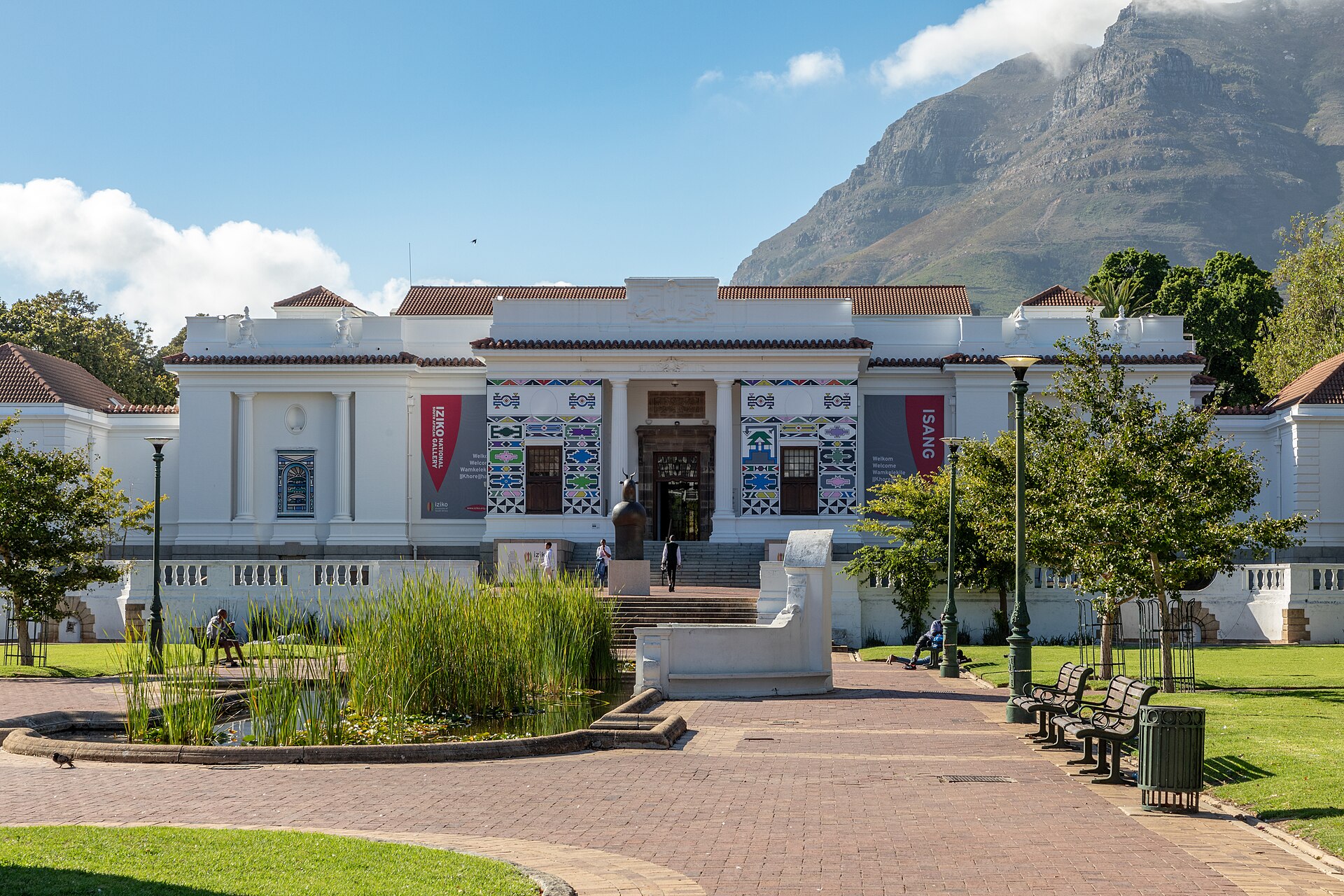
The gallery's Government Avenue facade in Company's Garden, photographed in 2024.
Dietmar Rabich · CC BY-SA 4.0South African National Gallery
Museum · Iziko South African National Gallery · Founded 1930
Open, admission and hours confirmed 5 September 2026 · 12 sources
On this page 14 sections
ContentsClose
The gallery's real strength is the contrast it now displays deliberately: a 19th-century European painting collection built by a handful of colonial-era donors, sitting alongside roughly 3,000 African art objects and a contemporary South African programme that includes some of the country's most-reproduced post-apartheid work. Few national galleries anywhere hold that range under one roof, and fewer still have restructured their own hang, as Iziko did in 2022, specifically to make the gap between the two collecting eras visible to a visitor rather than smoothing over it.
| Local name | Iziko South African National Gallery |
|---|---|
| Kind | Museum |
| Founded | 1930 |
| City and country |  Cape Town, South Africa Cape Town, South Africa |
| Address | Government Avenue, Company's Garden, Cape Town, 8001, South Africa |
| Website | iziko.org.za/museums/south-african-national-gallery |
| Status | Open, confirmed |
| Record last verified |
Visiting
- Hours
- Mon-Fri09:00 to 17:00
- Sat-Sun08:00 to 16:00A separate Iziko page gives the weekend opening as 08:30 rather than 08:00; the museum's own hours page, read 5 September 2026, states 08:00
- Closed
- Christmas Day. Workers' Day (1 May).
- Admission
- Local adultZAR 60South African resident, valid ID may be requested
- Local child (5-17)ZAR 40
- South African student / pensionerZAR 40Free on Fridays with valid student or pensioner ID
- Family ticketZAR 1602 adults plus 2 children aged 5 and over
- International adultZAR 100
- International childZAR 100
Free entry: Nine commemorative days a year, published by Iziko Museums. Fridays, for South African students and pensioners with valid ID- Do I need to book?
- Not stated as required; no online timed-ticket system found on the museum's own site
- Address
- Government Avenue, Company's Garden, Cape Town, 8001, South Africa Map
- Website
- iziko.org.za/museums/south-african-national-gallery
- Telephone
- +27 21 481 3970
Before you go how long, access, photography, bags, eating, shop
- Eating
- TripAdvisor reviewers, read in aggregate, note the gallery has no on-site cafe or gift shop
- Shop
- TripAdvisor reviewers, read in aggregate, note the gallery has no on-site cafe or gift shop
Prices and hours change. We take them from the institution's own pages and print the day we read them, and you can check the current position at the source we used. Confirm before you travel.
What is inside
The Old Masters and European galleries
Dutch, French and British paintings from the 17th to the 19th century, built up through early bequests and donor collections including works by Melchior de Hondecoeter and Paulus Moreelse, alongside Cape topographical views by artists such as Thomas Bowler and Thomas Baines.
The African art collection and beadwork store
Roughly 3,000 works representing the diversity of Southern African expressive traditions in beadwork, sculpture, metalwork, weaving and carving in wood, bone and horn, including the mid-20th-century KwaNdebele beaded regalia collected by Anelle Zaloumis in the early 1990s and the Stephen Long Collection of Eastern Cape beadwork, held in a secure store converted from the gallery's former library.
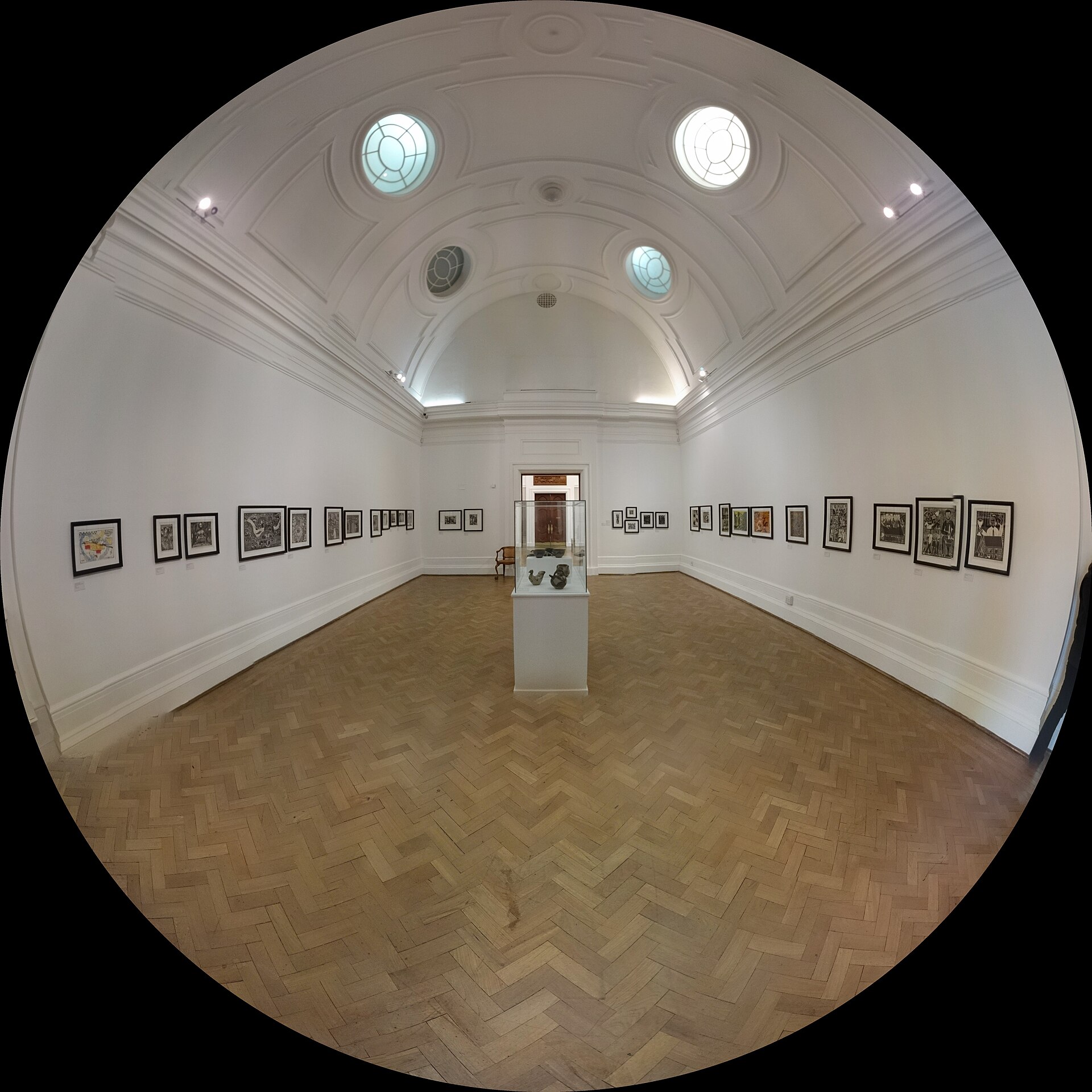
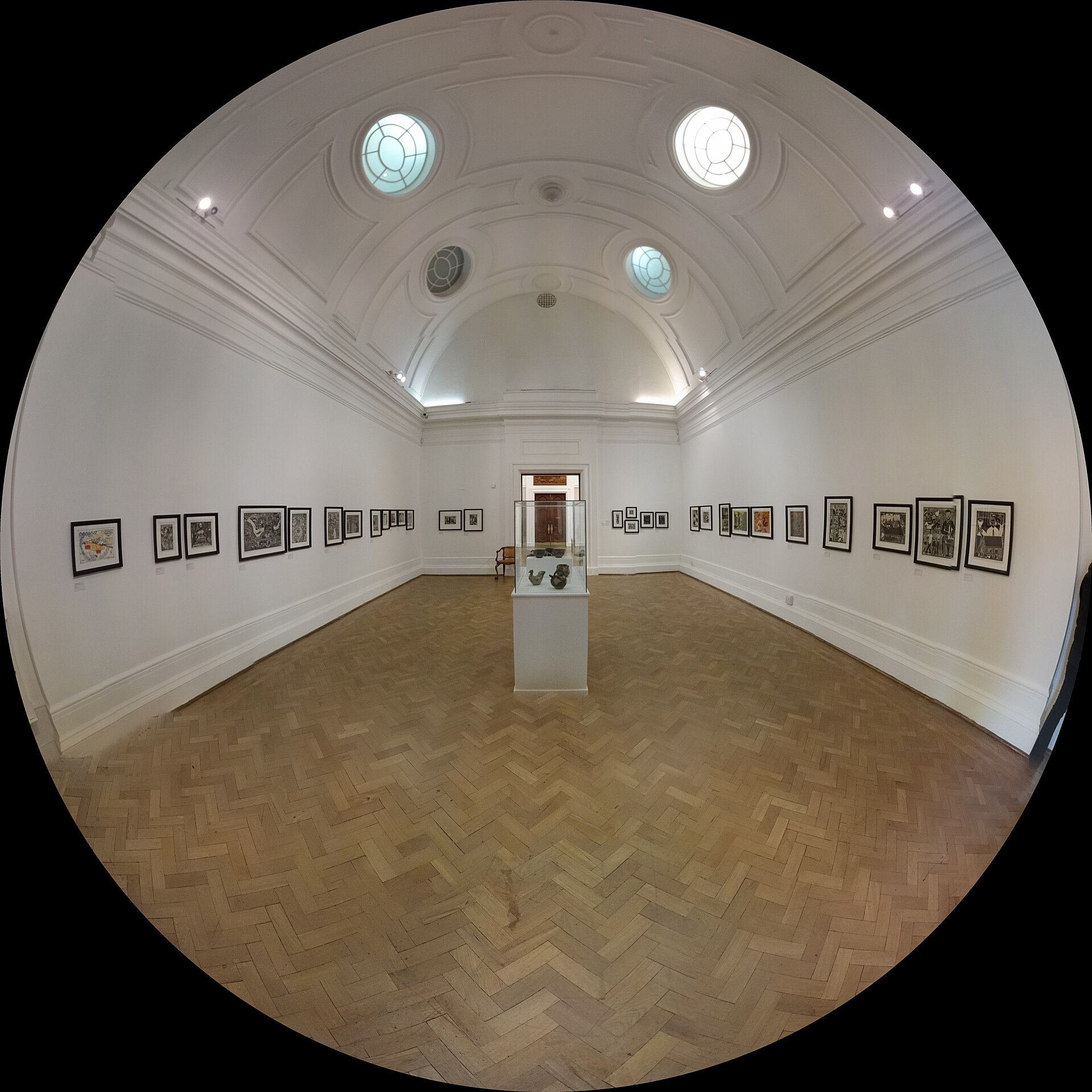
Photograph by Nkansahrexford · CC BY-SA 4.0 Contemporary South African rooms
Work by artists including Jane Alexander, William Kentridge, Marlene Dumas, Gerard Sekoto, Penny Siopis and Diane Victor, spanning painting, sculpture, print and moving image made under and after apartheid.
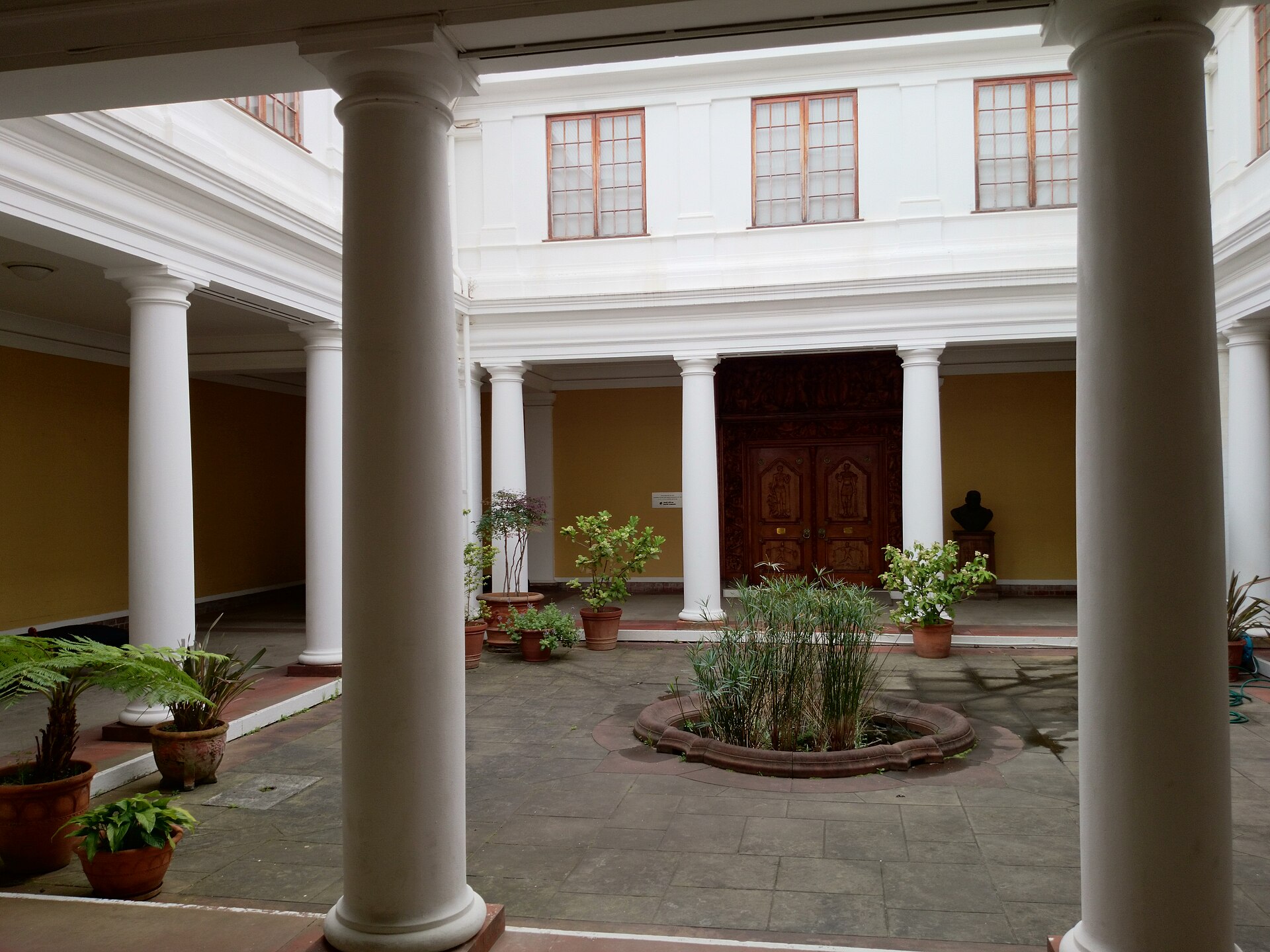
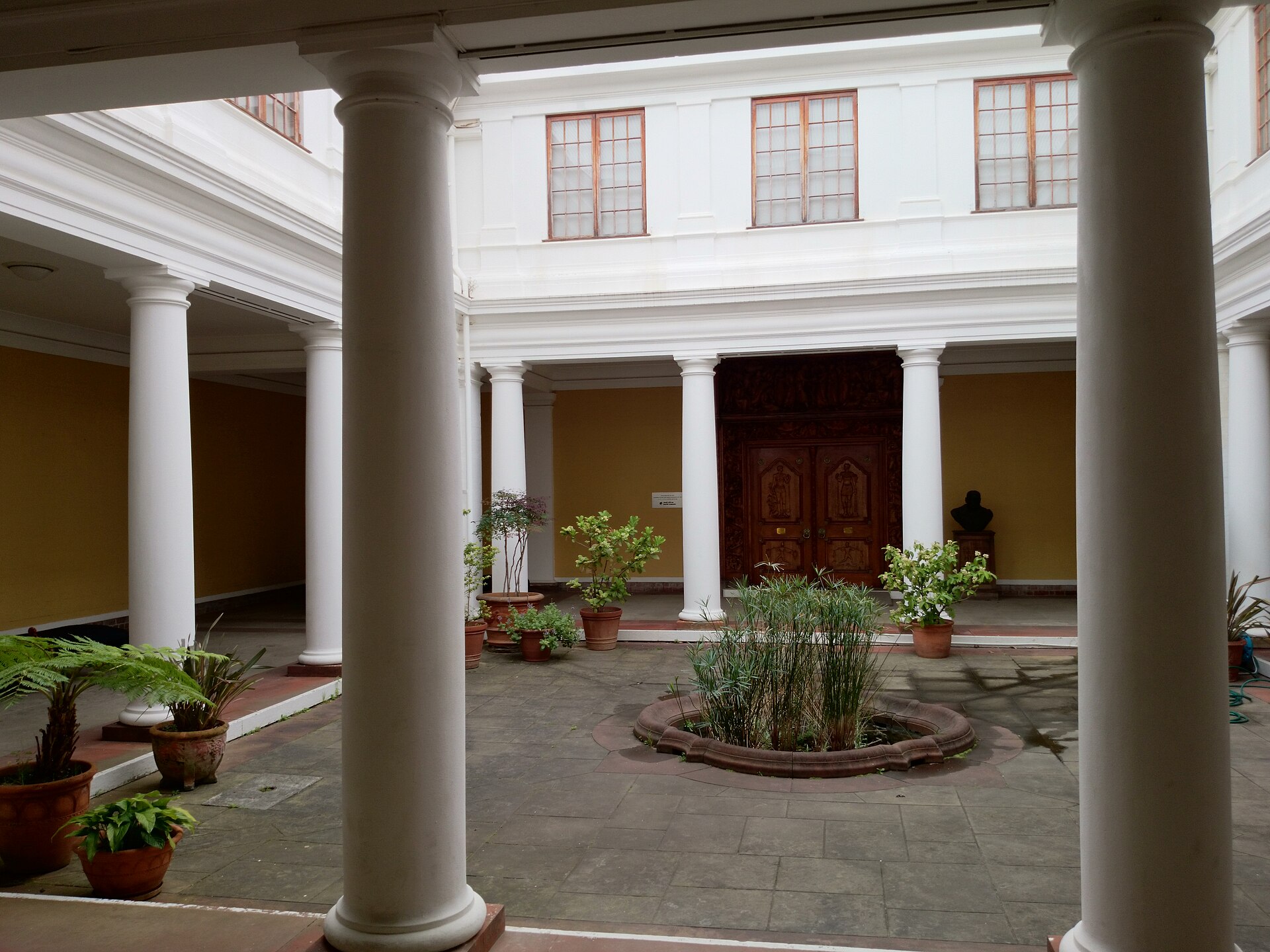
Photograph by Nkansahrexford · CC BY-SA 4.0 Entrance atrium and courtyard
The gallery's entrance hall and courtyard, refurbished during the 2022 revitalisation project alongside the exhibition halls, and used for sculpture and rotating installations.
'Breaking Down the Walls' thematic rehang
The gallery's current, non-chronological hang, opened October 2022 for the collection's 150th anniversary, which groups paintings, sculpture, textiles, maps and postage stamps by theme rather than period or discipline, and includes a darkened 'Absences' room standing for artists and works the collection never acquired.
What to see first
The Butcher Boys
Jane Alexander (1985/86)Three life-size plaster figures with animal horns and bone in place of human features, made during the 1985 State of Emergency and read as a study of apartheid's dehumanising violence; acquired in 1991 and now the collection's best-known contemporary work.5
African Head
Anton van Wouw (1926)Bought in 1926, the year the gallery acquired the work of a South African-based artist for the first time in its history.4
Adderley Street Flower-sellers
Neville Lewis (1926)Acquired the same year as the Van Wouw, part of the gallery's first turn toward local subject matter after five decades collecting mainly European art.4
Soho Eckstein series
William Kentridge (1989-1996)Five animated films following the fictional Johannesburg industrialist Soho Eckstein, among the gallery's principal holdings of post-apartheid moving-image art.4
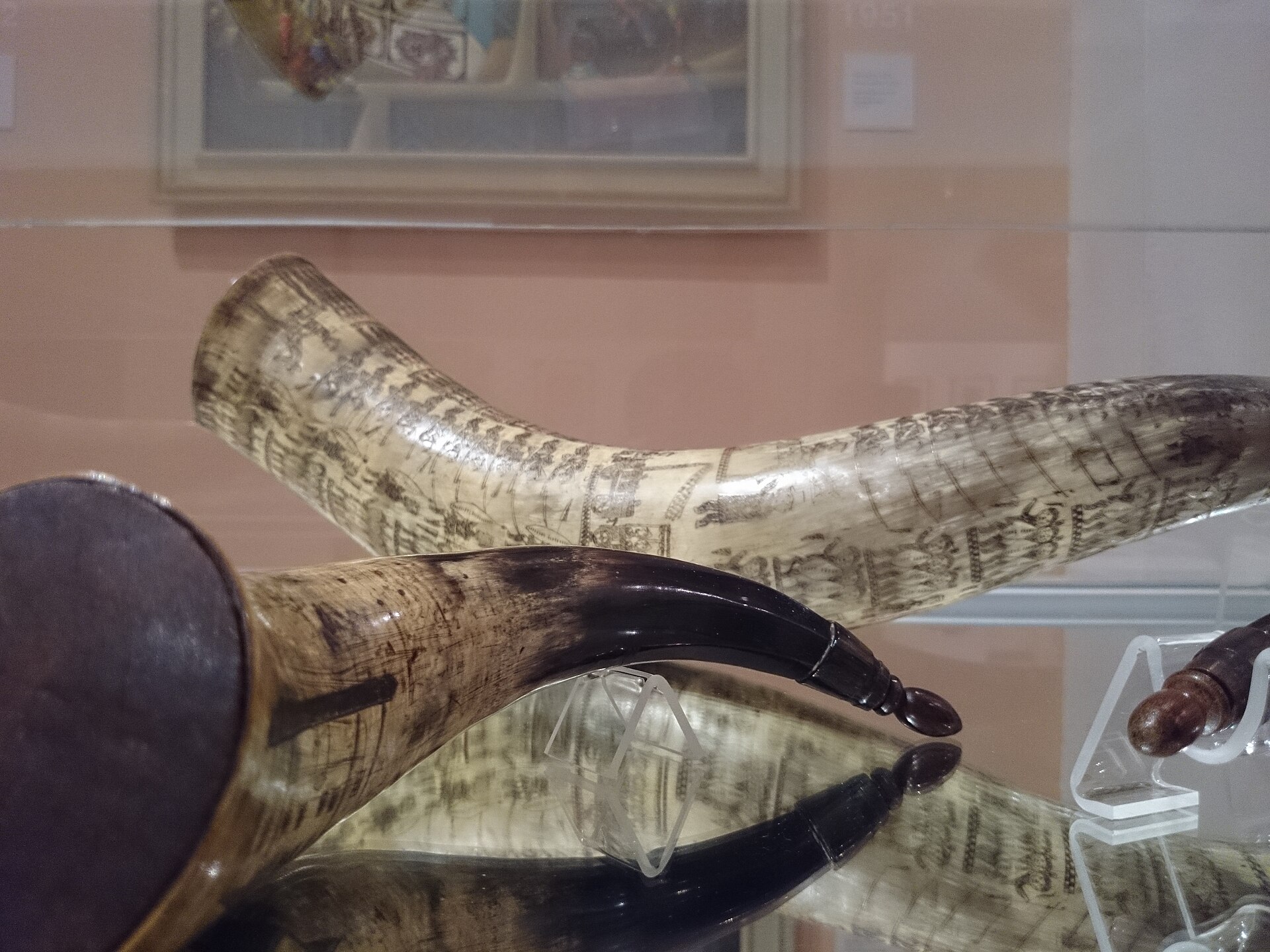
Engraved Nguni cattle horns depicting the Anglo-Zulu War (1879)
Unknown maker, c.1880A pair of scenes engraved on cattle horn, part of a group of objects the museum's own African art collection page describes as repatriated to South Africa through donation and government cooperation, and now catalogued in the beadwork and object store.8
The Revelation of St John
Azaria Mbatha (1965)A linocut by the Rorke's Drift-trained printmaker, acquired the year it was made after the museum's own account says it was judged the finest print at a 1965 exhibition; one of the works cited by Iziko itself when asking how a collection founded on colonial principles should be commemorated.9
KwaNdebele beaded regalia
Ndebele makers, collected by Anelle Zaloumis, early 1990sA mid-20th-century beadwork collection large enough that pieces from it illustrated South Africa's 2010 postage stamp series on Southern African beadwork.8
Powder horns from the 7th Frontier War
Unknown Nguni maker, 1844-46A pair of Nguni cattle-horn powder horns with scrimshaw-style scenes from the 1846-47 war on the Eastern Cape frontier, part of the object collection's holdings in worked horn and bone.11
Exhibitions on now
A building raised for a young institution's ambitions
The gallery's story starts earlier than its building. The South African Fine Arts Association formed at a meeting in the Cape Town Public Library on 12 October 1850, and its founders, Thomas Butterworth Bayley and Abraham de Smidt, staged the first fine art exhibition held in South Africa the following May, in school rooms in Company's Garden. A national collection began in 1872 with a bequest from Bayley's own estate, and by 1875 the association had bought premises on Queen Victoria Street. The South African Art Gallery Act of 1895 put the collection under government control, the state paying the association 12,000 rand for it and appointing a five-person board of trustees the following year.
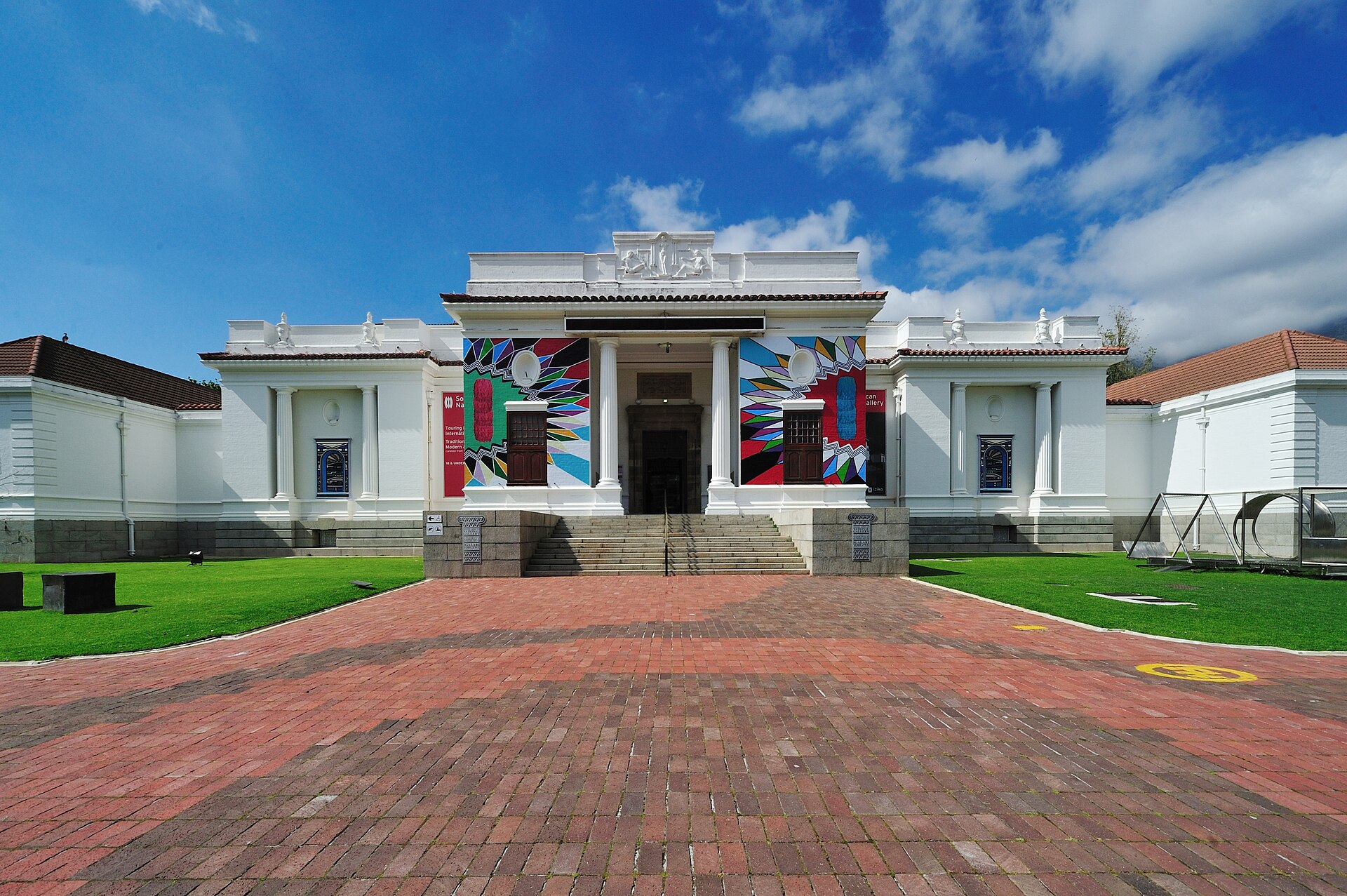
The purpose-built gallery on Government Avenue came much later. Foundation work began in 1914, but the collection stayed housed in a wing of the South African Museum for another sixteen years while the new building was completed. It opened to the public on 3 November 1930, with the Earl of Athlone presiding over the ceremony, and was extended in 1937 to make room for a growing body of South African acquisitions. The building sits inside Company's Garden, the city's old company vegetable garden and now a public park, alongside the South African Museum, the Iziko Planetarium and the Houses of Parliament, on the same axis of colonial-era civic buildings that runs down Government Avenue toward the city centre.
A collection assembled on a narrow base
For most of its first fifty years the gallery collected almost exclusively European art. Major donors, among them Dr Alfred de Pass, Hyman Liberman, Sir Abe Bailey, Sir Edmund and Lady Davis and Lady Michaelis, built up a core of Dutch, French and British painting from the 17th to the 19th century, including works now catalogued in the collection such as Melchior de Hondecoeter's poultry-yard scenes and Paulus Moreelse's portraiture, alongside Cape topographical views by Thomas Bowler and Thomas Baines. The gallery did not acquire the work of an artist based in South Africa until 1926, when it bought Anton van Wouw's African Head and Neville Lewis's Adderley Street Flower-sellers in the same year. It took until 1964 for a work by a Black South African artist to enter the collection.
That collecting pattern is not a piece of settled history the gallery treats as closed. Its own published material, previewing the exhibition marking 150 years of collecting, asks directly how a museum commemorates 'a collection founded on colonial collecting principles' - a question posed by the institution rather than by an outside critic, and one it has not offered a settled answer to. Academic work on the gallery's African art holdings, cited by the University of Cape Town's open-access repository, frames the same tension as one between acknowledging the 'settler coloniality imprinted' in what was collected and reframing the categories the collection is organised by. A repatriated pair of engraved Nguni cattle horns depicting scenes from the 1879 Anglo-Zulu War, now in the object store, is one small, concrete instance of the same history: an object that left South Africa and was later returned, rather than one that stayed.
Breaking Down the Walls: the 2022 rehang
The gallery closed in May 2022 for what Iziko called a 'reimagining', intended, in the institution's own words, to bring the collection 'right back into the 21st century' and give attention to work the previous hang had left out. It reopened on 26 October 2022 with Breaking Down the Walls, timed to the 150th anniversary of the 1872 Bayley bequest. The new hang abandoned chronology: paintings, sculpture, woven textiles, maps and postage stamps from different periods and by artists of different backgrounds are shown together by theme, on coloured walls, rather than sorted into a European century here and a South African decade there.
Reporting on the reopening for Daily Maverick, Anna Southwell recorded curator Andrew Lamprecht's own acknowledgement that 'there is an imbalance in the holdings', and described a room called Absences: a darkened, empty space standing in for artists and works from the precolonial, colonial and apartheid periods that the collection never acquired. The same report quoted art historian Anna Tietze's view that the new arrangement creates 'an enabling atmosphere' for a visitor's own interpretation, against what she called the 'inhibiting, sobering effect' of a conventional, minimalist chronological hang. Nothing in the gallery's own account of the rehang claims it resolves the underlying gaps in the collection; the Absences room and Lamprecht's own words treat the imbalance as named rather than fixed.
What is inside now
Selections from the permanent collection rotate to leave room for temporary shows, so what a visitor sees on a given week is not fixed, but the collection's shape is stable. The African art holdings run to roughly 3,000 objects: beadwork, sculpture, metalwork, weaving and carving in wood, bone and horn, including a mid-20th-century KwaNdebele beaded regalia collection assembled by Anelle Zaloumis in the early 1990s (examples from it illustrated a 2010 national postage stamp series) and the Stephen Long Collection of Eastern Cape beadwork, now held in a secure store converted from the gallery's former library. The European paintings remain largely Dutch, French and British work of the 17th to 19th centuries. The contemporary rooms carry the collection's best-known 20th- and 21st-century names: Jane Alexander's Butcher Boys, William Kentridge's five-part Soho Eckstein animation cycle, and paintings and prints by Marlene Dumas, Gerard Sekoto, Penny Siopis, Diane Victor and Azaria Mbatha, whose 1965 linocut The Revelation of St John was bought the year it was made after the museum's own account says it was judged the finest print at that year's exhibition. A 2022 building refurbishment renewed the entrance atrium, courtyard and exhibition halls alongside conservation and storage areas, addressing what Iziko itself called 'longstanding challenges with infrastructure, visitor experience and collections storage' in an ageing heritage building.
Planning a visit
The gallery keeps standard daily hours, open every day except Christmas Day and Workers' Day, and its entrance fees were revised on 1 April 2026 across all Iziko sites, with local, student, pensioner and family tiers below the flat international rate. There is no online booking system on the museum's own site and no indication that a visit needs to be timed. Visitors consistently describe a collection that rewards an hour or two, in a small building with no on-site cafe or shop, set inside Company's Garden a short walk from the Houses of Parliament and the South African Museum. The gallery's own current framing of its history, through the Breaking Down the Walls rehang, means a reader visiting today is looking at a museum that has put its own collecting record on the wall rather than around it.
What visitors say
Visitors consistently describe a compact, thoughtfully hung collection that rewards an hour or two rather than a full day, and several single out the current thematic rehang for putting colonial-era and contemporary South African work in direct conversation. The recurring complaint is practical rather than curatorial: a small building with no cafe or shop, exhibition information that visitors find thin or out of date, and a first room some find crowded and under-labelled.
What is praised, what is criticised
- Praised: The quality and range of the South African and international art on display, and a calm, uncrowded atmosphere to view it in
- Praised: The current rehang's habit of setting colonial-era and contemporary or African works side by side rather than keeping them apart
- Criticised: No on-site cafe or gift shop, and a building visitors describe as small for the length of a dedicated trip
- Criticised: Exhibition and wall information that some visitors find sparse, outdated online, or, in the first room, densely hung with too little context
Ratings on other platforms
Tripadvisor: 3.9 from 170 ratings, read 5 September 2026
A platform average is a tertiary source: it moves, it is not audited, and we quote no visitor's words.
Questions about South African National Gallery
Where is South African National Gallery?
Government Avenue, Company's Garden, Cape Town, 8001, South Africa.
How much does it cost to visit?
Local adult: ZAR 60; Local child (5-17): ZAR 40; South African student / pensioner: ZAR 40; Family ticket: ZAR 160; International adult: ZAR 100. As confirmed 5 September 2026.
When is it open?
Mon-Fri 09:00-17:00; Sat-Sun 08:00-16:00. Closed: Christmas Day. Workers' Day (1 May). As confirmed 5 September 2026.
What should you see first?
The Butcher Boys (Jane Alexander (1985/86)); African Head (Anton van Wouw (1926)); Adderley Street Flower-sellers (Neville Lewis (1926)); Soho Eckstein series (William Kentridge (1989-1996)); Engraved Nguni cattle horns depicting the Anglo-Zulu War (1879) (Unknown maker, c.1880); The Revelation of St John (Azaria Mbatha (1965)).
What we could not confirm
- The museum's own preview material for Breaking Down the Walls asks how a collection founded on colonial collecting principles should be commemorated, but neither that material nor later reporting on the exhibition states what, if anything, the gallery has done in response beyond the rehang itself.
- Iziko's African art collection page describes the repatriation of Anglo-Zulu War-era engraved cattle horns and a maternity staff to South Africa, but does not say from where they were repatriated, when, or under what claim; this record could not establish those facts from a source it fetched.
- No source fetched for this page gives an accessibility statement, a photography policy, or a bag policy for the gallery; a reader planning a visit around any of these should confirm directly with Iziko.
Images
Sources
- 1Iziko Museums, 'The Iziko South African National Gallery' (museum overview, hours, prices, address) iziko.org.za/museums/south-african-national-gallery/
- 2Iziko Museums, 'Visit' (opening hours for all Iziko sites) iziko.org.za/visit/
- 3Iziko Museums, 'New Entrance Fees 2026' (fee schedule effective 1 April 2026) iziko.org.za/news/new-entrance-fees-2026/
- 4Wikipedia, 'Iziko South African National Gallery' (institutional history, founding, building, directors, collection) en.wikipedia.org/wiki/Iziko_South_African_National_Gallery
- 5Malibongwe Tyilo, 'Iconic South African works: Jane Alexander's Butcher Boys', Daily Maverick, 25 May 2021 dailymaverick.co.za/article/2021-05-25-iconic-south-african-works-jane-alexanders-butcher-boys/
- 6Anna Southwell, 'Iziko National Gallery reopens with Breaking Down the Walls', Daily Maverick, 3 November 2022 dailymaverick.co.za/article/2022-11-03-dismantling-silos-and-engaging-our-contested-past-at-iziko-national-gallery/
- 7Iziko Museums, 'ICYMI: Iziko South African National Gallery Revitalisation Project Update' (2022 refurbishment of exhibition halls and atrium) iziko.org.za/news/icymi-iziko-south-african-national-gallery-revitalisation-project-update/
- 8Iziko Museums, 'African Art' (collection page: size, media, KwaNdebele beadwork, repatriated objects) iziko.org.za/collection/african-art/
- 9Iziko Museums, 'Masterpiece of the Month: Looking at the Iziko South African National Gallery's historical collection' (Azaria Mbatha, colonial-collecting framing of Breaking Down the Walls) iziko.org.za/news/masterpiece-of-the-month-looking-at-the-iziko-south-african-national-gallerys-historical-collection/
- 10Tripadvisor, 'South African National Gallery' attraction page (aggregate rating and visitor comment themes, read 5 September 2026) tripadvisor.com/Attraction_Review-g312659-d311010-Reviews-South_African_National_Gallery-Cape_Town_Central_Western_Cape.html
- 11Wikimedia Commons, File:Iziko sang horns 01.jpg (object caption: 7th Frontier War powder horns) commons.wikimedia.org/wiki/File:Iziko_sang_horns_01.jpg
- 12Wikidata, Q1419469 (identity, inception date, coordinates) wikidata.org/wiki/Q1419469
