Skagens Museum
Museum · Founded 1908
Open, admission and hours confirmed 15 September 2026 · 25 sources
On this page 14 sections
Over 1,800 paintings, drawings, sketches, sculptures and decorative works by the Skagen Painters, described by the museum as the largest single holding of that colony's work anywhere, and expanded to around 20,000 objects including furniture, interiors, photographs and archives once the 2014 mergers with Anchers Hus and Drachmanns Hus are counted. Strongest in P.S. Kroyer, Michael Ancher, Anna Ancher and Marie Kroyer, with further material from Laurits Tuxen, Viggo Johansen and Holger Drachmann, and unusual among purpose-built art museums in also holding an intact decorated interior, Brondums Spisestue, as part of its own display rather than as a separate historic house.
| Kind | Museum |
|---|---|
| Founded | 1908 |
| City and country |  Skagen, Denmark Skagen, Denmark |
| Address | Brondumsvej 4, DK-9990 Skagen, Denmark |
| Website | skagensmuseum.dk |
| Status | Open, confirmed 15 September 2026 |
| Record last verified | 15 September 2026 |
Visiting
- Hours
- Tuesday-Sunday (September-December 2026)10:00 to 16:00current schedule as published; closed Monday
- 27-30 December 202610:00 to 16:00holiday-period exception
- Closed
- Monday. 23-26 and 31 December 2026.
- Admission
- AdultDKK 140single ticket to Skagens Museum, includes the current special exhibition, valid one year from purchase and for the whole day of use
- Youth under 28DKK 90
- Child under 18Freefree, maximum 10 child tickets per purchase
- Kombibillet, adult (Skagens Museum, Anchers Hus and Drachmanns Hus)DKK 200one ticket covering all three sites, valid until all three have been visited once, first visit required within a year of purchase
- Kombibillet, child under 18Freefree, maximum 10 child tickets per purchase
- Group, Skagens MuseumDKK 120per person, minimum 20 people, arranged through the museum
- Group, Anchers HusDKK 80per person, minimum 15 people
- Group, Drachmanns HusDKK 55per person, minimum 15 people
- Tickets
- shop.skagensmuseum.dk/billetter/skagens-museum The museum's own ticket page.
- Do I need to book?
- No advance timed-entry booking is required. Tickets are shown on a phone or as a printout and are valid for entry any time within a year of purchase
- Address
- Brondumsvej 4, DK-9990 Skagen, Denmark MapParking 2 designated disabled parking spaces at the museum, plus street parking nearby on Ostre Strandvej (about 50 free spaces), Spliidsvej (24 paid spaces) and Chr. Xs Vej (61 paid spaces)
Bus A bus drop-off point is available near the museum; groups of more than 10 visitors are asked to book a guided tour with the museum in advance - Website
- skagensmuseum.dk
- Telephone
- +45 9844 6444
- [email protected]
Before you go how long, access, photography, bags, eating, shop
- How long to allow
- General visitor guidance suggests two to three hours to see the permanent collection and the current special exhibition
- Access
- Wheelchair access throughout the Brondumsvej building, with free wheelchairs and canes available on site. The museum states that its two historic house museums, Anchers Hus and Drachmanns Hus, have more complicated access conditions and asks visitors to contact it in advance with questions about those sites
- Photography
- Photography for personal use is permitted in the exhibition areas. Flash and tripods are not permitted
- Bags
- Bags cannot be taken into the exhibition areas. Staffed cloakroom lockers are provided
- Eating
- An on-site cafe, open from 10:30, serves visitors near the entrance
- Shop
- A museum shop sells books and museum-branded items
Prices and hours change. We take them from the institution's own pages and print the day we read them, and you can check the current position at the source we used. Confirm before you travel.
What is inside
Plesnerbygningen - the 1928 building and the permanent collection
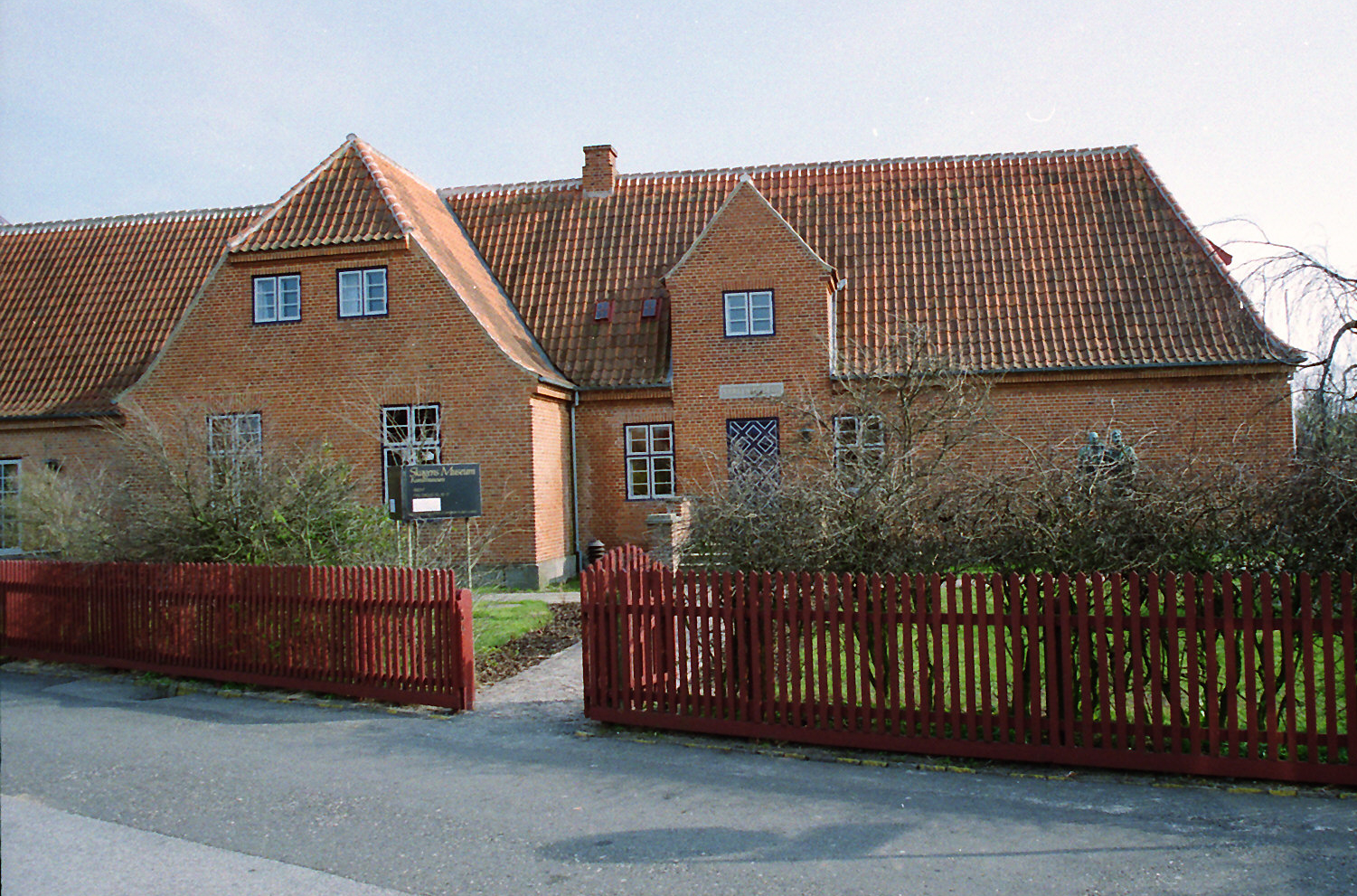
The original red brick museum building, designed by the architect Ulrik Plesner and opened on 22 September 1928. It still houses the core of the Skagen Painters collection: work by P.S. Kroyer, Michael Ancher, Anna Ancher, Laurits Tuxen, Viggo Johansen and Marie Kroyer. The museum rehung much of this permanent display in spring 2026, introducing new interpretive text including a section titled Romantiserede Rebeller (Romanticised Rebels) and a sparser hang than the one long-time visitors remembered. See the narrative below for how that change has been received
Brondums Spisestue - the transferred dining room
The dining room of Brondums Hotel, moved into the museum in 1946 under the terms of Degn Brondum's bequest, which fixed that the move could only happen once none of his siblings still kept house at the hotel. His sister Marie Brondum, the last of them, died that year, and the room, complete with its paintings, panels and furniture, was transferred the same year. It carries a frieze of 51 portraits of artists and other cultural figures who stayed at or visited the hotel, decorated panels by the architect and designer Thorvald Bindesboll, and poems that Holger Drachmann wrote onto the woodwork. It is the clearest surviving record, anywhere in the museum, of the Skagen colony as a social world rather than a set of individual painters. According to a visitor letter discussed below, the 2026 rehang removed the room's historic table and chairs
CC0 Skiferbygningen - the 2016 extension and special exhibitions
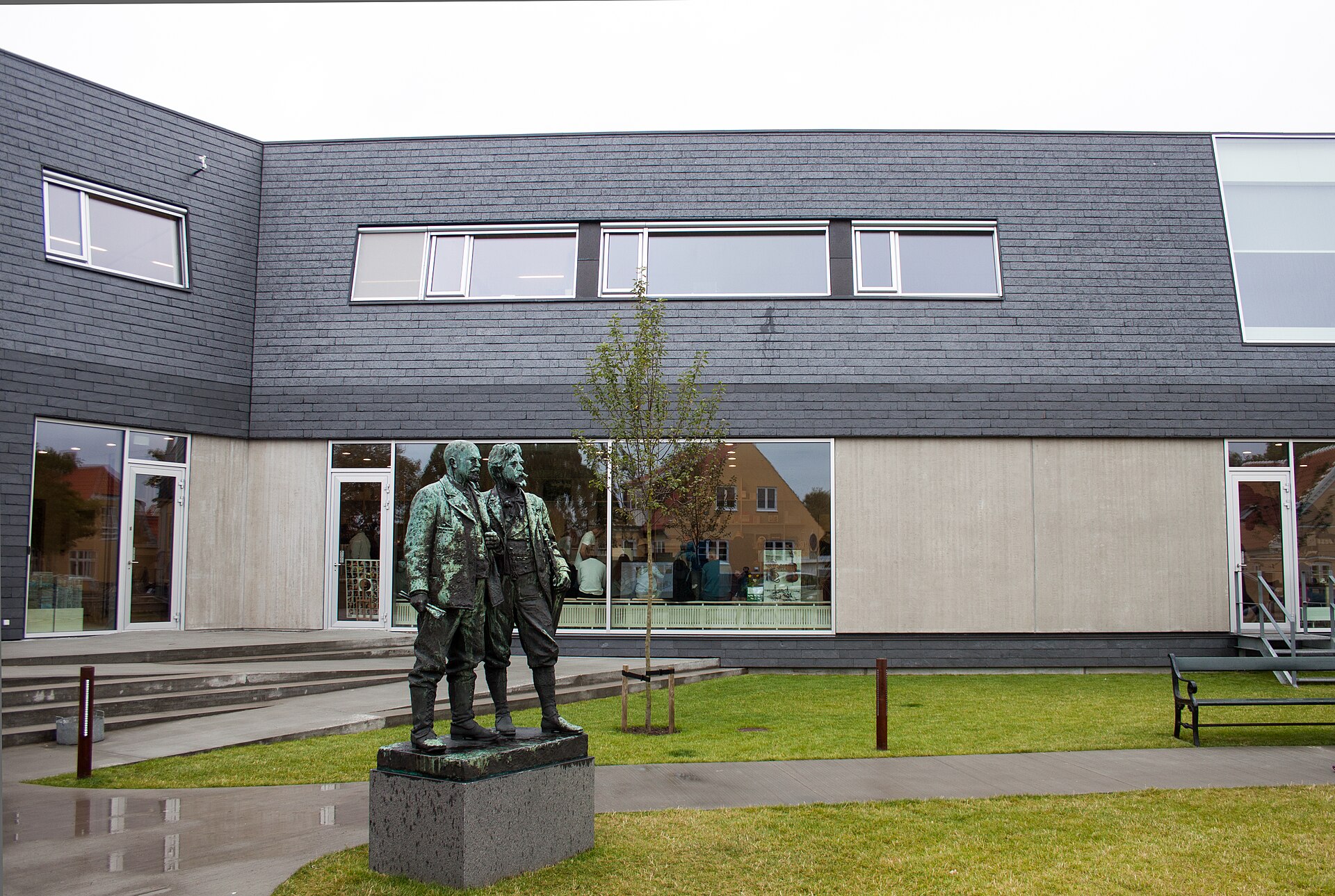
A slate-clad wing, part of a 2014-2016 expansion by the architectural firm Friis & Moltke, adding around 2,000 square metres of space and a new entrance beside the 1928 building. Queen Margrethe II inaugurated it in February 2016. It now holds the museum's special exhibitions, including Tak for mad - Skagensmalernes spisekammer, which opened 9 May 2026 and uses paintings, photographs and letters to trace food and hospitality among the colony, staged by exhibition architect Anne Schnettler as a route from sea, forest and heath through kitchen and pantry to table
The garden buildings - Havehuset and Korntorringsmagasinet
Two historic outbuildings stand in the museum's garden: Havehuset, an early studio used by Michael Ancher, and Korntorringsmagasinet, a former grain-drying building that P.S. Kroyer used as a studio. Both now house Skagen AiR, the museum's artist-in-residence programme, rather than public exhibition space. The museum's own account of its estate counts these among three properties and eleven buildings, seven of them heritage-protected, that it maintains around the town
What to see first
Sommeraften pa Skagen Sonderstrand (Summer Evening on Skagen's Southern Beach)
P.S. Kroyer, 1893Shows Anna Ancher and Marie Kroyer walking the beach in the blue evening light; widely treated as the defining image of Skagen's summer evenings. Bought by the German publisher Axel Springer at a 1978 Copenhagen auction, it was donated to the museum by his widow Friede Springer in 1986 as a remembrance of the 1943 rescue of the Danish Jews19
Fiskere traekker vod (Fishermen Hauling the Net)
P.S. Kroyer, 1883An early Kroyer study of fishermen collectively hauling a net onto the beach, credited with fixing his reputation for the naturalist treatment of manual labour at sea13
Sankt Hansblus pa Skagen strand (St John's Eve Bonfire on Skagen Beach)
P.S. Kroyer, 1906Kroyer's own account of his final major canvas, painted three years before his death in 1909, gathering much of the artist colony into a single bonfire scene on the beach13
Vil han klare pynten? (Will He Round the Point?)
Michael Ancher, about 1880The painting that made Ancher's reputation and first brought wide attention to Skagen as a subject after King Christian IX bought a version of it; the museum's own educational archive identifies the version it holds as one of three the composition exists in, the original remaining in the Danish royal collection24
Juledag 1900 (Christmas Day 1900)
Michael Ancher, 1903A large group portrait of three generations of Brondum women, giving domestic life the same weight Ancher's earlier work gave to fishermen at sea25
Solskin i den bla stue (Sunlight in the Blue Room)
Anna Ancher, 1891Shows Ancher's daughter Helga knitting in her grandmother Ane Brondum's room at Brondums Hotel; sunlight through two windows falls across the striped floor and walls. One of Ancher's most recognised paintings and, on the museum's own account, an example of how she treated light through a window as a subject in itself14
Pigen i kokkenet (The Girl in the Kitchen)
Anna Ancher, about 1883-1886A study of a young girl absorbed in kitchen work, surrounded by warm light and simple household objects, part of Ancher's sustained interest in quiet domestic moments rather than the dramatic maritime scenes favoured by some of her colleagues14
Moderglaede (Maternal Joy)
Marie Kroyer, 1890A relatively recent addition to the collection, named by the museum's own research staff among its notable acquisitions and one of the few Marie Kroyer paintings the museum holds10
The Brondums Spisestue portrait frieze
Various Skagen Painters, with panels by Thorvald Bindesboll and poems by Holger DrachmannFifty-one portraits of artists and other cultural figures who stayed at or visited Brondums Hotel, painted directly onto the dining room's walls and later moved with the whole room to the museum in 1946; the most complete surviving record of the colony as a social circle rather than a set of individual painters23
The building and what it was built to hold
Skagens Museum stands at Brondumsvej 4 in the fishing town of Skagen, at the northern tip of the Jutland peninsula, a short walk from the harbour and from Brondums Hotel, the guesthouse where the artists who gave the museum its reason to exist first gathered. The core building is a low, red brick structure roofed in red tile, designed by the Danish architect Ulrik Plesner and built between 1926 and 1928 on garden ground that the hotelier Degn Brondum gave to the museum in 1919. It opened on 22 September 1928, eighteen years after the museum itself had started collecting, and it remains the building most visitors picture when they hear the name Skagens Museum: single storey where it faces the street, its gables stepped in the vernacular of the town's older fishermen's houses, a small sign by the gate naming it rather than any grand facade.
The museum that building was made for did not begin in a purpose-built structure at all. It was founded on 20 October 1908 in the dining room of Brondums Hotel, by three of the painters who had made Skagen known and two of the townspeople who had helped make that possible: P.S. Kroyer, Michael Ancher and Laurits Tuxen among the artists, the hotelier Degn Brondum and the pharmacist Victor Chr. Klaebel among the founders who were not painters themselves. Their stated aim was to preserve what had been created in Skagen, meaning the paintings, sketches and decorative work the colony of artists had produced since arriving in the town from the 1870s onward. Before Plesner's building existed the collection was shown in a technical school and, for a time, inside Kroyer's own house. The 1928 building gave it, for the first time, a home built for no other purpose.
The Skagen Painters and why this museum exists
What Skagens Museum holds is not a general survey of Danish art. It is, on the museum's own description, the world's largest collection of work by the Skagen Painters, the loose artists' colony that settled in and around the town from the 1870s through the early twentieth century, drawn by a light that painters and patrons alike came to treat as a subject in its own right: a long, low northern light off two seas meeting at the Skagen headland, filtered through sea haze in a way painters described as blurring the line between sky and water. P.S. Kroyer arrived first in the summer of 1882 and kept returning. Michael Ancher had already settled in the town and married Anna, a Skagen-born innkeeper's daughter who is presented, on the museum's own account, as the only member of the core colony actually born and raised in the place the others had adopted. Laurits Tuxen, Viggo Johansen, Marie Kroyer and the poet and painter Holger Drachmann filled out the group whose gatherings, quarrels and shared subjects the collection now documents in depth.
Anna Ancher's position inside that group matters to how the museum reads its own collection. She is presented not as the wife of a more famous painter but as an artist whose interiors, kitchens and studies of light through curtained windows are treated as central to the colony's achievement rather than adjacent to it, and two of the works discussed on the museum's own artist pages, Solskin i den bla stue from 1891 and Pigen i kokkenet from the mid 1880s, are given the same weight in that account as Kroyer's beach scenes.
Growth: the 1946 dining room, the 2014 mergers, the 2016 slate wing
The building visitors see today is not the one Plesner handed over in 1928. In 1946 Skagens Museum took possession of a room that was not built for it at all: the dining room of Brondums Hotel, moved piece by piece into the museum under the terms of a bequest from Degn Brondum that fixed exactly when the move could happen. Brondum had left the room to the museum on condition that it could only be dismantled once none of his siblings still kept house at the hotel, and it was his sister Marie Brondum, the last of them, who died in 1946, freeing the room for transfer that same year. What arrived was not an empty room: the walls carry a frieze of 51 portraits of artists and other cultural figures who stayed at or visited the hotel, panels decorated by the architect and designer Thorvald Bindesboll, and poems written onto the woodwork by Holger Drachmann. It is the clearest physical record, anywhere in the museum, of the colony as a social world rather than a set of individual painters.
The museum's footprint changed again in 2014, when Skagens Museum merged with two artist-house museums in the same town, Anchers Hus and Drachmanns Hus, roughly tripling its holdings from around 2,000 works to about 20,000 objects once furniture, interiors, photographs and archives from both houses were counted. Two years later, in February 2016, Queen Margrethe II inaugurated the most visible change to the Brondumsvej building itself: Skiferbygningen, a slate-clad extension designed by the architectural firm Friis & Moltke that added roughly 2,000 square metres of exhibition space, a shop and a new entrance beside Plesner's original brick building, as part of a wider 2014-2016 expansion. The museum's own account of its physical estate now runs to three properties and eleven buildings around the town, seven of them protected under Danish heritage law, of which the Brondumsvej site covered by this page is the original and the most visited.
Inside today: the 2026 rehang and what changed
In the spring of 2026 the museum rehung a significant part of its permanent galleries, and the change was visible enough that it became a subject of public argument in the local press rather than staying an internal curatorial decision. Two visitors of long standing, Inger and Steen Svendsen, wrote to SkagensAvis on 25 April 2026 describing what they called an attentat, an attack, on the museum's character: dark blue walls in place of the lighter galleries they remembered, large interpretive wall texts including a section titled Romantiserede Rebeller, paintings hung more sparsely with one large room given over mainly to a single work by Anna Ancher, a lilac-walled room they felt did no favours to Kroyer's Roser, salon-style hangs that forced visitors to kneel or crane their necks to see some canvases, and the removal of the historic table and chairs from Brondums dining room. The museum's director, Lisette Vind Ebbesen, is quoted in the same reporting acknowledging that the changes were markante, striking, without disputing that they had happened. Another visitor, Inger Stott, defended the new approach in the same pages the same day, arguing for the value of the museum's research and curatorial judgment.
This record takes no view on which hang serves the collection better. What is established here is that the 2026 rehang happened, that it was contested in public and by name, and that a reader comparing what they remember from an earlier visit against what they will see now should expect the permanent collection to look different from how it looked before spring 2026.
What is on the walls: the collection's strongest holdings
The strength of the collection is depth on a single subject rather than breadth across Danish art. Kroyer is represented by, among other works, Sommeraften pa Skagen Sonderstrand from 1893, showing Anna Ancher and Marie Kroyer walking the beach in the blue evening light that gives the painting its reputation as the definitive image of Skagen's summer evenings; Fiskere traekker vod from 1883, a study of fishermen hauling a net that fixed his reputation for the naturalist treatment of manual labour; and Sankt Hansblus pa Skagen strand from 1906, painted three years before his death and gathering much of the colony into a single bonfire scene. Michael Ancher's Vil han klare pynten, painted around 1880 and shown at Charlottenborg that year, exists in three painted versions; the museum's own educational archive identifies the copy it holds among them, while the original, bought by King Christian IX, remains in the Danish royal collection. Anna Ancher's Solskin i den bla stue and Pigen i kokkenet, and Marie Kroyer's Moderglaede from 1890, a relatively recent addition to the museum's own holdings, round out a collection that keeps returning to the same handful of subjects: the sea, the light, the fishermen who worked it and the painters' own households.
Visiting today: research, current exhibitions and what is unresolved
Skagens Museum is a working research institution as well as a gallery. It runs a research lab and a conservation workshop on site, staffed by a research director and museum inspectors who describe their own role as running from the first archival question through to what eventually reaches a gallery wall, and the museum continues to add to its holdings rather than treating the collection as closed, as the Marie Kroyer acquisition shows. A current special exhibition, Tak for mad - Skagensmalernes spisekammer, opened 9 May 2026 in the Skiferbygningen wing and runs alongside the permanent collection on a single ticket. It uses food, letters and photographs to trace what the colony ate and how they shared it, staged by the exhibition architect Anne Schnettler as a route from sea and heath through kitchen and pantry to table.
What is not resolved, on the evidence gathered for this page, is how lasting the 2026 rehang will prove and whether the museum will publish its own account of the reasoning behind it beyond the director's acknowledgement that it is a striking change. Visitors weighing a trip against memories of an earlier visit, or against photographs taken before spring 2026, should treat the denser, differently lit galleries some reviewers describe as the current state of the permanent collection rather than a temporary rearrangement.
What visitors say
Visitors consistently describe Skagens Museum as an essential, well curated introduction to the Skagen Painters, praising the depth of the permanent collection, the calm of the galleries and garden, and the staging of temporary exhibitions. Some note that admission and shop prices sit at the higher end for a regional museum, and that the Monday closure has caught cruise-ship day visitors by surprise. A rehang of the permanent galleries carried out in spring 2026 has also drawn documented, named criticism from long-standing visitors who preferred the denser, less scenographic hang it replaced
What is praised, what is criticised
- Praised: The breadth and quality of the Skagen Painters collection, described by reviewers as presented with respect for both the well known and the lesser known painters
- Praised: The calm, spacious feel of the galleries and the adjoining garden and cafe
- Praised: Temporary exhibitions, including the 2026 food-themed show, praised for sensory, scenographic staging
- Praised: Friendly and informative reception and gallery staff
- Criticised: The museum shop, called overpriced by at least one visitor
- Criticised: The Monday closure, which has caught cruise-ship passengers with only a few hours ashore by surprise
- Criticised: A spring 2026 rehang of the permanent collection: two long-standing visitors wrote publicly that dark blue walls, large interpretive wall texts, and a sparser hang (including a large room given over mainly to one Anna Ancher work) prioritise staging over seeing as many paintings as possible, that a lilac-walled room does not serve Kroyer's Roser well, and that the historic table and chairs were removed from Brondums dining room; the museum's director acknowledged the changes are striking
Ratings on other platforms
TripAdvisor: 4.4 from 755 ratings, read 15 September 2026
A platform average is a tertiary source: it moves, it is not audited, and we quote no visitor's words.
Questions about Skagens Museum
Where is Skagens Museum?
Brondumsvej 4, DK-9990 Skagen, Denmark.
How much does it cost to visit Skagens Museum?
Adult: DKK 140; Youth under 28: DKK 90; Child under 18: free; Kombibillet, adult (Skagens Museum, Anchers Hus and Drachmanns Hus): DKK 200; Kombibillet, child under 18: free. As confirmed 15 September 2026.
When is Skagens Museum open?
Tuesday-Sunday (September-December 2026) 10:00-16:00; 27-30 December 2026 10:00-16:00. Closed: Monday. 23-26 and 31 December 2026. As confirmed 15 September 2026.
How do you get to Skagens Museum?
Parking: 2 designated disabled parking spaces at the museum, plus street parking nearby on Ostre Strandvej (about 50 free spaces), Spliidsvej (24 paid spaces) and Chr. Xs Vej (61 paid spaces); Bus: A bus drop-off point is available near the museum; groups of more than 10 visitors are asked to book a guided tour with the museum in advance.
What should you see at Skagens Museum?
Sommeraften pa Skagen Sonderstrand (Summer Evening on Skagen's Southern Beach) (P.S. Kroyer, 1893); Fiskere traekker vod (Fishermen Hauling the Net) (P.S. Kroyer, 1883); Sankt Hansblus pa Skagen strand (St John's Eve Bonfire on Skagen Beach) (P.S. Kroyer, 1906); Vil han klare pynten? (Will He Round the Point?) (Michael Ancher, about 1880); Juledag 1900 (Christmas Day 1900) (Michael Ancher, 1903); Solskin i den bla stue (Sunlight in the Blue Room) (Anna Ancher, 1891).
What we could not confirm
- Whether the 2026 rehang of the permanent galleries is a lasting change or will be revised; the museum has acknowledged it is a striking change but had not, at the time of research, published its own account of the curatorial reasoning beyond that acknowledgement
- The price of Klubben, the museum's annual membership offering free entry, is advertised on several pages but was not published on any page checked for this record
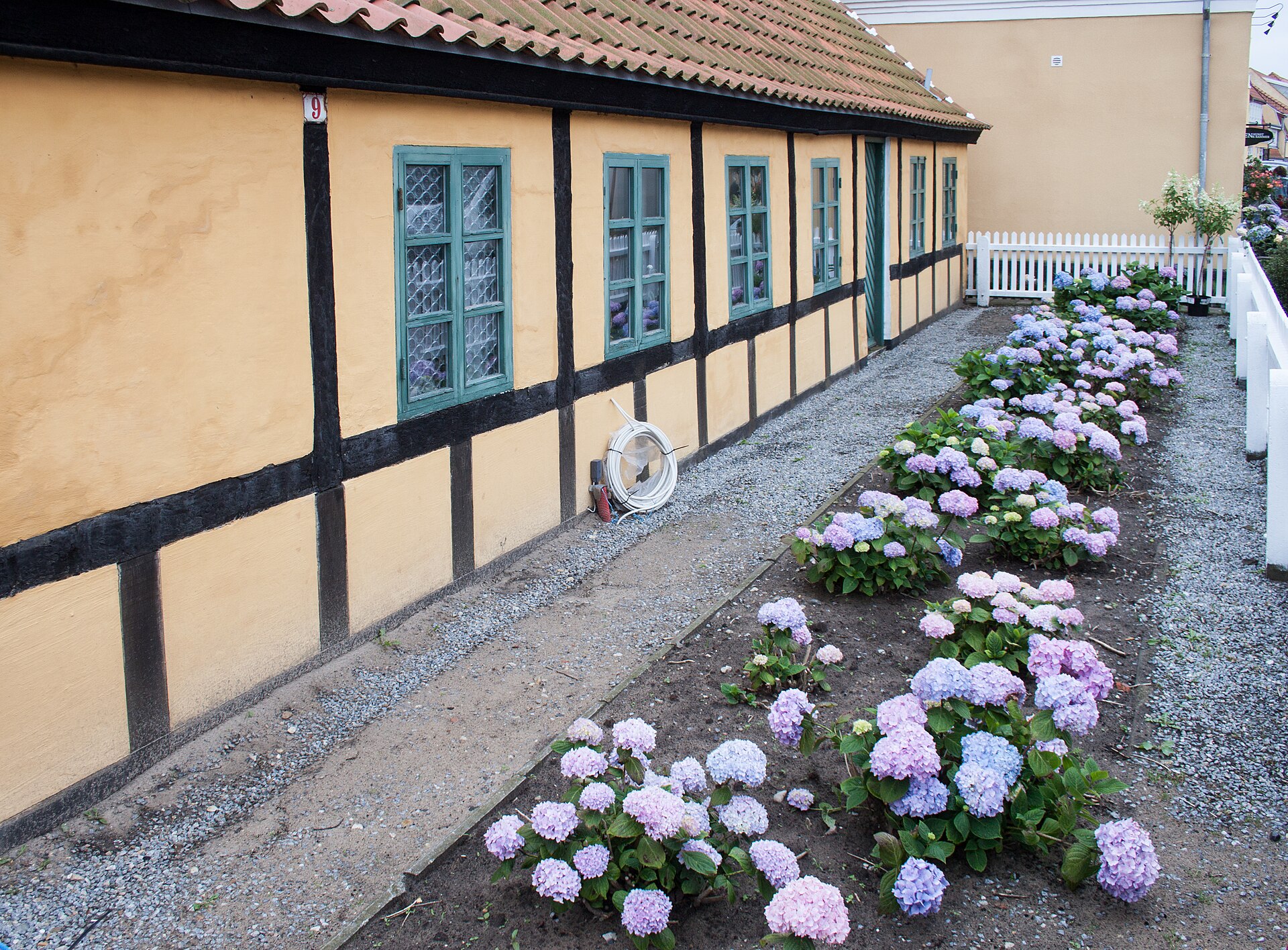
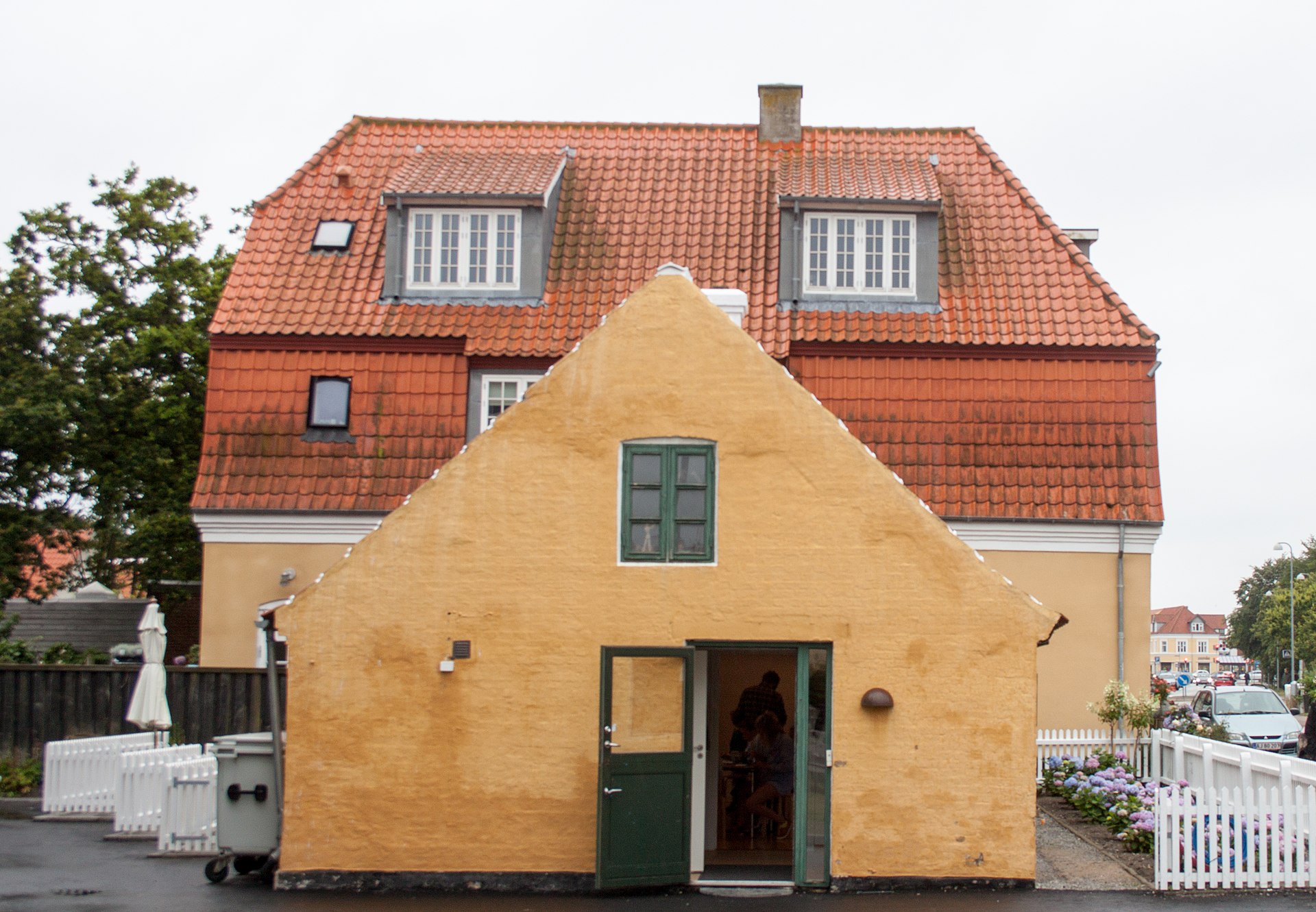
- Which of the museum's two garden outbuildings, Havehuset and Korntorringsmagasinet, each of the two garden-building photographs in this record's gallery actually shows could not be confirmed from the Commons file pages alone
Images
Sources
- 1Wikimedia Commons, Category:Skagens Museum commons.wikimedia.org/wiki/Category:Skagens_Museum
- 2Wikimedia Commons, File:Skagens museum.jpg (Zejo, Public domain) commons.wikimedia.org/wiki/File:Skagens_museum.jpg
- 3Wikimedia Commons, File:Skagens Museum, entrance, 2015-07-28.jpg (Szilas, CC0) commons.wikimedia.org/wiki/File:Skagens_Museum,_entrance,_2015-07-28.jpg
- 4Wikimedia Commons, File:One of the buildings of Skagens Museum 2015-07-28.jpg (Szilas, CC0) commons.wikimedia.org/wiki/File:One_of_the_buildings_of_Skagens_Museum_2015-07-28.jpg
- 5Wikimedia Commons, File:Old building belonging to Skagens Museum, 2015-07-28.jpg (Szilas, CC0) commons.wikimedia.org/wiki/File:Old_building_belonging_to_Skagens_Museum,_2015-07-28.jpg
- 6Skagens Museum, Abningstider (opening hours) skagensmuseum.dk/aabningstider/
- 7Skagens Museum, Kontakt (contact) skagensmuseum.dk/kontakt/
- 8Skagens Museum, Praktisk information (practical information) skagensmuseum.dk/praktisk-information/
- 9Skagens Museum, Om Skagens Museum (about the museum) skagensmuseum.dk/om-skagens-museum/
- 10Skagens Museum, Forskning og samling (research and collection) skagensmuseum.dk/forskning-og-samling/
- 11Skagens Museum, Besogssteder: Skagens Museum (visitor destination page) skagensmuseum.dk/besoegssteder/skagens-museum/
- 12Skagens Museum, Kunstnere (artists) skagensmuseum.dk/kunstnere/
- 13Skagens Museum, P.S. Kroyer artist page skagensmuseum.dk/kunstnere/p-s-kroeyer/
- 14Skagens Museum, Anna Ancher artist page skagensmuseum.dk/kunstnere/anna-ancher/
- 15Skagens Museum shop, Skagens Museum ticket page (live prices) shop.skagensmuseum.dk/billetter/skagens-museum/
- 16Skagens Museum shop, Kombibillet ticket page (live prices) shop.skagensmuseum.dk/billetter/kombibillet/
- 17Skagens Museum shop, Billetter overview (group prices) shop.skagensmuseum.dk/billetter/
- 18Wikipedia, Skagens Museum en.wikipedia.org/wiki/Skagens_Museum
- 19Wikipedia, Summer Evening on Skagen's Southern Beach en.wikipedia.org/wiki/Summer_Evening_on_Skagen%27s_Southern_Beach
- 20Wikidata, Q3555520 (Skagens Museum) wikidata.org/wiki/Q3555520
- 21TripAdvisor, Skagens Museum reviews tripadvisor.com/Attraction_Review-g285705-d797966-Reviews-Skagens_Museum-Skagen_North_Jutland_Jutland.html
- 22SkagensAvis.dk, Skagens Museum: Et attentat pa en kulturperle, 2026-04-25 skagensavis.dk/2026/04/25/skagens-museum-et-attentat-paa-en-kulturperle.html
- 23Kunstavisen.dk, Samling og samtid kunstavisen.dk/article/samling-og-samtid/
- 24Flickr, Skagens Museums skoleservice, Michael Ancher: Vil han klare pynten (ca. 1880), Skagens Museum flickr.com/photos/126189013@N08/14781914830
- 25Skagens Museum, Michael Ancher artist page skagensmuseum.dk/kunstnere/michael-ancher/


