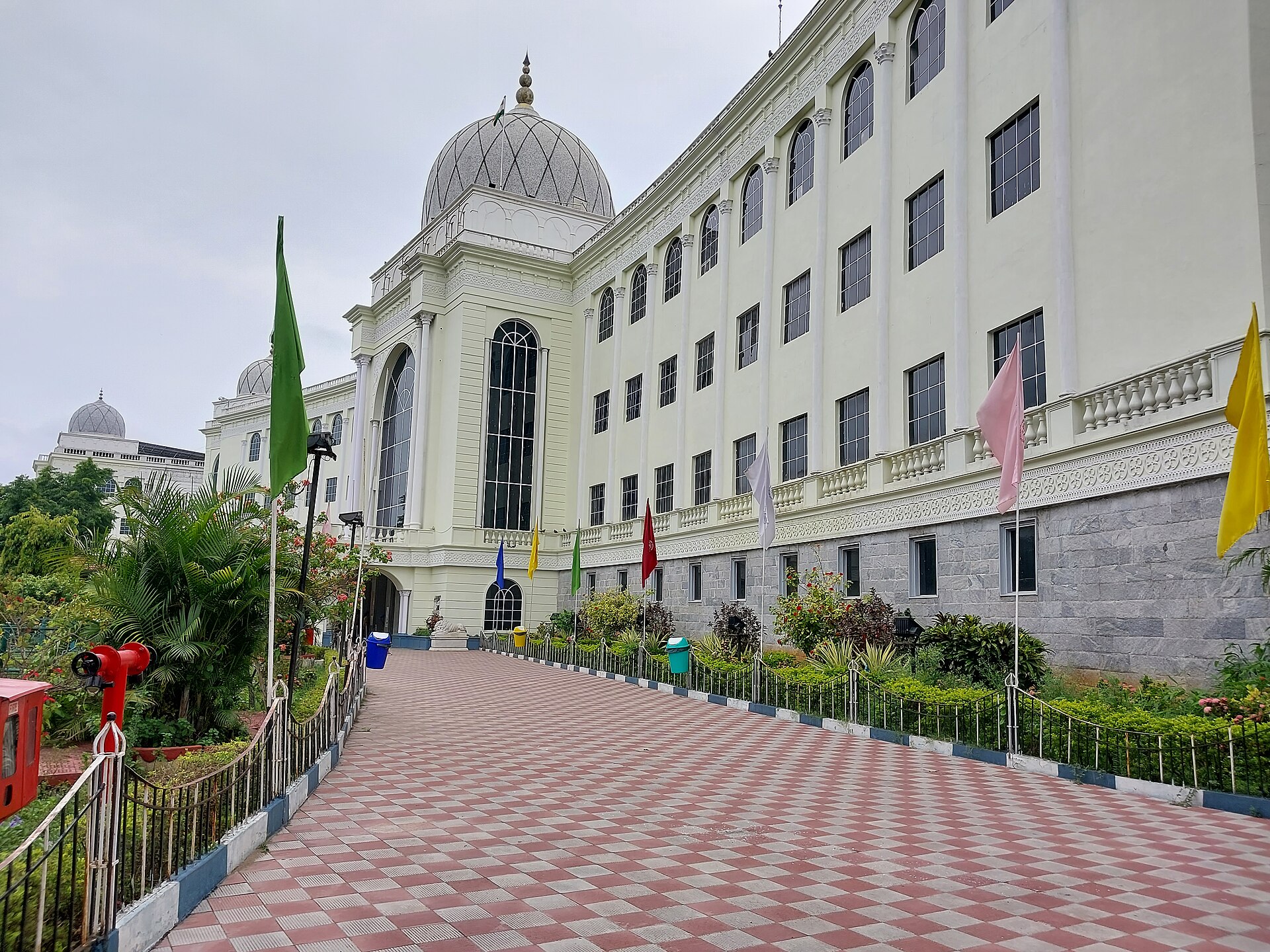
The Salar Jung Museum's purpose-built home on the south bank of the Musi River, opened in 1968
Pinakpani · CC BY-SA 4.0Salar Jung Museum
Museum · Founded 1951
Open, admission and hours confirmed 26 August 2026 · 19 sources
On this page 15 sections
ContentsClose
The museum's strength is range rather than depth in any one field: it is a single family's accumulation across Indian, European, Middle Eastern and Far Eastern material, run from more than 40,000 objects down to the individual carpet, clock and jade thumb ring, with the Veiled Rebecca and the Mephistopheles and Margaretta double statue as the two objects almost every visitor names afterward.
| Kind | Museum |
|---|---|
| Founded | opened to the public 1951 at Dewan Devdi; present building on the Musi River opened 1968 |
| City and country |  Hyderabad, India Hyderabad, India |
| Address | Salar Jung Museum, Dar-ul-Shifa, Hyderabad - 500002, Telangana |
| Website | salarjungmuseum.in |
| Status | Open, confirmed |
| Record last verified |
Visiting
- Hours
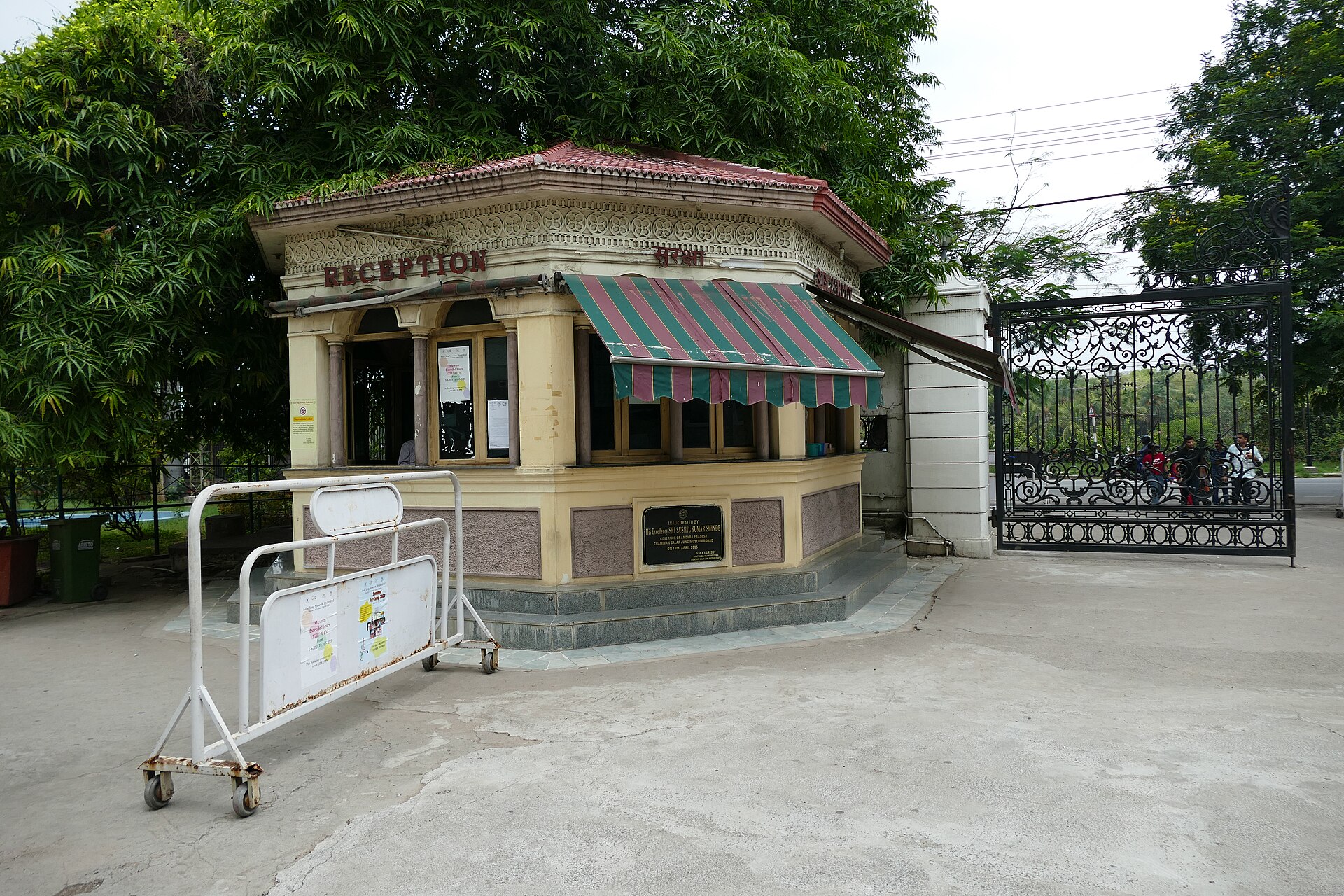
- Saturday-Thursday10:00 to 18:00ticket counter closes 17:15; extended to 18:00 from 1 December 2025
- Closed
- Friday. additional dated closures announced separately, e.g. 26 August 2026 for Milad-un-Nabi.
- Admission
- Adult (Indian national)INR 5018 years and above
- Child (Indian national)INR 205 to 18 years
- Child under 5Freefree
- Government school childrenFreefree with valid school ID and an authorisation letter, under 14
- Foreign visitorINR 1,000per person
- Still camera / smartphone photographyINR 50separate photography ticket; flash photography prohibited, unauthorised photography fined INR 500
- Tickets
- salarjungmuseum.in/buy-ticket-online The museum's own ticket page.
- Do I need to book?
- No, online and BookMyShow ticketing available and recommended to skip the gate queue
- Address
- Salar Jung Museum, Dar-ul-Shifa, Hyderabad - 500002, Telangana Map
- Website
- salarjungmuseum.in
- Telephone
- +91 40 24576443
- [email protected]
Before you go how long, access, photography, bags, eating, shop
- How long to allow
- Three to four hours to cover the six wings without rushing the two headline sculptures
- Access
- Wheelchairs and sitting arrangements are provided; the museum notes access facilities on its own visit pages
- Photography
- Permitted with a separate paid photography ticket (INR 50); flash prohibited; unauthorised photography fined INR 500
- Bags
- A cloakroom is available for baggage; large bags are to be deposited before entering the galleries
- Eating
- A cafeteria run by Telangana Tourism operates on site
- Shop
- The CCIE Souvenir Shop on the Central Block ground floor sells publications, postcards and handicrafts
Prices and hours change. We take them from the institution's own pages and print the day we read them, and you can check the current position at the source we used. Confirm before you travel.
What is inside
Central Block, Ground Floor
Indian sculpture, textiles, ivory carvings, arms and armour, metalware and paintings, including the Veiled Rebecca and the Founder's Gallery on the family's history
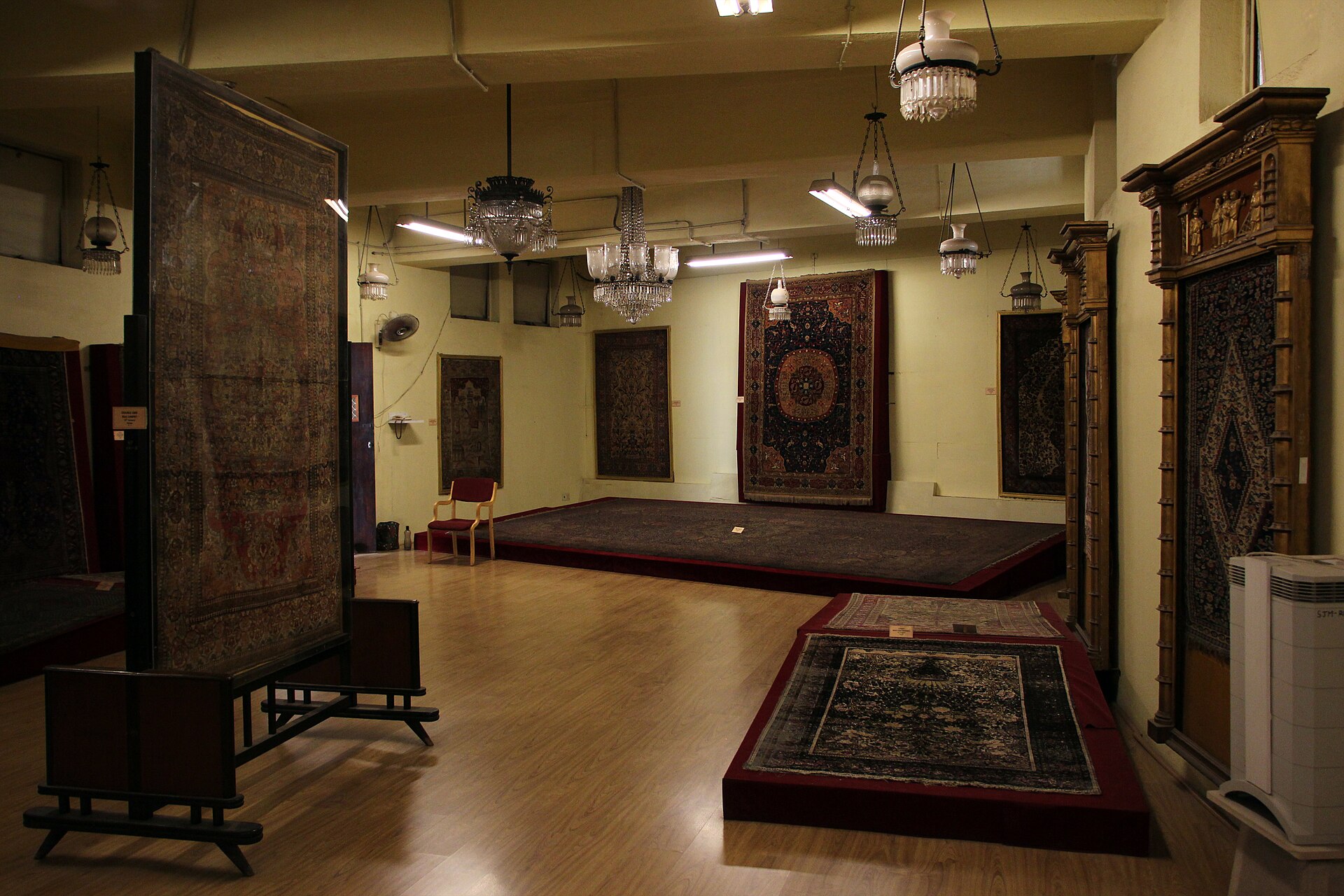
Photograph by Sailko · CC BY 3.0 Central Block, First Floor
Ten rooms: toys and dolls, a flora-and-fauna gallery, Indian silver, the Carpet Gallery of sixteenth-century Persian carpets, jade, Bidriware, Kashmir crafts, manuscripts, coins and a children's gallery
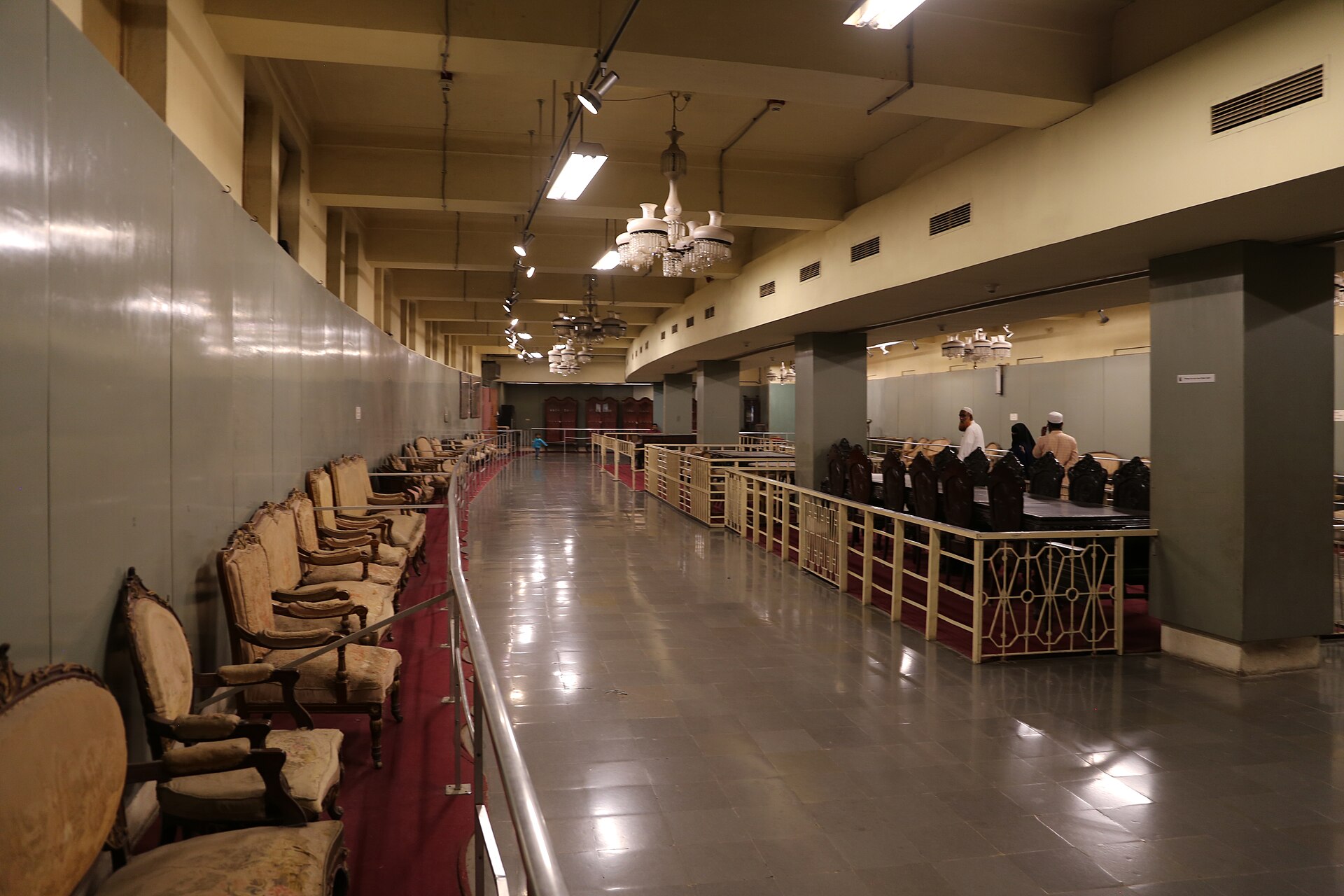
Photograph by Sailko · CC BY 3.0 Western Block, First Floor
European painting, glass, French decorative art and furniture, an extensive Clock Gallery drawing on French, English, Swiss, German and Dutch makers, and a porcelain gallery
Western Block, Ground Floor
European sculpture in two galleries, one of bronze and one of marble, including the Double Statue of Mephistopheles and Margaretta
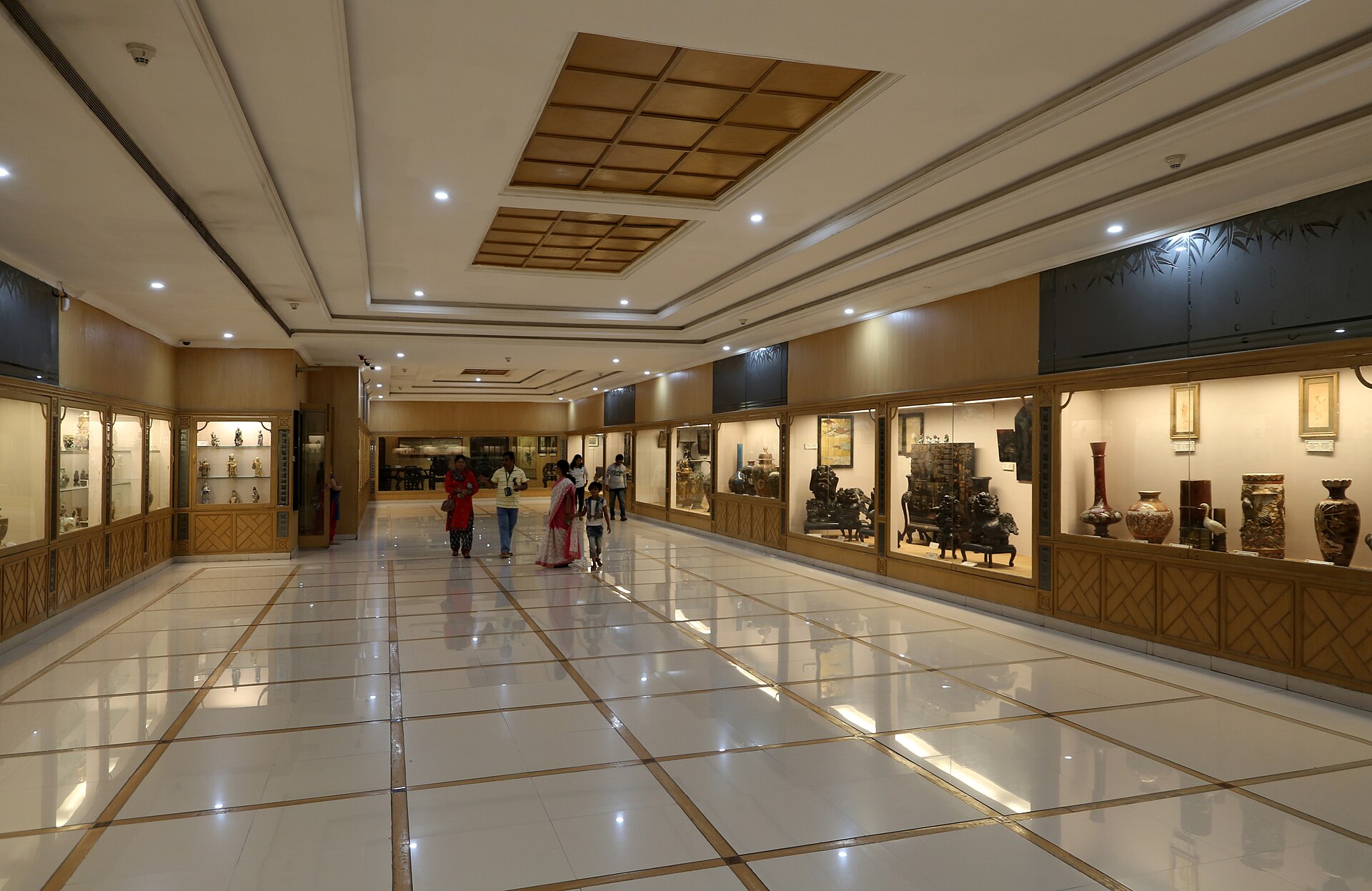
Photograph by Sailko · CC BY 3.0 Eastern Block, First Floor
Chinese and Japanese galleries, an Eastern porcelain gallery, and a Far Eastern statuary gallery of bronze, metal and wood pieces from Nepal, Tibet and Burma
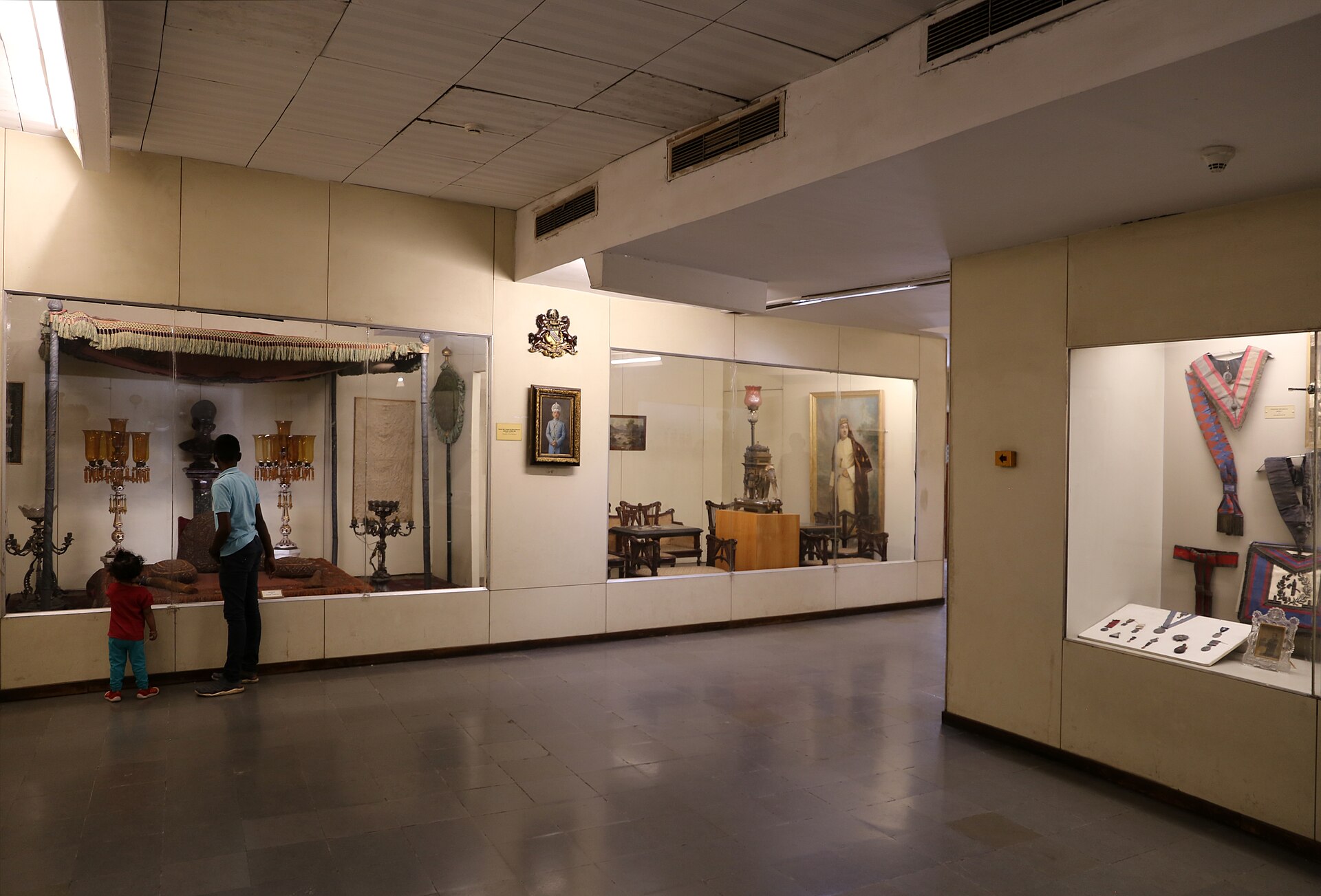
Photograph by Sailko · CC BY 3.0 Eastern Block, Ground Floor and the Library and Manuscripts Section
Indian silver, carpets, jade, Bidriware, coins, utility objects and the museum's manuscript and rare-book library, open to scholars by pass from the reception counter
What to see first
The Veiled Rebecca
Giovanni Maria Benzoni (workshop), dated 1876Marble figure whose carved veil reads as thin cloth over the face; the Hyderabad cast lifts the veil with the right hand, which is how it is distinguished from other versions of the design elsewhere in the world18
Double Statue of Mephistopheles and Margaretta
carver not recorded in sources consulted; acquired by Salar Jung I in France, 1876A single log of sycamore wood carved with two faces of Goethe's Faust back to back; the most photographed single object in the museum17
The musical clock
Cook and Kelvey of England, 19th centuryBuilt from more than 350 parts and shipped to India for assembly; a mechanical figure emerges hourly to strike a gong16
The Carpet Gallery's Persian carpets
Persia, 16th century (per the museum's own description)The museum's own collection page singles these out by name as the gallery's centrepiece6
Mughal jade
Mughal court workshops, 17th-19th centuryA jade thumb ring associated with Shah Jahan's archers, a jade Quran stand and jade medicine cups and dice, in the hardstone tradition the Mughal court used for personal and ceremonial objects19
Arms associated with Aurangzeb and Jehangir
Mughal court, 17th centuryA sword attributed to Aurangzeb and hunting knives associated with the emperor Jehangir sit in the Central Block's arms and armour gallery16
Ivory chair connected to Tipu Sultan
France, 19th centuryAn ivory chair catalogued among objects connected to Tipu Sultan, part of the ivory carving holdings the museum highlights on its ground floor19
Mughal miniature paintings
various Mughal-era workshopsThe museum describes its Mughal miniature holdings as exclusive to its collection among Indian institutions16
Past exhibitions here
- Closed5 Jul to 4 Oct 2026Confirmed · check before you travel
From the Dewan Devdi to the banks of the Musi
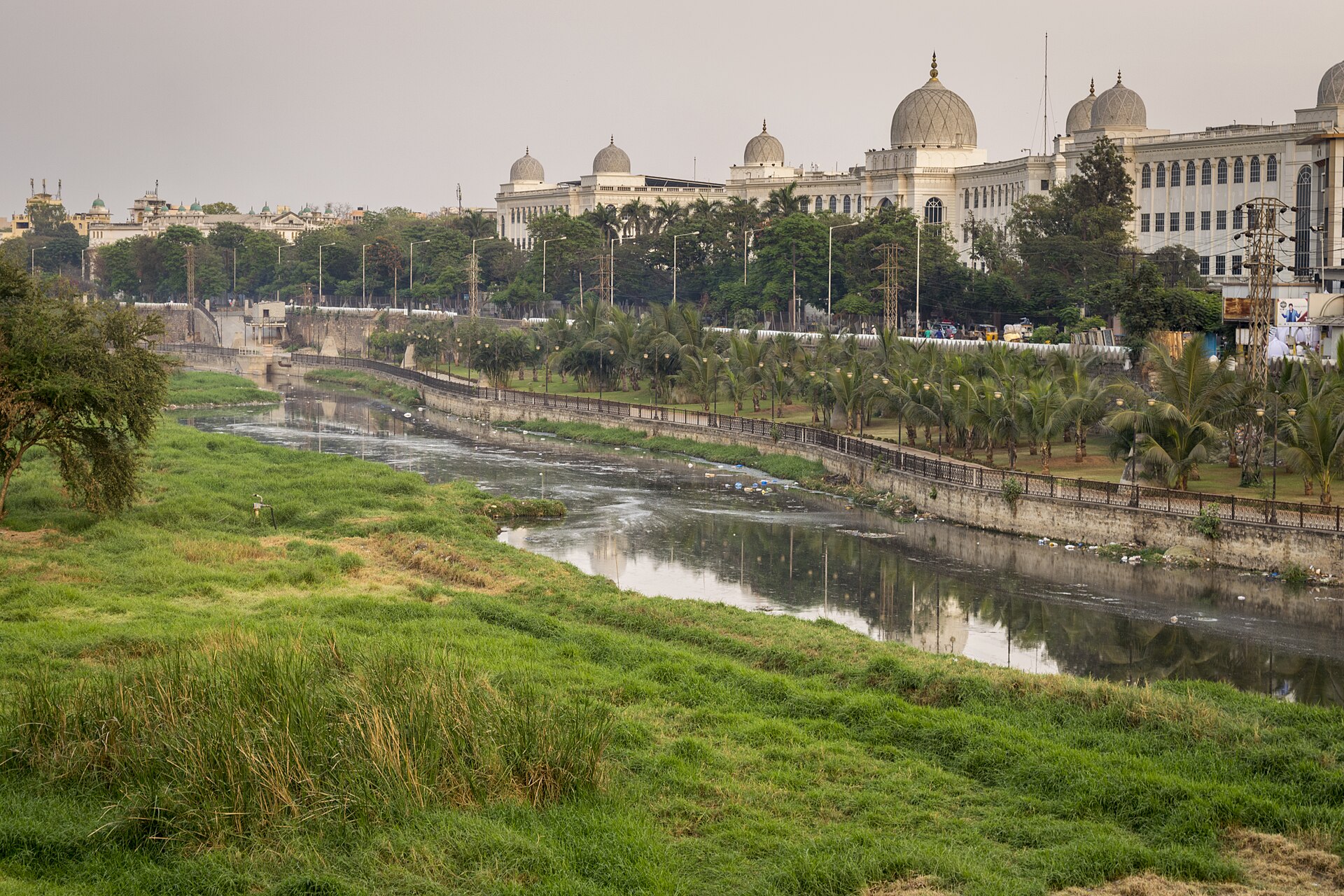
The Salar Jung Museum did not begin on the site it occupies today. When Mir Yousuf Ali Khan, Salar Jung III, died on 2 March 1949, his collection was still housed inside Dewan Devdi, the family's own residence in the old city of Hyderabad. Jawaharlal Nehru opened it to the public there on 16 December 1951, and for the first seventeen years of its public life the museum was a palace repurposed rather than a museum built for the purpose. Parliament declared it an Institution of National Importance in 1961, one of only three museums in India to hold that status, and a purpose-built home was raised on Dar-ul-Shifa, on the south bank of the Musi River. The move happened in 1968, when President Zakir Hussain inaugurated the new building; the old Dewan Devdi was demolished by stages as the collection shifted across the city, and some pieces did not survive the move intact. The address a visitor is given today, Dar-ul-Shifa, Hyderabad 500002, names the second building, not the first, and it is the building this record photographs.
One family, and mostly one man
The museum's holdings are usually described as a single collector's assembly, and that is close to the truth even though three generations of the Salar Jung family contributed to it. Mir Turab Ali Khan, Salar Jung I, served as prime minister to the Nizam and bought European sculpture and decorative art on his travels, including a marble Veiled Rebecca acquired in Rome. His grandson, Mir Yousuf Ali Khan, Salar Jung III, is the collector who gives the museum its scale: appointed prime minister to Nizam VII in 1912, he resigned in 1914 and spent the rest of his life buying. By the time he died in 1949 he had assembled, on the museum's own account, more than 40,000 objects and a further stock of manuscripts and rare books that a separate tourism source puts at some 8,000 manuscripts and 60,000 printed books. The range is the point: Indian sculpture and textiles sit against European clocks and porcelain, Persian carpets against Chinese and Japanese ceramics, in a single family's idea of what was worth owning across the nineteenth and early twentieth centuries.
Two blocks, two floors, and a courtyard between them
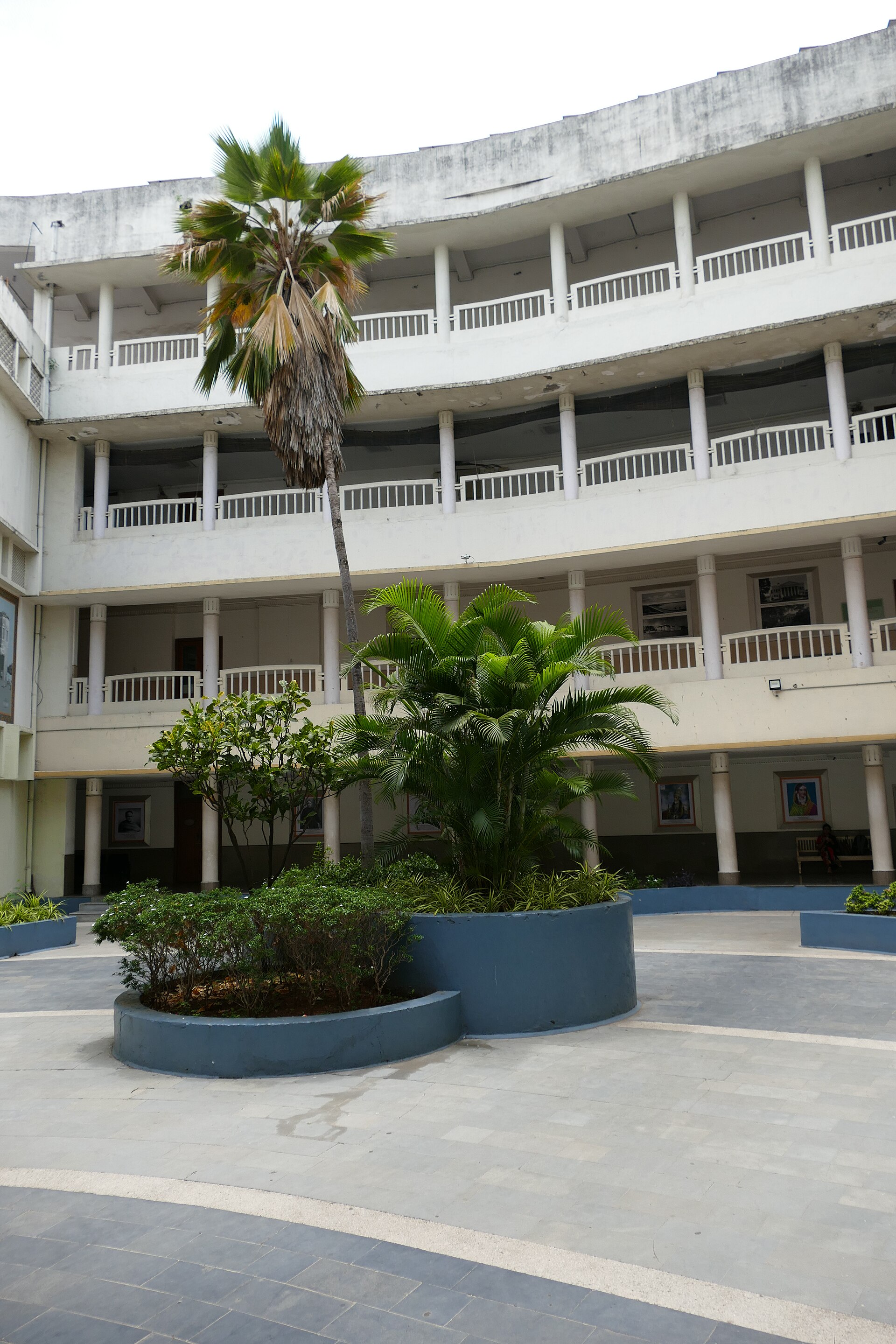
The present building is organised as three blocks around a courtyard, each with a ground and first floor, and the museum's own collection pages describe the split. The Central Block's ground floor carries Indian sculpture, textiles, ivory, arms and armour, metalware and paintings, with the Founder's Gallery giving the family history behind the objects on the floor above and around it; its first floor adds toys and dolls, a natural-history gallery, Indian silver, the Carpet Gallery, jade, Bidriware, Kashmir crafts, manuscripts, coins and a children's gallery, ten rooms in total by the museum's own count. The Western Block turns to Europe: bronze and marble sculpture on the ground floor, and on the first floor separate galleries for painting, glass, French decorative art, clocks and porcelain. The Eastern Block, and the library and manuscripts section that sits with it, holds the Far Eastern material - Chinese and Japanese galleries, an Eastern porcelain gallery, and a Far Eastern statuary gallery for bronze, metal and wood pieces from Nepal, Tibet and Burma - alongside Indian silver, carpets, jade, Bidriware, manuscripts, coins and utility objects that the museum groups on the same floor. Independently published sources put the total at 38 galleries, 20 on the ground floor and 18 on the first, consistent with what the museum's own pages list block by block.
The Veiled Rebecca and the double statue
Two sculptures carry the museum in most visitors' memory. The Veiled Rebecca, a marble figure by the Italian sculptor Giovanni Maria Benzoni, is dated 1876, three years after Benzoni's death, which points to it being a posthumous cast or copy from his workshop rather than a piece he carved himself; Salar Jung I bought it in Rome. It was originally displayed in the Chini Khana, a room decorated with Chinese antiques inside the Dewan Devdi, and stayed there through the museum's first seventeen public years before moving to the present building in 1968 as the old palace came down around it. The veil is carved thin enough to read as cloth over the face while remaining solid stone, and the Hyderabad figure lifts the veil with her right hand, which is how it is told apart from other casts of the same design held elsewhere in the world. The second sculpture, the Double Statue of Mephistopheles and Margaretta, is carved from a single log of sycamore wood and shows two faces of Goethe's Faust back to back: Mephistopheles in a hooded cloak with a cynical expression on one side, Margaretta downcast over a prayer book on the other. Salar Jung I bought it in France in 1876, the same year as the Rebecca; its carver is not recorded in the sources consulted here. It is, by a wide margin, the most photographed single object in the museum.
Clocks, carpets, jade and the arms galleries
The museum's other set-pieces sit outside the two headline sculptures. A musical clock, built from more than 350 parts and bought from Cook and Kelvey of England in the nineteenth century, strikes the hour with a mechanical figure that emerges to sound a gong; it draws its own crowd on the hour, most days the museum is open. The Carpet Gallery on the Central Block's first floor holds Persian carpets the museum itself describes as dating to the sixteenth century, and the same floor's Jade Gallery carries Mughal-period pieces including a jade thumb ring associated with Shah Jahan's archers, a jade Quran stand and jade medicine cups and dice, worked in the hardstone tradition the Mughal court favoured for personal and ceremonial objects. The arms and armour on the Central Block's ground floor include a sword attributed to Aurangzeb and hunting knives associated with the Mughal emperor Jehangir, and an ivory chair made in France in the nineteenth century is catalogued among the objects connected to Tipu Sultan. The Western Block's first floor keeps a dedicated Clock Gallery, described by the museum as drawing on makers from France, England, Switzerland, Germany and the Netherlands, next to separate rooms for European glass, porcelain and French decorative art. Mughal miniature painting, held nowhere else in this quantity by the museum's own description, rounds out the Central Block's holdings.
What the record does not settle
The museum's own history page acknowledges, without putting a number on it, that some pieces were lost or stolen during the 1951-1968 move from the Dewan Devdi to the present building; no source consulted here quantifies the loss. Separately, in 2011, a smuggling case connected the museum to a wider criminal investigation: reporting names Hasan Ali Khan and four others as booked over antiques worth roughly Rs 20 crore taken from the museum, in coverage that groups the case alongside unrelated thefts from other Hyderabad heritage sites; nothing in the sources available here follows the case through to a recovery or a conviction, and that gap is recorded rather than filled. Visitor reviews aggregated on TripAdvisor, running to several thousand ratings, praise the range of the collection and the restored building but repeat two complaints often enough to count as a pattern: object labels that reviewers say give too little context for what they are looking at, and ticket-counter pricing for foreign visitors that some travellers report being quoted inconsistently against the museum's own published rate. Neither complaint is this record's to resolve; both are recorded because a reader planning a visit would want to know them before arriving rather than after.
What visitors say
Visitors consistently rate the Salar Jung Museum among Hyderabad's essential sights for the range of one family's collecting, from European sculpture and clocks to Mughal jade and daggers in a single visit, while asking for clearer object labels and less crowding around the two showpiece sculptures.
What is praised, what is criticised
- Praised: the breadth and variety of the collection, spanning Indian, European, Middle Eastern and Far Eastern galleries in one building
- Praised: the restored condition of the heritage building itself
- Praised: the affordability of the Indian-national ticket price relative to what is on display
- Criticised: object labelling and contextual information that reviewers repeatedly describe as too thin to place a piece properly
- Criticised: crowding and queueing around the Veiled Rebecca and the Mephistopheles and Margaretta statue, the two most photographed objects
- Criticised: foreign-visitor ticket pricing that some travellers report being quoted inconsistently against the museum's own published rate
- Criticised: signs of wear in parts of the building that some reviewers say need modernisation
Ratings on other platforms
TripAdvisor: 4.4 from 2,861 ratings, read 26 August 2026
A platform average is a tertiary source: it moves, it is not audited, and we quote no visitor's words.
Questions about Salar Jung Museum
Where is Salar Jung Museum?
Salar Jung Museum, Dar-ul-Shifa, Hyderabad - 500002, Telangana.
How much does it cost to visit?
Adult (Indian national): INR 50; Child (Indian national): INR 20; Child under 5: free; Government school children: free; Foreign visitor: INR 1000. As confirmed 26 August 2026.
When is it open?
Saturday-Thursday 10:00-18:00. Closed: Friday. additional dated closures announced separately, e.g. 26 August 2026 for Milad-un-Nabi. As confirmed 26 August 2026.
What should you see first?
The Veiled Rebecca (Giovanni Maria Benzoni (workshop), dated 1876); Double Statue of Mephistopheles and Margaretta (carver not recorded in sources consulted; acquired by Salar Jung I in France, 1876); The musical clock (Cook and Kelvey of England, 19th century); The Carpet Gallery's Persian carpets (Persia, 16th century (per the museum's own description)); Mughal jade (Mughal court workshops, 17th-19th century); Arms associated with Aurangzeb and Jehangir (Mughal court, 17th century).
What we could not confirm
- How many objects were lost or stolen in the 1951-1968 move from the Dewan Devdi to the present building is not quantified in the sources consulted; the museum's own history page acknowledges losses without a count.
- The 2011 smuggling case in which reporting names Hasan Ali Khan and four others as booked over roughly Rs 20 crore of antiques taken from the museum is not, on the sources available here, followed through to a recovery or conviction.
- The carver of the Double Statue of Mephistopheles and Margaretta is not named in the sources consulted here.
Images
Sources
- 1Salar Jung Museum, official website, home page salarjungmuseum.in
- 2Salar Jung Museum, Plan Your Visit (hours and admission) salarjungmuseum.in/plan-your-visit/
- 3Salar Jung Museum, History of SJM salarjungmuseum.in/history-of-sjm/
- 4Salar Jung Museum, Contact Us salarjungmuseum.in/contact-us/
- 5Salar Jung Museum, Collection - Central Block, Ground Floor salarjungmuseum.in/collection/central-block-ground-floor/
- 6Salar Jung Museum, Collection - Central Block, First Floor salarjungmuseum.in/collection/central-block-first-floor/
- 7Salar Jung Museum, Collection - Western Block, First Floor salarjungmuseum.in/collection/western-block-first-floor/
- 8Salar Jung Museum, Collection - Western Block, Ground Floor salarjungmuseum.in/collection/western-block-ground-floor/
- 9Salar Jung Museum, Collection - Eastern Block, First Floor salarjungmuseum.in/collection/eastern-block-first-floor/
- 10Salar Jung Museum, Collection - Eastern Block, Ground Floor / Library and Manuscripts salarjungmuseum.in/collection/eastern-block-ground-floor/
- 11Salar Jung Museum, Facilities salarjungmuseum.in/facilities/
- 12Wikipedia, Salar Jung Museum (, for identity and history cross-check) en.wikipedia.org/wiki/Salar_Jung_Museum
- 13Wikidata, Q1864572 (, coordinates cross-check) wikidata.org/wiki/Q1864572
- 14TripAdvisor, Salar Jung Museum reviews ( rating aggregate) tripadvisor.com/Attraction_Review-g297586-d320681-Reviews-Salar_Jung_Museum-Hyderabad_Hyderabad_District_Telangana.html
- 15Deccan Chronicle, "Nizam Museum theft: Stolen relics yet to be recovered", 5 September 2018 deccanchronicle.com/nation/crime/050918/nizam-museum-theft-stolen-relics-yet-to-be-recovered.html
- 16Incredible India (Ministry of Tourism), Salar Jung Museum (, for collection figures and highlight objects) incredibleindia.gov.in/en/telangana/hyderabad/salar-jung-museum
- 17The Heritage Lab, "The Double Statue of Mephistopheles & Margaretta" theheritagelab.in/mephistopheles-margaretta/
- 18Wikipedia, Veiled Rebecca (, for sculptor, date and provenance detail) en.wikipedia.org/wiki/Veiled_Rebecca
- 19Wikimedia Commons, Category:Salar Jung Museum (file listing and licences) commons.wikimedia.org/wiki/Category:Salar_Jung_Museum