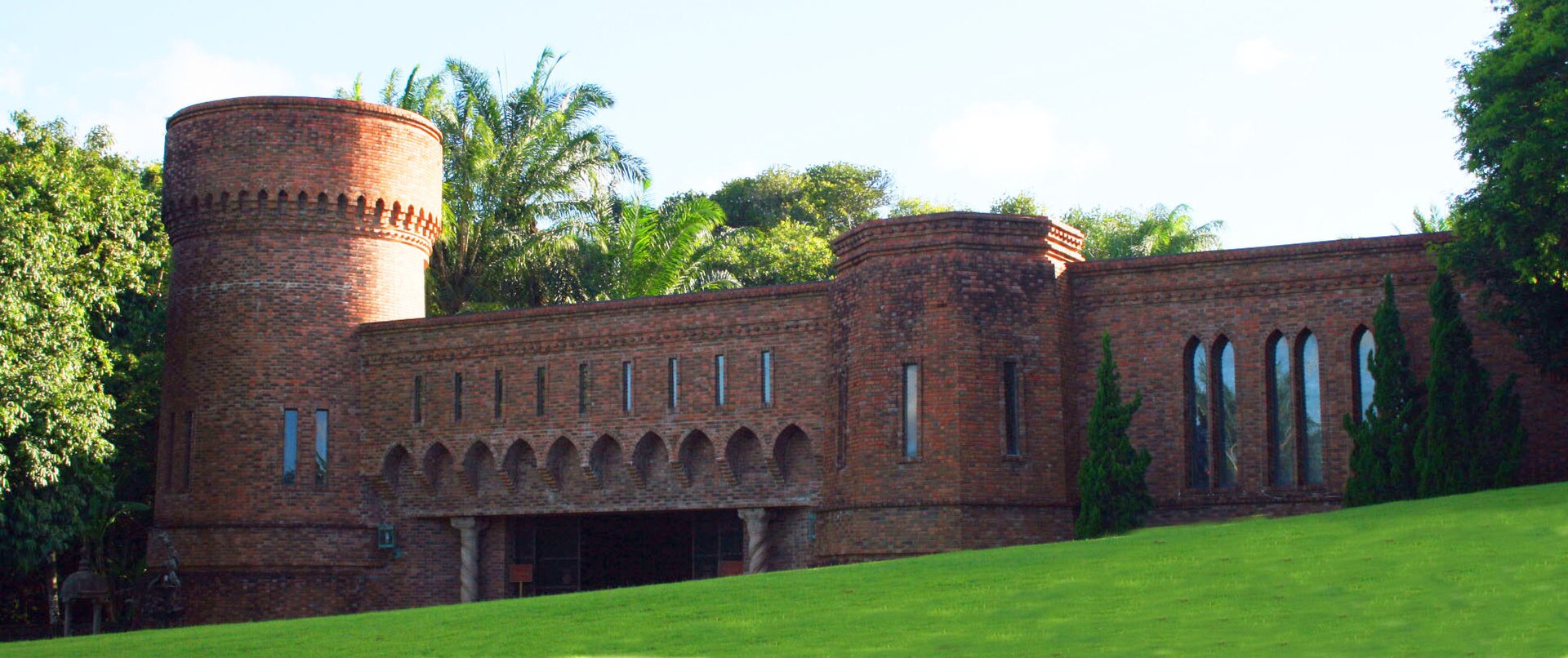
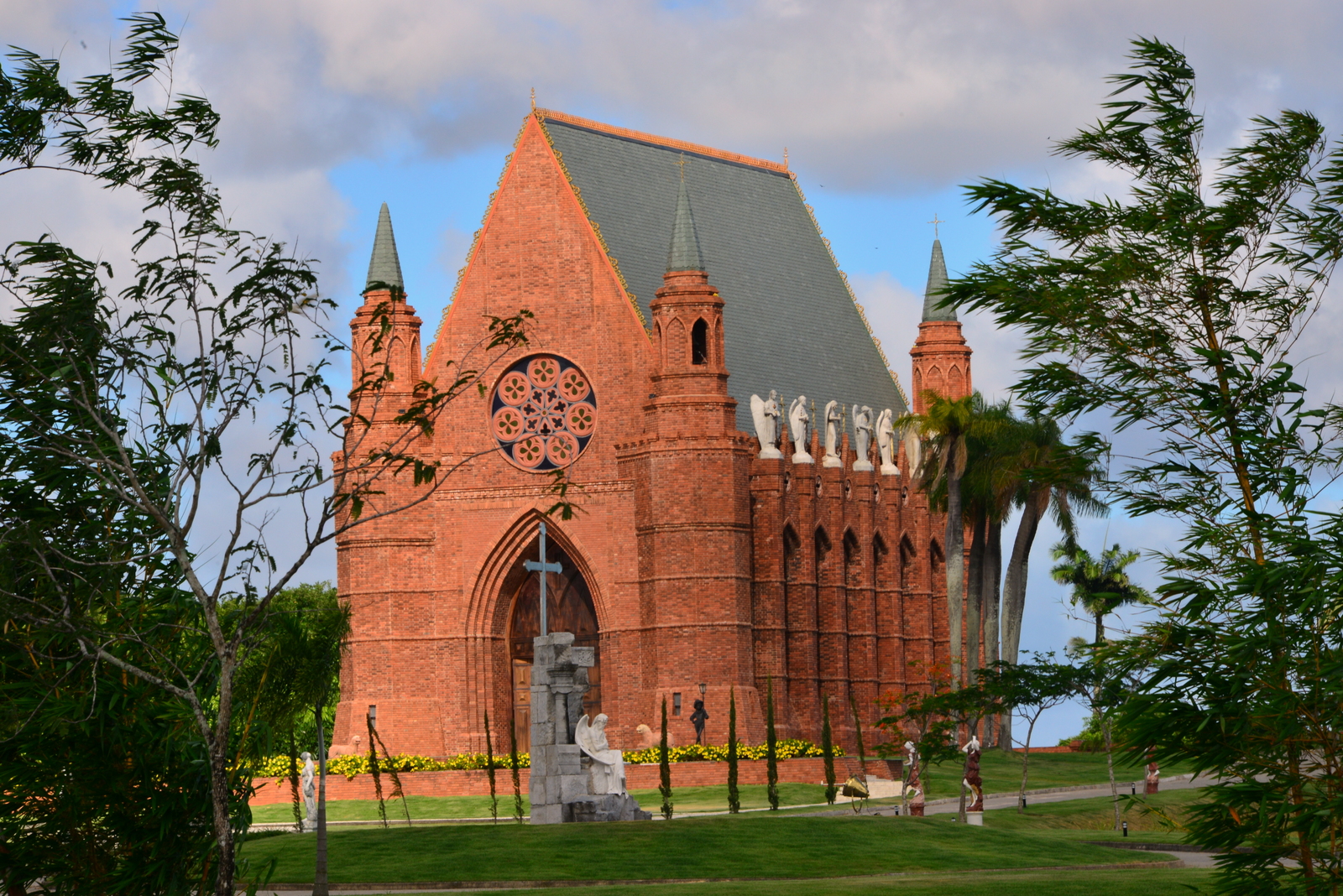
The brick castle buildings of the Ricardo Brennand Institute seen across the lawn, Recife.
marcusrg, CC BY 2.0 · Photograph by marcusrg from Nova Friburgo, BrazilRicardo Brennand Institute
Museum · Instituto Ricardo Brennand · Founded 2002
Open, admission and hours confirmed 16 November 2026 · 9 sources
On this page 14 sections
ContentsClose
The institute's strengths are the largest assemblage of Frans Post paintings and a wide Dutch Brazil documentary collection, a large private armoury of more than three thousand pieces, and a library of colonial Brazil. The Post claim comes from Wikipedia and is tertiary.
| Local name | Instituto Ricardo Brennand |
|---|---|
| Kind | Museum |
| Founded | 2002 |
| City and country |  Recife, Brazil |
| Address | Alameda Antonio Brennand, s/n, Varzea, CEP 50741-904, Recife/PE, Brazil |
| Website | institutoricardobrennand.org.br |
| Status | Open, confirmed |
| Record last verified |
Visiting
- Hours
- Tue-Sun13:00 to 17:00Last entry 16:30. The footer of the same site gives Tue-Wed 13:00-17:00 and Thu-Sun 10:00-17:00; confirm by phone
- Closed
- Monday.
- Admission
- Museum, fullBRL 60Tuesday to Sunday
- Museum, halfBRL 30People with disabilities, students, teachers and people over 60, with documents
- Garden and chapel visit, fullBRL 30
- Garden and chapel visit, halfBRL 15With documents
- Museum plus garden and chapel, fullBRL 80
- Museum plus garden and chapel, halfBRL 40With documents
- Children up to 5, tour guides, taxi drivers, ICOM membersFreeFree with documents; school groups excepted for children
- Audio guide rentalBRL 15Per guide
- Guided visit with educatorBRL 300Group of up to 15, plus each person's ticket; up to two hours; 13:30 or 15:30
Free entry: Last Tuesday of each month, except January, July and December; tickets handed out from 13:00 until gone, no booking- Tickets
- institutoricardobrennand.org.br/index.php/hor... The museum's own ticket page.
- Do I need to book?
- No booking for the free last Tuesday; tickets sold online by card or Pix and at the ticket office
- Address
- Alameda Antonio Brennand, s/n, Varzea, CEP 50741-904, Recife/PE, Brazil Map
- Website
- institutoricardobrennand.org.br
- Telephone
- +55 81 2121-0352
- [email protected]
Before you go how long, access, photography, bags, eating, shop
- How long to allow
- A guided visit of the Pinacoteca and the castle takes up to two hours
- Eating
- Restaurant Castelus, Tue-Sun 12:00-17:00; a cafeteria in the Pinacoteca
- Shop
- A shop in the Pinacoteca
Prices and hours change. We take them from the institution's own pages and print the day we read them, and you can check the current position at the source we used. Confirm before you travel.
What is inside
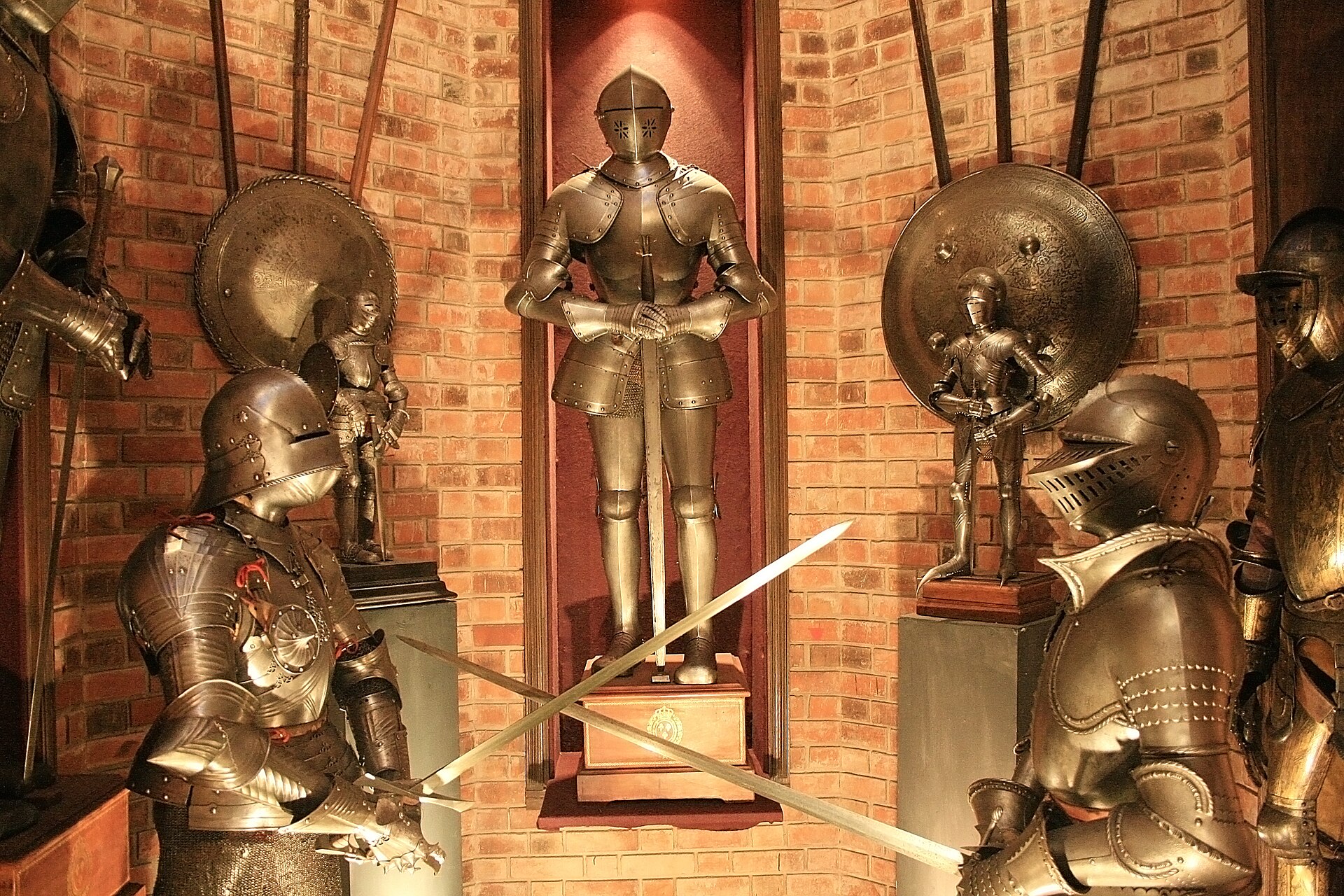
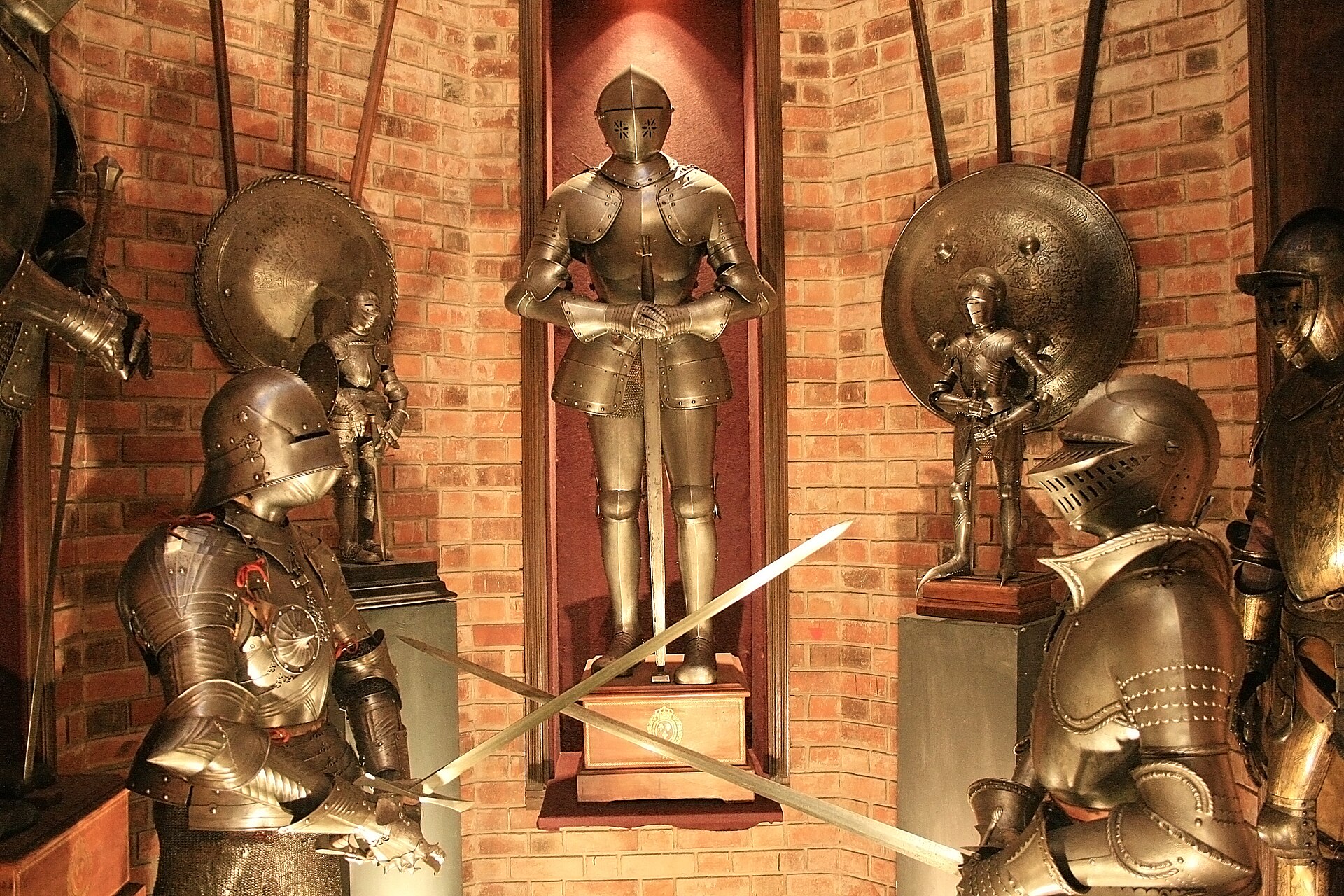
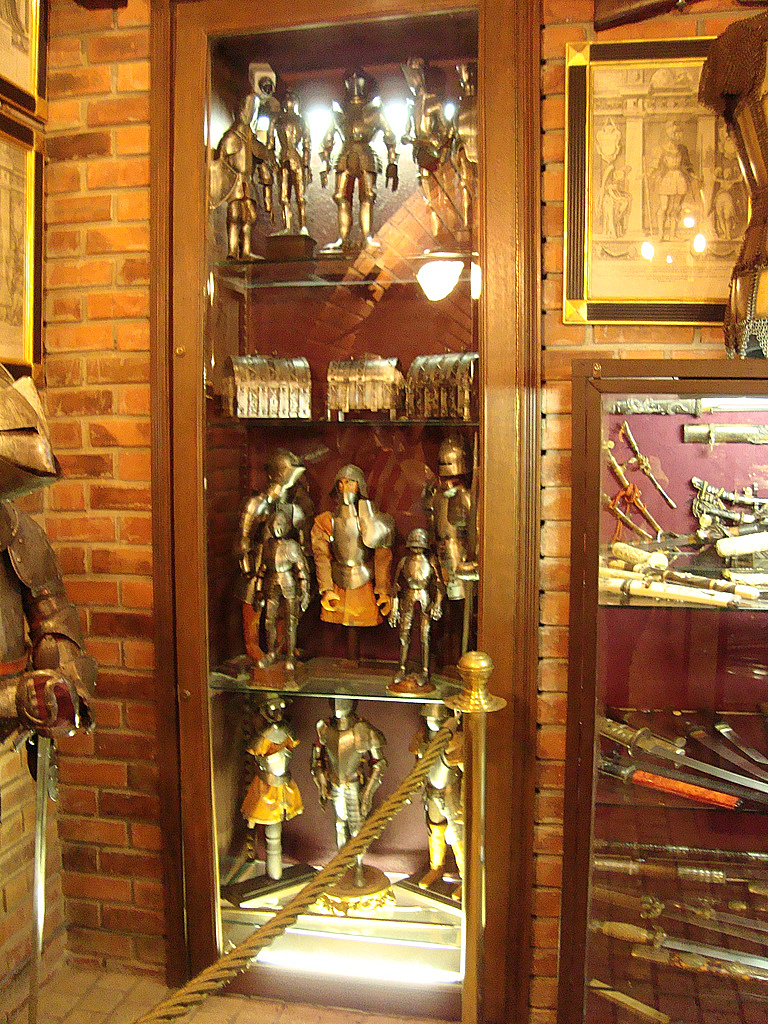
Photograph by Valdiney Pimenta from Campinas - SP, Brazil · CC BY 2.0 Castelo Sao Joao museum of arms
More than 3,000 pieces: knives, swords, daggers, penknives and armour, with Orientalist paintings, stained glass and Gothic furniture. The institute names the Maximilian field armour of about 1515, a German sword pistol of 1590 and swords of King Farouk.
Pinacoteca
Four long-running displays: Frans Post and Dutch Brazil, Brazilian Nineteenth Century, the Janete Costa and Acacio Gil Borsoi collection, and The Trial of Nicolas Fouquet. Built in eleven months and opened in September 2002 with an Albert Eckhout show.
Gallery
992 square metres opened in 2011 for touring shows and events, with marble figures of the four seasons and a bronze cast of Rodin's The Thinker numbered 8/25. Between shows it displays Pernambuco painters.
Jose Antonio Gonsalves de Mello Library
A research library on colonial Brazil and the Dutch period, with watercoloured copies of Barlaeus and of Piso and Marcgrave and sheet music from two Pernambuco musicians. Researchers by appointment, Tuesday to Saturday, 13:00 to 17:00.
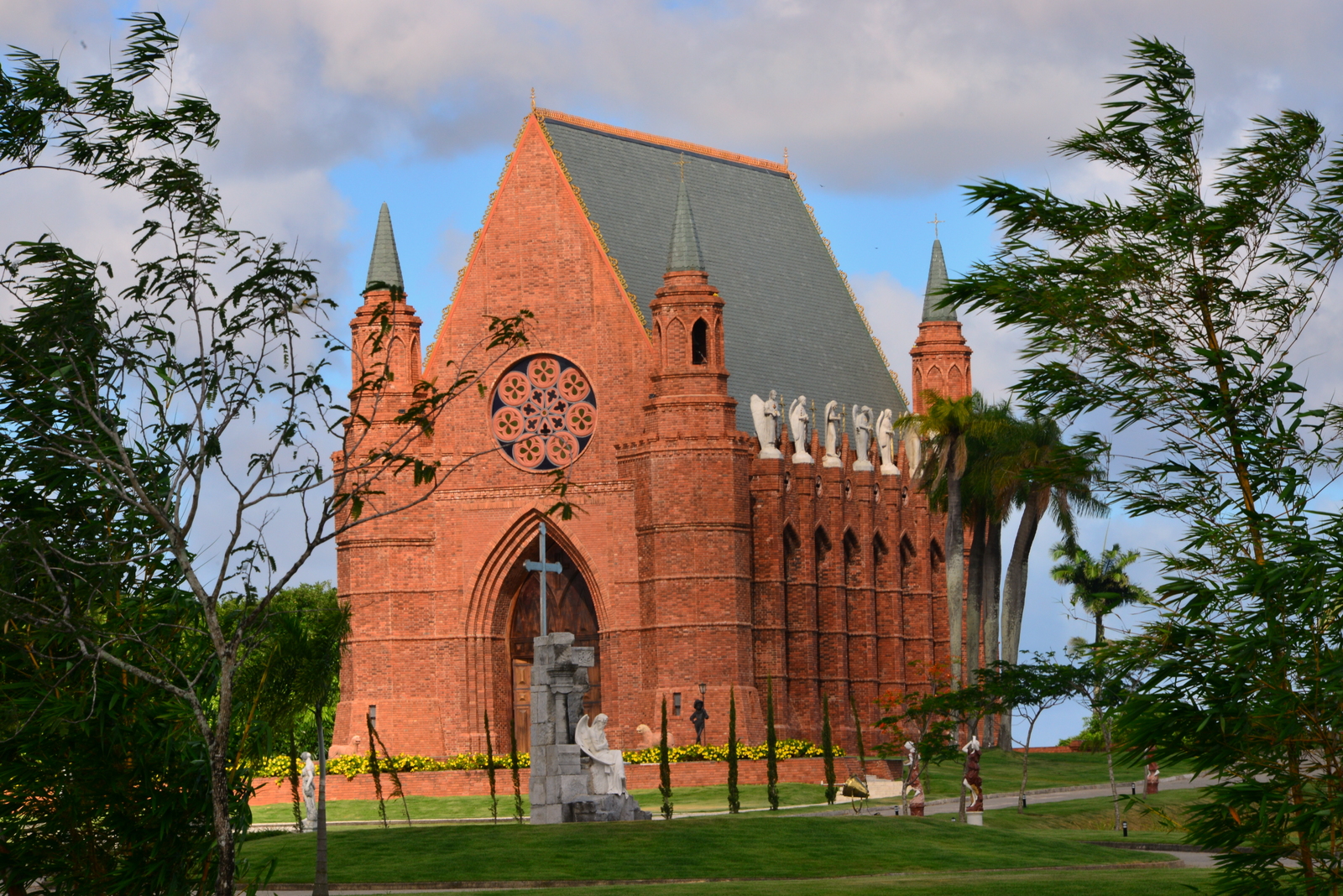
Photograph by Hugo Coelho Vieira · CC BY-SA 4.0 Chapel of Our Lady of Grace
A Gothic chapel of 600 square metres and 21 metres in height seating up to 300, with a life size Christ, rose windows and fourteen angels. Mass on the first and third Sunday of each month.
Sculpture garden
Outdoor sculptures set in the grounds, including a Botero bronze, The Lady and the Horse, according to Wikipedia and the Diario de Pernambuco.
What to see first
Maximilian field armour for horse and rider
German, about 1515The institute names it first among the arms museum's highlights.2
German sword pistol
German, 1590Named by the institute among the highlights of the arms museum.2
Swords of King Farouk of Egypt
Not statedThe institute lists swords that belonged to the last king of Egypt; the Diario describes ceremonial swords in gold set with diamonds.7
Frans Post paintings, including View of Fort Frederick Hendrik (1640)
Frans PostWikipedia says fifteen paintings, about a tenth of Post's known output, and the only Brazil-period Post in a Brazilian collection.6
The Thinker, bronze cast numbered 8/25
After Auguste RodinThe institute says it was authenticated by the Rodin house in Paris and stands in the Gallery.2
Complete output of Joseph Rodgers and Sons cutlery
Joseph Rodgers and Sons, SheffieldThe Diario says it is the only known set with the firm's full production of knives and penknives.7
Rerum per Octennium in Brasilia, watercoloured copy
Gaspar Barlaeus; printed by Elzevier, 1647The institute says the library holds this and a watercoloured Historia Naturalis Brasiliae of 1648.2
Italian pipe organ
Domenico Mangino, about 1625Wikipedia lists it among the most valuable decorative arts, and the institute's own collection listing names an Italian pipe organ.6
The collector's castle in the Varzea
The Ricardo Brennand Institute is a not-for-profit cultural centre opened in 2002 in the Varzea district of Recife, on the land of the former Sao Joao sugar estate. The institute's own account says it keeps an artistic and historical collection that began as the private holdings of the Pernambuco industrialist Ricardo Coimbra de Almeida Brennand. The site covers 77,603 square metres and is ringed by a preserved stretch of Atlantic forest.
What a visitor sees first is a red brick complex of towers, battlements, pointed windows and a covered gateway, set on a lawn. The Diario de Pernambuco described the idea as a surprise: Gothic and Tudor architecture, built in the 2000s, in the middle of Recife. The paper's point was that a modern building would not have suited the objects inside it. The castle came first, built to house Brennand's collection of bladed weapons, and the buildings that followed share its language.
The institute lists its parts as the Castelo Sao Joao museum of arms, the Pinacoteca, the Library, an auditorium, a sculpture garden and a Gallery for temporary shows. A Gothic chapel, Nossa Senhora das Gracas, was added later and the Diario dates it to 2014. This page is about the whole site, because a ticket buys time in all of it and the grounds are part of what people come for.
Who Ricardo Brennand was and why he collected
Brennand wrote on the institute's site that a pocket knife given to him by his father as a child awakened a collector. Over more than half a century he gathered blades made by skilled craftsmen and tied, in his words, to the history of both the West and the East. He says he founded the institute as a non-profit to share the collection with the people of Pernambuco, and that it was named in honour of his uncle Ricardo. Wikipedia records that he was born in 1927 and died in Recife on 25 April 2020, and that he built factories in cement, tiles, glass, porcelain and sugar.
The collection was not only weapons. According to Wikipedia, in the years before the opening he also began to buy art and objects tied to Brazilian history and chose to concentrate on the seventeenth century Dutch presence in the north east. That decision produced the Pinacoteca and, within it, the largest group of paintings by Frans Post in any collection.
The Diario de Pernambuco gives the story of how the Pinacoteca came about. By 2001 the castle was finished. Representatives of the National Museum of Denmark came looking for a place in Pernambuco to show the paintings of Albert Eckhout, who travelled with the party of Johan Maurits of Nassau between 1637 and 1644. They found no suitable space. The paper reports, on the word of the institute's research coordinator Leonardo Dantas, that the then vice president Marco Maciel asked Brennand to help. The Pinacoteca was built in eleven months and opened with the Eckhout show, a plan larger than the one Brennand first had in mind for his own Post canvases.
What is inside: arms, paintings, books and sculpture
The Castelo Sao Joao museum of arms holds more than three thousand pieces according to the institute, among them knives, swords, daggers, penknives, stilettos and armour, together with Orientalist paintings, decorative arts, stained glass and Gothic furniture. The institute names the Maximilian field armour for horse and rider of about 1515, a German sword pistol of 1590, swords that belonged to King Farouk of Egypt, rifles that belonged to Pedro I and Pedro II of Brazil, and paintings by Blaise-Alexandre Desgoffe and by Bouguereau. The Diario adds an armour for a dog, probably eighteenth century, and says the museum holds the only known set of the full output of the Sheffield cutlers Joseph Rodgers and Sons, founded in 1724.
The Pinacoteca carries four long-running displays according to the institute: Frans Post and Dutch Brazil, Brazilian Nineteenth Century, the Janete Costa and Acacio Gil Borsoi collection, and The Trial of Nicolas Fouquet. Wikipedia says the institute holds fifteen paintings by Post, about a tenth of his known output, and that its View of Fort Frederick Hendrik of 1640 is the only one of his seven surviving Brazil-period paintings in a Brazilian collection. It also lists seventeenth century portraits of Johan Maurits and a set of prints after Post made for Barlaeus's account of the Dutch governorship.
The Gallery, opened in 2011 with 992 square metres, takes touring shows and events. Between exhibitions the institute says it shows Pernambuco painters including Francisco Brennand, Tereza Costa Rego, Jose Claudio, Ismael Caldas, Reynaldo Fonseca and Aloisio Magalhaes. Inside it stand marble figures of the four seasons and a bronze cast of Rodin's The Thinker, numbered 8/25 and authenticated by the Rodin house in Paris, the institute says. The grounds include a Botero bronze, The Lady and the Horse, according to Wikipedia and the Diario.
The Library of the historian Jose Antonio Gonsalves de Mello focuses on colonial Brazil and above all the Dutch period. It holds watercoloured copies of Barlaeus's Rerum per Octennium in Brasilia and of Piso and Marcgrave's Historia Naturalis Brasiliae, the institute says, and it receives researchers by appointment from Tuesday to Saturday, 13:00 to 17:00. Collection sheet music from two Pernambuco musicians is also kept there.
The chapel, the restaurant and the grounds
The chapel of Our Lady of Grace is Gothic in style and was designed by Augusto Reinaldo Alves Filho, the institute says. It measures 600 square metres, rises 21 metres and seats up to 300. Inside hang a life size figure of Christ by Elias Sultanum and rose windows by Sergio Mantur. There are fourteen angels by Ricardo Cavani Rosas and stained glass by Suely Cisneiros Muniz. Mass is held on the first and third Sunday of each month from 12:00 to 13:00. The Diario says the chapel honours Brennand's wife Graca and was built with Pernambuco labour and artists, with an altar of Spanish Baroque origin.
The institute's restaurant, Castelus, serves regional food under the chef Marie Franca and is listed as open Tuesday to Sunday from 12:00 to 17:00. The Pinacoteca also holds a shop and a cafeteria according to the institute's own description. Ticket tiers include a garden and chapel visit that can be bought alone, which suits a visitor who wants the grounds without the museum rooms.
Planning a visit and what to know before you go
The institute's hours and tickets page gives opening as Tuesday to Sunday from 13:00 to 17:00 with a strict last entry at 16:30. The footer of the same site gives a different pattern, Tuesday and Wednesday 13:00 to 17:00 and Thursday to Sunday 10:00 to 17:00. Both were on the live site when read on 16 November 2026. The reader should check by phone, on +55 81 2121-0352 or 2121-0365, before travelling.
Full admission to the museum is R$ 60 and the half price is R$ 30. The garden and chapel visit costs R$ 30 or R$ 15 and the combined museum and garden and chapel visit R$ 80 or R$ 40. Half price needs documents and applies to people with disabilities, students, teachers and people over 60. Children up to five, tour guides, taxi drivers and ICOM members enter free with documents. An audio guide rents for R$ 15. A guided visit for a group of up to fifteen costs R$ 300 plus each ticket and lasts up to two hours.
The last Tuesday of each month is free, except January, July and December. Free tickets are handed out from 13:00 until they run out or until the last entry, the institute says, with no booking and a possible closure of the gates once the limit is reached. Tickets can also be bought online by card or Pix.
The record, and what the site does not tell you
The institute's own pages are the source for every price and hour here, and they do not agree with each other. The exhibitions page still carried a 2022 calendar and a July to August 2025 date range when read, and the home page showed a July 2019 holiday workshop notice. A visitor should treat the official site as a starting point and ring ahead.
The collection is largely a private one built over six decades and the sources read for this page do not discuss how individual pieces were acquired. The institute's description of the Post holdings as the only collection covering every phase of the artist comes from Wikipedia, not from the institute, and is held here as a tertiary claim. Nothing read for this page covers restitution claims, and none are asserted.
What visitors say
Wherever the institute is written about, the same three things come up: the Frans Post paintings and the Dutch Brazil material, the armoury of blades and armour, and the surprise of a brick castle with grounds on the edge of Recife. The Diario de Pernambuco reported that the institute topped the national museum ranking in TripAdvisor's Travellers' Choice Awards in 2018, which is a claim by a newspaper about a platform and was not checked at the platform.
What is praised, what is criticised
- Praised: The depth of the Dutch Brazil and Frans Post holdings, unusual for a collection outside Europe
- Praised: The armoury, one of the larger private collections of bladed weapons
- Praised: The castle buildings and the grounds, which suit the collection
- Criticised: The official website is inconsistent: two sets of opening hours and calendar pages dated 2022 and 2025 were live on 16 November 2026
- Criticised: Full admission is R$ 60 against the R$ 30 the Diario recorded in 2018, and the discounts need documents
- Criticised: The sources read say little about how pieces were acquired
Questions about Ricardo Brennand Institute
Where is Ricardo Brennand Institute?
Alameda Antonio Brennand, s/n, Varzea, CEP 50741-904, Recife/PE, Brazil.
How much does it cost to visit?
Museum, full: BRL 60; Museum, half: BRL 30; Garden and chapel visit, full: BRL 30; Garden and chapel visit, half: BRL 15; Museum plus garden and chapel, full: BRL 80. As confirmed 16 November 2026.
When is it open?
Tue-Sun 13:00-17:00. Closed: Monday. As confirmed 16 November 2026.
What should you see first?
Maximilian field armour for horse and rider (German, about 1515); German sword pistol (German, 1590); Swords of King Farouk of Egypt (Not stated); Frans Post paintings, including View of Fort Frederick Hendrik (1640) (Frans Post); The Thinker, bronze cast numbered 8/25 (After Auguste Rodin); Complete output of Joseph Rodgers and Sons cutlery (Joseph Rodgers and Sons, Sheffield).
What we could not confirm
- Which opening hours are current: Tuesday to Sunday 13:00-17:00 or Tuesday and Wednesday 13:00-17:00 with Thursday to Sunday 10:00-17:00
- How individual pieces in the armoury were acquired
- Public transport routes to the Varzea site, not found on the institute's own pages
Images
Sources
- 1Instituto Ricardo Brennand, Horarios e Ingressos (hours, prices), read 2026-11-16 institutoricardobrennand.org.br/index.php/horarioseingressos
- 2Instituto Ricardo Brennand, O Instituto (about, collections, library, chapel, restaurant), read 2026-11-16 institutoricardobrennand.org.br/index.php/oinstituto
- 3Instituto Ricardo Brennand, Acervo (collection pages), read 2026-11-16 institutoricardobrennand.org.br/index.php/acervo
- 4Instituto Ricardo Brennand, Exposicoes (calendar), read 2026-11-16 institutoricardobrennand.org.br/index.php/exposicoes
- 5Instituto Ricardo Brennand, Contato (address, phone, hours footer), read 2026-11-16 institutoricardobrennand.org.br/index.php/contato
- 6Wikipedia, Ricardo Brennand Institute (), read 2026-11-16 en.wikipedia.org/wiki/Ricardo_Brennand_Institute
- 7Diario de Pernambuco, Instituto Ricardo Brennand, um patrimonio de acervo incalculavel, August 2018 diariodepernambuco.com.br/noticia/viver/2018/08/amp/instituto-ricardo-brennand-um-patrimonio-de-acervo-incalculavel.html
- 8Wikimedia Commons, Category:Instituto Ricardo Brennand, licences read 2026-11-16 commons.wikimedia.org/wiki/Category:Instituto_Ricardo_Brennand
- 9Instituto Ricardo Brennand, home page, read 2026-11-16 institutoricardobrennand.org.br/index.php/