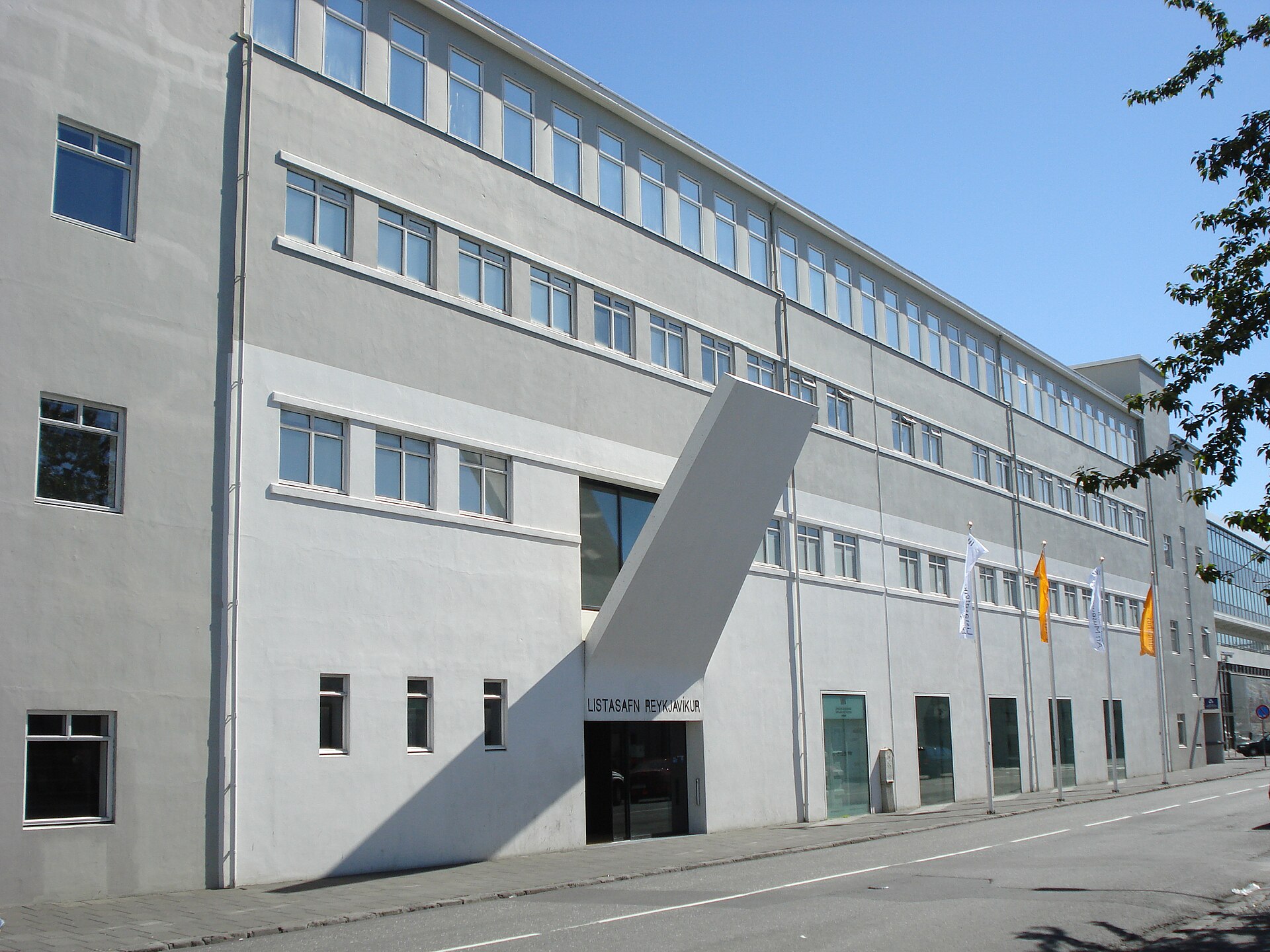
Hafnarhus, the Reykjavik Art Museum building at Tryggvagata 17 in the old harbour district; its entrance signage, legible in the photograph, reads Listasafn Reykjavikur. This is the building the coordinates on this record point to. It is one of the museum's three buildings; the other two, Kjarvalsstadir and Asmundarsafn, are shown separately below.
Public domainReykjavik Art Museum
Museum · Listasafn Reykjavikur · Founded 1973
Open, admission and hours confirmed 26 August 2026 · 12 sources
On this page 16 sections
ContentsClose
The museum's distinguishing strength is depth on three named Icelandic artists rather than breadth across a period or a school: the largest public Erro holding anywhere, the most complete public Kjarval holding, and the sculptor Asmundur Sveinsson's own purpose-built home, studio and sculpture garden, each housed in its own building rather than folded into a single generalist collection. That structure also means no single one of its three sites tells the whole story on its own.
| Local name | Listasafn Reykjavikur |
|---|---|
| Kind | Museum |
| Founded | 1973 (Kjarvalsstadir, the founding building); Asmundarsafn added 1983; Hafnarhus added 2000 |
| City and country |  Reykjavik, Iceland Reykjavik, Iceland |
| Address | Hafnarhus: Tryggvagata 17, 101 Reykjavik, Iceland. The museum also operates two further buildings in the city: Kjarvalsstadir at Flokagata 24 and Asmundarsafn at Sigtun 105. |
| Website | artmuseum.is |
| Status | Open, confirmed |
| Record last verified |
Visiting
- Hours
- Daily10:00 to 17:00Hafnarhus
- Thursday10:00 to 22:00Hafnarhus, extended evening hours
- Daily10:00 to 17:00Kjarvalsstadir
- Daily13:00 to 17:00Asmundarsafn
- Closed
- Easter Sunday (all three buildings). 24, 25 and 31 December and 1 January (all three buildings; Kjarvalsstadir and Asmundarsafn reopen with shortened hours on 26 December).
- Admission
- AdultISK 2,550Valid 24 hours across all three buildings (Hafnarhus, Kjarvalsstadir, Asmundarsafn)
- StudentISK 1,55024-hour combined ticket
- Under 18FreeFree
- Disabled visitorsFreeFree
- Annual passISK 6,200Single visitor, one year
- Annual pass +1ISK 9,300Covers two named people
- Annual pass, age 18-28ISK 4,300Reduced annual pass for young adults
Free entry: The outdoor sculpture garden at Asmundarsafn is free to enter at any time, day or night, regardless of ticket status- Tickets
- listasafnreykjavikur.is/en/admission The museum's own ticket page.
- Do I need to book?
- No, tickets can be bought on site or in advance through the museum's web shop
- Address
- Hafnarhus: Tryggvagata 17, 101 Reykjavik, Iceland. The museum also operates two further buildings in the city: Kjarvalsstadir at Flokagata 24 and Asmundarsafn at Sigtun 105. MapWalking Hafnarhus sits in the old harbour district of downtown Reykjavik, a short walk from the main shopping street Laugavegur and from the harbour front.
City bus (Straeto) Kjarvalsstadir and Asmundarsafn are separate sites elsewhere in the city (Miklatun park and Laugardalur respectively) and are reached by city bus or a longer walk from the centre, not on foot from Hafnarhus. - Website
- artmuseum.is
- Telephone
- +354 411 6400
- [email protected]
Before you go how long, access, photography, bags, eating, shop
- How long to allow
- 40 to 90 minutes per building; a single combined 24-hour ticket lets a visitor spread the three sites over one day or two
- Access
- All three buildings have step-free or ramped entry, lifts or single-level layouts, accessible toilets, wheelchairs available to borrow, and welcome guide dogs. Hafnarhus and Kjarvalsstadir list dedicated disabled parking. All three offer guided tours adapted for visitors on the autism spectrum or with sensory processing needs, and Hafnarhus lists sign-language tours for deaf and hard-of-hearing visitors.
- Photography
- Not stated on the pages consulted; not confirmed either way
- Bags
- At Hafnarhus, strollers, backpacks, large bags and umbrellas are not allowed into the exhibition halls; lockers and a cloakroom sit beside the ticket office. Kjarvalsstadir and Asmundarsafn both list a cloakroom with lockers.
- Eating
- Kjarvalsstadir has an on-site restaurant, Klambrar Bistro, serving food and coffee. Hafnarhus and Asmundarsafn are not confirmed to have their own cafe from the pages consulted.
- Shop
- All three buildings operate a museum shop; a combined web shop sells tickets and annual passes online.
Prices and hours change. We take them from the institution's own pages and print the day we read them, and you can check the current position at the source we used. Confirm before you travel.
What is inside
Hafnarhus - Erro Collection
The permanent home of the roughly 4,000-piece Erro collection, built from the artist's own 1989 gift of about 2,000 works (paintings, watercolours, prints, sculpture and collage spanning his career) plus the private correspondence and career papers he gave alongside it, and grown since through further donations and purchases. Exhibitions drawn from the collection rotate through the Hafnarhus galleries on a regular basis rather than being fixed as a single permanent hang.
Hafnarhus - contemporary exhibition halls and courtyard
Multiple exhibition halls across the building's floors, plus a ground-floor multipurpose hall that opens onto an internal courtyard, used for temporary shows of contemporary Icelandic and international art. The museum's own description says the renovation of the former harbour warehouse preserved as much of the original industrial structure as possible rather than erasing it.
Kjarvalsstadir - Kjarval Collection
The most extensive holding anywhere of the work of painter Johannes Sveinsson Kjarval (1885-1972), covering the range of his styles and his recurring use of Icelandic landscape, folklore and myth. The core of the holding traces to Kjarval's own 1968 donation of sketches, paintings and other material to the city, four years before his death, and has grown since through further gifts and purchases. The building also runs temporary exhibitions of other Icelandic and international artists alongside the Kjarval displays.
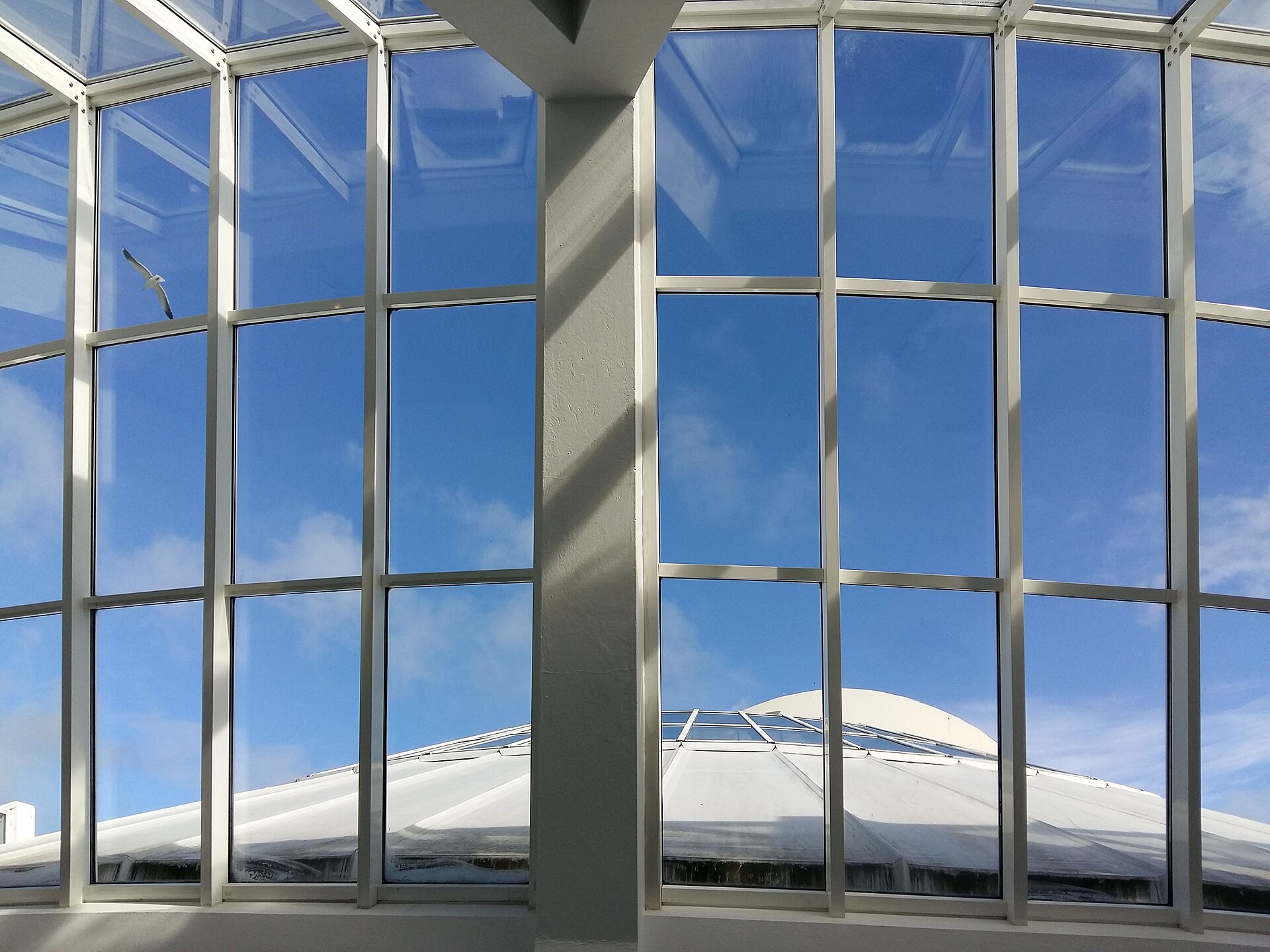
Photograph by Slawojar2 · CC BY-SA 4.0 Asmundarsafn - sculpture galleries and dome hall
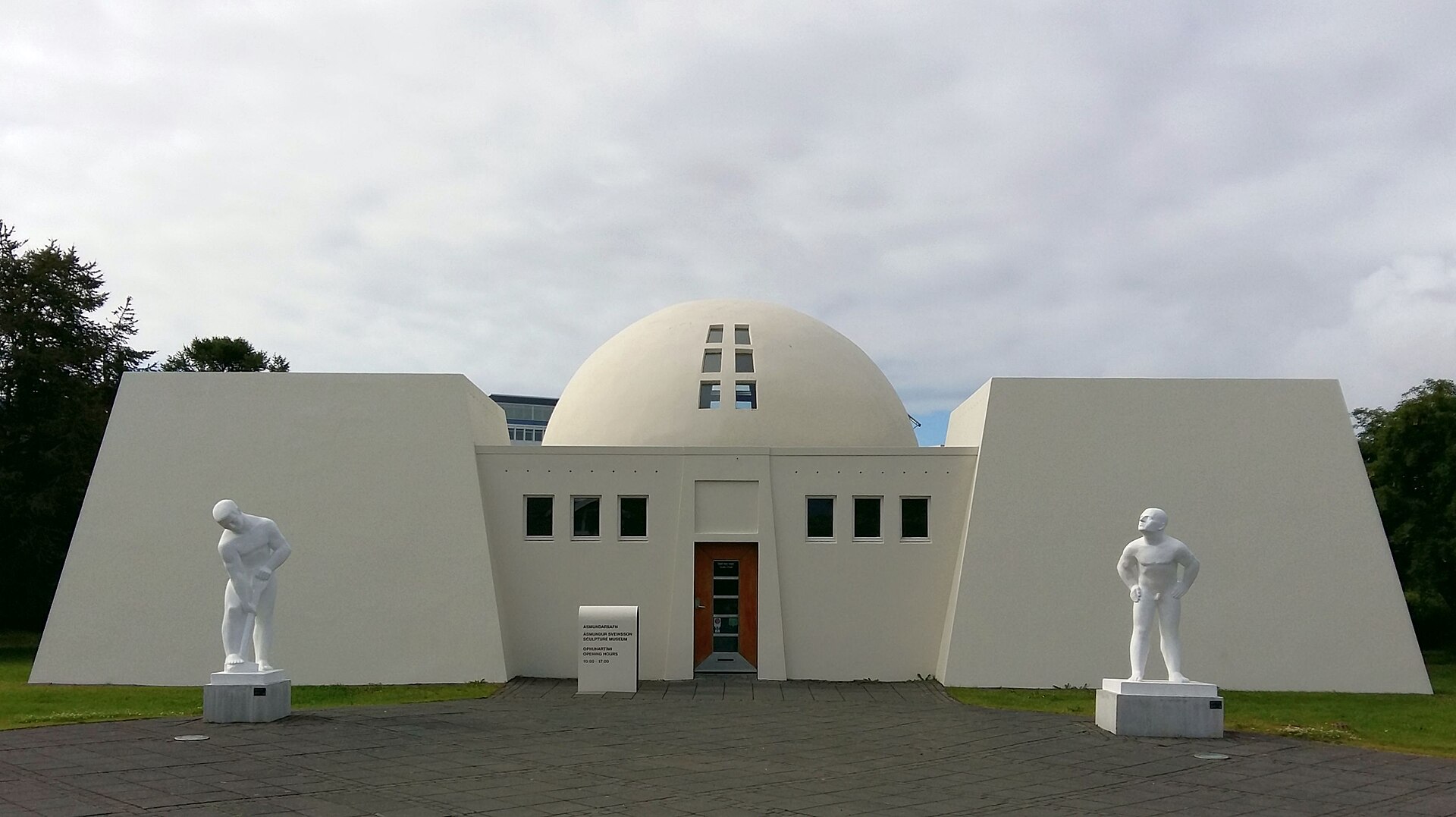
The indoor galleries of sculptor Asmundur Sveinsson's former home and studio, built around the domed structure he designed and largely built himself between 1942 and 1959, shown together with work by living artists in rotating exhibitions. The dome, drawing on what the museum describes as the secular architecture of the Greeks and Turks adapted for a bare Icelandic site, gives the main hall an unusual top-lit, curved interior distinct from a conventional white-cube gallery.
What to see first
The Erro Collection
ErroAt roughly 4,000 works, the largest concentrated holding of a single living Icelandic artist in public hands anywhere, built from Erro's own 1989 gift and still growing; it gave Hafnarhus its reason to open as a museum building in the first place.7
Erro's donated career archive
ErroAlongside the artworks, Erro's 1989 gift included his private correspondence and career papers, material the museum itself flags as significant for research into the artist and his period rather than as display pieces.7
The Kjarval Collection
Johannes Sveinsson KjarvalThe most complete public holding of the painter most identified with 20th-century Icelandic landscape and folklore painting, seeded by Kjarval's own 1968 donation to the city four years before he died.4
Kjarvalsstadir building itself
Opened in 1973 as, in the museum's own account, the first building in Iceland designed specifically to exhibit visual art; a landmark of Icelandic Nordic-modernist architecture rather than a converted or adapted space.9
Vedurspamadur (Weather Seer), 1934
Asmundur SveinssonAn enlarged outdoor cast standing in the Asmundarsafn sculpture garden, illustrating the mythic, folklore-derived figurative language that runs through Sveinsson's public sculpture and that the garden was built to display at full scale.12
Asmundarsafn's sculpture garden
Asmundur SveinssonFree to enter at any hour regardless of the museum's ticketing, the garden around the sculptor's former home and studio displays enlarged or outdoor-specific versions of his studio works; the current layout was redesigned by architect Manfred Vilhjalmsson between 1994 and 2000.8
General City Collection and public art
Various 20th- and 21st-century Icelandic artistsBeyond the three named artist collections, the museum also stewards a general city art collection and public sculpture sited around Reykjavik, a stewardship role that goes beyond what is shown inside any of the three buildings.2
Past exhibitions here
Three buildings under one name
Reykjavik Art Museum, Listasafn Reykjavikur, is not one building but three, spread across separate parts of the city: Hafnarhus by the old harbour downtown, Kjarvalsstadir beside Miklatun park, and Asmundarsafn in Laugardalur. All three are run as a single municipal institution, share one ticketing system and one collection database, and together hold more than 17,000 items, mostly by Icelandic artists of the 20th and 21st centuries, across five distinct holdings: a general city art collection (including public sculpture around Reykjavik itself), the Erro collection, the Kjarval collection, the Asmundur Sveinsson sculpture collection, and an architecture-department archive.
The coordinates carried on this record's public identifiers point at Hafnarhus specifically, at Tryggvagata 17 in the old harbour district, and that is the building shown in this page's lead photograph and confirmed by the legible entrance signage in it. Kjarvalsstadir and Asmundarsafn are different buildings in different parts of the city, run by the same institution under the same name; this page says explicitly, building by building, which facts belong to which site rather than folding all three into one description.
The institution as a whole traces to 1973, when Kjarvalsstadir opened as the first purpose-built art exhibition building in Iceland. Asmundarsafn followed in 1983, converted from the sculptor Asmundur Sveinsson's own home and studio after his death the previous year. Hafnarhus, the converted harbour warehouse that anchors this record, opened last, in April 2000.
Hafnarhus: a harbour warehouse remade
Hafnarhus stands at Tryggvagata 17, in the oldest part of Reykjavik near the town's original docks. The building itself was a working harbour warehouse before its conversion; the museum's own description of the renovation says it preserved as much of the original industrial structure as it could rather than replacing it with a generic gallery interior, and the exposed grid of windows and plain rendered walls visible from the street still read as warehouse rather than purpose-built museum.
Hafnarhus opened as a museum building in April 2000. Its opening was tied directly to a specific gift: in 1989 the artist Erro, born Gudmundur Gudmundsson, donated around 2,000 works to the City of Reykjavik, spanning paintings, watercolours, graphic art, sculpture and collage from across his career, together with an extensive archive of private correspondence and career papers. That collection, now grown to roughly 4,000 pieces through further gifts and purchases, gave the city's art museum the reason to take on the Hafnarhus building in the first place, and exhibitions drawn from it remain a regular fixture there.
Beyond the Erro rooms, Hafnarhus runs several further exhibition halls across its floors, with a ground-floor multipurpose hall that opens directly onto an internal courtyard and hosts events and larger installations alongside the changing programme of contemporary Icelandic and international art. No verified photograph of any Hafnarhus interior space, on a free licence, was located in the course of this research; the building is illustrated here only by its exterior.
Kjarvalsstadir: built for one painter, grown to hold many
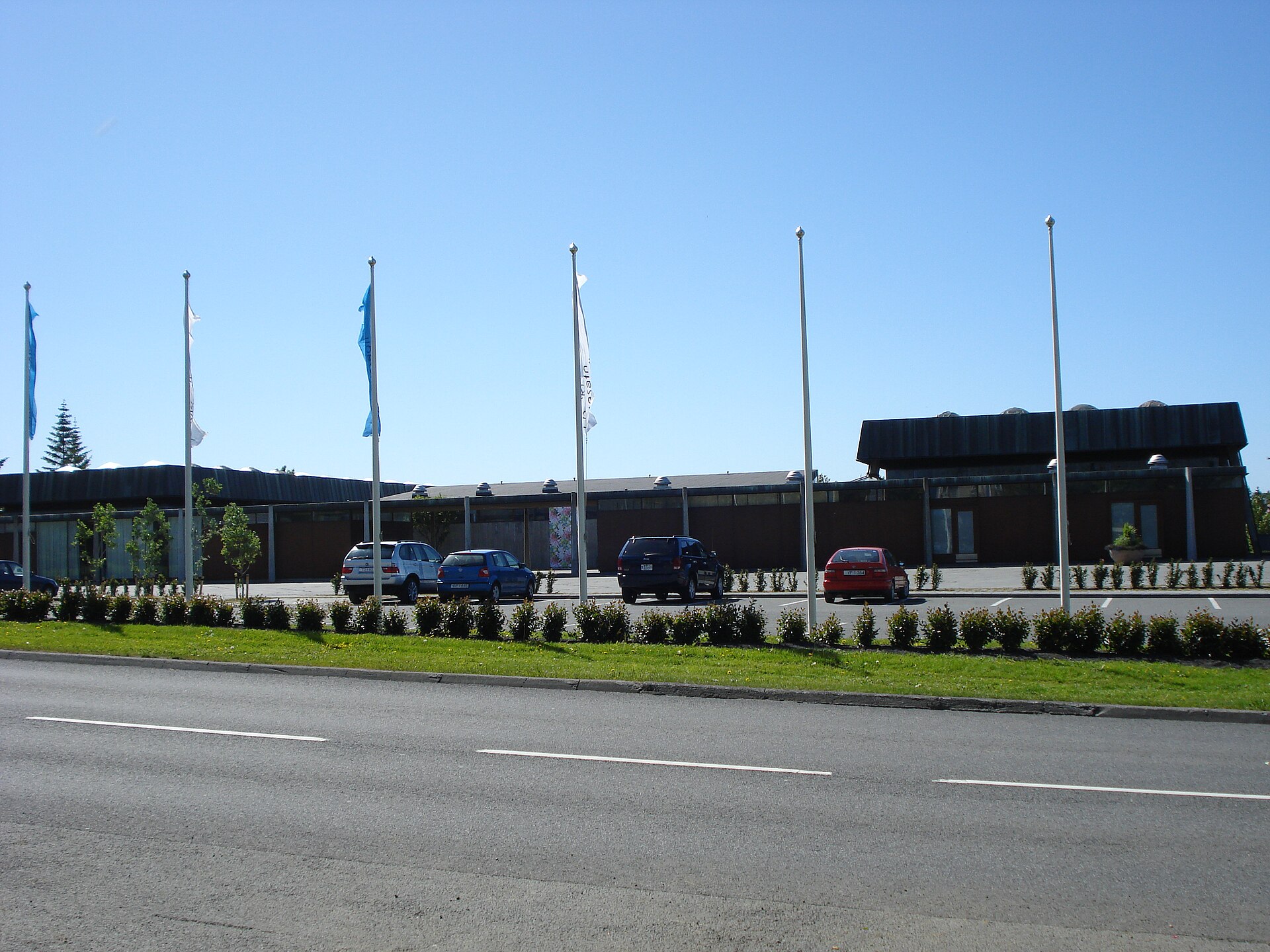
Kjarvalsstadir sits at Flokagata 24, beside Miklatun park, on the far side of the city from Hafnarhus. Ground was broken in 1966 and the building opened in 1973; the museum describes it as the first building in Iceland designed specifically for exhibiting visual art, a landmark of the country's Nordic-modernist architecture in its own right rather than a repurposed structure.
The building takes its name from the painter Johannes Sveinsson Kjarval (1885-1972), Iceland's best-known painter of the 20th century and the artist most identified with turning the country's lava fields, moss and folklore into a modern painting vocabulary. The museum's Kjarval holding traces to a gift Kjarval made to the city in 1968, four years before his death, of sketches, paintings and other material; the collection has grown since through further donations and purchases and is now, by the museum's own account, the most comprehensive public holding of Kjarval's work anywhere. Kjarvalsstadir today shows that collection on a rotating basis alongside temporary exhibitions of other Icelandic and international artists, supported on site by a restaurant, Klambrar Bistro, and a children's and family activity room named Hvammur.
Asmundarsafn: a sculptor's own architecture
Asmundarsafn stands at Sigtun 105 in Laugardalur, a further separate site from both Hafnarhus and Kjarvalsstadir. It began as the home and studio of the sculptor Asmundur Sveinsson (1893-1982), one of the pioneering figures of Icelandic sculpture, who designed and largely built the structure himself in three phases, in 1942, 1946, and 1955 to 1959, digging foundations, building moulds and mixing concrete with his own hands. Architect Einar Sveinsson assisted with drawings and technical plans for the later Shed section.
The first and most distinctive phase, the domed structure completed in 1942, drew, in the museum's own description, on the secular architecture of the Greeks and Turks, adapted for what Asmundur Sveinsson himself called a woodless and barren plot on the then-undeveloped edge of the city. The dome sits over a square base and gives the main hall an unusual top-lit, curved interior unlike a conventional gallery box.
Sveinsson bequeathed the house, studio and his body of work to the City of Reykjavik on his death in late 1982, and it opened as a public museum the following year. Architect Manfred Vilhjalmsson was brought in between 1987 and 1991 to physically link the building's two original sections for exhibition use, and separately redesigned the surrounding sculpture garden between 1994 and 2000. That garden, which displays enlarged or outdoor-specific casts of Sveinsson's studio works, including the 1934 piece Vedurspamadur (Weather Seer), is free to enter at any hour, day or night, independent of the museum's ticketed opening times.
What the collection holds
Across its three buildings, Reykjavik Art Museum describes its holdings as exceeding 17,000 items, organised into five parts: a general city art collection that also covers public sculpture sited around Reykjavik itself, the Erro collection at Hafnarhus, the Kjarval collection at Kjarvalsstadir, the Asmundur Sveinsson sculpture collection at Asmundarsafn, and a separate archive relating to the city's architecture department. The museum states more than 3,000 square metres of gallery space across the three sites and runs more than twenty exhibitions a year between them, ranging from deep dives into the permanent collections to shows of young and international contemporary artists.
The institution also runs a public programme well beyond its walls: it describes roughly 200 public events annually and education programmes reaching more than 10,000 students, and it partners with recurring city cultural events including the Iceland Airwaves music festival, the Reykjavik Arts Festival and DesignMarch. No source consulted for this record breaks the 17,000-item figure down by medium or names a specific acquisitions or deaccessioning policy; a reader wanting that level of collection detail would need to go to the museum's own online collection database rather than this summary.
Visiting: tickets, hours and what to expect
A single ticket, bought at any of the three buildings or through the museum's web shop, is valid for 24 hours and covers entry to all three: Hafnarhus, Kjarvalsstadir and Asmundarsafn. As of the prices last confirmed for this record, an adult ticket costs 2,550 Icelandic kronur and a student ticket 1,550 kronur; entry is free for visitors under 18 and for disabled visitors. Annual passes run from 4,300 kronur for those aged 18 to 28 up to 9,300 kronur for a pass covering two named people. The outdoor sculpture garden at Asmundarsafn is free to enter at any time regardless of ticket status, since it sits outside the building's paid galleries.
The three buildings do not share opening hours. Hafnarhus opens daily from 10:00 to 17:00, with an extended Thursday evening until 22:00. Kjarvalsstadir also opens daily from 10:00 to 17:00. Asmundarsafn opens later and closes earlier, daily from 13:00 to 17:00. All three close on Easter Sunday and around the turn of the year, on 24, 25 and 31 December and 1 January, with Kjarvalsstadir and Asmundarsafn reopening for shortened hours on 26 December.
All three buildings offer step-free or ramped entry, accessible toilets, a wheelchair available to borrow, and a welcome for guide dogs; Hafnarhus and Kjarvalsstadir additionally list dedicated disabled parking, and Asmundarsafn has a lift connecting its lobby to the cloakroom level. All three run guided tours adapted for visitors on the autism spectrum or with sensory processing needs, and Hafnarhus separately lists tours in sign language for deaf and hard-of-hearing visitors. At Hafnarhus, strollers, backpacks, large bags and umbrellas are kept out of the exhibition halls themselves; lockers and a cloakroom sit beside the ticket office for that reason. Kjarvalsstadir has an on-site restaurant, Klambrar Bistro, and a children's activity room, Hvammur; all three buildings run their own museum shop.
What visitors say
Independent visitor reviews for Hafnarhus, the building this record is anchored to, run to an aggregate of 3.8 out of 5 across 530 ratings on Tripadvisor, read for this record on 26 August 2026 and cited here as a tertiary figure rather than a verified fact. The pattern across individual reviews, in our own words rather than reproduced from any single one, praises the building itself first: the converted-warehouse character of Hafnarhus, kept rather than smoothed away in its 2000 renovation, and the Erro collection housed inside it, both come up repeatedly as the reasons visitors are glad they came. Staff are consistently described as friendly and informative, and the museum's compact scale is treated as a point in its favour, letting a visitor see everything on show without the fatigue of a larger institution.
The most consistent reservation, again recurring across separate reviewers rather than resting on any one account, is that the display can feel thin against the amount of floor space on offer, and that a visit runs shorter than some expect, typically 60 to 90 minutes rather than the half-day some visitors budget for a named national museum. Reactions to the contemporary and conceptual work on show are also described as a matter of individual taste rather than of quality, which tracks with a museum whose temporary programme leans toward living artists rather than an encyclopaedic historical collection. At least one reviewer separately noted a limited range in the museum shop. None of this amounts to a case against visiting; it reads, across the reviews consulted, as a small, well-run museum best understood as one stop on a combined ticket across all three of the institution's buildings rather than a full day out on its own.
What visitors say
Visitors consistently single out the Hafnarhus building's character as a former harbour warehouse as much as what is inside it, and describe the museum as an easy, unhurried visit rather than an exhausting one. The most repeated qualification, across independent reviewers, is that the display feels thin relative to the amount of floor space on offer, and that a single visit runs shorter than visitors expect going in.
What is praised, what is criticised
- Praised: The converted-warehouse architecture and industrial character of the Hafnarhus building, preserved rather than smoothed over in the 2000 renovation
- Praised: The Erro collection and its permanent presence at Hafnarhus, called out specifically in review after review
- Praised: Staff described as friendly, well informed and willing to talk visitors through the current exhibitions
- Praised: A manageable scale that lets a visitor see the whole of what is on show without feeling rushed or overwhelmed
- Criticised: The collection on view can feel sparse against the size of the exhibition halls, leaving some visitors wanting more to look at
- Criticised: Contemporary and conceptual work does not land with every visitor, with reactions to specific shows described as a matter of taste rather than quality
- Criticised: A visit runs to roughly 60 to 90 minutes for most reviewers, shorter than some expect from a museum of this billing
- Criticised: The museum shop's range was noted as limited by at least one reviewer
Ratings on other platforms
Tripadvisor: 3.8 from 530 ratings, read 26 August 2026
A platform average is a tertiary source: it moves, it is not audited, and we quote no visitor's words.
Questions about Reykjavik Art Museum
Where is Reykjavik Art Museum?
Hafnarhus: Tryggvagata 17, 101 Reykjavik, Iceland. The museum also operates two further buildings in the city: Kjarvalsstadir at Flokagata 24 and Asmundarsafn at Sigtun 105.
How much does it cost to visit?
Adult: ISK 2550; Student: ISK 1550; Under 18: free; Disabled visitors: free; Annual pass: ISK 6200. As confirmed 26 August 2026.
When is it open?
Daily 10:00-17:00; Thursday 10:00-22:00; Daily 10:00-17:00; Daily 13:00-17:00. Closed: Easter Sunday (all three buildings). 24, 25 and 31 December and 1 January (all three buildings; Kjarvalsstadir and Asmundarsafn reopen with shortened hours on 26 December). As confirmed 26 August 2026.
How do you get there?
Walking: Hafnarhus sits in the old harbour district of downtown Reykjavik, a short walk from the main shopping street Laugavegur and from the harbour front; City bus (Straeto): Kjarvalsstadir and Asmundarsafn are separate sites elsewhere in the city (Miklatun park and Laugardalur respectively) and are reached by city bus or a longer walk from the centre, not on foot from Hafnarhus.
What should you see first?
The Erro Collection (Erro); Erro's donated career archive (Erro); The Kjarval Collection (Johannes Sveinsson Kjarval); Kjarvalsstadir building itself; Vedurspamadur (Weather Seer), 1934 (Asmundur Sveinsson); Asmundarsafn's sculpture garden (Asmundur Sveinsson).
What we could not confirm
- None of the sources consulted for this record publish a breakdown of the 17,000-item general city collection by medium, date range or acquisition history; that detail would have to come from the museum's own online collection database rather than its public-facing pages.
- No source consulted addresses provenance history for individual works in the general city collection in the way this archive tracks provenance for older material; the museum's holdings are overwhelmingly 20th- and 21st-century Icelandic work acquired directly from or gifted by the artists themselves, which is a different provenance picture from an encyclopaedic historical museum, but it was not independently confirmed for every part of the collection.
Images
Sources
- 1Listasafn Reykjavikur (Reykjavik Art Museum), official site, home page, English listasafnreykjavikur.is/en
- 2Listasafn Reykjavikur, About the Museum listasafnreykjavikur.is/en/about-the-museum
- 3Listasafn Reykjavikur, Hafnarhus building page listasafnreykjavikur.is/en/hafnarhus-en
- 4Listasafn Reykjavikur, Kjarvalsstadir building page listasafnreykjavikur.is/en/kjarvalsstadir-en
- 5Listasafn Reykjavikur, Asmundarsafn building page listasafnreykjavikur.is/en/asmundarsafn-en
- 6Listasafn Reykjavikur, Admission / ticket prices listasafnreykjavikur.is/en/admission
- 7Listasafn Reykjavikur, Collection: Erro listasafnreykjavikur.is/en/collection/artist/erro-en
- 8Listasafn Reykjavikur, History of Asmundarsafn listasafnreykjavikur.is/en/history-of-asmundarsafn
- 9Wikipedia, Reykjavik Art Museum (, used only for the founding sequence of the three buildings, cross-checked against the museum's own pages) en.wikipedia.org/wiki/Reykjavik_Art_Museum
- 10Tripadvisor, Reykjavik Art Museum Hafnarhus, aggregate rating and review themes () tripadvisor.com/Attraction_Review-g189970-d255262-Reviews-Reykjavik_Art_Museum_Hafnarhus-Reykjavik_Capital_Region.html
- 11Wikimedia Commons, File:ListasafnReykjavikur.JPG, file and licence page (lead photograph) commons.wikimedia.org/wiki/File:ListasafnReykjavikur.JPG
- 12Wikimedia Commons, File:Asmundarsafn - front view with sculptures by Asmundur Sveinsson.jpg, file and licence page (identifies the sculpture Vedurspamadur, 1934, in its caption) commons.wikimedia.org/wiki/File:%C3%81smundarsafn_-_front_view_with_sculptures_by_%C3%81smundur_Sveinsson.jpg

