Rembrandt House Museum
Museum · Museum Het Rembrandthuis · Founded 1911
Open, admission and hours confirmed 16 September 2026 · 10 sources
On this page 15 sections
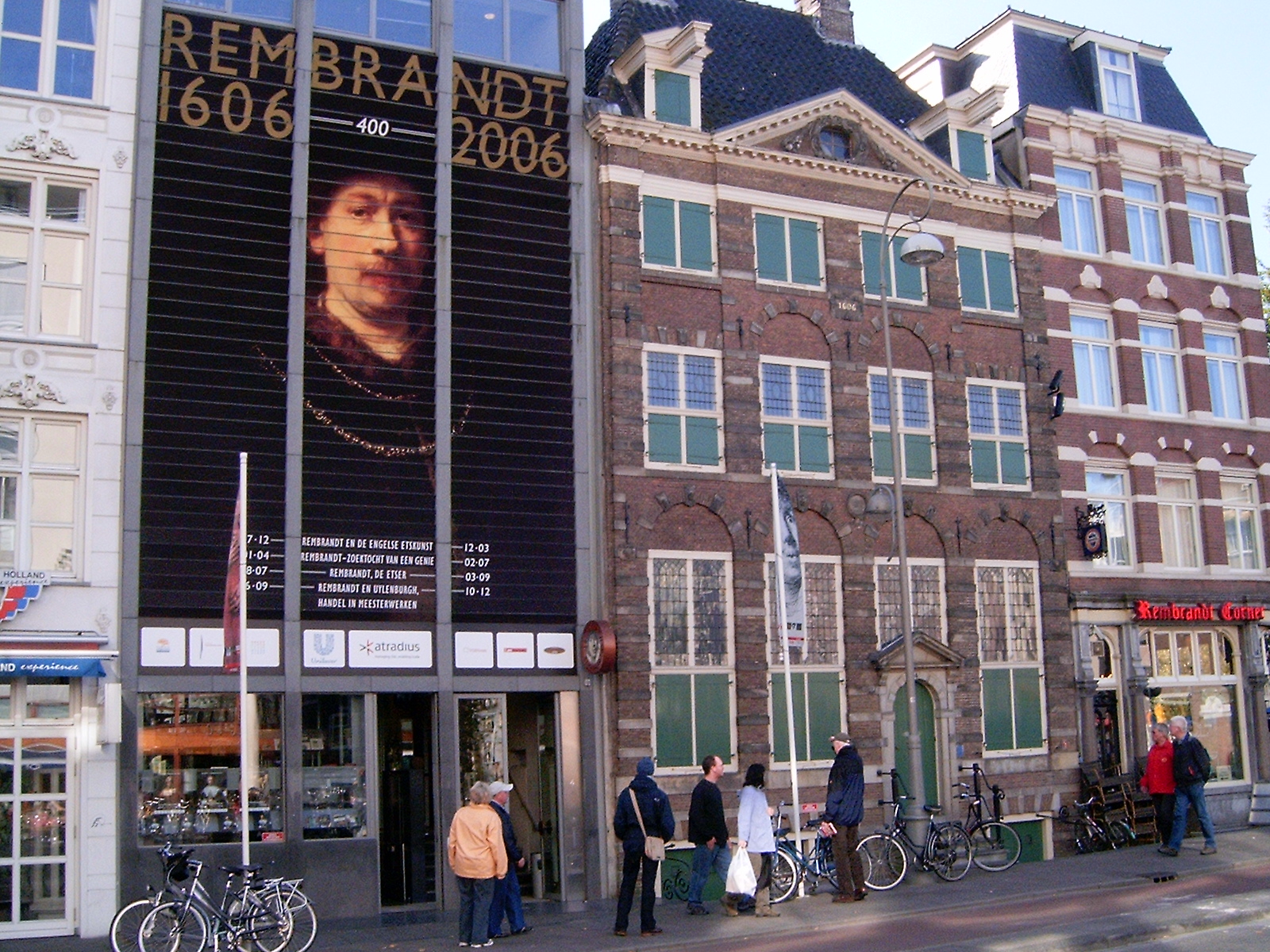
The museum's deepest holding is not paintings but paper: a near-complete run of Rembrandt's roughly 290 etchings, together with a number of the original copper plates he worked from, assembled because the house itself is where most of them were made and pulled. Paintings on view are mostly by his teacher, Pieter Lastman, and by pupils who trained in the rooms upstairs, Ferdinand Bol and Samuel van Hoogstraten among them, with two paintings by Rembrandt himself on rotating display in the Treasure Chamber as of 2026. The collection was built to explain a working method and a working household, not to assemble a survey of Dutch Golden Age painting; that is the gap a first-time visitor expecting a gallery of Rembrandt paintings should know about before buying a ticket.
| Local name | Museum Het Rembrandthuis |
|---|---|
| Kind | Museum |
| Founded | 1911 |
| City and country |  Amsterdam, Netherlands Amsterdam, Netherlands |
| Address | Jodenbreestraat 4, 1011 NK Amsterdam, Netherlands |
| Website | rembrandthuis.nl/en |
| Status | Open, confirmed 16 September 2026 |
| Record last verified | 16 September 2026 |
Visiting
- Hours
- Daily, 11 May-1 Nov 202610:00 to 18:00
- Daily, 2 Nov-18 Dec 202610:00 to 17:00
- 19-31 Dec 2026 (incl. Christmas Eve and New Year's Eve)10:00 to 18:00Closed 25 December
- 1-3 Jan 202710:00 to 18:00
- 4 Jan-12 Feb 202710:00 to 17:00
- Closed
- 25 December. 27 April (King's Day). 7 January 2027.
- Admission
- AdultEUR 23.50Off-peak entry 16:00-18:00: EUR 19.50
- Youth to age 25 / CJP / ISIC cardEUR 15Off-peak entry 16:00-18:00: EUR 11.00
- Child 6-17EUR 8
- Child under 6FreeFree
- Museumkaart / I Amsterdam City Card / ICOM memberFreeFree entry on production of the card
- Tickets
- tickets.rembrandthuis.nl The museum's own ticket page.
- Do I need to book?
- Not stated as mandatory for individual visitors on the museum's own pages, but timed tickets are sold online at tickets.rembrandthuis.nl and are the route the museum itself promotes.
- Address
- Jodenbreestraat 4, 1011 NK Amsterdam, Netherlands Map
- Website
- rembrandthuis.nl/en
- Telephone
- +31 20 520 0400
- [email protected]
Before you go how long, access, photography, bags, eating, shop
- How long to allow
- Not stated on the museum's visitor pages; this record does not estimate a duration it cannot source.
- Access
- The historic house has narrow, steep 17th-century staircases and no lift; the museum's own accessibility page states this plainly and does not claim step-free access to the period rooms. A modern wing, added in 1998, has a lift serving the entrance, shop, restrooms and temporary exhibition galleries. A wheelchair-accessible restroom is available, guide and assistance dogs are permitted (with the same caveat about stairs), and an accompanying carer is admitted free. The multimedia tour text is available on paper for visitors who are deaf or hard of hearing.
- Photography
- Not addressed on the museum's public visitor-information pages fetched for this record.
- Bags
- Strollers and prams are not permitted inside the historic house and must be left at the entrance or in the cloakroom; general bag policy is not otherwise stated on the pages fetched.
- Eating
- No eating or drinking is allowed inside the museum itself. The museum's own accessibility page names three nearby options for visitors: Cafe Restaurant Orff, Tisfris and De Rembrandt Corner.
- Shop
- An on-site museum shop operates alongside an online webshop at webshop.rembrandthuis.nl.
Prices and hours change. We take them from the institution's own pages and print the day we read them, and you can check the current position at the source we used. Confirm before you travel.
What is inside
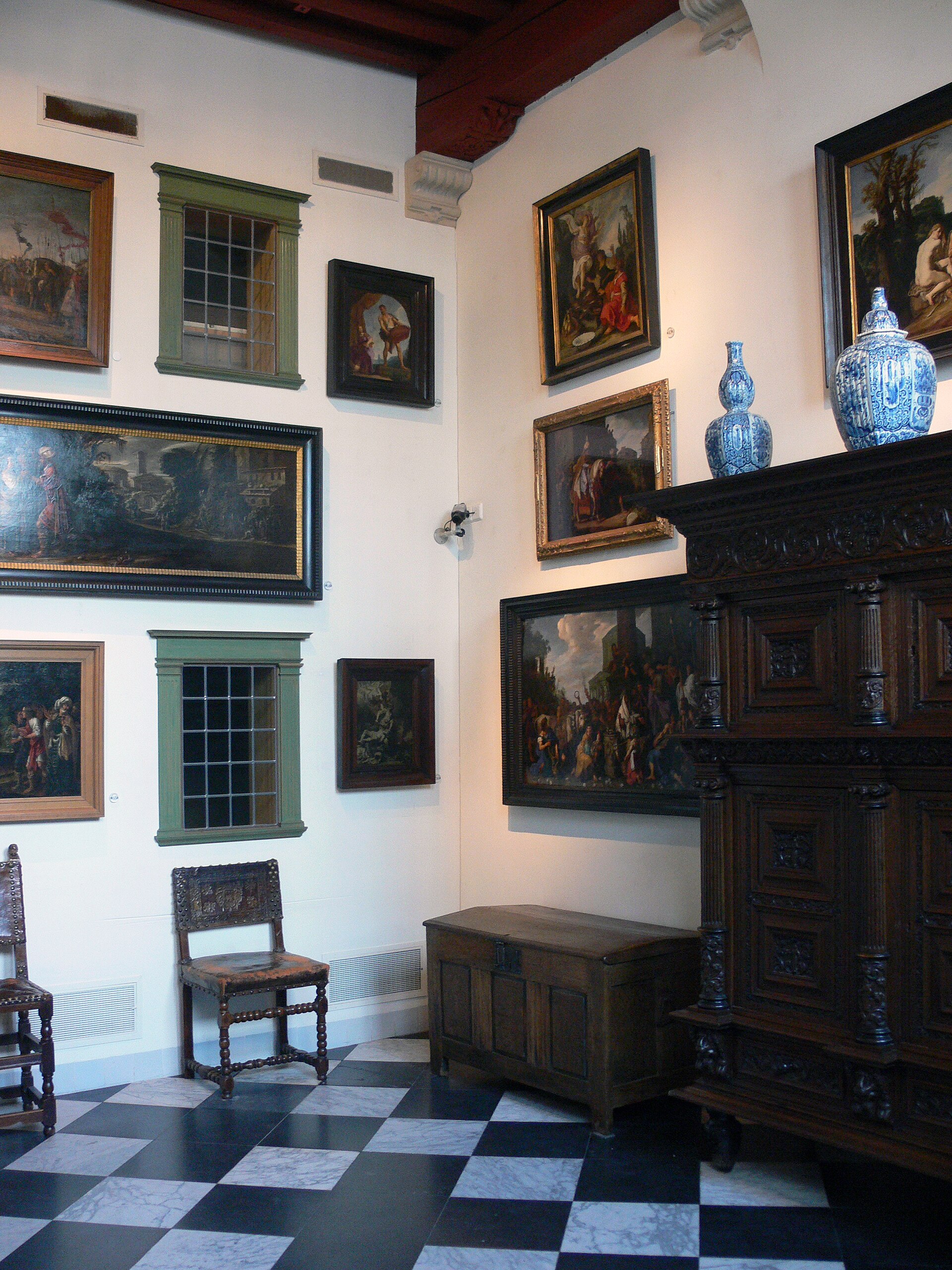
Photograph by Remi Mathis · CC BY-SA 3.0 Entrance Hall and Reception Room (Voorhuys and Sijdelcaemer)
The ground-floor rooms that functioned as Rembrandt's shop: the Voorhuys, where he sold his own paintings and those of other artists to callers off the street, and the Sijdelcaemer, where he met prospective clients who had come to commission a portrait.
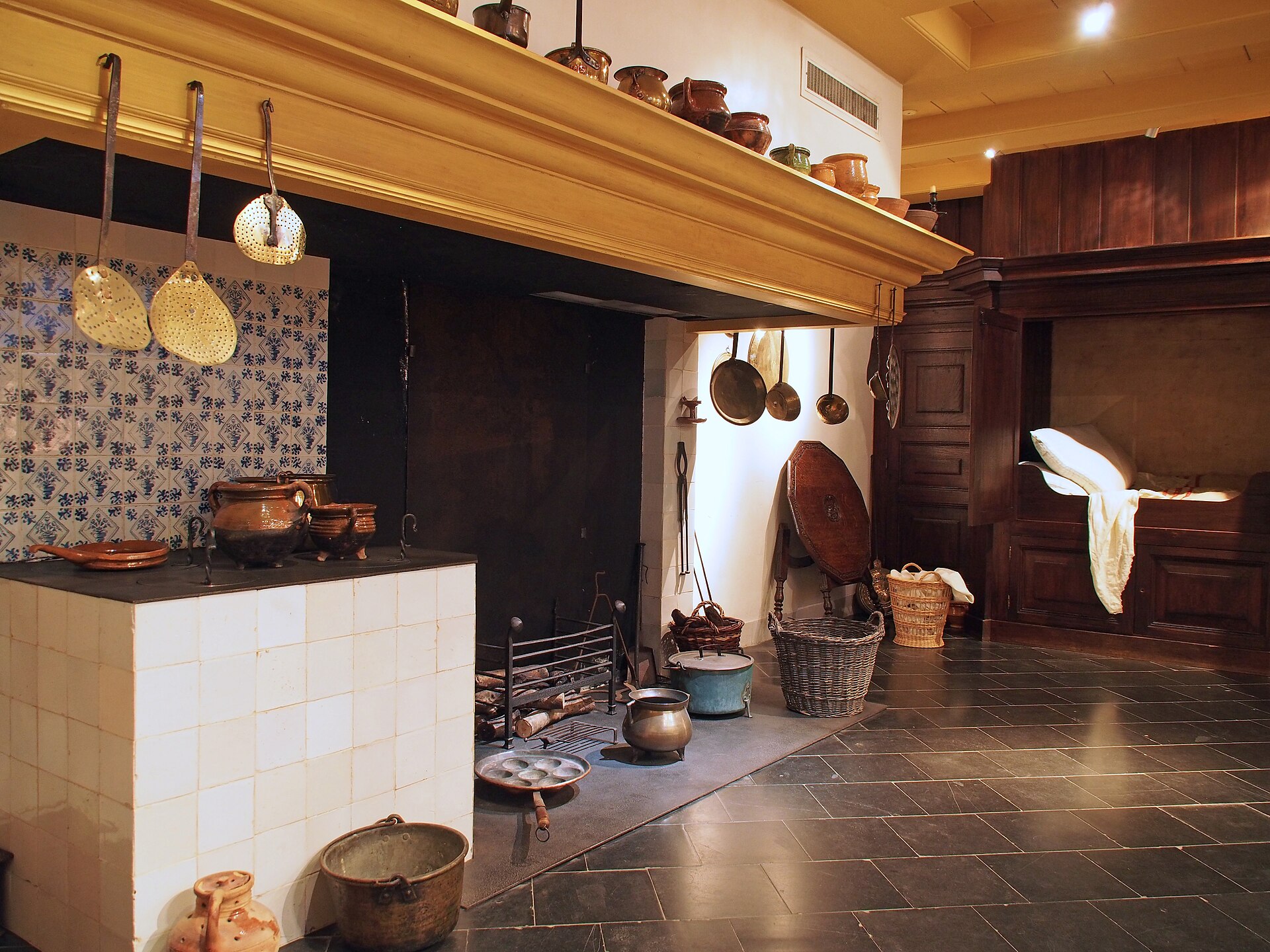
Photograph by Hajotthu · CC BY 3.0 Kitchen (Keucken)
The household kitchen, which fed a large establishment: Rembrandt, his family, live-in pupils and household staff. It is one of the more domestic, workaday rooms set against the studio and reception spaces around it.
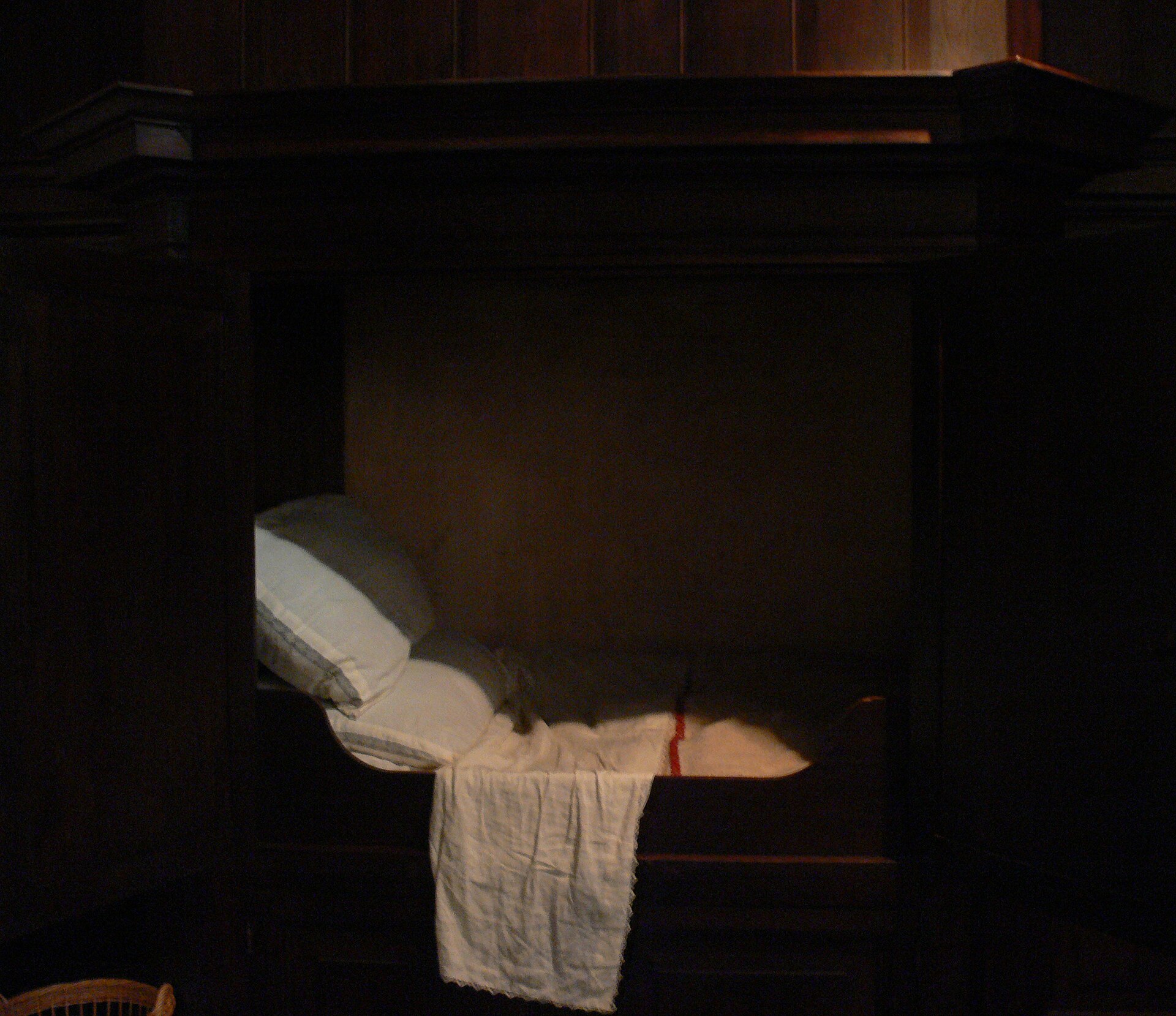
Photograph by Remi Mathis · CC BY-SA 3.0 The Sael (living and sleeping quarters)
The family's private room, furnished with a box bed in the Dutch manner, where Rembrandt lived with his wife Saskia van Uylenburgh. Since 2021 it also displays Ferdinand Bol's early painting Shepherdess in a Landscape, a gift from the collectors Willem Jan and Karin Hoogsteder, hung in the room where master and pupil would have worked in close proximity.
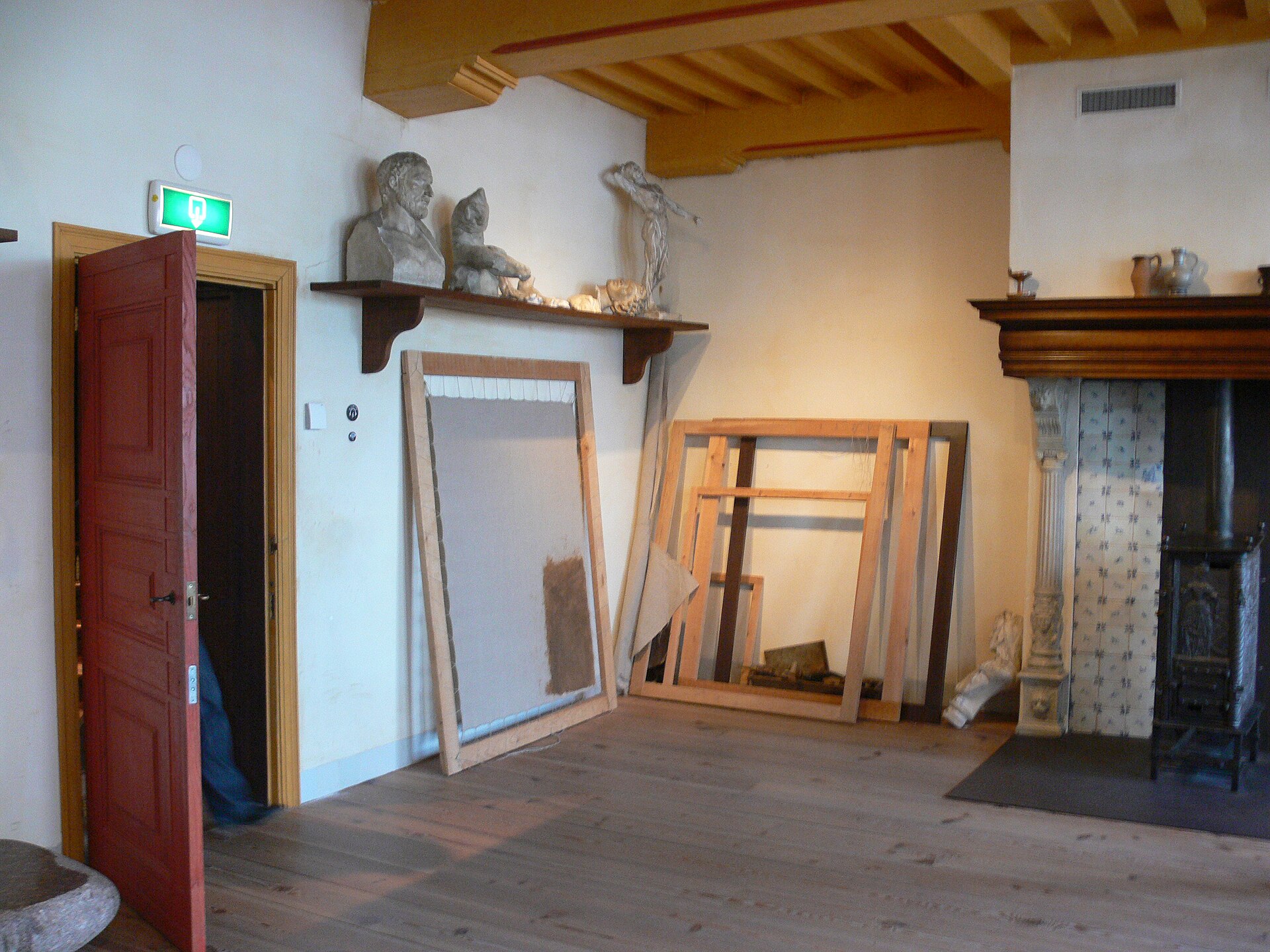
Photograph by Remi Mathis · CC BY-SA 3.0 The Big Studio (painting studio)
Identified as Rembrandt's main studio on the strength of its scale and its tall, north-facing light, the room where his largest and most ambitious paintings were made. It is set up with the easels, pigments, grinding stones and other equipment a working 17th-century studio required.
Pupils' Studio
A separate studio where paying pupils trained under Rembrandt's supervision, among them Ferdinand Bol and Samuel van Hoogstraten, whose own later careers as painters and, in Van Hoogstraten's case, as a writer on art theory, are part of what the room is used to explain.
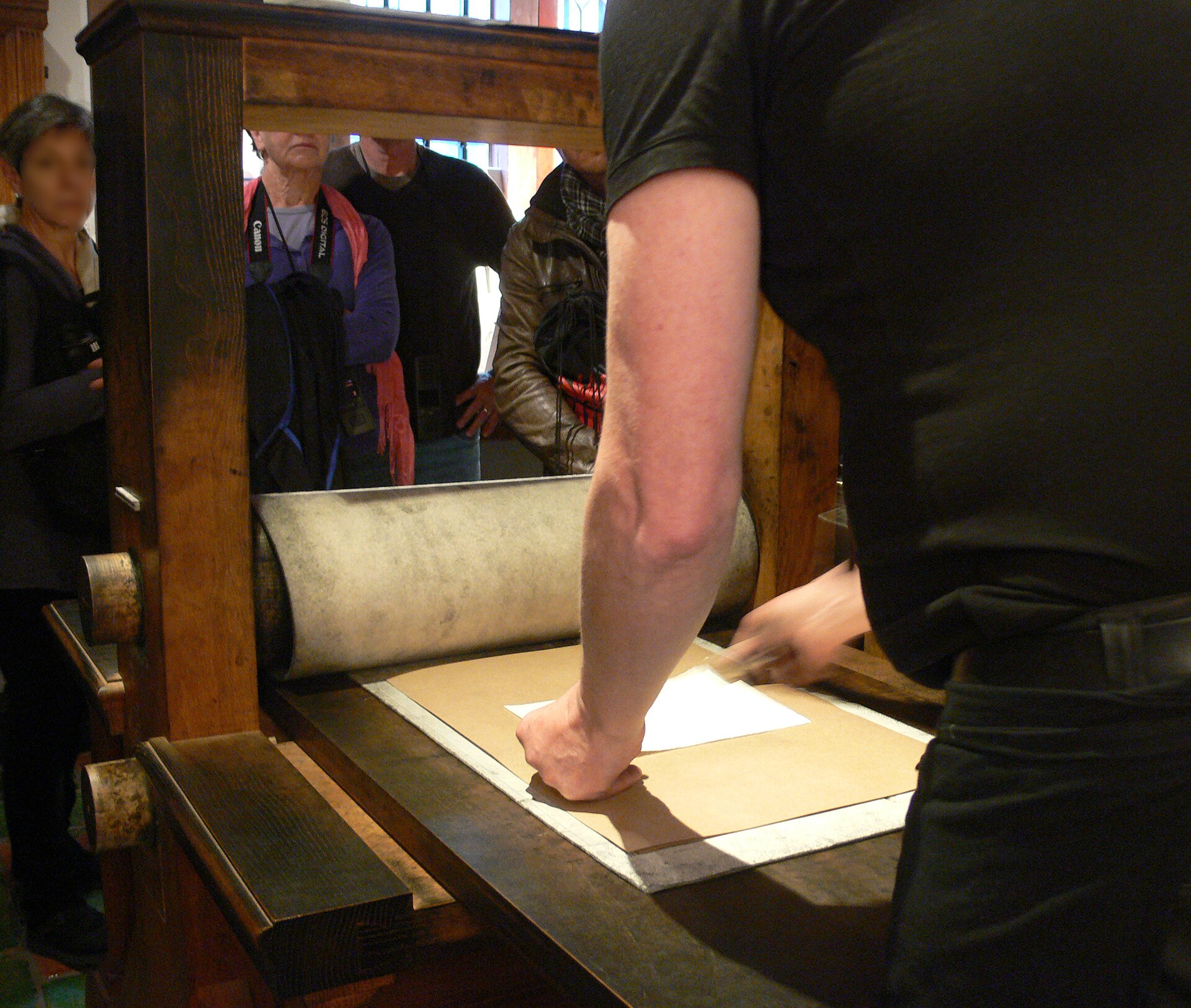
Photograph by Remi Mathis · CC BY-SA 3.0 Etching Workshop (printing studio)
A working reconstruction of the room where Rembrandt pulled his own prints, built around a recreated etching press. Museum staff give demonstrations of etching and printing technique here throughout the day, showing visitors the physical steps behind the prints hung elsewhere in the house.
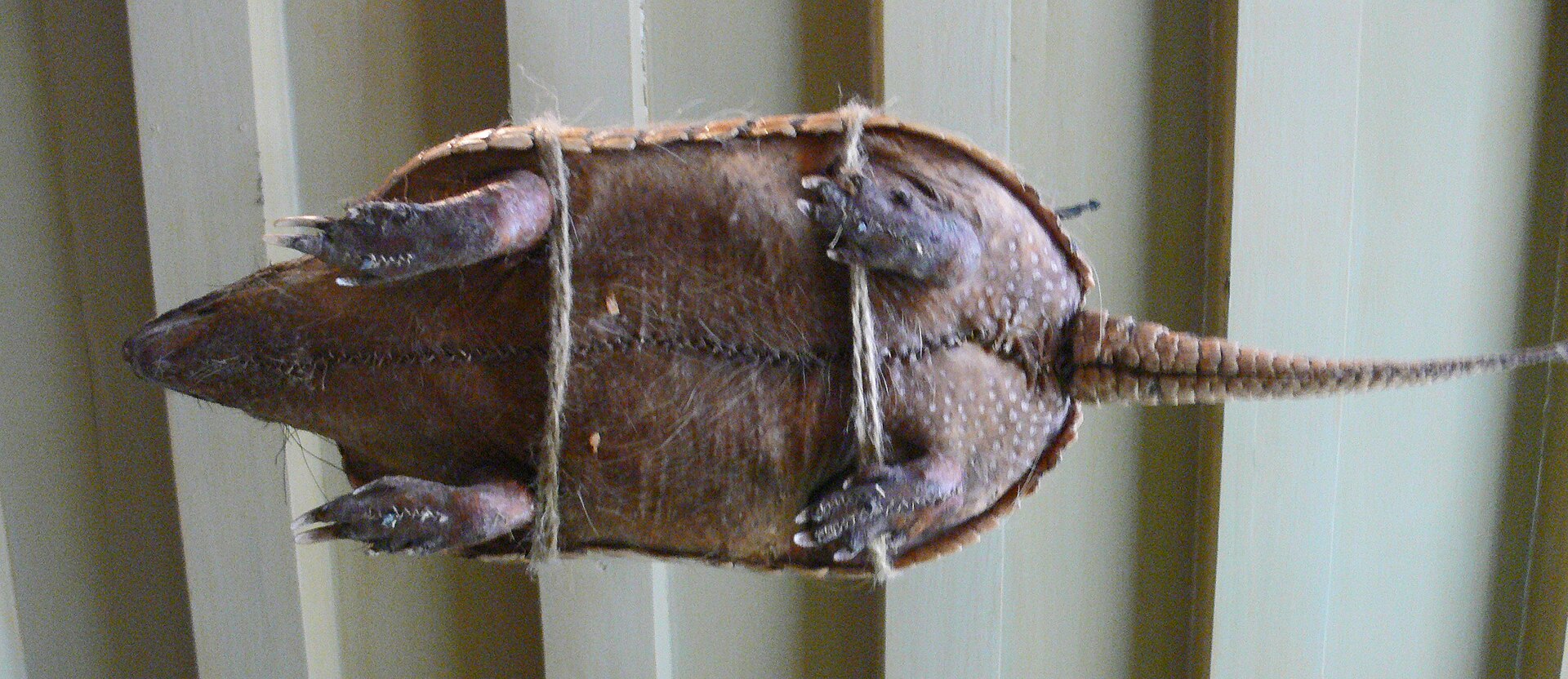
Photograph by Remi Mathis · CC BY-SA 3.0 Cabinet of Curiosities (Kunstcaemer)
A reconstruction of Rembrandt's own collection of naturalia and artificialia, assembled on the evidence of the 1656 bankruptcy inventory: shells, weapons, armour, taxidermy including an armadillo, plaster casts and objects from outside Europe. The museum presents these as working material Rembrandt drew on for his paintings and etchings, not as a decorative cabinet.
Print Room and Treasure Chamber
The rooms that hold the museum's deepest collection: original Rembrandt etchings and copper etching plates, rotated for conservation reasons, and, in the Treasure Chamber, two paintings by Rembrandt himself that the museum's own site describes without naming.
What to see first
Self-Portrait with Saskia
Rembrandt van RijnOne of roughly thirty etched self-portraits Rembrandt made across his career, pairing his own image with that of his wife; part of the near-complete run of his etchings the house is organised around.7
Christ Preaching (The Hundred Guilder Print)
Rembrandt van RijnCombines etching, drypoint and burin work on a single plate and is widely treated as one of his most technically ambitious prints; a centerpiece of the print collection.7
The etching press
A working recreation of the press type Rembrandt used, demonstrated daily so the physical process behind the prints on the walls is shown rather than only described.3
The Cabinet of Curiosities
Reconstructed from the 1656 bankruptcy inventory, it shows what Rembrandt actually owned and drew on as source material, tying his paintings and etchings back to specific objects rather than general influence.3
Shepherdess in a Landscape
Ferdinand BolAn early work, around 1641, by one of Rembrandt's most successful pupils, donated to the museum in 2021 and hung in the Sael, the room where master and pupil worked in close quarters.10
The Big Studio
The top-lit room identified as Rembrandt's main painting studio; its scale and light are cited as evidence for how he worked, making the room itself a primary source rather than a backdrop.3
The Treasure Chamber paintings
Rembrandt van RijnTwo paintings by Rembrandt himself are on view here, a rarity in a museum whose core holding is prints; the museum's own site describes them without publishing titles, which this record notes rather than guesses at.1
The 1656 bankruptcy inventory
The room-by-room list drawn up when Rembrandt was declared insolvent is the document that let historians and the 1998-99 restoration team reconstruct the house's original layout and contents rather than guess at them.6
A house bought at the height of success
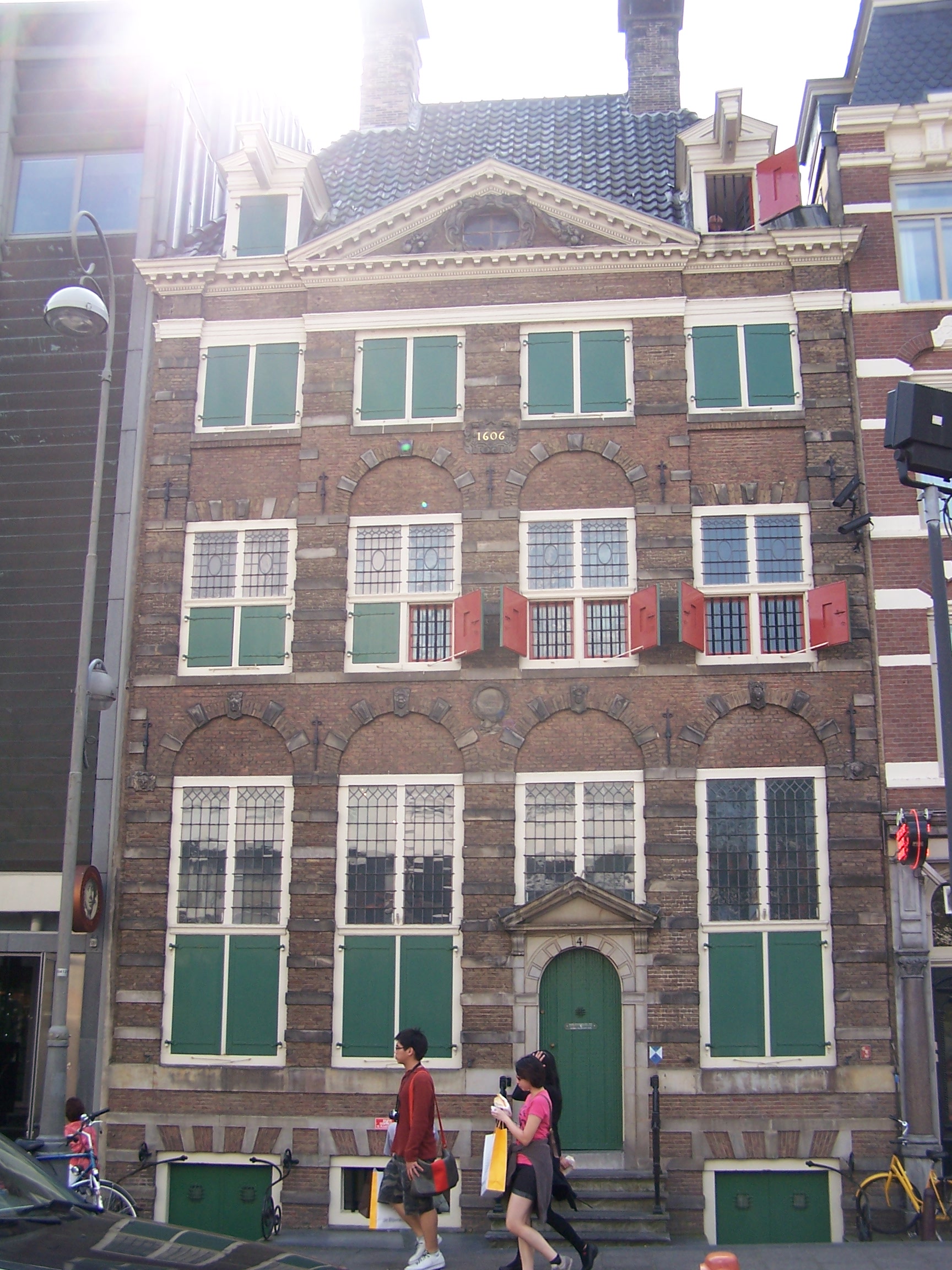
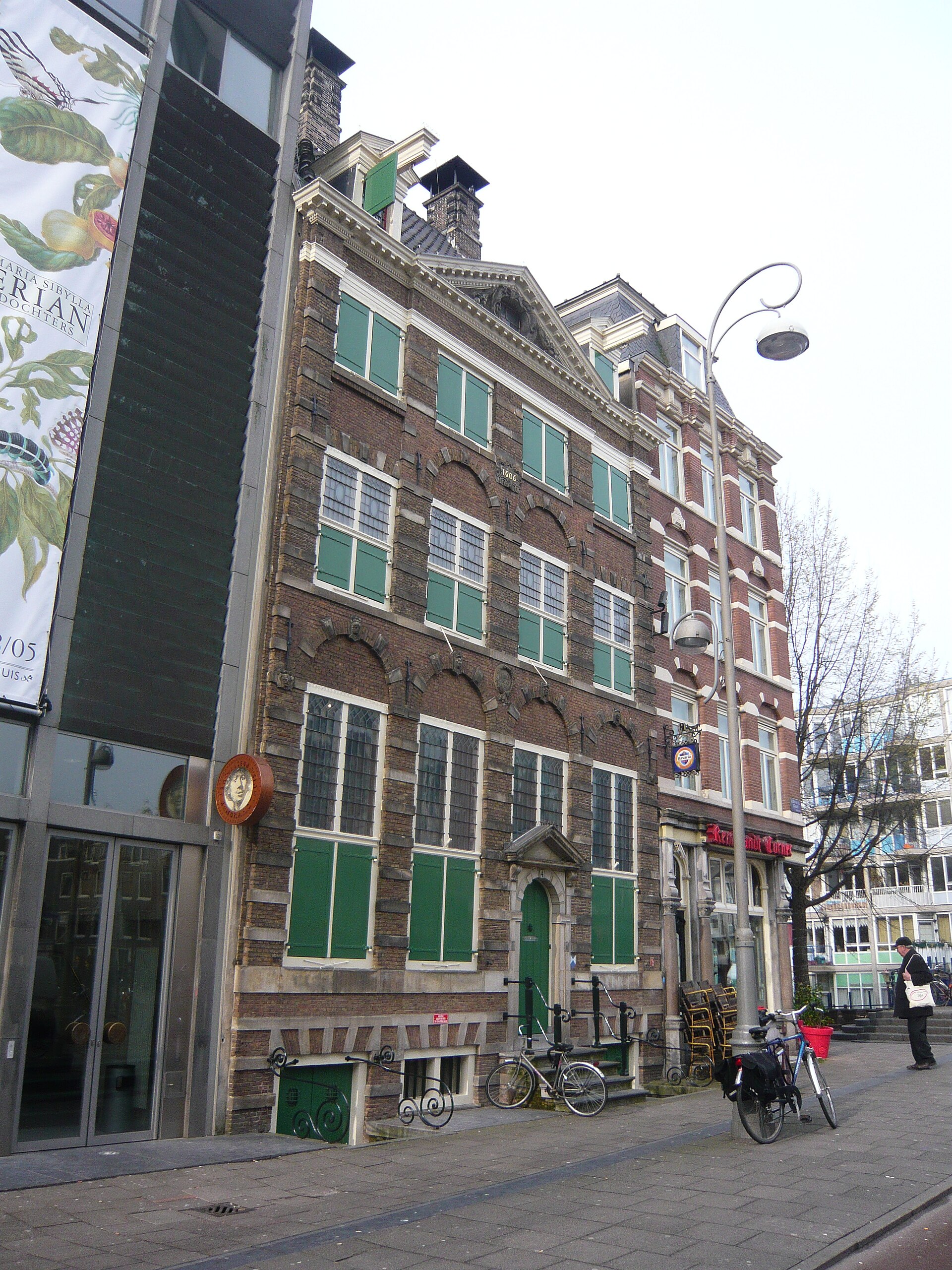
The house at Jodenbreestraat 4 was built around 1606-07 and altered about two decades later, probably under the direction of the architect Jacob van Campen, which gave it an extra floor and the triangular pediment still visible on its facade. Rembrandt bought it on 5 January 1639 for 13,000 guilders, a large sum, financed on credit rather than paid outright. He was 32, recently married to Saskia van Uylenburgh, and at the peak of his reputation as Amsterdam's most sought-after portraitist. The purchase put him in the Sint Antoniesbreestraat district, then home to a mixed community of artists, dealers and the city's Sephardic and Ashkenazi Jewish population, a setting that shaped the models and subjects he painted for the next two decades.
The house was not simply a residence. Its ground floor doubled as a shop, where Rembrandt sold his own work and that of other artists to buyers off the street, and its upper floors held a studio large enough to train paying pupils alongside his own painting practice. Buying it was as much a business decision as a domestic one: a working address, a showroom and a teaching studio combined under one roof, mortgaged against future earnings that a run of portrait commissions in the 1630s made look like a safe bet.
Bankruptcy, and the inventory that outlived it
The bet did not hold. Rembrandt never finished paying off the purchase price, and by the mid-1650s a combination of debt, an expensive collecting habit and a downturn in Amsterdam's art market caught up with him. He was declared insolvent in 1656, and the house was sold at auction in 1658 for 11,000 guilders, a loss on the purchase price, to satisfy his creditors. Rembrandt left the neighbourhood and spent his final years in more modest rented rooms elsewhere in the city.
The bankruptcy produced an unintended archive. Dutch insolvency procedure required a room-by-room inventory of the household's contents, the Insolvente Boedelskamer record, made so the estate could be valued and sold off. It listed furniture, paintings, prints, and the contents of Rembrandt's collection of curiosities almost room by room. For a house whose original fittings were long since dispersed, that inventory became the single most important document available three centuries later to anyone trying to work out what each room actually held and how it was arranged.
From a divided private house to a national shrine, 1907-1911
After Rembrandt's departure the house passed through private ownership for more than two centuries, was at one point divided into two separate dwellings, and by the early twentieth century had fallen into disrepair. The push to save it came from the painter Jozef Israels, whose initiative led the municipality of Amsterdam to buy the building in 1907 and transfer it to a newly formed body, the Rembrandthuis foundation, set up to turn it into a museum.
Restoration ran from 1907 to 1911 under the architect Karel de Bazel. The result was not a reconstruction of the 17th-century interior in the sense the museum pursues today, but a stabilised and formally opened public building: Queen Wilhelmina and Prince Hendrik attended the opening ceremony on 10 June 1911. For most of the twentieth century that was the museum visitors knew, a historic shell holding the growing etchings collection rather than a room-by-room recreation of Rembrandt's actual household.
The 1998-99 rebuild: putting the rooms back the way the inventory described them
The modern museum dates from a second, more ambitious campaign. In 1998 a new wing was added alongside the historic house, giving the museum proper temporary exhibition space, a shop and visitor facilities without compromising the old building, and freeing the trustees to attempt something they had not tried before: restoring the original house to something close to its condition during Rembrandt's actual occupancy.
The work was supervised by the building historian Henk Zantkuijl and the architect Maarten Neerincx, and it leaned directly on the 1656 bankruptcy inventory, cross-checked against Rembrandt's own drawings and etchings of interiors for corroborating detail. Rooms were reassigned to the functions the inventory implied, furnished with period-appropriate pieces built or sourced to match what the inventory described, and the etching press and studio equipment were reinstated as working reconstructions rather than static props. The rebuilt house reopened in 1999, and it is substantially that version, not the 1911 one, that a visitor walks through today.
Inside the working house: from the shop to the studio
The route through the house follows its original working logic rather than a curatorial theme. It starts on the ground floor with the Voorhuys and the Sijdelcaemer, the rooms where Rembrandt sold work and met portrait clients, moves through the kitchen that fed a large working household, and reaches the Sael, the family's private living and sleeping room, furnished with a box bed in the Dutch manner and now also home to a painting by Rembrandt's pupil Ferdinand Bol.
Upstairs, the house separates Rembrandt's own painting practice from his teaching one: the Big Studio, identified by its scale and its tall north-facing windows as his main working space, and a separate Pupils' Studio where paying students trained under his supervision. Off to one side sits the Cabinet of Curiosities, a reconstruction of the collection of shells, weapons, taxidermy and other objects the bankruptcy inventory shows he owned and used as reference material. The etching workshop, with its recreated press, and the print room, holding the core of the etchings collection, complete the circuit.
The etchings, the pupils, and what the house does not have
The museum's real depth is on paper, not canvas. Its holding of Rembrandt's etchings, built up since the museum's founding, is one of the most complete assemblies of his printmaking anywhere, supplemented by a number of the original copper plates he worked from. That collection, and the daily demonstrations in the printing studio, are what the house is organised to explain: not a survey of Dutch Golden Age painting, but the mechanics of how one printmaker actually worked, plate by plate, in the rooms where he did it.
Paintings are a smaller part of the story. The house holds work by Rembrandt's own teacher, Pieter Lastman, and by pupils who trained here, principally Ferdinand Bol and Samuel van Hoogstraten, used to trace how Rembrandt's style was passed on and adapted. As of 2026 the museum's Treasure Chamber displays two paintings by Rembrandt himself, described on the museum's own site without titles being published. A visitor arriving expecting a gallery hung with Rembrandt's paintings, in the manner of the Rijksmuseum across town, is arriving at the wrong museum for that; this one is built around the working house and the prints, and says so.
The house today
The museum now runs a regular programme of temporary exhibitions in the 1998 wing alongside the permanent house, including recurring formats such as the Poor Man's Rembrandt Project, a tattoo-art event tied to the museum's own printmaking theme that returned for the 2026 edition after a first run in 2023. Recent additions to the permanent collection include Ferdinand Bol's Shepherdess in a Landscape, donated in 2021 by the collectors Willem Jan and Karin Hoogsteder specifically to support the museum during the disruption of the Covid-19 period, and now on view in the Sael.
Accessibility remains constrained by the building's age: the historic house has narrow 17th-century stairs and no lift, a limitation the museum states plainly on its own visitor pages rather than glossing over, while the 1998 wing is step-free. That combination, an authentically difficult historic building paired with a modern annex built to compensate for it, is close to the honest summary of the museum as a whole: a real house, substantially rebuilt on real evidence, doing one thing, Rembrandt's working life on this street, in depth rather than attempting a general survey of his art.
What visitors say
Visitors consistently single out the included multimedia tour as the strongest single element of the visit, and repeatedly describe the live etching and paint-grinding demonstrations as the thing that makes the house feel like a working studio rather than a period-room set. The most common reservation, raised across both crowd platforms and professional guidebooks, is about authenticity: the furnishings are careful reconstructions built from the 1656 inventory rather than surviving originals, and only a small number of paintings by Rembrandt himself are on view in a museum whose real depth is in prints. Some visitors weigh the admission price against how much of the house is reconstruction rather than survival and come away feeling it runs high for what is shown.
What is praised, what is criticised
- Praised: The included multimedia/audio tour, repeatedly called worth the ticket price on its own
- Praised: The daily etching and paint-grinding demonstrations, which make Rembrandt's printmaking process tangible rather than a wall label
- Praised: The route through the house, which visitors describe as well laid out and easy to follow room to room
- Criticised: That most of the interior is careful reconstruction rather than original 17th-century fabric or furniture, built from the bankruptcy inventory rather than survived intact
- Criticised: That only a small number of paintings by Rembrandt himself are on view, in a collection whose real strength is his etchings
- Criticised: That the admission price feels high to some visitors given how much of the house is reconstruction
Ratings on other platforms
TripAdvisor: 4.4 from 7,213 ratings, read 16 September 2026
A platform average is a tertiary source: it moves, it is not audited, and we quote no visitor's words.
Questions about Rembrandt House Museum
Where is Rembrandt House Museum?
Jodenbreestraat 4, 1011 NK Amsterdam, Netherlands.
How much does it cost to visit Rembrandt House Museum?
Adult: EUR 23.5; Youth to age 25 / CJP / ISIC card: EUR 15; Child 6-17: EUR 8; Child under 6: free; Museumkaart / I Amsterdam City Card / ICOM member: free. As confirmed 16 September 2026.
When is Rembrandt House Museum open?
Daily, 11 May-1 Nov 2026 10:00-18:00; Daily, 2 Nov-18 Dec 2026 10:00-17:00; 19-31 Dec 2026 (incl. Christmas Eve and New Year's Eve) 10:00-18:00; 1-3 Jan 2027 10:00-18:00; 4 Jan-12 Feb 2027 10:00-17:00. Closed: 25 December. 27 April (King's Day). As confirmed 16 September 2026.
What should you see at Rembrandt House Museum?
Self-Portrait with Saskia (Rembrandt van Rijn); Christ Preaching (The Hundred Guilder Print) (Rembrandt van Rijn); The etching press; The Cabinet of Curiosities; Shepherdess in a Landscape (Ferdinand Bol); The Big Studio.
What we could not confirm
- The museum's own site describes two masterful paintings by Rembrandt now on view in the Treasure Chamber but does not publish their titles; this record does not guess at them and should be updated if the museum names them.
- Which specific historic room name (Voorhuys or Sijdelcaemer) the Wikimedia Commons file captioned simply 'antechamber' depicts is not confirmed against the museum's own floor plan, so the corresponding wing entry above is described by function rather than by a single Dutch room name; do not tighten this without a source that names the room.
- A precise current count of etchings and copper plates held (a figure sometimes quoted elsewhere as 260 of the roughly 290 known prints) was not confirmed on any page this desk could fetch directly, so no number is stated here.
Images
Sources
- 1Rembrandt House Museum, official website, homepage (English) rembrandthuis.nl/en/
- 2Wikimedia Commons, File:Rembrandshuis.jpg, file information and licence commons.wikimedia.org/wiki/File:Rembrandshuis.jpg
- 3Rembrandt House Museum, official website, 'The House' (room-by-room description) rembrandthuis.nl/en/the-house/
- 4Rembrandt House Museum, official website, 'Opening Hours & Fees' and 'Accessibility' rembrandthuis.nl/en/plan-your-visit/visitor-information/opening-hours-fees/
- 5Rembrandt House Museum, official website, Accessibility page rembrandthuis.nl/en/plan-your-visit/visitor-information/accessibility/
- 6Wikipedia, 'Rembrandt House Museum' (history, architecture, restoration, attendance) en.wikipedia.org/wiki/Rembrandt_House_Museum
- 7Rembrandt House Museum, official website, exhibition page 'Rembrandt's Etchings: Highlights of the Rembrandt House Collection' rembrandthuis.nl/en/exhibition/rembrandts-etchings-highlights-of-the-rembrandt-house-collection/
- 8TripAdvisor, Museum Het Rembrandthuis reviews and rating tripadvisor.com/Attraction_Review-g188590-d198999-Reviews-Museum_Het_Rembrandthuis-Amsterdam_North_Holland_Province.html
- 9TripExpert, Museum Het Rembrandthuis, aggregated expert/guidebook reviews (Michelin Guide, Conde Nast Traveler, Time Out, Frommer's, Fodor's) tripexpert.com/amsterdam/attractions/museum-het-rembrandthuis
- 10CODART, 'Painting by Ferdinand Bol Donated to the Rembrandt House Museum' codart.nl/acquisitions/painting-by-ferdinand-bol-donated-to-the-rembrandt-house-museum/
