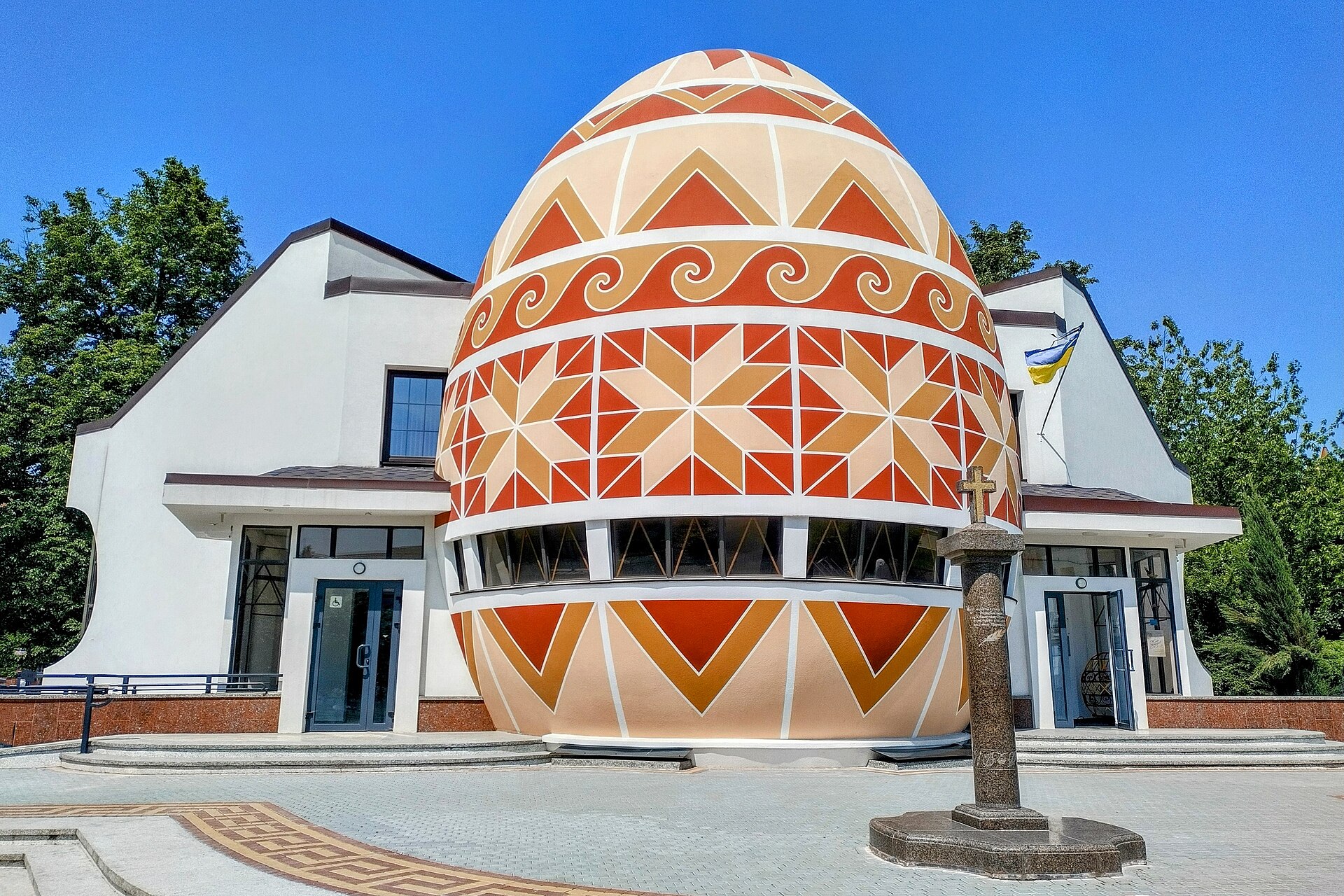
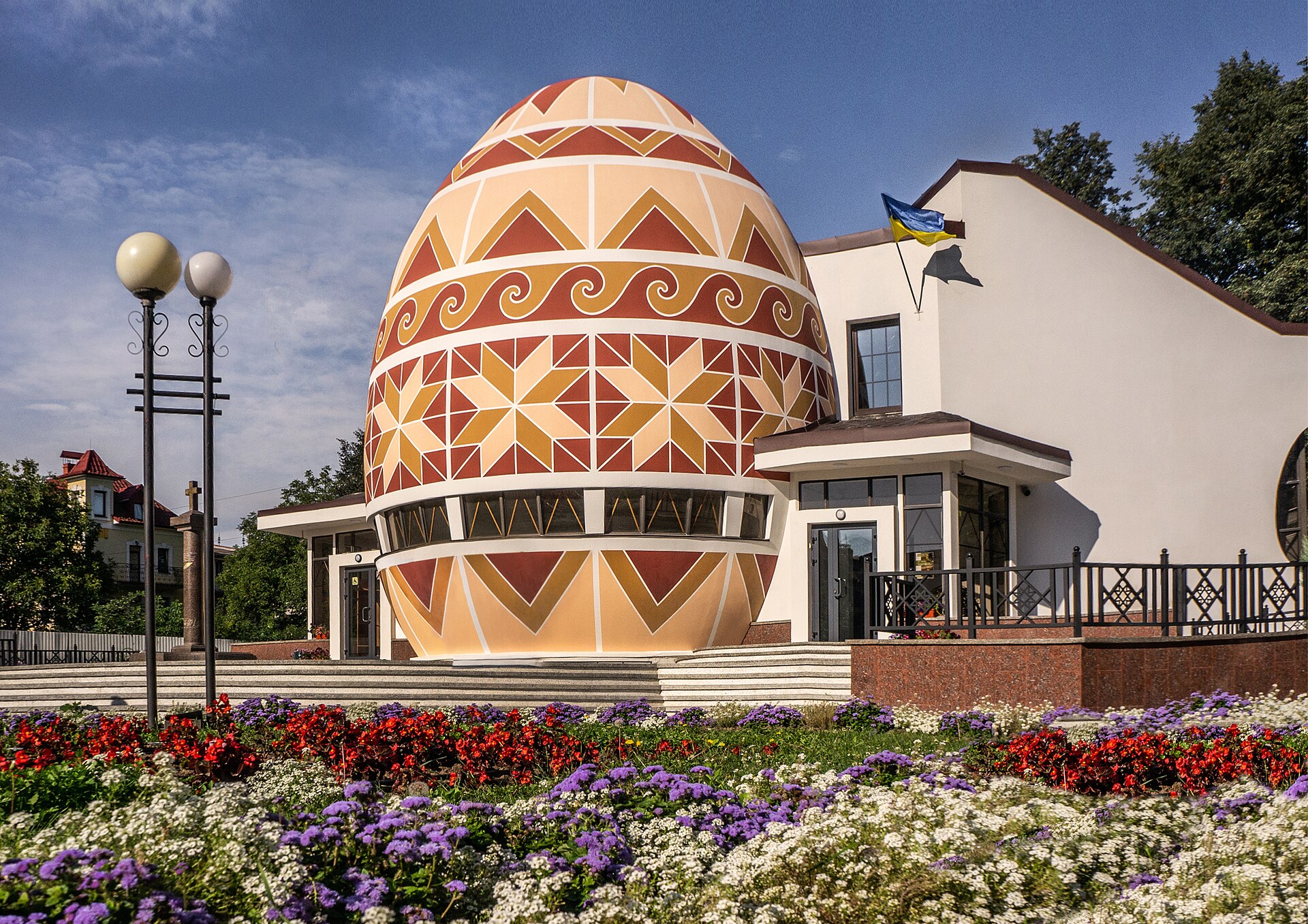
The museum's purpose-built egg-shaped building at Prospect V. Chornovola 43b, Kolomyia, seen from the front entrance.
Photograph by SERP75DNIPRO, Wikimedia Commons, CC BY-SA 4.0 · Photograph by СЕРП75ДНІПРОPysanka Museum
Museum · Muzei pysankovoho rozpysu · Founded 1987
Open, admission and hours confirmed 28 September 2026 · 12 sources
On this page 15 sections
ContentsClose
The museum's real strength is comparative range rather than depth in any one region: it is one of the few places that puts Hutsul, Bukovynian, Pokuttian and half a dozen other Ukrainian regional pysanka styles in the same room as decorated eggs from some 35 other countries, on materials running from hen and goose shell to ceramic and cloisonne enamel. Its single most historically significant object, a 500-year-old goose-egg pysanka recovered archaeologically near Lviv, is a genuine research-grade artifact rather than a display piece bought in; everything else in the collection is ethnographic and civic rather than art-historical, which is consistent with its status as a branch of a regional folk-art museum rather than a fine-art institution.
| Local name | Muzei pysankovoho rozpysu |
|---|---|
| Kind | Museum |
| Founded | 1987 (current building opened 2000) |
| City and country |  Kolomyia, Ukraine Kolomyia, Ukraine |
| Address | Prospect V. Chornovola 43b, Kolomyia, Ivano-Frankivsk Oblast, Ukraine |
| Website | pysanka.museum |
| Status | Open, confirmed |
| Record last verified |
Visiting
- Hours
- Tue-Sun10:00 to 18:00
- Closed
- Monday.
- Admission
- AdultUAH 50Per the museum's own visitor-information page. A separate online ticket-sales portal (tickets.hutsul.museum) lists 80 UAH adult / 50 UAH student-pensioner for the same entry; the museum's own page is treated as current here and the discrepancy is flagged for the desk that next re-checks this figure.
- Student / pupil / pensionerUAH 30
- Guided tour, adult (in addition to entry)UAH 100
- Guided tour, student / pupil (in addition to entry)UAH 80
- Family tour (in addition to entry)UAH 80
- Foreign-language tour (in addition to entry)UAH 100
- Tickets
- tickets.hutsul.museum/cart/event?id=6283 The museum's own ticket page.
- Do I need to book?
- No for general entry; the museum asks that guided tours and group visits be arranged in advance by phone
- Address
- Prospect V. Chornovola 43b, Kolomyia, Ivano-Frankivsk Oblast, Ukraine Map
- Website
- pysanka.museum
- Telephone
- +38 068 838 98 74
- [email protected]
Before you go how long, access, photography, bags, eating, shop
- How long to allow
- Short by museum standards - one visitor review puts the exhibits themselves at about fifteen minutes - longer with a guided tour or a hands-on pysanka-painting session
- Access
- Not addressed on the museum's own site as of this check
- Photography
- Free; flash photography is not permitted
- Shop
- A souvenir shop on the museum grounds sells handmade pysanky
Prices and hours change. We take them from the institution's own pages and print the day we read them, and you can check the current position at the source we used. Confirm before you travel.
What is inside
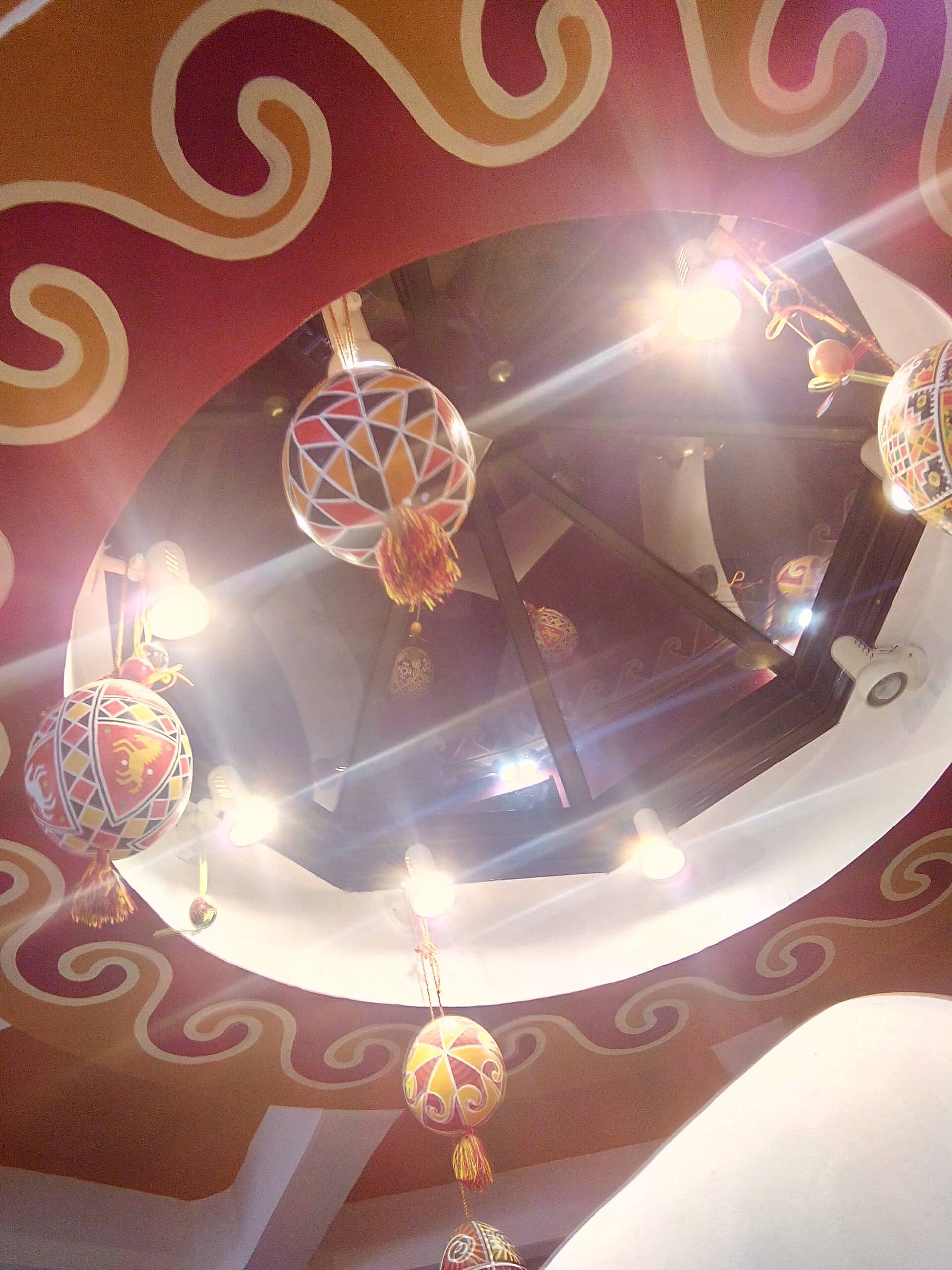
Photograph by Tohaomg · CC BY-SA 4.0 The dome hall
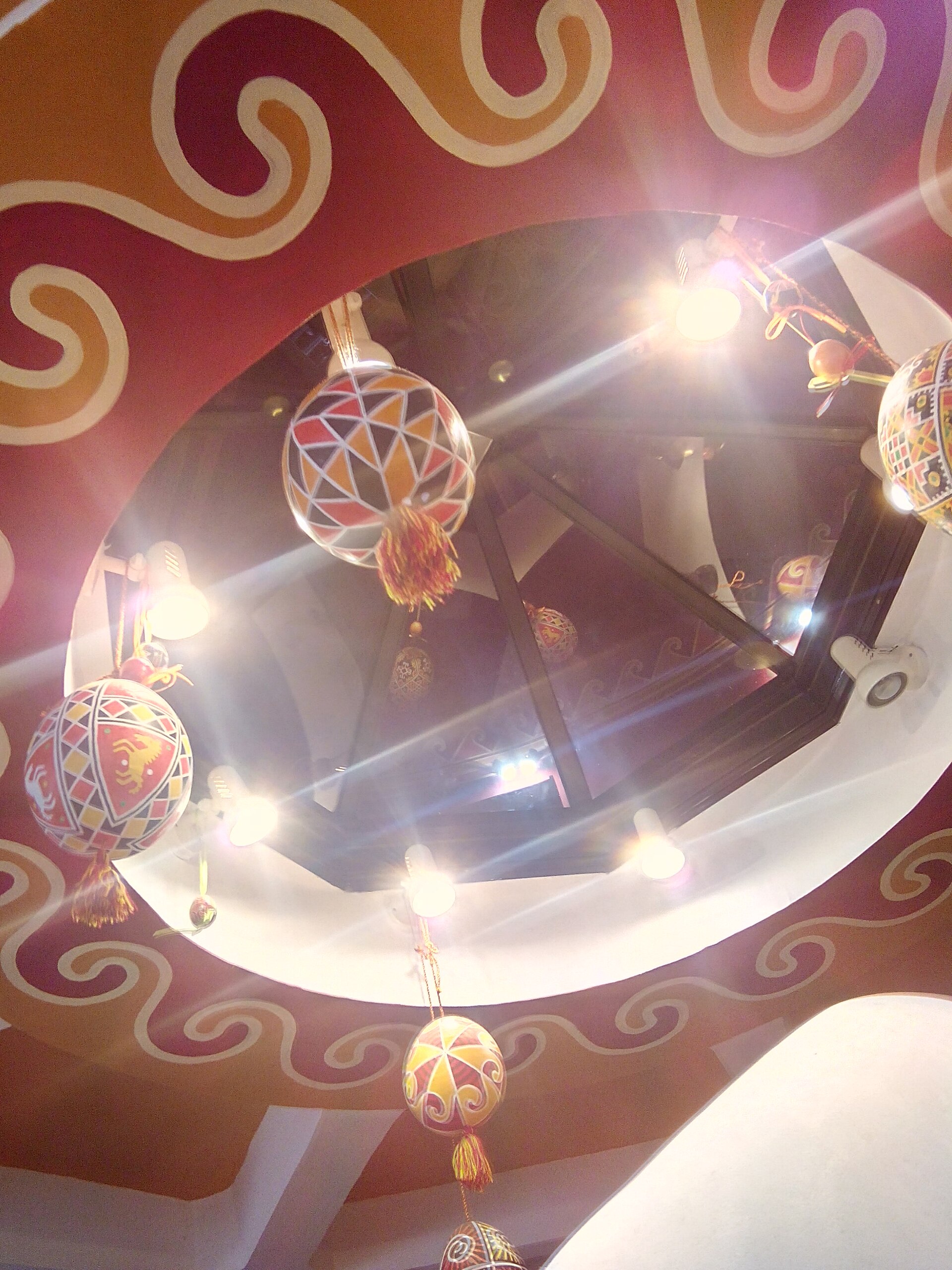
The space beneath the egg's dome, the first hall past the entrance. Its ceiling is painted with an enlarged pysanka pattern and hung with oversized decorated eggs; this is also where the museum's centrepiece sculpture, The Birth of Life - a mother and newborn set inside an eggshell - stands, carrying the idea the building's designers built the whole museum around.
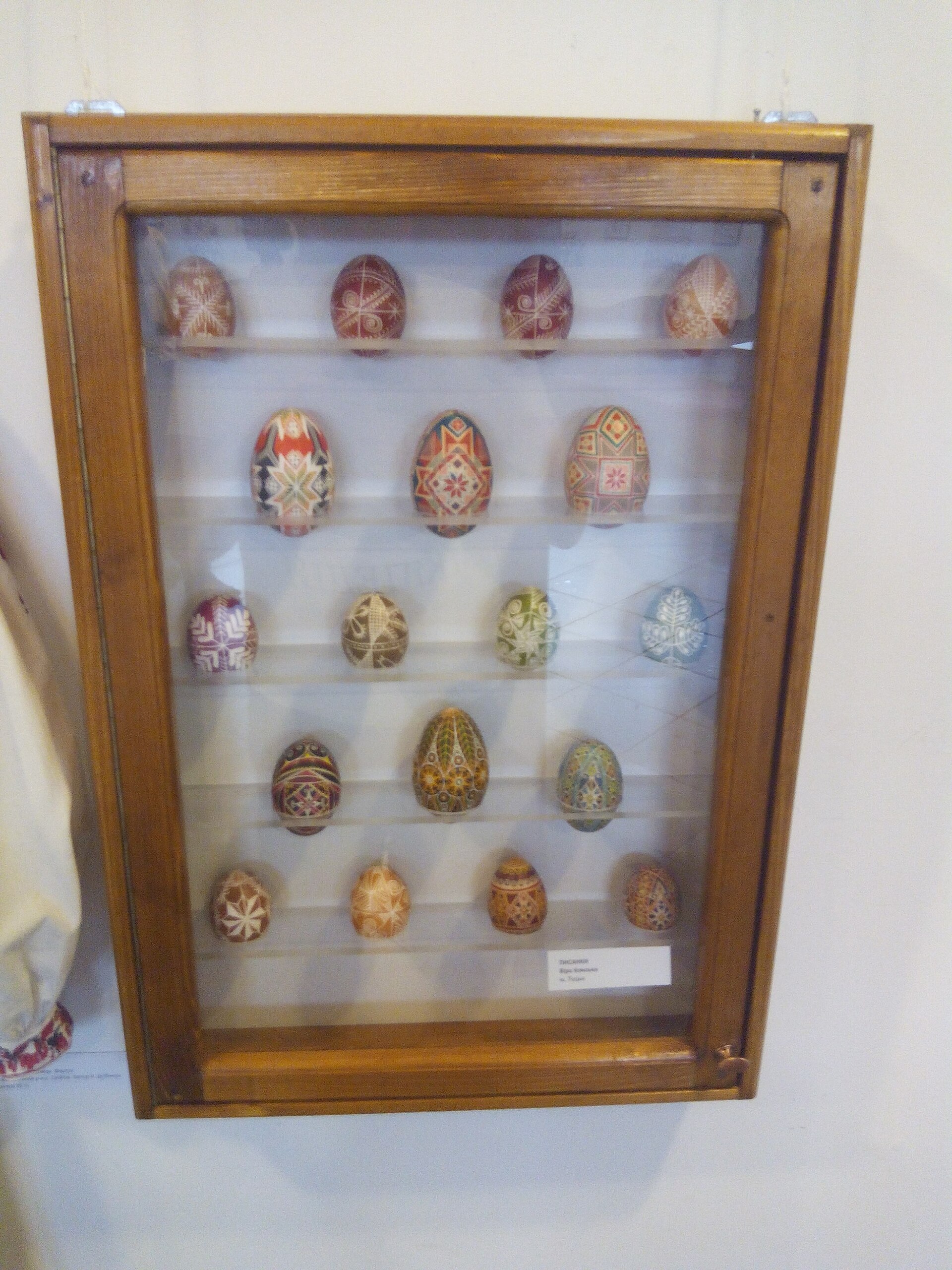
Photograph by Tohaomg · CC BY-SA 4.0 Ukrainian regional pysanky gallery
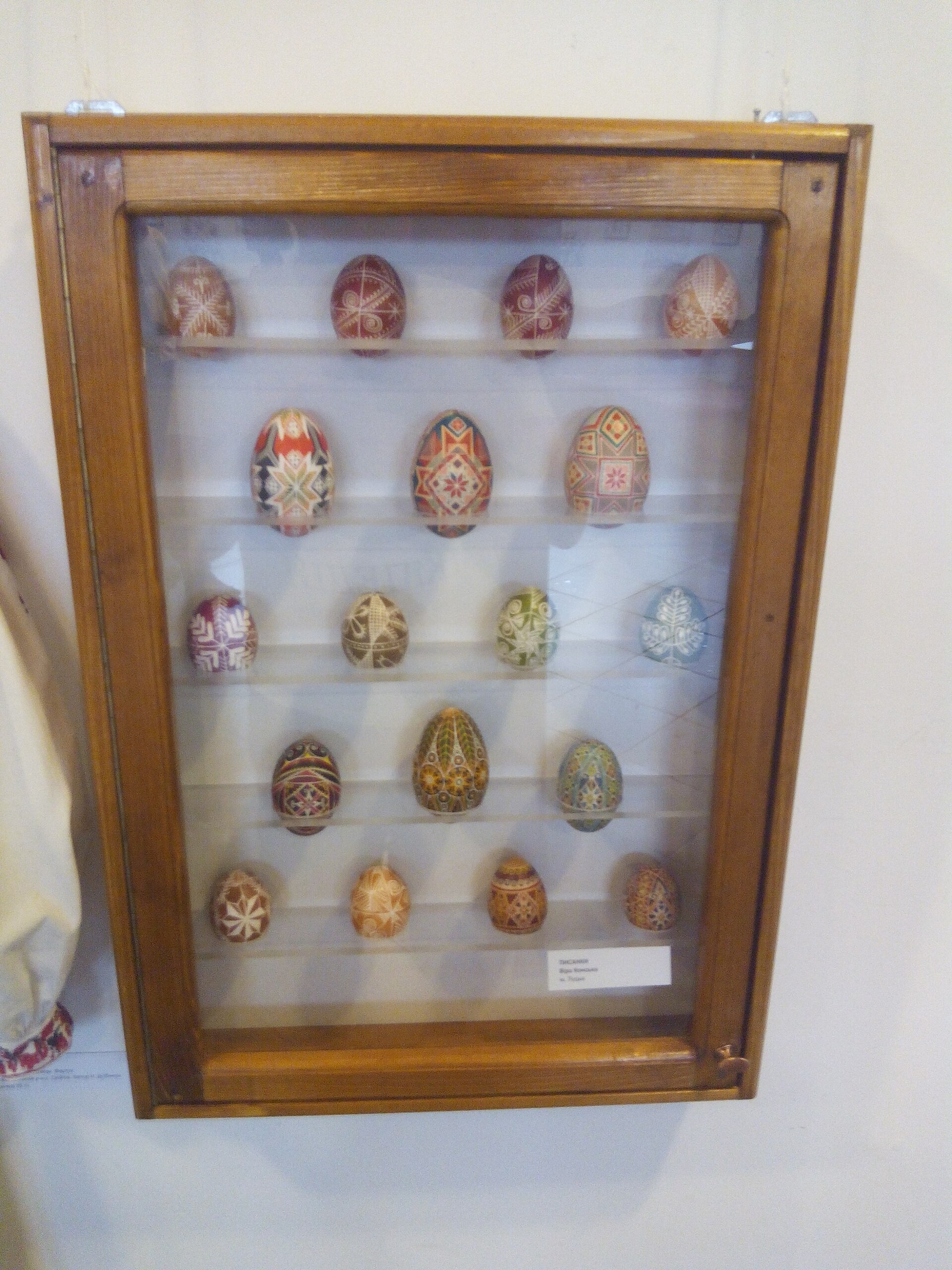
Wall cases group pysanky by the ethnographic regions the museum works with - Hutsulshchyna, Bukovyna, Pokuttia, Lemkivshchyna, Opillia, Boykivshchyna, Polissia, Podillia, Slobozhanshchyna, Podniprovia and Prychornomorya among them - so a visitor can set a Hutsul pattern against a Polissia one case by case.
World pysanky and decorated-egg hall
Eggs and egg-shaped decorative objects from roughly thirty-five countries outside Ukraine - among them Belarus, the Czech Republic, Poland, Romania, Sweden, France, Pakistan, Sri Lanka, India, Egypt, Israel, Algeria and China - shown alongside Ukrainian pysanky painted on goose, ostrich and quail eggs and on ceramic and cloisonne-enamel eggs rather than hen eggs alone.
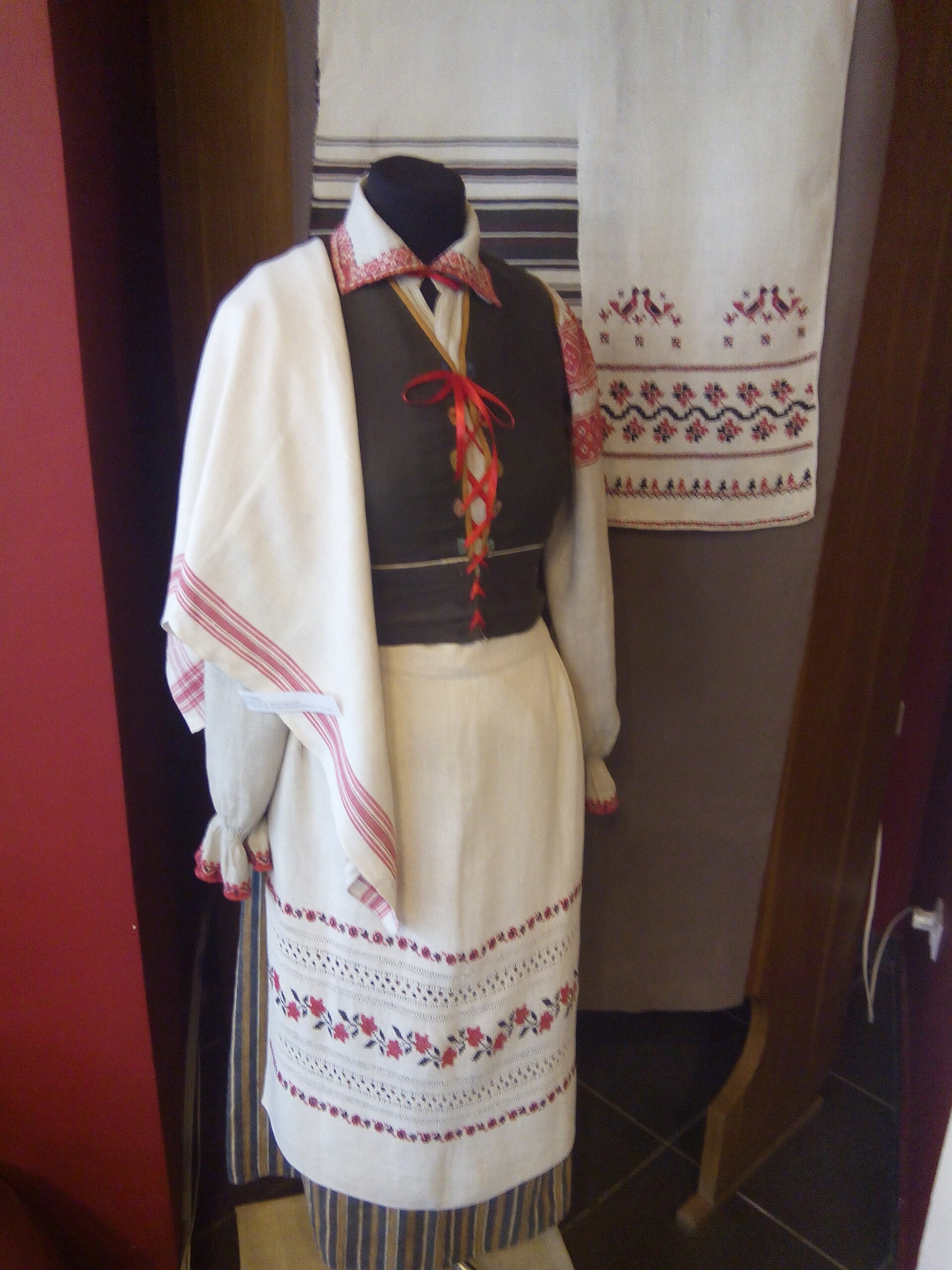
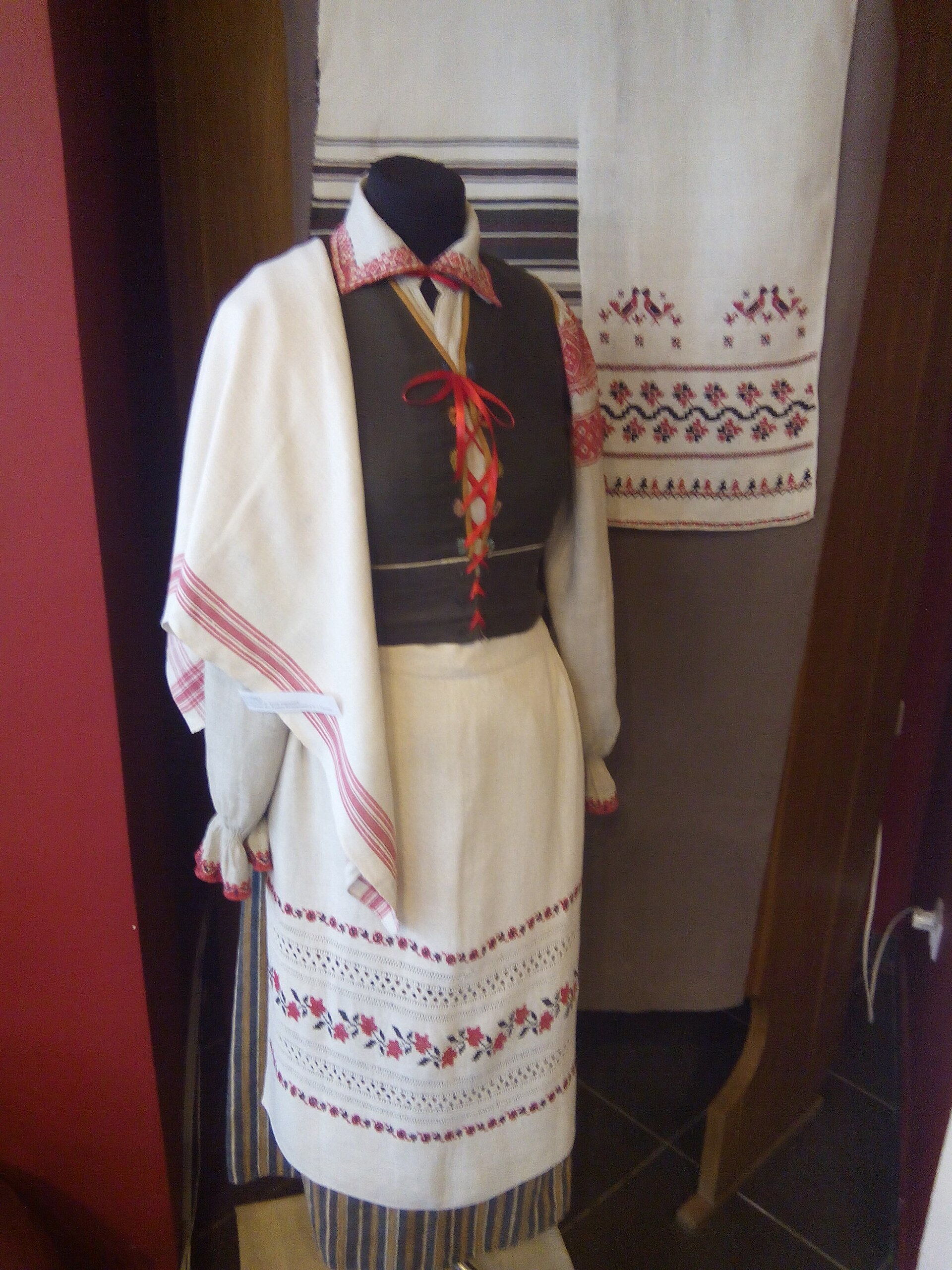
Photograph by Tohaomg · CC BY-SA 4.0 Hutsul costume and textile corner
A small side display of embroidered Hutsul costume and household textile - a woman's outfit with its woven belt and headscarf, rushnyky and other needlework - set out as the domestic tradition the pysanka comes out of, next to the eggs themselves.
Presidential and guest pysanky
A dedicated case of pysanky signed by Ukrainian heads of state, most of the country's First Ladies, and visiting foreign dignitaries who painted an egg with a museum artisan during an official visit. The museum's own collection page names a pysanka signed by former Georgian president Mikheil Saakashvili as one of these.
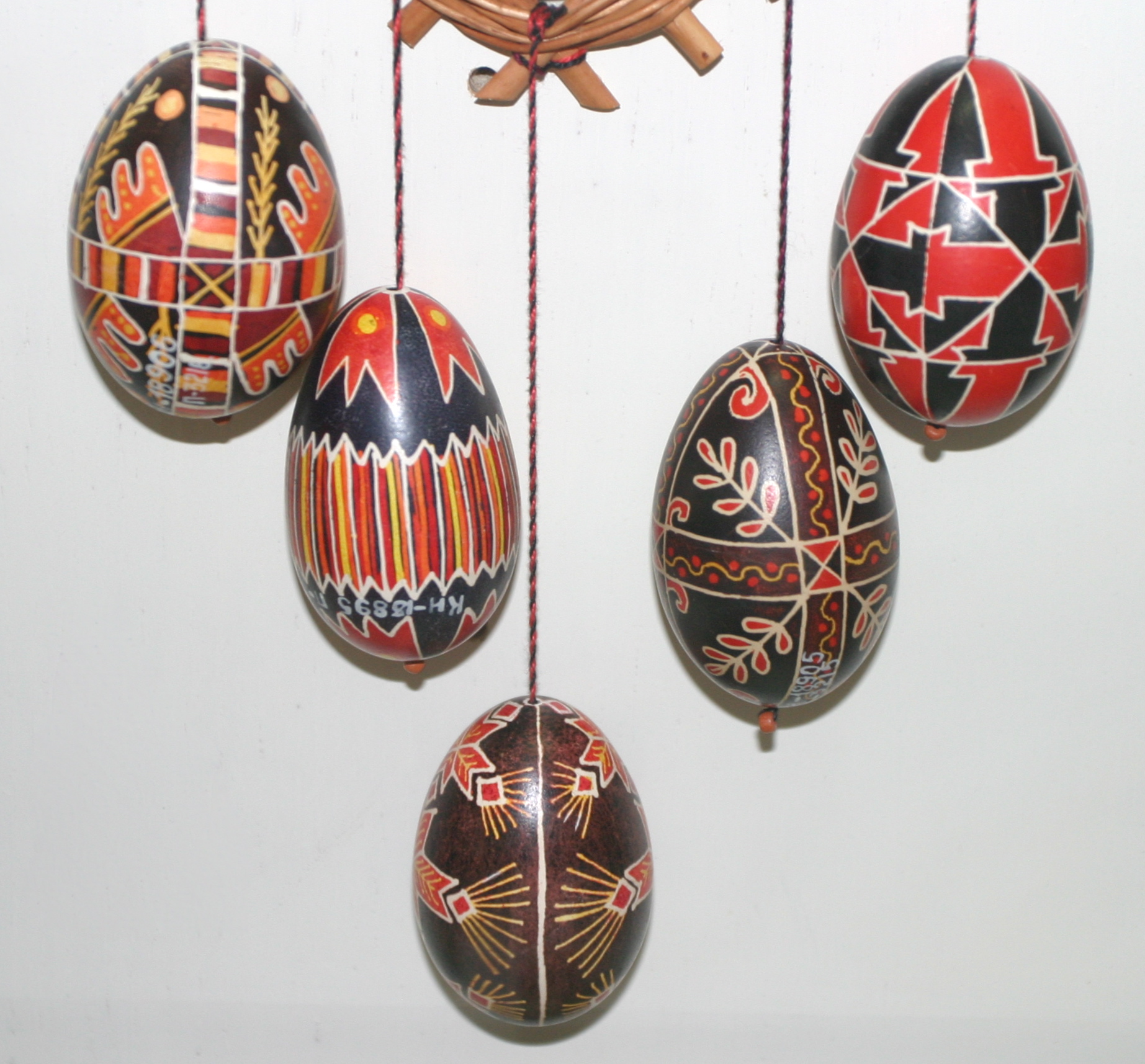
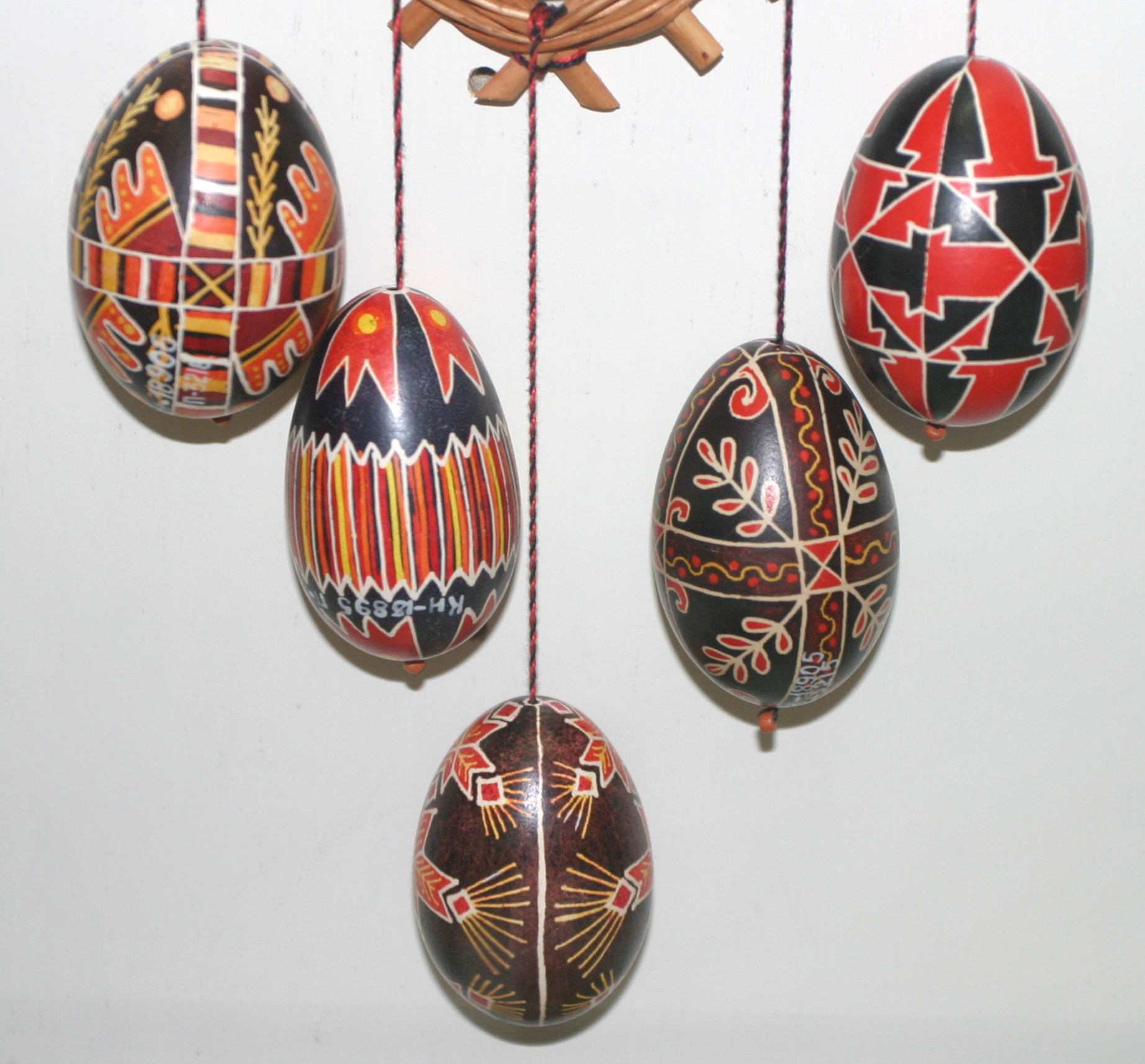
Photograph by Lubap · CC BY 3.0 Strung and hanging pysanky display
Painted pysanky hung by thread rather than shelved flat, the traditional way of showing a full egg's pattern from every side, including some of the more elaborate multi-colour Hutsul designs.
What to see first
The oldest pysanka in the collection
Unknown, Lviv regionA pysanka painted with natural dyes on a goose egg, recovered in a 2013 archaeological excavation in Lviv and dated to more than 500 years old - physical evidence that the tradition the whole museum is built around predates any written account of it.6
The Birth of Life
Museum design teamThe sculpture at the centre of the dome hall, a mother and newborn set inside an eggshell, states outright what the building's egg shape only implies - that the museum is conceived as a monument to Hutsul motherhood and continuity, not just a display case for a craft.8
The carpet of 1,008 pysanky
Volodymyr BonkA wall-hung composition of 1,008 individually painted eggs, made over eight years by a local bus driver using the drapanka (pin-scratching) technique - an example of the collection's amateur and community-made pieces sitting next to museum-grade ethnographic holdings.9
The presidential pysanky case
Various, including a museum artisan working with each signatoryUkrainian heads of state, most First Ladies, and visiting foreign dignitaries have each painted or signed an egg on a museum visit; the museum's own site names a pysanka connected to former Georgian president Mikheil Saakashvili among them, turning the case into an informal visitors' book of state.4
Vasyl Petruk's oil-painted wooden pysanky
Vasyl PetrukWooden eggs finished in oil paint rather than the usual wax-resist dye technique; a local outlet credits them, without independent confirmation, as a possible mid-20th-century forerunner of the toy-inside-an-egg idea later commercialised as the Kinder Surprise - reported here as an attributed local claim, not an established fact.9
The building itself
Design concept: director Yaroslava Tkachuk; execution: local artists Vasyl Andrushko and Myroslav Yasinskyi; Ukrainian Wikipedia additionally credits architect Ihor Shumin with the structureA purpose-built egg roughly 13 to 14 metres tall and 10 metres in diameter, painted inside and out with pysanka motifs and built in about 100 days for the 10th International Hutsul Festival in September 2000 - the exhibit a visitor sees before reaching the door, and by a wide margin the museum's best-known object.6
A local claim on a 2009 Gucci collection
Oleh Kirashchuk (claimed as the inspiration)A regional news outlet reports that Kolomyia pysanka artist Oleh Kirashchuk's patterns inspired a Gucci winter 2009 collection - a claim repeated locally and worth recording as what is said about the museum's home-city craft, not as a verified fact about Gucci's own design process.9
The building and what it was built to hold
The Pysanka Museum is easy to describe because it does the describing itself: it is a museum shaped like the object it holds, a decorated Easter egg roughly 13 to 14 metres tall and 10 metres across, painted inside and out with the geometric bands and rosettes of a real pysanka. Sources differ slightly on the exact height - Ukrainian Wikipedia gives 13.5 metres, English Wikipedia 14 - which is the kind of small disagreement that turns up wherever a building has been measured more than once by more than one publication, and is noted here rather than smoothed over. What both agree on is the diameter, 10 metres, and the date: the structure was completed in time to open on 23 September 2000, during the 10th International Hutsul Festival, after a construction period reported locally at around 100 days.
The design concept is credited to the museum's director, Yaroslava Tkachuk, with the painted scheme executed by local artists Vasyl Andrushko and Myroslav Yasinskyi; Ukrainian Wikipedia separately names Ihor Shumin as the structure's architect, and both credits are kept here because neither source contradicts the other so much as covers a different part of the job - the engineering of the shell and the decorative programme painted onto it. Inside the dome, a sculpture titled The Birth of Life shows a mother and newborn child set inside an eggshell, which is as close as the museum comes to stating its own thesis: that the pysanka is not simply a craft object but a stand-in for birth, continuity and the Hutsul family line, and that a museum built in its shape is making an argument as much as holding a collection.
A collection that began in a church
The Pysanka Museum did not start as an egg-shaped building. Its collection was formally opened to the public on 26 October 1987, and for its first years the eggs were shown inside a 16th-century church in Kolomyia. When the church was returned to religious use in 1990 the collection moved between temporary premises before the city and the regional museum authority settled on a purpose-built home, which is the egg completed a decade later in 2000. The Pysanka Museum has operated since as a branch of the National Museum of Hutsulshchyna and Pokuttia Folk Art, itself founded in 1926 by Volodymyr Kobrynsky, carrying out a plan his uncle, the priest Yosafat Kobrynsky, had drawn up. The parent museum did not get official Polish permission to open until the end of 1934, was absorbed into Soviet state structures after 1939, and lost heavily during and after the Second World War - Soviet authorities pulped roughly 1,629 publications from its holdings in 1950 and burned some 10,000 books and documents through the following decade for showing what was classed at the time as Ukrainian nationalist content; its founding director, Kobrynsky, was removed from his post in 1952. None of that history touches the pysanka collection directly - the Pysanka Museum did not exist as a separate institution until 1987 - but it is the institutional ground the newer museum stands on, and it explains why a museum of decorated eggs answers to a parent body with its own scarred archive.
The wider institution received Ukrainian state ('national') status by presidential decree in October 2009, and today groups five departments, including the Kolomyia headquarters and outposts in Kosiv and Yaremche as well as the Pysanka Museum. Across the whole institution the holdings run to roughly 50,000 objects spanning woodcarving, ceramics, textiles and embroidery from the fourth millennium BCE onward; within that, the Pysanka Museum's own collection of decorated eggs is reported at somewhere between 10,000 and 12,000 pieces depending on the source, plus related folk objects, which this page records as a range rather than a single figure until a dated institutional count settles it.
What is inside
The exhibition reads as two collections set side by side. One is Ukrainian and organised by region: pysanky from Hutsulshchyna, Bukovyna, Pokuttia, Lemkivshchyna, Opillia, Boykivshchyna, Polissia, Podillia, Slobozhanshchyna, Podniprovia and Prychornomorya are shown in adjoining cases, so the differences in colour palette and motif between neighbouring regions - Hutsul reds and blacks against Polissia's finer geometric line work, for instance - sit close enough to compare directly rather than across separate rooms. The other is international: decorated eggs and egg-form objects from something like 35 countries, spanning as far as India, Sri Lanka, Egypt, Israel, Algeria and China alongside the expected central European neighbours - Belarus, the Czech Republic, Poland, Romania, Sweden and France among them.
Material is a second axis running through both halves of the collection. Most pysanky are painted on hen eggs using the wax-resist dye method that gives the style its name, but the museum also holds examples on goose, ostrich and quail eggshells, and a smaller run of pieces made from ceramic and finished with cloisonne enamel rather than shell at all - a reminder that pysanka, as a design tradition, has migrated off the egg itself onto other materials and other objects.
The objects worth the detour
Beyond the regional and international sweep, a handful of individual objects are what most accounts single out. The oldest is a goose-egg pysanka painted with natural dyes, recovered in a 2013 archaeological dig in Lviv and dated to more than 500 years old - physical evidence, rather than an oral claim, that the painted-egg tradition long predates the museum or even the modern Ukrainian state. At the other end of scale is a carpet-like composition of 1,008 individually painted eggs, made over eight years by a local bus driver, Volodymyr Bonk, using the pin-scratching (drapanka) technique rather than wax and dye - an outsider work that the museum has chosen to hang alongside its more conventional ethnographic holdings.
A separate case holds pysanky connected to Ukrainian heads of state, most of the country's First Ladies, and visiting foreign dignitaries, each typically painted or signed jointly with a museum artisan during an official visit; the museum's own collection page names a pysanka linked to former Georgian president Mikheil Saakashvili among them. A further, smaller group of wooden eggs finished in oil paint by Vasyl Petruk is presented locally as a possible design ancestor of the toy-inside-an-egg format later sold worldwide as the Kinder Surprise - a claim this page reports as attributed, not verified, since no source independent of the local press repeats it.
A local claim on a global stage
Two claims recur in Kolomyia press coverage of the museum and are worth recording precisely because they cannot be checked against an outside source. The first is that the pysanka patterns of Kolomyia artist Oleh Kirashchuk inspired a Gucci winter collection shown in 2009. The second, already noted above, links Vasyl Petruk's painted wooden eggs to the Kinder Surprise. Neither claim appears in Gucci's own material or in any account of the Kinder Surprise's design history that this research located, and both should be read as local civic pride asserted about the city's signature craft rather than as established fact. They are included here, attributed to the outlet that reported them, because a page that claims to be the last word on this museum owes the reader what is actually being said about it locally - including the parts that do not hold up to independent sourcing.
What visitors say
On Tripadvisor, where the museum holds a rating of 4.3 out of 5 from 76 reviews as of this check, the pattern across more than a decade of visitor comments is remarkably consistent. The building itself is what people describe first and most enthusiastically - travellers repeatedly say they noticed the egg from the street before they knew what it was. Inside, praise centres on the sheer range of the collection: eggs from countries visitors did not expect to see represented, made from materials (ostrich shell, ceramic, enamel) that surprise people expecting only hen-egg pysanky. Families flag the hands-on painting demonstrations as a reason to bring children. Against that, two complaints recur: several visitors note that labelling leans heavily on Ukrainian with little English support, which limits how much a foreign visitor gets without a guide, and more than one reviewer describes the exhibition itself as quick to see - a visit measured in minutes rather than hours unless a guided tour or workshop is booked alongside it.
Planning a visit
The museum keeps regular hours, Tuesday to Sunday from 10:00 to 18:00, closed Monday, at Prospect V. Chornovola 43b in Kolomyia. Standard admission is 50 hryvnia for an adult and 30 hryvnia for a student, pupil or pensioner on the museum's own visitor-information page; a separate online ticket portal lists higher figures (80 and 50 hryvnia), a discrepancy noted here rather than resolved, since only the museum's own published page could be confirmed as current at the time of this check. Guided tours are booked separately and by phone, and run from 80 to 100 hryvnia depending on group type and language. Photography is free but flash is not permitted. A souvenir shop on the grounds sells handmade pysanky. The museum does not publish accessibility information on its own site as of this check, which is recorded here as an absence rather than assumed either way.
What visitors say
Visitors consistently treat the museum as a must-stop landmark in Kolomyia because of the building rather than in spite of it, and are then surprised by how far the collection reaches beyond Ukraine. The recurring caveats are how quickly the exhibits themselves can be seen and how little is translated for a non-Ukrainian-speaking visitor.
What is praised, what is criticised
- Praised: The egg-shaped building, visible from the street, as a photo stop and a piece of design in its own right
- Praised: The range of pysanky from dozens of countries and materials (ostrich, goose, ceramic, cloisonne enamel) alongside the Ukrainian regional collection
- Praised: Family-friendly extras, including hands-on pysanka-painting demonstrations
- Praised: Guides who can walk a visitor through the collection in detail on request
- Criticised: Thin English-language labelling, which one visitor said limited how much they could get from the visit without a guide
- Criticised: A short visit for the price of entry - one reviewer described the exhibits alone as worth about fifteen minutes
Ratings on other platforms
Tripadvisor: 4.3 from 76 ratings, read 28 September 2026
A platform average is a tertiary source: it moves, it is not audited, and we quote no visitor's words.
Questions about Pysanka Museum
Where is Pysanka Museum?
Prospect V. Chornovola 43b, Kolomyia, Ivano-Frankivsk Oblast, Ukraine.
How much does it cost to visit?
Adult: UAH 50; Student / pupil / pensioner: UAH 30; Guided tour, adult (in addition to entry): UAH 100; Guided tour, student / pupil (in addition to entry): UAH 80; Family tour (in addition to entry): UAH 80. As confirmed 28 September 2026.
When is it open?
Tue-Sun 10:00-18:00. Closed: Monday. As confirmed 28 September 2026.
What should you see first?
The oldest pysanka in the collection (Unknown, Lviv region); The Birth of Life (Museum design team); The carpet of 1,008 pysanky (Volodymyr Bonk); The presidential pysanky case (Various, including a museum artisan working with each signatory); Vasyl Petruk's oil-painted wooden pysanky (Vasyl Petruk); The building itself (Design concept: director Yaroslava Tkachuk; execution: local artists Vasyl Andrushko and Myroslav Yasinskyi; Ukrainian Wikipedia additionally credits architect Ihor Shumin with the structure).
What we could not confirm
- The building's height is given as 13.5 metres (Ukrainian Wikipedia), 14 metres (English Wikipedia) and 13 metres (a Ukrainian regional-tourism source); no single institutional figure was located to settle it.
- The pysanka collection's size is reported variably as roughly 10,000 (English Wikipedia), over 12,000 (Ukrainian Wikipedia and the parent museum's own history) and 6,000 (a third-party travel listing that also gives a different opening date and looks to be describing an older or partial count); this page uses the 10,000-12,000 range and flags the 6,000 figure as an outlier.
- Standard adult admission is given as 50 UAH on the museum's own visitor-information page and as 80 UAH on its online ticket-sales portal; neither page is dated, so it is not possible to tell from the sources alone which figure is the update and which is stale.
- The claimed links between the museum's artists and a 2009 Gucci collection, and between a museum craftsman and the Kinder Surprise toy, come from a single local news outlet and were not corroborated in any Gucci or Kinder-Surprise design history located during this research; they are presented on this page as attributed local claims, not as fact.
Images
Sources
- 1Pysanka Museum, official site, home page pysanka.museum/
- 2Pysanka Museum, official site, visitor information pysanka.museum/welcome/
- 3Pysanka Museum, official site, About the museum pysanka.museum/museum/
- 4Pysanka Museum, official site, Collection pysanka.museum/collection/
- 5Wikipedia (English), "Pysanka Museum" en.wikipedia.org/wiki/Pysanka_Museum
- 6Wikipedia (Ukrainian), "Muzei pysankovoho rozpysu" uk.wikipedia.org/wiki/%D0%9C%D1%83%D0%B7%D0%B5%D0%B9_%D0%BF%D0%B8%D1%81%D0%B0%D0%BD%D0%BA%D0%BE%D0%B2%D0%BE%D0%B3%D0%BE_%D1%80%D0%BE%D0%B7%D0%BF%D0%B8%D1%81%D1%83
- 7Wikipedia (Ukrainian), "Natsionalnyi muzei narodnoho mystetstva Hutsulshchyny ta Pokuttia imeni Yosafata Kobrynskoho" uk.wikipedia.org/wiki/%D0%9D%D0%B0%D1%86%D1%96%D0%BE%D0%BD%D0%B0%D0%BB%D1%8C%D0%BD%D0%B8%D0%B9_%D0%BC%D1%83%D0%B7%D0%B5%D0%B9_%D0%BD%D0%B0%D1%80%D0%BE%D0%B4%D0%BD%D0%BE%D0%B3%D0%BE_%D0%BC%D0%B8%D1%81%D1%82%D0%B5%D1%86%D1%82%D0%B2%D0%B0_%D0%93%D1%83%D1%86%D1%83%D0%BB%D1%8C%D1%89%D0%B8%D0%BD%D0%B8_%D1%82%D0%B0_%D0%9F%D0%BE%D0%BA%D1%83%D1%82%D1%82%D1%8F_%D1%96%D0%BC%D0%B5%D0%BD%D1%96_%D0%99%D0%BE%D1%81%D0%B0%D1%84%D0%B0%D1%82%D0%B0_%D0%9A%D0%BE%D0%B1%D1%80%D0%B8%D0%BD%D1%81%D1%8C%D0%BA%D0%BE%D0%B3%D0%BE
- 8Karpaty.rocks, "Museum Pysanka in Kolomyia" (English) karpaty.rocks/en/museum-pysanka-kolomyia
- 9Galinfo.com.ua, article on the Pysanka Museum and Gucci/Kinder Surprise claims galinfo.com.ua/articles/muzey_pysankovogo_rozpysu_v_kolomyi_ta_gucci_412629
- 10Tripadvisor, "Pysanka Easter Egg Museum" listing and reviews, read 2026-09-28 tripadvisor.com/Attraction_Review-g790410-d3537672-Reviews-Pysanka_Easter_Egg_Museum-Kolomyia_Ivano_Frankivsk_Oblast.html
- 11Kolomyya.org, municipal web portal, Pysanka Museum profile kolomyya.org/museum/pysanka/
- 12Wikimedia Commons, Category:Pysanka Museum in Kolomyia commons.wikimedia.org/wiki/Category:Pysanka_Museum_in_Kolomyia