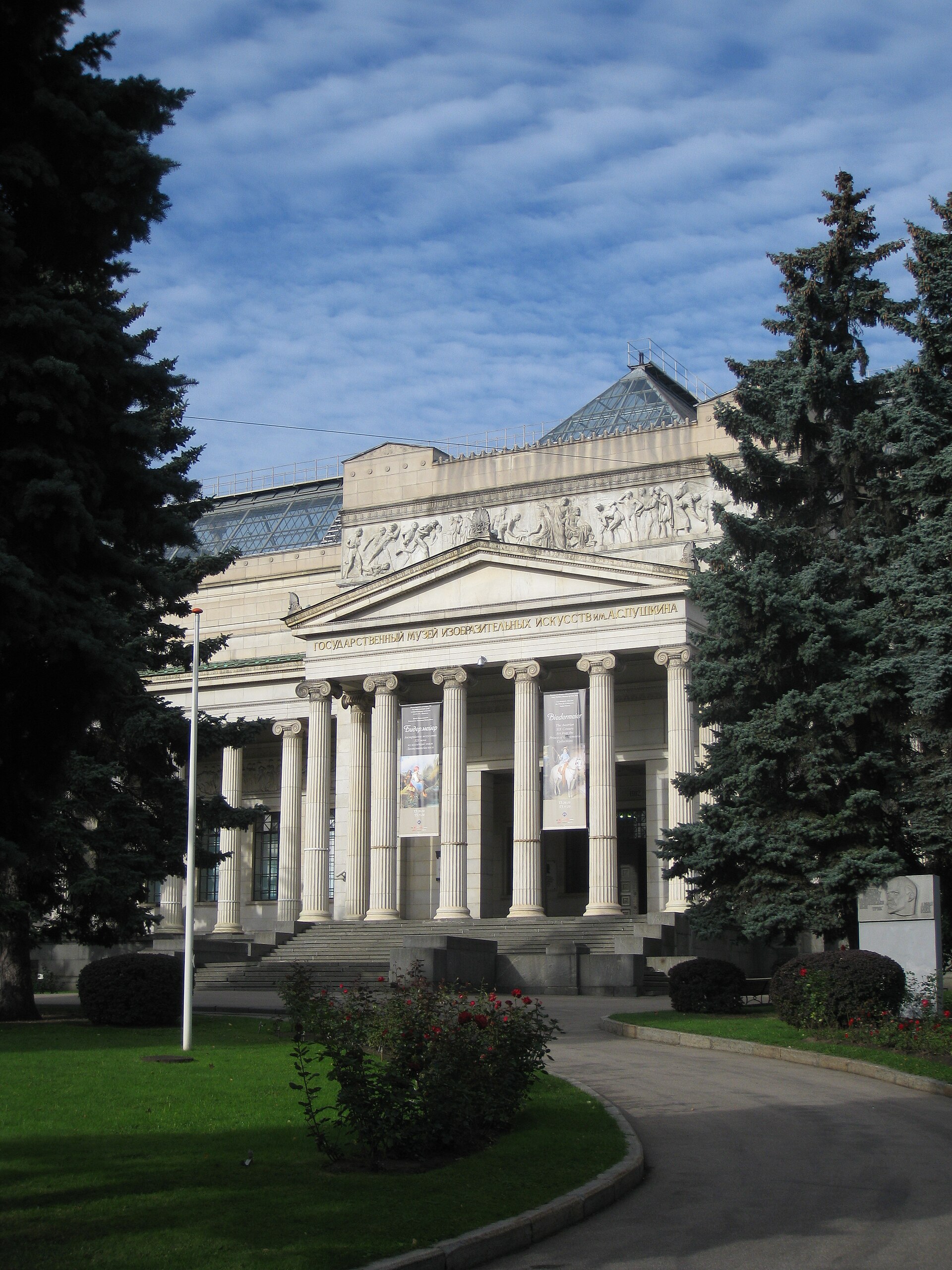
The Ionic portico of the Main Building at 12 Ulitsa Volkhonka, Moscow, designed by Roman Klein and opened in 1912.
Photograph: Deror avi, CC BY-SA 3.0Pushkin Museum of Fine Arts
Museum · Gosudarstvennyi muzei izobrazitelnykh iskusstv imeni A.S. Pushkina · Founded 1912
Open, admission and hours confirmed 26 August 2026 · 15 sources
On this page 15 sections
ContentsClose
The museum's genuine strengths sit in three places that do not always match its popular reputation. Its Egyptology holdings, built on the 1909 Golenishchev purchase, are deep and largely original rather than derivative. Its plaster cast courtyards are an unusually intact survival of a specific and now rare 19th-century museum type, valuable as much for what they show about how Russia taught art history as for the casts themselves. And the Impressionist and modern paintings from the Shchukin and Morozov collections, though housed in a separate building under a separate ticket, are genuinely world class and the reason most international visitors come. Set against those, the Main Building's own Old Master rooms - Dutch, Flemish, Italian and Spanish painting - are respectable but not exceptional by the standard of the Hermitage sixty kilometres north in Saint Petersburg, and several attributions in those rooms have shifted as scholarship on period workshops has advanced. The museum's most internationally contested holding, Priam's Treasure, is significant less as art than as an unresolved question of restitution law involving three foreign governments.
| Local name | Gosudarstvennyi muzei izobrazitelnykh iskusstv imeni A.S. Pushkina |
|---|---|
| Kind | Museum |
| Founded | 1912 |
| City and country |  Moscow, Russia Moscow, Russia |
| Address | 12 Ulitsa Volkhonka, Moscow 119019, Russia |
| Website | pushkinmuseum.art |
| Status | Open, confirmed |
| Record last verified |
Visiting
- Hours
- Tue-Wed10:00 to 20:00Main Building and Gallery, identical schedule
- Thu10:00 to 21:00
- Fri11:00 to 21:00
- Sat10:00 to 21:00
- Sun10:00 to 20:00
- Closed
- Monday, all buildings. the Sviatoslav Richter Memorial Apartment is also closed Tuesday. the Ivan Tsvetaev Educational Art Museum is closed Saturday and Sunday.
- Admission
- Main Building, adult (weekday)RUB 70012 Volkhonka St.
- Main Building, discounted (weekday)RUB 500students, pensioners and other eligible categories
- Gallery of 19th-20th Century European and American Art, adultRUB 70014 Volkhonka St., a separate building and a separate ticket
- Combined ticket, Main Building + Gallery, adult (weekday)RUB 1,700valid one day, enter either building at any time before closing
- Combined ticket, Main Building + Gallery, adult (weekend/holiday)RUB 1,900
- Sviatoslav Richter Memorial Apartment, adultRUB 350online booking only
- Ivan Tsvetaev Educational Art MuseumFreefree for all visitors
- Children 6 and underFreeall buildings
Free entry: Every Thursday: free for visitors aged 7-17 and for enrolled students, Main Building and Gallery- Tickets
- pushkinmuseum.art/visitors/tickets/index.php?... The museum's own ticket page.
- Do I need to book?
- No for the Main Building and Gallery; the Sviatoslav Richter apartment sells online only
- Address
- 12 Ulitsa Volkhonka, Moscow 119019, Russia MapMetro Kropotkinskaya (red line) is the closest station; Borovitskaya and Biblioteka imeni Lenina also serve the Volkhonka street museum quarter
- Website
- pushkinmuseum.art
- Telephone
- +7 495 697 9578
- [email protected]
Before you go how long, access, photography, bags, eating, shop
- How long to allow
- The museum comprises four separately ticketed buildings; how long a visit takes depends on how many of them are seen in a single day.
- Access
- The museum publishes a dedicated accessibility section and a version of its site for visually impaired visitors with enlarged text and high-contrast colours; fast-track entry is offered to visitors over 70 and to disabled visitors
- Photography
- The museum's own visitor pages do not publish a detailed photography policy; an organised photo or video shoot should be arranged with the museum in advance.
- Bags
- Coats and larger bags must go into the free cloakroom in each building.
- Eating
- Cafes operate in the museum's buildings.
- Shop
- An online shop and on-site museum shops sell publications, prints and gifts
Prices and hours change. We take them from the institution's own pages and print the day we read them, and you can check the current position at the source we used. Confirm before you travel.
What is inside
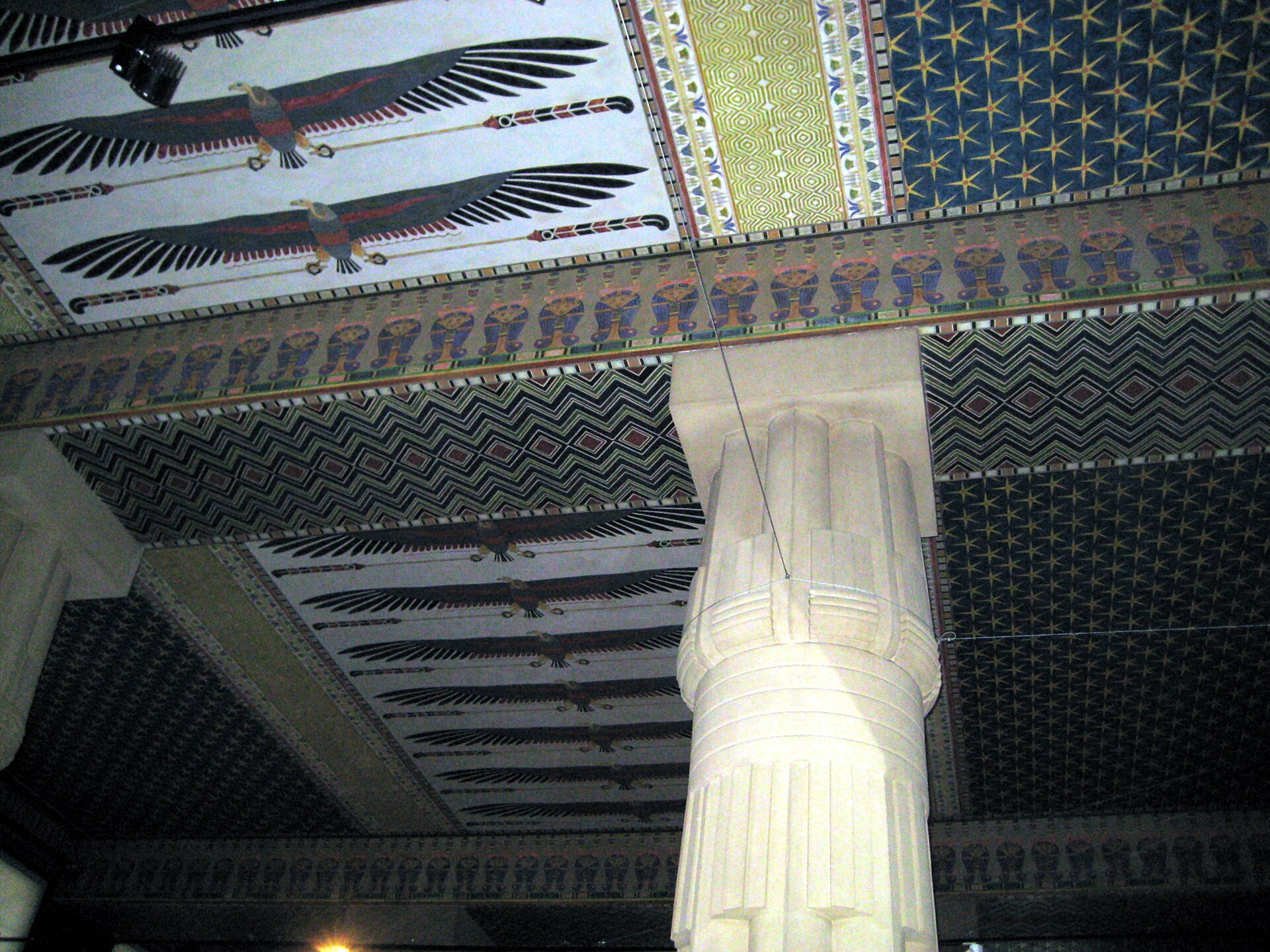
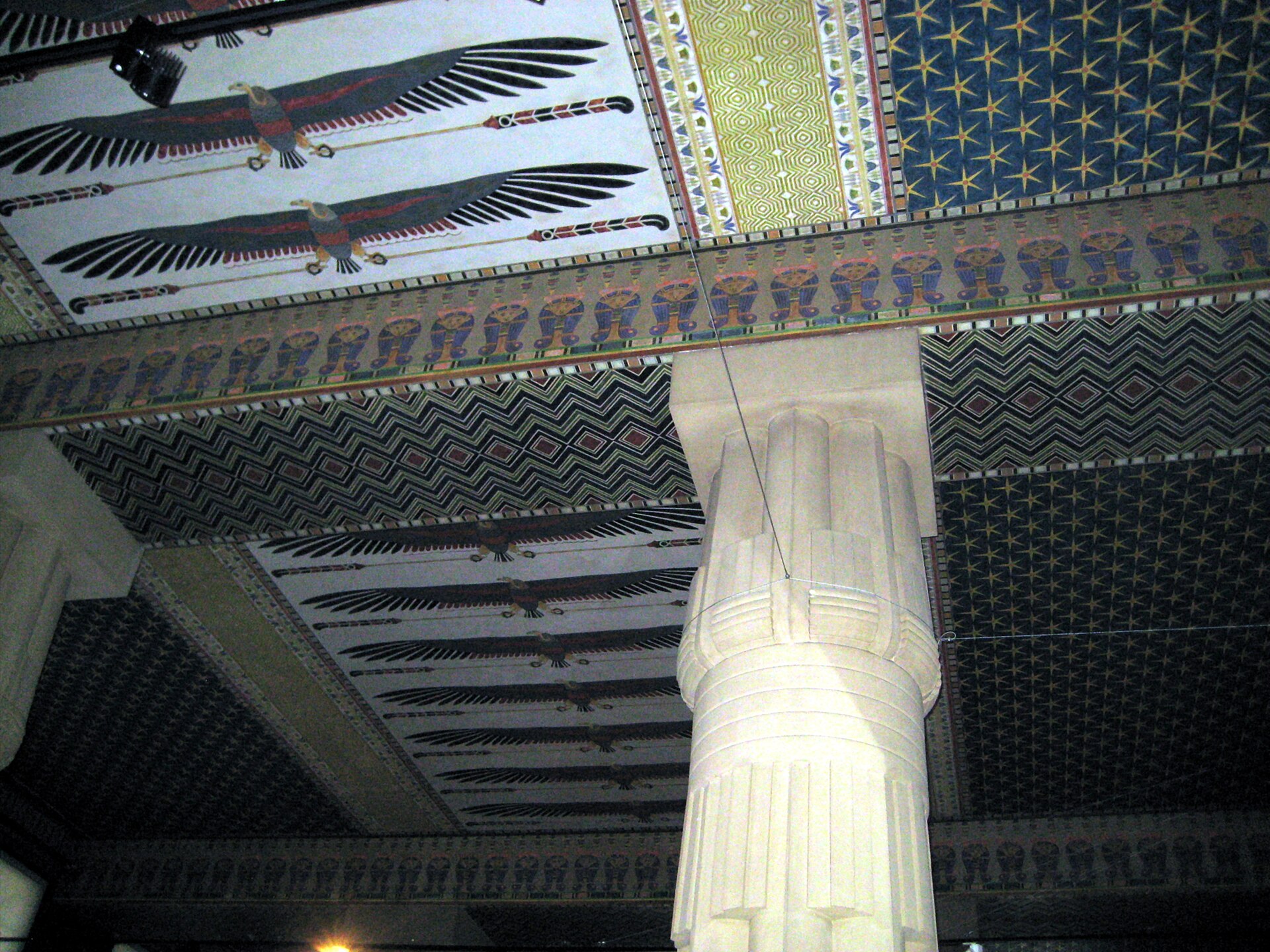
Photograph by Shakko · CC BY-SA 3.0 Art of Ancient Egypt (Room 1, ground floor)
The founding archaeological collection: sarcophagi, funerary sculpture, papyri and reliefs bought in 1909 from the Russian Egyptologist Vladimir Golenishchev, whose roughly 8,000 objects were the museum's first collection of genuine antiquities rather than casts. The Fayum mummy portraits, encaustic panel portraits from Roman-era Egypt, hang here.
Troy and Heinrich Schliemann's Excavations / Art of the Ancient Near East (Rooms 2-3)
Material from Schliemann's 1870s digs at Hisarlik, the traditional site of Troy, including gold jewellery from what Schliemann called Priam's Treasure. The Soviet army removed the hoard from Berlin in 1945 and the museum kept its existence secret until a 1996 exhibition; Germany, Turkey and Greece have each pressed a claim since, and none has been resolved.
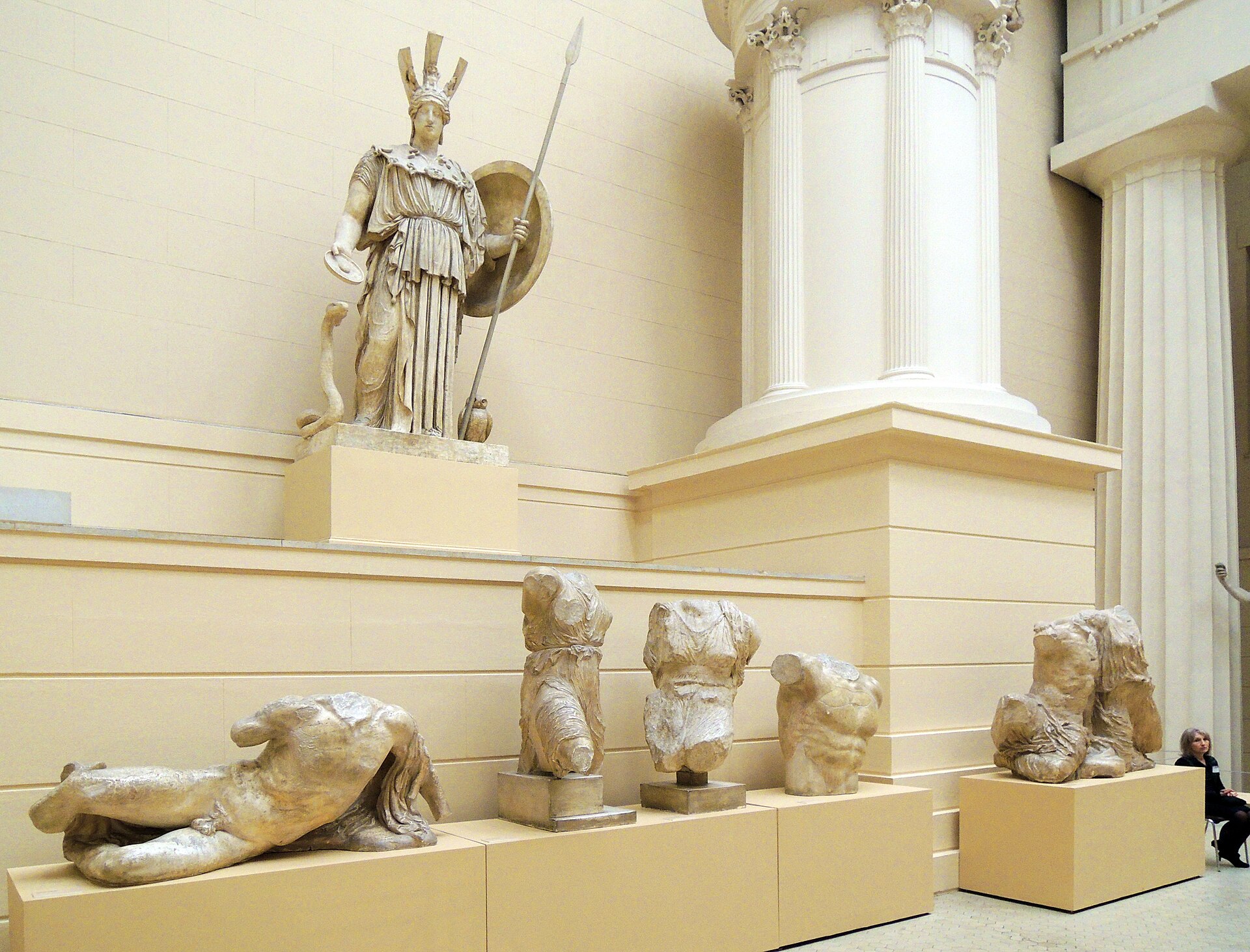
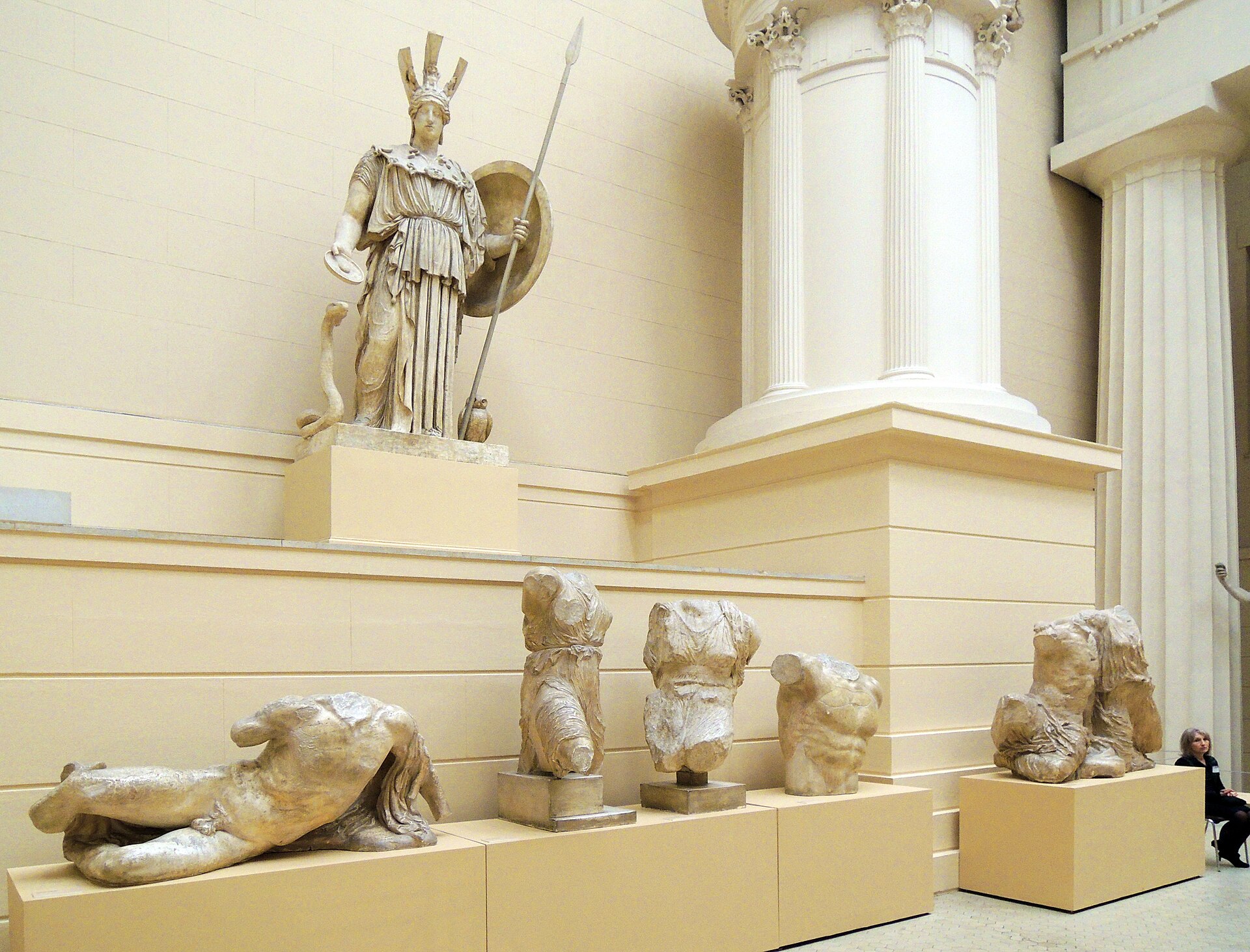
Photograph by shakko · CC BY-SA 4.0 Antiquity: Greece, Rome, Cyprus, Etruria and the Northern Black Sea (Rooms 4-6, 16, 24-25) and the Greek Courtyard cast gallery
Original Greek and Roman vases, small bronzes and sculpture alongside the museum's founding purpose: a teaching collection of plaster casts after Greek, Hellenistic and Roman originals held in Berlin, Naples, Rome, the Vatican and elsewhere, assembled by the museum's founder Ivan Tsvetaev so that Russian students could study Western antiquity without travelling to see it.
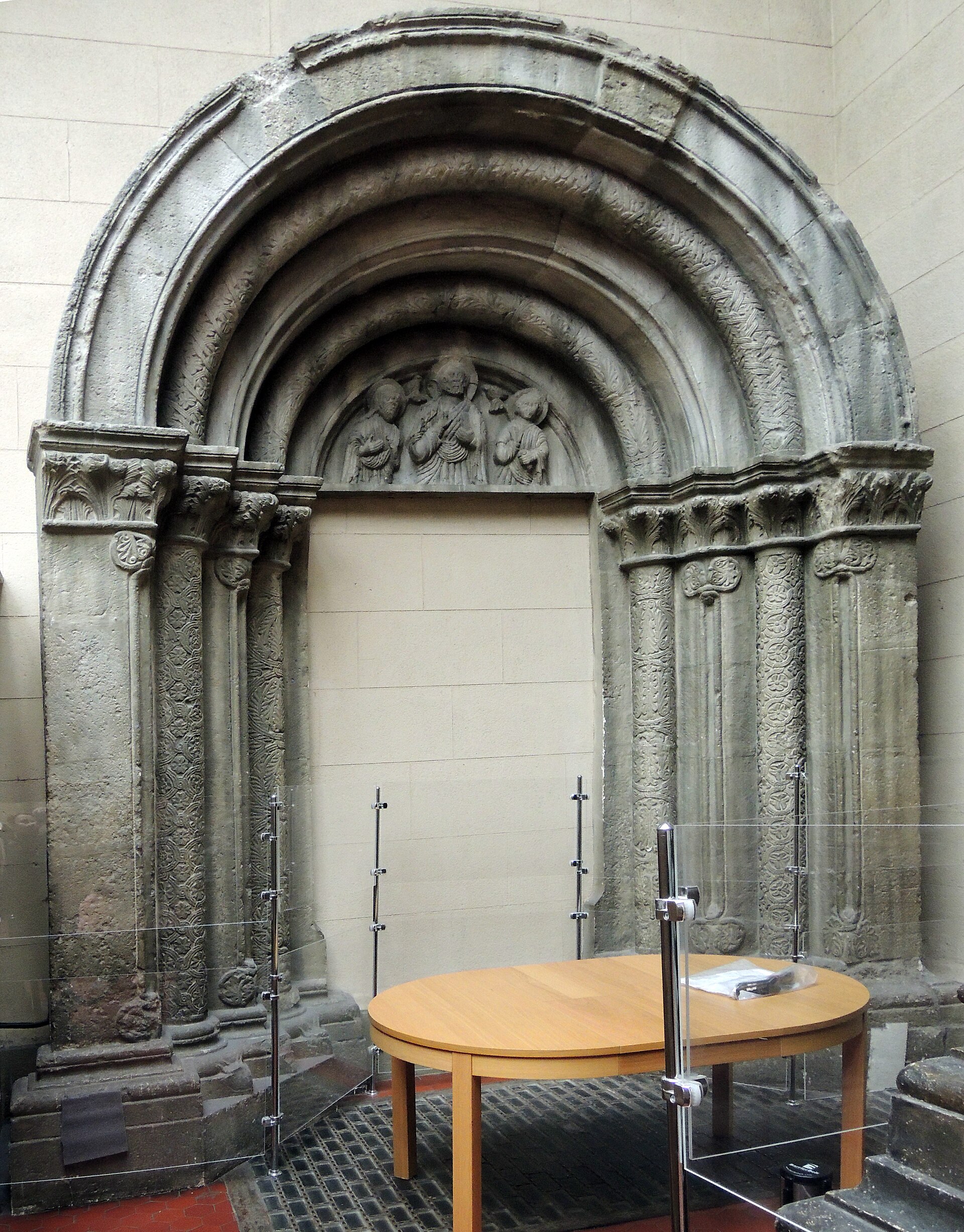
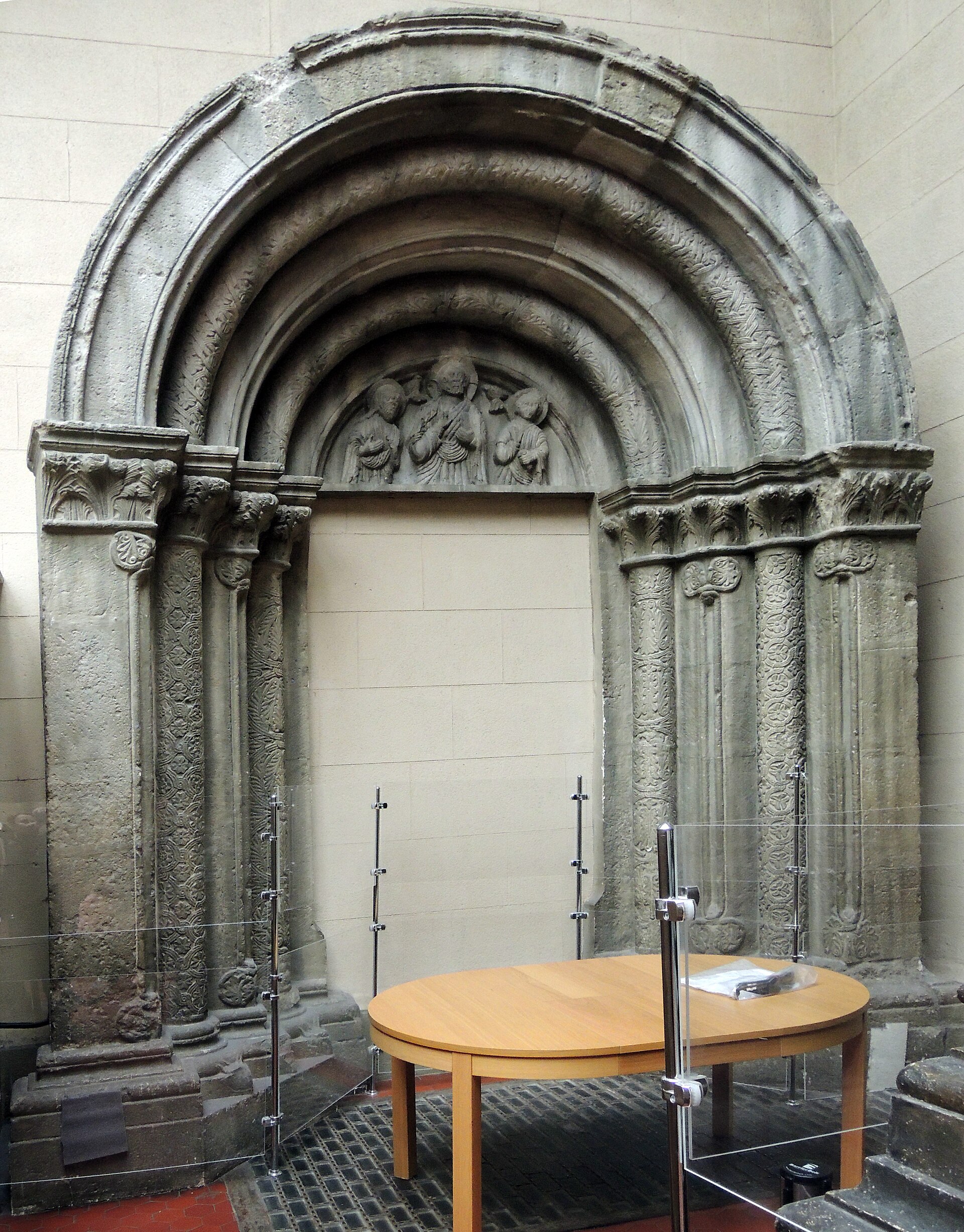
Photograph by shakko · CC BY-SA 4.0 The Italian Courtyard cast gallery (Room 15)
The same teaching-collection principle applied to the Middle Ages and the Renaissance: full-scale casts of the Bargello courtyard, Romanesque church portals, choir stalls and funerary monuments from Italy, France and Germany, gathered so that a single room in Moscow reproduced a continent's worth of sculpture and architecture.
Old Masters: Germany, the Netherlands, Flanders and Rembrandt and his School; Italy, Spain and France, 17th-18th centuries (Rooms 7-11, 17-18, 21-23)
Rembrandt and pupils, Rubens, Van Dyck, Botticelli, Titian, El Greco, Poussin and Chardin, among the paintings the museum's own visitor pages single out as its European core; several attributions here have shifted over the twentieth century as scholarship on workshop practice advanced.
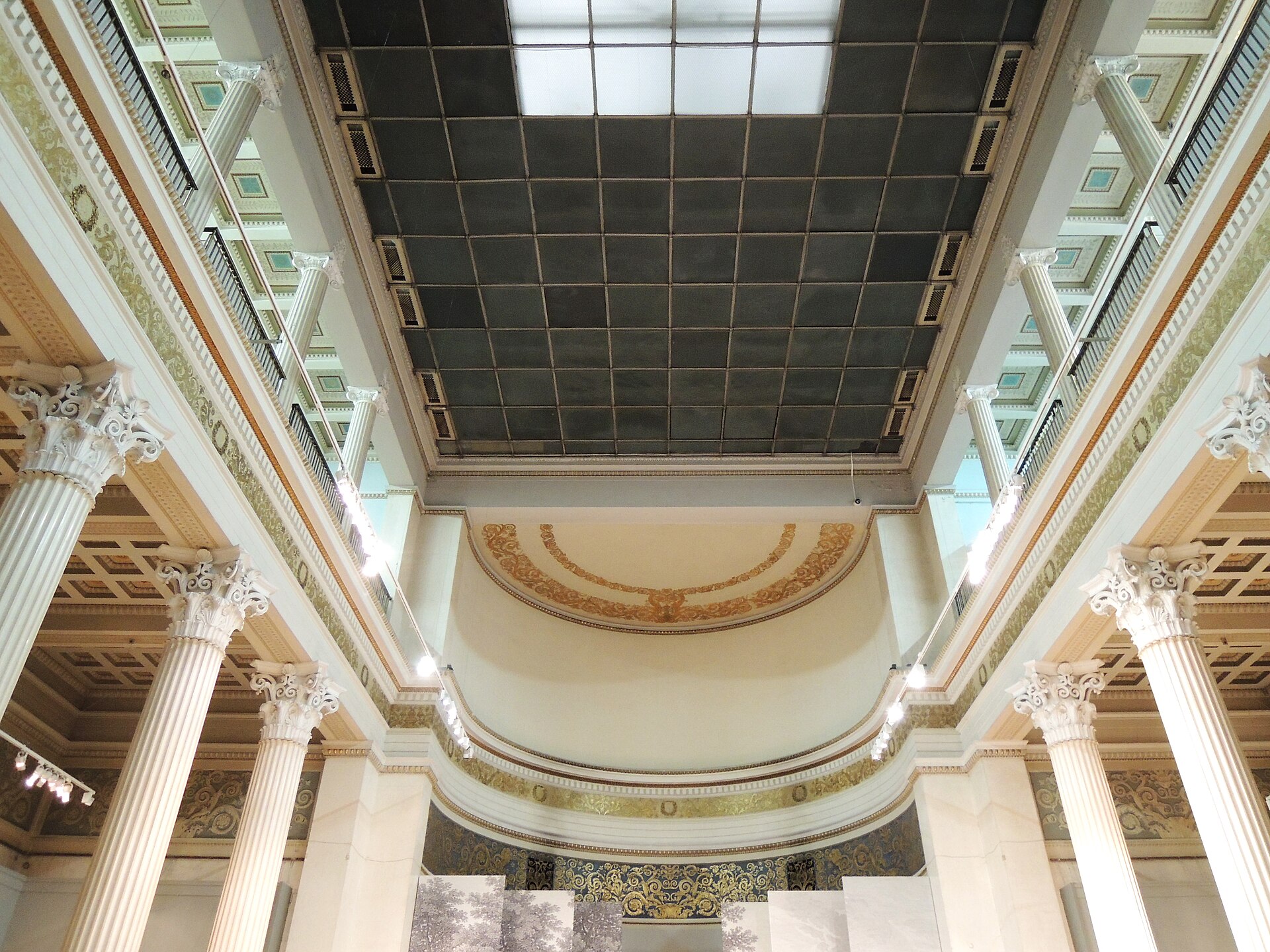
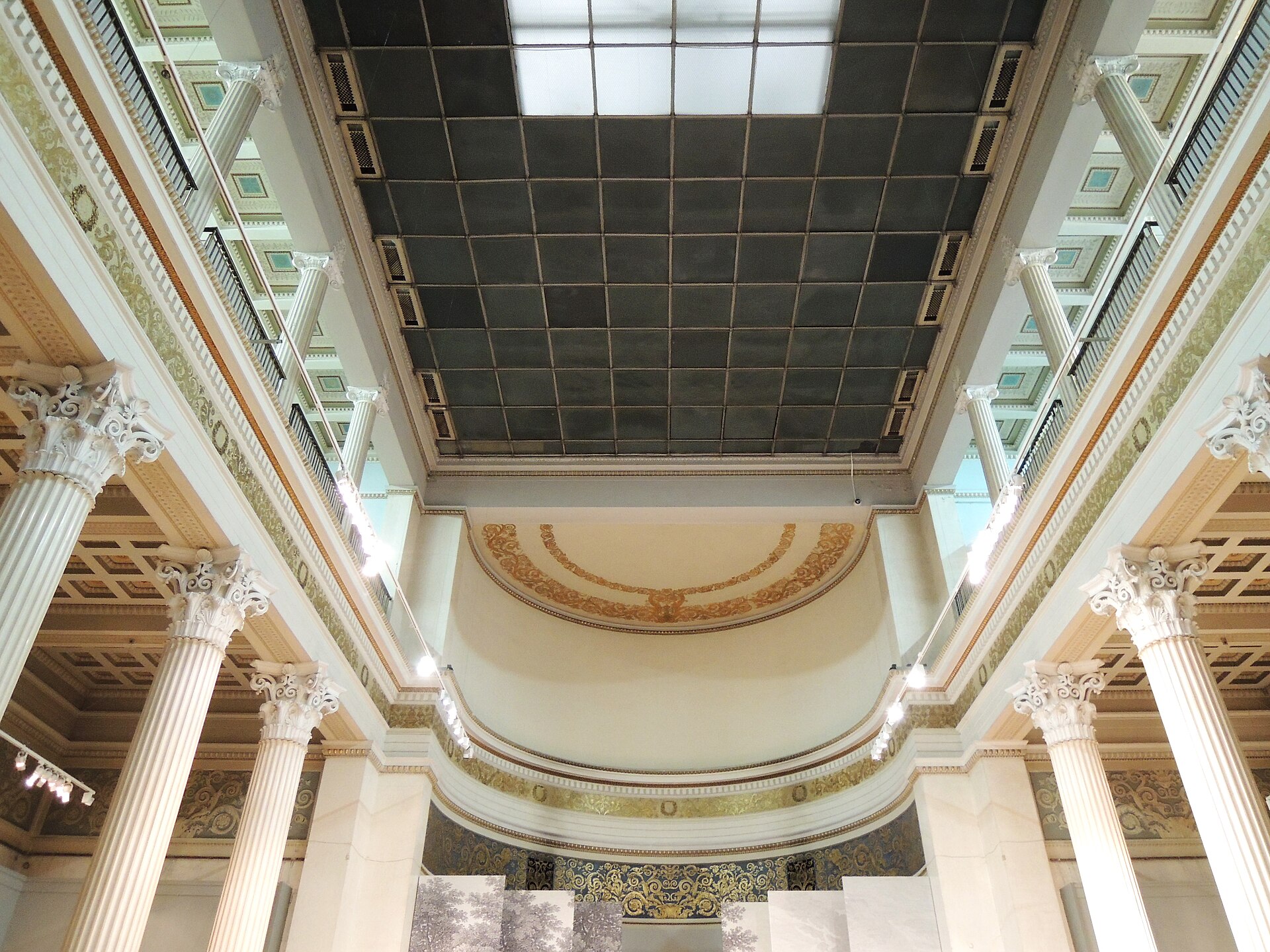
Photograph by Shakko · CC BY-SA 4.0 White Hall and French 18th-19th century rooms (Rooms 22-23, 30)
The museum's grandest top-lit gallery, used for French 18th and early 19th-century painting and for major loan exhibitions; its double colonnade and coffered skylight are themselves one of the building's set pieces.
Gallery of 19th and 20th Century European and American Art - a SEPARATE BUILDING at 14 Ulitsa Volkhonka, part of the same institution
Twenty-six rooms of Impressionist, Post-Impressionist and early modern painting and sculpture, including Monet, Cezanne, Van Gogh, Gauguin, Matisse, Picasso and Rodin, drawn overwhelmingly from the collections nationalised from the Moscow merchant-collectors Sergei Shchukin and Ivan Morozov after 1918. This is a distinct building from the neoclassical Main Building photographed for this page's lead image; it requires its own ticket and sits a short walk away.
What to see first
Priam's Treasure (the Trojan gold)
Excavated by Heinrich Schliemann, Hisarlik, 1870sThe single most contested object group the museum holds: seized by the Soviet army from Berlin in 1945, kept undisclosed for fifty years, and claimed since by Germany, Turkey and Greece under three different legal theories, with Russia's 1995 Duma moratorium blocking any return pending a war-booty law that has never passed.9
Fayum mummy portraits
Unknown Romano-Egyptian painters, 1st-3rd century ADAmong the oldest surviving portrait paintings in the world, sixteen of the museum's twenty-two examples normally on display, from the Golenishchev collection that opened the museum's Egyptian hall in 1912.13
Golenishchev Egyptian collection, founding acquisition
Assembled by Vladimir Golenishchev, bought by the museum 1909Roughly 8,000 objects, the museum's first collection of authentic antiquities rather than plaster copies, and still the core of its Egyptology holdings.13
Rembrandt, Ahasuerus, Haman and Esther
Rembrandt van Rijn, 1660A late Rembrandt from the museum's Dutch rooms, painted when the artist was fifty-four and cited by the museum's own visitor literature as a highlight of the Old Masters holdings.13
Botticelli, Annunciation
Sandro Botticelli, c. 1495-1498A portable altar wing; its companion panels of saints remain in the Hermitage in Saint Petersburg, so the two halves of the same altarpiece are now split between Russia's two largest museums.13
Poussin, The Continence (Magnanimity) of Scipio
Nicolas Poussin, 1640A set-piece of French classicism illustrating Roman virtue from Livy, representative of the museum's 17th-century French rooms.13
The plaster cast collection of the Greek and Italian Courtyards
Casts after originals in Berlin, Naples, Rome, the Vatican, Florence and elsewhere, assembled from the 1890sThe reason the museum exists in the form it does: founder Ivan Tsvetaev built a teaching museum of full-scale casts so that Russian students could study Western sculpture and architecture without leaving Moscow, and the two courtyard galleries still read as period pieces of 19th-century museum pedagogy.4
The Shchukin and Morozov Impressionist and modern collection
Formerly the private collections of Sergei Shchukin and Ivan Morozov, nationalised 1918One of the finest bodies of French Impressionist, Post-Impressionist and early modern painting outside France, now shown in the museum's separate Gallery of 19th and 20th Century European and American Art; the collection still carries a live legal shadow from the heirs' claims described below.12
Exhibitions on now
- On now21 Jul to 22 Nov 2026Confirmed , 7 weeks ago
- On now4 Aug to 1 Nov 2026Confirmed · check before you travel
A teaching museum built around a fine-arts faculty, not a royal collection
The Pushkin State Museum of Fine Arts opened on 31 May 1912 as the Alexander III Museum of Fine Arts, named for the emperor whose government had subsidised it, and it did not begin as a repository of a monarch's or a nobleman's collection the way the Hermitage or the National Gallery did. It began as the project of one professor, Ivan Tsvetaev, a classicist at Moscow University and father of the poet Marina Tsvetaeva, who spent close to two decades raising money and casts for a museum built specifically to teach the history of Western art and architecture to students who had no way to see Greek, Roman or Renaissance originals in person.
Construction ran from 1898 to early 1912 to designs by the architect Roman Klein, with the engineer Vladimir Shukhov responsible for the building's glazed iron roof structures and Ivan Rerberg overseeing the site for the first twelve years. The single largest private benefactor was the industrialist Yuriy Nechaev-Maltsov, without whose money the neoclassical, Ionic-porticoed building on Volkhonka street would not have been built at the scale it was. The museum became independent of Moscow University in 1923, was renamed the State Museum of Fine Arts in 1932, and took its current name in 1937, the centenary of Alexander Pushkin's death - a dedication the museum's own history notes has no other connection to the poet beyond the commemoration.
Casts first, then real antiquities: what the ground floor was built to prove
Because Tsvetaev's museum was conceived as a teaching collection, its first galleries were never meant to hold originals at all. The Greek and Italian Courtyards still display full-scale plaster casts of sculpture and architecture that never left Berlin, Naples, Rome, the Vatican or Florence: Michelangelo's tomb figures, Romanesque church portals, the Bargello courtyard, funerary monuments and classical friezes, gathered so a single building in Moscow could stand in for a continent's museums. It is an unusually complete survival of a specific and now largely abandoned 19th-century museological idea, the cast museum as a substitute for travel, and the two courtyards read as period pieces in their own right rather than merely a warm-up before the real collection.
The museum's claim to hold genuine antiquities dates specifically to 1909, when it bought roughly 8,000 objects from the Russian Egyptologist and diplomat Vladimir Golenishchev, whose collection became the core of the Art of Ancient Egypt hall that opened with the museum in 1912. It remains the strongest single department by depth: sarcophagi, funerary sculpture, papyri, and the Fayum mummy portraits, encaustic panel portraits from Roman-period Egypt that are among the oldest naturalistic portrait paintings to survive from antiquity.
Priam's Treasure: an object group three governments still claim
The museum's most consequential holding by international dispute, rather than by artistic reputation, is the so-called Priam's Treasure: gold jewellery and other objects excavated by the amateur German archaeologist Heinrich Schliemann at Hisarlik, the traditional site of Troy, in Ottoman territory in the 1870s. Schliemann removed the finds without Ottoman permission and eventually gave the collection to Berlin. The Soviet army took the treasure out of Berlin at the end of the Second World War, and the Pushkin Museum held it undisclosed for roughly fifty years before showing it publicly for the first time in 1996.
Since then Germany has invoked bilateral agreements in demanding the treasure's return; Turkey has countered that Germany's own claim to the material was never clean, since Schliemann took it from Ottoman soil without authorisation; and Greece has said it would like to see the Trojan objects once the Russian-German dispute is settled. Russia's position, reflected in a moratorium the State Duma passed in April 1995, is that the material is compensation for the Soviet cultural losses inflicted by Nazi Germany's looting and destruction, and no return will happen absent a comprehensive federal law on war-booty exchanges - a law that, as of this writing, still does not exist. None of the three foreign claims has been resolved, and the museum's own displays present the material as its own without adjudicating between them.
The Shchukin and Morozov rooms, and the collection that still carries a lawsuit
The museum's most celebrated holding by reputation, rather than by dispute, is French Impressionist, Post-Impressionist and early modern painting: Monet, Cezanne, Van Gogh, Gauguin, Matisse, Picasso and more, shown not in the neoclassical Main Building but in a separate structure nearby, the Gallery of 19th and 20th Century European and American Art at 14 Ulitsa Volkhonka, a former wing of the Golitsyn family's Moscow residence that the museum acquired and converted between 1988 and 1993. The paintings themselves were assembled before 1917 by two Moscow textile merchants, Sergei Shchukin and Ivan Morozov, and nationalised without compensation after the Bolshevik Revolution; Shchukin fled to Paris and never recovered his collection.
That history has followed the paintings ever since whenever they travel abroad. In 2000, when Matisse's Dance was lent to an exhibition in Rome, Shchukin's heir Andre-Marc Delocque-Fourcaud asked an Italian court to order the painting seized; the Hermitage flew it back to Russia before the request could be enforced. In 2003 Delocque-Fourcaud sued for a share of the profits of a Pushkin Museum loan show at the Los Angeles County Museum of Art; a US district court dismissed the claim. When the Fondation Louis Vuitton in Paris mounted its major Shchukin exhibition in 2016, Russian and French officials negotiated a formal guarantee against seizure before a single canvas was allowed to leave Moscow, precisely because the earlier attempts had shown the risk was real rather than theoretical. No settlement has ever resolved the underlying nationalisation claim; each loan abroad is managed individually, with fresh diplomatic and legal cover, rather than the dispute being closed.
Five directors in four years: the museum since Russia's invasion of Ukraine
The war in Ukraine has visibly unsettled the museum's leadership since February 2022. The deputy director Vladimir Opredelenov, nineteen years at the museum and nearly a decade in that post, resigned within weeks, writing publicly that his own view of world events did not match that of colleagues at Russia's Ministry of Culture and that he felt forced to leave the museum he loved. A year later, in March 2023, the director Marina Loshak stepped down after a decade running the museum; she described her departure in terms of institutional renewal rather than politics, but press coverage at the time linked it to the broader pressure then reshaping Russian cultural institutions, and noted that her daughter and nephew, both opposition journalists, had left Russia after the invasion and been designated foreign agents by the justice ministry.
Her successor, Elizaveta Likhacheva, previously head of Moscow's Shchusev State Museum of Architecture, led the museum from 2023 until she was replaced in January 2025 by Olga Galaktionova; Galaktionova herself moved on to direct the Tretyakov Gallery within roughly a year, and Ekaterina Pronicheva, previously head of the Vladimir-Suzdal Museum-Reserve, became the Pushkin Museum's director in January 2026. Four changes of director-level leadership in under four years is an unusual rate of turnover for an institution of this size, and it sits alongside the departures described above as evidence of continuing pressure on Russia's major museums since 2022.
Visiting today: four buildings, four tickets, one Monday closure
A visit to "the Pushkin Museum" in practice means choosing among four separately ticketed sites that share a name and a director but not a building: the neoclassical Main Building at 12 Volkhonka with its antiquities, cast courtyards and Old Masters; the Gallery of 19th and 20th Century European and American Art at 14 Volkhonka with the Impressionist and modern collection; the Sviatoslav Richter Memorial Apartment, sold online only; and the free Ivan Tsvetaev Educational Art Museum on Chayanova Street, some distance away and run on weekday hours only. The Main Building and the Gallery keep identical hours, Tuesday and Wednesday 10:00 to 20:00, Thursday 10:00 to 21:00, Friday 11:00 to 21:00, Saturday 10:00 to 21:00 and Sunday 10:00 to 20:00, closed Monday, with ticket sales stopping an hour before closing; a combined one-day ticket covers both buildings at a discount over buying separately. Every Thursday, admission is free for visitors aged seven to seventeen and for enrolled students.
Visitor complaints cluster around enforcement rather than the collection: warders are reported as strict, sometimes to the point of rudeness, over the 30x40x20 cm bag limit and over photography, and weekend queues for the free cloakroom can be long in winter. None of that appears to affect the museum's underlying reputation; it remains one of the most visited art museums in Russia, drawing more than a million visitors a year across its buildings even after several years of leadership disruption.
What visitors say
No individual reviews were read for this page; the only traceable reception signal is an aggregate TripAdvisor rating of 4.5 out of 5 from 1,854 ratings, read 26 August 2026. No specific praise or complaint can be attributed to a review that was actually read.
Ratings on other platforms
TripAdvisor: 4.5 from 1,854 ratings, read 26 August 2026
A platform average is a tertiary source: it moves, it is not audited, and we quote no visitor's words.
Questions about Pushkin Museum of Fine Arts
Where is Pushkin Museum of Fine Arts?
12 Ulitsa Volkhonka, Moscow 119019, Russia.
How much does it cost to visit?
Main Building, adult (weekday): RUB 700; Main Building, discounted (weekday): RUB 500; Gallery of 19th-20th Century European and American Art, adult: RUB 700; Combined ticket, Main Building + Gallery, adult (weekday): RUB 1700; Combined ticket, Main Building + Gallery, adult (weekend/holiday): RUB 1900. As confirmed 26 August 2026.
When is it open?
Tue-Wed 10:00-20:00; Thu 10:00-21:00; Fri 11:00-21:00; Sat 10:00-21:00; Sun 10:00-20:00. Closed: Monday, all buildings. the Sviatoslav Richter Memorial Apartment is also closed Tuesday. As confirmed 26 August 2026.
How do you get there?
Metro: Kropotkinskaya (red line) is the closest station; Borovitskaya and Biblioteka imeni Lenina also serve the Volkhonka street museum quarter.
What should you see first?
Priam's Treasure (the Trojan gold) (Excavated by Heinrich Schliemann, Hisarlik, 1870s); Fayum mummy portraits (Unknown Romano-Egyptian painters, 1st-3rd century AD); Golenishchev Egyptian collection, founding acquisition (Assembled by Vladimir Golenishchev, bought by the museum 1909); Rembrandt, Ahasuerus, Haman and Esther (Rembrandt van Rijn, 1660); Botticelli, Annunciation (Sandro Botticelli, c. 1495-1498); Poussin, The Continence (Magnanimity) of Scipio (Nicolas Poussin, 1640).
What we could not confirm
- Priam's Treasure remains claimed by Germany, Turkey and Greece under three different legal theories; Russia's 1995 Duma moratorium has blocked any resolution pending a war-booty law that has not been passed, and nothing in the museum's own displays adjudicates between the claims.
- The Shchukin and Morozov nationalisation of 1918 has never been settled with the collectors' heirs; each foreign loan since 2000 has required its own seizure-immunity guarantee rather than the underlying claim being resolved, which leaves open whether a future loan could again be contested.
- Four changes of museum director between 2022 and 2026, alongside earlier deputy-director and curatorial resignations tied to Russia's invasion of Ukraine, raise a live question about institutional continuity that this record has not attempted to resolve.
Images
Sources
- 1Pushkin State Museum of Fine Arts, official site, Opening Hours pushkinmuseum.art/visitors/opening_hours/index.php?lang=en
- 2Pushkin State Museum of Fine Arts, official site, Tickets and Privileges pushkinmuseum.art/visitors/tickets/index.php?lang=en
- 3Pushkin State Museum of Fine Arts, official site, Museum overview and history pushkinmuseum.art/museum/index.php?lang=en
- 4Pushkin State Museum of Fine Arts, official site, Main Building, Floor 1 departments pushkinmuseum.art/museum/buildings/main/floor1/index.php?lang=en
- 5Pushkin State Museum of Fine Arts, official site, Main Building, Floor 2 departments pushkinmuseum.art/museum/buildings/main/floor2/index.php?lang=en
- 6Pushkin State Museum of Fine Arts, official site, Gallery of 19th and 20th Century European and American Art pushkinmuseum.art/museum/buildings/gallery/index.php?lang=en
- 7Pushkin State Museum of Fine Arts, official site, Visitor information and contacts pushkinmuseum.art/visitors/index.php?lang=en
- 8Wikipedia, "Pushkin Museum" (, for history, architecture and leadership cross-check) en.wikipedia.org/wiki/Pushkin_Museum
- 9The Moscow Times, "Trojan Gold Stirs Claims by 3 Nations" themoscowtimes.com/archive/trojan-gold-stirs-claims-by-3-nations
- 10The Art Newspaper, "Marina Loshak steps down as director of Moscow's Pushkin Museum in latest high-level Russian departure", 21 March 2023 theartnewspaper.com/2023/03/21/marina-loshak-steps-down-as-director-of-moscows-pushkin-museum-in-latest-high-level-russian-departure
- 11Finestre sull'Arte, "Moscow, Pushkin Museum deputy director resigns over situation in Ukraine" finestresullarte.info/en/news/moscow-pushkin-museum-deputy-director-resigns-over-situation-in-ukraine
- 12The Tretyakov Gallery Magazine, "The Shchukin Collection at the Fondation Vuitton in Paris" tretyakovgallerymagazine.com/news/shchukin-collection-fondation-vuitton-paris
- 13Russia Beyond (gw2ru.com), "15 masterpieces of the Pushkin Museum that you must see" gw2ru.com/arts/225904-masterpieces-pushkin-museum-moscow
- 14TripAdvisor, Pushkin State Museum of Fine Arts reviews (, aggregate rating) tripadvisor.com/Attraction_Review-g298484-d300242-Reviews-Pushkin_State_Museum_of_Fine_Arts-Moscow_Central_Russia.html
- 15Wikidata, Q4872, Pushkin Museum of Fine Arts (, identity and coordinates cross-check) wikidata.org/wiki/Q4872