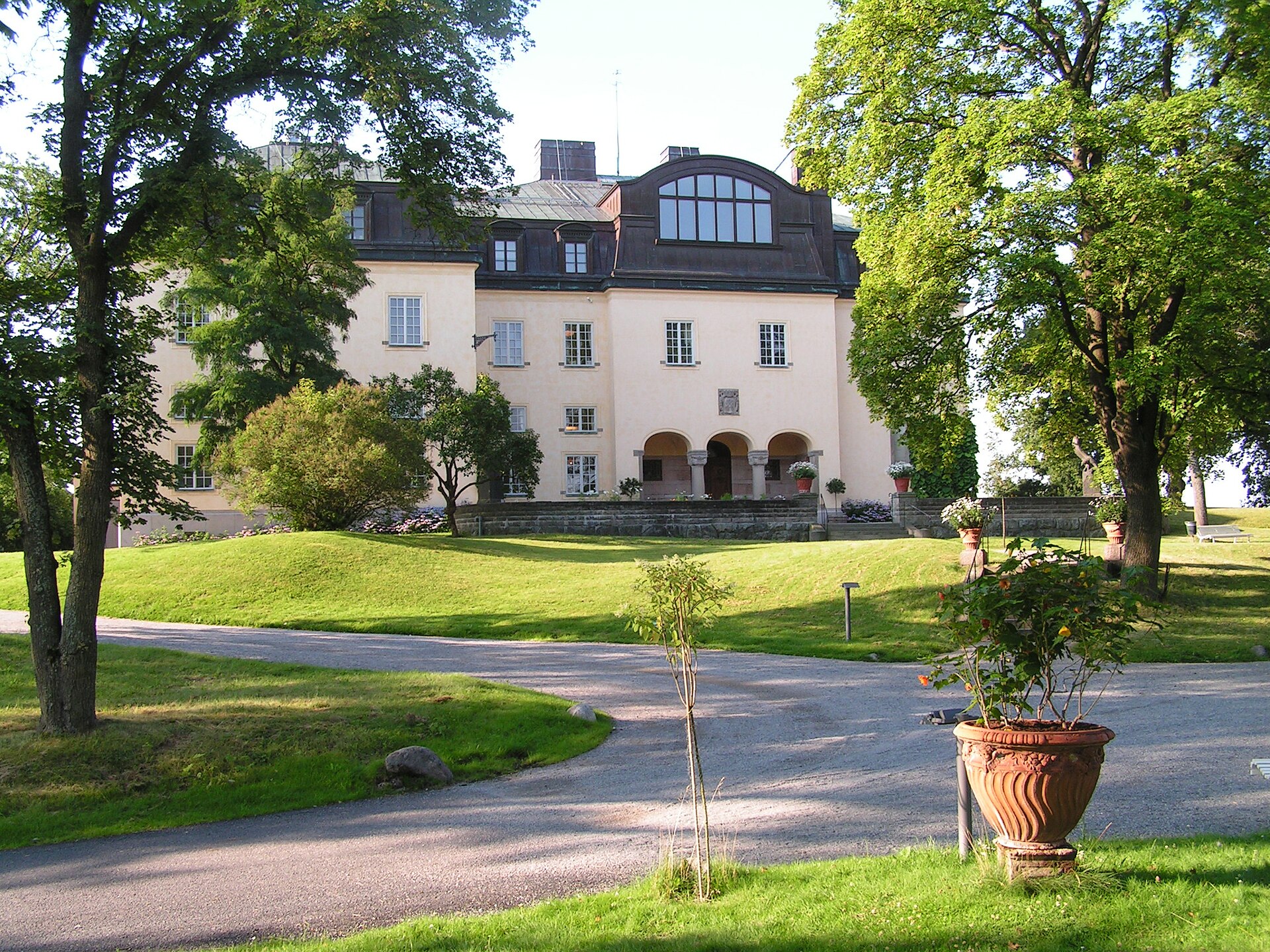
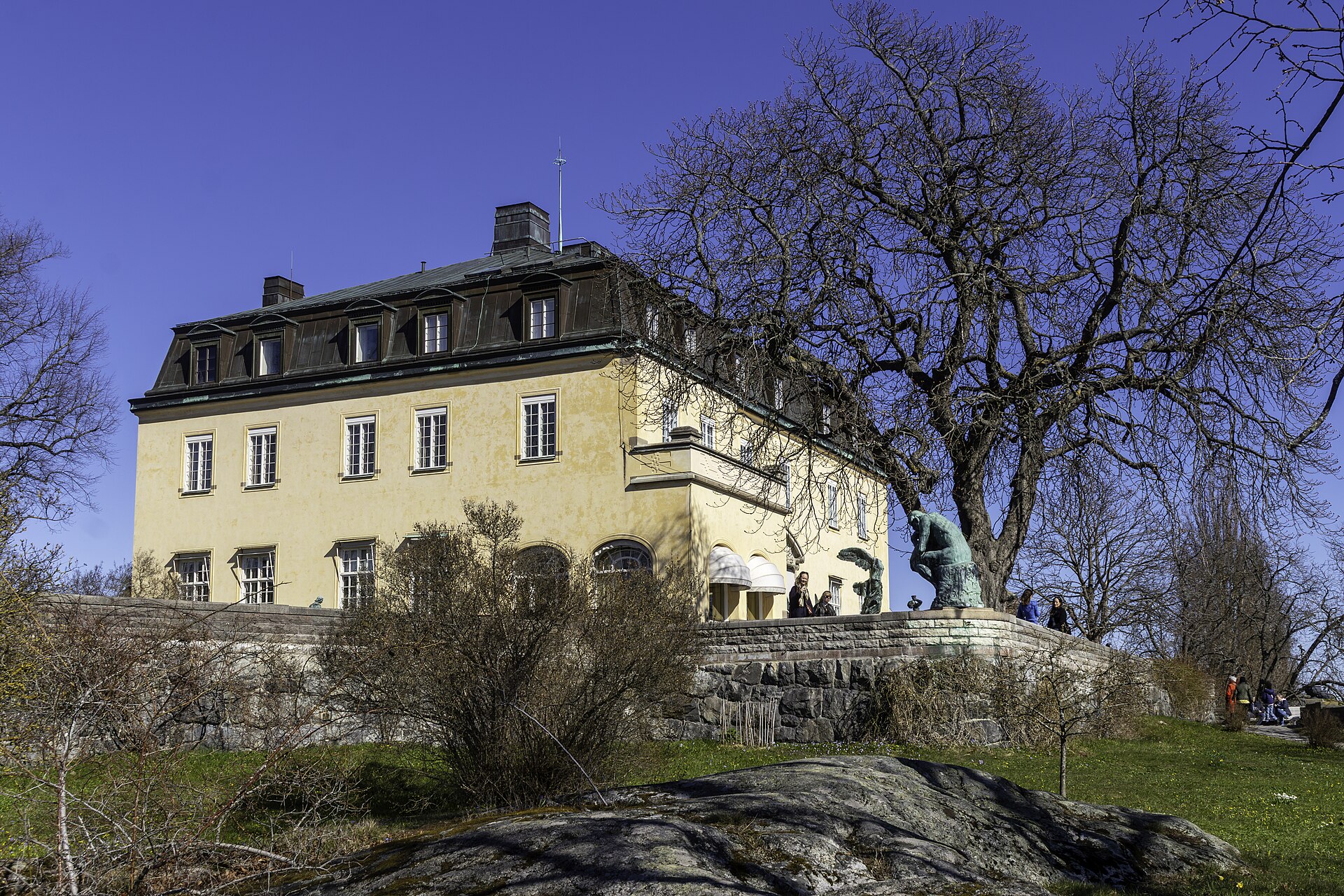
The main house at Prince Eugens Waldemarsudde, Djurgarden, seen across the lawn.
Prins Eugens Waldemarsudde, CC BY-SA 4.0Prince Eugens Waldemarsudde
Museum · Prins Eugens Waldemarsudde · Founded 1948
Open, admission and hours confirmed 16 November 2026 · 17 sources
On this page 15 sections
ContentsClose
Swedish painting from about 1885 to 1947, chosen by one painter with a good eye for his own generation: Nordstrom, Josephson, Zorn, Bergh, Kreuger, Jansson and Liljefors, with a smaller French and Nordic layer around them. Sculpture in the park gives it a second strength.
| Local name | Prins Eugens Waldemarsudde |
|---|---|
| Kind | Museum |
| Founded | 1948 |
| City and country |  Stockholm, Sweden |
| Address | Prins Eugens vag 6, Djurgarden, Stockholm, Sweden |
| Website | waldemarsudde.se |
| Status | Open, confirmed |
| Record last verified |
Visiting
- Hours
- Tue-Sun11:00 to 17:00
- Thu11:00 to 20:00extended hours
- Closed
- Monday. Midsummer's Eve (25 June 2027). Christmas Eve (24 December). Christmas Day (25 December). New Year's Eve (31 December).
- Admission
- AdultSEK 1702026 price. Rises to 180 SEK in 2027.
- Senior or studentSEK 1502026 price. 160 SEK in 2027.
- Group of 10 or more, per personSEK 1502026 price. 160 SEK in 2027.
- Children up to 19Freefree in 2026; the 2027 list says up to 20
- Annual cardSEK 4502026 price. 460 SEK in 2027.
- Tickets
- waldemarsudde.se/en/buy-ticket The museum's own ticket page.
- Do I need to book?
- No booking needed. Tickets can be bought online or at the museum, card payment only, and pre-purchased tickets do not give priority in the queue.
- Address
- Prins Eugens vag 6, Djurgarden, Stockholm, Sweden MapTram Tram 7 from the city centre
Bus Bus 67 to Blockhusudden - Website
- waldemarsudde.se
- Telephone
- +46 8 545 837 00
- [email protected]
Before you go how long, access, photography, bags, eating, shop
- How long to allow
- Not stated by the museum. The house, the gallery and the park are three separate parts, so allow time for each.
- Access
- Not stated on the museum pages read. Ask the museum on +46 8 545 837 00 or [email protected].
- Photography
- Not stated on the museum pages read.
- Bags
- Not stated on the museum pages read.
- Eating
- The Prince's Kitchen restaurant in the mansion keeps the museum's hours and serves hot meals, drinks and pastries. Cafe Ektorpet in the park is open Saturday and Sunday 11:00 to 17:00.
- Shop
- The museum shop sells the Waldemarsudde flower pot designed by the prince in 1915, exhibition catalogues, postcards, books and handicrafts, and keeps the museum's hours.
Prices and hours change. We take them from the institution's own pages and print the day we read them, and you can check the current position at the source we used. Confirm before you travel.
What is inside
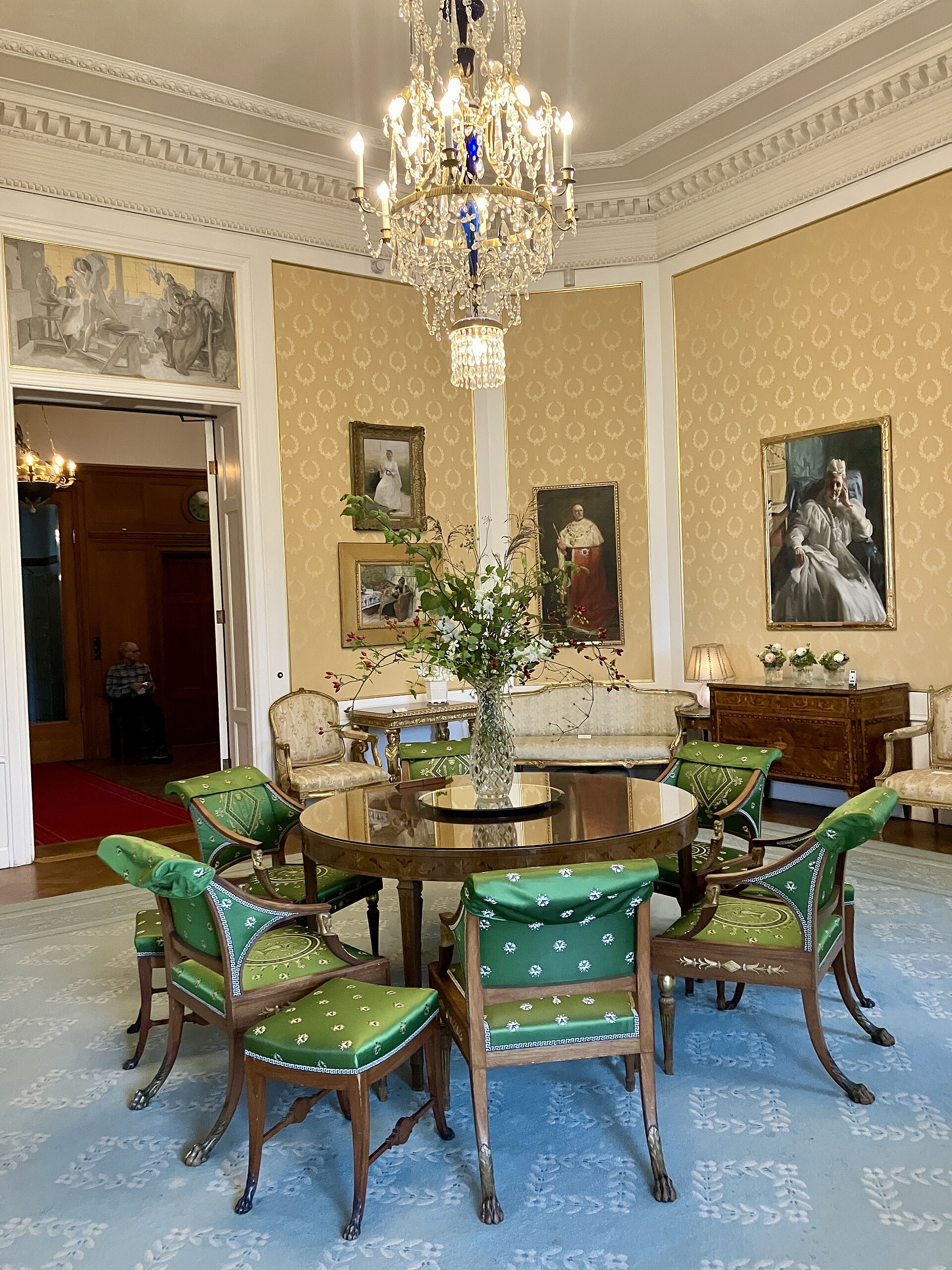
CC0 The ground-floor reception rooms
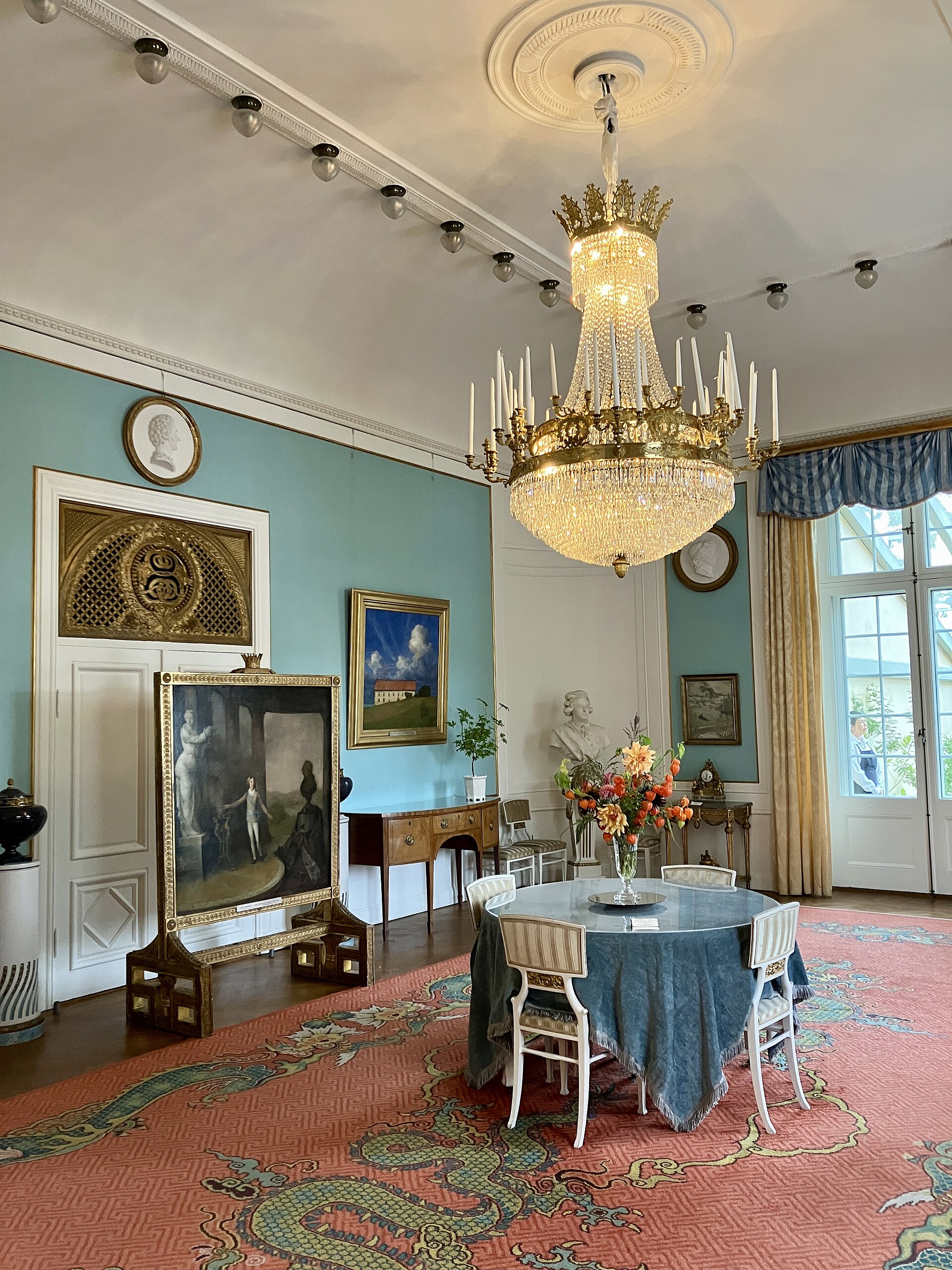
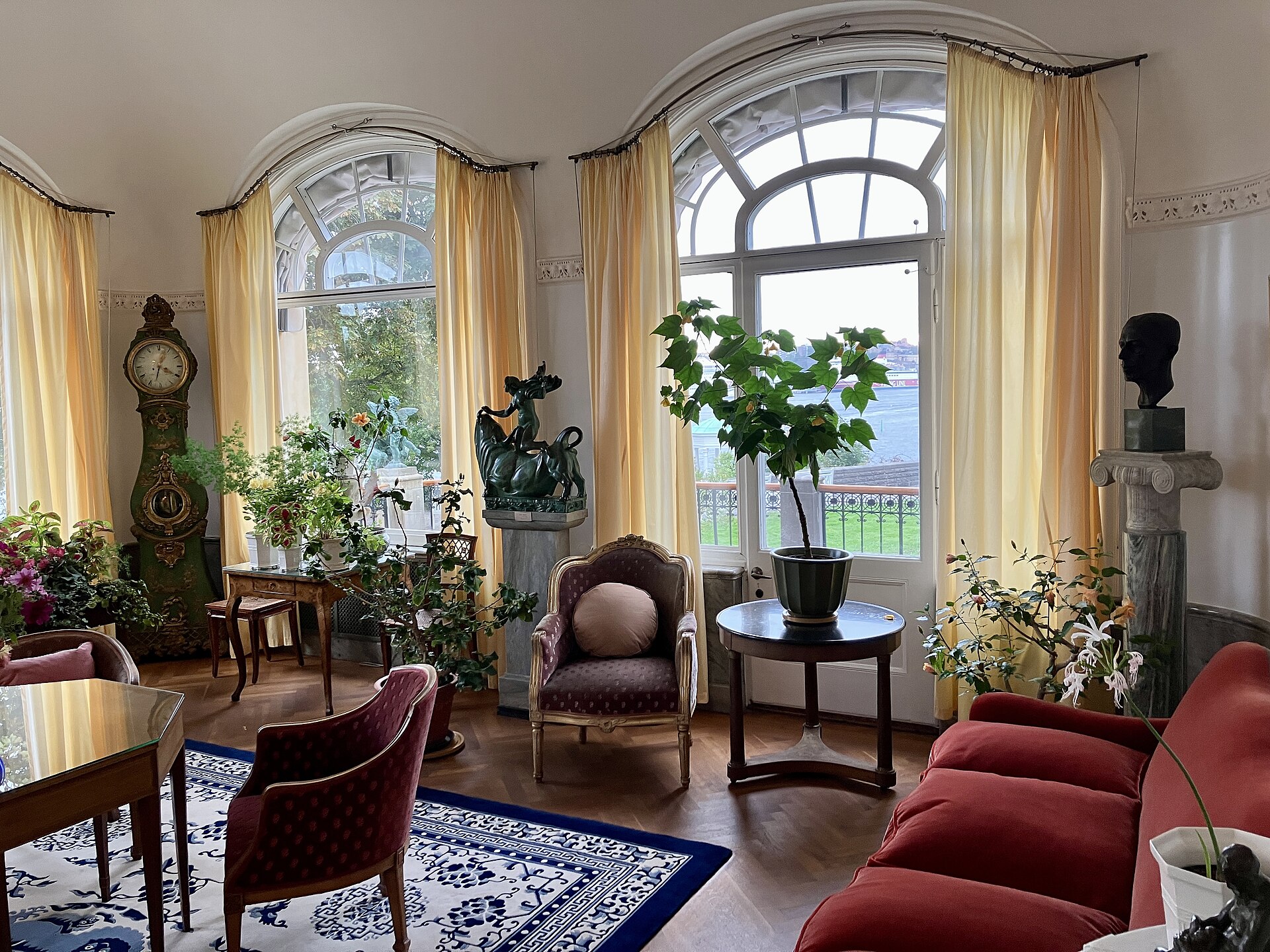
The dining room, the salon, the flower room and the library, kept largely as they were when Prince Eugen died in 1947. Inherited pieces sit with furniture and textiles he bought, hung with works from the collection. A free audio guide to the prince's apartments is on the izi.TRAVEL app.
Middle floor and the prince's studio floor
Once bedrooms, workrooms and guest rooms, and the floor of the prince's studio. They now alternate between temporary exhibitions and displays from the collection, as the prince wished.
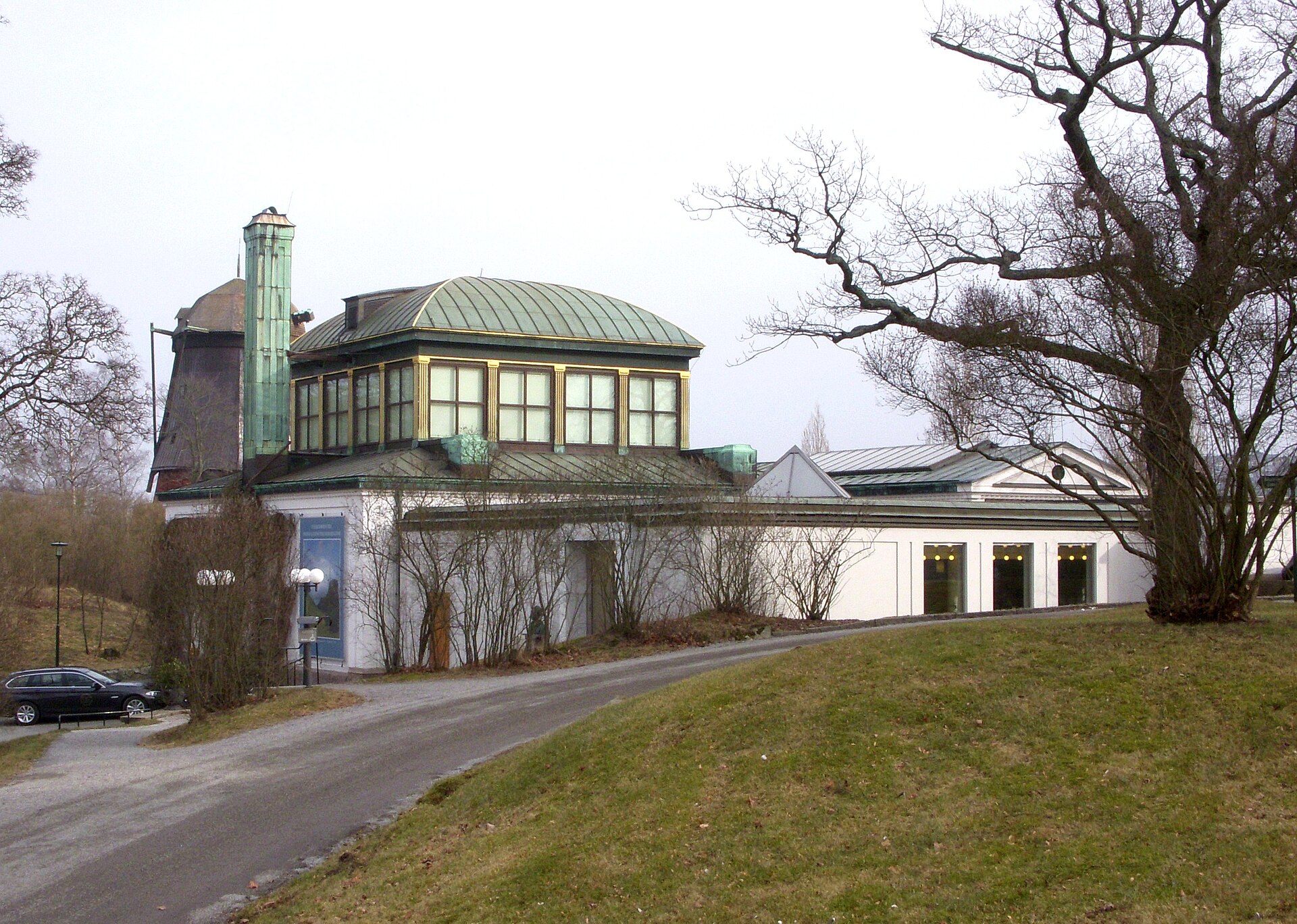
Photograph by Holger.Ellgaard · CC BY-SA 3.0 The Gallery
Boberg's 1913 building for the collection: a large square central room, a terrace room and two smaller rooms, lit from above, with the Prince's Room and Prince's Office added at the east end by 1945. Today it alternates temporary exhibitions with works from the collection. The terrace carries sculpture by Carl Milles and Per Hasselberg.
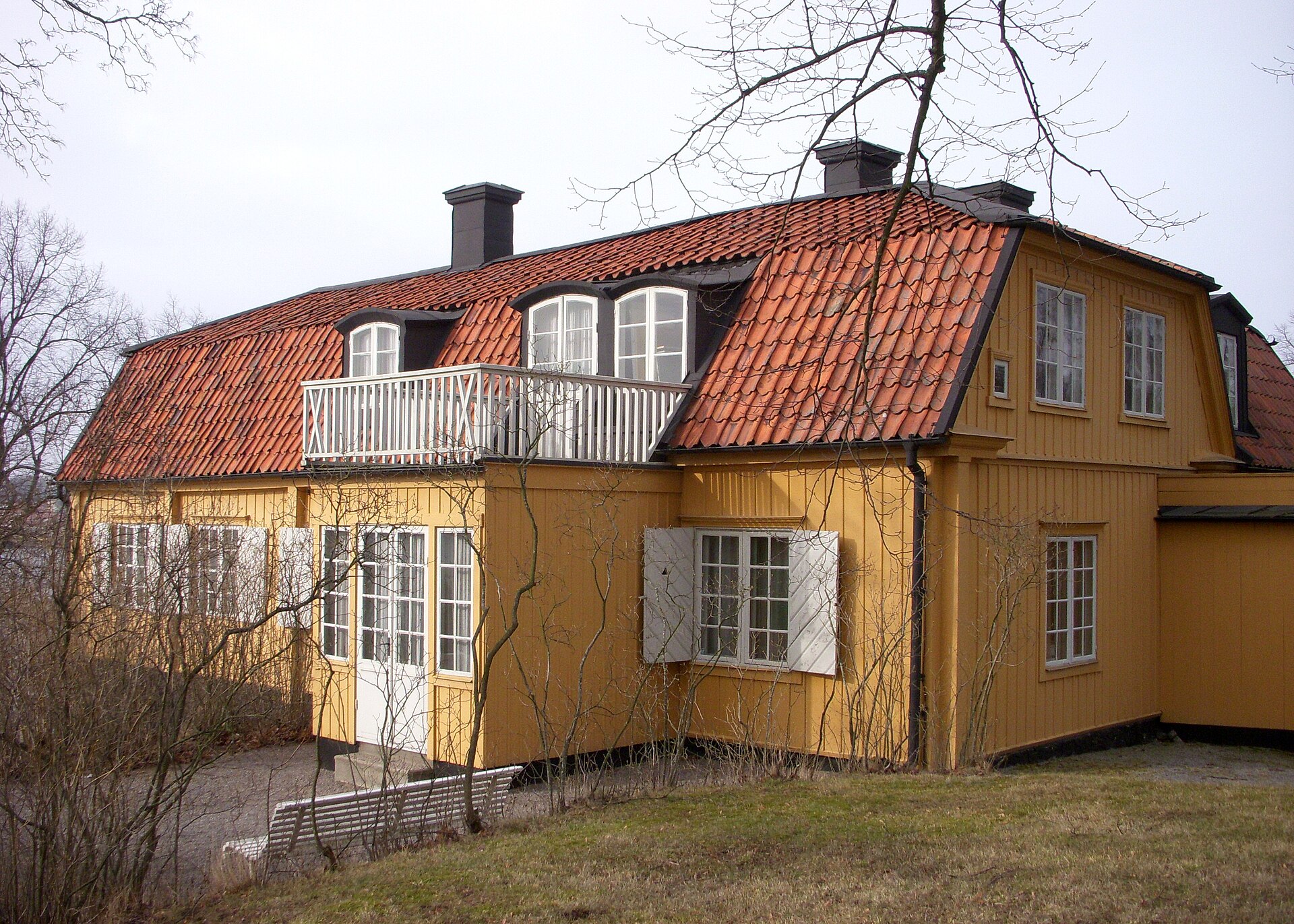
Photograph by Holger.Ellgaard · CC BY-SA 3.0 The Old House and the linseed oil mill
The yellow Old House was built as Carl Magnus Fris's summer residence and stands near the Linnaeus flowerbeds. The oil mill from the 1780s still stands on the point. The museum's page names both among the estate's buildings but gives no visiting detail.
The park and terraces
Seventy thousand square metres of garden and shore with two terraces, poplars, chestnuts, old-fashioned flowers and the open-air sculpture: Rodin's The Thinker, Bourdelle's Heracles, three works by Carl Milles, two by Per Hasselberg and Eldh's Nordstrom portrait.
What to see first
Copy of the Nike of Samothrace on the staircase
After the Louvre originalBuilt into the stair design when the house was finished in 1905, so the mansion is organised around a piece of antique sculpture.5
The Thinker on the main terrace
Auguste RodinOn the main house terrace, with a bronze copy of the Nike of Samothrace beside it, according to the museum's collection page.4
Heracles
Antoine BourdelleStands north of the main house, shown drawing back his bowstring.5
Eagles, Triton and Archer
Carl MillesThree Milles works are placed in the park: the Eagles at the former main entrance, the Triton as a fountain by the shore flowerbeds and the Archer on an antique column.5
The Young Linnaeus
Carl EldhThe prince's last purchase, made in 1947, and it now stands in the Linnaeus flowerbeds west of the main building.4
Karl Nordstrom holdings
Karl NordstromThe most represented artist in the collection with about 50 works, which makes Waldemarsudde a place to see his range.4
Ernst Josephson and Carl Fredrik Hill
Ernst Josephson; Carl Fredrik HillEleven Josephson oils and many drawings, and two works by Hill, an artist little appreciated in his lifetime and now seen as important.4
The Waldemarsudde flower pot
Prince Eugen, 1915A design by the prince himself, still made in Sweden and sold in the museum shop.10
Exhibitions on now
A prince's house on a cape in the city
Prince Eugen's Waldemarsudde sits on a wooded point of Djurgarden, the royal park island in the middle of Stockholm, with water on three sides. The museum's own account says the house was built between 1903 and 1905 as the residence of Prince Eugen (1865 to 1947), the youngest of four sons of King Oscar II and Queen Sophia, who was both one of the leading landscape painters of his generation and one of its significant collectors. The English Wikipedia entry, a tertiary source used here only for background, adds that the prince first saw the site in 1892, when he rented a house there for a few days, and bought the property seven years later. The museum's biography of him dates his time at Waldemarsudde from about 1900, so the exact purchase year is left open on this page.
The name is plain enough once it is taken apart. Waldemar is an old Germanic given name and udde is the Swedish word for a cape or point. The point is much older than the prince. The Swedish Wikipedia describes an oil-pressing operation on it already in the 1730s and a run of owners after that, among them a commissioner named Alstrom who received the land in 1737, an Englishman named Maister, and Carl Magnus Fris, who acquired it in 1782 and ran windmills there for linseed oil and pigment. A sawmill on the point burned down in 1849, and the grain and timber merchant Johan Bergman Olson bought the land in 1839 and used it as a loading point and timber yard. By the time the prince arrived it was a working waterfront with a manor house, and he replaced the working landscape with a garden, a mansion and a gallery.
Two older buildings survived into his estate and are still there. The yellow Old House, which Swedish sources call Gamla huset or Gula huset, was built as Fris's summer residence. The linseed oil mill dates from the 1780s, and the museum's own page gives 1785 for it. Between them and the sea the prince laid out the park he is remembered for as much as for his pictures.
Boberg's mansion and the gallery
The architect was Ferdinand Boberg, working closely with the prince. The museum states that the mansion was designed by Boberg together with Prince Eugen and that the same pair produced the Gallery building, completed in 1913. The English Wikipedia names Rosenbad, the Prime Minister's Office and Government Chancellery, among his other works. The museum describes the interior as airy and light, in keeping with the ideals of the early 1900s, and the English Wikipedia describes Art Nouveau interiors with masonry stoves in a Gustavian manner. That second description is tertiary and should be replaced by a museum source if one is found.
The ground floor is the part that was made to be lived in. The museum says its common areas, which it calls the society floor, were kept largely as they were at the time of the prince's death in 1947. Its photo captions name the dining room, the salon, the flower room and the library. The middle floor, once bedrooms, workrooms and guest rooms, and the top floor, where the prince's studio was, have been turned over to exhibitions according to his wishes. The Gallery is a separate building with a symmetrical plan: a large square central room, a terrace room, and two smaller rooms, all lit from above by a roof lantern and skylights so that the walls are free for hanging. The Prince's Room and the Prince's Office at the eastern end were completed later, in 1945, and the prince showed his own work there while the original rooms showed his collection.
Waldemarsudde is a state-designated building monument, a statligt byggnadsminne, according to the Swedish Wikipedia. The status matters for visitors because it explains why the house cannot be rearranged for the sake of an exhibition: the museum says separate governing documents guide the care of the park, the buildings and the art collection.
What the prince collected
At his death the prince had assembled what the museum calls one of the largest privately owned collections in Sweden. By the museum's count it held about 3,200 works by the prince himself and about 3,500 by nearly 450 other artists, mostly Swedish: paintings above all, with sculpture, drawings, graphics and medallion art. He collected for about sixty years. His first purchases were made in Paris in 1887, landscapes by Per Ekstrom and Hugo Birger, and his last, in 1947, was Carl Eldh's bronze of the young Linnaeus, which now stands in the Linnaeus flowerbeds west of the main building.
He bought mostly contemporary work, often straight from the artist, and the museum says he was open to unknown names. The most represented artist is Karl Nordstrom, with about 50 works. Ernst Josephson has 11 oil paintings and many drawings, and Carl Fredrik Hill, little appreciated in his lifetime, has two. Anders Zorn, Richard Bergh, Per Hasselberg, Nils Kreuger, Eugene Jansson and Bruno Liljefors are all named by the museum as part of the Artists' Association generation the prince grew close to in Paris. Later layers run through Isaac Grunewald, Leander Engstrom and Gosta Adrian-Nilsson to the New Objectivity of Otte Skold and Arvid Fougstedt.
The collection is open about its limits. The museum states that women make up less than ten per cent of it, and names Hanna Pauli, Julia Beck, Anna Boberg and Vera Nilsson as examples. Foreign work is thin but real: Edvard Munch, Viggo Johansen and Henrik Sorensen from the Nordic countries, and Picasso, Derain and Delaunay from France. Several works by Andre Lhote are held, and the museum links his cubism to the prince's 40-metre mural City by the Water in Stockholm City Hall, finished in 1922. Later gifts have kept the story moving: August Strindberg works were donated in 1979, and in 2016 seven paintings and three lithographs by Olle Olsson Hagalund arrived.
The park, the terraces and the sculpture
The park covers 70,000 square metres, with water on three sides, rock outcrops, sandy ground, meadow and deciduous trees. The museum says the prince removed evergreens and ferns to keep a park-like feel, concentrated the planting in front of the main house and gallery, and built two large terraces on the water side, an upper and a lower one. He planted a row of poplars along the shore and chestnuts on the terrace, and he preferred blue, white, yellow and pink flowers in old-fashioned varieties. The museum notes that his letters contain detailed instructions on colours and combinations, and that in 1901 he posted seed packets with sowing instructions from Tunbridge Wells in England.
The sculpture is part of the design, not an afterthought. A copy of the Nike of Samothrace is built into the staircase of the house, dating from its completion in 1905. Rodin's The Thinker stands on the main house terrace and Bourdelle's Heracles, drawing his bow, stands to the north. Carl Milles supplied Eagles that flank the former main entrance, a Triton that serves as a fountain among the shore flowerbeds, and an Archer on a tall antique column on the gallery terrace, where Per Hasselberg's Frog also sits. Hasselberg's Water Lily is on the shore walk beside a small pond, and Eldh's bronze portrait of Karl Nordstrom honours the artist who long chaired the Artists' Association.
The prince died at Waldemarsudde on 17 August 1947, aged 82. The Swedish Wikipedia records that he was cremated, the first royal in Sweden to be, and that his urn was buried on the shore behind the yellow house. The museum's biography adds that he left the estate and the collections to the Swedish state together with a donation of shares for their upkeep.
From bequest to foundation
The museum opened in the summer of 1948. The museum's history page says the prince's will gave the property and the collection to the Swedish state, that administration first passed to the City of Stockholm under a special board, and that the state took over the administration in 1995. On 1 July 2017 the museum became an independent foundation funded by state grants, run by a board and a director according to the prince's will. Karin Siden is named as director by the English Wikipedia, which also gives a figure of about 440,000 visitors a year and a collection of about 6,700 to 7,000 works; Wikipedia gives both numbers in the same entry and does not reconcile them, so neither should be treated as settled.
What the foundation does today follows the will. The museum states its core aims as caring for the buildings and the collection and making them accessible, and says its exhibitions and programmes carry out the donor's wish to keep the museum active, with painting since 1900, handicrafts and design as the main themes. The handicrafts strand is the prince's own: the museum's biography records that he chaired the Swedish Handicrafts Association from its founding in 1899 until his death and that he designed the Waldemarsudde flower pot in 1915, which the museum shop still sells.
The programme this season
Three exhibitions run as of the day this page was written. Wonderful Colour, on Gothenburg colourism in a new light, runs from 3 October 2026 to 28 February 2027. Landscapes from Near and Far and Flowers in Fine Art and Decorative Arts, both drawn from the museum's own collections, run from 4 October 2026 to 15 August 2027. The museum's page gives titles, dates and image captions only, so descriptions are not repeated here. The two collection shows are a reminder that the upper floors and the Gallery alternate between temporary exhibitions and displays from the permanent collection, so what hangs where changes from visit to visit.
For a first visit the sensible plan is the ground-floor rooms first, because they are the part that has changed least since 1947, then the Gallery, then the park down to the water. The museum offers a free audio guide for the prince's apartments through the izi.TRAVEL app in Swedish, English, German and Chinese, and a restaurant in the mansion and a seasonal cafe in the park for a break.
What visitors say
The pages read for this record agree on what the place offers: a lived-in artist's house kept close to how it stood in 1947, a collection centred on Swedish painting of the prince's own generation, and a park on the water. I did not obtain a visitor rating count from any page I fetched, so none is given here, and the one named review I read is an enthusiastic feature that leans on the director's own comments.
What is praised, what is criticised
- Praised: The building treated as a single composed work, house, gallery and park together, as the museum's director puts it in a Scan Magazine feature
- Praised: The well-preserved ground-floor rooms and the calm setting a short way from central Stockholm
- Praised: A park and sculpture garden with a seasonal cafe
- Criticised: The collection is thin on women: the museum itself says women make up less than ten per cent of it
- Criticised: Ticketing is card only and a pre-bought ticket does not skip the queue, by the museum's own statement
- Criticised: The Scan Magazine feature, the only named review read, is promotional and relies largely on the director, so independent criticism was not found
Questions about Prince Eugens Waldemarsudde
Where is Prince Eugens Waldemarsudde?
Prins Eugens vag 6, Djurgarden, Stockholm, Sweden.
How much does it cost to visit?
Adult: SEK 170; Senior or student: SEK 150; Group of 10 or more, per person: SEK 150; Children up to 19: free; Annual card: SEK 450. As confirmed 16 November 2026.
When is it open?
Tue-Sun 11:00-17:00; Thu 11:00-20:00. Closed: Monday. Midsummer's Eve (25 June 2027). As confirmed 16 November 2026.
How do you get there?
Tram: Tram 7 from the city centre; Bus: Bus 67 to Blockhusudden.
What should you see first?
Copy of the Nike of Samothrace on the staircase (After the Louvre original); The Thinker on the main terrace (Auguste Rodin); Heracles (Antoine Bourdelle); Eagles, Triton and Archer (Carl Milles); The Young Linnaeus (Carl Eldh); Karl Nordstrom holdings (Karl Nordstrom).
What we could not confirm
- The year Prince Eugen bought the estate: English Wikipedia implies 1899, the museum's biography says from about 1900.
- Whether the house was finished in 1904 or 1905: the museum says built 1903 to 1905, the English Wikipedia says erected 1903 to 1904 and completed in 1905.
- Collection size: the English Wikipedia gives both about 6,700 and about 7,000 works and the museum pages read give no total.
- Accessibility, photography and cloakroom rules were not stated on any museum page read.
- No independent visitor rating was fetched, so the rating field is empty.
Images
Sources
- 1Prins Eugens Waldemarsudde, home page (English), read 2026-11-16 waldemarsudde.se/en/
- 2Prins Eugens Waldemarsudde, Admission and Opening Hours, read 2026-11-16 waldemarsudde.se/en/welcome/priser-och-oppettider/
- 3Prins Eugens Waldemarsudde, About Waldemarsudde, read 2026-11-16 waldemarsudde.se/en/about-waldemarsudde/
- 4Prins Eugens Waldemarsudde, Prince Eugen's Art Collection, read 2026-11-16 waldemarsudde.se/en/about-waldemarsudde/prince-eugens-art-collection-2/
- 5Prins Eugens Waldemarsudde, Park and Garden, read 2026-11-16 waldemarsudde.se/en/about-waldemarsudde/park-and-garden/
- 6Prins Eugens Waldemarsudde, An Artist's Home, read 2026-11-16 waldemarsudde.se/en/an-artists-home/
- 7Prins Eugens Waldemarsudde, Prince Eugen (biography), read 2026-11-16 waldemarsudde.se/en/about-waldemarsudde/prince-eugen/
- 8Prins Eugens Waldemarsudde, Contact, read 2026-11-16 waldemarsudde.se/en/welcome/contact/
- 9Prins Eugens Waldemarsudde, Restaurant and Cafe, read 2026-11-16 waldemarsudde.se/en/welcome/restaurant-cafe/
- 10Prins Eugens Waldemarsudde, The Museum Shop, read 2026-11-16 waldemarsudde.se/en/welcome/the-museum-shop/
- 11Prins Eugens Waldemarsudde, Current Exhibitions, read 2026-11-16 waldemarsudde.se/en/current-exhibitions/
- 12Waldemarsudde, English Wikipedia (, background only), read 2026-11-16 en.wikipedia.org/wiki/Waldemarsudde
- 13Waldemarsudde, Swedish Wikipedia (, background only), read 2026-11-16 sv.wikipedia.org/wiki/Waldemarsudde
- 14Xander Brett, Prins Eugens Waldemarsudde: Princely treasures in Stockholm's royal retreat, Scan Magazine (issue undated on page, image paths point to March 2024), read 2026-11-16 scanmagazine.co.uk/prins-eugens-waldemarsudde-princely-treasures-in-stockholms-royal-retreat/
- 15Wikidata Q537, entity data (, identity and coordinates), read 2026-11-16 wikidata.org/wiki/Special:EntityData/Q537.json
- 16Wikimedia Commons, Category:Exterior of Prins Eugens Waldemarsudde and API file metadata, read 2026-11-16 commons.wikimedia.org/wiki/Category:Exterior_of_Prins_Eugens_Waldemarsudde
- 17Wikimedia Commons, Category:Interior of Prins Eugens Waldemarsudde and API file metadata, read 2026-11-16 commons.wikimedia.org/wiki/Category:Interior_of_Prins_Eugens_Waldemarsudde