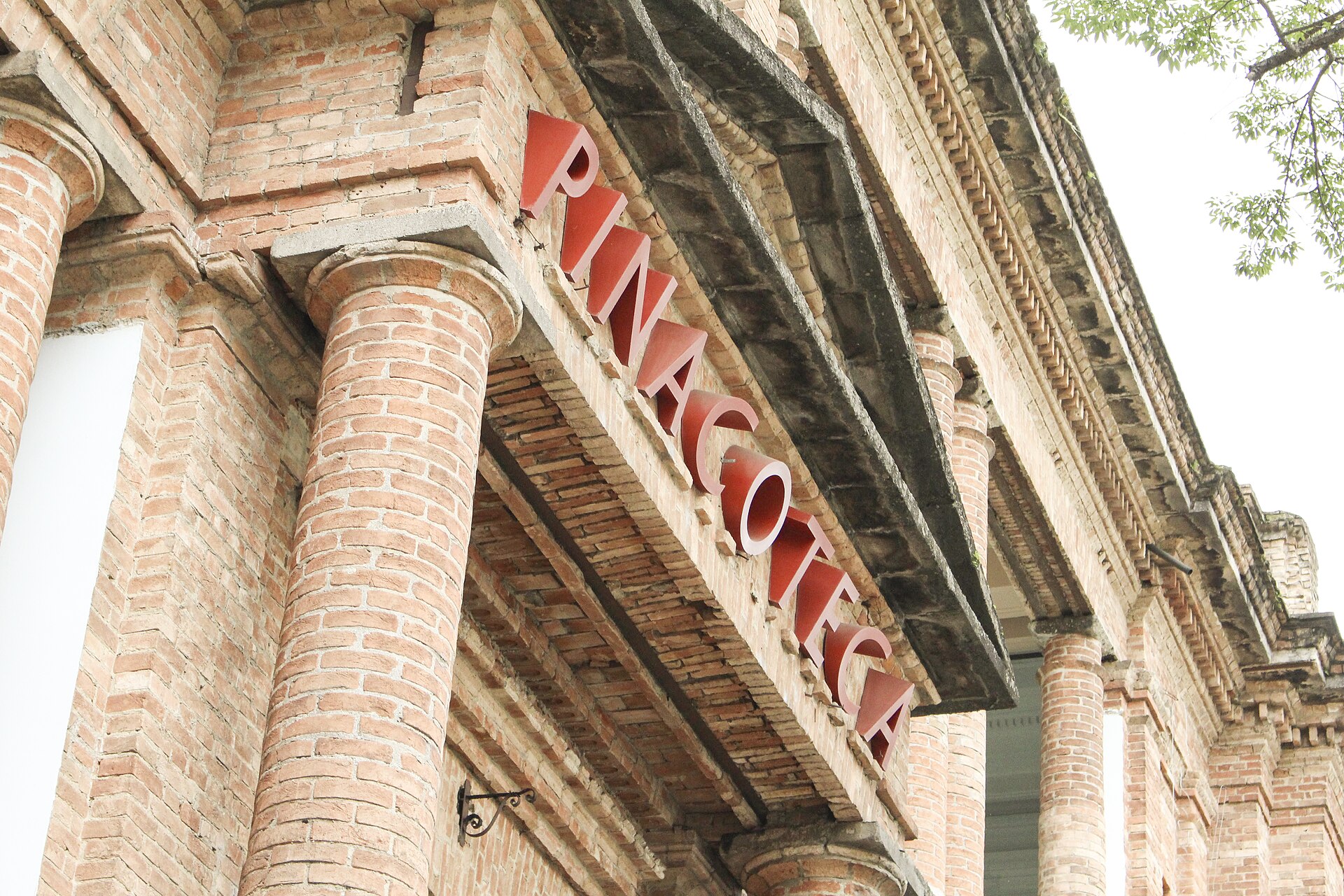
The museum name on the deliberately unrendered brick facade of the 1900 Ramos de Azevedo building at Praca da Luz
Orlando Tadeu, CC BY-SA 4.0Pinacoteca de Sao Paulo
Museum · Pinacoteca do Estado de Sao Paulo · Founded 1905
Open, admission and hours confirmed 26 August 2026 · 10 sources
On this page 16 sections
ContentsClose
The Pinacoteca's strength is depth in Brazilian art across two centuries inside one building: an academic core built deliberately through the Pensionato scheme, a modernist holding anchored by paintings the movement's own first generation made, and a European sculpture wing that entered the collection almost by accident through a single 1998 corporate donation. Well under a tenth of its more than twelve thousand works are on view in Pina Luz's standing rooms at any time, which makes the museum's own curatorial choices, and not only its raw holdings, the thing worth a specialist's attention.
| Local name | Pinacoteca do Estado de Sao Paulo |
|---|---|
| Kind | Museum |
| Founded | 1905 |
| City and country |  Sao Paulo, Brazil Sao Paulo, Brazil |
| Address | Praca da Luz, 2, Luz, Sao Paulo, SP 01120-010, Brazil |
| Website | pinacoteca.org.br |
| Status | Open, confirmed |
| Record last verified |
Visiting
- Hours
- Wed-Mon10:00 to 18:00Last entry 17:00
- Closed
- Tuesday.
- Admission
- Standard admissionBRL 40One ticket covers same-day entry to Pina Luz, Pina Estacao and Pina Contemporanea
- Half-price / studentBRL 20Valid student identification required
- Children up to 10Freefree
- Visitors 60 and overFreefree
Free entry: Saturdays, free entry for all visitors- Tickets
- pinacoteca.byinti.com/#/ticket The museum's own ticket page.
- Do I need to book?
- Not required for individual visitors; groups of 10 or more must book through the museum's online scheduling platform
- Address
- Praca da Luz, 2, Luz, Sao Paulo, SP 01120-010, Brazil MapMetro / CPTM Luz station, about a two minute walk to the Pina Luz building
Bicycle A rack with four spaces at the Pina Luz building
Car Valet parking at Pina Luz, subject to capacity, Wednesday to Monday during opening hours - Website
- pinacoteca.org.br
- Telephone
- +55 11 3324-1000
Before you go how long, access, photography, bags, eating, shop
- How long to allow
- The standing collection survey alone fills 19 rooms of the Pina Luz building
- Access
- Digital Accessibility Seal held through December 2027; programmes exist for visitors with disabilities, older visitors and people in vulnerable situations
- Photography
- Personal photography is permitted without flash, tripod, selfie stick or reflector; professional shoots require prior authorisation and are limited to Wednesdays at Pina Contemporanea
- Bags
- Large bags, backpacks and suitcases may not be carried into the galleries; a free storage service is offered but has no room for suitcases; nursing bags and medication bags are the stated exceptions
- Eating
- Fito Cozinha, the museum's cafe, operates in all three Pina buildings, Wednesday to Monday, 10:30 to 18:00
- Shop
- A Pinacoteca store stands outside the Pina Luz building and can be entered without a ticket
Prices and hours change. We take them from the institution's own pages and print the day we read them, and you can check the current position at the source we used. Confirm before you travel.
What is inside
Academic and nineteenth-century Brazilian painting
Rooms built on the Pensionato Artistico do Estado de Sao Paulo scheme of 1912, under which state-funded students in Europe had to send back copies of canonical paintings plus one original work; holds Almeida Junior, Benedito Calixto, Pedro Weingartner and Antonio Parreiras
Brazilian modernism
A modernist gallery only formally established in 1956, more than three decades after the 1922 Semana de Arte Moderna; now holds Tarsila do Amaral's Sao Paulo (1929), Lasar Segall's Bananal (1928), Anita Malfatti, Di Cavalcanti and Candido Portinari's Mestico
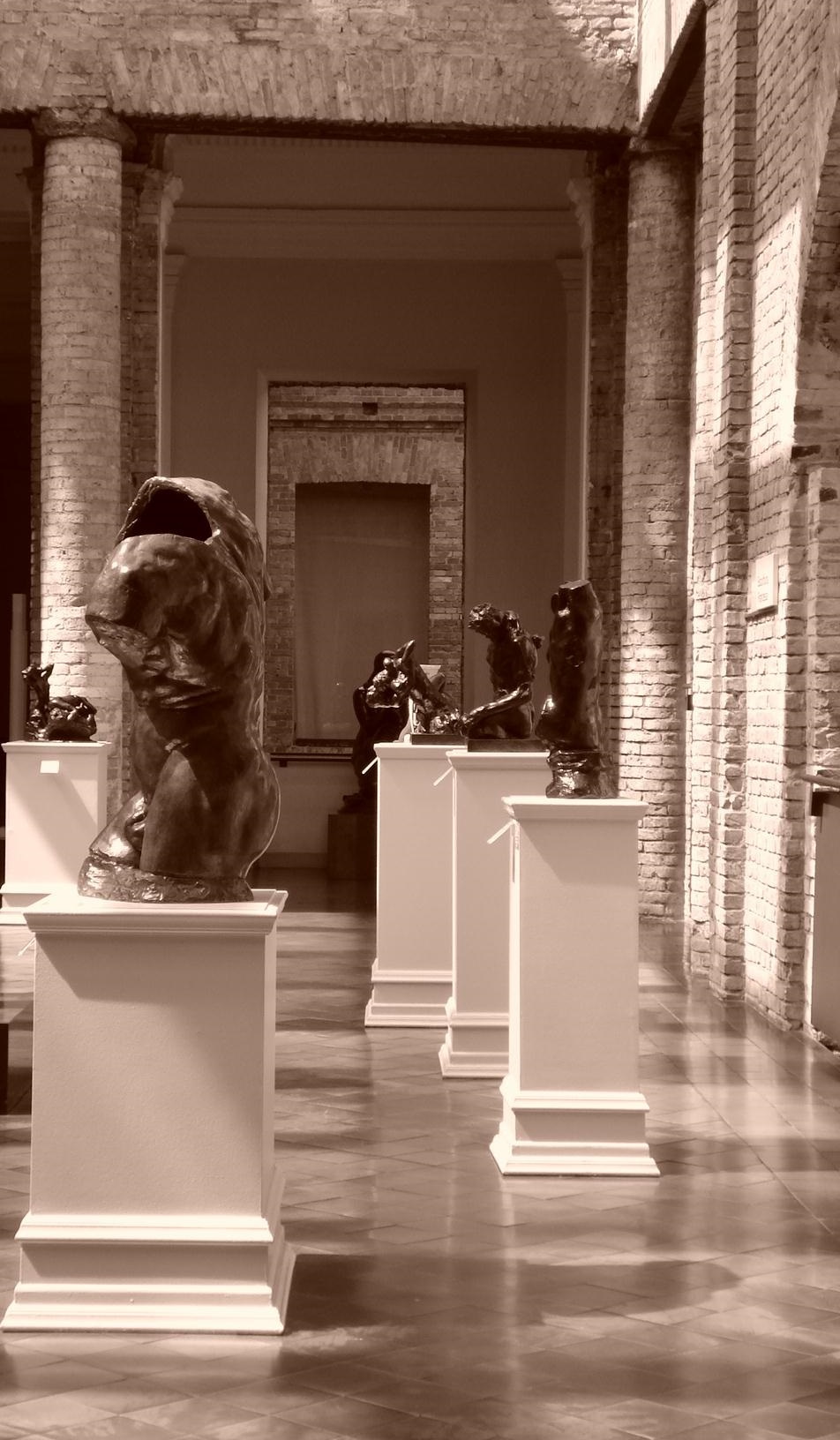
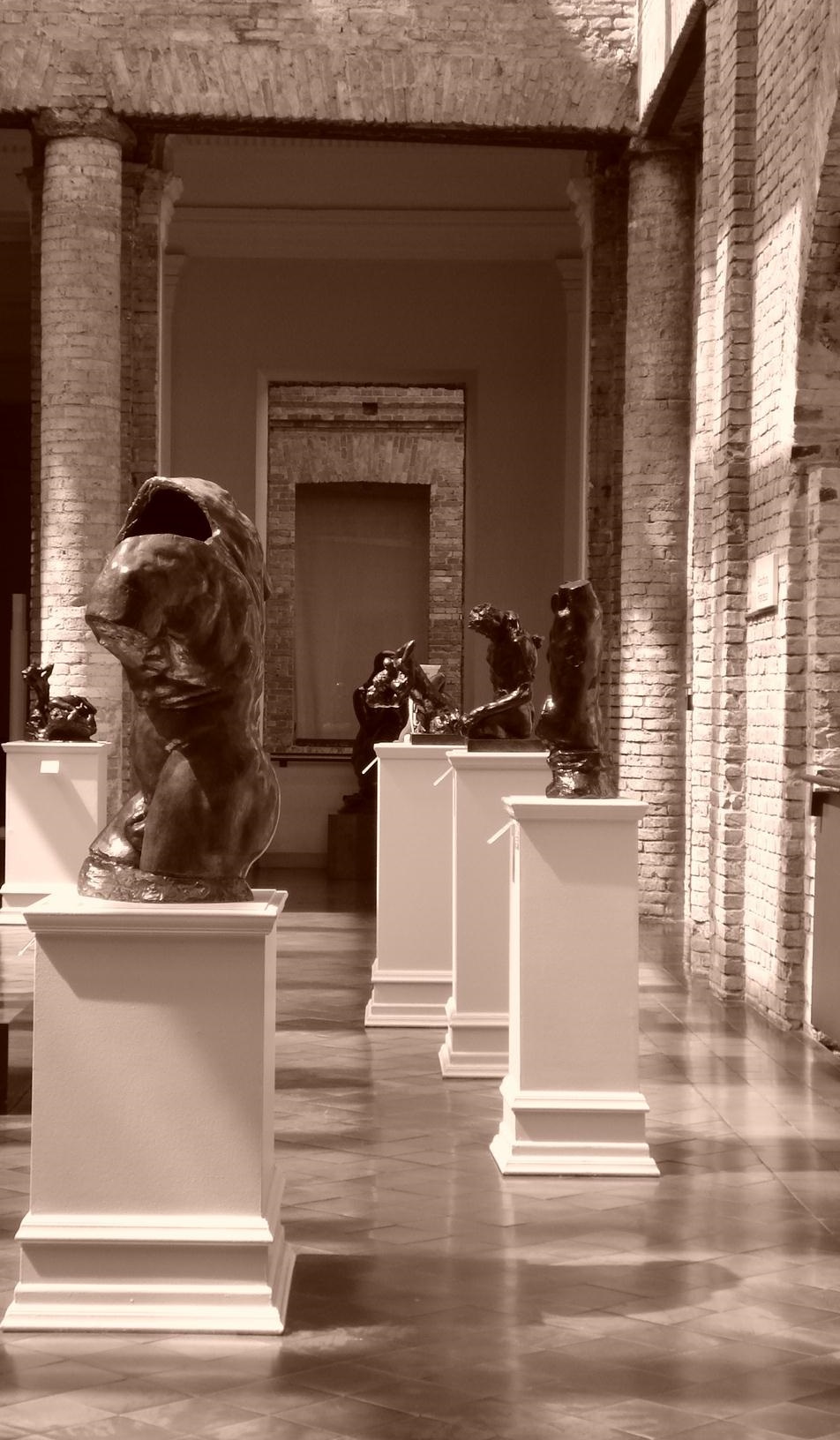
Photograph by Moyarte (Mônica Yamagawa) · CC BY-SA 4.0 European and Brazilian sculpture
Rodolfo Bernardelli's studio, bequeathed in 1937, and works by Auguste Rodin and Antoine Bourdelle donated by Banco Safra in 1998, shown alongside Victor Brecheret
The 1990s courtyards and walkways
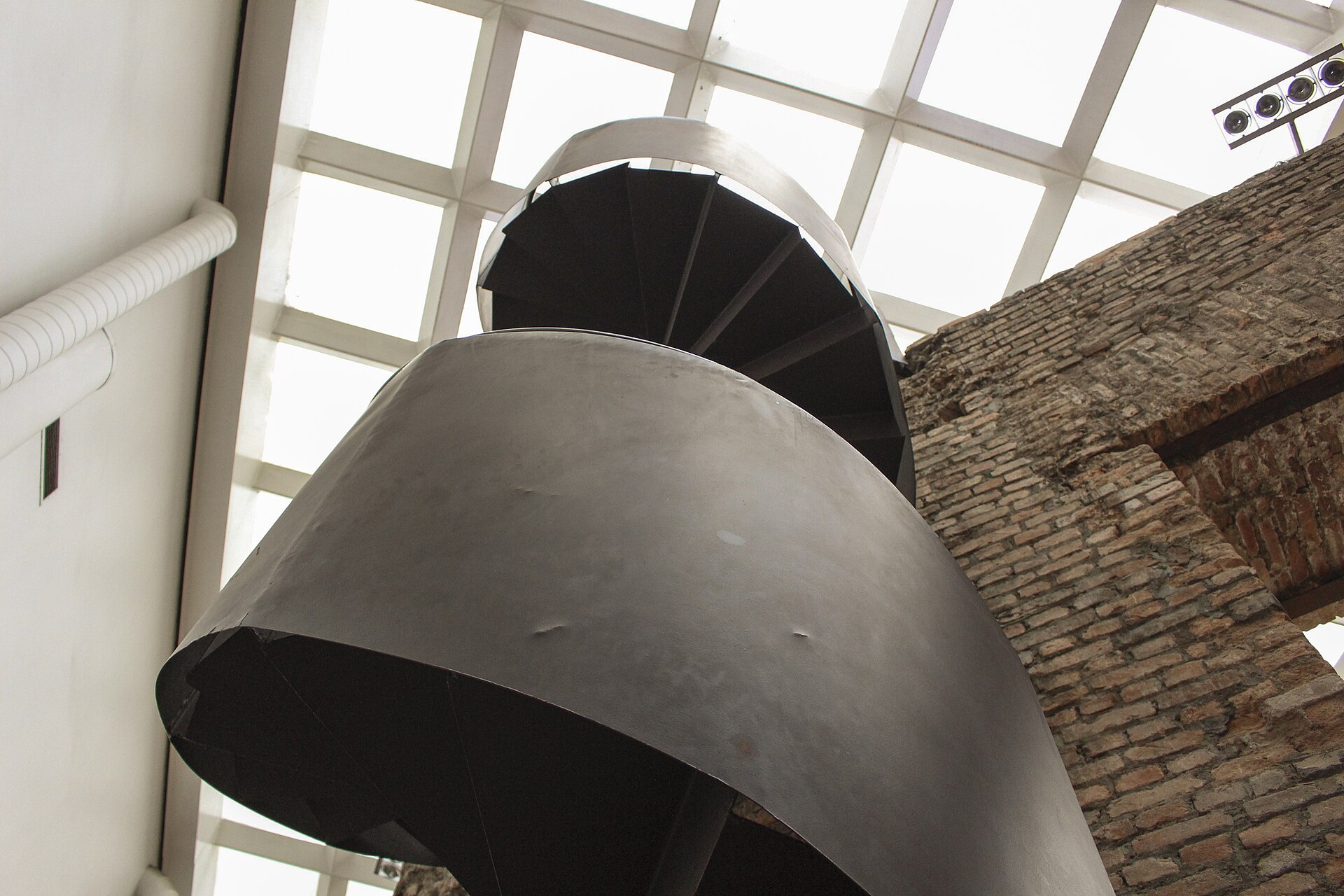
The two original ventilation courtyards of the 1900 building, roofed in steel and laminated glass by Paulo Mendes da Rocha's 1993-1998 renovation, with suspended metal walkways crossing between the exposed-brick galleries on either side
Later and loan collections
The 447-work Colecao Brasiliana of foreign artists who worked in Brazil, on loan from the Fundacao Estudar; the Colecao Nemirovsky, on loan since 2004; the Colecao Roger Wright, received in 2015; and a 387-print archive of Marcelo Grassmann
What to see first
Sao Paulo
Tarsila do AmaralBought by the museum in 1929, one of the defining canvases of Brazilian modernism to enter a public collection while the movement was still new6
Bananal
Lasar SegallPainted in 1928 and treated by the museum's own historians as a turning point for modern art inside the collection6
Caipira Picando Fumo
Almeida JuniorA key work of the academic Brazilian painting the Pensionato scheme built into the collection from 1912 onward6
Amolacao Interrompida
Almeida JuniorPainted in 1894, one of the artist's best-known genre scenes and a fixture of the nineteenth-century rooms6
Mestico
Candido PortinariThe first work by Portinari to enter a Brazilian public museum6
A Carregadora de Perfume
Victor BrecheretA signature sculpture by the artist most associated with Brazilian modernist sculpture6
Tropical
Anita MalfattiRepresents the artist whose 1917 exhibition is often cited as the opening shot of Brazilian modernism6
Bronzes from the 1998 Banco Safra gift
Auguste Rodin and Antoine BourdelleGave the Pinacoteca a European sculpture holding that few Brazilian museums of its size possess6
Exhibitions on now
- On now16 May 2026 to 14 Mar 2027Confirmed , 7 weeks ago
Past exhibitions here
An unfinished school becomes a gallery
The building at Praca da Luz was not built to be a museum. Ramos de Azevedo and Domiciano Rossi designed it between 1897 and 1900 as the headquarters of the Liceu de Artes e Oficios, a vocational arts-and-crafts school, in the Italian eclectic manner then favoured for Sao Paulo's civic architecture: three storeys turned around two internal courtyards that let light and air into the working floors, Riga pine brought in for the flooring, ceramic tile imported from France. The Liceu ran out of money before the building was finished. The planned dome was never raised, and sections of exterior wall were left in bare brick where render was supposed to go, a condition the building would carry, deliberately, for the rest of its life.
In November 1905 the State Government of Sao Paulo carved a gallery out of part of the unfinished structure and transferred twenty-six paintings, most of them from the Museu Paulista, to start it, dating the institution's founding to 24 December 1905. It shared the building with the school that had commissioned it, and for its first decades the gallery was the smaller tenant inside someone else's headquarters, not the other way round.
Grenades, a fire, and a forgotten museum
The twentieth century was not gentle to the building. During the 1924 Revolta Tenentista, an armed uprising against the federal government, the structure was hit by rifle fire and grenades and had to close. In 1930, after the revolution that put Getulio Vargas in power, the museum shut again and troops of the Primeira Legiao Paranaense were quartered inside it; a fire that same year destroyed much of the Liceu's own historical archive. Through the political instability of the 1930s and into the 1940s the collection itself was scattered across other government buildings, and a later recovery commission had to track down pieces that had gone missing in the moves, among them a neoclassical medallion attributed to Jacques-Louis David and ninety-three French engravings.
For most of the century the building did several jobs at once. The Liceu, a teacher-training school, a drama school and an arts conservatory all operated inside it alongside the gallery, and exhibition space stayed cramped until the last of the tenants, the state's Faculty of Fine Arts, finally moved out in 1989. Press coverage from the period is blunt about the result: a 1911 notice said nobody quite knew what the place had been created for, and by 1955 papers were calling it a forgotten museum. Sao Paulo's heritage authority, CONDEPHAAT, listed the building in 1982, protecting the fabric of a structure the city itself had mostly stopped visiting.
Paulo Mendes da Rocha's renovation
What changed the building's prospects was not a new wing but a decision to leave it alone in the right way. Between 1993 and 1998 the architect Paulo Mendes da Rocha, working with Eduardo Colonelli and Weliton Ricoy Torres, rebuilt the museum's services and circulation without disguising its unfinished nineteenth-century fabric. The two original courtyards, cut into the plan for ventilation rather than display, were roofed over in steel and laminated glass; slender suspended metal walkways were slung across them to connect the galleries on either side; the exposed brick that earlier generations had wanted covered was kept exposed, turned from an embarrassment into the building's clearest architectural statement. Climate control and security systems modern enough to host international loan exhibitions went in alongside the historic masonry rather than replacing it.
The renovation won the Mies van der Rohe Prize for Latin American Architecture, and it did what decades of heritage listing had not: it gave the Pinacoteca a building that could host the kind of exhibition that draws a crowd. The Rodin retrospective that followed in 2001 pulled more than two hundred thousand visitors on its own, a number the museum had never approached in its first ninety years.
What the collection holds
The Pinacoteca's holdings run to more than twelve thousand works, almost all of it Brazilian art from the nineteenth century to the present, and the earlier part of that collection was shaped by policy as much as taste. The Pensionato Artistico do Estado de Sao Paulo, set up in 1912 to fund Brazilian art students studying in Europe, required every scholarship holder to send back two copies of canonical European paintings and one original work of their own, which is why the nineteenth and early twentieth-century rooms are as academic as they are: Almeida Junior, Benedito Calixto, Pedro Weingartner and Antonio Parreiras all entered the collection this way.
Brazilian modernism took far longer to arrive on the walls than it did to happen. The Semana de Arte Moderna, the 1922 exhibition in Sao Paulo usually credited with starting the movement, is not reflected in the Pinacoteca's own rooms until a formal modernist gallery was finally set up in 1956, more than thirty years later. It now holds Tarsila do Amaral's Sao Paulo, bought in 1929; Lasar Segall's Bananal, from 1928 and treated by the museum's own historians as a turning point for modern art in the collection; Anita Malfatti; Di Cavalcanti; and Candido Portinari's Mestico, the first work by that artist to enter a Brazilian public museum.
Sculpture came into the collection in two large steps. Rodolfo Bernardelli's studio was bequeathed to the museum in 1937, and in 1998 Banco Safra donated a group of works by Auguste Rodin and Antoine Bourdelle, giving the Pinacoteca a European sculpture holding that most Brazilian museums of its size do not have. Later acquisitions have widened the collection further still: the four hundred and forty seven piece Colecao Brasiliana, works by foreign artists who worked in Brazil, has been on loan from the Fundacao Estudar since the mid 2000s; the Colecao Nemirovsky has been on loan since 2004; the Colecao Roger Wright arrived in 2015; and the museum holds a print archive of three hundred and eighty seven works by Marcelo Grassmann.
Inside the Pina Luz building today
Nineteen rooms of the Pina Luz building are given over to Pinacoteca: Acervo, the museum's standing survey of its own collection, opened in 2020 and showing roughly a thousand works by more than four hundred artists, a small fraction of total holdings chosen to walk a visitor from the academic nineteenth century through to modernism and beyond. The renovated courtyards sit at the centre of the route rather than off to one side of it: the steel-and-glass roofs and the suspended walkways that Mendes da Rocha added are as much a part of what a visitor sees as any single painting is. Fito Cozinha, the museum's cafe, operates in the building from Wednesday to Monday, and a shop stands just outside the ticket line, reachable without paying admission.
Pina Luz is one of three buildings that together make up the Pinacoteca de Sao Paulo. Pina Estacao, in a converted 1914 warehouse a short walk away, and Pina Contemporanea, opened in 2023 inside Parque da Luz, host the museum's temporary programme and its largest single gallery space respectively; one ticket covers all three. This record concerns the original Ramos de Azevedo building at Praca da Luz alone, since it is a different structure with a different history from its two younger siblings, and none of the facts recorded here should be read across to them.
From forgotten museum to one of Brazil's most visited
The visitor numbers trace the arc of the building's fortunes almost by themselves. Around 8,500 people came through in 1920, a figure that barely moved for decades. International loan exhibitions staged in 1995 to 1997, once the Mendes da Rocha renovation was under way, drew a combined 183,000 visitors, and the 2001 Rodin show alone brought more than 200,000. By 2014 annual attendance stood at roughly 425,000. It kept climbing after that: about 630,000 visitors in 2022 and a record 880,000 in 2023, a rise of around forty per cent in a single year. A museum a 1955 newspaper called forgotten is now one of the most visited art museums in Brazil.
What today's visitors say tracks that same recovery. Aggregate ratings run high, and the qualities reviewers return to again and again are the range of Brazilian art on view, the building itself treated as part of the exhibition rather than a container for it, and a quiet, unhurried atmosphere with wall texts reviewers describe as genuinely useful rather than decorative. The one recurring reservation is proportion rather than quality: with nineteen rooms carrying a survey of a twelve-thousand-work collection, some visitors leave feeling the galleries on view are smaller than the building's own scale would suggest.
What visitors say
Visitors consistently rate the Pinacoteca among the strongest museum experiences in Sao Paulo, praising the range of Brazilian art on view and the renovated building itself; the most common reservation is that the display feels smaller than the building's scale would suggest.
What is praised, what is criticised
- Praised: The range and organisation of Brazilian art on view, from nineteenth-century academic painting through modernism
- Praised: The renovated building itself, with the exposed-brick courtyards and steel walkways treated as part of the visit rather than a container for it
- Praised: A quiet, unhurried atmosphere with wall texts reviewers describe as genuinely useful
- Praised: A welcoming, family-friendly presentation
- Criticised: Some visitors find the galleries on permanent view modest relative to the size of the building, since well under a tenth of the collection's more than twelve thousand works is on display at any time
Ratings on other platforms
TripAdvisor: 4.7 from 14,062 ratings, read 26 August 2026
A platform average is a tertiary source: it moves, it is not audited, and we quote no visitor's words.
Questions about Pinacoteca de Sao Paulo
Where is Pinacoteca de Sao Paulo?
Praca da Luz, 2, Luz, Sao Paulo, SP 01120-010, Brazil.
How much does it cost to visit?
Standard admission: BRL 40; Half-price / student: BRL 20; Children up to 10: free; Visitors 60 and over: free. As confirmed 26 August 2026.
When is it open?
Wed-Mon 10:00-18:00. Closed: Tuesday. As confirmed 26 August 2026.
How do you get there?
Metro / CPTM: Luz station, about a two minute walk to the Pina Luz building; Bicycle: A rack with four spaces at the Pina Luz building; Car: Valet parking at Pina Luz, subject to capacity, Wednesday to Monday during opening hours.
What should you see first?
Sao Paulo (Tarsila do Amaral); Bananal (Lasar Segall); Caipira Picando Fumo (Almeida Junior); Amolacao Interrompida (Almeida Junior); Mestico (Candido Portinari); A Carregadora de Perfume (Victor Brecheret).
What we could not confirm
- Sources give the renovation years as either 1993-1998 or 1994-1998; this record follows the architecture-press account of 1993-1998.
- The exact number of paintings and their originating collection at the 1905 founding is given slightly differently across sources; this record follows the English Wikipedia account of twenty-six works, most from the Museu Paulista.
Images
Sources
- 1Pinacoteca do Estado de Sao Paulo, official website, home page pinacoteca.org.br/en/
- 2Pinacoteca do Estado de Sao Paulo, official website, How to get there / Pina Luz pinacoteca.org.br/en/visita/como-chegar/
- 3Pinacoteca do Estado de Sao Paulo, official website, Frequently asked questions pinacoteca.org.br/en/perguntas-frequentes/
- 4Pinacoteca do Estado de Sao Paulo, official website, General information (parking, cafe, shop, lockers, tickets, pets) pinacoteca.org.br/en/servicos/informacoes-gerais/
- 5Pinacoteca do Estado de Sao Paulo, English Wikipedia en.wikipedia.org/wiki/Pinacoteca_do_Estado_de_S%C3%A3o_Paulo
- 6Pinacoteca do Estado de Sao Paulo, Portuguese Wikipedia (history, incidents, visitor statistics, collection) pt.wikipedia.org/wiki/Pinacoteca_do_Estado_de_S%C3%A3o_Paulo
- 7Pinacoteca do Estado de Sao Paulo, Wikidata Q2095209 wikidata.org/wiki/Q2095209
- 8ArchDaily, Pinacoteca do Estado de Sao Paulo / Paulo Mendes da Rocha + Eduardo Colonelli + Weliton Ricoy Torres archdaily.com/894758/pinacoteca-do-estado-de-sao-paulo-paulo-mendes-da-rocha-plus-eduardo-colonelli-plus-weliton-ricoy-torres
- 9TripAdvisor, Pinacoteca do Estado de Sao Paulo reviews tripadvisor.com/Attraction_Review-g303631-d311969-Reviews-Pinacoteca_do_Estado_de_Sao_Paulo-Sao_Paulo_State_of_Sao_Paulo.html
- 10Pinacoteca do Estado de Sao Paulo, official website, Collection Highlights exhibition pinacoteca.org.br/en/programacao/exposicoes/destaques-do-acervo/