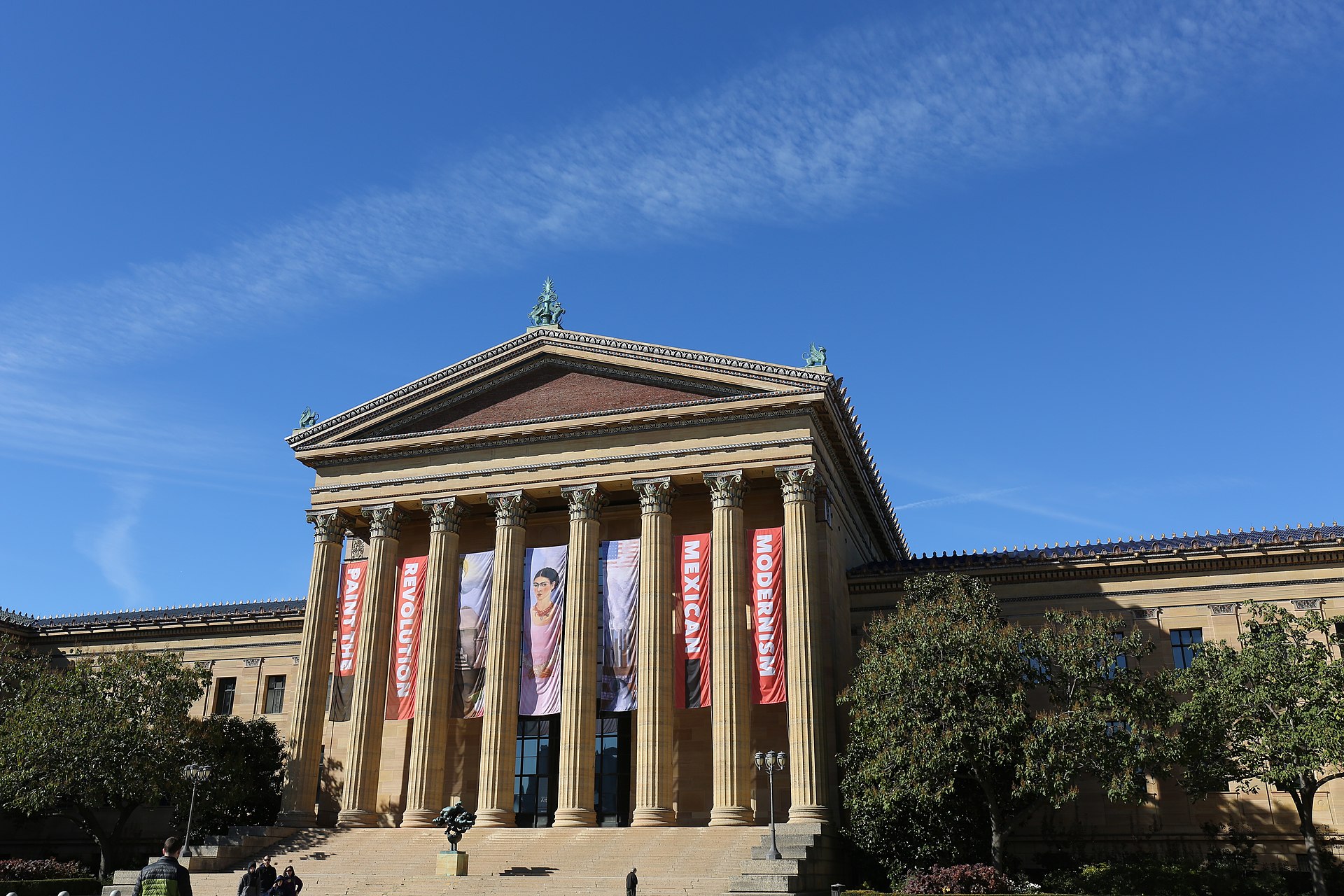
The Greek Revival north portico on Benjamin Franklin Parkway, seen in 2016 with an exhibition banner reading Mexican Modernism across the columns.
CC0Philadelphia Museum of Art
Museum · Founded 1876
Open, admission and hours confirmed 11 September 2026 · 19 sources
On this page 17 sections
ContentsClose
The museum's real depth is encyclopedic breadth rather than any single hoard. It holds Old Master, Impressionist and Post-Impressionist European painting alongside what it calls the most complete collection of Thomas Eakins anywhere, one of the largest arms and armor holdings in the United States, entire imported rooms and religious architecture from Asia and Europe rather than reconstructions of them, and a modern and contemporary collection built from two of the twentieth century's most consequential private gifts, the Arensberg and Gallatin collections.
| Kind | Museum |
|---|---|
| Founded | Chartered 1876 for the Centennial Exposition; the Fairmount building opened in stages from 1928 |
| City and country |  Philadelphia, United States Philadelphia, United States |
| Address | 2600 Benjamin Franklin Parkway, Philadelphia, PA 19130, United States |
| Website | philamuseum.org |
| Status | Open, confirmed |
| Record last verified |
Visiting
- Hours
- Monday10:00 to 17:00
- TuesdayClosed
- WednesdayClosed
- Thursday10:00 to 17:00
- Friday10:00 to 20:45Late opening
- Saturday10:00 to 17:00
- Sunday10:00 to 17:00
- Closed
- Tuesday and Wednesday, every week. Holiday hours differ from the weekly schedule above; the museum publishes them separately and this page does not reproduce them.
- Admission
- AdultsUSD 30
- Seniors (65 and over)USD 28
- Students with valid IDUSD 14
- Youths (18 and under)FreeFree, but a ticket is still required and can be reserved in advance or obtained at the admissions desk
- MembersFree
- Member GuestsUSD 15
- Member Guest Seniors (65 and over)USD 14
Free entry: Youths 18 and under, every day. Pay What You Wish (PWYW), first Sunday of every month. Active-duty military and their entire party, free from Armed Forces Day through Labor Day; a $4 per-ticket discount on up to two tickets the rest of the year. One personal attendant per visitor with a disability, any day- Tickets
- philamuseum.org/tickets The museum's own ticket page.
- Do I need to book?
- No for general admission; the museum encourages buying tickets online in advance, and some ticketed special exhibitions, such as the current Van Gogh's Sunflowers show, are booked by time slot
- Address
- 2600 Benjamin Franklin Parkway, Philadelphia, PA 19130, United States MapPublic transit SEPTA bus routes serve the museum area, and SEPTA subway or regional rail trains run to nearby 30th Street Station or Suburban Station in Center City
Bicycle Indego bike-share docks are nearby, and secure bike racks are provided in the parking garage and outside the North Entrance
Car and parking The museum sits at the western end of Benjamin Franklin Parkway, close to I-76 and I-676; its own parking garage is at 1 Anne d'Harnoncourt Drive, with additional lots on the West Terrace - Website
- philamuseum.org
- Telephone
- +1 215 763 8100
- [email protected]
Before you go how long, access, photography, bags, eating, shop
- How long to allow
- More than 200 galleries across three floors in the Main Building alone; the museum publishes no single recommended duration, and a first visit is realistically a matter of choosing departments rather than covering the building in one pass
- Access
- All floors are reachable by elevator, a color-coded map helps with wayfinding, one personal attendant per visitor with a disability is admitted free, service animals are permitted (emotional support animals are not), free audio tours are available for blind or partially sighted visitors, and large-print materials can be requested by email three weeks ahead of a visit
- Photography
- Personal photography without flash is welcome throughout the galleries
- Bags
- Coat check is available for umbrellas, bags and oversize items; food and drink are not allowed in the galleries and touching the art is not permitted
- Eating
- Stir offers table service; the Cafe serves fast-casual food on weekdays from 11:00 to 14:30 and weekends from 11:00 to 15:00; Ellis Coffee Bar is open Thursday through Monday; and the Balcony Cafe and the seasonal Rising Up Kitchen run Friday through Sunday
- Shop
- The Design Store and the American Gallery Store are both on the first floor near the West Entrance
Prices and hours change. We take them from the institution's own pages and print the day we read them, and you can check the current position at the source we used. Confirm before you travel.
What is inside
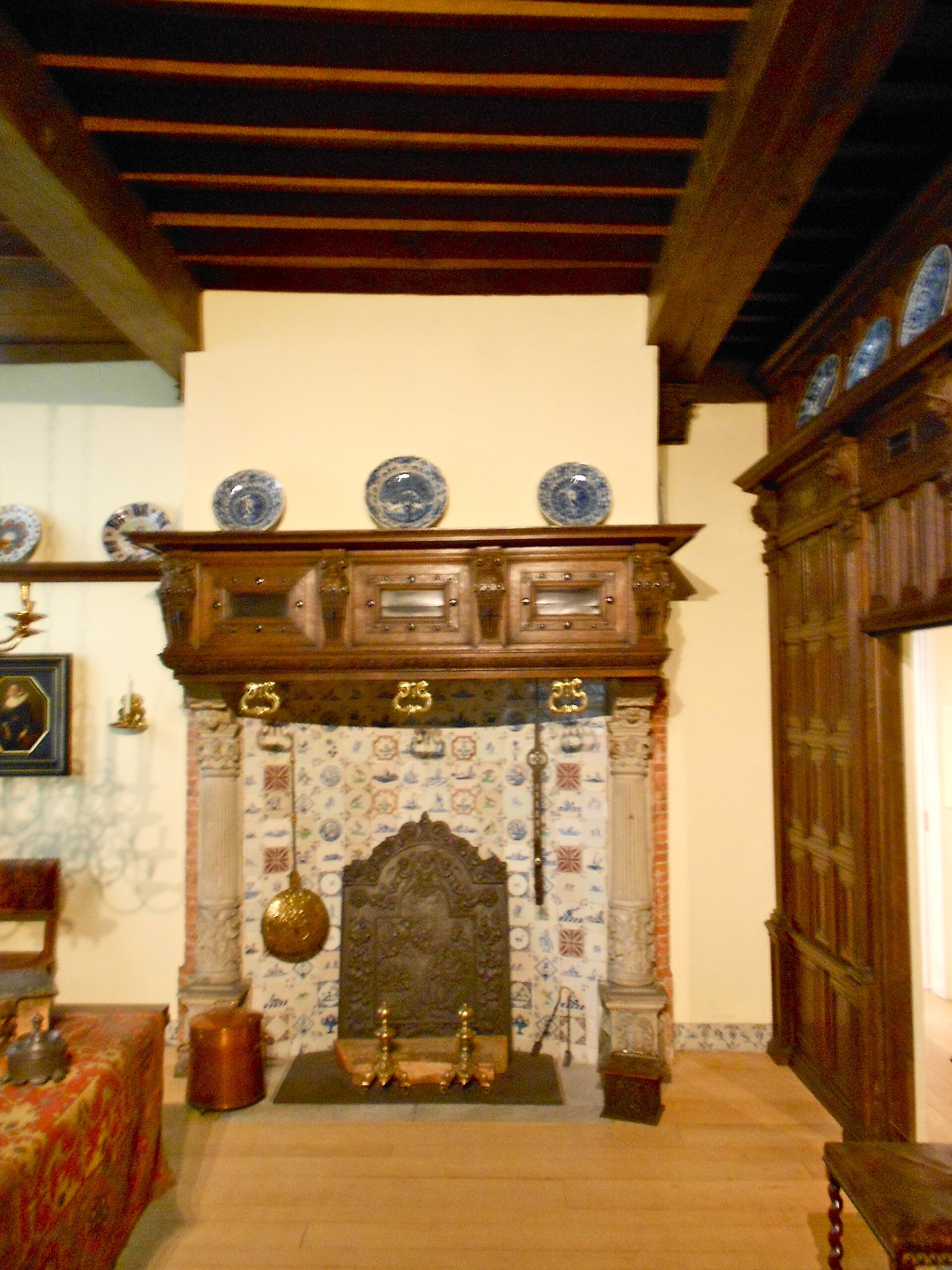
CC0 European Art
European painting, sculpture and decorative arts from the medieval period to the twentieth century, including Impressionist and Post-Impressionist paintings, tapestries, Auguste Rodin's sculpture shown here as well as at the separate Rodin Museum nearby, and reconstructed period rooms such as a seventeenth-century Dutch tavern interior and an eighteenth-century English drawing room from Robert Adam's Lansdowne House in London.
Asian Art
Chinese, Japanese, Korean, Persian, Turkish and South and Southeast Asian art across ceramics, paintings, sculpture, carpets and full architectural transplants, including a genuine ceremonial tea house installed around 1917, a Chinese palace reception hall, and a sixteenth-century South Indian temple hall built into the galleries rather than reproduced.
American Art
Three centuries of American painting, sculpture and decorative arts, anchored by what the museum describes as the most important collection of Thomas Eakins in the world, alongside Pennsylvania German folk art and colonial and federal-era Philadelphia furniture and silver.
Modern and Contemporary Art
Early modernism built from the Louise and Walter Arensberg and A.E. Gallatin collections, including Duchamp, Picasso, Brancusi and Mondrian, continuing into later acquisitions by Agnes Martin, Cy Twombly, Jasper Johns and Sol LeWitt, largely shown in the underground galleries added by the Gehry-designed Core Project.
Costume and Textiles
An encyclopedic costume and textile collection shown in rotation to protect the fabric, including Grace Kelly's own 1956 wedding dress and accessories, more than a century of clothing, and thousands of textile fragments spanning multiple continents.
Arms and Armor
The Carl Otto Kretzschmar von Kienbusch collection, the second-largest arms and armor holding in the United States, bequeathed in 1976 and comprehensive enough that the museum later identified and returned several pieces looted from Dresden during the Second World War.
Prints, Drawings and Photographs
More than 150,000 works on paper spanning six centuries, including the Alfred Stieglitz photography gift and thousands of Old Master prints from the 1928 Charles M. Lea bequest, ordinarily shown at the Ruth and Raymond G. Perelman Building across Pennsylvania Avenue, which the museum's own website listed as closed until further notice in August 2026.
What to see first
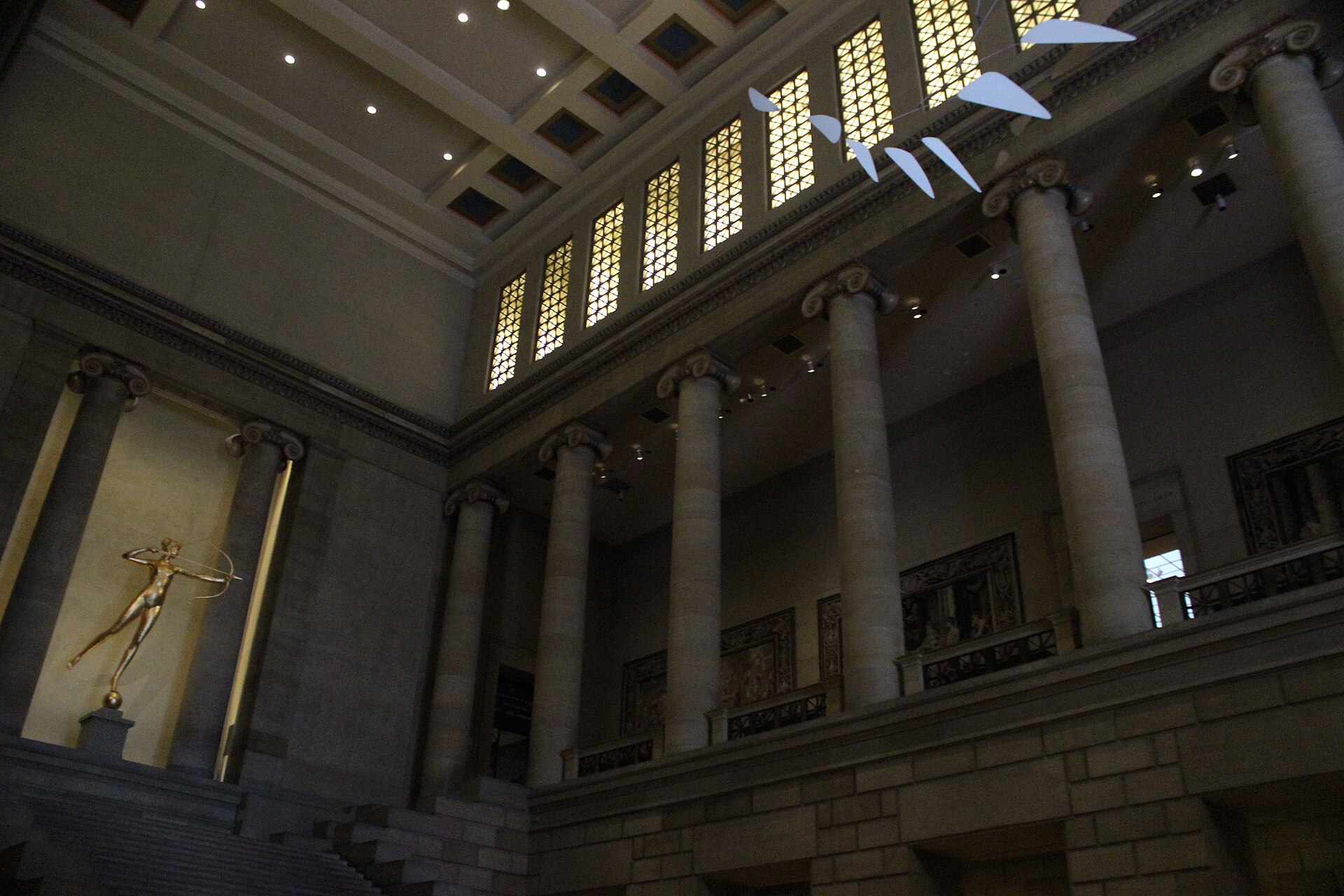
Diana
Augustus Saint-Gaudens, 1892-93The gilded bronze figure was made as a working weathervane for the original Madison Square Garden in New York before it came to preside over the museum's own Great Stair Hall, and has stood as the building's informal emblem ever since.7
Nude Descending a Staircase, No. 2
Marcel Duchamp, 1912One of the defining scandals of the 1913 Armory Show in New York, ridiculed by American critics on first sight and now housed in the Louise and Walter Arensberg Collection, the single gift that gave the museum its modern art department.8
Etant donnes
Marcel Duchamp, 1946-1966Duchamp's secret final work, built in private over two decades and revealed only through a pair of peepholes drilled into a wooden door; his widow and stepson installed it here in 1969, a year after his death, exactly as his instructions required.9
Sunflowers
Vincent van Gogh, 1889One of the artist's Arles sunflower still lifes, and the subject of the museum's own current exhibition on the series, drawing visitors specifically for this one canvas.10
Three Musicians
Pablo Picasso, 1921A large Synthetic Cubist masterpiece from the A.E. Gallatin gift, one of two nearly identical versions Picasso painted that year, the other hanging at the Museum of Modern Art in New York.11
Ceremonial Teahouse: Sunkaraku
Japan, installed c. 1917A genuine ceremonial tea house imported into the museum's Asian galleries rather than a reproduction, one of the earliest installations of its kind in an American museum and still used for tea demonstrations.12
The Agnew Clinic
Thomas Eakins, 1889Eakins' large-scale depiction of a surgical lecture at the University of Pennsylvania hangs here through 2027 as part of a joint survey with the Pennsylvania Academy of the Fine Arts, while its companion painting, The Gross Clinic, spends this rotation across town at PAFA under the two institutions' joint-ownership agreement.15
Grace Kelly's Wedding Dress and Accessories
Helen Rose, 1956The Philadelphia-born actress gave her own wedding gown to the museum shortly after marrying Prince Rainier III of Monaco, and it remains one of the most requested objects in the costume and textiles department.13
The Von Kienbusch armor collection
European and Ottoman armorers, 15th-18th centuriesBequeathed in 1976, this is the second-largest arms and armor holding in the United States, comprehensive enough that the museum was later able to identify and return several pieces stolen from Dresden during the Second World War.7
Exhibitions on now
Past exhibitions here
- Closed6 Jun to 11 Oct 2026Confirmed · check before you travel
- Closed12 Jul to 11 Oct 2026Confirmed · check before you travel
A temple built to finish a boulevard
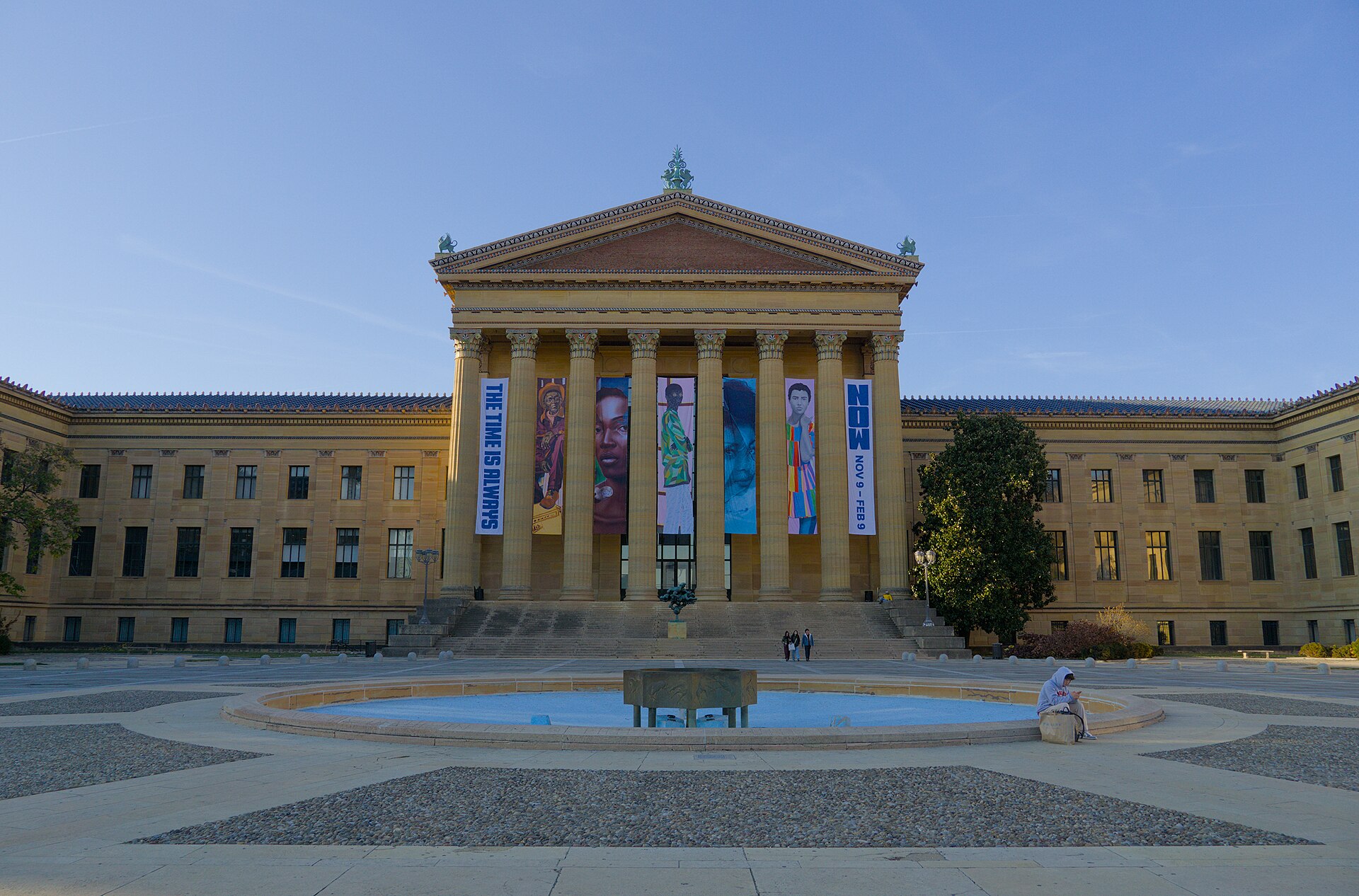
The building most visitors picture when they say the Philadelphia Museum of Art is a Greek Revival temple raised on Fairmount, the rocky hill that gives the neighborhood its name, at the head of Benjamin Franklin Parkway. Two architectural firms, Horace Trumbauer's office and Zantzinger, Borie and Medary, spent more than a decade working out whether Philadelphia should build one museum or several before construction began in 1919. Two architects inside Trumbauer's firm did the real design work: Howell Lewis Shay planned the building's massing, and Julian Abele, the first African American graduate of the University of Pennsylvania's architecture program, drew the classical details and chose the color of both the dolomite stone and the painted figures on the roofline. Wartime shortages delayed the building so badly that the first twenty galleries did not open until March 1928, with much of the interior still unfinished. Of the eight pediments planned for sculpture, only one was ever completed: Western Civilization, a set of painted terracotta figures by C. Paul Jennewein colored by Leon V. Solon, which won an architectural medal in 1933. The bronze griffins that line the roof became the museum's own symbol decades later, in the 1970s.
An industrial-art school that grew into an encyclopedic museum
The institution began nowhere near the parkway. It was chartered in 1876 to hold onto what the Centennial Exposition had proved that year: that Philadelphia could stage a world's fair. The art on show went into Memorial Hall, and in 1877 a companion school opened to train working craftsmen in drawing, design and modeling, becoming independent in 1964 and eventually part of the University of the Arts. Admission was charged at first, dropped in 1881, and stayed free until 1962. The nineteenth-century collection grew through gifts rather than purchase: Clara Jessup Moore's antique furniture, enamels and ivories from 1882, the Countess de Brazza's lace from 1894, and, most consequentially, Anna H. Wilstach's 1892 bequest of paintings and a half-million-dollar acquisition fund that bought works by James Abbott McNeill Whistler and George Inness within a few years. None of this collection moved into the Fairmount building until decades after it was chartered; the museum people visit today is a twentieth-century building holding a nineteenth-century founding gift.
What the galleries actually hold
Inside, the museum organizes itself less like a single building than a set of departments, each with its own centuries. The Asian galleries pair Chinese, Japanese, Korean, Persian and Indian ceramics, carpets, paintings and sculpture with imported architecture: a real ceremonial tea house, a Chinese palace reception hall, and a South Indian temple hall, rather than reproductions of any of them. The European galleries run from medieval church portals and a Dutch tavern room through Impressionism and Post-Impressionism to Auguste Rodin's sculpture, still shown here in the Main Building in addition to the dedicated Rodin Museum a short walk down the parkway, which is a separate institution the museum also administers. The American department holds what the museum calls the most complete collection of Thomas Eakins anywhere, alongside Pennsylvania German folk art and Philadelphia federal-era furniture and silver. Modern and contemporary art fills the underground galleries added in the 2010s, and more than 150,000 prints, drawings and photographs, along with the costume and textile collection, are ordinarily shown at the museum's Ruth and Raymond G. Perelman Building across Pennsylvania Avenue, which the museum's own website listed as closed until further notice as of August 2026, alongside its two historic houses in Fairmount Park.
Duchamp's last room, and the collectors who built modern Philadelphia
The museum's modern art department exists largely because of two private collectors rather than any museum-led buying program. Louise and Walter Arensberg's gift brought Marcel Duchamp's Nude Descending a Staircase, No. 2, ridiculed at the 1913 Armory Show in New York and now one of the most recognizable paintings in the building. A.E. Gallatin's gift brought Pablo Picasso's Three Musicians and early Mondrian abstractions among other things. Duchamp himself has a second, stranger presence here: Etant donnes, his secret final work, built in private over two decades and revealed to the public only through a pair of peepholes drilled into an old wooden door. Anne d'Harnoncourt, then a young curator and later the museum's longest-serving director, arranged its acquisition, and Duchamp's widow Alexina and stepson Paul Matisse installed it themselves in 1969, a year after his death and exactly as his instructions specified. A different kind of gift sits nearby in costume and textiles: Grace Kelly, born in Philadelphia, gave the museum her own 1956 wedding dress not long after marrying Prince Rainier III of Monaco, and it remains one of the most requested objects in the building.
Digging in without building out
By the mid-2000s the museum had run out of room without wanting to touch its Greek Revival facade, so in October 2006 it announced that Frank Gehry would design an expansion entirely underground, behind the east entrance stairs, adding tens of thousands of square feet of new gallery space without changing the building's outward appearance. The project slowed after director Anne d'Harnoncourt's death in 2008 and proceeded in phases under her successors, reopening the long-closed south street-level entrance in 2012 and completing its main phase, marketed as the Core Project, on 7 May 2021. Critics were, on the whole, generous: the Philadelphia Inquirer praised its restraint, the Wall Street Journal called it impressive, and the New York Times called the result substantial, largely because Gehry deliberately avoided his own signature swooping forms in favor of a design that deferred to Trumbauer and Abele's original building. Not every review was uncomplicated praise. The critic John Haber, writing on his own site shortly after the reopening, judged the new underground contemporary galleries safe rather than genuinely edgy, and questioned whether the museum's reconstructed period rooms present real history or only its appearance. The most contested single design element, a proposed window and amphitheater cut into the east entrance stairs, drew criticism from people who found it both too disruptive, and, from others, too tame.
Provenance claims and a boardroom in crisis
A museum with a collection this large is also, inevitably, a party to a great deal of ownership history, and the Philadelphia Museum of Art does not always come out of that history clean. In 2000, working from the Kienbusch armor collection's own published catalogs, the state art collections in Dresden identified five pieces that had been stolen from Germany during the Second World War, unknowingly bought by the collector in 1953, and the museum agreed to return them. A newer claim remains open: in December 2021, heirs of Piet Mondrian sued the museum for Composition with Blue, a 1926 painting that entered the collection through the A.E. Gallatin gift, arguing it was seized from a German museum as officially disfavored art in 1938 and passed through a New York gallery with a documented history of handling Nazi-seized work before Gallatin bought it in 1939; the claim was still unresolved in the reporting read for this page. The institution has also spent the past year in open crisis over its own leadership: director Sasha Suda was dismissed in November 2025 after an investigation the museum says found she awarded herself unauthorized pay increases, and Suda sued in response, calling the dismissal retaliation by a board faction resistant to change. The museum itself changed its public name to Philadelphia Art Museum in October 2025 and reversed the decision back to Philadelphia Museum of Art in February 2026, a reversal that landed in the middle of the Suda dispute rather than apart from it.
Visiting: hours, tickets and the rest of the campus
Plan around the museum's unusual closing pattern before anything else: the Main Building is dark both Tuesday and Wednesday, rather than the single weekday most museums choose, and open late on Friday evening until 8:45pm. General admission needs no advance booking, though the museum encourages buying online ahead for ticketed special exhibitions. Admission is free for anyone eighteen and under every day, free for active-duty military and their entire party from Armed Forces Day through Labor Day, and Pay What You Wish on the first Sunday of every month. The Main Building is only part of the campus: the Rodin Museum, a separate institution the same organization administers, sits further down the parkway and is not covered by this page; the Anne d'Harnoncourt Sculpture Garden sits just outside; and the Perelman Building and the two historic houses, Cedar Grove and Mount Pleasant, were all listed as closed until further notice on the museum's own website as of August 2026. None of that touches the one detail every visitor already half-expects: the steps up to the north or east entrance are the same steps Sylvester Stallone ran up in eight Rocky films, a bronze statue of the character stands at their base rather than their top after decades of relocation disputes, and climbing them remains free, year-round, with or without a ticket to anything inside.
What visitors say
Visitors consistently treat this as a full-day, sometimes overwhelming museum rather than a quick stop: praise clusters around the sheer range of the encyclopedic collection, the grandeur of the Greek Revival building and its steps, and the value of free admission for anyone eighteen and under, while the recurring complaint is less about the art than about logistics, chiefly the museum's unusual two-day closure and the crowding around headline special exhibitions.
What is praised, what is criticised
- Praised: the range and depth of the collection, which repeat visitors describe as rewarding multiple trips rather than a single afternoon
- Praised: the building itself, especially the Great Stair Hall and the view from the east entrance steps known informally as the Rocky Steps
- Praised: free admission for anyone eighteen and under every day, and the Pay What You Wish option on the first Sunday of the month, which budget-conscious visitors mention favorably
- Criticised: the museum's closing pattern, dark on both Tuesday and Wednesday rather than a single weekday, which recurring visitor comments say is easy to miss when planning a trip around a typical museum week
- Criticised: the newer underground contemporary galleries added in the 2021 Core Project, which the critic John Haber judged safe rather than genuinely edgy even while praising the renovation's restraint elsewhere in the building
Ratings on other platforms
Google: 4.8 from 23,169 ratings, read 12 August 2026
A platform average is a tertiary source: it moves, it is not audited, and we quote no visitor's words.
Questions about Philadelphia Museum of Art
Where is Philadelphia Museum of Art?
2600 Benjamin Franklin Parkway, Philadelphia, PA 19130, United States.
How much does it cost to visit?
Adults: USD 30; Seniors (65 and over): USD 28; Students with valid ID: USD 14; Youths (18 and under): free; Members: free. As confirmed 11 September 2026.
When is it open?
Monday 10:00-17:00; Tuesday closed; Wednesday closed; Thursday 10:00-17:00; Friday 10:00-20:45; Saturday 10:00-17:00; Sunday 10:00-17:00. Closed: Tuesday and Wednesday, every week. Holiday hours differ from the weekly schedule above; the museum publishes them separately and this page does not reproduce them. As confirmed 11 September 2026.
How do you get there?
Public transit: SEPTA bus routes serve the museum area, and SEPTA subway or regional rail trains run to nearby 30th Street Station or Suburban Station in Center City; Bicycle: Indego bike-share docks are nearby, and secure bike racks are provided in the parking garage and outside the North Entrance; Car and parking: The museum sits at the western end of Benjamin Franklin Parkway, close to I-76 and I-676; its own parking garage is at 1 Anne d'Harnoncourt Drive, with additional lots on the West Terrace.
What should you see first?
Diana (Augustus Saint-Gaudens, 1892-93); Nude Descending a Staircase, No. 2 (Marcel Duchamp, 1912); Etant donnes (Marcel Duchamp, 1946-1966); Sunflowers (Vincent van Gogh, 1889); Three Musicians (Pablo Picasso, 1921); Ceremonial Teahouse: Sunkaraku (Japan, installed c. 1917).
What we could not confirm
- The Mondrian heirs' Nazi-era restitution claim over Composition with Blue, filed in December 2021 and covered by Artnet News and other outlets, remained unresolved in the reporting read for this page.
- Sasha Suda's wrongful-termination lawsuit against the museum, filed after her November 2025 dismissal as director, remained in pre-trial filings in the most recent coverage read for this page; the museum maintains the claim is without merit.
- The Ruth and Raymond G. Perelman Building and the Cedar Grove and Mount Pleasant historic houses were all listed as closed until further notice on the museum's own website as of August 2026, with no reopening date given for any of the three.
Images
Sources
- 1Philadelphia Museum of Art, 'Main Building' (hours, admission, address, phone, dining, parking and policies), fetched 12 August 2026 philamuseum.org/main-building
- 2Philadelphia Museum of Art, 'Museum FAQs & Visitor Help' (Pay What You Wish, military admission, the Rocky statue, the reciprocal museum network), fetched 12 August 2026 philamuseum.org/faq
- 3Philadelphia Museum of Art, 'Contact Us' (visitor services and departmental email addresses), fetched 12 August 2026 philamuseum.org/contact
- 4Philadelphia Museum of Art, 'Accessibility Programs & Services', fetched 12 August 2026 philamuseum.org/accessibility
- 5Philadelphia Museum of Art, 'Our Campus' (annexes, Sculpture Garden; Perelman Building and the two historic houses listed closed until further notice), fetched 12 August 2026 philamuseum.org/our-campus
- 6Wikidata, Q510324 'Philadelphia Museum of Art' (identity, coordinates, inception date, official website), read 12 August 2026 wikidata.org/wiki/Q510324
- 7Wikipedia, 'Philadelphia Museum of Art' (building history, architects, collection departments, the Von Kienbusch collection and the Dresden armor restitution, looted art controversies, Rocky in popular culture), read 12 August 2026 en.wikipedia.org/wiki/Philadelphia_Museum_of_Art
- 8Wikipedia, 'Nude Descending a Staircase, No. 2' (confirms the painting is in the Louise and Walter Arensberg Collection of the Philadelphia Museum of Art), read 12 August 2026 en.wikipedia.org/wiki/Nude_Descending_a_Staircase,_No._2
- 9Wikipedia, 'Etant donnes' (installation history and the 1969 public unveiling at the Philadelphia Museum of Art), read 12 August 2026 en.wikipedia.org/wiki/%C3%89tant_donn%C3%A9s
- 10Philadelphia Museum of Art collection page, Vincent van Gogh, Sunflowers, 1889, fetched 12 August 2026 philamuseum.org/objects/59202
- 11Philadelphia Museum of Art collection page, Pablo Picasso, Three Musicians, 1921, fetched 12 August 2026 philamuseum.org/objects/53963
- 12Philadelphia Museum of Art collection page, Ceremonial Teahouse: Sunkaraku, c. 1917, fetched 12 August 2026 philamuseum.org/objects/41886
- 13Philadelphia Museum of Art collection page, Grace Kelly's Wedding Dress and Accessories, 1956, fetched 12 August 2026 philamuseum.org/objects/56621
- 14Philadelphia Museum of Art, exhibition page announcing the 2007 joint purchase and alternating display of The Gross Clinic with the Pennsylvania Academy of the Fine Arts, fetched 12 August 2026 philamuseum.org/exhibitions/thomas-eakins-the-gross-clinic
- 15The Philadelphia Inquirer, 2 August 2026, on the current display of The Agnew Clinic at the Philadelphia Museum of Art and The Gross Clinic at PAFA as part of the exhibition A Nation of Artists inquirer.com/arts/thomas-eakins-gross-agnew-clinic-pma-pafa-20260802.html
- 16Artnet News, on the Mondrian heirs' December 2021 lawsuit against the museum over Composition with Blue news.artnet.com/art-world/mondrians-heirs-seeking-return-philadelphia-museum-2047798
- 17The Philadelphia Inquirer, 10 November 2025, on Sasha Suda's lawsuit against the museum following her dismissal as director inquirer.com/arts/sasha-suda-lawsuit-pma-20251110.html
- 18John Haber, Haber's Art Reviews, 'Frank Gehry and the Expanded Philadelphia Museum of Art', on the 2021 Core Project reopening haberarts.com/philly21.htm
- 19Wanderlog venue page showing the museum's aggregate Google rating, read 12 August 2026 wanderlog.com/place/details/14329/philadelphia-museum-of-art