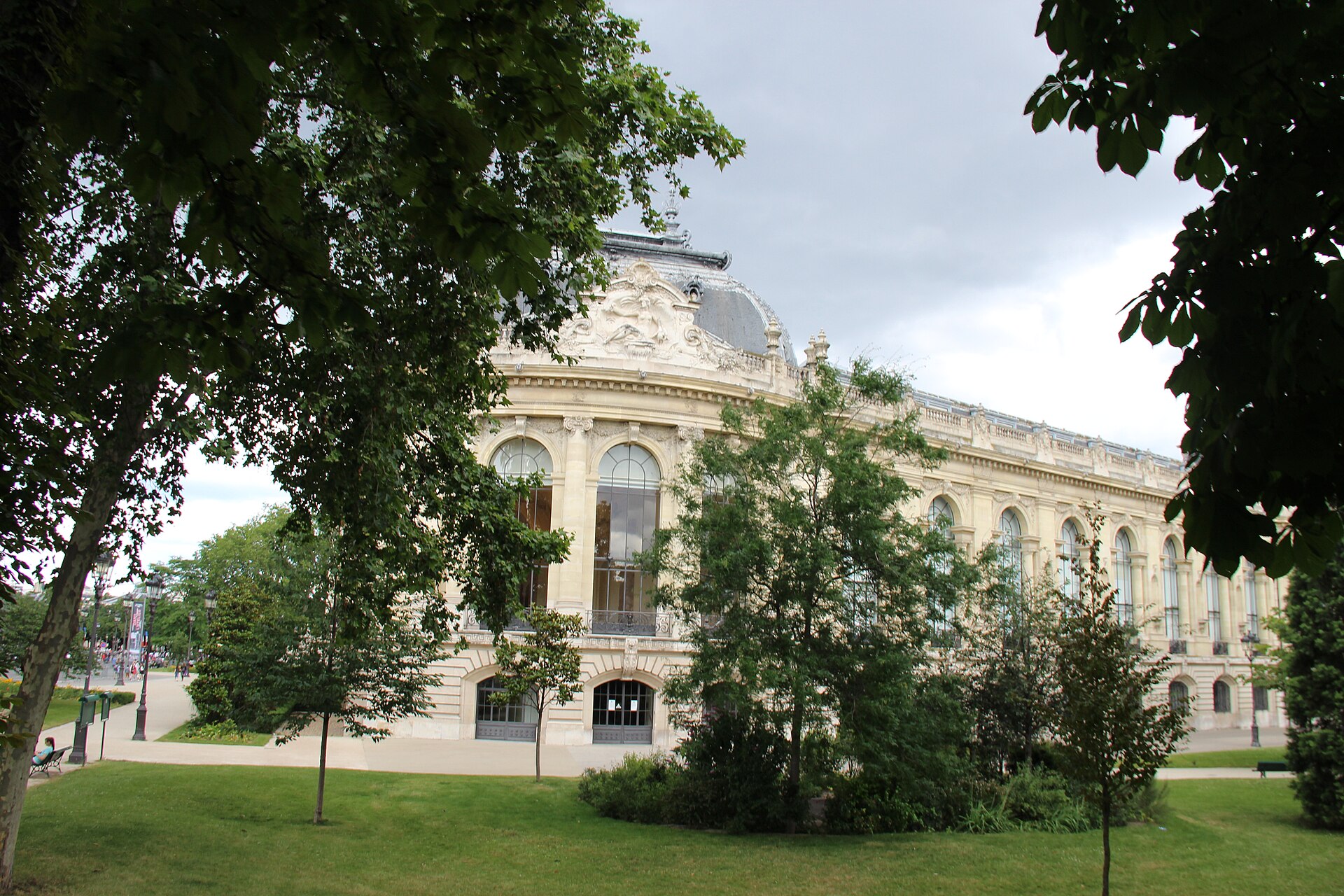
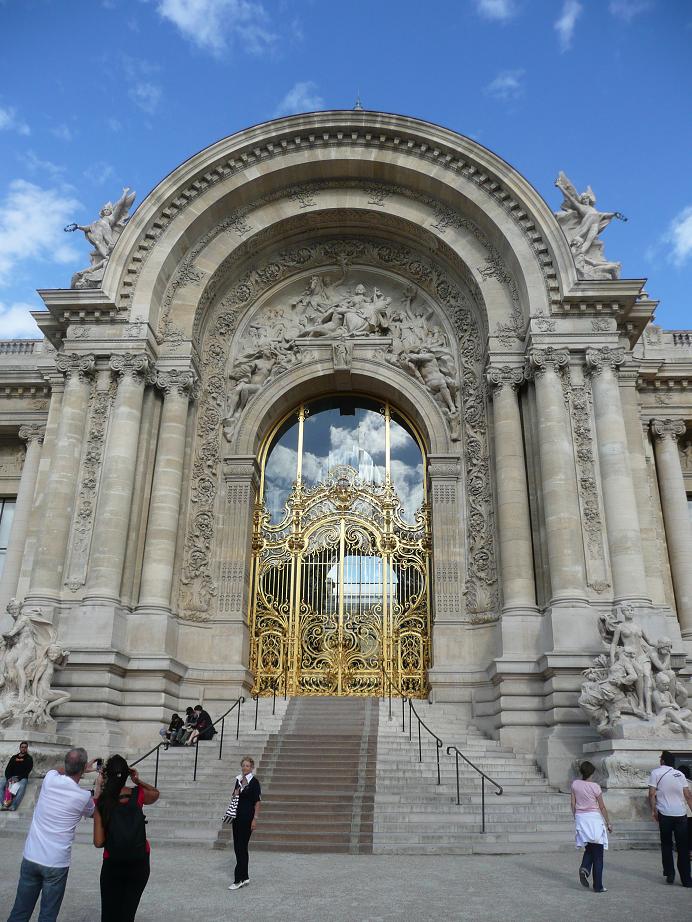
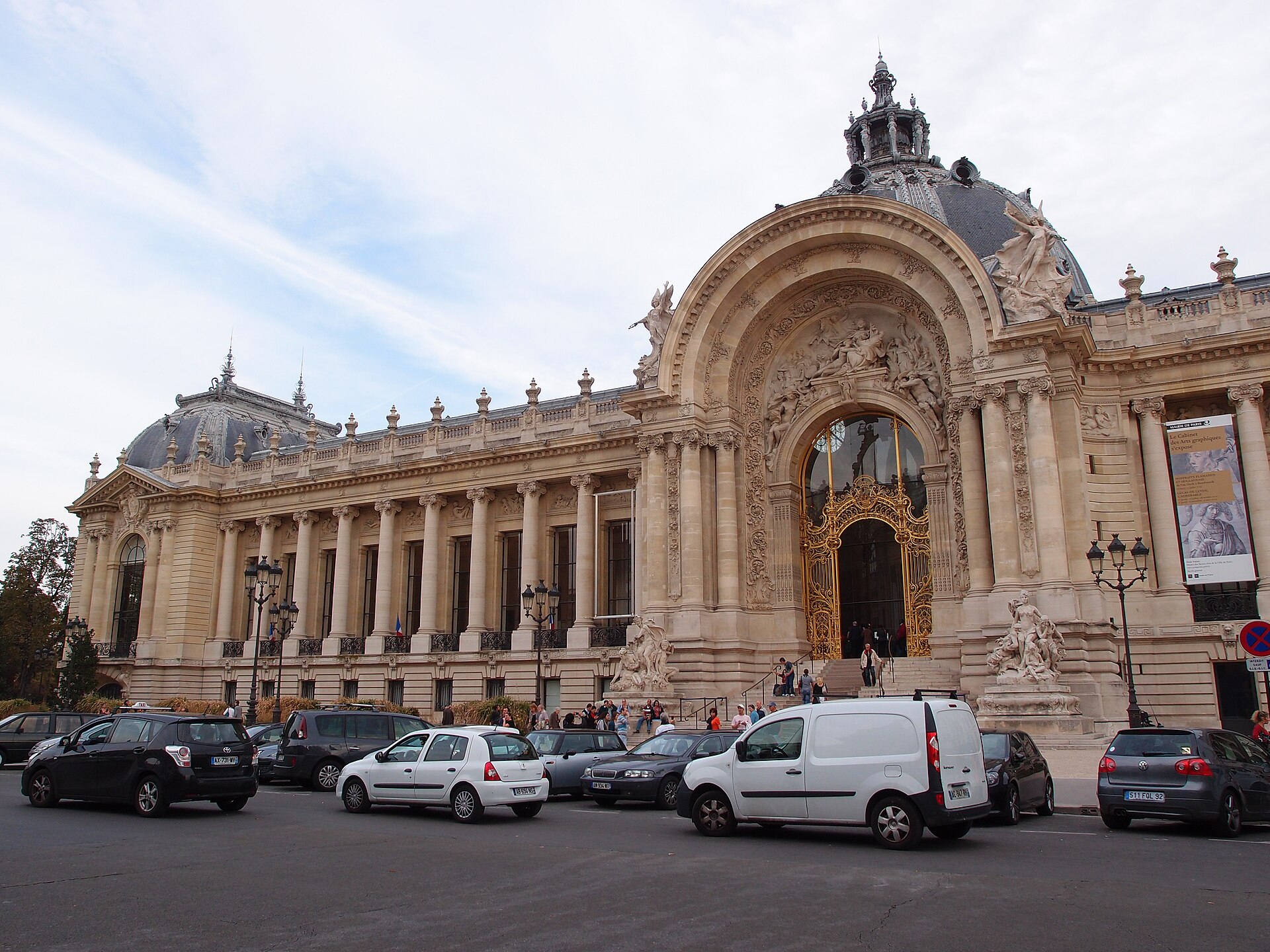
Charles Girault's Petit Palais, built for the 1900 Exposition Universelle, seen from Avenue Winston Churchill.
CC0Petit Palais, Musee des Beaux-Arts de la Ville de Paris
Museum · Petit Palais, musée des Beaux-Arts de la Ville de Paris · Founded 1897
Open, admission and hours confirmed 19 August 2026 · 11 sources
On this page 15 sections
ContentsClose
The Petit Palais's real strength is that it is two collections rather than one, assembled on different logics that were never reconciled into a single narrative. The Dutuit bequest gives it a pre-modern depth, especially in prints, that a 19th-century civic acquisitions programme alone would never have built; the City of Paris's own purchases and gifts give it a concentration of French 19th-century painting, sharpened by the 1945 Vollard bequest, that a purely antiquarian collection would never have reached either. The Cabal icon gift and the Tuck decorative-arts donation each fill a gap neither of the two main sources covered on their own. None of this was planned as a single acquisitions strategy; it is the accumulated result of four separate gifts landing on top of one founding civic collection, which is also why the museum's own presentation organises the material by period rather than by collector - the period rooms are the only structure that makes four unrelated collecting histories read as one museum.
| Local name | Petit Palais, musée des Beaux-Arts de la Ville de Paris |
|---|---|
| Kind | Museum |
| Founded | Built 1897-1900 for the 1900 Exposition Universelle; became the City of Paris's own Museum of Fine Arts (Palais des Beaux-Arts de la Ville de Paris) in 1902 |
| City and country |  Paris, France Paris, France |
| Address | Avenue Winston Churchill, 75008 Paris, France |
| Website | petitpalais.paris.fr |
| Status | Open, confirmed |
| Record last verified |
Visiting
- Hours
- MondayClosed
- Tuesday-Sunday10:00 to 18:00Galleries clear at 17:45, last entry 17:15; Friday and Saturday extend to 20:00 for temporary exhibitions only
- Closed
- Monday. 1 January. 1 May. 14 July. 25 December.
- Admission
- Permanent collectionFreeFree, no reservation, for everyone, every opening day, per the City of Paris's standing policy for its own museums
- Temporary exhibition (example: 'Karoly Ferenczy, Hungarian Modernity', current at time of this recheck), full priceEUR 17The named show is the one running on the museum's own exhibitions page at the time of this recheck (14 April-6 September 2026); the price itself is unchanged from the previous exhibition on this record (Pekka Halonen) at the last check, so this appears to be the museum's standing temporary-exhibition price band rather than a per-show figure, but temporary-exhibition prices do vary by show per the museum's own admission-charges page
- Temporary exhibition, reducedEUR 15Students and 18-26 year olds, teachers, families with three or more children, Paris-Famille card holders, members of named French art-historical societies and Pass Paris Senior holders qualify for this half-rate on production of proof, per the museum's own admission-charges page
- Temporary exhibition, freeFreeUnder 18, unemployed and social-assistance recipients, visitors with disabilities, artists and cultural professionals, City of Paris employees, named art/history student groups, and residents of Rome, all on production of proof, per the museum's own admission-charges page
Free entry: The permanent collection is free every day the museum is open; this is not a special promotional day but the museum's standing policy- Tickets
- billetterie-parismusees.paris.fr/content The museum's own ticket page.
- Do I need to book?
- No reservation needed for the free permanent collection; temporary exhibitions are ticketed separately
- Address
- Avenue Winston Churchill, 75008 Paris, France MapMetro Lines 1, 13 and 9 serve the museum according to its own access page
RER RER line C
Bus Multiple bus lines are named on the museum's own access page; specific route numbers were not itemised in what was fetched - Website
- petitpalais.paris.fr
- Telephone
- +33 1 53 43 40 00
Before you go how long, access, photography, bags, eating, shop
- How long to allow
- Two to three hours per Tripadvisor's own listing summary (tertiary, read 2026-08-19); the museum's own site still gives room counts and period divisions rather than a stated duration, so this figure should be replaced with a primary one if the museum publishes it
- Access
- The museum states directly that it is accessible to people with disabilities, with one named exception: the lobby on level 1 is not accessible
- Photography
- Permitted; the museum's own rules state visitors must not touch the works and that luggage over 40 centimetres is not allowed inside
- Bags
- Bags and luggage larger than 40 centimetres are not permitted inside; strollers are allowed
- Eating
- An on-site cafe and restaurant, named on the museum's own navigation as a distinct visitor service
- Shop
- Not itemised on the pages fetched for this record
Prices and hours change. We take them from the institution's own pages and print the day we read them, and you can check the current position at the source we used. Confirm before you travel.
What is inside
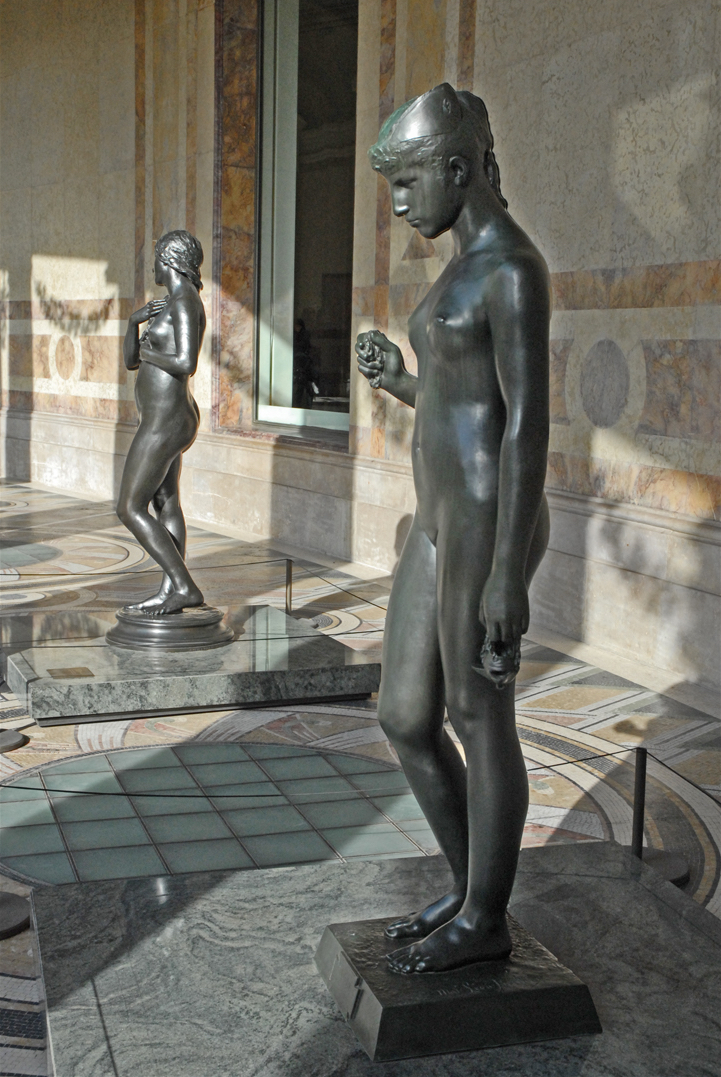
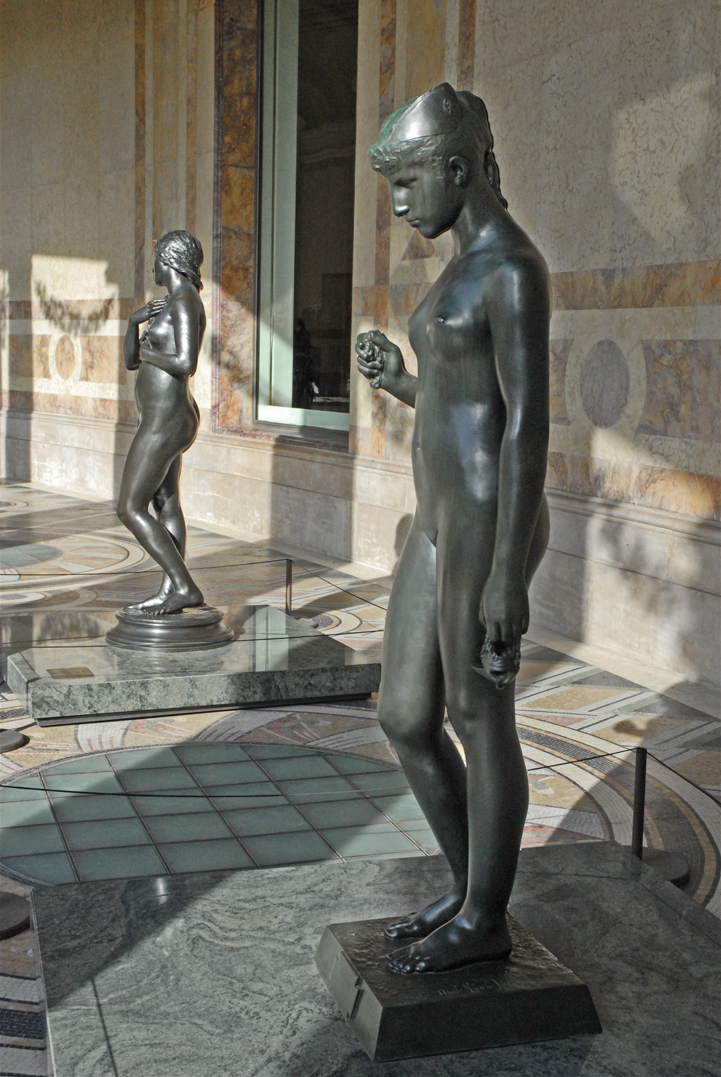
Photograph by Jean-Pierre Dalbéra from Paris, France · CC BY 2.0 The peristyle and interior garden
Architect Charles Girault's semi-circular garden at the heart of the building, enclosed by a richly decorated colonnaded peristyle that Girault designed to open views toward both the Champs-Elysees side and the courtyard itself; the museum displays bronze and marble sculpture along its galleries. The peristyle's Paul Baudouin fresco vault and marble facing underwent a 3.7 million euro restoration from mid-April 2025, targeted for completion by spring 2026; the museum's own project page, last checked in this recheck, does not itself confirm a completion date or state whether the space stayed open to visitors during the work.
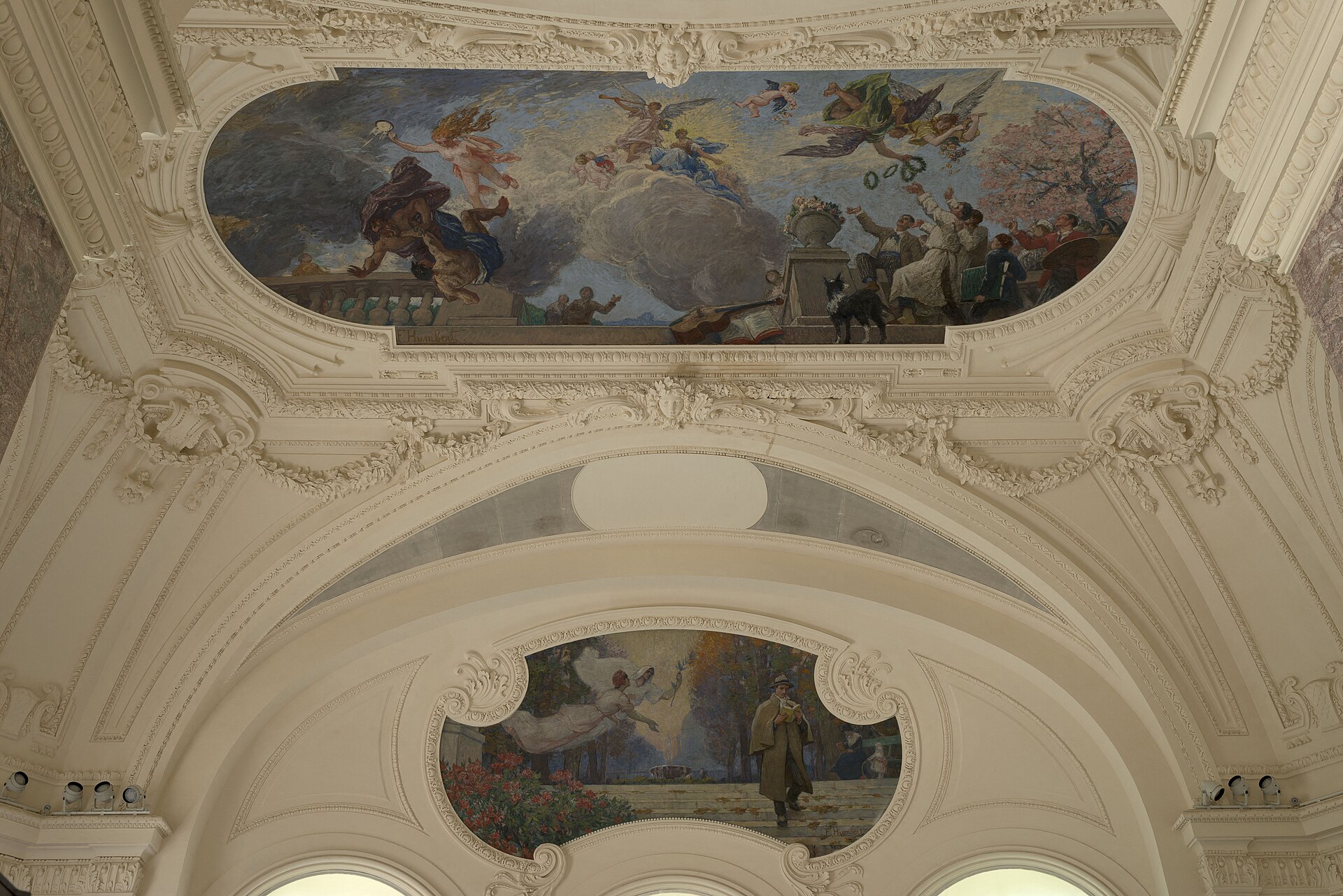
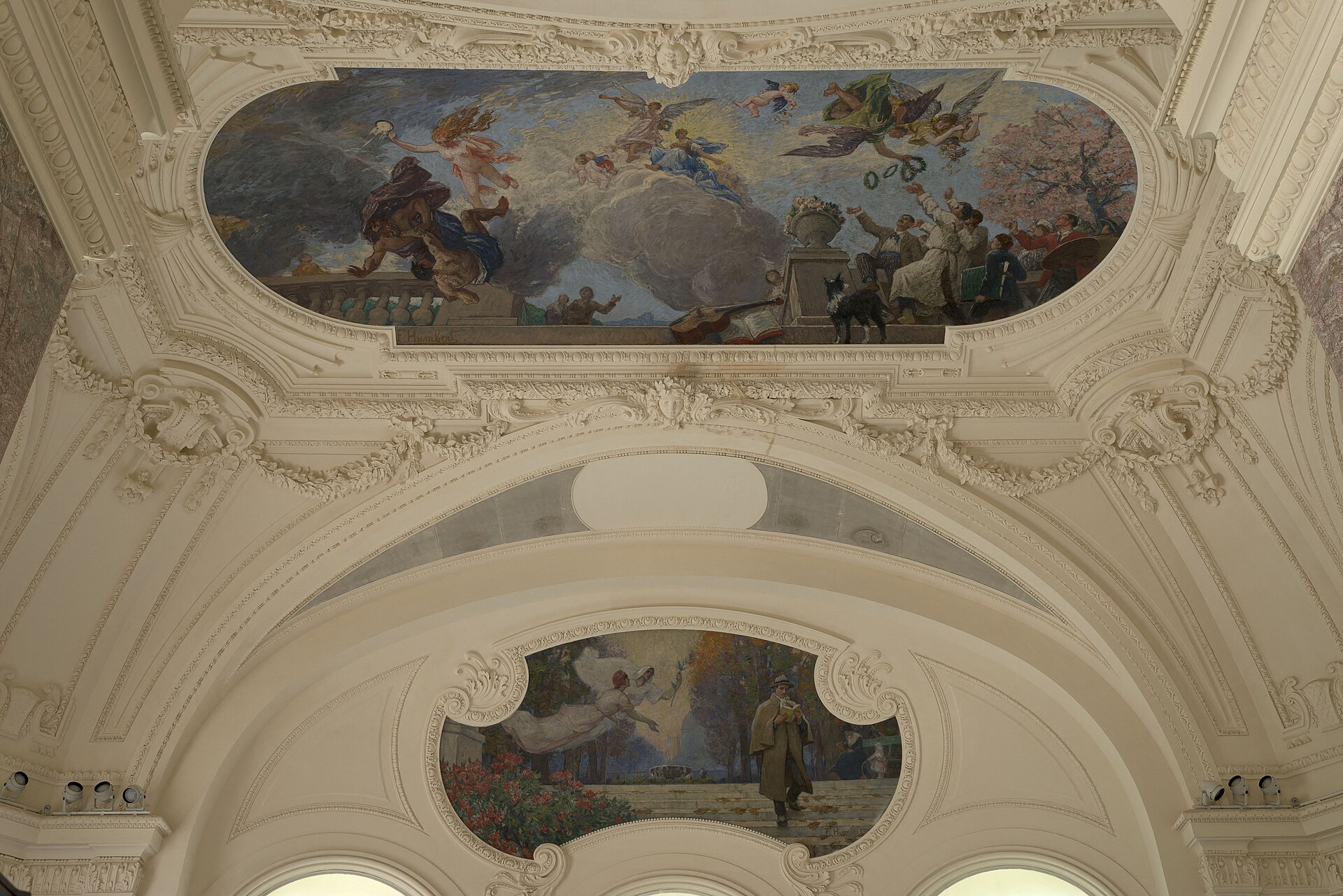
CC0 Entrance rotunda and painted pavilions
Between 1903 and 1925 the building received a two-decade decorative campaign: Albert Besnard's four Symbolist murals at the entrance, stained glass in the entrance rotunda, marble mosaics by the Italian craftsman Facchina, and ceiling frescoes by Ferdinand Humbert and Georges Picard in the north and south pavilions celebrating Parisian achievement.
Classical World and Icons galleries
Greek and Roman antiquities from the Dutuit bequest, and, since Roger Cabal's 1998 gift of 15th-18th century Greek and Russian icons, what the museum itself describes as the largest ensemble of icons in France.
Medieval, Renaissance and 17th-18th century galleries
The core of the Dutuit brothers' 1902 bequest: medieval and Renaissance paintings, drawings and decorative objects, 17th-century Flemish and Dutch paintings, and manuscripts and books, alongside 18th-century furniture, porcelain and tapestries from Edward and Julia Tuck's 1921 donation.
19th century and Paris 1900 galleries
Paintings and sculpture the City of Paris itself acquired directly from artists and the Salons from 1870 onward, including eight Courbet paintings given by his sister Juliette in 1906 and, from Ambroise Vollard's 1945 bequest, works by Cezanne, Renoir and Bonnard.
What to see first
Les Demoiselles du bord de Seine
Gustave CourbetStill named directly on the museum's own masterpieces page at this recheck (as 'Young Ladies on the Banks of the Seine, Summer'), one of the paintings that anchors a Courbet presence built up from the City of Paris's own purchases plus the eight further Courbets his sister Juliette gave in 1906.6
Knight, Death and the Devil (Bartsch 98)
Albrecht DurerOne engraving from the Dutuit bequest's complete sets of Rembrandt, Durer and Callot print work, some 12,000 engravings in total, which is what turns the Petit Palais from a painting gallery into one of the deeper print collections in Paris. Not among the small rotating set the masterpieces page displayed at this recheck, but no source found indicates it left the collection or the building.5
Jerome de Lalande
Jean-Honore FragonardA portrait by Fragonard named among the museum's own listed masterpieces at the previous check, from the 18th-century holdings the Tuck donation and the City of Paris's own purchases built up together. Not among the small rotating set the masterpieces page displayed at this recheck, but no source found indicates it left the collection or the building.5
Virgin of the Annunciation
Attributed to Giovanni di TurinoA Sienese Renaissance sculpture from the Dutuit bequest, representative of the pre-modern European material the brothers Auguste and Eugene Dutuit assembled before their collection passed to the city in 1902.5
The Dutuit print collection
Various, assembled by Auguste and Eugene DutuitComplete sets of prints by Rembrandt, Durer and Callot among roughly 12,000 engravings, funded to keep growing after 1902 by income from a Paris building the brothers bequeathed alongside the collection itself, an unusual case of a 19th-century donor endowing his own gift's future acquisitions.4
The Roger Cabal icon collection
Various Greek and Russian icon painters, 15th-18th centuryGiven to the museum in 1998, this single gift is what the museum itself credits with making it home to the largest ensemble of icons in France, a claim about an entire genre rather than a single object.4
The Ambroise Vollard bequest
Paul Cezanne, Pierre-Auguste Renoir, Pierre BonnardLeft to the museum in 1945 by Vollard, the dealer who gave Cezanne and Picasso their first Paris gallery shows; his bequest is the direct route by which major Cezanne, Renoir and Bonnard paintings entered a municipal rather than a national collection. Cezanne's Portrait of Ambroise Vollard itself was among the small set the museum's own masterpieces page featured at this recheck.5
Exhibitions on now
Past exhibitions here
Built for a World's Fair, kept as a museum
The Petit Palais exists because of a design competition rather than a museum's own commissioning brief. It was built alongside the Grand Palais on what is now Avenue Winston Churchill for the 1900 Exposition Universelle, after the architect Charles Girault won a competition held in 1894. Construction began on 10 October 1897 and finished in April 1900, a three-year build for a building meant, unusually for exhibition architecture of the period, to last: rather than being demolished once the fair closed, the Petit Palais was handed to the City of Paris as its own museum of fine arts, and formally became the Palais des Beaux-Arts de la Ville de Paris in 1902.
Girault's plan is a trapezium wrapped around a semi-circular interior garden, bordered by a richly decorated peristyle that opens sightlines both outward to the Champs-Elysees side and inward to the courtyard, a building designed to be walked around as much as walked through. The decoration took twenty-two years longer than the building itself: between 1903 and 1925 Albert Besnard painted four Symbolist murals at the entrance, Cormon and Roll decorated further galleries, Ferdinand Humbert and Georges Picard added ceiling frescoes to the north and south pavilions celebrating Paris itself, Paul Baudouin revived Renaissance fresco technique for vine and seasonal scenes around the garden peristyle, Maurice Denis painted a history of French art on the cupola above the south-east staircase, and the Italian craftsman Facchina laid the marble mosaics throughout. A building conceived to be temporary ended up more elaborately finished than most museums built to last from the start.
A collection built from two very different sources
The Petit Palais's holdings come from two directions that never fully merge into one story. One is civic: paintings and sculpture the City of Paris itself bought directly from artists and from the Salons from 1870 onward, the material that opened with the building in 1900 and grew through direct gifts such as the eight Courbet paintings his sister Juliette gave in 1906 and, in 1945, dealer Ambroise Vollard's bequest of paintings by Cezanne, Renoir and Bonnard. The other is private and pre-modern: the 1902 bequest of the brothers Auguste and Eugene Dutuit, whose taste ran to Greek and Roman antiquities, medieval and Renaissance painting and sculpture, 17th-century Flemish and Dutch painting, and roughly 12,000 engravings including complete sets by Rembrandt, Durer and Callot. The Dutuits left more than objects: they also bequeathed a Paris building whose rental income has kept funding pre-modern acquisitions for the museum ever since, a donor mechanism built to outlive the donor's own eye rather than freeze it in 1902.
Two later gifts filled in what neither original source covered. Edward and Julia Tuck's 1921 donation brought 18th-century decorative arts, porcelain, furniture and tapestries the civic collection had never prioritised, and Roger Cabal's 1998 gift of Greek and Russian icons spanning the 15th to 18th centuries is, in the museum's own account, what makes it home to the largest ensemble of icons anywhere in France, an entire genre effectively arriving through one collector's donation rather than a century of institutional purchasing.
A free museum with a moving boundary
Every municipal museum the City of Paris runs shares a policy the state's national museums do not: permanent collections are free, every open day, with no booking required. That policy is not a promotional gesture at the Petit Palais; it is the whole reason the museum can put 43,000 works, out of a wider municipal collections database of roughly 336,000 across 14 Paris museums, in front of the public without a ticket gate. What is not free is whatever temporary exhibition happens to be running in a given season, priced and booked separately through the city's own museums ticketing platform. The practical effect is a boundary that moves: a visitor who has not checked which show is currently on can walk in expecting an entirely free museum and discover, only once inside, that one wing or gallery has been given over to a ticketed exhibition for the length of its run.
What renovation has closed and reopened
A building this heavily decorated needs constant conservation, and the museum has not hidden that its galleries go dark in sections rather than staying permanently complete. A renovation running from 2015 to 2018 closed the rooms given over to Romantic-period painting, to Eastern Christian art, and to a dedicated 19th-century sculpture gallery, reopening them only once the work was finished rather than keeping a reduced version open throughout. A separate, more recent project restored the peristyle itself: a 3.7 million euro campaign, largely funded by the banking group BPCE, began in mid-April 2025 to treat a Paul Baudouin fresco vault of more than 1,000 square metres, damaged by decades of humidity, leaks and pollution, alongside the peristyle's roofing, pediments and marble facing, with completion targeted for spring 2026. The museum's own accessibility statement is similarly specific rather than blanket: it states plainly that the museum is accessible to people with disabilities except for the level-1 lobby, naming the one part of the building the general claim does not cover rather than leaving the gap undisclosed.
A free museum's odd position next to its ticketed neighbour
The Petit Palais and the Grand Palais were built as a matched pair for the same 1900 fair, facing each other across what is now Avenue Winston Churchill, and they have led almost opposite institutional lives since. The Grand Palais stayed an event and exhibition space, drawing over two million visitors a year for trade fairs, fashion shows and blockbuster loan exhibitions under paid entry. The Petit Palais became a permanent, free civic museum instead, recording 1,187,637 visitors in 2023 on a collection nobody has ever had to buy a ticket to see. The two buildings share an architectural birth and a name that differs by only one word, and visitors crossing the avenue between them cross, without any sign announcing it, from a paid national exhibition hall into a free municipal museum and back.
What visitors say
Visitors consistently describe the Petit Palais as one of the best-value stops in Paris precisely because the permanent collection costs nothing, and reviews lean toward calling it an underrated alternative to the crowded Louvre and Orsay. The building itself, Charles Girault's peristyle and interior garden in particular, is praised as highly as anything inside it.
What is praised, what is criticised
- Praised: free, unbooked entry to the entire permanent collection, every open day
- Praised: Charles Girault's building and its semi-circular interior garden and peristyle, praised independently of the art inside it
- Praised: the depth of specific holdings most visitors do not expect from a free municipal museum, particularly the Dutuit print collection and the Roger Cabal icon collection, the largest in France
- Criticised: the museum's own accessibility page names one specific gap rather than claiming full access: the level-1 lobby is not accessible to people with disabilities
- Criticised: a 2015-2018 renovation closed the Romantic-period rooms, the Eastern Christian art galleries and the sculpture gallery for years at a stretch, the most recent example of how periodically large sections of the free collection have gone dark for renovation
- Criticised: the free/paid boundary is not fixed: it moves with whatever temporary exhibition is currently running, so a visitor who has not checked in advance which show is on can arrive expecting the whole museum to be free and find part of it ticketed
Ratings on other platforms
Tripadvisor: 4.5 from 2,544 ratings, read 19 August 2026
A platform average is a tertiary source: it moves, it is not audited, and we quote no visitor's words.
Questions about Petit Palais, Musee des Beaux-Arts de la Ville de Paris
Where is Petit Palais, Musee des Beaux-Arts de la Ville de Paris?
Avenue Winston Churchill, 75008 Paris, France.
How much does it cost to visit?
Permanent collection: free; Temporary exhibition (example: 'Karoly Ferenczy, Hungarian Modernity', current at time of this recheck), full price: EUR 17; Temporary exhibition, reduced: EUR 15; Temporary exhibition, free: free. As confirmed 19 August 2026.
When is it open?
Monday closed; Tuesday-Sunday 10:00-18:00. Closed: Monday. 1 January. As confirmed 19 August 2026.
How do you get there?
Metro: Lines 1, 13 and 9 serve the museum according to its own access page; RER: RER line C; Bus: Multiple bus lines are named on the museum's own access page; specific route numbers were not itemised in what was fetched.
What should you see first?
Les Demoiselles du bord de Seine (Gustave Courbet); Knight, Death and the Devil (Bartsch 98) (Albrecht Durer); Jerome de Lalande (Jean-Honore Fragonard); Virgin of the Annunciation (Attributed to Giovanni di Turino); The Dutuit print collection (Various, assembled by Auguste and Eugene Dutuit); The Roger Cabal icon collection (Various Greek and Russian icon painters, 15th-18th century).
What we could not confirm
- The exact street number on Avenue Winston Churchill was not confirmed in the sources fetched for this record; the coordinates given (48.86603, 2.31456) and the avenue name are sourced, the street number is not.
- No wartime looted-art (MNR) provenance case specific to the Petit Palais was found in the sources used here; that is an absence in this research, not a confirmed finding that no such case exists, and should not be read as a clearance.
- The museum's own restoration project page for the peristyle, last read 2026-08-19, does not itself state a completion date or confirm the spring-2026 target was met; press coverage located in this recheck (News Tank Culture, Paris ZigZag) discusses the same spring-2026 target but was not itself treated as a primary source for this record. The next recheck should confirm directly from the museum whether the restoration is finished.
Images
Sources
- 1Wikidata, Q820892, Petit Palais (identity, coordinates) wikidata.org/wiki/Special:EntityData/Q820892.json
- 2Petit Palais, Basic information (hours, admission, phone, accessibility, visit policies), re-read 2026-08-19 petitpalais.paris.fr/en/plan-your-visit/basic-information
- 3Petit Palais, Building history (Girault, 1900 Exposition, decorative campaign), re-read 2026-08-19 petitpalais.paris.fr/en/the-petit-palais/building-history
- 4Petit Palais, History of the collections (Dutuit, Tuck, Vollard, Cabal), re-read 2026-08-19 petitpalais.paris.fr/en/content/history-collections
- 5Petit Palais, Museum masterpieces, re-read 2026-08-19 petitpalais.paris.fr/en/collections/chefs-doeuvre
- 6Petit Palais, Collections presentation (organisation by period), re-read 2026-08-19 petitpalais.paris.fr/en/collections/presentation
- 7Wikipedia (English), Petit Palais (, for founding dates and 2023 visitor figure) en.wikipedia.org/wiki/Petit_Palais
- 8Tripadvisor, listing for Petit Palais, Paris (aggregate rating and typical-visit duration, , read 19 August 2026) tripadvisor.com/Attraction_Review-g187147-d232167-Reviews-Petit_Palais-Paris_Ile_de_France.html
- 9Petit Palais, Admission charges (full tier breakdown including reduced and free-entry categories), read 2026-08-19 petitpalais.paris.fr/en/plan-your-visit/admission-charges
- 10Petit Palais, current and upcoming exhibitions listing, read 2026-08-19 petitpalais.paris.fr/en/expositions
- 11Petit Palais, Restoration of the peristyle of the Petit Palais (project scope, funding, timeline), read 2026-08-19 petitpalais.paris.fr/en/content/restoration-peristyle-petit-palais