Olduvai Gorge Museum
Museum · Founded 1970
Open, admission and hours confirmed 18 September 2026 · 13 sources
On this page 15 sections
ContentsClose
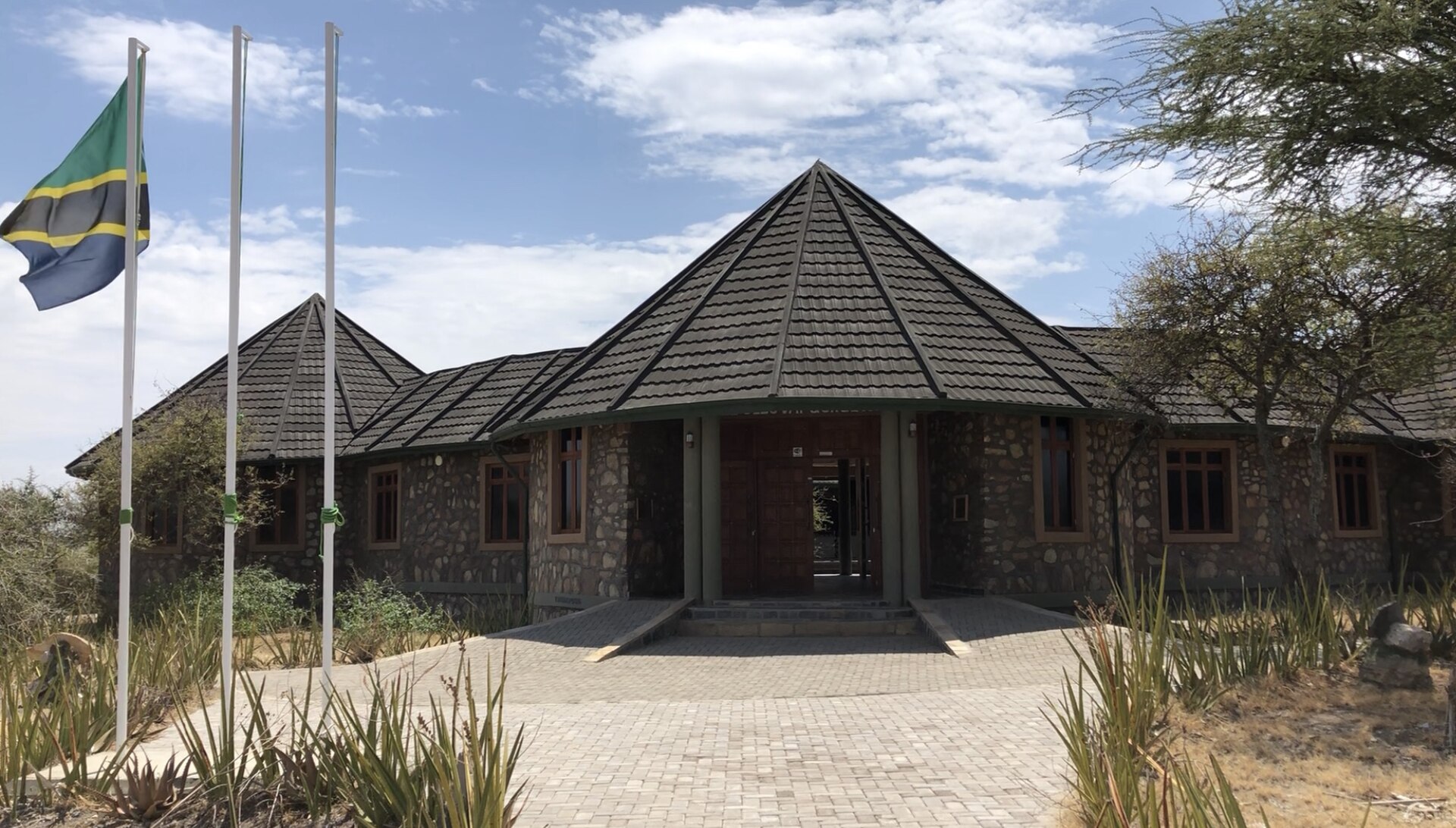
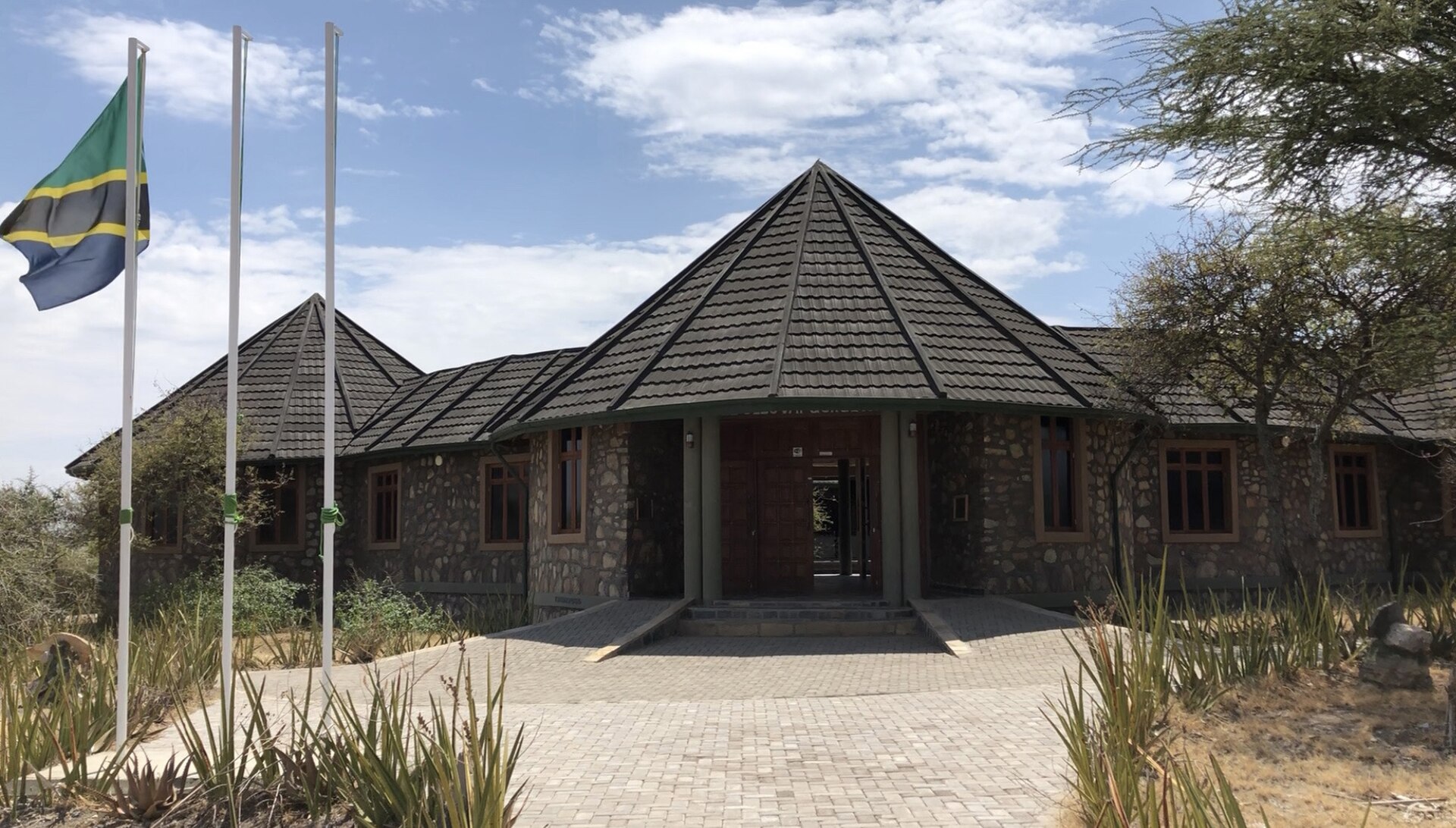
Olduvai's strength is not the number of original objects on the wall but the completeness of the story behind them: one gorge that produced Zinjanthropus in 1959, Homo habilis the year after, and a stratigraphic sequence of Oldowan and Acheulean tools running through roughly two million years of the same exposed beds, paired with the separate Laetoli footprint trail that pushes the record of upright walking back further still. The museum tells that sequence in one building shaped like the homestead of the people who live around it today, even though the most famous single objects it describes are casts of fossils held elsewhere.
| Kind | Museum |
|---|---|
| Founded | 1970 |
| City and country | Ngorongoro Conservation Area, Tanzania |
| Address | Olduvai Gorge, Ngorongoro Conservation Area, P.O. Box 1, Ngorongoro Crater, Arusha, Tanzania |
| Website | ncaa.go.tz/olduvai-gorge-museum |
| Status | Open, confirmed 18 September 2026 |
| Record last verified | 18 September 2026 |
Visiting
- Hours
- Mon-Sun06:00 to 18:00Published gate hours for the whole Ngorongoro Conservation Area, within which the museum sits. NCAA does not publish separate museum-only hours; visitors should confirm same-day timing with a guide or by calling the NCAA hotline.
- Admission
- Non-East African citizen, adult (16 and over)USD 35.40Entrance to the Olduvai Gorge site and museum, charged in addition to the general Ngorongoro Conservation Area entry fee
- Non-East African citizen, child (5-15)USD 11.80Same site fee, child rate
- East African citizen, adult (16 and over)TZS 5,900
- East African citizen, child (5-15)TZS 1,180
- Children under 5FreeFree, all citizenship categories
- Tickets
- ncaa.go.tz/tariffs The museum's own ticket page.
- Do I need to book?
- No advance booking published for the museum itself, but an official guide is required to descend to the gorge floor and the excavation sites
- Address
- Olduvai Gorge, Ngorongoro Conservation Area, P.O. Box 1, Ngorongoro Crater, Arusha, Tanzania MapSelf-drive or safari vehicle No public transport reaches the gorge. The museum sits on the gorge rim about 6 km off the unpaved road between Ngorongoro Crater and Serengeti National Park, roughly 5 km beyond the turnoff marked by the Zinjanthropus monument.
- Website
- ncaa.go.tz/olduvai-gorge-museum
- Telephone
- +255 27 253 7019
- [email protected]
Before you go how long, access, photography, bags, eating, shop
- How long to allow
- Most safari itineraries treat it as a stop of 30 to 60 minutes between Ngorongoro Crater and Serengeti National Park
- Access
- Not detailed on NCAA's own pages
- Photography
- Not detailed on NCAA's own pages
- Bags
- Not detailed on NCAA's own pages
- Eating
- Small restaurant on site
- Shop
- Shop selling local crafts, books and souvenirs
Prices and hours change. We take them from the institution's own pages and print the day we read them, and you can check the current position at the source we used. Confirm before you travel.
What is inside
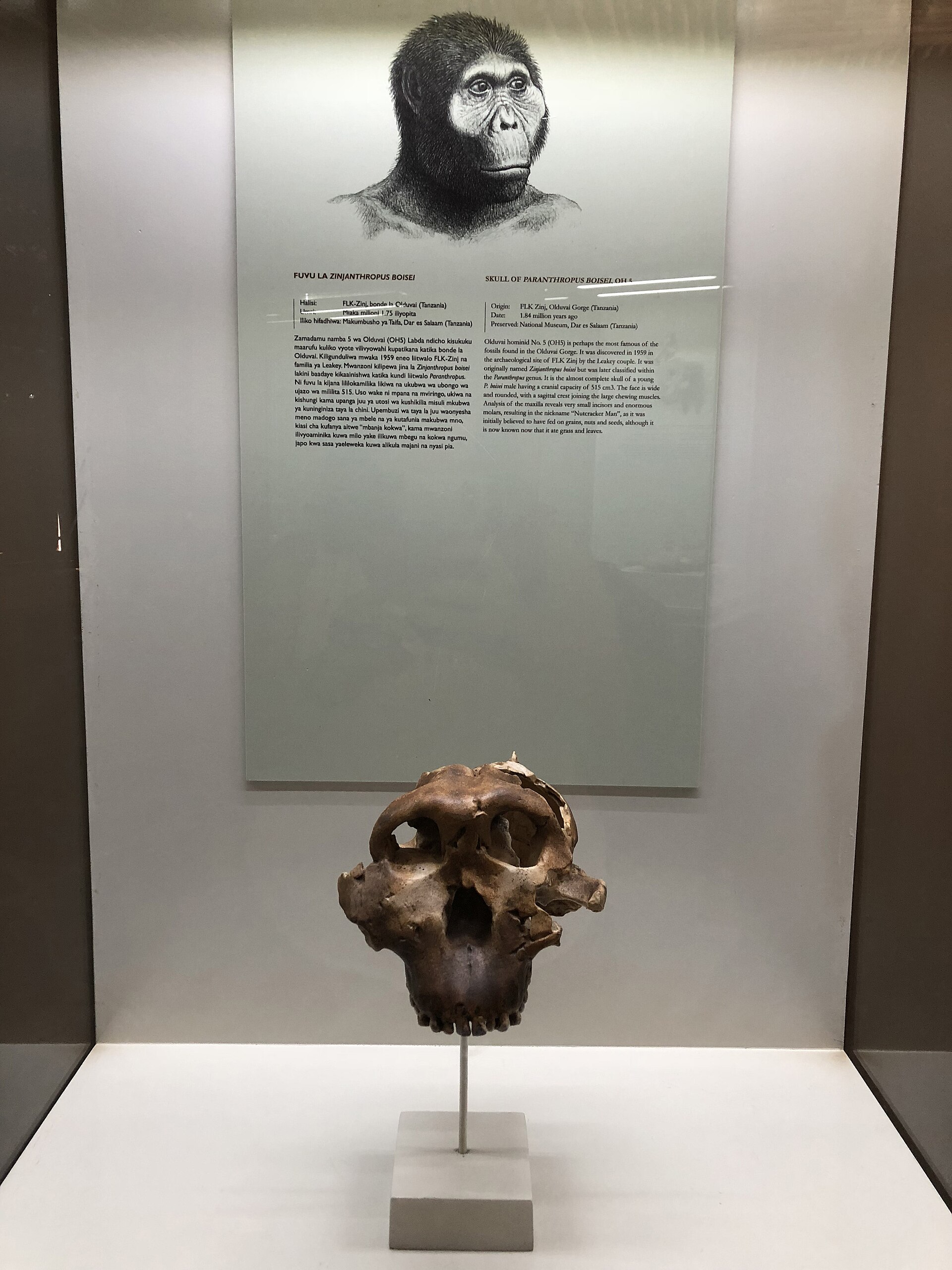
Photograph by Kufundisha · CC BY-SA 4.0 Hominin fossils hall
The centrepiece display is a cast of the Zinjanthropus boisei skull (specimen OH5), the nearly complete cranium Mary Leakey found at the FLK site in 1959, shown with its original bilingual wall text describing its 515 cc braincase, sagittal crest and heavy molars, the features that earned it the nickname Nutcracker Man before later feeding studies showed it likely ate grasses and leaves rather than nuts and seeds. Casts of Homo habilis remains from the same excavations sit alongside it.
Leakey family and excavation history hall
Charts, maps and historical material trace the more than thirty years Louis and Mary Leakey spent excavating the gorge, the stratigraphy of its exposed beds, and the process of locating, recording and lifting a fossil from the rock. This is the hall NCAA singles out as devoted specifically to the Leakeys' work.
Laetoli footprints hall
A cast of part of the roughly 27-metre, 70-footprint trail left in volcanic ash at Laetoli around 3.6 million years ago by Australopithecus afarensis walking upright, evidence that bipedalism predated large brain growth in the human lineage. The cast was made in 1996 by the conservation department of the J. Paul Getty Museum, which also worked on the wider museum renovation of that decade. The original trail stays protected and reburied at the Laetoli site itself, roughly 45 to 60 km from Olduvai depending on the route.
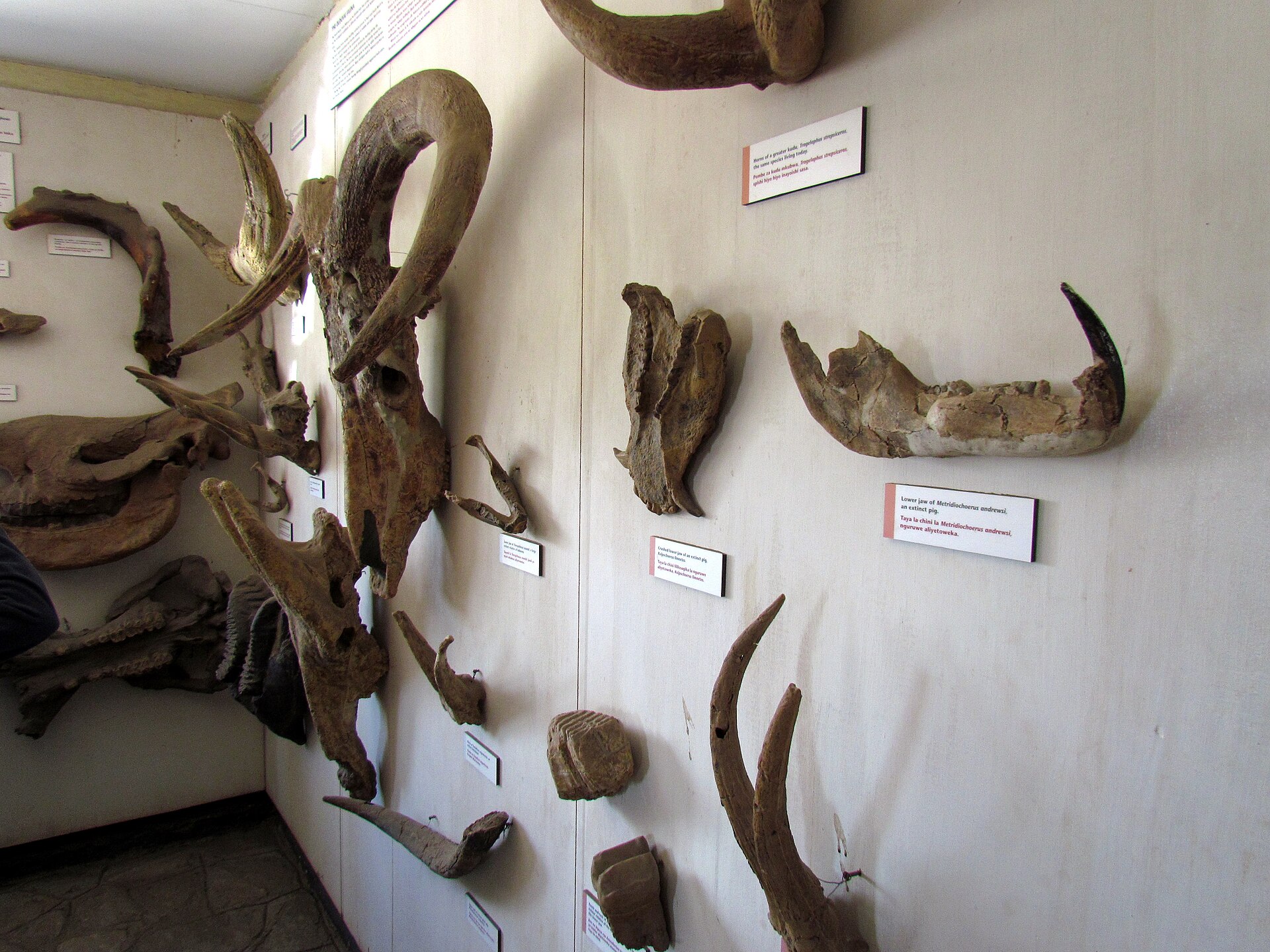
Photograph by David Berkowitz · CC BY 2.0 Extinct fauna and paleontology gallery
A corridor of mounted skulls, horn cores and jaws of the extinct antelope, pigs and other mammals excavated from the gorge's beds alongside the hominin finds, each labelled with species name and a short caption in English and Swahili, giving a sense of the wider Pleistocene ecosystem the early hominins lived in.
Cultural boma
Added in the 2017 rebuild, a separate boma-style space with exhibits on the Maasai, Datoga and Hadzabe peoples who live in and around the conservation area today, positioned as a counterpart to the fossil halls: the deep human past inside the museum ring, living cultures in the boma beside it.
What to see first
Zinjanthropus boisei skull cast (OH5)
Original found by Mary Leakey, 1959The nearly complete 1.75-million-year-old cranium whose discovery put Olduvai Gorge on the world map and secured the Leakeys' funding to keep excavating; the original is kept at the National Museum in Dar es Salaam and a cast is displayed at Olduvai.7
Homo habilis fossil casts (OH7 and related finds)
Leakey excavation team, 1960 onwardRemains associated with Oldowan stone tools that led the Leakeys to define Homo habilis, the first member of our own genus identified at the gorge.5
Cast of the Laetoli footprint trail
Cast made by the J. Paul Getty Museum conservation department, 1996, of a trail left by Australopithecus afarensis about 3.6 million years agoDirect physical evidence that early hominins walked upright on two legs long before their brains grew large, from a site the museum represents because the original trail is kept covered and protected at Laetoli itself.6
Oldowan stone tools
Early Homo, roughly 2.6 million years oldAmong the oldest recognised stone tool industry in the world, giving Olduvai its name in the archaeological literature as the type site for the Oldowan.11
Acheulean hand axes
Homo erectus, later gorge bedsShow the shift to a deliberately shaped, symmetrical tool technology in the gorge's upper stratigraphic layers, a marker of the site's near-continuous record of technological change.11
The quartzite museum building itself
Designed by engineer Joshua Mwankunda, NCAA Cultural Heritage Department, opened 2017A ring of stone exhibit halls around a central courtyard, deliberately built to echo a Maasai boma; the building is as much a statement about whose landscape this is as the fossils inside it.10
Covered viewing platform over the gorge
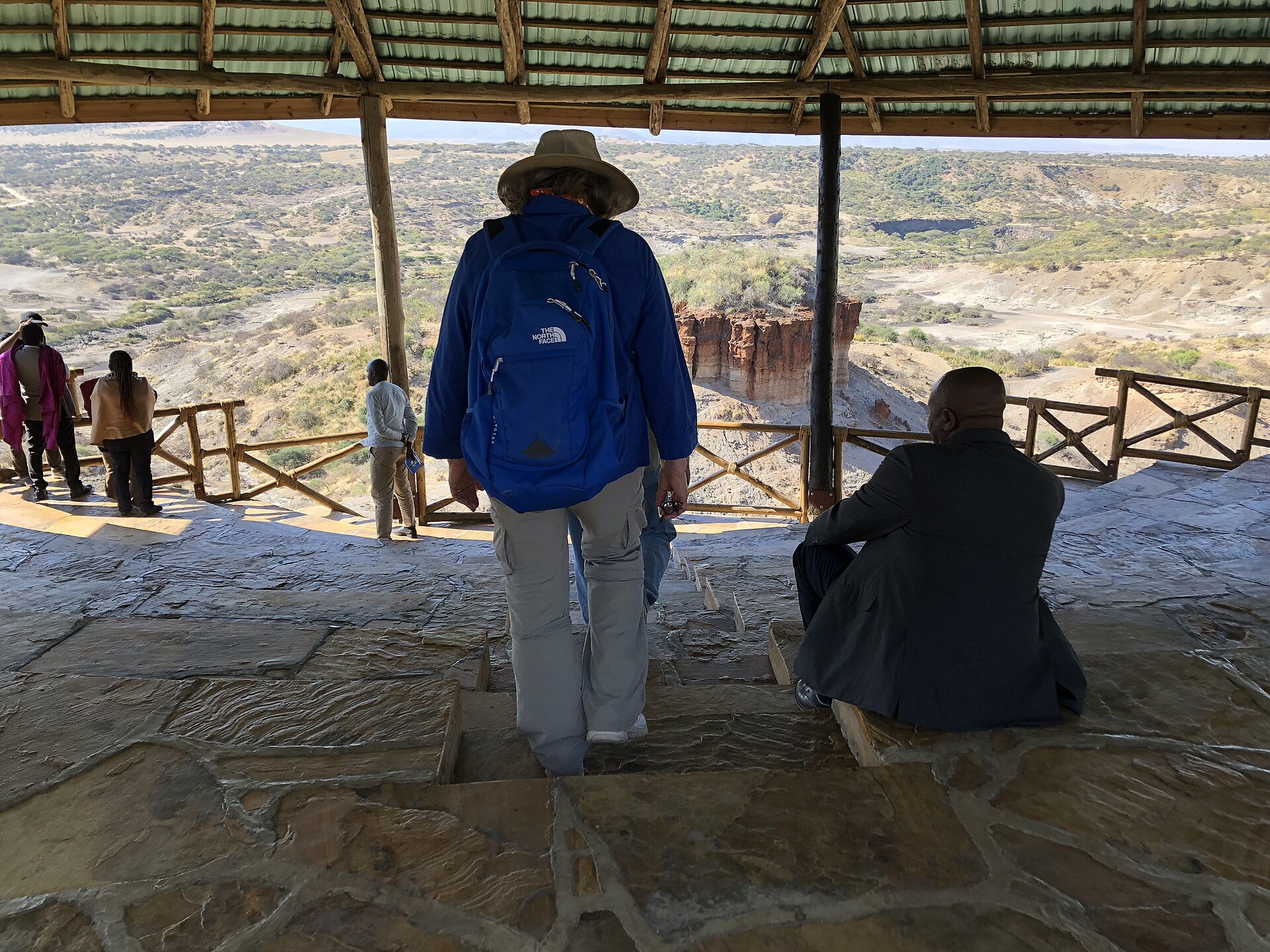
Part of the 2017 rebuildA theatre-style shaded platform built directly into the rebuild so visitors can look down into the excavated gorge after the exhibit halls, tying the museum's collection back to the ground it came out of.2
Cultural boma exhibits on Maasai, Datoga and Hadzabe communities
NCAA, added with the 2017 rebuildSets the deep prehistoric record inside the museum ring against the living cultures of the conservation area today, rather than treating Olduvai only as a fossil site.2
A ravine that rewrote the human story
Olduvai Gorge, whose Maasai name Oldupai properly refers to the wild sisal plant that grows along its walls, is a steep-sided ravine roughly 14 km long and up to 100 metres deep, cut into the floor of the eastern Serengeti Plain within the Ngorongoro Conservation Area in northern Tanzania. For close to three million years the basin held Lake Olduvai, into which ash and sediment from the volcanoes of the Ngorongoro Highlands settled in layer after layer. A river draining from what is now Lake Ndutu later cut down through those layers, and it is that cut, still active, that exposes a near-continuous sedimentary record of roughly two million years for anyone who walks its floor with a guide.
The gorge sits inside the Ngorongoro Conservation Area, inscribed by UNESCO as a World Heritage Site in 1979 for a combination of active volcanic caldera landscape and an archaeological record that researchers have worked for more than eighty years and that now documents almost four million years of human and environmental history. Olduvai is the reason the area carries that second, cultural half of its listing as much as the crater does.
The Leakeys and the digs that made the gorge famous
Louis and Mary Leakey spent more than thirty years excavating at Olduvai, and it was Mary Leakey who, on 17 July 1959, found the specimen that changed the site's fortunes: a nearly complete hominin skull from the FLK locality, originally named Zinjanthropus boisei and later reclassified within the genus Paranthropus. The exhibit text at the museum today, reproduced in both English and Swahili, describes a braincase of 515 cubic centimetres, a face built around a sagittal crest anchoring enormous chewing muscles, and molars so large the find was nicknamed Nutcracker Man, on the assumption it had lived on hard nuts and seeds; later dental wear studies revised that picture toward a diet of grasses and leaves. The publicity and funding that followed the 1959 find let the Leakeys keep digging, and within a year their team had recovered the remains that led them to define Homo habilis, the first species assigned to our own genus, alongside the simple stone tools now known as the Oldowan industry, among the oldest recognised stone technology anywhere. Later, higher beds in the same gorge yielded Homo erectus fossils and the more deliberately shaped Acheulean hand axes, giving Olduvai a near-unbroken run of hominin and tool-making evidence spanning roughly two million years in one place.
Laetoli, and the footprints that show ancestors walking upright
Laetoli is a separate site, south of Olduvai within the same conservation area, where a team led by Mary Leakey found hominin footprints in 1974 and excavated them fully in 1978 and 1979. Three individuals had walked across wet volcanic ash roughly 3.6 million years ago, leaving a trail of about 70 footprints running almost 27 metres before a further ashfall sealed and preserved it. The tracks belong to Australopithecus afarensis and are the oldest confirmed footprints of a bipedal hominin ancestor found anywhere, proof that walking upright on two legs came well before the brain size increase associated with later Homo species. The original trail remains covered and protected at Laetoli itself rather than on public display. What the Olduvai museum shows is a cast of part of that trail, made in 1996 by the conservation department of the J. Paul Getty Museum in the United States during an earlier renovation of the site, so that visitors who cannot reach Laetoli directly can still see the shape of the evidence.
From a shed on the rim to a boma-shaped museum
Mary Leakey established the first museum on the gorge rim, which opened in 1970. It was renovated for conservation reasons in the mid-1990s with support from the J. Paul Getty Museum, the same institution that later cast the Laetoli footprint trail on display today, but by the 2010s the building had shrunk in visitors' accounts to, in one 2014 description, little more than a shed on the edge of the gorge. The Ngorongoro Conservation Area Authority replaced it with an entirely new museum and visitor centre, financed roughly 80 percent by the European Union and 20 percent by the Tanzanian government, unveiled in early October 2017 by then Vice President Samia Suluhu Hassan. The building was designed by engineer Joshua Mwankunda, manager of NCAA's Cultural Heritage Department, in quartzite stone, with its exhibit halls set out in a ring around a central open courtyard, a layout deliberately built to echo a traditional Maasai boma rather than a conventional Western gallery plan. The rebuild also added a separate cultural boma space, a small restaurant, a shop and a covered, theatre-style viewing platform looking out over the gorge, and according to NCAA's own public relations office the new building substantially exceeds the old one in size.
What is inside today
The ring of halls that resulted from the 2017 rebuild separates the collection by theme rather than presenting it as one continuous timeline. A hominin fossils hall carries the Zinjanthropus skull cast and Homo habilis material as its centrepiece; a Leakey family and excavation history hall lays out the process and the people behind the digs in charts, maps and archival material; a dedicated Laetoli footprints hall holds the Getty-made footprint cast; and a paleontology gallery of extinct fauna shows the mounted skulls, horns and jaws of the antelope, pigs and other mammals that shared the gorge's ancient ecosystem with the early hominins, again labelled bilingually. Some of the objects on display had previously been kept at the National Museum in Dar es Salaam and were brought to Olduvai as part of the 2017 expansion. Alongside the fossil halls the new cultural boma introduces the Maasai, Datoga and Hadzabe communities who live in the conservation area now, a deliberate pairing of deep prehistory with the present.
Visiting: fees, access and what to combine it with
The museum functions as a stop on the unpaved road between Ngorongoro Crater and Serengeti National Park, roughly 6 km off the main route and about 5 km beyond the turnoff marked by the Zinjanthropus monument, and almost all visitors arrive by safari vehicle since there is no public transport to the gorge. Entry to the Olduvai Gorge site and museum carries its own fee, separate from and additional to the general Ngorongoro Conservation Area entrance fee that covers the crater and the wider protected area. NCAA does not publish museum-only opening hours; the conservation area's gates run from 06:00 to 18:00 daily and the museum operates within that window. Visitors who want to walk the gorge floor itself, rather than view it from the platform, need an official guide, and the museum can arrange trips to the nearby Zinj excavation site about 1 km away, the Mary Leakey Museum about 2 km away, and further sites including Shifting Sands, Nasera Rock and Olkarien Gorge for those with more time.
What visitors say, and what the record should note
On Tripadvisor the museum holds a 4.0 out of 5 rating from 609 reviews as of this writing, and the pattern in the reviews is consistent: strong praise for the guides, the labelling and above all the gorge view from the covered platform, set against recurring complaint that the entrance fee rose sharply, from roughly 10 US dollars to 35, after the 2017 rebuild, and that the collection on site is modest next to that price because several of the most famous original fossils, the Zinjanthropus skull among them, are kept at the National Museum in Dar es Salaam rather than displayed at Olduvai. That is not a hidden fact, NCAA's own pages describe some current exhibits as material brought in from Dar es Salaam, but the museum's own visitor-facing pages do not explain to a reader why the type specimens found at Olduvai are not the ones held at Olduvai, and that gap between what was found on this ground and what is shown on this ground is worth a reader knowing before they budget an afternoon and 35 dollars for the stop.
What visitors say
Visitors who come with an interest in human origins consistently describe the museum as small but well organised and worth the stop, praising the fossil displays, the bilingual labelling, the knowledgeable guides and above all the view from the covered platform down into the gorge itself. The most repeated complaint is cost set against scale: the site entrance fee rose sharply after the 2017 rebuild, several reviewers note it went from roughly 10 US dollars to 35, and some feel that is steep for a museum whose most famous original fossils, the Zinjanthropus skull among them, are kept at the National Museum in Dar es Salaam rather than shown on site. A second recurring note is that the museum is reading-heavy, rewarding visitors who stop to read the panels rather than move quickly through.
What is praised, what is criticised
- Praised: The covered viewing platform and its view down into the gorge
- Praised: Knowledgeable on-site guides and staff
- Praised: Clear, bilingual (English and Swahili) exhibit labelling
- Praised: A worthwhile, well-placed stop on the drive between Ngorongoro Crater and Serengeti National Park
- Criticised: Entrance fee felt steep relative to the size of the collection, especially after it rose from around 10 US dollars to 35 following the 2017 rebuild
- Criticised: Many of the most famous original fossils, including the Zinjanthropus skull, are held at the National Museum in Dar es Salaam rather than displayed at Olduvai itself
- Criticised: Exhibits can feel text-dense and slow going for visitors without a specific interest in paleoanthropology
Ratings on other platforms
Tripadvisor: 4 from 609 ratings, read 18 September 2026
A platform average is a tertiary source: it moves, it is not audited, and we quote no visitor's words.
Questions about Olduvai Gorge Museum
Where is Olduvai Gorge Museum?
Olduvai Gorge, Ngorongoro Conservation Area, P.O. Box 1, Ngorongoro Crater, Arusha, Tanzania.
How much does it cost to visit?
Non-East African citizen, adult (16 and over): USD 35.4; Non-East African citizen, child (5-15): USD 11.8; East African citizen, adult (16 and over): TZS 5900; East African citizen, child (5-15): TZS 1180; Children under 5: free. As confirmed 18 September 2026.
When is it open?
Mon-Sun 06:00-18:00. As confirmed 18 September 2026.
How do you get there?
Self-drive or safari vehicle: No public transport reaches the gorge. The museum sits on the gorge rim about 6 km off the unpaved road between Ngorongoro Crater and Serengeti National Park, roughly 5 km beyond the turnoff marked by the Zinjanthropus monument.
What should you see first?
Zinjanthropus boisei skull cast (OH5) (Original found by Mary Leakey, 1959); Homo habilis fossil casts (OH7 and related finds) (Leakey excavation team, 1960 onward); Cast of the Laetoli footprint trail (Cast made by the J. Paul Getty Museum conservation department, 1996, of a trail left by Australopithecus afarensis about 3.6 million years ago); Oldowan stone tools (Early Homo, roughly 2.6 million years old); Acheulean hand axes (Homo erectus, later gorge beds); The quartzite museum building itself (Designed by engineer Joshua Mwankunda, NCAA Cultural Heritage Department, opened 2017).
What we could not confirm
- NCAA's own pages do not explain why the original type specimens found at Olduvai, including the Zinjanthropus skull and the Homo habilis material, are held at the National Museum in Dar es Salaam rather than at the site museum, beyond noting that some current Olduvai exhibits were brought in from Dar es Salaam as part of the 2017 expansion.
- Published sources disagree on the distance from Olduvai to Laetoli, NCAA's own pages give figures as different as roughly 45 km in one place and 60 km in another; this page reports the range rather than picking one figure.
Images
Sources
- 1Olduvai Gorge Museum, Ngorongoro Conservation Area Authority (NCAA), official page ncaa.go.tz/olduvai-gorge-museum/
- 2The New Olduvai Gorge Museum, Ngorongoro Conservation Area Authority (NCAA) ncaa.go.tz/the-new-olduvai-gorge-museum/
- 3Tariffs, Ngorongoro Conservation Area Authority (NCAA) ncaa.go.tz/tariffs/
- 4Information (gate hours), Ngorongoro Conservation Area Authority (NCAA) ncaa.go.tz/information/
- 5Archeological Features, Ngorongoro Conservation Area Authority (NCAA) ncaa.go.tz/archeological-features/
- 6Laetoli Footprints, Ngorongoro Conservation Area Authority (NCAA) ncaa.go.tz/laetoli-footprints/
- 7Olduvai Gorge Museum, Wikipedia en.wikipedia.org/wiki/Olduvai_Gorge_Museum
- 8Olduvai Gorge Museum (Q3868097), Wikidata wikidata.org/wiki/Q3868097
- 9Ngorongoro Conservation Area, UNESCO World Heritage Centre whc.unesco.org/en/list/39/
- 10New Museum for Olduvai Gorge, Tanzania, Ashworth Africa ashworthafrica.com/new-museum-for-olduvai-gorge-tanzania/
- 11Museum Monday: Recollections of the Olduvai Gorge Museum, Steve's Herpetological Blog (Steven Allain) stevenallain.co.uk/Blog/museummonday-recollections-of-the-olduvai-gorge-museum/
- 12Olduvai Gorge Museum, Ngorongoro Conservation Area, Arusha Region, reviews and rating, Tripadvisor tripadvisor.com/Attraction_Review-g317085-d4521904-Reviews-Olduvai_Gorge_Museum-Ngorongoro_Conservation_Area_Arusha_Region.html
- 13Category: Olduvai Gorge Museum, Wikimedia Commons commons.wikimedia.org/wiki/Category:Olduvai_Gorge_Museum