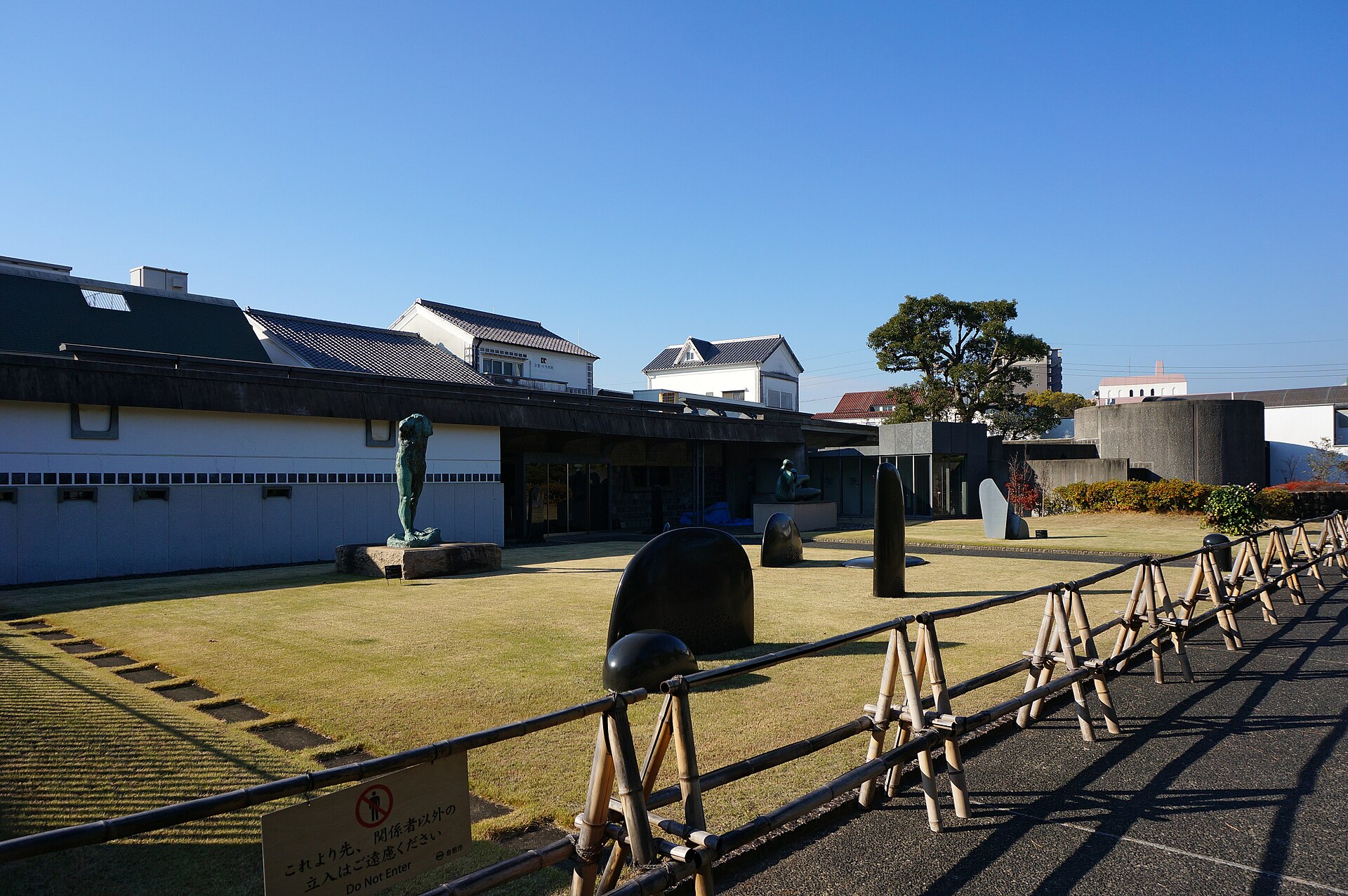
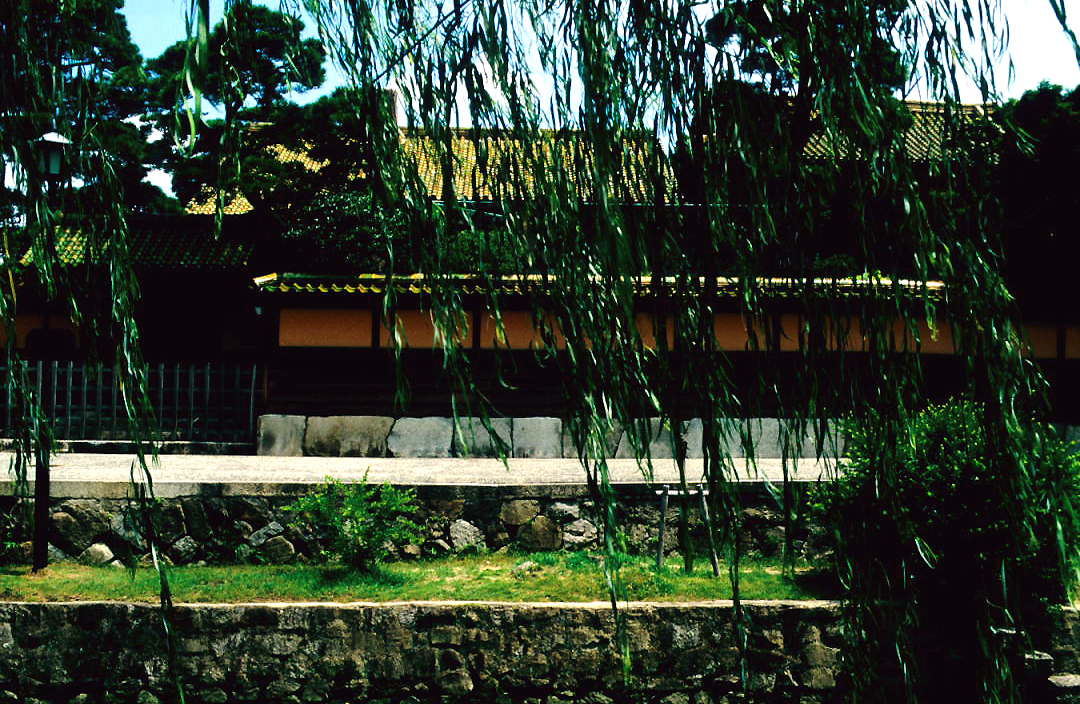
Courtyard and gallery buildings of the Ohara Museum of Art, Kurashiki. Photograph by 663highland, CC BY-SA 4.0.
663highland, CC BY-SA 4.0Ohara Museum of Art
Museum · 大原美術館 · Founded 1930
Open, admission and hours confirmed 15 November 2026 · 16 sources
On this page 15 sections
ContentsClose
Strongest in the Western paintings gathered by Kojima Torajiro in the early 1920s, in modern Japanese painting and above all in the Mingei craft galleries and the Asian art collection.
| Local name | 大原美術館 |
|---|---|
| Kind | Museum |
| Founded | 1930 |
| City and country |  Kurashiki, Japan |
| Address | 1-1-15 Chuo, Kurashiki, Okayama 710-8575, Japan |
| Website | ohara.or.jp |
| Status | Open, confirmed |
| Record last verified |
Visiting
- Hours
- Tue-Sun, March to November09:00 to 17:00Last entry 16:30; Kojima Torajiro Memorial Hall 10:00-16:00
- Tue-Sun, December to February09:00 to 15:00Last entry 14:30; Kojima Torajiro Memorial Hall 10:00-15:00
- Closed
- Mondays (open if the Monday is a public or substitute holiday). 22-25 December 2026 per the 2026 calendar.
- Admission
- AdultJPY 2,000Covers the main building, the Craft and Asian Art Galleries and the Kojima Torajiro Memorial Hall
- Adult, Kurashiki resident or workerJPY 1,900Special rate for people living or working in Kurashiki and adults accompanying a student with an Ikiiki Passport
- High school, junior high and elementary studentsJPY 500
- Preschool childrenFreefree; there is no group rate
Free entry: Free for holders of disability certificates, international students of Okayama prefecture universities with ID, and supporters' association members; ask at the counter for other cases- Tickets
- ohara.or.jp/visitor_info The museum's own ticket page.
- Do I need to book?
- No entry reservation is currently required and there is no online pre-purchase site
- Address
- 1-1-15 Chuo, Kurashiki, Okayama 710-8575, Japan MapTrain Sanyo Main Line to Kurashiki Station (from Okayama by Sanyo Shinkansen then Sanyo Main Line; from Hiroshima via Shin-Kurashiki), then about 15 minutes on foot
Car Sanyo Expressway Kurashiki IC, about 20 minutes to the Bikan district; the museum has no parking lot - Website
- ohara.or.jp
- Telephone
- +81 86-422-0005
- [email protected]
Before you go how long, access, photography, bags, eating, shop
- How long to allow
- One reviewer on a listing supervised by the museum suggests at least one hour
- Access
- Wheelchairs and strollers can be borrowed free at the baggage counter, in limited numbers
- Photography
- The museum asks visitors not to take photographs without permission
- Bags
- Free baggage check beside the ticket counter
- Eating
- The visitor information page does not mention a cafe
- Shop
- Museum shop with original goods and related books; its hours differ from the museum's
Prices and hours change. We take them from the institution's own pages and print the day we read them, and you can check the current position at the source we used. Confirm before you travel.
What is inside
Main Gallery
The 1930 temple-style building, extended in 1991, showing the Western works Kojima Torajiro collected, among them El Greco's Annunciation (Room 3), with Gauguin, Monet, Matisse and Segantini named by the museum, plus modern Western and Japanese painting.
Craft Gallery
Ceramics by Hamada Shoji, Bernard Leach, Tomimoto Kenkichi and Kawai Kanjiro, woodblock prints by Munakata Shiko and textile dyeing by Serizawa Keisuke, in converted Edo-period rice storehouses.
Asian Art Gallery
Ancient Eastern art drawn mainly from Kojima Torajiro's collection; opened in 1970.
Kojima Torajiro Memorial Hall
Kojima's paintings and the ancient Egyptian and West Asian art he collected, in the 1922 former Dai-Ichi Godo Bank building, opened 3 April 2025.
Annex
The 1961 building by Urabe Shizutaro for modern Western and Japanese painting; closed for an extended period, exterior only.
Yurin-so
The 1928 Ohara family villa across from the museum, used for special exhibitions twice a year rather than as a permanent gallery.
What to see first
Annunciation
El GrecoBought by Kojima in Paris in 1922, the only El Greco oil in Japan before the war and restored in 2025; on view in Room 3 until 28 March 2027.8
Water Lilies
Claude MonetAmong the first works Kojima brought back in 1921; the museum also keeps water lilies from Giverny in the courtyard pond.6
Portrait of Mademoiselle Matisse
Henri MatisseNamed by the museum as one of the 1921 acquisitions that were shown at a Kurashiki elementary school.6
Midday in the Alps
Giovanni SegantiniAcquired on Kojima's third European trip of 1921-1922.6
Ceramics of the Mingei circle
Hamada Shoji, Bernard Leach, Tomimoto Kenkichi, Kawai KanjiroThe core of the Craft Gallery, which opened in 1961 in a rice storehouse designed by Serizawa Keisuke.7
Woodblock prints and dyed textiles
Munakata Shiko and Serizawa KeisukeEach has a dedicated room that opened in 1963.7
Yurin-so villa
Yakushiji KazueThe 1928 Green Palace villa with Art Deco and Japanese rooms, open for special exhibitions.7
The building and what it was built to hold
The Ohara Museum of Art stands in the Bikan historical quarter of Kurashiki, in Okayama prefecture, a few minutes on foot from the canal and the white-walled storehouses that give the quarter its character. The museum's own history page records that it was completed on 5 November 1930 and describes it as Japan's first private museum centred on Western art. It was founded by Ohara Magosaburo, a Kurashiki businessman, as a memorial to his friend the painter Kojima Torajiro, who died in 1929.
The main gallery was designed by the architect Yakushiji Kazue, according to the museum's building guide. It went up in just under seven months during the Great Depression, in steel-framed reinforced concrete, and it takes the form of a Greco-Roman temple with Ionic columns carrying a triangular pediment. The same guide points to straight-lined iron grilles in an Art Deco manner beside the entrance and three round windows recalling Gothic rose windows. Only the first gallery and the room above it date from 1930. The rest of the main building was added in 1991.
Two friends, a scholarship and three trips to Europe
The museum begins with a scholarship. The museum's account says that in 1902 Kojima entered the Western painting department of the Tokyo School of Fine Arts and sought support from the Ohara Scholarship Society, and that Magosaburo granted it. The two became lifelong friends. After Kojima studied in Paris and then in Ghent, Belgium, Magosaburo took about a year to decide in 1919 whether a Western art collection would be socially meaningful before approving a buying trip.
Kojima returned in 1921 with more than 20 works, among them a Monet Water Lilies and Matisse's portrait of his daughter. The same account says they were shown the next month at a Kurashiki elementary school and drew large crowds. A third trip in 1921 and 1922 brought El Greco's Annunciation, works by Gauguin and Segantini's Midday in the Alps. Kojima died in 1929 at the age of 47 and the museum opened the following year.
How the museum grew after 1930
After the war Magosaburo's eldest son Ohara Soichiro took over and widened the collection to take in painters of the Ecole de Paris, contemporary European and American artists and modern Japanese painting. The museum's history says an annex was built in 1961 to show them. In the years 1961 to 1963 a craft gallery followed for artists associated with the Mingei folk craft movement, and the Asian Art Gallery was completed in 1970. A basement gallery was added to the annex in 1987 and the main building was expanded in 1991.
The annex was designed by Urabe Shizutaro and is listed among DOCOMOMO's 100 selections, according to the building guide. It is closed for an extended period at the time of writing and its exterior can be seen from outside. The museum's website states the closure without giving a reason or a reopening date.
The most recent building is the Kojima Torajiro Memorial Hall, which held its grand opening on 3 April 2025 in the former Kurashiki branch of the Dai-Ichi Godo Bank, a neo-Renaissance building of 1922 designed by Yakushiji Kazue. The bank was donated to the museum in 2016.
What is on the walls and in the courtyard
The museum sorts its collection into six groups: overseas art up to the 20th century, Japanese art up to the 20th century, 21st-century art, artists associated with the Mingei movement, East Asian antiquities, and ancient Near Eastern, Islamic and European antiquities. It also publishes a web catalogue raisonne of Kojima's oil paintings.
In the main building the museum's own pages name El Greco, Gauguin, Monet, Matisse and Segantini among the works Kojima secured. Wikipedia's list of selected artists adds Pissarro, Signac, Puvis de Chavannes, Degas, Picasso, Pollock, Rodin and Fujishima Takeji. A Good Luck Trip listing, which says it was supervised by the museum, gives the holding as more than 3,000 works. One reviewer on that page notes that Monet, Van Gogh and Picasso are each shown by a single piece in the main gallery, which is worth knowing before arriving with a long list of expectations.
Outside, a pond beside the craft galleries holds water lilies that the museum says were sent in 2000 from Monet's garden at Giverny. The Good Luck Trip listing gives their flowering season as late May to mid-October.
The craft galleries and the Asian art gallery
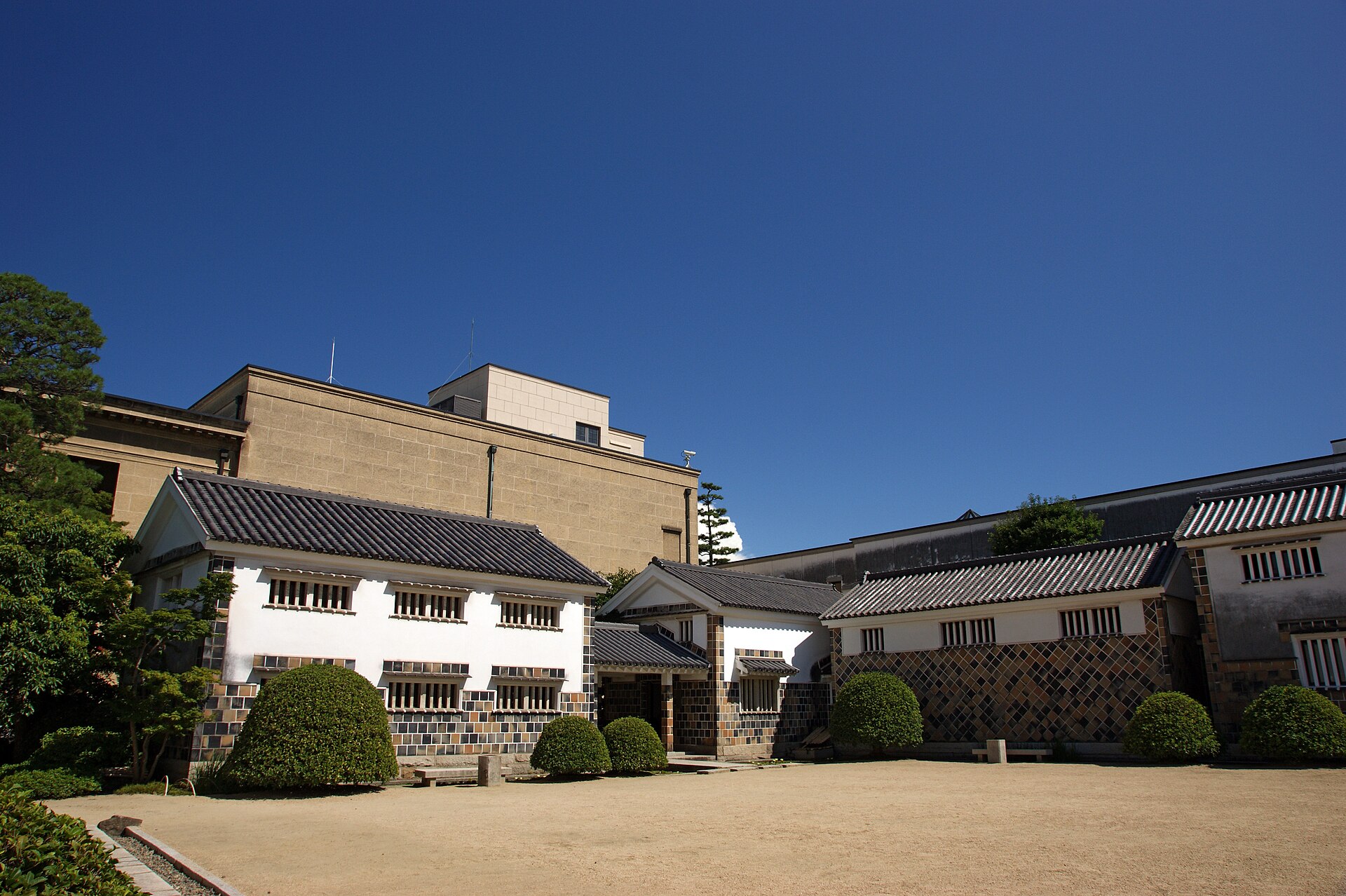
Across the courtyard the Craft Gallery occupies an Edo-period rice storehouse. The museum says it opened in 1961 for ceramics by Hamada Shoji, Bernard Leach, Tomimoto Kenkichi and Kawai Kanjiro, with its interior and exterior designed by the textile artist Serizawa Keisuke. Rooms for Munakata Shiko's woodblock prints and Serizawa's textile dyeing opened in 1963.
The building guide notes details a visitor would otherwise miss. The floors are laid with chestnut wood bricks in different patterns over sand, and the upper room for Kawai Kanjiro has floating Korean-style boards that creak underfoot. The small red-walled storehouse is the Serizawa room. The Asian Art Gallery, which opened in 1970, shows ancient Eastern art drawn mainly from Kojima's collection.
Yurin-so, the 1928 Ohara family villa across from the museum, is not a permanent gallery. The museum says it holds special exhibitions there twice a year. Its green and orange roof tiles earned it the nickname Green Palace.
The El Greco restoration and the museum now
El Greco's Annunciation was bought by Kojima in Paris in 1922 from the Bernheim-Jeune gallery with financial support from Ohara Magosaburo and was first shown in Kurashiki in 1923. The museum's project page says it was the only El Greco oil painting in Japan before the war, and that the only recorded earlier intervention was in 1959, with no surviving record of what was done.
In 2025 the Prado conservator Eva Maria Martinez Morales carried out what the museum calls the first full-scale restoration, funded by the Kuraray Foundation as part of the Kuraray Group's centenary programme. The work removed accumulated dirt and later additions and earlier restoration areas. The painting is on display in Room 3 of the main building from 25 April 2026 to 28 March 2027, with life-size replica panels showing its state before and during restoration. Admission to the museum covers the display.
The museum is run by the Ohara Art Foundation, a public interest foundation. Its stated mission includes offering high-quality spaces for engaging with art and serving as what it calls a device for multicultural understanding.
Planning a visit
The museum is closed on Mondays and open on a Monday that falls on a public holiday. It has no car park, and visitors are directed to nearby paid lots. Advance booking is not currently required and the FAQ says there is no online pre-purchase site. Bags can be left free at a check next to the ticket counter. A museum shop sells original goods and related books. Visitors who want to see a particular work should telephone ahead, as the museum itself warns that pieces may be off display for conservation, loans or special exhibitions.
What visitors say
On the aggregate page read for this entry, praise centres on the breadth of the collection, the pairing of Western and Asian art, and a ticket that covers several buildings. The most frequent complaint on that page is the rule against photography, followed by views that staff enforce it heavily and that the admission price is high.
What is praised, what is criticised
- Praised: The range of Western masters and modern Japanese art, with the craft and folk art collections
- Praised: The Western-style main building set among Kurashiki's traditional streets
- Praised: One ticket covering the main building, the craft and Asian galleries and the Kojima Memorial Hall
- Criticised: The photography rule, the most frequent complaint on the aggregate page read
- Criticised: Staff enforcement described as heavy-handed by some reviewers
- Criticised: The 2,000 yen admission, called high by a few
- Criticised: The annex is closed for an extended period, which one reviewer found on arrival
Ratings on other platforms
Google: 4.4 from 3,414 ratings, read 15 November 2026
Tripadvisor: 4.5 from 734 ratings, read 15 November 2026
A platform average is a tertiary source: it moves, it is not audited, and we quote no visitor's words.
Questions about Ohara Museum of Art
Where is Ohara Museum of Art?
1-1-15 Chuo, Kurashiki, Okayama 710-8575, Japan.
How much does it cost to visit?
Adult: JPY 2000; Adult, Kurashiki resident or worker: JPY 1900; High school, junior high and elementary students: JPY 500; Preschool children: free. As confirmed 15 November 2026.
When is it open?
Tue-Sun, March to November 09:00-17:00; Tue-Sun, December to February 09:00-15:00. Closed: Mondays (open if the Monday is a public or substitute holiday). 22-25 December 2026 per the 2026 calendar. As confirmed 15 November 2026.
How do you get there?
Train: Sanyo Main Line to Kurashiki Station (from Okayama by Sanyo Shinkansen then Sanyo Main Line; from Hiroshima via Shin-Kurashiki), then about 15 minutes on foot; Car: Sanyo Expressway Kurashiki IC, about 20 minutes to the Bikan district; the museum has no parking lot.
What should you see first?
Annunciation (El Greco); Water Lilies (Claude Monet); Portrait of Mademoiselle Matisse (Henri Matisse); Midday in the Alps (Giovanni Segantini); Ceramics of the Mingei circle (Hamada Shoji, Bernard Leach, Tomimoto Kenkichi, Kawai Kanjiro); Woodblock prints and dyed textiles (Munakata Shiko and Serizawa Keisuke).
What we could not confirm
- The museum does not state why the annex is closed or when it will reopen.
- Wikipedia dates the Kojima Torajiro Memorial Hall to 1972 and the museum's history page dates its completion to 1981, while the 2025 hall occupies a former bank building, so the lineage of the name is unclear.
- The 2026 calendar shows closures on 22-25 December without a stated reason.
Images
Sources
- 1Ohara Museum of Art, home page, read 2026-11-15 ohara.or.jp/en/
- 2Ohara Museum of Art, admission and visitor information, read 2026-11-15 ohara.or.jp/visitor_info
- 3Ohara Museum of Art, access, read 2026-11-15 ohara.or.jp/access
- 4Ohara Museum of Art, floor guide, read 2026-11-15 ohara.or.jp/floor_map
- 5Ohara Museum of Art, history, read 2026-11-15 ohara.or.jp/history
- 6Ohara Museum of Art, history from Ohara Magosaburo to the present, read 2026-11-15 ohara.or.jp/history2
- 7Ohara Museum of Art, building guide, read 2026-11-15 project.ohara.or.jp/tatemonoguide
- 8Ohara Museum of Art, El Greco Annunciation restoration project, read 2026-11-15 project.ohara.or.jp/annunciation2
- 9Ohara Museum of Art, about the museum, read 2026-11-15 ohara.or.jp/about
- 10Ohara Museum of Art, FAQ, read 2026-11-15 ohara.or.jp/faq
- 11Ohara Museum of Art, opening calendar, read 2026-11-15 ohara.or.jp/calendar
- 12Wikipedia, Ohara Museum of Art (, identity and artist list only), read 2026-11-15 en.wikipedia.org/wiki/Ohara_Museum_of_Art
- 13Judith Mikami, Ohara Museum of Art, Japan Travel (JAL), 30 November 2011 en.jal.japantravel.com/article/ohara-museum-of-art/417
- 14Good Luck Trip, Ohara Museum of Art listing (supervised by the museum), updated 2026-09-16 gltjp.com/en/directory/item/11411/
- 15Wanderlog, Ohara Museum of Art place page, aggregate ratings (), read 2026-11-15 wanderlog.com/place/details/31943/museo-de-arte-ohara
- 16Wikimedia Commons, Category:Ohara Museum of Art, file licences checked 2026-11-15 commons.wikimedia.org/wiki/Category:Ohara_Museum_of_Art