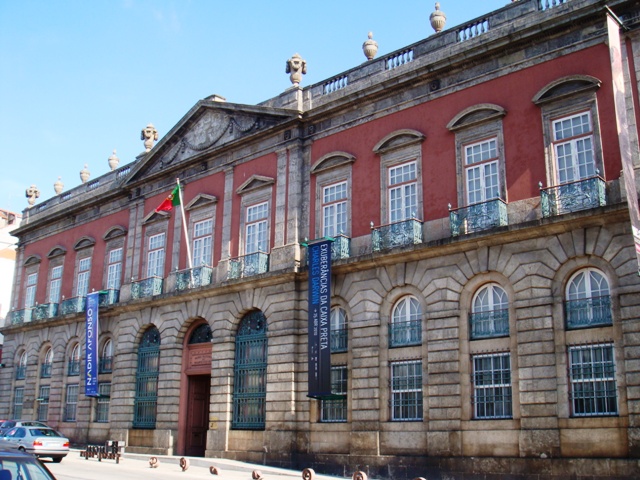
The neoclassical facade of the Palacio das Carrancas in Porto, built in 1795 and converted into the National Museum Soares dos Reis in the 1930s.
(WT-shared) Shoestring, CC BY-SA 4.0 · Photograph by User: (WT-shared) Shoestring at wts wikivoyageNational Museum Soares dos Reis
Museum · Museu Nacional Soares dos Reis · Founded 1833
Open, admission and hours confirmed 5 September 2026 · 22 sources
On this page 15 sections
ContentsClose
The museum's depth is in 19th and early 20th century Portuguese art rather than a broad international survey: Antonio Soares dos Reis's sculpture, the Naturalist and Realist Portuguese painters led by Henrique Pousao and Silva Porto, and a goldwork and jewellery department built from confiscated ecclesiastical collections that happens to include a documented piece of Mughal Indian metalwork. It is a national collection in the literal sense, assembled from confiscated convents, a bishop's palace and the royal treasury rather than bought on the open market, and its catalogue entries trace that ownership history in more detail than most museums publish for individual objects.
| Local name | Museu Nacional Soares dos Reis |
|---|---|
| Kind | Museum |
| Founded | 1833 |
| City and country |  Porto, Portugal Porto, Portugal |
| Address | Rua de Dom Manuel II 44, 4050-342 Porto, Portugal |
| Website | museusoaresdosreis.gov.pt |
| Status | Open, confirmed |
| Record last verified |
Visiting
- Hours
- Tue-Sun10:00 to 18:00last entry 17:30
- Closed
- Monday. 1 January. Easter Sunday. 1 May. 24 June. 25 December.
- Admission
- General ticketEUR 10single admission to the Museu Nacional Soares dos Reis
- Fernando de Castro House-MuseumEUR 5the museum's separate historic-house annexe, a different address in Porto
Free entry: Sundays and public holidays, all day, for residents of Portugal's national territory, in force since 1 September 2023- Tickets
- museusoaresdosreis.gov.pt/visit/?lang=en The museum's own ticket page.
- Do I need to book?
- No, tickets are sold online and at the door
- Address
- Rua de Dom Manuel II 44, 4050-342 Porto, Portugal MapMetro Carolina Michaelis (lines A, B, C, E, F) or Sao Bento (line D), both about 20 minutes on foot from the museum
Bus STCP lines serving the area include 200, 201, 207, 300, 302, 501, 507, 601 and 602
Car No dedicated museum car park; the museum's own directions point visitors to nearby public car parks - Website
- museusoaresdosreis.gov.pt
- Telephone
- +351 223 393 770
- [email protected]
Before you go how long, access, photography, bags, eating, shop
- How long to allow
- About one and a half to two hours for the permanent collection
- Access
- Ramps and a lift reach all public spaces; a wheelchair is available on request for visitors who cannot walk the galleries unaided
- Photography
- Personal, non-flash photography is treated as routine in the galleries; any commercial use of an image of the collection requires a request lodged at least 15 days in advance with the DGPC Photographic Documentation Archive
- Bags
- Large bags, umbrellas and luggage are not allowed into the galleries; free lockers are provided near the entrance
- Eating
- A cafeteria occupies the former riding hall of the palace and opens an esplanade there in good weather
- Shop
- A museum shop beside the reception sells publications and items drawing on the collection and on other DGPC-run museums and palaces
Prices and hours change. We take them from the institution's own pages and print the day we read them, and you can check the current position at the source we used. Confirm before you travel.
What is inside
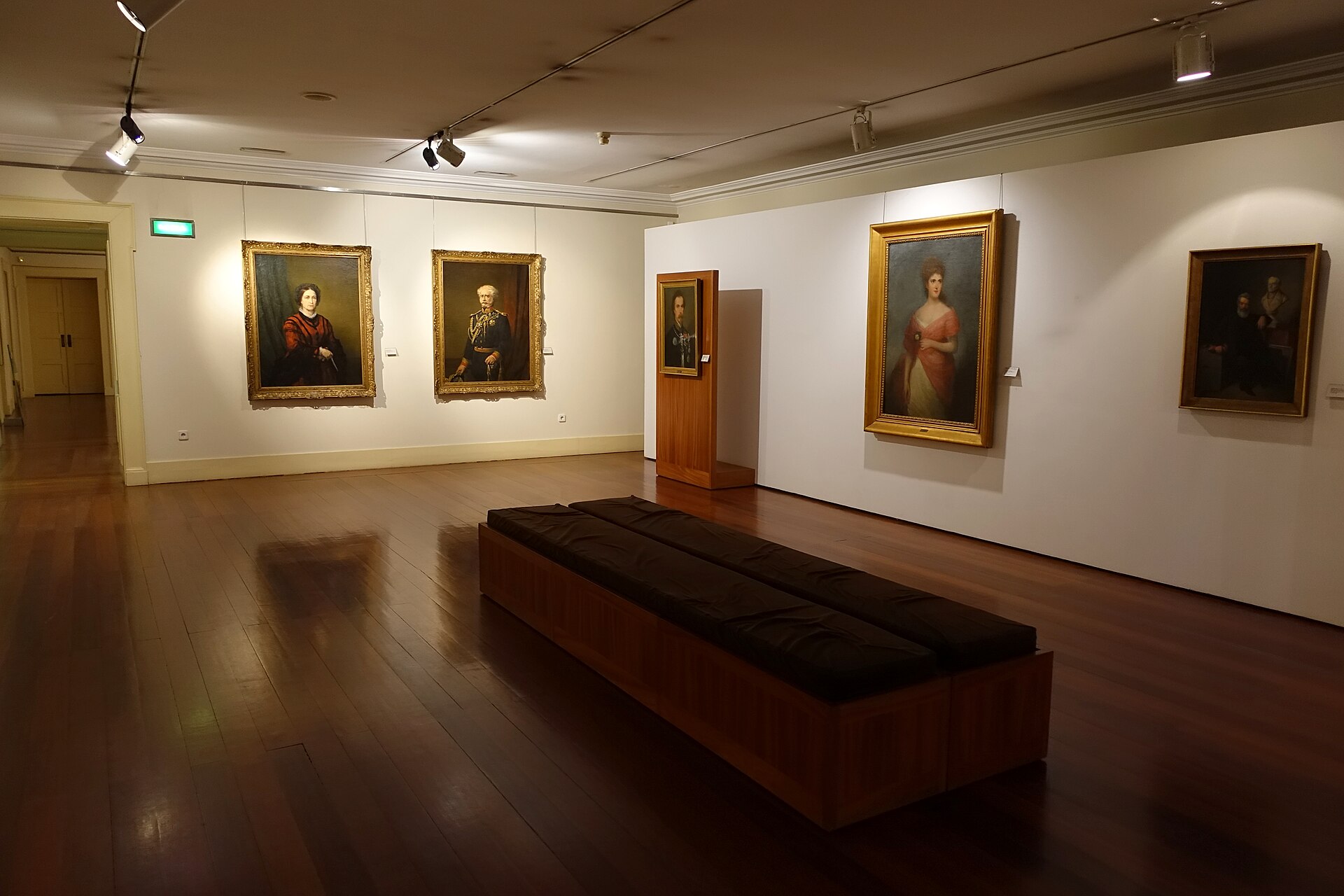
Public domain Painting
The largest single holding, roughly 2,500 works running from the 16th to the 20th century, weighted toward the Romantic, Naturalist and Realist Portuguese painters of the 19th and early 20th century: Silva Porto, Marques de Oliveira, Artur Loureiro, Sousa Pinto, Henrique Pousao, Aurelia de Souza and Antonio Carneiro.
Sculpture
Work spanning Roman sarcophagi to contemporary pieces, centred on the museum's namesake Antonio Soares dos Reis and the students who followed him at the Porto Academy of Fine Arts, including Teixeira Lopes; a separate section holds the modernist estate of the German sculptor-ceramist Hein Semke.
Goldwork and Jewellery
Ecclesiastical and decorative metalwork, formally established as a department in 1932 and built up from the former Episcopal Palace of Porto and confiscated convent collections; includes an Italian-made episcopal crosier and a Mughal Indian reliquary cross that once sat in the royal treasury at the Necessidades Palace in Lisbon.
Ceramics
Portuguese tin-glazed earthenware from the 16th century onward, alongside imported Dutch Delftware and Chinese and Japanese export porcelain acquired by Portuguese trading houses.
Furniture
Religious and civil pieces from the 16th to the 20th century, tracking the Portuguese national style through the Baroque and Neoclassical periods, plus furniture brought back from Portugal's Asian trading posts.
Glass
Portuguese glassware from the 18th-century royal glass factories, shown beside Spanish and other European pieces for comparison.
What to see first
O Desterrado (The Exiled)
Antonio Soares dos ReisCarved in Carrara marble in 1872 as the sculptor's final examination piece in Rome, inspired by Alexandre Herculano's poem on exile; it is treated by the museum as one of the defining works of 19th-century Portuguese sculpture and a classified national treasure.7
Filha dos Condes de Almedina (Daughter of the Counts of Almedina)
Antonio Soares dos ReisA 1882 marble portrait bust of Luisa Guimaraes Guedes, daughter of the Count of Almedina, documented through the sculptor's preliminary drawings and maquettes and held by the museum as a national treasure.8
Flor Agreste (Wild Flower)
Antonio Soares dos ReisA marble bust, modelled in plaster in 1878 and cut in marble for sale in 1881, reputedly of a charcoal burner's daughter; the plaster model was later used to cast reproductions in multiple sizes and materials, including a Vista Alegre porcelain edition, giving the image wide circulation in Portugal.9
Senhora Vestida de Preto (Lady in Black)
Henrique PousaoAn 1882 oil painted in Rome, built from dense patches of colour and strong chiaroscuro around the black dress; one of three Pousao works in the museum's collection classified as a national treasure.21
Crossa de baculo episcopal (Episcopal crosier)
Antonio ArrighiA cast, chiselled and gilded silver crosier made in 1740 for the Bishop of Porto, documented by a payment record naming the Italian goldsmith Arrighi; it entered the museum from the former Episcopal Palace of Porto in 1932.11
Holy Cross reliquary and eucharistic cruet set
Mughal India workshopA late-17th or early-18th-century reliquary and cruet set in nephrite jade, gold, gilt silver and gemstones, given by King Joao V to the Abbot of Alcobaca, later held in the royal treasury of Kings Ferdinand II and Luis I before entering the museum in 1941; a rare example of Mughal sacred art in a European royal collection.10
Exhibitions on now
Past exhibitions here
A palace before it was a museum
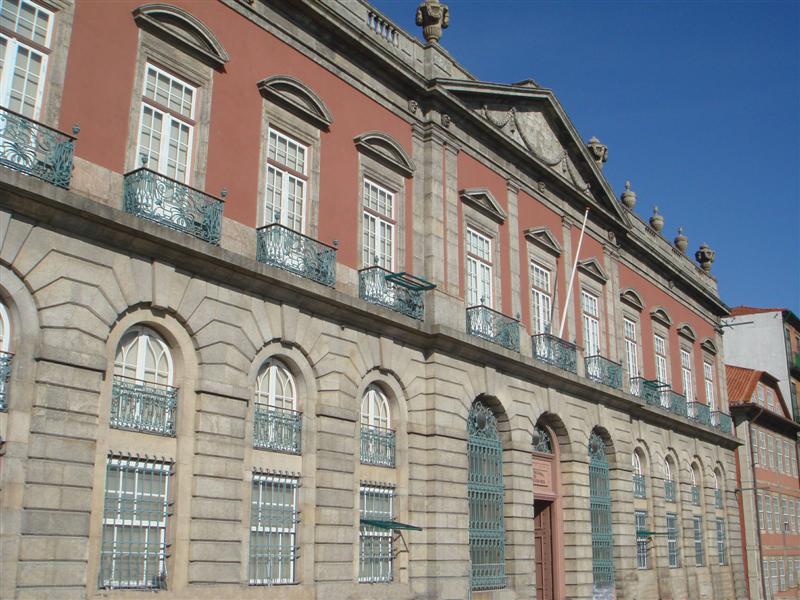
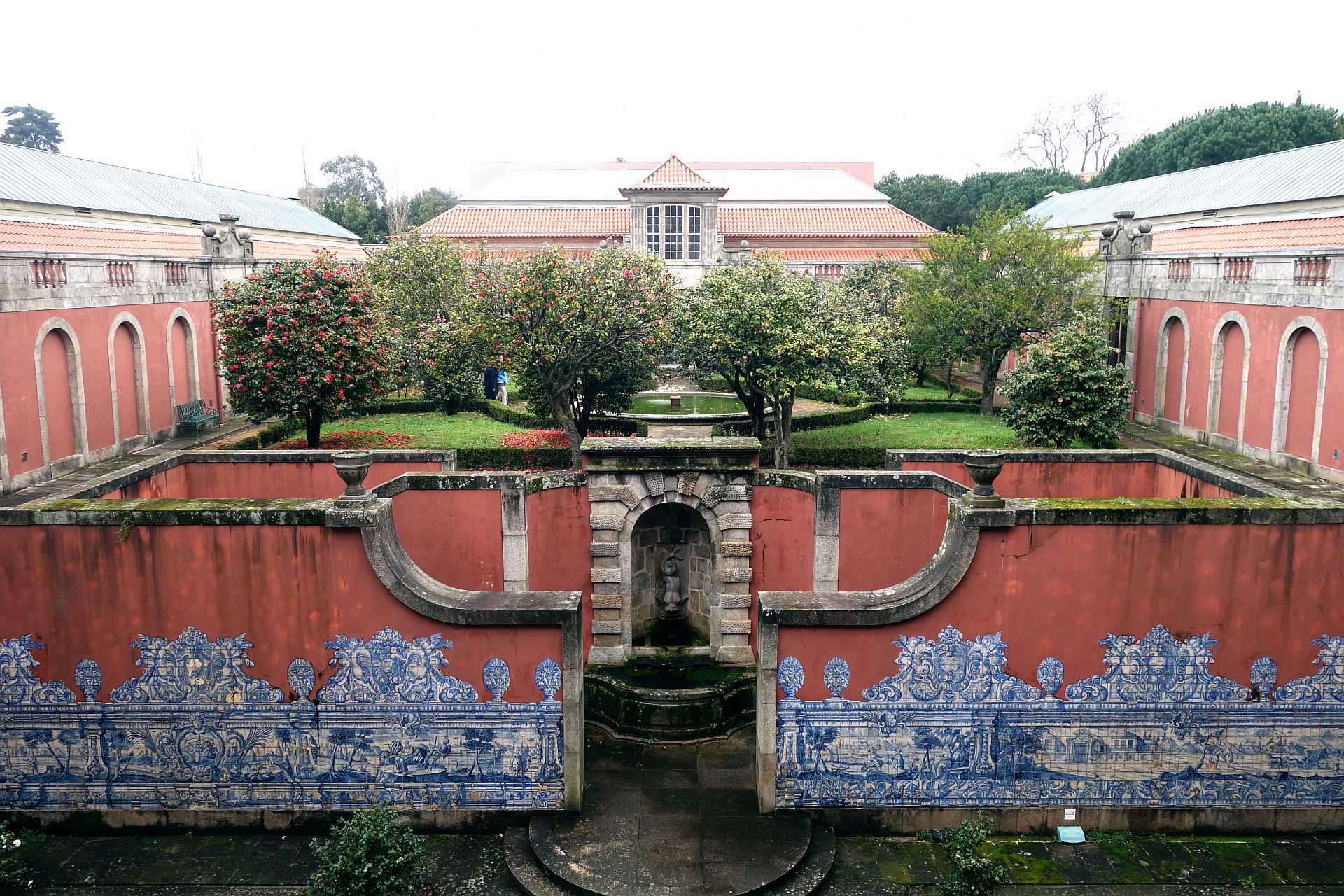
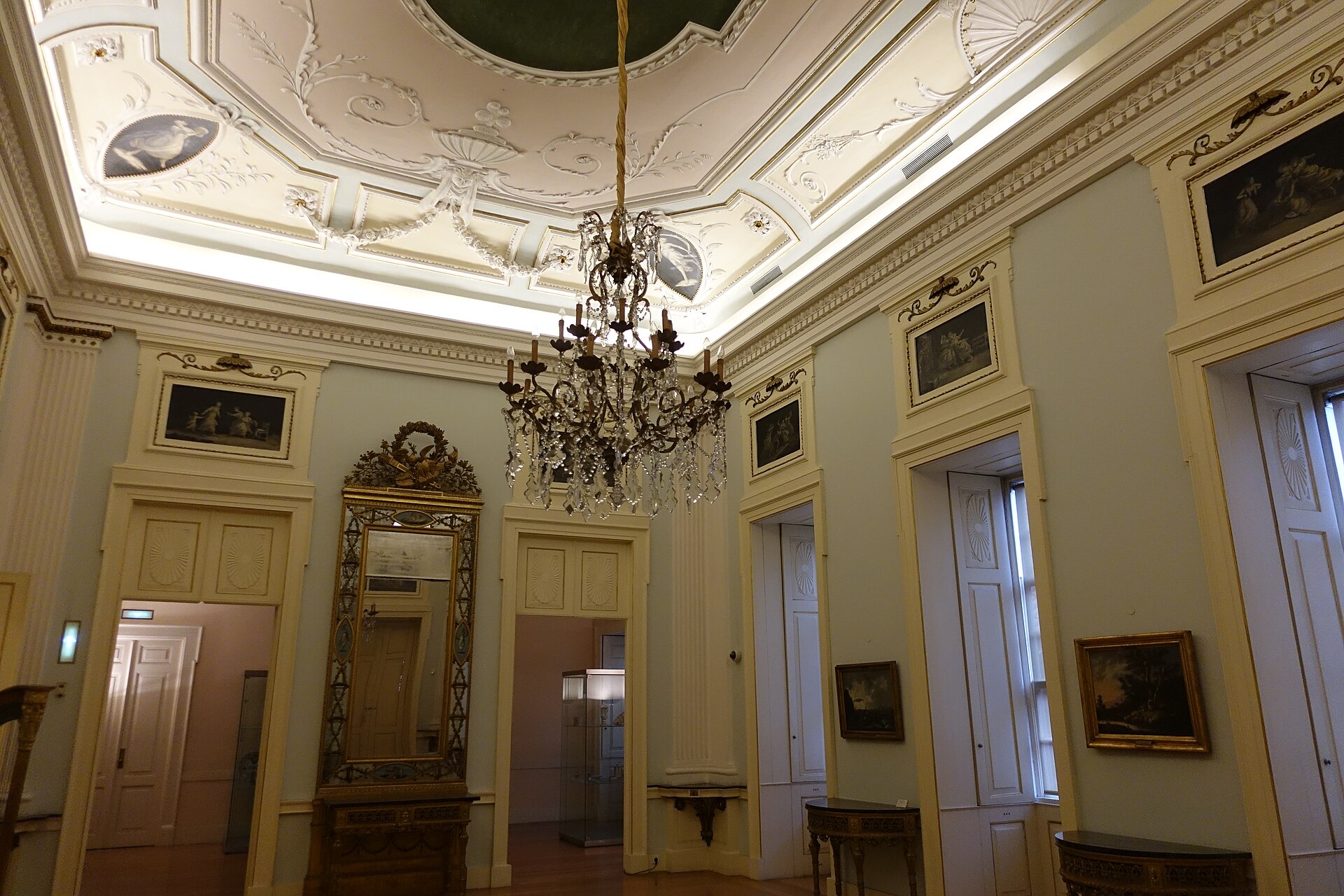
The building a visitor enters today was not built to hold art. In 1795 Brites Maria Felizarda de Castro, from the wealthy Moraes e Castro family, commissioned the architect Joaquim da Costa Lima Sampaio to design a grand new town house on land she had assembled in Porto, in a neoclassical style shaped by the English Neo-Palladian houses already going up in the city. The finished palace carried a facade of three arches supporting a projecting central block, alternating curved and triangular pediments and a run of decorative balustrades, with stucco work and wall paintings by the Italian artisan Luis Chiari inside. The Moraes e Castro family moved in around 1800 and lent the building its lasting nickname: carrancas, or scowling faces, after the grotesque masks carved into its stonework.
The palace's early history put it in the path of Portugal's wars rather than its art world. During the Peninsular War it quartered military officers on both sides, including the French Marshal Soult and, after his retreat, the Duke of Wellington. In 1832 and 1833, during the Siege of Porto in the Portuguese civil war, the future King Pedro IV made the palace his headquarters. The crown eventually acquired the building outright in 1862 and used it as the monarchy's Porto residence into the twentieth century. King Manuel II's 1915 will left the palace to the Santa Casa da Misericordia charity, formalised in 1932, and in 1937 the state converted it into a museum, moving the national collection in by 1942. The conversion has never stood still: successive campaigns added electrical systems in the 1960s and 1970s, expanded the structure in 1969, remodelled interiors through the mid-1970s, and, in 2001, the architect Fernando Tavora carried out a further modernisation that gave the museum the visitor spaces and services it runs today.
From a confiscated convent collection to a national museum
The museum itself is older than its building. King Pedro IV founded it in 1833 as the Museu Portuense, a collection of paintings, prints and other fine art gathered from two sources of Portugal's civil war: works confiscated from religious houses suppressed during the conflict, and property seized from supporters of the rival King Miguel I. It was, on the museum's own account, the first Portuguese national museum built around collections of Portuguese art, and it was first housed in a former convent rather than a purpose-built gallery. A royal decree formalised it in 1836, and in 1839 administration passed to the Porto Academy of Fine Arts, which used the collection for teaching and exhibition.
The museum took its present name after the Portuguese republic replaced the monarchy, honouring the Porto-born sculptor Antonio Soares dos Reis, whose work had entered the collection from 1911. Its status as a fully national museum dates to a 1932 reorganisation under the director Vasco Valente, who folded in further holdings from the former Episcopal Palace of Porto and the city's Municipal Museum, laying the base of the goldwork, jewellery and decorative-arts departments the museum still shows. After 1974 the institution briefly extended into contemporary art through a Contemporary Art Centre, a venture that eventually grew into the independent Serralves Foundation elsewhere in the city, leaving the Soares dos Reis museum to its historic core.
The sculptor the museum is named for
Antonio Soares dos Reis, born in Vila Nova de Gaia in 1847 and dead by his own hand in 1889, is the figure the museum organises its identity around, and his three best-known works sit together in its galleries. O Desterrado (The Exiled), a Carrara marble figure of a man seated on a sea-beaten rock, was his final examination piece from his scholarship years in Rome, made in 1872 and drawn from Alexandre Herculano's poem on the sorrows of exile; the museum treats it as a defining statement of Portuguese Romantic sculpture and reads it as more than a private mood, a collective image of a seafaring nation's longing for home. Flor Agreste (Wild Flower), modelled in plaster in 1878 and cut into marble for sale at a Porto exhibition-bazaar in 1881, is said to take its likeness from the daughter of a charcoal burner who passed the sculptor's studio; the plaster model was later used to cast the bust repeatedly in different sizes and materials, including a porcelain edition from the Vista Alegre factory, which carried the image far beyond the museum's own walls. Filha dos Condes de Almedina, a marble portrait of Luisa Guimaraes Guedes from 1882, documents Soares dos Reis's working method through surviving drawings and maquettes as well as the finished bust.
Soares dos Reis taught at the Porto Academy of Fine Arts in the years these works were made, and the museum's sculpture galleries carry that teaching line forward through his students, among them Teixeira Lopes, into the Portuguese sculpture of the following generation.
Painting, goldwork and the trade routes behind the decorative arts
The painting collection, at around 2,500 works the largest department in the museum, runs from the 16th to the 20th century but is strongest in the Romantic, Naturalist and Realist Portuguese painting of the 19th and early 20th century. Henrique Pousao, who died in 1884 at twenty-five, is represented by several works the museum classifies as national treasures, among them Senhora Vestida de Preto (Lady in Black), an 1882 oil painted in Rome built from dense patches of colour and strong light-and-shadow contrast around the sitter's black dress. Silva Porto, Marques de Oliveira, Artur Loureiro, Sousa Pinto, Aurelia de Souza and Antonio Carneiro fill out the same run of Portuguese naturalism.
The goldwork and jewellery department, formed in 1932 from the former Episcopal Palace and convent holdings, reaches beyond Portugal in ways the painting collection does not. An episcopal crosier commissioned in 1740 for the Bishop of Porto and documented by a surviving payment record naming the Italian goldsmith Antonio Arrighi sits alongside a reliquary cross and eucharistic cruet set in nephrite jade, gold, gilt silver and gemstones, made in Mughal India in the late 17th or early 18th century, given by King Joao V to the Abbot of Alcobaca, and later kept in the royal treasury of Kings Ferdinand II and Luis I before it reached the museum in 1941. The two objects, an Italian goldsmith's commission for a Portuguese bishop and an Indian workshop's piece that passed through a Portuguese monastery and then the royal court, sit in the same department for the same reason: both came into Portuguese hands through the trade and patronage networks that also filled the ceramics galleries with Chinese and Japanese export porcelain and the furniture department with pieces carried back from Portugal's Asian trading posts.
Visiting today: a quiet museum with an uneven building behind it
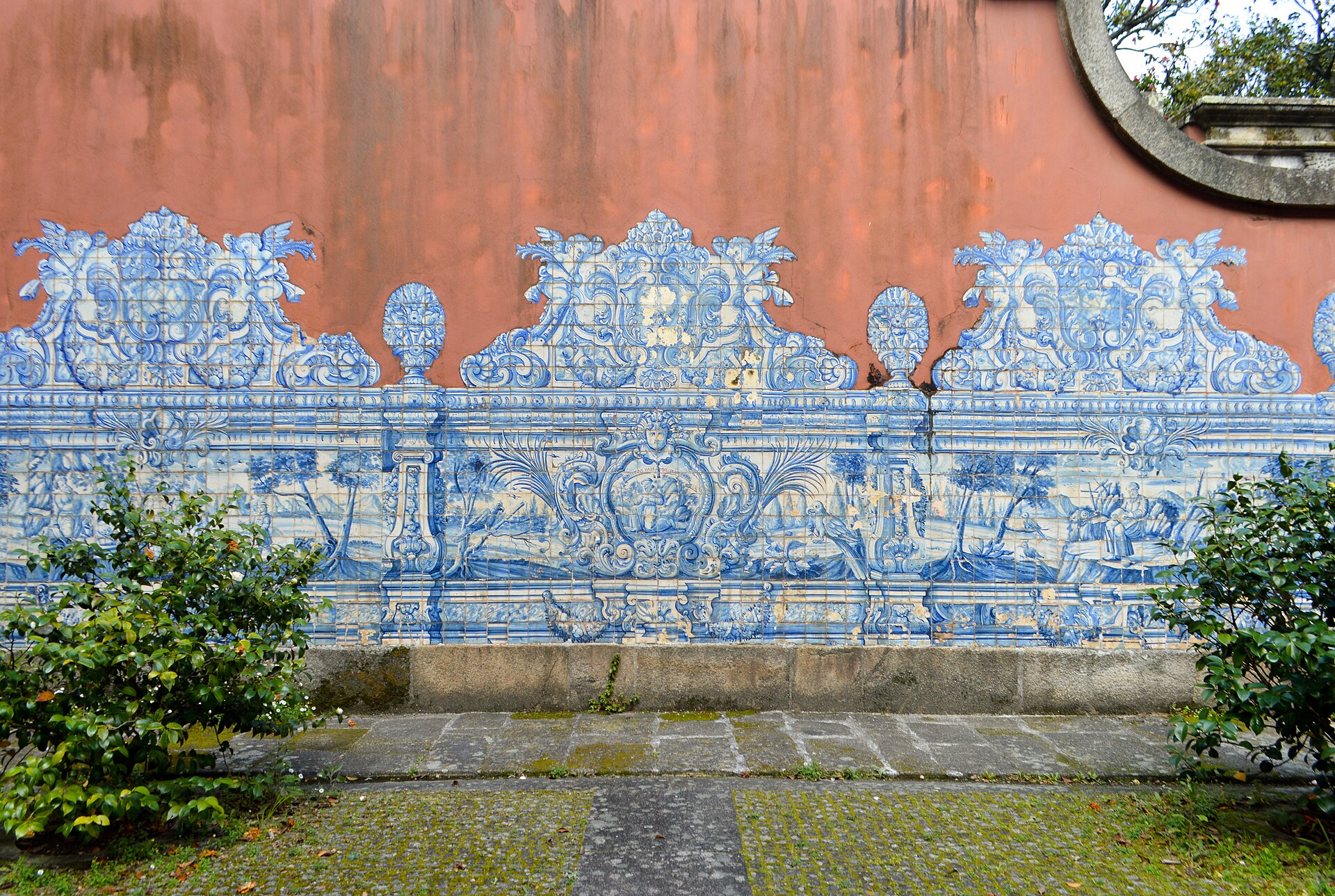
The museum keeps standard hours, Tuesday to Sunday, and a single general ticket covers the permanent collection; residents of Portugal enter free on Sundays and public holidays, a policy the museum put in place in September 2023. Visitors consistently rate the collection itself highly and just as consistently note that they had the rooms largely to themselves, a contrast several draw explicitly with the crowds at Porto's contemporary-art institutions. That same body of visitor comment is less kind about the building's upkeep: the palace garden and courtyard come up repeatedly as neglected, and more than one visitor has pointed to only part of the palace's floors being open to the public, with lighting on the upper floor singled out as too dim for some of the paintings hanging there. None of this touches the collection or its cataloguing, which the museum documents object by object on its own site down to payment records and provenance chains for individual pieces of goldwork; it is a criticism of a nineteenth-century palace carrying a modern museum's traffic and light requirements, not of what the museum has chosen to show.
What visitors say
Visitors consistently describe this as one of Porto's stronger museums for the depth of its 19th and 20th century Portuguese painting and sculpture, set in a grand former palace, and note that it draws far fewer crowds than the city's contemporary-art attractions.
What is praised, what is criticised
- Praised: the range and quality of the Romantic, Naturalist and Realist Portuguese painting and sculpture collection
- Praised: the calm, uncrowded galleries compared with Porto's busier tourist sites
- Praised: the affordable admission price and the free entry on Sundays and public holidays for residents
- Criticised: the palace garden and courtyard, which multiple reviewers describe as neglected and overdue for maintenance
- Criticised: the limited amount of the palace open to visitors, with only part of its floors given over to display
- Criticised: weak lighting on the upper floor, which some reviewers say makes certain paintings hard to see
Ratings on other platforms
TripAdvisor: 4 from 365 ratings, read 5 September 2026
A platform average is a tertiary source: it moves, it is not audited, and we quote no visitor's words.
Questions about National Museum Soares dos Reis
Where is National Museum Soares dos Reis?
Rua de Dom Manuel II 44, 4050-342 Porto, Portugal.
How much does it cost to visit?
General ticket: EUR 10; Fernando de Castro House-Museum: EUR 5. As confirmed 5 September 2026.
When is it open?
Tue-Sun 10:00-18:00. Closed: Monday. 1 January. As confirmed 5 September 2026.
How do you get there?
Metro: Carolina Michaelis (lines A, B, C, E, F) or Sao Bento (line D), both about 20 minutes on foot from the museum; Bus: STCP lines serving the area include 200, 201, 207, 300, 302, 501, 507, 601 and 602; Car: No dedicated museum car park; the museum's own directions point visitors to nearby public car parks.
What should you see first?
O Desterrado (The Exiled) (Antonio Soares dos Reis); Filha dos Condes de Almedina (Daughter of the Counts of Almedina) (Antonio Soares dos Reis); Flor Agreste (Wild Flower) (Antonio Soares dos Reis); Senhora Vestida de Preto (Lady in Black) (Henrique Pousao); Crossa de baculo episcopal (Episcopal crosier) (Antonio Arrighi); Holy Cross reliquary and eucharistic cruet set (Mughal India workshop).
What we could not confirm
- The museum's own collection pages document detailed provenance for individual highlight objects, such as the Mughal reliquary cross's passage through the Alcobaca monastery and the royal treasury, but no equivalent public provenance history could be found for the bulk of the paintings and sculpture holdings.
- No English-language source found in this research states how much of the palace's floor area is currently open to the public, beyond visitor reports that only part of it is in use.
Images
Sources
- 1Museu Nacional Soares dos Reis, Visit page (hours, admission, accessibility, photography, bags) museusoaresdosreis.gov.pt/visit/?lang=en
- 2Museu Nacional Soares dos Reis, History page museusoaresdosreis.gov.pt/museum/history/?lang=en
- 3Museu Nacional Soares dos Reis, Collections page museusoaresdosreis.gov.pt/collections/?lang=en
- 4Museu Nacional Soares dos Reis, Contacts page museusoaresdosreis.gov.pt/contacts/?lang=en
- 5Museu Nacional Soares dos Reis, Services page museusoaresdosreis.gov.pt/museum/services/?lang=en
- 6Museu Nacional Soares dos Reis, How to get there page museusoaresdosreis.gov.pt/visit/how-to-get-there/?lang=en
- 7Museu Nacional Soares dos Reis, collection page for O Desterrado (The Exiled) museusoaresdosreis.gov.pt/colecao/the-outcast/?lang=en
- 8Museu Nacional Soares dos Reis, collection page for Filha dos Condes de Almedina museusoaresdosreis.gov.pt/colecao/filha-dos-condes-de-almedina-antonio-soares-dos-reis/
- 9Museu Nacional Soares dos Reis, collection page for Flor Agreste museusoaresdosreis.gov.pt/colecao/flor-agreste/?lang=en
- 10Museu Nacional Soares dos Reis, collection page for the reliquary cross and cruet set museusoaresdosreis.gov.pt/colecao/reliquary-cross-and-cruet-set/?lang=en
- 11Museu Nacional Soares dos Reis, collection page for the episcopal crosier museusoaresdosreis.gov.pt/colecao/croca-de-baculo-episcopal-antonio-arrighi/
- 12Museu Nacional Soares dos Reis, notice on free Sunday and holiday admission museusoaresdosreis.gov.pt/free-visits-on-sundays-and-public-holidays-throughout-the-day/?lang=en
- 13Wikipedia, Soares dos Reis National Museum en.wikipedia.org/wiki/Soares_dos_Reis_National_Museum
- 14Wikipedia, Carrancas Palace (Palacio dos Carrancas) en.wikipedia.org/wiki/Pal%C3%A1cio_dos_Carrancas
- 15TripAdvisor, Museu Nacional Soares dos Reis reviews tripadvisor.com/Attraction_Review-g189180-d243631-Reviews-Museu_Nacional_Soares_dos_Reis-Porto_Porto_District_Northern_Portugal.html
- 16Wikimedia Commons, File:Museu Nacional de Soares dos Reis, Porto, Portugal.JPG commons.wikimedia.org/wiki/File:Museu_Nacional_de_Soares_dos_Reis,_Porto,_Portugal.JPG
- 17Wikimedia Commons, File:Carrancas_Porto.jpg commons.wikimedia.org/wiki/File:Carrancas_Porto.jpg
- 18Wikimedia Commons, File:Palacio dos Carrancas (47550968591).jpg commons.wikimedia.org/wiki/File:Pal%C3%A1cio_dos_Carrancas_(47550968591).jpg
- 19Wikimedia Commons, File:Porto 2016-17 Courtyard (33011516910).jpg commons.wikimedia.org/wiki/File:Porto_2016-17_Courtyard_(33011516910).jpg
- 20Wikimedia Commons, File:Painting gallery - Museu Nacional de Soares dos Reis - Porto, Portugal - DSC00717.jpg commons.wikimedia.org/wiki/File:Painting_gallery_-_Museu_Nacional_de_Soares_dos_Reis_-_Porto,_Portugal_-_DSC00717.jpg
- 21Museu Nacional Soares dos Reis, collection page for Senhora vestida de preto (Lady in Black) museusoaresdosreis.gov.pt/colecao/senhora-vestida-de-preto-henrique-pousao/
- 22Wikimedia Commons, File:Museu Nacional de Soares dos Reis (6).JPG commons.wikimedia.org/wiki/File:Museu_Nacional_de_Soares_dos_Reis_(6).JPG


.jpg)
.jpg)

.JPG)