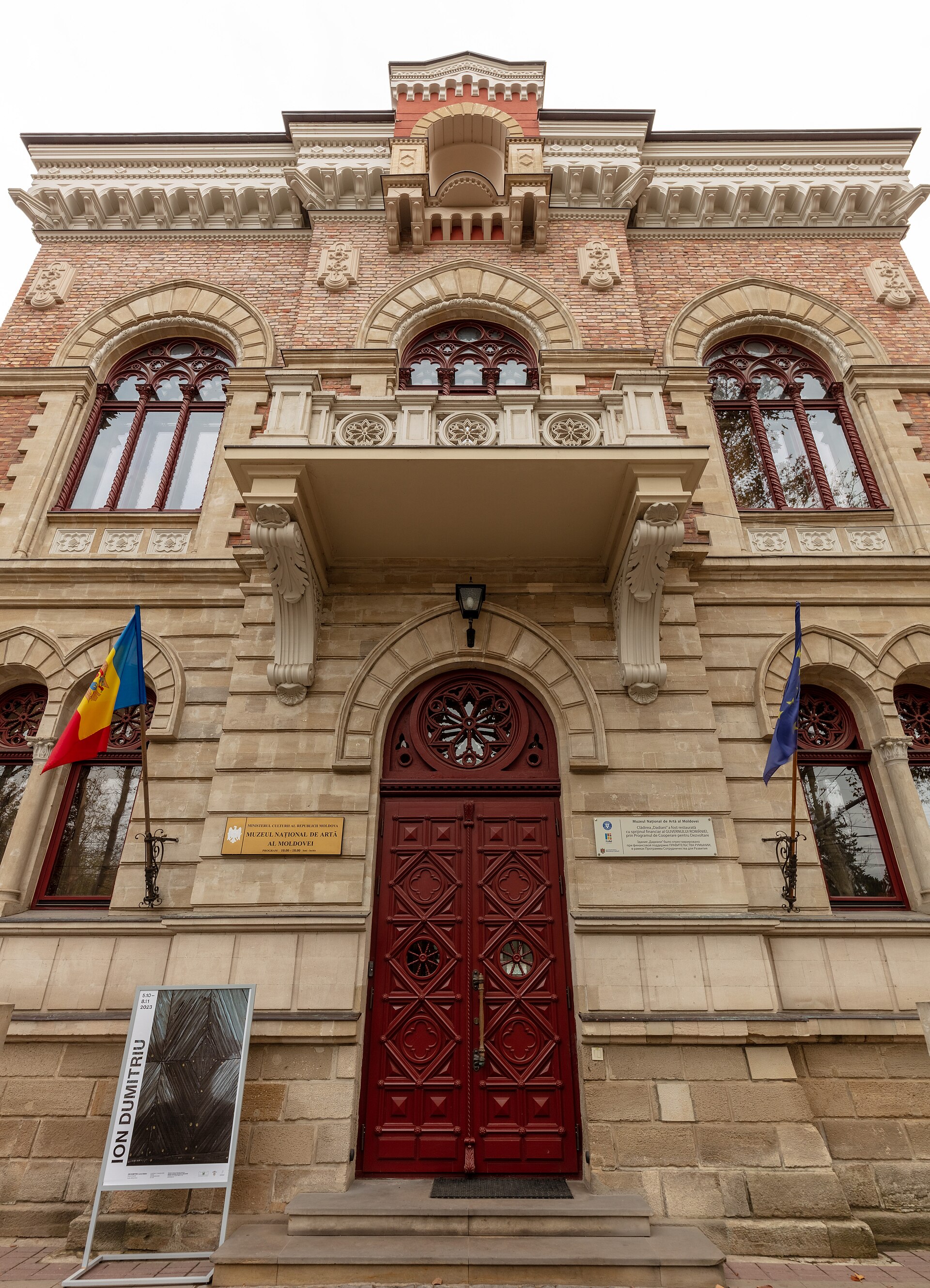
The former Dadiani girls' gymnasium building, built 1901 by Alexandru Bernardazzi, now the National Museum of Fine Arts, photographed in 2023.
Diego Delso, CC BY-SA 4.0National Museum of Fine Arts
Museum · Muzeul National de Arta al Moldovei · Founded 1939
Open, admission and hours confirmed 5 September 2026 · 18 sources
On this page 15 sections
ContentsClose
The museum's real strength is not depth in any single Western school but breadth inside a small footprint: an unbroken run of Moldovan and Bessarabian art from the nineteenth century onward that few institutions outside the country hold at all, set beside a genuinely international graphics cabinet built almost entirely from a handful of large twentieth century gifts. Its Western Old Masters are, by contrast, a scattering rather than a survey, and the museum's own materials make no claim otherwise.
| Local name | Muzeul National de Arta al Moldovei |
|---|---|
| Kind | Museum |
| Founded | 1939 |
| City and country |  Chisinau, Moldova Chisinau, Moldova |
| Address | 115, 31 August 1989 Street, Chisinau, Moldova |
| Website | mnam.md/?lang=en |
| Status | Open, confirmed |
| Record last verified |
Visiting
- Hours
- Tue-Sun10:00 to 18:00
- Closed
- Monday.
- Admission
- AdultMDL 50
- Student / pensionerMDL 25
- SchoolchildMDL 10
- Child under 7Freefree; also extended to disabled visitors and one companion, active military personnel, art school pupils and Union of Artists members
Free entry: Last Wednesday of the month, for all visitors- Tickets
- mnam.md/en/tickets The museum's own ticket page.
- Do I need to book?
- No
- Address
- 115, 31 August 1989 Street, Chisinau, Moldova MapWalking Central Chisinau, on 31 August 1989 Street, within walking distance of several other city attractions
- Website
- mnam.md/?lang=en
- Telephone
- +373 22 24 13 12
- [email protected]
Before you go how long, access, photography, bags, eating, shop
- How long to allow
- Two to three hours for the permanent collection, longer with a temporary exhibition open
Prices and hours change. We take them from the institution's own pages and print the day we read them, and you can check the current position at the source we used. Confirm before you travel.
What is inside
Religious Art Gallery
Icons and religious painting from the Moldovan and wider Orthodox tradition, one of five named divisions of the museum's national art collection.
Bessarabian and National Painting
Nineteenth and twentieth century Bessarabian and Romanian painting, the successor to the roughly 160 works the museum opened with in 1939, none of which itself survives.
National Sculpture and Decorative Art
Moldovan sculpture and decorative art, including work by the museum's own co-founder, the sculptor Alexandru Plamadeala.
Modern and Contemporary National Art
Twentieth and twenty-first century Moldovan painting, including Valentina Rusu-Ciobanu and Igor Vieru.
Western European Painting
A small Western European painting collection, including Flemish work by Jacob Jordaens, built mostly through twentieth century transfers rather than an original bequest.
Russian Painting
Russian painting assembled chiefly from postwar transfers out of the Tretyakov Gallery and the Hermitage after 1944, including landscapes by Ivan Shishkin and history painting by Vasily Surikov.
Graphics and Oriental Art
A graphics cabinet spanning Durer, Hogarth and nineteenth century Russian printmakers, together with an Oriental section of Japanese woodblock prints by Hiroshige, Kunisada and Yoshitoshi.
What to see first
Flemish paintings
Jacob JordaensOne of the museum's few named Flemish Old Masters, in a Western European collection built mostly from twentieth century transfers rather than an original bequest.8
Russian landscape painting
Ivan ShishkinRepresents the Russian painting rooms rebuilt after 1944 from Tretyakov Gallery and Hermitage transfers.8
Russian history painting
Vasily SurikovAnchors the same postwar Russian painting collection alongside Shishkin.8
Old Master engravings
Albrecht DurerPart of the 1975 acquisition, alongside William Hogarth and Vasili Perov, that anchors the graphics cabinet's Old Master holdings.2
Japanese woodblock prints
Utagawa Hiroshige, Utagawa Kunisada and Tsukioka YoshitoshiThe Oriental graphics section, drawn from nineteenth century ukiyo-e, gives the collection a reach well beyond Bessarabia and Russia.9
Modern Moldovan painting
Valentina Rusu-CiobanuA leading figure of Moldovan modern and contemporary national art, named in the museum's own account of its recent collection.10
Modern Moldovan painting
Igor VieruNamed alongside Rusu-Ciobanu as a core figure of the museum's modern and contemporary national art holdings.10
National sculpture
Alexandru PlamadealaThe museum's own co-founder is himself represented in the national sculpture collection he helped establish in 1939.2
A girls' school built for one princess, given to another purpose
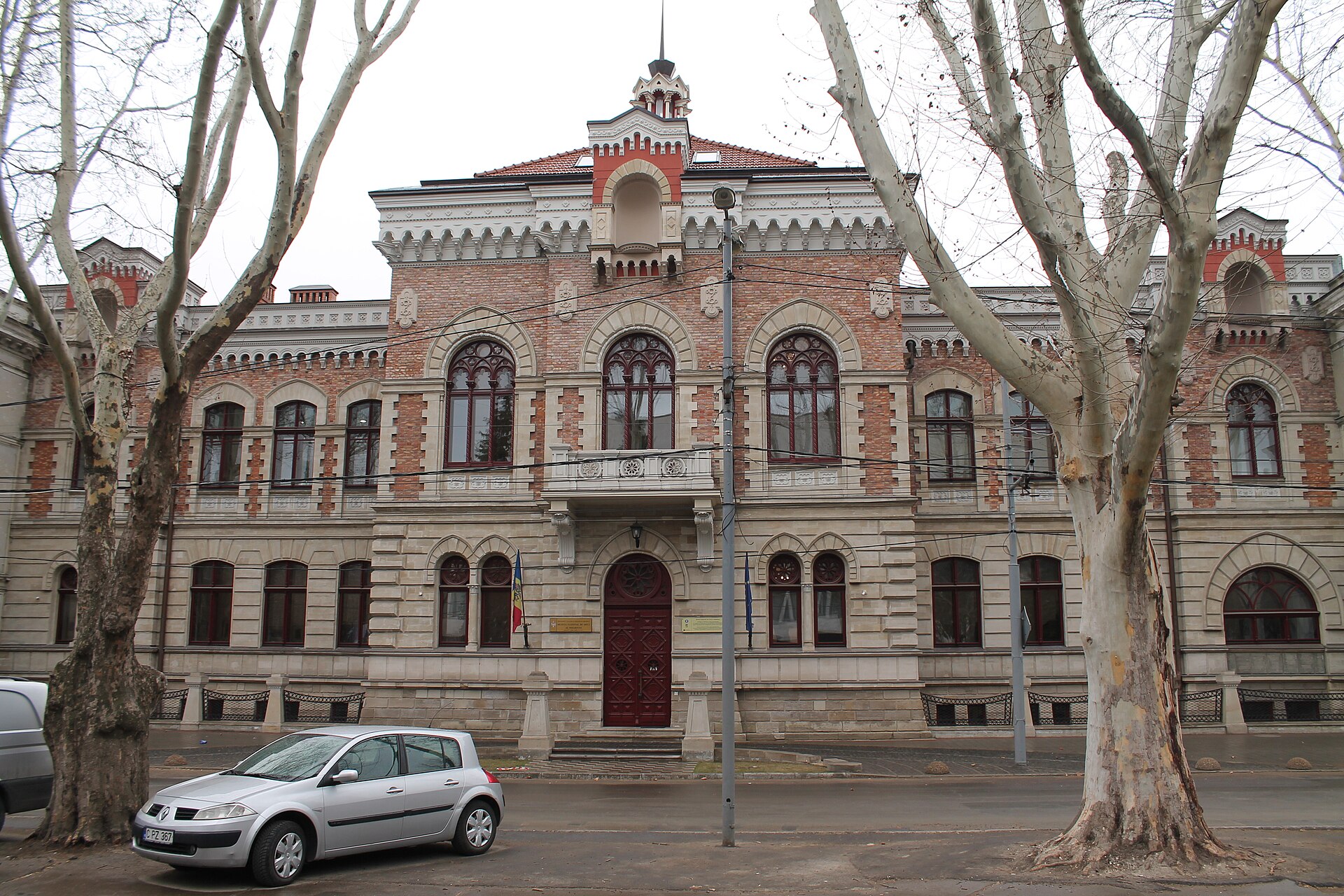
The building at 115, 31 August 1989 Street was not built as a museum. In 1901 the architect Alexandru Bernardazzi raised it as a girls' gymnasium endowed by Princess Natalia Dadiani, in the eclectic style then fashionable in Chisinau, with a Florentine Gothic cast to its window surrounds and a two-storey wing added later on the right to balance the block already standing on the left. Bernardazzi was the city's leading architect of the period and the gymnasium was one of several substantial public buildings he left across Chisinau. The school kept that name into the Soviet period, when the building was put to other institutional use, and it did not become a museum until 1988, when it was formally transferred to house a collection that had by then spent almost half a century looking for a permanent home.
A gallery opened in 1939, and a collection that did not survive the year
The museum's own history traces its founding to the sculptor Alexandru Plamadeala and the painter Auguste Baillayre, who assembled about 160 works by Bessarabian and Romanian artists into the first Pinacotheca in Chisinau, opened on 26 November 1939 with Baillayre as its first director. The gallery lasted less than two years. When war reached Bessarabia in 1941, the collection was loaded onto wagons and sent toward Kharkiv for safekeeping. It never arrived, or if it did, no further trace of it survives; the museum's own history page states plainly that its fate remains unknown to this day. Nothing published since has narrowed that further: no auction record, wartime requisition list or later restitution claim has surfaced to say where those founding paintings went. The museum that reopened in 1944 was rebuilt from new gifts, chiefly transfers from the Tretyakov Gallery and the Hermitage, and from Soviet-era confiscations of private Bessarabian collections after 1940. It is, in that sense, a second collection wearing the founding date of the first.
Where the collection came from, gift by gift
Because so little of the founding 1939 collection survives, most of what hangs in the galleries today arrived as a sequence of named gifts and transfers rather than as one coherent founding bequest. The graphic arts cabinet owes its core to a 1947 bequest from Pavel Sillingovski of European and Russian prints spanning the seventeenth to nineteenth centuries. In 1962 the museum's own co-founder, Auguste Baillayre, gave 342 works by national and international artists from his own collection. A further wave of acquisitions in 1975 brought paintings by Orest Kiprensky and Vladimir Makovsky and engravings by Albrecht Durer, William Hogarth and Vasili Perov. Postwar transfers from the Tretyakov Gallery and the Hermitage filled out the Russian painting rooms in the years immediately after 1944. Each of these is documented on the museum's own history page as a discrete event with a date and, in most cases, a donor's name, which is more than the founding collection itself can offer: nobody has published where the works lost toward Kharkiv in 1941 actually are.
What the collection now holds
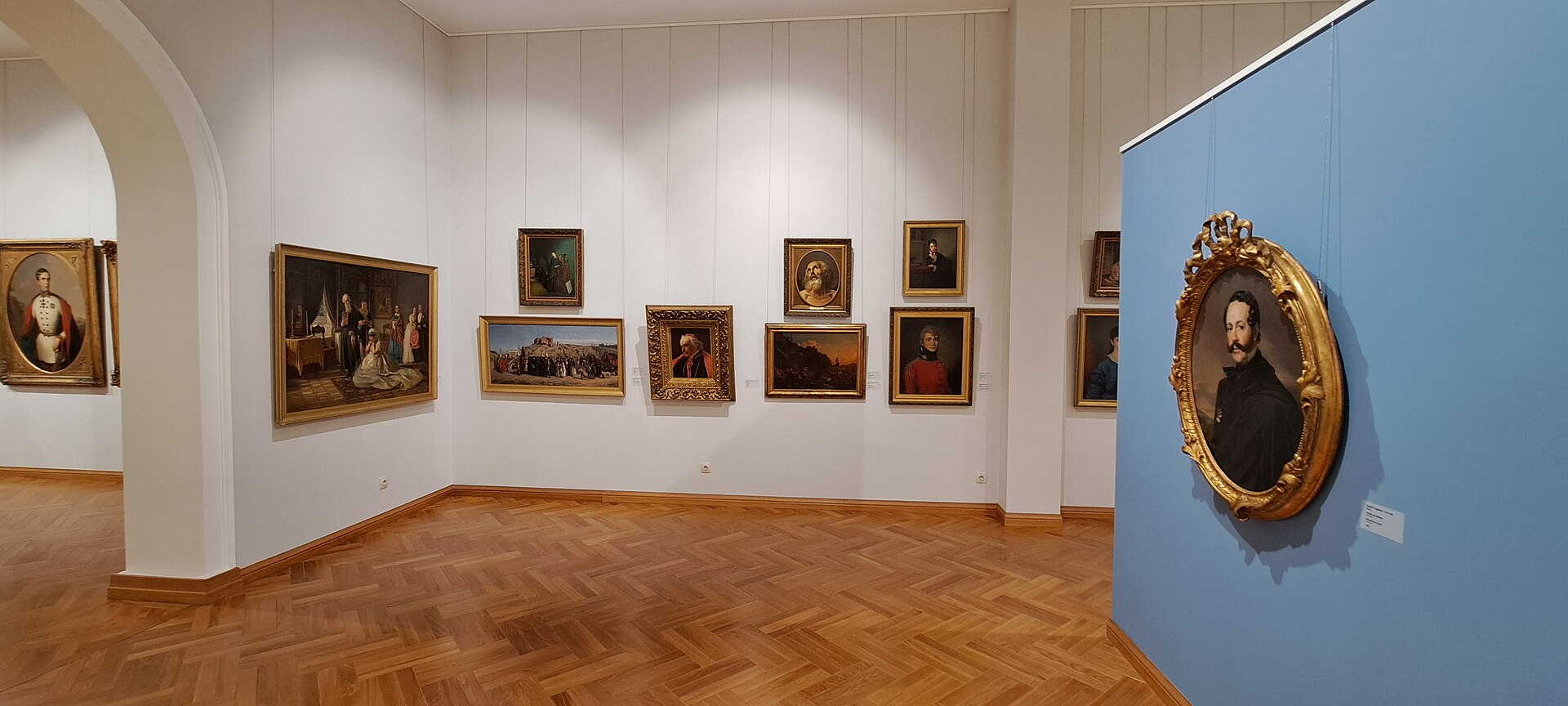
The museum's own count, published on its history page, puts the holdings at 39,767 pieces; a Romanian-language account of the same institution gives a range of 39,000 to 44,000, and a Chisinau tourism guide cites 33,000. None of the three cites the other, and none explains the gap, so a reader comparing them should treat the true figure as approximate rather than precise. What is consistent across every account is the shape of the collection: religious art and icons, Bessarabian and national painting from the nineteenth and twentieth centuries, national sculpture and decorative art, modern and contemporary Moldovan work, Western European painting, Russian painting, and a graphics cabinet that runs from Durer and Hogarth through nineteenth century Russian printmakers to Japanese woodblock prints by Hiroshige, Kunisada and Yoshitoshi. The museum organises this material into two standing exhibitions, one of national art and one of universal art, spread across its restored galleries in the Dadiani building.
An earthquake, then twelve years of scaffolding
The Dadiani building's return to full use was not straightforward either. A 1990 earthquake damaged its central entrance and closed that part of the building. The restoration that followed was not quick: the museum's own account dates the main restoration campaign to 2004 through 2016, covering 1,783 square metres, with the permanent exhibitions reopening in stages in 2016 and again in 2021. A visitor arriving before 2016 would have seen a museum still working around its own repairs; a visitor arriving after 2021 sees, by the museum's own description and by visitor accounts alike, a building that has finally caught up with its collection.
Visiting today
The museum keeps Tuesday to Sunday hours, 10:00 to 18:00, and is closed on Monday. Adult admission is 50 Moldovan lei, with a reduced rate of 25 lei for students and pensioners and 10 lei for schoolchildren; children under seven enter free, as do disabled visitors and their companions, active military personnel, art school pupils and members of the Union of Artists. Admission is free to everyone on the last Wednesday of each month. Guided tours run separately from the entrance fee, priced by group size and by language, with Romanian-language tours cheaper than tours conducted in another language. A Chisinau visitor guide recommends two to three hours for the permanent collection and suggests arriving at least an hour before closing, longer if a temporary exhibition is also open. The museum sits centrally on 31 August 1989 Street, within walking distance of several other Chisinau attractions, and the guide describes it as easy to reach on the city's public transport.
What visitors say, and where they disagree
The museum holds a 4.3 out of 5 rating on Tripadvisor from 88 reviews and carries that platform's Travellers' Choice award, ranking 15th among things to do in Chisinau. What reviewers agree on is the building: the restored staircase and interiors are named repeatedly as the best part of a visit, alongside low admission and galleries that are rarely crowded. Several single out temporary exhibitions, including displays of icons and of Japanese prints, as reason enough to return. Where they disagree is on the permanent collection's weight: some describe being unexpectedly impressed by its range across three centuries, while at least one visitor on the same platform called it the saddest art museum they had visited, and others note that a full circuit takes as little as one to two hours, more suited to a wet afternoon than a dedicated trip. A recurring complaint, not about the art but about the experience, concerns staff switching off lights in a gallery once visitors have moved on, which some found jarring rather than economical. Language support for foreign visitors is described as inconsistent, adequate in some galleries and absent in others.
What visitors say
Visitors consistently praise the restored 1901 building and its interiors over the permanent art collection itself, which several describe as modest in scale though wider in range than they expected; the museum is generally rated a worthwhile short visit rather than a destination in its own right.
What is praised, what is criticised
- Praised: The restored staircase and interiors of the Dadiani building, named repeatedly as the best part of a visit
- Praised: Low admission prices and galleries that are rarely crowded
- Praised: Temporary exhibitions, including displays of icons and of Japanese prints
- Criticised: The permanent collection's limited scale next to major European museums; one Tripadvisor reviewer called it the saddest art museum they had visited
- Criticised: Staff switching off gallery lights once visitors move on, which some visitors found jarring
- Criticised: Inconsistent language support for foreign visitors
Ratings on other platforms
Tripadvisor: 4.3 from 88 ratings, read 5 September 2026
A platform average is a tertiary source: it moves, it is not audited, and we quote no visitor's words.
Questions about National Museum of Fine Arts
Where is National Museum of Fine Arts?
115, 31 August 1989 Street, Chisinau, Moldova.
How much does it cost to visit?
Adult: MDL 50; Student / pensioner: MDL 25; Schoolchild: MDL 10; Child under 7: free. As confirmed 5 September 2026.
When is it open?
Tue-Sun 10:00-18:00. Closed: Monday. As confirmed 5 September 2026.
How do you get there?
Walking: Central Chisinau, on 31 August 1989 Street, within walking distance of several other city attractions.
What should you see first?
Flemish paintings (Jacob Jordaens); Russian landscape painting (Ivan Shishkin); Russian history painting (Vasily Surikov); Old Master engravings (Albrecht Durer); Japanese woodblock prints (Utagawa Hiroshige, Utagawa Kunisada and Tsukioka Yoshitoshi); Modern Moldovan painting (Valentina Rusu-Ciobanu).
What we could not confirm
- The fate of the roughly 160 paintings sent toward Kharkiv in 1941 has never been published; the museum's own history page states only that it is unknown.
- Published totals for the collection's size disagree by roughly 10,000 objects across the museum's own site, Romanian Wikipedia and a Chisinau tourism guide, and none of the three explains the difference.
Images
Sources
- 1Muzeul National de Arta al Moldovei, official site, English homepage (open status, hours confirmed) mnam.md/?lang=en
- 2Muzeul National de Arta al Moldovei, official site, History (English) mnam.md/en/history
- 3Muzeul National de Arta al Moldovei, official site, Tickets (English) mnam.md/en/tickets
- 4Muzeul National de Arta al Moldovei, official site, Contacts (English) mnam.md/en/contacts
- 5Muzeul National de Arta al Moldovei, official site, Collections overview (English) mnam.md/en/collections/collections
- 6Muzeul National de Arta al Moldovei, official site, Permanent Exhibition of National Art (English) mnam.md/en/collections/the-permanent-exhibition-of-national-art
- 7Muzeul National de Arta al Moldovei, official site, Permanent Exhibition of Universal Art (English) mnam.md/en/collections/the-permanent-exhibition-of-universal-art
- 8Wikipedia, "National Museum of Fine Arts, Chisinau" (English) en.wikipedia.org/wiki/National_Museum_of_Fine_Arts,_Chi%C8%99in%C4%83u
- 9Wikipedia, "Muzeul National de Arta al Moldovei" (Romanian) ro.wikipedia.org/wiki/Muzeul_Na%C8%9Bional_de_Art%C4%83_al_Moldovei
- 10Chisinau city tourism portal, audio guide entry for the museum visit.chisinau.md/en/audio/muzeul-national-de-arta-a-republicii-moldova/
- 11Tripadvisor, "National Art Museum of Moldova" attraction reviews page, read 2026-09-05 tripadvisor.com/Attraction_Review-g294456-d8483924-Reviews-National_Art_Museum_of_Moldova-Chisinau_Chisinau_District.html
- 12Kupi.com visitor guide, National Museum of Fine Arts of Moldova, Chisinau kupi.com/en-ae/explore/moldova/chisinau/national-museum-of-fine-arts-of-moldova
- 13Wikidata, Q6974468, National Museum of Fine Arts wikidata.org/wiki/Q6974468
- 14Wikimedia Commons, Category:National Art Museum of Moldova commons.wikimedia.org/wiki/Category:National_Art_Museum_of_Moldova
- 15Wikimedia Commons, Category:Building of Dadiani's former girls gymnasium in Chisinau commons.wikimedia.org/wiki/Category:Building_of_Dadiani%27s_former_girls_gymnasium_in_Chi%C8%99in%C4%83u
- 16Wikimedia Commons, File:Museo nacional de bellas artes, Chisinau, Moldavia, 2023-11-03, DD 71-73 HDR.jpg, photograph by Diego Delso, CC BY-SA 4.0 commons.wikimedia.org/wiki/File:Museo_nacional_de_bellas_artes,_Chisin%C3%A1u,_Moldavia,_2023-11-03,_DD_71-73_HDR.jpg
- 17Wikimedia Commons, File:Building of Dadiani's former girls gymnasium in Chisinau 100.jpg, photograph by Tomasz Bladyniec, CC BY 4.0 commons.wikimedia.org/wiki/File:Building_of_Dadiani%27s_former_girls_gymnasium_in_Chi%C8%99in%C4%83u_100.jpg
- 18Wikimedia Commons, File:Kisinev, Narodni umelecke muzeum (2019-03-16; 01).jpg, photograph by Harold, CC BY-SA 4.0 commons.wikimedia.org/wiki/File:Ki%C5%A1in%C4%9Bv,_N%C3%A1rodn%C3%AD_um%C4%9Bleck%C3%A9_muzeum_(2019-03-16;_01).jpg


.jpg)