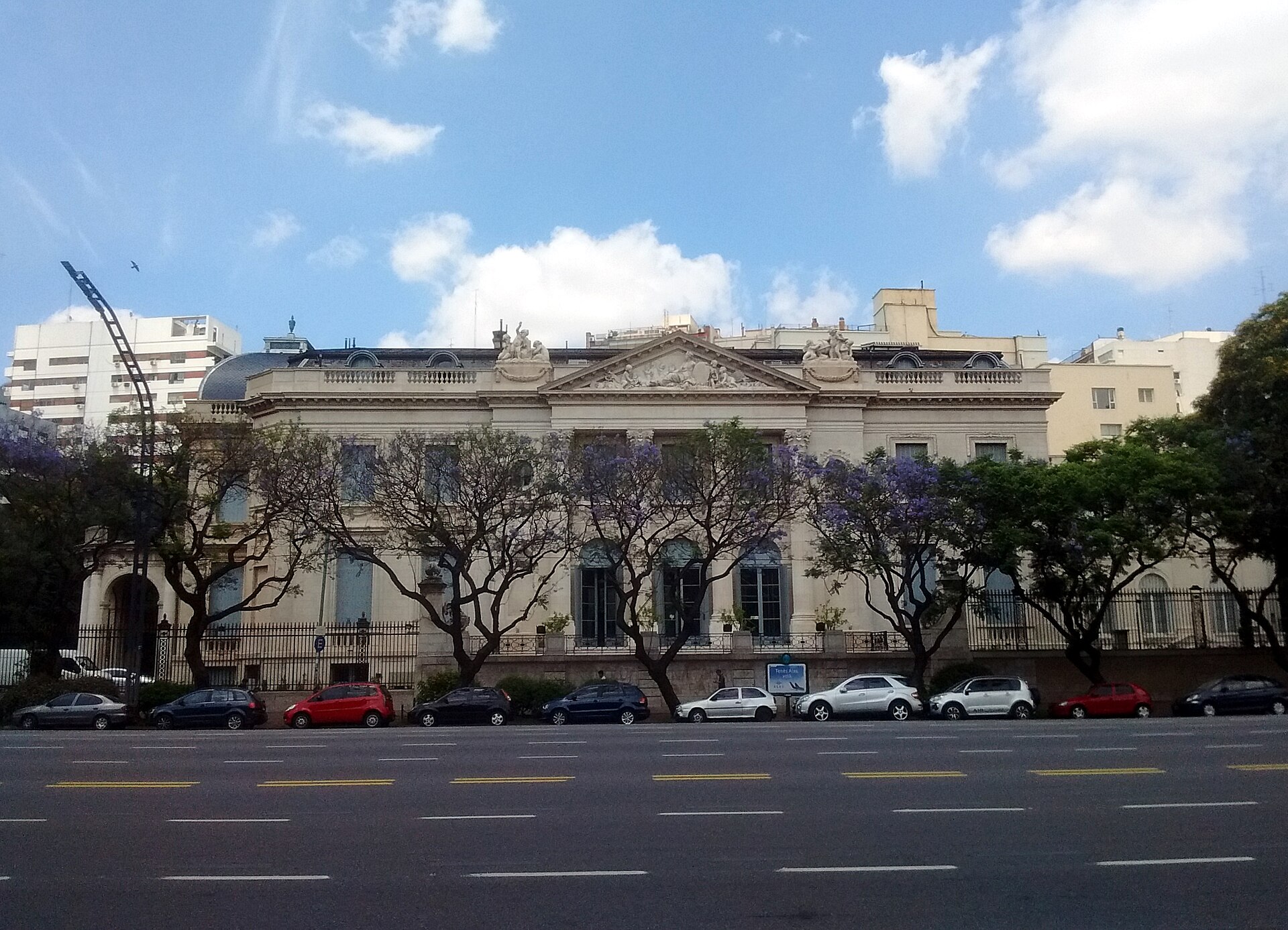
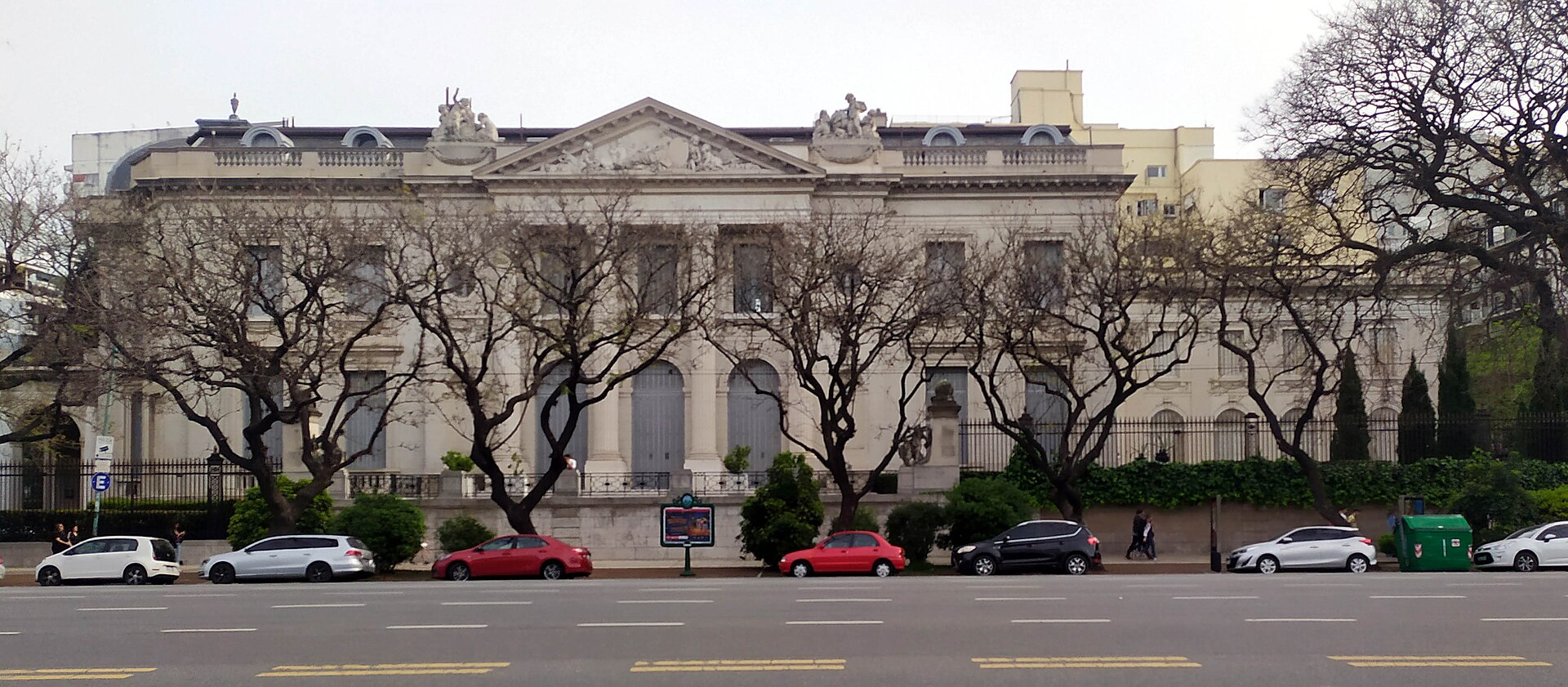
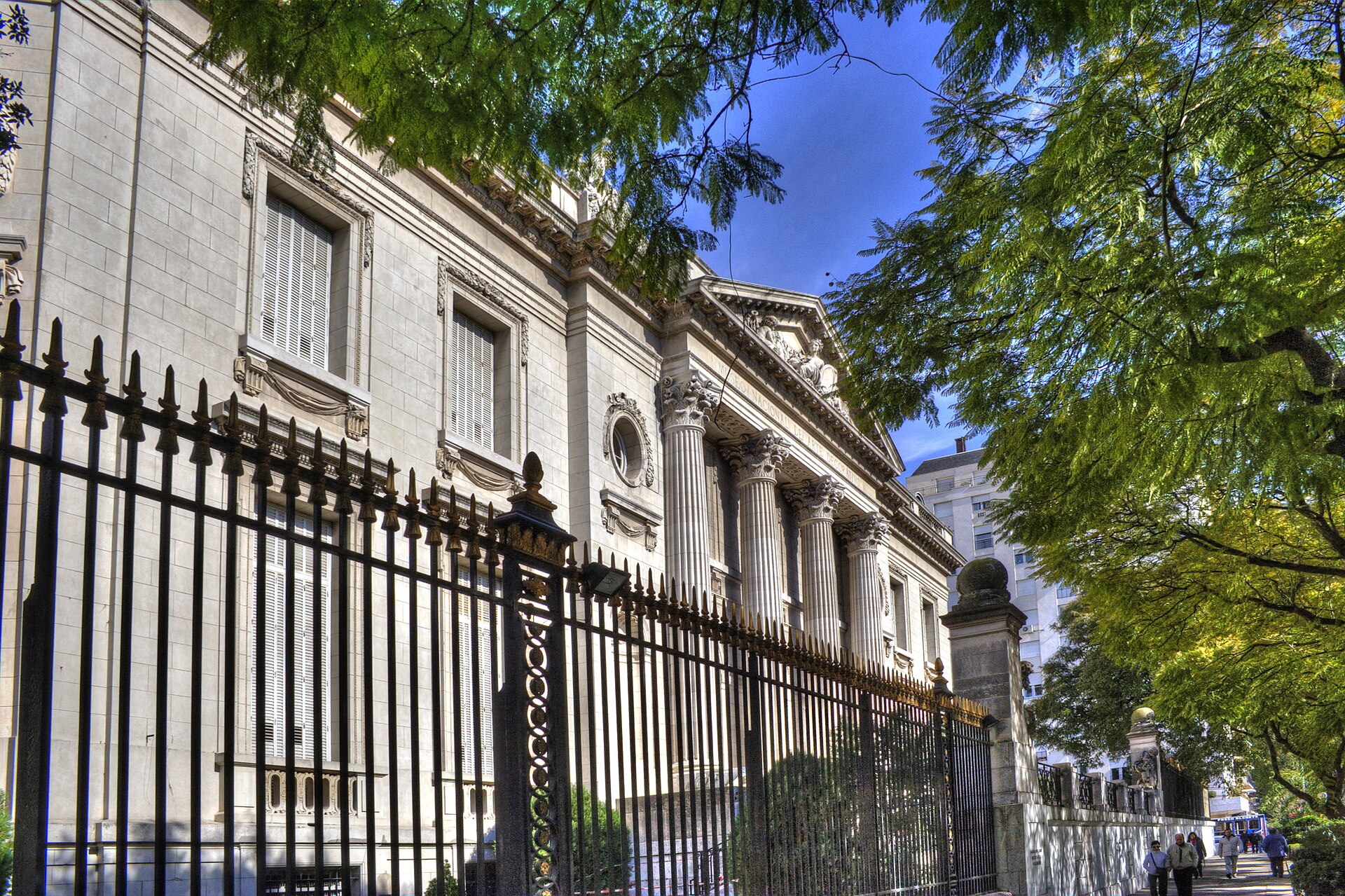
The Avenida del Libertador facade of the Palacio Errazuriz Alvear, home of the Museo Nacional de Arte Decorativo since 1937.
Public domainNational Museum of Decorative Arts
Museum · Museo Nacional de Arte Decorativo · Founded 1937
Open, admission and hours confirmed 4 September 2026 · 12 sources
On this page 14 sections
ContentsClose
European decorative art of the sixteenth to twentieth centuries is the core of the museum's roughly 6,000-object collection, assembled first by Matias Errazuriz Ortuzar and Josefina de Alvear during a decade living in Europe before 1916 and expanded since the museum's 1937 opening through gift and bequest. Its particular strengths are period furniture and decorative objects shown in the rooms bought to hold them rather than in cases, French eighteenth-century decorative arts (porcelain, bronze, tapestry), and a collection of European portrait miniatures that independent reference sources describe as the most important of its kind in the Americas. Painting and sculpture are present but secondary to the decorative arts and to the house itself, which the museum and its visitors alike treat as the primary exhibit.
| Local name | Museo Nacional de Arte Decorativo |
|---|---|
| Kind | Museum |
| Founded | 1937 |
| City and country |  Buenos Aires, Argentina Buenos Aires, Argentina |
| Address | Av. del Libertador 1902, C1425AAS, Ciudad de Buenos Aires, Argentina |
| Website | museoartedecorativo.cultura.gob.ar |
| Status | Open, confirmed |
| Record last verified |
Visiting
- Hours
- Wed-Sun13:00 to 19:00Last entry 18:30
- Closed
- Monday. Tuesday.
- Admission
- All visitorsFreeFree admission, no reservation required, per the museum's own visit page
Free entry: Every open day - the museum has no paid tier- Do I need to book?
- No. The museum's own visit page states entry is free and unreserved; group visits (school, tourist, organised) are coordinated by email in advance
- Address
- Av. del Libertador 1902, C1425AAS, Ciudad de Buenos Aires, Argentina MapSubte Line H, Las Heras station
Bus (colectivo) Lines 10, 37, 38, 41, 59, 60, 67, 92, 93, 95, 102, 110, 118, 130 all stop nearby - Website
- museoartedecorativo.cultura.gob.ar
- Telephone
- +54 11 4806-8306
- [email protected]
Before you go how long, access, photography, bags, eating, shop
- How long to allow
- Ninety minutes to two hours to see the principal floor and first-floor family apartments; longer if a guided tour or the basement temporary-exhibition galleries are included
- Access
- Not stated in the sources consulted for this page
- Photography
- Not stated in the sources consulted for this page
- Bags
- Not stated in the sources consulted for this page
- Eating
- A cafe operates on site, opening onto the historic garden; TripAdvisor reviews single out its lemonade and pastries
- Shop
- Not established from the sources consulted for this page
Prices and hours change. We take them from the institution's own pages and print the day we read them, and you can check the current position at the source we used. Confirm before you travel.
What is inside
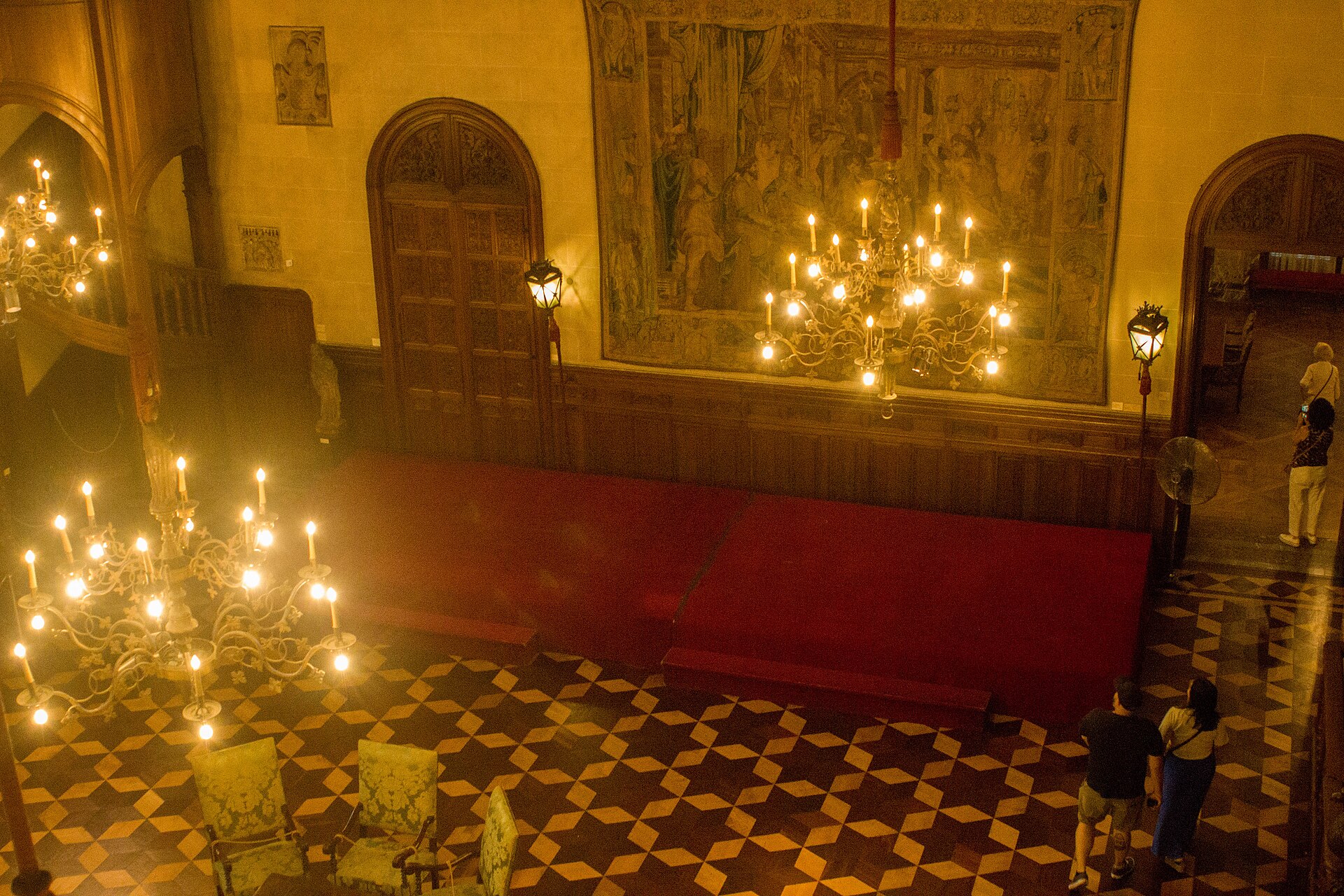
Photograph by GelpgimLa22 · CC BY 4.0 The Great Hall (Gran Hall)
A double-height reception room in a Renaissance idiom, its coffered wooden ceiling running the length of the room above a gallery that rings the space at first-floor level. Sixteenth-century tapestries hang on the end wall beneath wrought-iron candelabra, and the floor is laid in a black-and-white diamond pattern. This was the principal room for the Errazuriz Alvear family's receptions, concerts and charity balls in the 1920s and remains the museum's grandest interior.
The Art Deco boudoir (Sert Room)
A small private study-boudoir off Matias Errazuriz Alvear's own apartment, commissioned from the Catalan painter Josep Maria Sert around 1916, when Errazuriz Alvear was eighteen. The ceiling is deep opaque blue with a crackled gilt finish, carried on two gold-leaf beams from which four lamps hang; the walls are stuccoed to imitate the dark porphyry the Romans used, and the fireplace surround is mirrored. Four oil panels on the theme of La Comedia Humana run around the room. It is one of the few Sert interiors of this completeness open to the public anywhere.
Salon de Familia (the miniatures room)
The room housing the museum's collection of European portrait miniatures, worked in watercolour and gouache on ivory and vellum from the sixteenth to the twentieth century. The museum's own account of its holdings describes this as the most important collection of its kind in the Americas, built on the Errazuriz Alvear family's own holdings and expanded since 1937 through donation.
The dining room
Modelled on the state rooms at Versailles, finished in Italian and French marble, and used for the formal dinners the Errazuriz Alvear household gave through the 1920s. It now displays part of the museum's Sevres and French porcelain alongside period silver.
The ballroom
A room in a Regency-to-Rococo transitional style, with curved panelling and gilt boiserie, used for the dances the family hosted; it now forms part of the sequence of period rooms shown on the guided route through the principal floor.
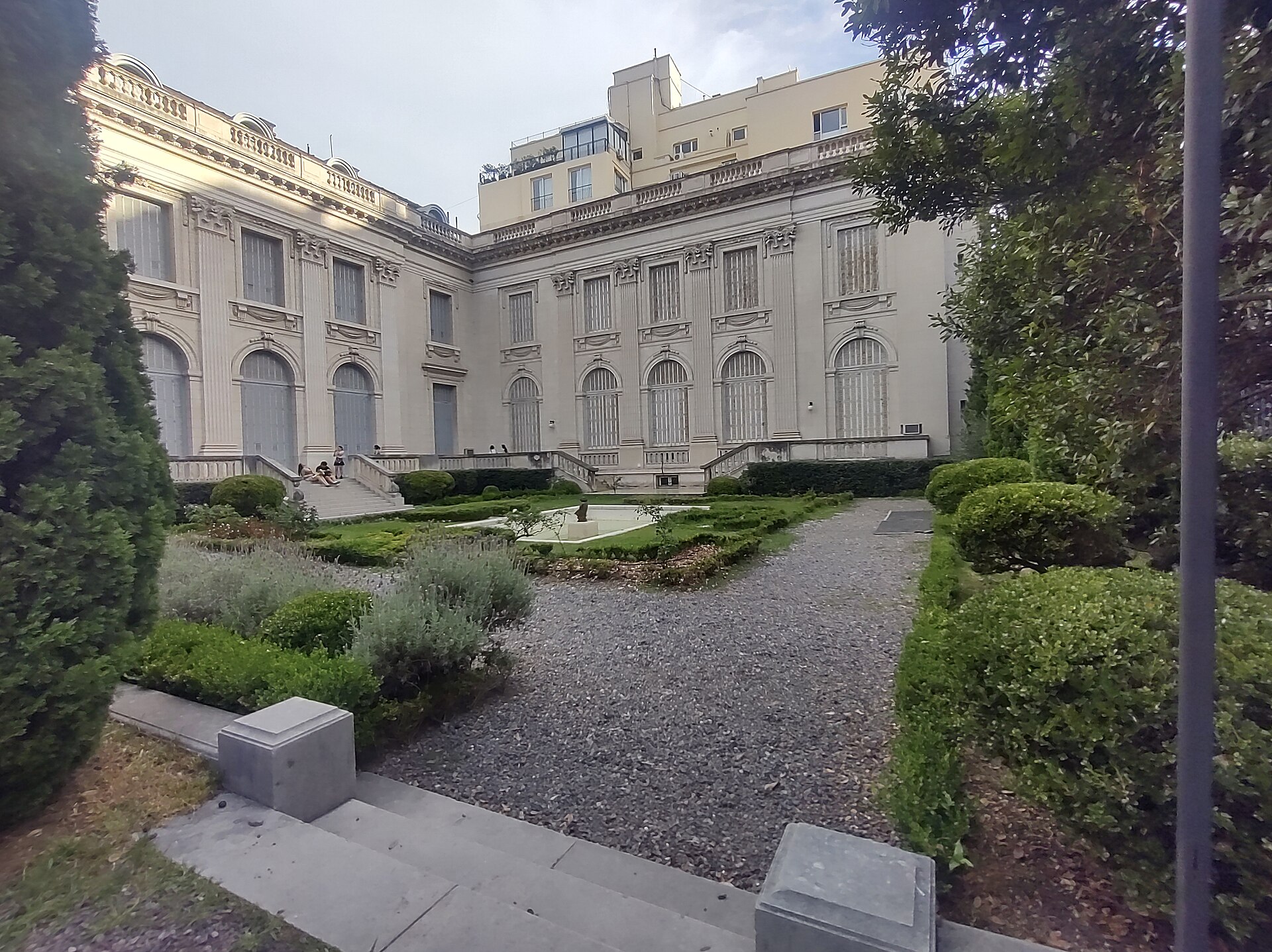
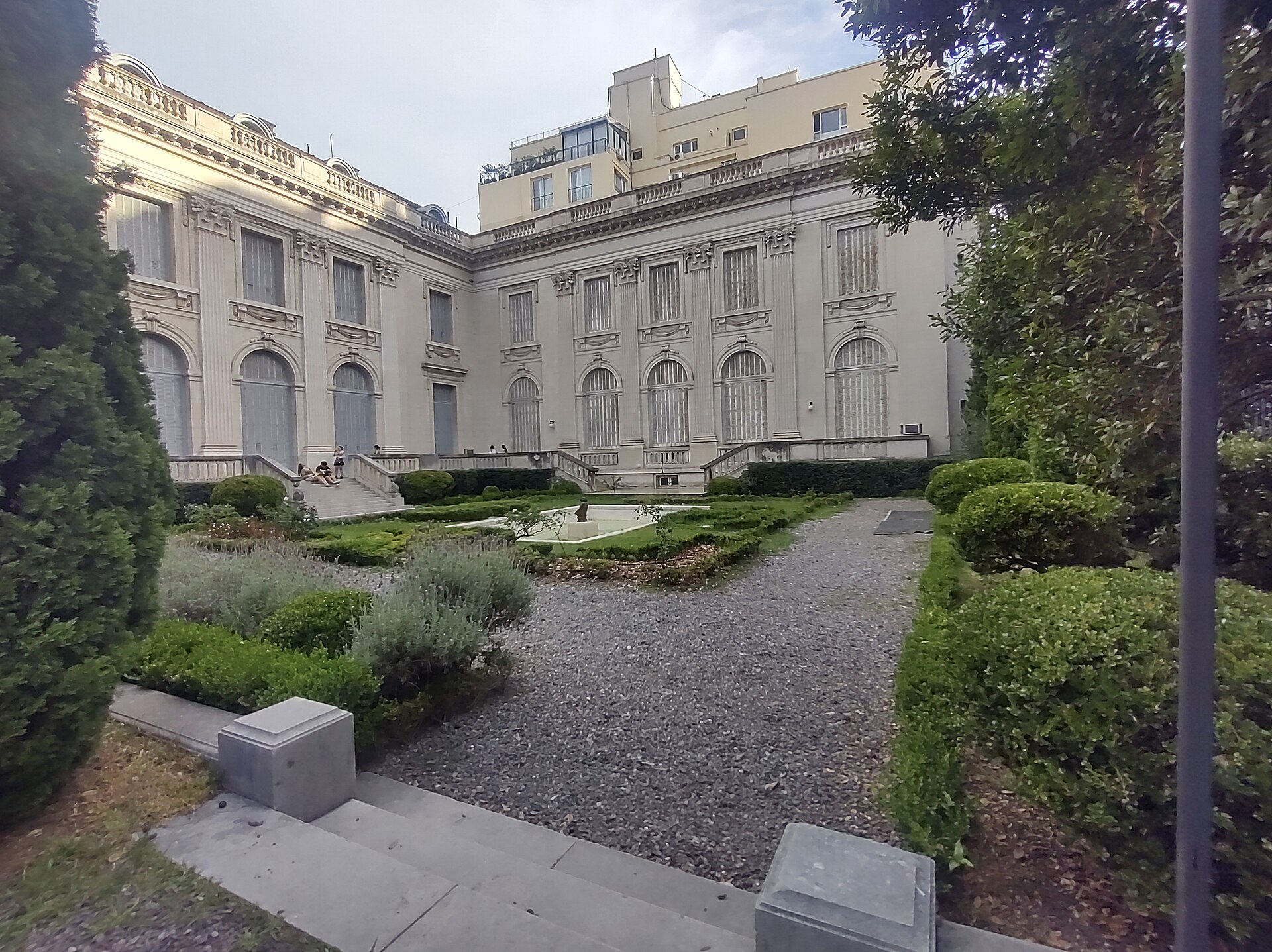
Photograph by Roberto Fiadone · CC BY 4.0 The historic French garden
A formal garden laid out by the French landscape designer Achille Duchene as an extension of the reception rooms, with clipped parterres facing the Avenida del Libertador facade; the museum's cafe opens onto it.
Library and documentation areas
The museum maintains a specialised library on the history and evolution of the decorative arts, together with a documentation department; both are reachable by their own email addresses on the museum's own site and are not part of the standard visitor circuit.
Basement temporary-exhibition galleries
The service floor of the original house, converted to host the museum's rotating temporary exhibitions; recent shows staged there include a 2025 exhibition of Italian tourist poster art from 1920-1950 and a 2025 retrospective of the Argentine designer Alberto Churba.
What to see first
Jesus Bearing the Cross (Cristo camino del Calvario)
El GrecoAn oil on canvas by El Greco, one of the museum's best-known paintings and among the few Spanish Golden Age works on permanent view in Buenos Aires4
The Eternal Spring (L'Eternel Printemps)
Auguste RodinA bronze by Rodin held in the sculpture collection, cited by reference sources alongside a Roman-period Minerva as the museum's principal classical and modern sculpture4
The sixteenth-century tapestries of the Great Hall
Unknown European workshop, 16th centuryHung on the end wall of the museum's grandest room since the Errazuriz Alvear family's own occupation of the house, and one of the few tapestry displays of this age and scale on public view in Argentina2
The European miniatures collection
Various European miniaturists, 16th-20th centuryDescribed by the museum and by independent reference sources as the most important collection of European portrait miniatures held anywhere in the Americas9
The Art Deco boudoir
Josep Maria SertA complete, unaltered private room decorated by Sert around 1916 for the teenage Matias Errazuriz Alvear, with its crackled blue-and-gold ceiling and four panels on La Comedia Humana; one of the most intact Sert interiors open to the public anywhere10
Portrait of Abbe Hurel
Edouard ManetA Manet portrait forming part of the painting collection the Errazuriz Alvear couple assembled during their decade living in Europe before 19164
A bronze mantel clock, wedding gift for Louis XVI and Marie Antoinette
Unknown French workshop, 18th centuryA royal-provenance object from the eighteenth-century French decorative arts holdings that anchor the collection's strongest period2
The Palacio Errazuriz Alvear itself
Rene Sergent, architectBuilt 1911-1917 in an eclectic French neoclassical style modelled on eighteenth-century models associated with Jacques-Gabriel, it is the building the collection was assembled to furnish and the reason the museum is a house-museum rather than a gallery2
Ancient Roman sculpture, Minerva
Unknown Roman workshop, antiquityPart of the museum's holdings of Roman-period sculpture, collected alongside the modern French bronzes and forming an unusual pairing of antiquity and Belle Epoque taste in the same rooms4
A marriage, a decade in Europe, and a house built to hold it
The house the museum now occupies was built for a single household. Matias Errazuriz Ortuzar, the son of a prominent Chilean family, married Josefina de Alvear, granddaughter of the independence leader Carlos Maria de Alvear, in Buenos Aires in 1897. The couple then spent roughly a decade living in Europe, where they assembled a substantial collection of European and Asian art and decorative objects - the core of what the museum shows today. On their return to Buenos Aires they commissioned the French architect Rene Sergent, who had built town houses for European aristocracy but never previously worked in Argentina, to design a residence that could hold what they had bought and match the life they had lived abroad.
Sergent's design, built between 1911 and 1917 with construction delayed by the First World War, is an eclectic French neoclassical composition drawing on eighteenth-century French models associated with the architect Jacques-Gabriel. Giant Corinthian columns run across the two principal levels of the four-storey facade: a ground floor with arched openings onto the garden and terrace, used for entertaining, and a first floor of family apartments above it. Sergent fitted the house with technology unusual for Buenos Aires at the time - two lifts, central heating and a centralised vacuum system - built into a house designed above all for comfort and display.
Eighteen years as a private house, then a state museum
The Errazuriz Alvear family lived in the house for eighteen years, using its principal rooms for the recitals, receptions and charity balls typical of Buenos Aires high society in the 1920s. Josefina de Alvear died in 1935; her widower Matias Errazuriz Ortuzar then sold the house and part of its collection to the Argentine state in 1936. The National Museum of Decorative Arts opened to the public on 18 December 1937, established by national law (Law 12351), with the residence itself becoming the museum's principal exhibit alongside the objects inside it.
The museum operates today as a national institution under the Secretaria de Cultura de la Nacion, the same federal body that runs the Museo Nacional de Bellas Artes and the Museo Historico Nacional; its current director is Hugo Pontoriero, previously the museum's general curator. This national status is worth stating plainly because at least one widely read reference source describes the museum incorrectly as a municipal institution of the City of Buenos Aires - the museum's own domain, its email addresses (ending mnad.gob.ar for its director's office) and the Spanish-language reference literature all place it under the national Ministry of Culture, not the city government.
Inside the Palacio Errazuriz Alvear
The visiting route runs through the rooms much as the family used them. The Great Hall, a double-height space with a coffered wooden ceiling and a first-floor gallery running around it, held the household's largest gatherings and still carries sixteenth-century tapestries on its end wall beneath wrought-iron candelabra. The dining room, finished in Italian and French marble and modelled on the state rooms at Versailles, and a ballroom in a Regency-to-Rococo transitional style complete the ground-floor sequence used for entertaining.
Upstairs, the family's private apartments include one of the house's most unusual rooms: a small Art Deco boudoir commissioned around 1916 from the Catalan painter Josep Maria Sert for the Errazuriz Alvear's teenage son, Matias Errazuriz Alvear, who had met Sert through his mother's circle in Paris and asked his parents to let Sert decorate the room in full. Sert gave it a deep opaque blue ceiling with a crackled gilt finish, carried on two gilt beams, walls stuccoed to imitate the dark porphyry the Romans used, a mirrored fireplace surround, and four painted panels on the theme of La Comedia Humana. The room survives essentially as Sert left it and is among the more complete examples of his decorative work open to the public anywhere.
A room the museum calls the Salon de Familia houses its collection of European portrait miniatures, worked in watercolour and gouache on ivory and vellum across four centuries; independent reference sources describe it as the most important collection of its kind in the Americas. Outside, a formal French garden laid out by the landscape designer Achille Duchene extends the ground-floor reception rooms into the grounds, and the museum's cafe opens onto it. The house's former service floor, in the sub-basement, is now used for rotating temporary exhibitions - most recently a 2025 show on Italian tourist-poster art of 1920 to 1950 and a 2025 retrospective of the Argentine designer Alberto Churba.
The collection: what the Errazuriz Alvear brought home from Europe
The roughly 6,000 objects the museum now holds began with what Matias Errazuriz Ortuzar and Josefina de Alvear bought during their years in Europe and sold to the state along with the house in 1936; the collection has grown since 1937 through gifts and bequests from other collectors. Its declared strength is European and Asian decorative art of the sixteenth to twentieth centuries - sculpture, painting, tapestry, arms, books, ceramics, furniture and miniatures - shown for the most part in the rooms it was originally bought to furnish rather than in glass cases.
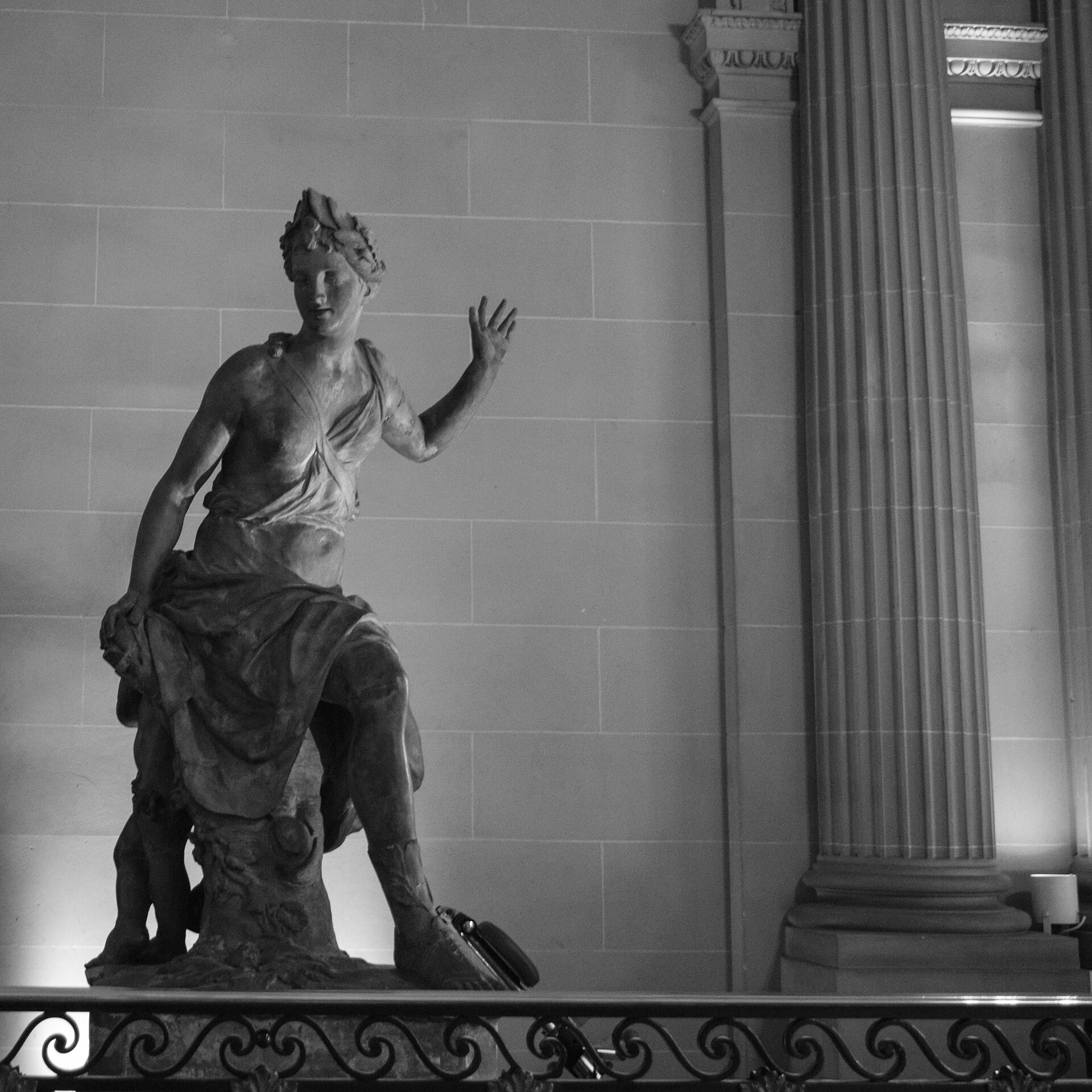
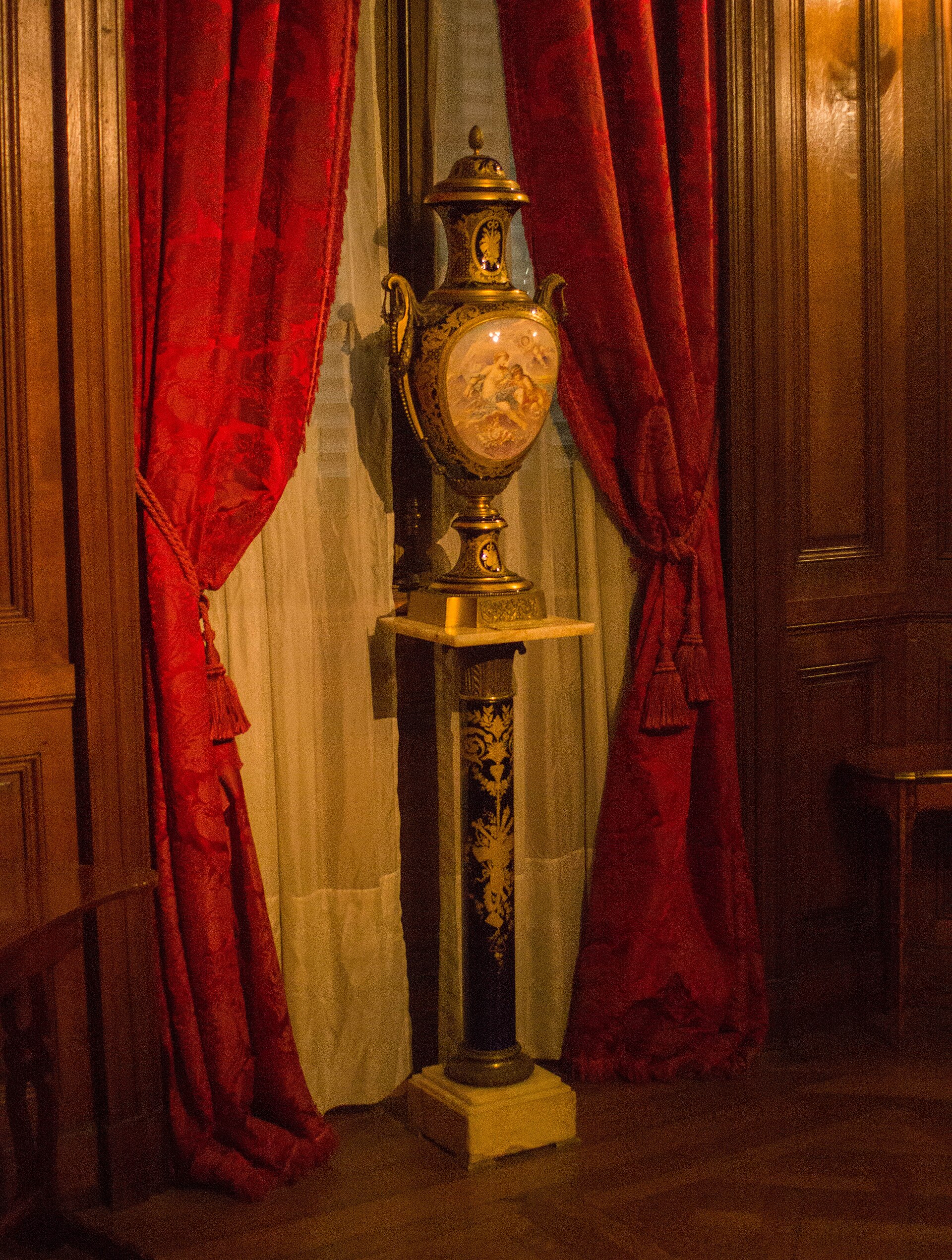
The paintings include El Greco's Jesus Bearing the Cross and a portrait by Edouard Manet of Abbe Hurel. The sculpture collection pairs a bronze by Auguste Rodin, The Eternal Spring, with an ancient Roman Minerva, an unusual juxtaposition of antiquity and Belle Epoque taste kept in the same rooms. Decorative highlights cited across the sources for this page include a bronze mantel clock given as a wedding gift to Louis XVI and Marie Antoinette, Sevres and other French porcelain, and Gobelins and Beauvais tapestries alongside the sixteenth-century pieces in the Great Hall. Much of the collection is kept in storage rather than on permanent view, and the museum rotates what is shown to manage light exposure on the older textiles and works on paper.
The 2022 theft and what it exposed
On 1 March 2022 the museum's then director, Martin Marcos, reported that a group of objects had gone missing: three nineteenth-century Austrian porcelain vases from the Empire anteroom, six pieces of twentieth-century Swedish glass and crystal from a sub-basement storage area that had no security camera coverage at the time, and two seventeenth-century Spanish Old Master paintings, San Jose con el Nino from the school of Murillo and an anonymous Retrato de Infanta. The case was opened as file 462/22 in the federal criminal courts under prosecutor Gerardo Pollicita, and Argentine press covering it at the time called it a robo hormiga - an ant theft, meaning a slow accumulation of small losses rather than a single break-in.
The Ministry of Culture responded by placing the museum under a thirty-day intervention, replacing Marcos with Maria Isabel Baldasarre, the national director of museums, who ran a full inventory and had closed-circuit cameras installed. Marcos disputed his removal in court, seeking reinstatement. By the two-year mark, in February 2024, La Nacion reported that none of the roughly twenty missing pieces had been recovered, that Interpol's search remained open, and that the museum had gone through four directors since the theft, with Hugo Pontoriero, the former general curator, then newly appointed. The national heritage director Liliana Barela was quoted at the time attributing this kind of loss to people with inside knowledge of a collection's contents, and argued that inventory discipline mattered more than security hardware alone. No reporting found for this page updates the case beyond that February 2024 account, so the current whereabouts of the missing pieces and the present state of the prosecution are not established here.
The museum today
The museum functions as a working national institution rather than a fixed period display: its own news page lists a continuous run of temporary exhibitions and public programming through 2024 and 2025, including an annual yearbook of the year's activity in the Palacio Errazuriz Alvear, participation in the citywide Noche de los Museos, and workshops for children and school groups run through a dedicated education department. Admission remains free for all visitors with no advance booking, a point every visitor source consulted for this page treats as central to how the museum is experienced - reviewers across 2025 and 2026 repeatedly describe it as a highlight found by accident precisely because it does not carry the profile, or the entry queue, of the larger museums nearby in Recoleta. The building's condition and the completeness of its rooms are the most consistent draw; the collection inside them draws steadier, more measured praise, and the unresolved 2022 theft remains the clearest unanswered question hanging over an otherwise well-run house museum.
What visitors say
Visitors are consistently more enthusiastic about the house than about any single object in it: TripAdvisor reviews from across 2025 and 2026 describe the Palacio Errazuriz Alvear as one of the best-preserved Belle Epoque interiors open to the public in Buenos Aires, and repeatedly flag free admission as a reason it over-delivers against expectations set by its low profile on standard tourist itineraries. A minority of reviewers, while still positive about the building, say the collection itself does not match the setting. Separately from visitor sentiment, the museum carries a real institutional blemish: a 2022 theft of at least twenty pieces that remained unrecovered and under federal investigation as of the last reporting found for this page, and four changes of director in the two years that followed.
What is praised, what is criticised
- Praised: free admission with no reservation required, repeatedly called out as a reason the museum over-delivers
- Praised: the condition and completeness of the period rooms, especially the Great Hall and the family's private apartments, which read to visitors as a lived-in house rather than a converted gallery
- Praised: the range of decorative arts on display - tapestries, furniture, porcelain, silver and sculpture - shown in the rooms they were bought to furnish
- Praised: the on-site cafe and garden as a place to pause partway through a visit
- Praised: guided tours, offered free alongside self-guided visiting
- Criticised: a recurring visitor view, from more than one reviewer independently, that the collection itself is thinner than the building that houses it
- Criticised: a 2022 theft of at least twenty objects - porcelain vases, Swedish glass and two seventeenth-century Spanish Old Master paintings - reported by the museum's own director, which triggered a ministerial intervention and remained unrecovered as of the most recent reporting found for this page (February 2024), by which point the museum had had four directors in two years
- Criticised: an area of the museum (the sub-basement former shop) that had no security camera coverage at the time of the 2022 theft, according to the reporting on the case
Ratings on other platforms
TripAdvisor: 4.6 from 2,077 ratings, read 4 September 2026
A platform average is a tertiary source: it moves, it is not audited, and we quote no visitor's words.
Questions about National Museum of Decorative Arts
Where is National Museum of Decorative Arts?
Av. del Libertador 1902, C1425AAS, Ciudad de Buenos Aires, Argentina.
How much does it cost to visit?
All visitors: free. As confirmed 4 September 2026.
When is it open?
Wed-Sun 13:00-19:00. Closed: Monday. Tuesday. As confirmed 4 September 2026.
How do you get there?
Subte: Line H, Las Heras station; Bus (colectivo): Lines 10, 37, 38, 41, 59, 60, 67, 92, 93, 95, 102, 110, 118, 130 all stop nearby.
What should you see first?
Jesus Bearing the Cross (Cristo camino del Calvario) (El Greco); The Eternal Spring (L'Eternel Printemps) (Auguste Rodin); The sixteenth-century tapestries of the Great Hall (Unknown European workshop, 16th century); The European miniatures collection (Various European miniaturists, 16th-20th century); The Art Deco boudoir (Josep Maria Sert); Portrait of Abbe Hurel (Edouard Manet).
What we could not confirm
- The current status of the 2022 theft investigation (federal case 462/22) beyond the two-year update reported in February 2024 is not established from the sources consulted for this page - whether any of the roughly twenty missing objects have since been recovered is unknown here.
- English Wikipedia's description of the museum as a municipal institution of the City of Buenos Aires conflicts with the museum's own site, its director's mnad.gob.ar email address, Wikidata and the Spanish-language reference literature, all of which place it under the national Secretaria de Cultura de la Nacion. This page follows the national-museum sources; the discrepancy should be corrected at the tertiary source, not repeated.
- Published opening hours disagree across secondary sources: the museum's own site (read via archived copy, see notes_for_editor) states Wednesday to Sunday, 13:00 to 19:00, closed Monday and Tuesday, which this page follows; the City of Buenos Aires tourism site and the Spanish Wikipedia article instead give Tuesday to Sunday. A traveller relying on either aggregator should confirm against the museum's own site before visiting.
Images
Sources
- 1Museo Nacional de Arte Decorativo, official site, Visitas (hours, address, phone, transport, admission), archived copy read 2026-09-04 after the live site returned a Cloudflare bot-verification challenge to every fetch method tried museoartedecorativo.cultura.gob.ar/info/visitas/
- 2Museo Nacional de Arte Decorativo, official site, Museo (history, building, collection, staff contacts), archived copy read 2026-09-04, same access note as source 1 museoartedecorativo.cultura.gob.ar/info/museo/
- 3Museo Nacional de Arte Decorativo, official site, Noticias (programming and exhibition history through 2025), archived copy read 2026-09-04, same access note as source 1 museoartedecorativo.cultura.gob.ar/ver-noticias/
- 4National Museum of Decorative Arts, Buenos Aires, English Wikipedia, read 2026-09-04. en.wikipedia.org/wiki/National_Museum_of_Decorative_Arts,_Buenos_Aires
- 5Museo Nacional de Arte Decorativo, Spanish Wikipedia, read 2026-09-04. es.wikipedia.org/wiki/Museo_Nacional_de_Arte_Decorativo
- 6Wikidata, Q1136338 (National Museum of Decorative Arts, Buenos Aires), read 2026-09-04. wikidata.org/wiki/Q1136338
- 7Tripadvisor, Museo Nacional De Arte Decorativo listing and reviews, read live 2026-09-04 (4.6 of 5, 2,077 reviews). tripadvisor.com/Attraction_Review-g312741-d311762-Reviews-Museo_Nacional_De_Arte_Decorativo-Buenos_Aires_Capital_Federal_District.html
- 8City of Buenos Aires official tourism site, National Museum of Decorative Art, read 2026-09-04. turismo.buenosaires.gob.ar/en/atractivo/national-museum-decorative-art
- 9Universes in Universe, Museo Nacional de Arte Decorativo overview page, read 2026-09-04. Independent reference source, used for the miniatures-collection claim universes.art/en/art-destinations/argentina/buenos-aires/museums/museo-arte-decorativo
- 10Universes in Universe, Art Deco Room page on the Sert boudoir, read 2026-09-04. Independent reference source universes.art/en/art-destinations/argentina/buenos-aires/museums/museo-arte-decorativo/27
- 11Infobae, 'Faltan piezas historicas del Museo de Arte Decorativo: investigan si fue un robo', 1 March 2022 infobae.com/cultura/2022/03/01/faltan-piezas-historicas-del-museo-de-arte-decorativo-investigan-si-fue-un-robo/
- 12La Nacion, 'A dos anos del robo al Museo de Arte Decorativo, no hay pistas del botin y nombran al cuarto director', 28 February 2024 lanacion.com.ar/cultura/a-dos-anos-del-robo-al-museo-de-arte-decorativo-no-hay-pistas-del-botin-y-nombran-al-cuarto-director-nid28022024/