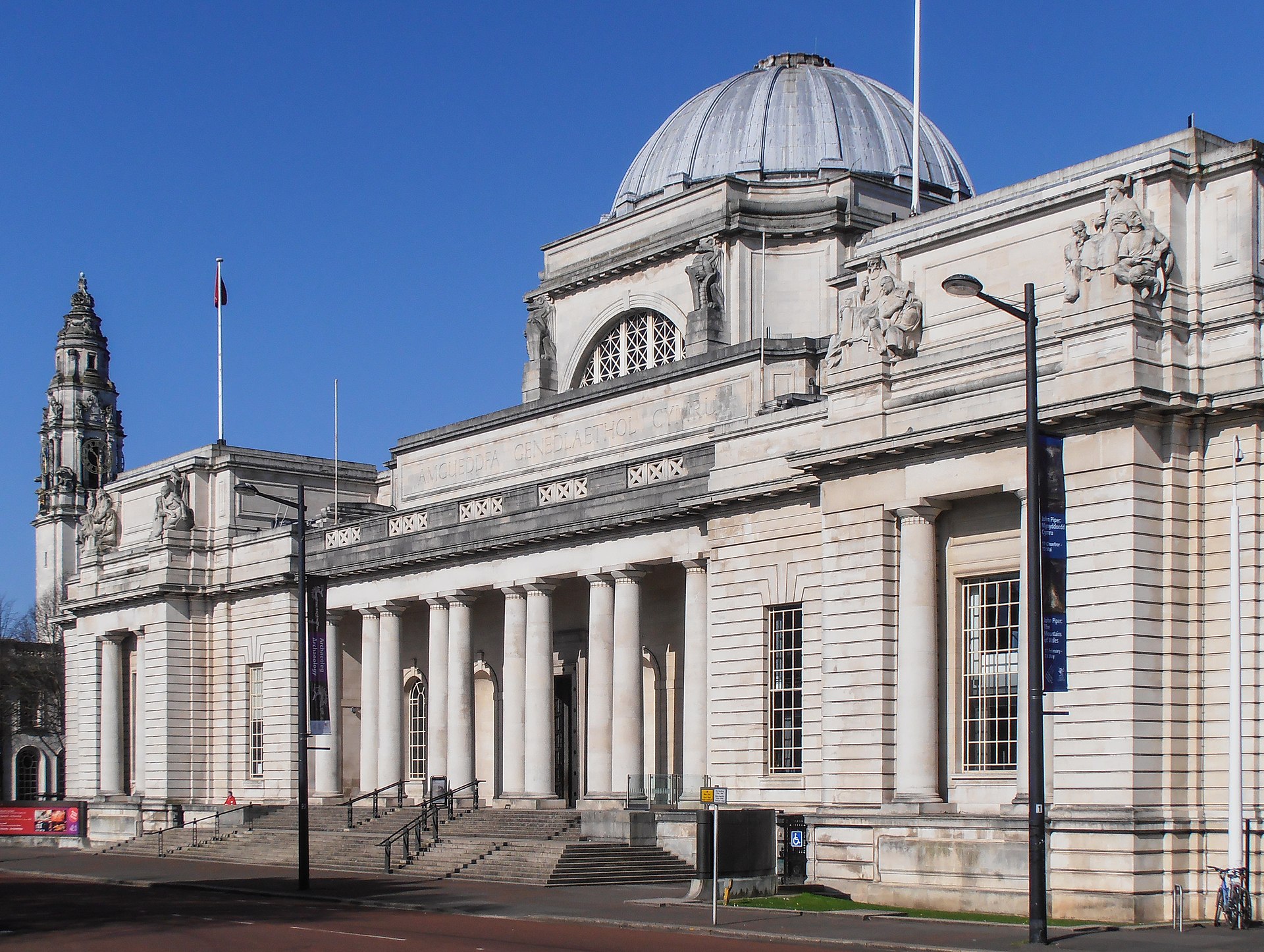
The domed entrance front of National Museum Cardiff on Cathays Park, Cardiff.
Ham II · CC BY-SA 3.0National Museum Cardiff
Museum · Amgueddfa Genedlaethol Caerdydd · Founded 1927
Open, admission and hours confirmed 22 August 2026 · 18 sources
On this page 15 sections
ContentsClose
National Museum Cardiff's reputation rests on two collections that have little in common except being free to see under the same dome. Its Impressionist and Post-Impressionist paintings, built almost entirely from what Gwendoline and Margaret Davies bought and bequeathed between the 1910s and 1963, are ranked among the best collections of that material in Britain, running from Monet and Renoir through Cezanne and Van Gogh to Rodin's sculpture. Alongside it, Evolution of Wales and the Natural History Galleries give the Museum a geology, palaeontology and natural-history collection built around finds made in Wales itself, from the Dracoraptor skeleton to specimens drawn from the country's protected sites. The Applied Art galleries, holding one of the world's major ceramics collections plus historic and contemporary silver, are comparatively overlooked next to the paintings and the dinosaurs, but are treated by the Museum as scholarship in their own right rather than filler between the two better-known departments.
| Local name | Amgueddfa Genedlaethol Caerdydd |
|---|---|
| Kind | Museum |
| Founded | 1927 |
| City and country |  Cardiff, United Kingdom Cardiff, United Kingdom |
| Address | Cathays Park, Cardiff, CF10 3NP, Wales, United Kingdom |
| Website | museum.wales/cardiff |
| Status | Open, confirmed |
| Record last verified |
Visiting
- Hours
- Tue-Sun10:00 to 17:00Galleries close at 16:45; the site is usually quieter from 3pm
- Closed
- Monday.
- Admission
- General admissionFreeFree entry, funded by the Welsh Government. A free day ticket can be booked in advance. Some temporary exhibitions and events carry a separate charge.
Free entry: Every open day - permanent collection admission is free year-round- Do I need to book?
- No, but booking a free day ticket in advance is recommended and group visits must be pre-booked
- Address
- Cathays Park, Cardiff, CF10 3NP, Wales, United Kingdom MapBus Number 35 from St Mary Street in the city centre, close to Cardiff Central train station
Train Cathays station, about 5 minutes walk. Cardiff Central is about 20 minutes walk; Cardiff Queen Street connects from Cardiff Bay
Car Visitor car park behind the Museum off Museum Avenue, GBP 6.50 paid at machines; free to Blue Badge holders, with disabled spaces on Gorsedd Gardens Road at the front - Website
- museum.wales/cardiff
- Telephone
- 0300 111 2 333
Before you go how long, access, photography, bags, eating, shop
- How long to allow
- Most visitors combine the art galleries with Evolution of Wales; two to three hours covers both
- Access
- A published access guide covers step-free routes; the site itself notes fewer crowds after 3pm each day
- Photography
- Not stated on the pages fetched for this record
- Bags
- The Museum reserves the right to conduct bag searches on entry for safety reasons
- Eating
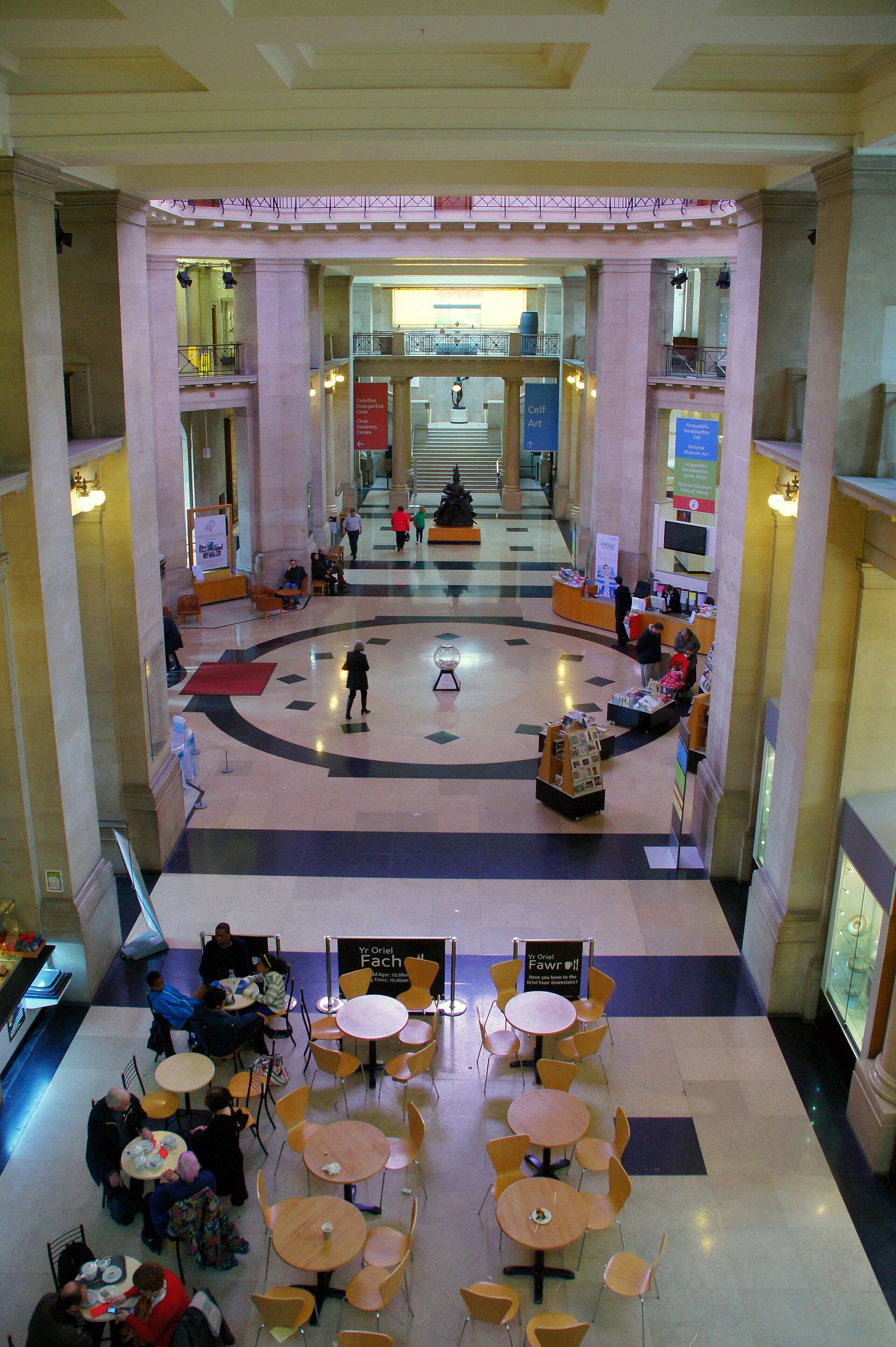
- Museum cafe in the Main Hall, open every day 10am-4pm, serving drinks and snacks
- Shop
- Onsite gift shop; a 10 percent discount is offered to pre-booked groups spending a minimum of GBP 5 per person
Prices and hours change. We take them from the institution's own pages and print the day we read them, and you can check the current position at the source we used. Confirm before you travel.
What is inside
Art Galleries
Five hundred years of paintings, drawings, sculpture, silver and ceramics, arranged from Art in Italy and the Netherlands 1500-1700 through eighteenth-century Britain to French Impressionism and Post-Impressionism and Art in Europe after 1900. This is where the Davies sisters' bequest hangs, including Rodin's bronze The Kiss, Renoir's La Parisienne, Monet's Rouen Cathedral and Water Lilies canvases, Van Gogh's Rain at Auvers, and the reattributed Botticelli workshop Virgin and Child with Pomegranate.
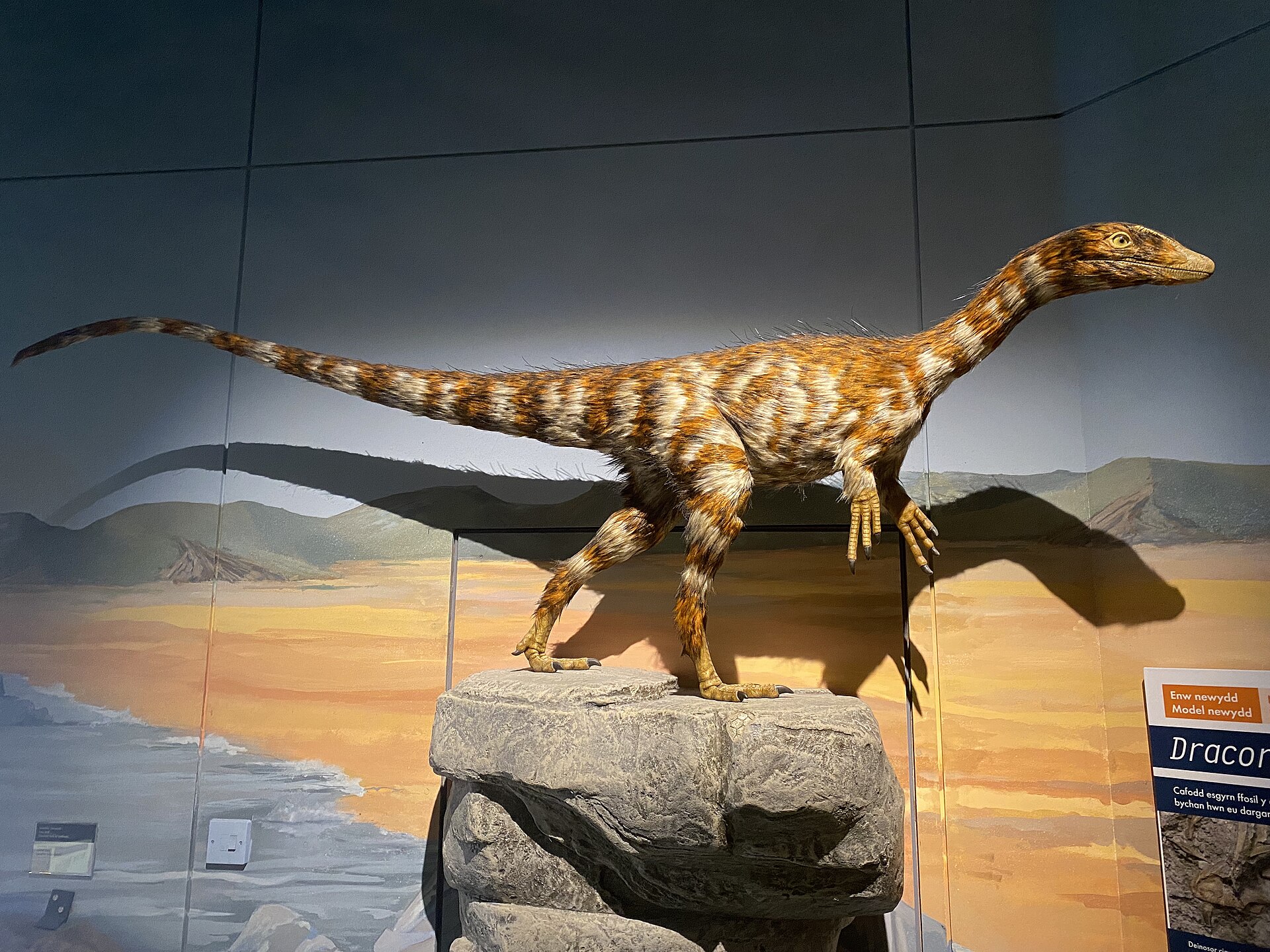
Photograph by Titus Gold · CC BY-SA 4.0 Evolution of Wales
A single gallery telling a 4,600-million-year story from the Big Bang to the end of the last Ice Age: a real meteorite, moon rock, the Dracoraptor hanigani skeleton (the oldest Jurassic dinosaur found in the UK), other dinosaur remains and a woolly mammoth, tracing which creatures lived in what is now Wales.
Natural History Galleries
Wales's living natural history, laid out as a journey that begins at the seashore and ends in the mountains, covering the animals, birds and insects found across the more than 900 Sites of Special Scientific Interest in Wales.
Applied Art Galleries
One of the world's major ceramics collections alongside historic and contemporary silver, including punch bowls in designs associated with Robert Adam, Chinese export porcelain made for European markets in the 1760s-70s, Chinese jade carved between 1700 and 1900, Welsh pottery and porcelain from Swansea, Llanelli and Nantgarw, and contemporary craft collected since 1924 including ceramics by Picasso, Walter Keeler and Claire Curneen.
Clore Discovery Centre
A hands-on gallery opened in 2011 in the former Glanely Gallery with support from the Clore Duffield Foundation, where visitors can handle real objects drawn from the Museum's wider store of 7.5 million specimens and items, including insects, fossils and Bronze Age weapons, with staff on hand to talk through them.
What to see first
The Kiss
Auguste RodinBronze cast by the founder Alexis Rudier from the marble group Rodin exhibited in 1898; Gwendoline Davies bought this cast in 1912 and gave it to the Museum in 1940. It depicts Paolo and Francesca from Dante's Inferno and normally stands in Gallery 16.16
La Parisienne
Pierre-Auguste RenoirPainted in 1874 and known as the Blue Lady, this is one of the paintings that came to the Museum through the Davies sisters' bequest and anchors its Impressionist holdings.6
Virgin and Child with Pomegranate
Workshop of Sandro BotticelliDonated in 1952 as an imitation of Botticelli, it was cleaned and X-rayed for the BBC series Britain's Lost Masterpieces in 2019; art historian Bendor Grosvenor, conservator Simon Gillespie and Yale curator Laurence Kanter concluded the underdrawing and handling point to Botticelli's own studio, and the panel is now shown as a genuine work connected to the artist.10
Rouen Cathedral and the Water Lilies canvases
Claude MonetPart of the Davies sisters' purchases; the Museum holds three of Monet's Water Lilies paintings along with his view of Rouen Cathedral and three Venetian scenes, among the reasons this collection is ranked with the best Impressionist holdings in Britain.6
Rain at Auvers
Vincent van GoghA late Van Gogh, painted in the weeks before his death, bought by the Davies sisters and among the works that made their bequest transformative for the Museum's character and range.6
Dracoraptor hanigani skeleton
Natural specimenFound in 2014 in a cliff fall at Lavernock Point near Penarth and donated to the Museum, this is the oldest Jurassic dinosaur skeleton so far found in the UK, dated to just over 201 million years old and named partly for dragon, the symbol of Wales.17
Silver and Chinese jade in the Applied Art galleries
Various, 18th-20th centuryHistoric and contemporary silver including punch bowl designs associated with Robert Adam, shown alongside a collection of carved Chinese jade from 1700-1900 and export porcelain made for the European market, forming one of the Museum's less-visited but scholarly strong suits.7
Exhibitions on now
A civic building finished twenty years late
National Museum Cardiff sits at the northern end of Cathays Park, the Edwardian civic centre built around Cardiff City Hall. The National Museum of Wales was set up under a royal charter granted in 1907, and the Cardiff museum collection was formally transferred to the new body in 1912, the same year building work began on the Cathays Park site to a design by the architects Arnold Dunbar Smith and Cecil Brewer. The First World War stopped construction for years, and the building that eventually opened in 1927 was, by most accounts of the project, a heavily reduced version of what the architects had originally drawn. Even truncated, the result is a full Edwardian Baroque civic monument: a domed entrance front carrying an elaborate sculptural programme devised by the Welsh sculptor William Goscombe John, with further figures contributed by Gilbert Bayes and Thomas J. Clapperton, and dragons and lions ringing the base of the dome. The Museum reaches its own centenary in 2027, and says so on its current visitor pages as it plans improvement work around that anniversary.
The Davies sisters and how the collection was made
The single event that did the most to shape what hangs inside the building was not architectural. Gwendoline Davies (1882-1951) and Margaret Davies (1884-1963), granddaughters of the industrialist David Davies and heirs to a fortune built on Rhondda coal, were among the earliest collectors in Britain to buy French Impressionist and Post-Impressionist painting seriously. Guided by the adviser Hugh Blaker, they moved from an early taste for Turner, Corot and Millet toward Daumier, Monet and Rodin, and by 1924 had assembled what the Museum itself describes as the largest and most important collection of French Impressionist and Post-Impressionist work in the country. Gwendoline bought Rodin's bronze cast of The Kiss in 1912 and gave it to the Museum in 1940; the wider bequest of 260 works, left to the National Museum of Wales in two stages after each sister's death in 1951 and 1963, is what the Museum credits with transforming its art collection in character, quality and range. It brought in Renoir's La Parisienne, three of Monet's Water Lilies paintings and his view of Rouen Cathedral, Van Gogh's Rain at Auvers, three Cezanne canvases, and earlier material including a workshop panel then catalogued as an imitation of Botticelli. The sisters also collected further afield than French painting: Turner watercolours, work by Blake, Welsh topographical drawings and, in their own time, work by twentieth-century British artists including Augustus John and Stanley Spencer.
What is inside: five departments under one dome
The Museum groups what it holds into distinct galleries rather than one continuous run of rooms. The Art Galleries occupy the ground the Davies bequest built, moving from Italian and Netherlandish painting of 1500-1700 through eighteenth-century British portraiture to the Impressionist and Post-Impressionist rooms and on to European art after 1900. Evolution of Wales is a single, self-contained natural-history and geology gallery structured as one long timeline, from the Big Bang through a real meteorite and moon rock to the dinosaurs and woolly mammoths that once lived in the area now called Wales; its best-known specimen, the Dracoraptor hanigani skeleton, was found by chance on a beach near Penarth in 2014. A separate Natural History Galleries wing covers living Wales rather than prehistoric Wales, following the country's wildlife from the seashore up to the mountains and drawing on its more than 900 Sites of Special Scientific Interest. The Applied Art Galleries hold one of the world's major ceramics collections together with historic and contemporary silver, Chinese jade and export porcelain, and a deliberately kept run of twentieth and twenty-first century Welsh studio craft. The Clore Discovery Centre, opened in 2011 with support from the Clore Duffield Foundation in what was formerly the Glanely Gallery, is different in kind from all four: an explicitly hands-on room where visitors can touch real specimens and objects drawn from the 7.5 million items the Museum holds in store, with staff present to talk through them.
The Botticelli that spent seventy years in a storeroom
One object illustrates how much of what a museum holds is still unsettled. The panel Virgin and Child with Pomegranate came to the Museum as part of Gwendoline Davies's 1952 bequest, catalogued for decades as a workshop imitation rather than an autograph Botticelli, and kept largely out of view. In 2019 it was examined for the BBC series Britain's Lost Masterpieces: the art historian Bendor Grosvenor noticed passages that recalled The Birth of Venus, and the conservator Simon Gillespie spent more than 130 hours removing old varnish and overpaint, uncovering underdrawing that showed the composition had been reworked more than once and a sketched head that appeared to be Botticelli's own hand. Laurence Kanter, chief curator at the Yale University Art Gallery and a specialist in the artist, examined the results and judged that the painting came from Botticelli's own studio and that Botticelli himself was probably responsible for a significant part of it. The panel is now shown at National Museum Cardiff as a genuine work connected to Botticelli rather than a later copy, and the episode is a reminder that the Davies bequest is still being read closely, more than seventy years after it arrived.
A national collection under real financial strain
The building has also had a difficult few years that a visitor page alone would not show. On 2 February 2025 Amgueddfa Cymru closed National Museum Cardiff to the public without warning after what it described as a mechanical issue caused by a component failure in an isolated part of the building, saying the safety of visitors, staff and the collections came first; the Museum reopened five days later, on 7 February 2025, once the immediate repair was done. The closure exposed a larger problem: a maintenance backlog then reported at around GBP 42.6 million for this building alone, of which some GBP 13 million was classed as urgently needed, against a wider repair crisis across the seven Amgueddfa Cymru sites put at roughly GBP 70 million. The Welsh Government has since released successive tranches of capital funding, including GBP 3.2 million and further sums for 2025/26 and 2026/27, and the Museum's chief executive, Jane Richardson, has said the institution is running with an annual shortfall of around GBP 3 million. Amgueddfa Cymru has also appointed a design team, working with the architects AHR and C.F. Moller, to plan enabling works ahead of the Museum's 2027 centenary, and has said publicly that a further temporary closure for renovation is under consideration, subject to a full review and consultation, with no confirmed date or duration announced as of mid-2026. None of this has been quiet: National Museum Cardiff still drew 356,021 visitors in 2025, making it Wales's second most visited attraction, funding pressure and a brief closure notwithstanding.
Visiting today
Entry to the permanent collection is free, funded by the Welsh Government, though some temporary exhibitions and events carry their own charge; visitors are encouraged to book a free day ticket in advance so the Museum can send updates ahead of a visit. The Museum opens Tuesday to Sunday, 10am to 5pm, with galleries closing at 4.45pm, and is closed on Mondays; it says the site is usually quieter from 3pm each day for anyone planning around crowds. The cafe in the Main Hall serves drinks and snacks every day from 10am to 4pm, and there is an onsite gift shop, with a discount available to pre-booked groups. A visitor car park sits behind the building off Museum Avenue at GBP 6.50, free to Blue Badge holders, who also have dedicated spaces at the front on Gorsedd Gardens Road; Cathays train station is a five-minute walk, and bus number 35 from St Mary Street in the city centre stops at the Museum. For safety reasons the Museum reserves the right to search bags on entry.
What visitors say
Visitors consistently single out that a museum of this range and quality is free to enter, and praise the Impressionist and Post-Impressionist paintings and the Evolution of Wales dinosaur and fossil displays as reasons to allow at least half a day. The building itself divides opinion: it reads as handsome from the outside and, to a recurring number of visitors, as confusing to navigate once inside, and complaints about the upstairs cafe's food and service recur across independent reviews.
What is praised, what is criticised
- Praised: The free Impressionist and Post-Impressionist collection built on the Davies sisters' bequest, with Monet, Renoir, Van Gogh and Rodin's The Kiss named repeatedly
- Praised: The Evolution of Wales gallery's dinosaurs, meteorite and woolly mammoth, called out as a highlight for younger visitors
- Praised: Staff described as friendly and informative and willing to go out of their way to help
- Criticised: The building's layout, which a recurring number of visitors describe as confusing or maze-like to find your way around
- Criticised: The upstairs cafe, criticised in visitor reviews for slow service and food quality below the standard of the galleries
Ratings on other platforms
Google: 4.6 from 10,526 ratings, read 22 August 2026
Tripadvisor: 4.5 from 2,763 ratings, read 22 August 2026
A platform average is a tertiary source: it moves, it is not audited, and we quote no visitor's words.
Questions about National Museum Cardiff
Where is National Museum Cardiff?
Cathays Park, Cardiff, CF10 3NP, Wales, United Kingdom.
How much does it cost to visit?
General admission: free. As confirmed 22 August 2026.
When is it open?
Tue-Sun 10:00-17:00. Closed: Monday. As confirmed 22 August 2026.
How do you get there?
Bus: Number 35 from St Mary Street in the city centre, close to Cardiff Central train station; Train: Cathays station, about 5 minutes walk. Cardiff Central is about 20 minutes walk; Cardiff Queen Street connects from Cardiff Bay; Car: Visitor car park behind the Museum off Museum Avenue, GBP 6.50 paid at machines; free to Blue Badge holders, with disabled spaces on Gorsedd Gardens Road at the front.
What should you see first?
The Kiss (Auguste Rodin); La Parisienne (Pierre-Auguste Renoir); Virgin and Child with Pomegranate (Workshop of Sandro Botticelli); Rouen Cathedral and the Water Lilies canvases (Claude Monet); Rain at Auvers (Vincent van Gogh); Dracoraptor hanigani skeleton (Natural specimen).
What we could not confirm
- Whether Rembrandt's Portrait of Catharina Hooghsaet, shown at the Museum on a long-term loan announced in 2016, remains on display could not be confirmed from the current museum pages fetched for this record, so it is not listed as a highlight here.
- Amgueddfa Cymru has said a further temporary closure for major renovation work is under consideration ahead of the Museum's 2027 centenary, but as of mid-2026 had given no confirmed date, duration or funding commitment for it.
- The exact current total of the Museum's maintenance backlog is a moving figure across several 2025-2026 reports (from about GBP 42.6 million to about GBP 70 million across the wider Amgueddfa Cymru estate); the higher figure includes sites beyond this building.
Images
Sources
- 1National Museum Cardiff - Amgueddfa Genedlaethol Caerdydd, Museum Wales, main visitor page museum.wales/cardiff/
- 2Visit National Museum Cardiff, Museum Wales museum.wales/cardiff/visit/
- 3What's Here - National Museum Cardiff, Museum Wales museum.wales/cardiff/about/
- 4Contact Us for General Enquiries, Museum Wales museum.wales/enquiries/
- 5Location information and how to get to National Museum Cardiff, Museum Wales museum.wales/cardiff/visit/location/
- 6The Davies Sisters, Museum Wales collections pages museum.wales/collections/art/davies-sisters/
- 7The Art Galleries at National Museum Cardiff, Museum Wales museum.wales/cardiff/art/
- 8Amgueddfa Cymru statement: temporary closure of National Museum Cardiff, Museum Wales news, 2 February 2025 museum.wales/news/1380/Amgueddfa-Cymru-Statement-Temporary-closure-of-National-Museum-Cardiff-/
- 9National Museum Cardiff, Wikipedia (, used for founding date and architects only) en.wikipedia.org/wiki/National_Museum_Cardiff
- 10An Unidentified Botticelli Painting Spent Decades Hidden in Welsh Museum's Storeroom, Smithsonian Magazine smithsonianmag.com/smart-news/tv-show-helps-welsh-museum-discover-botticelli-their-storeroom-180973564/
- 11Museum Review: National Museum Cardiff/Amgueddfa Cymru, by Susanna Robertson-Sheath, The Edge (University of Southampton), 21 April 2023 theedgesusu.co.uk/culture/2023/04/21/museum-review-national-museum-cardiff-amgueddfa-cymru/
- 12National Museum Cardiff may temporarily close for renovation work, officials say, The Art Newspaper, 1 July 2026 theartnewspaper.com/2026/07/01/national-museum-cardiff-may-temporarily-close-for-renovation-work-officials-say
- 13National Museum Cardiff, Cardiff, United Kingdom - aggregate ratings, Wanderlog () wanderlog.com/place/details/8175/national-museum-cardiff
- 14Cardiff museum needs nearly GBP 13m of repairs urgently to stay open, The Cardiffian / Cardiff University journalism school, 24 March 2026 journalism-school.cardiff.ac.uk/thecardiffian/2026/03/24/cardiff-museum-needs-nearly-13m-of-repairs-urgently-to-stay-open/
- 15National Museum Cardiff closes temporarily to repair mechanical failure, Museums Association, February 2025 museumsassociation.org/museums-journal/news/2025/02/national-museum-cardiff-closes-temporarily-to-repair-mechanical-failure/
- 16The Kiss, Auguste Rodin, object record, Museum Wales Collections Online museum.wales/collections/online/object/78ba7673-8506-351f-abd5-d85f67f1e452/The-Kiss/
- 17Welsh Dinosaurs, Museum Wales blog museum.wales/blog/2712/Welsh-Dinosaurs/
- 18Category:National Museum Cardiff, and per-file licence metadata via the Commons API, Wikimedia Commons commons.wikimedia.org/wiki/Category:National_Museum_Cardiff