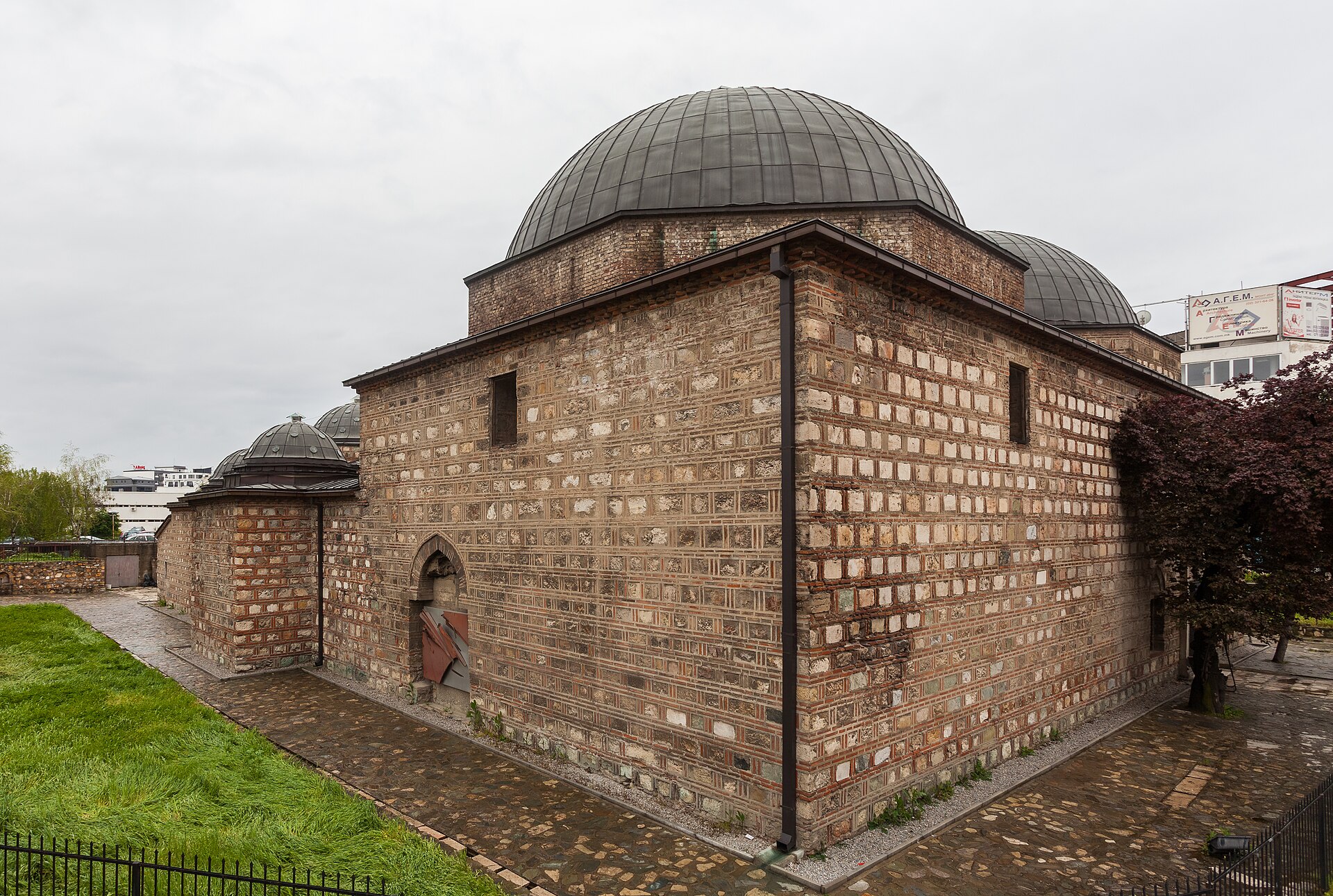
The brick and stone hammam that houses the permanent collection, with its lead-grey domes, seen from the grass beside it.
Diego Delso, CC BY-SA 3.0National Gallery of North Macedonia
Museum · Nacionalna galerija na Makedonija · Founded 1948
Open, admission and hours confirmed 20 November 2026 · 24 sources
On this page 14 sections
ContentsClose
The strength is the Macedonian line from icons through the late Ottoman zographers to the founding modern painters, backed by a deliberate 1948 purchase of Yugoslav art (170 paintings, 46 sculptures, 150 drawings and prints), a drawings holding of over 300 sheets and a graphics collection that started with the institution. The museum gives a total of more than 1,600 works.
| Local name | Nacionalna galerija na Makedonija |
|---|---|
| Kind | Museum |
| Founded | 1948 |
| City and country | Skopje, North Macedonia |
| Address | Krusevska 1A (Daut Pasha Hammam), Old Bazaar, 1000 Skopje, North Macedonia; head office at Mala Stanica, Jordan Mijalkov 18 |
| Website | nationalgallery.mk |
| Status | Open, confirmed |
| Record last verified |
Visiting
- Hours
- Tue-Sun10:00 to 18:00The museum's pages give 10:00 to 18:00 without naming days; the Tuesday to Sunday pattern is from third-party listings. One guide says some seasons run later in summer, unconfirmed
- Closed
- Monday (per third-party listings, not stated on the museum's own pages).
- Admission
- AdultMKD 50Reported by a travel guide, not published on the museum's own site; confirm by phone
- Student or childMKD 20Same travel guide; not published on the museum's own site
- Do I need to book?
- Not stated on the museum's pages
- Address
- Krusevska 1A (Daut Pasha Hammam), Old Bazaar, 1000 Skopje, North Macedonia; head office at Mala Stanica, Jordan Mijalkov 18 MapOn foot The Daut Pasha Hammam stands in the Old Bazaar in the city centre, near the Stone Bridge and the Kale fortress.
- Website
- nationalgallery.mk
- Telephone
- +389 2 3126-856
Before you go how long, access, photography, bags, eating, shop
- How long to allow
- Under an hour for the Daut Pasha Hammam; one guide suggests two to three hours across the sites
- Access
- Not stated on the museum's pages
- Photography
- One guide says photography is allowed
- Bags
- Not stated
- Eating
- Not stated
- Shop
- Not stated
Prices and hours change. We take them from the institution's own pages and print the day we read them, and you can check the current position at the source we used. Confirm before you travel.
What is inside
Room 1: Icons
Icon painting from the period of Michael and Eutychios through the post-Byzantine era to the Revival, with named masters including the Pelagonian brothers Jovan and Makarij and the Mijak icon painters. The museum says the room is not a complete survey.
Room 2: Secular painting of the late Ottoman revival
Zographers who moved from church work to portraits, self-portraits made from photographs, landscapes and the first folklore and historical scenes: Dimitar Andonov Papradishki, Gjorgji Zografski and Kosta Vangelov.
Rooms 3 and 4: Art between the wars
The founding generation of modern Macedonian art, D. P. Avramovski, Lazar Lichenoski, Nikola Martinoski and Dimo Todorovski, several of them trained in Paris, Prague, Belgrade, Sofia or Bucharest.
Rooms 5 to 6: The 1960s, free expression and abstraction
Expressionism, surrealism, post-cubism and magic realism, then abstraction, informel and icon-inspired synthesis; the collection page for the period names Kondovski, Percinkov, Mazev, Chemerski and Kalcevski.
Rooms 7 to 9: 1970s to early 1990s
Geometric detail, Mediterranean figuration, fantastic painting, minimal and pop art, hyperrealism, conceptual art, then neo-expressionism, European constructivism, neoconceptualism and plant installations.
Cifte Hammam
The temporary-exhibition space in a restored double bath of 1,056 square metres, with two large domes and a women's hall about 12 metres across; contemporary shows rotate here, including Irena Paskali's Presek (opening 18 September 2026).
Mala Stanica multimedia centre
About 2,000 square metres in a 1924 railway utility building on Jordan Mijalkov Street, used for museum content and multimedia projects and as the institution's head office.
What to see first
The Daut Pasha Hammam itself
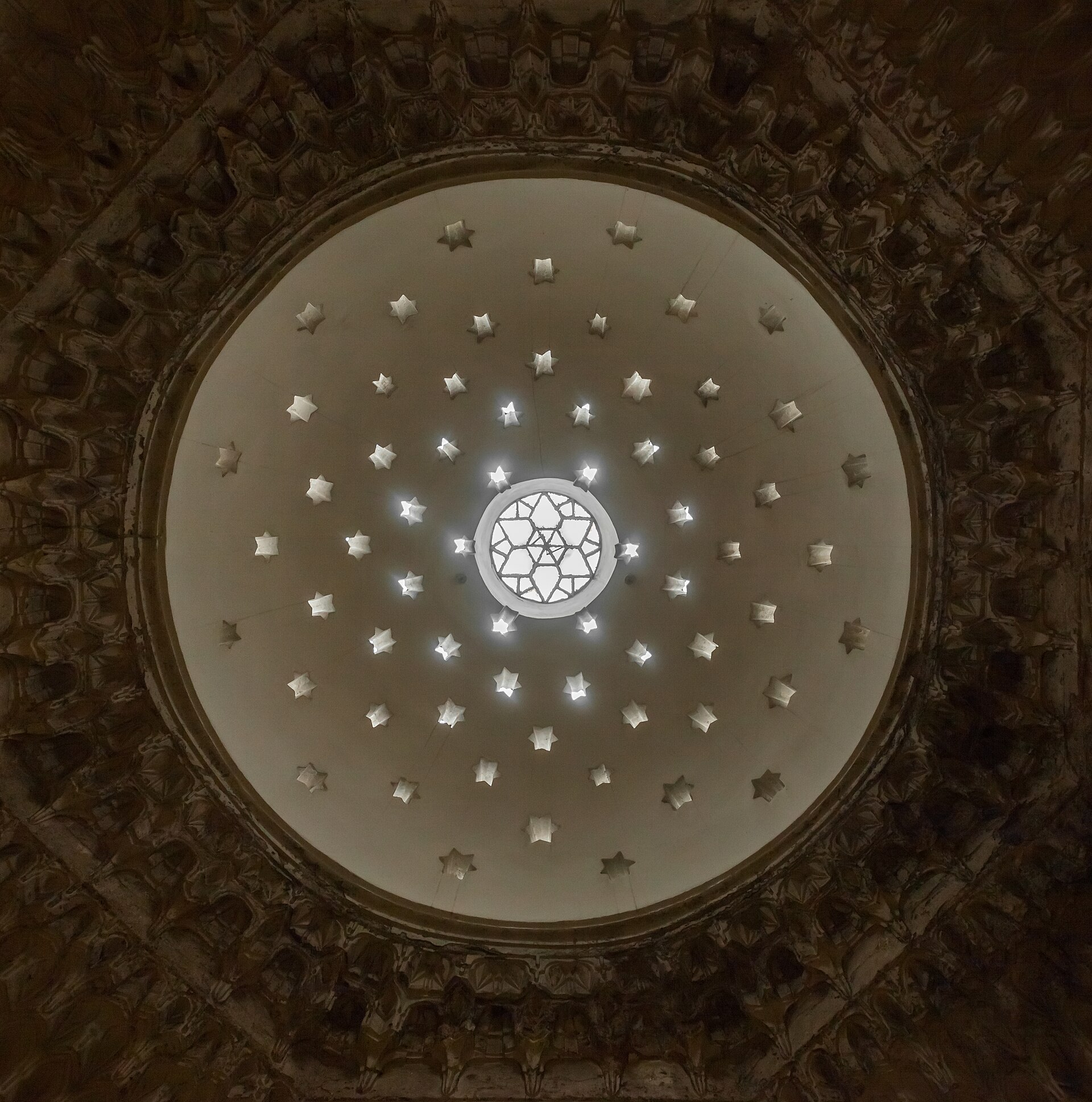
Daut Pasha (builder)Thirteen unequal domes over a 900 square metre double bath, with star-shaped light openings; the building is the main reason visitors rave about the place.4
The icons room
Michael and Eutychios; Jovan and Makarij; Mijak zographersThe museum's opening room covers fourteenth-century to Revival icon painting and links it to Ohrid, Pelagonia, Skopje and wider Byzantine networks.9
Late Ottoman secular painting
Papradishki, Zografski, VangelovZographers who left fresco and icon work for portraits, landscapes and the first folklore scenes, a rare chance to see that turn in one room.12
The founding generation of modern Macedonian art
Avramovski, Lichenoski, Martinoski, TodorovskiRooms 3 and 4 show the four painters the museum credits as founders of modern Macedonian art, several of them Paris- or Prague-trained.10
Nikola Martinoski's drawings
Nikola MartinoskiThe museum describes a significant holding of his drawings from the 1930s to the 1970s, shifting from expressionist and post-cubist sources to social themes.15
Contemporary art from the former Yugoslavia
Bukovac, Predic, Mestrovic and many others170 paintings, 46 sculptures and 150 drawings and prints bought in the first years after 1948 from touring exhibitions, studios and private collections.13
The Cifte Hammam exhibition space
Isa Beg (builder)A restored double bath used as the venue for the gallery's temporary contemporary shows, open to look at even between exhibitions according to one guide.5
A bathhouse that became the national picture gallery
The National Gallery of North Macedonia is one of the few national art museums anywhere whose main hall is a working Ottoman bathhouse in everything but function. Its permanent collection hangs in the Daut Pasha Hammam, a double bath of the fifteenth century that sits in the Old Bazaar of Skopje, a short walk from the Stone Bridge and the Kale fortress. The institution calls itself the oldest art institution of its kind in the country and dates its foundation to 1948, when it began life as the Art Gallery of Skopje before being renamed (the museum's history page does not give the date of the renaming).
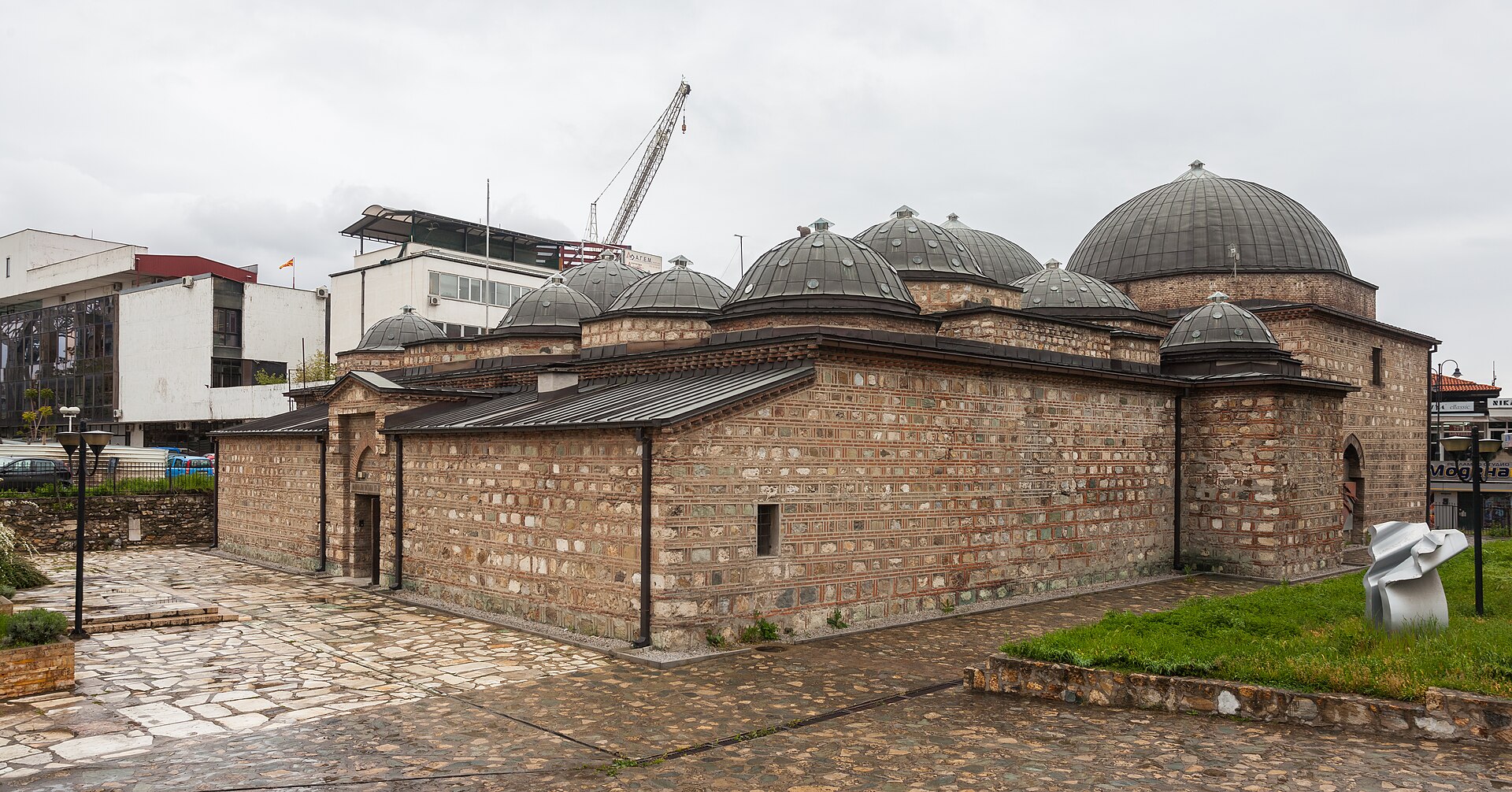
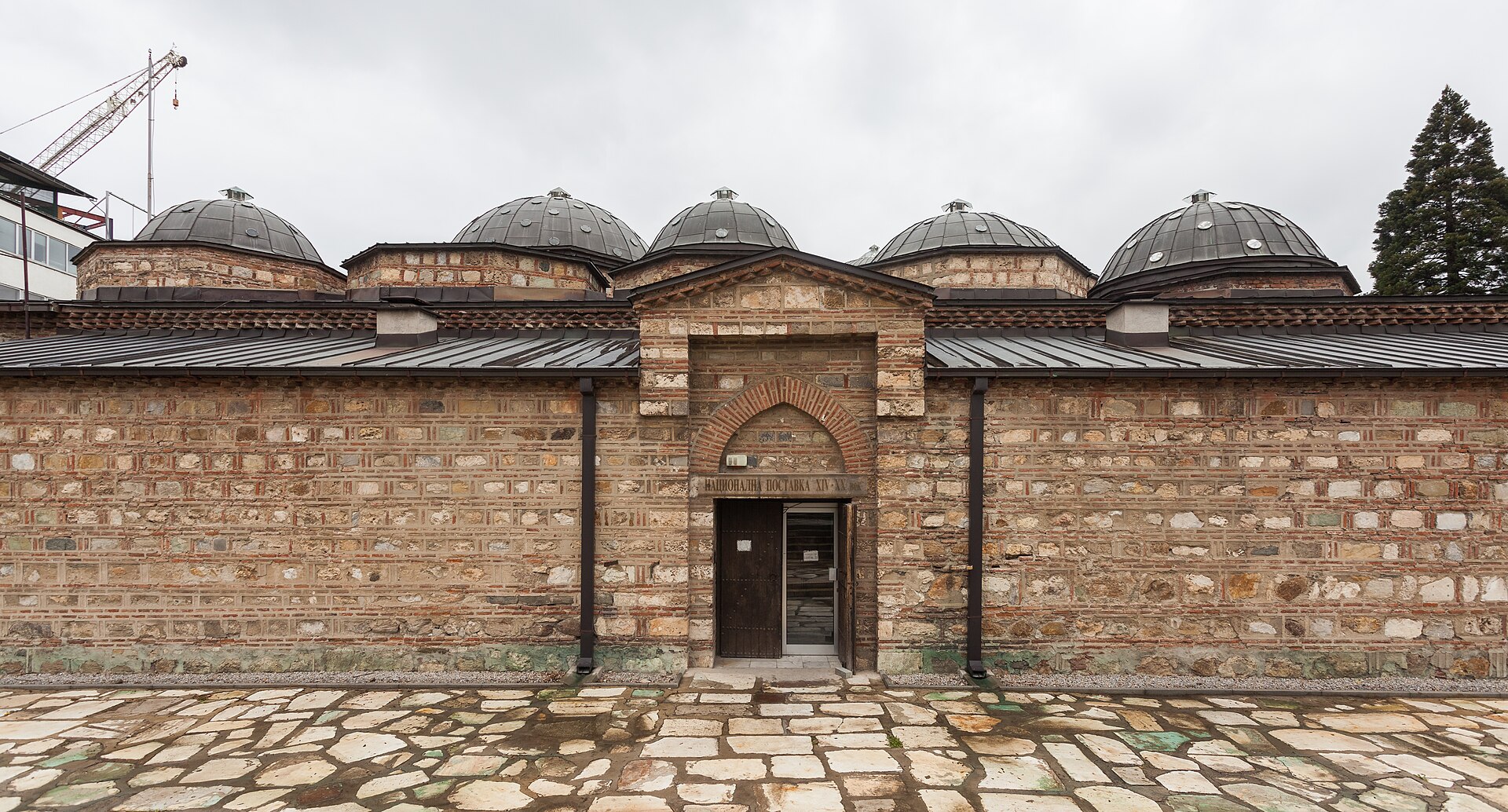
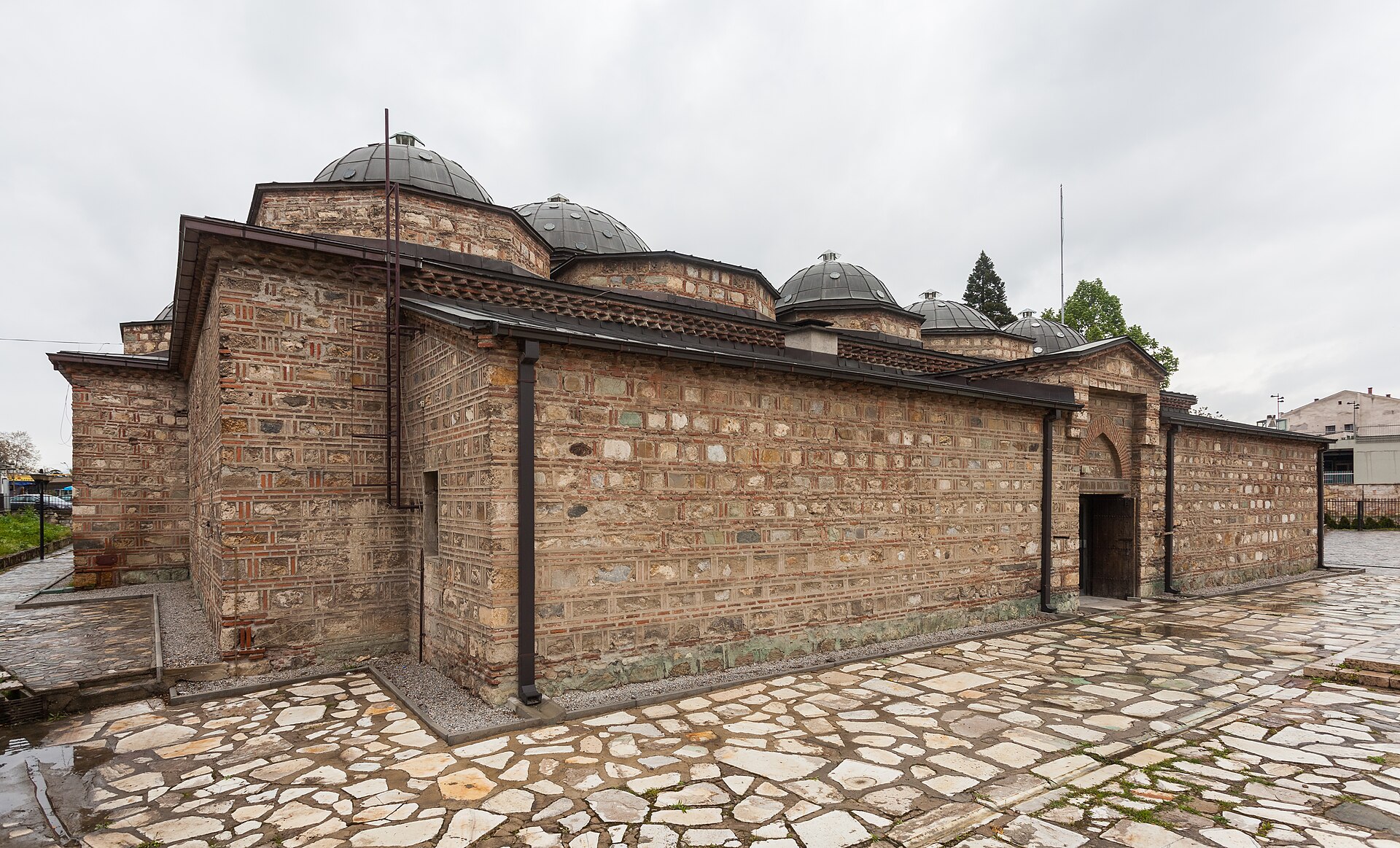
The building itself is plain from the street: a long wall of stone and brick courses, a small arched door and a roofline of shallow lead-grey domes. Thirteen domes of unequal size cover the interior, two of them much larger than the rest, and the whole footprint is about 900 square metres, divided into a men's and a women's half. A visitor does not arrive at a white cube. The first impression is of thick walls, small star-shaped openings in the vaults and light falling from above, which is how the hammam was lit when it was a bath.
Two things need saying at once because they shape how a trip is planned. First, the gallery is not one building but a cluster of four sites run from one office: the Daut Pasha Hammam for the permanent display, the nearby Cifte Hammam for temporary shows, the Mala Stanica multimedia centre and the memorial house of the painter Lazar Lichenoski. Second, the museum publishes very little for visitors on its own pages: the site gives working hours of 10:00 to 18:00 and a phone number, and no ticket prices at all. The practical numbers on this page therefore carry their own sources and dates.
The building: Daut Pasha and a founding story with holes in it
The gallery's own page on the hammam says construction began in 1446 under Daut Pasha, an Ottoman statesman who is described as beglerbeg of Anatolia and of Rumelia and sanjakbeg of Bosnia, with masons brought from Debar, and that the work took about three years. Other pages of the same website say only that he built it in the second half of the fifteenth century. The two statements do not agree and the museum does not reconcile them, so this page gives the century and notes the 1446 figure as the museum's own claim rather than settled fact.
Local tradition, repeated on the museum's own page, attaches a legend to the building: that it was raised on the site of an early Christian church that Daut Pasha had pulled down, that a snake bit his daughter as the work finished, and that he read this as divine punishment, so that the bath never went into service. It is a story, and the gallery presents it as one. What the same page does state as fact is that heating the high rooms consumed so much wood that nearly all the forests around the city were felled, and that the building was later a warehouse hemmed in by small shops before it was restored.
The conversion to a gallery happened in 1948. The museum's history page records a second renovation of the interior in 1979 to 1982, while the hammam page speaks of interior reconstructions in 1982 and 1999. The permanent display visitors see today was set up in 2001. The pattern is the usual one for a historic building turned museum: the shell is old, the hang is recent, and the dates in between are given differently depending on which page of the museum's website one reads.
What the nine rooms hold
The permanent display is titled Permanent Display, fourteenth to twentieth century, and the museum describes it as a selection from its collection laid out in nine rooms. Room 1 is given over to icons and traces the development of icon painting from the period of Michael and Eutychios through the post-Byzantine centuries to the Revival, with the museum itself noting that the group is not a complete survey. Room 2 turns to secular painting of the late Ottoman revival and names the zographers Dimitar Andonov Papradishki, Gjorgji Zografski and Kosta Vangelov, painters who moved from church work to portraits, landscapes and the first folklore and historical scenes.
Rooms 3 and 4 hold the art between the two world wars and the founding generation of modern Macedonian art: D. P. Avramovski, Lazar Lichenoski, Nikola Martinoski and Dimo Todorovski. Room 5 covers the free expression of the 1960s, with expressionism, surrealism, post-cubism and magic realism entering through artists trained abroad. Room 6 is abstraction, informel and icon-inspired work that tries to join past and present. Rooms 7 and 8 take the 1970s, from fine geometric detail and fantastic painting to minimal art, pop art, hyperrealism and conceptual art. Room 9 runs from the 1980s to the early 1990s and names neo-expressionism, European constructivism, neoconceptualism and plant installations.
The museum's separate collection pages show how much more sits in the stores than on the walls. The drawings holding is said to exceed 300 sheets, with a notable group of over 150 drawings by artists from the other Yugoslav republics. The collection of contemporary art from the former Yugoslavia stands at 170 paintings, 46 sculptures and 150 drawings and prints, and was bought in the first years after 1948. Overall the museum's history page gives a total of more than 1,600 works.
How the collection was made
The founding story is a purchasing campaign. The history page says the gallery was started through large purchases of works from across former Yugoslavia, backed by the republican government and by figures the museum names: Dimce Koco, described as one of the founders of Macedonian museology, and the artists Nikola Martinoski, Lazar Lichenoski, Dimo Todorovski and Borko Lazeski. Borko Lazeski was the first acting director and Martinoski followed him. Part of the founding stock came across from the gallery department of the National Museum in Skopje.
The Yugoslav collection page adds detail on method. A commission set up on the initiative of the artists and scholars already named had full freedom in selection and bought from touring exhibitions in several cities, from studios, from private collections and from individual donations, guided by artistic and historical value. The page lists dozens of names from Serbian, Croatian and Slovenian art, from Vlaho Bukovac and Uros Predic to Ivan Mestrovic and Sava Sumanovic, which tells a visitor that the gallery was conceived as a window onto the wider Yugoslav art of the period as well as a home for local painting.
The graphics collection began with the founding of the institution and grew by purchase from current exhibitions and by gifts from artists. The museum's own account records a first Macedonian graphic portfolio in 1961, and exhibition history that includes Belgian, British and German graphics in 1955, American woodcuts in 1956 and a Henry Moore show in 1965. The same Moore connection appears on the drawings page, which dates a Moore drawings exhibition to 1955. The two pages therefore name different years for a Henry Moore exhibition and this page reports both without choosing.
The first display opened to the public on 2 August 1951, Ilinden, and mixed contemporary Macedonian art with icons from the fourteenth to the twentieth century, copies of frescoes and models of medieval Macedonian churches, a reminder that the gallery from its start joined modern painting to a claim about the long continuity of Macedonian visual culture.
The other three sites
The Cifte Hammam, also written Cifte Amam, is the gallery's temporary-exhibition space and was built in the middle or second half of the fifteenth century by Isa Beg, described on the museum page as a Skopje military commander and a major builder, as an endowment to support his madrasa and tekke in the city. Its name means double bath: two nearly identical halves with separate entrances for men and women, covering 1,056 square metres. The museum notes that it stopped working as a bath around 1916 or 1917, fell into storage use and was badly damaged in the 1963 Skopje earthquake. It passed to the Art Gallery in 2000 as a multimedia exhibition space, and a full restoration was completed in 2001 and 2002.
Mala Stanica, on Jordan Mijalkov Street, is the multimedia centre and the institution's head office. The museum says the building dates from 1924, was a utility structure tied to a narrow-gauge railway toward Ohrid and Struga, was later used by the Yugoslav People's Army and was opened as a multimedia centre on 3 November 2005, with about 2,000 square metres. The fourth site, the Lazar Lichenoski Museum, is the house where the painter lived and worked. The museum says a restoration project was prepared to adapt it for museum use and that the house will hold the material the family gave to the institution; the page describes no permanent display, so it should be treated as a place to enquire about rather than a sight to turn up to.
The current programme, as listed on the museum's website in November 2026, includes Ismet Jonuzi's Morphogenesis, a show by Irena Paskali at Cifte Hammam that was set to open on 18 September 2026 and a series on Macedonian painting from the collection called From Canon to Individual Expression. Dates of closing are not given on the pages read.
What it is like to visit, and what is missing
The three travel sources read for this page agree on a few things. Visitors consistently like the building more than they like the hang, and that is unusually blunt in one of them: a travel writer notes that the architecture and interior are praised unanimously while many tourists have a different opinion of the collections. Time needed ranges widely; one source suggests two to three hours across the sites, while visitor accounts surveyed by search describe fifteen to twenty minutes for the hammam alone. The honest range is under an hour for the Daut Pasha Hammam, longer if the Cifte Hammam show is on.
The gaps are real. The museum's site does not publish ticket prices or the days it is closed, and its own pages on the collections give counts for some departments but name almost no individual works, so a reader cannot build a shortlist of objects from the museum's pages; that is why the highlights below are rooms, departments and makers rather than single pictures. The museum also gives no breakdown of the icons collection by number. A page for the photography, film and video collection exists but carries no description at all.
The institution's own pages do not discuss the question that other collections of its generation have faced, the ownership history of the Yugoslav-era purchases, or the later political life of the building and the neighbouring Skopje projects, so none of that is covered here. What the sources do support is a small, clearly arranged national survey in a fifteenth-century setting, a cluster of satellite venues with real exhibition programmes and a very low entry price.
What visitors say
Visitors and guide writers agree the fifteenth-century hammam is the draw, while opinion of the collection itself is more mixed. The price is very low, the visit is short, and the museum gives little practical information on its own pages.
What is praised, what is criticised
- Praised: The architecture and interior of the Daut Pasha Hammam, called unanimous in one guide
- Praised: The very low entry price
- Praised: A clear survey of Macedonian art from icons to the early 1990s in one building
- Criticised: Many tourists are said to hold a different opinion of the collections than of the building
- Criticised: The museum's website publishes no ticket prices and no closed days
- Criticised: The collection pages name few individual works
Questions about National Gallery of North Macedonia
Where is National Gallery of North Macedonia?
Krusevska 1A (Daut Pasha Hammam), Old Bazaar, 1000 Skopje, North Macedonia; head office at Mala Stanica, Jordan Mijalkov 18.
How much does it cost to visit?
Adult: MKD 50; Student or child: MKD 20. As confirmed 20 November 2026.
When is it open?
Tue-Sun 10:00-18:00. Closed: Monday (per third-party listings, not stated on the museum's own pages). As confirmed 20 November 2026.
How do you get there?
On foot: The Daut Pasha Hammam stands in the Old Bazaar in the city centre, near the Stone Bridge and the Kale fortress.
What should you see first?
The Daut Pasha Hammam itself (Daut Pasha (builder)); The icons room (Michael and Eutychios; Jovan and Makarij; Mijak zographers); Late Ottoman secular painting (Papradishki, Zografski, Vangelov); The founding generation of modern Macedonian art (Avramovski, Lichenoski, Martinoski, Todorovski); Nikola Martinoski's drawings (Nikola Martinoski); Contemporary art from the former Yugoslavia (Bukovac, Predic, Mestrovic and many others).
What we could not confirm
- The museum's own pages give no ticket prices; 50 and 20 MKD come from a travel guide and need confirming by phone.
- The year of construction: 1446 on the gallery's Daut Pasha page against the second half of the fifteenth century on others.
- The Henry Moore exhibition is dated 1965 on the graphics page and 1955 on the drawings page.
- Which weekdays the museum is open, and any summer extension, are not stated on its own site.
Images
Sources
- 1National Gallery of North Macedonia, home page (Macedonian), hours, sites and programme, read 20 Nov 2026 nationalgallery.mk/
- 2National Gallery of North Macedonia, Contact page (phone, addresses of the four sites), read 20 Nov 2026 nationalgallery.mk/kontakt/
- 3National Gallery of North Macedonia, Istorijat (history of the institution), read 20 Nov 2026 nationalgallery.mk/istorijat/
- 4National Gallery of North Macedonia, Daut Pasha Hammam page, read 20 Nov 2026 nationalgallery.mk/dautpashinamam/
- 5National Gallery of North Macedonia, Cifte Hammam page, read 20 Nov 2026 nationalgallery.mk/cifte-amammk/
- 6National Gallery of North Macedonia, Permanent display XIV-XX century (nine rooms), read 20 Nov 2026 nationalgallery.mk/trajna-postavka/
- 7National Gallery of North Macedonia, Mala Stanica multimedia centre page, read 20 Nov 2026 nationalgallery.mk/mala-stanicamk/
- 8National Gallery of North Macedonia, Lazar Lichenoski Museum page, read 20 Nov 2026 nationalgallery.mk/lazar-lichenoskimk/
- 9National Gallery of North Macedonia, Icons collection page, read 20 Nov 2026 nationalgallery.mk/ikonimk/
- 10National Gallery of North Macedonia, Macedonian contemporary art between the two world wars, read 20 Nov 2026 nationalgallery.mk/makedonska-sovremena-umetnost-megu-dvete-svetski-vojni/
- 11National Gallery of North Macedonia, Macedonian contemporary art after 1945, read 20 Nov 2026 nationalgallery.mk/makedonska-sovremena-umetnost-po-1945-godina/
- 12National Gallery of North Macedonia, Beginnings of Macedonian secular painting, read 20 Nov 2026 nationalgallery.mk/pocetoci-na-makedonskoto-profano-slikarstvo/
- 13National Gallery of North Macedonia, Contemporary art from the former Yugoslavia, read 20 Nov 2026 nationalgallery.mk/sovremena-umetnost-od-poranesna-jugoslavija/
- 14National Gallery of North Macedonia, Graphics (prints) collection page, read 20 Nov 2026 nationalgallery.mk/grafikamk/
- 15National Gallery of North Macedonia, Drawings collection page, read 20 Nov 2026 nationalgallery.mk/crtezh/
- 16National Gallery of North Macedonia, News and events archive, read 20 Nov 2026 nationalgallery.mk/category/nastani/
- 17National Gallery of North Macedonia, English-language home page, read 20 Nov 2026 nationalgallery.mk/?lang=en
- 18Wikipedia, National Gallery (North Macedonia), , read 20 Nov 2026 en.wikipedia.org/wiki/National_Gallery_(North_Macedonia)
- 19Wikipedia, Cifte Hammam, , read 20 Nov 2026 en.wikipedia.org/wiki/%C4%8Cifte_Hammam
- 20In Your Pocket, Daut Pasha Hamam listing (hours, closed Monday), , read 20 Nov 2026 inyourpocket.com/skopje/daut-pasha-hamam_150561v
- 21Travelling Foot, National Gallery of Macedonia (prices, hours, visitor view), , read 20 Nov 2026 travellingfoot.com/best-places-to-visit-in-macedonia/tourist-attractions-in-skopje/national-gallery-of-macedonia
- 22Chasing the Donkey, Most Interesting Museums in Skopje (published 16 Feb 2021, updated 20 Aug 2025), read 20 Nov 2026 chasingthedonkey.com/interesting-museums-in-skopje-macedonia/
- 23European Museum Academy, National Gallery of the Republic of North Macedonia profile, read 20 Nov 2026 europeanmuseumacademy.eu/national-gallery-of-the-republic-of-north-macedonia/
- 24Wikimedia Commons API, licence and category data for the plates, read 20 Nov 2026 commons.wikimedia.org/wiki/Category:Daut_Pa%C5%A1a_Amam