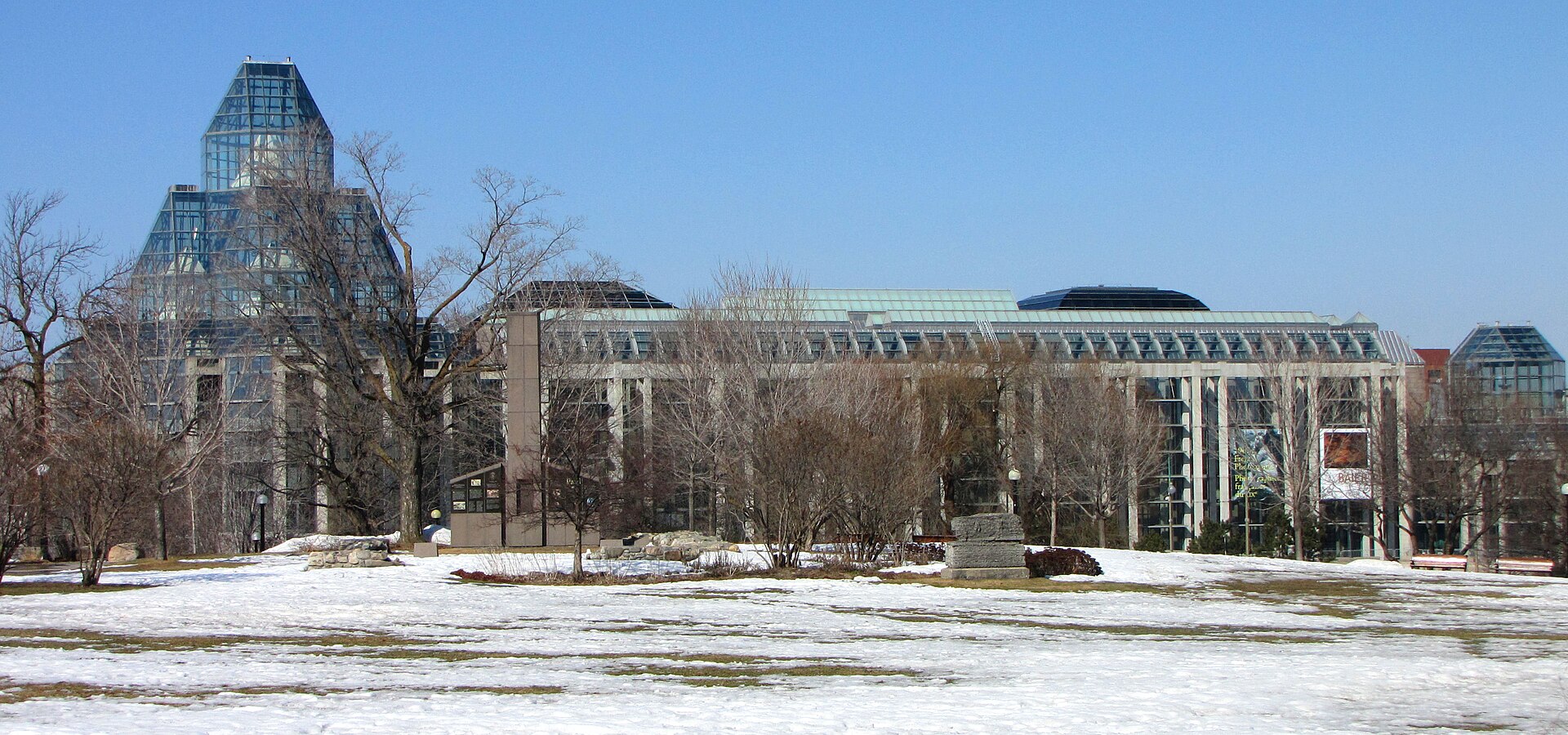
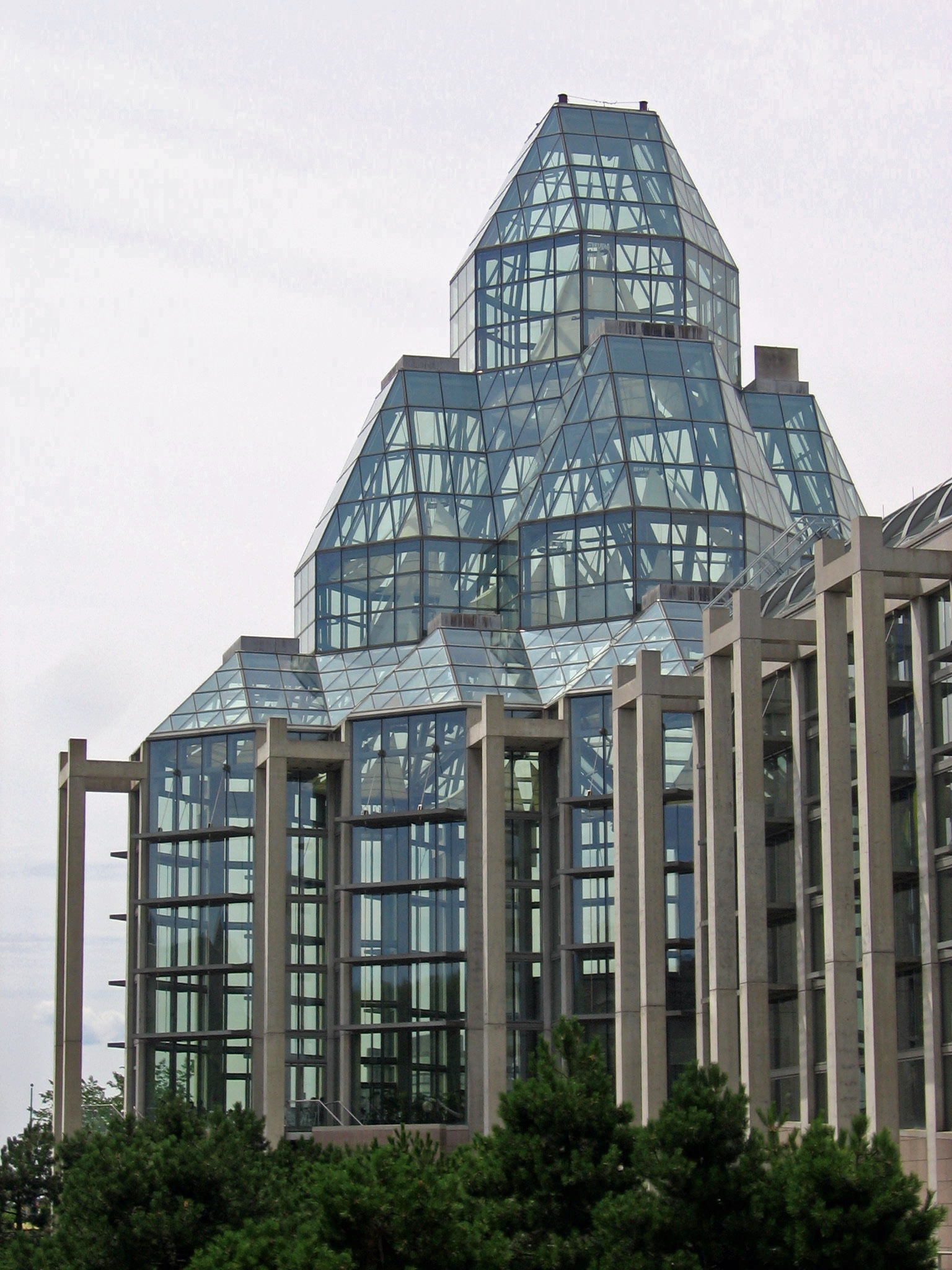
Moshe Safdie's glass-and-granite building, its three-tiered crystalline cupola clearly visible above the granite colonnade, photographed from Major's Hill Park in 2010
D. Gordon E. Robertson · Photograph by Dger · CC BY-SA 3.0National Gallery of Canada
Museum · Musee des beaux-arts du Canada · Founded 1880
Open, admission and hours confirmed 14 September 2026 · 15 sources
On this page 18 sections
ContentsClose
The Gallery's genuine strength is Canadian and Indigenous art shown together and in depth, a position no other museum in the country can match, built from a founding mandate that has itself changed substantially - Indigenous art was excluded from active collecting until the 1980s, which the Gallery's own recent rehangs now treat as part of the story rather than a settled footnote. The European, American, Asian, prints and photography holdings are each individually serious rather than token, but they read as a national museum's obligation to be comprehensive rather than as areas where the Gallery is a world leader in the way it is for Canadian material.
| Local name | Musee des beaux-arts du Canada |
|---|---|
| Kind | Museum |
| Founded | 1880 |
| City and country |  Ottawa, Canada Ottawa, Canada |
| Address | 380 Sussex Drive, Ottawa, Ontario, Canada K1N 9N4 |
| Website | gallery.ca |
| Status | Open, confirmed |
| Record last verified |
Visiting
- Hours
- MondayClosed under the current schedule, in effect from September 14, 2026 through May 2, 2027; Mondays reopen 9:30 a.m. to 5 p.m. under the schedule running May 3 through October 17, 2027
- Tuesday-Wednesday09:30 to 17:00
- Thursday09:30 to 20:00Free admission from 5 to 8 p.m.
- Friday09:30 to 17:00
- Saturday-Sunday09:30 to 17:00
- Closed
- Monday, from September 14, 2026 through May 2, 2027 (Mondays are open hours May 3 through October 17, 2027, and again from April through September under the regular seasonal pattern). December 25, 2026 (Christmas Day). January 18-22, 2027 (Annual Maintenance).
- Admission
- AdultCAD 22Regular rate, in effect since September 8, 2026 now that the seasonal Canada Strong Pass promotion has ended
- 65 plusCAD 20Proof of age or photo ID may be required
- Young adults, 18-30CAD 15Proof of age or photo ID may be required; the temporary Canada Strong Pass rate of 7.50 CAD for ages 18-24 ended September 7, 2026, and this single 18-30 band is now the only young-adult rate
- Youths, 12-17CAD 12Proof of age or photo ID may be required; the temporary Canada Strong Pass free admission for ages up to 17 ended September 7, 2026
- Children, 11 and underFreeFree
- MembersFreeAlways free with a membership card
Free entry: Every Thursday, 5 to 8 p.m. (Free Thursday Nights, with art activities and tours). September 30 (National Day for Truth and Reconciliation), free from 12 p.m. to 5 p.m.. November 11 (Remembrance Day), free from 12 p.m. to 5 p.m.- Tickets
- tickets.gallery.ca The museum's own ticket page.
- Do I need to book?
- No, but online tickets get a 3 CAD discount and advance booking is recommended during major loan exhibitions
- Address
- 380 Sussex Drive, Ottawa, Ontario, Canada K1N 9N4 MapOn foot At the corner of Sussex Drive and St. Patrick Street, within walking distance of the ByWard Market, the Chateau Laurier and Parliament Hill; the main visitor entrance is on the stone plaza by the Maman spider sculpture
Car A 10-minute drive north of Highway 417 via the Metcalfe exit; an underground visitor parking garage is on site, cashless only, 2.75 CAD per half-hour up to a 21 CAD maximum, no in-and-out privileges
Bus Served by OC Transpo routes from within Ottawa and by bus systems connecting from Gatineau-Hull on the Quebec side of the river - Website
- gallery.ca
- Telephone
- +1 613-990-1985
- [email protected]
Before you go how long, access, photography, bags, eating, shop
- How long to allow
- Two to three hours to cover the Indigenous and Canadian galleries, the Rideau Street Chapel and one special exhibition
- Access
- Every gallery and facility is wheelchair accessible; wheelchairs, walkers and electric scooters are free to borrow with no reservation; sensory support kits with noise-reducing earmuffs, dark glasses and fidget items can be borrowed at the Main Entrance or in the Scotiabank Great Hall; service animals are welcome throughout; an all-gender washroom is on the lower level
- Photography
- Personal photography is generally permitted in the galleries; tripods, monopods and selfie sticks are barred under the visitor code of conduct, and touching works on display is not permitted unless a work is specifically marked otherwise
- Bags
- Free cloakroom; bags larger than 40 by 30 by 12 centimetres, backpacks, luggage and umbrellas must be checked before entering the galleries
- Eating
- Savour Express cafeteria on Level 1 for hot entrees, salads, pizza and coffee; a Happy Goat Coffee kiosk; and Tavern at the Gallery, a full-service patio and lounge in the Sunken Garden with a menu by chef Rene Rodriguez
- Shop
- The Gallery Boutique sells books, prints, Canadian jewellery and exhibition merchandise, with a members' discount and a separate online store at boutique.gallery.ca
Prices and hours change. We take them from the institution's own pages and print the day we read them, and you can check the current position at the source we used. Confirm before you travel.
What is inside
Indigenous and Canadian Art Galleries
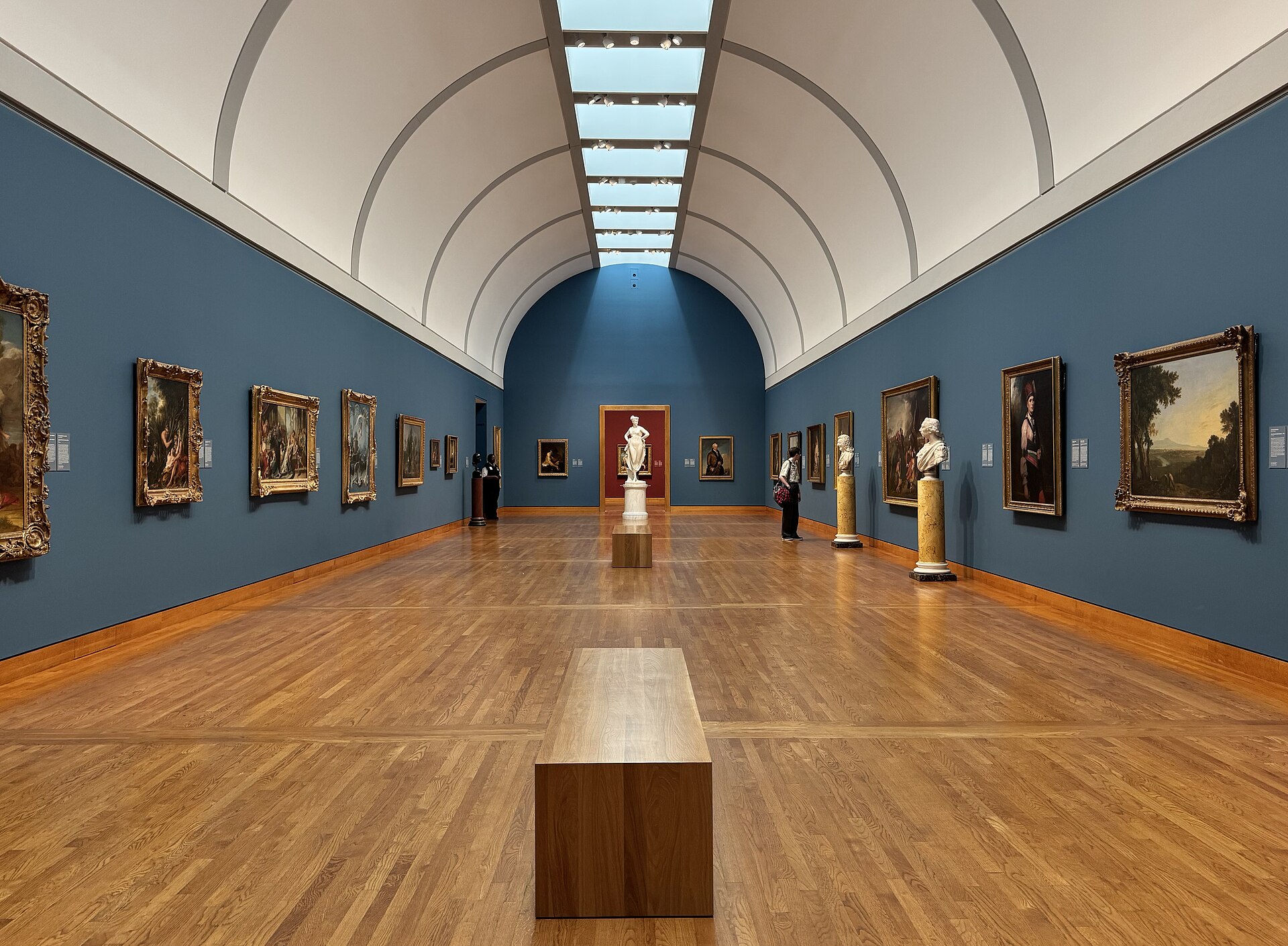
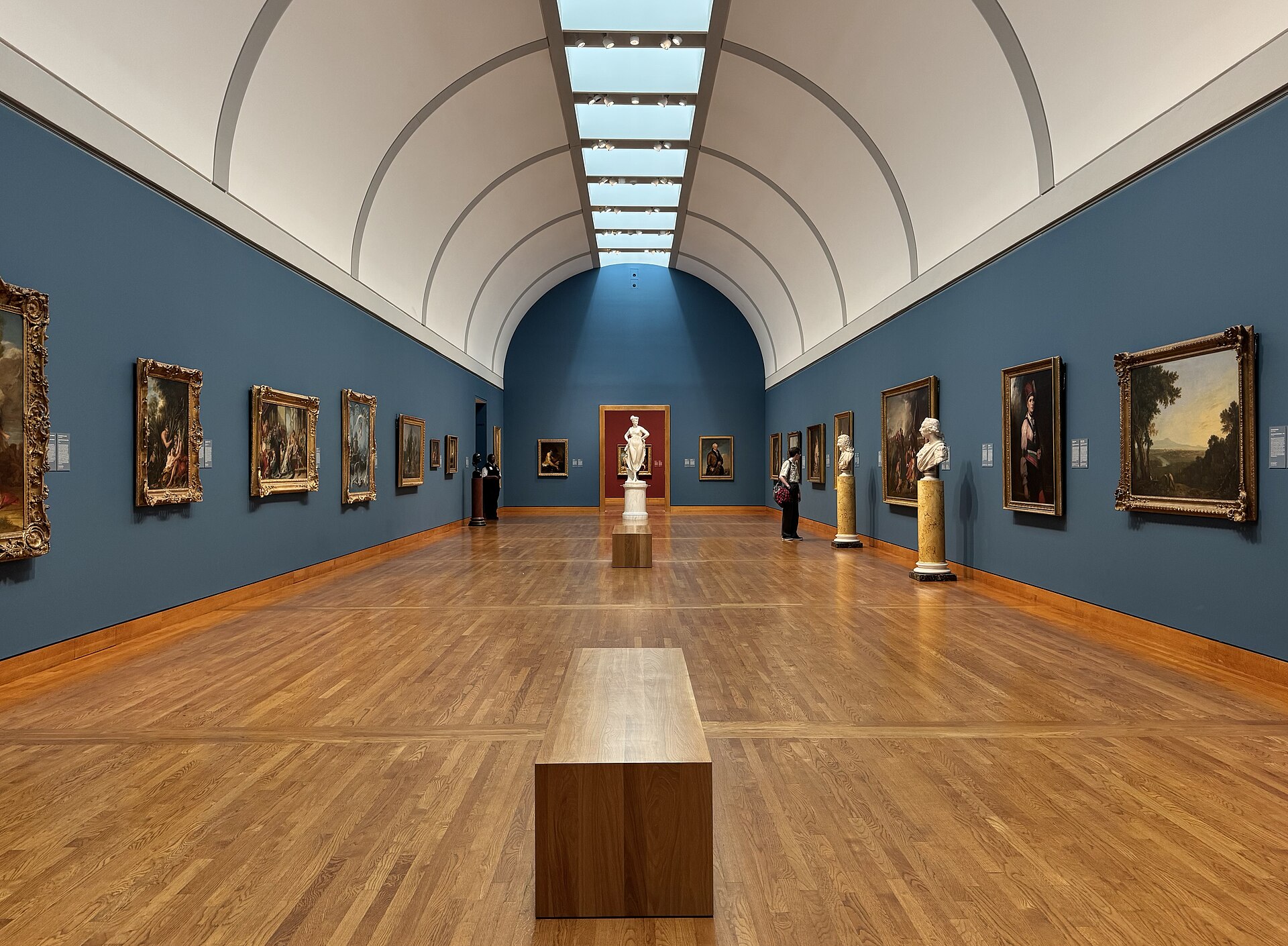
The 2017 renovation Canadian and Indigenous Art: From Time Immemorial to 1967 shows the two histories side by side rather than as separate wings, from pre-Confederation painting and Group of Seven landscapes through Inuit sculpture and Northwest Coast and Woodlands work, examining how the two traditions relate rather than treating Indigenous work as a separate annex
Photograph by Hayden Soloviev · CC BY 4.0 European, American and Asian Art
Built deliberately from the 1910s onward, spanning the Renaissance through the 20th century with works by Rembrandt, Vincent van Gogh, Gustav Klimt and Claude Monet, alongside roughly 400 works of Asian painting and sculpture from the Indian subcontinent and beyond dating as far back as 200 CE
Contemporary Art
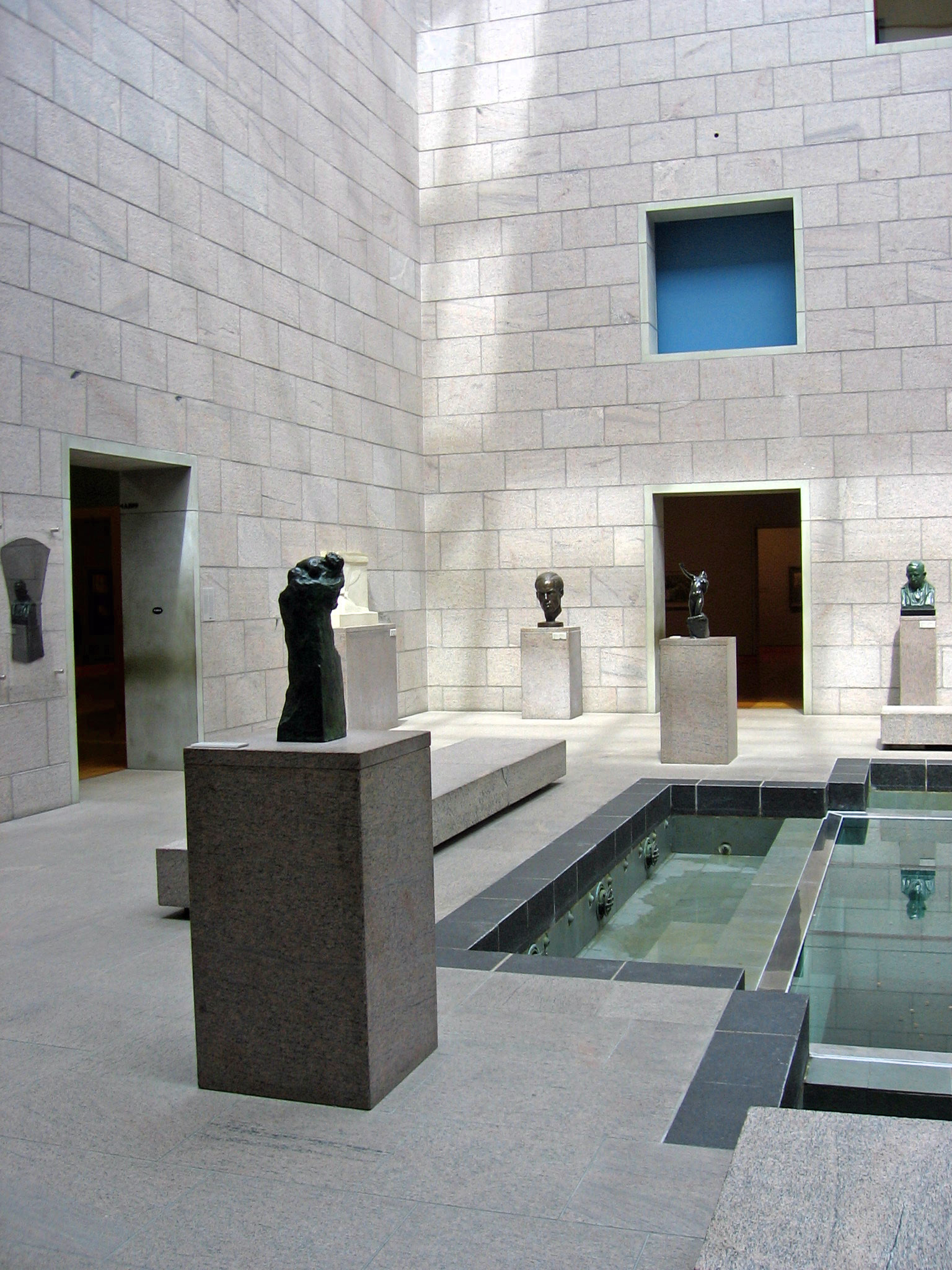
About 1,500 works acquired since the 1990s, anchored by a 2017 gift of 197 pieces from collector Bob Rennie centred on Vancouver-based artists including Geoffrey Farmer, Rodney Graham and Brian Jungen, shown alongside international figures such as Doris Salcedo, Chris Ofili and Janet Cardiff
Prints and Drawings
More than 27,000 works on paper spanning the 15th century to the present, including some 10,000 prints and drawings by Canadian artists, over 800 of them by Inuit artists, plus 2,500 drawings and 10,000 prints by American, Asian and European makers
Photography
One of the most comprehensive photography holdings in the world, spanning the full history of the medium; the collection absorbed the former Canadian Museum of Contemporary Photography, an affiliated institution that operated separately until its 2006 closure and 2009 amalgamation into the Gallery
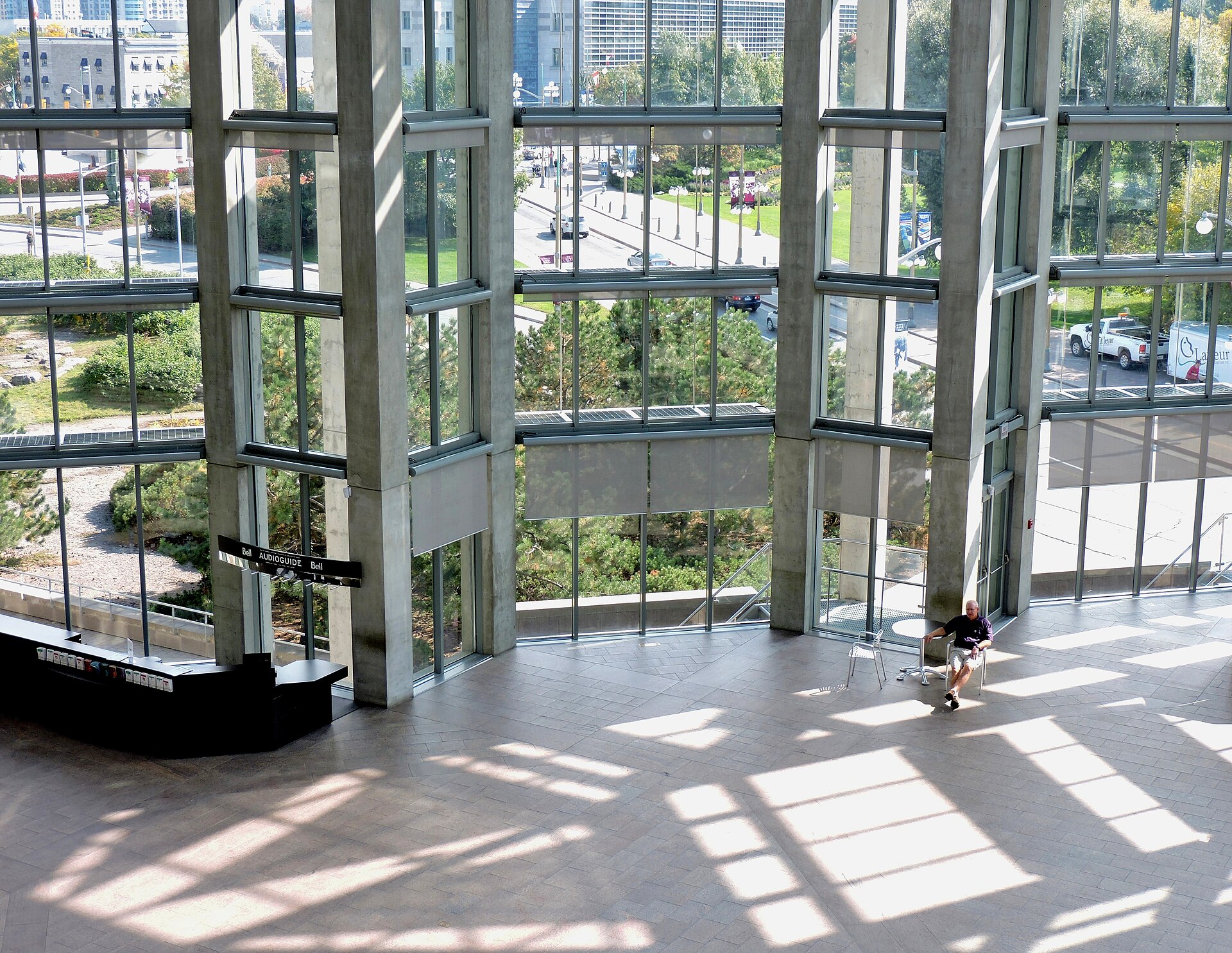
Photograph by PamMcP · CC BY-SA 4.0 Scotiabank Great Hall and the Colonnade
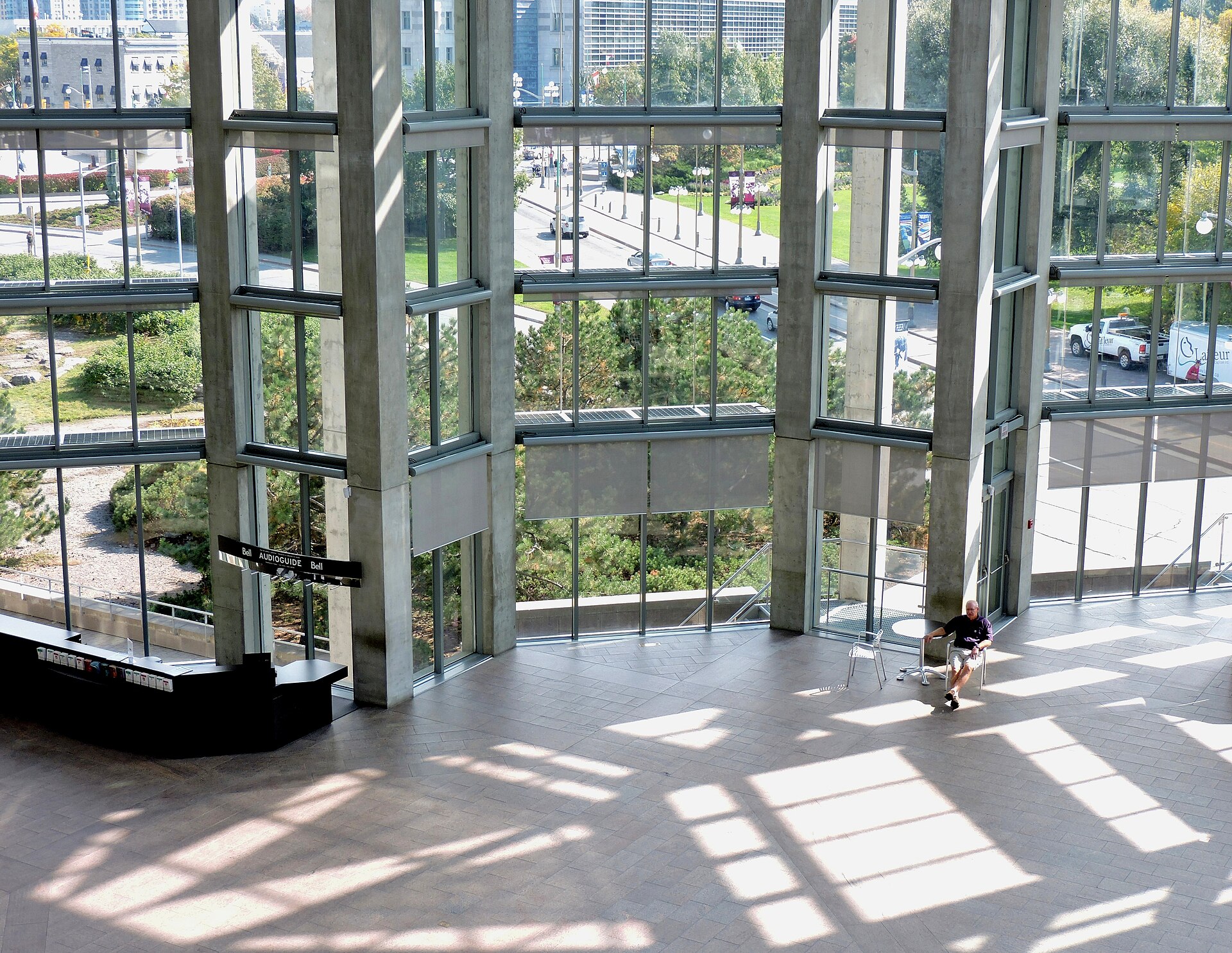
The architectural centrepiece of Moshe Safdie's building: a soaring glass cupola whose vertical windows frame the Parliament Buildings, the Ottawa River and the Gatineau Hills, reached by climbing the granite-and-glass Colonnade ramp, one of the longest ramps in recent architecture, built to create a sense of ceremonial ascent
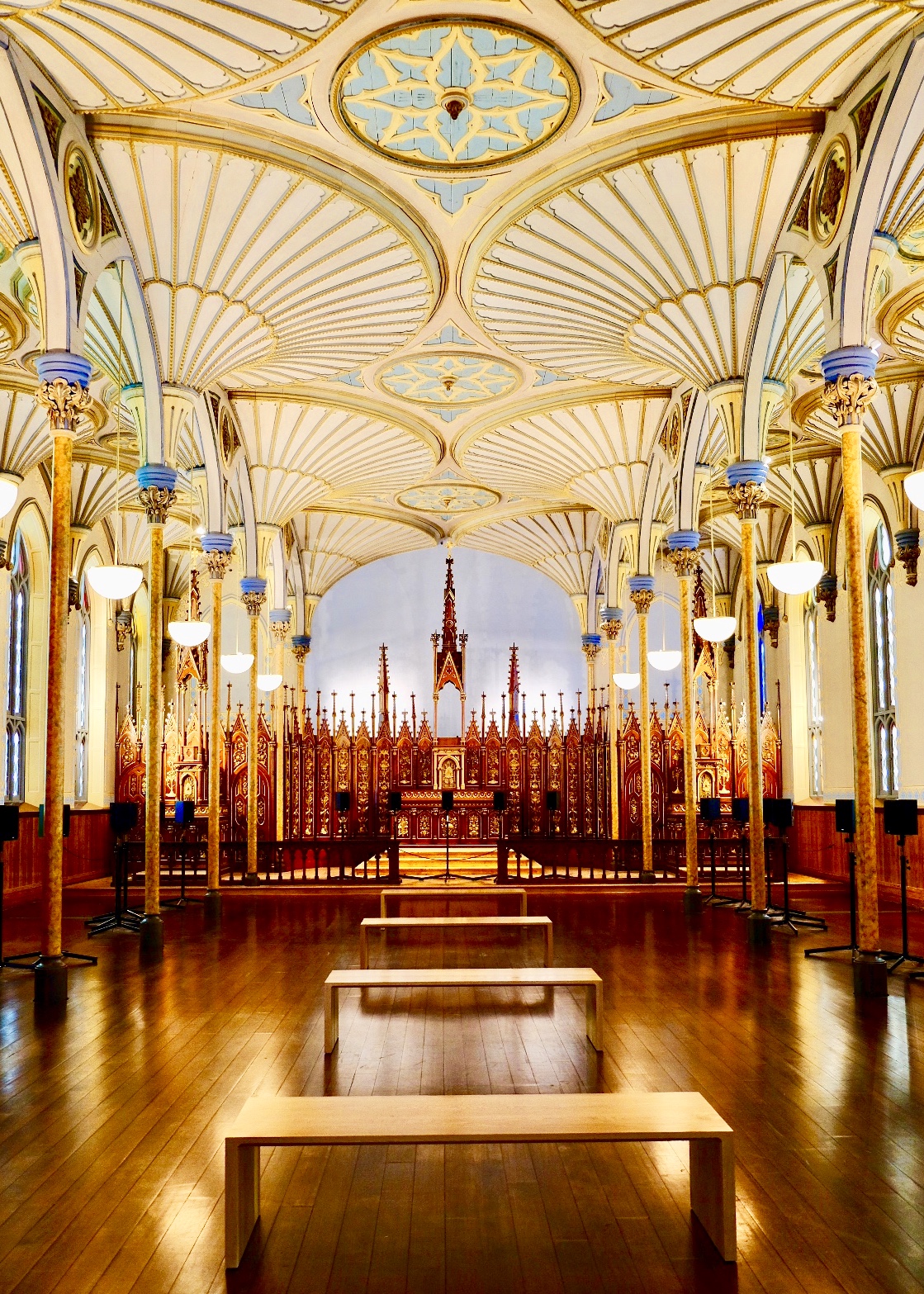
Photograph by joanne clifford · CC BY 2.0 Rideau Street Chapel
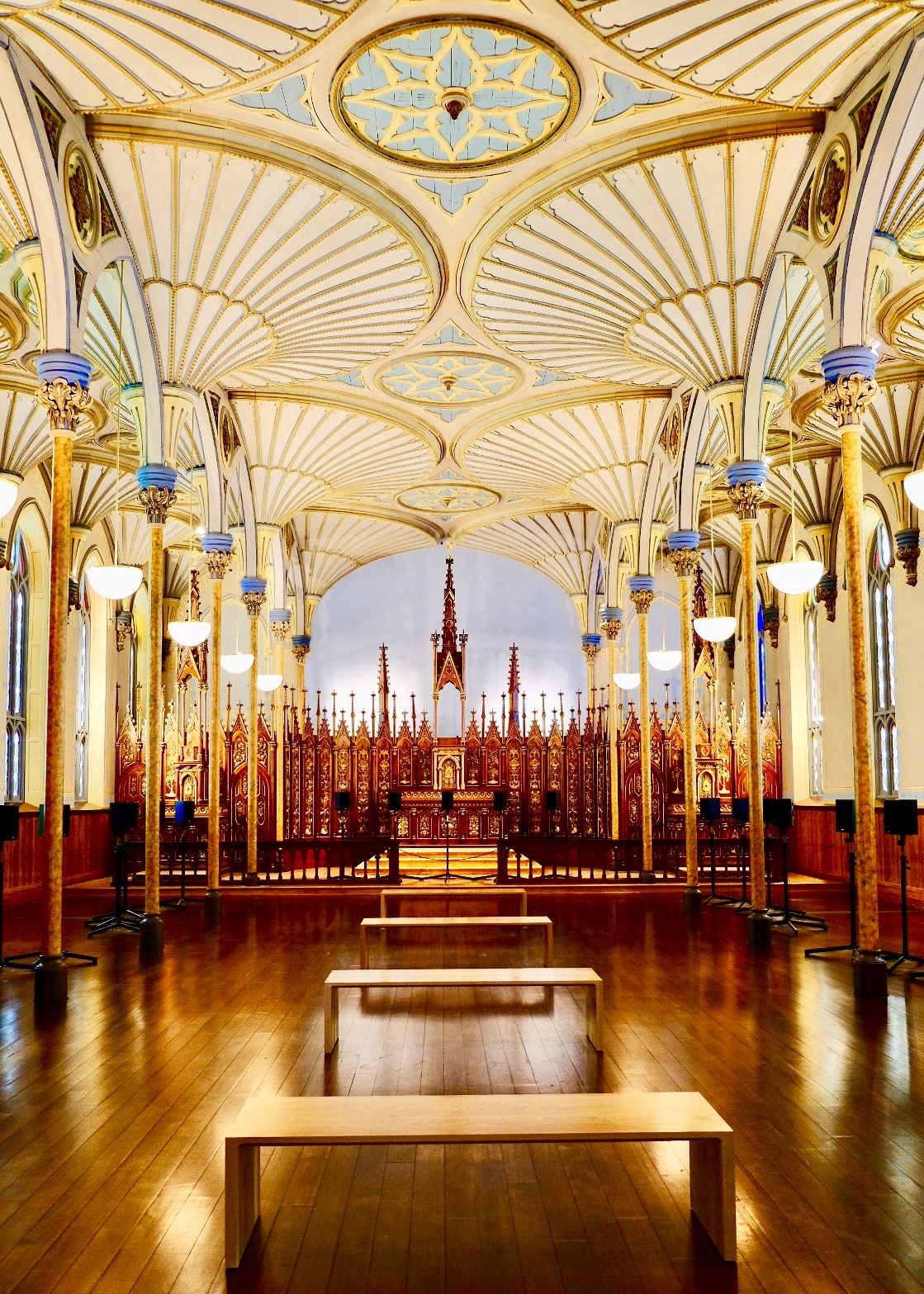
The reconstructed 1887 interior of a convent chapel by Georges Couillon, saved from demolition in 1972, dismantled into 1,123 pieces, stored for years and rebuilt inside the Gallery in 1988; one of only two complete architectural exhibits of its kind in North America, and now the setting for Janet Cardiff's sound sculpture Forty-Part Motet
Fred and Elizabeth Fountain Garden Court
A glass-covered landscaped courtyard built as a deliberate contrast to the galleries around it: Canadian Shield limestone rocks arranged into an undulating topography, a gravel path suggesting a riverbed, and native ferns and plants, offered to visitors as a place to sit and pause partway through a visit
What to see first
Voice of Fire
Barnett Newman, 1967The Gallery's 1990 purchase of this three-stripe abstract canvas for 1.8 million Canadian dollars of public money set off a parliamentary and press uproar that is still cited as shorthand for the gap between curatorial judgment and public opinion at a national museum; it has since been valued at roughly 40 million dollars10
Maman
Louise Bourgeois, 1999 castA nine-metre bronze, stainless steel and marble spider installed on the entrance plaza since 1999, bought for 3.2 million Canadian dollars; it has become the most photographed single object at the Gallery and functions as an unofficial landmark for the building itself10
The Jack Pine
Tom Thomson, 1916-17Added to the collection in 1918, this is one of the defining images of early 20th-century Canadian landscape painting and a work whose composition and silhouette are reproduced constantly in Canadian art history teaching10
Forty-Part Motet
Janet Cardiff, 2001A sound sculpture reworking Thomas Tallis's 16th-century choral piece Spem in Alium across forty separate speakers, installed inside the reconstructed Rideau Street Chapel so that a Renaissance choral work and a 19th-century convent interior are experienced as one piece4
The Rideau Street Chapel interior
Georges Couillon, 1887, reconstructed 1988The largest single object in the collection is the chapel itself: 1,123 dismantled pieces of a demolished convent, stored for over a decade and rebuilt inside the Gallery, making the building simultaneously an artwork and a room a visitor walks through10
La Tour Eiffel
Marc Chagall, 1929Bought in 1956 for 16,000 Canadian dollars, the Gallery's 2018 plan to sell this painting to fund other acquisitions was abandoned after public objection, a rare case where visible pressure from outside the institution changed a Board-level decision about the collection10
The Death of General Wolfe
Benjamin West, 1770 (version)A history painting by the Anglo-American artist that helped define how Canada's founding conflicts were pictured for two centuries, and one of the earliest major non-Canadian acquisitions to enter the national collection10
Exhibitions on now
Past exhibitions here
- Closed8 May to 12 Oct 2026Confirmed · check before you travel
A building built to answer Parliament Hill
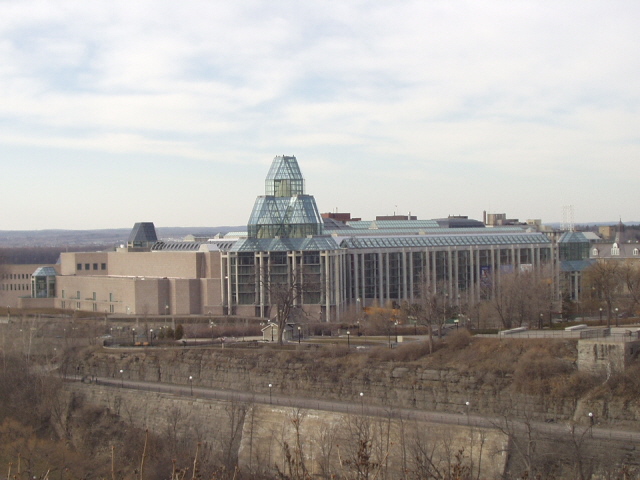
The National Gallery of Canada occupies a building that was designed, quite deliberately, to hold its own against the government buildings across the street. In 1982, in the wake of the patriation of Canada's Constitution, Prime Minister Pierre Trudeau's government shifted policy toward what it called the creation of a nation, and named the Canadian-Israeli-American architect Moshe Safdie as lead architect for a permanent home for the National Gallery at the corner of Sussex Drive and St. Patrick Street. A Crown corporation, the Canadian Museums Construction Corporation, was set up with a budget of 185 million Canadian dollars; after the 1984 election, Prime Minister Brian Mulroney dissolved that corporation but let construction continue at a reduced 162 million dollars, since the groundwork was already in place.
The result, opened to visitors on May 21, 1988, is a building of pink granite and glass with a three-tiered crystalline cupola positioned so that, approached from the east, it is flanked visually by the Peace Tower and the Library of Parliament. The long southern facade, glass supported by grouped concrete pylons, was designed to echo the flying buttresses of a Gothic cathedral, and the internal ramp that carries visitors up from the entrance lobby to the Great Hall was conceived by Safdie as a kind of ceremonial ascent rather than a corridor. At 46,621 square metres, it is one of the largest art museums in North America by exhibition space.
Five homes before this one
The Gallery is older than its building by a full century. It was established in 1880 by Governor General John Campbell, 9th Duke of Argyll, alongside the founding of the Royal Canadian Academy of Arts, and its first exhibition was held in the former Clarendon Hotel at Sussex Drive and York Street. Two years later it moved into two converted rooms in the original Supreme Court building near Parliament Hill, then to Victoria Hall in 1888, then to the Victoria Memorial Museum building in 1911 - the same building that today houses the Canadian Museum of Nature - where the National Gallery Act of 1913 formally set out its mandate.
By the 1950s that shared space had become inadequate, and after a 1952 design competition failed to secure government backing, the Gallery was offered the Lorne Building, an undistinguished eight-storey office block on Elgin Street, as a stopgap. It stayed there until 1988. By 1980 the Lorne Building's problems - asbestos, a lack of proper climate control, and room to exhibit only about two percent of the collection at any time - had made a purpose-built home unavoidable, which is the immediate context for the Safdie commission described above.
What the collection actually holds
The Gallery now holds upward of 87,000 works, organised into six collecting areas that a first-time visitor can move through in roughly the order they were built up. Canadian art, the founding subject, runs from early 18th-century New France through the Group of Seven era to the early 1990s. Indigenous art was, for most of the Gallery's history, not part of its stated mandate at all - its earliest Indigenous acquisitions in the early 20th century were catalogued without identifying the makers as Indigenous - and only began to be actively and separately collected from the 1980s onward, a history the Gallery's 2017 rehang, Canadian and Indigenous Art: From Time Immemorial to 1967, was built specifically to address by showing the two traditions together rather than apart.
The European, American and Asian collection, begun in earnest in the 1910s, ranges from the Renaissance to the 20th century and includes roughly 400 works of Asian painting and sculpture. Prints and drawings number more than 27,000 sheets from the 15th century onward; photography is one of the most complete holdings of the medium anywhere, strengthened in 2009 by the absorption of the former Canadian Museum of Contemporary Photography; and the contemporary collection, about 1,500 works acquired since the 1990s, was substantially built out by a 2017 gift of 197 pieces from collector Bob Rennie.
A chapel saved from demolition
The single largest object the Gallery owns is not a painting. The Rideau Street Chapel was designed in 1887 by Georges Couillon for Our Lady of the Sacred Hearts, a girls' convent boarding school in Ottawa run by the Sisters of Charity. When the convent was slated for demolition in 1972, the chapel's fan-vaulted, gilded interior was carefully dismantled into 1,123 separate pieces rather than lost, and put into storage for more than a decade before being reconstructed, piece by piece, inside the new Safdie building in 1988.
It remains one of only two complete architectural exhibits of its kind in North America, and it is not treated as a static period room: since 2001 it has been the setting for Janet Cardiff's Forty-Part Motet, a sound installation built around forty individually recorded voices singing a reworking of a 16th-century choral piece, so that a visitor standing in the chapel is hearing a Renaissance composition inside a rescued 19th-century convent interior inside a late-20th-century glass building - three centuries of material folded into one room.
Voice of Fire and the price of controversy
In March 1990 the Gallery bought Barnett Newman's Voice of Fire, a roughly six-metre canvas of three vertical stripes, for 1.8 million Canadian dollars. The purchase became a genuine national argument: opposition members raised it in the House of Commons, editorial pages mocked it, and the Gallery's director had to defend the acquisition publicly against the charge that public money had been spent on a painting a child could produce. The controversy never fully went away, even as the work's value rose to an estimated 40 million dollars by 2014, and it is still the reference point Canadian commentators reach for whenever a public museum's curatorial judgment collides with public opinion.
A quieter, more recent version of the same tension played out in 2018, when the Gallery announced plans to sell Marc Chagall's La Tour Eiffel, bought in 1956 for 16,000 dollars, to help fund the acquisition of a Jacques-Louis David painting. Public objection to losing the Chagall was immediate and sustained enough that the Gallery abandoned the sale - a rare instance of outside pressure visibly overturning a Gallery board decision about its own collection, rather than merely following one.
Provenance and the record a national museum keeps
A national collection accumulated since 1880 does not arrive at the present without incident, and the Gallery's record on authenticity and ownership is mixed rather than clean. In 1962, director Charles Comfort allowed the Gallery to host a loan exhibition of European paintings from collector Walter Chrysler's holdings despite a direct warning from the director of the Montreal Museum of Fine Arts; American journalists subsequently exposed roughly half the exhibited works as forgeries, a public embarrassment for an institution whose authority rests on connoisseurship.
On restitution the record is more active. In December 2000 the Gallery identified approximately 100 works in its own collection suspected of having been looted by Nazi authorities during the Second World War, and took the unusual step of posting images of the suspect works online so that surviving rightful owners or their heirs could come forward. In 2006 it returned Edouard Vuillard's The Salon of Madame Aron to the heirs of Alfred Lindon, from whom the painting had been looted by the Nazis in 1942. Whether every one of the roughly 100 works flagged in 2000 has since been fully resolved, rather than only the one confirmed public return, is not clearly stated anywhere in the Gallery's own published materials found for this page.
Instability at the top
Marc Mayer directed the Gallery for a full decade, from 2009 to 2019, before being succeeded by Alexandra (Sasha) Suda, the institution's eleventh director. Suda pushed a strategic rebranding built around the motto Ankose, meaning everything is connected, meant to place Indigenous knowledge and reconciliation at the centre of the Gallery's public identity, and oversaw a reinterpretation of a major Rembrandt exhibition that placed Dutch colonial wealth and Indigenous and Black perspectives alongside the paintings themselves. Reporting on her departure in July 2022, after barely three years of a five-year mandate, documented a steady loss of senior staff under her - at least ten departures in management ranks - and traced part of the friction to a structural imbalance between the Gallery's own board of trustees, diverse but comparatively under-resourced, and the wealthier, separately incorporated foundation that had built up its own independent influence since 1997.
Angela Cassie served as interim director from July 2022, and Jean-Francois Belisle was named the Gallery's twelfth director and CEO in 2023, a leadership transition recent enough that its longer-term effect on the institution's stability is not yet settled by the published record.
Visiting today
The working Gallery a visitor reaches today is open Tuesday through Sunday from 9:30 a.m. to 5 p.m. through the current schedule, extending to 8 p.m. on Thursdays with free admission from 5 p.m. onward; the Gallery is closed on Mondays from September 14, 2026 through May 2, 2027. The main entrance sits on a stone plaza dominated by Louise Bourgeois's giant spider sculpture Maman, at the corner of Sussex Drive and St. Patrick Street, a short walk from the ByWard Market and Parliament Hill. A visitor with two to three hours can reasonably expect to cover the Indigenous and Canadian galleries, the Rideau Street Chapel and one special exhibition without rushing, though the print, drawing and photography holdings alone would fill a return visit on their own.
What visitors say
Published characterisations and the Gallery's own aggregate ratings agree that the building and the depth of the Canadian and Indigenous collection are what visitors come away talking about, ahead of any single loan exhibition; Conde Nast Traveler's account of the galleries described the curating as thoughtful rather than showy and the exhibition spaces as grand and simply decorated. Coverage of the institution itself has been considerably less settled: the Gallery went through a visibly disruptive stretch of executive turnover between 2019 and 2022, and remains a case study in how a national collecting institution's decisions about individual purchases can become public controversies in their own right, most famously with Voice of Fire in 1990.
What is praised, what is criticised
- Praised: The building itself, Moshe Safdie's glass-and-granite design with its Great Hall views of Parliament Hill, repeatedly cited as reason enough for the visit independent of what is on the walls that day
- Praised: The depth and range of the Indigenous and Canadian collection, described in press coverage as the strongest reason for a visitor from outside Canada to prioritise this museum over others in the country
- Praised: Free Thursday evening admission from 5 to 8 p.m., a genuinely used value option rather than a token gesture, paired with art activities and tours
- Praised: Uncluttered, unshowy curation, noted by at least one national travel publication as thoughtful rather than distractingly directed
- Criticised: Sustained executive instability between 2019 and 2022 under director Sasha Suda, whose three-year tenure saw at least ten senior staff departures before she left early for the Philadelphia Museum of Art, reported at the time as a symptom of an institution struggling to translate a stated commitment to change into a stable management team
- Criticised: The Gallery's own collecting mandate excluded Indigenous art entirely until the 1980s, and its first acquisitions from First Nations and Metis artists were made without acknowledging the makers as Indigenous; the Gallery has since made correcting this a stated priority, most visibly in the 2017 rehang, but the exclusion itself is part of the institution's record, not only its response to it
- Criticised: The 1990 purchase of Voice of Fire for 1.8 million Canadian dollars of public money provoked a national controversy over the National Gallery's judgment and transparency in how it justified acquisitions, and is still invoked as shorthand for the distance between curatorial and public taste at a publicly funded institution
Ratings on other platforms
Google: 4.7 from 10,720 ratings, read 13 August 2026
Tripadvisor: 4.5 from 3,158 ratings, read 13 August 2026
A platform average is a tertiary source: it moves, it is not audited, and we quote no visitor's words.
Questions about National Gallery of Canada
Where is National Gallery of Canada?
380 Sussex Drive, Ottawa, Ontario, Canada K1N 9N4.
How much does it cost to visit?
Adult: CAD 22; 65 plus: CAD 20; Young adults, 18-30: CAD 15; Youths, 12-17: CAD 12; Children, 11 and under: free. As confirmed 14 September 2026.
When is it open?
Monday closed; Tuesday-Wednesday 09:30-17:00; Thursday 09:30-20:00; Friday 09:30-17:00; Saturday-Sunday 09:30-17:00. Closed: Monday, from September 14, 2026 through May 2, 2027 (Mondays are open hours May 3 through October 17, 2027, and again from April through September under the regular seasonal pattern). December 25, 2026 (Christmas Day). As confirmed 14 September 2026.
How do you get there?
On foot: At the corner of Sussex Drive and St. Patrick Street, within walking distance of the ByWard Market, the Chateau Laurier and Parliament Hill; the main visitor entrance is on the stone plaza by the Maman spider sculpture; Car: A 10-minute drive north of Highway 417 via the Metcalfe exit; an underground visitor parking garage is on site, cashless only, 2.75 CAD per half-hour up to a 21 CAD maximum, no in-and-out privileges; Bus: Served by OC Transpo routes from within Ottawa and by bus systems connecting from Gatineau-Hull on the Quebec side of the river.
What should you see first?
Voice of Fire (Barnett Newman, 1967); Maman (Louise Bourgeois, 1999 cast); The Jack Pine (Tom Thomson, 1916-17); Forty-Part Motet (Janet Cardiff, 2001); The Rideau Street Chapel interior (Georges Couillon, 1887, reconstructed 1988); La Tour Eiffel (Marc Chagall, 1929).
What we could not confirm
- Whether every one of the roughly 100 works the Gallery flagged in December 2000 as suspected Nazi-era plunder has since been researched to a conclusion, or whether the 2006 Vuillard return to the Lindon heirs is the only case fully resolved and made public
- Whether the leadership stability the Gallery has had since Jean-Francois Belisle's 2023 appointment as director will hold, given the reported executive turnover through the Suda years immediately before it
Images
Sources
- 1National Gallery of Canada, "Hours", accessed 2026-09-14 gallery.ca/visit/hours
- 2National Gallery of Canada, "Admission", accessed 2026-09-14 gallery.ca/visit/admission
- 3National Gallery of Canada, "Location and Parking", accessed 2026-09-14 gallery.ca/visit/location-and-parking
- 4National Gallery of Canada, "Building", accessed 2026-08-13 gallery.ca/about/building
- 5National Gallery of Canada, "Our History", accessed 2026-08-13 gallery.ca/about/our-history
- 6National Gallery of Canada, "Collecting Areas", accessed 2026-08-13 gallery.ca/collection/collecting-areas
- 7National Gallery of Canada, "Accessibility", accessed 2026-08-13 gallery.ca/visit/accessibility
- 8National Gallery of Canada, "Shopping, Dining and Amenities", accessed 2026-08-13 gallery.ca/visit/shopping-dining-and-amenities
- 9National Gallery of Canada, homepage, read live 2026-09-14 (current exhibition banners and a same-day Annual Public Meeting listing for September 14, 2026 confirm the site is live and the museum open, operating under its own name, not merged or renamed; homepage also displays the current 'Closed Today' Monday-closure notice matching the Gallery's own hours page) gallery.ca/
- 10Wikipedia, "National Gallery of Canada", accessed 2026-08-13 (; institutional history, controversies, collection figures) en.wikipedia.org/wiki/National_Gallery_of_Canada
- 11Wikidata, "National Gallery of Canada" (Q1068063), accessed 2026-08-13 (; identity and coordinates) wikidata.org/wiki/Q1068063
- 12Kate Taylor, "Sasha Suda leaves a disrupted National Gallery after short tenure", The Globe and Mail, 2 July 2022 theglobeandmail.com/arts/art-and-architecture/article-sasha-suda-national-gallery-canada-director/
- 13Google Search knowledge panel for "National Gallery of Canada", read 2026-08-13 ( rating) google.com/search?q=National+Gallery+of+Canada+reviews
- 14Tripadvisor, "National Gallery of Canada" reviews and rating, read 2026-08-13 ( rating) tripadvisor.com/Attraction_Review-g155004-d155448-Reviews-National_Gallery_of_Canada-Ottawa_Ontario.html
- 15National Gallery of Canada, own collection artwork page for Voice of Fire, and web search of gallery.ca confirming Maman remains on the entrance plaza, checked 2026-09-14 (confirms neither headline highlight has left the collection or been deaccessioned) gallery.ca/collection/artwork/voice-of-fire