National Gallery - Kvadrat 500
Museum · Nacionalna galeria - Kvadrat 500 · Founded 1985
Open, admission and hours confirmed 18 September 2026 · 15 sources
On this page 14 sections
ContentsClose
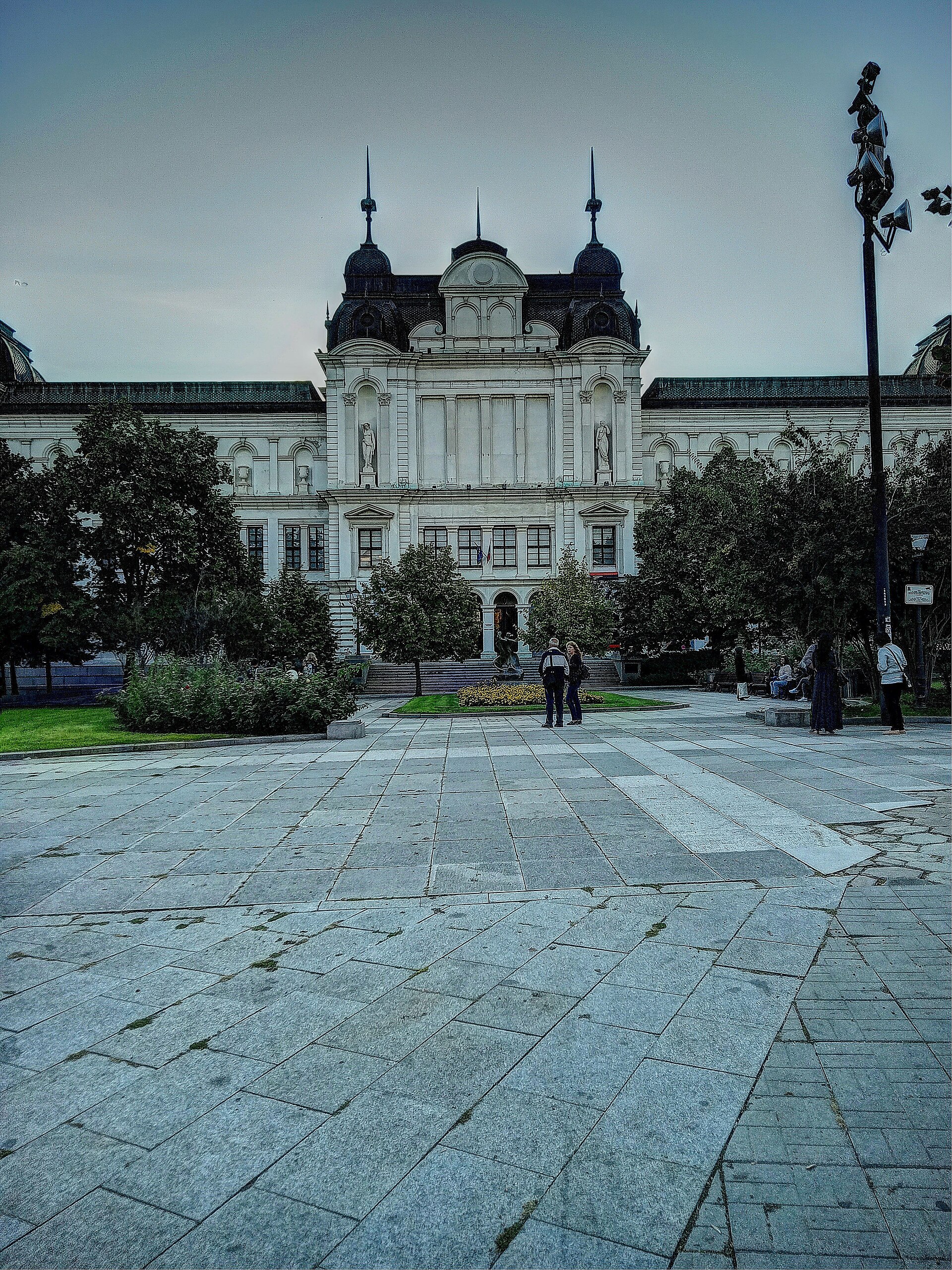
The building's real distinction is the Asia, Africa and America collection built in the 1970s and 1980s: a depth of Himalayan Buddhist sculpture, West and Central African masks and figures, and Southeast Asian material that is unusual for any gallery in this part of Europe, assembled in a decade through state channels rather than through the slow accretion of donations and bequests typical of older Western collections. The 21-strong Goya print holding and the European graphics collection running from Rembrandt to Picasso give the foreign-art side real weight on its own; since 2015 it sits alongside, rather than inside, the National Gallery's much larger Bulgarian painting, sculpture and graphics holdings in the same building.
| Local name | Nacionalna galeria - Kvadrat 500 |
|---|---|
| Kind | Museum |
| Founded | 1985 |
| City and country |  Sofia, Bulgaria Sofia, Bulgaria |
| Address | 1, 19th February St., St Alexander Nevsky Sq., 1000 Sofia, Bulgaria |
| Website | nationalgallery.bg |
| Status | Open, confirmed 18 September 2026 |
| Record last verified | 18 September 2026 |
Visiting
- Hours
- Tue-Sun10:00 to 18:00Ticket office closes at 17:30
- Closed
- Monday. Official Bulgarian public holidays, Christmas, New Year's Day and Easter.
- Admission
- Adult (individual ticket)EUR 10Kvadrat 500 only
- Pensioners, 65+, studentsEUR 4Kvadrat 500 only
- All visitors, every ThursdayEUR 2discounted rate in all National Gallery branches, not free
- Combined: Kvadrat 500 and the PalaceEUR 157.50 EUR discounted
- Combined: Kvadrat 500 and Museum of Christian ArtEUR 189 EUR discounted
- Combined: Kvadrat 500, the Palace and Museum of Christian ArtEUR 2512.50 EUR discounted
- Free admissionFreechildren and under-18s, visitors with physical disabilities, pupils and students from art schools, museum and gallery staff, journalists, members of the Union of Bulgarian Artists, ICOM, ICOMOS, IAA/AIAP and AICA
- Do I need to book?
- No advance booking needed for an individual visit; group visits are booked by phone in advance
- Address
- 1, 19th February St., St Alexander Nevsky Sq., 1000 Sofia, Bulgaria Map
- Website
- nationalgallery.bg
- Telephone
- +359 2 988 49 22
- [email protected]
Before you go how long, access, photography, bags, eating, shop
- How long to allow
- Two to three hours for the 28 halls on four levels; several visitors who tried to see the whole building in under an hour reported running out of time, and one review recommends half a day to see it carefully
- Access
- Free admission is granted to visitors with physical disabilities; the museum's own visiting page does not publish a separate step-free access or wheelchair-loan statement
- Photography
- Not stated on the museum's own visiting page
- Bags
- Not stated on the museum's own visiting page
- Eating
- Not stated on the museum's own visiting page
- Shop
- A National Gallery museum shop operates on site at the Kvadrat 500 address, per the institution's own shop listing
Prices and hours change. We take them from the institution's own pages and print the day we read them, and you can check the current position at the source we used. Confirm before you travel.
What is inside
European Art, 15th-20th Centuries
Italian, Flemish, Dutch and French painting and sculpture built up from the gallery's first state purchases in the late 19th century and enlarged after the collection moved to the newly created National Gallery for Foreign Art in the early 1980s. The earliest work on display is a late-15th-century Baptism of Christ, attributed to the atelier of Andrea del Verrocchio. Franz von Stuck's Symbolist Lucifer (1889-1890) is named by the gallery itself as one of its most requested loans. A group of paintings by South Slavic artists shown in Sofia in 1906 forms its own sub-collection, alongside a sizeable body of French painting and sculpture from between the two world wars.
Art from Asia, Africa and America
About 1,400 objects, accumulated from the 1970s onward through Bulgarian diplomatic missions abroad, international art markets, and donations from the '13 Centuries of Bulgaria' National Endowment Fund and private individuals. Indian art runs from Mughal, Rajasthani and Pahari miniatures to Hindu temple sculpture and Christian sculpture from Goa. The Himalayan holdings cover Buddhist works from Tibet, Nepal and Mongolia, including a landscape cycle by the Russian painter Nicholas Roerich. The gallery describes its Myanmar collection, mainly Buddhist sculpture and applied art, as the most comprehensive outside the country of origin. African material spans masks and figures from the Bambara, Dogon, Baule, Senufo, Dan and Bena-Lulua peoples and items from Benin, the Akan culture and the Kota and Luba peoples; the American holdings are Maya ceramics from Jaina Island, and pottery from Ecuador and Peru.
Graphics Collection
More than 17,000 prints, drawings and watercolours. The Bulgarian side runs from early-20th-century academic and Native Art printmakers such as Vasil Zahariev through mid-century artists trained in Prague, Warsaw and Vienna, to more than 10,000 items acquired after 1950. The foreign side includes prints by Rembrandt, Goya, Daumier, Manet, Renoir, Cezanne, Kollwitz, Chagall, Dali and Picasso, plus what the gallery calls its richest Asian holding, Japanese ukiyo-e woodblock prints running from the 18th century to contemporary work.
Bulgarian Art, 19th Century
Bulgaria's move from icon painting to secular portraiture during the National Revival, led by Zahari Zograf, followed by a generation trained in Munich, Russia and Italy; Nikolay Pavlovich's history paintings are cited by the gallery as the first of their kind in Bulgarian art. Post-1878 work turns to genre scenes, urban portraiture, landscape and still life, with Boris Schatz and Zheko Spiridonov credited with founding Bulgarian sculpture in the 1890s.
Bulgarian Art, 20th Century
Some 30,000 items, the gallery's largest single holding, built from an 1892 Plovdiv exhibition core and roughly 1,250 works transferred to the institution on its 1948 founding. Painting, sculpture, graphics and decorative art (ceramics, woodcarving, textile and stage design, developing from the 1960s) trace a different stylistic direction in nearly every decade of the century.
What to see first
Salvator Mundi
Giovanni Boltraffio (1467-1516), ItalyA rare Italian Renaissance panel in a collection otherwise built almost entirely in the 20th century.2
The Baptism of Christ
Attributed to the atelier of Andrea del Verrocchio, late 15th centuryNamed by the gallery as the earliest work in its European collection.2
Lucifer
Franz von Stuck (1863-1928), Germany, 1889-1890The gallery's own description calls it emblematic of late-19th-century Symbolism and one of its most frequently loaned paintings.2
Twenty-one works by Francisco Goya
Francisco Goya (1746-1828), SpainPrints from the Caprichos, Disasters of War, Tauromachy and Disparates series, acquired for the Bulgarian state in the late 1970s through the collector network built under Lyudmila Zhivkova, an unusually large Goya holding for a gallery outside Spain.13
Ukiyo-e woodblock prints
Katsushika Hokusai and other 18th-20th century Japanese printmakersThe gallery names its Japanese holding, including Hokusai's In the Mountains of Totomi, as the richest part of its Asian graphics collection.4
Himalayan Buddhist sculpture and thangkas
Various makers, Tibet, Nepal and Mongolia, mostly 19th centuryA Buddhist collection the gallery pairs with a dedicated landscape cycle by Nicholas Roerich depicting the Himalayas.3
West and Central African masks and figures
Bambara, Dogon, Baule, Senufo, Dan, Akan, Kota and Luba makersFigures and masks acquired through Bulgarian diplomatic missions in the 1970s and 1980s, an uncommon depth of African material for a gallery in this part of Europe.3
Helmet Head No. 6
Henry Moore (1898-1986), United Kingdom, 1975One of the few British sculptures of its period held by a Balkan national collection.2
The building and what it was built to hold
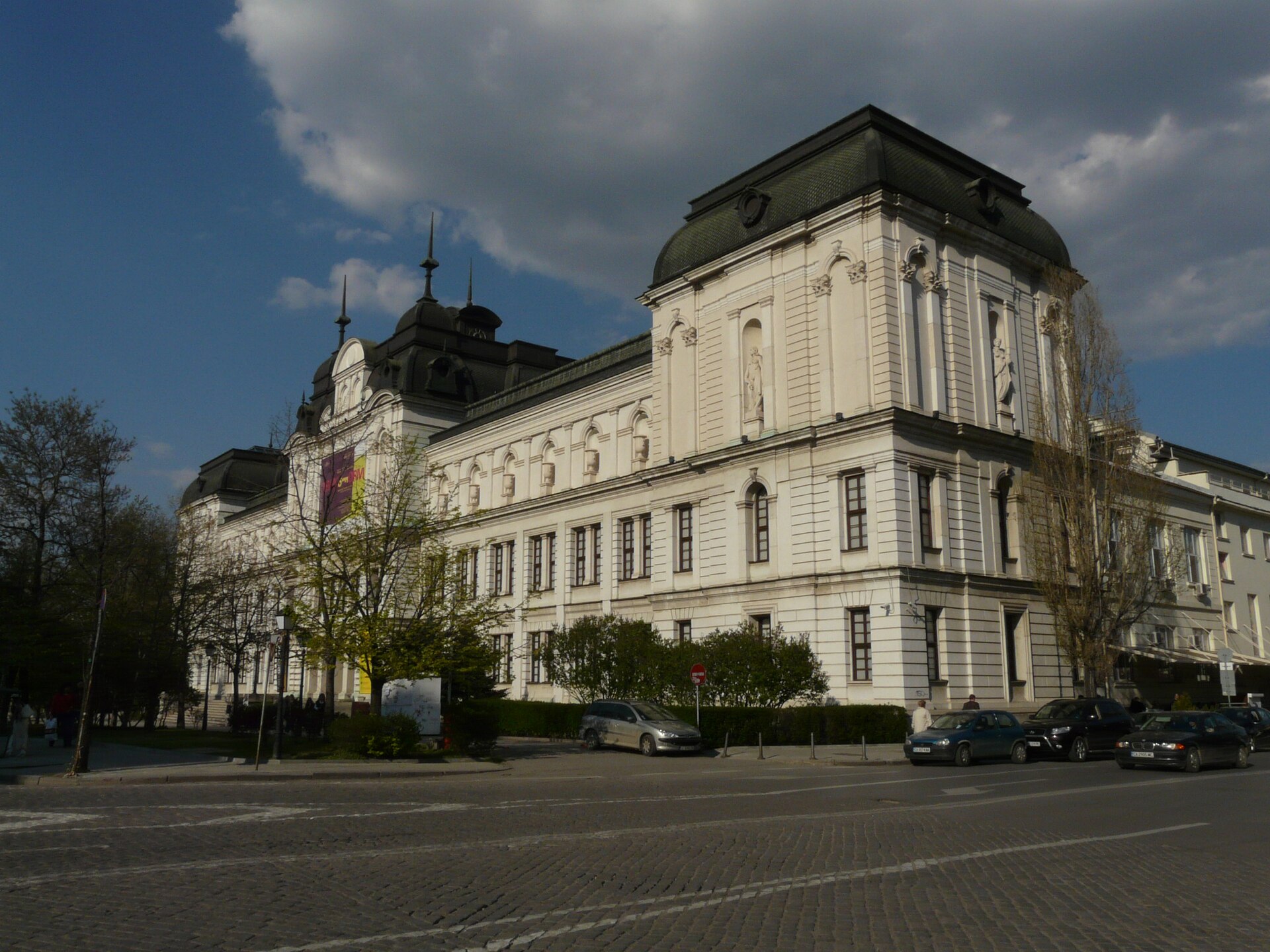
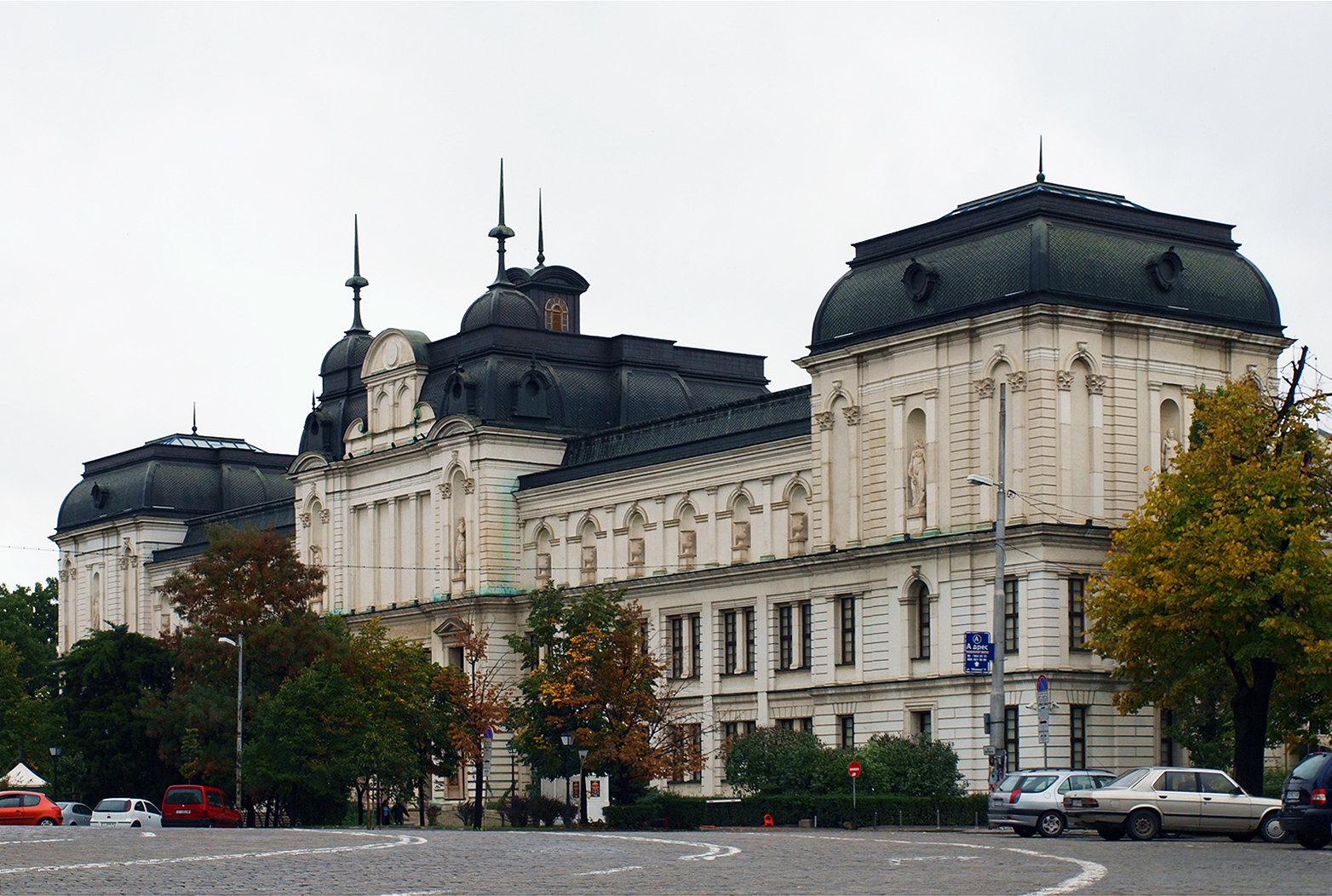
The Neoclassical building on St Alexander Nevsky Square was not built as a museum. The Bulgarian National Assembly voted on 31 May 1880 to establish a State Printing House, on the proposal of Prime Minister Petko Karavelov, and the Viennese architect Friedrich Schwanberg designed the building that went up between 1881 and 1883. It printed the young state's official documents for six decades before the air raids over Sofia in the spring of 1944 partially destroyed it. Reconstruction in the late 1940s ran alongside the construction of a second, separate building on Vasil Levski Boulevard that went on to house the Technical University, the building that today sits alongside the old printing house as the other half of Kvadrat 500.
In the early 1980s the architect Nikola Nikolov rebuilt the old State Printing House for a new institution, the National Gallery for Foreign Art, which opened to the public on 5 November 1985. That gallery is the venue this record was queued to document. It no longer exists as a separately governed institution: since 2015 the building and its collection operate as part of a single National Gallery, under the name Kvadrat 500, and that is the current name used on this page. The correction is explained further below.
A gallery built in the 1980s, and how its collection was formed
The idea for a foreign art collection came from Lyudmila Zhivkova, the Politburo member and Minister of Culture who drove Bulgaria's cultural diplomacy through the late 1970s and early 1980s, together with the painter Svetlin Rusev and the writer Bogomil Raynov. The National Gallery for Foreign Art carried her name as a foundation until 1990. Its collection, roughly 10,000 pieces of European, Asian, African and American art, was assembled fast: purchases went through Bulgarian diplomatic missions abroad and through the collector network built by Vladimir Goyev, the gallery's first director, with contributions from the '13 Centuries of Bulgaria' National Endowment Fund. The gallery's own published history of the Asia, Africa and America collection states plainly that some of the works were bought through Bulgarian diplomatic missions in the countries concerned, at international galleries and on the open art market, in the 1970s and 1980s; other sources describing the same period note that Bulgarian intelligence officers and diplomats were used to source pieces abroad. Twenty-one prints by Francisco Goya, spanning the Caprichos, the Disasters of War, the Tauromachy and the Disparates series, entered the collection this way in the late 1970s, and a single Salvador Dali painting came in alongside them.
The speed and the channel of acquisition are part of the object's own history and belong on this page rather than being smoothed over: state cultural diplomacy under a one-party government, using its own foreign service to buy art, is a specific and documented mode of collection-building, not a generic 'the collection grew over time.'
What is inside: two collections now under one roof
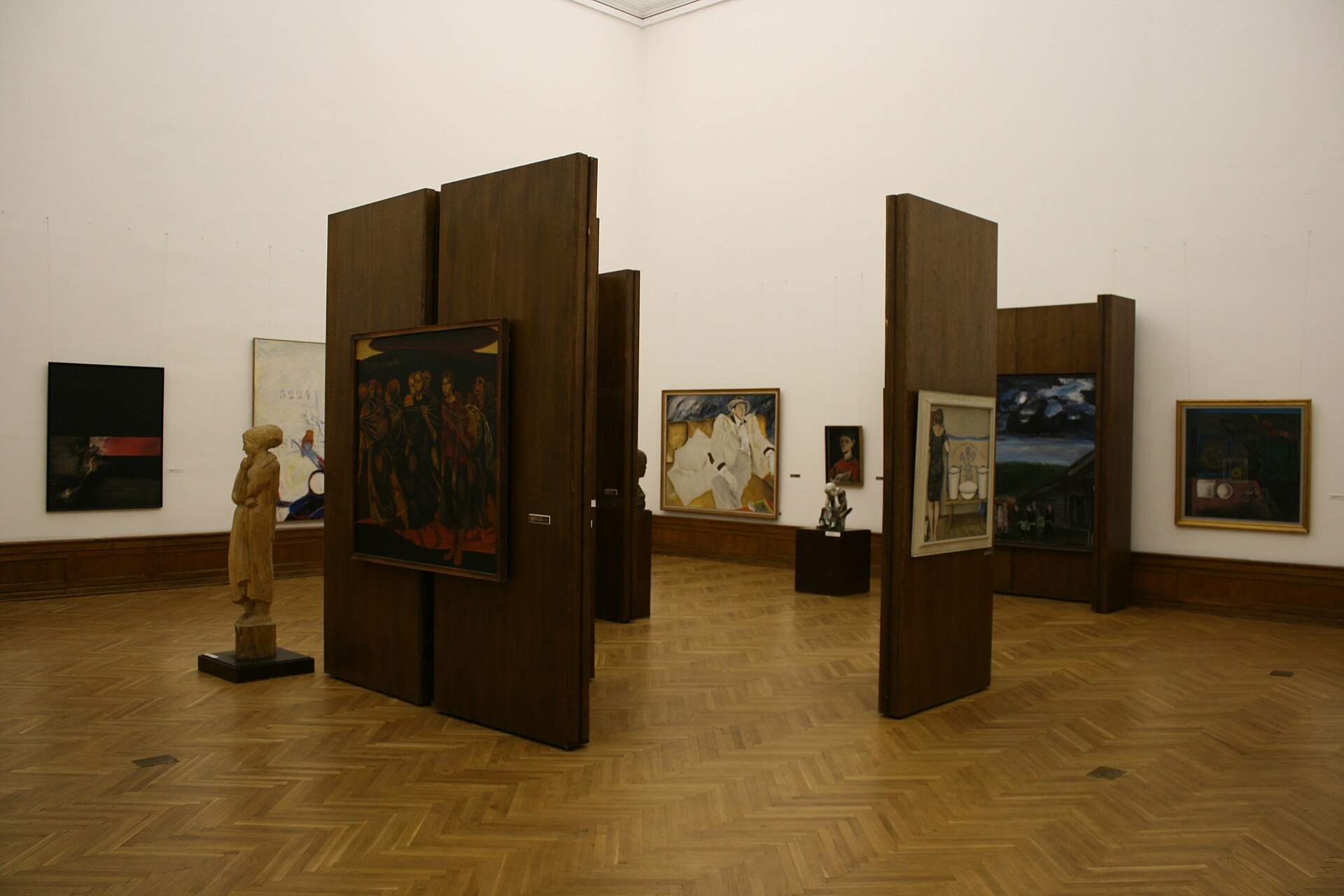
Kvadrat 500 exhibits close to 1,700-2,000 works from a combined fund of more than 42,000 pieces, spread over 28 halls on four levels. The European wing runs from a late-15th-century Baptism of Christ, attributed to the atelier of Andrea del Verrocchio, through Dutch, French and Italian painting and sculpture to Franz von Stuck's 1889-1890 Symbolist Lucifer, a work the gallery itself flags as one of its most-travelled loans. A large graphics holding, more than 17,000 prints, drawings and watercolours, carries names including Rembrandt, Goya, Daumier, Manet, Cezanne, Chagall, Dali and Picasso; a January 2026 exhibition drew its Picasso graphics out of storage for the first time in years.
The Asia, Africa and America collection, roughly 1,400 objects built up from the 1970s, covers Indian miniature painting and temple sculpture, Himalayan Buddhist works from Tibet, Nepal and Mongolia paired with a landscape cycle by Nicholas Roerich, what the gallery calls the most comprehensive collection of Myanmar Buddhist sculpture and applied art outside that country, Chinese watercolours and Vietnamese lacquerware, West and Central African masks and figures from the Bambara, Dogon, Baule, Senufo, Dan, Akan, Kota and Luba peoples and from Benin, and Maya and Ecuadorian ceramics. Since 2015 the same building also carries the National Gallery's Bulgarian collections: 19th-century portraiture and history painting descending from Zahari Zograf and Nikolay Pavlovich, and a 20th-century holding of about 30,000 items that the institution describes as its richest and most complete.
1948, 1985, 2015: how three institutions became one
The present National Gallery traces its own founding to a 24 November 1948 decree that created it as the successor to the Sofia City Art Gallery. It occupied the former royal palace on Battenberg Square from 1952. The National Gallery for Foreign Art was a separate institution from 1985 until 2014, when Bulgaria's Ministry of Culture merged it with the National Museum of Bulgarian Visual Art into a single National Museum Complex; the combined body took the name National Gallery in July 2015. The architectural project that let the two buildings, the former printing house and the former Technical University, operate as one exhibition space had been under discussion since 1999; the architect Yanko Apostolov won a 2010 public design competition, and the building work ran from 2012 to 2014. Kvadrat 500 opened to the public on 25 May 2015 and was formally inaugurated on 28 May 2015 by Prime Minister Boyko Borisov.
The National Gallery today operates six branches: Kvadrat 500 for the permanent Bulgarian and international collections, the Palace on Knyaz Alexander I Square for temporary exhibitions, the Museum of Christian Art in the crypt of Alexander Nevsky Cathedral, the Museum of Art from the Socialist Period, the Sofia Arsenal - Museum of Contemporary Art, and four artist house-museums. So a reader looking for 'the National Gallery for Foreign Art' by that name today will not find a separately signed museum: its building and its collection are inside Kvadrat 500, administered as one institution with the former National Art Gallery.
Reception: a genuine draw, and an institution that says so itself about its own limits
Independent visitor reviews are consistently positive about the building and the range of the collection, and the National Gallery's own reporting of its opening was not uncritical of the process that built it. The Sofia Globe's coverage of the May 2015 opening, drawing on the institution's own account, described the 2012-2014 reconstruction as having 'a controversial history, including over the choice of designer and the price tag,' and noted that repairs to the building's south side were still unfinished on opening day. Bulgaria's own Wikipedia entry for the National Gallery, summarising the institution's public statements, records a more structural problem: only one properly equipped painting-storage facility exists across the whole National Gallery, and the institution reports minimal acquisitions over the fifteen to twenty years before this record was written, for lack of state funding, leaving Bulgarian visual art made after 1990 significantly underrepresented in its own collection.
None of this is disqualifying. It is the kind of institutional strain that a national gallery funded by a small state's culture ministry commonly carries, and it is worth recording precisely because the building and the exhibitions read, to a visitor walking through them, like neither problem exists.
Visiting Kvadrat 500 today
The gallery is open Tuesday to Sunday, 10am to 6pm, with the ticket office closing at 5:30pm; it is closed Mondays and on official Bulgarian holidays, Christmas, New Year's Day and Easter. An individual ticket is 10 EUR, discounted to 4 EUR for pensioners, over-65s and students; every Thursday all National Gallery branches charge a flat discounted 2 EUR. Combined tickets covering the Palace and the Museum of Christian Art run from 15 to 25 EUR. Admission is free for under-18s, visitors with physical disabilities, art-school pupils and students, gallery staff, journalists and members of several listed professional art bodies. A museum shop operates on site; the gallery's own visiting page does not publish separate statements on photography rules, bag policy or step-free access.
What visitors say
Visitors consistently rank Kvadrat 500 as one of Sofia's better museums, praising the restored 19th-century building and the range of the collection, Bulgarian painting alongside Rodin, Picasso, African masks and Japanese prints under one roof. The most repeated complaint is practical rather than curatorial: the 28 rooms across four levels are not clearly signed, so more than one visitor described losing track of where the Bulgarian and international wings sit relative to each other, and some said staff hurried them out ahead of the stated closing time.
What is praised, what is criticised
- Praised: The restored Neoclassical printing-house building itself, repeatedly named as reason enough to visit
- Praised: The range of the collection in one building, from Bulgarian Revival portraiture to Rodin, Picasso, Dali, African masks and Japanese ukiyo-e prints
- Praised: Well-lit, well-spaced galleries that reviewers said rewarded two to three hours or more
- Criticised: A four-level, 28-room layout several visitors describe as confusing, with no clear route between the Bulgarian and international sections
- Criticised: Staff reported by more than one visitor as hurrying people out ahead of the published 6pm closing time
- Criticised: The National Gallery's own account of the building's 2012-2014 reconstruction records that it had, in its words, a controversial history over the choice of designer and its cost, and that repairs to the south side of the complex were still unfinished when the building opened in 2015
Ratings on other platforms
TripAdvisor: 4.3 from 142 ratings, read 18 September 2026
A platform average is a tertiary source: it moves, it is not audited, and we quote no visitor's words.
Questions about National Gallery - Kvadrat 500
Where is National Gallery - Kvadrat 500?
1, 19th February St., St Alexander Nevsky Sq., 1000 Sofia, Bulgaria.
How much does it cost to visit?
Adult (individual ticket): EUR 10; Pensioners, 65+, students: EUR 4; All visitors, every Thursday: EUR 2; Combined: Kvadrat 500 and the Palace: EUR 15; Combined: Kvadrat 500 and Museum of Christian Art: EUR 18. As confirmed 18 September 2026.
When is it open?
Tue-Sun 10:00-18:00. Closed: Monday. Official Bulgarian public holidays, Christmas, New Year's Day and Easter. As confirmed 18 September 2026.
What should you see first?
Salvator Mundi (Giovanni Boltraffio (1467-1516), Italy); The Baptism of Christ (Attributed to the atelier of Andrea del Verrocchio, late 15th century); Lucifer (Franz von Stuck (1863-1928), Germany, 1889-1890); Twenty-one works by Francisco Goya (Francisco Goya (1746-1828), Spain); Ukiyo-e woodblock prints (Katsushika Hokusai and other 18th-20th century Japanese printmakers); Himalayan Buddhist sculpture and thangkas (Various makers, Tibet, Nepal and Mongolia, mostly 19th century).
What we could not confirm
- Full provenance and acquisition records for the 1970s-1980s Asia, Africa and America purchases made through Bulgarian diplomatic missions do not appear to be published in detail on the institution's own site.
- The National Gallery's public materials do not break out gallery space, staffing or budget separately between the former National Gallery for Foreign Art collection and the former National Art Gallery collection now sharing the Kvadrat 500 building.
Images
Sources
- 1National Gallery, 'Kvadrat 500' visiting page: hours, admission, contact and building history nationalgallery.bg/visiting/kvadrat-500/
- 2National Gallery, 'European Art, 15th-20th Centuries' collection page nationalgallery.bg/collections/european-art/
- 3National Gallery, 'Art from Asia, Africa and America' collection page nationalgallery.bg/collections/asia-africa-america/
- 4National Gallery, 'Graphics Collection' page nationalgallery.bg/collections/graphics-collection/
- 5National Gallery, 'Bulgarian Art, 19th Century' collection page nationalgallery.bg/collections/bulgarian-art-19th-century/
- 6National Gallery, 'Bulgarian Art, 20th Century' collection page nationalgallery.bg/collections/bulgarian-art-20th-century/
- 7National Gallery, 'Shop' page listing branch addresses nationalgallery.bg/shop/
- 8Wikipedia, 'National Art Gallery, Bulgaria' (merger and current structure, tertiary) en.wikipedia.org/wiki/National_Art_Gallery,_Bulgaria
- 9Bulgarian Wikipedia, 'Nacionalna galeria' (institutional history, funding and storage, tertiary) bg.wikipedia.org/wiki/%D0%9D%D0%B0%D1%86%D0%B8%D0%BE%D0%BD%D0%B0%D0%BB%D0%BD%D0%B0_%D0%B3%D0%B0%D0%BB%D0%B5%D1%80%D0%B8%D1%8F
- 10Wikipedia, 'National Gallery for Foreign Art' (pre-merger history, tertiary) en.wikipedia.org/wiki/National_Gallery_for_Foreign_Art
- 11The Sofia Globe, 'Bulgaria's Square 500 national gallery opens on May 28', 27 May 2015 sofiaglobe.com/2015/05/27/bulgarias-square-500-national-gallery-opens-on-may-28/
- 12Tripadvisor, 'Kvadrat 500' attraction page, rating and reviews read 2026-09-18 (tertiary) tripadvisor.com/Attraction_Review-g294452-d8421841-Reviews-Kvadrat_500-Sofia_Sofia_Region.html
- 13Ploshtad Slaveikov, on the 21 Goya works and 1 Dali painting in the National Gallery collection ploshtadslaveikov.com/21-kartini-na-goya-i-1-na-dali/
- 14Wikimedia Commons, Category:National Gallery for Foreign Art (image sourcing) commons.wikimedia.org/wiki/Category:National_Gallery_for_Foreign_Art
- 15Wikidata Q3622570, National Gallery for Foreign Art (identity and coordinates, tertiary) wikidata.org/wiki/Q3622570