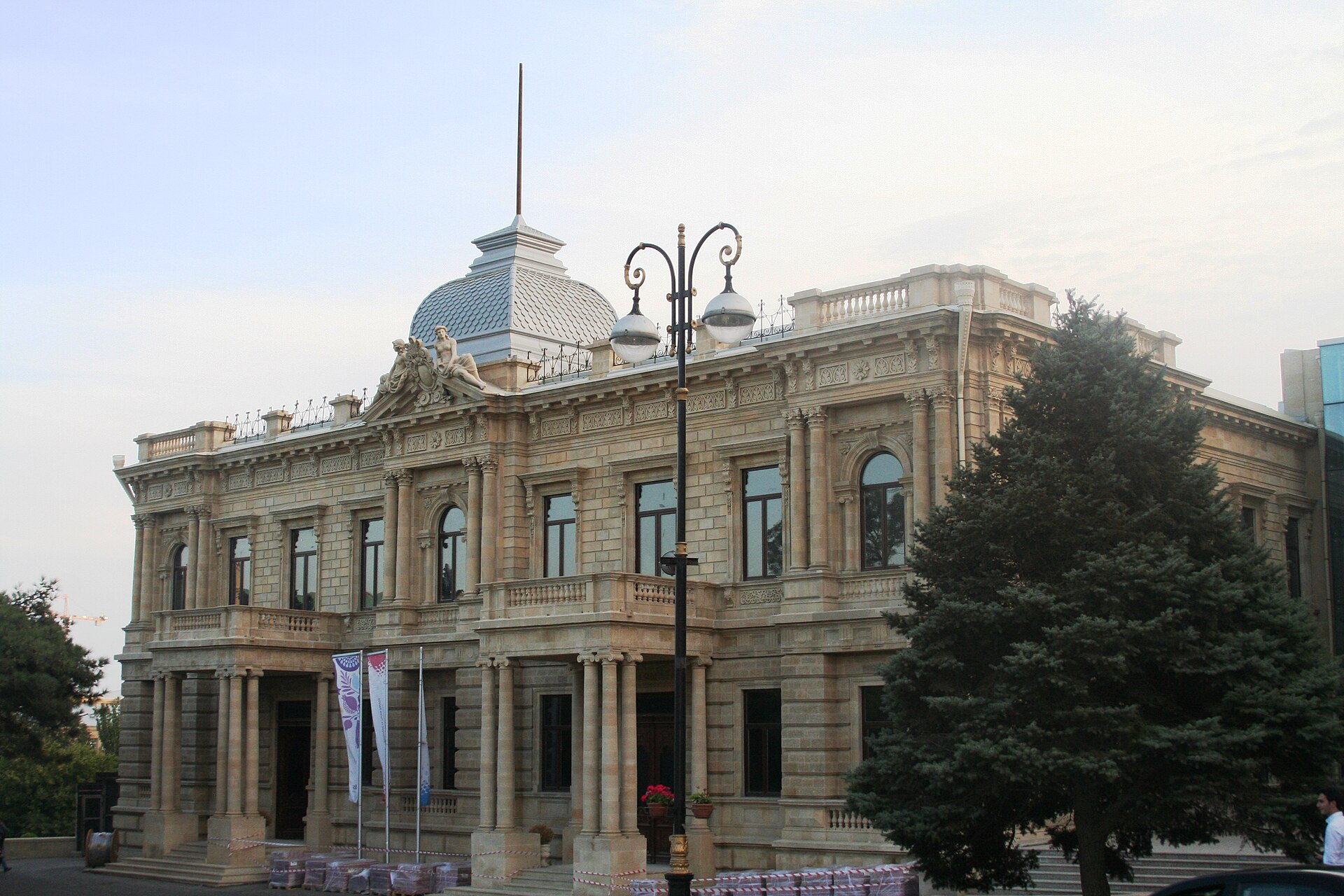
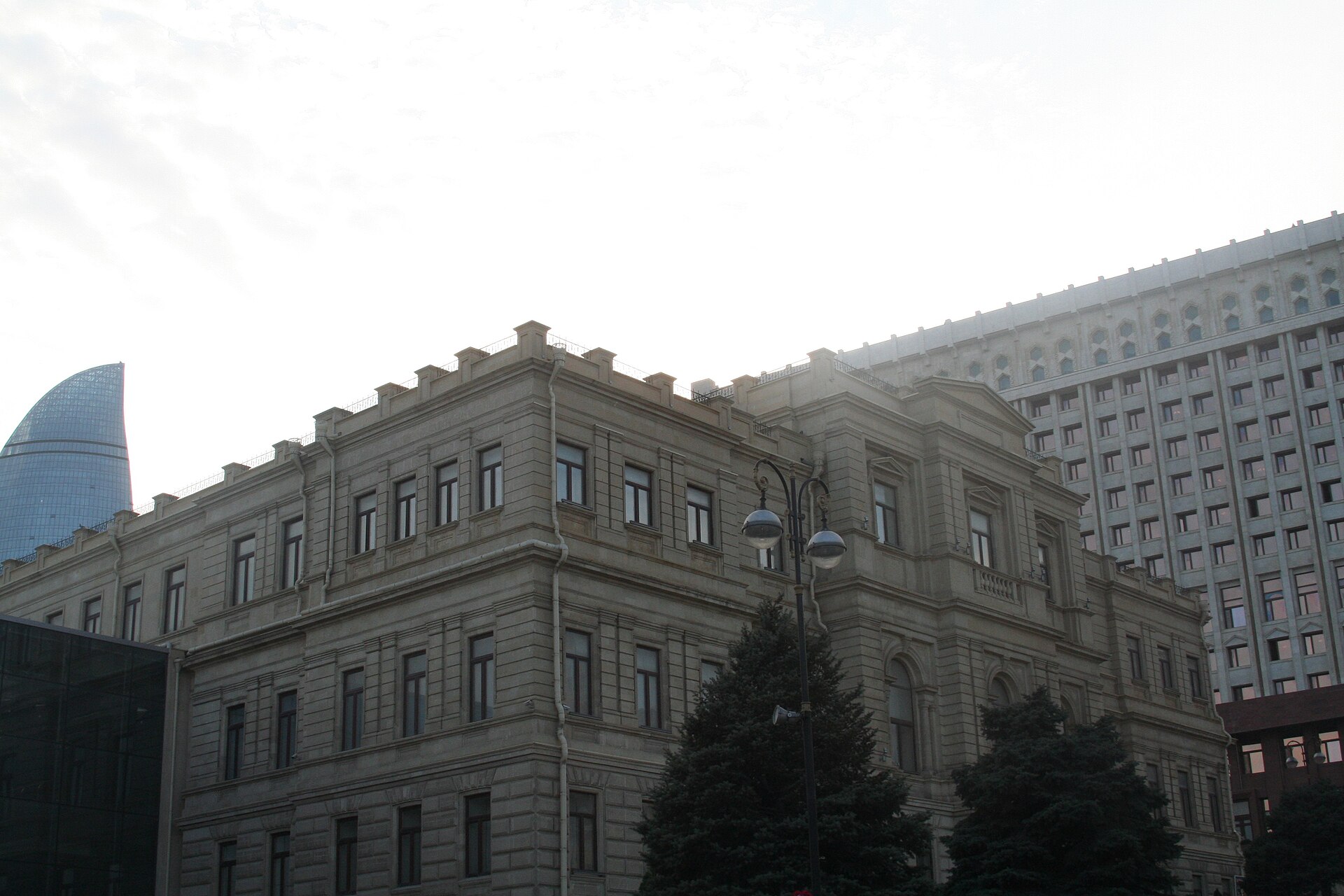
The former De Boure palace on Niyazi Street, Baku, built 1891 to 1895 and the museum's first building since 1951.
Interfase, CC BY-SA 4.0National Art Museum of Azerbaijan
Museum · Azerbaycan Milli Incesenet Muzeyi · Founded 1936
Open, admission and hours confirmed 20 August 2026 · 10 sources
On this page 14 sections
ContentsClose
The museum's real strength is not any single old-master painting but the range fitted into two adjoining 19th century houses: Azerbaijani archaeology, painting, sculpture and decorative arts running alongside a genuine, if modest, survey of Western European, Russian and Oriental work under the same roof. Visitors who arrive expecting an encyclopedic, Hermitage-scale hang tend to be disappointed by the numbers on the wall. Visitors who treat it instead as a two-hour walk through Baku's own oil-boom architecture, furnished with a working regional survey collection and punctuated by real losses and real recoveries like the 1993 theft, tend to rate it well.
| Local name | Azerbaycan Milli Incesenet Muzeyi |
|---|---|
| Kind | Museum |
| Founded | 1936 |
| City and country |  Baku, Azerbaijan Baku, Azerbaijan |
| Address | 11/9 Niyazi Street, Baku AZ1000, Azerbaijan |
| Website | nationalartmuseum.az/?lang=en |
| Status | Open, confirmed |
| Record last verified |
Visiting
- Hours
- Tue, Thu, Fri10:00 to 18:00
- Wed12:00 to 21:00
- Sat, Sun11:00 to 19:00
- Closed
- Monday.
- Admission
- Foreign citizen, regular entryAZN 10
- Azerbaijani citizen, regular entryAZN 7
- Student, regular entryAZN 3
- Foreign citizen, guided tourAZN 12
- Azerbaijani citizen, guided tourAZN 12
- Student, guided tourAZN 5
- Group of 10 or more, foreign citizenAZN 7per person
- Group of 10 or more, Azerbaijani citizenAZN 5per person
- Temporary exhibition supplementAZN 3
- Audio guideAZN 5
- Photography, no flashAZN 50per camera, museum's own price list
- Tickets
- nationalartmuseum.az/tickets/?lang=en The museum's own ticket page.
- Do I need to book?
- Not stated on the museum's own site; no online timed-ticket system was found there
- Address
- 11/9 Niyazi Street, Baku AZ1000, Azerbaijan MapMetro Icherisheher station, about 4 minutes on foot
Metro Nizami Gancavi station, about 10 minutes on foot - Website
- nationalartmuseum.az/?lang=en
- Telephone
- +994 12 492 07 07
- [email protected]
Before you go how long, access, photography, bags, eating, shop
- How long to allow
- One to two hours by visitor consensus; several visitors said the collection on display is smaller than a two-hour visit implies
- Access
- Not stated on the sections of the museum's own site consulted
- Photography
- Permitted without flash for a fee of 50 AZN per camera, per the museum's own price list
- Bags
- A wardrobe near the entrance for coats and bags, per a visitor account
- Eating
- A cafeteria on the ground floor, per a visitor account
- Shop
- No dedicated museum shop was reported by a 2024 visitor, who suggested the museum open one
Prices and hours change. We take them from the institution's own pages and print the day we read them, and you can check the current position at the source we used. Confirm before you travel.
What is inside
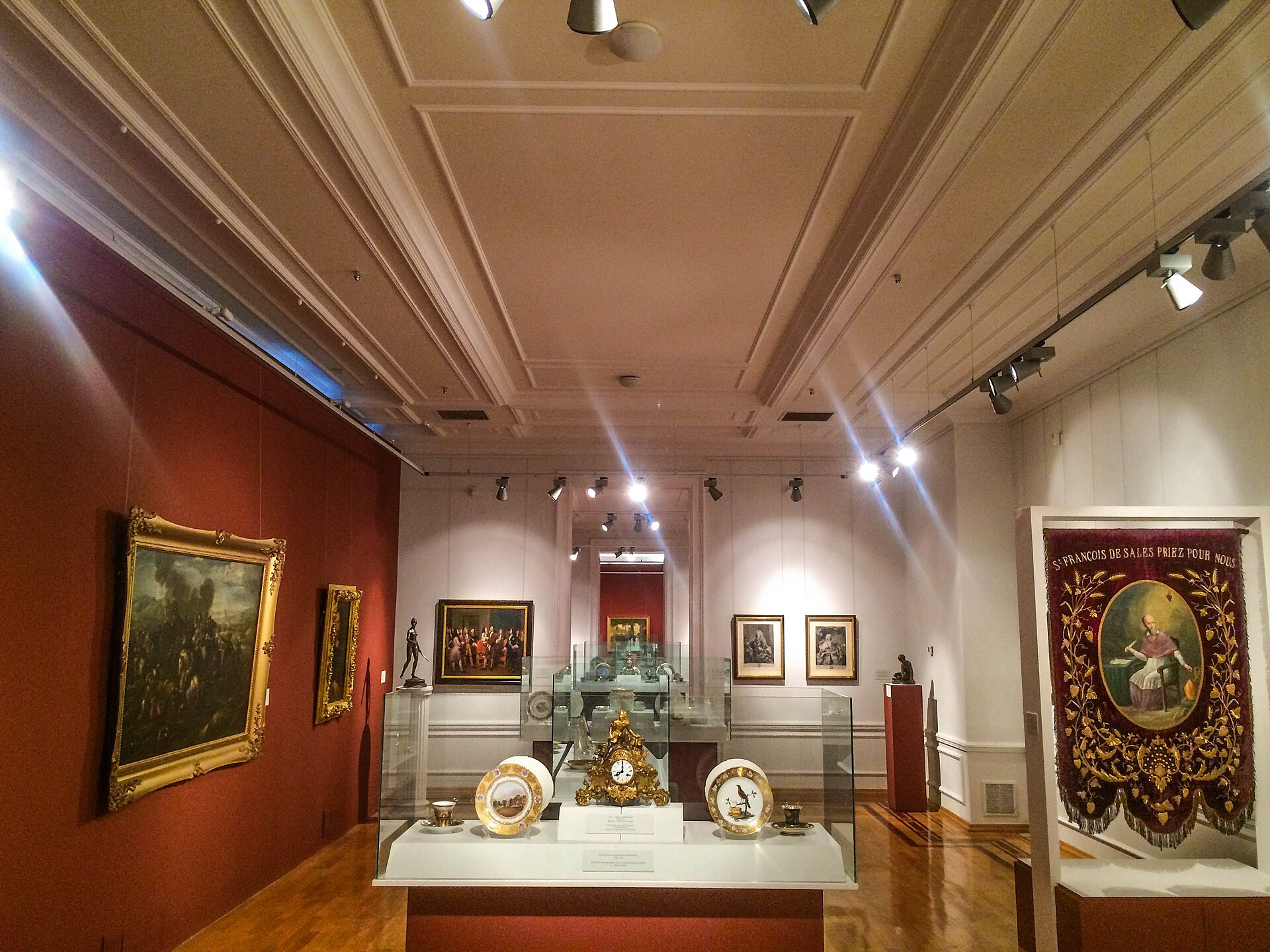
Photograph by Sefer azeri · CC BY-SA 4.0 World Art department (Western European and Russian rooms)
Antiquity and the Middle Ages, Western European painting of the 16th to 19th centuries across seven rooms, and Russian art of the 18th to 20th centuries across ten rooms, including canvases associated with Ivan Shishkin, Ivan Aivazovsky, Vasily Tropinin and Karl Briullov
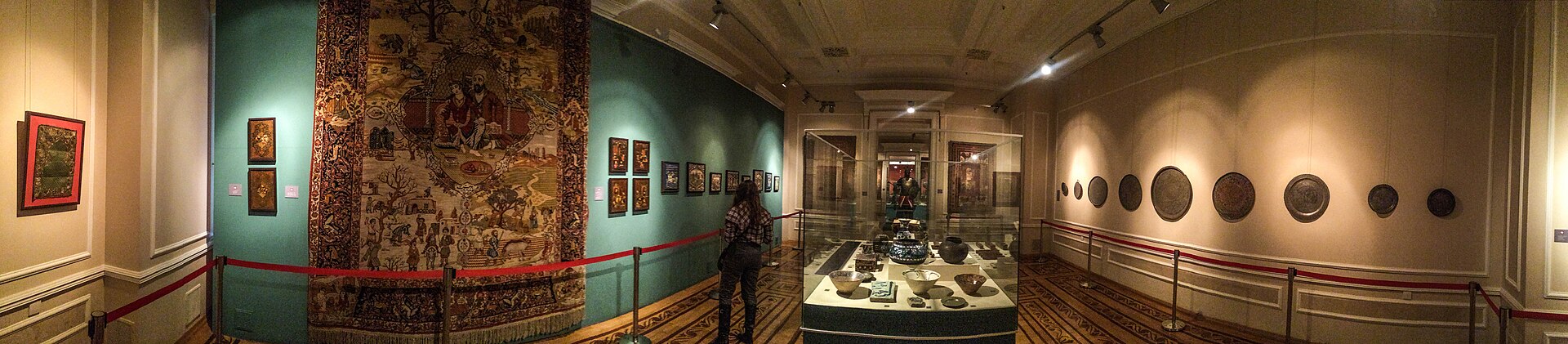
Photograph by Sefer azeri · CC BY-SA 4.0 Azerbaijani Art department
Azerbaijani archaeology, painting, sculpture, graphics and decorative and applied art, including 17th and 18th century Tabriz miniatures and paintings associated with Mir Mohsun Navvab and Bahruz Kangarli
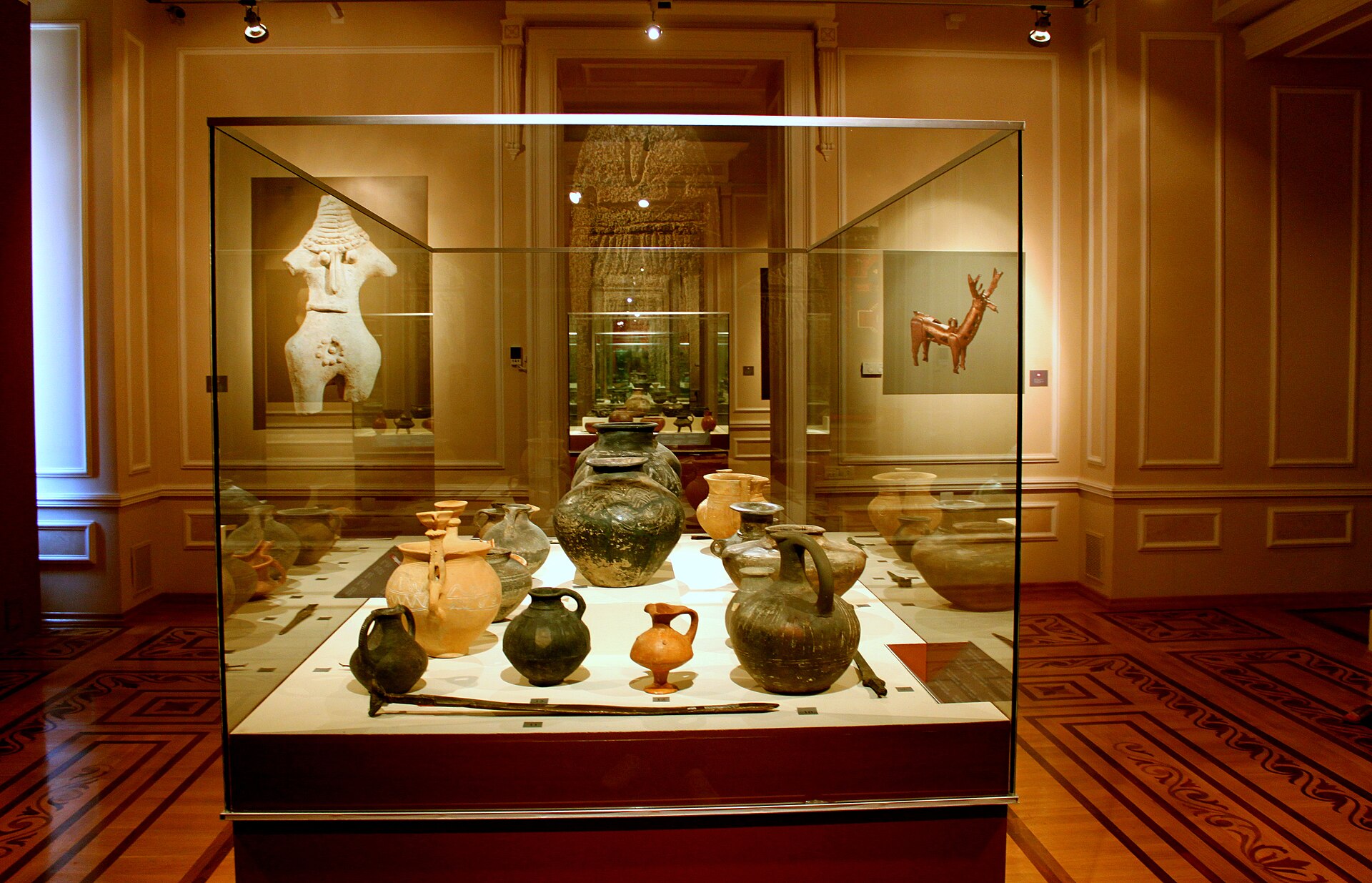
Photograph by Urek Meniashvili · CC BY-SA 3.0 Antiquity and medieval Azerbaijan collection
Archaeological ceramics, bronze and gold objects spanning from the 6th to 4th millennia BC through the medieval period
Oriental Art
Works from Turkey, Iran, China, Japan and other Eastern countries, part of the World Art department alongside the antiquity, European and Russian rooms
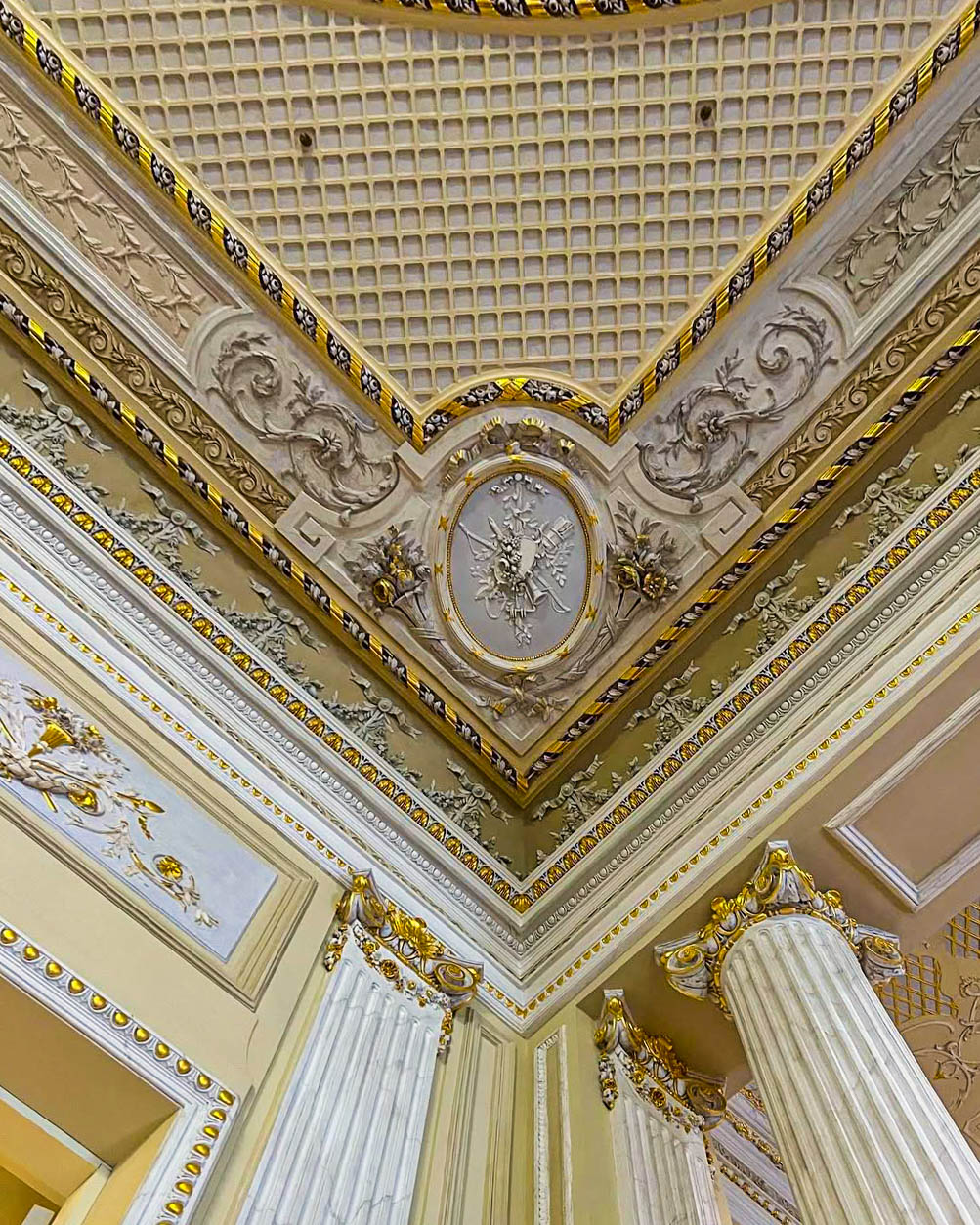
Photograph by Conquerer01 · CC BY-SA 4.0 The De Boure palace interiors
The surviving 1890s decor of the first building itself, on show alongside the art it holds: carved and gilded plaster ceilings, decorated wall stoves, a mirrored music hall and a monumental staircase
What to see first
Women's Bathhouse (drawing)
Albrecht DurerThe single most valuable piece among the 304 items stolen from the museum in July 1993, valued at roughly 10 million US dollars at the time; twelve of the recovered stolen works went to Germany in 2001 and the rest were returned to Azerbaijan, though no source consulted states which group included this drawing5
A Riding Amazon and four other 1917 works
Wassily KandinskyA cluster of Kandinsky's 1917 figurative paintings, an unusual concentration of his work to find in a regional collection8
Landscape painting in the Russian rooms
Ivan ShishkinNamed repeatedly by visitors as one of the strongest pieces in the Russian art rooms of the first building3
Marine painting in the Russian rooms
Ivan AivazovskyOne of the Russian painters visitors single out most often when describing the ten Russian-art rooms3
Portrait in the Russian rooms
Vasily TropininPart of the core 18th to 20th century Russian portraiture on permanent display3
Painting in the Russian rooms
Karl BriullovNamed as part of the Russian holdings by both an encyclopedic source and a Baku cultural-press profile of the museum, independently of each other9
Paintings in the Azerbaijani art rooms
Mir Mohsun NavvabA 19th century Azerbaijani painter, calligrapher and scholar whose work anchors the Azerbaijani painting galleries9
Paintings in the Azerbaijani art rooms
Bahruz KangarliAn early 20th century Azerbaijani painter represented in the same department, bridging the museum's archaeology rooms and its modern Azerbaijani painting3
17th and 18th century Tabriz miniatures
Unattributed Persianate miniaturistsDescribed by a Baku cultural-press profile as original period work forming part of the world art holdings, distinct from the separately-documented 30 medieval miniatures stolen from the museum in 19939
Past exhibitions here
- Closed15 May to 31 Aug 2026Confirmed · check before you travel
- Closed15 May to 31 Aug 2026Confirmed · check before you travel
Two mansions on Niyazi Street
The National Art Museum of Azerbaijan occupies two adjoining 19th century buildings on Niyazi Street in central Baku, now connected into a single complex. The first, commonly called the De Boure palace after its original owner, was commissioned by Leo De Boure, an oil magnate and founder of the Caspian Partnership joint-stock company. De Boure petitioned the Baku City Council in February 1888 for approval of a two-storied stone palace and died before it was finished; the building was designed by the Russian engineer Nicholas von der Nonne and built between 1891 and 1895. De Boure's successors sold the unfinished palace to the Caspian Partnership in January 1891. After the 1917 revolution the building passed through a series of occupants: British military headquarters in 1919, the Soviet leadership under Nariman Narimanov from 1920 to 1925, and from 1933 the residence of the Soviet-era security official Mir Jafar Baghirov, who donated it to the National Art Museum of Azerbaijan in 1951.
The second building began as a school, the Mariinsky Women's Gymnasium, built in 1885. Sources disagree on exactly what it now holds: a Baku cultural-press profile puts the European art rooms inside the first building, while an encyclopedic source describes the second building as home to Eastern art collections, and Wikimedia Commons files photographs of both a French art hall and an Azerbaijani art hall under the second building's own category. This account does not resolve that conflict by picking a side.
From an art department to a national museum
The museum's own institutional history begins in 1936, when the Council of People's Commissars of Azerbaijan SSR ordered an Art department separated out of the Azerbaijan State Museum. Its first exhibition opened in 1937, initially inside the mansion of the oil magnate Haji Zeynalabdin Taghiyev. In 1943 the museum was renamed after Rustam Mustafayev, a stage and scenic designer. It moved into the De Boure palace, its present first building, in 1951, once Baghirov had donated the property.
The building was thoroughly reconstructed in 2006, and a new exhibition inside it opened in 2009. A second building was brought into use by the museum in 2013. In 2011 the museum was declared to meet first national and then European Museum Standard.
What is inside
The collection is organized into two departments. Azerbaijani Art covers archaeology, painting, sculpture, graphics, and decorative and applied art. World Art covers antiquity and the Middle Ages, Western European painting of the 16th to 19th centuries, Russian art of the 18th to 20th centuries, and Oriental art from Turkey, Iran, China, Japan and elsewhere. Across the two buildings, seven rooms are given to European art and ten to Russian art, per an encyclopedic count; a Baku cultural-press profile places the seven European rooms specifically inside the first building, a location this account leaves as their claim rather than a confirmed fact, for the reason given above.
Sources differ on the size of the total holding: an encyclopedic count puts it at just over 15,000 items, of which more than 3,000 are on permanent display across 60 rooms and roughly 12,000 remain in storage; a museum-partner listing gives a slightly higher figure of over 17,000 items. Neither figure is dated on the page that gives it, so the discrepancy is left unresolved here rather than smoothed into a single number.
The 1993 theft and its long recovery
In July 1993, 304 items were stolen from the museum: 274 artworks and 30 medieval miniatures. A museum employee removed drawings from the Graphics Fund and moved them first to the director's house and then to the Ministry of Culture, from where they were smuggled out of the country. The most valuable single piece was a drawing by Albrecht Durer, Women's Bathhouse, valued at roughly 10 million US dollars; the haul also included works associated with Rembrandt, Anthony van Dyck, Nicolas Poussin, Jacob van Ruisdael and Jean-Francois Millet.
The works surfaced years later in an attempt to ransom them to Germany. A 1997 meeting at the Grand Hyatt in New York, between a Kunsthalle Bremen curator and an undercover US Customs agent, led to an arrest; a further arrest followed the same year, and the last of the conspirators surrendered in 2006, ending in convictions and a suspended sentence for the man who surrendered. Twelve of the recovered works were returned to Germany in 2001, and the remainder went back to the museum in Baku.
Visiting today
The museum is open Tuesday, Thursday and Friday from 10:00 to 18:00, Wednesday from 12:00 to 21:00, and Saturday and Sunday from 11:00 to 19:00, and is closed on Monday. Regular admission is 10 AZN for foreign citizens, 7 AZN for Azerbaijani citizens and 3 AZN for students; a guided tour costs 12 AZN, or 5 AZN for a student; photography without flash is a further 50 AZN per camera. Visitors describe a wardrobe near the entrance for coats and bags and a cafeteria on the ground floor.
Most visitors give the museum one to two hours, and several say that is more than the collection on display actually needs. The building itself, not any single painting, is what visitors describe wanting to linger in: the gilded ceilings, decorated fireplaces, mirrored music hall and staircase of the former De Boure palace.
What visitors say
Visitors consistently praise the building the museum occupies as much as any single object in it, and several note that the collection actually on display is smaller than the visit's two-hour reputation implies. Read against each other, the reviews describe a two-building stop that rewards attention to the architecture and the range of what is shown, from ancient pottery to Kandinsky, more than it rewards arriving with encyclopedic expectations.
What is praised, what is criticised
- Praised: the 19th century mansion itself: its gilded ceilings, decorated fireplaces, mirrored music hall and staircase
- Praised: the range packed into a modest footprint, Azerbaijani, Russian, Western European and Oriental art under one roof
- Praised: friendly and attentive staff
- Criticised: the collection actually on display is small, one July 2026 visitor said this is why the whole visit takes only about 1.5 hours, and a May 2024 visitor opened their account by noting plainly that this is not the Hermitage
- Criticised: no dedicated museum shop selling books, postcards or souvenirs, as of an August 2024 visit
Ratings on other platforms
Tripadvisor: 4.1 from 64 ratings, read 20 August 2026
A platform average is a tertiary source: it moves, it is not audited, and we quote no visitor's words.
Questions about National Art Museum of Azerbaijan
Where is National Art Museum of Azerbaijan?
11/9 Niyazi Street, Baku AZ1000, Azerbaijan.
How much does it cost to visit?
Foreign citizen, regular entry: AZN 10; Azerbaijani citizen, regular entry: AZN 7; Student, regular entry: AZN 3; Foreign citizen, guided tour: AZN 12; Azerbaijani citizen, guided tour: AZN 12. As confirmed 20 August 2026.
When is it open?
Tue, Thu, Fri 10:00-18:00; Wed 12:00-21:00; Sat, Sun 11:00-19:00. Closed: Monday. As confirmed 20 August 2026.
How do you get there?
Metro: Icherisheher station, about 4 minutes on foot; Metro: Nizami Gancavi station, about 10 minutes on foot.
What should you see first?
Women's Bathhouse (drawing) (Albrecht Durer); A Riding Amazon and four other 1917 works (Wassily Kandinsky); Landscape painting in the Russian rooms (Ivan Shishkin); Marine painting in the Russian rooms (Ivan Aivazovsky); Portrait in the Russian rooms (Vasily Tropinin); Painting in the Russian rooms (Karl Briullov).
What we could not confirm
- Total holdings are given differently by different sources: just over 15,000 items on one encyclopedic account against over 17,000 on a museum-partner listing, with neither figure dated on the page that states it.
- Sources do not agree cleanly on when the second building entered museum use: a Baku cultural-press profile dates this to 2013, while the museum's own site gives no restoration or opening date for that building at all.
- No source consulted states whether all 274 artworks and 30 miniatures stolen in July 1993 are now back on permanent display, or how many of the recovered items remain in storage.
- Which building holds which department is not settled: a Baku cultural-press profile puts the European art rooms in the first building, an encyclopedic source describes the second building as home to Eastern art collections, and Wikimedia Commons catalogues photographs of both a French art hall and an Azerbaijani art hall under the second building's own category. This account did not pick a side.
Images
Sources
- 1National Art Museum of Azerbaijan, official site, English nationalartmuseum.az/?lang=en
- 2National Art Museum of Azerbaijan, official site, ticket prices nationalartmuseum.az/tickets/?lang=en
- 3Wikipedia, National Art Museum of Azerbaijan en.wikipedia.org/wiki/National_Art_Museum_of_Azerbaijan
- 4Wikipedia, Palace of De Boure en.wikipedia.org/wiki/Palace_of_De_Boure
- 5Wikipedia, 1993 National Art Museum of Azerbaijan theft en.wikipedia.org/wiki/1993_National_Art_Museum_of_Azerbaijan_theft
- 6Wikimedia Commons, Category:National Art Museum of Azerbaijan and subcategories (First building, Second building) commons.wikimedia.org/wiki/Category:National_Art_Museum_of_Azerbaijan
- 7Tripadvisor, National Art Museum of Azerbaijan, reviews and visitor information tripadvisor.com/Attraction_Review-g293934-d10344795-Reviews-National_Art_Museum_of_Azerbaijan-Baku_Absheron_Region.html
- 8wassilykandinsky.net, museum listing for the National Art Museum of Azerbaijan, Baku wassilykandinsky.net/museum-3.php
- 9Azernews, National Art Museum, treasure trove for cultured travelers azernews.az/culture/135952.html
- 10Google Arts and Culture, Azerbaijan National Art Museum partner page artsandculture.google.com/partner/azeirbaijan-national-museum