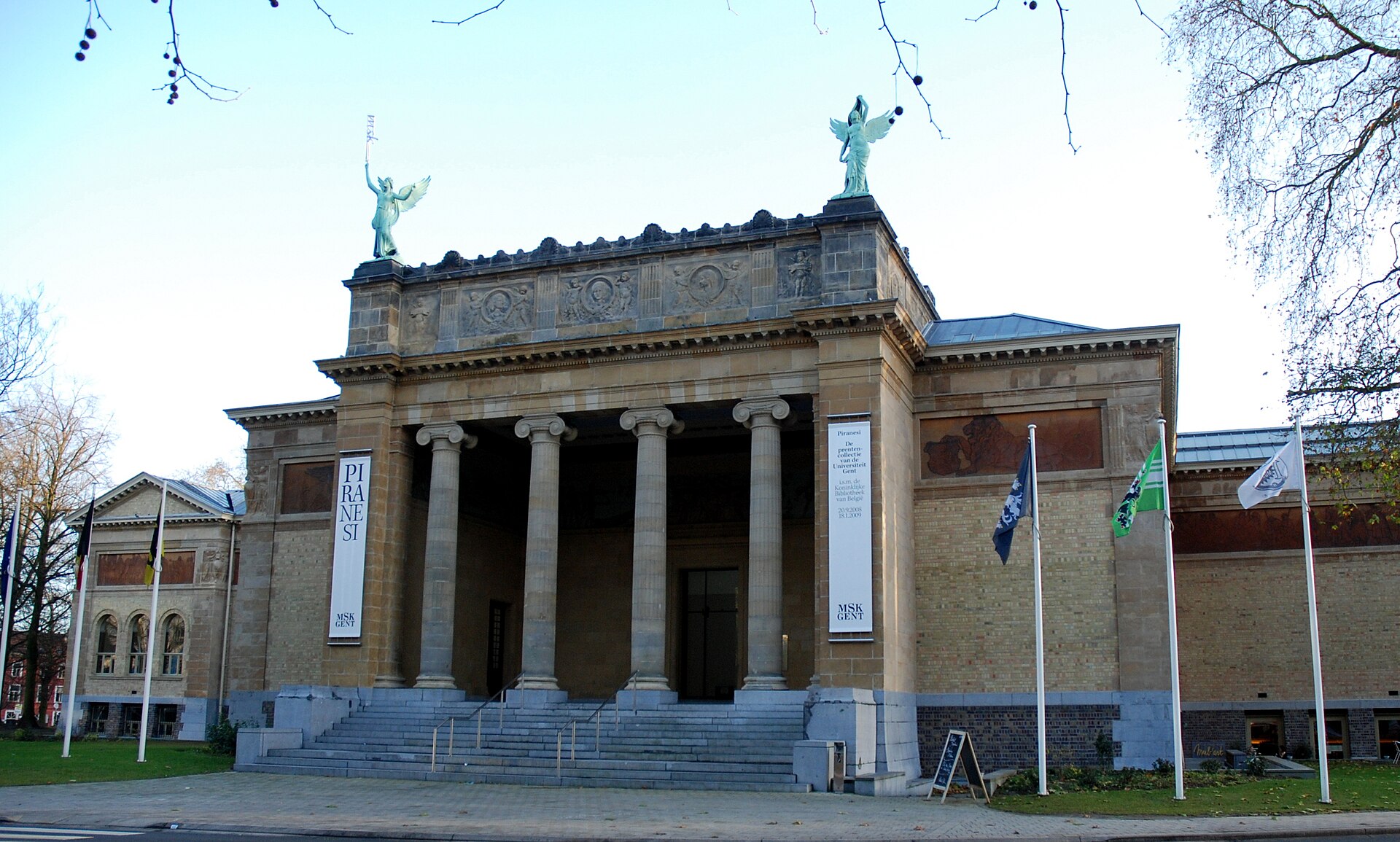
The Ionic portico of the Museum of Fine Arts Ghent, seen from Citadelpark, with the two bronze Victories added to the pediment above.
Photograph by Paul Hermans, CC BY-SA 3.0Museum of Fine Arts Ghent
Museum · Museum voor Schone Kunsten Gent · Founded 1798
Open, admission and hours confirmed 9 September 2026 · 17 sources
On this page 16 sections
ContentsClose
MSK Gent's real strength is its own city's and country's art: with about half of forty galleries devoted to Belgian painting and sculpture from the mid nineteenth century to the interwar years, it is one of the fullest single-building accounts of that period anywhere, built over two centuries around Ghent and Belgian artists from James Ensor and George Minne to Gustave De Smet and Henri Evenepoel, and set beside a smaller but genuine run of Early Netherlandish and Baroque painting that includes Bosch, Van der Weyden, Van Dyck and Rubens.
| Local name | Museum voor Schone Kunsten Gent |
|---|---|
| Kind | Museum |
| Founded | 1798 |
| City and country |  Ghent, Belgium Ghent, Belgium |
| Address | Fernand Scribedreef 1, 9000 Gent, Belgium |
| Website | mskgent.be/en |
| Status | Open, confirmed |
| Record last verified |
Visiting
- Hours
- Tue-Fri09:30 to 17:30
- Sat-Sun10:00 to 18:00
- Daily10:00 to 18:00during school holidays
- First Thursday of the month, Sep-Jun09:30 to 22:00Thursday Late
- 24 and 31 December09:30 to 16:00early closing
- Closed
- Monday. 25-26 December. 1-2 January.
- Admission
- Adult / general admissionEUR 15rate valid until 9 October 2026; the museum states new rates apply from 10 October 2026, not yet published as of this confirmation
- Ghent resident / UiTPAS GhentEUR 13proof of residence or card required; the same rate applies to teachers and Sodigent cardholders
- Age 19-25 / university and college student groupsEUR 10.50
- UiTPAS Ghent social rate / Iedereen Verdient Vakantie / postponed ticketEUR 7.50Iedereen Verdient Vakantie only with reservation
- Age 18 and underEUR 3the same EUR 3 rate applies to Ghent residents on the first Sunday of the month, on Thursday Late evenings and during the Ghent Festivities, and to CityCard, press, ICOM and Visit Flanders guides, Friends of the museum, and MuseumPASSmusees
- Caregiver of a visitor with a disability; school group supervisorsFreefree
- Groups of 15 or moreEUR 15advance booking required
- Tickets
- mskgent.be/en/tickets The museum's own ticket page.
- Do I need to book?
- A timed online slot is recommended; a visitor holding the Belgian Museum PASS reported in December 2025 being turned away for arriving without a prior e-ticket reservation
- Address
- Fernand Scribedreef 1, 9000 Gent, Belgium MapBus Lines 5, 55-58 and 70-78 to Heuvelpoort, about 5 minutes on foot
Tram Line 1 to Van Nassaustraat, about 15 minutes on foot - Website
- mskgent.be/en
- Telephone
- +32 (0)9 323 67 00
- [email protected]
Before you go how long, access, photography, bags, eating, shop
- How long to allow
- One and a half to three hours; Tripadvisor lists the visit at one to two hours, though visitors combining the permanent collection with a temporary exhibition report closer to three
- Access
- The museum states all its spaces are adapted for visitors with reduced mobility, with visitor lifts and gender-neutral toilets; the side entrance is easiest for buggies; guide dogs are admitted for visually impaired visitors, other dogs are not
- Photography
- The museum's own site states no general policy; at least one 2026 visitor review describes photography of the permanent collection as forbidden, so the rule may vary by gallery or exhibition rather than apply across the whole museum
- Eating
- Mub'art, the museum's own brasserie, open Tuesday to Sunday for lunch and drinks
- Shop
- Museum shop, given mostly to art books
Prices and hours change. We take them from the institution's own pages and print the day we read them, and you can check the current position at the source we used. Confirm before you travel.
What is inside
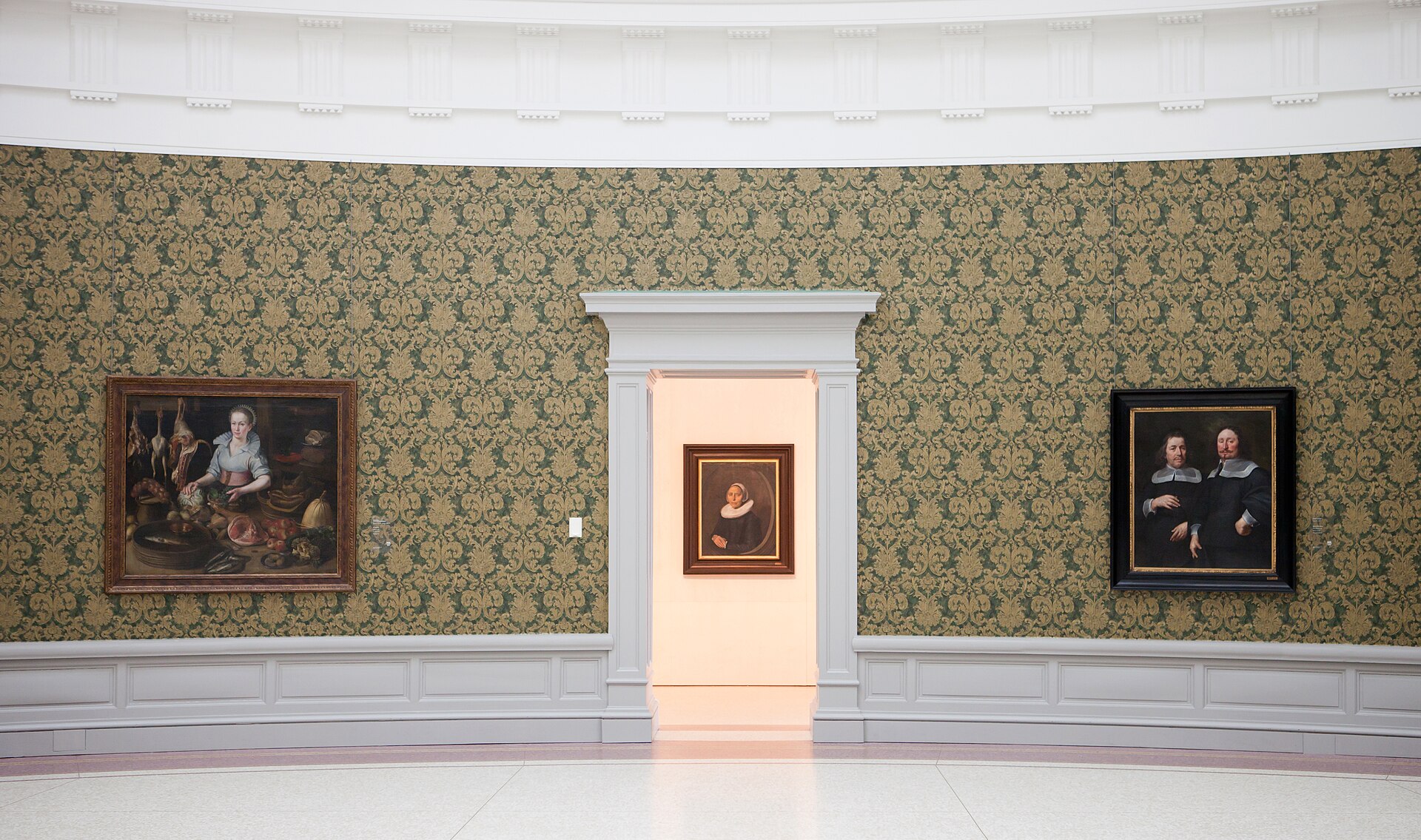
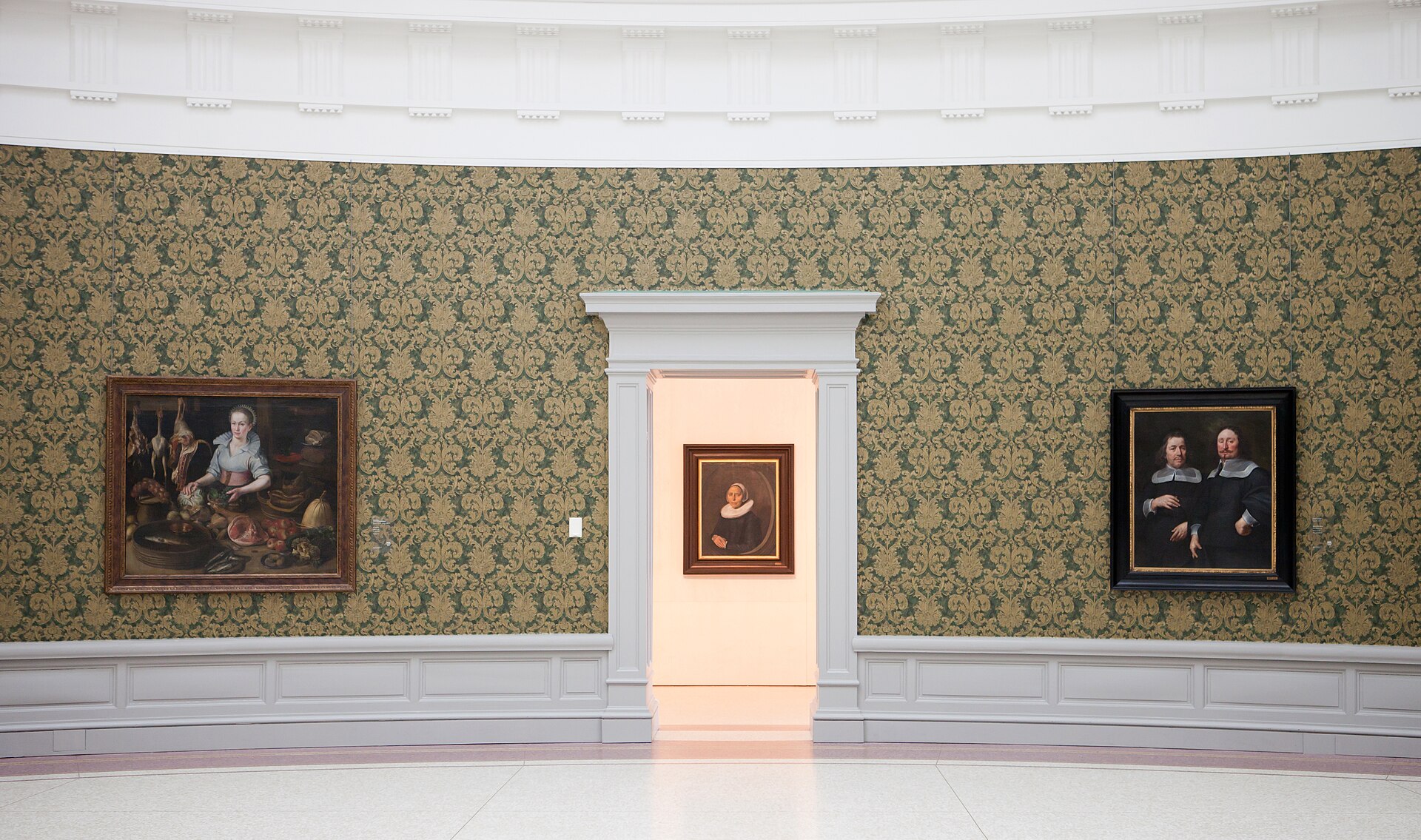
Photograph by EvelienBauwens · CC BY-SA 4.0 Old Masters
Early Netherlandish and Baroque painting, including Bosch, Van der Weyden, Van Dyck and Rubens, hung in the museum's original picture galleries
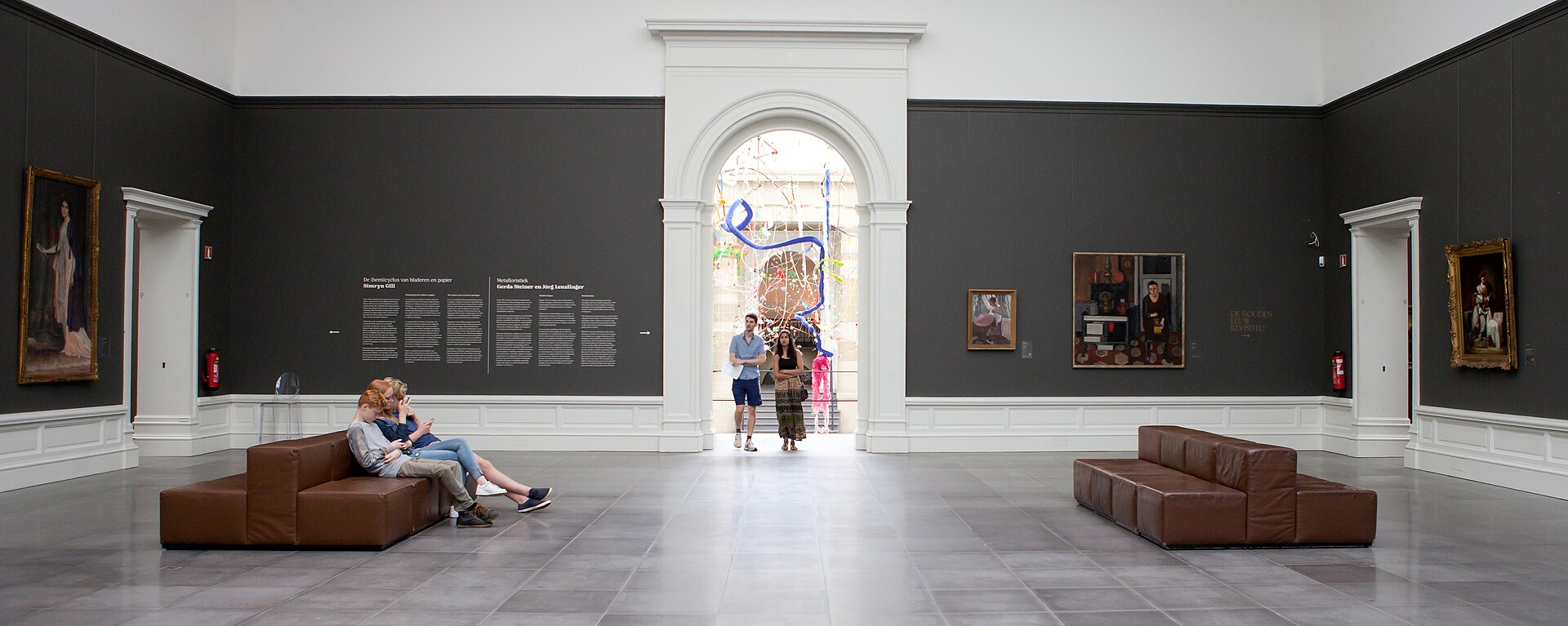
Photograph by EvelienBauwens · CC BY-SA 4.0 Belgian art, 19th and early 20th century
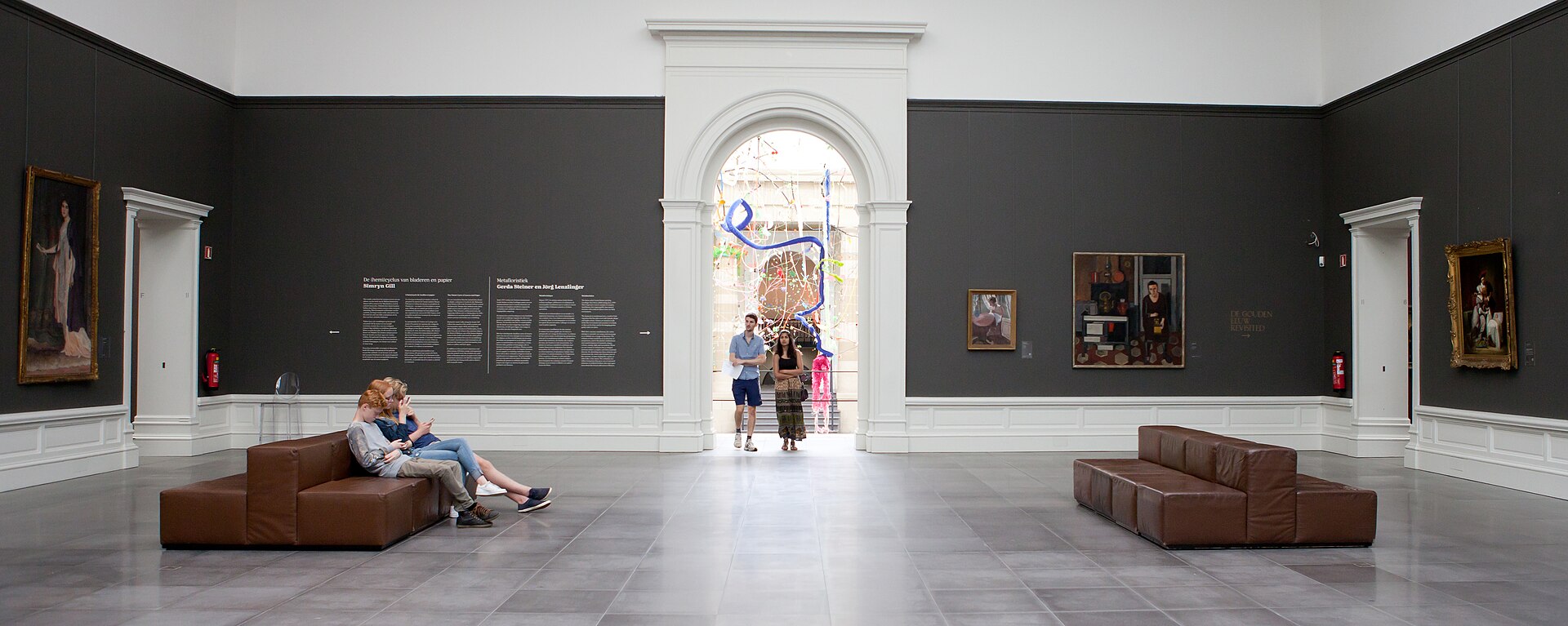
About half of the museum's forty galleries, covering Belgian painting and sculpture from the mid nineteenth century to the interwar years, including Ensor, Permeke, De Smet, Evenepoel and Van de Woestyne
Sculpture
Nineteenth and twentieth century sculpture centred on George Minne's plaster Fountain with Kneeling Youths, together with further pieces including work by Rodin
Prints, drawings and the library
Works on paper, illustrated books and the museum's own library and archive, shown in rotation for conservation reasons; visitors have singled out a circular print-room gallery as a highlight
Ghent Altarpiece restoration studio
A glassed-in conservation studio inside the museum where Royal Institute for Cultural Heritage (KIK-IRPA) restorers have worked in public view on the panels of Van Eyck's Adoration of the Mystic Lamb; the setting for the 2012-2016 restoration campaign and the 2020 exhibition Van Eyck: An Optical Revolution
What to see first
Christ Carrying the Cross
Hieronymus Bosch (attribution disputed)The museum's own wall text keeps the traditional attribution to Bosch, but the Bosch Research and Conservation Project concludes on underdrawing and panel evidence that it is a copy made after a lost Bosch prototype some years after his death; the dispute is unresolved.9
St Jerome at Prayer
Hieronymus BoschOne of only about twenty paintings generally accepted as an autograph work by Bosch anywhere in the world; a 2016 conservation treatment removed old varnish and overpaint and recovered its original colour.8
Virgin with the Carnation
Rogier van der WeydenOne of the museum's anchor Early Netherlandish paintings, a devotional half-length Madonna type Van der Weyden and his workshop produced in several versions.5
Jupiter and Antiope
Anthony van DyckA youthful mythological nude that is one of the museum's core Baroque holdings, painted while Van Dyck was still working in Rubens's orbit in Antwerp.5
The Flagellation of Christ
Peter Paul RubensRubens's own oil sketch for a large panel painted for the former Dominican church in Antwerp, now Saint Paul's Church, as part of a fifteen-panel cycle by eleven different masters; Rubens kept his own sketches until his death, a sign of how highly he valued them.5
Wedding Dance in the Open Air
Pieter Brueghel the YoungerA village wedding scene almost certainly based on a lost composition by his father Pieter Bruegel the Elder, valued as documentary evidence of sixteenth-century peasant festivity.8
Portrait of a Kleptomaniac
Theodore GericaultOne of only five surviving portraits from a series Gericault painted of psychiatric patients for his own doctor; among the most studied images of mental illness in early nineteenth-century French painting.8
Children at their Morning Toilet
James EnsorPainted in Ensor's parental home and called a milestone by the artist himself, the picture closes his early domestic realist phase and opens the interest in light and the fantastic that defines his later work.5
Fountain with Kneeling Youths
George MinneThe plaster model, kept in Minne's own workshop until his death and donated by his daughter Marie Gevaert-Minne in 1982, is considered the sculptor's most important single work and anchors the museum's Minne holdings.5
Portrait of Bishop Antonius Triest
Gaspar de CrayerAt the centre of a live, unresolved restitution dispute: the City of Ghent decided in November 2025 to keep the painting against a claim from the heirs of the Antwerp dealer Samuel Hartveld, whose stock an independent commission found was confiscated during the German occupation.13
Exhibitions on now
The oldest public museum in Belgium, and how it started as confiscated property
The Museum of Fine Arts Ghent traces its founding to 9 September 1798, when the French administration that had annexed the Southern Netherlands set up the Musee du Departement de l'Escaut to hold art gathered from suppressed churches, monasteries and the property of nobles who had left the country. The collection opened to the public on 22 November 1802, more than a quarter of a century before Belgium existed as an independent state, which is the basis for the museum's own claim to be the oldest continuously open public art museum in the country. For a century the collection moved between buildings in the city centre before the museum finally received a home built for it alone.
A building raised for a world's fair, and rebuilt twice by war
The current building, on the eastern edge of Citadelpark, was designed by the Ghent city architect Charles Van Rysselberghe and opened officially by King Leopold II on 9 May 1904. Its neoclassical facade, an Ionic portico under a pediment topped by two bronze figures of Victory, was built above all to bring daylight into top-lit picture galleries rather than to impress from the street alone. Van Rysselberghe doubled the building's floor space in 1911-1913 for the Ghent World's Fair of 1913, fixing the plan the museum still uses. The twentieth century was not kind to it: German pharmaceutical services occupied the building during the First World War, when it took serious damage, and during the Second World War the entire collection was evacuated to Pau in the south of France for safekeeping while the building was damaged again. It was listed as a protected monument in 1966, and closed for a four-year renovation that ended in 2007, after which the museum reopened with the layout of about forty galleries that visitors see today.
Belgium's own art, and the Old Masters beside it
MSK Gent holds close to 20,000 works spanning the Middle Ages to the present, of which around 600 are on permanent display. Roughly half of the forty galleries are given over to Belgian painting and sculpture from the mid nineteenth century to the years between the two world wars, a period the museum treats as its own centre of expertise: James Ensor, George Minne, Gustave De Smet, Henri Evenepoel and Gustave Van de Woestyne all hang or stand here in depth rather than as a token example apiece. The older galleries are smaller but carry real weight: Rogier van der Weyden's Virgin with the Carnation, Anthony van Dyck's Jupiter and Antiope, Pieter Brueghel the Younger's Wedding Dance in the Open Air, and two paintings associated with Hieronymus Bosch, Christ Carrying the Cross and St Jerome at Prayer, the latter one of only about twenty paintings generally accepted as autograph Bosch anywhere in the world. Peter Paul Rubens is represented by his own modello for The Flagellation of Christ, the oil sketch he made for a panel in the former Dominican church in Antwerp, now Saint Paul's Church, as part of a fifteen-panel cycle painted by eleven different masters; Rubens rated his own sketches highly enough to keep this one in his possession until he died.
A disputed Bosch, argued out in public
Christ Carrying the Cross is the museum's most argued-over painting. The Bosch Research and Conservation Project, an international scholarly team that examined nearly every painting attributed to Bosch with infrared reflectography and technical analysis, concluded that the underdrawing does not match Bosch's other accepted works, that the panel edges lack the paint build-up expected if the picture had been framed before completion in the normal fifteenth-century workshop practice, and that it is more likely a copy made after a lost Bosch prototype some years after his death, around 1530-1540. The museum's own conservator Griet Steyaert and the art historians Maximiliaan Martens and Paul Vandenbroeck have each pushed back on individual pieces of that evidence, arguing that Bosch's own work varies enough between paintings that no single technical marker can settle the question by itself. The museum's director, Catherine de Zegher, has kept the traditional attribution on the wall text while conservation research continues. Nobody in the dispute doubts the picture is an important early sixteenth-century painting; what is unresolved is whose hand held the brush.
Watching the Ghent Altarpiece being repaired, and what it drew
Jan van Eyck's Adoration of the Mystic Lamb, the altarpiece that normally hangs in Saint Bavo's Cathedral a short walk away, has had its outer wings restored inside MSK Gent by conservators from the Royal Institute for Cultural Heritage, working from 2012 to 2016 in a glassed-in studio that visitors could watch through as the work happened. When that phase finished, the restored panels returned to the museum in 2020 for Van Eyck: An Optical Revolution, an exhibition that brought together more than half of the roughly twenty paintings generally accepted as autograph Van Eyck, shown alongside each other for the first time and against work by his strongest contemporaries. Nearly 130,000 people had seen it by 12 March 2020, when the show closed early because of the covid-19 pandemic, weeks before its planned end date. Writing in Apollo Magazine, the art historian Susie Nash called it a revelation, praising the conservation work for recovering detail that had been buried under old varnish and the curators for building unexpected juxtapositions between rooms, while also noting two real gaps: spreading the altarpiece panels through several rooms meant nobody could see the restored exterior as the single dramatic composition it is meant to be, and the show did little to set Van Eyck directly against the Netherlandish rivals closest to him, Robert Campin and Rogier van der Weyden, which would have been the sharper test of what actually made him different.
An unresolved wartime claim: the Portrait of Bishop Triest
On 3 October 2023 the museum received a restitution claim from the heirs of Samuel Hartveld, an Antwerp art dealer, for Gaspar de Crayer's Portrait of Bishop Antonius Triest, inventory number 1948-Z, which the City of Ghent has owned since after the Second World War. An independent commission appointed by the city confirmed that the painting had been confiscated from Hartveld's stock during the German occupation, but concluded that Hartveld and his heirs had already been compensated for that loss in the years after the war, and on 20 November 2025 the City of Ghent adopted that finding and declined to return the picture. The Hartveld heirs dispute that any such compensation was ever paid or documented, and have asked the museum to produce the records it says support the claim; as of the decision those records had not been made public. The case sits awkwardly next to Tate Britain's decision on a painting from the same Hartveld collection, where an advisory panel recommended restitution and the gallery agreed to return the work outright. Ghent has said it will keep the picture's wartime history stated plainly in every future publication and label rather than pass over it, which is not the same thing as resolving what the heirs are asking for.
Visiting today
MSK Gent sits on the eastern edge of Citadelpark, a fifteen-minute walk from the Van Nassaustraat tram stop on line 1 or a five-minute walk from the Heuvelpoort bus stop served by lines 5, 55 to 58 and 70 to 78. The museum is closed on Mondays, open Tuesday to Friday from 9:30am to 5:30pm and weekends from 10am to 6pm, with an extended evening on the first Thursday of most months. A ticket covers the permanent collection, the current temporary exhibition and the view of the Ghent Altarpiece restoration while it is running; the museum recommends booking a timed slot online, and at least one visitor holding a Belgian Museum PASS reported being turned away in December 2025 for arriving without a prior reservation. Mub'art, the museum's own brasserie, serves lunch and drinks Tuesday to Sunday, and there is a museum shop given mostly to art books. S.M.A.K., Ghent's museum of contemporary art, stands on the opposite side of the same park; it is a separate institution with its own building, collection and admission, not a wing of MSK Gent.
What visitors say
Visitors consistently describe MSK Gent as a well curated, uncrowded counterpart to Belgium's larger national collections, worth two to three hours rather than a full day, with the chance to watch conservators at work on the Ghent Altarpiece as the single most mentioned reason to come now. The most repeated complaints concern front-of-house service and orientation inside the building rather than the collection itself.
What is praised, what is criticised
- Praised: the range and depth of the Old Masters and Belgian nineteenth and twentieth century paintings, which several reviewers rank above better-known Dutch and Flemish collections elsewhere
- Praised: the glassed-in view of conservators restoring panels of the Ghent Altarpiece
- Praised: the free QR-coded audio guide and wall texts, described as detailed enough to be useful without over-explaining every work
- Praised: the calm, uncrowded galleries and the sculpture holdings, including work by Rodin
- Criticised: unfriendly or inattentive front-desk and checkout staff, raised independently by several reviewers across 2026
- Criticised: a floor plan and gallery labelling that reviewers found confusing, with unmarked entrances and no thematic map of the rooms
- Criticised: an inconsistently applied photography ban that some visitors found hard to square with nearby sites where photography is allowed
- Criticised: a compulsory timed-entry e-ticket system that has turned away Belgian Museum PASS holders who arrived without booking a slot in advance
Ratings on other platforms
Tripadvisor: 4.3 from 520 ratings, read 9 September 2026
A platform average is a tertiary source: it moves, it is not audited, and we quote no visitor's words.
Questions about Museum of Fine Arts Ghent
Where is Museum of Fine Arts Ghent?
Fernand Scribedreef 1, 9000 Gent, Belgium.
How much does it cost to visit?
Adult / general admission: EUR 15; Ghent resident / UiTPAS Ghent: EUR 13; Age 19-25 / university and college student groups: EUR 10.5; UiTPAS Ghent social rate / Iedereen Verdient Vakantie / postponed ticket: EUR 7.5; Age 18 and under: EUR 3. As confirmed 9 September 2026.
When is it open?
Tue-Fri 09:30-17:30; Sat-Sun 10:00-18:00; Daily 10:00-18:00; First Thursday of the month, Sep-Jun 09:30-22:00; 24 and 31 December 09:30-16:00. Closed: Monday. 25-26 December. As confirmed 9 September 2026.
How do you get there?
Bus: Lines 5, 55-58 and 70-78 to Heuvelpoort, about 5 minutes on foot; Tram: Line 1 to Van Nassaustraat, about 15 minutes on foot.
What should you see first?
Christ Carrying the Cross (Hieronymus Bosch (attribution disputed)); St Jerome at Prayer (Hieronymus Bosch); Virgin with the Carnation (Rogier van der Weyden); Jupiter and Antiope (Anthony van Dyck); The Flagellation of Christ (Peter Paul Rubens); Wedding Dance in the Open Air (Pieter Brueghel the Younger).
What we could not confirm
- Whether Christ Carrying the Cross is an autograph work by Hieronymus Bosch or a copy made after his death after a lost prototype is disputed between the museum, which keeps the traditional attribution on its wall text, and the Bosch Research and Conservation Project, which does not accept it as autograph.
- The Hartveld heirs dispute that Samuel Hartveld or his family were ever compensated for the wartime loss of the Portrait of Bishop Antonius Triest; the City of Ghent's November 2025 decision to keep the painting rests on a compensation finding the museum has not published in documentary form.
- New ticket rates take effect on the museum's own price page from 10 October 2026; they were not published as of this page's last confirmation and are not reflected in the admission table above.
Images
Sources
- 1MSK Gent, Visit page mskgent.be/en/visit
- 2MSK Gent, Plan your visit mskgent.be/en/visit/plan-your-visit
- 3MSK Gent, Overview of ticket rates mskgent.be/en/tickets/overview-of-ticket-rates
- 4MSK Gent, About the MSK mskgent.be/en/about-the-msk
- 5MSK Gent, About the collection mskgent.be/en/collection/about-the-collection
- 6Wikipedia, Museum of Fine Arts, Ghent () en.wikipedia.org/wiki/Museum_of_Fine_Arts,_Ghent
- 7Wikidata, Q2365880 () wikidata.org/wiki/Q2365880
- 8Visit Gent, Nine must-sees at the Museum of Fine Arts visit.gent.be/en/nine-must-sees-museum-fine-arts
- 9Flemish Art Collection / Flemish Primitives, Christ Carrying the Cross by Bosch in the Museum of Fine Arts in Ghent vlaamseprimitieven.vlaamsekunstcollectie.be/en/research/webpublications/christ-carrying-the-cross-by-bosch-in-the-museum-of-fine-arts-in-ghent/
- 10MSK Gent, Van Eyck. An Optical Revolution mskgent.be/en/exhibitions/van-eyck-an-optical-revolution
- 11Apollo Magazine, Susie Nash, 'Close encounters - Van Eyck in Ghent, reviewed', 18 March 2020 apollo-magazine.com/van-eyck-ghent-review/
- 12Tripadvisor, Museum Voor Schone Kunsten Gent (, rating and visitor reviews) tripadvisor.com/Attraction_Review-g188666-d245954-Reviews-Museum_Voor_Schone_Kunsten_Gent-Ghent_East_Flanders_Province.html
- 13CODART, 'City of Ghent Rejects Restitution Claim for Portrait by Gaspar de Crayer' codart.nl/art-works/city-of-ghent-rejects-restitution-claim-for-portrait-by-gaspar-de-crayer/
- 14MSK Gent, Frequently asked questions mskgent.be/en/contact/faq
- 15Wikimedia Commons, File:MSK19122008.JPG commons.wikimedia.org/wiki/File:MSK19122008.JPG
- 16Wikimedia Commons, File:EvelienBauwens MSKGent007.jpg commons.wikimedia.org/wiki/File:EvelienBauwens_MSKGent007.jpg
- 17Wikimedia Commons, File:EvelienBauwens MSKGent002.jpg commons.wikimedia.org/wiki/File:EvelienBauwens_MSKGent002.jpg


