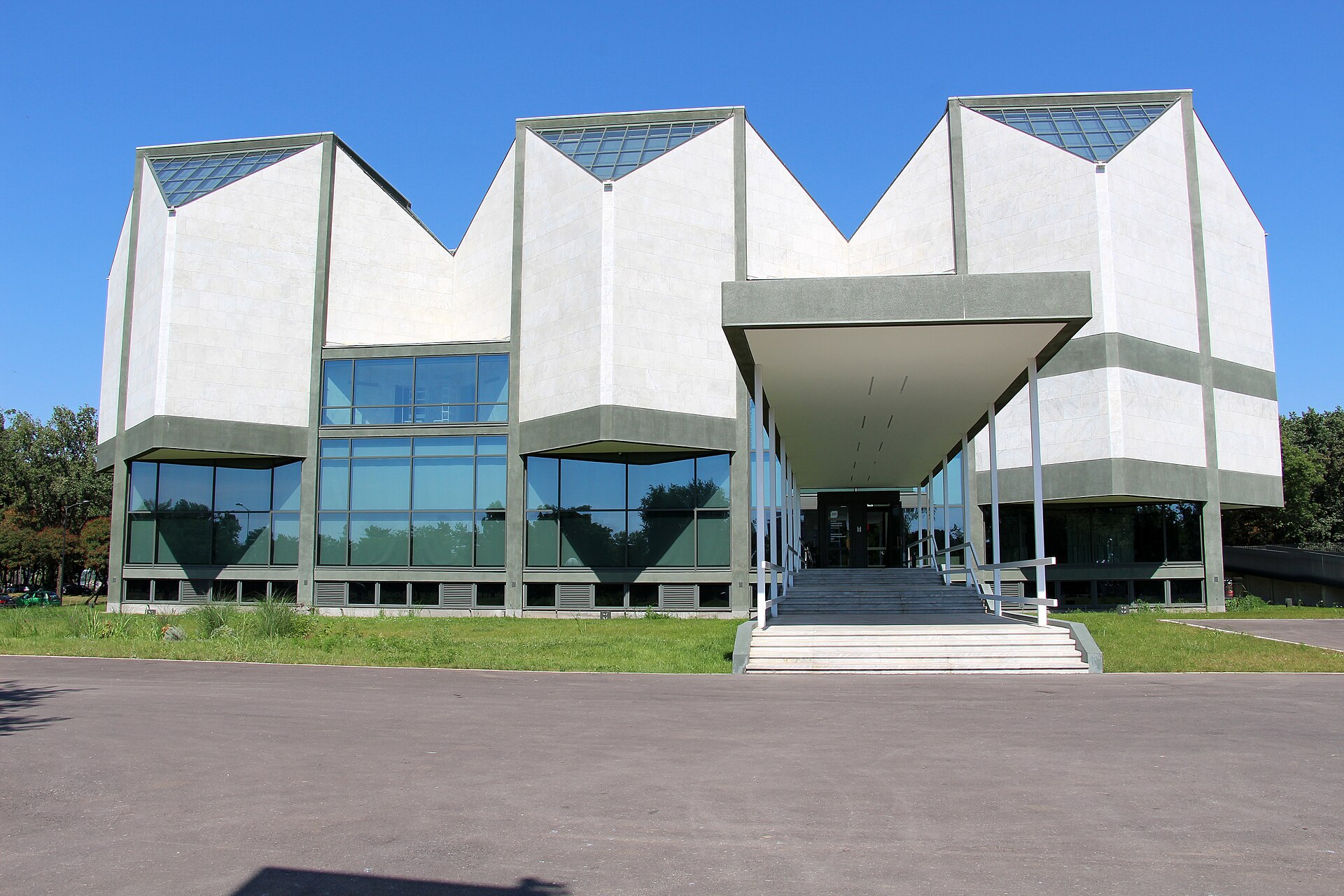
The museum's faceted glass and concrete exterior in Usce park, New Belgrade.
Photo: Fred Romero, CC BY 2.0Museum of Contemporary Art, Belgrade
Museum · Muzej savremene umetnosti · Founded 1958
Open, admission and hours confirmed 30 August 2026 · 13 sources
On this page 16 sections
ContentsClose
The museum's strength is its depth in 20th-century Serbian and Yugoslav art across every medium the century produced, from early Symbolist and Impressionist painting through the interwar Surrealist circle, Socialist-era figuration and sculpture, to Conceptual, video and performance work, held as one continuous, self-researched national collection of more than 35,000 objects rather than a scattered handful of period highlights. Its Yugoslav Surrealist material, arriving through the Ristic bequests, and its concentration of Ivan Mestrovic and Dusan Dzamonja sculpture, give it holdings that are difficult to assemble outside the former Yugoslavia.
| Local name | Muzej savremene umetnosti |
|---|---|
| Kind | Museum |
| Founded | 1958 |
| City and country |  Belgrade, Serbia Belgrade, Serbia |
| Address | Usce 10, Blok 15, 11070 Novi Beograd, Serbia |
| Website | msub.org.rs |
| Status | Open, confirmed |
| Record last verified |
Visiting
- Hours
- Mon, Wed, Fri, Sun11:00 to 19:00Main museum building, Usce
- Thu, Sat12:00 to 20:00Main museum building, Usce
- Closed
- Tuesday.
- Admission
- AdultRSD 600Purchased at the MoCAB ticket desk or online at tickets.rs
- Discount (pupils, students, European Youth Card holders, retirees)RSD 300Shown with student ID, pupil card, EYC card or retirement documentation
- Free (listed categories)FreePeople with disabilities, pregnant women, preschool children, art-history and visual-arts staff and students, journalists, employees of comparable cultural institutions, and members of ICOM, AICA, IKT, ULUPUDS and similar professional bodies, with proof
- Tickets
- tickets.rs The museum's own ticket page.
- Do I need to book?
- No advance booking stated by the museum; tickets are sold at the MoCAB desk on arrival or in advance online at tickets.rs
- Address
- Usce 10, Blok 15, 11070 Novi Beograd, Serbia Map
- Website
- msub.org.rs
- Telephone
- +381 (0)11 3115 713
- [email protected]
Before you go how long, access, photography, bags, eating, shop
- How long to allow
- Not specified by the museum. The building holds five exhibition floors plus an outdoor sculpture setting in the surrounding park; visitor accounts describe touring several floors of paintings, sculpture and video/installation work in one visit
- Access
- The main building has an on-site car park and step-free access to the entrance and every exhibition floor for wheelchair and stroller users; visitors who cannot use the stairs are asked to request help from museum security to use the lift and the movable platforms
- Photography
- Not stated on the museum's own visit page
- Bags
- Not stated on the museum's own visit page
- Eating
- Not stated on the museum's own visit page
- Shop
- A gift shop operates on site; one visitor account describes buying an entry ticket there rather than at a separate desk
Prices and hours change. We take them from the institution's own pages and print the day we read them, and you can check the current position at the source we used. Confirm before you travel.
What is inside
Collection of Paintings, before and after 1945
The core Serbian and Yugoslav painting holding, the backbone of the second- and third-floor permanent display: Sava Sumanovic, Milena Pavlovic-Barili, Petar Lubarda, Vladimir Velickovic, Milovan Destil Markovic and other 20th-century Serbian and Yugoslav painters, spanning Symbolism and Impressionism through Socialist-era figuration to Conceptual and post-1970s work
Collection of Graphics, Prints and Foreign Paintings
323 mostly-graphic foreign works, including prints by Roy Lichtenstein, Andy Warhol, Joan Miro, Salvador Dali and Frank Stella, alongside paintings by the Surrealists Max Ernst and Andre Masson that entered the museum through bequests tied to Belgrade's own pre-war Surrealist circle
Collection of Sculptures
752 sculptures, indoors and set outdoors in the surrounding park, by Ivan Mestrovic, Dusan Dzamonja, Ivan Kozaric, Vojin Bakic, Toma Rosandic, Olga Jevric and Olga Jancic among others
Collection of New Art Media
Video, performance documentation and installation, including work by Marina Abramovic, George Maciunas, Ken Friedman and Hannah Wilke; this and the ground floor are the spaces used for the temporary and 'modular' thematic exhibitions the museum rotates between showings of the permanent collection
Library, Hemeroteque and Photo Library
Over 4,800 books and 23,000 exhibition catalogues, more than 350,000 press clippings, and the museum's own photographic documentation archive, used for research rather than public display
What to see first
On the black field
Bora IljovskiNamed by the museum's own curators as one of the most popular works with visitors since the 2017 reopening7
L-50
Ivan KozaricA large-scale sphere sculpture the museum's curators list among the most popular post-reopening exhibits7
Light shapes
Vojin BakicSculpture cited by curators as consistently drawing visitors since the museum reopened in 20177
Comrade Tito, (our) white violet
Dusan OtasevicInstallation named by curators among the museum's most-visited post-reopening works, and a key piece of Yugoslav political pop art7
Paintings in the permanent Yugoslav display
Sava SumanovicSumanovic is the most consistently cited Serbian modernist painter in the museum's own account of its collection7
Sculptures in the Collection of Sculptures
Ivan MestrovicMestrovic is the best-known of the Yugoslav sculptors represented across the museum's 752-piece sculpture holding7
Paintings from the Ristic bequests
Max Ernst and Andre MassonEntered the collection through bequests connected to Belgrade's own pre-war Surrealist circle (1926-1939), giving the museum direct material ties to French Surrealism5
Works in the Collection of New Art Media
Marina AbramovicAbramovic's material anchors the museum's video and performance holding and is repeatedly cited by visitors as a reason to seek out the upper floors7
Exhibitions on now
- On now28 Aug to 19 Oct 2026Confirmed · check before you travel
Past exhibitions here
- Closed20 May to 7 Sep 2026Confirmed · check before you travel
The crystal at the confluence
The Museum of Contemporary Art stands in Usce park in New Belgrade, on the tongue of land where the Sava river meets the Danube, directly across the water from the old Belgrade Fortress. The building was designed in 1960 by the architects Ivan Antic and Ivanka Raspopovic, whose brief partnership also produced the 21 October Museum in Kragujevac, and it was built between 1960 and 1965. It opened to the public on 20 October 1965, the same day its architects were given the City of Belgrade's October Prize.
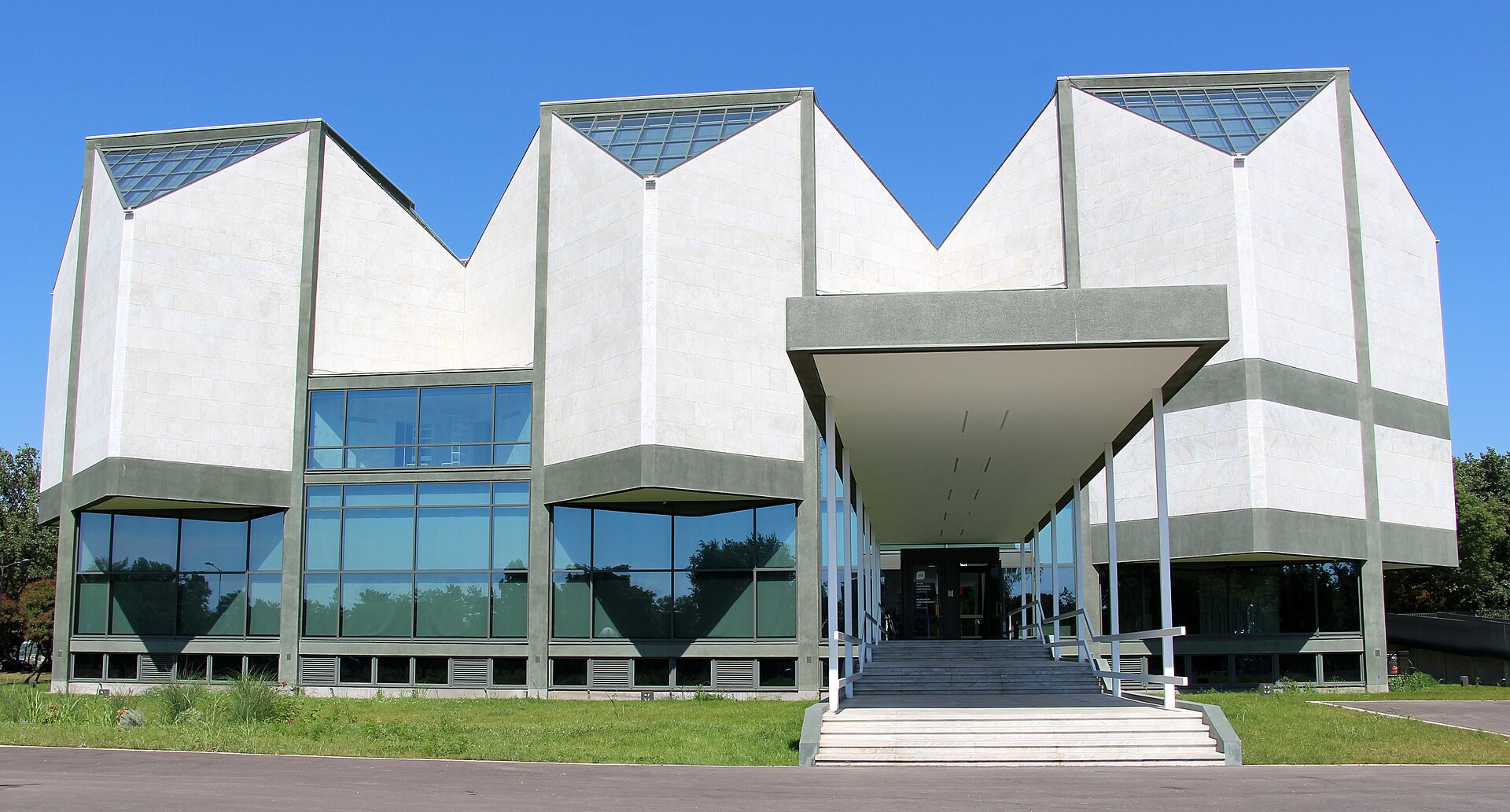
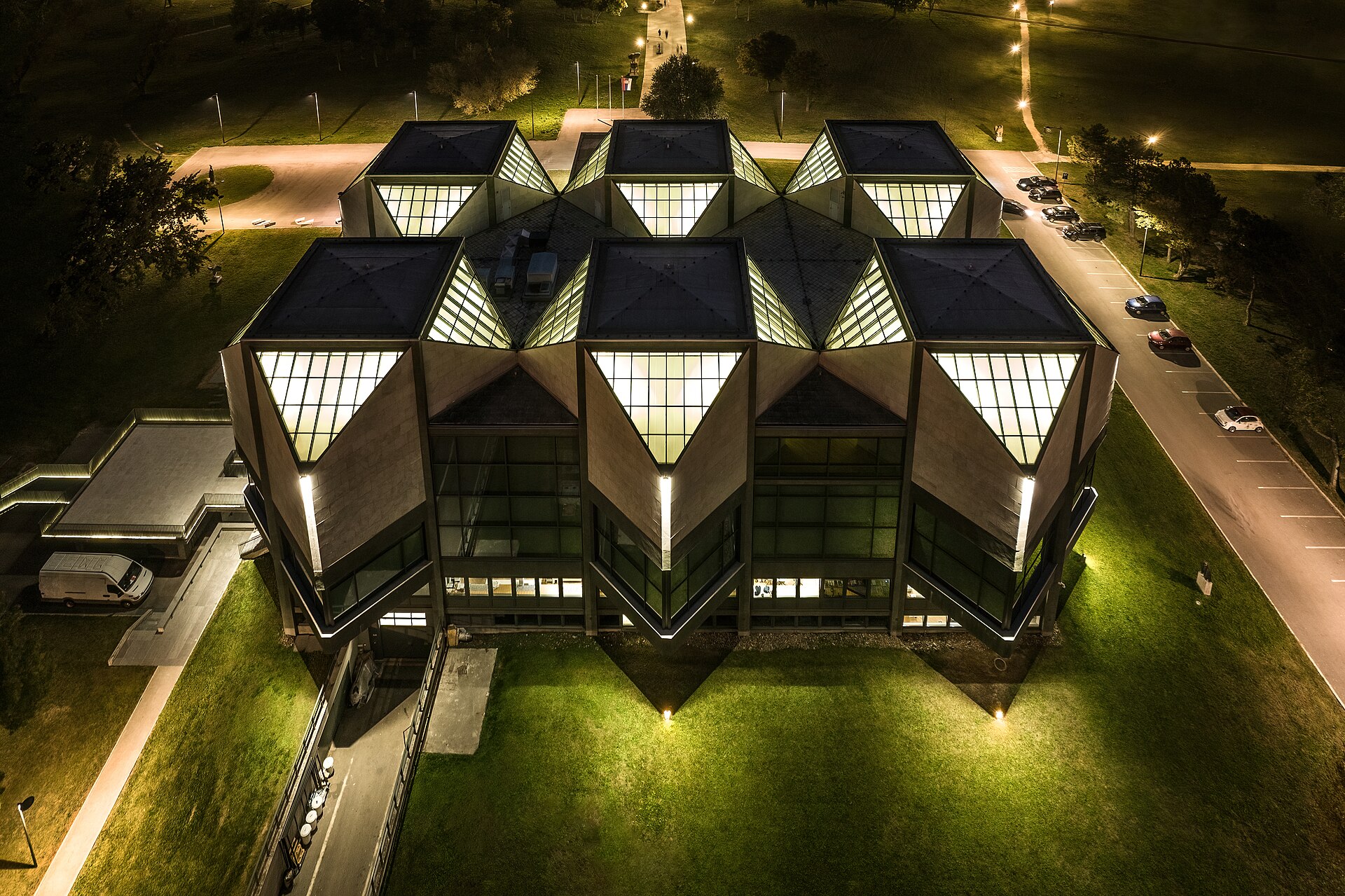
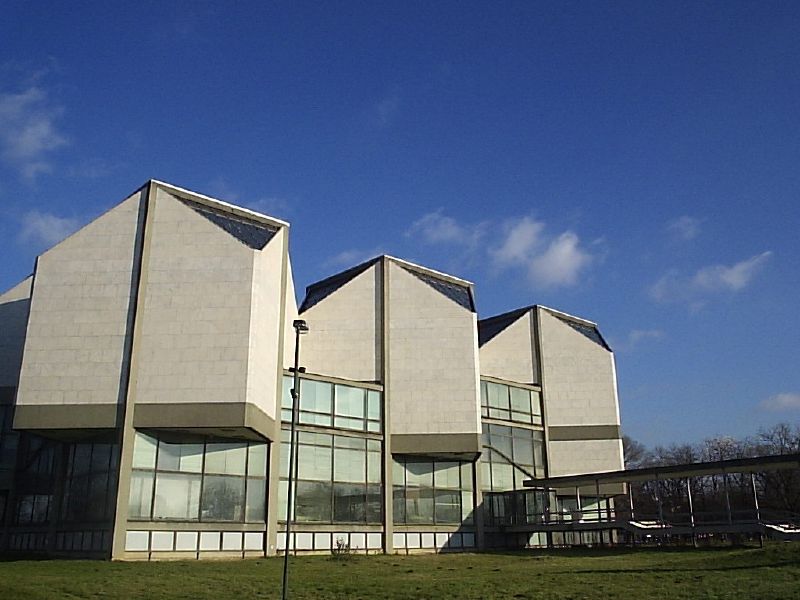
Its faceted glass volumes, stepped in cascading geometric blocks and topped with domed skylights, earned it the description used by Serbian architecture writers ever since: the 'crystal at the confluence'. The shape is not decorative alone. The stepped massing and rooftop domes were built to flood the galleries with natural light while keeping the building's profile low against the park and the river, and the design is counted among the more significant examples of Yugoslav modernist and Brutalist public architecture. The museum itself had already existed for seven years by the time this building opened: it was founded in 1958 as the Modern Gallery, one of the first museums of its kind anywhere, and moved into the Usce building in 1965.
A decade dark: the 2007-2017 renovation
The museum closed for renovation in 2007. What was meant to be a refurbishment dragged on for ten years through repeated changes of contractor and funding gaps. The firm originally awarded the job, Montera, was paid in full and then went bankrupt, leaving the work unfinished for years. A later tender to redo the roof alone went to a company called Jedinstvo; a further tender for the remaining work failed outright; Jedinstvo was rehired despite submitting the highest bid; the Ministry of Culture then insisted the lowest bidder, a company called Modulor, be used instead; the museum's director at the time was replaced; and the job eventually passed to a company called Termoinzenjering, which finished the reconstruction and rebuilt the roof a second time. Both of the building's original architects died while the closure dragged on, Antic in 2005 and Raspopovic in 2015, though Raspopovic lived long enough to advise on one late change: replacing the clear glass of the rooftop domes with a darker tinted glass that shifts tone with the weather and time of day.
The museum finally reopened to the public on 20 October 2017, exactly 52 years after its first opening, with an exhibition called Sequences, built from roughly 300 works out of the museum's own collection under the concept of the curator Dejan Sretenovic. The renovation was not received uncritically. Serbian architecture critics singled out the amount of plain concrete used on the new access paths around the building as making the approach feel less humane than the park it replaced, and objected to how much of the surrounding parkland had been divided up and paved over during the works. The criticism did not end with the reopening: reporting from July 2018 found that the freshly rebuilt roof was already letting rainwater into the building, less than a year after a decade-long renovation had supposedly finished it.
What the collection holds
The museum's holdings run to more than 35,000 works, organised into named collections rather than a single continuous hang. The Collection of Paintings, split into work made before and after 1945, carries the core of Serbian and Yugoslav 20th-century painting: Sava Sumanovic, Milena Pavlovic-Barili, Petar Lubarda, Vladimir Velickovic, Julije Knifer and Mica Popovic among many others, running from Symbolism and Impressionism at the start of the century through Socialist-era figuration to Conceptual and video-based work at its end. The Collection of Graphics, Prints and Foreign Paintings adds 323 mostly graphic works from outside Yugoslavia: prints by Roy Lichtenstein, Andy Warhol, Joan Miro, Georges Braque, Salvador Dali and Frank Stella, and paintings by the Surrealists Max Ernst and Andre Masson that arrived through bequests connected to Belgrade's own pre-war Surrealist circle, active between 1926 and 1939.
The Collection of Sculptures holds 752 pieces, shown both indoors and set outdoors around the building in the park, by Ivan Mestrovic, Dusan Dzamonja, Toma Rosandic, Olga Jevric, Olga Jancic, Vojin Bakic and Ivan Kozaric among others. The Collection of New Art Media covers video, performance documentation and installation, including work by Marina Abramovic, George Maciunas, Ken Friedman and Hannah Wilke. Beyond the named collections, the museum has absorbed a series of artists' bequests as whole units: 413 works covering the complete output of Ivan Tabakovic (1898-1977); more than 200 finished pieces and 367 sketches from Leonid Sejka; 197 works by the Slovenian painter Mario Pregelj; and smaller bequests, of between seven and 46 pieces each, from Vana Zivadinovic Bora, Miodrag B. Protic, Ksenija Divjak, Milan Dedinac and Ksenija Ilijevic. The museum also holds a library and catalogue library of more than 4,800 books and 23,000 exhibition catalogues, and a press-clipping archive, the Hemeroteque, of more than 350,000 items.
How the floors are used: a permanent display that rotates, and temporary shows around it
The building's five exhibition floors are not used identically. The second and third floors carry the museum's long-running permanent display of Yugoslav art, currently built around roughly 160 works spanning 1900 to 1981, arranged by the curator Dejan Sretenovic as a set of self-contained thematic 'sequences' rather than one continuous chronology: Symbolism, Impressionism, Expressionism, abstraction, Constructivism, Surrealism, socially engaged art of the interwar and postwar periods, Informel abstraction, Neo-Constructivism, the Belgrade New Figuration movement, Conceptual Art and video performance each get their own compact grouping, built from works the museum already treats as canonical rather than an exhaustive survey. The museum rotates this permanent hang roughly every three to five years.
The ground floor and the fourth and fifth floors are used differently: for major loan and touring exhibitions when one is running, and in between for what the museum calls 'modular' displays, thematic or single-artist shows built from its own storerooms rather than borrowed material. Visitor accounts describe monographic hangs of individual Yugoslav artists using these upper floors, alongside major retrospectives of international figures such as Michelangelo Pistoletto and Erwin Wurm. This is also where the museum's most-cited post-2017 highlights sit: curators name the painting On the black field by Bora Iljovski, the sphere sculpture L-50 by Ivan Kozaric, the sculpture Light shapes by Vojin Bakic and the installation Comrade Tito, (our) white violet by Dusan Otasevic as the works visitors have responded to most since the reopening.
Visiting today
The main museum building at Usce 10, Blok 15 in New Belgrade is open from 11:00 to 19:00 on Monday, Wednesday, Friday and Sunday, and from 12:00 to 20:00 on Thursday and Saturday; it is closed to the public on Tuesday. A standard adult ticket costs 600 dinars, with a 300-dinar discount rate for pupils, students, European Youth Card holders and retirees on production of the relevant card, and free admission for a defined list of categories: people with disabilities, pregnant women, preschool children, art-history and visual-arts staff and students, journalists, staff of comparable cultural institutions, and members of professional bodies including ICOM, AICA, IKT and ULUPUDS. Tickets are sold at the museum's own desk or in advance online through tickets.rs. The building has an on-site car park and step-free access to the entrance and every exhibition floor for wheelchair and stroller users, with staff on hand to help with the lift and movable platforms where stairs would otherwise be an obstacle.
The museum also runs two smaller, free-admission sites in central Belgrade rather than New Belgrade: the Salon of the MoCAB at Pariska 14, open daily except Tuesday from 12:00 to 20:00 and dedicated to younger and more experimental work, and the Milica Zoric and Rodoljub Colakovic Gallery-Legacy at Rodoljuba Colakovica 2 in Dedinje, open 10:00 to 18:00 except Tuesday, which shows a fixed bequest of 92 works by major Yugoslav artists alongside period furniture and decorative objects.
What visitors and critics say
The pattern in visitor accounts is consistent: the building and its riverside park draw people in before the collection does. Reviewers repeatedly describe the walk from the Belgrade Fortress across the river, the sculptures standing in the grass around the museum, and the faceted glass domes themselves as the reason to come, and rate the museum's permanent Yugoslav collection and the strength of whichever loan exhibition happens to be running as the reasons to stay. On Tripadvisor the museum holds a 3.9-out-of-5 score from 74 reviews as of this writing, with the large majority rated 'Excellent' or 'Good' and a smaller cluster of 'Poor' or 'Terrible' scores concentrated on visits when the temporary floors were between major shows.
The complaints that recur are practical rather than architectural: more than one visitor reports that the point of sale for tickets is not obvious on arrival, with one account describing being stopped by security partway through a visit and told to go back and buy a ticket from the gift-shop desk rather than a dedicated counter. Because two of the five floors are given over to changing exhibitions, the quality of a visit is reported as depending heavily on timing; one 2024 visitor rated their visit 'mediocre', citing a run of exhibitions they found lackluster, while visitors who timed their trip around a major retrospective, such as the Pistoletto or Erwin Wurm shows, describe the same building far more positively. Critical writing on the museum has focused less on the collection than on the decade-long renovation itself: Serbian architecture critics faulted the amount of bare concrete used on the rebuilt approach paths, and reporting in 2018 found the newly finished roof leaking in the rain within months of its rebuild. Reviewing the reopening show Sequences for ArtMargins Online, the historian Iva Glisic judged the exhibition an important corrective to nationalist readings of 20th-century Yugoslav art, while noting the open question of whether the institution's post-1990s political environment would sustain that internationalist framing over the longer term.
What visitors say
Visitors and critics both lead with the building itself: the 1965 crystal-shaped structure by Ivan Antic and Ivanka Raspopovic, set in Usce park where the Sava meets the Danube, is described as being as much the destination as the art inside. Beyond that, the experience is reported as uneven, because two of the five floors are given over to rotating temporary and 'modular' shows, so how strong a visit feels depends heavily on what happens to be on show that month.
What is praised, what is criticised
- Praised: The modernist/Brutalist building and its riverside park setting at the confluence of the Sava and Danube, almost always the first thing mentioned
- Praised: The breadth of the permanent Yugoslav collection on the second and third floors, running from early-20th-century Symbolism through to Conceptual and video art
- Praised: Sculptures placed outdoors around the building, extending the galleries into an open-air setting
- Praised: Major temporary exhibitions staged in the rotating floors, including the 2017 reopening show Sequences and later retrospectives of artists such as Michelangelo Pistoletto and Erwin Wurm
- Criticised: Ticket purchase is not clearly signposted at the entrance; at least one visitor reports being stopped by security partway round after starting to walk in without buying a ticket first
- Criticised: Because the top floors rotate frequently, quality is inconsistent visit to visit; some reviewers found the temporary hang on their visit thin or, in one case, 'mediocre' and 'lackluster'
- Criticised: The 2007-2017 renovation itself drew architectural criticism for the amount of exposed concrete used on the approach paths around the building, and press reporting from July 2018 found the newly rebuilt roof leaking in rain within a year of the reopening
Ratings on other platforms
Tripadvisor: 3.9 from 74 ratings, read 30 August 2026
A platform average is a tertiary source: it moves, it is not audited, and we quote no visitor's words.
Questions about Museum of Contemporary Art, Belgrade
Where is Museum of Contemporary Art, Belgrade?
Usce 10, Blok 15, 11070 Novi Beograd, Serbia.
How much does it cost to visit?
Adult: RSD 600; Discount (pupils, students, European Youth Card holders, retirees): RSD 300; Free (listed categories): free. As confirmed 30 August 2026.
When is it open?
Mon, Wed, Fri, Sun 11:00-19:00; Thu, Sat 12:00-20:00. Closed: Tuesday. As confirmed 30 August 2026.
What should you see first?
On the black field (Bora Iljovski); L-50 (Ivan Kozaric); Light shapes (Vojin Bakic); Comrade Tito, (our) white violet (Dusan Otasevic); Paintings in the permanent Yugoslav display (Sava Sumanovic); Sculptures in the Collection of Sculptures (Ivan Mestrovic).
What we could not confirm
- Some visitor accounts describe free admission on the first Wednesday of the month, but this could not be confirmed on the museum's own current visit page as of 30 August 2026, which lists no free admission day for the main building.
- Press reporting from July 2018 documented the newly rebuilt roof leaking in rain; no later source found in this research states whether that defect was subsequently repaired.
- The museum's own site does not publish a photography or bag-check policy for visitors; this could not be confirmed from official sources.
Images
Sources
- 1Muzej savremene umetnosti (MSUB), official homepage msub.org.rs/
- 2Muzej savremene umetnosti, 'Visit' page: hours, admission, accessibility, contact, English msub.org.rs/poseta/?lang=en
- 3Muzej savremene umetnosti, 'Kontakt' page (archived site), contact details for all three venues old.msub.org.rs/kontakt
- 4Muzej savremene umetnosti, 'About Museum' page, English msub.org.rs/about-museum/?lang=en
- 5Muzej savremene umetnosti, 'Zbirke i legati' (Collections and legacies) page (archived site) old.msub.org.rs/zbirke-i-legati
- 6Muzej savremene umetnosti, permanent display exhibition page, 'Stalna postavka dela jugoslovenske umetnosti iz zbirki MSUB' msub.org.rs/exhibition/stalna-postavka-dela-jugoslovenske-umetnosti-iz-zbirki-msub/?lang=en
- 7Wikipedia, 'Museum of Contemporary Art, Belgrade' (, for history, departments and renovation detail) en.wikipedia.org/wiki/Museum_of_Contemporary_Art,_Belgrade
- 8Iva Glisic, review of 'Sequences: Art of Yugoslavia and Serbia from the Collection of the Museum of Contemporary Art', ArtMargins Online, 4 May 2018 artmargins.com/sequences/
- 9Tripadvisor, 'Museum of Contemporary Art' Belgrade listing, visitor reviews and rating (), read 30 August 2026 tripadvisor.com/Attraction_Review-g294472-d8641565-Reviews-Museum_of_Contemporary_Art-Belgrade.html
- 10Wikimedia Commons file page, lead image commons.wikimedia.org/wiki/File:Beograd_-_Muzej_Savremene_Umetnosti_(MoCAB).jpg
- 11Wikimedia Commons file page, close crop commons.wikimedia.org/wiki/File:Beograd_-_Muzej_Savremene_Umetnosti_(MoCAB)_(crop).jpg
- 12Wikimedia Commons file page, aerial night view commons.wikimedia.org/wiki/File:Museum_of_contemporary_art,_Belgrade_(%D0%9C%D1%83%D0%B7%D0%B5%D1%98_%D1%81%D0%B0%D0%B2%D1%80%D0%B5%D0%BC%D0%B5%D0%BD%D0%B5_%D1%83%D0%BC%D0%B5%D1%82%D0%BD%D0%BE%D1%81%D1%82%D0%B8_%D0%91%D0%B5%D0%BE%D0%B3%D1%80%D0%B0%D0%B4).jpg
- 13Wikimedia Commons file page, park view commons.wikimedia.org/wiki/File:Museum_of_contemporary_art,_New_Belgrade.jpg
.jpg)
_(crop).jpg)
.jpg)
