Museum of Art, Architecture and Technology
Museum · Museu de Arte, Arquitetura e Tecnologia · Founded 2016
Open, admission and hours confirmed 18 September 2026 · 12 sources
On this page 13 sections
ContentsClose
MAAT's strength is contemporary Portuguese art from the 1960s onward and the industrial heritage of electricity generation, not the historical, pre-modern material this archive most often documents. Its holdings sit closer to design and architecture history than to the provenance chains of individual old-master or antiquity objects, and none of the collections described here are known, on the sources checked, to hold a work currently cross-referenced elsewhere in this archive.
| Local name | Museu de Arte, Arquitetura e Tecnologia |
|---|---|
| Kind | Museum |
| Founded | 2016 |
| City and country |  Lisbon, Portugal Lisbon, Portugal |
| Address | Av. Brasilia, Belem, 1300-598 Lisbon, Portugal |
| Website | maat.pt |
| Status | Open, confirmed 18 September 2026 |
| Record last verified | 18 September 2026 |
Visiting
- Hours
- Wed-Mon10:00 to 19:00single ticket covers both the MAAT Gallery and Central Tejo
- 24 Dec and 31 Dec10:00 to 15:00early close
- Closed
- Tuesday. 1 January. 1 May. 25 December.
- Admission
- Adult, resident in PortugalEUR 12
- Adult, resident outside PortugalEUR 16
- Student with ID, resident in PortugalEUR 925 percent discount
- Student with ID, resident outside PortugalEUR 1225 percent discount
- Age 65 or over, or unemployed, resident in PortugalEUR 10.2015 percent discount
- Atletico CP members, resident in PortugalEUR 9
- Children 0-12Freefree
Free entry: First Sunday of each month, 10:00 to 13:00, valid only for residents of Portugal- Tickets
- maat.pt/en/plan-a-visit The museum's own ticket page.
- Do I need to book?
- No advance booking needed for individual visitors; groups and guided tours book by email
- Address
- Av. Brasilia, Belem, 1300-598 Lisbon, Portugal MapTrain Cascais line from Cais do Sodre to Belem station, then a 5-7 minute walk along Av. Brasilia
Tram Tram 15 from Praca da Figueira or Cais do Sodre, stop Altinho (MAAT)
Bus Lines 714, 727, 729, 732, 751 stop near the museum
Car Free public car park about 500 metres from the museum, with bicycle parking on site - Website
- maat.pt
- Telephone
- +351 210 028 130
- [email protected]
Before you go how long, access, photography, bags, eating, shop
- How long to allow
- Two to three hours to see both the MAAT Gallery building and Central Tejo
- Access
- Two wheelchairs available on request at the ticket offices, lift and ramp access to the upper floors, adapted WC
- Photography
- Not stated on the museum's own visit page
- Bags
- No large volumes, umbrellas or pets; baby bags are an exception
- Eating
- MAAT Cafe and Kitchen, open daily
- Shop
- MAAT Shop, Wednesday to Monday 10:00 to 19:00
Prices and hours change. We take them from the institution's own pages and print the day we read them, and you can check the current position at the source we used. Confirm before you travel.
What is inside
MAAT Gallery and the Oval Gallery
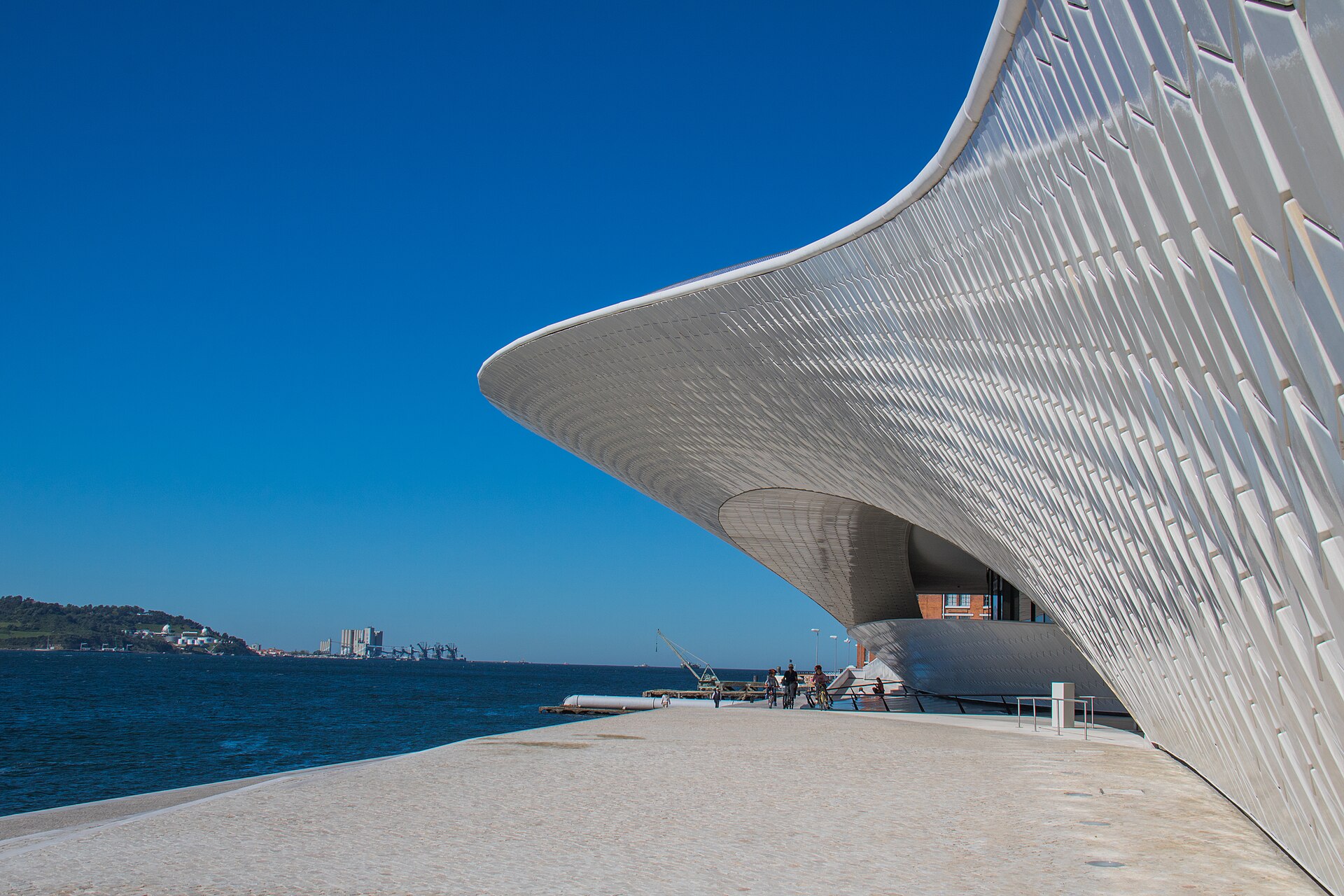
The contemporary building by AL_A holds four galleries sunk below ground level to keep the structure low against the surrounding Belem skyline. Its centrepiece is the Oval Gallery, a sunken oval pit ringed by a ramped walkway, which opened in October 2016 with an installation by Dominique Gonzalez-Foerster as the first chapter of the exhibition Utopia/Dystopia. The other three galleries carry rotating shows of contemporary art, architecture and design.
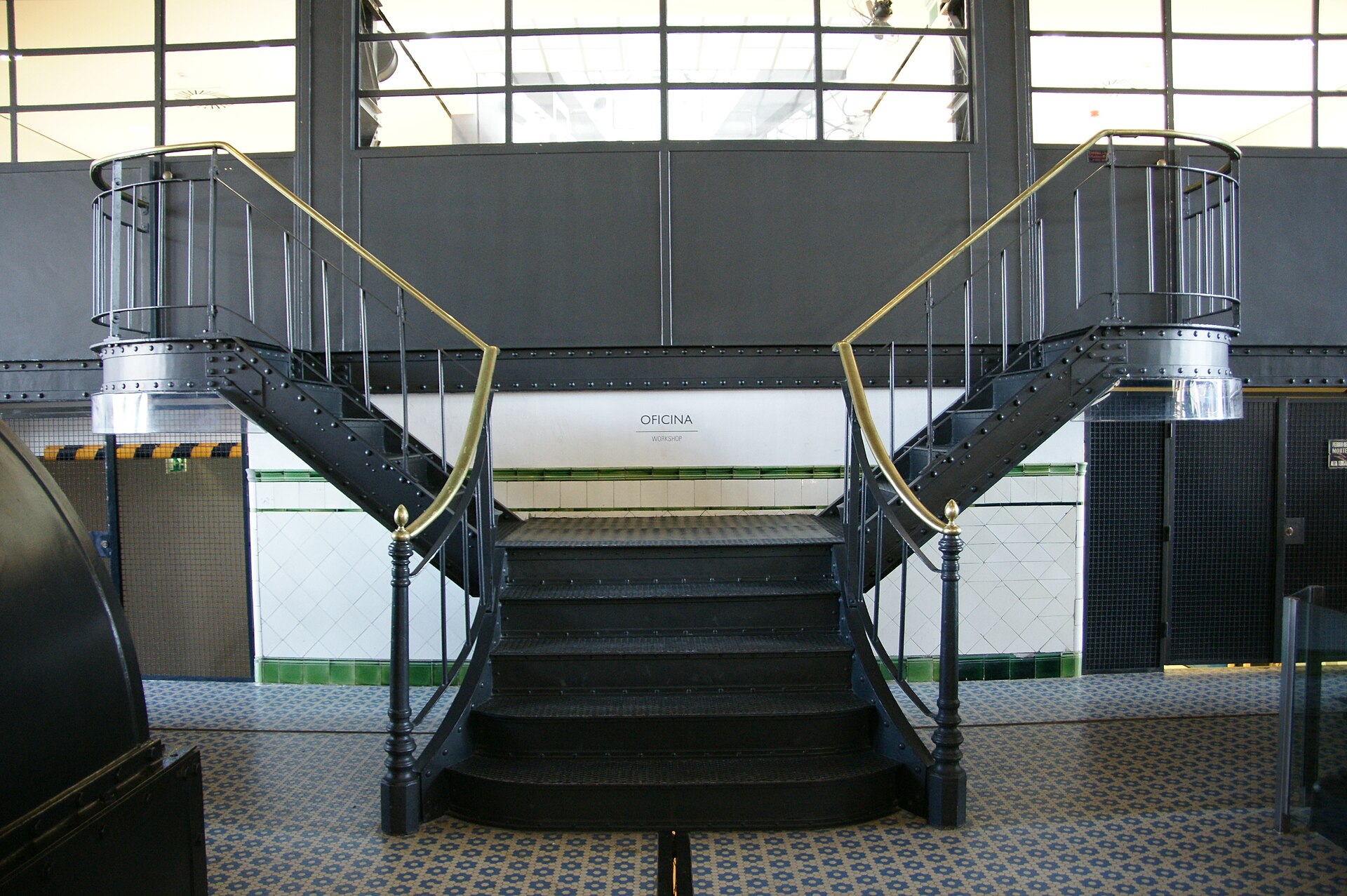
Photograph by Jaimrsilva · CC BY-SA 3.0 Central Tejo, the historic power station building
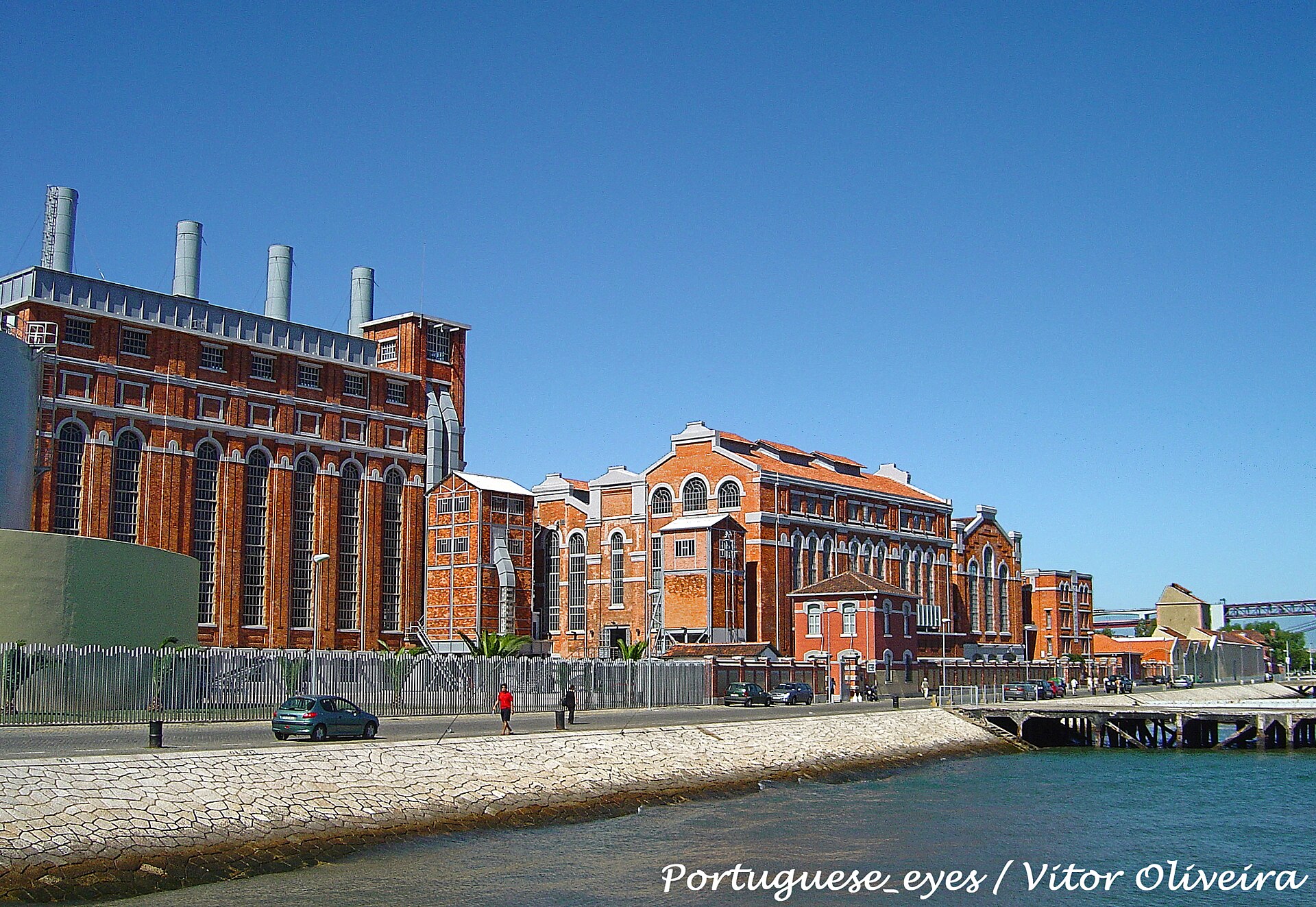
A red brick and iron-framed thermoelectric plant built in stages between the 1910s and 1940s, in operation from 1909 to 1972 and classified a Property of Public Interest in 1986. It now houses temporary exhibitions in its former boiler and machine halls alongside the permanent industrial-heritage display, and its courtyard has hosted the Lisbon Architecture Triennale.
The Electricity Factory, permanent exhibition
Original machinery from the Tejo Power Station, preserved in place inside the former boiler halls, telling the story of how the plant supplied Lisbon with electricity from 1909, continued as a reserve plant after 1951, and closed in 1972. A related section, The History of Energy, opened in 2023 and extends the story to renewable energy and present-day sustainability questions.
MAAT Garden
A 225 metre landscaped strip along the Tagus by Vladimir Djurovic Landscape Architecture, opened in the building's second construction phase in 2017. It combines a wildflower meadow, terraces, a pebble beach and a granite block square, and is used for large-scale outdoor sculpture and public events.
The walkable roof
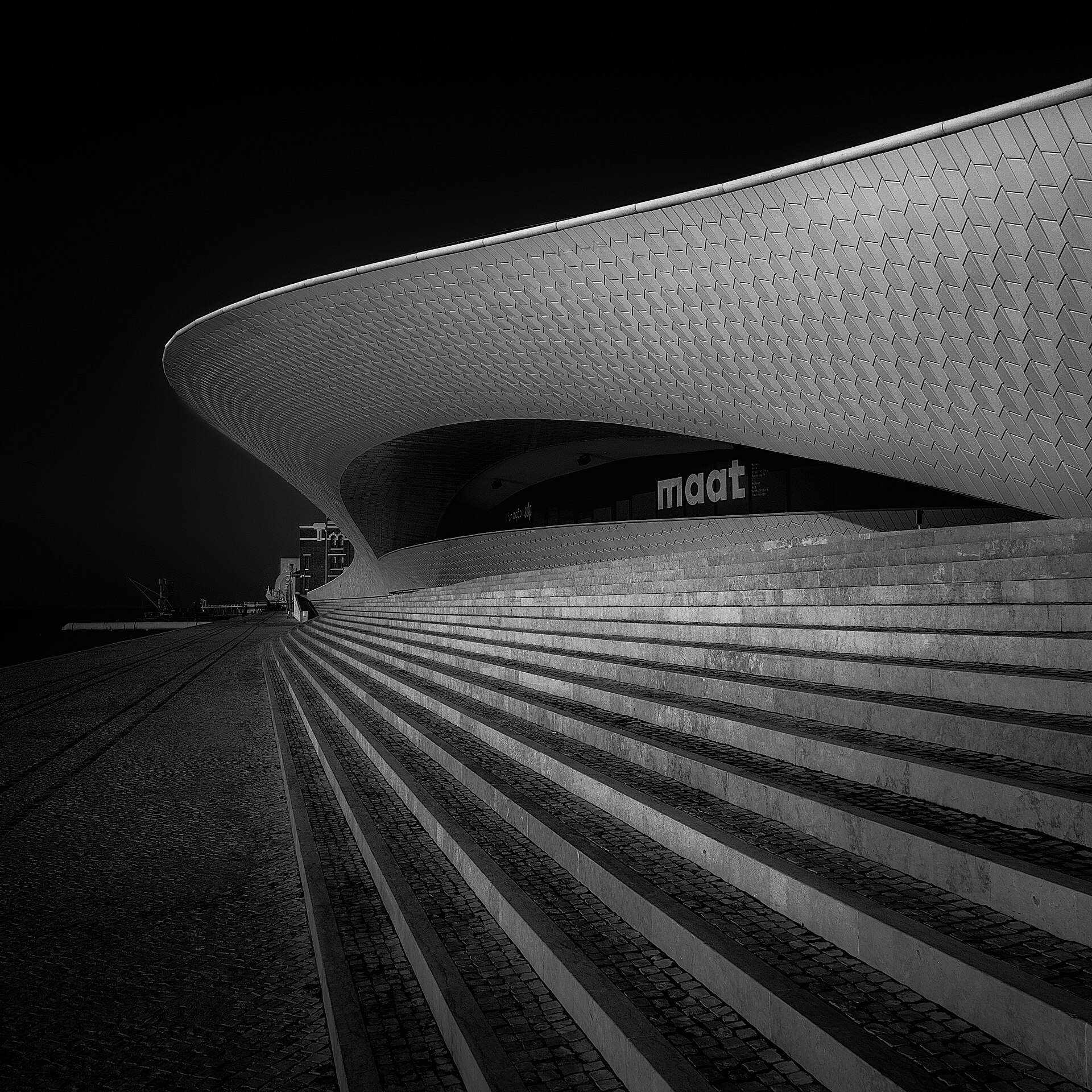
The same white three-dimensional ceramic tiles that clad the building's facade continue up and over an undulating roof that can be walked from the riverside promenade to a cantilevered terrace, with views across the Tagus to the 25 de Abril bridge and the Cristo Rei statue on the far bank.
What to see first
The Electricity Factory permanent exhibition
The original machinery of the Tejo Power Station survives inside a building protected as a Property of Public Interest since 1986, telling the story of how Lisbon was electrified between 1909 and 1972.11
The Oval Gallery
AL_A (Amanda Levete Architects)The sunken oval pit ringed by a ramped walkway is the building's signature interior space, and opened with Dominique Gonzalez-Foerster's installation for the exhibition Utopia/Dystopia in October 2016.7
The walkable roof
AL_A (Amanda Levete Architects)The tile-clad roof doubles as a public route, rising from the riverside walkway to a terrace with views across the Tagus to the 25 de Abril bridge and the Cristo Rei statue.7
The ceramic tile facade
AL_A (Amanda Levete Architects)15,000 white three-dimensional tiles cover the building and are designed to change apparent colour as light moves across them through the day, the detail that gives MAAT its identity from the river.7
The EDP Foundation Art Collection
various contemporary Portuguese artistsAbout 2,500 works by more than 300 artists working in Portugal since the 1960s form the collection the gallery draws its rotating shows from.2
The Pedro Cabrita Reis Collection
assembled by Pedro Cabrita Reis388 works by 74 artists, built as a private collection by the sculptor Pedro Cabrita Reis before its acquisition in 2015 and its addition to the museum's holdings.2
The Energy Heritage Collection
Roughly 3,500 inventoried objects, from Tejo Power Station machinery to household electrical appliances and measuring devices dating back to the 19th century, anchor the technology strand of the museum's three-part remit.2
MAAT Garden
Vladimir Djurovic Landscape Architecture225 metres of wildflower meadow, terraces and a pebble beach along the Tagus, opened in the building's second construction phase and used for large-scale outdoor sculpture and events.2
A power station becomes a museum campus
MAAT is the EDP Foundation's museum on the Belem riverfront, and it did not start from an empty site. Its older half, Central Tejo, is a red brick and iron-framed thermoelectric power station built in stages between the 1910s and 1940s that supplied electricity to the Lisbon region from 1909, continued as a reserve plant after 1951, and closed in 1972. The building was classified a Property of Public Interest in 1986 and, after restoration, reopened as a museum of electricity. In 2016 the EDP Foundation folded that older institution into a single new one, MAAT, and paired it with a purpose-built gallery on the adjoining plot.
The programme at Central Tejo started in June 2016, with exhibitions installed in the renovated power station spaces ahead of the new building's completion. The new MAAT Gallery opened to the press on 2 October 2016 and to the public on 5 October, timed to coincide with the opening of the Lisbon Architecture Triennale, whose 2016 edition used the power station courtyard as one of its main sites. Central Tejo's first show in the merged institution was The World of Charles and Ray Eames, previously staged at the Barbican Centre in London. The new gallery opened with the first chapter of Utopia/Dystopia, an installation by the French artist Dominique Gonzalez-Foerster in the Oval Gallery. Construction finished in phases: the museum itself said the gallery spaces and finishing would not be complete until 2017, and the final stone of the new building was set on 9 March 2017, when a pedestrian bridge linking the roof to the street and Vladimir Djurovic's riverside garden also opened.
Amanda Levete's building on the river
The new building was designed by the London firm AL_A, founded in 2009 by Amanda Levete with Ho-Yin Ng, Alice Dietsch and Maximiliano Arrocet. The EDP Foundation, as a private not-for-profit rather than a public body, was not bound to run an open competition for the commission and chose Levete directly, a point architecture critics later returned to. The result is a low, undulating structure clad in 15,000 white three-dimensional ceramic tiles, its form intended, in AL_A director Maximiliano Arrocet's words to Dezeen at the opening, to evoke the rippling of the river and to shift in apparent colour as light moves across it through the day.
Four galleries are sunk below ground level so the building stays low against the surrounding low-rise Belem streetscape, a deliberate contextual move even as the exterior form reads as a break from its neighbours. The roof continues the tile cladding and rises from the riverside promenade to a cantilevered terrace, open to walkers and offering views across the Tagus to the 25 de Abril bridge, the Cristo Rei statue on the far bank, and inland toward the hilltop Castelo de Sao Jorge. AL_A was commissioned as the centrepiece of a 3.8 hectare waterside art campus that also includes Central Tejo and the garden. The building has since become one of the most photographed pieces of contemporary architecture in Lisbon, and its roof drew crowds and social-media attention from its first public weekend.
What is inside: art, architecture and technology under one name
MAAT organises itself around the three words in its name. The art strand centres on the EDP Foundation Art Collection, about 2,500 works by more than 300 artists working in Portugal from the 1960s onward, supplemented since 2015 by the Pedro Cabrita Reis Collection, 388 works by 74 artists assembled privately by the sculptor before its acquisition. Neither collection hangs as a fixed permanent display; both feed the rotating exhibitions programme across the MAAT Gallery's four spaces, with the Oval Gallery usually given to the largest single installation.
The architecture strand runs through temporary exhibitions and the museum's recurring link to the Lisbon Architecture Triennale, and through the building itself, which the museum treats as part of the exhibit. The technology strand is carried almost entirely by Central Tejo. Its permanent exhibition, The Electricity Factory, keeps the original power station machinery in place inside the former boiler and machine halls and narrates the plant's operating history alongside the broader story of electricity. A newer section, The History of Energy, opened in 2023 and extends that story into renewable energy and current sustainability questions. Behind both sits the Energy Heritage Collection, around 3,500 inventoried objects spanning power station machinery, household electrical appliances and measuring instruments dating back to the 19th century. A single ticket covers both buildings, and the museum functions in part as a science venue with an industrial basis, popular with school groups studying the history of energy production.
Reception: a hit with the public, a harder case with architecture critics
MAAT was popular from its first weekend. Dezeen reported hundreds of visitors at the public opening and heavy social-media attention focused on the roof. The building went on to host high-profile public events, including the Eurovision Song Contest's Blue Carpet ceremony in May 2018, when Lisbon staged the contest. Visitor reviews aggregated on TripAdvisor stand at 3.9 out of 5 across 1,239 ratings, with recurring praise for the architecture, the riverside setting and the industrial-heritage displays at Central Tejo, set against recurring complaints about the volume of exhibition content relative to the ticket price, unannounced closures of parts of the museum, and operational issues such as non-working lifts.
Architecture criticism has been less forgiving than day visitors. Writing in Metropolis in May 2017, Francisco Moura Veiga argued that the building shows what he called complete and utter disregard for its own context, treating neighbouring structures as either obstacles or irrelevant relics, and that the rooftop, framed by EDP as continuous public landscape, is in practice reduced by security guards and prohibitive signage to a corridor for walking through rather than a place people can occupy. He tied this directly to the building's origin as a direct commission from a private foundation, since renamed a going concern of the state-linked Chinese utility China Three Gorges Corporation after its 2016 majority stake in EDP, arguing the result served the client's image before the surrounding neighbourhood. He drew a specific comparison to the building's generic internationalism, suggesting its form could as easily sit in Paris, Frankfurt or Geneva as in Lisbon. Other criticism recorded in visitor reviews is more practical than ideological: the gap between the architectural spectacle and the amount of art or history on show inside it, and poor communication when galleries close for changeover.
Visiting MAAT today
MAAT sits in Belem, a short walk from the Jeronimos Monastery and the Belem Tower and reachable from central Lisbon by the Cascais line train to Belem station, by tram 15, or by several bus routes. A single ticket admits visitors to both the MAAT Gallery and Central Tejo, and the museum states that two wheelchairs are available on request at the ticket offices along with lift and ramp access to upper floors. Large bags, umbrellas and pets are not permitted inside, with an exception made for baby bags. The museum is closed on Tuesdays and on 1 January, 1 May and 25 December, and closes early, at 15:00, on 24 and 31 December.
The institution has not been without incident since 2016. Wikipedia records that in December 2019 part of the false ceiling at the building's entrance collapsed during a storm, an episode not covered in the museum's own visit pages checked for this record. No source consulted here treats the museum as anything other than fully operational today, and the building continues to anchor Belem's cluster of national museums alongside the Jeronimos Monastery, the Belem Tower and the Berardo Collection Museum, a separate institution nearby with its own building and governance.
What visitors say
Visitors respond to MAAT first as an architectural experience and second as a museum of objects. The tiled building, the riverside setting and the walkable roof draw consistent praise. The exhibition content and its value against the ticket price divide opinion more sharply, especially when parts of the museum are closed on the day of a visit without notice. Architecture critics have been harder on the institution than day visitors, reading the building's direct commission by a private corporate foundation, without an open competition, as a mark against it.
What is praised, what is criticised
- Praised: the tiled riverside building and its walkable roof, with views across the Tagus to the 25 de Abril bridge and Cristo Rei
- Praised: the preserved boiler halls and machinery of Central Tejo, read by visitors as well-explained industrial history
- Praised: the riverside setting, the garden and sunset views from the promenade
- Criticised: the amount of exhibition content against the ticket price, a recurring complaint in visitor reviews
- Criticised: sections of the museum closed to the public on the day of a visit without this being flagged when tickets were bought online
- Criticised: operational problems including non-working lifts and weak wayfinding between the two buildings
- Criticised: in architecture criticism, a building described as serving its private corporate patron's image over its own Belem neighbourhood, and a roof promenade policed into a route for walking through rather than a place to gather
Ratings on other platforms
TripAdvisor: 3.9 from 1,239 ratings, read 18 September 2026
A platform average is a tertiary source: it moves, it is not audited, and we quote no visitor's words.
Questions about Museum of Art, Architecture and Technology
Where is Museum of Art, Architecture and Technology?
Av. Brasilia, Belem, 1300-598 Lisbon, Portugal.
How much does it cost to visit?
Adult, resident in Portugal: EUR 12; Adult, resident outside Portugal: EUR 16; Student with ID, resident in Portugal: EUR 9; Student with ID, resident outside Portugal: EUR 12; Age 65 or over, or unemployed, resident in Portugal: EUR 10.2. As confirmed 18 September 2026.
When is it open?
Wed-Mon 10:00-19:00; 24 Dec and 31 Dec 10:00-15:00. Closed: Tuesday. 1 January. As confirmed 18 September 2026.
How do you get there?
Train: Cascais line from Cais do Sodre to Belem station, then a 5-7 minute walk along Av. Brasilia; Tram: Tram 15 from Praca da Figueira or Cais do Sodre, stop Altinho (MAAT); Bus: Lines 714, 727, 729, 732, 751 stop near the museum; Car: Free public car park about 500 metres from the museum, with bicycle parking on site.
What should you see first?
The Electricity Factory permanent exhibition; The Oval Gallery (AL_A (Amanda Levete Architects)); The walkable roof (AL_A (Amanda Levete Architects)); The ceramic tile facade (AL_A (Amanda Levete Architects)); The EDP Foundation Art Collection (various contemporary Portuguese artists); The Pedro Cabrita Reis Collection (assembled by Pedro Cabrita Reis).
What we could not confirm
- Whether the roof promenade functions as genuine public space or is corridor-only under security control is disputed between the museum's own framing and architecture critics such as Francisco Moura Veiga.
- The museum's own visit pages checked for this record did not state a photography policy for visitors.
- The extent and duration of the December 2019 false-ceiling collapse, and any repair record, is not covered on the museum's own site among the pages checked here.
Images
Sources
- 1MAAT, Plan a visit: prices, opening hours, address and recommendations maat.pt/en/plan-a-visit
- 2MAAT, About maat.pt/en/about
- 3Wikimedia Commons, File:The MAAT (34943440096).jpg, photograph by Susanne Nilsson, CC BY-SA 2.0 commons.wikimedia.org/wiki/File:The_MAAT_(34943440096).jpg
- 4Wikipedia, Museum of Art, Architecture and Technology en.wikipedia.org/wiki/Museum_of_Art,_Architecture_and_Technology
- 5TripAdvisor, MAAT - Museu de Arte, Arquitetura e Tecnologia, attraction reviews tripadvisor.com/Attraction_Review-g189158-d10457786-Reviews-MAAT_Museu_de_Arte_Arquitetura_e_Tecnologia-Lisbon_Lisbon_District_Central_Portu.html
- 6Francisco Moura Veiga, Portugal's MAAT Museum a Monument to Corporate Ego, Metropolis, 29 May 2017 metropolismag.com/viewpoints/portugal-maat-museum-monument-corporate-ego/
- 7Jessica Mairs, Amanda Levete's undulating MAAT museum opens on Lisbon waterfront, Dezeen, 6 October 2016 dezeen.com/2016/10/06/amanda-levete-ala-undulating-maat-contemporary-art-museum-maat-opens-belem-lisbon-portugal/
- 8Wikimedia Commons, File:MAAT, Lisbon (45898187305).jpg, photograph by William Warby, CC BY 2.0 commons.wikimedia.org/wiki/File:MAAT,_Lisbon_(45898187305).jpg
- 9Wikimedia Commons, File:Central Tejo - Lisboa - Portugal (6355840107).jpg, photograph by Vitor Oliveira, CC BY-SA 2.0 commons.wikimedia.org/wiki/File:Central_Tejo_-_Lisboa_-_Portugal_(6355840107).jpg
- 10Wikimedia Commons, File:Central Tejo acesso a oficina.jpg, photograph by Jaime Silva, CC BY-SA 3.0 commons.wikimedia.org/wiki/File:Central_Tejo_acesso_%C3%A0_oficina.jpg
- 11MAAT, The Electricity Factory maat.pt/en/event/electricity-factory
- 12Lisbon Portugal Tourism, How to Go to Belem by Train, Tram and Bus lisbonportugaltourism.com/transportation/how-to-go-by-train-bus-and-tram-to-belem-lisbon.html
.jpg)
.jpg)
.jpg)
