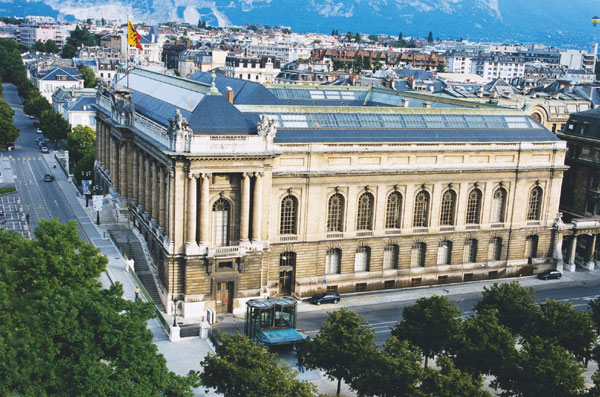
The Musee d'art et d'histoire seen from above, Rue Charles-Galland in the foreground, with the glazed roof over the top-floor painting galleries visible.
Kerschbaumer's, CC BY-SA 3.0Museum of Art and History Geneva
Museum · Musee d'art et d'histoire de Geneve · Founded 1910
Open, admission and hours confirmed 26 August 2026 · 13 sources
On this page 16 sections
ContentsClose
An encyclopaedic civic collection of around 650,000 objects across fifteen millennia, unusually broad for a museum of its size: it is Switzerland's leading collection for classical antiquity, holds the world's largest Liotard pastel collection and largest Hodler drawing collection, and anchors Geneva's own watchmaking history with more than 20,000 horological and enamel objects. Its identifying strength is less any single masterpiece than the range - archaeology, fine art, applied art, horology and numismatics under one roof and one research programme, with active, published provenance work on the Nazi-era and colonial-era material inside that range.
| Local name | Musee d'art et d'histoire de Geneve |
|---|---|
| Kind | Museum |
| Founded | 1910 |
| City and country |  Geneva, Switzerland Geneva, Switzerland |
| Address | Rue Charles-Galland 2, 1206 Geneve, Switzerland |
| Website | mahmah.ch |
| Status | Open, confirmed |
| Record last verified |
Visiting
- Hours
- Tue-Sun11:00 to 18:00
- Thu12:00 to 21:00Late opening (nocturne); replaces the standard Thursday hours
- Closed
- Monday.
- Admission
- Adult - pay what you wishFreeThe MAH, Musee Rath and Maison Tavel all use a 'prix libre' (free-price) ticket: visitors choose and pay their own amount at the desk, before or after the visit. The museum's own guidance suggests a typical Geneva museum ticket runs CHF 5 to CHF 20; some talks, workshops and special events are ticketed separately and must be booked in advance.
- Tickets
- billetterie.mahmah.ch/content The museum's own ticket page.
- Do I need to book?
- No advance booking needed for the permanent collection; some talks, tours and events are ticketed and must be booked ahead
- Address
- Rue Charles-Galland 2, 1206 Geneve, Switzerland MapBus Line 7, stop Musee d'art et d'histoire; lines 3 and 5, stop Athenee; line 92, stop Saint-Antoine; lines 1 and 8, stop Florissant
Tram Lines 12 and 17, stop Rive
Regional rail Leman Express, stop Geneve-Champel - Website
- mahmah.ch
- Telephone
- +41 (0)22 418 26 00
- [email protected]
Before you go how long, access, photography, bags, eating, shop
- How long to allow
- Two to three hours to cover the permanent galleries across the building's four floors
- Access
- Step-free alternate entrance at 9 Boulevard Jaques-Dalcroze, with a call bell and intercom, opposite the Saint-Antoine car park. Tactile Virtuoz floor plans let visually impaired visitors move independently through the fine-art galleries; audio-described podcasts cover individual works; guided visits with a French sign-language (LSF) interpreter and free LSF video guides on Izi.Travel serve deaf and hard-of-hearing visitors; 'easy French' tours are run for visitors with cognitive disabilities. The museum has held the Swiss Label Culture Inclusive since 2019.
- Photography
- Not stated on the museum's own visitor pages at time of research
- Bags
- Free lockers are provided for the day at each of the five MAH sites
- Eating
- Restaurant Le Barocco, in the museum's courtyard, serves food drawn from Geneva regional cooking and its own pastries; independently run but open the same hours as the museum
- Shop
- Books & Co, the museum's bookshop
Prices and hours change. We take them from the institution's own pages and print the day we read them, and you can check the current position at the source we used. Confirm before you travel.
What is inside
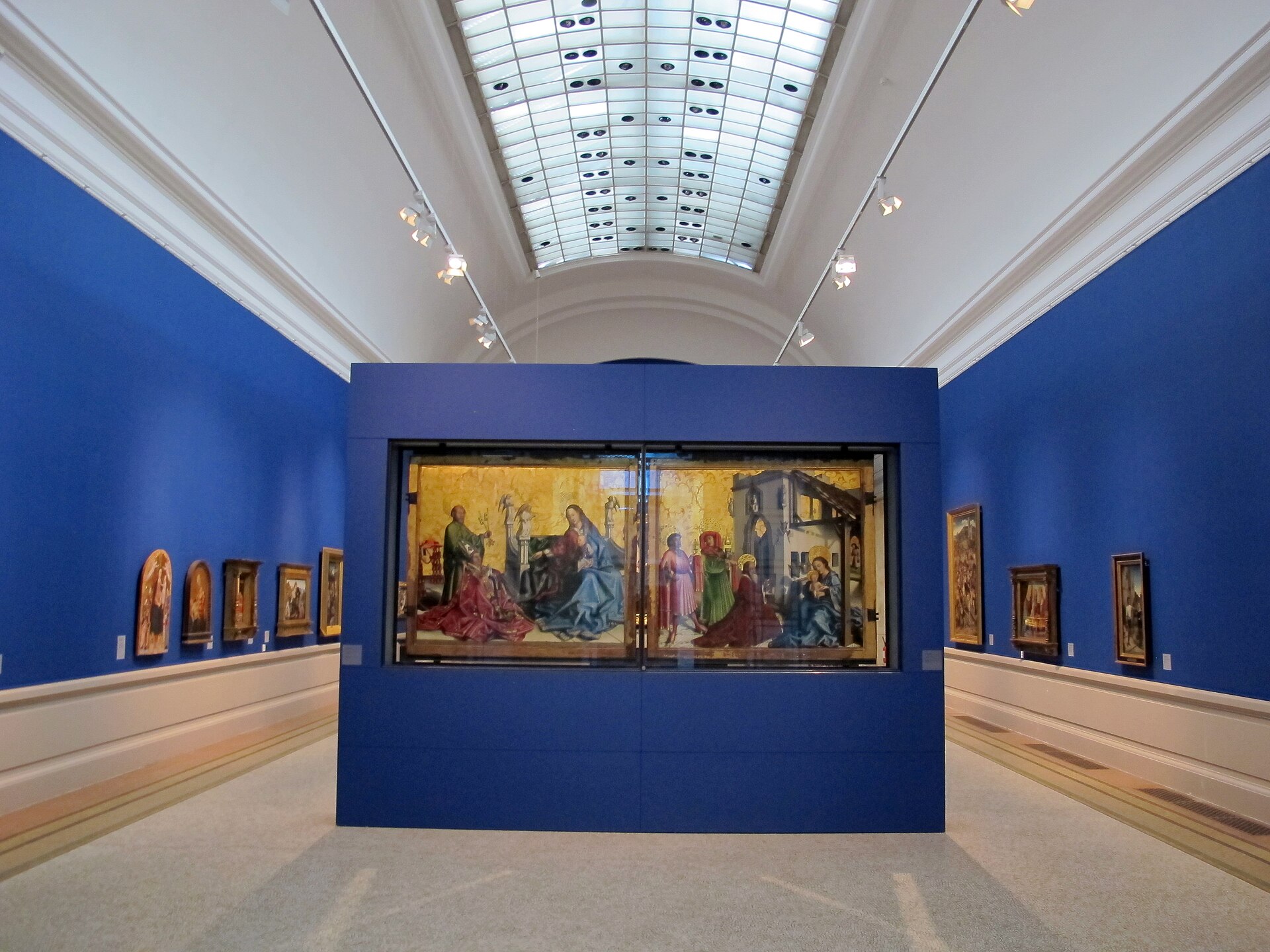
Photograph by Sailko · CC BY 3.0 Beaux-Arts (Fine Arts)
Old master paintings from the Italian, Flemish, Dutch and English schools, Mannerist and Neoclassical canvases, and a strong Swiss holding built around Ferdinand Hodler, Felix Vallotton, Pierre-Louis De la Rive, Alexandre Calame and Jean-Antoine Linck. Twentieth- and twenty-first century works include paintings by Monet, Cezanne, Renoir and Van Gogh, sculpture by Rodin, Hans Arp's portrait of Tristan Tzara, Picasso's Baigneurs a la Garoupe, Jean Tinguely's Si c'est noir, je m'appelle Jean, and pieces by Bram van Velde, Richard Long, Olivier Mosset, John M Armleder and Christian Marclay.
Oeuvres sur papier (Works on Paper)
One of the largest print and drawing collections in Europe, spanning the history of engraving and drawing from the fifteenth century onward. It holds the world's largest collection of pastels by Jean-Etienne Liotard and the largest collection of Ferdinand Hodler drawings, alongside roughly 25,000 rare volumes drawn from the Bibliotheque d'art et d'archeologie.
Archeologie et numismatique (Archaeology and Numismatics)
Fifteen millennia of material from Europe and the Near East, placing the museum first in Switzerland for classical antiquity. Egyptian, Greek and Roman holdings are particularly strong, alongside finds from excavations on Lake Geneva's own shores that document the region's early history. The attached Cabinet de numismatique holds more than 100,000 coins and medals.
Arts appliques (Applied Arts)
Domestic and liturgical objects, measuring instruments and personal accessories from the Middle Ages to the present, covering goldsmiths' work, textiles, furniture, musical instruments, and arms and armour.
Horlogerie, emaillerie, bijouterie et miniatures (Watchmaking, Enamel, Jewellery and Miniatures)
More than 20,000 objects across four connected fields, most of them Geneva-made but including pieces from elsewhere in Switzerland and Europe from the sixteenth century onward - the collection most closely tied to the city's own image as a watchmaking capital.
What to see first
The Miraculous Draught of Fishes
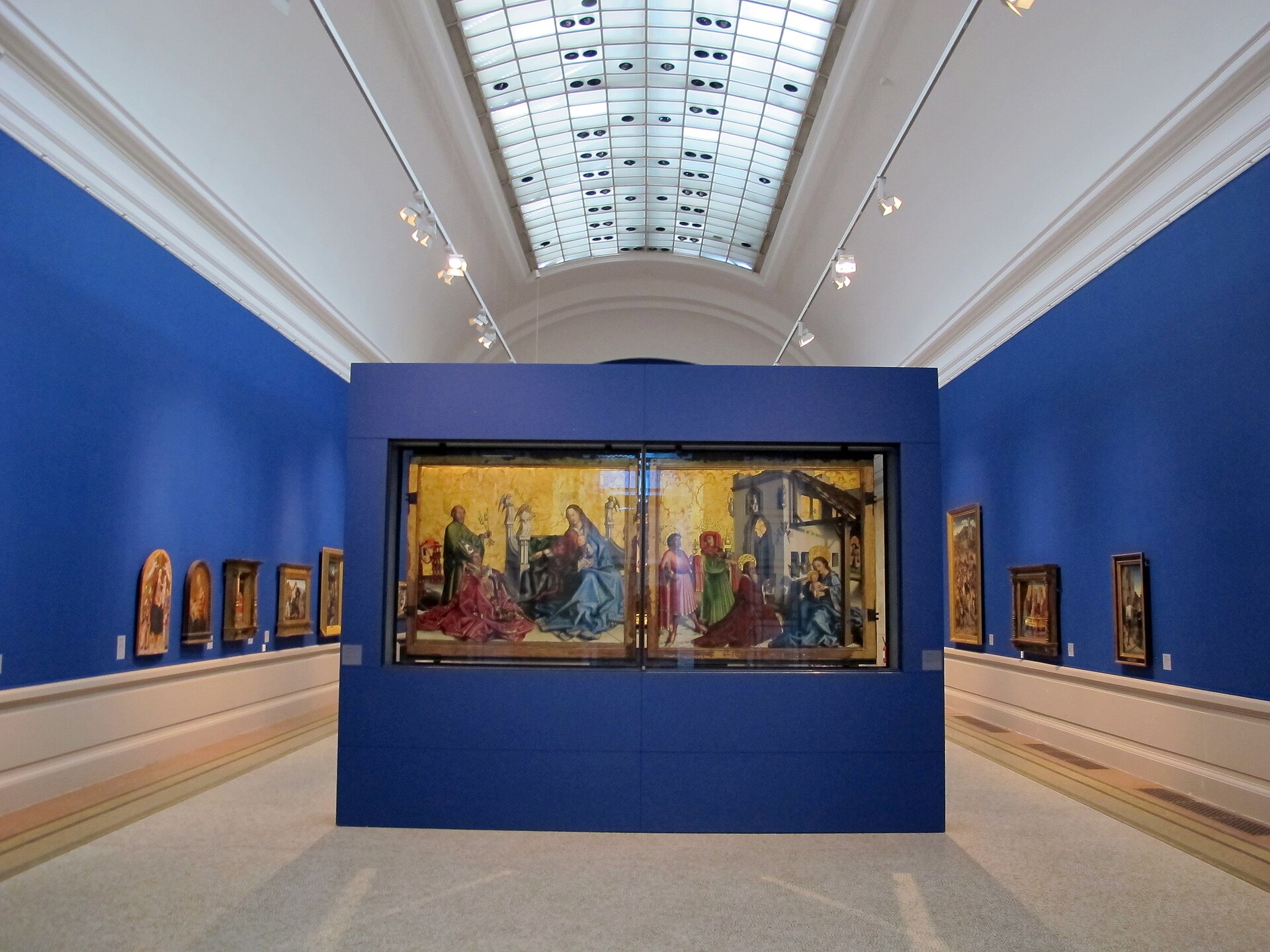
Konrad Witz, 1444A panel from the dismantled Peter's Altar Table, and generally credited as the earliest surviving landscape in European painting based on direct observation of a real place: Witz set the Gospel scene on Lake Geneva itself, with the Mole and the Alps behind Mont Blanc rendered from life rather than invented, and painted Christ's figure without a reflection on the water to mark it as outside nature's rules.10
Baigneurs a la Garoupe
Pablo PicassoPart of the museum's twentieth-century holding inside the Beaux-Arts collection.5
Portrait of Tristan Tzara
Hans ArpA Dada-era portrait bust in the modern sculpture holding.5
Sculpture group
Auguste RodinA group of Rodin sculptures sits alongside the museum's nineteenth-century Swiss painting; the Penseur (The Thinker) is one of the works the museum has produced an audio-described podcast for its visually impaired visitors.6
Pastel portraits, including two presumed likenesses of Marie-Antoinette and Marie-Caroline
Jean-Etienne LiotardThe MAH holds the world's largest collection of Liotard pastels. Two of them, inventoried as showing either Marie-Antoinette of France or her sister Marie-Caroline of Naples, are the subject of an interdisciplinary project begun in 2025 with Oxford University, the Idiap Research Institute and the University of Lausanne's forensic-science school, applying heterogeneous facial recognition and archival research to settle which archduchess is shown; the findings are due in an exhibition running 3 October 2026 to 7 February 2027.7
Persian miniatures
Various, 14th-19th century; Jean Pozzi collectionThe diplomat Jean Pozzi bequeathed roughly 800 Persian miniatures to the museum in 1967, several now ranked among the masterworks of Persian painting; the collection was the subject of an international colloquium held with the University of Geneva in June 2023.7
Paire de pendules a automates et musique, 'La Montagne sacree du taoisme'
Canton (case) and London (movement), 1810-1820An automaton-and-music clock pair, its case built in Guangzhou (Canton) around an English movement, separated in 1959 and reunited in the Geneva collection in 2003; ongoing technical study is using it to trace the two-way exchange of clockmaking and decorative technique between Europe and China.7
Cabinet de numismatique
VariousMore than 100,000 coins and medals, a collection large enough on its own to be treated as a distinct department alongside the archaeology holding.5
Exhibitions on now
- On now29 Jan to 25 Oct 2026Confirmed · check before you travel
- On now3 Oct 2026 to 7 Feb 2027Confirmed , 7 weeks ago
A building funded by one bequest, opened in 1910
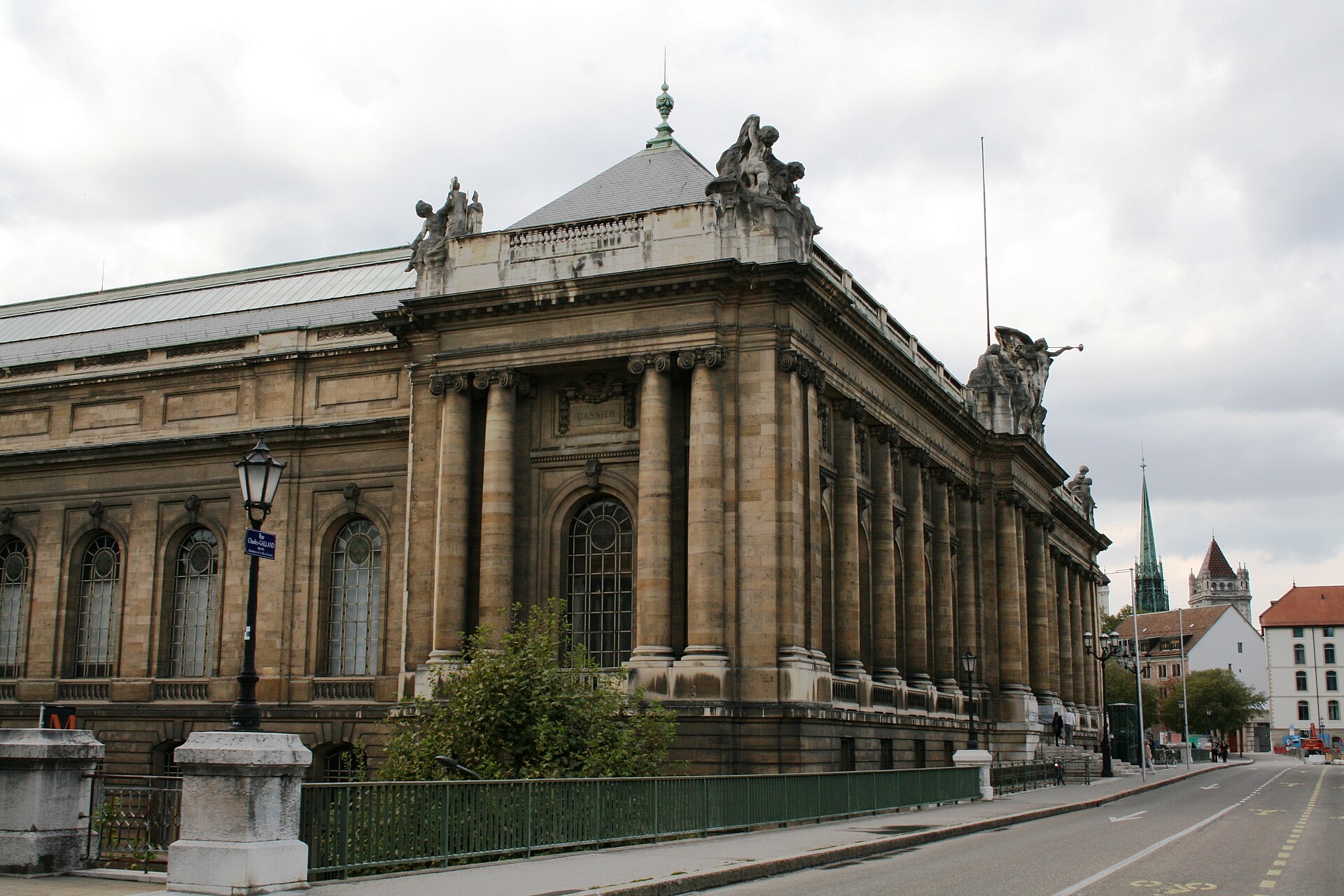
The Musee d'art et d'histoire traces its collections back to 1826 and the city's original Musee des Beaux-Arts, but the building a visitor walks into today is younger. In 1900 the city of Geneva ran an architecture competition for a single new museum to hold its growing and increasingly scattered civic collections; Marc Camoletti's design won, and construction ran from 1903 to 1910, financed by a bequest from Charles Galland, the street the museum still fronts. Camoletti planned a square block, roughly 60 metres on a side, wrapped around an interior courtyard, and gave it four floors of galleries totalling around 7,000 square metres. Paul Amlehn carved the exterior's sculptural programme, allegorical figures for the arts, archaeology and applied arts crowning the corners, and a frieze naming Geneva's own celebrated artists, Liotard, Hodler and Calame among them, over the entrance. The building opened to the public in 1910 and has been the anchor of Geneva's museum landscape since.
The museum today is one institution spread across five addresses: the main building on Rue Charles-Galland; the Musee Rath on Place de Neuve, used only for temporary exhibitions and Geneva's oldest purpose-built exhibition space; the Maison Tavel, the city's oldest surviving house, given over to Geneva's own history; the Bibliotheque d'art et d'archeologie, a specialist research library; and GamMAH, a smaller project and event space. Each keeps its own opening hours and its own access arrangements, but all fall under one director and one collection.
Five departments, one encyclopaedic collection
The museum's own count runs to roughly 650,000 objects spanning fifteen thousand years, organised into five departments. Beaux-Arts holds the paintings and sculpture, from Italian, Flemish, Dutch and English old masters through a strong Swiss nineteenth-century holding, Hodler, Vallotton, De la Rive and Calame among them, into the twentieth and twenty-first centuries with Monet, Cezanne, Renoir, Van Gogh, Rodin, Picasso, Arp and a run of postwar and contemporary Swiss and international artists. Oeuvres sur papier, works on paper, is ranked among the largest print and drawing holdings in Europe and includes the world's largest collection of Liotard pastels and of Hodler drawings, joined by roughly 25,000 rare books from the museum's own library. Archeologie covers fifteen millennia of material from Europe and the Near East, strong enough in Egyptian, Greek and Roman antiquities to put the museum first in Switzerland for the classical world, and carries within it a numismatic cabinet of more than 100,000 coins and medals. Arts appliques gathers domestic and liturgical objects, furniture, textiles, musical instruments and arms and armour from the Middle Ages onward. And the horology department, covering watchmaking, enamelling, jewellery and miniatures, holds more than 20,000 objects, the collection most directly tied to Geneva's own reputation as a centre of fine watchmaking.
The scale of the holding is also the museum's stated problem: the city's own planning documents for the museum's renovation put less than three percent of the permanent collection on display at any time, the rest in storage for want of gallery space, which is the central argument behind the extension project described below.
The Witz altarpiece and what else is on the walls
The single work most identified with the museum is Konrad Witz's Miraculous Draught of Fishes, a 1444 panel from a dismantled altarpiece known as Peter's Altar Table. It shows the Gospel scene of Christ appearing to his disciples after the resurrection, but Witz set it not on the Sea of Galilee but on Lake Geneva itself, painting the Mole and the Alps behind Mont Blanc from direct observation rather than invented convention - a step art historians treat as one of the earliest true landscapes in European painting, done a generation before the practice became common. Witz also studied how a reflection behaves on water closely enough to leave Christ's figure alone without one, marking him as standing outside the physical rules that govern everything else in the scene.
Alongside it the fine-art galleries carry Picasso's Baigneurs a la Garoupe, Hans Arp's portrait of Tristan Tzara, a group of Rodin sculptures including a cast of the Penseur, and Jean Tinguely's Si c'est noir, je m'appelle Jean, set against the museum's deep holding of nineteenth-century Swiss landscape and portrait painting. The pastels department is anchored by the largest collection of Jean-Etienne Liotard in the world, including two portraits whose sitter is disputed between Marie-Antoinette of France and her sister Marie-Caroline of Naples - a question a facial-recognition research project begun in 2025 with Oxford University, the Idiap Research Institute and the University of Lausanne's forensic-science school is now working to settle, ahead of an exhibition running from October 2026 into February 2027.
A museum under one director since 2019, built for more than looking
The museum has had eight directors since 1910: Alfred Cartier, Waldemar Deonna, Pierre Bouffard (twice, either side of an interim run by Edmond Sollberger), Claude Lapaire, Caesar Menz, an interim spell under Boris Drahusak, Jean-Yves Marin, and, since November 2019, Marc-Olivier Wahler. Wahler arrived having run the MSU Broad Museum at Michigan State, the Palais de Tokyo in Paris and the Swiss Institute in New York, and has organised more than 400 exhibitions over his career. His stated concept for the MAH, which he calls the 'musee multifrequence', treats the museum as a place whose galleries can also hold reading corners, work space and rest areas rather than serving only as a route between artworks, and from 2024 the museum began building new spaces on that basis inside the existing building: rest areas, reading corners, and reworked circulation, alongside the permanent collection rather than instead of it. The museum has also developed a signature scent, made with the firm DSM Firmenich and drawn from the Geneva landscapes shown in its own paintings, as one part of a wider push into non-visual ways of experiencing the collection.
Provenance work: Nazi-era holdings, colonial claims, and what the museum has actually published
Switzerland was one of 44 states that signed the non-binding 1998 Washington Principles on Nazi-confiscated art, and since 2017 the Federal Office of Culture has funded provenance research at cantonal, communal and private museums toward that commitment. The MAH's Beaux-Arts department has drawn on that funding for three successive projects: a first phase running from January 2019 to June 2020 examined the provenance of around 70 paintings, a second phase in 2021 and 2022 covered a further 52, and a third ran in 2023 and 2024; final reports and object-level provenance notices from the completed phases are published on the museum's own research pages. Separately, Swiss museums collectively identified 96 objects from the 1897 British military expedition against Benin, with 53 assessed as looted or likely looted, and the participating institutions, the MAH among them, declared themselves open to a transfer of ownership for those pieces - the museum's own account of this does not give a Benin-specific figure for its own holding, and that gap is worth flagging rather than assuming a number that has not been published.
The museum also runs a longer-term cataloguing project on its roughly 250 French nineteenth-century paintings with the University of Geneva's art history unit, a sequel to a 1996 catalogue of its sixteenth- and seventeenth-century French paintings, explicitly built to surface provenance, attribution and past conservation choices rather than only to describe the works.
From Jean Nouvel to Umwelt: a renovation that has already failed once
The museum has been trying to expand for more than two decades. In 1998 the city selected Jean Nouvel's studio to design an extension and restoration; his scheme, built around a steel-and-glass core, ran into years of conflict with heritage protection over the building's Italianate courtyard and arcaded portico. The State Council classified the building as a protected monument in 2015 while folding Nouvel's project into that classification, over the objections of the heritage group Patrimoine Suisse Geneve, which argued the design would remove the courtyard and its arcade outright. Geneva voters settled the question directly: on 28 February 2016 they rejected the Nouvel project in a referendum, with 54.34 percent voting against.
The city restarted the process in 2018 and ran a fresh international competition in 2024. The winning entry, named Umwelt, comes from the Geneva-based team of Fanny Noel Diogo Lopes Architecture, Atelier Plum and AFRY Suisse, and is built around expanding exhibition space, improving technical infrastructure and accessibility, and reconnecting the museum to the streets and gardens around it rather than replacing the 1910 building's character. On the timeline the city itself has published, an additional study-credit request could go to the cantons in 2028 and construction could begin in 2030 if that schedule holds - a target that, on this project's own history, is exactly the kind of estimate a reader should treat as provisional rather than booked. Nothing about this project changes how the museum operates today: the main building, the courtyard and the galleries described throughout this page are open on their normal hours while the design and approval process continues.
Visiting the MAH now
The main building is open Tuesday to Sunday from 11:00 to 18:00, with a late Thursday opening running from 12:00 to 21:00; it is closed Monday. Entry to the permanent collection runs on a 'prix libre', free-price, basis at the MAH, the Musee Rath and the Maison Tavel alike: a visitor pays whatever amount they choose at the desk, with the museum suggesting a typical Geneva museum ticket runs CHF 5 to 20 as a guide rather than a fixed price. Some talks, workshops and ticketed events sit outside that system and need booking in advance through the museum's own ticketing site.
Access for visitors with reduced mobility is through a step-free entrance at 9 Boulevard Jaques-Dalcroze, opposite the Saint-Antoine car park, reached with a call bell; the museum has held Switzerland's Label Culture Inclusive since 2019 and runs tactile floor plans, audio-described podcasts, French sign-language guided visits and free LSF video guides, and 'easy French' tours for visitors with cognitive disabilities. Restaurant Le Barocco sits in the museum's courtyard on the same hours as the museum itself, independently managed, and the Books & Co shop sells museum publications and design objects. A typical visit covering the permanent galleries runs two to three hours; the top-floor painting galleries are the part visitors most consistently recommend building time for.
What visitors say
Visitors consistently single out two things: that the permanent collection can be seen for whatever the visitor chooses to pay, and that the encyclopaedic range of the holding - archaeology through to twentieth-century painting - rewards a long visit without the crowds of a major European capital's flagship museum. The most common complaint is that presentation is uneven between floors: the fine-art galleries at the top are well lit and well hung, while some of the lower-floor rooms feel sparse or over-full by comparison, and English-language labelling is thin in places.
What is praised, what is criticised
- Praised: the pay-what-you-wish entry, which keeps the whole permanent collection genuinely open regardless of budget
- Praised: the top-floor painting galleries, for their lighting and the quality of the hang
- Praised: the quiet, uncrowded pace of a visit compared with larger European encyclopaedic museums
- Praised: the central Old Town location, an easy walk from the lake
- Criticised: inconsistent presentation between floors, with some rooms sparsely filled and others crowded
- Criticised: limited English-language labelling in parts of the museum
- Criticised: a rotating floor-access system at busy times that some visitors say forces a rushed visit
Ratings on other platforms
TripAdvisor: 4.2 from 509 ratings, read 26 August 2026
A platform average is a tertiary source: it moves, it is not audited, and we quote no visitor's words.
Questions about Museum of Art and History Geneva
Where is Museum of Art and History Geneva?
Rue Charles-Galland 2, 1206 Geneve, Switzerland.
How much does it cost to visit?
Adult - pay what you wish: free. As confirmed 26 August 2026.
When is it open?
Tue-Sun 11:00-18:00; Thu 12:00-21:00. Closed: Monday. As confirmed 26 August 2026.
How do you get there?
Bus: Line 7, stop Musee d'art et d'histoire; lines 3 and 5, stop Athenee; line 92, stop Saint-Antoine; lines 1 and 8, stop Florissant; Tram: Lines 12 and 17, stop Rive; Regional rail: Leman Express, stop Geneve-Champel.
What should you see first?
The Miraculous Draught of Fishes (Konrad Witz, 1444); Baigneurs a la Garoupe (Pablo Picasso); Portrait of Tristan Tzara (Hans Arp); Sculpture group (Auguste Rodin); Pastel portraits, including two presumed likenesses of Marie-Antoinette and Marie-Caroline (Jean-Etienne Liotard); Persian miniatures (Various, 14th-19th century; Jean Pozzi collection).
What we could not confirm
- The museum's own account of the 96 contested Benin objects held collectively by Swiss museums does not break out how many, if any, are held by the MAH itself.
- Whether the 2030 construction target for the Umwelt extension holds is untested against a project history that has already produced one rejected scheme (Jean Nouvel, rejected by referendum 2016) and a six-year gap before the current design was chosen.
Images
Sources
- 1MAH, homepage mahmah.ch/
- 2MAH, Horaires & Acces (hours, address, contact, transport, restaurant) mahmah.ch/preparez-votre-visite/horaires-acces
- 3MAH, Tarifs & Billetterie (admission) mahmah.ch/preparez-votre-visite/tarifs-billetterie
- 4MAH, A propos / MAH (history, director, multifrequence concept, olfactory signature) mahmah.ch/propos/mah
- 5MAH, A propos de la Collection (five departments, named works) mahmah.ch/collection/propos-de-la-collection
- 6MAH, Accessibilite mahmah.ch/preparez-votre-visite/accessibilite
- 7MAH, Projets de recherche (provenance research, Liotard facial-recognition project, Pozzi collection, automaton clocks) mahmah.ch/mah-recherche/projets-de-recherche
- 8Wikimedia Commons, File:Musee d'Art et d'Histoire de Geneve.jpg (licence, author, date) commons.wikimedia.org/wiki/File:Mus%C3%A9e_d%27Art_et_d%27Histoire_de_Gen%C3%A8ve.jpg
- 9Wikipedia, Musee d'Art et d'Histoire (Geneva) (, building history and department list) en.wikipedia.org/wiki/Mus%C3%A9e_d%27Art_et_d%27Histoire_(Geneva)
- 10Wikipedia, The Miraculous Draft of Fishes (Witz) (, work detail and art-historical significance) en.wikipedia.org/wiki/The_Miraculous_Draft_of_Fishes_(Witz)
- 11Ville de Geneve, Agrandissement et restauration du Musee d'art et d'histoire (MAH) - official city renovation project page geneve.ch/themes/amenagement-construction-energie/construction-entretien-renovation-batiments/futurs-projets/musee-art-histoire-geneve-mah
- 12Le Journal des Arts, 'Le MAH de Geneve enfin pret pour sa premiere grande renovation' (Jean Nouvel history, 2016 referendum, Umwelt competition) lejournaldesarts.fr/patrimoine/le-mah-de-geneve-enfin-pret-pour-sa-premiere-grande-renovation-177871
- 13TripAdvisor, Musee d'art et d'histoire (MAH) attraction page (rating, visitor consensus, ) tripadvisor.com/Attraction_Review-g188057-d195986-Reviews-Musee_d_art_et_d_histoire_MAH-Geneva.html
