Closed to visitors - not permanently
Museum Mayer van den Bergh is currently closed, on the evidence sourced below.
Expected to reopen: Renovation work will begin in 2027 and the museum reopening is scheduled for 2030 (the museum's own statement); a Brussels Times report filed at the moment of closure in April 2025 cited a 2029 target instead · a target, not yet confirmed
Closure confirmed 18 September 2026 from the institution's own page. We re-check this page on a schedule and will update it, from the institution's own announcement, the moment it reopens.
On this page 14 sections
ContentsClose
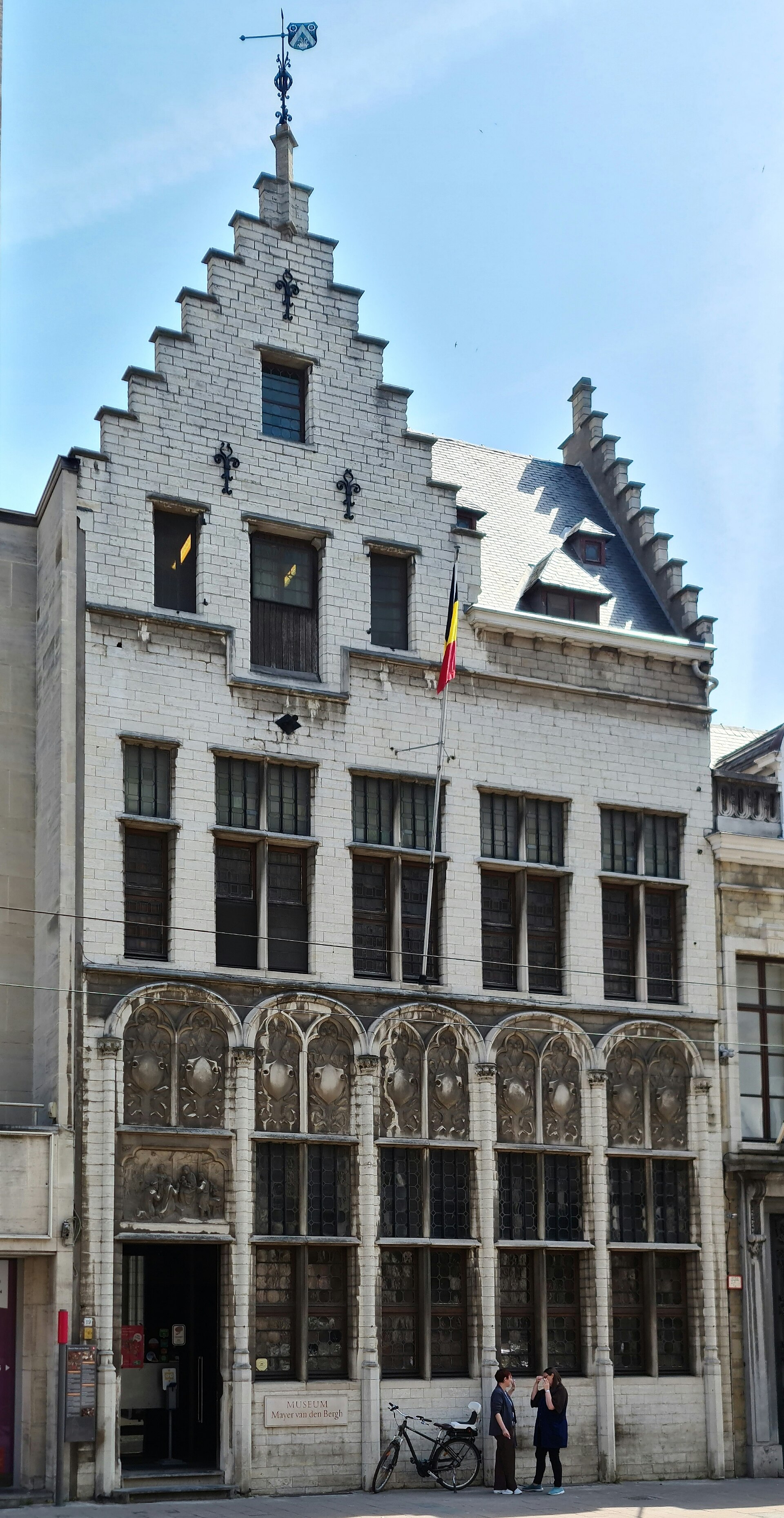
Museum Mayer van den Bergh is a single collector's museum rather than an encyclopaedic one, and its strength follows directly from that: depth in late-medieval and Northern Renaissance painting, sculpture, illuminated manuscripts and applied art, all bought and arranged by one connoisseur inside a single decade and then frozen by his mother's will into the display sequence he left behind. Its Bruegel holdings, though only two paintings, are the whole of what Flanders has of the Elder; its sculpture collection has been ranked the second most important in Belgium; and its manuscript holdings, led by the Mayer van den Bergh Breviary, sit at the top end of Ghent-Bruges illumination. This is not the place for breadth across period, geography or medium in the way the Royal Museum of Fine Arts Antwerp or the Rubens House pursue their own remits; it is the place for the concentrated, personally chosen taste of one late-nineteenth-century collector, displayed inside the rooms he built to hold it.
| Kind | Museum |
|---|---|
| Founded | 1904 |
| City and country |  Antwerp, Belgium Antwerp, Belgium |
| Address | Lange Gasthuisstraat 19, 2000 Antwerp, Belgium |
| Website | museummayervandenbergh.be |
| Status | Closed temporarily, confirmed 18 September 2026 |
| Record last verified | 18 September 2026 |
Visiting
- Hours (pre-closure)
- Tue-Sun10:00 to 17:00Last tickets sold at 16:45. Hours are for the Beloved exhibition at the Maagdenhuis, not the closed museum building
- 24 and 31 December10:00 to 15:00Last tickets sold at 14:00
- Closed
- Monday, except Easter Monday and Whit Monday. 1 January. 1 May. 25 December.
- Admission (pre-closure)
- Adult (26 and over)EUR 10Admits to the Beloved exhibition at the Maagdenhuis while the museum building is closed
- Reduced (18-25, groups of 12 or more, A Card holders, when the museum is not fully wheelchair accessible)EUR 6
- FreeFreeUnder 18; UitPAS Preferential Category holders; Museum Pass and Antwerp City Pass holders; ICOM card holders; school groups with a teacher; companions of disabled visitors
- Combined ticket with RubenshuisEUR 14Ticket-desk only, valid two days, combines the Beloved exhibition with the Rubens Experience and garden at the Rubenshuis
Free entry: First Tuesday of the month, for Antwerp residents holding an A Card- Do I need to book?
- Yes. Only visitors with a valid timed e-ticket are admitted; groups without a guide must book in advance because gallery capacity at the Maagdenhuis is limited
- Address
- Lange Gasthuisstraat 19, 2000 Antwerp, Belgium MapOn foot About 20 minutes' walk from Antwerp-Centraal railway station
Tram, pre-metro, bus and water bus Reachable by De Lijn tram, pre-metro and bus routes and by the water bus; the temporary venue, the Maagdenhuis, is at Lange Gasthuisstraat 33, about 100 metres from the closed museum building at number 19 - Website
- museummayervandenbergh.be
- Telephone
- +32 3 338 81 88
- [email protected]
Before you go how long, access, photography, bags, eating, shop
- How long to allow
- Not stated by the museum; the temporary display is a single exhibition floor rather than the full historic house
- Access
- The closed museum building has steps, narrow corridors and tight corners. The temporary exhibition rooms at the Maagdenhuis are wheelchair accessible with a companion; no wheelchairs are available on site but foldable stools are provided, there are no adapted sanitary facilities, and a free guide is available at the front desk for visitors with a hearing disability. Guide dogs are welcome and companions of disabled visitors enter free
- Photography
- Not stated on the museum's practical-information page
- Bags
- Coats, rucksacks and umbrellas must be stored in a locker; rucksacks are not permitted in the exhibition, though baby carriers and slings are allowed
- Eating
- Samenloop restaurant, the Maagdenhuis's own kitchen, which trains refugees and non-Dutch-speaking newcomers and changes its menu every two months with a guest chef
- Shop
- Museum shop at the Maagdenhuis, where the annual Museum Pass (EUR 64.95) can be bought in person or online
The museum is closed (see above). These are the figures published before the closure, kept here for a visitor planning ahead rather than presented as bookable today, and you can check the current position at the source we used. We will re-confirm them once it reopens.
What is inside
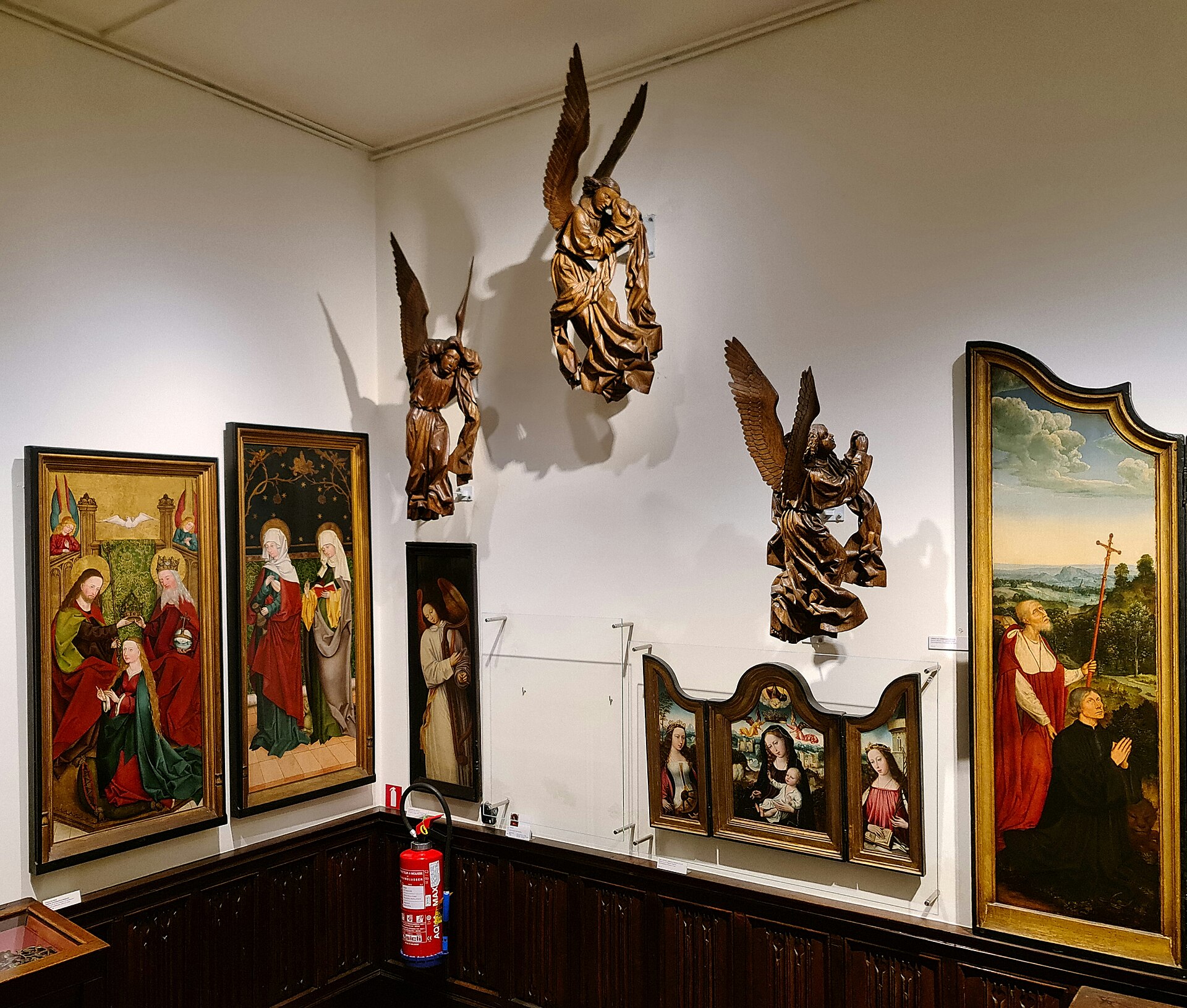
Photograph by Ricardalovesmonuments · CC BY-SA 4.0 The Gothic rooms
The sequence of rooms in late-medieval style that opens the historic house museum, hung with polyptychs and devotional panels and lined with carved and polychromed wooden sculpture, including mourning angels and altar figures of the kind visible in the museum's own published interior photographs.
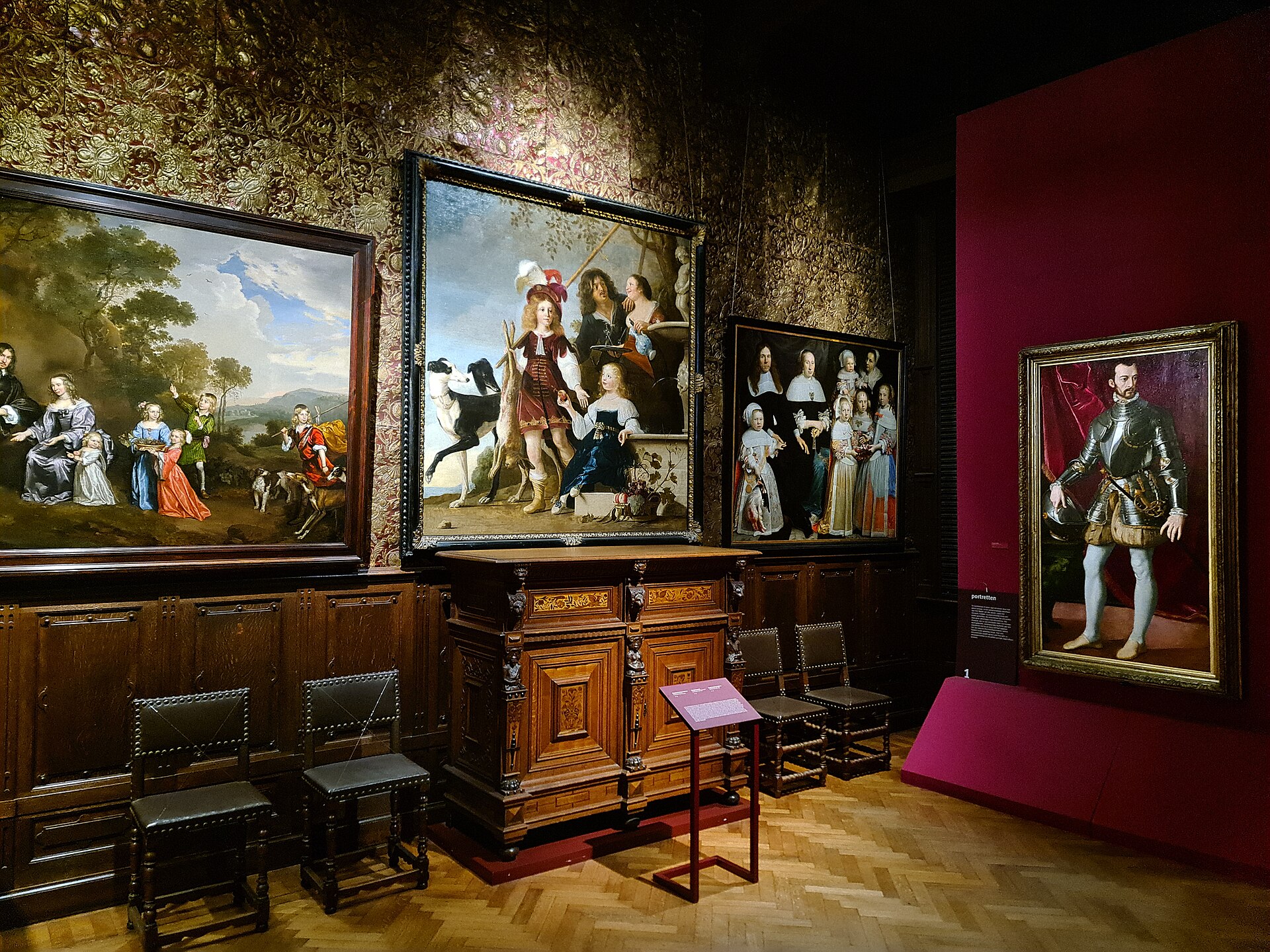
Photograph by Ricardalovesmonuments · CC BY-SA 4.0 The Renaissance and portrait galleries
Rooms wallpapered in gilt-tooled leather, one of the interior features Fritz Mayer van den Bergh collected in its own right, hung with sixteenth- and seventeenth-century family and individual portraits including a 1625 Antwerp family portrait by Joris Vekemans, displayed above carved oak cabinets, chests and chairs original to the collection.
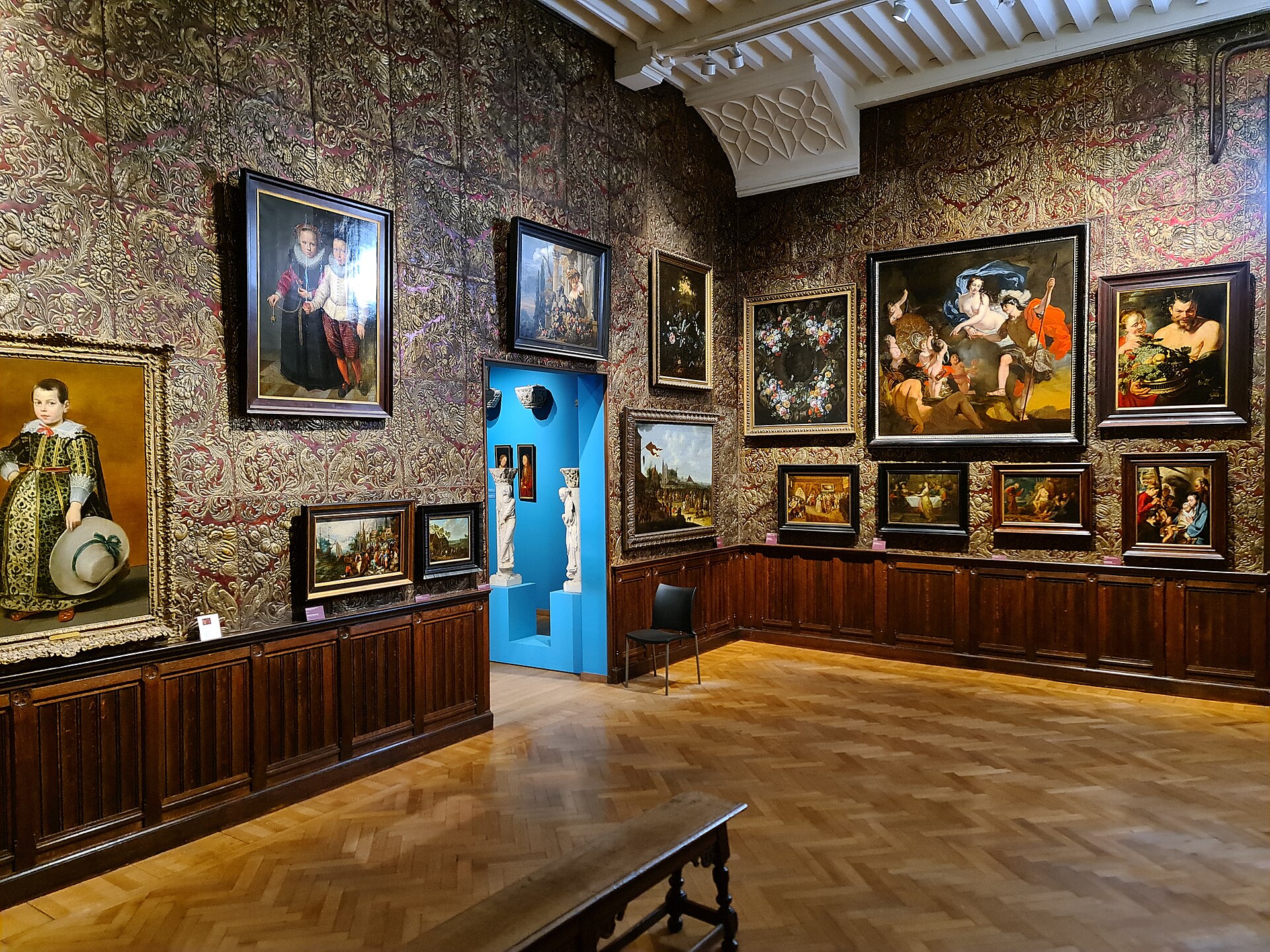
Photograph by Ricardalovesmonuments · CC BY-SA 4.0 The sculpture and applied-arts gallery
A vaulted room combining painting, sculpture and decorative art, including a tower-shaped gilded retable and a smaller travelling retable with figurines made for private devotion, shown together with the applied arts, glass, metalwork and ceramics that made up Fritz Mayer van den Bergh's wider collecting interest beyond painting.
The Library
A room fitted out in seventeenth-century style and filled with portraits, part of the sequence of period rooms Fritz Mayer van den Bergh assembled inside the new building to display his applied-arts holdings alongside the paintings and sculpture, following his mother's stipulation that the collection remain arranged exactly as he had left it.
The Salon
A ground-floor room decorated in eighteenth-century Louis XVI style, the only interior surviving today from the Mayer van den Bergh family's own occupancy of the site rather than from the museum Henriette built afterward; most of the family's original furnishings, including the courtyard and the Great Gothic Hall, have since disappeared and are due to be reconstructed under the current rebuilding project.
The corner townhouse and new wing (under construction)
The former Antwerp district house on the corner of Lange Gasthuisstraat and Arenbergstraat, the Mayer van den Bergh family's own home from 1862 and Fritz's childhood house, is being restored and joined to the museum together with a new building at the rear, so that a future visit begins in the family residence itself before entering the 1904 museum, arranged as far as possible back to its condition when it opened.
What to see first
Mad Meg (Dulle Griet)
Pieter Bruegel the Elder, circa 1561-1563Bruegel's apocalyptic vision of an armoured giantess leading an army of women through the mouth of Hell, bought by Fritz Mayer van den Bergh for 488 Belgian francs after it surfaced at a Cologne auction having been presumed lost; a recent conservation campaign recovered a blue-green sky that had lain hidden under old varnish and overpaint for decades.5
The Twelve Proverbs
Pieter Bruegel the ElderA set of twelve small painted roundels illustrating Netherlandish proverbs, one of only two works by Bruegel the Elder held anywhere in Flanders, the other being Mad Meg in the same room.4
The Mayer van den Bergh Breviary
The Maximilian Master, the Master of James IV of Scotland, Gerard Horenbout, Gerard David and workshop, circa 1510-1515An illuminated prayer book from the final flowering of the Ghent-Bruges school, with 36 full-page miniatures including a cycle of the months; the single highest sum Fritz Mayer van den Bergh ever paid for an acquisition, 35,500 francs in 1898, and its Portuguese-language rubrics suggest it may have been made for the Portuguese court.7
Christ and St John the Apostle
Master Heinrich von Konstanz, circa 1280-1290A polychrome sculpture group made shortly before 1300 for the Dominican convent of Sankt Katharinental in Switzerland, showing John resting his head on Christ's chest with their robes carved as a single intertwined form; one of the defining works of the medieval Christus-Johannes-Gruppe devotional type, made as an aid to a nun's personal contemplation of Christ.6
A travelling altar of panels predating Jan van Eyck
Unknown maker, circa 1400A rare survival from before the generation of Netherlandish painting that Van Eyck came to define, cited by the museum among its own highlights for its exceptional condition and early date.4
Family portrait
Joris Vekemans, 1625A formal group portrait commissioned by a wealthy Antwerp family, part of the run of seventeenth-century portraiture displayed in the gilt-leather-hung rooms of the historic house.4
A gilded tower retable
Unknown makerA tower-shaped retable combining painted panels and carved and gilded sculpture, one of the applied-arts objects Fritz Mayer van den Bergh collected alongside painting to furnish the museum's period rooms.4
Late-medieval devotional sculpture, including carved angels
Various South Netherlandish carvers, 15th-16th centuryPolychromed wooden altar figures and mourning angels displayed through the Gothic rooms, part of the sculpture holdings that a 2019 survey of the museum called the second most important in Belgium.13
A collector who built one of Europe's great private museums in a decade
Fritz Mayer van den Bergh was the son of a wealthy Antwerp spice and drug trader and a mother, Henriette, who came from money of her own and shared his taste for art. After his father's death left him a substantial inheritance, Fritz spent barely ten years, from the early 1890s until his sudden death in 1901 at the age of 43, assembling roughly a thousand objects: paintings, illuminated manuscripts, sculpture, tapestries and applied art from the Northern Renaissance and the late Middle Ages, a period most of his contemporaries considered unfashionable. He studied what he bought and worked through an extensive network of dealers and scholars across Europe, and he had an eye that repeatedly found things other buyers had missed. His single most consequential find came through a tip from an acquaintance about an obscure auction in Cologne: a large, damaged panel catalogued only as the work of an unknown hand, which Fritz recognised and bought for 488 Belgian francs. It was Pieter Bruegel the Elder's Dulle Griet, known in English as Mad Meg, a painting that had been considered lost. Fritz died before he could see any museum built for his collection, killed in a riding accident in Antwerp. He never married.
A mother's memorial: the building, the architect and the will that froze the collection
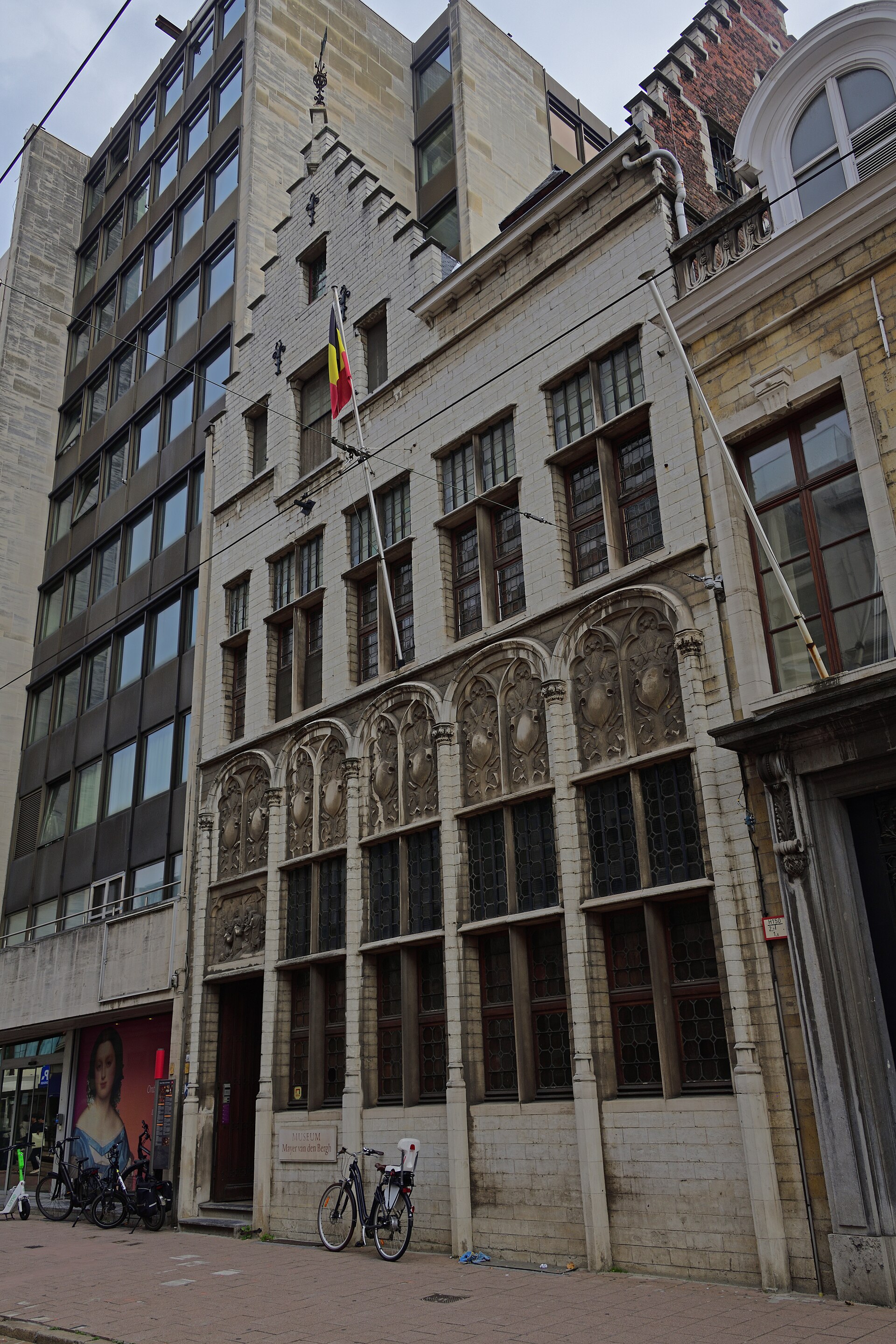
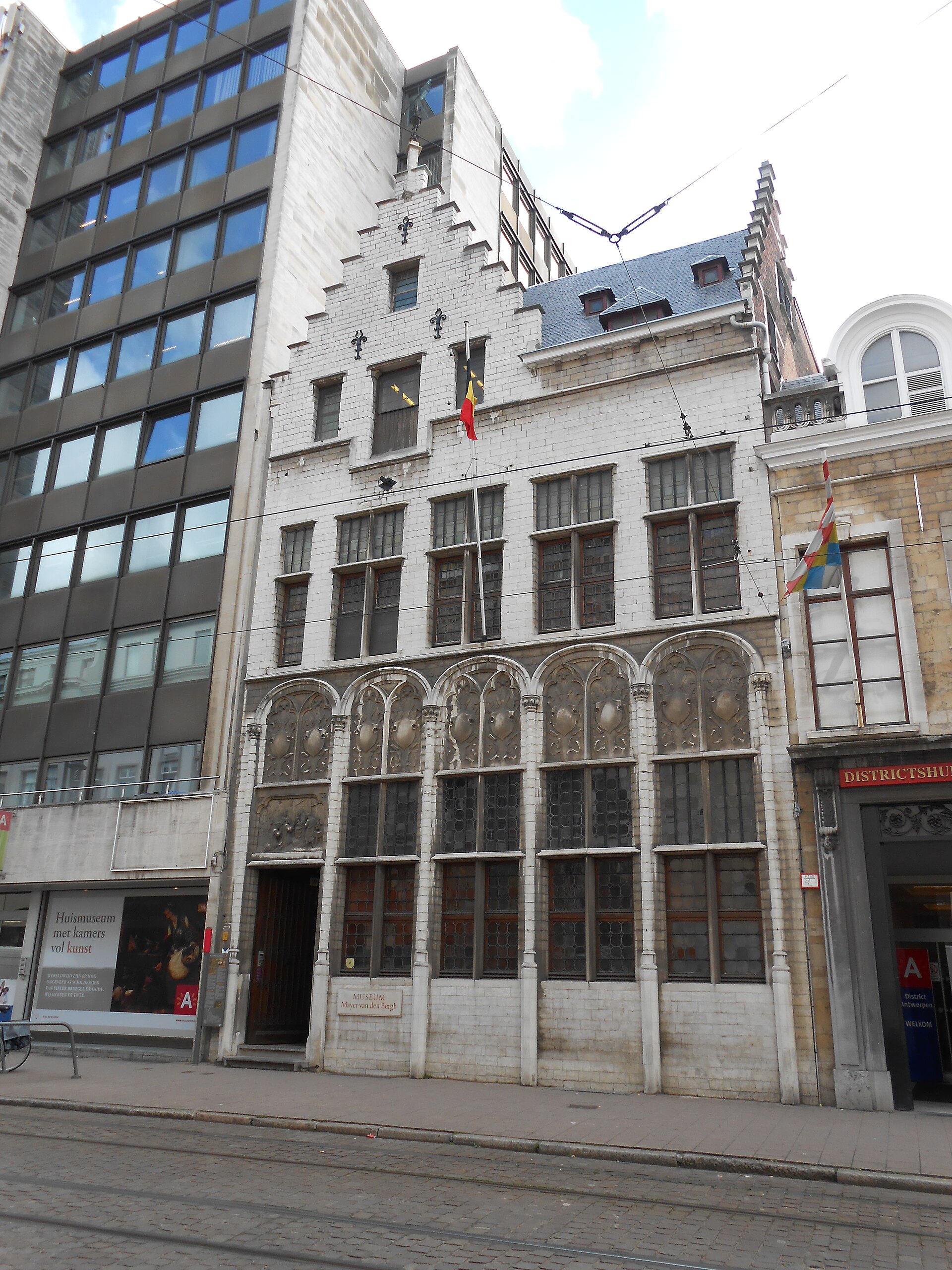
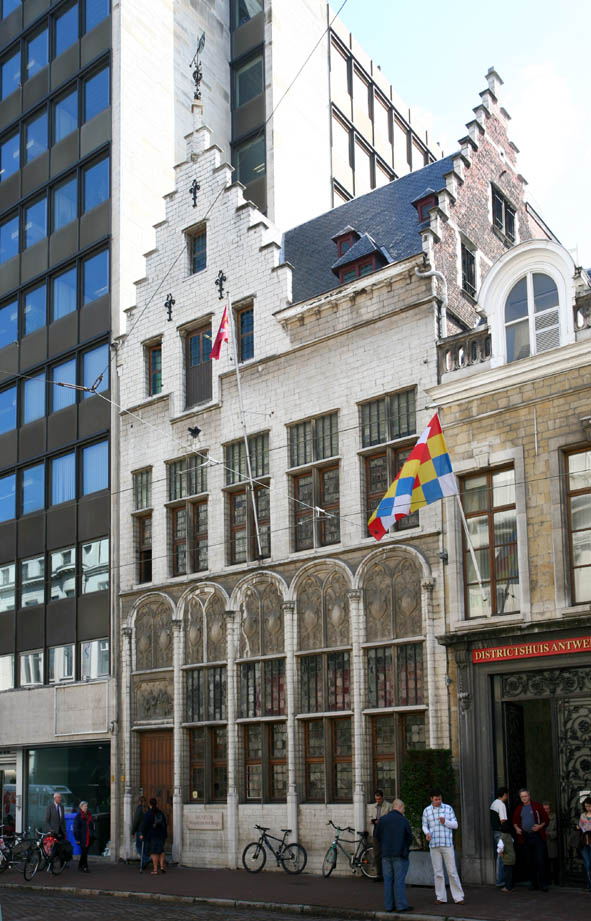
Henriette Mayer van den Bergh honoured her son's unrealised wish by commissioning a purpose-built museum next to the family's own city palace on Lange Gasthuisstraat, where the family had lived since 1862. The architect Joseph Hertogs designed a neo-Gothic building with a white stone stepped-gable facade, built between 1901 and 1904 and opened to the public in 1904. According to a 2019 account in the cultural journal The Low Countries, the ground-floor arcaded stonework draws on earlier reconstructed material rather than being new work throughout, giving the frontage an older appearance than the building's actual date. Henriette went further than simply funding a building: her will stipulated that the collection should always remain arranged exactly as Fritz had left it, and she set up a council of regents of friends and art experts to hold her to that condition after her own death. Since 1951 the City of Antwerp and that Board of Regents have jointly managed the building and the collection, an arrangement that still governs the museum today. The result, unusual among house museums, is a collection whose display sequence is itself part of the historical record: the rooms were designed, from the start, to be read as Fritz composed them rather than as any later curator might have preferred.
Mad Meg and the two Bruegels
Mad Meg remains the museum's signature work and the reason most visitors come. Painted by Pieter Bruegel the Elder in the early 1560s, it shows an armoured giantess, Dulle Griet of Netherlandish folklore, leading an army of women through a burning, monster-filled landscape toward the gaping mouth of Hell, a scene the specialist Max Friedlander once called volcanic when Fritz acquired it. The subject sits inside a long tradition of Hieronymus Bosch's hellscapes but pushes it toward something closer to social satire, an image of a world turned upside down in which the women carry the weapons. A conservation campaign completed in the years before this record was researched recovered a blue-green sky that had been hidden for decades under discoloured varnish and old overpaint, restoring colour relationships across the painting that had not been visible to visitors for generations. Alongside it hangs The Twelve Proverbs, a set of small roundels illustrating Netherlandish sayings; together the two works are the only paintings by Bruegel the Elder held anywhere in Flanders, a fact repeated by the museum itself as the clearest single measure of what this small institution holds.
Manuscripts, sculpture and the wider applied-arts collection
Painting was only part of what Fritz Mayer van den Bergh collected, and the museum's holdings in manuscripts, sculpture and applied art are, by most specialist accounts, of comparable importance. The single most expensive object he ever bought was not a painting but a prayer book: the Mayer van den Bergh Breviary, illuminated around 1510 to 1515 by a group of artists associated with the final flowering of the Ghent-Bruges school, including the Maximilian Master, the Master of James IV of Scotland, Gerard Horenbout and Gerard David's workshop. Fritz paid 35,500 francs for it in 1898, a fortune at the time, for a manuscript of 36 full-page miniatures including a cycle depicting the months of the year, its borders filled with flowers and insects painted with near-scientific precision; its Portuguese-language rubrics suggest a connection to the Portuguese royal court. The sculpture collection is older still at its earliest point: Christ and St John the Apostle, a polychrome wood group carved around 1280 to 1290 by the German sculptor known as Master Heinrich von Konstanz for a Dominican convent in Switzerland, shows the apostle resting his head on Christ's chest in a devotional type known to art historians as the Christus-Johannes-Gruppe, made to help a nun contemplating the sculpture feel a physically intimate bond with Christ. The rooms around these works hold retables, carved altar figures, mourning angels, applied art in glass and metal, and gilt-tooled leather wall coverings that Fritz collected as furnishings in their own right, all of it assembled to recreate the atmosphere of a private house rather than a public gallery.
Closed since April 2025: rebuilding and reunification with the family townhouse
The museum closed to the public on 27 April 2025, after a farewell programme of events, for what its own website describes as a major restoration and expansion. The scheme, designed by Happel Cornelisse Verhoeven Architecten working with the British heritage specialists Julian Harrap Architects, will join the 1904 museum to the corner townhouse that was the Mayer van den Bergh family's own home from 1862, most recently used as an Antwerp district office until 2021, and add a new building at the rear around a shared courtyard garden. The intention is to let visitors begin a future tour in the family's own former residence before entering the historic museum, which will itself be returned, as far as possible, to its condition when it opened in 1904, restoring the courtyard and the Great Gothic Hall that had been lost over the twentieth century. The museum's own account states that renovation work will begin in 2027 and that the reopening is scheduled for 2030. Contemporary press coverage filed at the moment of closure in April 2025, including a report in the Brussels Times, instead cited 2029 as the reopening target, a discrepancy this record has not been able to resolve and flags rather than guesses at. During the closure a share of the collection, including the Micheli Collection, is due to appear at the Musee de Cluny in Paris from late 2027, part of a wider loan policy intended to keep Fritz's masterpieces visible internationally while the Antwerp building is shut.
Visiting the collection today, at the Maagdenhuis
Until the rebuilding finishes, the museum operates as a guest at the Maagdenhuis, about 100 metres from its own closed front door at Lange Gasthuisstraat 19, where the exhibition Beloved: An Intimate Look at Masterpieces runs from 20 June 2025 to 17 September 2028. Forty-three people connected to Antwerp, from museum staff to city residents, each chose one work to show, including Mad Meg and the medieval Christ and St John the Apostle group, so the exhibition functions as a curated cross-section of the collection rather than the full historic hang. Entry is by timed e-ticket, admission is 10 euros for visitors 26 and over with reduced and free rates for a range of categories, and a combined ticket links the exhibition to the Rubenshuis five hundred metres away. The wheelchair access, cloakroom and family facilities described on the museum's own site apply to the Maagdenhuis venue, not to the closed original building, and this record labels every figure accordingly so nothing here reads as a description of a visit to the museum's own historic rooms before 2030.
What visitors say
Visitors and critics consistently describe Museum Mayer van den Bergh as one of Europe's great small collector's museums: an intimate, personally assembled Northern Renaissance and medieval collection built around Bruegel's Mad Meg, valued for its depth relative to its modest size and for the domestic, non-institutional feel of its period rooms rather than a conventional gallery hang. Every recent account is dominated by the same fact: the building and the full collection are shut for a multi-year rebuild, with only a curated selection on view nearby at the Maagdenhuis.
What is praised, what is criticised
- Praised: The exceptional depth and quality of the collection relative to the museum's small size, anchored by Bruegel's Mad Meg
- Praised: The intimate, homely atmosphere of the historic rooms, with paintings hung against gilt leather wall coverings and carved period furniture rather than displayed in a neutral gallery setting
- Praised: Helpful multilingual information and guides at a reasonable admission price
- Criticised: That the original building and the full collection are inaccessible during the multi-year renovation, with only a selection on show at the temporary Maagdenhuis venue
- Criticised: Object labels and captions that some visitors find hard to read or inconsistently arranged
- Criticised: Inconsistent application of the disability discount at the ticket desk, according to visitor reports
Ratings on other platforms
TripAdvisor: 4.5 from 436 ratings, read 18 September 2026
A platform average is a tertiary source: it moves, it is not audited, and we quote no visitor's words.
Questions about Museum Mayer van den Bergh
Where is Museum Mayer van den Bergh?
Lange Gasthuisstraat 19, 2000 Antwerp, Belgium.
How much does it cost to visit?
Adult (26 and over): EUR 10; Reduced (18-25, groups of 12 or more, A Card holders, when the museum is not fully wheelchair accessible): EUR 6; Free: free; Combined ticket with Rubenshuis: EUR 14. As confirmed 18 September 2026.
When is it open?
Tue-Sun 10:00-17:00; 24 and 31 December 10:00-15:00. Closed: Monday, except Easter Monday and Whit Monday. 1 January. As confirmed 18 September 2026.
How do you get there?
On foot: About 20 minutes' walk from Antwerp-Centraal railway station; Tram, pre-metro, bus and water bus: Reachable by De Lijn tram, pre-metro and bus routes and by the water bus; the temporary venue, the Maagdenhuis, is at Lange Gasthuisstraat 33, about 100 metres from the closed museum building at number 19.
What should you see first?
Mad Meg (Dulle Griet) (Pieter Bruegel the Elder, circa 1561-1563); The Twelve Proverbs (Pieter Bruegel the Elder); The Mayer van den Bergh Breviary (The Maximilian Master, the Master of James IV of Scotland, Gerard Horenbout, Gerard David and workshop, circa 1510-1515); Christ and St John the Apostle (Master Heinrich von Konstanz, circa 1280-1290); A travelling altar of panels predating Jan van Eyck (Unknown maker, circa 1400); Family portrait (Joris Vekemans, 1625).
What we could not confirm
- The museum's own site states that renovation work begins in 2027 and reopening is scheduled for 2030; a Brussels Times report filed at the moment of closure in April 2025 instead gave 2029 as the reopening target. This record follows the museum's own later statement as primary but has not been able to confirm which figure is current.
- Little of the interior the Mayer van den Bergh family itself occupied survives; only the ground-floor Salon is original to their residence, and the courtyard and the Great Gothic Hall described in early-twentieth-century sources had already disappeared before the current rebuilding project set out to reconstruct them.
Images
Sources
- 1Museum Mayer van den Bergh, Practical information museummayervandenbergh.be/en/practical
- 2Museum Mayer van den Bergh, homepage / A bigger house for Fritz's collection museummayervandenbergh.be/en
- 3Museum Mayer van den Bergh, Museum reunited with family residence museummayervandenbergh.be/en/page/museum-reunited-family-residence
- 4Museum Mayer van den Bergh, Highlights museummayervandenbergh.be/en/highlights
- 5Museum Mayer van den Bergh, Mad Meg museummayervandenbergh.be/en/page/mad-meg
- 6Flemish Art Collection (vlaamsekunstcollectie.be), Master Heinrich von Konstanz, Christ and St John the Apostle vlaamsekunstcollectie.be/en/news/master-heinrich-von-konstanz-christ-and-st-john-the-apostle
- 7Flemish Art Collection (vlaamsekunstcollectie.be), Breviarium Mayer van den Bergh, the Maximilian Master vlaamsekunstcollectie.be/en/news/breviarium-mayer-van-den-bergh-the-maximilian-master
- 8Wikipedia, Museum Mayer van den Bergh (tertiary) en.wikipedia.org/wiki/Museum_Mayer_van_den_Bergh
- 9Wikipedia, Fritz Mayer van den Bergh (tertiary) en.wikipedia.org/wiki/Fritz_Mayer_van_den_Bergh
- 10Wikidata, Museum Mayer van den Bergh, Q1699233 (tertiary) wikidata.org/wiki/Q1699233
- 11Brussels Times, Mayer van den Bergh museum in Antwerp will close for renovation this Sunday brusselstimes.com/1552081/mayer-van-den-bergh-museum-in-antwerp-will-close-for-renovation-this-sunday
- 12TripAdvisor, Museum Mayer van den Bergh reviews (tertiary rating) tripadvisor.com/Attraction_Review-g188636-d245951-Reviews-Museum_Mayer_van_den_Bergh-Antwerp_Antwerp_Province.html
- 13Virginie Platteau, Museum Mayer van den Bergh: Home of Bruegel's Mad Meg and Other Masterpieces, The Low Countries, 16 May 2019 the-low-countries.com/article/museum-mayer-van-den-bergh-home-of-bruegels-mad-meg-and-other-masterpieces/
- 14Wikimedia Commons, Category:Museum Mayer van den Bergh commons.wikimedia.org/wiki/Category:Museum_Mayer_van_den_Bergh