On this page 14 sections
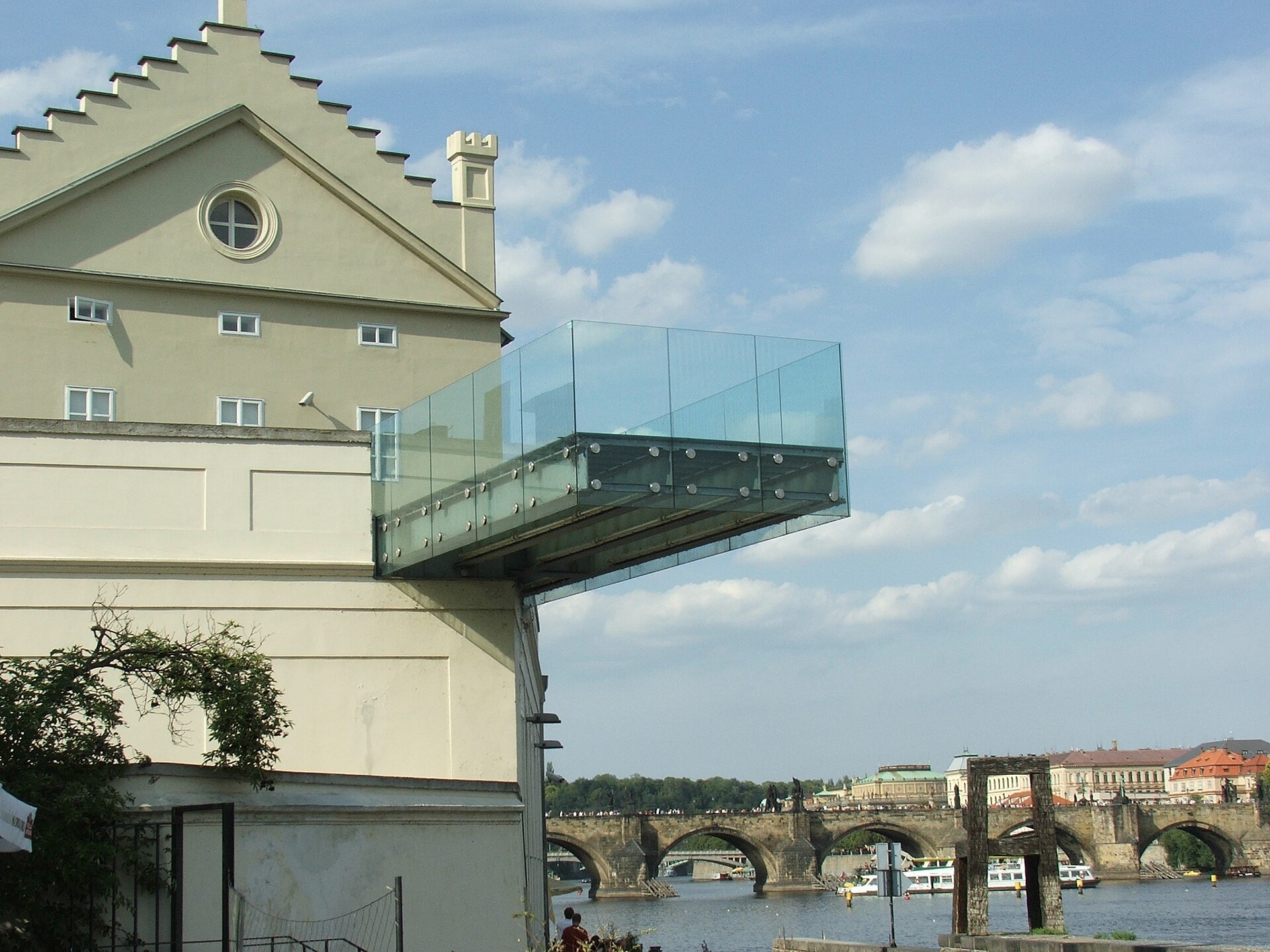
Museum Kampa's core strength is depth rather than breadth. It holds what is generally regarded as the most complete collection of Frantisek Kupka's work in private hands, built through Meda Mladkova's direct, decades-long relationship with the artist, and a compact but historically significant 17-piece group of Otto Gutfreund's Cubist and Civilist sculpture. Its Central European holdings of later 20th-century art from Czechoslovakia, Poland and the former Yugoslavia give the museum a curatorial identity distinct from Prague's larger state galleries, which tend to cover either contemporary art alone or a much wider historical span.
| Kind | Museum |
|---|---|
| Founded | 2003 |
| City and country |  Prague, Czech Republic Prague, Czech Republic |
| Address | U Sovovych mlynu 503/2, 118 00 Prague 1 - Mala Strana, Czech Republic |
| Website | museumkampa.cz |
| Status | Open, confirmed 15 September 2026 |
| Record last verified | 15 September 2026 |
Visiting
- Hours
- Monday - Sunday10:00 to 18:00Last entry 30 minutes before closing, at 17:30. Open every day of the year on the museum's own published hours
- Admission
- All exhibitions, adultCZK 350Combined ticket covering every exhibition on view
- All exhibitions, student/seniorCZK 220
- All exhibitions, family (2 adults plus 3 children under 15)CZK 680
- Temporary exhibitions in the main building, adultCZK 300Covers the current Adriena Simotova, Milos Sevcik and Frantisek Pavlu shows; this ticket changes as the exhibitions change
- Temporary exhibitions in the main building, student/seniorCZK 180
- Permanent exhibition only (Kupka and Gutfreund), adultCZK 200
- Permanent exhibition only (Kupka and Gutfreund), student/seniorCZK 110
- Vladimir Kopecky glass exhibition, adultCZK 80Separate ticket for the Kopecky Forever glass show
- Vladimir Kopecky glass exhibition, student/seniorCZK 50
- Lookout towerCZK 30Flat rate, any age
- Child under 6FreeFree on every tier
Free entry: Members of the museum associations AMG, UHS, ICOM/ICOMOS and AICA, and holders of a Czech ZTP or ZTP/P disability card, are admitted free at any time. First Tuesday of every month: seniors visit the whole museum for a reduced 50 CZK (a discount, not a free day)- Tickets
- museumkampa.cz/vystava/kupka-gutfreund-en/?fo... The museum's own ticket page.
- Do I need to book?
- No, but recommended for groups and for guided tours, which run in English, German and Italian
- Address
- U Sovovych mlynu 503/2, 118 00 Prague 1 - Mala Strana, Czech Republic MapTram Lines 9 or 22 to the Ujezd stop, then about a 5 minute walk onto Kampa island to the museum
Walking About a 10 minute walk from Prague's Old Town, or a short walk from the Lesser Town side of Charles Bridge - Website
- museumkampa.cz
- Telephone
- +420 257 286 144
- [email protected]
Before you go how long, access, photography, bags, eating, shop
- How long to allow
- About two hours to see the permanent Kupka and Gutfreund collection together with the current temporary exhibitions
- Access
- Exhibition spaces are wheelchair accessible except for one part of the first floor; strollers are generally allowed unless a specific gallery restricts them for safety
- Photography
- Photography of the exhibits themselves is not permitted, because of lender restrictions on works on loan; visitors are explicitly invited to photograph the building's exterior; tripods and monopods are prohibited throughout
- Bags
- Backpacks, umbrellas and packages go into lockers on the ground floor for a 10 CZK deposit; suitcases and bags larger than 40 by 40 cm cannot be brought in or checked
- Eating
- A cafe-restaurant occupies part of the riverside building, serving Czech food with views over the Vltava
- Shop
- A museum shop operates on site
Prices and hours change. We take them from the institution's own pages and print the day we read them, and you can check the current position at the source we used. Confirm before you travel.
What is inside
Permanent exhibition: Frantisek Kupka, Master of World Art
More than seventy works by Frantisek Kupka, arranged in seven chronological chapters tracing his path from illustration and figurative painting to the non-figurative art he helped originate in the early 20th century, including studies alongside finished paintings
Otto Gutfreund Cubist and Civilist sculpture gallery
17 sculptures by Otto Gutfreund donated by Meda Mladkova, spanning his pre-First World War Cubist period and his 1920s Civilist work, including commercial design pieces from when he supported himself designing perfume flacons
Temporary exhibition galleries, main building
Rotating exhibitions of Czech and Central European art; as of September 2026 these are shows devoted to Adriena Simotova, Milos Sevcik and Frantisek Pavlu, plus a short family-oriented exhibition, Everyone Can Be an Artist
Vladimir Kopecky glass exhibition
A dedicated show of glass work by the Czech glass artist Vladimir Kopecky, ticketed separately from the rest of the museum
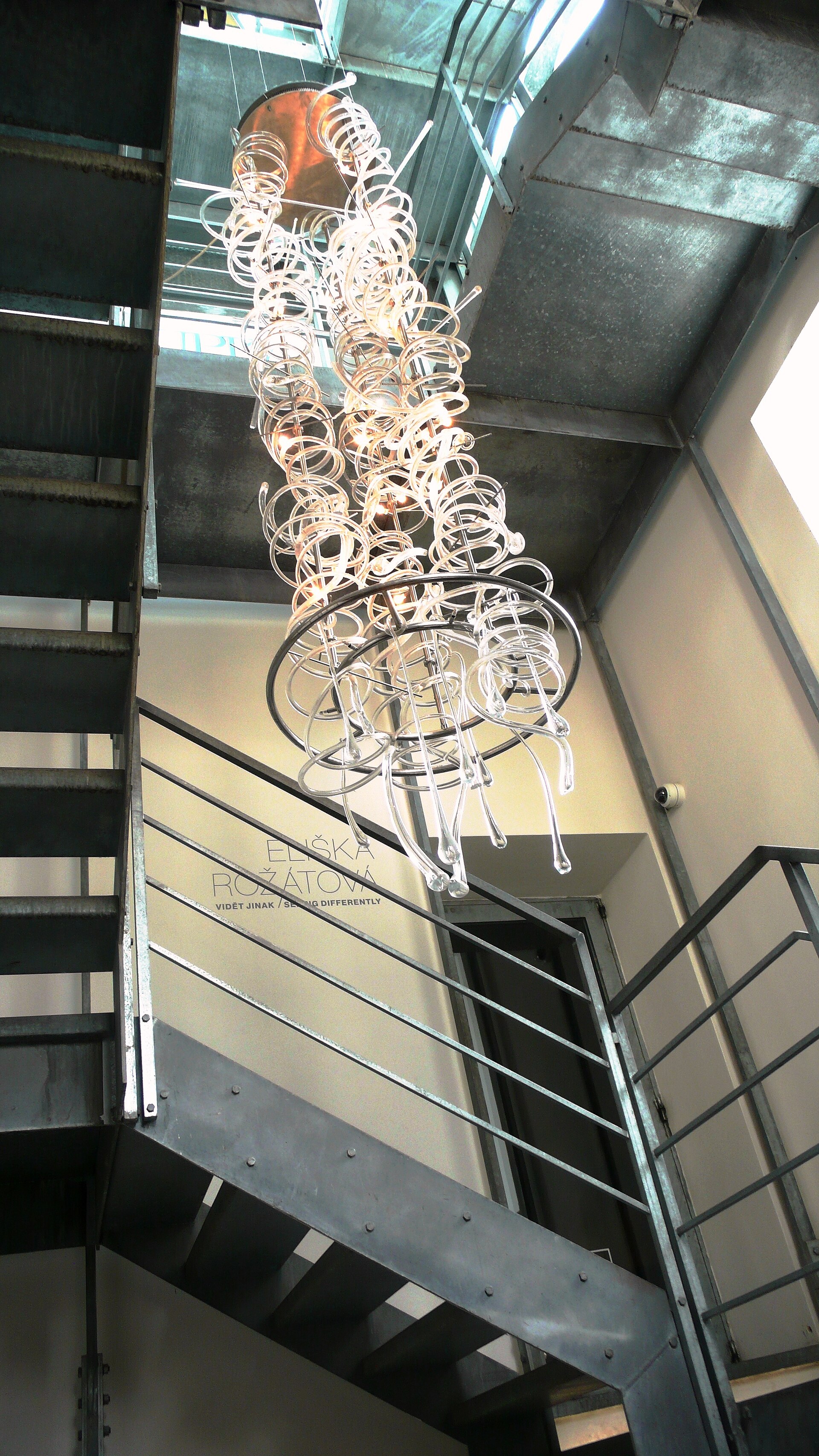
Photograph by František Šťastný · CC BY-SA 4.0 Entrance hall and glazed stairwell tower
The main circulation stair added during the 2000-2001 reconstruction, with a glazed tower and chandelier; part of the contemporary glass additions designed alongside artists including Vaclav Cigler, Marian Karel and Dana Zamecnikova
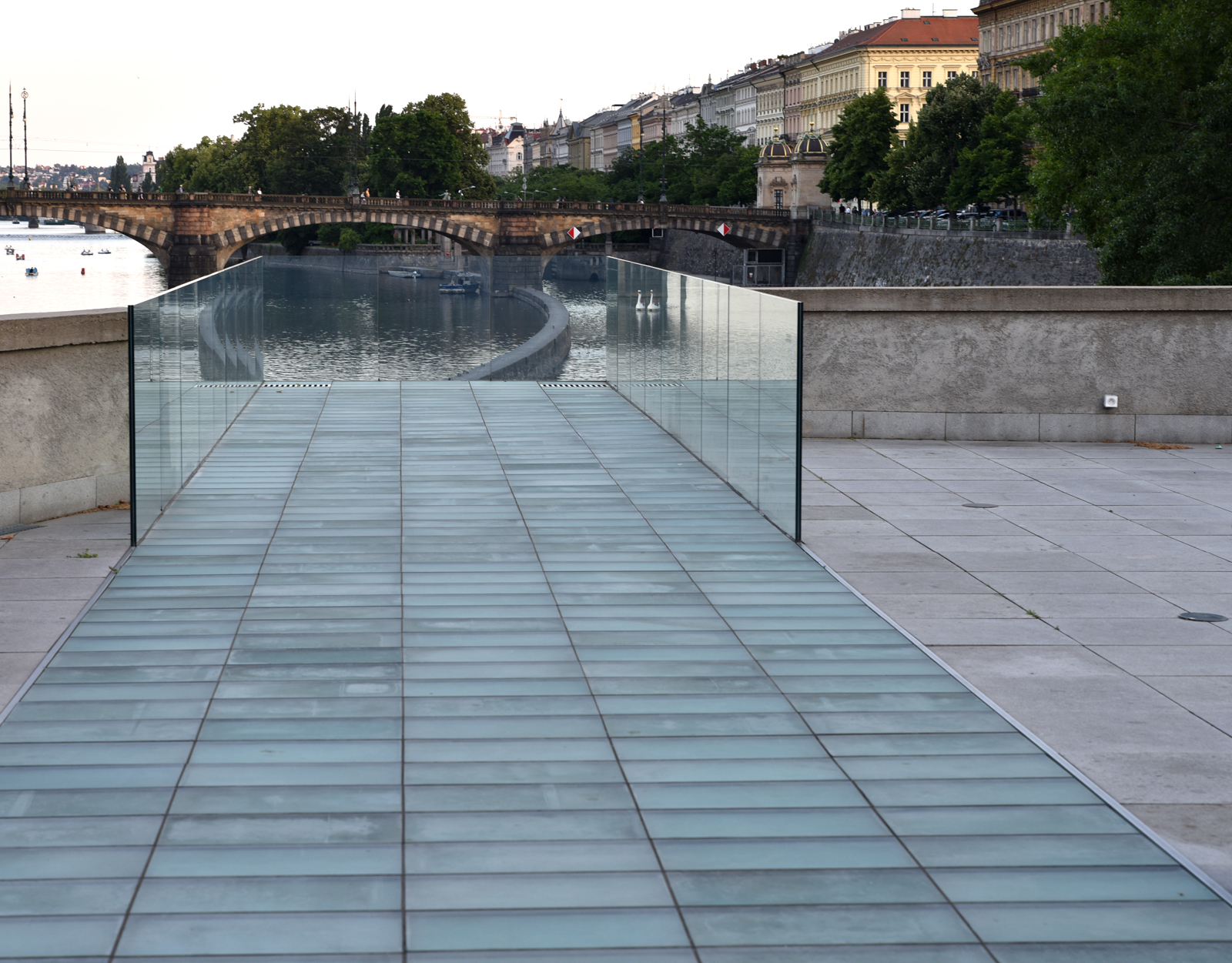
Photograph by NoJin · CC BY 4.0 Museum terrace and outdoor sculpture grounds
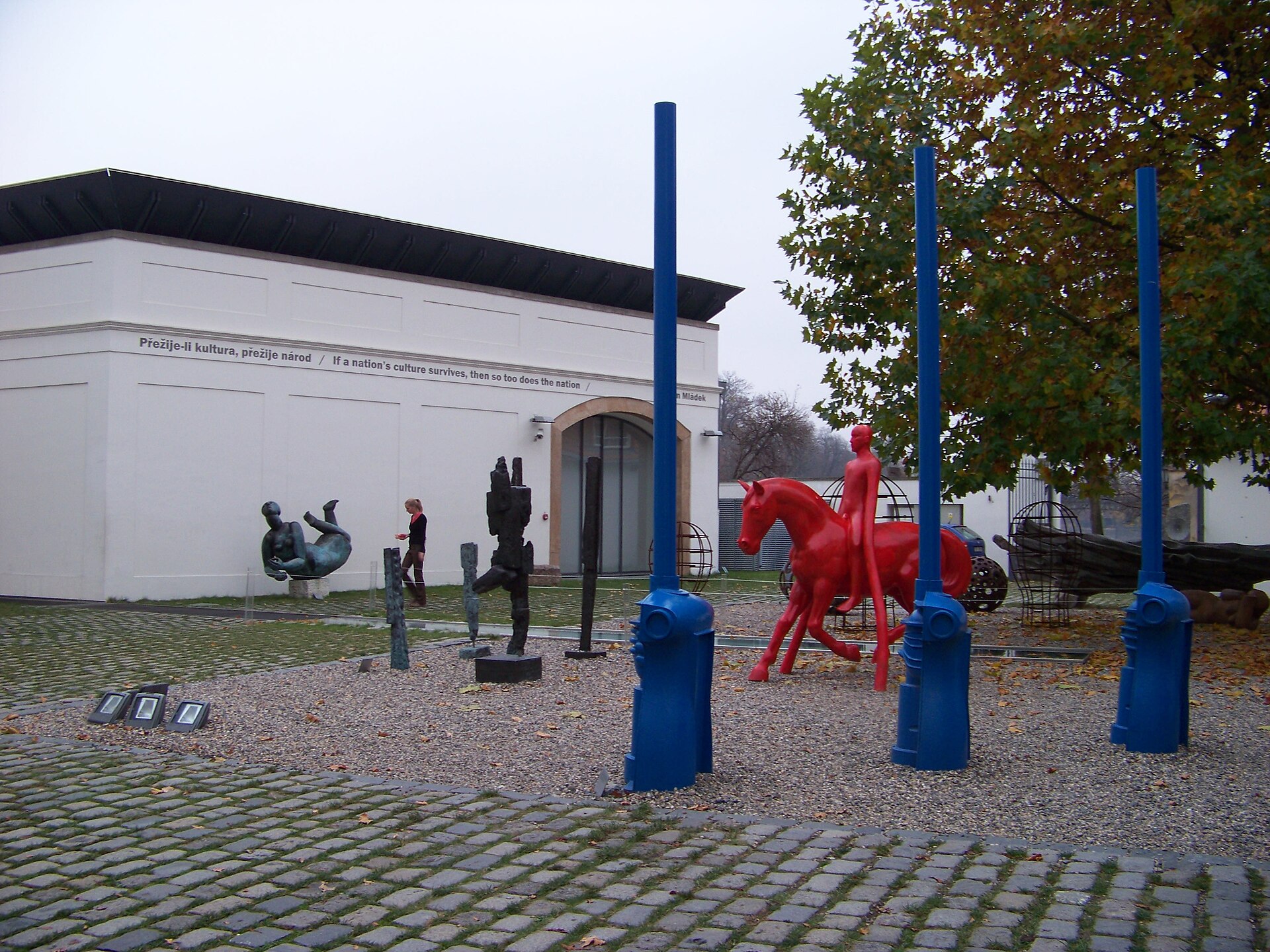
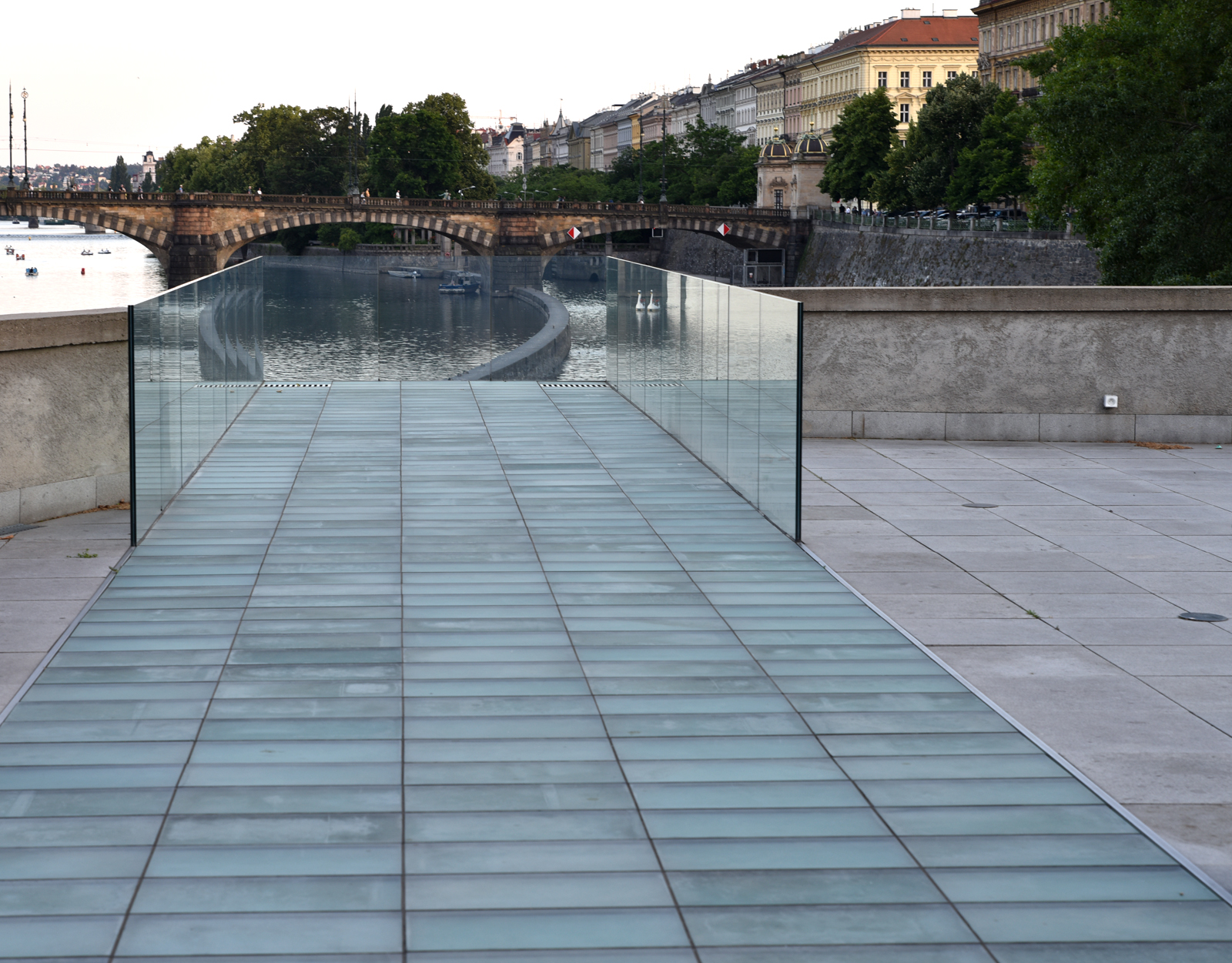
The riverside terrace and grounds around the building carry a small collection of outdoor sculpture and glass installation, including Vaclav Cigler's 2009 piece Meeting Place; David Cerny's well-known crawling Babies sculptures stand nearby under the trees of Kampa Park but are not part of the museum's own collection
Lookout tower
A rooftop viewing point over the Vltava and the Prague skyline, ticketed separately at 30 CZK
What to see first
Amorfa - Warm Chromatic
Frantisek Kupka1912 painting the museum names as one of the gems of its Kupka holding, from the period in which he was moving toward total abstraction6
The Cathedral
Frantisek Kupka1912-1913 painting, another of the named centrepieces of the permanent Kupka display6
The Form of Yellow
Frantisek Kupka1919-1923 painting marking Kupka's mature development of structured colour planes6
The Bookworm (Le Bibliomane)
Frantisek KupkaAn 1897 work, on loan from the Prague Castle Collection, showing Kupka's earlier figurative and satirical illustration before his turn to abstraction6
Anxiety
Otto GutfreundA 1911-1912 sculpture from Gutfreund's Cubist period, part of the 17-piece Gutfreund donation and among the works that put Gutfreund at the front of European Cubist sculpture8
The Otto Gutfreund donation as a group
Otto Gutfreund17 sculptures spanning Gutfreund's pre-war Cubism and his 1920s Civilist period, donated to Prague by Meda Mladkova after part of the group had originally been exported to the United States unsold8
Miminka (Babies)
David CernyDavid Cerny's large crawling baby sculptures stand in Kampa Park immediately by the museum and appear in the museum's own visitor photography as closely associated with a visit, though they are not part of the museum's collection10
Meeting Place
Vaclav CiglerA 2009 glass installation by Vaclav Cigler, one of the artists whose glasswork shaped the museum's own building during its reconstruction, sited on the museum grounds15
Sovovy mlyny: a mill rebuilt as a museum
Museum Kampa occupies Sovovy mlyny (Sova's Mills), a group of buildings on the northern tip of Kampa island in Prague's Mala Strana district, where the Certovka stream rejoins the Vltava. A mill on this site is first documented in 1393, though the museum's own history page says research has traced grinding activity here as far back as the 10th century, when the mill belonged to the Benedictine convent of Saint George. The mill was burned during the Hussite wars and passed to the Old Town of Prague; in 1478 the town granted the site to a councillor named Vaclav Sova z Liboslavi to build a house and a hammer mill, and it is his name the buildings carry today.
Over the following centuries the site added a grinding shop, a sawmill, a lime kiln and a tannery, along with a small farm and orchard. It burned again and was rebuilt in stone in the Renaissance style in 1589. Swedish artillery was stationed at the mill during the Thirty Years War in 1648. The mill's most consequential owner arrived in the 19th century: Frantisek Odkolek, who married into the milling family, converted the works to steam power from 1858, added a bakery, and gave the complex the romantic, then neo-gothic facade, designed after 1867 with the architects Josef Schulz and Josef Zitek, that still faces the river today. After a second fire in 1896 and municipal purchase in 1920, the buildings passed after the Second World War to the Czechoslovak Academy of Sciences, which used them for literary and theatre-studies institutes and workshop space, and by the 1990s they had fallen into disrepair.
Meda and Jan Mladek: a collection assembled outside Czechoslovakia
Meda Mladkova was born Marie Sokolova in Zakupy in 1919 and died in Prague in 2022. She left Czechoslovakia during the Second World War and, after studying economics in Switzerland, refused to return once the Communist Party took power in 1948. In the 1950s she lived in Paris, studied art history and ran a small publishing house, Edition Sokolova, whose output included the first monograph on the Czech painter Toyen. In Paris she met the painter Frantisek Kupka, by then an elderly emigre, and began collecting his work directly from him. She also met Jan Mladek, one of the founding governors of the International Monetary Fund, whom she married. The couple moved to Washington in 1960, where their house became a meeting point for Czechoslovak and Central European exiles, among them the writer Ferdinand Peroutka, and for figures in American politics and the arts, including Madeleine Albright, along with Vaclav Havel on his visits to the United States.
From 1967 Meda Mladkova began travelling regularly back to Czechoslovakia, buying work from artists who were barred from exhibiting under the Communist regime as a direct form of support. Jan Mladek died in 1989, months before the Velvet Revolution, and it was his wish, carried out by Meda Mladkova after her return to a free Czechoslovakia, that most of the couple's collection be given to Prague and that Sovovy mlyny be restored to house it. The Jan and Meda Mladek Foundation was established in 1999 to carry out that plan, and Museum Kampa opened to the public in September 2003.
What the collection holds: Kupka, Gutfreund and Central Europe
The museum's collections page names three constituent holdings: the Jan and Meda Mladek Foundation Collection itself, the Lilli Lonngren Anders Collection of Frantisek Kupka, and a Central Europe Art Collection covering Czech, Slovak, Polish, Serbian and Croatian art from the second half of the 20th century. The permanent exhibition, titled Frantisek Kupka: Master of World Art, is built around more than seventy works organised into seven chronological chapters that trace Kupka's move from illustration and figurative painting toward the non-figurative art he helped originate in the early 20th century. Paintings the museum names as the gems of the collection include Amorfa - Warm Chromatic (1912), The Cathedral (1912-1913) and The Form of Yellow (1919-1923); the display is supplemented by loans such as The Bookworm (Le Bibliomane, 1897) from the Prague Castle Collection, a private-collection Distillation Apparatus (1929) and Plan Violet (1954).
Alongside Kupka, Meda Mladkova donated 17 sculptures by the Cubist sculptor Otto Gutfreund (1889-1927) to Prague. The group spans his pre-First World War Cubist period, when pieces such as Anxiety (1911-1912) put him at the front of European Cubist sculpture, through to the Civilist sculpture he made in the 1920s, a period in which, by the museum's own account of his career, he also designed perfume flacons and took public commissions to make a living. Part of this group of sculptures had originally been exported to the United States for sale by the socialist-era trading company Art Centrum and gone unsold there before the Mladeks acquired it. The Central Europe collection, and a programme of temporary exhibitions built around it, are described by the foundation as equally important to the museum's identity as the two permanent holdings, distinguishing Museum Kampa from institutions that cover either contemporary art alone or a much wider historical span.
Reconstruction, flood and fire
The reconstruction that turned Sovovy mlyny into a museum was carried out in 2000 and 2001 under the Prague city authority, with the architect Helena Bukovanska of Atelier 8000 as chief architect. The project kept Josef Schulz's 19th-century neo-gothic river facade, which the museum's own history page says now forms part of the view of the Vltava embankment seen toward Prague Castle from the National Theatre, and added contemporary glass elements by artists including Vaclav Cigler, Michal Motycka, Marian Karel, Miroslav Spacek and Dana Zamecnikova, among them a glazed stairwell tower. The museum's planned opening in September 2002 was delayed by the catastrophic Prague floods of August 2002, which struck the site directly on the riverbank; the museum reopened to the public on 8 September 2003, work the museum's own account credits to the commitment of its staff and volunteers.
A second, smaller incident followed on 15 July 2020, when a fire broke out during welding work carried out without proper safety precautions. It was put out within two hours, and the available account of the incident describes equipment damage rather than damage to the collection. Since 2022 the Jan and Meda Mladek Foundation has also managed a separate, satellite presentation of Alfons Mucha's Slav Epic at Moravsky Krumlov castle, run alongside the Prague museum rather than as part of it.
Visiting Museum Kampa: admission, access and what surrounds it
Museum Kampa is open every day of the year, Monday through Sunday, from 10 am to 6 pm, with last entry thirty minutes before closing. A combined ticket covering every exhibition on view costs 350 CZK for an adult and 220 CZK for a student or senior. Separate, cheaper tickets are sold for the permanent Kupka and Gutfreund exhibition alone (200 CZK adult), for the current temporary shows in the main building (300 CZK adult), and for the Vladimir Kopecky glass exhibition (80 CZK adult); a further 30 CZK ticket admits visitors to the museum's lookout tower. Children under six enter free on every tier, and a family ticket covering two adults and three children under 15 is available for each. Members of the museum associations AMG, UHS, ICOM/ICOMOS and AICA, and holders of a Czech ZTP or ZTP/P disability card, are admitted free, and on the first Tuesday of every month seniors can visit the whole museum for 50 CZK.
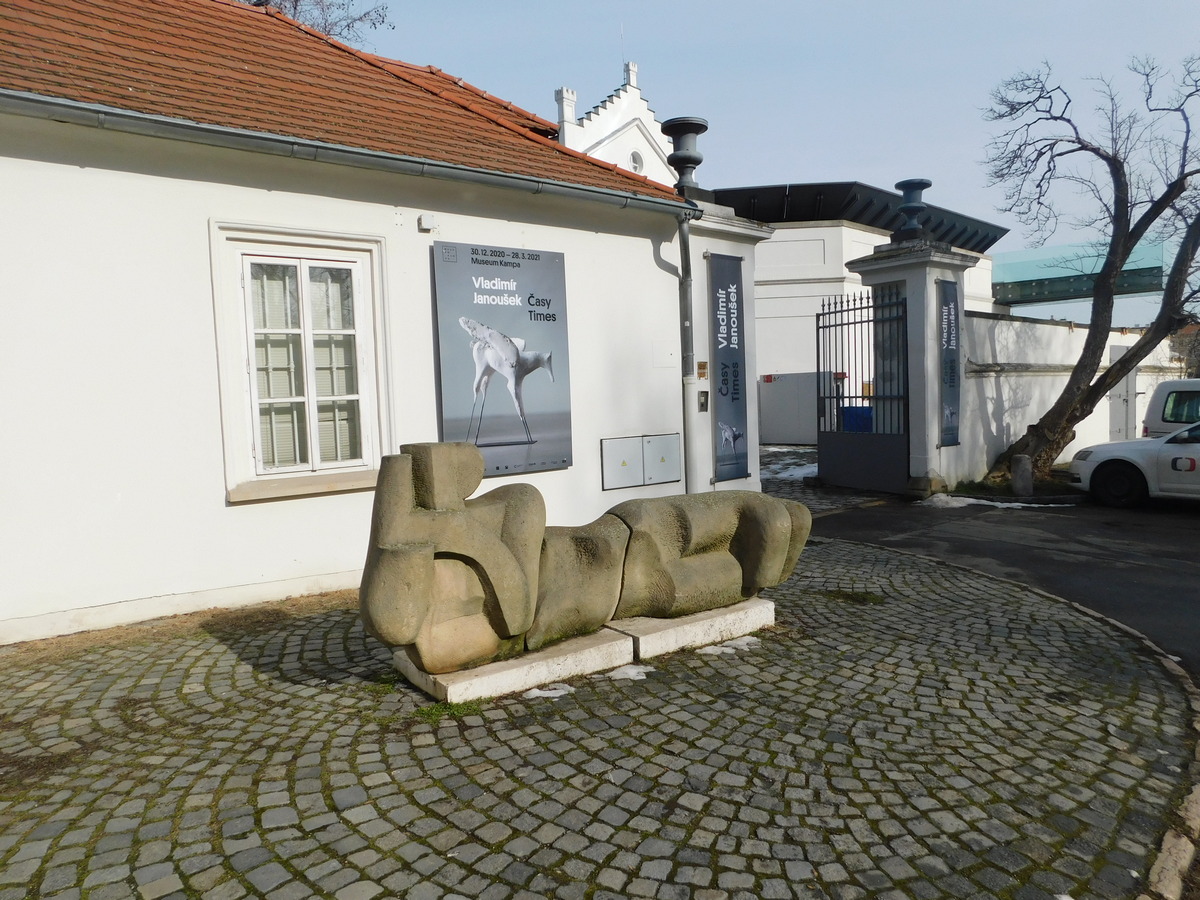
The exhibition spaces are wheelchair accessible with the exception of part of the first floor, and strollers are generally permitted. Photography of the exhibits themselves is not allowed, because of lender restrictions on the works on loan, though visitors are explicitly invited to photograph the building's exterior; tripods and monopods are prohibited throughout. Bags larger than 40 by 40 centimetres and suitcases cannot be brought in or checked, and backpacks and umbrellas go into lockers on the ground floor for a 10 CZK deposit. A cafe-restaurant serving Czech food occupies part of the riverside building, with views over the Vltava, and a museum shop operates on site. Outside, the museum's terrace and the surrounding Kampa Park hold a small collection of outdoor sculpture, including Vaclav Cigler's 2009 glass installation Meeting Place on the museum grounds and, a short walk away under the park's trees, David Cerny's large crawling Babies figures, among the best known pieces of public sculpture in Prague though not part of the museum's own collection.
Reputation: what critics and visitors say
The museum's own foundation page records that in 2015 the Guardian named it among a small group of Europe's most interesting small private museums, and the foundation states that Museum Kampa now draws around 100,000 visitors a year. Individual reviews since have been more mixed. Writing for Salterton Arts Review in December 2024, Erin Caswell rated the museum 3.5 out of 5, praising the coherence of the Kupka-led permanent display and calling the two-hour scope of a typical visit appropriate, while describing the entrance and initial signage as confusing and raising a broader question about the ethics of a museum built from one family's private collecting.
On TripAdvisor, where the museum holds 3.8 out of 5 from 356 reviews read in September 2026, and on Google, where it holds 4.5 from roughly 3,479 ratings read the same month, the pattern in individual reviews is consistent: visitors repeatedly single out the depth of the Kupka collection and its clear chronological hang as the strongest reason to come, alongside the quiet riverside setting in Kampa Park and staff described as helpful. The criticism that recurs is architectural and curatorial rather than about the core collection: several reviewers describe the mix of the neo-gothic mill facade with modern glass and steel additions as jarring, one calling the newer materials aggressive and low-end against the surrounding architecture of Mala Strana, and a number of longer-term visitors say the temporary exhibition programme has felt less ambitious in recent visits than on earlier ones, with English-language labelling reported as incomplete in parts of some temporary shows.
What visitors say
Visitors and critics consistently point to the Frantisek Kupka collection and its clear chronological hang as the best reason to visit, and to the quiet riverside setting in Kampa Park. Criticism centers not on the art itself but on the building's contemporary glass and steel additions against the historic mill, on wayfinding at the entrance, and on a sense among repeat visitors that the temporary exhibition programme has grown less ambitious than in earlier years.
What is praised, what is criticised
- Praised: The depth and chronological clarity of the Frantisek Kupka collection, repeatedly named by visitors and by a published reviewer as the strongest reason to come
- Praised: The setting on Kampa island, with a riverside terrace and park views back toward Prague Castle and the National Theatre
- Praised: On-site staff, described by visitors as helpful and friendly
- Criticised: The contrast between the neo-gothic mill facade and the museum's modern glass and steel reconstruction divides opinion; at least one visitor review calls the newer materials aggressive and out of place against the surrounding architecture of Mala Strana
- Criticised: Signage and wayfinding before the ticket desk is described as confusing by at least one published reviewer
- Criticised: Some repeat visitors say the temporary exhibition programme feels less compelling than in earlier years, and English-language labelling is reported as incomplete in parts of some temporary shows
Ratings on other platforms
TripAdvisor: 3.8 from 356 ratings, read 15 September 2026
Google: 4.5 from 3,479 ratings, read 15 September 2026
A platform average is a tertiary source: it moves, it is not audited, and we quote no visitor's words.
Questions about Museum Kampa
Where is Museum Kampa?
U Sovovych mlynu 503/2, 118 00 Prague 1 - Mala Strana, Czech Republic.
How much does it cost to visit Museum Kampa?
All exhibitions, adult: CZK 350; All exhibitions, student/senior: CZK 220; All exhibitions, family (2 adults plus 3 children under 15): CZK 680; Temporary exhibitions in the main building, adult: CZK 300; Temporary exhibitions in the main building, student/senior: CZK 180. As confirmed 15 September 2026.
When is Museum Kampa open?
Monday - Sunday 10:00-18:00. As confirmed 15 September 2026.
How do you get to Museum Kampa?
Tram: Lines 9 or 22 to the Ujezd stop, then about a 5 minute walk onto Kampa island to the museum; Walking: About a 10 minute walk from Prague's Old Town, or a short walk from the Lesser Town side of Charles Bridge.
What should you see at Museum Kampa?
Amorfa - Warm Chromatic (Frantisek Kupka); The Cathedral (Frantisek Kupka); The Form of Yellow (Frantisek Kupka); The Bookworm (Le Bibliomane) (Frantisek Kupka); Anxiety (Otto Gutfreund); The Otto Gutfreund donation as a group (Otto Gutfreund).
What we could not confirm
- The museum's own site does not publish a full, work-by-work provenance or acquisition history for the Mladek collection beyond naming Meda Mladkova as the collector and, in most cases, donor.
- The circumstances under which the Gutfreund sculptures were originally exported to the United States for sale through the socialist-era trading company Art Centrum, and how Meda Mladkova came to acquire the unsold group, are described only briefly in available sources rather than in any detailed published account.
Images
Sources
- 1Museum Kampa, Visit (hours, admission, address, contacts) museumkampa.cz/visit/
- 2Museum Kampa, Visiting FAQ museumkampa.cz/visiting-faq/
- 3Museum Kampa, The History of Sova's Mills museumkampa.cz/sovas-mills/
- 4Museum Kampa, Meda Mladek (biography) museumkampa.cz/meda-mladek/
- 5Museum Kampa, The Jan and Meda Mladek Foundation museumkampa.cz/foundation/
- 6Museum Kampa, Frantisek Kupka - Master of World Art (permanent exhibition) museumkampa.cz/vystava/kupka-gutfreund-en/
- 7Museum Kampa, The Museum's Collections museumkampa.cz/collections/
- 8Museum Kampa, MAY: GUTfreund (event page describing the Gutfreund sculpture donation) museumkampa.cz/may-gutfreund/
- 9Wikipedia, Museum Kampa (tertiary; founding date, 2002 flood, 2020 fire, Moravsky Krumlov branch) en.wikipedia.org/wiki/Museum_Kampa
- 10TripAdvisor, Museum Kampa - All You SHOULD Know Before Going (rating, review count, visitor reviews) tripadvisor.com/Attraction_Review-g274707-d527848-Reviews-Museum_Kampa-Prague_Bohemia.html
- 11Google Search knowledge panel for Museum Kampa Prague (tertiary rating) google.com/search?q=Museum+Kampa+Prague
- 12Salterton Arts Review, Museum Kampa, Prague, by Erin Caswell, 27 December 2024 saltertonartsreview.com/2024/12/museum-kampa-prague/
- 13Prague City Tourism, Museum Kampa prague.eu/en/objevujte/museum-kampa/
- 14Prague Tourist Information, Guide to Kampa Museum praguetouristinformation.com/en/sightseeing/museum/kampa-museum
- 15Wikimedia Commons, Category:Kampa Museum (image sourcing and licence verification) commons.wikimedia.org/wiki/Category:Kampa_Museum
- 16Wikidata, Q2139553 (identity, coordinates, inception, no dissolution date) wikidata.org/wiki/Q2139553