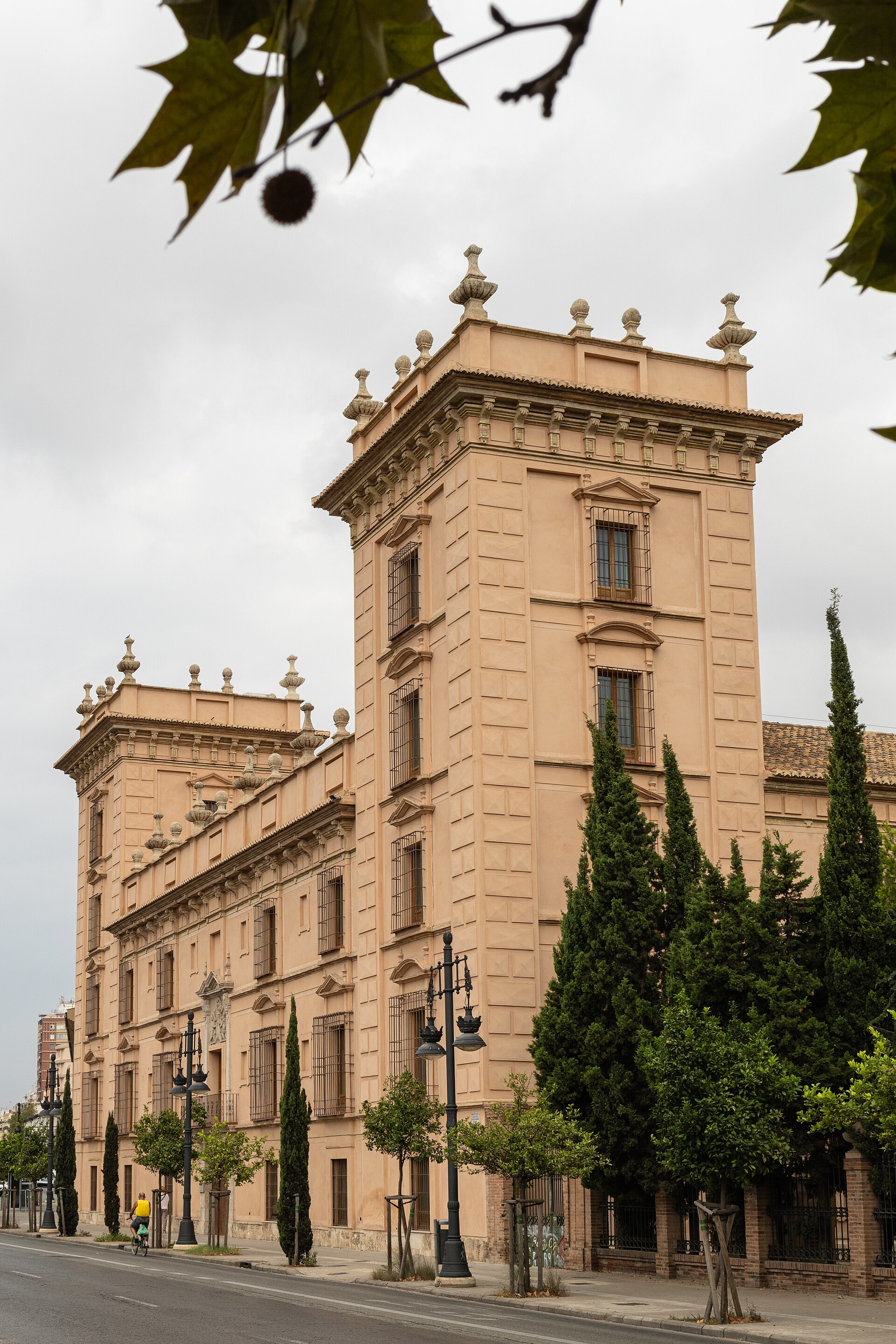
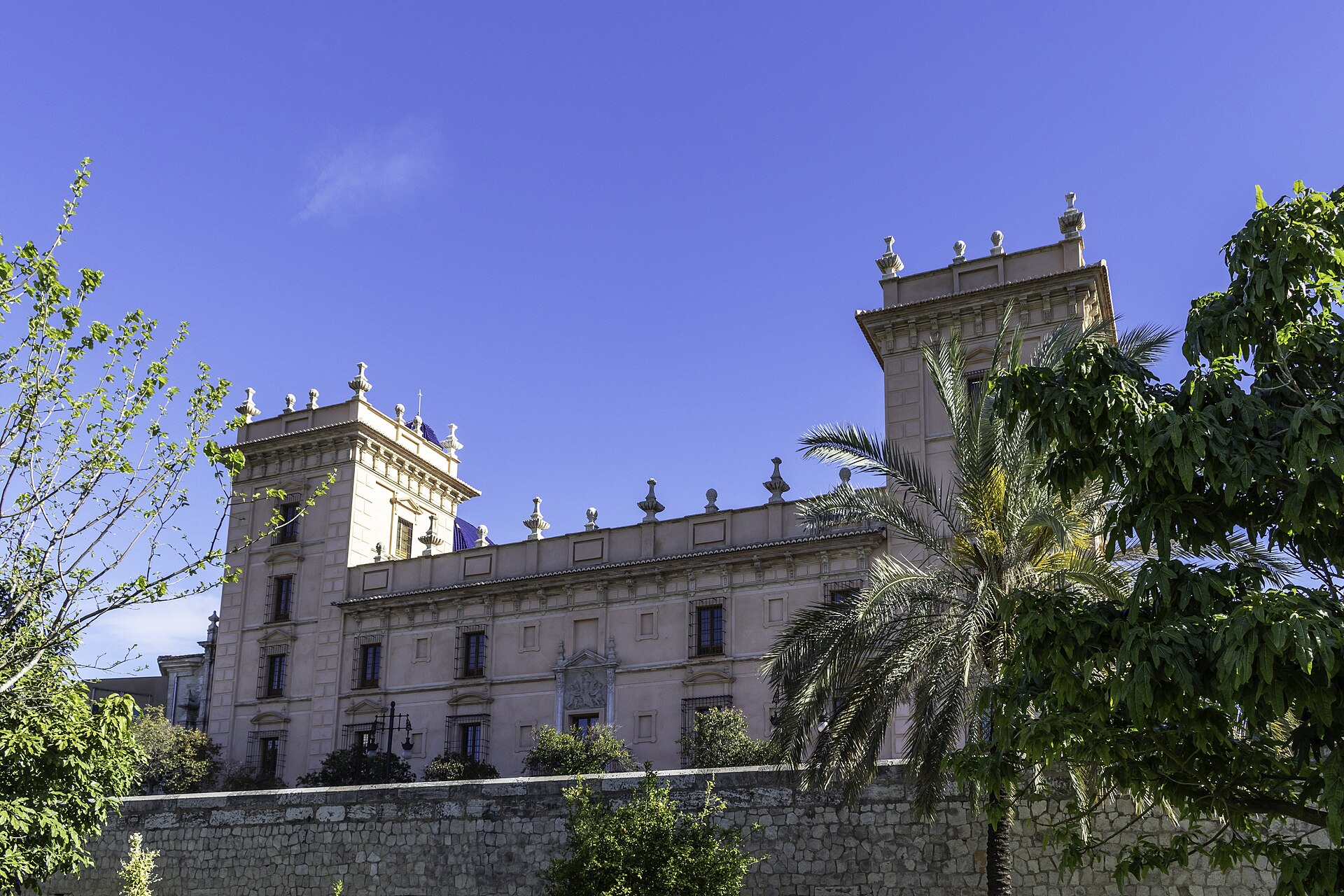
The salmon-coloured facade of the former Colegio de San Pio V, seen from the old Turia riverbed gardens, with its two corner towers giving the building an almost fortified silhouette.
Rafa Esteve · Photograph by Rafesmar · CC BY-SA 4.0Museu de Belles Arts de Valencia
Museum · Museu de Belles Arts de València · Founded 1913
Open, admission and hours confirmed 26 September 2026 · 10 sources
On this page 17 sections
ContentsClose
The museum's real distinction is at the two ends of its chronological range rather than in the middle. Its Valencian Gothic holding, the primitivos valencianos, is deep enough and coherent enough to be a reference collection in its own right, and it is thickened by genuine European rarities, Starnina, Cenni di Francesco, Pinturicchio and a Bosch workshop triptych, that few Spanish museums outside the Prado can match. At the later end, the museum holds a Velazquez self-portrait few museums in the world can claim, and a dedicated Sorolla room that gives the collection a distinctly Valencian late-19th-century identity separate from Madrid's. The middle of the chronology, Renaissance and Baroque painting between the two peaks, is present and respectable but is where the collection reads more like a well-stocked regional gallery than an unmissable one.
| Local name | Museu de Belles Arts de València |
|---|---|
| Kind | Museum |
| Founded | 1913 |
| City and country |  Valencia, Spain Valencia, Spain |
| Address | Calle San Pio V, 9, 46010 Valencia, Spain |
| Website | museobellasartesvalencia.gva.es |
| Status | Open, confirmed |
| Record last verified |
Visiting
- Hours
- Tuesday-Sunday10:00 to 20:00
- Closed
- Monday.
- Admission
- General admission, permanent collection and temporary exhibitionsFreeFree entry, including the Rubens exhibition running through 4 October 2026
Free entry: Every day - the museum charges no admission at all, for the permanent collection and every temporary exhibition read for this record- Do I need to book?
- Not stated as required by the sources read for this record. Admission is free and no online ticketing or timed-entry system was found; visits appear to be walk-in
- Address
- Calle San Pio V, 9, 46010 Valencia, Spain MapBus EMT city bus lines 6, 11, 16, 26, 28, 94, 95 and C2 stop within walking distance of the museum
Metro Alameda station, on the museum side of the old Turia riverbed gardens - Website
- museobellasartesvalencia.gva.es
- Telephone
- +34 96 387 03 20
Before you go how long, access, photography, bags, eating, shop
- How long to allow
- Visit Valencia's own listing gives 2 hours to 2 hours 30 minutes; Tripadvisor separately gives 2 to 3 hours, and several visitor reviews describe spending 90 minutes to 2 hours
- Access
- Not established in detail from the sources read for this record
- Photography
- Not established in detail from the sources read for this record
- Bags
- Not documented on an official page read for this record. Visitor reviews describe coin-operated lockers at the entrance and a policy against bringing food, drink or bags into the galleries, with more than one reviewer finding the locker system's coin denomination unclear
- Eating
- Not documented on an official page read for this record. Visitor reviews describe a small on-site refreshment area with vending machines rather than table service
- Shop
- Visit Valencia's own listing names a bookshop (Libreria) and a shop (Tienda) among the museum's on-site services; one July 2026 visitor review expressed surprise at finding no proper gift shop on the day of their visit, a discrepancy this record notes rather than resolves
Prices and hours change. We take them from the institution's own pages and print the day we read them, and you can check the current position at the source we used. Confirm before you travel.
What is inside
Gothic wing: the Valencian Primitives
Ground-floor rooms holding the museum's collection of 14th- and 15th-century Valencian Gothic altarpieces and panels, the single holding the museum is best known for internationally. It includes the oldest Valencian paintings in the collection, the late-14th-century Scenes from the Life of Saint Luke from the church of San Juan del Mercado, the Retablo de la Santa Cruz by Miquel Alcanyis, and work by Goncal Peris Sarria, whose Retablo de San Martin, Santa Ursula y San Antonio is considered the most representative single work of the Valencian International Gothic style.
Renaissance and international rarities
A room built around works scarce or absent elsewhere in Spain: a complete circa-1400 altarpiece by the Italian Gherardo Starnina, a panel attributed to Cenni di Francesco di ser Cenni, and paintings by Antoniazzo Romano, Pinturicchio, Giampietrino and Bartholomeus Spranger. Since July 2021 it has also shown, on loan from the Guardans-Cambo family rather than as a museum-owned work, a portrait by Sandro Botticelli, one of the very few of his paintings still in private hands anywhere in the world.
Photograph by Joanbanjo · CC BY-SA 3.0 Flemish, Italian Baroque and Velazquez
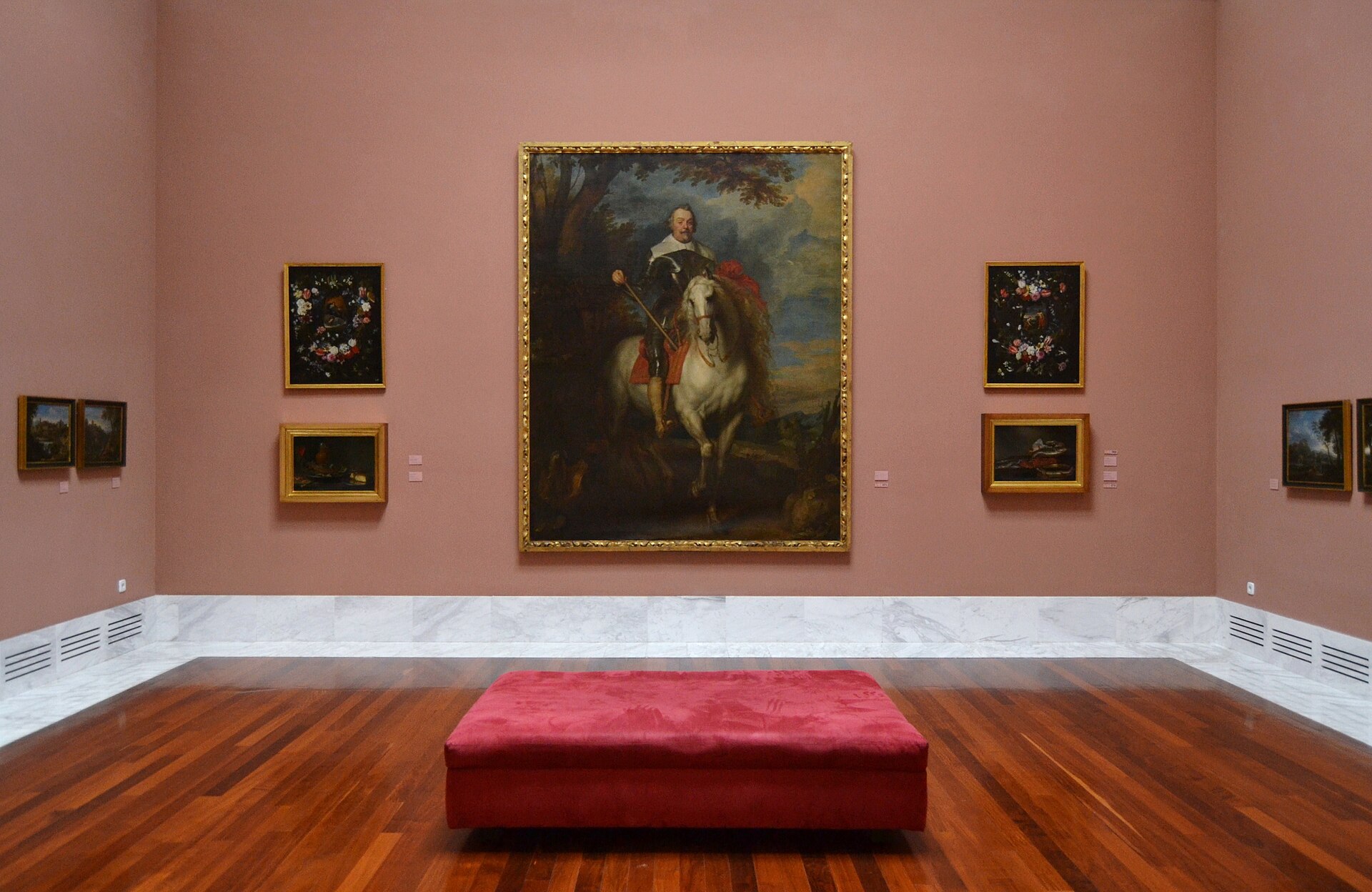
Galleries hung with the museum's Flemish and Italian Baroque holdings alongside Spanish Golden Age painting, including Anthony van Dyck's equestrian portrait, Neapolitan and Genoese Baroque canvases, and Diego Velazquez's self-portrait, one of only a handful of accepted Velazquez self-portraits anywhere and one of the two works the museum itself names as its best known.
Photograph by Joanbanjo · CC BY-SA 3.0 Sala de Goya
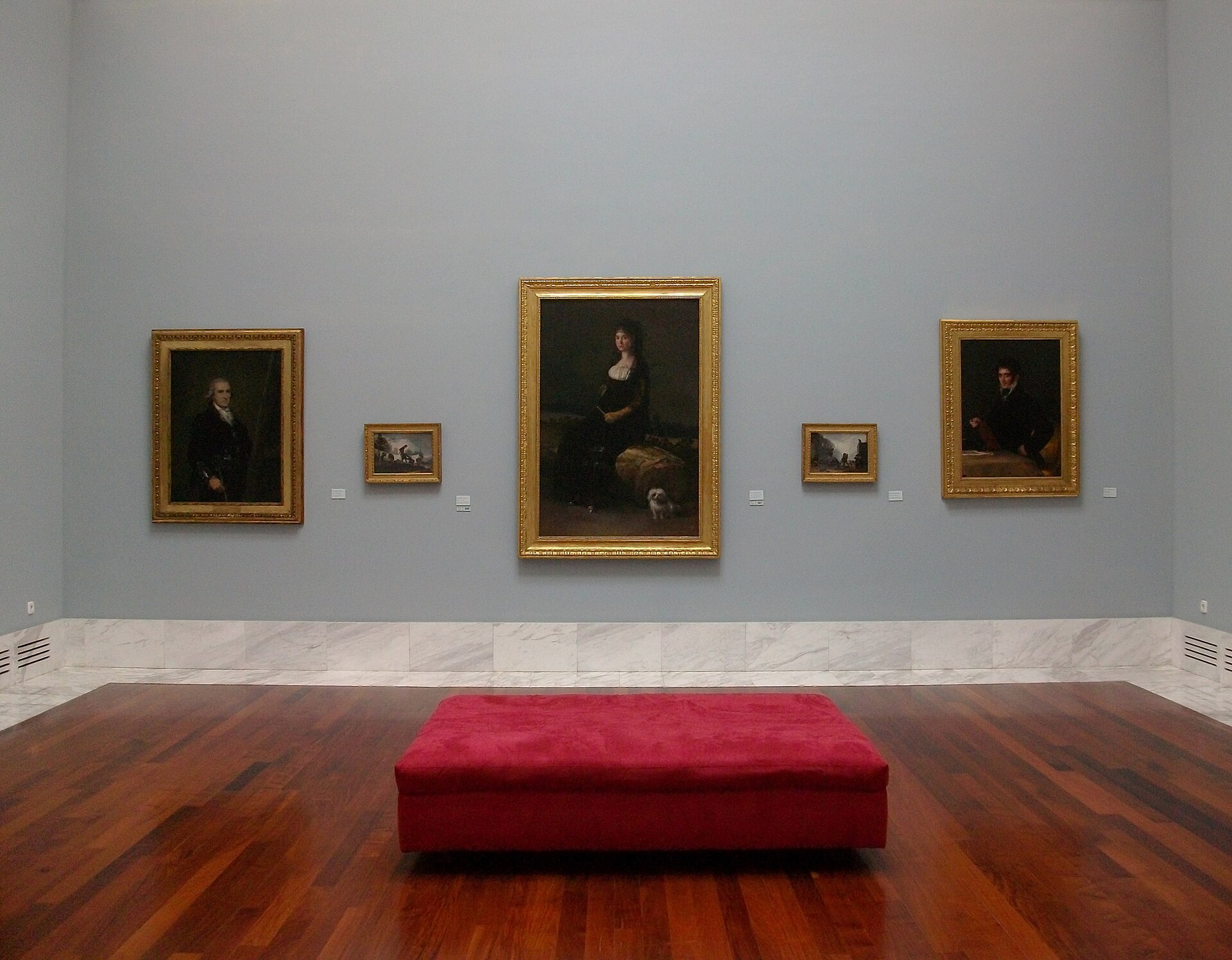
A room devoted to Francisco de Goya, part of the collection's run of paintings marking the transition from Spanish Baroque into the 19th century; the museum's holding of Goya works sits alongside its neoclassical painters Maella, Vergara, Palomino and Bonanat in the rooms either side.
Photograph by Joanbanjo · CC BY-SA 3.0 Sala Sorolla and the turn to the 20th century
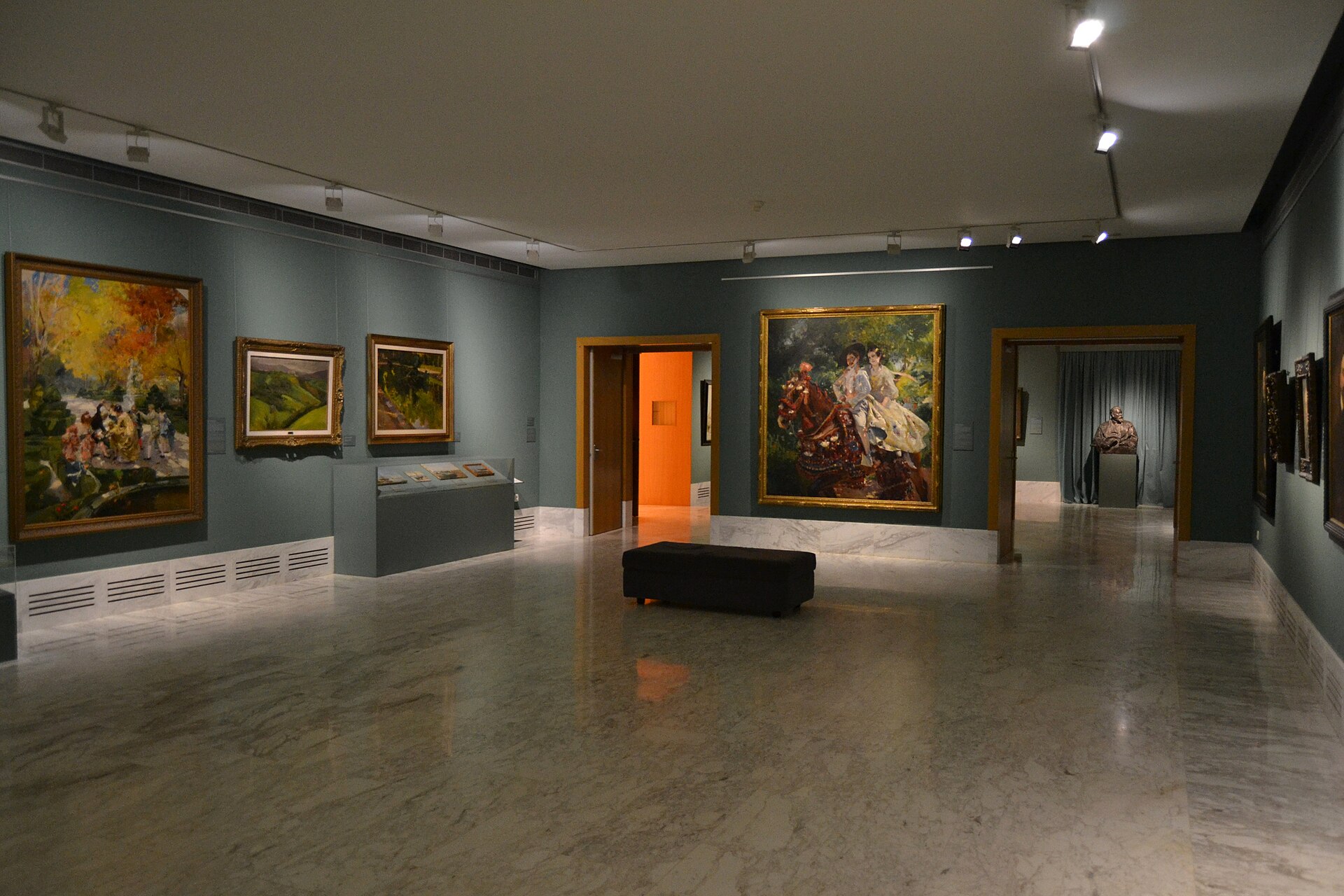
Rooms carrying the collection from the 19th into the 20th century through Valencia's own school of painters working under French influence: Joaquin Sorolla, to whom a room is dedicated, alongside Ignacio Pinazo, Cecilio Pla and Antonio Munoz Degrain, plus the museum's separate collection of 19th-century Spanish landscape painting.
Photograph by CARLOS TEIXIDOR CADENAS · CC BY-SA 4.0 Patio del Embajador Vich
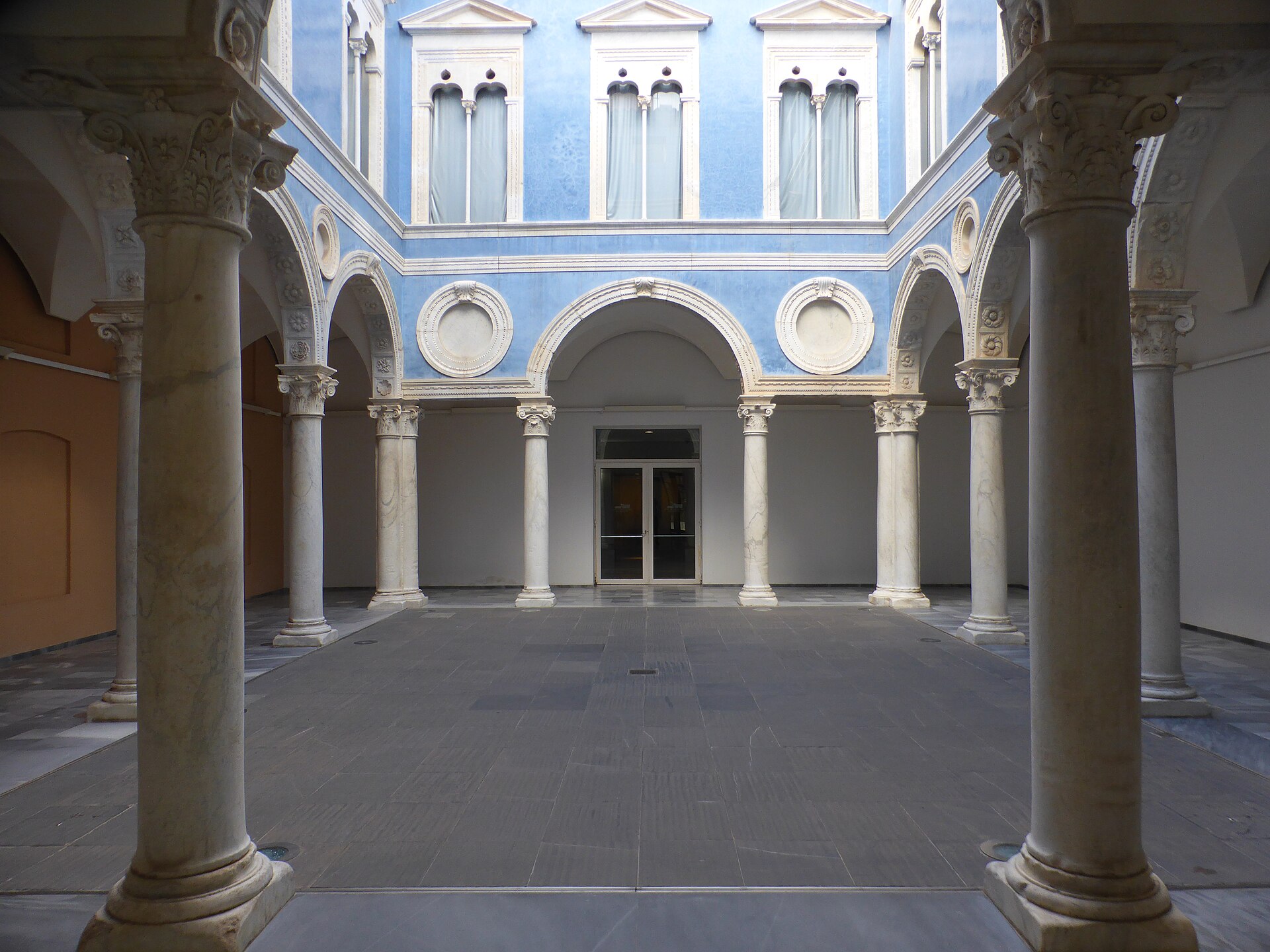
A reconstructed Renaissance courtyard inside the museum, built from Genoese marble pieces salvaged when the 16th-century palace of the Embajador Vich that originally held them was demolished in 1859; the Real Academia de San Carlos kept the marbles in storage for close to a century and a half before the courtyard was rebuilt on this site in 2006, and it is treated by the museum and by visitors alike as a highlight independent of the paintings around it.
Photograph by Dorieo · CC BY-SA 4.0 Cloister and archaeological remains
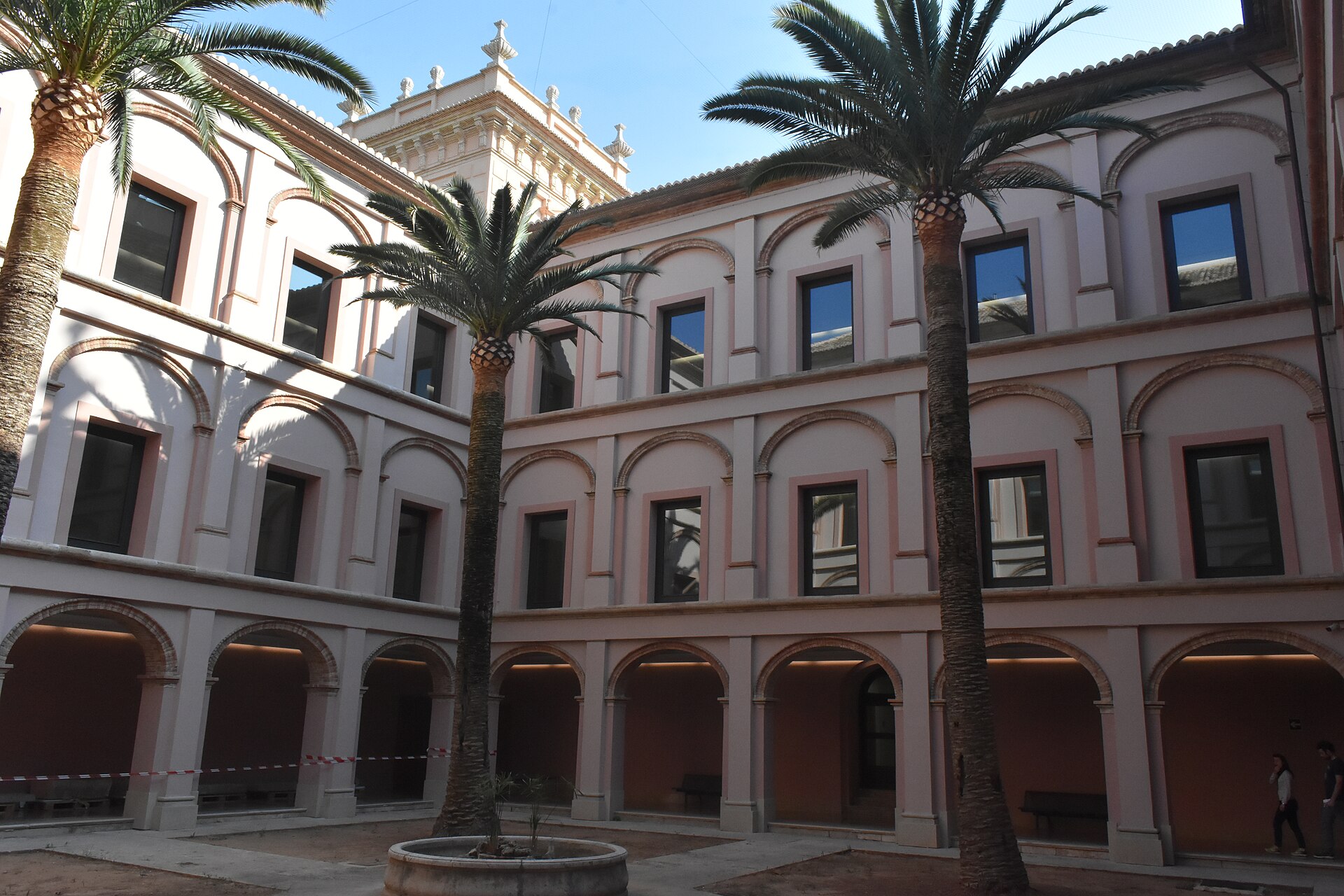
The arcaded cloister of the former Colegio de San Pio V, now planted with palms and cypresses, which also displays Iberian sculpture, Roman mosaics and Romanesque capitals excavated in the region; the cloister is one of the two parts, alongside the octagonal former church, into which the 17th-century college building is divided.
Photograph by Dorieo · CC BY-SA 4.0 Entrance hall and the former church
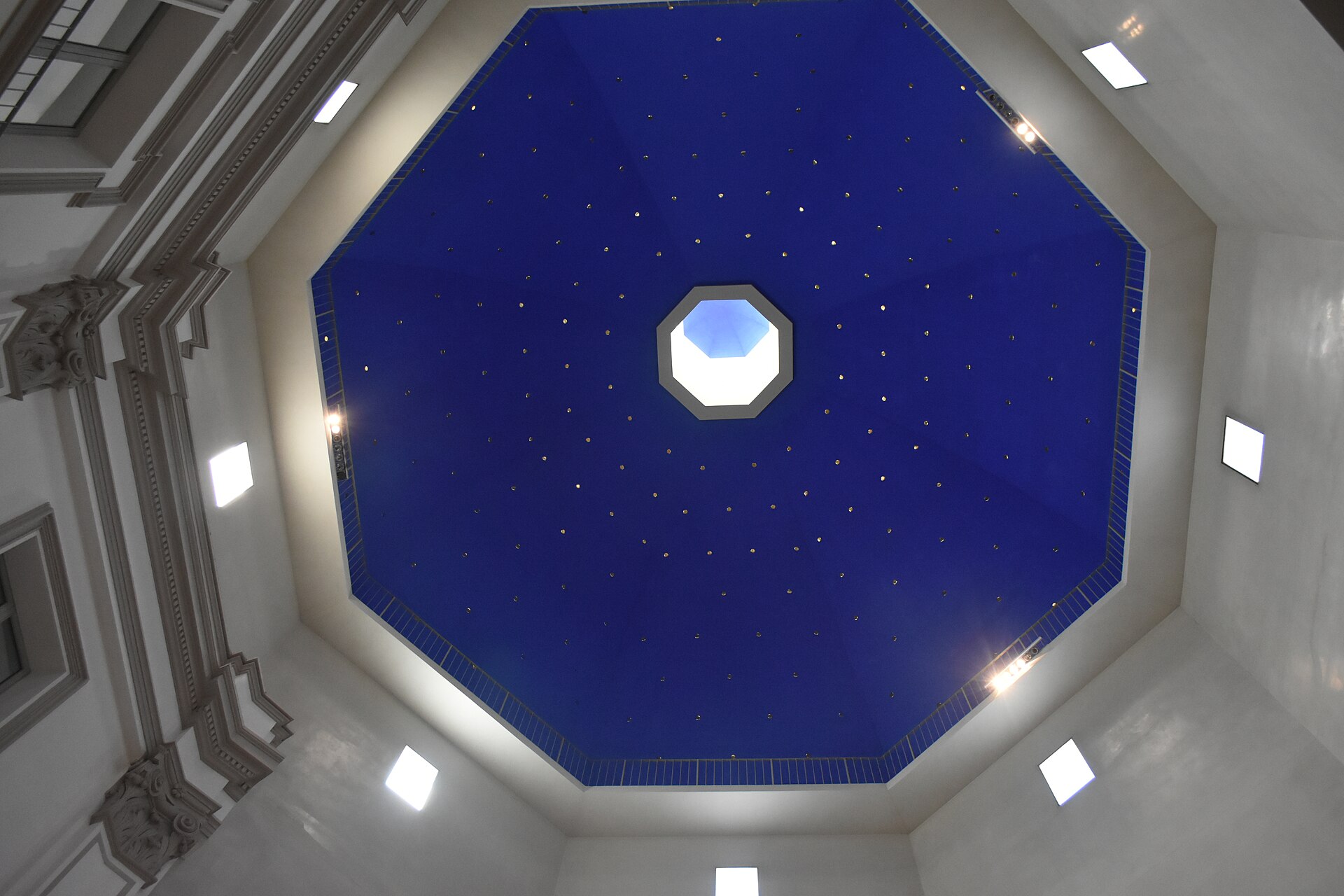
The octagonal former temple of the Colegio de San Pio V, now the museum's entrance vestibule, roofed by a large blue-glazed-tile dome that was demolished in 1925 and rebuilt afterward; the temple was attached to the quadrangular college building and is the part of the complex most visible from the Jardin del Turia outside.
What to see first
Self-Portrait
Diego VelazquezOne of only a handful of self-portraits generally accepted as by Velazquez's own hand anywhere in the world, and one of the two works the museum itself names as its best-known holdings5
Retablo de Fray Bonifacio Ferrer (Retablo de los Sacramentos)
Attributed to Gherardo StarninaA complete altarpiece of about 1398 by an Italian painter working in the Valencian International Gothic idiom, singled out in the museum's own account for its technical perfection and rarity in a Spanish collection5
Retablo de San Martin, Santa Ursula y San Antonio
Goncal Peris SarriaConsidered the most representative single painting of the Valencian International Gothic style, by the artist the museum's own history names as the finest hand among the Valencian Primitives5
La Virgen con el Nino (Virgen de la Leche)
Bartolome BermejoThe museum's standout example of Hispano-Flemish painting, a panel that shows Netherlandish technique and detail entering Spanish devotional painting through Bermejo's own itinerant career5
Triptico de los improperios (Triptico con escenas de la Pasion)
Workshop or follower of Hieronymus BoschDendrochronology dates the panel to 1520-1530, shortly after Bosch's death; it is one of the few complete surviving versions of the composition, most other copies elsewhere in Spain being of the central panel alone5
Virgen con el Nino y donante
PinturicchioOne of the two international-master works the museum names alongside the Velazquez self-portrait as its best-known holdings, and a rare Pinturicchio outside Italy5
Retrato de Michele Marullo Tarcaniota
Sandro BotticelliOn loan from the Guardans-Cambo family since July 2021 rather than owned by the museum, and one of a very small number of Botticelli paintings that remain in private hands anywhere in the world5
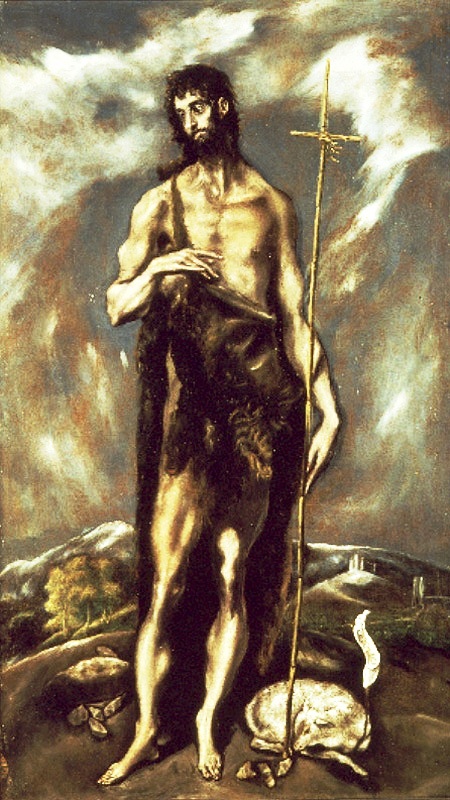
San Juan Bautista (Saint John the Baptist)
El GrecoA characteristically elongated, storm-lit Mannerist figure that the museum's English-language summary names among its principal Golden Age paintings6
Patio del Embajador Vich
Unknown Renaissance workshop, Genoese marbleA complete Renaissance courtyard salvaged from a demolished 16th-century palace and rebuilt inside the museum in 2006, treated as a highlight of the building rather than of the paintings5
Sala Sorolla
Joaquin SorollaA room dedicated to Valencia's own Joaquin Sorolla, whose Impressionist-influenced paintings anchor the museum's run of late-19th- and early-20th-century Valencian painting6
Exhibitions on now
Past exhibitions here
- Closed18 Jun to 20 Sep 2026Confirmed · check before you travel
A seminary before it was a museum
The building the museum now occupies was not built to hold paintings. The Colegio de San Pio V was founded by the Archbishop of Valencia, Juan Tomas de Rocabertio, as a seminary for training priests, designed by Juan Perez Castiel in 1683 and built in stages that ran well into the 18th century. It has two parts: a quadrangular college block arranged around a cloister, its two corner towers facing the old bed of the river Turia giving the facade something of the look of a fortified palace, and an octagonal former church attached to it, roofed with a large blue-glazed-tile dome that was demolished in 1925 and later rebuilt. Between 1820 and 1826 the building served the Beneficencia, Valencia's charitable poor-relief institution; in 1835 it passed into state hands and became an army supply store; during the Spanish Civil War it was a military hospital. Only after the war did it become an art museum, and the building still carries the plan of an institution built for something else entirely, which is part of why several visitors describe getting turned around inside it.
From an academy's teaching collection to a state museum
The museum's own institutional history runs further back than the San Pio V building. Its collection began under the Real Academia de Bellas Artes de San Carlos, and only became an independent, state-run institution by royal decree on 24 July 1913, when it was formally separated from the Academy and placed under its own governing board. During the Civil War the museum, then still housed in the former Convento del Carmen Calzado, was dismantled and used as a store for the Republic's Tesoro Artistico, the emergency programme that moved Spain's major museum holdings out of harm's way; part of its collection was sent to Madrid and deposited at the Prado for safekeeping. After the war, the museum's director Manuel Gonzalez Marti recovered the dispersed holdings and, finding the Carmen Calzado convent too damaged to restore, moved the collection into the former Colegio de San Pio V, where it has remained since. The museum today is formally owned by the Spanish state's Ministry of Culture and administered day to day by the Generalitat Valenciana, a split of ownership and management that is fairly ordinary among Spain's regionally run state museums but worth naming plainly rather than glossing over.
The Valencian Primitives and the Gothic collection
The museum's international reputation rests first on its holding of Valencian Gothic panel painting, the so-called primitivos valencianos, produced by local workshops from the late 14th century through the 15th. The earliest Valencian paintings in the museum, four panels called the Scenes from the Life of Saint Luke by the Master of Villahermosa, came from the church of San Juan del Mercado; the collection's most representative single work of the mature International Gothic style is the Retablo de San Martin, Santa Ursula y San Antonio by Goncal Peris Sarria, a painter the museum's own account calls the most elegant and refined hand among the Valencian Primitives. The collection also holds real rarities from outside Spain that mark it out from other Spanish museums: a complete circa-1400 altarpiece by the Italian Gherardo Starnina, a panel attributed to Cenni di Francesco di ser Cenni, and work by Antoniazzo Romano and Pinturicchio, whose Virgin and Child with a donor is one of only two works the museum itself names, alongside the Velazquez self-portrait, as its best-known holdings.
Renaissance to Baroque: Bermejo, Velazquez and a Bosch workshop panel
Moving into the 16th and 17th centuries, the collection tracks the Valencian Renaissance under the influence of the Italian Quattrocento and of Leonardo, through painters such as Vicent Macip, Yanez de la Almedina and Joan de Joanes, and the Mannerism of Luis de Morales. Its standout example of Hispano-Flemish painting is Bartolome Bermejo's Virgin and Child, known as the Virgen de la Leche, which shows Netherlandish oil technique and precision entering Spanish devotional painting through Bermejo's own itinerant career across the Iberian peninsula. The Baroque rooms hold Diego Velazquez's self-portrait, work by Tomas Yepes, and a triptych inscribed with Bosch's name that dendrochronology places at 1520 to 1530, shortly after the master's death; it is a workshop or follower's production rather than an autograph Bosch, but it survives as a complete triptych where most other known versions of the composition preserve only a copy of the central panel. Since July 2021 the Renaissance rooms have also shown, on loan from the Guardans-Cambo family rather than as a museum-owned work, a portrait by Sandro Botticelli, one of very few Botticelli paintings anywhere still in private hands.
Goya, Sorolla and the turn into the 20th century
The collection's run through the 19th century opens with Francisco de Goya, given his own room, and the neoclassical generation around him, Maella, Vergara, Palomino and Bonanat. It closes with Valencia's own school of painters working under French influence at the turn of the 20th century: Joaquin Sorolla, honoured with a dedicated Sala Sorolla, alongside Ignacio Pinazo, Cecilio Pla and Antonio Munoz Degrain, plus a separate holding of 19th-century Spanish landscape painting. This later material is what several Tripadvisor reviewers single out when they say they focused on the more modern rooms during a short visit, and it is also where the museum's collection is most clearly still growing rather than simply preserving an inherited stock: recent gallery remodelling in 2025 and 2026 has reordered several of these rooms.
The Patio del Embajador Vich and the cloister
Two spaces inside the museum are treated by visitors as attractions independent of the paintings on the walls. The Patio del Embajador Vich is a Renaissance courtyard built from Genoese marble originally installed in a 16th-century Valencia palace; when that palace was demolished in 1859 the Real Academia de San Carlos kept the marble pieces in storage, and the courtyard was only reconstructed on its present site inside the museum in 2006, close to a century and a half after the original building came down. The college's own arcaded cloister, now planted with palms and cypresses, additionally displays Iberian sculpture, Roman mosaics and Romanesque capitals excavated in the region, so a visitor moving between the cloister and the Patio del Embajador Vich passes through several centuries of Valencian architectural history before reaching a single painting.
A security lapse, and a museum answering its own visitors
The museum's record is not spotless. In August 2015 it emerged that 45 minor objects, mostly small carvings, medals and a coin, had been stolen from a storage area whose only security camera had been disconnected during building works months earlier without any documented authorisation; regional officials at the time attributed the lapse to poor management under the previous administration, and the affected items were, by the museum's own account, of little monetary value rather than major collection pieces. More recently, the pattern in visitor reviews through 2025 and into 2026 was a different kind of complaint: confusing layout, Spanish-only labelling, and no map or orientation material at reception. The museum answered that specific complaint directly, presenting a new multilingual room-numbering and signage system, a printed and digital visitor map with QR-code access, and a mobile audioguide in June 2026, work its director framed explicitly around universal accessibility rather than as a cosmetic refresh. Reviews written after that date should be read against a materially different visitor experience than the one most reviews on file describe.
What visitors say
Visitors consistently treat this as one of the best painting collections in Spain and are visibly surprised that it costs nothing to see: free admission comes up in a large share of reviews, often paired with disbelief at the quality on offer for no charge. The building itself, especially the cloister and the reconstructed Patio del Embajador Vich, draws praise alongside the paintings, and more than one reviewer calls the museum an under-visited insider tip compared with Valencia's more crowded attractions. The recurring complaints are about orientation rather than the art: several reviewers through 2025 and into 2026 describe confusing layout, Spanish-only labelling and no map or plan at reception, though the museum introduced a new multilingual signage system, printed and digital maps and a mobile audioguide in June 2026, which should address the specific gap those reviews describe. A second, smaller complaint concerns visitor services: the on-site refreshment area is repeatedly described as a bare room with vending machines rather than a real cafe, and reviewers report friction over the coin-operated lockers required for bags.
What is praised, what is criticised
- Praised: Free admission to both the permanent collection and temporary exhibitions, called out with visible surprise in a large share of reviews given the quality of the collection
- Praised: The depth and rarity of the Golden Age and Gothic holdings, especially the Velazquez self-portrait, the Valencian Primitives and El Greco, described by several reviewers as rivalling much larger Spanish museums
- Praised: The building itself, particularly the cloister and the Patio del Embajador Vich, which multiple reviewers treat as worth the visit independent of the paintings
- Praised: A quiet, uncrowded visit, with more than one reviewer describing the museum as an underrated stop compared with Valencia's busier sights
- Criticised: Weak visitor orientation through 2025 and into 2026: reviewers repeatedly describe no map, no QR code and no information at reception, labels only in Spanish, and a confusing layout that requires doubling back because of the building's former life as a seminary; the museum's own June 2026 rollout of multilingual signage, printed and digital maps and an audioguide directly addresses this, though it postdates many of the reviews read for this record
- Criticised: A weak on-site cafe, described in more than one review as a bare room with vending machines rather than table service, plus friction over coin-operated bag lockers whose denomination is not clearly marked
- Criticised: Front-of-house friction over what visitors can bring in, with at least one reviewer describing an unfriendly reception over a bag and a water bottle on a hot day
Ratings on other platforms
Tripadvisor: 4.2 from 744 ratings, read 13 August 2026
A platform average is a tertiary source: it moves, it is not audited, and we quote no visitor's words.
Questions about Museu de Belles Arts de Valencia
Where is Museu de Belles Arts de Valencia?
Calle San Pio V, 9, 46010 Valencia, Spain.
How much does it cost to visit?
General admission, permanent collection and temporary exhibitions: free. As confirmed 26 September 2026.
When is it open?
Tuesday-Sunday 10:00-20:00. Closed: Monday. As confirmed 26 September 2026.
How do you get there?
Bus: EMT city bus lines 6, 11, 16, 26, 28, 94, 95 and C2 stop within walking distance of the museum; Metro: Alameda station, on the museum side of the old Turia riverbed gardens.
What should you see first?
Self-Portrait (Diego Velazquez); Retablo de Fray Bonifacio Ferrer (Retablo de los Sacramentos) (Attributed to Gherardo Starnina); Retablo de San Martin, Santa Ursula y San Antonio (Goncal Peris Sarria); La Virgen con el Nino (Virgen de la Leche) (Bartolome Bermejo); Triptico de los improperios (Triptico con escenas de la Pasion) (Workshop or follower of Hieronymus Bosch); Virgen con el Nino y donante (Pinturicchio).
What we could not confirm
- The museum's own domain, museobellasartesvalencia.gva.es, was unreachable throughout this research pass by direct fetch, by WebFetch, and by an in-app browser navigation, all failing at the connection level rather than returning a bot-block error code. A Wayback Machine snapshot of the same domain from 30 January 2026 shows a Spanish- and Catalan-language message that the application is temporarily out of service for technical reasons, suggesting an extended platform outage rather than a one-off block. Hours, admission and contact were instead confirmed from Visit Valencia, Valencia's official tourism board, and cross-checked against the Generalitat's own Consorci de Museus site; both are public-sector sources naming the same address, free admission and hours, but neither is the museum's own domain, and this record should be re-checked directly against museobellasartesvalencia.gva.es once it is reachable again.
- The Botticelli portrait on display, Retrato de Michele Marullo Tarcaniota, is on loan from the Guardans-Cambo family under a comodato agreement since July 2021 and is not part of the museum's own permanent collection; it is flagged here so it is not later read as an acquisition.
- Visitor reviews and the museum's own official ownership note both describe the institution as state-owned (Ministry of Culture) but regionally administered (Generalitat Valenciana); this is stated plainly in the narrative rather than treated as a discovered controversy, since no source read for this record frames it as a live dispute.
Images
Sources
- 1Wikidata, Museu de Belles Arts de Valencia (Q1748404) - identity, coordinates, inception date, official website wikidata.org/wiki/Q1748404
- 2Wikimedia Commons, Category:Museu de Belles Arts de Valencia and file-level licence metadata for all plates used commons.wikimedia.org/wiki/Category:Museu_de_Belles_Arts_de_Val%C3%A8ncia
- 3Visit Valencia (official Valencia tourism board), Museo de Bellas Artes de Valencia (San Pio V) museum profile: hours, admission, phone, transport, current exhibitions visitvalencia.com/que-hacer-valencia/cultura-valenciana/museos-en-valencia/museo-bellas-artes-valencia-san-pio-v
- 4Consorci de Museus de la Comunitat Valenciana (Generalitat Valenciana), Museu de Belles Arts de Valencia profile page consorcimuseus.gva.es/museos/museo-bellas-artes-de-valencia-san-pio-v/?lang=es
- 5Wikipedia (Spanish), Museo de Bellas Artes de Valencia - history, building, detailed collection sections es.wikipedia.org/wiki/Museo_de_Bellas_Artes_de_Valencia
- 6Wikipedia (English), Museu de Belles Arts de Valencia - overview and highlights summary en.wikipedia.org/wiki/Museu_de_Belles_Arts_de_Val%C3%A8ncia
- 7Tripadvisor, Museu Belles Arts Valencia attraction page and visitor reviews, read 2026-08-13 tripadvisor.com/Attraction_Review-g187529-d244249-Reviews-Museo_de_Bellas_Artes_de_Valencia-Valencia_Province_of_Valencia_Valencian_Communit.html
- 8elDiario.es, "Roban 45 piezas del Museo de Bellas Artes de Valencia en la unica zona sin videovigilancia", 19 August 2015 eldiario.es/cultura/arte/roban-museo-bellas-artes-valencia_1_2522377.html
- 9NoticiasCV, "El Museo de Bellas Artes de Valencia presenta su nueva audioguia, planos y senaletica", 10 June 2026 noticiascv.com/el-museo-de-bellas-artes-de-valencia-presenta-su-nueva-audioguia-planos-y-senaletica/
- 10Wayback Machine snapshot of museobellasartesvalencia.gva.es, 30 January 2026, showing a temporary-outage message on the museum's own domain web.archive.org/web/20260130051622/https://museobellasartesvalencia.gva.es/