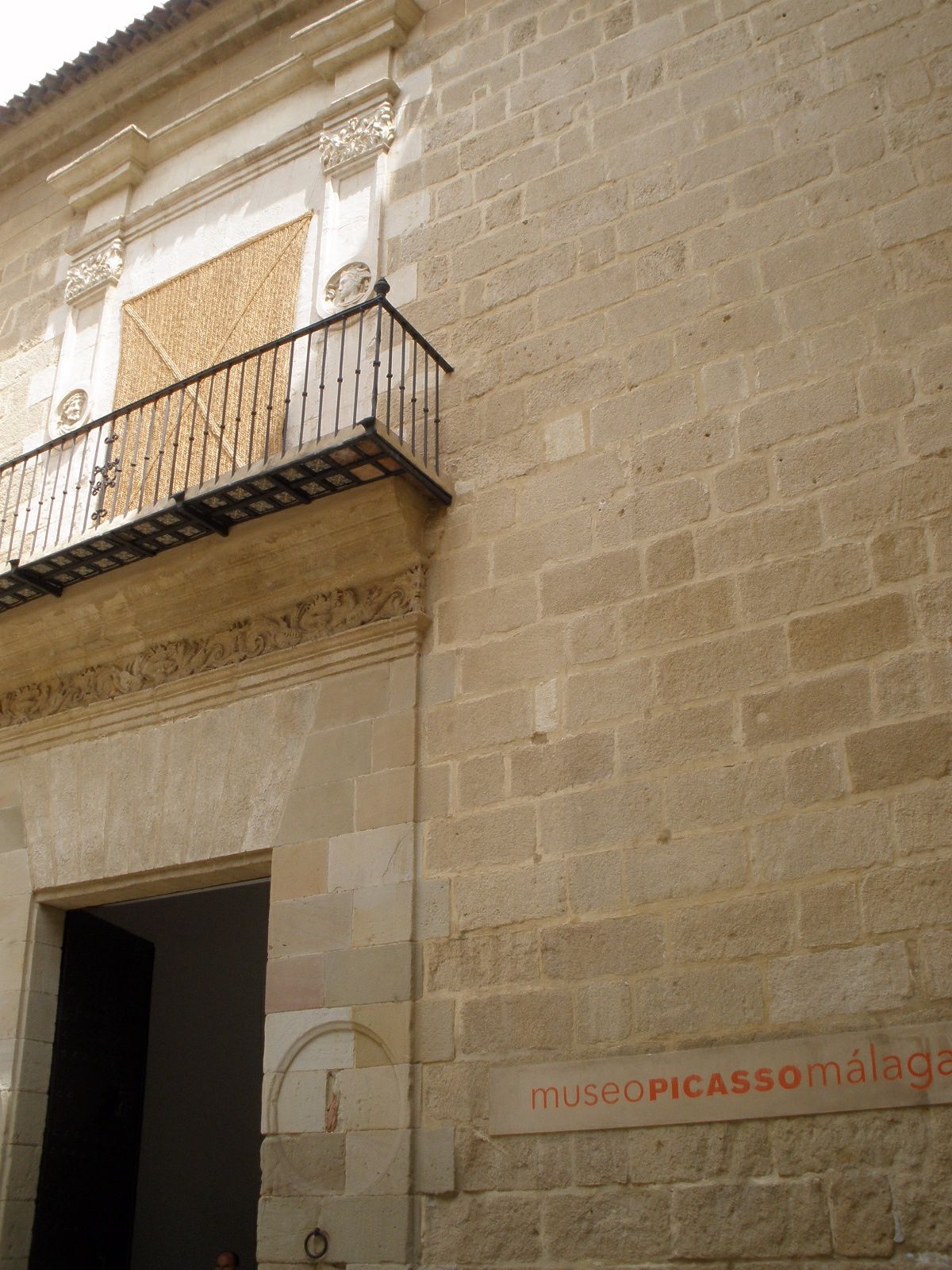
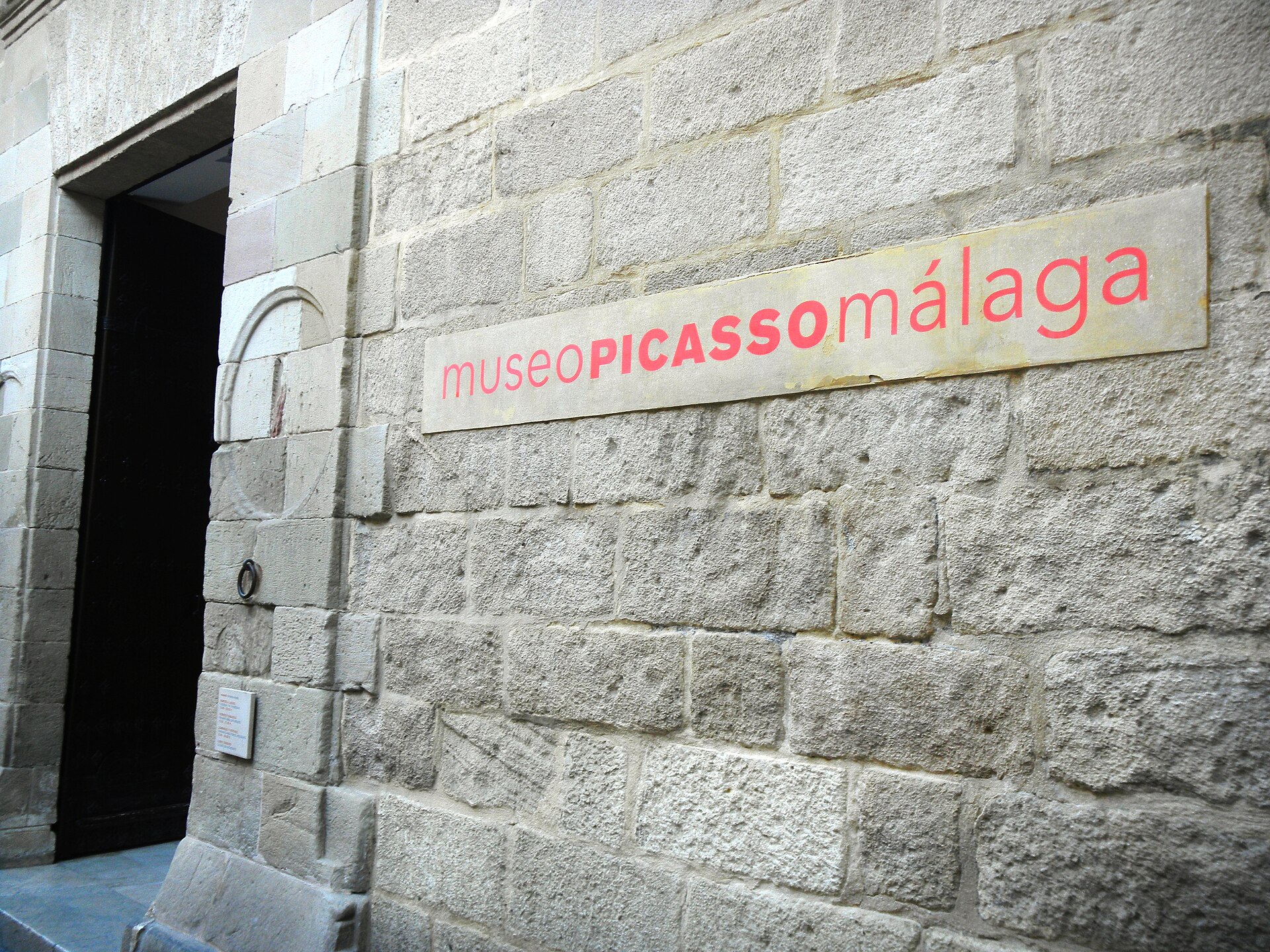
The Palacio de Buenavista entrance, with the Museo Picasso Malaga sign beside the original stone doorway and balcony.
Zarateman · CC0Museo Picasso Malaga
Museum · Museo Picasso Málaga · Founded 2003
Open, admission and hours confirmed 27 August 2026 · 11 sources
On this page 15 sections
ContentsClose
The Malaga museum's advantage is provenance rather than scale: because most of what it holds arrived as a direct gift or long-term loan from Picasso's own daughter-in-law and grandson, the collection carries an unusually well-documented chain of ownership back to the artist's own family, in a building whose basement independently proves the site's history goes back roughly two and a half thousand years further than the family connection does.
| Local name | Museo Picasso Málaga |
|---|---|
| Kind | Museum |
| Founded | 2003 |
| City and country |  Malaga, Spain Malaga, Spain |
| Address | Palacio de Buenavista, Calle San Agustin 8, 29015 Malaga, Spain |
| Website | museopicassomalaga.org |
| Status | Open, confirmed |
| Record last verified |
Visiting
- Hours
- Daily, March-June10:00 to 19:00
- Daily, July-August10:00 to 20:00
- Daily, September-October10:00 to 19:00
- Daily, November-February10:00 to 18:00
- 24, 31 December and 5 January10:00 to 15:00reduced holiday hours
- 25 December, 1 January, 6 JanuaryClosed
- Closed
- 25 December. 1 January. 6 January.
- Admission
- FullEUR 13
- Reduced (65 and over, European Youth Card holders, students under 26)EUR 11
- Under 17; visitors with disabilities plus one companion; registered unemployed (SEPE); University of Malaga students; teachers; ICOM members; journalistsFreefree with accreditation
Free entry: Every Sunday, the last two hours before closing. 28 February, 18 May, 27 September and 27 October: free all day- Do I need to book?
- Not required, though the museum's own shop and ticketing pages recommend booking online to avoid queues
- Address
- Palacio de Buenavista, Calle San Agustin 8, 29015 Malaga, Spain Map
- Website
- museopicassomalaga.org
- Telephone
- +34 952 12 76 00
- [email protected]
Before you go how long, access, photography, bags, eating, shop
- How long to allow
- Tripadvisor's own consensus, drawn from reviews, gives 1 to 3 hours, with visitors already interested in Picasso staying at the longer end
- Access
- Not established in detail from the pages read for this record beyond the standing free-admission category for visitors with disabilities and one companion
- Photography
- Not established from the pages read for this record
- Bags
- Not established from the pages read for this record
- Eating
- Not established from the pages read for this record
- Shop
- An online shop operates separately from the museum's main site
Prices and hours change. We take them from the institution's own pages and print the day we read them, and you can check the current position at the source we used. Confirm before you travel.
What is inside
The Buenavista Palace galleries
The museum's collection is hung through a 16th-century Renaissance palace rather than a purpose-built gallery block, its rooms arranged chronologically across Picasso's career from early academic drawing through Cubism to his late reworkings of the Old Masters.
The Mudejar patio and Roman mosaics
One of the palace's two original patios, built with octagonal Mudejar-style pillars, displays Roman-era floor mosaics brought from Cartama and Benalmadena, including one depicting the birth of Venus, laid into a building whose own foundations sit on an earlier Nasrid palace.
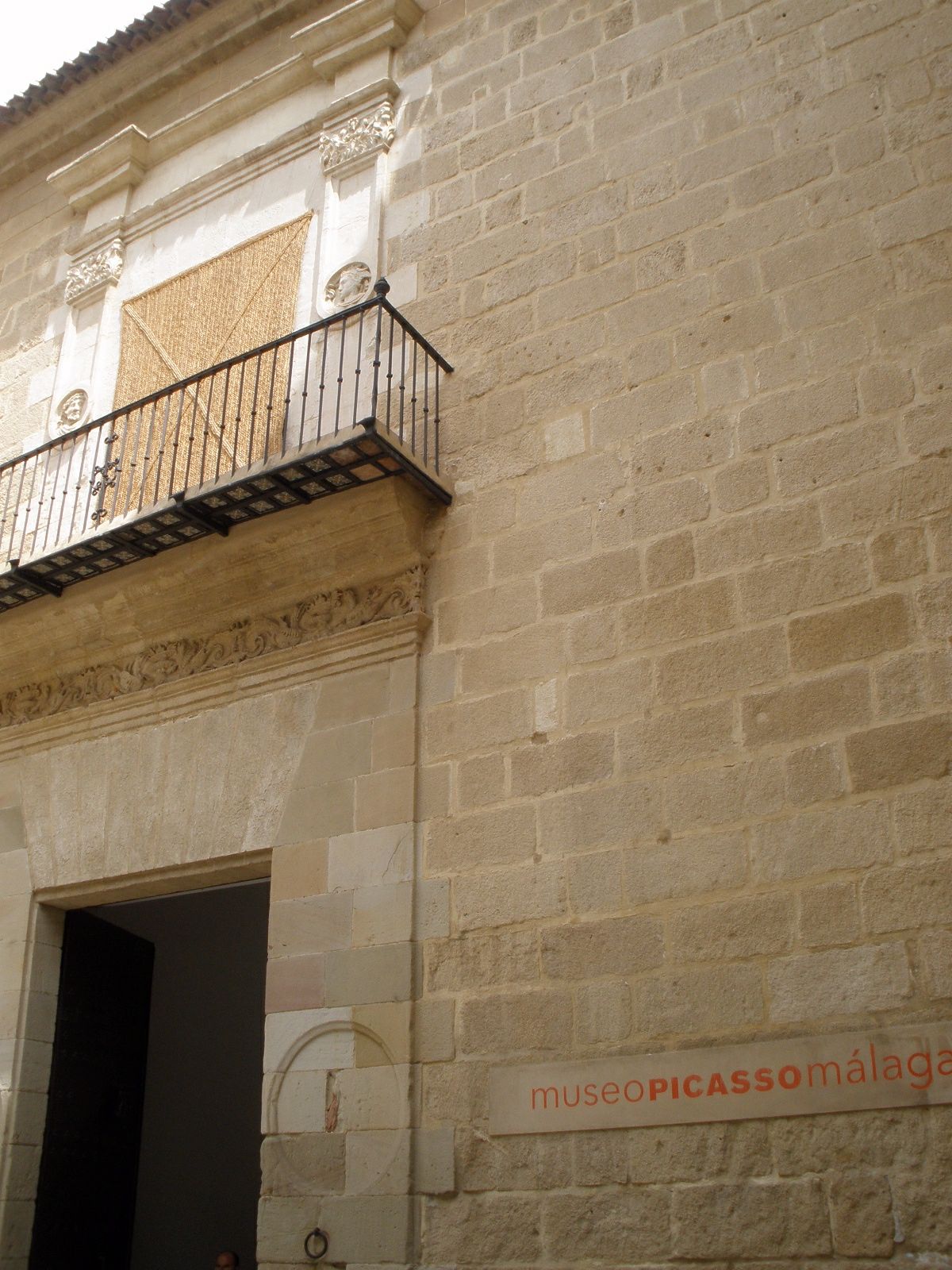
CC0 Archaeological remains beneath the palace
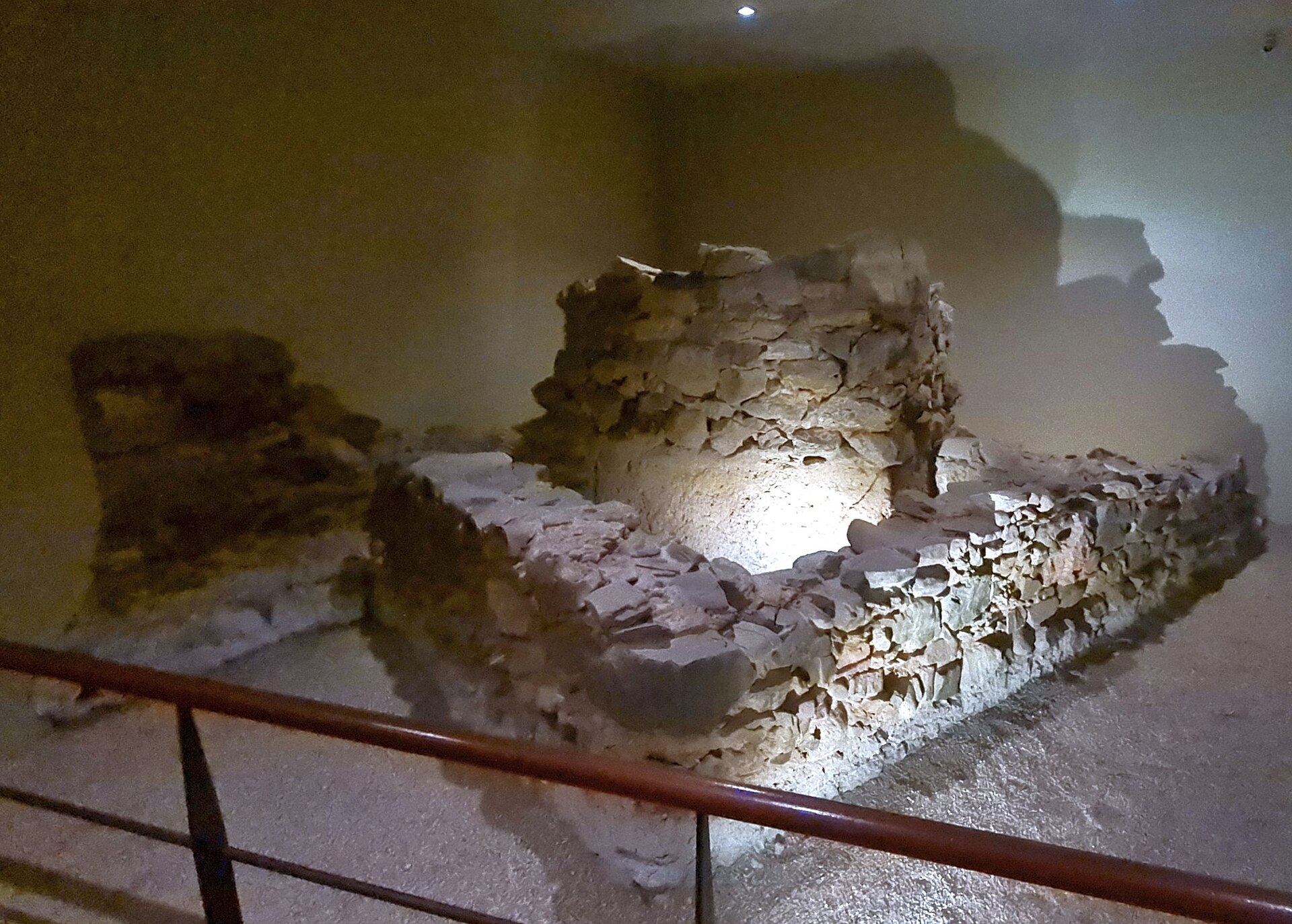
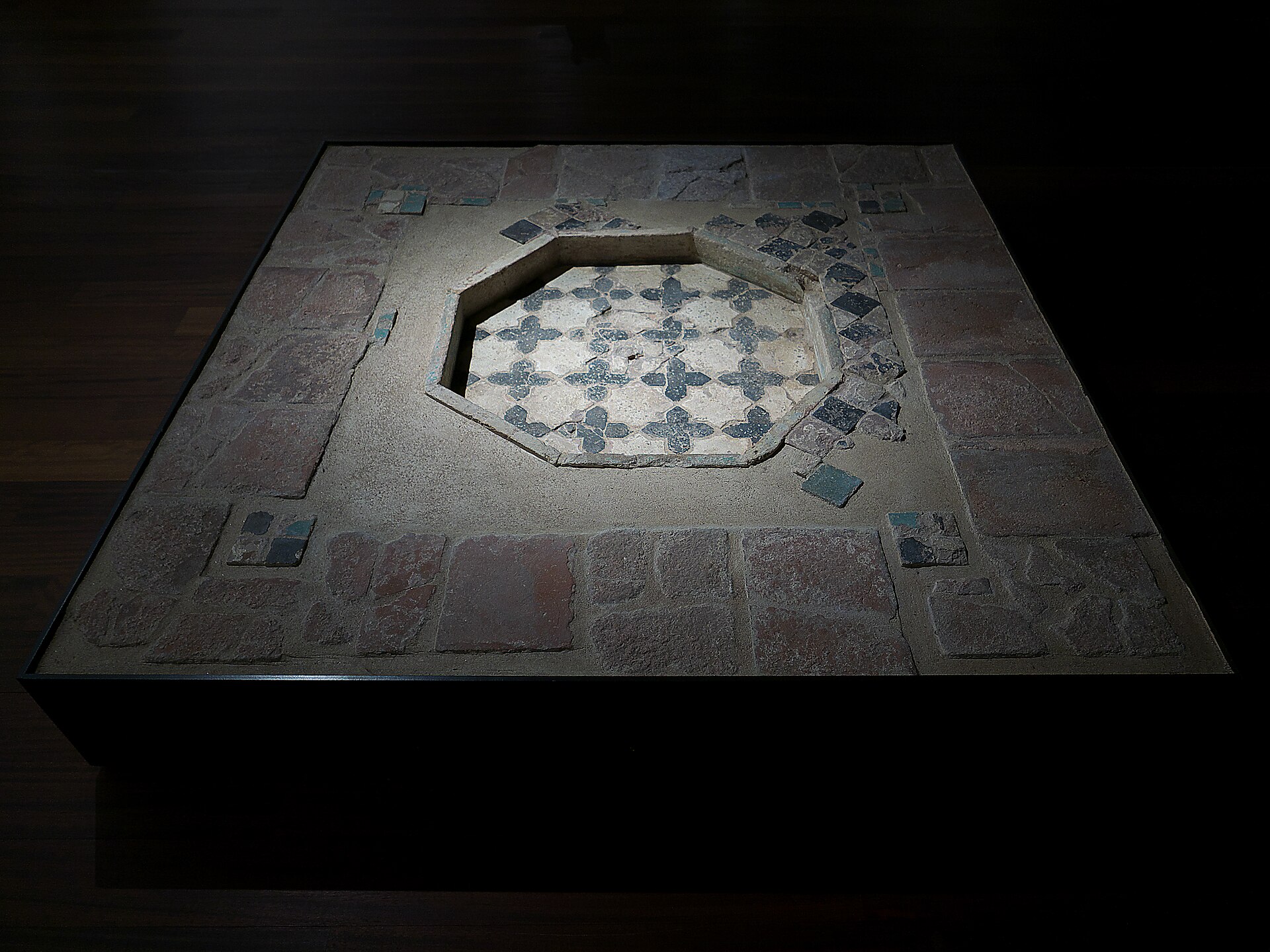
Excavated during the museum's 2000s conversion and left in place under glass and walkways: a Phoenician-era city wall and towers, a Roman factory that produced the fish sauce garum, and further fragments of the Nasrid palace the Renaissance building itself was raised on top of.
Founding collection and Ruiz-Picasso loan galleries
The rooms built around the 133 works Christine Ruiz-Picasso donated at the museum's founding and the further pieces given by her son Bernard, expanded after 2009 when the Fundacion Paul, Christine y Bernard Ruiz-Picasso merged with the museum's own foundation and brought a large body of long-term loans with it.
What to see first
Portrait of Olga
Pablo PicassoAn oil on canvas dated 10 November 1923, showing Picasso's first wife, the dancer Olga Khokhlova, from the classicising period he worked in through much of the 1920s alongside his continuing Cubism.6
Jacqueline Seated
Pablo PicassoA 1954 oil on canvas of Jacqueline Roque, who became Picasso's second wife in 1961 and whose face recurs across more of his late work than any other single sitter.7
Woman with Raised Arms
Pablo PicassoMade in 1936, the same year the Spanish Civil War began and a year before Guernica, worked in oil, charcoal and sand on canvas, a combination of materials Picasso used only for a short run of paintings in this period.8
La Californie. Interior with Red Armchair
Pablo PicassoPainted 17 June 1958, one of a series Picasso made of the interior of La Californie, the Cannes villa where he lived and worked through the late 1950s, treating his own studio as the subject rather than a person or still life.9
Three Doves
Pablo PicassoAn 18 November 1960 oil on canvas from Picasso's later career, when doves recur across his work as a motif tied to his own peace movement posters of the previous decade rather than to any single private sitter.10
The archaeological remains beneath the palace
Phoenician, Roman and Nasrid builders, excavated during the museum's 2000s conversionNot a Picasso work at all: a Phoenician city wall, a Roman garum factory and Nasrid palace fragments, excavated during the museum's construction and left visible in place, meaning a visitor to a Picasso museum also walks over roughly two and a half thousand years of the building's own site history before reaching a single painting.4
Exhibitions on now
Past exhibitions here
A museum fifty years in the waiting
The idea of a Picasso museum in his birth city was first raised in 1953, during the Franco years, and went nowhere for decades: Picasso himself lived the rest of his life in French exile and never returned to Spain while Franco ruled, so a state museum built around him was politically unworkable for as long as the idea sat unrealised. The project that eventually opened traces instead to Christine Ruiz-Picasso, widow of Picasso's eldest son Paulo, who organised exhibitions in Malaga in 1992 and 1994 that rebuilt local interest in a permanent museum. She gave the founding collection herself: 14 paintings, 9 sculptures, 44 individual drawings, a sketchbook holding 36 more, 58 engravings and 7 ceramic pieces, 133 works in total. Her son Bernard Ruiz-Picasso added a further 22 pieces of his own. The museum opened in the Palacio de Buenavista on 27 October 2003, exactly fifty years after the idea was first raised.
The collection kept growing afterward rather than staying fixed at the opening gift. In 2009 the Fundacion Paul, Christine y Bernard Ruiz-Picasso merged into the museum's own foundation, bringing a substantial body of work into Malaga on long-term loan rather than as an outright gift, so a meaningful share of what hangs on the walls today is on deposit from the family rather than owned outright by the museum itself.
A conquistador's palace, built on a Nasrid palace
The building predates its Picasso connection by nearly five centuries. Diego de Cazalla, who had taken part in the 1487 conquest of Malaga by the Catholic Monarchs, built the Palacio de Buenavista in the first half of the 16th century directly on the ruins of an earlier Nasrid palace rather than on cleared ground. The result mixes two architectural languages rather than choosing one: a Plateresque facade of heavy carved stone at the entrances, set against otherwise austere ashlar walls, and inside, a Mudejar-style second patio with octagonal pillars whose adjoining tower, according to the architectural historian Fernando Marias, is itself a survival of the old Nasrid building rather than a later addition made to look older. That same Mudejar patio displays Roman-era floor mosaics brought from Cartama and Benalmadena, including one depicting the birth of Venus, laid into a courtyard whose own structure predates Rome's arrival in the region by comparison, so the single patio alone stacks Nasrid, Renaissance and Roman material without any of the three actually belonging to the same period as the building around them.
The palace was already a museum before it was this one: it housed Malaga's Museo Provincial de Bellas Artes from 1961 to 1997, showing Murillo, Zurbaran and Giordano, before that collection moved out to make room for Picasso's.
What the renovation found, and what it cost
Converting the palace for the Picasso museum was itself a large undertaking: the American architect Richard Gluckman led a renovation budgeted at roughly 20 million dollars. Excavation during that work uncovered a stratified sequence nobody had planned for: remnants of a Phoenician-era city wall and its towers, the remains of a Roman factory that produced garum, the fermented fish sauce that was a staple traded good across the Roman Mediterranean, and further fragments of the Nasrid palace the Renaissance building itself already stood on. Rather than clear the finds to make room for gallery space, the museum left them in place and built glass floor panels and lowered walkways over them, so a visitor moving between painting galleries also walks over roughly two and a half thousand years of the site's own occupation, unrelated to Picasso at all.
The renovation was not uncontested. The historian Maria Salinas Ruiz criticised the project directly, arguing it sacrificed two houses of listed historical status that stood on the site and altered the palace's own historic fabric in the process, in her account destroying its original spaces, its flooring, its winding internal passages and its fountains to make way for the new museum. That criticism sits uneasily beside the museum's own presentation of the archaeological remains as a discovery to be proud of: both can be true, since preserving what was found beneath the palace does not undo damage done to the palace's own later, non-Roman fabric above it.
The street where his father worked
The museum's own address carries a specific, checkable family connection: Calle San Agustin, the street the Palacio de Buenavista sits on, is where Picasso's father, Jose Ruiz Blasco, worked as curator of Malaga's city museum and kept a painting studio, and where Picasso himself did some of his first drawing as a child. Picasso was born nearby at the Plaza de la Merced in 1881 and attended nursery school in the same area, so the museum sits inside the small radius of streets that actually shaped his first ten years in the city.
Those ten years are also the limit of the connection. Picasso left Malaga with his family in 1891 and did not live there again; broader biographical accounts of his life describe Barcelona, not Malaga, as the city he came to regard as his true home in later years, particularly in moments of nostalgia. A museum built around a native son is not the same claim as a museum built around an adult's chosen city, and Malaga's is more the former than the latter: the city gave Picasso his birth and his father's studio, and comparatively little of his adult working life afterward.
What is on the walls
Because the founding gift came from Picasso's own family rather than from a single period of purchases, the hang runs unusually evenly across his whole career instead of clustering around one style. Portrait of Olga, from November 1923, shows his first wife, the dancer Olga Khokhlova, in the classicising manner Picasso worked in even while continuing Cubism elsewhere in the same years. Woman with Raised Arms, from 1936, combines oil, charcoal and sand on canvas, a materials mix Picasso used only briefly, in the same year the Spanish Civil War began and the year before Guernica. La Californie, Interior with Red Armchair, painted 17 June 1958, is one of a series showing the interior of Picasso's own villa studio near Cannes rather than a portrait at all. Jacqueline Seated, from 1954, and the later Three Doves, from November 1960, come from the final decades of his life, when Jacqueline Roque, whom he married in 1961, sat for more of his work than any single subject before her.
What visitors say
Visitors consistently rate the collection and the chronological hang highly, and several specifically praise the wall labels for making an unfamiliar period of Picasso's career legible in English. The recurring complaint is not about the art but about the experience of viewing it: more than one reviewer describes gallery staff as unusually strict about noise and proximity to the work, and the museum is described by some as rewarding a visitor who already knows Picasso's career more than one who is new to it.
What is praised, what is criticised
- Praised: The chronological hang, letting a visitor follow Picasso's career from early drawing through Cubism to late work in one visit
- Praised: Wall labels and explanatory text in English, called out specifically as making the collection more accessible
- Praised: The building itself and the palace's archaeological remains, treated by several visitors as a highlight equal to the paintings
- Praised: General cleanliness and maintenance of the galleries
- Criticised: Gallery staff described by more than one reviewer as strict to the point of unwelcoming, correcting visitors for talking at a normal volume or standing close to a work
- Criticised: The entrance fee described as steep by some visitors relative to the size of the permanent collection on view
- Criticised: Temporary exhibitions and some rooms described by at least one detailed review as thin, with large stretches of bare wall
- Criticised: Families with young children reported finding the museum less accommodating than other Malaga attractions
Ratings on other platforms
Tripadvisor: 4.1 from 8,916 ratings, read 7 August 2026
A platform average is a tertiary source: it moves, it is not audited, and we quote no visitor's words.
Questions about Museo Picasso Malaga
Where is Museo Picasso Malaga?
Palacio de Buenavista, Calle San Agustin 8, 29015 Malaga, Spain.
How much does it cost to visit?
Full: EUR 13; Reduced (65 and over, European Youth Card holders, students under 26): EUR 11; Under 17; visitors with disabilities plus one companion; registered unemployed (SEPE); University of Malaga students; teachers; ICOM members; journalists: free. As confirmed 27 August 2026.
When is it open?
Daily, March-June 10:00-19:00; Daily, July-August 10:00-20:00; Daily, September-October 10:00-19:00; Daily, November-February 10:00-18:00; 24, 31 December and 5 January 10:00-15:00; 25 December, 1 January, 6 January closed. Closed: 25 December. 1 January. As confirmed 27 August 2026.
What should you see first?
Portrait of Olga (Pablo Picasso); Jacqueline Seated (Pablo Picasso); Woman with Raised Arms (Pablo Picasso); La Californie. Interior with Red Armchair (Pablo Picasso); Three Doves (Pablo Picasso); The archaeological remains beneath the palace (Phoenician, Roman and Nasrid builders, excavated during the museum's 2000s conversion).
What we could not confirm
- The museum's own presentation of its archaeological remains as a civic asset sits against Maria Salinas Ruiz's specific criticism that the renovation destroyed listed historic fabric elsewhere in the palace; this record states both without resolving which should weigh more heavily, since they concern different parts of the same building.
- Exact current accessibility, photography and bag-check policy could not be confirmed from the pages read for this record and are left blank rather than assumed.
Images
Sources
- 1Museo Picasso Malaga, homepage (address, phone, email, hours summary) museopicassomalaga.org
- 2Museo Picasso Malaga, Visita (admission prices, hours, free admission windows) museopicassomalaga.org/visita
- 3Wikipedia, Museo Picasso Malaga en.wikipedia.org/wiki/Museo_Picasso_M%C3%A1laga
- 4Wikipedia, Buenavista Palace en.wikipedia.org/wiki/Buenavista_Palace
- 5Wikipedia, Pablo Picasso en.wikipedia.org/wiki/Pablo_Picasso
- 6Wikidata, Portrait of Olga (Q133927944), collection Museo Picasso Malaga wikidata.org/wiki/Q133927944
- 7Wikidata, Jacqueline Seated (Q133897133), collection Museo Picasso Malaga wikidata.org/wiki/Q133897133
- 8Wikidata, Woman with Raised Arms (Q133931160), collection Museo Picasso Malaga wikidata.org/wiki/Q133931160
- 9Wikidata, La Californie. Interior with Red Armchair (Q133976734), collection Museo Picasso Malaga wikidata.org/wiki/Q133976734
- 10Wikidata, Three Doves (Q133897114), collection Museo Picasso Malaga wikidata.org/wiki/Q133897114
- 11Tripadvisor, Museo Picasso Malaga attraction page and reviews, read 2026-08-07 tripadvisor.com/Attraction_Review-g187438-d288435-Reviews-Museo_Picasso_Malaga-Malaga_Costa_del_Sol_Province_of_Malaga_Andalucia.html