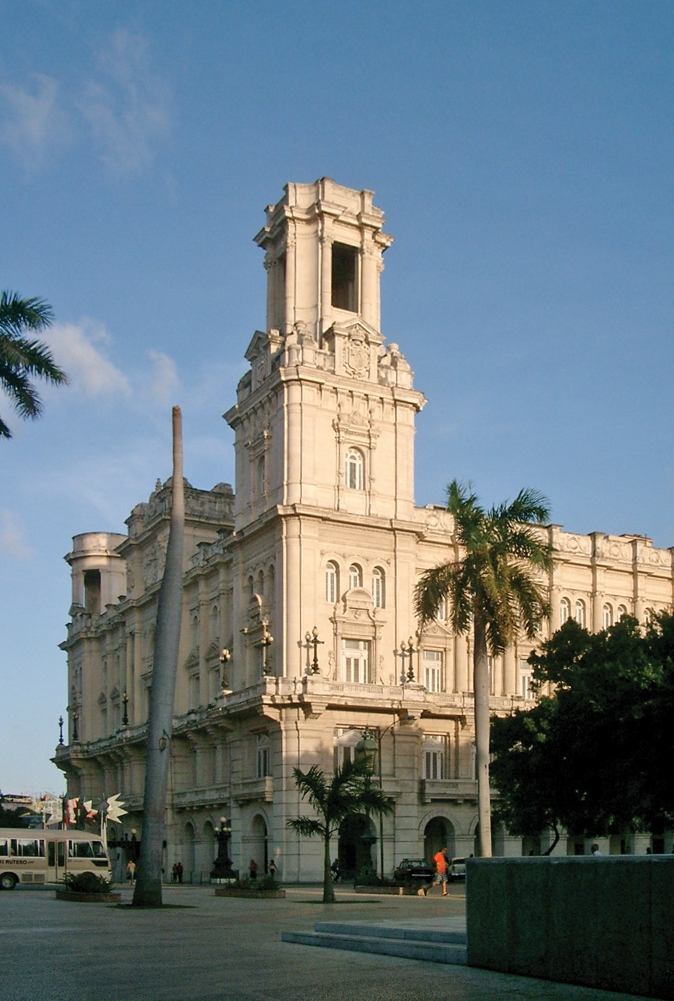
The Palacio del Centro Asturiano, the museum's universal-art building, San Rafael, Havana Vieja
Photograph by El Tonio, CC BY-SA 2.0 · Photograph by El ToñioNational Museum of Fine Arts of Cuba
Museum · Museo Nacional de Bellas Artes de Cuba · Founded 1913
Open, admission and hours confirmed 25 August 2026 · 19 sources
On this page 15 sections
ContentsClose
The museum's real strength is holding, under one institution, both the single largest Cuban art collection anywhere and a serious secondary international collection - European painting from the medieval period to the 20th century, one of Latin America's better ancient-art holdings, and Asian and American material most Caribbean museums do not attempt at all. The Cuban collection is the reason to come: four centuries of the island's own painting and sculpture, shown as a continuous narrative from colonial portraiture through the mid-century modernists (Lam, Pelaez, Ponce de Leon, Victor Manuel) to work made after 1959, including pieces its own directors describe as once censored and now reinstated as central to a post-colonial Afro-Cuban artistic identity.
| Local name | Museo Nacional de Bellas Artes de Cuba |
|---|---|
| Kind | Museum |
| Founded | 1913 |
| City and country |  Havana, Cuba Havana, Cuba |
| Address | Trocadero, between Agramonte (Zulueta) and Monserrate, Havana Vieja (Palacio de Bellas Artes, Cuban art); and San Rafael, between Agramonte (Zulueta) and Monserrate, Havana Vieja (Palacio del Centro Asturiano, universal art), Havana, Cuba |
| Website | bellasartes.co.cu |
| Status | Open, confirmed |
| Record last verified |
Visiting
- Hours
- Tue-Sat09:00 to 17:00
- Sun10:00 to 14:00
- Closed
- Monday.
- Admission
- Cuban nationals, single buildingCUP 15General admission to one of the two buildings
- Foreign visitors, single buildingCUP 125General admission to one of the two buildings
- Do I need to book?
- No booking required for general admission; the museum's own guided-tour service runs Tuesday to Sunday
- Address
- Trocadero, between Agramonte (Zulueta) and Monserrate, Havana Vieja (Palacio de Bellas Artes, Cuban art); and San Rafael, between Agramonte (Zulueta) and Monserrate, Havana Vieja (Palacio del Centro Asturiano, universal art), Havana, Cuba MapWalking Both buildings stand on the edge of Havana Vieja, a short walk from Parque Central and the Paseo del Prado
Taxi Guidebooks list taxi as the practical way in for visitors staying outside the old town - Website
- bellasartes.co.cu
- Telephone
- +53 7 863 9484
- [email protected]
Before you go how long, access, photography, bags, eating, shop
- How long to allow
- A few hours to see both buildings properly; the Cuban art collection at the Palacio de Bellas Artes alone is large enough to fill a morning
- Access
- Not verified from a source actually fetched for this record; not stated on record
- Photography
- Not verified from a source actually fetched for this record; not stated on record
- Bags
- Not verified from a source actually fetched for this record; not stated on record
- Eating
- A cafe is reported inside the Palacio de Bellas Artes
- Shop
- A gift shop is reported inside the Palacio de Bellas Artes
Prices and hours change. We take them from the institution's own pages and print the day we read them, and you can check the current position at the source we used. Confirm before you travel.
What is inside
Palacio de Bellas Artes - Cuban art galleries
The museum's Cuban collection, the largest holding of Cuban art in the world: more than 4,300 paintings and around 12,800 works on paper span the 17th century to the present. The permanent display groups roughly 940 works into four sections - colonial-period art, turn-of-the-century painting, Cuban modernism, and contemporary art - and includes a gallery given over to the hyperrealist painting of the 1970s.
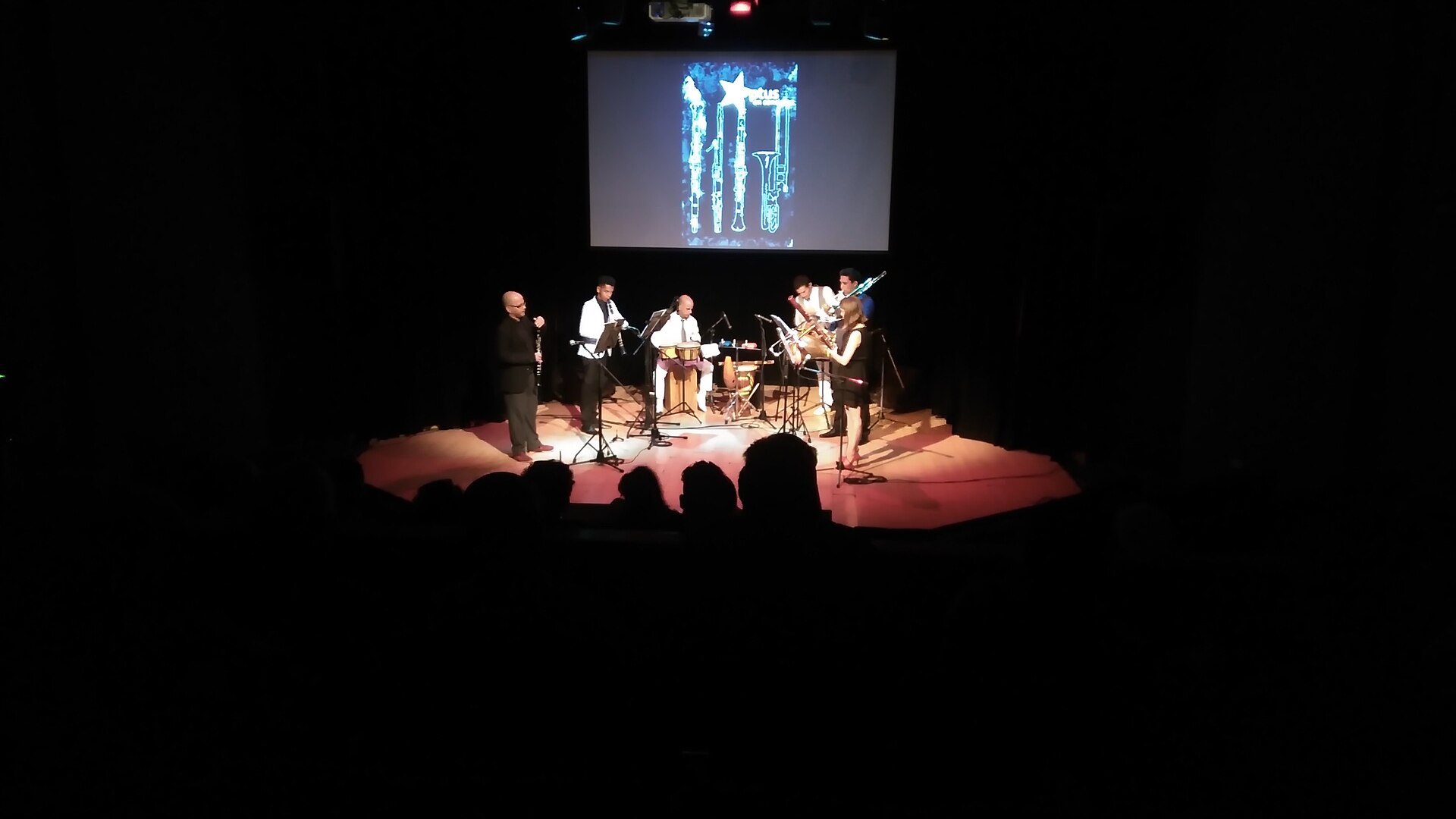
Photograph by Aniol · CC BY-SA 4.0 Theatre-auditorium, Palacio de Bellas Artes
A working theatre inside the Cuban-art building, used for concerts, talks and the museum's own cultural programming alongside the galleries.
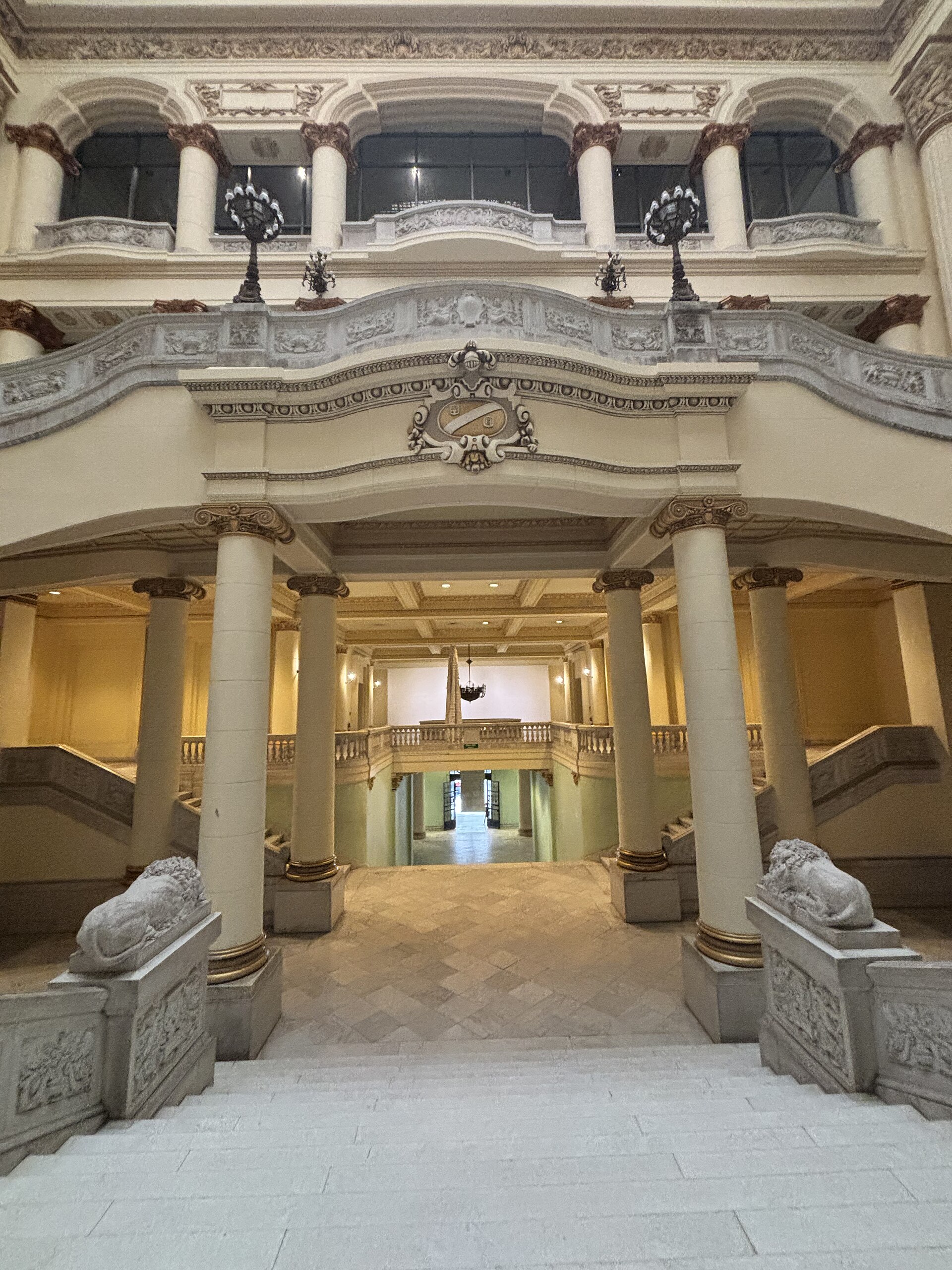
Photograph by BenjiPill · CC BY-SA 4.0 Palacio del Centro Asturiano - universal art
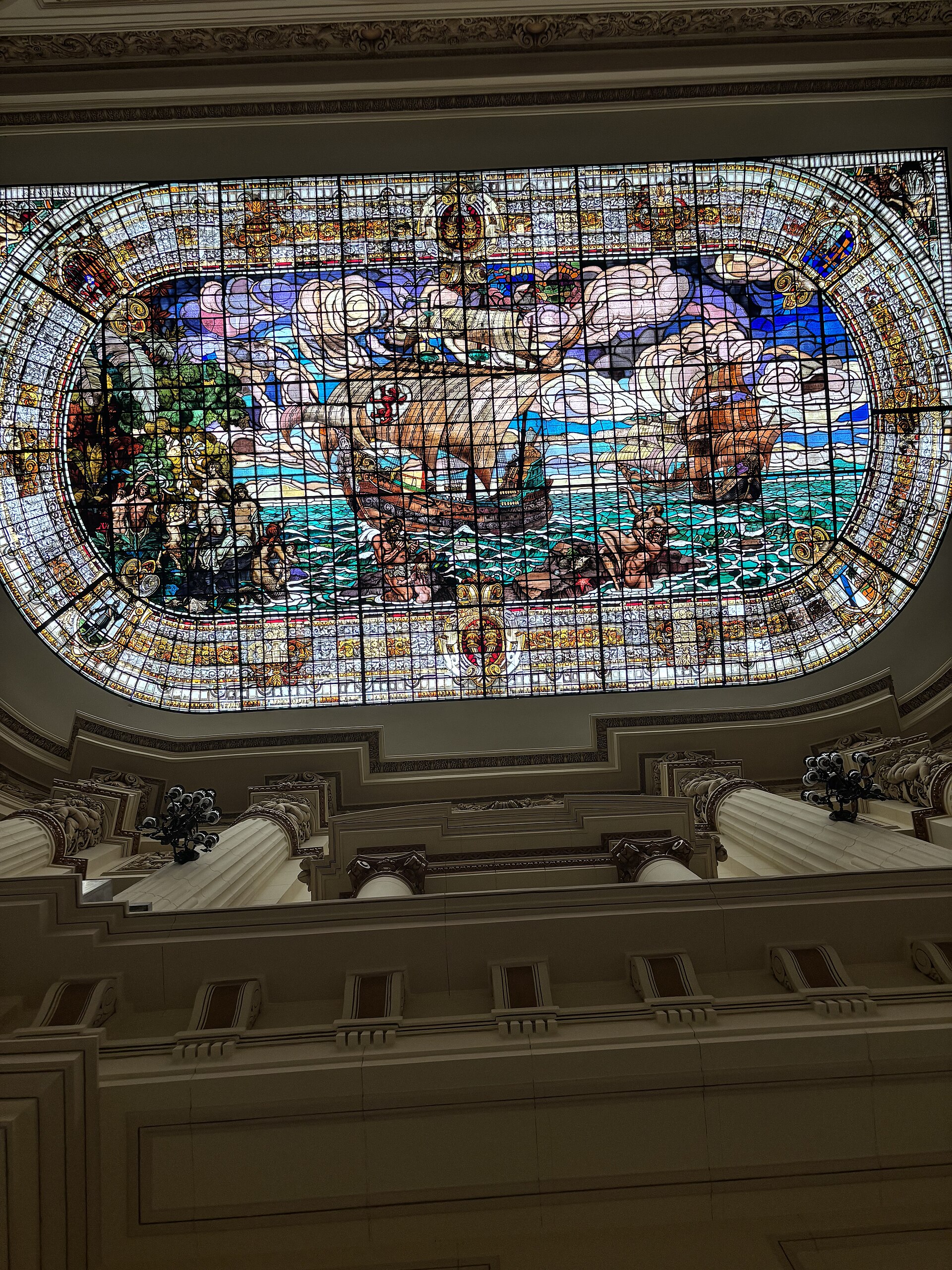
The museum's international collection, installed inside the former clubhouse of Havana's Asturian community association: European painting and sculpture (more than 1,600 paintings, the largest single national school being Spanish, with Zurbaran, Sorolla, Rubens, Courbet and Turner among the names), American art including Mexican muralists Rivera, Siqueiros and Orozco, and 20th-century names such as Warhol, Rauschenberg and Duchamp. The building's own architecture - a domed double staircase under a large stained-glass ceiling - is one of the things visitors single out.
Photograph by BenjiPill · CC BY-SA 4.0 Ancient art - the Conde de Lagunillas collection
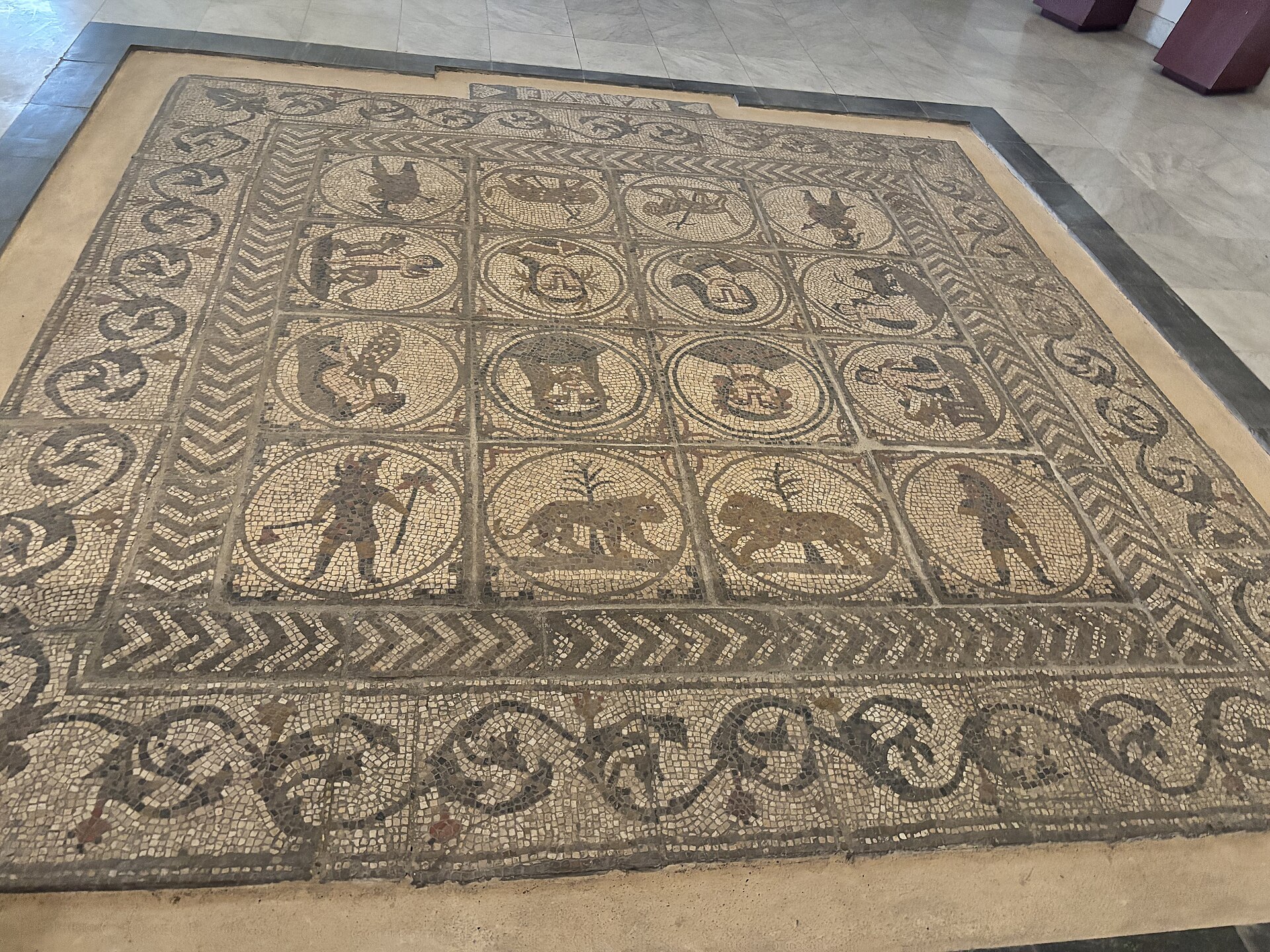
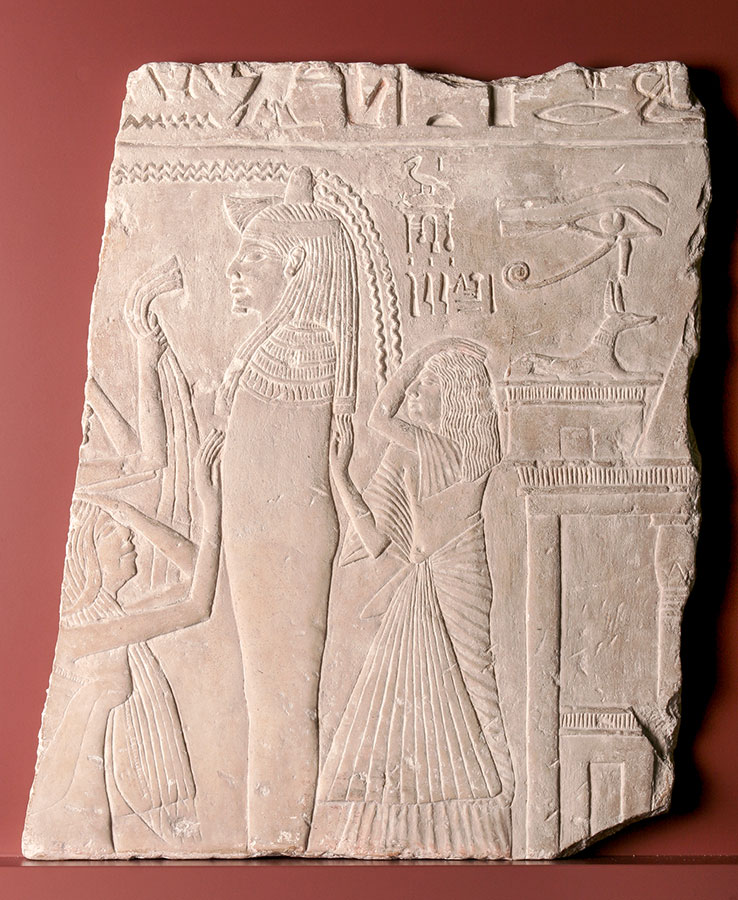
Close to 600 pieces of ancient art, among the more important such holdings in Latin America: Egyptian material including a carved head of the god Amun, nine Fayum mummy portraits and other Roman-Egyptian and Greco-Roman sculpture and ceramics, and Mesopotamian objects including cuneiform tablets, displayed within the Centro Asturiano building.
Cuartel de Milicias
A restored 1764 colonial barracks that serves the museum's administration, storage and the Antonio Rodriguez Morey documentation centre and library (reported at more than 120,000 volumes); not a public exhibition space.
What to see first
La gitana tropical
Victor Manuel Garcia, 1929Often called Cuban art's Mona Lisa and treated by critics as the emblematic image of the national school - a mestiza woman's portrait Garcia conceived while in Paris.11
La silla (The Chair)
Wifredo LamOne of the key works by Cuba's best-known modern painter, made after his return from Europe in 1941, fusing his African and Chinese heritage with Cubist and Surrealist language.11
El rapto de las mulatas
Carlos Enriquez, 1938A Cuban reworking of the Rape of the Sabines theme, one of the paintings most reproduced from the museum's modern collection.11
Los ninos
Fidelio Ponce de Leon, 1938Three children rendered in the heavy chiaroscuro that marks Ponce de Leon's late work, painted while the artist was already ill with the tuberculosis that would kill him.11
Interior con columnas
Amelia PelaezA signature example of Pelaez's stained-glass-influenced still life style, built from the colored windows and tropical fruit of the colonial Cuban house.11
Cabeza de una estatua de Amon (Head of Amun)
Egyptian, New Kingdom, circa 1190 BCEAn Egyptian carved head of the god Amun from the museum's ancient-art holding, one of the pieces that makes the Conde de Lagunillas collection a reference point in Latin America for ancient art.12
Fayum funerary portraits (nine panels)
Roman EgyptA group of Roman-period Fayum mummy portraits, shown alongside Greek ceramics and Mesopotamian cuneiform tablets in the ancient-art galleries.12
Forma, Espacio y Luz
Rita LongaThe sculptural ensemble by Rita Longa (1912-2000) that greets visitors at the museum's entrance and has become one of its recognisable signs.12
Milicias campesinas
Servando Cabrera Moreno, 1962A painting made in the aftermath of the Bay of Pigs invasion, marking Cabrera Moreno's turn toward heroic, state-facing national subject matter.11
Marti
Raul MartinezA Pop Art treatment of Jose Marti built from repeated silkscreen-like images of the independence leader's face, an example of how Cuban artists absorbed Pop technique for national subjects.11
Past exhibitions here
One museum, two buildings
The National Museum of Fine Arts of Cuba is not one building but two, under a single institution and a single director. The Palacio de Bellas Artes, on Trocadero street on the edge of Havana Vieja, holds the museum's Cuban art collection exclusively - more than 4,300 paintings and roughly 12,800 works on paper running from the 17th century to the present, installed in a rationalist building the architect Alfonso Rodriguez Pichardo designed and that opened in 1954. A short walk away on San Rafael stands the Palacio del Centro Asturiano, built in 1927 by the Spanish architect Manuel del Busto as the clubhouse of Havana's Asturian community association; since 2001 it has housed the museum's international collection - European, American, Asian and ancient art - under the same eclectic dome and eight-columned facade the Asturian club members financed a century ago.
A reader planning a single museum visit in Havana needs to know this before buying a ticket: seeing both requires two separate entries, at two different addresses, several minutes' walk apart, and the two buildings hold entirely different collections rather than being two wings of one gallery.
A pilgrim museum: 1913 to 1954
The museum was created by presidential decree on 23 February 1913, under President Jose Miguel Gomez and his secretary of public instruction Mario Garcia Kohly, and opened two months later, on 28 April 1913, as the Museo Nacional de la Republica - inside a former jai-alai building at the corner of Concordia and Lucena. It did not stay there. The city reclaimed that building in 1917 and the collection moved to the Quinta de Toca on Carlos III Avenue; when the government sold that property to a religious order in 1923 the museum moved again, to a house on Aguiar street. Cuban writers have nicknamed it the pilgrim museum for this history of eviction and relocation, and one incident from the 1923 crisis has stuck in the museum's own telling of its history: with the collection's future uncertain, the director Antonio Rodriguez Morey handed out First World War rifles held in the collection to museum staff and students - among them a young Julio Antonio Mella, later a founder of the Cuban Communist Party - as a gesture of defiance against the building's loss. Rodriguez Morey ran the institution from 1918 to 1967 and is credited with turning what began as a general encyclopaedic museum, with departments beyond fine art, into a specialised art institution. The museum found a permanent home only in 1954, when the Palacio de Bellas Artes opened on the site of the old Mercado de Colon.
1959 and the confiscated collections
The Cuban Revolution of January 1959 reshaped the museum's holdings at a stroke. As the depositary for private art collections the new government seized, the institution absorbed, in a short period, more material than its galleries could show - among the collectors whose Cuban and European purchases were confiscated and distributed into state hands were Julio Lobo, Oscar Cintas, Jose Gomez Mena, Tomas Felipe Camacho, Maria Dolores Machin, Evelio Govantes and Ignacio Ponce de Leon. Cuban cultural authorities eventually kept only the fine-art material at the Bellas Artes museum and split the rest across new specialist institutions created to hold it - the Museo Napoleonico, the Museo de Artes Decorativas and the Museo de Arte Colonial among them. Cuban commentary on the museum's own collection, including retrospective writing published in Diario de Cuba, treats the unresolved status of this seized private property as a live question for any future reform of Cuban property law, rather than a closed chapter - a legal and restitution question this museum's collection cannot be read apart from.
A museum that does not take its own artists off the wall
In May 2021 twenty-three prominent Cuban artists, including Tania Bruguera, Sandra Ceballos, Tomas Sanchez, Marco Castillo, Reinier Leyva Novo and Carlos Garaicoa, signed and sent the museum a letter asking it to withdraw their own work from exhibition and from its website, in protest at the detention of the artist Luis Manuel Otero Alcantara, the best-known face of the independent San Isidro Movement, who was by then several weeks into a hospital confinement after a hunger strike and a police operation around his home in Old Havana. The museum refused. In a statement reported by both OnCubaNews and 14ymedio on 27-28 May 2021, the institution said the artists' demand 'does not align with the service mission of our institution nor with the public interest it serves,' and that it acquires work from Cuban artists 'of all generations and tendencies' using state funds without applying what it called non-artistic considerations. The episode is a rare instance of a state museum publicly overriding living artists' own wishes about the display of their work, and it sits, unresolved, alongside the older question of the confiscated private collections: two moments, four decades apart, where the museum's authority over what it holds and shows has been directly contested.
The Centro Asturiano building
Whatever a visitor remembers afterwards, it is usually the Centro Asturiano building's staircase. A double marble stair curves up around an open well toward a domed, oval stained-glass ceiling set into the roof - visitor photographs and reviews return to it more often than to any single painting in either building. The structure was built in 1927 for a mutual-aid society of Asturian immigrants, in the eclectic classical style favoured by Havana's early-20th-century social clubs, and functioned after 1959 as the seat of Cuba's Supreme Court before a 1996-2001 renovation, reported to have cost 14.5 million dollars, converted it into the museum's international-art building and expanded its exhibition space by roughly half. It reopened on 18 July 2001. A 2010 gift from the collector Gilbert Brownstone of more than 120 works by Picasso, Miro, Warhol and Duchamp added further to the building's 20th-century holdings after that renovation.
Five collections under one roof each
Across both buildings the museum reports holding around 45,000 to 47,600 works. The Cuban collection at the Palacio de Bellas Artes is described by the museum and by independent sources alike as the largest holding of Cuban art anywhere. At the Centro Asturiano, the European collection runs to more than 1,600 paintings and around 8,000 works on paper, with Spanish art the largest single national school (more than 700 pieces) alongside Italian, French, Flemish, Dutch, German and British work spanning medieval to 20th-century painting; named artists include Zurbaran, Sorolla, Rubens, Courbet and Turner. The ancient-art holding, built around the Conde de Lagunillas collection, runs to close to 600 pieces and is considered one of the more important such holdings in Latin America, with Egyptian, Greco-Roman and Mesopotamian material including nine Fayum funerary portraits. An Asian collection of roughly 450 works spans China, Japan, India and Vietnam, including more than 200 Chinese paintings and around 100 Japanese ukiyo-e prints. An American collection beyond Cuba includes Mexican muralists Diego Rivera, David Alfaro Siqueiros and Jose Clemente Orozco, and 20th-century United States artists including Andy Warhol and Robert Rauschenberg.
What visitors say
Visitors consistently single out the Palacio del Centro Asturiano's domed double staircase and its stained-glass ceiling as the single most memorable thing in the museum, and praise the depth of the Cuban art collection - the range of the 20th-century painting in particular is repeatedly called out as stronger than expected. The most common complaint is uneven access: several recent visitors describe whole floors, side rooms or the third floor of one building roped off, closed, or under restoration on the day they went, without warning at the door, and a few mention aggressive unofficial guides trying to sell add-on tours once inside.
What is praised, what is criticised
- Praised: The Centro Asturiano building's architecture - the marble double staircase and its stained-glass dome ceiling, repeatedly named the highlight of the visit
- Praised: The range and quality of the Cuban art collection, from colonial portraiture through to contemporary work, described by several visitors as far larger and stronger than they expected
- Praised: Guided tours led by museum curators and educators, praised by name in more than one review for depth of knowledge
- Criticised: Inconsistent access: multiple 2024-2026 reviews describe galleries, an entire floor, or a whole building's upper level closed off or roped for restoration without notice
- Criticised: Unofficial guides inside the building pressing visitors to pay extra for an off-book tour
- Criticised: Basic maintenance complaints (a reviewer in 2024 cites broken toilets)
Ratings on other platforms
TripAdvisor: 4.5 from 2,447 ratings, read 25 August 2026
A platform average is a tertiary source: it moves, it is not audited, and we quote no visitor's words.
Questions about National Museum of Fine Arts of Cuba
Where is National Museum of Fine Arts of Cuba?
Trocadero, between Agramonte (Zulueta) and Monserrate, Havana Vieja (Palacio de Bellas Artes, Cuban art); and San Rafael, between Agramonte (Zulueta) and Monserrate, Havana Vieja (Palacio del Centro Asturiano, universal art), Havana, Cuba.
How much does it cost to visit?
Cuban nationals, single building: CUP 15; Foreign visitors, single building: CUP 125. As confirmed 25 August 2026.
When is it open?
Tue-Sat 09:00-17:00; Sun 10:00-14:00. Closed: Monday. As confirmed 25 August 2026.
How do you get there?
Walking: Both buildings stand on the edge of Havana Vieja, a short walk from Parque Central and the Paseo del Prado; Taxi: Guidebooks list taxi as the practical way in for visitors staying outside the old town.
What should you see first?
La gitana tropical (Victor Manuel Garcia, 1929); La silla (The Chair) (Wifredo Lam); El rapto de las mulatas (Carlos Enriquez, 1938); Los ninos (Fidelio Ponce de Leon, 1938); Interior con columnas (Amelia Pelaez); Cabeza de una estatua de Amon (Head of Amun) (Egyptian, New Kingdom, circa 1190 BCE).
What we could not confirm
- What happens to the 23 works whose own makers asked, in 2021, to have them removed from exhibition and the museum did not comply - whether any resolution or renewed request has followed since is not established from sources fetched for this record.
- The exact present-day legal status of the private collections confiscated after 1959 (Lobo, Cintas, Gomez Mena and others) inside Cuban law is described by Cuban commentators as unresolved; this record does not establish whether any claim, restitution process or legal reform has since been proposed or enacted.
- This record could not confirm current combined-building ticket pricing, concession categories (student, senior, disabled, ICOM/AICA), or accessibility and photography policy directly from the museum's own site; see notes_for_editor.
Images
Sources
- 1Wikidata, National Museum of Fine Arts of Cuba, Q1779837 wikidata.org/wiki/Q1779837
- 2Wikipedia (English), Museo Nacional de Bellas Artes de La Habana en.wikipedia.org/wiki/Museo_Nacional_de_Bellas_Artes_de_La_Habana
- 3Wikipedia (Spanish), Museo Nacional de Bellas Artes (Cuba) es.wikipedia.org/wiki/Museo_Nacional_de_Bellas_Artes_(Cuba)
- 4EcuRed, Museo Nacional de Bellas Artes ecured.cu/Museo_Nacional_de_Bellas_Artes
- 5VisitarCuba.org, Museo Nacional de Bellas Artes (visiting information) visitarcuba.org/museo-nacional-de-bellas-artes
- 6101viajes.com, Museo Nacional de Bellas Artes (visiting information) 101viajes.com/la-habana/museo-nacional-bellas-artes
- 7ArteInformado, Museo Nacional de Bellas Artes de Cuba - MNBA (directory entry) arteinformado.com/guia/o/museo-nacional-de-bellas-artes-de-cuba-mnba-100694
- 8Directorio ICC / SELA, Museo Nacional de Bellas Artes (contact details) directorioicc.sela.org/directory/museo-nacional-de-bellas-artes-3/
- 9TodoCuba.org, 'Museo Nacional de Bellas Artes de Cuba, el museo peregrino', 6 June 2018 todocuba.org/museo-nacional-de-bellas-artes-de-cuba-el-museo-peregrino-fotos/
- 10VisitCuba.com, Museo Nacional de Bellas Artes de La Habana, published October 2022 visitcuba.com/es/arte-y-cultura/museo-nacional-de-bellas-artes-de-la-habana/
- 11Onlinetours.es, 'Bellas Artes de Cuba en diez obras' onlinetours.es/blog/cuba/bellas-artes-de-cuba/
- 12Onlinetours.es blog search results on the museum's ancient-art and entrance sculpture (Cabeza de Amon, Fayum portraits, Rita Longa), cross-checked against Wikipedia (Spanish) and EcuRed es.wikipedia.org/wiki/Museo_Nacional_de_Bellas_Artes_(Cuba)
- 13TripAdvisor, Museu Nacional de Belas Artes de Cuba, attraction page and reviews, read 25 August 2026 tripadvisor.com/Attraction_Review-g147271-d283663-Reviews-Museu_Nacional_de_Belas_Artes_de_Cuba-Havana_Ciudad_de_la_Habana_Province_Cuba.html
- 14OnCubaNews, 'Museo Nacional de Bellas Artes se pronuncia ante demanda de artistas', 28 May 2021 oncubanews.com/cultura/artes-visuales/museo-nacional-de-bellas-artes-se-pronuncia-ante-demanda-de-artistas/
- 1514ymedio, 'El Museo de Bellas Artes no acepta la demanda de retirar las obras de artistas criticos', 27 May 2021 14ymedio.com/cuba/Museo-Bellas-Artes-artistas-criticos_0_3101689813.html
- 16Wikimedia Commons, File:Palacio del Centro Asturiano.jpg commons.wikimedia.org/wiki/File:Palacio_del_Centro_Asturiano.jpg
- 17Wikimedia Commons, File:2025-06 - La Habana 18.jpg / 21.jpg / 13.jpg (Category:Museo Nacional de Bellas Artes (Cuba)) commons.wikimedia.org/wiki/Category:Museo_Nacional_de_Bellas_Artes_(Cuba)
- 18Wikimedia Commons, File:Teatro del Edificio de Arte Cubano 20160225.jpg commons.wikimedia.org/wiki/File:Teatro_del_Edificio_de_Arte_Cubano_20160225.jpg
- 19Wikimedia Commons, File:Fragmento de bajorrelieve con rito funerario.jpg commons.wikimedia.org/wiki/File:Fragmento_de_bajorrelieve_con_rito_funerario.jpg


