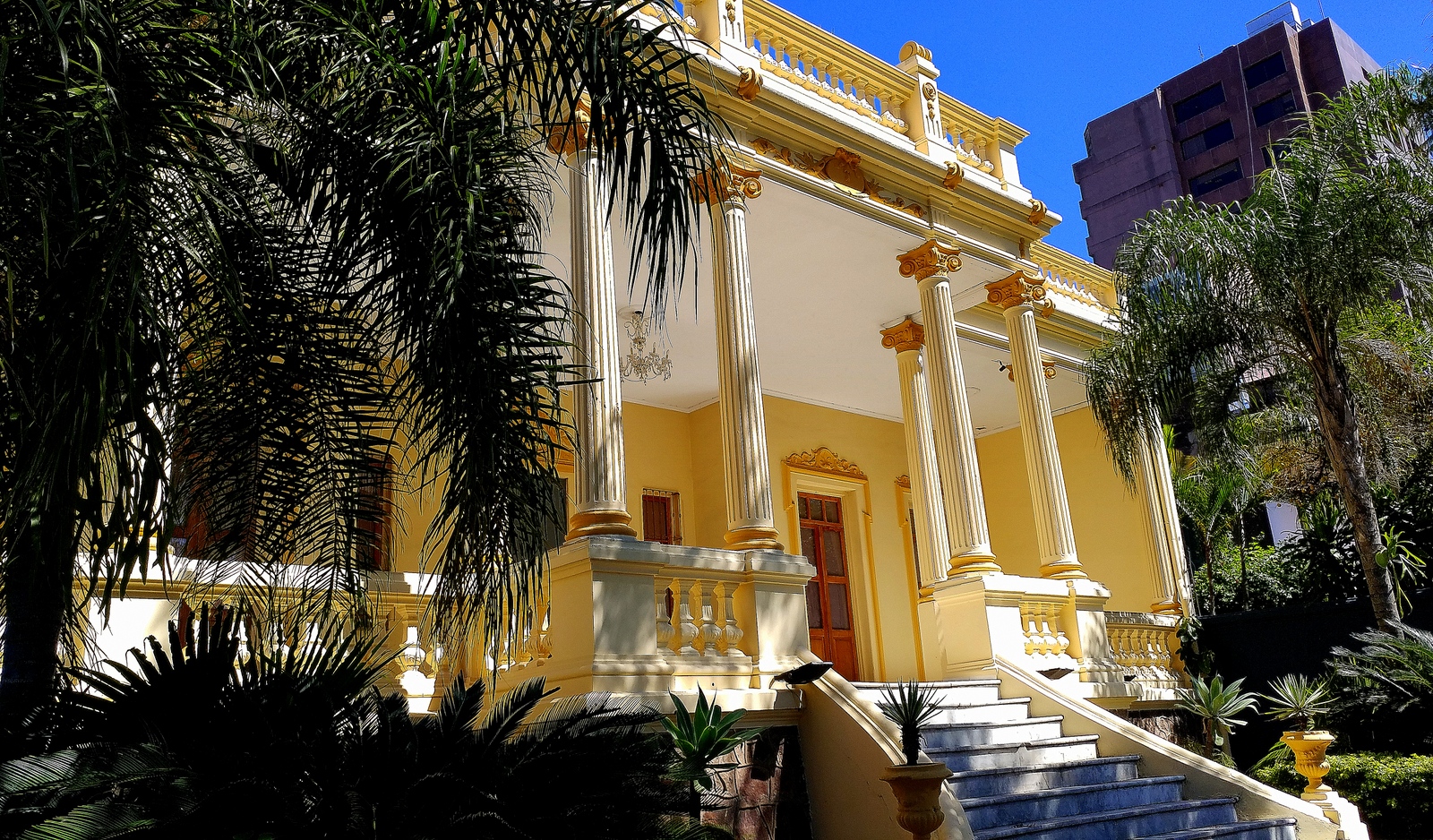
The museum's entrance facade at Eligio Ayala 1345, Asuncion, geotagged at the museum's own coordinates.
Cmasi, CC BY-SA 4.0Museo Nacional de Bellas Artes
Museum · Founded 1909
Open, admission and hours confirmed 7 September 2026 · 17 sources
On this page 13 sections
ContentsClose
The museum's real depth is not breadth of period or geography, which is thin, but the specific late-nineteenth-century European taste of a single founding collector layered against a full run of Paraguayan painting responding to it: the Godoy purchases from his Buenos Aires exile, Miguel Acevedo's rare surviving series of belle-epoque satirical drawings, and the twentieth-century Paraguayan painters, Bestard, Samudio, Campos Cervera, Blinder and Colombino among them, who trained on the same European models and then argued with them. It is a collection best understood as a single donor's judgement plus a century of national painting reacting to it, with three of its most valuable European paintings currently missing rather than merely undocumented.
| Kind | Museum |
|---|---|
| Founded | 1909 |
| City and country |  Asuncion, Paraguay Asuncion, Paraguay |
| Address | Eligio Ayala 1345 e/ Pai Perez y Curupayty, Asuncion |
| Website | cultura.gov.py/museos/museo-nacional-de-bellas-artes |
| Status | Open, confirmed |
| Record last verified |
Visiting
- Hours
- Tue-Fri09:00 to 19:00
- Sat09:00 to 20:00
- Closed
- Sunday. Monday.
- Admission
- GeneralFreeFree and open access for all visitors, at every published address
- Do I need to book?
- No, walk-in; the museum's own listing also offers guided visits by prior arrangement
- Address
- Eligio Ayala 1345 e/ Pai Perez y Curupayty, Asuncion MapOn foot Central Asuncion, a few minutes' walk from Plaza Uruguaya and the Costanera waterfront
- Website
- cultura.gov.py/museos/museo-nacional-de-bellas-artes
- Telephone
- (0986) 768014
Before you go how long, access, photography, bags, eating, shop
- How long to allow
- Under an hour; the standing display runs to about 84 works in a house-sized building
- Access
- Not documented on the operator's own page; not confirmed either way in any source fetched for this record
- Photography
- Not documented on the operator's own page; not confirmed either way in any source fetched for this record
- Eating
- None documented
- Shop
- None documented
Prices and hours change. We take them from the institution's own pages and print the day we read them, and you can check the current position at the source we used. Confirm before you travel.
What is inside
The Godoy collection rooms
The founding holding Juan Silvano Godoy donated in 1909: European paintings he bought in Buenos Aires exile, alongside the earliest Paraguayan works he judged worth keeping. This is the historical core the rest of the museum was built to house.
Paraguayan painting
Nineteenth- and twentieth-century Paraguayan painters, among them Saturio Rios, Aurelio Garcia, Andres Campos Cervera, Pablo Alborno, Juan Samudio, Jaime Bestard, Olga Blinder and Carlos Colombino, tracing the move from imitating European models to arguing with them.
International painting
Works from Argentina, Brazil, Spain, France, Uruguay, Italy, Germany, Bolivia, the United States, Peru, Chile, Belgium, Korea and the Philippines, weighted toward the late-nineteenth-century naturalism and academicism Godoy collected; three of its most valuable pieces were stolen in 2002 and remain missing.
Sculpture
Stone and bronze figures bought by Godoy alongside carved wooden pieces from the former Jesuit missions and work by Paraguayan sculptors including Patricia Ayala and Hugo Pistilli.
Graphic art and satirical drawing
Miguel Acevedo's series of fifty-seven satirical drawings of Asuncion's belle-epoque society, described by the museum's own history of the collection as one of its most important holdings, shown alongside wartime satirical sheets such as El Cabichui and El Centinela.
Temporary exhibition galleries
Three of the building's six rooms are kept for rotating shows; recent programming has included a 2024 exhibition answering the 2002 theft with new work responding to the stolen paintings, and a 2026 photography exhibition on motherhood.
What to see first
El patio de mi madre
Jaime Bestard, 1934A signature canvas by the Paraguayan painter the museum's own collection pages single out by name, and a fixed point for the room tracing the shift from European academicism to a Paraguayan visual language.5
Satirical drawings of Asuncion society
Miguel Acevedo, series of 57 worksCalled by the museum's history one of the most important series it holds; a rare survival of Paraguayan belle-epoque social satire in a country whose print culture of that period is thinly documented elsewhere.13
La Virgen con el Nino Jesus (attributed)
Attributed to Bartolome Esteban MurilloOne of the two paintings a museum official has said were removed bare from their frames in the 2002 tunnel robbery; still missing, and the reason the museum's own account of its collection now has to describe an absence rather than a picture.9
Self-portrait (attributed)
Attributed to Jacopo Robusti, called TintorettoStolen in the same 2002 raid and never recovered; named specifically in the museum's 2024 exhibition built around the theft, which asked four Paraguayan artists to answer the empty frame rather than pretend it is not there.6
Landscape (unrecovered)
Gustave CourbetThe third of the paintings still missing from the 2002 theft, and the clearest sign that the museum's most internationally recognisable holdings left through a 25-metre tunnel dug under Iturbe Street rather than through any documented sale or loan.9
Tete de Femme
Etienne Adolphe PiotOne of only two paintings recovered after the 2002 theft, found and returned in 2007; kept on display as the museum's own record of what came back, against the three works that did not.9
San Jeronimo (anonymous)
Unattributed, 17th-century European schoolThe second painting recovered from the 2002 theft, found across the border in Posadas, Argentina, in 2008; the only other returned piece from the raid.9
Jesuit-mission wood carvings
Anonymous Guarani craftsmen, former Jesuit reductionsDevotional sculpture carried into the collection from the missions the Society of Jesus ran in colonial Paraguay before its 1767 expulsion, one of the few threads in the museum connecting its fine-arts holdings to the country's Guarani and colonial past rather than to Godoy's own European taste.13
A private collection Paraguay agreed to keep
The Museo Nacional de Bellas Artes exists because one man decided Paraguay needed a museum before the state did. Juan Silvano Godoy (1850-1926), a Paraguayan politician and collector, spent part of his life in exile in Buenos Aires after the War of the Triple Alliance and used the years there to buy European paintings, mostly late-nineteenth-century work oscillating between naturalism and straightforward academicism, alongside sculpture in stone and bronze, trophies and books. When he returned, he pressed the Paraguayan government to accept the whole collection into a single public institution rather than let it stay a private holding. The museum opened on 28 March 1909 as the Museo de Bellas Artes, del Historico y la Biblioteca Americana, combining fine art, historical material and an American-studies library in one foundation, and the state took over its administration in 1939, formalising it as a national museum under what is now the Secretaria Nacional de Cultura.
Godoy is remembered inside the museum's own account of its history as the country's first director-general of museums and archives, and the collection he assembled remains, in the words of the institution's own anniversary notice in 2024, largely unchanged at its core: the same European purchases from his Buenos Aires years, filled out over the following century with Paraguayan work the state and later directors added.
An art history that had to restart twice
What Godoy was collecting for did not have an unbroken local tradition behind it. Paraguay's colonial art production ran through the Jesuit reductions, workshops where Guarani craftsmen carved devotional sculpture and painted altarpieces under Jesuit instruction; the order's expulsion from Spanish America in 1767 cut that off, and the Franciscan workshops that briefly continued the tradition declined afterward. Secular fine art in the European sense did not really resume in Paraguay until the middle of the nineteenth century, later restarted again by immigration: Italian, Spanish and other European-trained painters and teachers who settled in Asuncion brought academic technique with them, among them figures the museum credits with founding local instruction through the Instituto Paraguayo. The pattern repeats in one of the collection's more particular holdings: Guido Boggiani, an Italian artist and ethnographer working in Paraguay in the same period, is remembered for turning European academic eyes toward Indigenous art on its own terms rather than as raw material for a European style, a genuinely early instance of that shift in the region.
The museum's Paraguayan-painting rooms are built to show what happened next: artists including Saturio Rios and Aurelio Garcia working in the nineteenth-century idiom, and a twentieth-century generation, Andres Campos Cervera, Pablo Alborno, Juan Samudio and Jaime Bestard among them, who trained partly abroad on scholarship, in several cases in Italy, and came back arguing with the European models rather than repeating them. Later Paraguayan modernists, Olga Blinder and Carlos Colombino among them, extend that line into the second half of the twentieth century. It is a compressed, interrupted history rather than a continuous one, and the museum's own arrangement of the rooms, moving from Godoy's European purchases into the Paraguayan collection built up around them, is explicit about telling it that way rather than treating the national painters as an appendix to the founder's European taste.
The tunnel under Iturbe Street
On 29 July 2002, staff at the museum's building on the corner of Mariscal Estigarribia and Iturbe, which it then shared with Paraguay's National Archive, arrived to find five paintings gone and their frames left hanging empty. Police investigation found that a group had rented a storefront across Iturbe Street under false identities weeks earlier and dug a twenty-five-metre tunnel under the road to come up inside the building, evidently knowing in advance which pieces they wanted. Paraguay's newspaper of record, ABC Color, quoted the museum's director describing the discovery in blunt terms: an employee arrived, and there was nothing left to see but the frames.
The five paintings taken were a Saint Jerome by an unidentified painter, a Tete de Femme by the French painter Etienne Adolphe Piot, a self-portrait attributed to the Venetian painter Jacopo Robusti, called Tintoretto, a Virgin and Child attributed to the Spanish painter Bartolome Esteban Murillo, and a landscape by Gustave Courbet, together valued in press reporting at roughly two hundred thousand dollars per painting. Two came back: the Piot in 2007, and the anonymous Saint Jerome in 2008, recovered across the border in Posadas, Argentina. The self-portrait attributed to Tintoretto, the Virgin attributed to Murillo, and the Courbet landscape have not been found in the more than two decades since, and no source consulted for this record reports an arrest or a conviction in the case.
The museum has not treated this as a closed file to be quietly omitted from its own account of itself. In March 2024, marking its 115th anniversary, it opened Robo del Siglo, an exhibition built directly around the theft: four Paraguayan artists, Victoria Bedoya, Leticia Casati, Masha Liachovitskaya and Anna Scavone, were invited to respond to the three still-missing paintings in their own styles, guided by research from the writer Bea Bosio, under the museum's Museo Vivo programme. It is an unusual way for an institution to handle an unsolved theft: rather than let the empty frames recede into an old news story, the museum built a public exhibition that keeps naming what is missing.
One address, twice moved
The museum has not stayed in one building. Godoy's founding collection was later housed for decades in the same building as the National Archive at Mariscal Estigarribia and Iturbe, the building the 2002 tunnel reached. In May 2011 the Secretaria Nacional de Cultura reopened the museum at a different address, Eligio Ayala 1345 between Pai Perez and Curupayty, describing the move at the time as provisional: the collection was rehung there in a rented building while a permanent home was planned for the Parque Costanero Bicentenario, on Asuncion's riverfront. A follow-up account of the museum the following year, in 2012, still described the Eligio Ayala building as the provisional site and the Costanera building as the one still to come.
No source consulted for this record reports that the Costanera building was ever built. Fifteen years on, the museum still operates from the rented house at Eligio Ayala 1345, now confirmed current by the Secretaria Nacional de Cultura's own listing and by a government cultural-events calendar entry for an exhibition running there into June 2026. Whatever the state's original plan for a purpose-built riverfront museum, the address a visitor is sent to today is the same one the institution called temporary in 2011.
A living museum on a small budget
The museum today runs under the Secretaria Nacional de Cultura's museums directorate, and its recent programming leans toward the Museo Vivo, or living-museum, framing that has guided it since at least the 2024 anniversary show: using the fixed Godoy collection as raw material for new, changing work rather than leaving it as a static permanent hang. Beyond Robo del Siglo, 2025 brought Moda y pintura, pairing eight fashion designers with reinterpretations of paintings from the Godoy collection, and by mid-2026 the museum was showing ELBA, a photography and audiovisual installation by the Paraguayan photographer Raul Villalba on the idea of the maternal figure, running from April into June of that year with the same free admission the museum has offered since Godoy's donation.
None of this changes what a visitor actually finds on arrival: a house-sized building, a standing display of roughly eighty-four works out of the roughly 650 the museum holds in total, three rooms of permanent collection and three kept free for whatever exhibition is currently running, no admission charge, and hours that stop at seven in the evening on weekdays, two in the afternoon on Saturdays, and do not open at all on Sunday or Monday. It is a small institution operating a serious, if modest, temporary-exhibition programme on top of a founding collection with two unrecovered gaps in its most valuable European holdings, run by a national government that has not yet built the larger building it once said it wanted.
What visitors say
Visitors consistently describe a small, free, well-kept museum inside a striking early-twentieth-century mansion, worth thirty to sixty minutes rather than a half-day; the collection's size and the museum's early evening and Saturday-afternoon closing catch people out more often than the art itself disappoints.
What is praised, what is criticised
- Praised: Free admission to a genuinely good collection, repeatedly called out as a highlight of central Asuncion
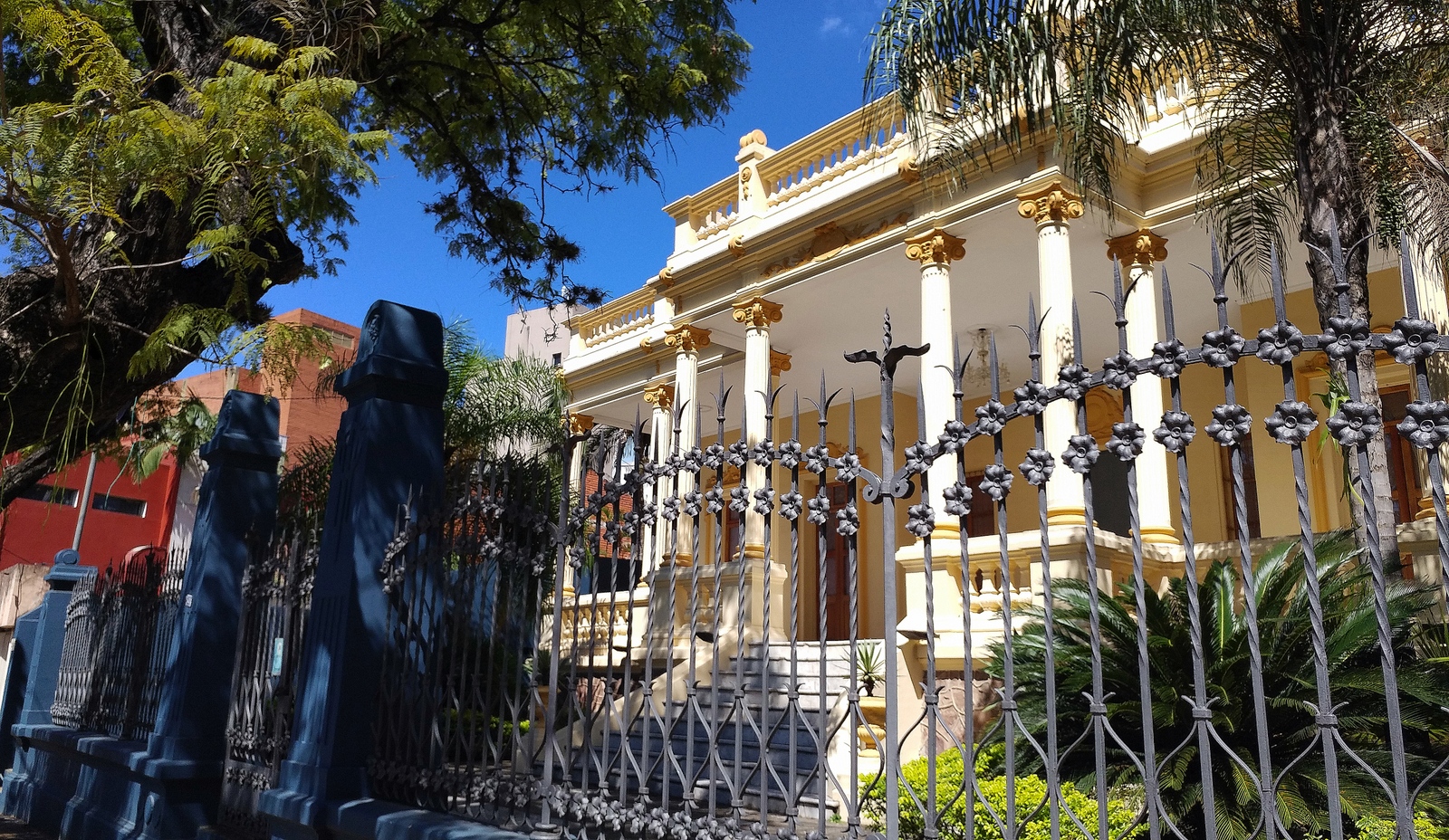
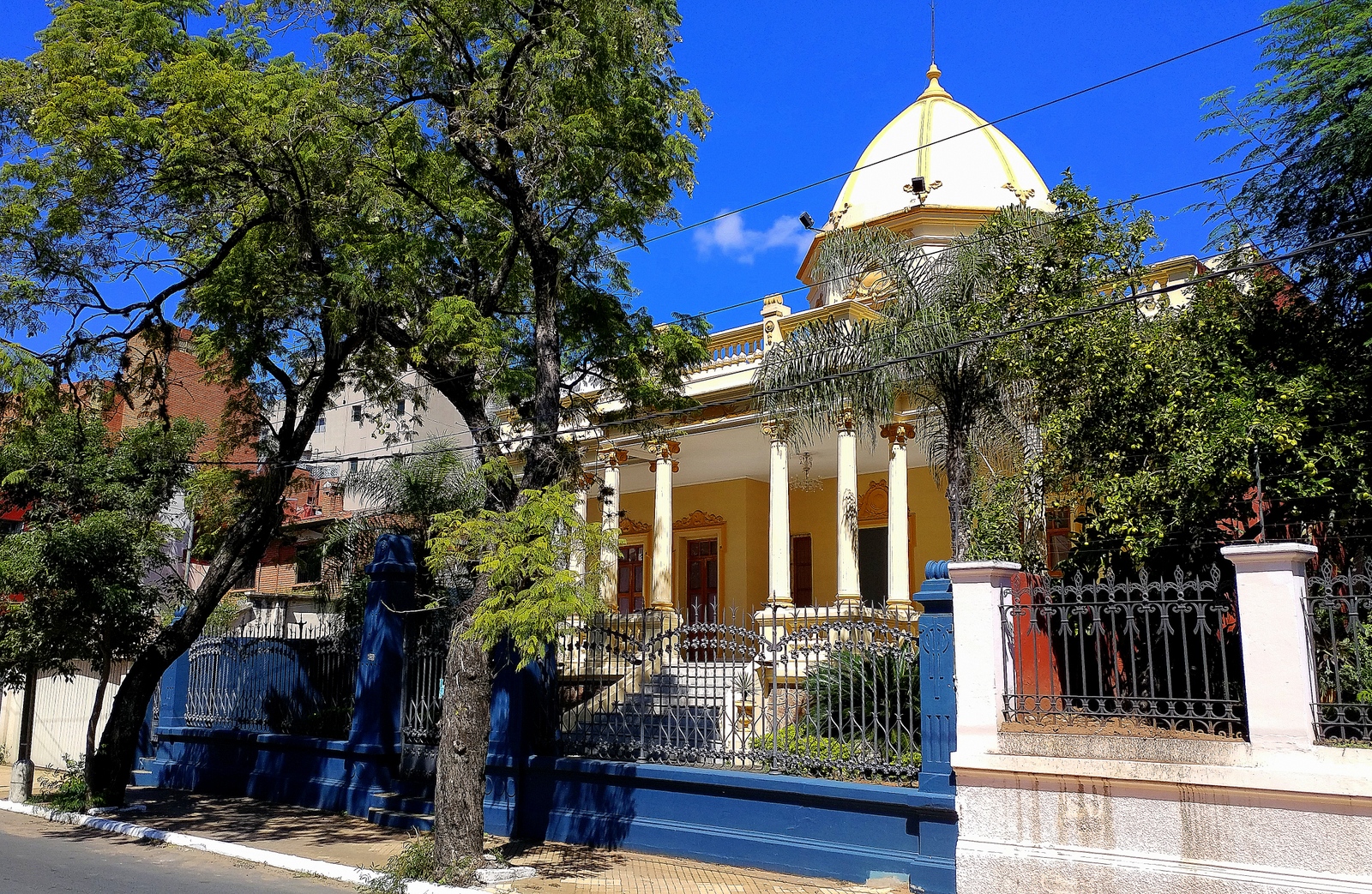
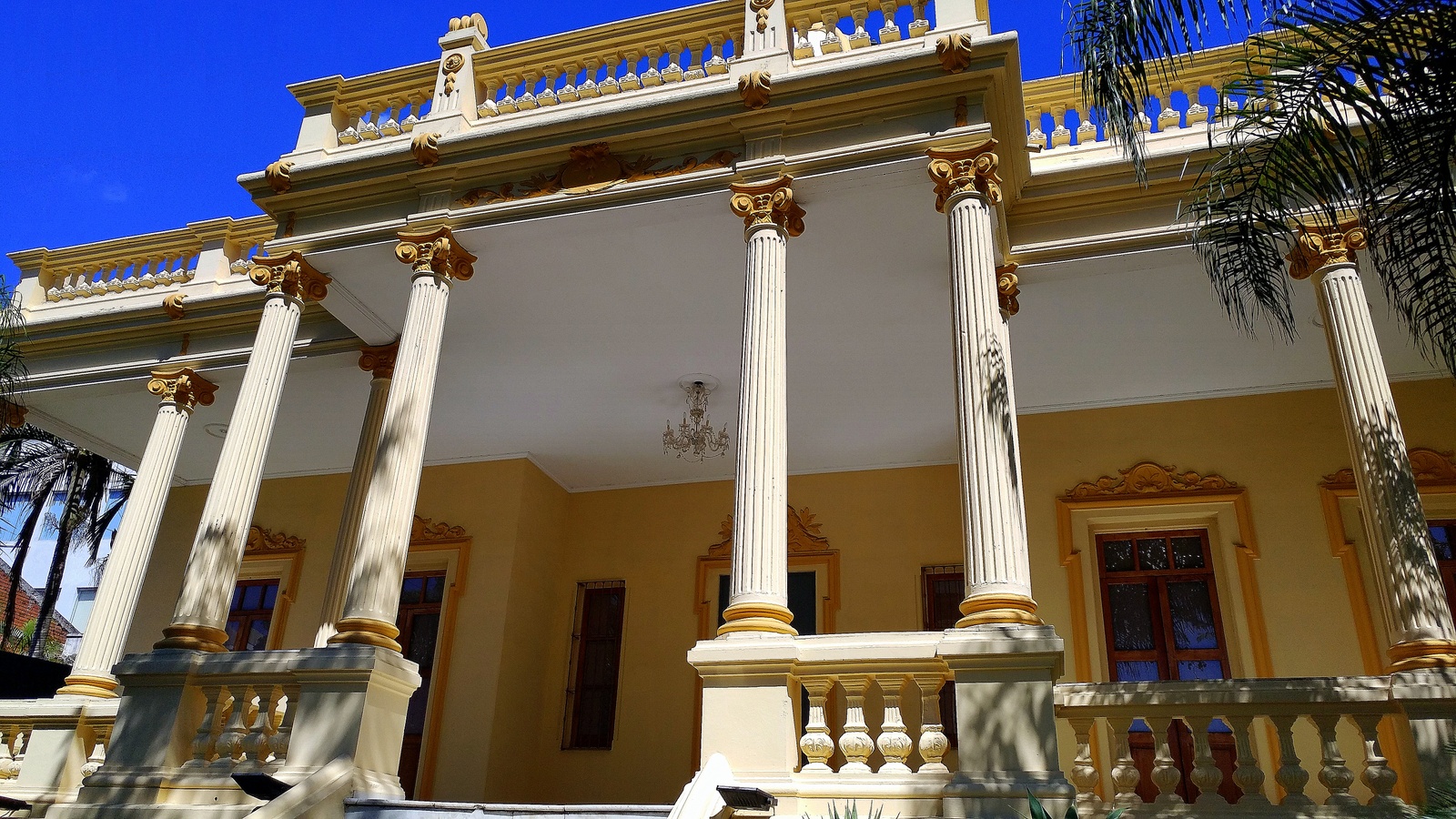
- Praised: The building itself: a restored early-1900s mansion that visitors photograph as much as the art inside it
- Praised: A well-organised, walkable hang that tells a clear story of Paraguayan painting moving away from European models
- Criticised: Small: on a standing display of around 84 works, some visitors feel short-changed if they came expecting a full national collection
- Criticised: Temporary exhibitions can take over rooms that would otherwise show the permanent collection, and visitors do not always know in advance which they will get
- Criticised: One room is roped off far enough from the paintings that close looking is difficult
- Criticised: Closing at 2pm on Saturdays and all day Sunday and Monday surprises visitors used to full-week municipal museum hours
Ratings on other platforms
Tripadvisor: 4 from 63 ratings, read 7 September 2026
A platform average is a tertiary source: it moves, it is not audited, and we quote no visitor's words.
Questions about Museo Nacional de Bellas Artes
Where is Museo Nacional de Bellas Artes?
Eligio Ayala 1345 e/ Pai Perez y Curupayty, Asuncion.
How much does it cost to visit?
General: free. As confirmed 7 September 2026.
When is it open?
Tue-Fri 09:00-19:00; Sat 09:00-20:00. Closed: Sunday. Monday. As confirmed 7 September 2026.
How do you get there?
On foot: Central Asuncion, a few minutes' walk from Plaza Uruguaya and the Costanera waterfront.
What should you see first?
El patio de mi madre (Jaime Bestard, 1934); Satirical drawings of Asuncion society (Miguel Acevedo, series of 57 works); La Virgen con el Nino Jesus (attributed) (Attributed to Bartolome Esteban Murillo); Self-portrait (attributed) (Attributed to Jacopo Robusti, called Tintoretto); Landscape (unrecovered) (Gustave Courbet); Tete de Femme (Etienne Adolphe Piot).
What we could not confirm
- Whether the self-portrait attributed to Tintoretto, the Virgin and Child attributed to Murillo, and the Courbet landscape stolen in the 2002 tunnel theft will ever be recovered; no source consulted for this record reports any lead in the case since the last recovery in 2008.
- Whether the permanent building once planned for the Parque Costanero Bicentenario, described as the museum's future home as early as 2011, was ever funded or built; no source consulted for this record confirms it, and the museum still operates from the 2011 rented premises fifteen years later.
- The published hours for this museum genuinely conflict across sources, from tourism and museum-directory aggregators listing Tuesday-Friday 7:00-18:00 and Saturday 8:00-14:00, to the operating authority's own listing of Tuesday-Friday 9:00-19:00 and Saturday 9:00-20:00 used in this record; a visitor should confirm by phone before a trip timed tightly around opening or closing.
Images
Sources
- 1Wikidata, Museo Nacional de Bellas Artes de Asuncion (Q6319285) wikidata.org/wiki/Q6319285
- 2Wikimedia Commons, Category:Museo Nacional de Bellas Artes (Paraguay) commons.wikimedia.org/wiki/Category:Museo_Nacional_de_Bellas_Artes_(Paraguay)
- 3Secretaria Nacional de Cultura Paraguay, museum listing cultura.gov.py/museos/museo-nacional-de-bellas-artes/
- 4Secretaria Nacional de Cultura Paraguay, "SNC reinaugura Museo Nacional de Bellas Artes", 27 May 2011 cultura.gov.py/2011/05/snc-reinaugura-museo-nacional-de-bellas-artes/
- 5Secretaria Nacional de Cultura Paraguay, collection page for Jaime Bestard, "El patio de mi madre", 1934 cultura.gov.py/2011/05/museo-nacional-de-bellas-artes/jaime-bestard-paraguay-1892%E2%80%931965-%E2%80%9Cel-patio-de-mi-madre%E2%80%9D-1934/
- 6Secretaria Nacional de Cultura Paraguay, "El Museo Nacional de Bellas Artes presenta y da apertura a la muestra 'Robo del Siglo'", March 2024 cultura.gov.py/2024/03/el-museo-nacional-de-bellas-artes-presenta-y-da-apertura-a-la-muestra-robo-del-siglo/
- 7Secretaria Nacional de Cultura Paraguay, "Moda y pintura dialogan en el Museo Nacional de Bellas Artes", 31 October 2025 cultura.gov.py/2025/10/moda-y-pintura-dialogan-en-el-museo-nacional-de-bellas-artes/
- 8Agendarte, Secretaria Nacional de Cultura Paraguay, listing for ELBA, exposicion fotografica de Raul Villalba agendarte.cultura.gov.py/evento/elba-exposicion-fotografica-de-raul-villalba
- 9ABC Color, "Paraguay tambien tuvo su propio golpe al arte: el asalto al Museo de Bellas Artes", 21 October 2025 abc.com.py/espectaculos/cultura/2025/10/21/paraguay-tambien-tuvo-su-propio-golpe-al-arte-el-asalto-al-museo-de-bellas-artes/
- 10Pausa, "Aniversario del Museo Nacional de Bellas Artes", 26 March 2024 pausa.com.py/cultura/arte/aniversario-del-museo-nacional-de-bellas-artes/7005/
- 11Portal Guarani / Javier Yubi, "Museo Nacional de Bellas Artes de Asuncion - Museos del Paraguay (9)" portalguarani.com/1565_javier_yubi/23131_museo_nacional_de_bellas_artes_de_asuncion__museos_del_paraguay_9__por_javier_yubi_.html
- 12Portal Guarani / Javier Yubi, ABC Color, "Museo Nacional de Bellas Artes - MNBA, etapa de recuperacion", May 2012 portalguarani.com/1565_javier_yubi/17189_museo_nacional_de_bellas_artes__mnba_etapa_de_recuperacion__por_javier_yubi_abc_color.html
- 13Wikipedia (Spanish), "Museo Nacional de Bellas Artes de Asuncion" [] es.wikipedia.org/wiki/Museo_Nacional_de_Bellas_Artes_de_Asunci%C3%B3n
- 14Wikipedia (English), "Museo Nacional de Bellas Artes de Asuncion" [] en.wikipedia.org/wiki/Museo_Nacional_de_Bellas_Artes_de_Asunci%C3%B3n
- 15Tripadvisor, "Museum of Fine Arts (Museo de Bellas Artes)", Asuncion [, rating and nearby listings] tripadvisor.com/Attraction_Review-g294080-d526468-Reviews-Museum_of_Fine_Arts_Museo_de_Bellas_Artes-Asuncion.html
- 16Visit Paraguay (SENATUR, Secretaria Nacional de Turismo), museum listing visitparaguay.travel/places/museo-nacional-de-bellas-artes
- 17ICOM Paraguay, Directorio Virtual de Museos del Paraguay 2024, museum entry icomparaguay.org/directorio-virtual-museos-del-paraguay-2024/museo-nacional-de-bellas-artes