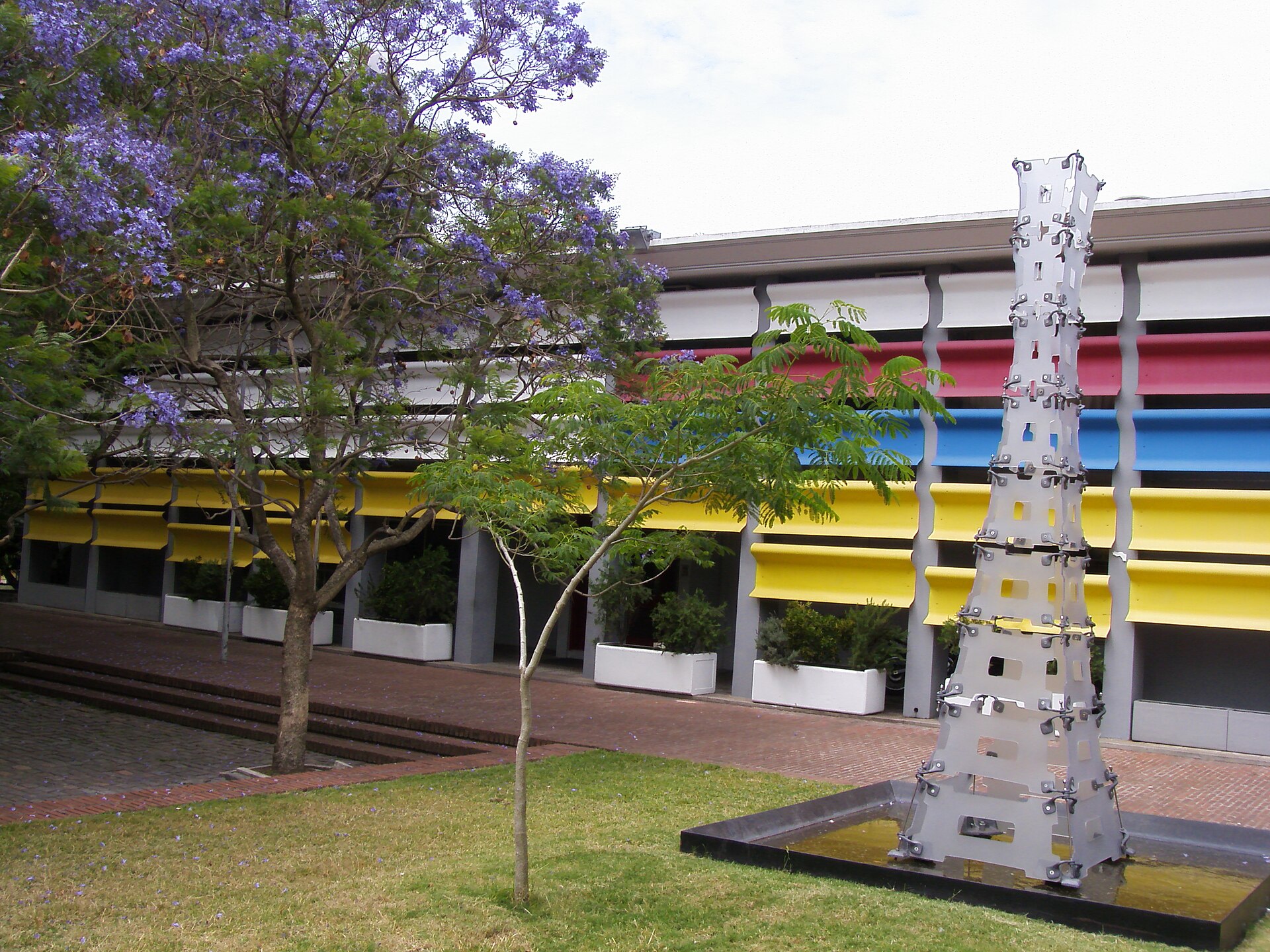
The museum's entrance facade in Parque Rodo, showing the striped colour bands added in Clorindo Testa's 1970s renovation of the original exhibition pavilion.
Fcr · CC BY-SA 4.0National Museum of Visual Arts
Museum · Museo Nacional de Artes Visuales · Founded 1911
Open, admission and hours confirmed 3 September 2026 · 14 sources
On this page 16 sections
ContentsClose
The largest public collection of painting and sculpture in Uruguay, roughly 6,500 to 7,000 works, built around Juan Manuel Blanes, Pedro Figari and Joaquin Torres Garcia, with a smaller supporting collection of foreign art and a documented gap in work by women artists.
| Local name | Museo Nacional de Artes Visuales |
|---|---|
| Kind | Museum |
| Founded | 1911 |
| City and country |  Montevideo, Uruguay Montevideo, Uruguay |
| Address | Av. Tomas Giribaldi 2283, corner of Av. Julio Herrera y Reissig, Parque Rodo, Montevideo, Uruguay |
| Website | mnav.gub.uy |
| Status | Open, confirmed |
| Record last verified |
Visiting
- Hours
- Tue-Sun13:00 to 20:00
- Closed
- Monday.
- Admission
- GeneralFreeFree admission to the permanent collection and temporary exhibitions
- Do I need to book?
- No
- Address
- Av. Tomas Giribaldi 2283, corner of Av. Julio Herrera y Reissig, Parque Rodo, Montevideo, Uruguay Map
- Website
- mnav.gub.uy
- Telephone
- +598 2711 6054
- [email protected]
Before you go how long, access, photography, bags, eating, shop
- How long to allow
- One to two hours for the permanent collection
- Eating
- A cafe operates on the grounds outside the entrance
Prices and hours change. We take them from the institution's own pages and print the day we read them, and you can check the current position at the source we used. Confirm before you travel.
What is inside
Uruguayan painting and sculpture, 19th and early 20th century
The core of the collection: Juan Manuel Blanes' history paintings and portraits, Carlos Federico Saez's portraiture, and the transitional generation around them, hung across the museum's original ground-floor galleries.
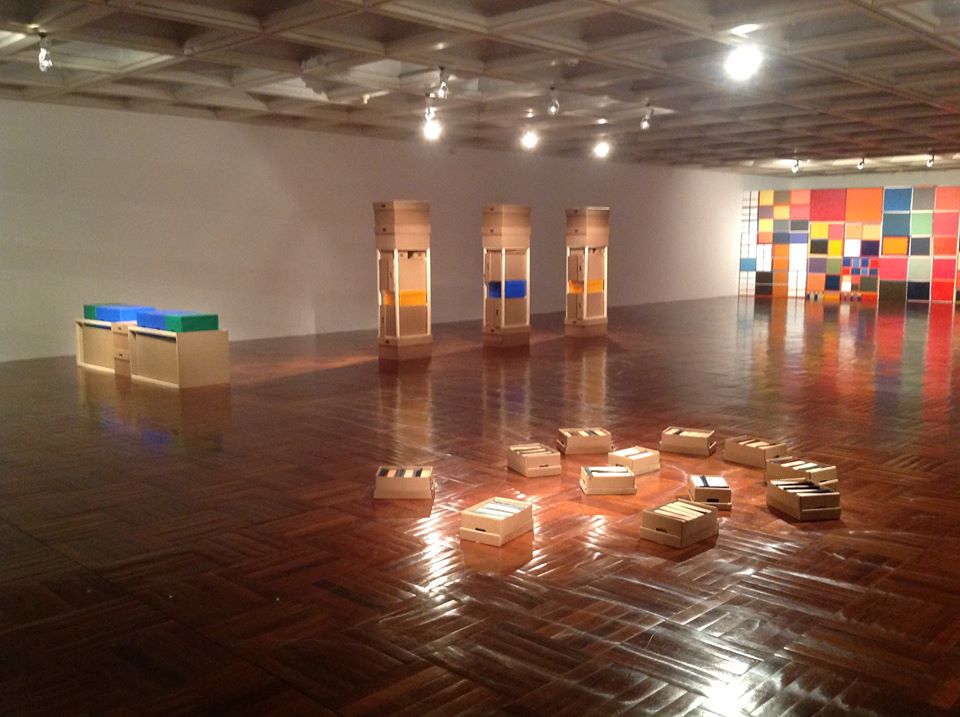
Photograph by Lopez lage · CC BY-SA 4.0 Room 5 - Joaquin Torres Garcia
A room reserved for the museum's holdings of Joaquin Torres Garcia, spanning his early figurative work through his constructivist grids and symbol paintings; the space also hosts rotating contemporary installations when the permanent hang is temporarily cleared.
Figari, Barradas and the early 20th-century avant-garde
Pedro Figari's memory-paintings of gaucho, Afro-Uruguayan candombe and criollo life on oil-on-cardboard, alongside Rafael Barradas' Barcelona- and Madrid-period vibracionista canvases and his self-portraits.
International and foreign art
A smaller holding of foreign work acquired or gifted over the museum's history, including pieces attributed to Pablo Picasso, Paul Klee, Francisco Goya and Eduardo Rosales, plus sculpture by the Aragonese sculptor Pablo Serrano, who lived twenty years in Montevideo.
Sculpture garden
The front garden, redesigned in the 1990s by landscape architect Leandro Silva Delgado with architect Fernando Fabiano, holds outdoor sculpture including work by Rimer Cardillo, Octavio Podesta and Joaquin Torres Garcia.
Library and study rooms
A specialist art library of more than 8,000 volumes, plus editing and study facilities used for the museum's own catalogues and inventory books.
What to see first
Un episodio de la fiebre amarilla en Buenos Aires
Juan Manuel BlanesA monumental 1871 oil (230 x 180 cm) of the Buenos Aires yellow-fever epidemic, showing a dead mother and child found by two doctors who would themselves die of the fever soon after being painted; among the best-known works by the artist Uruguay calls the painter of the Fatherland.7
Candombe
Pedro FigariAn oil-on-cardboard (c.1925) from Figari's memory-paintings of Afro-Uruguayan candombe gatherings, the recurring subject that made his post-Paris work central to how Uruguay pictures its own popular culture.4
Arte universal
Joaquin Torres GarciaA 1943 oil on canvas from the final phase of Torres Garcia's constructivism, held in the room the museum reserves entirely for his work; Torres Garcia is one of the three Uruguayan painters (with Blanes and Figari) the museum's own collection is built around.5
Los emigrantes
Rafael BarradasAn oil on canvas from 1912, predating Barradas' move to Spain and his vibracionista period; the museum holds seven catalogued works by him and has mounted retrospectives of his work since 1965.8
Recreo
Petrona VieraAn oil on canvas (c.1924, 86 x 90 cm) by Uruguay's first professional woman painter, deaf from age two, working in the planismo style she practised for roughly thirty years under Guillermo Laborde.6
Il primo romanzo
Carlos Federico SaezA 1897 oil on canvas from Saez's seven years studying in Italy under the influence of the Macchiaioli; Saez died in Montevideo in 1901 at 22, and the museum holds several of his portraits from that short Italian period.9
Monumento cosmico
Joaquin Torres GarciaA 1939 sculpture in pink granite, one of the few three-dimensional works by Torres Garcia in the collection and a direct expression of the symbol-grid vocabulary he also used in paint.5
Exhibitions on now
- On now5 Aug to 15 Nov 2026Confirmed · check before you travel
- On now3 Oct to 15 Nov 2026Confirmed · check before you travel
Past exhibitions here
- Closed26 Jun to 27 Sep 2026Confirmed · check before you travel
A pavilion built for something else entirely
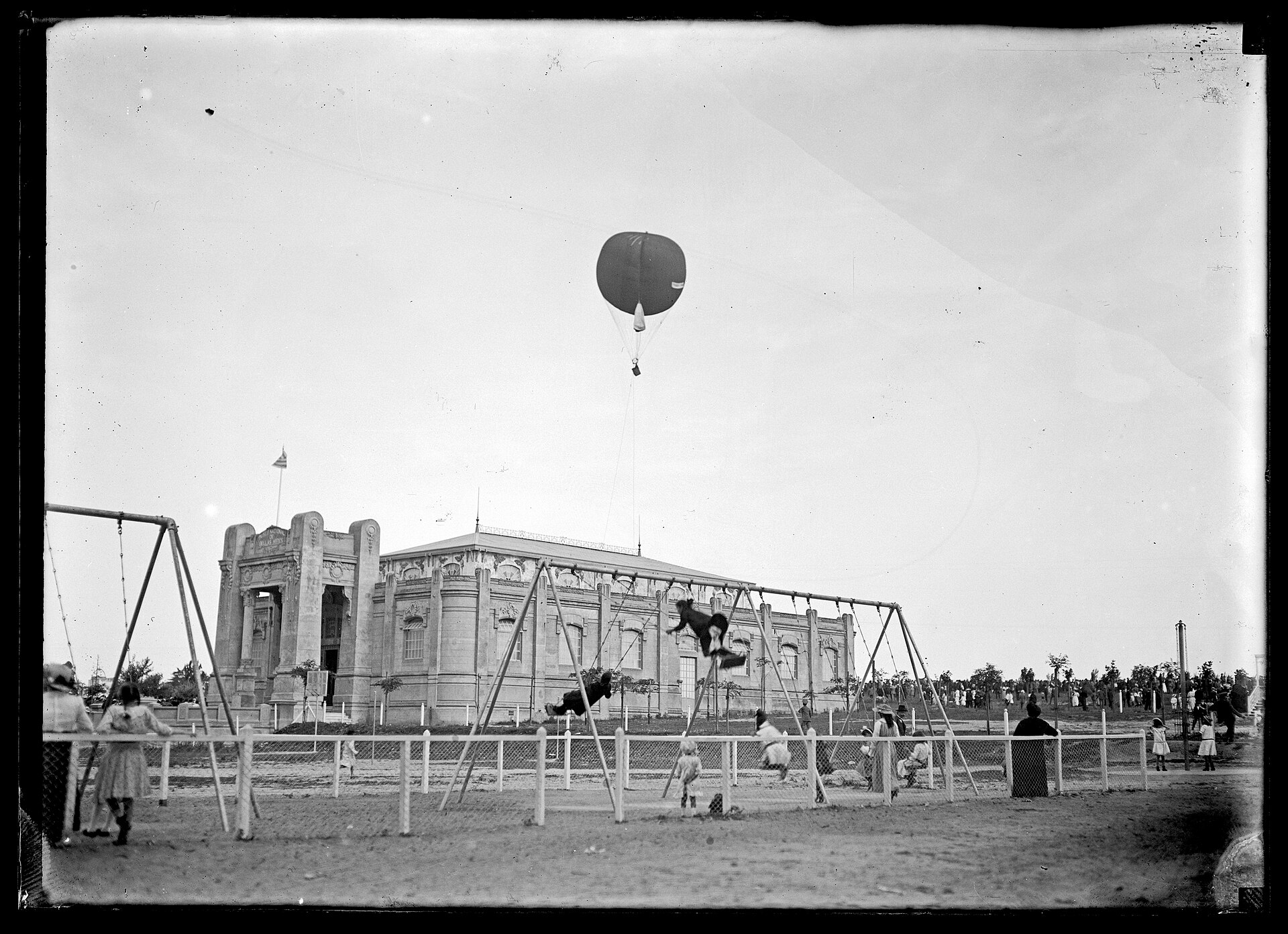
The museum that now holds Uruguay's national collection of painting and sculpture did not start life as a museum building at all. The institution itself was created by Law 3,932 on 10 December 1911, under the name Museo de Bellas Artes, and spent its first year installed in the left wing of the Teatro Solis. In 1912 it moved to a pavilion in Parque Rodo that had been built at the end of the nineteenth century for a Hygiene Exposition, and it has occupied that site ever since. The original collection numbered just 234 pieces, mostly foreign work bought or donated in the museum's earliest years.
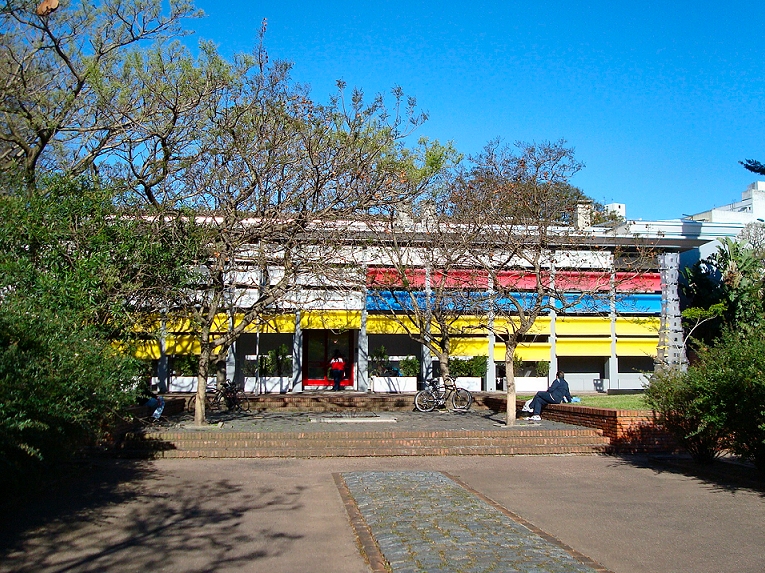
For much of the twentieth century the building was a poor fit for what it held. The museum's own institutional history records overcrowded paintings kept in highly flammable conditions, roof leaks, and humidity that threatened the walls; the pressure became severe enough that the museum closed for renovation from 1952 to 1962, and for years afterward it closed again each summer because the building could not be kept at a stable temperature. The turning point came in the 1970s, when the Argentine architect and artist Clorindo Testa carried out a substantial reform of the pavilion, and the building took on the striped, brightly coloured horizontal bands across its facade that identify it today. A new exhibition wing with proper climate control was added on the first floor in 1986, and in the 1990s the landscape architect Leandro Silva Delgado, working with architect Fernando Fabiano, redesigned the front garden - by his own account the first garden of its kind he had conceived in Uruguay.
Blanes, Figari and Torres Garcia: the three the collection is built around
Ask the museum itself, or Wikipedia's summary of it, which artists matter most here, and the same three names come up before any others: Juan Manuel Blanes, Pedro Figari and Joaquin Torres Garcia. Blanes (1830-1901), a government scholarship painter trained in Florence, is the earliest and the one Uruguay calls the painter of the Fatherland - his large history paintings, including the 1871 canvas of the Buenos Aires yellow-fever epidemic held here, set the terms for how the country pictured its own past. Figari (1861-1938) came to painting late, after careers as a lawyer, journalist, congressman and founder of the national School of Fine Arts; his mature oil-on-cardboard scenes of gaucho, Afro-Uruguayan and criollo life, painted mostly from memory during his years in Buenos Aires and Paris, are among the works visitors are most likely to recognise. Torres Garcia (1874-1949) is the constructivist: after decades in Barcelona, Brussels, New York and Paris - where he knew Picasso, Gaudi, Theo van Doesburg and Mondrian - he returned to Montevideo in the 1930s, founded the Asociacion de Arte Constructivo in 1935, and delivered some 600 lectures on what he called universal constructivism. The museum devotes a room, numbered Room 5, entirely to his work.
Around those three sit a second generation the museum has been working to bring forward. Carlos Federico Saez, sent to Rome on a government scholarship at fourteen and dead of illness in Montevideo at twenty-two, left a small body of portraits in a loose, Macchiaioli-influenced style that critic Jose P. Argul praised for its freshness of observation. Rafael Barradas, who left for Spain in 1913 and became a central figure of the Spanish avant-garde before returning to Montevideo to die in 1929, is represented by seven catalogued paintings spanning his pre-Spain and vibracionista periods; the museum has mounted retrospectives of his work since 1965, most recently in Buenos Aires in 2021. Petrona Viera, deaf from the age of two and trained privately under Guillermo Laborde rather than at an academy, was Uruguay's first professional woman painter and worked in the planismo style for roughly three decades; her 1924 canvas Recreo is one of the museum's more frequently reproduced holdings.
What else is in the building
Beyond the Uruguayan collection, the museum holds a smaller body of foreign art built up through gifts, exchanges and purchases over more than a century, including works attributed to Pablo Picasso, Paul Klee, Francisco Goya and the Spanish academic painter Eduardo Rosales, along with sculpture by Pablo Serrano, an Aragonese sculptor who lived in Montevideo for twenty years. The building today holds five exhibition galleries across two floors, ranging from 110 to just over 1,000 square metres, a 174-seat auditorium used for public programming, and a specialist art library of more than 8,000 volumes with its own editing and study facilities for the museum's catalogues and inventory books. Outside, the garden that Silva Delgado and Fabiano laid out in the 1990s carries outdoor sculpture by Rimer Cardillo, Octavio Podesta and Torres Garcia himself, and a cafe operates on the grounds near the entrance.
Who has run it
The museum's directors have included the painter Domingo Laporte from 1911 to 1928, the sculptor Jose Luis Zorrilla de San Martin from 1940 to 1961, and the critic Angel Kalenberg across an unusually long tenure from 1969 to 2007. Enrique Aguerre then directed the museum for fifteen years, across three full government periods, before stepping down at a ceremony on 28 August 2025 that the museum's own account describes as combining thanks for his tenure with anticipation for what came next. His successor, Roxana Fabius, a Uruguayan curator who spent 2016 to 2022 as executive director of A.I.R. Gallery in New York - by its own description the first artist-run feminist gallery cooperative in the United States - took over the direction that same month, with public statements from her emphasising audience development and educator training as priorities for the museum's next stage.
A collection the museum itself flags as unbalanced
Not every fact about the collection is one the museum volunteers proudly. Research compiled by the collective Colectiva Coco and cited in the Spanish-language account of the museum's history found that only 22 percent of the works in the MNAV collection are by women artists, against a holding of roughly 6,500 to 7,000 works overall. Petrona Viera, Maria Freire, Amalia Nieto, Hilda Lopez, Amalia Polleri and Margaret Whyte are all represented, but the imbalance the museum's own record-keeping shows is not one that a room dedicated to Torres Garcia or a wall of Blanes history paintings resolves; it is a plain measure of whose work entered a national collection built mostly across the nineteenth and twentieth centuries, and whose did not.
Visiting
Entry has been free since at least the period covered by this research, and the museum opens Tuesday to Sunday from 13:00 to 20:00, closing on Mondays. It sits inside Parque Rodo, on the corner of Avenida Tomas Giribaldi and Avenida Julio Herrera y Reissig, an area with restaurants and the park itself around it rather than a formal transport hub; there is no metro in Montevideo, and the museum's own contact page does not itself publish bus routes, so a visitor is best served by checking current city transit options directly. Visitor accounts on Tripadvisor - 4.3 out of 5 across 368 ratings as read for this page - describe an hour to two hours as typical for the permanent collection, praise the free entry, the quality of the Uruguayan holdings and the garden and cafe, and most often ask for more information in English, since gallery labelling is in Spanish.
What visitors say
Visitors consistently describe MNAV as an unexpectedly strong, free introduction to Uruguayan art, worth an hour or two rather than a full day, set inside a pleasant park with a cafe on site.
What is praised, what is criticised
- Praised: Free admission and the quality and range of the Uruguayan collection, especially the top-floor and temporary exhibition spaces
- Praised: The garden setting inside Parque Rodo and the on-site cafe
- Praised: Spaciousness and natural light in the galleries
- Criticised: Little or no didactic material in English for international visitors, several of whom asked for artist information beyond Spanish-language labels
- Criticised: Inconsistent depth between the strong permanent Uruguayan collection and some smaller temporary shows, which one visitor called uninspiring
Ratings on other platforms
Tripadvisor: 4.3 from 368 ratings, read 3 September 2026
A platform average is a tertiary source: it moves, it is not audited, and we quote no visitor's words.
Questions about National Museum of Visual Arts
Where is National Museum of Visual Arts?
Av. Tomas Giribaldi 2283, corner of Av. Julio Herrera y Reissig, Parque Rodo, Montevideo, Uruguay.
How much does it cost to visit?
General: free. As confirmed 3 September 2026.
When is it open?
Tue-Sun 13:00-20:00. Closed: Monday. As confirmed 3 September 2026.
What should you see first?
Un episodio de la fiebre amarilla en Buenos Aires (Juan Manuel Blanes); Candombe (Pedro Figari); Arte universal (Joaquin Torres Garcia); Los emigrantes (Rafael Barradas); Recreo (Petrona Viera); Il primo romanzo (Carlos Federico Saez).
What we could not confirm
- The museum's own site does not publish current visitor numbers or annual attendance figures.
- No English-language wall text or catalogue appears to exist for the permanent collection, based on visitor accounts and the museum's own site being Spanish-only.
Images
Sources
- 1Wikidata, Q1786577 (National Museum of Visual Arts) wikidata.org/wiki/Q1786577
- 2Museo Nacional de Artes Visuales, institutional history page mnav.gub.uy/cms.php?id=institucional
- 3Museo Nacional de Artes Visuales, contact page (hours, phone, email, admission) mnav.gub.uy/cms.php?id=contacto
- 4Museo Nacional de Artes Visuales, artist page: Pedro Figari mnav.gub.uy/cms.php?a=6
- 5Museo Nacional de Artes Visuales, artist page: Joaquin Torres Garcia mnav.gub.uy/cms.php?a=4
- 6Museo Nacional de Artes Visuales, artist page: Petrona Viera mnav.gub.uy/cms.php?a=491
- 7Museo Nacional de Artes Visuales, work page: Un episodio de la fiebre amarilla en Buenos Aires mnav.gub.uy/cms.php?o=77
- 8Museo Nacional de Artes Visuales, artist page: Rafael Barradas mnav.gub.uy/cms.php?a=2
- 9Museo Nacional de Artes Visuales, artist page: Carlos Federico Saez mnav.gub.uy/cms.php?a=3
- 10Museo Nacional de Artes Visuales, artist page: Juan Manuel Blanes mnav.gub.uy/cms.php?a=1
- 11Museo Nacional de Artes Visuales, directorship ceremony page (Aguerre to Fabius transition) mnav.gub.uy/cms.php?id=ceremoniadireccion
- 12Wikipedia (Spanish), Museo Nacional de Artes Visuales (MNAV) es.wikipedia.org/wiki/Museo_Nacional_de_Artes_Visuales_(MNAV)
- 13Tripadvisor, Museo Nacional de Artes Visuales reviews tripadvisor.com/Attraction_Review-g294323-d315412-Reviews-Museo_Nacional_de_Artes_Visuales-Montevideo_Montevideo_Department.html
- 14Wikipedia (English), National Museum of Visual Arts (Uruguay) en.wikipedia.org/wiki/National_Museum_of_Visual_Arts_(Uruguay)